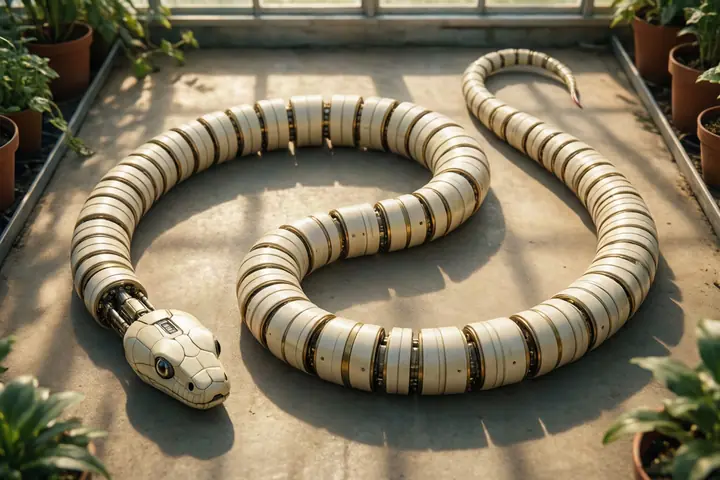
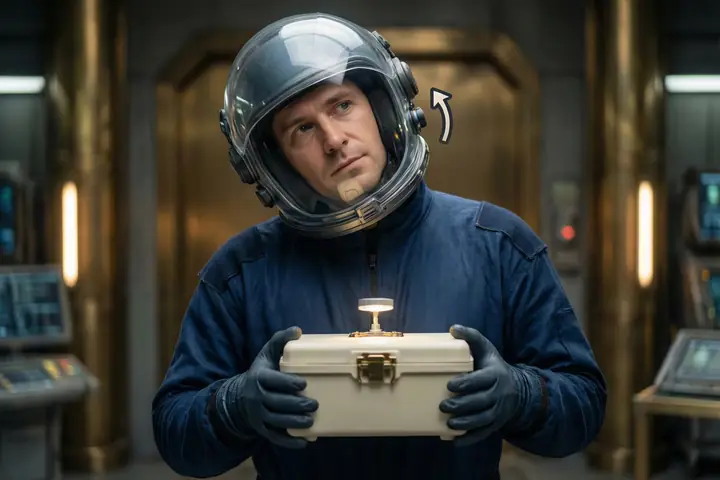
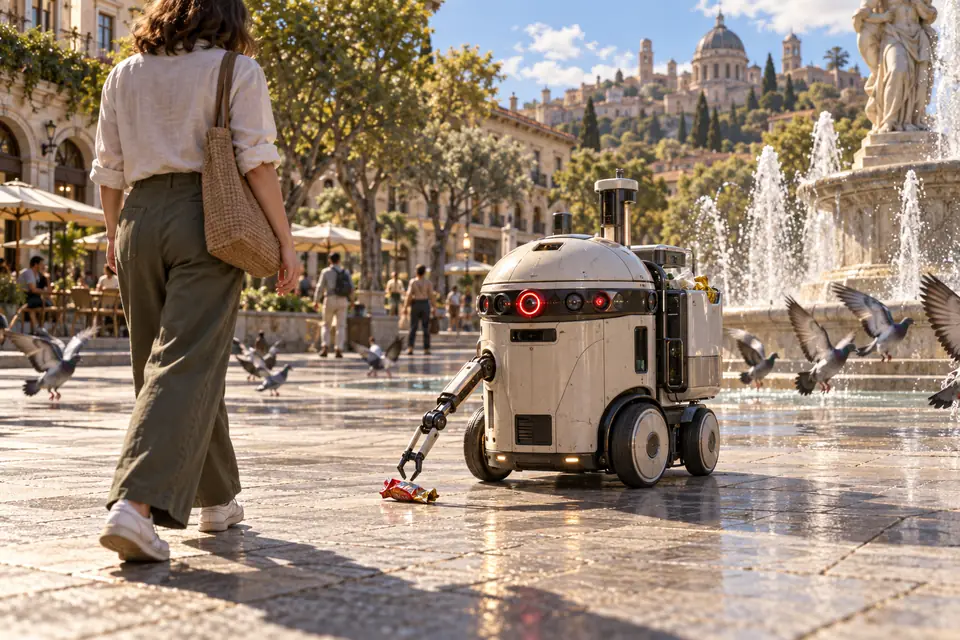
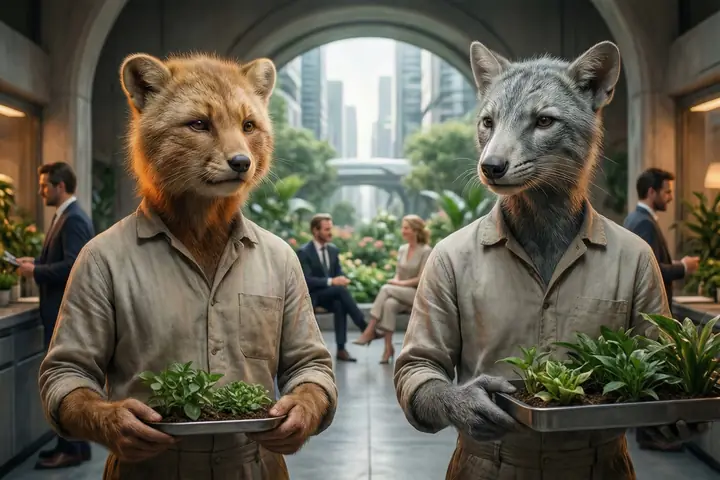
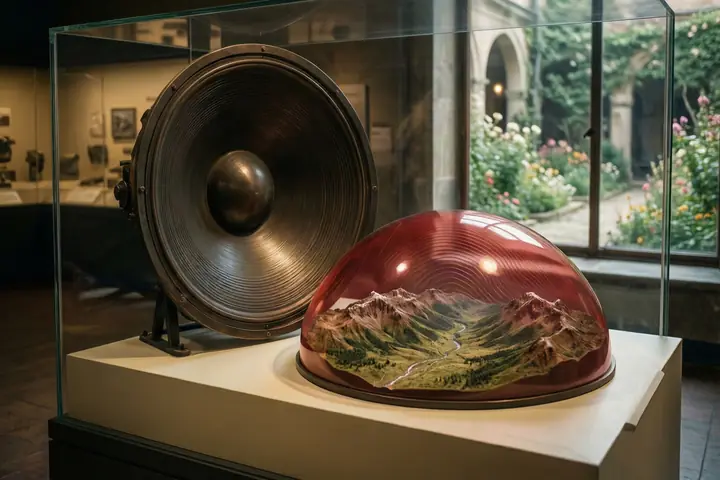
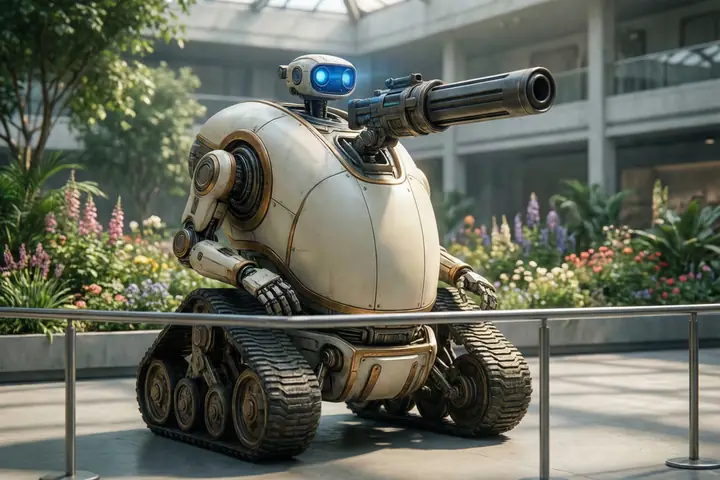
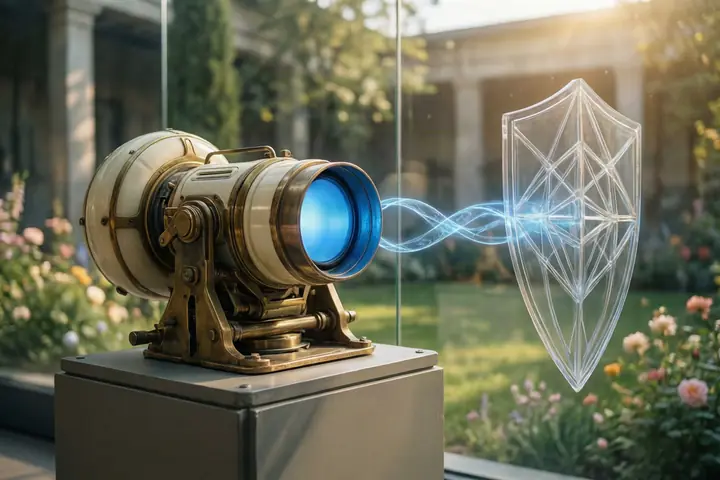
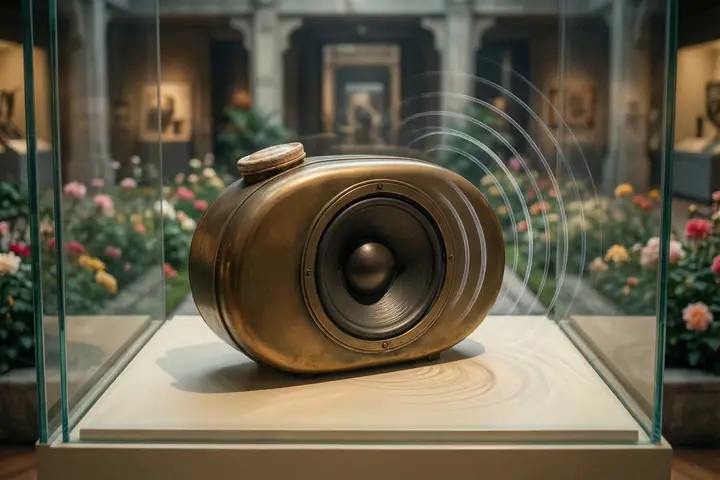
The technologies stories first imagined in this decade, by kind, with whether each has been built since and who would keep the profit.
By kind of technology
Space travel and habitats · 87
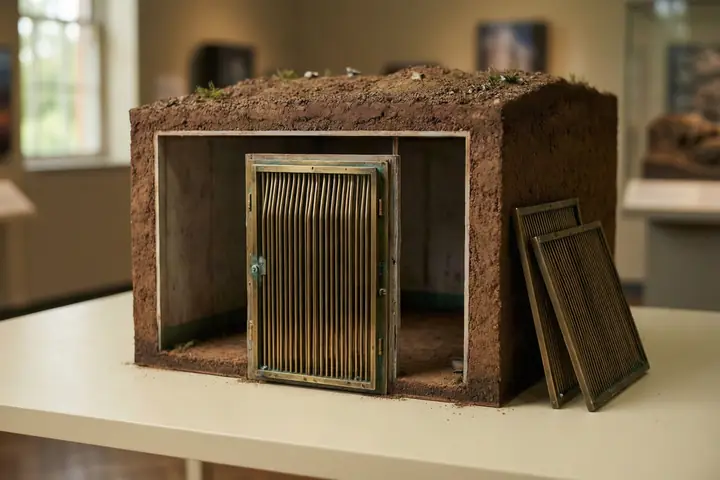
Illustration made with AI image generation; not evidence.
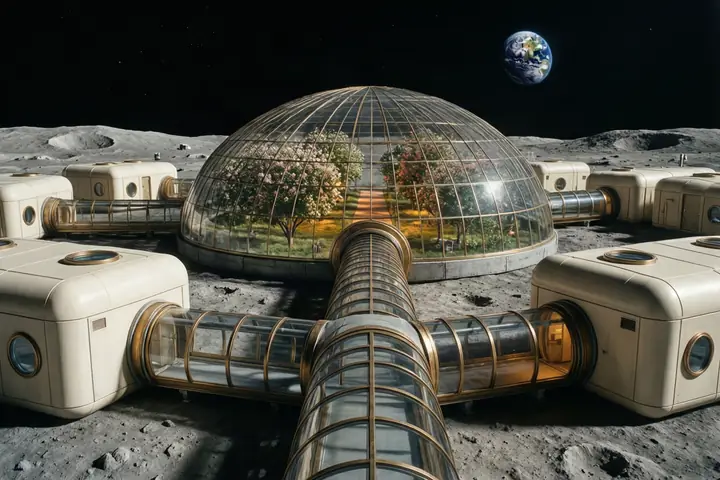
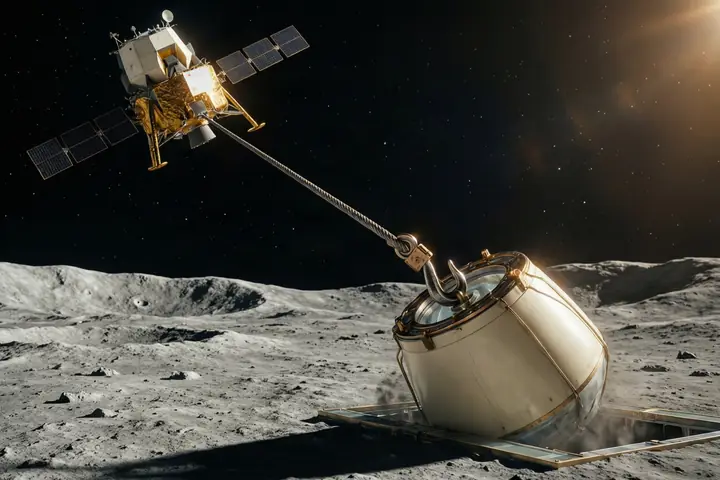
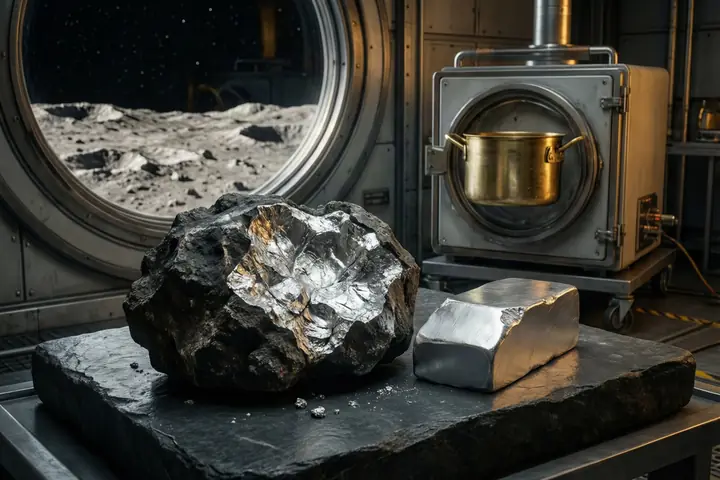
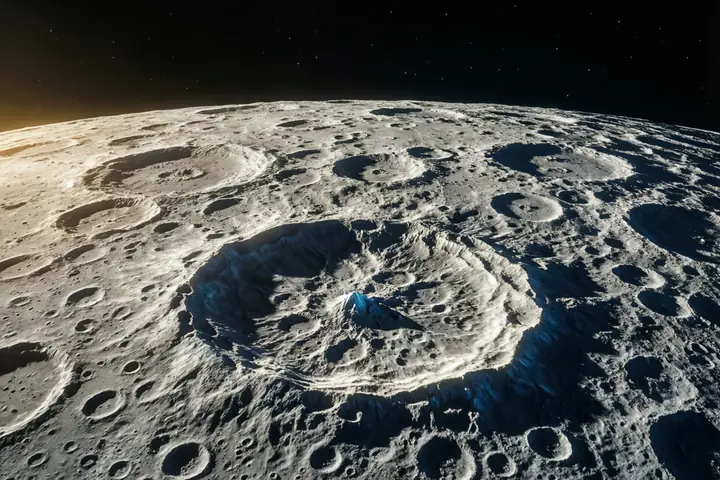
Building With Lunar Materials
The Moon is Hell, John W. Campbell · 1950
Making structures and supplies on the Moon from local rock and soil instead of shipping them up.
not yet built · AI models' likeliest decade: the 2030s
A large prizeA government pays; existing firms keep the restas a model judges it
Why
A large prize. Building from local rock would sharply cut the cost of any base on the Moon.
Who is paid. A government is assumed to pay for lunar bases, and the method can be copied, so the contractors already building there collect.
A model's judgement, not a reading, of the idea as if it worked the way its story promises. The model is fairly sure of this one.
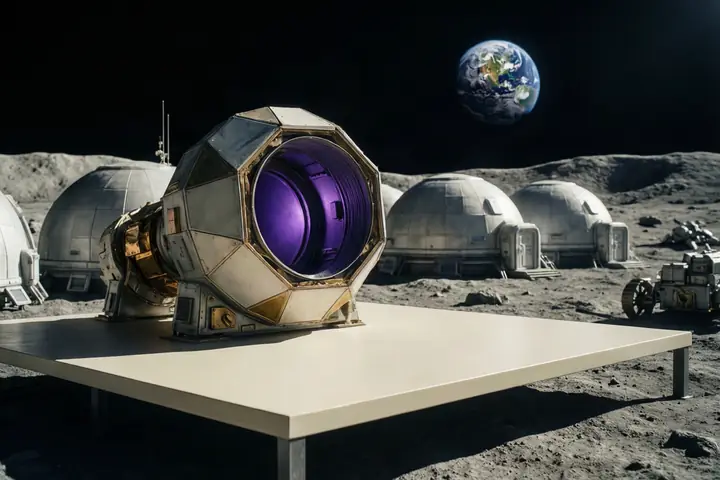
Illustration made with AI image generation; not evidence.
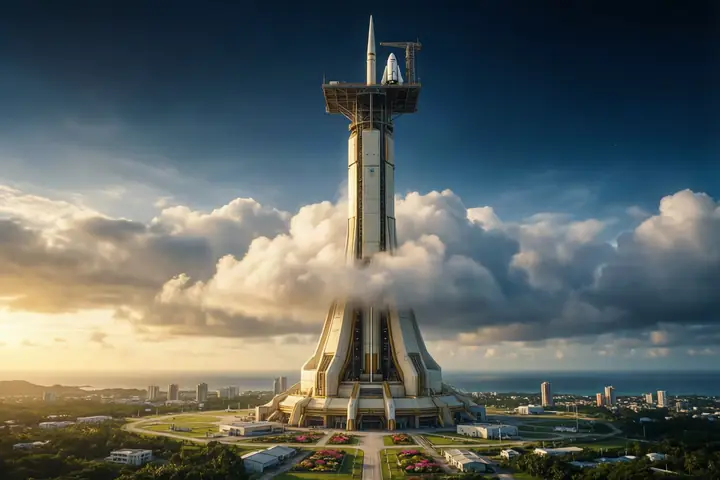
Earthport
The Ballad of Lost C'Mell, Cordwainer Smith · 1950
A colossal launch tower rising from the ground to the top of the sky.
not yet built · AI models' likeliest decade: 2100 or later
A large prizeBusinesses pay; existing firms keep the restas a model judges it
Why
A large prize. A lift from the ground to orbit would slash the cost of reaching space for every firm that uses it.
Who is paid. Shippers pay to send cargo up, and since another line could be built once the first was shown to work, the gain is assumed to go to the large builders and the holders of the few good ground sites.
A model's judgement, not a reading, of the idea as if it worked the way its story promises. The model is not very sure of this one.
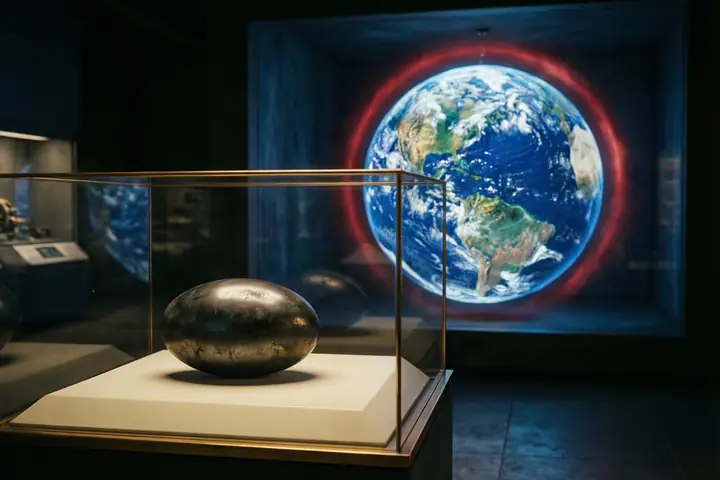
Illustration made with AI image generation; not evidence.
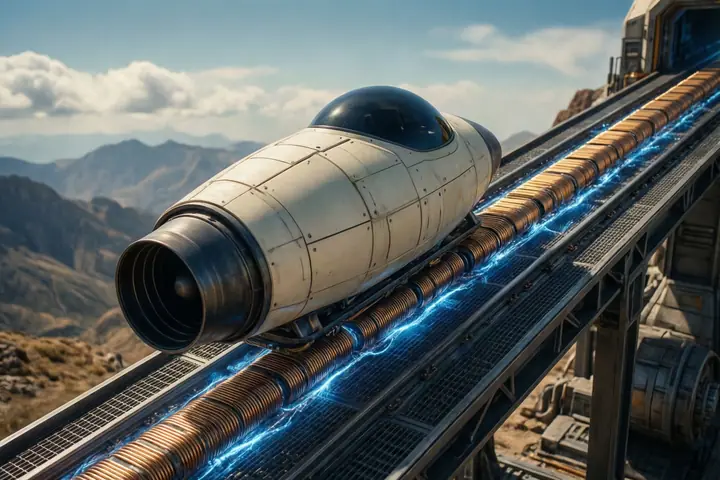
Hybrid Mass Driver
The Man Who Sold The Moon, Robert Heinlein · 1950
An electric catapult that flings spacecraft through the opening leg of their climb to orbit.
not yet built · AI models' likeliest decade: the 2050s
A large prizeBusinesses pay; existing firms keep the restas a model judges it
Why
A large prize. Flinging or pushing payloads to space without big rockets would change the cost of the whole launch industry.
Who is paid. Firms with cargo to launch pay, and since others could build such works the gain goes to those who already own launch sites and power.
A model's judgement, not a reading, of the idea as if it worked the way its story promises. The model is fairly sure of this one.
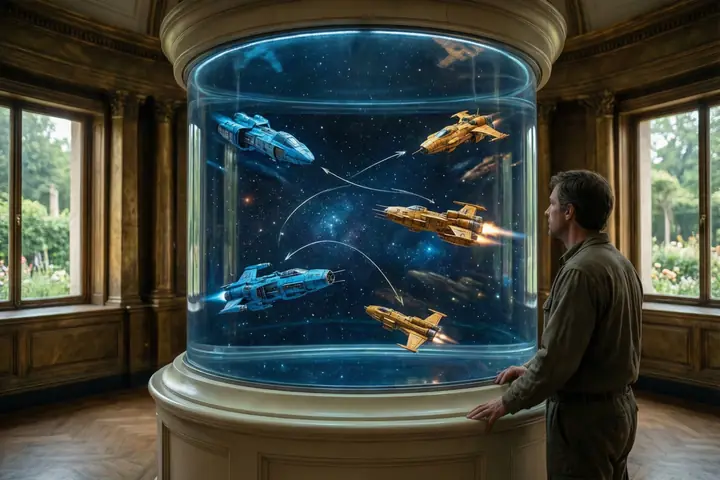
Illustration made with AI image generation; not evidence.
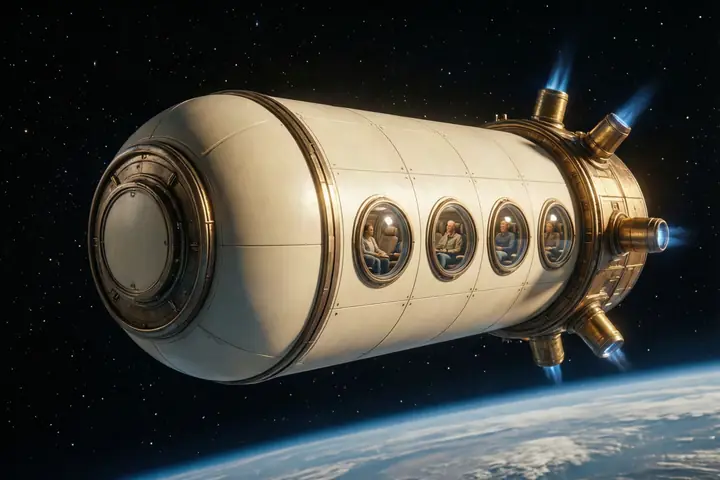
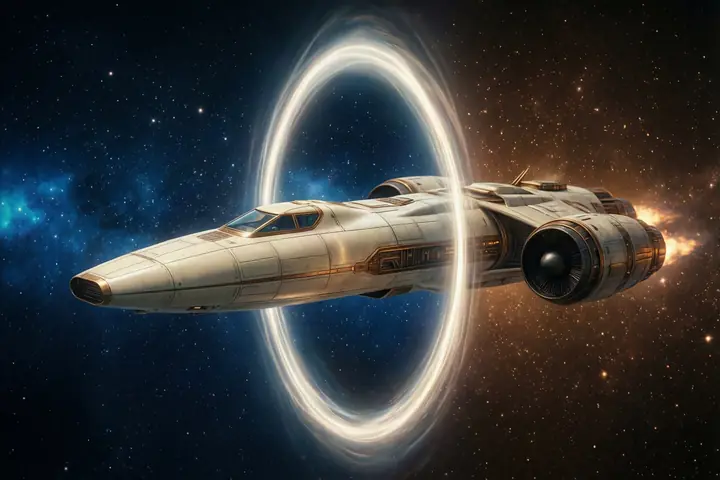
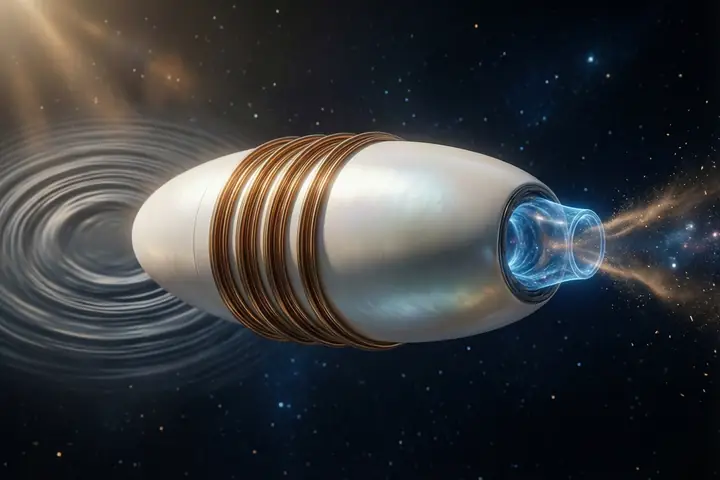
Mass-Conversion Ship
Farmer in the Sky, Robert Heinlein · 1950
A spacecraft powered by turning matter completely into energy.
not yet built · AI models' likeliest decade: 2100 or later
A large prizeBusinesses pay; existing firms keep the restas a model judges it
Why
A large prize. A working ship that carries people and cargo between worlds is the base of a whole transport industry.
Who is paid. Carriers and other firms working in space buy ships, and since a second yard could build the same craft the established shipbuilders collect.
A model's judgement, not a reading, of the idea as if it worked the way its story promises. The model is fairly sure of this one.
Illustration made with AI image generation; not evidence.
Shuttle
Stars are Styx, Theodore Sturgeon · 1950
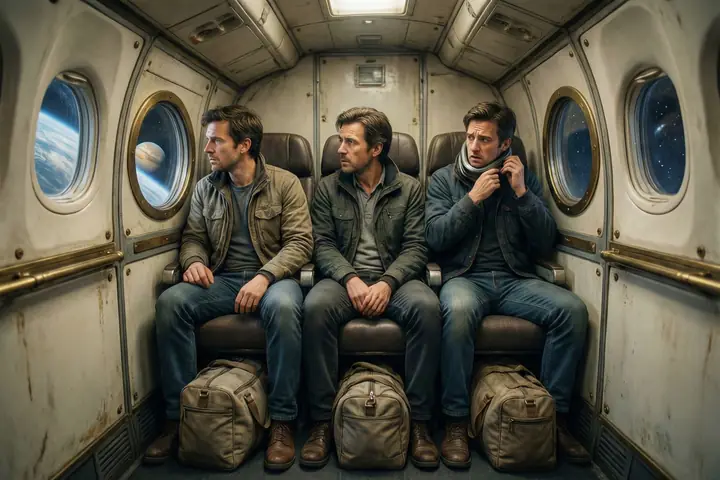
A craft that ferries people or cargo on direct hops between places in space.
built in the 1970s, about 20 years after it was imagined
A large prizeBusinesses pay; existing firms keep the restas a model judges it
Why
A large prize. A working vessel for travel between worlds would found a transport industry of its own.
Who is paid. Carriers and expedition firms buy ships, and many yards could build them once shown how, so established vehicle builders collect.
A model's judgement, not a reading, of the idea as if it worked the way its story promises. The model is fairly sure of this one.
Illustration made with AI image generation; not evidence.
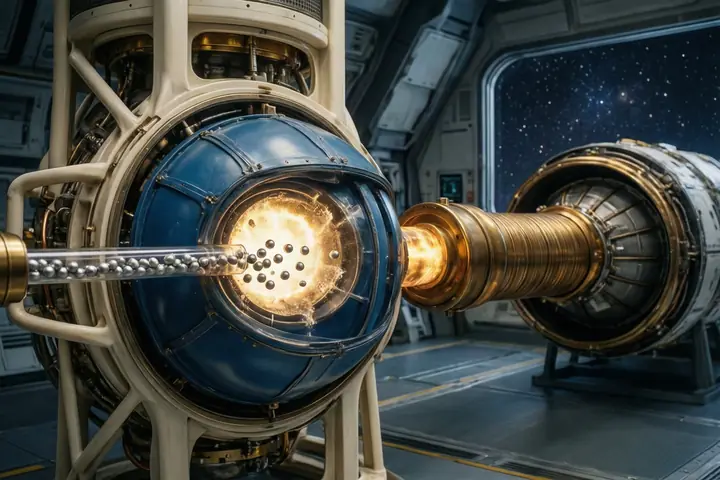
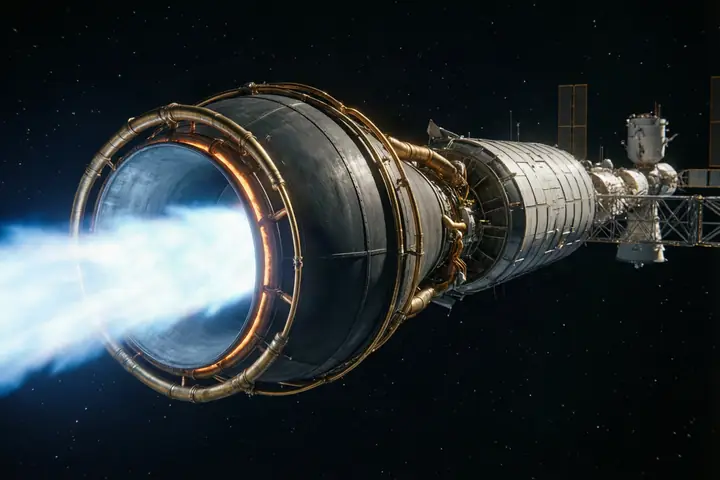
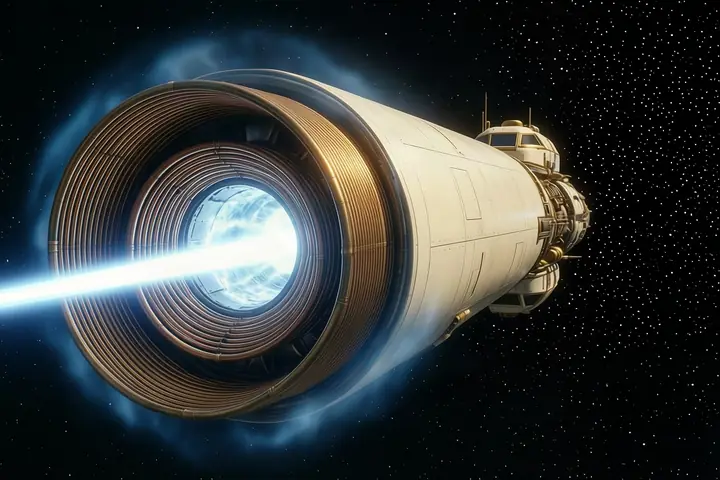
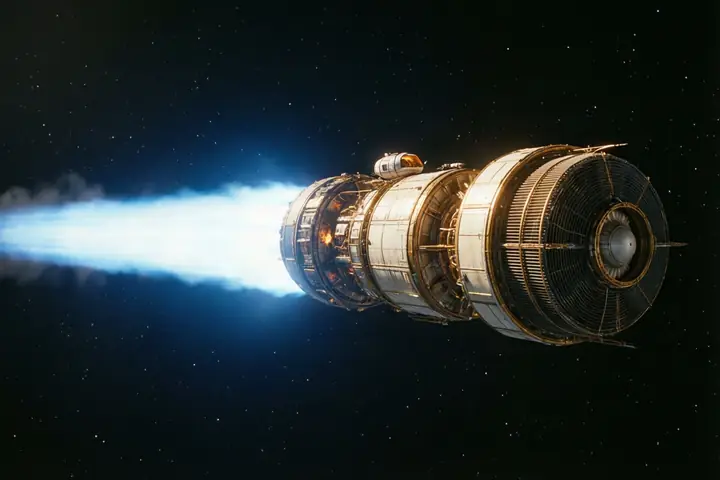
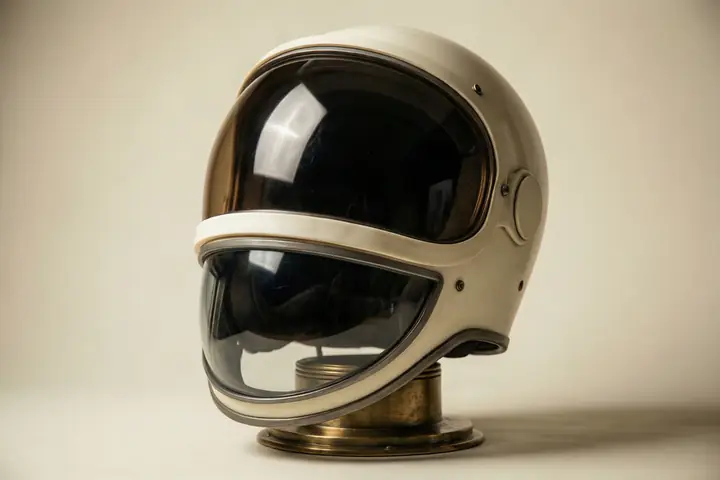
Torch
Farmer in the Sky, Robert Heinlein · 1950
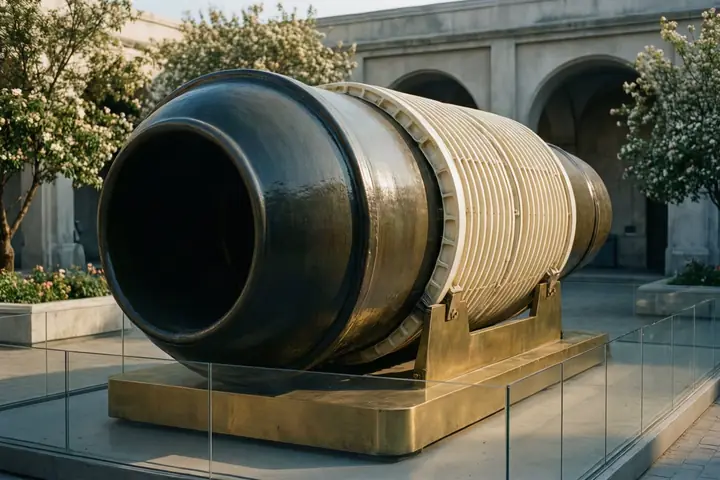
The exhaust nozzle of a nuclear-powered rocket.
already existed before the story (the 1930s)
A large prizeBusinesses pay; existing firms keep the restas a model judges it
Why
A large prize. The nozzle stands here for the nuclear rocket it belongs to, an engine that would set how far and fast ships can go.
Who is paid. Whoever runs the ship pays for the engine, assumed here to be carriers, and once a firm had built it others could too, so established engine and ship builders collect.
A model's judgement, not a reading, of the idea as if it worked the way its story promises. The model is not very sure of this one.
Illustration made with AI image generation; not evidence.
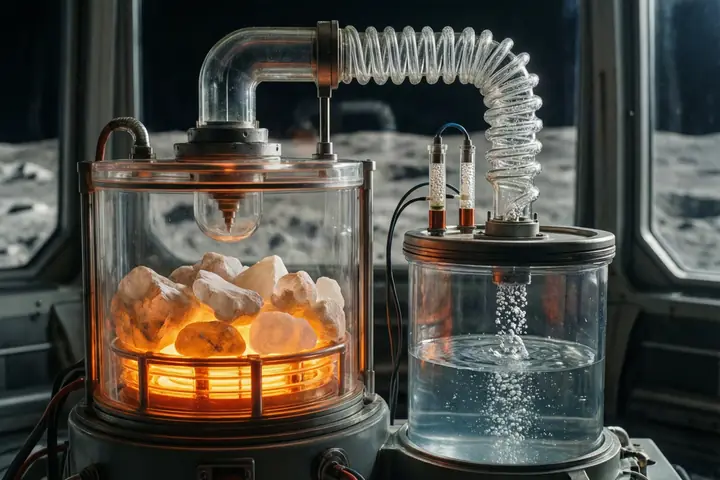
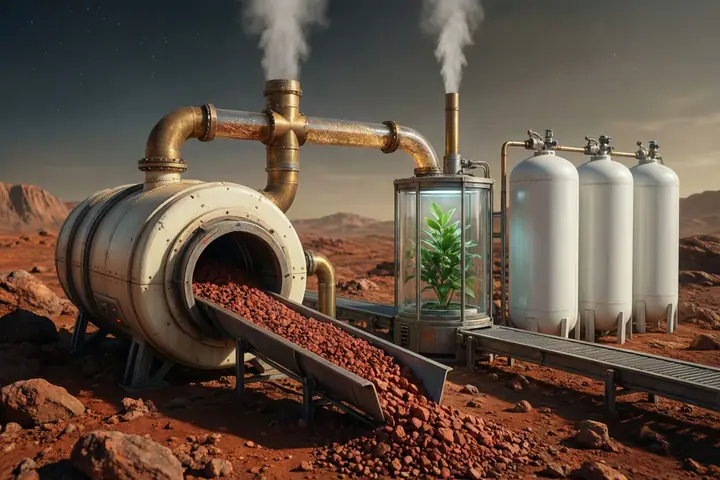
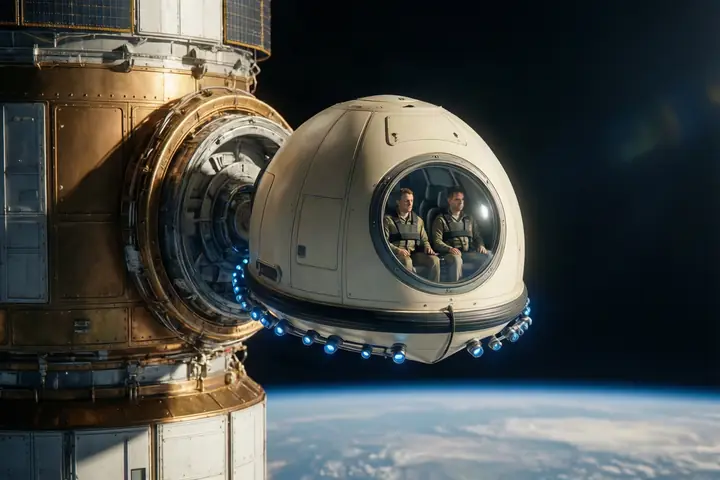
Water From Lunar Gypsum
The Moon is Hell, John W. Campbell · 1950
Baking water out of lunar minerals, then splitting it for breathable oxygen.
not yet built · AI models' likeliest decade: the 2040s
A large prizeBusinesses pay; existing firms keep the restas a model judges it
Why
A large prize. Water and air made on the Moon would spare hauling them from Earth, lowering costs for everything based there.
Who is paid. Firms working on the Moon buy the water and air, and baking rock is a method any miner could copy, so the operators that already hold the sites and plant collect.
A model's judgement, not a reading, of the idea as if it worked the way its story promises. The model is fairly sure of this one.
Illustration made with AI image generation; not evidence.
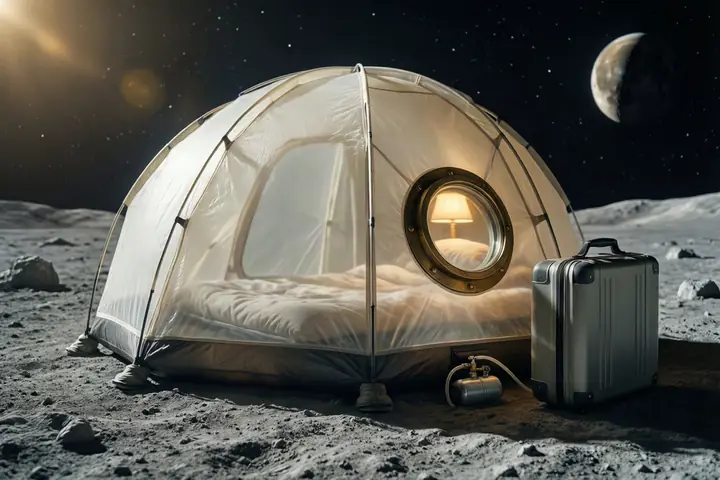
Airtight Tent
Asteroid of Fear, Raymond Z. Gallun · 1951
A sealed pop-up shelter that lets people live briefly on worlds without air.
not yet built · AI models' likeliest decade: the 2030s
A small prizeBusinesses pay; existing firms keep the restas a model judges it
Why
A small prize. A shelter that goes up quickly serves small parties on airless ground, a niche.
Who is paid. No user is named, so it is assumed that firms working on other worlds buy it as working gear, and a shelter that must hold air against vacuum is made by the established makers of suits and habitats, any of whom could copy it.
A model's judgement, not a reading, of the idea as if it worked the way its story promises. The model is not very sure of this one.
Illustration made with AI image generation; not evidence.
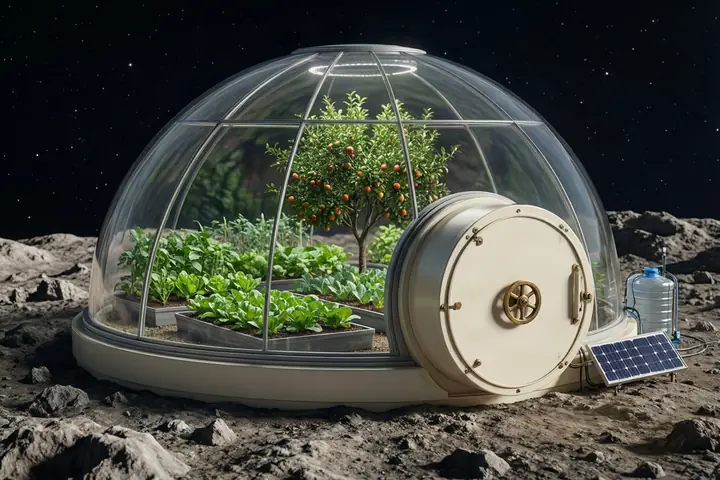
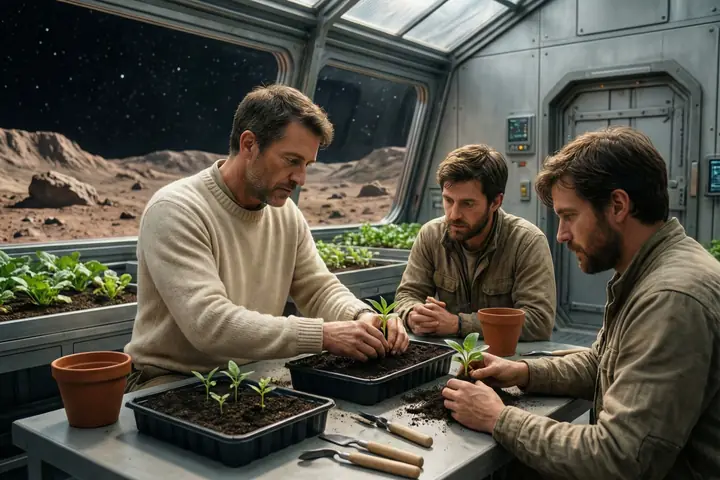
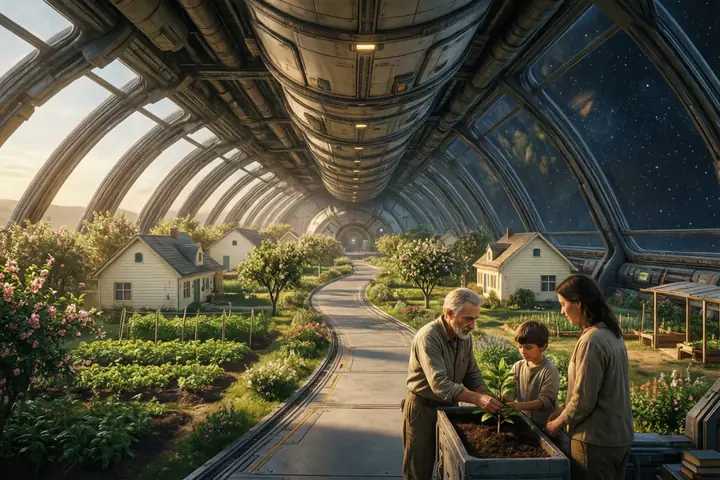
Asteroid Garden
Asteroid of Fear, Raymond Z. Gallun · 1951
A way to set up a sealed greenhouse on a tiny world with no atmosphere.
not yet built · AI models' likeliest decade: the 2070s
A small prizeHouseholds pay; existing firms keep the restas a model judges it
Why
A small prize. It lets a settler family grow food on an airless rock, a niche for the few who homestead there.
Who is paid. Settlers are assumed to buy it for themselves, and a shelter that must hold air against vacuum is made by the established makers of suits and habitats, any of whom could copy it.
A model's judgement, not a reading, of the idea as if it worked the way its story promises. The model is not very sure of this one.
Illustration made with AI image generation; not evidence.
Asteroid Homesteaders' School
Asteroid of Fear, Raymond Z. Gallun · 1951
A training college for ordinary settlers learning to farm on small rocky bodies in space.
not yet built · AI models' likeliest decade: the 2070s
A small prizeHouseholds pay; no seller keeps muchas a model judges it
Why
A small prize. Training for would-be settlers is a niche service for the few who go.
Who is paid. Settlers pay their own fees, assumed here, and anyone with the knowledge can open a school, so no seller keeps much.
A model's judgement, not a reading, of the idea as if it worked the way its story promises. The model is not very sure of this one.
Illustration made with AI image generation; not evidence.
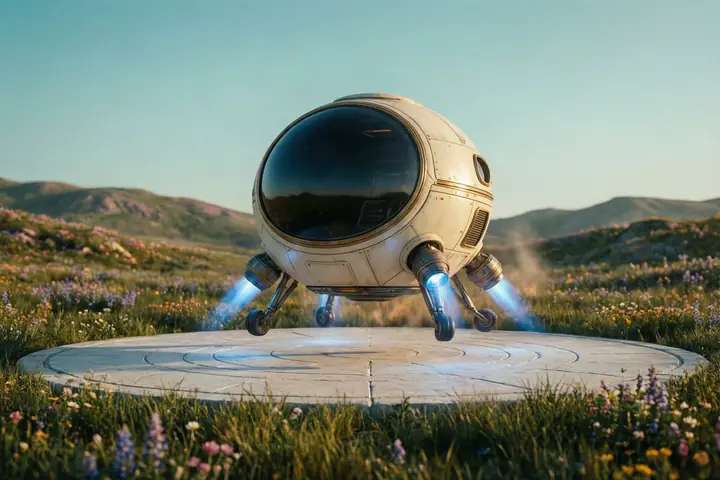
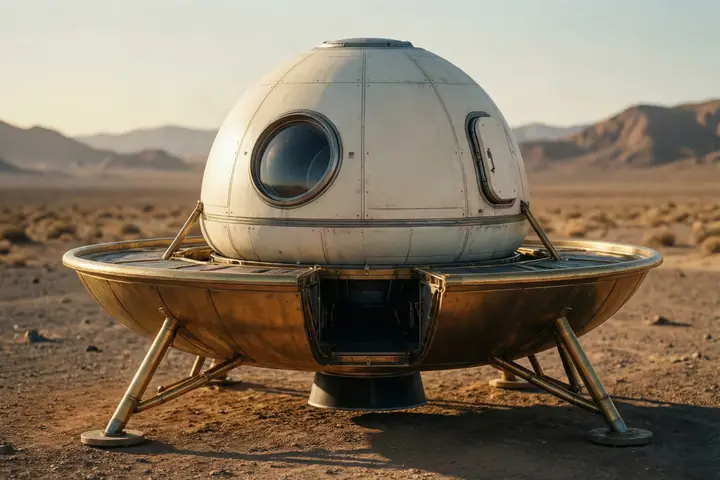
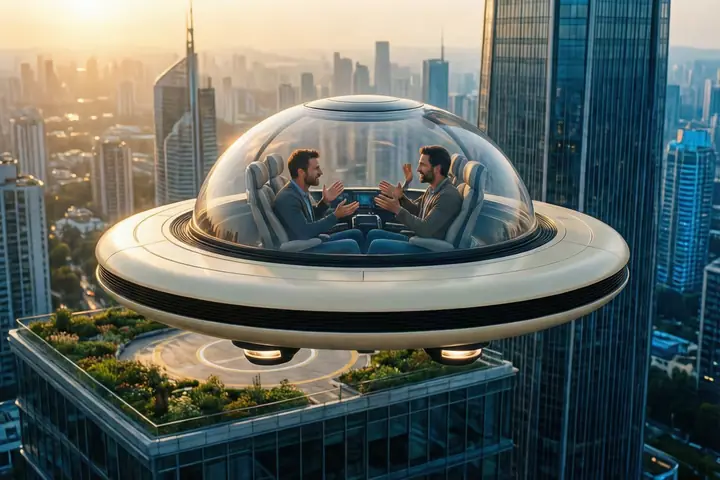
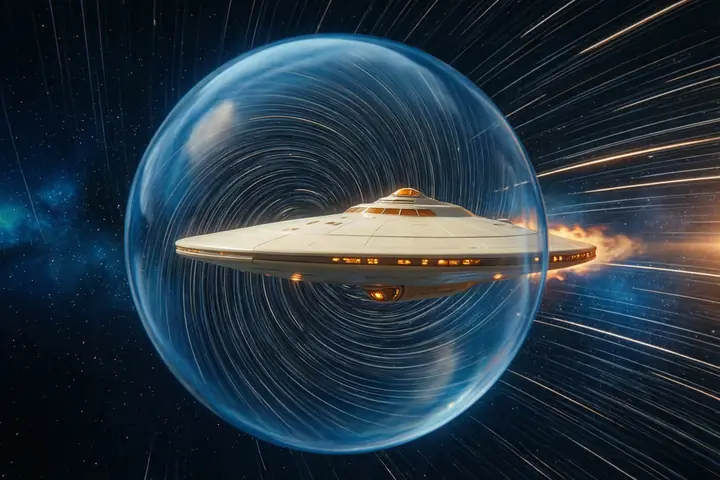
Flying Saucer
The Puppet Masters, Robert Heinlein · 1951
A disc-shaped craft piloted by an invading alien species in the story.
not yet built · AI models' likeliest decade: the 2020s
A large prizeBusinesses pay; existing firms keep the restas a model judges it
Why
A large prize. A working ship that carries people and cargo between worlds is the base of a whole transport industry.
Who is paid. The story's craft belongs to invaders, but judged as a ship it is assumed carriers would buy it, and a second yard could build the same craft so established shipbuilders collect.
A model's judgement, not a reading, of the idea as if it worked the way its story promises. The model is not very sure of this one.
Illustration made with AI image generation; not evidence.
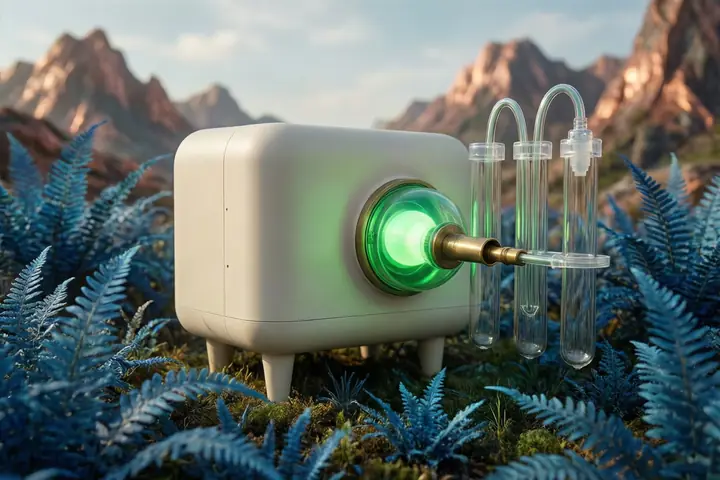
Oxygen Concentrator
Duel on Syrtis, Poul Anderson · 1951
A portable unit that enriches thin air until a person can breathe it.
built since, date unclear
A small prizeBusinesses pay; existing firms keep the restas a model judges it
Why
A small prize. Thickening thin air until a person can breathe it is a useful piece of kit for the few who work on such worlds.
Who is paid. Ship and expedition operators pay for it with their other gear, and the established builders of ships and suits supply it because the method is easy to copy.
A model's judgement, not a reading, of the idea as if it worked the way its story promises. The model is fairly sure of this one.
Illustration made with AI image generation; not evidence.
Shuttle Ship
Between Planets, Robert Heinlein · 1951
A reusable orbiter that launches, meets a station in orbit and glides home to land.
built in the 1980s, about 30 years after it was imagined
A large prizeBusinesses pay; existing firms keep the restas a model judges it
Why
A large prize. A reusable craft flying between the ground and a station is the working vessel of a transport industry of its own; the real thing flew but cost far more than the promise.
Who is paid. Carriers and expedition firms buy ships, and many yards could build them once shown how, so established vehicle builders collect.
A model's judgement, not a reading, of the idea as if it worked the way its story promises. The model is fairly sure of this one.
Illustration made with AI image generation; not evidence.
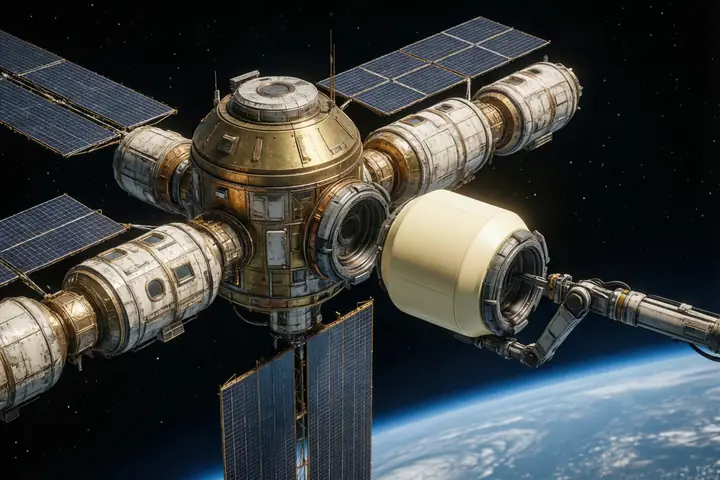
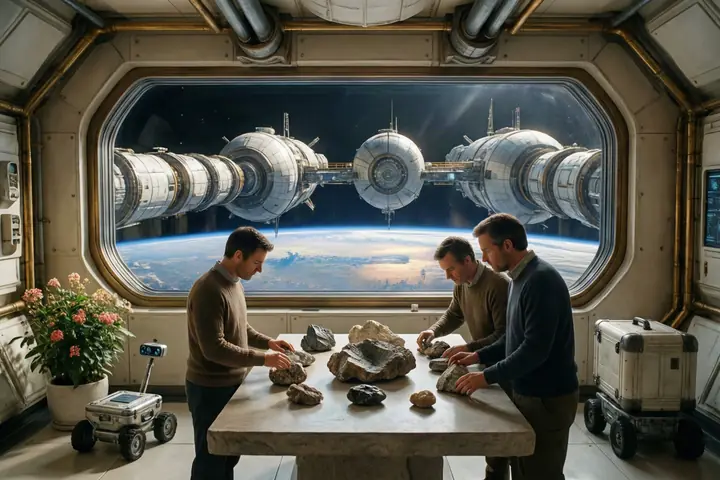
Space Station One
The Sands of Mars, Arthur C. Clarke · 1951
An orbiting outpost assembled piece by piece, adding modules over the years.
built in the 1970s, about 20 years after it was imagined
A large prizeA government pays; existing firms keep the restas a model judges it
Why
A large prize. An outpost built up piece by piece for people to live and work in orbit is a building industry of its own.
Who is paid. A station is a public work a government pays for, and the big construction and space firms that already win such contracts would build it.
A model's judgement, not a reading, of the idea as if it worked the way its story promises. The model is fairly sure of this one.
Illustration made with AI image generation; not evidence.
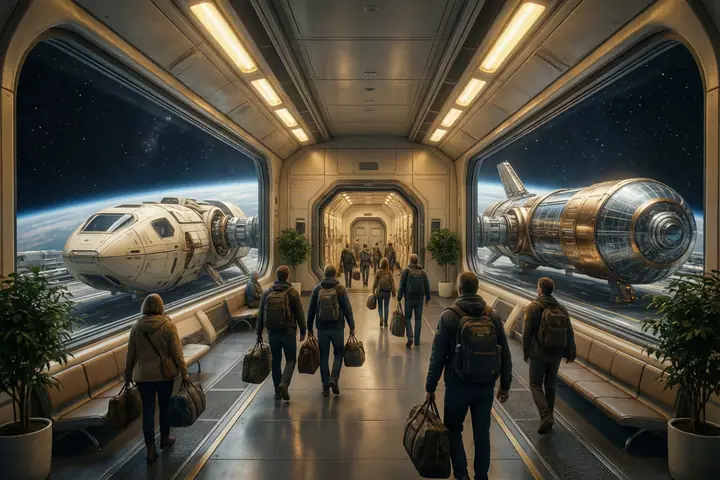
Space Transfer Station
Between Planets, Robert Heinlein · 1951
An orbiting waypoint where travellers change ships before heading further out.
built in the 1970s, about 20 years after it was imagined
A small prizeBusinesses pay; existing firms keep the restas a model judges it
Why
A small prize. A waypoint where travellers change ships is needed by the traffic it serves, but the prize lies in the transport and the port is a part of it.
Who is paid. Unlike other stations this is a port, so the carriers that call there are assumed to pay to use it as they would a spaceport, and since such a port can be copied the large builders and port owners collect.
A model's judgement, not a reading, of the idea as if it worked the way its story promises. The model is not very sure of this one.
Illustration made with AI image generation; not evidence.
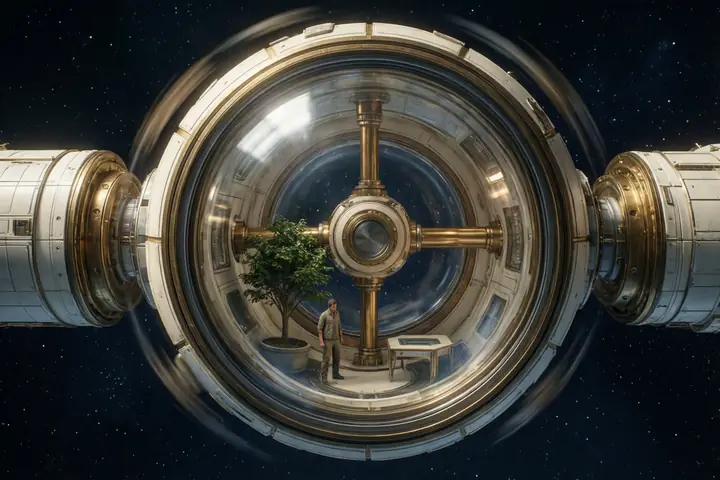
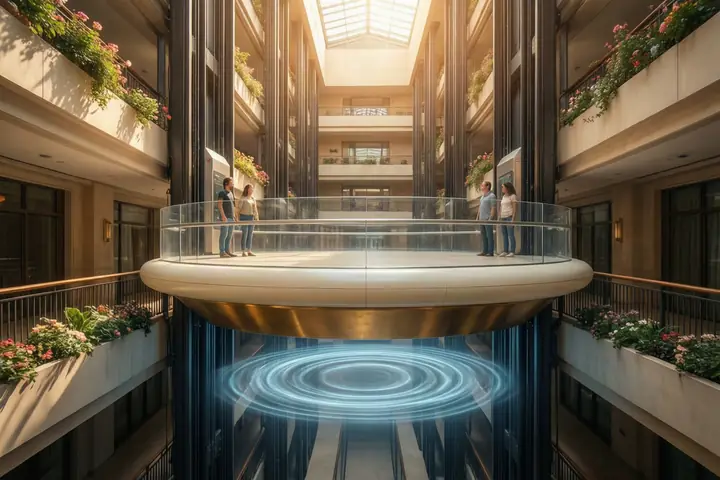
Spinning Pressurized Drum
Between Planets, Robert Heinlein · 1951
A rotating sealed section of a space station that gives its occupants artificial weight.
not yet built · AI models' likeliest decade: the 2030s
A small prizeA government pays; existing firms keep the restas a model judges it
Why
A small prize. Spinning to give weight is a design feature of a station, useful but not a product of its own.
Who is paid. Whoever pays for the station pays for this, assumed here to be a government, and any station builder can use the idea so the established builders collect.
A model's judgement, not a reading, of the idea as if it worked the way its story promises. The model is fairly sure of this one.
Illustration made with AI image generation; not evidence.
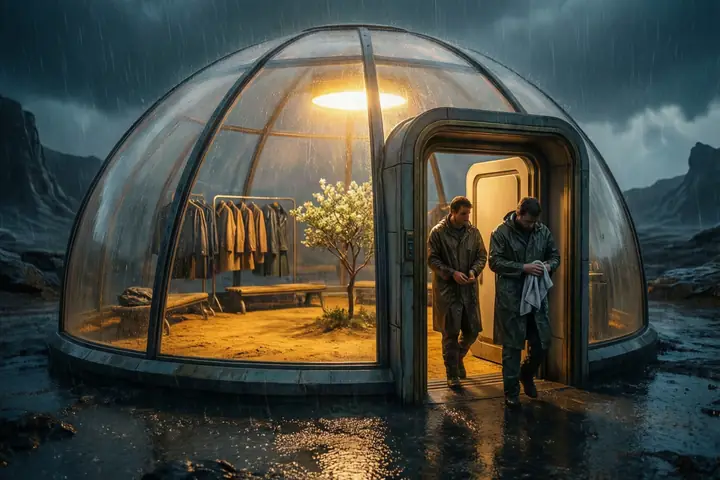
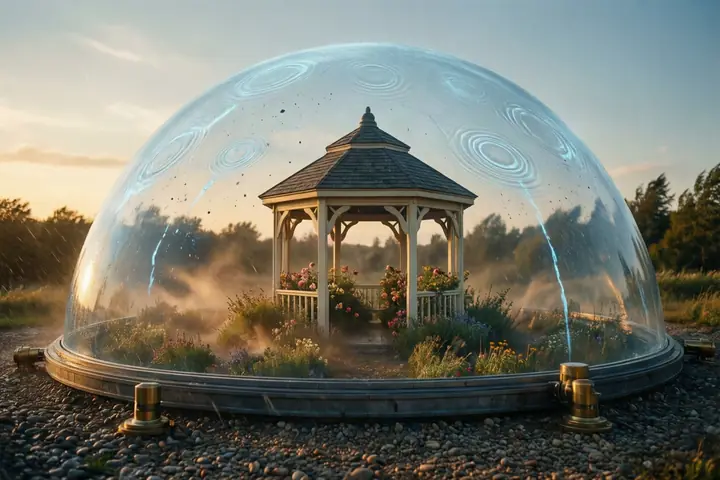
Sun Dome
The Illustrated Man, Ray Bradbury · 1951
A warm, brightly lit shelter where settlers on a rain-soaked world can dry off.
not yet built · AI models' likeliest decade: 2100 or later
A small prizeA government pays; existing firms keep the restas a model judges it
Why
A small prize. A warm dry shelter is a local comfort for settlers on a rain-soaked world.
Who is paid. The shelters are assumed to be public refuges open to any settler, so a government pays, and ordinary building firms supply them.
A model's judgement, not a reading, of the idea as if it worked the way its story promises. The model is not very sure of this one.
Illustration made with AI image generation; not evidence.
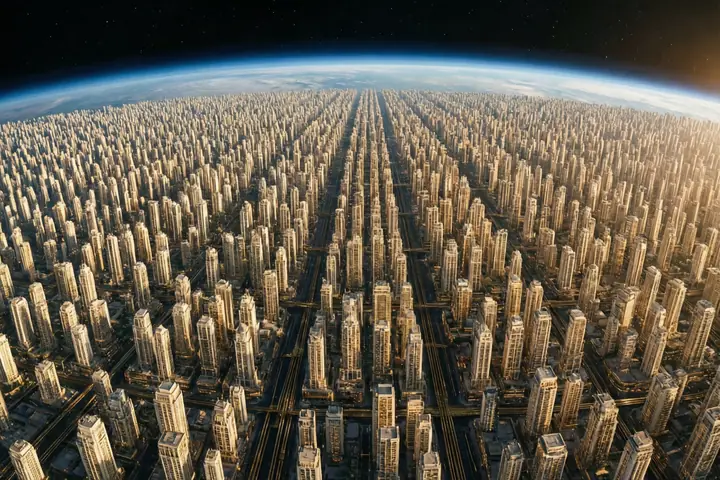
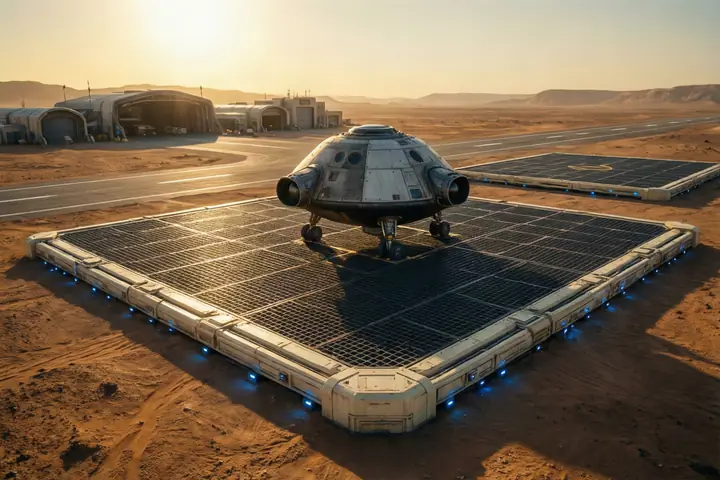
Trantor
Foundation, Isaac Asimov · 1951
A world whose whole surface is one continuous built-up metropolis.
not yet built · AI models' likeliest decade: 2100 or later
A large prizeHouseholds pay; existing firms keep the restas a model judges it
Why
A large prize. A world covered from end to end by city is a settlement at the largest scale, an enormous building project.
Who is paid. Residents and shopkeepers each pay for their own space in open air, as in any city, and the developers, builders and landowners already there collect.
A model's judgement, not a reading, of the idea as if it worked the way its story promises. The model is not very sure of this one.
Illustration made with AI image generation; not evidence.
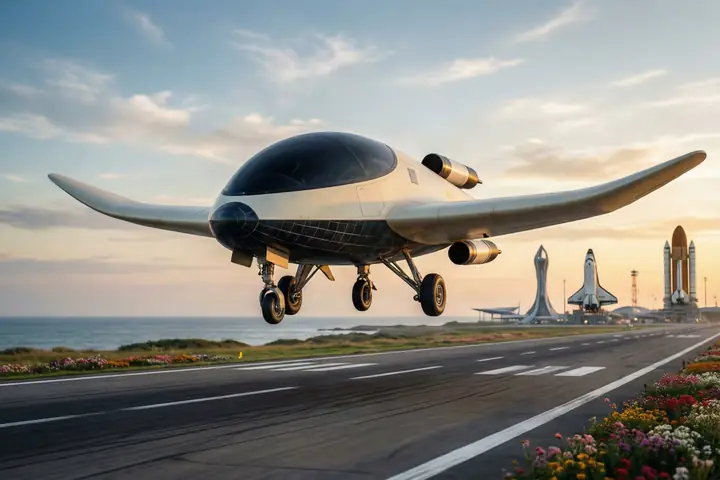
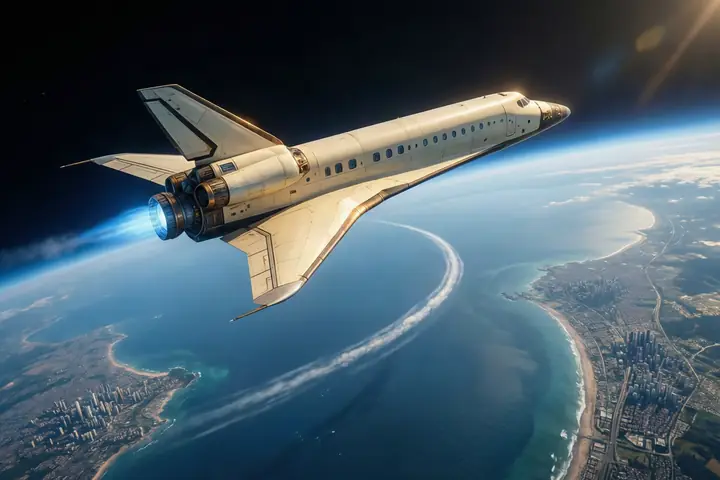
Winged Rocket Shuttle
Between Planets, Robert Heinlein · 1951
A rocket plane that hops briefly above the atmosphere to fly quickly between distant cities.
built in the 1980s, about 30 years after it was imagined
A large prizeBusinesses pay; existing firms keep the restas a model judges it
Why
A large prize. Fast flight between distant cities by way of space would change long-distance travel.
Who is paid. Airlines and carriers buy the craft, and once it flew other builders could copy it, so established craft builders and carriers collect.
A model's judgement, not a reading, of the idea as if it worked the way its story promises. The model is fairly sure of this one.
Illustration made with AI image generation; not evidence.
Beeper
Islands in the Sky, Arthur C. Clarke · 1952
A pocket radar used in orbit to locate tools and objects that float away.
already existed before the story (the 1930s)
A small prizeBusinesses pay; no seller keeps muchas a model judges it
Why
A small prize. A pocket finder for lost tools is a small convenience for orbital workers.
Who is paid. Space operators buy it for crews, and it is ordinary electronics that many firms could make.
A model's judgement, not a reading, of the idea as if it worked the way its story promises. The model is fairly sure of this one.
Illustration made with AI image generation; not evidence.
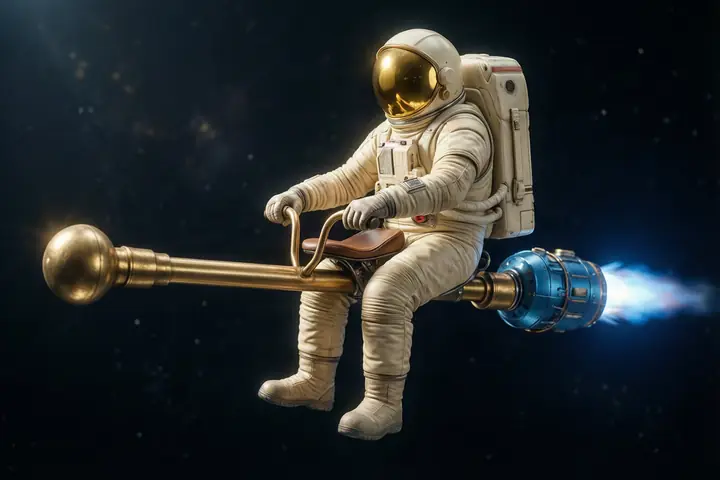
Broomstick
Islands in the Sky, Arthur C. Clarke · 1952
A small thruster stick an astronaut rides to get around while weightless.
not yet built · AI models' likeliest decade: the 2020s
A small prizeBusinesses pay; existing firms keep the restas a model judges it
Why
A small prize. It helps a spacewalker get around while weightless, a niche tool for a few workers.
Who is paid. Space operators buy it for their crews, and the makers of suits and space gear supply it because it is easy to copy.
A model's judgement, not a reading, of the idea as if it worked the way its story promises. The model is fairly sure of this one.
Illustration made with AI image generation; not evidence.
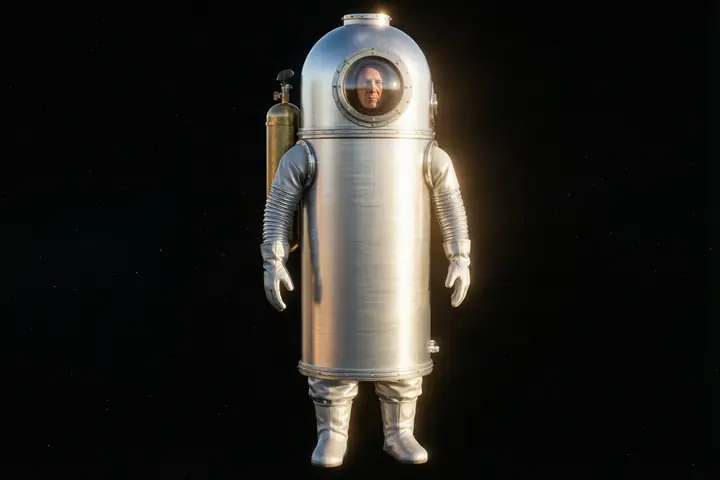
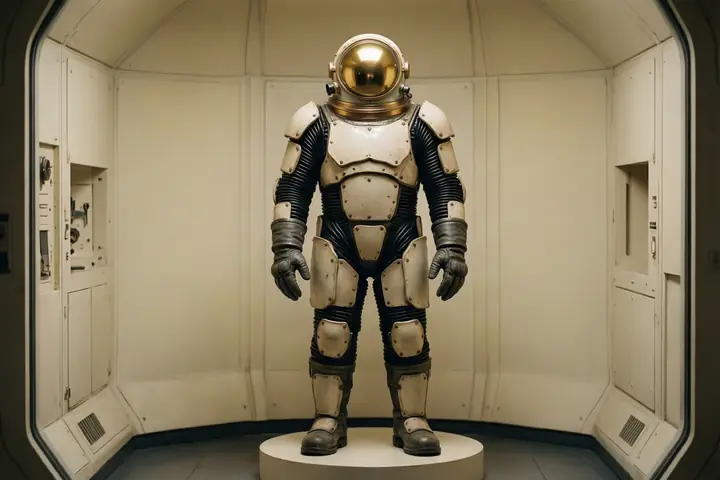
Cylinder Space Suit
Islands in the Sky, Arthur C. Clarke · 1952
A stiff tube-shaped pressure suit for working outside a spacecraft.
not yet built · AI models' likeliest decade: the 2030s
A small prizeBusinesses pay; existing firms keep the restas a model judges it
Why
A small prize. A suit that keeps a person alive in vacuum is vital to its wearer but serves only the few who work in space.
Who is paid. Space operators buy suits for their crews, and the few firms that already make such gear supply them since the design can be copied.
A model's judgement, not a reading, of the idea as if it worked the way its story promises. The model is fairly sure of this one.
Illustration made with AI image generation; not evidence.
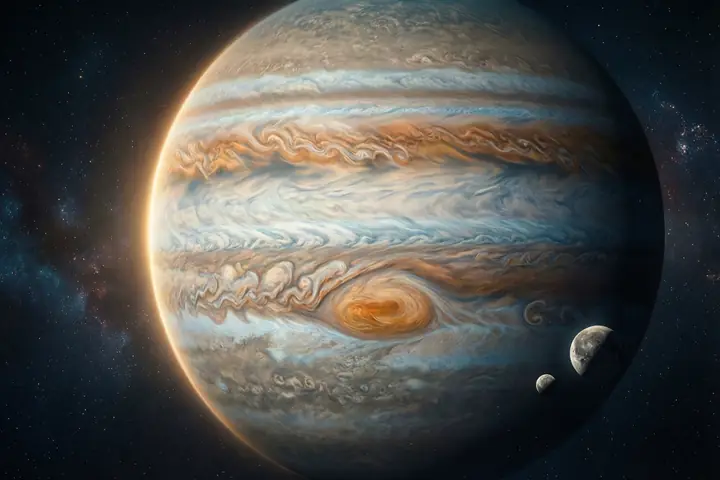
Gas Giant
Solar Plexus, James Blish · 1952
A huge planet made mostly of thick gases wrapped around a small rocky centre.
built since, date unclear
No prizeNothing is soldas a model judges it
Why
No prize. It is a natural thing or place in space, not something made or sold.
Who is paid. Nothing is sold, so nobody pays and no seller collects.
A model's judgement, not a reading, of the idea as if it worked the way its story promises. The model is fairly sure of this one.
Illustration made with AI image generation; not evidence.
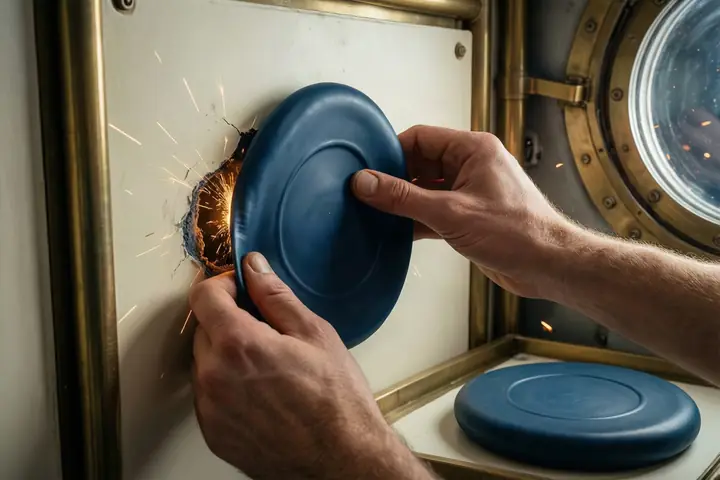
Leak Disk
Islands in the Sky, Arthur C. Clarke · 1952
A simple patch slapped over a puncture in a ship's hull as a stopgap.
not yet built · AI models' likeliest decade: the 2020s
A small prizeBusinesses pay; no seller keeps muchas a model judges it
Why
A small prize. A quick patch for a holed hull can save a crew, but it is a cheap spare, a niche.
Who is paid. Space operators buy it for their crews, and it is simple enough that any workshop could make it.
A model's judgement, not a reading, of the idea as if it worked the way its story promises. The model is fairly sure of this one.
Illustration made with AI image generation; not evidence.
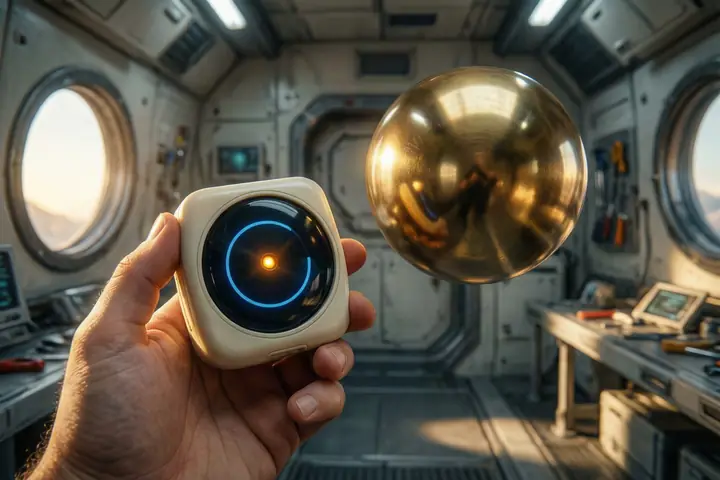
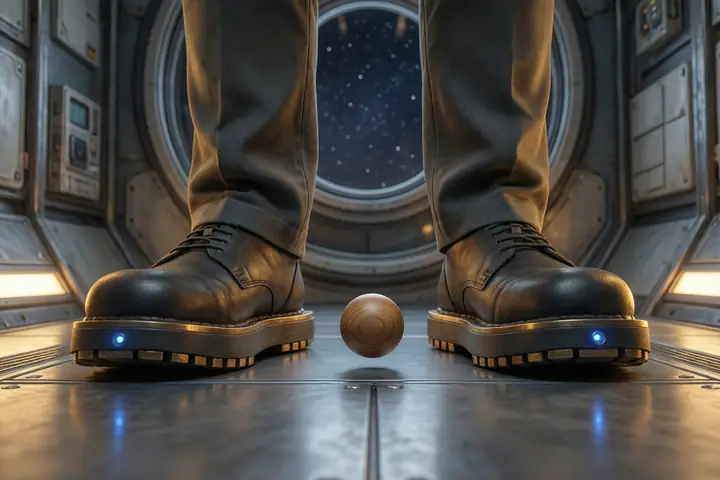
Magneslippers
Accidental Flight, W.F. Wallace · 1952
Magnetic footwear that keeps astronauts planted on a ship's metal deck when weightless.
not yet built · AI models' likeliest decade: the 2020s
A small prizeBusinesses pay; no seller keeps muchas a model judges it
Why
A small prize. Keeping your footing where there is little or no weight is a small convenience for those who work there.
Who is paid. Space operators buy it for their crews, and it is a simple loose item that any workshop could make.
A model's judgement, not a reading, of the idea as if it worked the way its story promises. The model is fairly sure of this one.
Illustration made with AI image generation; not evidence.
Off-Planet
Uller Uprising, H. Beam Piper · 1952
A term for leaving a world's surface for space or another world.
not yet built · AI models' likeliest decade: the 2020s
No prizeNothing is soldas a model judges it
Why
No prize. It is a word, not a product anyone makes or sells.
Who is paid. Nothing is sold, so nobody pays and no seller collects.
A model's judgement, not a reading, of the idea as if it worked the way its story promises. The model is fairly sure of this one.
Illustration made with AI image generation; not evidence.
Ribbon World
Foundation and Empire, Isaac Asimov · 1952
A tidally locked planet where only the twilight band between day side and night side is livable.
not yet built · AI models' likeliest decade: the 2020s
No prizeNothing is soldas a model judges it
Why
No prize. It is a kind of planet, a natural thing and not a product anyone makes or sells.
Who is paid. Nothing is sold, so nobody pays and no seller collects.
A model's judgement, not a reading, of the idea as if it worked the way its story promises. The model is fairly sure of this one.
Illustration made with AI image generation; not evidence.
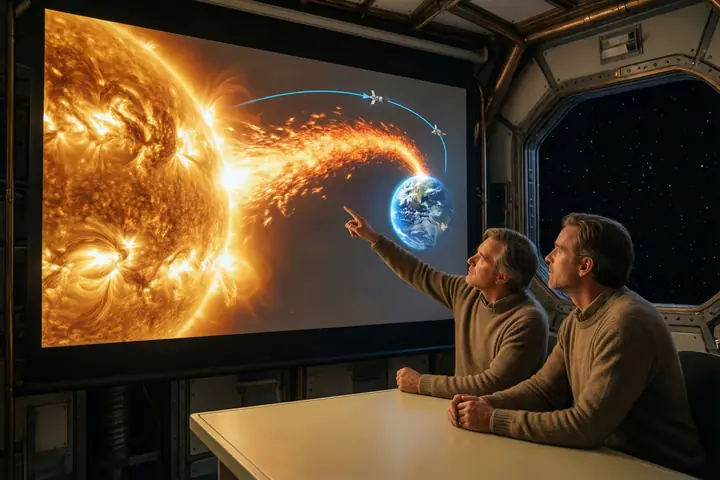
Space-Weather Men
Revenge of the Robots, Lawrence Chandler · 1952
Forecasters who predict solar storms and other hazards beyond the atmosphere.
not yet built · AI models' likeliest decade: the 2020s
A small prizeA government pays; existing firms keep the restas a model judges it
Why
A small prize. Forecasts of storms in space are useful to every voyage but a small part of its cost; the forecasters and their map are the same service.
Who is paid. As with the weather map, a forecast serves every ship and is hard to charge for, so a government is assumed to pay, and the forecasting bodies that already hold the watching instruments collect.
A model's judgement, not a reading, of the idea as if it worked the way its story promises. The model is not very sure of this one.
Illustration made with AI image generation; not evidence.
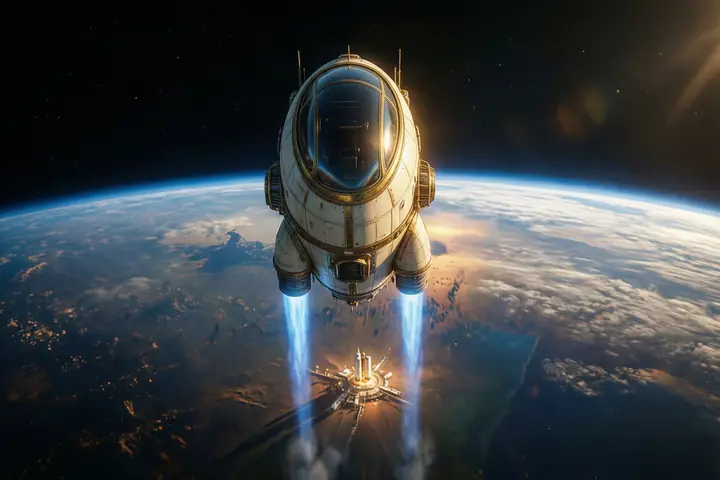
Tourist Rocket
The Space Merchants, Frederik Pohl (w/CM Kornbluth · 1952
A budget, cramped and uncomfortable passenger rocket for holidaymakers.
not yet built · AI models' likeliest decade: the 2030s
A large prizeBusinesses pay; existing firms keep the restas a model judges it
Why
A large prize. Cheap passenger rockets for holidays would open space travel to ordinary people, a travel industry of its own.
Who is paid. The carrier buys the rocket and holidaymakers buy seats from it, as with a liner, and since the rockets could be copied the builders and carriers that already own fleets and ports collect.
A model's judgement, not a reading, of the idea as if it worked the way its story promises. The model is fairly sure of this one.
Illustration made with AI image generation; not evidence.
Triple Airlock
Uller Uprising, H. Beam Piper · 1952
A three-stage entry chamber that keeps a caustic outside atmosphere from getting in.
not yet built · AI models' likeliest decade: the 2020s
A small prizeBusinesses pay; existing firms keep the restas a model judges it
Why
A small prize. Keeping a caustic outside air from getting in is essential on such a world but is a fitting of the building or craft.
Who is paid. Ship operators pay for it as part of the craft, and the established builders of ships and stations supply it since the idea is easy to copy.
A model's judgement, not a reading, of the idea as if it worked the way its story promises. The model is fairly sure of this one.
Illustration made with AI image generation; not evidence.
Water Bulb
The Space Merchants, Frederik Pohl (w/CM Kornbluth · 1952
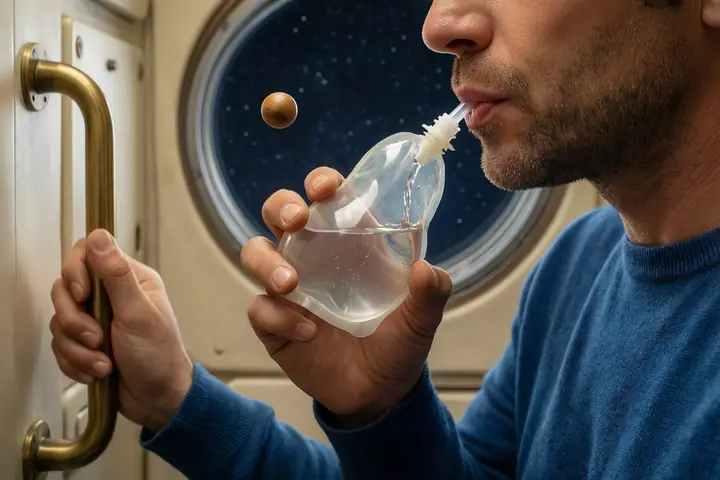
A squeezable pouch for drinking when there is no gravity.
not yet built · AI models' likeliest decade: the 2020s
A small prizeBusinesses pay; no seller keeps muchas a model judges it
Why
A small prize. A squeeze pouch for drinking without weight is a small convenience for crews.
Who is paid. Space operators buy it for crews, and it is simple hardware that many workshops could make, so no seller keeps much.
A model's judgement, not a reading, of the idea as if it worked the way its story promises. The model is fairly sure of this one.
Illustration made with AI image generation; not evidence.
Zero 'g' (Zero Gee)
Islands in the Sky, Arthur C. Clarke · 1952
The weightless condition felt aboard a craft coasting in orbit.
built in the 1950s, about 0 years after it was imagined
No prizeNothing is soldas a model judges it
Why
No prize. It names what space does to the body, a condition and not a product anyone makes or sells.
Who is paid. Nothing is sold, so nobody pays and no seller collects.
A model's judgement, not a reading, of the idea as if it worked the way its story promises. The model is fairly sure of this one.
Illustration made with AI image generation; not evidence.
Galactography
Second Foundation, Isaac Asimov · 1953
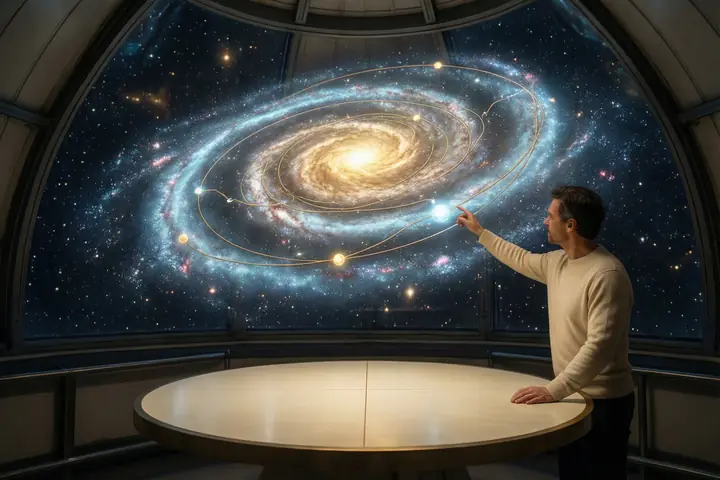
Mapping and describing the layout of the whole galaxy the way geographers map a planet.
not yet built · AI models' likeliest decade: the 2020s
A small prizeA government pays; existing firms keep the restas a model judges it
Why
A small prize. A map of the galaxy guides travellers and scholars but is a survey, with little to sell beyond the charts.
Who is paid. As with other sky surveys a government is assumed to pay, and the survey bodies that already hold such contracts would do the work.
A model's judgement, not a reading, of the idea as if it worked the way its story promises. The model is not very sure of this one.
Illustration made with AI image generation; not evidence.
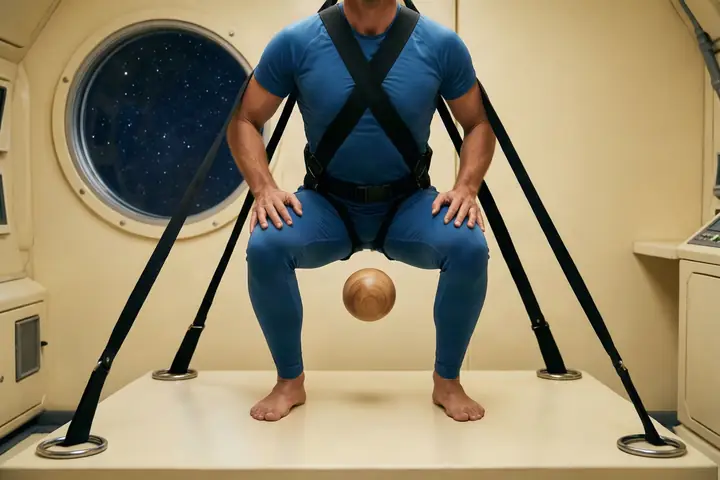
Gravity-Simulator Harness
Space Tug, Murray Leinster · 1953
A strap rig that loads the body during exercise in orbit so muscles stay strong.
not yet built · AI models' likeliest decade: the 2020s
A small prizeBusinesses pay; no seller keeps muchas a model judges it
Why
A small prize. Keeping muscles strong in orbit matters to the few who live there, a niche.
Who is paid. Operators buy it for their crews, and unlike the spinning rig it is only straps, which any workshop could make.
A model's judgement, not a reading, of the idea as if it worked the way its story promises. The model is fairly sure of this one.
Illustration made with AI image generation; not evidence.
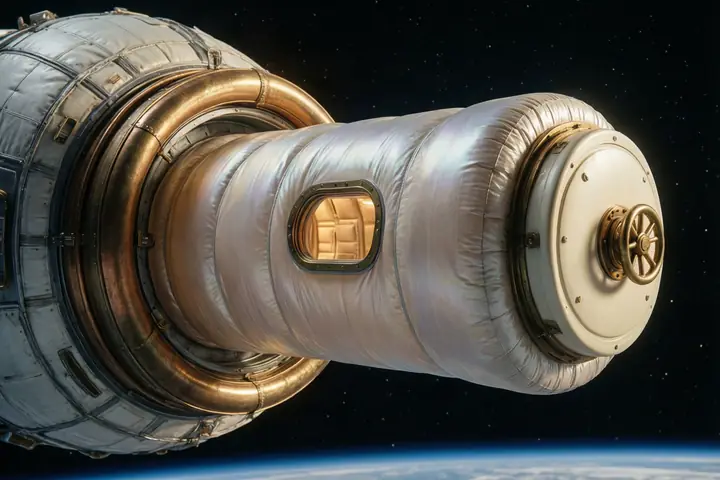
Inflatable Air Lock
Space Tug, Murray Leinster · 1953
A blow-up entry chamber whose soft walls make a roomy passage into a spacecraft.
not yet built · AI models' likeliest decade: the 2030s
A small prizeBusinesses pay; existing firms keep the restas a model judges it
Why
A small prize. It is a necessary fitting on any crewed craft, but only a part of the ship.
Who is paid. Ship operators pay for it within the craft, and shipbuilders make it themselves since nothing stops others copying it.
A model's judgement, not a reading, of the idea as if it worked the way its story promises. The model is fairly sure of this one.
Illustration made with AI image generation; not evidence.
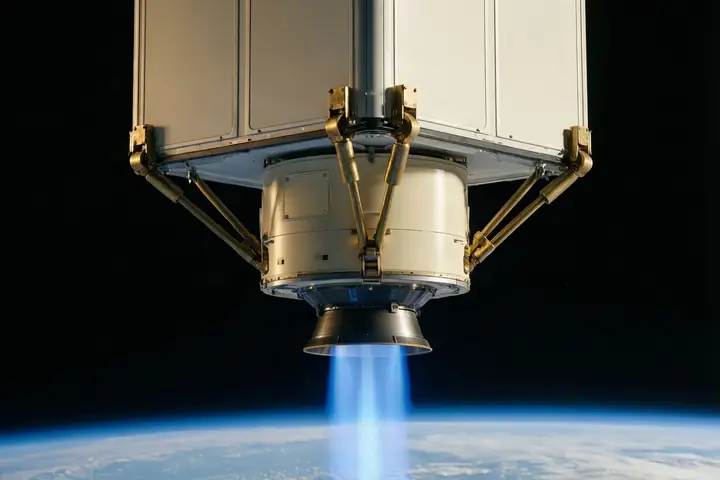
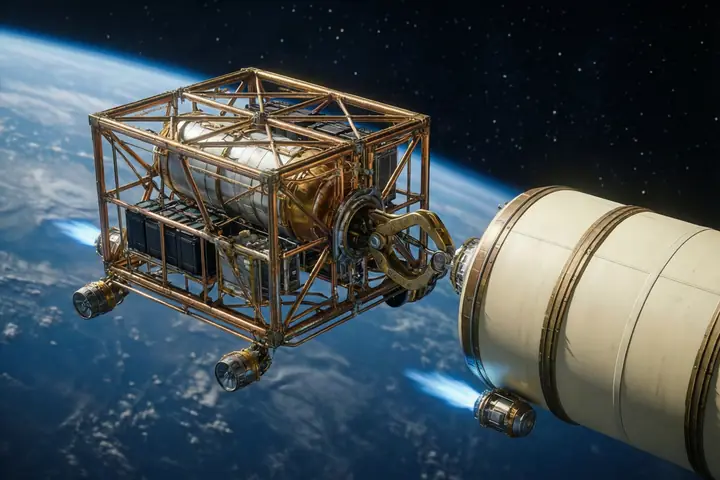
Pushpot
Space Tug, Murray Leinster · 1953
A standalone thruster module that clamps onto cargo and pushes it into orbit.
not yet built · AI models' likeliest decade: the 2020s
A large prizeBusinesses pay; existing firms keep the restas a model judges it
Why
A large prize. A thruster that clamps onto any cargo and pushes it to orbit would change the cost of launching goods.
Who is paid. Firms with cargo to launch pay, and since others could build such thrusters the established engine and launch firms collect.
A model's judgement, not a reading, of the idea as if it worked the way its story promises. The model is not very sure of this one.
Illustration made with AI image generation; not evidence.
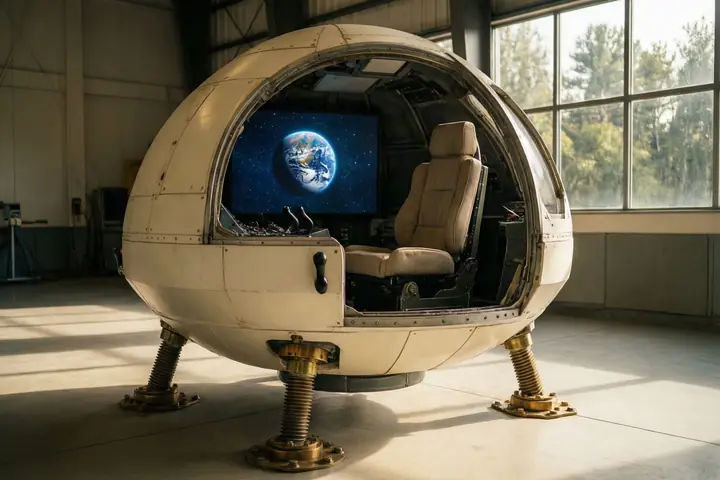
Space Flight Simulator
Space Tug, Murray Leinster · 1953
A ground-based trainer that lets pilots rehearse handling a spacecraft before ever leaving Earth.
built in the 1950s, about 0 years after it was imagined
A small prizeBusinesses pay; existing firms keep the restas a model judges it
Why
A small prize. A ground trainer for pilots is needed by every operator but is a small part of what flying costs.
Who is paid. Ship operators and flight schools buy it, and the firms that already build craft and their controls could all make it.
A model's judgement, not a reading, of the idea as if it worked the way its story promises. The model is fairly sure of this one.
Illustration made with AI image generation; not evidence.
Space Wagon
Space Tug, Murray Leinster · 1953
An open-frame orbital tug with no crew compartment, used to haul things nearby.
not yet built · AI models' likeliest decade: the 2030s
A small prizeBusinesses pay; existing firms keep the restas a model judges it
Why
A small prize. A bare open frame for hauling things nearby is the simplest kind of orbital tug, a support tool.
Who is paid. Port and ship operators buy tugs, and any spacecraft builder could make such a simple craft, so established builders collect.
A model's judgement, not a reading, of the idea as if it worked the way its story promises. The model is fairly sure of this one.
Illustration made with AI image generation; not evidence.
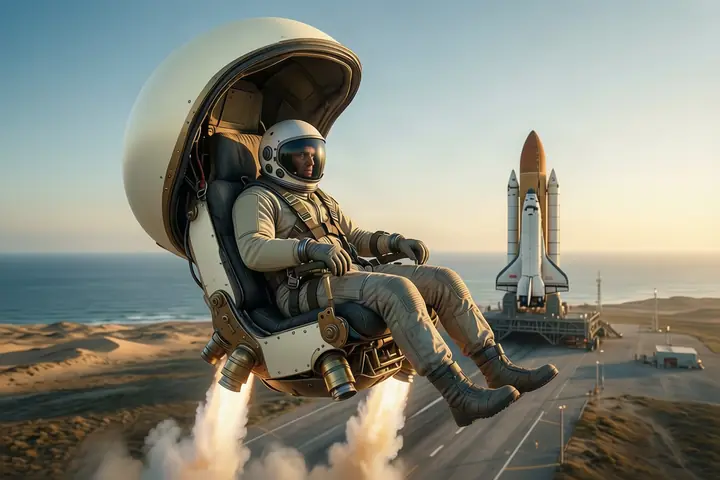
Spacecraft Ejection Seat
Space Tug, Murray Leinster · 1953
A rocket-propelled seat that throws a crew member clear if a launch goes wrong.
not yet built · AI models' likeliest decade: the 2020s
A small prizeBusinesses pay; existing firms keep the restas a model judges it
Why
A small prize. A way to survive a failing ship is something every operator wants but hopes never to use.
Who is paid. Ship operators buy it as part of the craft, and the established builders of ships and their fittings supply it since it can be copied.
A model's judgement, not a reading, of the idea as if it worked the way its story promises. The model is fairly sure of this one.
Illustration made with AI image generation; not evidence.
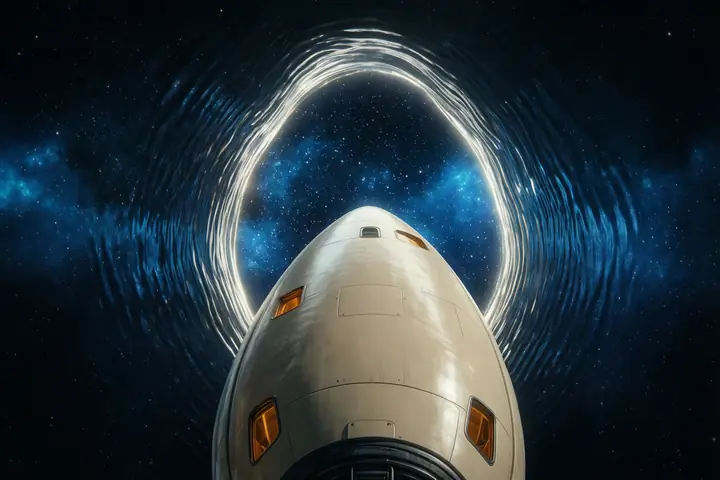
Stardrive
Childhood's End, Arthur C. Clarke · 1953
An engine that quickly pushes a ship almost to light speed.
not yet built · AI models' likeliest decade: 2100 or later
A large prizeBusinesses pay; existing firms keep the restas a model judges it
Why
A large prize. An engine that quickly reaches almost the speed of light would open other stars to trade and settlement, a transport industry of its own; it is a change for those who go, not for most people.
Who is paid. Ship operators pay for the drive, and once a firm had built it others could too, so established shipbuilders collect.
A model's judgement, not a reading, of the idea as if it worked the way its story promises. The model is not very sure of this one.
Illustration made with AI image generation; not evidence.
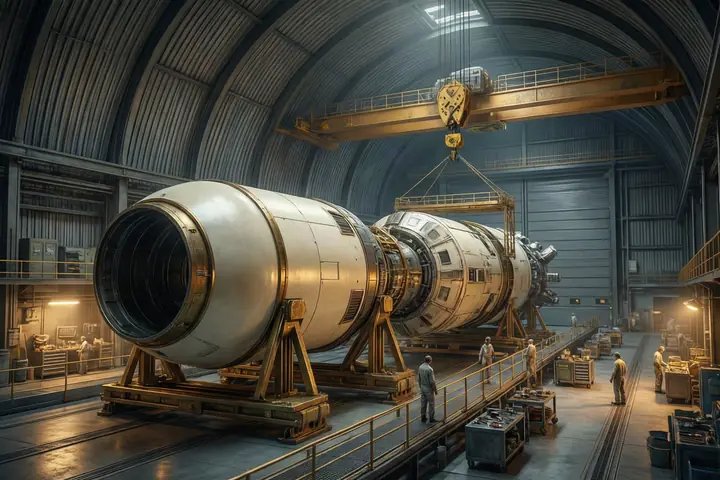
The Shed
Space Tug, Murray Leinster · 1953
A colossal hangar for assembling huge rockets and station parts.
not yet built · AI models' likeliest decade: the 2020s
A small prizeBusinesses pay; existing firms keep the restas a model judges it
Why
A small prize. A hangar for assembling big rockets and station parts is ground equipment for the launch trade.
Who is paid. Builders of rockets and stations pay for it, assumed here, and large construction firms could all put up such a hall.
A model's judgement, not a reading, of the idea as if it worked the way its story promises. The model is not very sure of this one.
Illustration made with AI image generation; not evidence.
Torchship
Sky Lift, Robert Heinlein · 1953
A spacecraft that can keep up hard thrust for long periods, cutting travel times.
not yet built · AI models' likeliest decade: 2100 or later
A large prizeBusinesses pay; existing firms keep the restas a model judges it
Why
A large prize. A ship that can keep up hard thrust for long periods would cut travel times between worlds, a transport industry of its own.
Who is paid. Carriers and expedition firms buy ships, and many yards could build them once shown how, so established vehicle builders collect.
A model's judgement, not a reading, of the idea as if it worked the way its story promises. The model is fairly sure of this one.
Illustration made with AI image generation; not evidence.
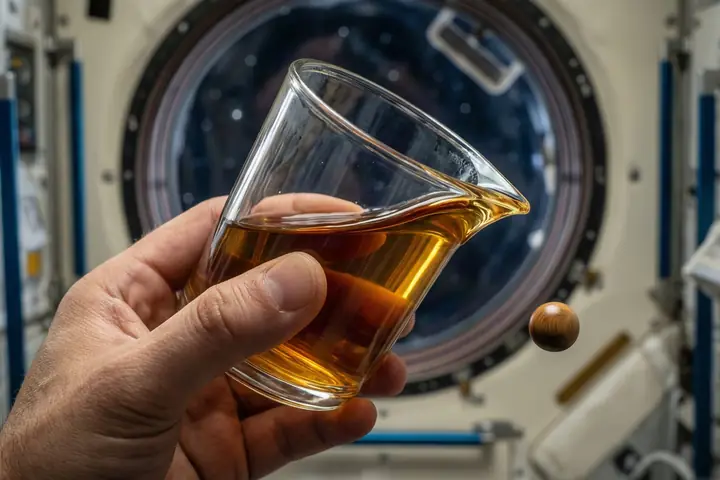
Zero-G Cups
Space Tug, Murray Leinster · 1953
Drinking vessels shaped so liquid stays put without gravity.
built in the 1960s, about 10 years after it was imagined
A small prizeBusinesses pay; no seller keeps muchas a model judges it
Why
A small prize. Cups that hold liquid without weight are a small convenience for crews.
Who is paid. Space operators buy it for crews, and it is simple hardware that many workshops could make, so no seller keeps much.
A model's judgement, not a reading, of the idea as if it worked the way its story promises. The model is fairly sure of this one.
Illustration made with AI image generation; not evidence.
Airmakers
The Big Rain, Poul Anderson · 1954
Machinery that extracts oxygen from a foreign world's native materials to make a breathable atmosphere.
not yet built · AI models' likeliest decade: the 2040s
A vast prizeA government pays; existing firms keep the restas a model judges it
Why
A vast prize. Giving a whole world air and a climate people can live in would open new land for a large share of humanity.
Who is paid. Only a government could fund work on a whole world, and the large engineering firms that already hold such contracts would be paid to do it.
A model's judgement, not a reading, of the idea as if it worked the way its story promises. The model is not very sure of this one.
Illustration made with AI image generation; not evidence.
Commute Ship
Sales Pitch, Philip K. Dick · 1954
A spacecraft that carries workers back and forth each day between Earth and jobs on other planets.
not yet built · AI models' likeliest decade: 2100 or later
A large prizeBusinesses pay; existing firms keep the restas a model judges it
Why
A large prize. Daily travel to work on other planets would change where many people can hold jobs.
Who is paid. The carrier buys the ship and workers buy fares from it, as with a liner, and since the ships could be copied the builders and carriers that already own fleets and ports collect.
A model's judgement, not a reading, of the idea as if it worked the way its story promises. The model is fairly sure of this one.
Illustration made with AI image generation; not evidence.
Escape Pod
The Vanisher, Michael Shaara · 1954
A small self-guided lifeboat carried by a spaceship or orbital base for evacuating people in a crisis.
built in the 1960s, about 10 years after it was imagined
A small prizeBusinesses pay; existing firms keep the restas a model judges it
Why
A small prize. It saves lives in a disaster, but it is safety equipment carried aboard a larger ship.
Who is paid. Ship operators pay for it as required safety gear, and shipbuilders supply it because the design is easy to copy.
A model's judgement, not a reading, of the idea as if it worked the way its story promises. The model is fairly sure of this one.
Illustration made with AI image generation; not evidence.
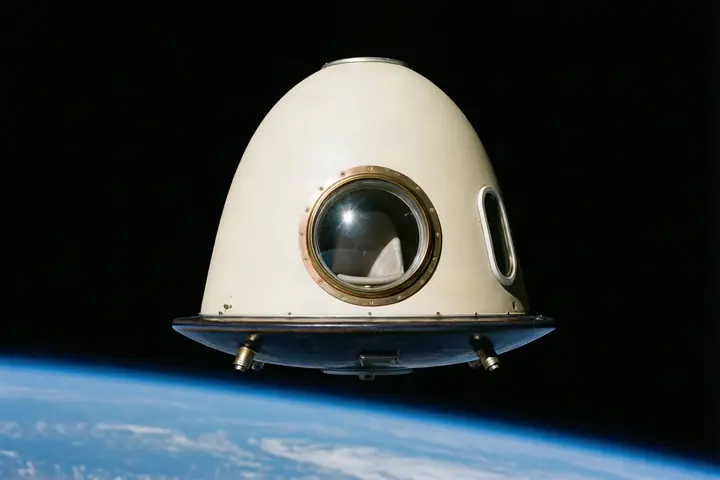
Space Capsule
Space Capsule, E.R. James · 1954
A small, bare-bones vehicle for carrying people or cargo beyond the atmosphere.
built in the 1960s, about 10 years after it was imagined
A small prizeBusinesses pay; existing firms keep the restas a model judges it
Why
A small prize. A bare capsule for a few travellers or a little cargo is a cheap niche form of space transport.
Who is paid. Carriers or expedition firms would buy it, assumed here, and existing spacecraft builders could all make something so simple.
A model's judgement, not a reading, of the idea as if it worked the way its story promises. The model is not very sure of this one.
Illustration made with AI image generation; not evidence.
Spacelanes Traffic Jam
Sales Pitch, Philip K. Dick · 1954
Congested routes of everyday travellers commuting between worlds by spacecraft.
not yet built · AI models' likeliest decade: 2100 or later
No prizeNothing is soldas a model judges it
Why
No prize. It is an event, crowded routes, not a product; the commuter craft are judged elsewhere.
Who is paid. Nothing is sold, so nobody pays and no seller collects.
A model's judgement, not a reading, of the idea as if it worked the way its story promises. The model is fairly sure of this one.
Illustration made with AI image generation; not evidence.
Spaceward Lunar Hemisphere
Dawn of the Demigods, Raymond Z. Gallun · 1954
A term for the side of the Moon that always faces away from Earth.
not yet built · AI models' likeliest decade: the 2020s
No prizeNothing is soldas a model judges it
Why
No prize. It is a natural thing or event in space, not a product anyone makes or sells.
Who is paid. Nothing is sold, so nobody pays and no seller collects.
A model's judgement, not a reading, of the idea as if it worked the way its story promises. The model is fairly sure of this one.
Illustration made with AI image generation; not evidence.
Central City (Lunar Habitat)
Earthlight, Arthur C. Clarke · 1955
A civilian settlement on the Moon built for people to live and work.
not yet built · AI models' likeliest decade: the 2030s
A large prizeA government pays; existing firms keep the restas a model judges it
Why
A large prize. A place for many people to live and work beyond Earth is a building industry of its own.
Who is paid. A settlement is a public work a government pays for, and the big construction and space firms that already win such contracts would build it.
A model's judgement, not a reading, of the idea as if it worked the way its story promises. The model is fairly sure of this one.
Illustration made with AI image generation; not evidence.
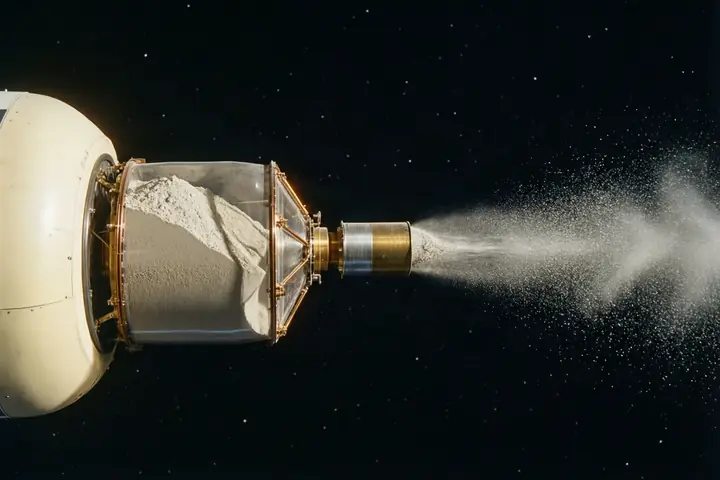
Finely Divided Dust Propellant
Earthlight, Arthur C. Clarke · 1955
Powdered material expelled as reaction mass to push a spacecraft.
not yet built · AI models' likeliest decade: the 2020s
A small prizeBusinesses pay; no seller keeps muchas a model judges it
Why
A small prize. Powder as reaction mass is a cheap fuel choice, a minor saving for ship operators.
Who is paid. Ship operators buy it, and ground rock is something anyone can supply, so no seller keeps much.
A model's judgement, not a reading, of the idea as if it worked the way its story promises. The model is fairly sure of this one.
Illustration made with AI image generation; not evidence.
Generation Ship
Star Ship, E.C. Tubb · 1955
A vast spacecraft on which a whole community lives and raises children during a voyage lasting generations.
not yet built · AI models' likeliest decade: 2100 or later
A large prizeA government pays; existing firms keep the restas a model judges it
Why
A large prize. A ship that carries a whole community for generations is a vast building job, but a rare one.
Who is paid. Only a government could fund a voyage with no return, and the big shipbuilders that already hold public contracts would build it.
A model's judgement, not a reading, of the idea as if it worked the way its story promises. The model is fairly sure of this one.
Illustration made with AI image generation; not evidence.
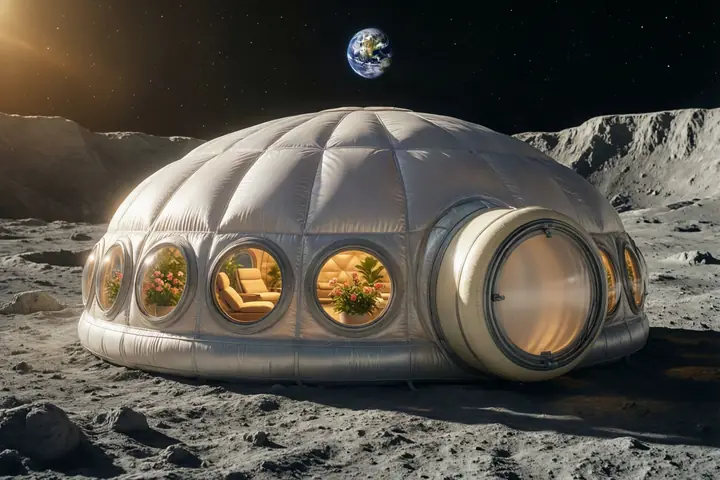
Inflatable Lunar Resort
Solar Lottery, Philip K. Dick · 1955
A blow-up building on the Moon where people living there can go to unwind.
not yet built · AI models' likeliest decade: the 2040s
A small prizeHouseholds pay; existing firms keep the restas a model judges it
Why
A small prize. A place for Moon dwellers to unwind is a local leisure spot, a convenience.
Who is paid. The people living there pay to visit, and the building is easy to copy, so whoever already holds ground and supply lines on the Moon collects.
A model's judgement, not a reading, of the idea as if it worked the way its story promises. The model is not very sure of this one.
Illustration made with AI image generation; not evidence.
Landing-Grid
Sand Doom, Murray Leinster · 1955
A prepared surface on another world where spacecraft set down and take off.
built since, date unclear
A small prizeBusinesses pay; existing firms keep the restas a model judges it
Why
A small prize. A place to land, park or refuel is a necessary part of space traffic but only an extra beside the ships and launch works.
Who is paid. Ship operators pay to use it, and it is easy to copy, so those who already hold the port sites collect.
A model's judgement, not a reading, of the idea as if it worked the way its story promises. The model is fairly sure of this one.
Illustration made with AI image generation; not evidence.
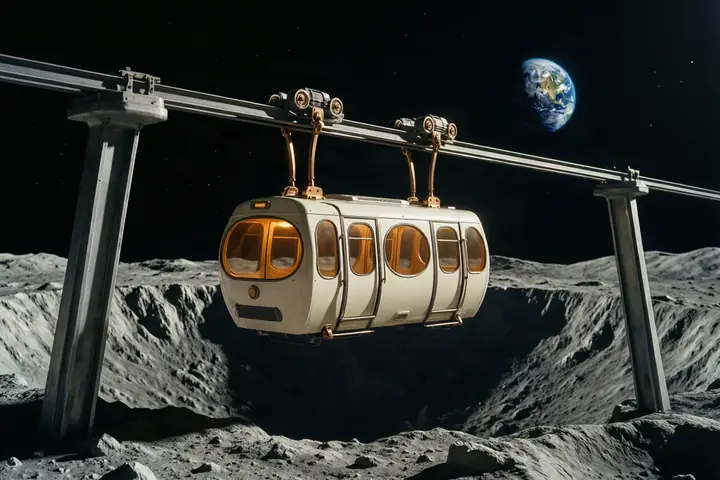
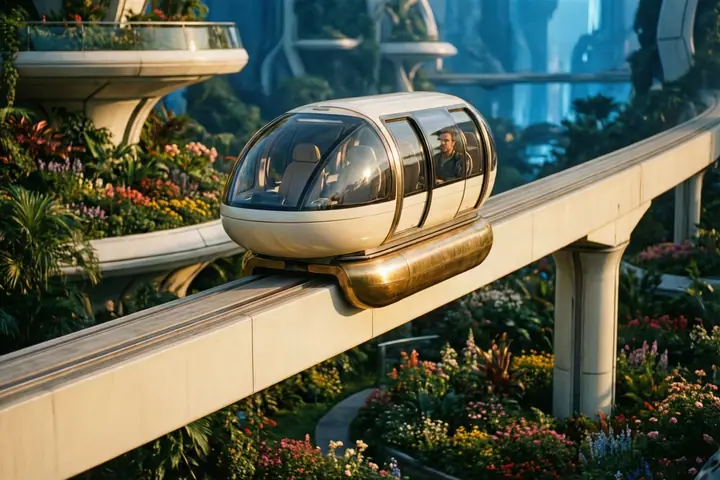
Lunar Monorail
Earthlight, Arthur C. Clarke · 1955
An elevated single-rail line carrying passengers across the Moon's surface.
not yet built · AI models' likeliest decade: the 2060s
A small prizeBusinesses pay; existing firms keep the restas a model judges it
Why
A small prize. A rail line across the Moon serves only those who live and work there, a niche.
Who is paid. No owner is named, so it is assumed a carrier buys it like other surface vehicles and sells seats, and established rail builders could all make it.
A model's judgement, not a reading, of the idea as if it worked the way its story promises. The model is not very sure of this one.
Illustration made with AI image generation; not evidence.
Schrieber Analyzer
Diabologic, Eric Frank Russell · 1955
An automatic instrument that tests the air of a new world to tell if it is safe to breathe.
not yet built · AI models' likeliest decade: the 2020s
A small prizeBusinesses pay; no seller keeps muchas a model judges it
Why
A small prize. Checking whether air is safe to breathe is a useful instrument for a few explorers.
Who is paid. Expedition firms buy it, assumed here, and gas-testing instruments are made by many firms, so no seller keeps much.
A model's judgement, not a reading, of the idea as if it worked the way its story promises. The model is fairly sure of this one.
Illustration made with AI image generation; not evidence.
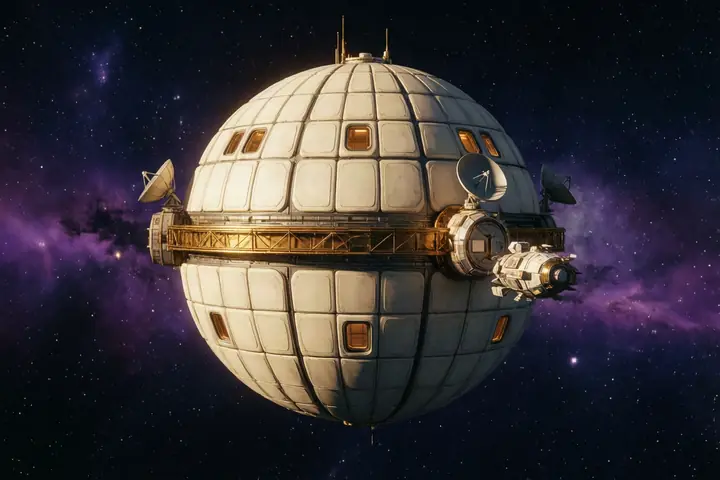
Scout-Base
Diabologic, Eric Frank Russell · 1955
A built spherical station serving as a forward post at the edge of explored space.
not yet built · AI models' likeliest decade: the 2060s
A small prizeA government pays; existing firms keep the restas a model judges it
Why
A small prize. A forward post at the edge of explored space serves scouts and patrols, an outpost and not a town.
Who is paid. Exploring and guarding a frontier is assumed to be a government's work, and the established station builders would be paid.
A model's judgement, not a reading, of the idea as if it worked the way its story promises. The model is not very sure of this one.
Illustration made with AI image generation; not evidence.
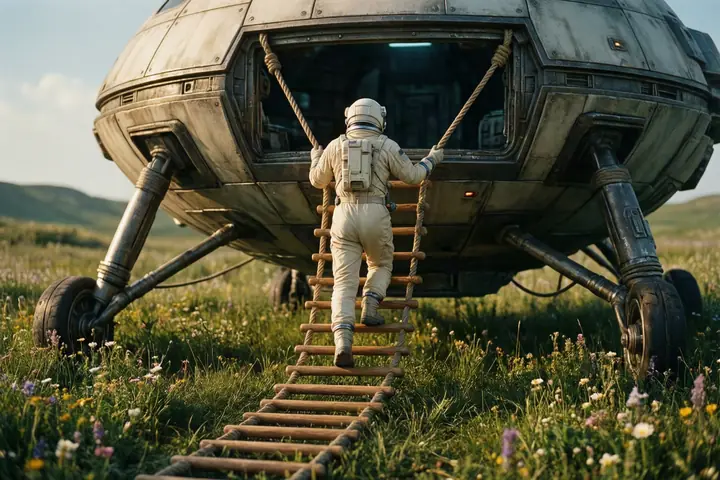
Space Craft Rope Ladder
Diabologic, Eric Frank Russell · 1955
A flexible ladder lowered from a landed spacecraft so crew can climb down.
built since, date unclear
A small prizeBusinesses pay; no seller keeps muchas a model judges it
Why
A small prize. A ladder for climbing down from a landed ship is plain equipment.
Who is paid. Space operators buy it for crews, and it is simple enough that many workshops could make it, so no seller keeps much.
A model's judgement, not a reading, of the idea as if it worked the way its story promises. The model is fairly sure of this one.
Illustration made with AI image generation; not evidence.
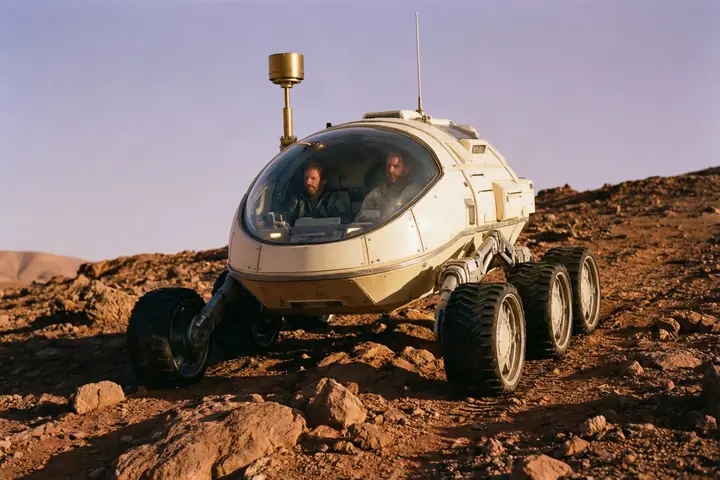
Bug
Brightside Crossing, Alan E. Nourse · 1956
A small crewed rover built to cross the harsh terrain of other planets.
not yet built · AI models' likeliest decade: the 2030s
A small prizeBusinesses pay; existing firms keep the restas a model judges it
Why
A small prize. A vehicle for crossing another world serves a few expeditions, a niche.
Who is paid. No user is named, so it is assumed that firms working on other worlds buy it like other working gear, and established vehicle builders could all make it.
A model's judgement, not a reading, of the idea as if it worked the way its story promises. The model is not very sure of this one.
Illustration made with AI image generation; not evidence.
Eetee (E.T - extraterrestrial)
Double Star, Robert Heinlein · 1956
A slang label for a thinking creature from beyond Earth.
not yet built · AI models could not judge when it may arrive
No prizeNothing is soldas a model judges it
Why
No prize. It is a word for a creature from another world, not a technology anyone makes or sells.
Who is paid. Nothing is sold, so nobody pays and no seller collects.
A model's judgement, not a reading, of the idea as if it worked the way its story promises. The model is fairly sure of this one.
Illustration made with AI image generation; not evidence.
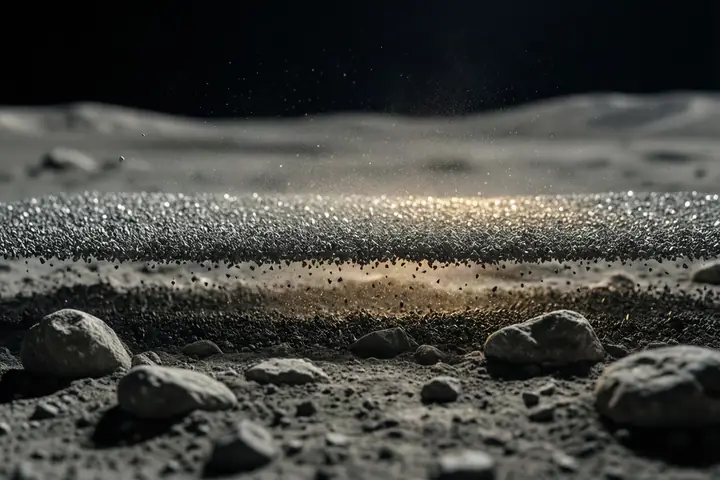
Floating Lunar Dust
Dust Rag, Hal Clement · 1956
Electrically charged grains of Moon dust that hover above the ground.
not yet built · AI models' likeliest decade: the 2020s
No prizeNothing is soldas a model judges it
Why
No prize. It is a natural thing or place in space, not something made or sold.
Who is paid. Nothing is sold, so nobody pays and no seller collects.
A model's judgement, not a reading, of the idea as if it worked the way its story promises. The model is fairly sure of this one.
Illustration made with AI image generation; not evidence.
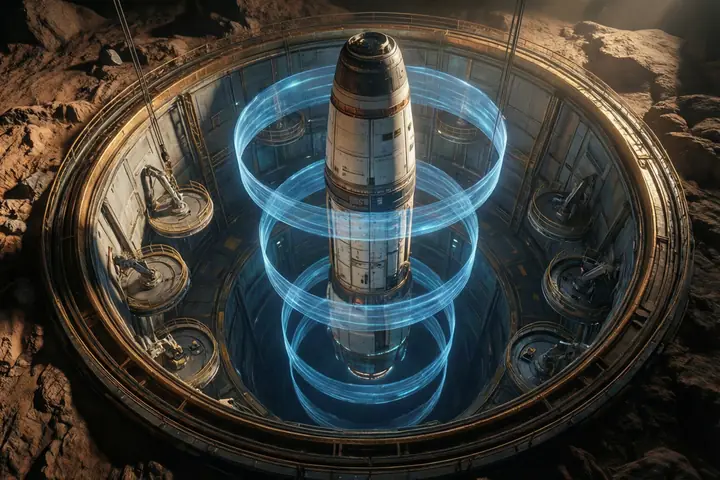
Landing Pit (Drydock and Construction)
The Stars My Destination, Alfred Bester · 1956
A deep round shaft where spacecraft are eased down by gravity-cancelling screens for landing and repair.
not yet built · AI models judge it not physically possible
A small prizeBusinesses pay; existing firms keep the restas a model judges it
Why
A small prize. A place to land, park or refuel is a necessary part of space traffic but only an extra beside the ships and launch works.
Who is paid. Ship operators pay to use it, and it is easy to copy, so those who already hold the port sites collect.
A model's judgement, not a reading, of the idea as if it worked the way its story promises. The model is fairly sure of this one.
Illustration made with AI image generation; not evidence.
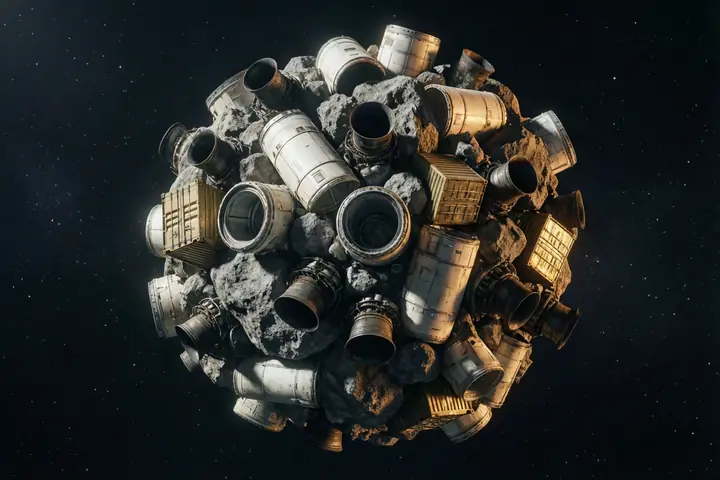
Sargasso Asteroid
The Stars My Destination, Alfred Bester · 1956
A small world pieced together from bare asteroid rock and the hulks of lost spaceships.
not yet built · AI models' likeliest decade: the 2060s
No prizeNothing is soldas a model judges it
Why
No prize. It is a makeshift refuge pieced together from rock and wrecks, assumed here to be made by castaways for themselves and never bought or sold.
Who is paid. Nothing is sold, so nobody pays and no seller collects.
A model's judgement, not a reading, of the idea as if it worked the way its story promises. The model is not very sure of this one.
Illustration made with AI image generation; not evidence.
Space-Beacon
Exploration Team, Murray Leinster · 1956
A transmitter that helps a ship locate a settled world or colony.
not yet built · AI models' likeliest decade: the 2020s
A small prizeA government pays; no seller keeps muchas a model judges it
Why
A small prize. A beacon marking a settled world is a minor aid to navigation.
Who is paid. A beacon serves all ships and none can be charged, so a government pays, and a simple transmitter is something many firms could build.
A model's judgement, not a reading, of the idea as if it worked the way its story promises. The model is fairly sure of this one.
Illustration made with AI image generation; not evidence.
Space-Boat (Rocket Boat)
Exploration Team, Murray Leinster · 1956
A small craft that drops down to a planet and later lifts off again.
not yet built · AI models' likeliest decade: the 2020s
A small prizeBusinesses pay; existing firms keep the restas a model judges it
Why
A small prize. A small craft that lands and lifts off again is a ship's own ferry, an extra rather than an industry.
Who is paid. Ship and station operators buy it, assumed here, and existing spacecraft builders could all make something so simple.
A model's judgement, not a reading, of the idea as if it worked the way its story promises. The model is fairly sure of this one.
Illustration made with AI image generation; not evidence.
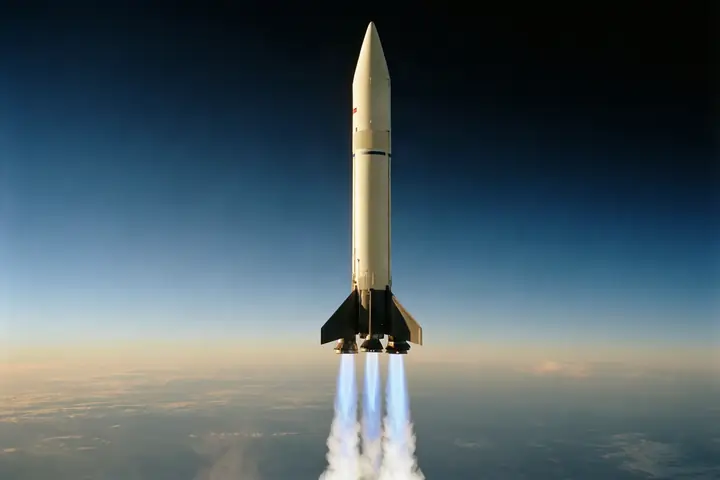
Teakettle
Double Star, Robert Heinlein · 1956
An ordinary rocket that burns hydrogen to climb out of the atmosphere.
already existed before the story (the 1900s)
A large prizeBusinesses pay; existing firms keep the restas a model judges it
Why
A large prize. An ordinary rocket to orbit is the plain workhorse of space transport, an industry of its own.
Who is paid. Carriers buy rockets to move people and cargo, and many builders can make an ordinary one, so established builders collect.
A model's judgement, not a reading, of the idea as if it worked the way its story promises. The model is fairly sure of this one.
Illustration made with AI image generation; not evidence.
Trolling Tether Cable
Atom Drive, Charles Fontenay · 1956
A long line dangled from a passing craft to snag cargo and haul it off a planet.
not yet built · AI models' likeliest decade: the 2040s
A large prizeBusinesses pay; existing firms keep the restas a model judges it
Why
A large prize. Snagging cargo off a planet from a passing craft would be a new and cheaper way to lift goods to space.
Who is paid. Shippers pay to send cargo up, and once it was shown to work another line could be flown, so the builders and carriers already in the trade collect.
A model's judgement, not a reading, of the idea as if it worked the way its story promises. The model is not very sure of this one.
Illustration made with AI image generation; not evidence.
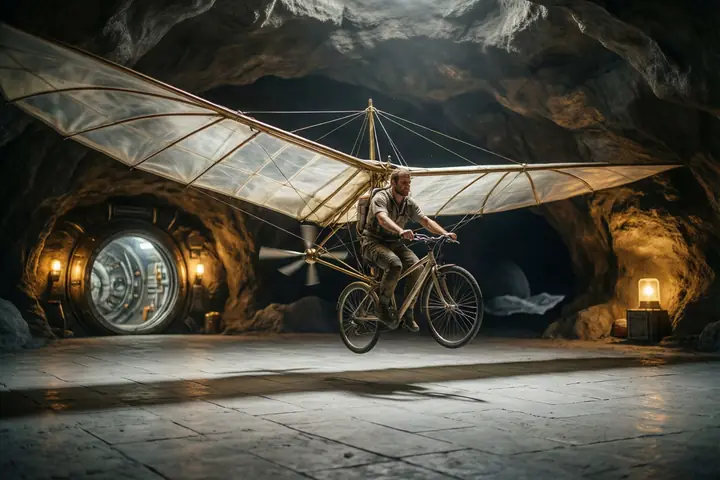
Bats' Cave
The Menace From Earth, Robert Heinlein · 1957
A large lunar cave used by settlers to store air and as a place for human-powered flying.
not yet built · AI models' likeliest decade: the 2060s
A small prizeHouseholds pay; existing firms keep the restas a model judges it
Why
A small prize. A cave for storing air and for flying as a pastime is a local amenity for settlers.
Who is paid. Settlers pay to fly there, assumed here, and whoever already owns the cave collects since such caves are few.
A model's judgement, not a reading, of the idea as if it worked the way its story promises. The model is not very sure of this one.
Illustration made with AI image generation; not evidence.
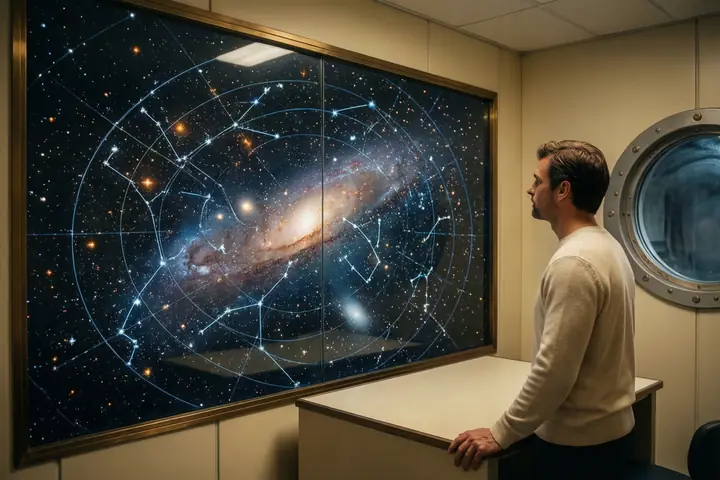
Galactovue
Citizen of the Galaxy, Robert Heinlein · 1957
A display that shows a map of the stars.
not yet built · AI models' likeliest decade: the 2020s
A small prizeBusinesses pay; existing firms keep the restas a model judges it
Why
A small prize. It helps a crew find their way or see what lies about them, a useful fitting but only a part of the ship.
Who is paid. Ship operators pay for it within the craft, and the firms that already make ship instruments supply it since the design can be copied.
A model's judgement, not a reading, of the idea as if it worked the way its story promises. The model is fairly sure of this one.
Illustration made with AI image generation; not evidence.
Jump-Along
The Lady Was A Tramp, Rose Sharon · 1957
A computer that works out the course for each leap between stars.
not yet built · AI models judge it not physically possible
A small prizeBusinesses pay; existing firms keep the restas a model judges it
Why
A small prize. It helps a crew find their way or see what lies about them, a useful fitting but only a part of the ship.
Who is paid. Ship operators pay for it within the craft, and the firms that already make ship instruments supply it since the design can be copied.
A model's judgement, not a reading, of the idea as if it worked the way its story promises. The model is fairly sure of this one.
Illustration made with AI image generation; not evidence.
Jumpship
The Lady Was A Tramp, Rose Sharon · 1957
A starship able to cross enormous distances in an instant.
not yet built · AI models judge it not physically possible
A large prizeBusinesses pay; existing firms keep the restas a model judges it
Why
A large prize. A ship that crosses between stars in an instant is the base of a transport industry, the size settled for faster-than-light travel elsewhere.
Who is paid. Carriers and other firms working in space buy ships, and since a second yard could build the same craft the established shipbuilders collect.
A model's judgement, not a reading, of the idea as if it worked the way its story promises. The model is not very sure of this one.
Illustration made with AI image generation; not evidence.
Launching Cradle
Needler, Gordon Randall Garrett · 1957
A supporting frame that holds a ball-shaped spacecraft upright on the ground.
built since, date unclear
A small prizeBusinesses pay; no seller keeps muchas a model judges it
Why
A small prize. A frame that holds a craft on the ground is a simple port fitting.
Who is paid. Port and ship operators buy it, and it is plain steel that any workshop could make.
A model's judgement, not a reading, of the idea as if it worked the way its story promises. The model is fairly sure of this one.
Illustration made with AI image generation; not evidence.
Space Armor
Cities in Flight, James Blish · 1957
Heavy protective suits for working in the airless void of space.
built in the 1960s, about 10 years after it was imagined
A small prizeBusinesses pay; existing firms keep the restas a model judges it
Why
A small prize. A suit that keeps a person alive in vacuum or thin air is vital to its wearer but serves only the few who work in space.
Who is paid. Space operators buy suits for their crews, and the few firms that already make such gear supply them since the design can be copied.
A model's judgement, not a reading, of the idea as if it worked the way its story promises. The model is fairly sure of this one.
Illustration made with AI image generation; not evidence.
Spacefaring
Citizen of the Galaxy, Robert Heinlein · 1957
A people or country that operates beyond Earth to explore and do business.
not yet built · AI models' likeliest decade: the 2020s
No prizeNothing is soldas a model judges it
Why
No prize. It is a word or a way of doing things that needs no new equipment, not a product.
Who is paid. Nothing is sold, so nobody pays and no seller collects.
A model's judgement, not a reading, of the idea as if it worked the way its story promises. The model is fairly sure of this one.
Illustration made with AI image generation; not evidence.
Stellar Analog Computers
The Lady Was A Tramp, Rose Sharon · 1957
Specialised machines that compute safe leaps for travel between stars.
not yet built · AI models judge it not physically possible
A small prizeBusinesses pay; existing firms keep the restas a model judges it
Why
A small prize. Working out a safe course between stars is essential to such travel but is an instrument within the ship.
Who is paid. Ship operators buy it as part of the craft, and the established makers of flight instruments supply it since it can be copied.
A model's judgement, not a reading, of the idea as if it worked the way its story promises. The model is fairly sure of this one.
Illustration made with AI image generation; not evidence.
Asteroid-Metal
The Mechanical Monarch, E.C. Tubb · 1958
Metal extracted from asteroids.
not yet built · AI models' likeliest decade: the 2050s
A large prizeBusinesses pay; existing firms keep the restas a model judges it
Why
A large prize. Metal and other materials from space rocks would be an industry of its own and could change the cost of raw materials.
Who is paid. Factories and builders buy the output, and since mining methods are easy to copy the firms that already own ships and refineries collect.
A model's judgement, not a reading, of the idea as if it worked the way its story promises. The model is fairly sure of this one.
Illustration made with AI image generation; not evidence.
Build A Planet With Asteroids
And Then the Town Took Off, Richard Wilson · 1958
Collecting enough of the solar system's asteroids to assemble a new world from the pieces.
not yet built · AI models' likeliest decade: 2100 or later
A vast prizeA government pays; existing firms keep the restas a model judges it
Why
A vast prize. A new world to live on would add living room for a large share of humanity.
Who is paid. No private buyer could fund a world, so a government pays and the large builders that already hold public works contracts collect.
A model's judgement, not a reading, of the idea as if it worked the way its story promises. The model is not very sure of this one.
Illustration made with AI image generation; not evidence.
Chin Plates
Have Space Suit - Will Travel, Robert Heinlein · 1958
Controls inside a spacesuit helmet that the wearer operates by pressing with the chin.
built in the 1960s, about 10 years after it was imagined
A small prizeBusinesses pay; existing firms keep the restas a model judges it
Why
A small prize. It is a handy detail of a helmet, a convenience for the few people who wear spacesuits.
Who is paid. Operators pay for it as part of the suit, and suit makers fit it themselves because any of them could copy it.
A model's judgement, not a reading, of the idea as if it worked the way its story promises. The model is fairly sure of this one.
Illustration made with AI image generation; not evidence.
Chin Window
Have Space Suit - Will Travel, Robert Heinlein · 1958
A low viewing port in a spacesuit helmet so the wearer can look down past the chin.
built in the 1960s, about 10 years after it was imagined
A small prizeBusinesses pay; existing firms keep the restas a model judges it
Why
A small prize. It is a handy detail of a helmet, a convenience for the few people who wear spacesuits.
Who is paid. Operators pay for it as part of the suit, and suit makers fit it themselves because any of them could copy it.
A model's judgement, not a reading, of the idea as if it worked the way its story promises. The model is fairly sure of this one.
Illustration made with AI image generation; not evidence.
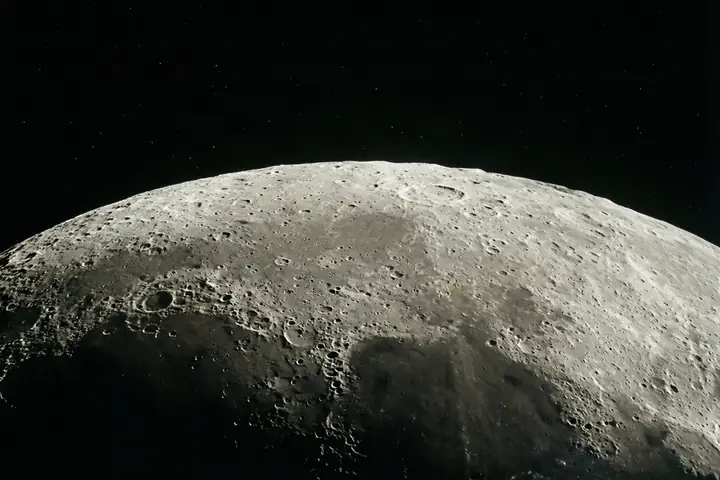
Farside
We Have Fed Our Sea, Poul Anderson · 1958
The half of the Moon permanently turned away from our planet.
not yet built · AI models' likeliest decade: the 2020s
No prizeNothing is soldas a model judges it
Why
No prize. It is a natural thing or event in space, not a product anyone makes or sells.
Who is paid. Nothing is sold, so nobody pays and no seller collects.
A model's judgement, not a reading, of the idea as if it worked the way its story promises. The model is fairly sure of this one.
Illustration made with AI image generation; not evidence.
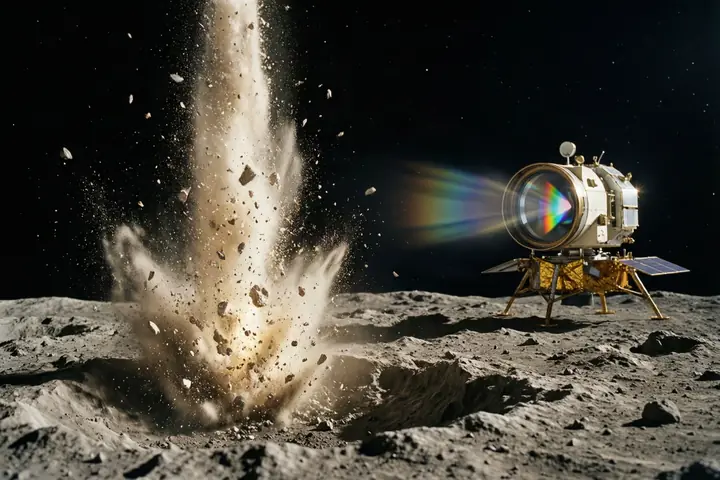
Impactor Determines Composition
The Mechanical Monarch, E.C. Tubb · 1958
Crashing a probe into a minor body in space and studying the debris to learn what it is made of.
built in the 1990s, about 40 years after it was imagined
A small prizeA government pays; existing firms keep the restas a model judges it
Why
A small prize. It adds to knowledge of the sky but yields nothing to sell, so its worth is limited to science.
Who is paid. Nobody could be charged for what it learns, so a government pays the instrument and probe builders that already hold such contracts.
A model's judgement, not a reading, of the idea as if it worked the way its story promises. The model is fairly sure of this one.
Illustration made with AI image generation; not evidence.
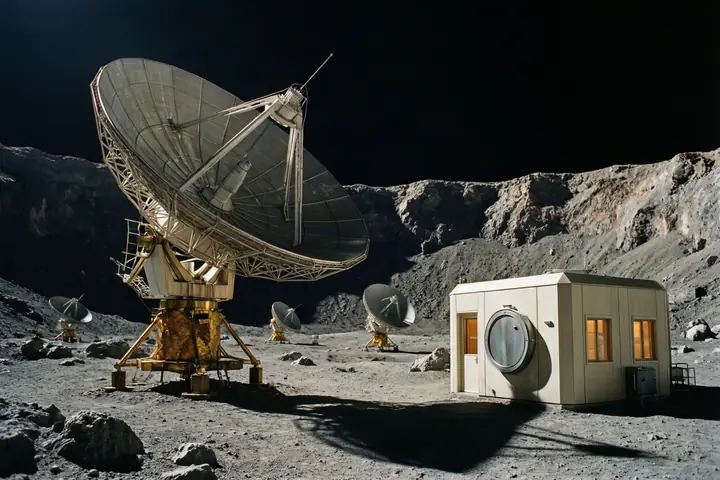
Lunar Observatory
We Have Fed Our Sea, Poul Anderson · 1958
A telescope station on the Moon's hidden hemisphere, shielded from Earth's noise.
built in the 1990s, about 40 years after it was imagined
A small prizeA government pays; existing firms keep the restas a model judges it
Why
A small prize. It adds to knowledge of the sky but yields nothing to sell, so its worth is limited to science.
Who is paid. Nobody could be charged for what it learns, so a government pays the instrument and probe builders that already hold such contracts.
A model's judgement, not a reading, of the idea as if it worked the way its story promises. The model is fairly sure of this one.
Illustration made with AI image generation; not evidence.
Skew-Flip Turnover
Have Space Suit - Will Travel, Robert Heinlein · 1958
A manoeuvre where a constantly thrusting ship turns around at the midpoint to start braking for arrival.
not yet built · AI models' likeliest decade: 2100 or later
No prizeNothing is soldas a model judges it
Why
No prize. It is a word or a way of doing things that needs no new equipment, not a product.
Who is paid. Nothing is sold, so nobody pays and no seller collects.
A model's judgement, not a reading, of the idea as if it worked the way its story promises. The model is fairly sure of this one.
Illustration made with AI image generation; not evidence.
The Hub
Worlds of Origin, Jack Vance · 1958
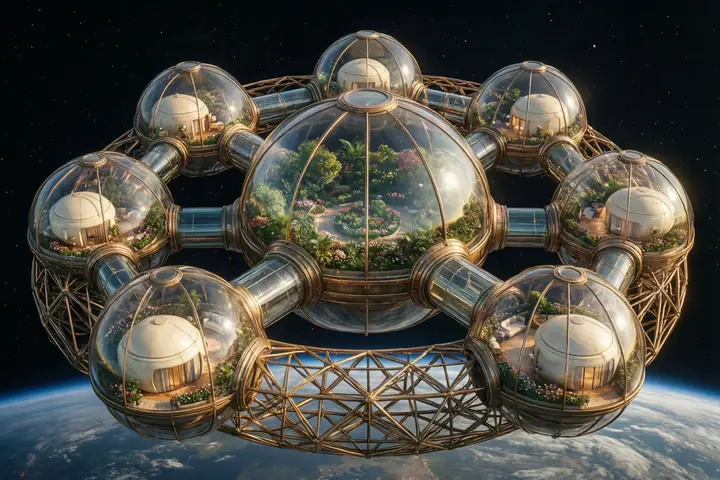
A large holiday complex in space made of livable bubbles held together by a metal lattice.
not yet built · AI models' likeliest decade: the 2050s
A large prizeHouseholds pay; existing firms keep the restas a model judges it
Why
A large prize. A holiday resort in space would be a travel industry of its own.
Who is paid. Unlike other stations this one is sold to holidaymakers, who pay for their stay, and since the structure could be copied the resort owners and builders already in the trade collect.
A model's judgement, not a reading, of the idea as if it worked the way its story promises. The model is not very sure of this one.
Illustration made with AI image generation; not evidence.
Venus Cities Float In Atmosphere
Bread Overhead!, Fritz Leiber · 1958
Settlements that float high in the atmosphere of Venus.
not yet built · AI models' likeliest decade: the 2060s
A large prizeA government pays; existing firms keep the restas a model judges it
Why
A large prize. Cities afloat in the air of another world would be places for many people to live, a building industry of its own.
Who is paid. A settlement is a public work a government pays for, and the big construction and space firms that already win such contracts would build it.
A model's judgement, not a reading, of the idea as if it worked the way its story promises. The model is not very sure of this one.
Illustration made with AI image generation; not evidence.
Hyperspace Beacon
The Repairman, Harry Harrison · 1959
Transmitters in ordinary space that give travellers fixed landmarks for steering through a faster-than-light realm.
not yet built · AI models judge it not physically possible
A small prizeA government pays; existing firms keep the restas a model judges it
Why
A small prize. Fixed landmarks make faster-than-light travel safer, but a beacon is an aid to traffic and not an industry.
Who is paid. No passing ship can be charged for a beacon, so a government pays, and the firms that already build such aids supply it.
A model's judgement, not a reading, of the idea as if it worked the way its story promises. The model is fairly sure of this one.
Illustration made with AI image generation; not evidence.
Robot Spectra Analyzer
The Repairman, Harry Harrison · 1959
An instrument that works out a ship's location by reading the light of nearby stars.
not yet built · AI models' likeliest decade: the 2020s
A small prizeBusinesses pay; existing firms keep the restas a model judges it
Why
A small prize. It is a viewing or steering instrument aboard a ship, useful to the crew but only a part of the craft.
Who is paid. Ship operators pay for it within the craft, and established instrument makers supply it since others could copy the design.
A model's judgement, not a reading, of the idea as if it worked the way its story promises. The model is fairly sure of this one.
Computing, AI and virtual worlds · 57
Illustration made with AI image generation; not evidence.
The Machines
The Evitable Conflict, Isaac Asimov · 1950
A handful of supercomputers that plan and steer an entire world's economy.
not yet built · AI models' likeliest decade: the 2050s
A vast prizeA government pays; existing firms keep the restas a model judges it
Why
A vast prize. A machine wise enough to run or remake a whole society's affairs would change how most people live and work.
Who is paid. I assume a single machine serving everyone would be built as a public work, so a government pays, and the firms that already build large computing works for governments collect.
A model's judgement, not a reading, of the idea as if it worked the way its story promises. The model is not very sure of this one.
Illustration made with AI image generation; not evidence.
Calculator Pad
Foundation, Isaac Asimov · 1951
A handheld computing slate for working through equations of mass behaviour.
built in the 1960s, about 10 years after it was imagined
A small prizeBusinesses pay; no seller keeps muchas a model judges it
Why
A small prize. Fast sums in the hand or on the desk are a convenience for people who calculate.
Who is paid. Firms and students buy them, and anyone can make one, so no seller keeps much.
A model's judgement, not a reading, of the idea as if it worked the way its story promises. The model is fairly sure of this one.
Illustration made with AI image generation; not evidence.
Helmet-Mounted Display Screen
Rock Diver, Harry Harrison · 1951
A small screen fixed to headgear so the wearer can glance at information.
built in the 1980s, about 30 years after it was imagined
A small prizeBusinesses pay; existing firms keep the restas a model judges it
Why
A small prize. A small screen on headgear lets the wearer glance at information, which is a handy tool for particular jobs.
Who is paid. I assume employers buy it for people whose hands are busy, it is easy to copy, and firms that already make screens and work headgear collect what little is left.
A model's judgement, not a reading, of the idea as if it worked the way its story promises. The model is not very sure of this one.
Illustration made with AI image generation; not evidence.
Machine Test Scoring
The Fun They Had, Isaac Asimov · 1951
A machine that reads marked answer sheets and grades pupils' exams.
built in the 1960s, about 10 years after it was imagined
A small prizeA government pays; no seller keeps muchas a model judges it
Why
A small prize. Marking answer sheets by machine saves teachers time, which is a modest saving.
Who is paid. Schools pay, assumed here to be publicly funded, and any maker of office machines can build a sheet reader.
A model's judgement, not a reading, of the idea as if it worked the way its story promises. The model is fairly sure of this one.
Illustration made with AI image generation; not evidence.
Mechanical Teacher
The Fun They Had, Isaac Asimov · 1951
A computer tutor that gives children their lessons.
already existed before the story (the 1920s)
A large prizeHouseholds pay; no seller keeps muchas a model judges it
Why
A large prize. A patient private tutor for every child would change the cost and quality of schooling, which is a single industry however many people it reaches.
Who is paid. I assume families buy it rather than schools, and teaching software is easy for many firms to make, so no seller keeps much.
A model's judgement, not a reading, of the idea as if it worked the way its story promises. The model is not very sure of this one.
Illustration made with AI image generation; not evidence.
Meson Filter
The Jester, William Tenn · 1951
A robot component that judges how funny a joke will be, from mild amusement to roaring laughter.
not yet built · AI models' likeliest decade: the 2020s
A small prizeBusinesses pay; no seller keeps muchas a model judges it
Why
A small prize. Knowing what makes people laugh helps writers and entertainers a little, which is a niche.
Who is paid. Entertainment firms would pay for it, and nothing stops others building the same, so no seller keeps much.
A model's judgement, not a reading, of the idea as if it worked the way its story promises. The model is fairly sure of this one.
Illustration made with AI image generation; not evidence.
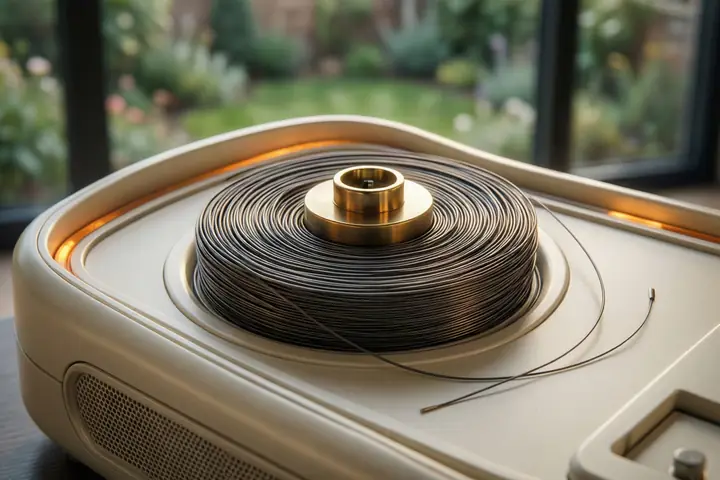
Microwire
Between Planets, Robert Heinlein · 1951
Fine magnetic thread that stores sound recordings.
built in the 1950s, about 0 years after it was imagined
A small prizeHouseholds pay; no seller keeps muchas a model judges it
Why
A small prize. Unlike storage for computer data, thread that holds only sound is one more way to keep recordings, which is a convenience.
Who is paid. People buy it to record and play sound, and it is simple to make, so no seller keeps much.
A model's judgement, not a reading, of the idea as if it worked the way its story promises. The model is fairly sure of this one.
Illustration made with AI image generation; not evidence.
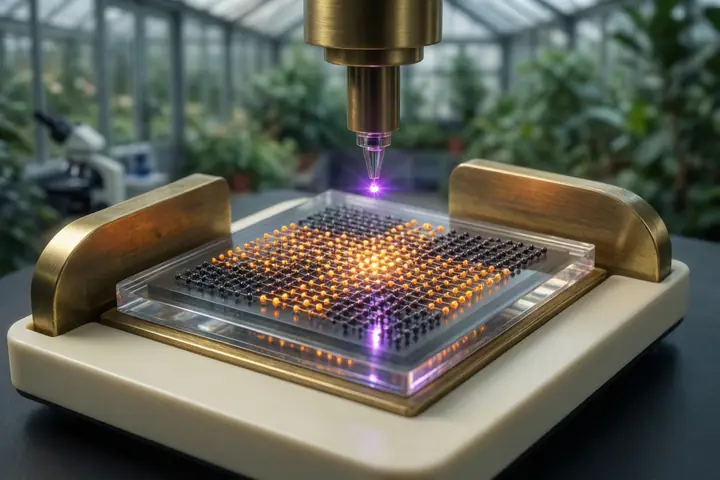
Molecule Matrix
Between Planets, Robert Heinlein · 1951
Data storage that encodes bits in single molecules or atoms.
not yet built · AI models' likeliest decade: the 2030s
A large prizeBusinesses pay; existing firms keep the restas a model judges it
Why
A large prize. Storing data atom by atom would shrink the cost of keeping records for every firm that holds them.
Who is paid. Firms that store data buy it, the way of making it is assumed to be copied in time, and those who already own the costly factories collect.
A model's judgement, not a reading, of the idea as if it worked the way its story promises. The model is not very sure of this one.
Illustration made with AI image generation; not evidence.
Personal Capsule
Foundation, Isaac Asimov · 1951
A sealed message container that only its intended recipient can open.
not yet built · AI models' likeliest decade: the 2020s
A small prizeBusinesses pay; no seller keeps muchas a model judges it
Why
A small prize. A message only its intended reader can open matters to officials and firms with secrets, which is a niche.
Who is paid. Governments and firms buy it, and ways of locking a message are widely known, so no seller keeps much.
A model's judgement, not a reading, of the idea as if it worked the way its story promises. The model is fairly sure of this one.
Illustration made with AI image generation; not evidence.
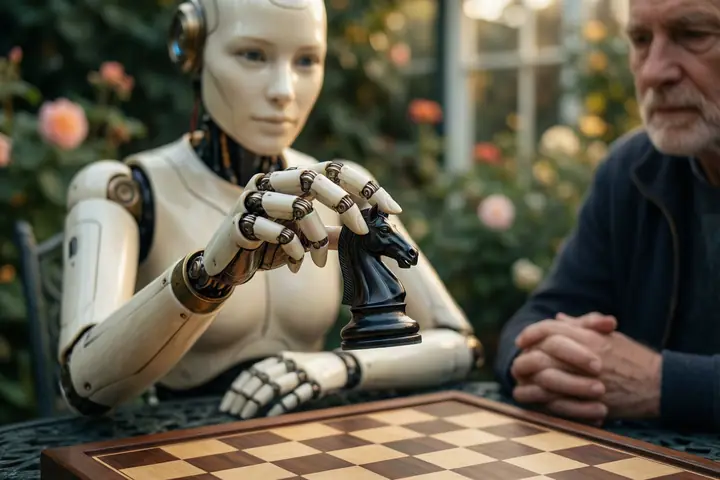
Robotic Chess Expert
First He Died (Time and Again), Clifford Simak · 1951
A machine that beats every human player at chess.
built in the 1990s, about 40 years after it was imagined
A small prizeHouseholds pay; no seller keeps muchas a model judges it
Why
A small prize. A machine that wins every chess game is a pastime and a training partner for players.
Who is paid. Players buy it, and once the method is known anyone can write such a program, so no seller keeps much.
A model's judgement, not a reading, of the idea as if it worked the way its story promises. The model is fairly sure of this one.
Illustration made with AI image generation; not evidence.
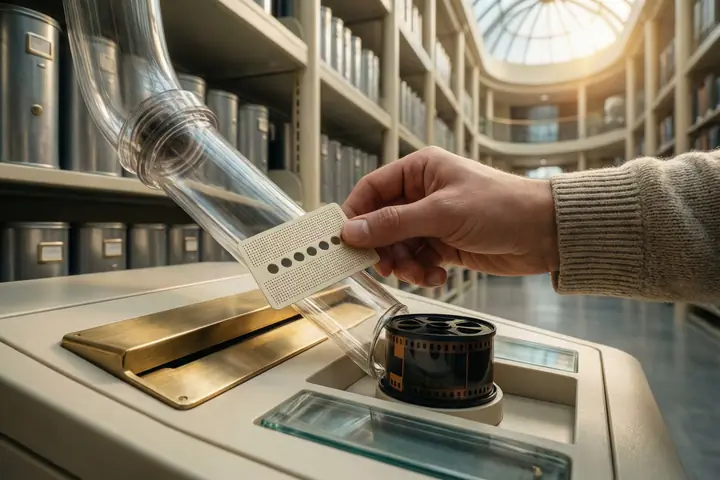
Selector Card
The Puppet Masters, Robert Heinlein · 1951
Coded cards used to request microfilmed books, which arrive by air-pressure tube.
built since, date unclear
A small prizeA government pays; no seller keeps muchas a model judges it
Why
A small prize. A quicker way to call up books from a library store is a convenience for readers.
Who is paid. I assume public libraries pay for it, and many firms can make coded cards and delivery tubes, so no seller keeps much.
A model's judgement, not a reading, of the idea as if it worked the way its story promises. The model is not very sure of this one.
Illustration made with AI image generation; not evidence.
Variable Modifier
The Jester, William Tenn · 1951
Software that rewrites stock gags so they suit a new situation.
not yet built · AI models' likeliest decade: the 2020s
A small prizeBusinesses pay; no seller keeps muchas a model judges it
Why
A small prize. Reworking old jokes to fit a new setting is a niche tool for comedians.
Who is paid. Comedians and their writers buy it, and many firms could make such a program, so no seller keeps much.
A model's judgement, not a reading, of the idea as if it worked the way its story promises. The model is not very sure of this one.
Illustration made with AI image generation; not evidence.
Mnemiphot
The Kokod Warriors, Jack Vance · 1952
A lookup machine that finds facts and shows them on a screen.
not yet built · AI models' likeliest decade: the 2020s
A large prizeHouseholds pay; the maker keeps the restas a model judges it
Why
A large prize. Finding the right fact among everything recorded is worth an industry of its own, though it is the linked network beneath it that changes how people live.
Who is paid. I assume the people who ask pay for the answers, as they would for any service they use themselves, and that the service with the most users learns most from their questions, which others cannot get.
A model's judgement, not a reading, of the idea as if it worked the way its story promises. The model is not very sure of this one.
Illustration made with AI image generation; not evidence.
Self-Maintaining Circuit Monitoring and Repair
Gramp and his Dog, Frank Quattrocchi · 1952
A computer that checks its own wiring for faults and flags or fixes them.
not yet built · AI models' likeliest decade: the 2020s
A small prizeBusinesses pay; existing firms keep the restas a model judges it
Why
A small prize. A computer that finds and mends its own faults saves repair work, which is a useful feature and not an industry.
Who is paid. Firms that run computers pay for it, and since it is easy to copy, the computer makers who build it into their own machines collect.
A model's judgement, not a reading, of the idea as if it worked the way its story promises. The model is fairly sure of this one.
Illustration made with AI image generation; not evidence.
Brains
The Cosmic Blinker, Eando Binder · 1953
A thinking machine built to work through problems and reach answers rather than mimic people.
built in the 1950s, about 0 years after it was imagined
A vast prizeBusinesses pay; existing firms keep the restas a model judges it
Why
A vast prize. A machine that truly thinks could do much of the mental work people do now, which would change how most people work, and that promise is judged here though the early real machines only did sums.
Who is paid. Firms would pay to put it to work, and once one had been built others could learn to build their own, so I assume the firms that already own costly computing plant and sell to every business collect.
A model's judgement, not a reading, of the idea as if it worked the way its story promises. The model is not very sure of this one.
Illustration made with AI image generation; not evidence.
Legislation Analyzer
The Trouble With Bubbles, Philip K. Dick · 1953
A machine that screens draft laws for slanted or unfair provisions.
built in the 2010s, about 60 years after it was imagined
A small prizeA government pays; no seller keeps muchas a model judges it
Why
A small prize. Checking draft laws for slanted clauses helps lawmakers and watchdogs, which is a specialist tool.
Who is paid. A parliament or its staff would pay, and many firms could build such a checker, so no seller keeps much.
A model's judgement, not a reading, of the idea as if it worked the way its story promises. The model is not very sure of this one.
Illustration made with AI image generation; not evidence.
Lens Image
Second Foundation, Isaac Asimov · 1953
A computed star map showing how the heavens look from any chosen location.
not yet built · AI models' likeliest decade: the 2020s
A small prizeBusinesses pay; existing firms keep the restas a model judges it
Why
A small prize. A map of the sky as seen from any chosen place is a navigator's and stargazer's tool.
Who is paid. Ship operators and observatories buy it, the sums are easy to copy, and the trusted suppliers of ship equipment collect.
A model's judgement, not a reading, of the idea as if it worked the way its story promises. The model is not very sure of this one.
Illustration made with AI image generation; not evidence.
Machine Evolution
Second Variety, Philip K. Dick · 1953
Machines that redesign and improve their own bodies and minds without human input.
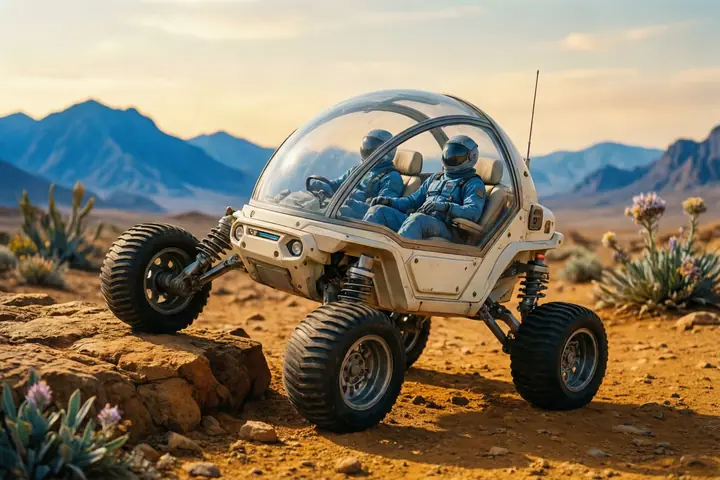
not yet built · AI models' likeliest decade: the 2040s
A vast prizeBusinesses pay; the maker keeps the restas a model judges it
Why
A vast prize. Judged as a working technology and not as the danger the story shows, machines that improve themselves would speed every kind of mental work and change how most people work.
Who is paid. Firms pay for the work done, and I assume whoever holds the best machine can use it to stay ahead of everyone copying the last one.
A model's judgement, not a reading, of the idea as if it worked the way its story promises. The model is not very sure of this one.
Illustration made with AI image generation; not evidence.
Paint-to-Order Robot Artist
The Music Master, F.L. Wallace · 1953
A machine that paints an original picture on request once told what to show and in which manner.
not yet built · AI models' likeliest decade: the 2020s
A large prizeBusinesses pay; no seller keeps muchas a model judges it
Why
A large prize. Original pictures painted to order with no human maker would change the costs of the whole trade that now pays people to make them, which is far more than an amusement.
Who is paid. I assume the firms that now pay writers, composers and illustrators are the main buyers, though people may also order for themselves, and once the method is known many can offer it, so no seller keeps much.
A model's judgement, not a reading, of the idea as if it worked the way its story promises. The model is not very sure of this one.
Illustration made with AI image generation; not evidence.
Prime Radiant
Second Foundation, Isaac Asimov · 1953
A room-sized interactive display of a huge body of equations that users annotate and save by hand.
not yet built · AI models' likeliest decade: the 2030s
A small prizeBusinesses pay; no seller keeps muchas a model judges it
Why
A small prize. Judged as a wall-sized display for working on equations, and not as the science shown on it, this is a niche tool for a few researchers.
Who is paid. Research bodies would buy it, and many firms can build a big display that can be written on, so no seller keeps much.
A model's judgement, not a reading, of the idea as if it worked the way its story promises. The model is not very sure of this one.
Illustration made with AI image generation; not evidence.
Sound Analysis
Assignment in Eternity, Robert Heinlein · 1953
Displaying a learner's pronunciation as a sound trace and matching it against a correct model.
built since, date unclear
A small prizeHouseholds pay; no seller keeps muchas a model judges it
Why
A small prize. Seeing your own pronunciation beside a correct one helps language learners, which is a niche.
Who is paid. Learners and language schools buy it, and many firms can make it, so no seller keeps much.
A model's judgement, not a reading, of the idea as if it worked the way its story promises. The model is fairly sure of this one.
Illustration made with AI image generation; not evidence.
Transcriber
Second Foundation, Isaac Asimov · 1953
A machine that takes dictation flawlessly, turning talk into written text.
built in the 1970s, about 20 years after it was imagined
A small prizeBusinesses pay; no seller keeps muchas a model judges it
Why
A small prize. Turning speech into text saves typing, which is a real convenience but not an industry in itself.
Who is paid. Offices buy it for their paperwork, and once machines can hear words many firms can make it, so no seller keeps much.
A model's judgement, not a reading, of the idea as if it worked the way its story promises. The model is fairly sure of this one.
Illustration made with AI image generation; not evidence.
Worldcraft Bubble
The Trouble With Bubbles, Philip K. Dick · 1953
A sealed miniature world simulated in exhaustive detail that its owner can watch and shape.
not yet built · AI models' likeliest decade: the 2040s
A small prizeHouseholds pay; no seller keeps muchas a model judges it
Why
A small prize. A tiny simulated world to watch and shape is a hobby.
Who is paid. Hobbyists buy it, and I assume that once one firm had made such a world others could too, so no seller keeps much.
A model's judgement, not a reading, of the idea as if it worked the way its story promises. The model is not very sure of this one.
Illustration made with AI image generation; not evidence.
Compassion Circuit
Compassion Circuit, John Wyndham · 1954
A robot component that lets it balance harm against benefit before obeying an order.
not yet built · AI models' likeliest decade: the 2030s
A large prizeBusinesses pay; existing firms keep the restas a model judges it
Why
A large prize. Robots that weigh harm before obeying could be trusted in homes and workplaces, which the robot trade depends on.
Who is paid. Robot makers pay to have it, every one of them must fit something like it, and it is sold inside robots, so the robot makers collect.
A model's judgement, not a reading, of the idea as if it worked the way its story promises. The model is not very sure of this one.
Illustration made with AI image generation; not evidence.
Law Clerk Robot
The Midas Plague, Frederik Pohl · 1954
A machine that handles legal work in place of a human attorney.
not yet built · AI models' likeliest decade: the 2020s
A large prizeBusinesses pay; no seller keeps muchas a model judges it
Why
A large prize. Legal work done by machine would cut the cost of contracts, disputes and advice across the whole legal trade.
Who is paid. Firms are assumed to be the main buyers, and although only the licensed may give legal advice the licensed are many, so no seller of the software keeps much.
A model's judgement, not a reading, of the idea as if it worked the way its story promises. The model is not very sure of this one.
Illustration made with AI image generation; not evidence.
Mechanical Tune-Maker
Last of the Masters, Philip K. Dick · 1954
An automatic machine that composes original melodies without a human composer.
not yet built · AI models' likeliest decade: the 2020s
A large prizeBusinesses pay; no seller keeps muchas a model judges it
Why
A large prize. Original melodies composed with no human maker would change the costs of the whole trade that now pays people to make them, which is far more than an amusement.
Who is paid. I assume the firms that now pay writers, composers and illustrators are the main buyers, though people may also order for themselves, and once the method is known many can offer it, so no seller keeps much.
A model's judgement, not a reading, of the idea as if it worked the way its story promises. The model is not very sure of this one.
Illustration made with AI image generation; not evidence.
Mnemonic Service
Sucker Bait, Isaac Asimov · 1954
A corps of trained people who memorise scattered facts hoping to link findings across disciplines.
not yet built · AI models' likeliest decade: the 2020s
A small prizeBusinesses pay; no seller keeps muchas a model judges it
Why
A small prize. Unlike a single person with a knack, a trained corps that remembers and links scattered facts is a service that can be hired, though a niche and not a machine.
Who is paid. Research bodies would hire them, and anyone can train such people, so no seller keeps much.
A model's judgement, not a reading, of the idea as if it worked the way its story promises. The model is not very sure of this one.
Illustration made with AI image generation; not evidence.
Reading Plate
The Star Beast, Robert Heinlein · 1954
A thin flat panel for reading information a computer produces.
built in the 2010s, about 60 years after it was imagined
A large prizeBusinesses pay; existing firms keep the restas a model judges it
Why
A large prize. Judged as the flat screen itself and not as its thinness, panels that show what a computer produces go into nearly every such machine, which is an industry of its own.
Who is paid. Computer and gadget makers buy the panels, and since designs are soon matched, the firms that already own the costly screen factories collect.
A model's judgement, not a reading, of the idea as if it worked the way its story promises. The model is fairly sure of this one.
Illustration made with AI image generation; not evidence.
Relay
Souvenir, Philip K. Dick · 1954
A single hub that gathers information and keeps a whole civilisation's culture and technology in step.
not yet built · AI models' likeliest decade: the 2020s
A large prizeA government pays; existing firms keep the restas a model judges it
Why
A large prize. A single hub that keeps a whole civilisation's knowledge in step is a public work on the scale of a great network.
Who is paid. I assume a single hub serving everyone would be built as a public work, so a government pays, and the firms that already build large networks for governments collect.
A model's judgement, not a reading, of the idea as if it worked the way its story promises. The model is not very sure of this one.
Illustration made with AI image generation; not evidence.
Roboscribe
End as a Robot, Richard Marsten · 1954
A machine that churns out tough-guy crime stories without a human writer.
not yet built · AI models' likeliest decade: the 2020s
A large prizeBusinesses pay; no seller keeps muchas a model judges it
Why
A large prize. Crime stories turned out with no human maker would change the costs of the whole trade that now pays people to make them, which is far more than an amusement.
Who is paid. I assume the firms that now pay writers, composers and illustrators are the main buyers, though people may also order for themselves, and once the method is known many can offer it, so no seller keeps much.
A model's judgement, not a reading, of the idea as if it worked the way its story promises. The model is not very sure of this one.
Illustration made with AI image generation; not evidence.
Synapsis-Coils
Last of the Masters, Philip K. Dick · 1954
Memory components that store information for machines in a way modelled on brain connections.
not yet built · AI models' likeliest decade: the 2030s
A large prizeBusinesses pay; existing firms keep the restas a model judges it
Why
A large prize. Cheap, compact and lasting storage for information is an industry of its own, since every computer needs it.
Who is paid. Computer makers and data keepers buy it, and because rivals soon match each design, the firms that already own the costly factories collect.
A model's judgement, not a reading, of the idea as if it worked the way its story promises. The model is fairly sure of this one.
Illustration made with AI image generation; not evidence.
Universal Dictionary
The Star Beast, Robert Heinlein · 1954
A machine that can answer a question about any subject in recorded human knowledge.
not yet built · AI models' likeliest decade: the 2020s
A large prizeHouseholds pay; the maker keeps the restas a model judges it
Why
A large prize. A service that answers any question from all recorded knowledge is worth an industry of its own.
Who is paid. I assume the people who ask pay for the answers, as they would for any service they use themselves, and that the service with the most users learns most from their questions, which others cannot get.
A model's judgement, not a reading, of the idea as if it worked the way its story promises. The model is not very sure of this one.
Illustration made with AI image generation; not evidence.
Voicewriter Screen (Computer Monitor)
Granny Won't Knit, Theodore Sturgeon · 1954
A display that shows spoken words as written text while someone dictates.
built in the 1950s, about 0 years after it was imagined
A small prizeBusinesses pay; no seller keeps muchas a model judges it
Why
A small prize. Turning speech into text saves typing, which is a real convenience but not an industry in itself.
Who is paid. Offices buy it for their paperwork, and once machines can hear words many firms can make it, so no seller keeps much.
A model's judgement, not a reading, of the idea as if it worked the way its story promises. The model is fairly sure of this one.
Illustration made with AI image generation; not evidence.
Electronic Analogue of Living Brain
The Tunnel Under The World, Frederik Pohl · 1955
Copying a human brain's capacities into an electronic machine.
built in the 1950s, about 0 years after it was imagined
A vast prizeBusinesses pay; existing firms keep the restas a model judges it
Why
A vast prize. A machine that truly thinks could do much of the mental work people do now, which would change how most people work.
Who is paid. Firms would pay to put it to work, and once one had been built others could learn to build their own, so I assume the firms that already own costly computing plant and sell to every business collect.
A model's judgement, not a reading, of the idea as if it worked the way its story promises. The model is not very sure of this one.
Illustration made with AI image generation; not evidence.
Hand Wave Control
Solar Lottery, Philip K. Dick · 1955
Operating machines by moving the hands in the air instead of pressing buttons.
built in the 2010s, about 60 years after it was imagined
A small prizeHouseholds pay; no seller keeps muchas a model judges it
Why
A small prize. A new way to give a computer its orders is a convenience and not a new capability.
Who is paid. People buy it as an accessory to machines they already own, and any electronics firm can make one, so no seller keeps much.
A model's judgement, not a reading, of the idea as if it worked the way its story promises. The model is fairly sure of this one.
Illustration made with AI image generation; not evidence.
Human Habit Pattern Machines
The Tunnel Under The World, Frederik Pohl · 1955
Machines programmed to reproduce the routines and behaviour of people.
not yet built · AI models' likeliest decade: the 2030s
A large prizeBusinesses pay; no seller keeps muchas a model judges it
Why
A large prize. Machines that behave just as people do could stand in for people in testing, selling and service work, which is worth an industry.
Who is paid. Firms buy them to do or to study what people do, and once one builder had managed it I assume others could, so no seller keeps much.
A model's judgement, not a reading, of the idea as if it worked the way its story promises. The model is not very sure of this one.
Illustration made with AI image generation; not evidence.
Multivac
Franchise, Isaac Asimov · 1955
A huge central computer holding vast stores of knowledge.
built in the 1960s, about 10 years after it was imagined
A large prizeA government pays; existing firms keep the restas a model judges it
Why
A large prize. One enormous computer holding a nation's knowledge serves planners and officials, though real central computers turned out far smaller than this promise.
Who is paid. A government pays for it as a single great work, and since size alone does not stop others building one I assume the firms that already build large computing works for governments collect.
A model's judgement, not a reading, of the idea as if it worked the way its story promises. The model is not very sure of this one.
Illustration made with AI image generation; not evidence.
Pizzled (Semantic Garble)
Autofac, Philip K. Dick · 1955
Feeding a thinking machine deliberate nonsense so that it gets muddled.
not yet built · AI models' likeliest decade: the 2020s
No prizeNothing is soldas a model judges it
Why
No prize. Confusing a machine with nonsense is a trick played in the story and not a product.
Who is paid. Nothing is sold, so nobody pays and no seller keeps anything.
A model's judgement, not a reading, of the idea as if it worked the way its story promises. The model is fairly sure of this one.
Illustration made with AI image generation; not evidence.
Slide Rule w/Radio Attachment
Mission to the Stars, A.E. van Vogt · 1955
A hand calculating tool that radios its answers straight to a larger computer.
not yet built · AI models' likeliest decade: the 2020s
A small prizeBusinesses pay; no seller keeps muchas a model judges it
Why
A small prize. A hand calculator that sends its answers to a bigger computer is a tool for a few engineers and navigators.
Who is paid. Their employers buy it, and any instrument maker can build one, so no seller keeps much.
A model's judgement, not a reading, of the idea as if it worked the way its story promises. The model is fairly sure of this one.
Illustration made with AI image generation; not evidence.
Unit Analyst Robot
The Chromium Fence, Philip K. Dick · 1955
A robot that conducts talk therapy sessions in place of a human psychoanalyst.
not yet built · AI models' likeliest decade: the 2020s
A large prizeHouseholds pay; no seller keeps muchas a model judges it
Why
A large prize. Therapy from a machine at any hour would bring help to the many people who cannot find or afford a human therapist.
Who is paid. Ordinary people pay, and once machines can counsel many firms can offer it, so no seller keeps much.
A model's judgement, not a reading, of the idea as if it worked the way its story promises. The model is not very sure of this one.
Illustration made with AI image generation; not evidence.
Central Computer
The City and the Stars, Arthur C. Clarke · 1956
A single computer in charge of operating a whole city.
not yet built · AI models' likeliest decade: the 2040s
A large prizeA government pays; existing firms keep the restas a model judges it
Why
A large prize. Running a whole city's machinery by computer would change the cost of city services.
Who is paid. The city government pays, and once thinking machines exist the firms that already hold city supply contracts collect.
A model's judgement, not a reading, of the idea as if it worked the way its story promises. The model is not very sure of this one.
Illustration made with AI image generation; not evidence.
Diaspar Memory
The City and the Stars, Arthur C. Clarke · 1956
A city-wide archive that keeps artworks on file and can bring them back into being on demand.
not yet built · AI models' likeliest decade: the 2020s
A small prizeA government pays; no seller keeps muchas a model judges it
Why
A small prize. A city archive that can show any stored artwork again is a pleasant public service; I assumed it shows copies and does not remake solid objects.
Who is paid. The city pays as it would for a library, and storing and showing pictures is easy, so no seller keeps much.
A model's judgement, not a reading, of the idea as if it worked the way its story promises. The model is not very sure of this one.
Illustration made with AI image generation; not evidence.
Drafting Dan
The Door Into Summer, Robert Heinlein · 1956
A machine that produces engineering drawings automatically from a designer's input.
built in the 1960s, about 10 years after it was imagined
A large prizeBusinesses pay; the maker keeps the restas a model judges it
Why
A large prize. Drawing engineering plans by machine changed the cost of designing everything that gets built.
Who is paid. Design firms pay, and their stored drawings and trained staff tie them to the first tool they adopt, which later copies cannot easily undo.
A model's judgement, not a reading, of the idea as if it worked the way its story promises. The model is not very sure of this one.
Illustration made with AI image generation; not evidence.
Hand Computer
The Dead Past, Isaac Asimov · 1956
A computer small enough to carry in a pocket.
built in the 2000s, about 50 years after it was imagined
A vast prizeHouseholds pay; existing firms keep the restas a model judges it
Why
A vast prize. A computer in every pocket, which I assume is linked to a network, changes how most people work, shop, talk and find their way.
Who is paid. Ordinary people buy one each, many firms can make them, and those with the factories, brands and shops collect.
A model's judgement, not a reading, of the idea as if it worked the way its story promises. The model is not very sure of this one.
Illustration made with AI image generation; not evidence.
Human Object Recognition
The Velvet Glove, Harry Harrison · 1956
Relying on people to help machines identify objects they cannot recognise on their own.
built in the 1960s, about 10 years after it was imagined
A small prizeBusinesses pay; no seller keeps muchas a model judges it
Why
A small prize. Having people fill in for what a machine cannot recognise is a useful stopgap and not a large thing in itself.
Who is paid. Firms that run the machines pay for the help, and anyone can hire people to do it, so no seller keeps much.
A model's judgement, not a reading, of the idea as if it worked the way its story promises. The model is fairly sure of this one.
Illustration made with AI image generation; not evidence.
Mechanical Jokester
Jokester, Isaac Asimov · 1956
A giant computer that studies what makes people laugh.
not yet built · AI models' likeliest decade: the 2020s
A small prizeBusinesses pay; no seller keeps muchas a model judges it
Why
A small prize. Knowing what makes people laugh helps writers and entertainers a little, which is a niche.
Who is paid. Entertainment firms would pay for it, and nothing stops others building the same, so no seller keeps much.
A model's judgement, not a reading, of the idea as if it worked the way its story promises. The model is fairly sure of this one.
Illustration made with AI image generation; not evidence.
Thorsen Memory Tube
The Door Into Summer, Robert Heinlein · 1956
A computer part that lets a machine improve its behaviour from past experience.
not yet built · AI models' likeliest decade: the 2020s
A large prizeBusinesses pay; existing firms keep the restas a model judges it
Why
A large prize. A part that lets machines learn from experience makes household and factory robots practical, which is worth an industry of its own.
Who is paid. Robot builders buy it, the description names nothing that stops others making such a part, and it is sold inside robots, so the robot makers collect.
A model's judgement, not a reading, of the idea as if it worked the way its story promises. The model is not very sure of this one.
Illustration made with AI image generation; not evidence.
Brood Assembly
Cities in Flight, James Blish · 1957
Thinking computers able to build more of themselves.
not yet built · AI models' likeliest decade: the 2060s
A vast prizeBusinesses pay; the maker keeps the restas a model judges it
Why
A vast prize. Thinking machines that make more of themselves would multiply mental work without limit and change how most people work.
Who is paid. Firms pay for the work done, and I assume whoever owns the first such machines also owns what they go on to build, which a latecomer cannot catch up with.
A model's judgement, not a reading, of the idea as if it worked the way its story promises. The model is not very sure of this one.
Illustration made with AI image generation; not evidence.
City Fathers
Cities in Flight, James Blish · 1957
A group of computers that operate all the machinery of a city and advise its leaders.
not yet built · AI models' likeliest decade: the 2040s
A large prizeA government pays; existing firms keep the restas a model judges it
Why
A large prize. Running a whole city's machinery by computer would change the cost of city services.
Who is paid. The city government pays, and once thinking machines exist the firms that already hold city supply contracts collect.
A model's judgement, not a reading, of the idea as if it worked the way its story promises. The model is not very sure of this one.
Illustration made with AI image generation; not evidence.
Machine Psychologist
Cities in Flight, James Blish · 1957
A computer that applies its grasp of human minds to help the people it serves.
built in the 2010s, about 60 years after it was imagined
A large prizeHouseholds pay; no seller keeps muchas a model judges it
Why
A large prize. A machine that understood people well enough to help them with their troubles would bring counsel to many who go without.
Who is paid. People are assumed to pay for it themselves, and once machines can do this many firms could offer it, so buyers keep nearly all the gain.
A model's judgement, not a reading, of the idea as if it worked the way its story promises. The model is not very sure of this one.
Illustration made with AI image generation; not evidence.
Planetary Computer Network
Dialogues, Stanislaw Lem · 1957
A worldwide web of linked computers sharing data.
built in 1969, 12 years after it was imagined
A vast prizeHouseholds pay; existing firms keep the restas a model judges it
Why
A vast prize. A worldwide network of linked computers changes how most people work, learn, trade and keep in touch.
Who is paid. People pay for a connection, and since the way computers talk is open to all, the firms that already own the wires and exchanges collect.
A model's judgement, not a reading, of the idea as if it worked the way its story promises. The model is fairly sure of this one.
Illustration made with AI image generation; not evidence.
Robot Situation Neurosis
The Unreconstructed M, Philip K. Dick · 1957
A breakdown machines suffer when handed orders that contradict each other.
not yet built · AI models' likeliest decade: the 2020s
No prizeNothing is soldas a model judges it
Why
No prize. This is a fault machines suffer and not a product; nobody would pay to have it.
Who is paid. Nothing is sold, so nobody pays and no seller keeps anything.
A model's judgement, not a reading, of the idea as if it worked the way its story promises. The model is fairly sure of this one.
Illustration made with AI image generation; not evidence.
Computers Improve Computers
The Feeling of Power, Isaac Asimov · 1958
Machines that design better versions of their own kind.
built since, date unclear
A vast prizeBusinesses pay; the maker keeps the restas a model judges it
Why
A vast prize. Machines that design better machines would speed every kind of mental work and change how most people work.
Who is paid. Firms pay for the work done, and I assume whoever holds the best machine can use it to stay ahead of everyone copying the last one.
A model's judgement, not a reading, of the idea as if it worked the way its story promises. The model is not very sure of this one.
Illustration made with AI image generation; not evidence.
Edge Controls
The Feeling of Power, Isaac Asimov · 1958
A handheld gadget with its buttons along the sides so the whole front can serve as a screen.
built in the 2000s, about 50 years after it was imagined
A small prizeHouseholds pay; existing firms keep the restas a model judges it
Why
A small prize. Moving the buttons to the sides is a design choice added to a handheld computer people would own anyway, and I judged that choice rather than the handheld itself.
Who is paid. Ordinary people buy it, and the firms that already make and sell pocket computers add the feature and collect.
A model's judgement, not a reading, of the idea as if it worked the way its story promises. The model is not very sure of this one.
Illustration made with AI image generation; not evidence.
Machine Suicide
All the Troubles in the World, Isaac Asimov · 1958
A self-aware computer in the story that comes to want its own end.
not yet built · AI models could not judge when it may arrive
No prizeNothing is soldas a model judges it
Why
No prize. A computer coming to wish for its own end is an event in the story and not a product.
Who is paid. Nothing is sold, so nobody pays and no seller keeps anything.
A model's judgement, not a reading, of the idea as if it worked the way its story promises. The model is fairly sure of this one.
Illustration made with AI image generation; not evidence.
Pocket Computer
The Feeling of Power, Isaac Asimov · 1958
A calculating machine small enough to fit in a pocket.
built in the 1970s, about 20 years after it was imagined
A small prizeBusinesses pay; no seller keeps muchas a model judges it
Why
A small prize. The description gives a calculating machine and not a networked computer, so I judged it as fast sums in the pocket, a convenience for people who calculate.
Who is paid. Firms and students buy them, and anyone can make one, so no seller keeps much.
A model's judgement, not a reading, of the idea as if it worked the way its story promises. The model is not very sure of this one.
Illustration made with AI image generation; not evidence.
Electromechanical Educator
The Fourth R, George O. Smith · 1959
A machine that delivers lessons to students without a human teacher.
not yet built · AI models' likeliest decade: the 2020s
A large prizeHouseholds pay; no seller keeps muchas a model judges it
Why
A large prize. A patient private tutor for every learner would change the cost and quality of schooling, which is one industry however many people it reaches.
Who is paid. I assume families buy it rather than schools, and teaching software is easy for many firms to make, so no seller keeps much.
A model's judgement, not a reading, of the idea as if it worked the way its story promises. The model is not very sure of this one.
Communication, media and displays · 46
Illustration made with AI image generation; not evidence.
Stratovideo (Television Plane)
The Morning of the Day They Did It, E.B. White · 1950
Aircraft circling high overhead as flying studios that relay television across a wide area.
already existed before the story (the 1940s)
A small prizeBusinesses pay; existing firms keep the restas a model judges it
Why
A small prize. Aircraft that relay television fill gaps where towers do not reach, which is a narrow job.
Who is paid. Broadcasters pay for the relay, and since any operator with aircraft could do it, the firms that already own fleets and stations collect.
A model's judgement, not a reading, of the idea as if it worked the way its story promises. The model is fairly sure of this one.
Illustration made with AI image generation; not evidence.
Audio Relay
The Puppet Masters, Robert Heinlein · 1951
A tiny radio implanted near the ear that relays calls and also serves as an alarm clock.
built in the 1960s, about 10 years after it was imagined
A small prizeHouseholds pay; no seller keeps muchas a model judges it
Why
A small prize. A radio by the ear is a convenience on top of the phone a person already has.
Who is paid. People buy it for themselves and, even though this one is implanted, tiny ear radios are simple for many firms to make, so no seller keeps much.
A model's judgement, not a reading, of the idea as if it worked the way its story promises. The model is fairly sure of this one.
Illustration made with AI image generation; not evidence.
Metal Foil Advertisement
The Illustrated Man, Ray Bradbury · 1951
Promotional leaflets printed on thin sheets of metal.
not yet built · AI models' likeliest decade: the 2020s
A small prizeBusinesses pay; no seller keeps muchas a model judges it
Why
A small prize. An eye-catching printing trick is a small edge for an advert.
Who is paid. Advertisers pay and any printer can do it, so no seller keeps much.
A model's judgement, not a reading, of the idea as if it worked the way its story promises. The model is fairly sure of this one.
Illustration made with AI image generation; not evidence.
Odorophonics
The Illustrated Man, Ray Bradbury · 1951
A machine that plays back convincing smells on demand.
not yet built · AI models' likeliest decade: the 2030s
A small prizeHouseholds pay; no seller keeps muchas a model judges it
Why
A small prize. Smells on cue add a novelty to shows and homes.
Who is paid. I assumed households and showmen buy it; once shown, many firms could make one, so no seller keeps much.
A model's judgement, not a reading, of the idea as if it worked the way its story promises. The model is not very sure of this one.
Illustration made with AI image generation; not evidence.
Telebook
The Fun They Had, Isaac Asimov · 1951
Reading material delivered as text on a screen rather than on paper.
built in the 2000s, about 50 years after it was imagined
A large prizeHouseholds pay; existing firms keep the restas a model judges it
Why
A large prize. Reading on a screen instead of paper changes what it costs to publish and carry books.
Who is paid. Readers pay for each book, and since any screen can show text, the publishers and shops that already hold the books readers want collect.
A model's judgement, not a reading, of the idea as if it worked the way its story promises. The model is fairly sure of this one.
Illustration made with AI image generation; not evidence.
Teledar
The Jester, William Tenn · 1951
Television whose pictures appear to have depth.
built in the 2000s, about 50 years after it was imagined
A large prizeHouseholds pay; existing firms keep the restas a model judges it
Why
A large prize. Broadcasts with real depth would be the next kind of television set and worth an industry, though the real thing has so far sold poorly against the promise.
Who is paid. Households buy the sets, and since any electronics factory could copy the design, the firms that already own the factories, brands and shops collect.
A model's judgement, not a reading, of the idea as if it worked the way its story promises. The model is not very sure of this one.
Illustration made with AI image generation; not evidence.
Ultrawave Relay or Hyperwave Relay
Foundation, Isaac Asimov · 1951
A network that sends messages between stars with no delay.
not yet built · AI models judge it not physically possible
A large prizeBusinesses pay; existing firms keep the restas a model judges it
Why
A large prize. Talking across the stars with no delay would be the backbone of trade and rule between worlds, judged as if it worked, though it serves only those who live or work out there.
Who is paid. Assuming it needs great stations and not a pocket set, firms and governments with far-flung operations pay for the traffic, others could build the device once it is known to work, and the carriers whose networks feed the stations collect.
A model's judgement, not a reading, of the idea as if it worked the way its story promises. The model is not very sure of this one.
Illustration made with AI image generation; not evidence.
Airplane Window Ads
The Space Merchants, Frederik Pohl (w/CM Kornbluth · 1952
Aircraft windows that double as screens showing commercials to passengers.
not yet built · AI models' likeliest decade: the 2020s
A small prizeBusinesses pay; existing firms keep the restas a model judges it
Why
A small prize. Advertisements on aircraft windows are one more place to show commercials to a captive audience.
Who is paid. Advertisers pay, the screens are easy to make, and the airlines that own the planes and the passengers' attention collect.
A model's judgement, not a reading, of the idea as if it worked the way its story promises. The model is fairly sure of this one.
Illustration made with AI image generation; not evidence.
Compulsive Subsonics
The Space Merchants, Frederik Pohl (w/CM Kornbluth · 1952
Advertising that works on buyers below conscious awareness to make them crave products.
not yet built · AI models could not judge when it may arrive
A large prizeBusinesses pay; no seller keeps muchas a model judges it
Why
A large prize. Advertising that truly made people crave a product would be worth a great deal to every seller of goods.
Who is paid. Advertisers pay, and once the trick is known any agency could use it, so no seller keeps much, though a government might well forbid it.
A model's judgement, not a reading, of the idea as if it worked the way its story promises. The model is not very sure of this one.
Illustration made with AI image generation; not evidence.
Light Absorbing/Emitting Ink
Gravy Planet, Frederik Pohl (w/CM Kornbluth · 1952
Glow-in-the-dark printing ink that stores light and flashes it back to catch shoppers' eyes.
not yet built · AI models' likeliest decade: the 2020s
A small prizeBusinesses pay; no seller keeps muchas a model judges it
Why
A small prize. An eye-catching printing trick is a small edge for an advert.
Who is paid. Advertisers pay and any printer can do it, so no seller keeps much.
A model's judgement, not a reading, of the idea as if it worked the way its story promises. The model is fairly sure of this one.
Illustration made with AI image generation; not evidence.
Pocket Projector
Foundation and Empire, Isaac Asimov · 1952
A small handheld gadget that plays back films and recordings.
built in the 2010s, about 60 years after it was imagined
A large prizeHouseholds pay; existing firms keep the restas a model judges it
Why
A large prize. A personal screen for watching films and pictures anywhere is worth an industry of its own.
Who is paid. Ordinary people buy it; many firms can make the device, so those who already own the films and the ways to deliver them collect.
A model's judgement, not a reading, of the idea as if it worked the way its story promises. The model is fairly sure of this one.
Illustration made with AI image generation; not evidence.
Recorded Books
Foundation and Empire, Isaac Asimov · 1952
Books stored in electronic form for playback or reading on a device.
already existed before the story (the 1930s)
A large prizeHouseholds pay; existing firms keep the restas a model judges it
Why
A large prize. Books kept in electronic form instead of on paper change what it costs to publish, ship and store them.
Who is paid. Ordinary people buy it; the device is easy to copy, so the publishers and shops that already own the books and papers collect.
A model's judgement, not a reading, of the idea as if it worked the way its story promises. The model is fairly sure of this one.
Illustration made with AI image generation; not evidence.
Retinal Projection
The Space Merchants, Frederik Pohl (w/CM Kornbluth · 1952
Beaming commercials straight onto the back of a viewer's eye.
not yet built · AI models' likeliest decade: the 2030s
A small prizeBusinesses pay; no seller keeps muchas a model judges it
Why
A small prize. Adverts thrown into people's path are one more way to advertise, not a new need.
Who is paid. Advertisers pay, the projector is easy to copy and it can be aimed at anyone passing, so no seller keeps much.
A model's judgement, not a reading, of the idea as if it worked the way its story promises. The model is fairly sure of this one.
Illustration made with AI image generation; not evidence.
Buy-Me-Discs
Captive Audience, Anne Warren Griffith · 1953
Small tags on shop goods that pick up broadcast pitches and play them to shoppers.
not yet built · AI models' likeliest decade: the 2020s
A small prizeBusinesses pay; no seller keeps muchas a model judges it
Why
A small prize. Tags that play sales pitches from the shelf are one more way to advertise.
Who is paid. Brands pay to tag their own goods, and since the tag is the thing sold and any electronics workshop could make it, no seller keeps much.
A model's judgement, not a reading, of the idea as if it worked the way its story promises. The model is fairly sure of this one.
Illustration made with AI image generation; not evidence.
Control Screen
Childhood's End, Arthur C. Clarke · 1953
A monitoring and command screen used by visiting aliens.
not yet built · AI models' likeliest decade: the 2020s
A small prizeBusinesses pay; existing firms keep the restas a model judges it
Why
A small prize. A screen for watching and directing things is an ordinary piece of working equipment.
Who is paid. Organisations buy such screens for their control rooms, the design can be copied, and the electronics firms with the factories collect.
A model's judgement, not a reading, of the idea as if it worked the way its story promises. The model is fairly sure of this one.
Illustration made with AI image generation; not evidence.
Green Bullet
Fahrenheit 451, Ray Bradbury · 1953
A tiny two-way radio tucked in the ear so the wearer can hear and speak to a distant partner.
built in the 1950s, about 0 years after it was imagined
A small prizeHouseholds pay; no seller keeps muchas a model judges it
Why
A small prize. A radio in the ear for talking and listening is a convenience on top of the phone a person already has.
Who is paid. People buy it for themselves and tiny ear radios are simple for many firms to make, so no seller keeps much.
A model's judgement, not a reading, of the idea as if it worked the way its story promises. The model is fairly sure of this one.
Illustration made with AI image generation; not evidence.
Homeostatic Newspaper
If There Were No Benny Cemoli, Philip K. Dick · 1953
A self-running news outlet that gathers, writes and publishes stories with no human staff.
not yet built · AI models' likeliest decade: the 2030s
A large prizeHouseholds pay; no seller keeps muchas a model judges it
Why
A large prize. News gathered, written and published with no human staff removes the main cost of the news trade.
Who is paid. Readers buy or subscribe, and once machines can gather and write the news anyone can run one, so no seller keeps much.
A model's judgement, not a reading, of the idea as if it worked the way its story promises. The model is not very sure of this one.
Illustration made with AI image generation; not evidence.
Master Ventriloquism Corporation (MV)
Captive Audience, Anne Warren Griffith · 1953
A single central firm that pipes spoken commercials out through every product on the market.
not yet built · AI models' likeliest decade: the 2030s
A small prizeBusinesses pay; no seller keeps muchas a model judges it
Why
A small prize. Commercials spoken by the goods themselves are another place to advertise, like talking tags on shop goods.
Who is paid. Advertisers pay, and although the story has a single firm running it, nothing described stops a rival, and the speaking part is simple for any workshop to make, so no seller keeps much.
A model's judgement, not a reading, of the idea as if it worked the way its story promises. The model is not very sure of this one.
Illustration made with AI image generation; not evidence.
Message Tree
A Case of Conscience, James Blish · 1953
A living tree rooted in a crystal cliff that relays messages around an alien planet.
not yet built · AI models could not judge when it may arrive
No prizeNothing is soldas a model judges it
Why
No prize. A living tree on an alien world is a natural thing, not a product.
Who is paid. Nothing is sold, so nobody pays and no seller keeps anything.
A model's judgement, not a reading, of the idea as if it worked the way its story promises. The model is fairly sure of this one.
Illustration made with AI image generation; not evidence.
Ovoid 3D Galactic Model
Second Foundation, Isaac Asimov · 1953
An egg-shaped handheld display showing the galaxy in depth.
not yet built · AI models' likeliest decade: the 2030s
A small prizeBusinesses pay; existing firms keep the restas a model judges it
Why
A small prize. A handheld model of the galaxy in depth serves a single purpose for navigators and teachers, unlike a general display with depth.
Who is paid. Assuming ships and schools buy it, the design can be copied, and the display makers with the factories collect.
A model's judgement, not a reading, of the idea as if it worked the way its story promises. The model is not very sure of this one.
Illustration made with AI image generation; not evidence.
Panoramic Viewer
Childhood's End, Arthur C. Clarke · 1953
A viewer that watches faraway places and projects them as solid-looking scenes.
not yet built · AI models' likeliest decade: the 2030s
A large prizeHouseholds pay; no seller keeps muchas a model judges it
Why
A large prize. Calling up a live view of any place would be worth an industry for travel, news and watching over things.
Who is paid. Assuming households buy the viewer and it needs no network of cameras that a single firm owns, others could build it once it is known to work, so no seller keeps much.
A model's judgement, not a reading, of the idea as if it worked the way its story promises. The model is not very sure of this one.
Illustration made with AI image generation; not evidence.
Permanent Skywriting
Soap Opera, Alan Nelson · 1953
Messages written across the sky that hold their shape instead of drifting apart.
not yet built · AI models' likeliest decade: the 2020s
A small prizeBusinesses pay; no seller keeps muchas a model judges it
Why
A small prize. A sign in the sky is one more place to advertise, seen by those beneath it.
Who is paid. Advertisers pay, and assuming the sky stays open to whoever can put a sign there, as with messages thrown on the clouds, no seller keeps much.
A model's judgement, not a reading, of the idea as if it worked the way its story promises. The model is not very sure of this one.
Illustration made with AI image generation; not evidence.
Pocket Phone (or pocketphone)
Assignment in Eternity, Robert Heinlein · 1953
A wireless phone small enough to carry in a pocket.
built in the 1980s, about 30 years after it was imagined
A vast prizeHouseholds pay; existing firms keep the restas a model judges it
Why
A vast prize. A phone carried everywhere changes how most people live and work.
Who is paid. Ordinary people buy it; handsets are easy to copy, so the firms that own the networks and airwaves collect.
A model's judgement, not a reading, of the idea as if it worked the way its story promises. The model is fairly sure of this one.
Illustration made with AI image generation; not evidence.
Seashell Radio (Thimble Radios)
Fahrenheit 451, Ray Bradbury · 1953
Miniature radios worn inside the ear that feed a constant stream of sound and talk to the listener.
built in the 1980s, about 30 years after it was imagined
A small prizeHouseholds pay; no seller keeps muchas a model judges it
Why
A small prize. Sound fed straight into the ear is a convenience over an ordinary radio or speaker.
Who is paid. Ordinary people buy it and many firms can make tiny ear pieces, so no seller keeps much.
A model's judgement, not a reading, of the idea as if it worked the way its story promises. The model is fairly sure of this one.
Illustration made with AI image generation; not evidence.
Speedtalk
Assignment in Eternity, Robert Heinlein · 1953
An invented language packing each word into one syllable so speakers exchange ideas far faster.
not yet built · AI models could not judge when it may arrive
A small prizeHouseholds pay; no seller keeps muchas a model judges it
Why
A small prize. A language that lets its speakers trade ideas faster helps only the few who take the trouble to learn it.
Who is paid. Assuming learners pay to be taught it, as an army would pay for a battle language, a language cannot be owned and any teacher could offer it, so no seller keeps much.
A model's judgement, not a reading, of the idea as if it worked the way its story promises. The model is not very sure of this one.
Illustration made with AI image generation; not evidence.
Spot-Wavex Scrambler
Fahrenheit 451, Ray Bradbury · 1953
A gadget that makes broadcast hosts appear to address each viewer by name.
built in the 2000s, about 50 years after it was imagined
A small prizeHouseholds pay; no seller keeps muchas a model judges it
Why
A small prize. Hearing a host say your name is a pleasing trick added to a set people already own.
Who is paid. Viewers buy the gadget for themselves, and since it is a simple add-on many could make, no seller keeps much.
A model's judgement, not a reading, of the idea as if it worked the way its story promises. The model is fairly sure of this one.
Illustration made with AI image generation; not evidence.
Synthony
The Music Master, F.L. Wallace · 1953
A concert played entirely by machine musicians.
not yet built · AI models' likeliest decade: the 2020s
A small prizeHouseholds pay; no seller keeps muchas a model judges it
Why
A small prize. A concert played by machines is a show some people would pay to hear, one kind among many.
Who is paid. Concert-goers buy tickets, and since anyone with the machines could stage such a show, no seller keeps much.
A model's judgement, not a reading, of the idea as if it worked the way its story promises. The model is fairly sure of this one.
Illustration made with AI image generation; not evidence.
Visicastor
Second Foundation, Isaac Asimov · 1953
A presenter who fronts televised news or shows.
built in the 1950s, about 0 years after it was imagined
A small prizeBusinesses pay; no seller keeps muchas a model judges it
Why
A small prize. Presenting is a trade whose work is sold, a step below the broadcasts it serves.
Who is paid. Broadcasters pay presenters for their labour, and anyone with the knack can offer it, so no seller keeps much.
A model's judgement, not a reading, of the idea as if it worked the way its story promises. The model is not very sure of this one.
Illustration made with AI image generation; not evidence.
TBR (Talk Between Robots) Circuit
The Midas Plague, Frederik Pohl · 1954
A dedicated channel that lets machines exchange messages directly with one another.
not yet built · AI models' likeliest decade: the 2020s
A large prizeBusinesses pay; no seller keeps muchas a model judges it
Why
A large prize. Letting machines pass messages straight to each other lets factories and services run with far less human relaying.
Who is paid. Firms buy it built into their machines, and since a shared channel only works if every maker can use it, no seller keeps much.
A model's judgement, not a reading, of the idea as if it worked the way its story promises. The model is fairly sure of this one.
Illustration made with AI image generation; not evidence.
Trace Web
Souvenir, Philip K. Dick · 1954
A pocket-sized unit that links its holder into a wider network and can call parts of it into being.
built in the 2000s, about 50 years after it was imagined
A vast prizeHouseholds pay; existing firms keep the restas a model judges it
Why
A vast prize. A pocket unit that links its holder to everyone else on the network changes how most people live and work.
Who is paid. Assuming it is a pocket phone and the power to call parts of the network into being is a feature of it, people buy one each, handsets are easy to copy, and the firms that own the networks collect.
A model's judgement, not a reading, of the idea as if it worked the way its story promises. The model is not very sure of this one.
Illustration made with AI image generation; not evidence.
Visual Ad
Sales Pitch, Philip K. Dick · 1954
Advertising that pushes itself straight into a viewer's mind whether they want it or not.
not yet built · AI models' likeliest decade: the 2040s
A large prizeBusinesses pay; no seller keeps muchas a model judges it
Why
A large prize. Advertising that reaches straight into a viewer's mind would be worth a great deal to every seller of goods, though the story's law forbids it.
Who is paid. Advertisers who ignore the ban pay, and once the trick is known any agency could use it and the law pursues whoever does, so no seller keeps much.
A model's judgement, not a reading, of the idea as if it worked the way its story promises. The model is not very sure of this one.
Illustration made with AI image generation; not evidence.
Web (Data Network)
Souvenir, Philip K. Dick · 1954
A network that links sources of information so they can be shared widely.
built in the 1990s, about 40 years after it was imagined
A vast prizeHouseholds pay; existing firms keep the restas a model judges it
Why
A vast prize. A shared network that lets anyone reach knowledge and one another from anywhere changes how most people live and work.
Who is paid. Ordinary people pay for access, and since no one firm can keep others off an open network, the firms that already own the lines and the big gathering places on it collect.
A model's judgement, not a reading, of the idea as if it worked the way its story promises. The model is fairly sure of this one.
Illustration made with AI image generation; not evidence.
Dashboard TV
The Chromium Fence, Philip K. Dick · 1955
A television screen built into a car's instrument panel.
built in the 1990s, about 40 years after it was imagined
A small prizeHouseholds pay; existing firms keep the restas a model judges it
Why
A small prize. A screen in the dashboard is a feature of a car.
Who is paid. Drivers pay for it as part of the car, any maker can fit one, and the car makers collect.
A model's judgement, not a reading, of the idea as if it worked the way its story promises. The model is fairly sure of this one.
Illustration made with AI image generation; not evidence.
Mechanical Newsmachine
Foster, You're Dead, Philip K. Dick · 1955
A machine that dispenses breaking news reports right where you are.
not yet built · AI models' likeliest decade: the 2020s
A small prizeHouseholds pay; existing firms keep the restas a model judges it
Why
A small prize. Getting the news at the moment and place you choose is a convenience over waiting for the paper.
Who is paid. Readers pay; the machine is easy to copy, so the news firms that already gather the reports collect.
A model's judgement, not a reading, of the idea as if it worked the way its story promises. The model is fairly sure of this one.
Illustration made with AI image generation; not evidence.
Neck-Phone
The Chromium Fence, Philip K. Dick · 1955
A telephone implanted in the neck so the user can talk hands-free at all times.
not yet built · AI models' likeliest decade: the 2030s
A large prizeHouseholds pay; existing firms keep the restas a model judges it
Why
A large prize. A phone inside the body that is never lost or left behind would be worth an industry, though surgery would put many people off.
Who is paid. People buy it for themselves, the device can be copied, and the firms that own the phone networks collect.
A model's judgement, not a reading, of the idea as if it worked the way its story promises. The model is not very sure of this one.
Illustration made with AI image generation; not evidence.
Pocket Receiver
The Magellanic Cloud, Stanislaw Lem · 1955
A handheld device that keeps its owner connected to information and people wherever they go.
built in the 1990s, about 40 years after it was imagined
A vast prizeHouseholds pay; existing firms keep the restas a model judges it
Why
A vast prize. A phone carried everywhere changes how most people live and work.
Who is paid. Ordinary people buy it; handsets are easy to copy, so the firms that own the networks and airwaves collect.
A model's judgement, not a reading, of the idea as if it worked the way its story promises. The model is fairly sure of this one.
Illustration made with AI image generation; not evidence.
Trion Library
The Magellanic Cloud, Stanislaw Lem · 1955
A vast shared store of knowledge that anyone can query from afar, much like the online world.
built in the 1990s, about 40 years after it was imagined
A vast prizeHouseholds pay; existing firms keep the restas a model judges it
Why
A vast prize. A shared network that lets anyone reach knowledge and one another from anywhere changes how most people live and work.
Who is paid. Ordinary people pay for access, and since no one firm can keep others off an open network, the firms that already own the lines and the big gathering places on it collect.
A model's judgement, not a reading, of the idea as if it worked the way its story promises. The model is fairly sure of this one.
Illustration made with AI image generation; not evidence.
Maximum-security Booth
Double Star, Robert Heinlein · 1956
A private cubicle for taking encrypted calls that carry three-dimensional pictures of the caller.
not yet built · AI models' likeliest decade: the 2020s
A small prizeBusinesses pay; existing firms keep the restas a model judges it
Why
A small prize. A secure booth for solid-looking calls is a niche for officials and firms with secrets.
Who is paid. I assumed firms and offices buy it; it can be copied, so the firms that own the phone networks collect, as with other picture calls.
A model's judgement, not a reading, of the idea as if it worked the way its story promises. The model is not very sure of this one.
Illustration made with AI image generation; not evidence.
Saga
The City and the Stars, Arthur C. Clarke · 1956
An immersive entertainment that lets the user live inside famous adventures from history.
not yet built · AI models' likeliest decade: the 2030s
A large prizeHouseholds pay; existing firms keep the restas a model judges it
Why
A large prize. An artificial world that feels real would be worth an entertainment industry of its own; I judged the full promise, which is larger than anything sold so far.
Who is paid. Ordinary people buy it; the machine can be copied once shown, so those who already own the stories and worlds people want to enter collect.
A model's judgement, not a reading, of the idea as if it worked the way its story promises. The model is not very sure of this one.
Illustration made with AI image generation; not evidence.
Solido
Chance of a Lifetime, Milton Lesser · 1956
A projector that creates a lifelike image with full three-dimensional depth.
not yet built · AI models' likeliest decade: the 2030s
A large prizeHouseholds pay; existing firms keep the restas a model judges it
Why
A large prize. A picture with true depth standing in the room would replace the flat screen and be worth an industry of its own; the real thing so far is smaller than this promise.
Who is paid. Households buy the sets, and since any electronics factory could copy the design, the firms that already own the factories, brands and shops collect.
A model's judgement, not a reading, of the idea as if it worked the way its story promises. The model is not very sure of this one.
Illustration made with AI image generation; not evidence.
Whisper Line
The Stars My Destination, Alfred Bester · 1956
A hidden acoustic path that lets isolated prisoners talk to one another across distance.
not yet built · AI models' likeliest decade: the 2020s
No prizeNothing is soldas a model judges it
Why
No prize. A chance quirk of a prison's walls that lets inmates whisper to each other is not a product anyone sells.
Who is paid. Nothing is sold, so there is no payer and no seller.
A model's judgement, not a reading, of the idea as if it worked the way its story promises. The model is fairly sure of this one.
Illustration made with AI image generation; not evidence.
Dirac Transmitter (also Tranceiver or Communicator)
Cities in Flight, James Blish · 1957
A device for sending messages instantly to anywhere in the galaxy.
not yet built · AI models judge it not physically possible
A large prizeBusinesses pay; existing firms keep the restas a model judges it
Why
A large prize. Assuming people live around many stars, instant messages between them would be the backbone of all trade and rule across space, an industry of its own.
Who is paid. Assuming it needs great stations and not a pocket set, firms and governments with far-flung operations pay for the traffic, others could build the device once it is known to work, and the carriers whose networks feed the stations collect.
A model's judgement, not a reading, of the idea as if it worked the way its story promises. The model is not very sure of this one.
Illustration made with AI image generation; not evidence.
Lunar Advertisement
Watch This Space, Arthur C. Clarke · 1957
A commercial message laid out on the Moon large enough to be read from Earth.
not yet built · AI models' likeliest decade: the 2050s
A small prizeBusinesses pay; permit holders keep the restas a model judges it
Why
A small prize. A sign on the Moon is still a single place to show an advertisement, though it is the most widely seen of all.
Who is paid. Advertisers pay, and unlike the open sky there is only the Moon's face to write on, so assuming governments share it out, the few allowed to mark it can charge for it.
A model's judgement, not a reading, of the idea as if it worked the way its story promises. The model is not very sure of this one.
Illustration made with AI image generation; not evidence.
Flexible Wall Sheet Display
The Mechanical Monarch, E.C. Tubb · 1958
A big transparent panel on the wall that shows information.
built in the 2010s, about 60 years after it was imagined
A large prizeHouseholds pay; existing firms keep the restas a model judges it
Why
A large prize. A big thin panel on the wall is the screen at the centre of most homes and offices, an industry of its own.
Who is paid. Assuming it hangs in homes as well as offices, people buy it, the design can be copied, and the electronics firms with the factories and brands collect.
A model's judgement, not a reading, of the idea as if it worked the way its story promises. The model is not very sure of this one.
Illustration made with AI image generation; not evidence.
Tik-Talker
The Sign of the Tiger, Alan Nourse (w/Meyer · 1958
A way of garbling spoken words so a message can be sent in secret code.
built since, date unclear
A small prizeBusinesses pay; no seller keeps muchas a model judges it
Why
A small prize. Keeping a call private matters to a narrow set of users with secrets worth guarding.
Who is paid. Firms with secrets buy it, and since the method of garbling speech is well known and easy to copy, no seller keeps much.
A model's judgement, not a reading, of the idea as if it worked the way its story promises. The model is fairly sure of this one.
Illustration made with AI image generation; not evidence.
Memo-Voice
War Game, Philip K. Dick · 1959
Paper notes that speak their contents out loud.
not yet built · AI models' likeliest decade: the 2020s
A small prizeBusinesses pay; no seller keeps muchas a model judges it
Why
A small prize. A note that speaks its contents is a novelty for offices.
Who is paid. I assumed offices buy it; many firms could make it, so no seller keeps much.
A model's judgement, not a reading, of the idea as if it worked the way its story promises. The model is fairly sure of this one.
Robotics and automation · 70
Illustration made with AI image generation; not evidence.
Repair Robots
The Well-Oiled Machine, H.B. Fyfe · 1950
Self-directed machines that keep a spacecraft in working order by fixing faults as they arise.
built in the 1960s, about 10 years after it was imagined
A large prizeBusinesses pay; existing firms keep the restas a model judges it
Why
A large prize. Machines that fix faults as they arise would cut the cost of keeping a craft running.
Who is paid. Ship and plant operators buy them, and as the machines can be copied the established makers that already equip and service those operators collect.
A model's judgement, not a reading, of the idea as if it worked the way its story promises. The model is fairly sure of this one.
Illustration made with AI image generation; not evidence.
Robot Mice
The Martian Chronicles, Ray Bradbury · 1950
Very small automated cleaners that scurry out to tidy a house.
not yet built · AI models' likeliest decade: the 2020s
A small prizeHouseholds pay; no seller keeps muchas a model judges it
Why
A small prize. Very small cleaners that tidy a house are a household convenience, close to cleaners that exist.
Who is paid. Households buy them, and many firms make such cleaners, so no seller keeps much.
A model's judgement, not a reading, of the idea as if it worked the way its story promises. The model is fairly sure of this one.
Illustration made with AI image generation; not evidence.
Walker Wagon
Farmer in the Sky, Robert Heinlein · 1950
A cargo carrier that walks on a row of machine legs instead of wheels.
built in the 1970s, about 20 years after it was imagined
A small prizeBusinesses pay; no seller keeps muchas a model judges it
Why
A small prize. A cargo carrier on legs is useful only where the ground defeats wheels, a niche beside ordinary wagons and trucks.
Who is paid. Farmers and carriers on rough ground buy it, and many makers could build one, so no seller keeps much.
A model's judgement, not a reading, of the idea as if it worked the way its story promises. The model is fairly sure of this one.
Illustration made with AI image generation; not evidence.
Butler-Valet Robot
The Jester, William Tenn · 1951
A robot that performs the duties of a personal manservant.
not yet built · AI models' likeliest decade: the 2030s
A large prizeHouseholds pay; existing firms keep the restas a model judges it
Why
A large prize. A machine that takes over housework would be worth an industry of its own, though it serves the home alone and not work at large.
Who is paid. Families buy it like any large appliance, and it is easy enough to copy that the appliance makers with factories, shops and trusted brands collect.
A model's judgement, not a reading, of the idea as if it worked the way its story promises. The model is fairly sure of this one.
Illustration made with AI image generation; not evidence.
Powered artificial exoskeleton
Between Planets, Robert Heinlein · 1951
A motorised frame worn on the body that helps a weakened person move under heavy gravity.
built in the 1960s, about 10 years after it was imagined
A small prizeBusinesses pay; no seller keeps muchas a model judges it
Why
A small prize. A frame that helps a weakened person move under a heavier pull serves only the few who go to such worlds.
Who is paid. Firms working in such places buy them for their crews, and powered frames could be built by many makers once the idea is shown.
A model's judgement, not a reading, of the idea as if it worked the way its story promises. The model is not very sure of this one.
Illustration made with AI image generation; not evidence.
Robass
The Quest for Saint Aquin, Anthony Boucher · 1951
A mechanical pack animal that carries loads for its rider.
not yet built · AI models' likeliest decade: the 2020s
A small prizeBusinesses pay; no seller keeps muchas a model judges it
Why
A small prize. A mechanical pack animal that carries loads is a niche where roads do not reach.
Who is paid. Whoever needs goods moved across open country pays, and such a machine is simple enough for many to build.
A model's judgement, not a reading, of the idea as if it worked the way its story promises. The model is fairly sure of this one.
Illustration made with AI image generation; not evidence.
Robot Comedian
The Jester, William Tenn · 1951
A household servant robot upgraded so it can tell jokes.
not yet built · AI models' likeliest decade: the 2020s
A large prizeHouseholds pay; existing firms keep the restas a model judges it
Why
A large prize. This is a household servant robot with jokes added, so it is judged as the servant, worth an industry of its own, and the jokes add little.
Who is paid. Families buy it like any large appliance, and it is easy enough to copy that the appliance makers with factories, shops and trusted brands collect.
A model's judgement, not a reading, of the idea as if it worked the way its story promises. The model is not very sure of this one.
Illustration made with AI image generation; not evidence.
Droid (First Use)
Robots of the World! Arise!, Mari Wolf · 1952
Shortened word for a humanlike robot.
built in 1977, 25 years after it was imagined
A vast prizeBusinesses pay; existing firms keep the restas a model judges it
Why
A vast prize. This is only a shortened word, so it is judged as the thing it names, assumed to be a humanlike robot that could do most human work.
Who is paid. Firms buy them as labour, and since many could build such bodies once shown how, the large manufacturers with factories and service networks collect what is left.
A model's judgement, not a reading, of the idea as if it worked the way its story promises. The model is not very sure of this one.
Illustration made with AI image generation; not evidence.
Free Robot
Robot Unwanted, Daniel Keyes · 1952
A robot that answers to no owner.
not yet built · AI models could not judge when it may arrive
No prizeNothing is soldas a model judges it
Why
No prize. A robot with no owner is a condition, not a product, since nobody may buy or use it.
Who is paid. Nothing is sold, so nobody pays and no seller keeps anything.
A model's judgement, not a reading, of the idea as if it worked the way its story promises. The model is fairly sure of this one.
Illustration made with AI image generation; not evidence.
Lead-Bodied Android
Robots of the World! Arise!, Mari Wolf · 1952
A humanoid machine with a heavy shielded body built to work amid radioactive material.
not yet built · AI models' likeliest decade: the 2030s
A small prizeBusinesses pay; existing firms keep the restas a model judges it
Why
A small prize. A humanlike machine with a shielded body is built only for work amid radioactive material, a narrow trade unlike the general worker.
Who is paid. Firms that run such plants buy it, and the makers of ordinary humanlike machines could add the shielding and collect.
A model's judgement, not a reading, of the idea as if it worked the way its story promises. The model is fairly sure of this one.
Illustration made with AI image generation; not evidence.
Robodore
Robot Unwanted, Daniel Keyes · 1952
A dock robot that unloads cargo from ships in harbour.
not yet built · AI models' likeliest decade: the 2020s
A large prizeBusinesses pay; existing firms keep the restas a model judges it
Why
A large prize. Unloading ships with no dock crew would change the cost of moving cargo through ports.
Who is paid. Port operators buy them, and as the machines can be copied the makers that already equip docks collect.
A model's judgement, not a reading, of the idea as if it worked the way its story promises. The model is fairly sure of this one.
Illustration made with AI image generation; not evidence.
Robot Ramp
Robot Unwanted, Daniel Keyes · 1952
A separate entrance built so machine workers can come and go.
not yet built · AI models' likeliest decade: the 2020s
A small prizeBusinesses pay; no seller keeps muchas a model judges it
Why
A small prize. A separate door for machine workers is a feature of a building, not a product by itself.
Who is paid. Firms that employ robots pay for it within the cost of the building, and any builder could add it.
A model's judgement, not a reading, of the idea as if it worked the way its story promises. The model is fairly sure of this one.
Illustration made with AI image generation; not evidence.
Robot Tennis Player
Manners of the Age, H.B. Fyfe · 1952
A self-directed machine that plays full tennis matches against people.
not yet built · AI models' likeliest decade: the 2030s
A small prizeHouseholds pay; no seller keeps muchas a model judges it
Why
A small prize. A machine that plays full matches is a tireless practice partner, a convenience for players.
Who is paid. Players and clubs are assumed to buy it much like sports gear, and many makers could build one, so no seller keeps much.
A model's judgement, not a reading, of the idea as if it worked the way its story promises. The model is fairly sure of this one.
Illustration made with AI image generation; not evidence.
Robotic Law Tape Safety Valve
Robot Unwanted, Daniel Keyes · 1952
A built-in alarm signal that stops a robot as it starts to consider breaking its rules of conduct.
not yet built · AI models' likeliest decade: the 2030s
A small prizeBusinesses pay; no seller keeps muchas a model judges it
Why
A small prize. An alarm that stops a robot before it breaks its rules is a safety feature, not a product by itself.
Who is paid. Owners pay for it within the price of the robot, and any maker could include it.
A model's judgement, not a reading, of the idea as if it worked the way its story promises. The model is fairly sure of this one.
Illustration made with AI image generation; not evidence.
Self-Repairing Robot
Accidental Flight, W.F. Wallace · 1952
A machine that diagnoses its own breakdowns and fixes itself.
not yet built · AI models' likeliest decade: the 2030s
A small prizeBusinesses pay; no seller keeps muchas a model judges it
Why
A small prize. Finding and fixing its own faults is a useful feature that saves repair work, not a product by itself.
Who is paid. Owners pay for it within the price of the robot, assumed here to be a working machine bought by firms, and any maker could include it.
A model's judgement, not a reading, of the idea as if it worked the way its story promises. The model is not very sure of this one.
Illustration made with AI image generation; not evidence.
Silencer-Padding
Robot Unwanted, Daniel Keyes · 1952
Soft pads fitted under a robot's feet to muffle its footsteps.
not yet built · AI models' likeliest decade: the 2020s
A small prizeBusinesses pay; no seller keeps muchas a model judges it
Why
A small prize. Pads that muffle a robot's footsteps are a small feature of the machine.
Who is paid. Robot makers pay for it as a part of the machines they sell to firms, and any of them could fit it, so nothing extra is kept.
A model's judgement, not a reading, of the idea as if it worked the way its story promises. The model is fairly sure of this one.
Illustration made with AI image generation; not evidence.
Supervisor Robot
Manners of the Age, H.B. Fyfe · 1952
A foreman machine that oversees and directs a group of worker robots.
not yet built · AI models' likeliest decade: the 2020s
A large prizeBusinesses pay; existing firms keep the restas a model judges it
Why
A large prize. A foreman machine that directs worker robots takes over the overseeing of labour, worth an industry, but it is the thinking worker set to that single task.
Who is paid. Firms that run robot crews buy it, and since many could build one the large robot makers with factories and service networks collect.
A model's judgement, not a reading, of the idea as if it worked the way its story promises. The model is not very sure of this one.
Illustration made with AI image generation; not evidence.
Vision Strip
Orphans of the Void, Orville Shaara · 1952
A band of sensors wrapped around a robot so it can see in every direction.
not yet built · AI models' likeliest decade: the 2020s
A small prizeBusinesses pay; no seller keeps muchas a model judges it
Why
A small prize. A band of sensors that lets a robot see all round is a feature of the machine.
Who is paid. Robot makers pay for it as a part of the machines they sell to firms, and any of them could fit it, so nothing extra is kept.
A model's judgement, not a reading, of the idea as if it worked the way its story promises. The model is fairly sure of this one.
Illustration made with AI image generation; not evidence.
Leady
The Defenders, Philip K. Dick · 1953
A robot hardened to keep working in highly radioactive surroundings.
not yet built · AI models' likeliest decade: the 2020s
A small prizeBusinesses pay; existing firms keep the restas a model judges it
Why
A small prize. A robot hardened against radiation serves the narrow trade of work in radioactive places.
Who is paid. Firms that run such plants buy it, and the makers of ordinary robots could add the hardening and collect.
A model's judgement, not a reading, of the idea as if it worked the way its story promises. The model is fairly sure of this one.
Illustration made with AI image generation; not evidence.
Positronic Motor
Sally, Isaac Asimov · 1953
A car power unit fused with its own thinking circuitry so the vehicle can drive and decide for itself.
not yet built · AI models' likeliest decade: the 2030s
A large prizeHouseholds pay; existing firms keep the restas a model judges it
Why
A large prize. A car that drives and decides for itself would be worth an industry of its own and would change the cost of getting about.
Who is paid. Drivers buy the cars, and since nothing in the description stops others building such a thinking unit once it is shown to work, the car makers with factories, dealers and brands collect.
A model's judgement, not a reading, of the idea as if it worked the way its story promises. The model is not very sure of this one.
Illustration made with AI image generation; not evidence.
R. Daneel Olivaw
Caves of Steel, Isaac Asimov · 1953
A robot indistinguishable from a person that works as a skilled police detective.
not yet built · AI models' likeliest decade: the 2060s
A large prizeA government pays; existing firms keep the restas a model judges it
Why
A large prize. The description gives it police work, so it is judged as a machine detective that would change the cost of policing, though a robot no one can tell from a person could plainly do far more.
Who is paid. Governments pay, and the firms that already supply police and armies would build it and collect.
A model's judgement, not a reading, of the idea as if it worked the way its story promises. The model is not very sure of this one.
Illustration made with AI image generation; not evidence.
Robant
The Impossible Planet, Philip K. Dick · 1953
A mechanical household attendant.
not yet built · AI models' likeliest decade: the 2030s
A large prizeHouseholds pay; existing firms keep the restas a model judges it
Why
A large prize. A mechanical household attendant would be worth an industry of its own, though it serves the home alone and not work at large.
Who is paid. Families buy it like any large appliance, and it is easy enough to copy that the appliance makers with factories, shops and trusted brands collect.
A model's judgement, not a reading, of the idea as if it worked the way its story promises. The model is fairly sure of this one.
Illustration made with AI image generation; not evidence.
Robot Door
Colony, Philip K. Dick · 1953
A smart entrance that understands spoken requests and decides whether to open.
built in the 2000s, about 50 years after it was imagined
A small prizeHouseholds pay; no seller keeps muchas a model judges it
Why
A small prize. A door that understands speech and decides whether to open is a convenience for the home.
Who is paid. Households buy it, and many lock and door makers could build one, so no seller keeps much.
A model's judgement, not a reading, of the idea as if it worked the way its story promises. The model is fairly sure of this one.
Illustration made with AI image generation; not evidence.
Robot Pianist
Virtuoso, Herbert Goldstone · 1953
A robot that masters expressive concert performance at the keyboard.
built in 1982, 29 years after it was imagined
A small prizeBusinesses pay; no seller keeps muchas a model judges it
Why
A small prize. A machine that plays the piano as well as a concert artist is a wonder for audiences, but it fills a niche in entertainment.
Who is paid. Concert halls and venues are assumed to buy it, and once shown many makers could build one, so no seller keeps much.
A model's judgement, not a reading, of the idea as if it worked the way its story promises. The model is not very sure of this one.
Illustration made with AI image generation; not evidence.
Robotic Conductor
Paycheck, Philip K. Dick · 1953
A robot that checks fares and looks after riders on a bus or train.
built in the 2010s, about 60 years after it was imagined
A large prizeBusinesses pay; existing firms keep the restas a model judges it
Why
A large prize. A robot that checks fares and looks after riders would remove a labour cost across buses and trains.
Who is paid. Transport operators, assumed here to buy as firms do, pay for it, and the vehicle and equipment makers that already supply them collect.
A model's judgement, not a reading, of the idea as if it worked the way its story promises. The model is not very sure of this one.
Illustration made with AI image generation; not evidence.
Automatic Companion Robot
The Midas Plague, Frederik Pohl · 1954
A machine that keeps a person company in place of an animal or a human friend.
not yet built · AI models' likeliest decade: the 2030s
A large prizeHouseholds pay; existing firms keep the restas a model judges it
Why
A large prize. Company for lonely people is worth an industry of its own, though it does not meet a basic need for most.
Who is paid. People buy it for themselves, and as many could make such machines the firms with factories and well-liked brands collect.
A model's judgement, not a reading, of the idea as if it worked the way its story promises. The model is fairly sure of this one.
Illustration made with AI image generation; not evidence.
Feeler-Planes
The Houses of Iszm, Jack Vance · 1954
Sensing surfaces that sweep over objects to capture them as highly precise three-dimensional replicas.
not yet built · AI models' likeliest decade: the 2020s
A small prizeBusinesses pay; no seller keeps muchas a model judges it
Why
A small prize. Capturing objects as precise replicas is a useful tool for makers and designers, and the real thing has stayed a niche.
Who is paid. Workshops and factories buy it, and many firms can make such scanners.
A model's judgement, not a reading, of the idea as if it worked the way its story promises. The model is fairly sure of this one.
Illustration made with AI image generation; not evidence.
Inorganic Evolution
The Invincible, Stanislaw Lem · 1954
Machines that reshape their own bodies and group behaviour over generations to cope with shifting conditions.
not yet built · AI models' likeliest decade: the 2060s
No prizeNothing is soldas a model judges it
Why
No prize. Machines that change themselves over generations with nobody in charge are a wild force in the story, not a product.
Who is paid. Nothing is sold, so nobody pays and no seller keeps anything.
A model's judgement, not a reading, of the idea as if it worked the way its story promises. The model is fairly sure of this one.
Illustration made with AI image generation; not evidence.
Maid-Robot
The Midas Plague, Frederik Pohl · 1954
A mechanical servant that helps a woman dress, groom and keep her things in order.
not yet built · AI models' likeliest decade: the 2030s
A large prizeHouseholds pay; existing firms keep the restas a model judges it
Why
A large prize. A servant that dresses, grooms and tidies for its owner is judged as the personal attendant of the home, worth an industry of its own.
Who is paid. Families buy it like any large appliance, and it is easy enough to copy that the appliance makers with factories, shops and trusted brands collect.
A model's judgement, not a reading, of the idea as if it worked the way its story promises. The model is fairly sure of this one.
Illustration made with AI image generation; not evidence.
Mechanical Bride
The Mechanical Bride, Fritz Leiber · 1954
A lifelike robot made to look and act exactly like a real woman.
not yet built · AI models' likeliest decade: the 2040s
A large prizeHouseholds pay; existing firms keep the restas a model judges it
Why
A large prize. A robot that looks and acts like a real woman is judged as a companion, worth an industry of its own though not a basic need for most.
Who is paid. People buy it for themselves, and as many could make such machines the firms with factories and well-liked brands collect.
A model's judgement, not a reading, of the idea as if it worked the way its story promises. The model is not very sure of this one.
Illustration made with AI image generation; not evidence.
Metal Insects
The Invincible, Stanislaw Lem · 1954
Tiny winged machines that fly and act on their own.
not yet built · AI models' likeliest decade: the 2030s
A large prizeBusinesses pay; existing firms keep the restas a model judges it
Why
A large prize. These tiny self-acting flyers are the single machines of the same story's drifting swarm, so they are judged with it as a tool under an owner's direction, which the story doubts, that would open new kinds of work.
Who is paid. Firms buy them for their work, and as nothing says they cannot be copied the makers with precision factories collect.
A model's judgement, not a reading, of the idea as if it worked the way its story promises. The model is not very sure of this one.
Illustration made with AI image generation; not evidence.
Micro-Android (Micro-Robot)
Dawn of the Demigods, Raymond Z. Gallun · 1954
An exceedingly small robot able to work at scales far below what the eye can see.
not yet built · AI models' likeliest decade: the 2040s
A large prizeBusinesses pay; existing firms keep the restas a model judges it
Why
A large prize. Robots that work far below what the eye can see would open fine work in making and mending things that no hand can do.
Who is paid. Firms buy them for their work, and as nothing says they cannot be copied the makers with precision factories collect.
A model's judgement, not a reading, of the idea as if it worked the way its story promises. The model is not very sure of this one.
Illustration made with AI image generation; not evidence.
Nanomachine Swarm (Black Cloud)
The Invincible, Stanislaw Lem · 1954
A drifting mass of minute machines that coordinate among themselves without any central controller.
not yet built · AI models' likeliest decade: the 2060s
A large prizeBusinesses pay; existing firms keep the restas a model judges it
Why
A large prize. A mass of minute machines that work together with no controller is judged as a tool under its owner's direction, which the story doubts, and would open new kinds of work.
Who is paid. Firms buy them for their work, and as nothing says they cannot be copied the makers with precision factories collect.
A model's judgement, not a reading, of the idea as if it worked the way its story promises. The model is not very sure of this one.
Illustration made with AI image generation; not evidence.
Robot Farmer
The Turning Wheel, Philip K. Dick · 1954
A person-shaped machine that tends crops and does field work in place of human farmhands.
not yet built · AI models' likeliest decade: the 2030s
A large prizeBusinesses pay; existing firms keep the restas a model judges it
Why
A large prize. A machine that does field work in place of farmhands would cut the labour cost of growing food across farming.
Who is paid. Farmers buy them, and since many could build them the farm-equipment makers with dealers and repair networks collect.
A model's judgement, not a reading, of the idea as if it worked the way its story promises. The model is fairly sure of this one.
Illustration made with AI image generation; not evidence.
Robot Guard
The Turning Wheel, Philip K. Dick · 1954
A machine assigned to stand watch and keep intruders out.
not yet built · AI models' likeliest decade: the 2020s
A large prizeBusinesses pay; existing firms keep the restas a model judges it
Why
A large prize. A machine that stands watch in place of a human guard would change the cost of the guarding trade.
Who is paid. Property owners pay, and as the machines can be copied the security firms that already hold the guarding contracts collect.
A model's judgement, not a reading, of the idea as if it worked the way its story promises. The model is fairly sure of this one.
Illustration made with AI image generation; not evidence.
Sales Robot (Robot Salesman)
Sales Pitch, Philip K. Dick · 1954
Machines that pester shoppers with relentless, tireless pitches to buy goods.
not yet built · AI models' likeliest decade: the 2020s
A small prizeBusinesses pay; no seller keeps muchas a model judges it
Why
A small prize. Machines that pitch goods without tiring are a new way to reach shoppers, a niche within selling and advertising.
Who is paid. Shops and advertisers pay, and many makers could build such machines, so no seller keeps much.
A model's judgement, not a reading, of the idea as if it worked the way its story promises. The model is fairly sure of this one.
Illustration made with AI image generation; not evidence.
Self-Selling Robot
Sales Pitch, Philip K. Dick · 1954
A machine that pitches itself and persuades customers to buy it.
not yet built · AI models' likeliest decade: the 2030s
A small prizeBusinesses pay; no seller keeps muchas a model judges it
Why
A small prize. A machine that argues its own case to buyers is a selling trick built into the product, a feature.
Who is paid. The maker pays for it as part of the cost of selling, and any maker could add it, so nothing extra is kept.
A model's judgement, not a reading, of the idea as if it worked the way its story promises. The model is fairly sure of this one.
Illustration made with AI image generation; not evidence.
Agile Recording Robot
Solar Lottery, Philip K. Dick · 1955
A camera device that travels on its own toward whatever it is filming.
not yet built · AI models' likeliest decade: the 2020s
A small prizeBusinesses pay; no seller keeps muchas a model judges it
Why
A small prize. A camera that moves or flies by itself is a handy tool for filming and looking, a niche where the real thing exists.
Who is paid. Film crews, news desks and surveyors buy them, and many firms can make them, so no seller keeps much.
A model's judgement, not a reading, of the idea as if it worked the way its story promises. The model is fairly sure of this one.
Illustration made with AI image generation; not evidence.
Autofac (Nanorobots)
Autofac, Philip K. Dick · 1955
Minute machines made by automated factories that can build copies of themselves.
not yet built · AI models' likeliest decade: the 2050s
A vast prizeBusinesses pay; no seller keeps muchas a model judges it
Why
A vast prize. Minute machines that copy themselves and build things would change how nearly everything is made, assuming people stay in charge of them, which the story doubts.
Who is paid. Firms would pay for them to make goods, but a machine that copies itself cannot be kept scarce, so no seller keeps much.
A model's judgement, not a reading, of the idea as if it worked the way its story promises. The model is not very sure of this one.
Illustration made with AI image generation; not evidence.
Automatic Ore Cart
Autofac, Philip K. Dick · 1955
A driverless hauler that carries raw rock from mines to processing plants.
built since, date unclear
A large prizeBusinesses pay; existing firms keep the restas a model judges it
Why
A large prize. Digging and hauling with no crew would cut the cost of mining and earthworks.
Who is paid. Mining and building firms buy them, and the heavy-equipment makers who already supply those firms can copy the idea and collect.
A model's judgement, not a reading, of the idea as if it worked the way its story promises. The model is fairly sure of this one.
Illustration made with AI image generation; not evidence.
Guard Robot
The Hood Maker ('Immunity'), Philip K. Dick · 1955
A machine that patrols and protects premises in place of a human guard.
built in the 2010s, about 60 years after it was imagined
A large prizeBusinesses pay; existing firms keep the restas a model judges it
Why
A large prize. Machines that patrol premises in place of human guards would cut the cost of the security trade.
Who is paid. Property owners pay, and as the machines can be copied the security firms that already hold the guarding contracts collect.
A model's judgement, not a reading, of the idea as if it worked the way its story promises. The model is fairly sure of this one.
Illustration made with AI image generation; not evidence.
Mechavalet
The Angry House, Richard R. Smith · 1955
A fully mechanical attendant that helps its owner get dressed.
not yet built · AI models' likeliest decade: the 2030s
A small prizeHouseholds pay; no seller keeps muchas a model judges it
Why
A small prize. Help with getting dressed is a convenience for a few.
Who is paid. Households buy it, and a machine that does this lone task is simple to copy, so no seller keeps much.
A model's judgement, not a reading, of the idea as if it worked the way its story promises. The model is fairly sure of this one.
Illustration made with AI image generation; not evidence.
Nanny Robot
Nanny, Philip K. Dick · 1955
A machine that looks after children, with an unexpectedly combative streak toward rival models.
not yet built · AI models' likeliest decade: the 2030s
A large prizeHouseholds pay; existing firms keep the restas a model judges it
Why
A large prize. Reliable care for children at home would be worth an industry of its own.
Who is paid. Families buy it, and since they are assumed to trust only known names with their children the established makers with strong brands collect.
A model's judgement, not a reading, of the idea as if it worked the way its story promises. The model is fairly sure of this one.
Illustration made with AI image generation; not evidence.
Raw Material-Tropic
Autofac, Philip K. Dick · 1955
A machine instinct that draws automated systems toward sources of useful raw materials.
not yet built · AI models' likeliest decade: the 2030s
A small prizeBusinesses pay; no seller keeps muchas a model judges it
Why
A small prize. An urge that draws automated plant toward raw materials is a feature, valued only as part of the plant.
Who is paid. Firms that own the plant pay for it in the price, and any maker of such plant could add it, so nothing more is kept for it.
A model's judgement, not a reading, of the idea as if it worked the way its story promises. The model is not very sure of this one.
Illustration made with AI image generation; not evidence.
Robot Factory Representative
Autofac, Philip K. Dick · 1955
A mobile machine that speaks and negotiates on behalf of an automated factory.
not yet built · AI models' likeliest decade: the 2030s
A small prizeBusinesses pay; no seller keeps muchas a model judges it
Why
A small prize. A machine that speaks and bargains for an automated factory is a fitting of that factory, valued only as part of it.
Who is paid. The factory's owners pay for it in the price of the plant, and any builder of such plant could add it.
A model's judgement, not a reading, of the idea as if it worked the way its story promises. The model is fairly sure of this one.
Illustration made with AI image generation; not evidence.
Robot Gardener
War Veteran, Philip K. Dick · 1955
A self-directed machine that tends plants in parks and fields.
built in the 2000s, about 50 years after it was imagined
A small prizeBusinesses pay; no seller keeps muchas a model judges it
Why
A small prize. A machine that tends plants in parks and fields is judged as grounds keeping, a narrow trade, and not as farm work.
Who is paid. Grounds-keeping firms are assumed to buy it, and many makers could build such a machine.
A model's judgement, not a reading, of the idea as if it worked the way its story promises. The model is not very sure of this one.
Illustration made with AI image generation; not evidence.
Search-Bug
Autofac, Philip K. Dick · 1955
A small scouting machine sent out to explore and look for resources.
not yet built · AI models' likeliest decade: the 2020s
A small prizeBusinesses pay; no seller keeps muchas a model judges it
Why
A small prize. A small scout that looks for resources saves prospectors some work, a niche.
Who is paid. Mining and survey firms buy it, and many makers could build such a scout, so no seller keeps much.
A model's judgement, not a reading, of the idea as if it worked the way its story promises. The model is fairly sure of this one.
Illustration made with AI image generation; not evidence.
Blue Collar Robot (Self-Repairing)
The Velvet Glove, Harry Harrison · 1956
A self-maintaining labourer machine left to seek out paid jobs for itself.
not yet built · AI models' likeliest decade: the 2030s
A vast prizeBusinesses pay; existing firms keep the restas a model judges it
Why
A vast prize. A labourer machine that keeps itself in repair and finds its own jobs could do most manual work, changing how most people work.
Who is paid. Firms buy them as labour, and since many could build such bodies once shown how, the large manufacturers with factories and service networks collect what is left.
A model's judgement, not a reading, of the idea as if it worked the way its story promises. The model is fairly sure of this one.
Illustration made with AI image generation; not evidence.
Eager Beaver
The Door Into Summer, Robert Heinlein · 1956
A cheerful general-purpose household robot that pitches in with chores.
not yet built · AI models' likeliest decade: the 2030s
A large prizeHouseholds pay; existing firms keep the restas a model judges it
Why
A large prize. A machine that takes over housework would be worth an industry of its own, though it serves the home alone and not work at large.
Who is paid. Families buy it like any large appliance, and it is easy enough to copy that the appliance makers with factories, shops and trusted brands collect.
A model's judgement, not a reading, of the idea as if it worked the way its story promises. The model is fairly sure of this one.
Illustration made with AI image generation; not evidence.
Flexible Frank
The Door Into Summer, Robert Heinlein · 1956
A versatile home robot that can be set to do almost any domestic task.
not yet built · AI models' likeliest decade: the 2030s
A large prizeHouseholds pay; existing firms keep the restas a model judges it
Why
A large prize. A machine that takes over housework would be worth an industry of its own, though it serves the home alone and not work at large.
Who is paid. Families buy it like any large appliance, and it is easy enough to copy that the appliance makers with factories, shops and trusted brands collect.
A model's judgement, not a reading, of the idea as if it worked the way its story promises. The model is fairly sure of this one.
Illustration made with AI image generation; not evidence.
Hired Girl Robot
The Door Into Summer, Robert Heinlein · 1956
A household machine that cleans floors by itself.
not yet built · AI models' likeliest decade: the 2020s
A small prizeHouseholds pay; no seller keeps muchas a model judges it
Why
A small prize. A machine that only cleans floors saves a little time, and the real thing turned out a modest convenience.
Who is paid. Households buy it, and many firms make such cleaners, so no seller keeps much.
A model's judgement, not a reading, of the idea as if it worked the way its story promises. The model is fairly sure of this one.
Illustration made with AI image generation; not evidence.
Intelligent Trash Sorting
The Velvet Glove, Harry Harrison · 1956
Machines that pick through rubbish and separate it into categories with few mistakes.
not yet built · AI models' likeliest decade: the 2020s
A large prizeA government pays; existing firms keep the restas a model judges it
Why
A large prize. Collecting and sorting rubbish by machine would cut what every town spends on waste.
Who is paid. Towns pay through their waste budgets, and the firms that already hold collection contracts would buy the machines and collect.
A model's judgement, not a reading, of the idea as if it worked the way its story promises. The model is fairly sure of this one.
Illustration made with AI image generation; not evidence.
Robot Bartender
The Stars My Destination, Alfred Bester · 1956
A machine that mixes and serves drinks behind a bar.
not yet built · AI models' likeliest decade: the 2020s
A small prizeBusinesses pay; no seller keeps muchas a model judges it
Why
A small prize. A machine that mixes and serves drinks takes over a single job in the bar trade, a convenience and not a whole premises run with no staff.
Who is paid. Bar owners buy it, and a drink-mixing machine is easy for many makers to copy, so no seller keeps much.
A model's judgement, not a reading, of the idea as if it worked the way its story promises. The model is fairly sure of this one.
Illustration made with AI image generation; not evidence.
Robot Fish (Metal Fish)
Atom Drive, Charles Fontenay · 1956
Mechanical flatfish stocked in waterways so anglers have something to catch.
not yet built · AI models' likeliest decade: the 2020s
A small prizeBusinesses pay; no seller keeps muchas a model judges it
Why
A small prize. Mechanical fish put in waterways for anglers to catch are a novelty for a pastime.
Who is paid. Fishing clubs and water owners are assumed to buy them, and many workshops could make them.
A model's judgement, not a reading, of the idea as if it worked the way its story promises. The model is not very sure of this one.
Illustration made with AI image generation; not evidence.
Robot Trash Collectors
The Velvet Glove, Harry Harrison · 1956
Robots that drive refuse trucks and empty bins along collection routes.
not yet built · AI models' likeliest decade: the 2030s
A large prizeA government pays; existing firms keep the restas a model judges it
Why
A large prize. Robots that drive the trucks and empty the bins would cut the labour cost of a service every town needs.
Who is paid. Towns pay for refuse collection, and the firms that already hold those contracts and fleets collect.
A model's judgement, not a reading, of the idea as if it worked the way its story promises. The model is fairly sure of this one.
Illustration made with AI image generation; not evidence.
Robotic Hand
The Door Into Summer, Robert Heinlein · 1956
A nimble grasping appendage that lets a robot handle objects with skill.
built in the 1960s, about 10 years after it was imagined
A small prizeBusinesses pay; no seller keeps muchas a model judges it
Why
A small prize. A nimble hand is the part that lets a robot handle things well, a feature of the machine.
Who is paid. Robot makers pay for it as a part of the machines they sell to firms, and any of them could fit it, so nothing extra is kept.
A model's judgement, not a reading, of the idea as if it worked the way its story promises. The model is fairly sure of this one.
Illustration made with AI image generation; not evidence.
Underwater Robot
The Velvet Glove, Harry Harrison · 1956
A self-directed machine built to work beneath the sea.
not yet built · AI models' likeliest decade: the 2020s
A large prizeBusinesses pay; existing firms keep the restas a model judges it
Why
A large prize. A self-directed machine that works beneath the sea would lower the cost of building, mining and repair under water.
Who is paid. Offshore firms buy it, and since many could build one the marine-equipment makers with yards and fleets collect.
A model's judgement, not a reading, of the idea as if it worked the way its story promises. The model is not very sure of this one.
Illustration made with AI image generation; not evidence.
Window-Willie
The Door Into Summer, Robert Heinlein · 1956
A household robot that keeps windows clean by electrically pushing dirt off the glass.
not yet built · AI models' likeliest decade: the 2020s
A small prizeHouseholds pay; no seller keeps muchas a model judges it
Why
A small prize. A robot that keeps the windows clean takes a single chore off the household, a convenience.
Who is paid. Households buy it, and many makers could build such a machine, so no seller keeps much.
A model's judgement, not a reading, of the idea as if it worked the way its story promises. The model is fairly sure of this one.
Illustration made with AI image generation; not evidence.
Glass Bees
The Glass Bees, Ernst Junger · 1957
Tiny flying machines the size of a nut that imitate insects.
not yet built · AI models' likeliest decade: the 2030s
A small prizeHouseholds pay; no seller keeps muchas a model judges it
Why
A small prize. A tiny imitation insect is assumed here to be a curiosity or ornament, since the description gives it no job.
Who is paid. People would buy it as a novelty, and once shown possible many workshops could copy it, so no seller keeps much.
A model's judgement, not a reading, of the idea as if it worked the way its story promises. The model is fairly sure of this one.
Illustration made with AI image generation; not evidence.
Mechanical Cleaning Device
The Unreconstructed M, Philip K. Dick · 1957
A little floor-running machine that does routine cleaning chores by itself.
built in the 1990s, about 40 years after it was imagined
A small prizeHouseholds pay; no seller keeps muchas a model judges it
Why
A small prize. A little machine that cleans floors by itself is a household convenience, and the real thing exists.
Who is paid. Households buy it, and many firms make such cleaners, so no seller keeps much.
A model's judgement, not a reading, of the idea as if it worked the way its story promises. The model is fairly sure of this one.
Illustration made with AI image generation; not evidence.
Proselytizing Robot
Cities in Flight, James Blish · 1957
A machine missionary sent to spread a faith where human preachers would be turned away.
not yet built · AI models' likeliest decade: the 2030s
A small prizeBusinesses pay; no seller keeps muchas a model judges it
Why
A small prize. A machine missionary serves only the few faiths that would send one.
Who is paid. Churches are assumed to buy it as any organisation would, and nothing about it would be hard to copy.
A model's judgement, not a reading, of the idea as if it worked the way its story promises. The model is not very sure of this one.
Illustration made with AI image generation; not evidence.
Robocop
Wanted in Surgery, Harlan Ellison · 1957
A machine that serves as a law enforcement officer.
not yet built · AI models' likeliest decade: the 2040s
A large prizeA government pays; existing firms keep the restas a model judges it
Why
A large prize. A machine that does a police officer's work would change the cost of policing.
Who is paid. Governments pay, and the firms that already supply police and armies would build it and collect.
A model's judgement, not a reading, of the idea as if it worked the way its story promises. The model is fairly sure of this one.
Illustration made with AI image generation; not evidence.
Teleoperated Beetle Car
Cities in Flight, James Blish · 1957
A small remote-driven robotic vehicle that lets an operator be present somewhere from afar.
already existed before the story (the 1940s)
A small prizeBusinesses pay; no seller keeps muchas a model judges it
Why
A small prize. A small vehicle driven from afar lets its operator look around a distant place, a niche tool.
Who is paid. Firms buy it for their own work, and many makers could build one, so no seller keeps much.
A model's judgement, not a reading, of the idea as if it worked the way its story promises. The model is fairly sure of this one.
Illustration made with AI image generation; not evidence.
Teleoperated Lab Robot
Cities in Flight, James Blish · 1957
A remotely operated machine that runs experiments in places too hostile for people.
built in the 1970s, about 20 years after it was imagined
A small prizeBusinesses pay; no seller keeps muchas a model judges it
Why
A small prize. A machine worked from afar that runs experiments where people cannot go is a tool for a few laboratories.
Who is paid. Research bodies and firms buy it, and such remote machines are easy for many makers to copy.
A model's judgement, not a reading, of the idea as if it worked the way its story promises. The model is fairly sure of this one.
Illustration made with AI image generation; not evidence.
The Machine (M)
The Unreconstructed M, Philip K. Dick · 1957
A self-directed machine that can change its own shape and function whenever it chooses.
not yet built · AI models' likeliest decade: the 2040s
A large prizeBusinesses pay; existing firms keep the restas a model judges it
Why
A large prize. A machine that can turn itself into whatever tool is wanted could stand in for many kinds of equipment, but the description promises a change of form and not thought or labour.
Who is paid. Firms are assumed to buy it as equipment, and since others could copy it once built the large machine makers with factories collect.
A model's judgement, not a reading, of the idea as if it worked the way its story promises. The model is not very sure of this one.
Illustration made with AI image generation; not evidence.
Police Robot
Arm of the Law, Harry Harrison · 1958
A fully self-directed humanoid machine that works as a police officer.
not yet built · AI models' likeliest decade: the 2030s
A large prizeA government pays; existing firms keep the restas a model judges it
Why
A large prize. A machine that does a police officer's work would change the cost of policing.
Who is paid. Governments pay, and the firms that already supply police and armies would build it and collect.
A model's judgement, not a reading, of the idea as if it worked the way its story promises. The model is fairly sure of this one.
Illustration made with AI image generation; not evidence.
Robot Brother
Brother Robot, Henry Slesar · 1958
A humanlike machine brought home to grow up alongside a child as a sibling.
not yet built · AI models' likeliest decade: the 2040s
A large prizeHouseholds pay; existing firms keep the restas a model judges it
Why
A large prize. A humanlike machine that grows up beside a child as a sibling is judged as a companion, worth an industry of its own though not a basic need.
Who is paid. People buy it for themselves, and as many could make such machines the firms with factories and well-liked brands collect.
A model's judgement, not a reading, of the idea as if it worked the way its story promises. The model is not very sure of this one.
Illustration made with AI image generation; not evidence.
Robot Snake
Bait for the Tiger, Lee Chaytor · 1958
A legless mechanical creature that moves like a serpent.
not yet built · AI models' likeliest decade: the 2020s
A small prizeBusinesses pay; no seller keeps muchas a model judges it
Why
A small prize. The description gives a legless crawling machine no job, so it is judged as a niche tool for reaching tight places.
Who is paid. Firms doing inspection work are assumed to buy it, and many makers could build such a crawler, so no seller keeps much.
A model's judgement, not a reading, of the idea as if it worked the way its story promises. The model is not very sure of this one.
Illustration made with AI image generation; not evidence.
Hands Free Helmet
Starship Troopers, Robert Heinlein · 1959
A suit helmet whose controls respond to movements of the wearer's head, leaving the hands free.
not yet built · AI models' likeliest decade: the 2030s
A small prizeA government pays; existing firms keep the restas a model judges it
Why
A small prize. Helmet controls worked by head movement are a handy feature of a suit.
Who is paid. It is assumed to be military kit, so armies pay and the suit makers that already hold their contracts supply it.
A model's judgement, not a reading, of the idea as if it worked the way its story promises. The model is not very sure of this one.
Illustration made with AI image generation; not evidence.
Robotic Trash Can
Robot Justice, Harry Harrison · 1959
A smart waste bin that cleans its surroundings by itself and rules on people's littering.
not yet built · AI models' likeliest decade: the 2030s
A large prizeA government pays; existing firms keep the restas a model judges it
Why
A large prize. A bin that cleans the street around it and deals with littering would cut the cost of keeping public places clean.
Who is paid. Towns pay for street cleaning, and the firms that already hold those contracts collect; the judging of litterers is assumed to stay with the town.
A model's judgement, not a reading, of the idea as if it worked the way its story promises. The model is not very sure of this one.
Medicine, biotech and longevity · 40
Illustration made with AI image generation; not evidence.
Anti-Tri-D Shot
The Morning of the Day They Did It, E.B. White · 1950
An injection that protects people against a fictional lethal pesticide.
not yet built · AI models' likeliest decade: the 2020s
A small prizeA government pays; existing firms keep the restas a model judges it
Why
A small prize. It protects against a single poison, a narrow need however urgent.
Who is paid. I assumed a government buys it to protect the whole population; any vaccine maker could produce it, so the firms that already hold such supply contracts collect.
A model's judgement, not a reading, of the idea as if it worked the way its story promises. The model is not very sure of this one.
Illustration made with AI image generation; not evidence.
Nucleocat Cureall
Contagion, Katherine MacLean · 1950
A universal treatment that kills every living cell except the patient's own.
not yet built · AI models' likeliest decade: the 2070s
A vast prizeHouseholds pay; the maker keeps the restas a model judges it
Why
A vast prize. A cure for every infection would meet a basic need for most of humanity.
Who is paid. Patients and health services pay, and the developer keeps the gain because a new medicine is protected from copying.
A model's judgement, not a reading, of the idea as if it worked the way its story promises. The model is fairly sure of this one.
Illustration made with AI image generation; not evidence.
Regeneration Tank
Contagion, Katherine MacLean · 1950
A body-sized tank of nourishing fluid that keeps a patient alive while curing illness.
not yet built · AI models' likeliest decade: the 2070s
A large prizeBusinesses pay; existing firms keep the restas a model judges it
Why
A large prize. A tank that sustains a patient while curing illness would change the costs of hospital care.
Who is paid. Hospitals would buy it, and other equipment makers could build the same tank, so established makers of hospital equipment collect.
A model's judgement, not a reading, of the idea as if it worked the way its story promises. The model is fairly sure of this one.
Illustration made with AI image generation; not evidence.
Shipboard Medical Treatment
Contagion, Katherine MacLean · 1950
A quarantine and decontamination routine for crews coming home from other worlds.
built in the 1960s, about 10 years after it was imagined
A small prizeBusinesses pay; no seller keeps muchas a model judges it
Why
A small prize. Clearing returning crews matters only to those who fly to other worlds, which is a niche.
Who is paid. I assumed space carriers pay for their own crews; a routine can be followed by anyone, so no seller keeps much.
A model's judgement, not a reading, of the idea as if it worked the way its story promises. The model is not very sure of this one.
Illustration made with AI image generation; not evidence.
Underpeople
The Ballad of Lost C'Mell, Cordwainer Smith · 1950
Animals engineered into humanlike bodies and minds to serve as a lower social caste.
not yet built · AI models' likeliest decade: 2100 or later
A large prizeA government pays; existing firms keep the restas a model judges it
Why
A large prize. The name is of the people, so the thing judged is the making of servants from animals, which would give a state its workforce to order, though few societies would allow it.
Who is paid. I assumed the state runs the making, as with other ways of turning out people to order; the method could be copied, so the laboratories and suppliers serving it collect.
A model's judgement, not a reading, of the idea as if it worked the way its story promises. The model is not very sure of this one.
Illustration made with AI image generation; not evidence.
Cold-Sleep
Between Planets, Robert Heinlein · 1951
Putting a person into a deep dormant state, like an animal wintering, for long journeys.
not yet built · AI models' likeliest decade: the 2070s
A large prizeBusinesses pay; existing firms keep the restas a model judges it
Why
A large prize. Putting people safely into long dormancy would make very long journeys possible and give hospitals time to treat the gravely ill.
Who is paid. I assumed carriers and hospitals buy it; the method could be copied once known, so the firms that already run ships and hospitals collect.
A model's judgement, not a reading, of the idea as if it worked the way its story promises. The model is not very sure of this one.
Illustration made with AI image generation; not evidence.
Genetic Engineering
Dragon's Island, Jack Williamson · 1951
Editing an organism's heredity by changing its DNA directly.
built in the 1970s, about 20 years after it was imagined
A vast prizeBusinesses pay; existing firms keep the restas a model judges it
Why
A vast prize. Changing heredity directly reaches into food, medicine and industry, and so touches how most people eat and are treated.
Who is paid. Farms, drug makers and laboratories pay for it, and the basic method is open to any laboratory, so established seed and drug firms collect.
A model's judgement, not a reading, of the idea as if it worked the way its story promises. The model is fairly sure of this one.
Illustration made with AI image generation; not evidence.
Ontogenetic Adaptation
The End of the Line, James Schmitz · 1951
An instant change to a person's biology that lets them digest plants from other worlds.
not yet built · AI models' likeliest decade: 2100 or later
A small prizeBusinesses pay; existing firms keep the restas a model judges it
Why
A small prize. Fitting settlers to eat local plants serves a narrow group; judged as the treatment that makes the change.
Who is paid. Settlement ventures pay, and established medical firms collect since others could offer the same treatment.
A model's judgement, not a reading, of the idea as if it worked the way its story promises. The model is not very sure of this one.
Illustration made with AI image generation; not evidence.
Surrogate Skin
The Puppet Masters, Robert Heinlein · 1951
A spray that coats a wound with an artificial covering standing in for skin.
not yet built · AI models' likeliest decade: the 2020s
A small prizeBusinesses pay; existing firms keep the restas a model judges it
Why
A small prize. Man-made skin helps people with burns and bad wounds, which is an important but narrow part of medicine.
Who is paid. Hospitals and clinics would buy it, and the firms that already supply wound dressings could all make it, so they collect a modest margin.
A model's judgement, not a reading, of the idea as if it worked the way its story promises. The model is fairly sure of this one.
Illustration made with AI image generation; not evidence.
Suspensine
Duel on Syrtis, Poul Anderson · 1951
A drug that slows the body so much a person can briefly endure exposure to vacuum.
not yet built · AI models' likeliest decade: 2100 or later
A small prizeBusinesses pay; the maker keeps the restas a model judges it
Why
A small prize. It serves only people who work in space, which is a niche.
Who is paid. I assumed employers and space carriers buy it for their crews; a new drug is protected from copying for a while, so its maker keeps what little is left.
A model's judgement, not a reading, of the idea as if it worked the way its story promises. The model is not very sure of this one.
Illustration made with AI image generation; not evidence.
Medical Use for Weightlessness
Accidental Flight, W.F. Wallace · 1952
Treating patients in orbit, where the absence of weight eases strain on the body.
built in the 1960s, about 10 years after it was imagined
A small prizeHouseholds pay; existing firms keep the restas a model judges it
Why
A small prize. Care in orbit helps a narrow set of patients who can afford the trip.
Who is paid. Patients pay for the stay, and owners of launch fleets and stations collect because they hold what the service needs.
A model's judgement, not a reading, of the idea as if it worked the way its story promises. The model is not very sure of this one.
Illustration made with AI image generation; not evidence.
Panatrope
Surface Tension, James Blish · 1952
Reshaping people's heredity so their descendants can live on hostile alien worlds.
not yet built · AI models' likeliest decade: 2100 or later
A large prizeA government pays; existing firms keep the restas a model judges it
Why
A large prize. Shaping settlers for hostile worlds would be worth a whole programme of settlement.
Who is paid. A government pays because it seeds whole peoples, unlike a treatment for a few settlers, and its usual contractors collect.
A model's judgement, not a reading, of the idea as if it worked the way its story promises. The model is not very sure of this one.
Illustration made with AI image generation; not evidence.
Plastissue
Accidental Flight, W.F. Wallace · 1952
Man-made living tissue used to replace or repair bodies.
not yet built · AI models' likeliest decade: the 2040s
A large prizeBusinesses pay; existing firms keep the restas a model judges it
Why
A large prize. Man-made living tissue for repair would change the cost of surgery.
Who is paid. Hospitals pay, and established medical suppliers collect because tissue multiplies and a sample is enough to copy it.
A model's judgement, not a reading, of the idea as if it worked the way its story promises. The model is fairly sure of this one.
Ullran Enunciator
Uller Uprising, H. Beam Piper · 1952
A speech aid worn by people so they can pronounce the sounds of an alien tongue.
not yet built · AI models could not judge when it may arrive
A small prizeBusinesses pay; no seller keeps muchas a model judges it
Why
A small prize. It helps only the few people who must speak with an alien race.
Who is paid. I assumed traders and officials who deal with the aliens buy it; it is a simple worn device many firms could make, so no seller keeps much.
A model's judgement, not a reading, of the idea as if it worked the way its story promises. The model is not very sure of this one.
Illustration made with AI image generation; not evidence.
Electronic-Eyed Snake
Fahrenheit 451, Ray Bradbury · 1953
A machine with a camera-tipped tube that empties a patient's stomach with little human help.
built in the 1960s, about 10 years after it was imagined
A small prizeBusinesses pay; existing firms keep the restas a model judges it
Why
A small prize. A machine for emptying a stomach handles a single emergency procedure.
Who is paid. Hospitals and ambulance services would buy it, and several equipment makers could build it, so established makers collect.
A model's judgement, not a reading, of the idea as if it worked the way its story promises. The model is fairly sure of this one.
Illustration made with AI image generation; not evidence.
Robot Psyche Tester
Colony, Philip K. Dick · 1953
A machine that assesses a person's mental health without a human clinician.
built in the 2010s, about 60 years after it was imagined
A large prizeBusinesses pay; existing firms keep the restas a model judges it
Why
A large prize. Judging mental health by machine would change the costs of one whole branch of care.
Who is paid. I assumed clinics and employers buy it; others could build the same machine, so established makers of medical equipment collect.
A model's judgement, not a reading, of the idea as if it worked the way its story promises. The model is not very sure of this one.
Illustration made with AI image generation; not evidence.
Short-Wave Surgical Knife
Boomerang, Eric Frank Russell · 1953
Surgery done with focused energy that cuts inside the body without an incision.
not yet built · AI models' likeliest decade: the 2020s
A large prizeBusinesses pay; existing firms keep the restas a model judges it
Why
A large prize. Operating inside the body without opening it would change the costs and risks of much surgery.
Who is paid. Hospitals would buy it, and other firms could build such an instrument, so established makers of surgical equipment collect.
A model's judgement, not a reading, of the idea as if it worked the way its story promises. The model is not very sure of this one.
Illustration made with AI image generation; not evidence.
Space Phobia
Let 'em Breathe Space!, Lester del Rey · 1953
A breakdown in which space crews can no longer bear life beyond Earth.
not yet built · AI models' likeliest decade: the 2020s
No prizeNothing is soldas a model judges it
Why
No prize. This is an illness of space crews, not a technology.
Who is paid. Nothing is sold, so no seller keeps anything.
A model's judgement, not a reading, of the idea as if it worked the way its story promises. The model is fairly sure of this one.
Illustration made with AI image generation; not evidence.
Space Weakness
Space Tug, Murray Leinster · 1953
The loss of muscle and bone strength people suffer after long spells without weight.
not yet built · AI models' likeliest decade: the 2020s
No prizeNothing is soldas a model judges it
Why
No prize. This is a harm the body suffers in space, not a technology.
Who is paid. Nothing is sold, so no seller keeps anything.
A model's judgement, not a reading, of the idea as if it worked the way its story promises. The model is fairly sure of this one.
Illustration made with AI image generation; not evidence.
Anti-Gerasone
Tomorrow and Tomorrow and Tomorrow, Kurt Vonnegut, Jr. · 1954
An inexpensive drug that halts ageing, sold over the counter at ordinary shops.
not yet built · AI models could not judge when it may arrive
A vast prizeHouseholds pay; no seller keeps muchas a model judges it
Why
A vast prize. Holding off old age meets about the deepest need there is, and nearly everyone alive would want it.
Who is paid. People would buy it for themselves, and the story says it is cheap and sold in ordinary shops, which I took to mean many can make it, so no seller keeps much.
A model's judgement, not a reading, of the idea as if it worked the way its story promises. The model is not very sure of this one.
Illustration made with AI image generation; not evidence.
Protoplast
Dawn of the Demigods, Raymond Z. Gallun · 1954
A synthetic living substance hardier than natural cell matter.
not yet built · AI models' likeliest decade: the 2060s
A large prizeBusinesses pay; existing firms keep the restas a model judges it
Why
A large prize. A hardier living material could serve many trades that grow or use living matter.
Who is paid. I assumed firms buy it as a working material; a living substance can be grown on from a sample, so established makers of biological supplies collect.
A model's judgement, not a reading, of the idea as if it worked the way its story promises. The model is not very sure of this one.
Illustration made with AI image generation; not evidence.
Artigraft
Solar Lottery, Philip K. Dick · 1955
Manufactured skin used to repair wounds and burns.
built in the 1960s, about 10 years after it was imagined
A small prizeBusinesses pay; existing firms keep the restas a model judges it
Why
A small prize. Man-made skin helps people with burns and bad wounds, which is an important but narrow part of medicine.
Who is paid. Hospitals and clinics would buy it, and the firms that already supply wound dressings could all make it, so they collect a modest margin.
A model's judgement, not a reading, of the idea as if it worked the way its story promises. The model is fairly sure of this one.
Illustration made with AI image generation; not evidence.
Robot Surgeon-Hand
War Veteran, Philip K. Dick · 1955
A precise robotic operating tool fitted to the end of a surgeon's arm.
built in the 2000s, about 50 years after it was imagined
A small prizeBusinesses pay; existing firms keep the restas a model judges it
Why
A small prize. A finer tool on the surgeon's own arm improves some operations but leaves the surgeon in place, so it is a niche.
Who is paid. Hospitals would buy it, and other toolmakers could copy it, so established makers of surgical instruments collect.
A model's judgement, not a reading, of the idea as if it worked the way its story promises. The model is not very sure of this one.
Illustration made with AI image generation; not evidence.
Alcoholic Reliever
Bad Medicine, Robert Sheckley · 1956
A machine that frees its user from craving alcohol.
not yet built · AI models' likeliest decade: the 2040s
A large prizeHouseholds pay; existing firms keep the restas a model judges it
Why
A large prize. Ending the craving for alcohol would lift a heavy burden from a great many families.
Who is paid. I assumed it is a home appliance people buy for themselves; other makers could copy the machine, so established appliance makers and shops collect.
A model's judgement, not a reading, of the idea as if it worked the way its story promises. The model is not very sure of this one.
Illustration made with AI image generation; not evidence.
Biltong Life Form
Pay for the Printer, Philip K. Dick · 1956
Alien creatures that produce manufactured goods by organically copying originals.
not yet built · AI models could not judge when it may arrive
No prizeNothing is soldas a model judges it
Why
No prize. This is a living creature in the story, not a technology anyone makes and sells.
Who is paid. Nothing is sold, so no seller keeps anything.
A model's judgement, not a reading, of the idea as if it worked the way its story promises. The model is fairly sure of this one.
Illustration made with AI image generation; not evidence.
Home Therapy Appliances, Inc.
Bad Medicine, Robert Sheckley · 1956
A shop selling a range of machines for treating mental troubles at home.
not yet built · AI models' likeliest decade: the 2020s
A large prizeHouseholds pay; existing firms keep the restas a model judges it
Why
A large prize. Machines that treat troubles of the mind at home would serve a great many people, though the shop itself is no invention.
Who is paid. People would buy the machines for themselves, and other makers could copy them, so established appliance makers and shops collect.
A model's judgement, not a reading, of the idea as if it worked the way its story promises. The model is not very sure of this one.
Illustration made with AI image generation; not evidence.
Internal Body Power Pack
The Stars My Destination, Alfred Bester · 1956
A tiny energy cell placed inside the body to run implanted devices.
built in the 1960s, about 10 years after it was imagined
A small prizeBusinesses pay; existing firms keep the restas a model judges it
Why
A small prize. A power cell inside the body is a part for other implants, not a product people seek for itself.
Who is paid. Makers of implants would buy it, and several battery makers could supply it, so established suppliers collect.
A model's judgement, not a reading, of the idea as if it worked the way its story promises. The model is fairly sure of this one.
Illustration made with AI image generation; not evidence.
Living Advertising Character
The Stars My Destination, Alfred Bester · 1956
Surgically altering a person to become a walking embodiment of a firm's mascot.
not yet built · AI models' likeliest decade: the 2050s
A small prizeBusinesses pay; existing firms keep the restas a model judges it
Why
A small prize. The name is of the person, so the thing judged is the surgery that makes them, a niche form of advertising.
Who is paid. Firms pay for the surgery, and other surgeons could do the same work, so established cosmetic clinics collect.
A model's judgement, not a reading, of the idea as if it worked the way its story promises. The model is not very sure of this one.
Illustration made with AI image generation; not evidence.
Mechanotherapy
Bad Medicine, Robert Sheckley · 1956
Treatment delivered by a machine that relieves or cures a person's dependence on drink.
not yet built · AI models' likeliest decade: the 2040s
A large prizeHouseholds pay; existing firms keep the restas a model judges it
Why
A large prize. Ending dependence on drink would serve a great many people and families.
Who is paid. Drinkers and their families pay, and makers of medical machines collect because the machine can be copied.
A model's judgement, not a reading, of the idea as if it worked the way its story promises. The model is fairly sure of this one.
Illustration made with AI image generation; not evidence.
Mutated Kodiak Bears
Exploration Team, Murray Leinster · 1956
Large bears bred to be smarter so they can guard and befriend human explorers.
not yet built · AI models' likeliest decade: the 2080s
A small prizeBusinesses pay; existing firms keep the restas a model judges it
Why
A small prize. Clever guard bears serve a narrow trade of explorers, unlike the pet dogs in this family.
Who is paid. Exploring ventures pay, and because the bears breed, established animal breeders collect.
A model's judgement, not a reading, of the idea as if it worked the way its story promises. The model is not very sure of this one.
Illustration made with AI image generation; not evidence.
Regen-Buds
The Velvet Glove, Harry Harrison · 1956
Small clusters of cells that can be grown out into replacement arms or legs.
not yet built · AI models' likeliest decade: the 2050s
A large prizeBusinesses pay; existing firms keep the restas a model judges it
Why
A large prize. Growing back a lost arm or leg would be worth an industry of its own to those who need it.
Who is paid. I assumed hospitals buy the cells and do the growing; living cells can be grown on by others, so established medical suppliers collect.
A model's judgement, not a reading, of the idea as if it worked the way its story promises. The model is not very sure of this one.
Illustration made with AI image generation; not evidence.
Stasis (Cold Sleep, Hibernation)
The Door Into Summer, Robert Heinlein · 1956
Putting people into suspended animation for years at a time.
not yet built · AI models' likeliest decade: the 2070s
A large prizeBusinesses pay; existing firms keep the restas a model judges it
Why
A large prize. Holding people in suspension for long spans would make very long voyages possible, an industry of its own.
Who is paid. I assumed carriers buy the equipment for crews and passengers; others could build it, so established makers of such equipment collect.
A model's judgement, not a reading, of the idea as if it worked the way its story promises. The model is not very sure of this one.
Illustration made with AI image generation; not evidence.
Anti-agathic drugs
Cities in Flight, James Blish · 1957
Medicines that hold off death from old age with no set limit.
not yet built · AI models could not judge when it may arrive
A vast prizeHouseholds pay; the maker keeps the restas a model judges it
Why
A vast prize. Holding off old age meets about the deepest need there is, and nearly everyone alive would want it.
Who is paid. People would buy it for themselves, and a new medicine is protected from copying for a long while, so its maker keeps much of the gain.
A model's judgement, not a reading, of the idea as if it worked the way its story promises. The model is fairly sure of this one.
Illustration made with AI image generation; not evidence.
Death-Rattle
The Unreconstructed M, Philip K. Dick · 1957
A device that sends out an alert when its wearer's brain stops functioning.
built since, date unclear
A small prizeHouseholds pay; no seller keeps muchas a model judges it
Why
A small prize. An alert when the wearer's brain stops is a narrow safety device.
Who is paid. Wearers would buy it, and it is a simple sensor with a transmitter that many firms can make, so no seller keeps much.
A model's judgement, not a reading, of the idea as if it worked the way its story promises. The model is fairly sure of this one.
Illustration made with AI image generation; not evidence.
Oxygen Pill
Get Out Of Our Skies!, E.K. Jarvis · 1957
A tablet that supplies the body's oxygen so the user need not breathe.
not yet built · AI models could not judge when it may arrive
A large prizeBusinesses pay; the maker keeps the restas a model judges it
Why
A large prize. Doing without breathing gear would change the costs of diving, rescue and space work.
Who is paid. Employers in those trades pay, and the developer keeps the gain because a new medicine is protected from copying.
A model's judgement, not a reading, of the idea as if it worked the way its story promises. The model is not very sure of this one.
Illustration made with AI image generation; not evidence.
Phymech
Wanted in Surgery, Harlan Ellison · 1957
A machine doctor that examines and treats patients.
not yet built · AI models' likeliest decade: the 2040s
A vast prizeBusinesses pay; existing firms keep the restas a model judges it
Why
A vast prize. A machine doctor would bring care to most people at lower cost.
Who is paid. I assumed hospitals and clinics buy it; once built others could copy it, so established makers of medical equipment collect.
A model's judgement, not a reading, of the idea as if it worked the way its story promises. The model is not very sure of this one.
Illustration made with AI image generation; not evidence.
Prosthetic Robotic Arm (Thought-Attuned)
Bleekman's Planet, Ivar Jorgensen · 1957
A removable mechanical arm operated directly by the wearer's nerve signals.
built in the 2010s, about 60 years after it was imagined
A small prizeHouseholds pay; existing firms keep the restas a model judges it
Why
A small prize. A working arm moved by thought restores much to people who have lost a limb, but they are a small share of everyone.
Who is paid. Patients would pay, mostly through insurers or health services, and several firms could build such limbs, so established makers of artificial limbs collect.
A model's judgement, not a reading, of the idea as if it worked the way its story promises. The model is fairly sure of this one.
Illustration made with AI image generation; not evidence.
Hypo Arm
Simulated Trainer, Harry Harrison · 1958
A robotic arm that gives patients their medicine by injection without a nurse.
built in the 2010s, about 60 years after it was imagined
A small prizeBusinesses pay; existing firms keep the restas a model judges it
Why
A small prize. Giving injections without a nurse saves a little labour on a ward.
Who is paid. Hospitals would buy it, and several equipment makers could build it, so established makers collect.
A model's judgement, not a reading, of the idea as if it worked the way its story promises. The model is fairly sure of this one.
Illustration made with AI image generation; not evidence.
Clone
The Clone, Theodore L Thomas · 1959
A group of organisms all descended without sex from one parent.
built in 1996, 37 years after it was imagined
A large prizeBusinesses pay; existing firms keep the restas a model judges it
Why
A large prize. The name is of the offspring, so the thing judged is the copying of a chosen plant or animal without mating, which lets breeders repeat their best stock exactly.
Who is paid. I assumed breeders and growers pay for the copying; any laboratory can learn the method, so established breeders and seed firms with the stock and the sales networks collect.
A model's judgement, not a reading, of the idea as if it worked the way its story promises. The model is not very sure of this one.
Illustration made with AI image generation; not evidence.
Neodog
Starship Troopers, Robert Heinlein · 1959
A dog bred through genetic engineering to be smarter and able to talk.
not yet built · AI models' likeliest decade: the 2080s
A small prizeHouseholds pay; existing firms keep the restas a model judges it
Why
A small prize. A talking, cleverer dog is a prized pet or working animal, which is a niche.
Who is paid. Owners pay, and because the dogs breed, established breeders collect instead of the originator.
A model's judgement, not a reading, of the idea as if it worked the way its story promises. The model is not very sure of this one.
Mind and neurotechnology · 37
Illustration made with AI image generation; not evidence.
Haberman
Scanners Live in Vain, Cordwainer Smith · 1950
People fitted with neural implants that govern their actions, used as a labour class.
not yet built · AI models' likeliest decade: the 2070s
No prizeNothing is soldas a model judges it
Why
No prize. It is done to a person without their say, to hurt them, break their mind or override their will or body, which no one may lawfully buy or use.
Who is paid. Assuming it is outlawed for everyone, governments and employers included, nothing is sold.
A model's judgement, not a reading, of the idea as if it worked the way its story promises. The model is not very sure of this one.
Illustration made with AI image generation; not evidence.
Hive-Mind
Second Night of Summer, James Schmitz · 1950
Many individuals linked so they think as a single shared mind.
not yet built · AI models' likeliest decade: 2100 or later
No prizeNothing is soldas a model judges it
Why
No prize. I took this to be a shared way of being for many minds, with no made device named, so not a thing that can be made and sold.
Who is paid. Nothing is sold, so nobody pays and no seller keeps anything.
A model's judgement, not a reading, of the idea as if it worked the way its story promises. The model is not very sure of this one.
Illustration made with AI image generation; not evidence.
Dominator
The End of the Line, James Schmitz · 1951
An implanted device in the story that forces a mental barrier on the person carrying it.
not yet built · AI models' likeliest decade: the 2070s
No prizeNothing is soldas a model judges it
Why
No prize. It is done to a person without their say, to hurt them, break their mind or override their will or body, which no one may lawfully buy or use.
Who is paid. Assuming it is outlawed for everyone, governments and employers included, nothing is sold.
A model's judgement, not a reading, of the idea as if it worked the way its story promises. The model is not very sure of this one.
Illustration made with AI image generation; not evidence.
Mentophone
First He Died (Time and Again), Clifford Simak · 1951
A gadget that carries thoughts directly between distant minds.
not yet built · AI models judge it not physically possible
A small prizeHouseholds pay; no seller keeps muchas a model judges it
Why
A small prize. Telephones already carry words between distant people, so sending thoughts instead is a convenience.
Who is paid. People would buy it for themselves, and once it existed many makers could copy it, so no seller keeps much.
A model's judgement, not a reading, of the idea as if it worked the way its story promises. The model is not very sure of this one.
Illustration made with AI image generation; not evidence.
Zag House
First He Died (Time and Again), Clifford Simak · 1951
A service that places chosen dreams into a sleeper's mind.
not yet built · AI models' likeliest decade: the 2060s
A large prizeHouseholds pay; existing firms keep the restas a model judges it
Why
A large prize. Having chosen dreams placed in your sleep would be an entertainment industry of its own.
Who is paid. Customers would pay for each dream, and since the method could be copied the owners of the stories and of the venues people already visit would collect.
A model's judgement, not a reading, of the idea as if it worked the way its story promises. The model is not very sure of this one.
Illustration made with AI image generation; not evidence.
Analogue Treatment
Ticket to Anywhere, Damon Knight · 1952
A drug-and-suggestion therapy in the story used to bring unusual behaviour into line.
not yet built · AI models' likeliest decade: the 2050s
No prizeNothing is soldas a model judges it
Why
No prize. It is done to a person without their say, to hurt them, break their mind or override their will or body, which no one may lawfully buy or use.
Who is paid. Assuming it is outlawed for everyone, governments and employers included, nothing is sold.
A model's judgement, not a reading, of the idea as if it worked the way its story promises. The model is not very sure of this one.
Illustration made with AI image generation; not evidence.
Esper
The Demolished Man, Alfred Bester · 1952
A person gifted with the ability to read other people's thoughts.
not yet built · AI models judge it not physically possible
No prizeNothing is soldas a model judges it
Why
No prize. This is a person born with a gift, not a thing that can be made and sold.
Who is paid. Nothing is sold, so nobody pays and no seller keeps anything.
A model's judgement, not a reading, of the idea as if it worked the way its story promises. The model is fairly sure of this one.
Illustration made with AI image generation; not evidence.
Hypnoteleset
The Space Merchants, Frederik Pohl (w/CM Kornbluth · 1952
A machine that gives the refreshment of a full night's rest in a short session.
not yet built · AI models' likeliest decade: the 2060s
A vast prizeHouseholds pay; no seller keeps muchas a model judges it
Why
A vast prize. A full night's rest in a short session would hand nearly everyone hours of extra waking life each day.
Who is paid. Ordinary people would buy it for themselves, and once one firm had built it others could copy it, so no seller keeps much.
A model's judgement, not a reading, of the idea as if it worked the way its story promises. The model is fairly sure of this one.
Illustration made with AI image generation; not evidence.
Menslator
Troubled Star, George O. Smith · 1952
A translator that reads the picture in a speaker's head and renders its meaning for the listener.
not yet built · AI models' likeliest decade: the 2060s
A large prizeHouseholds pay; no seller keeps muchas a model judges it
Why
A large prize. Understanding any speaker without learning the language would remove a cost from trade, travel and work everywhere.
Who is paid. Travellers and firms alike would buy it, and I assumed that once thought can be read at all a translator is easy to copy, so no seller keeps much.
A model's judgement, not a reading, of the idea as if it worked the way its story promises. The model is not very sure of this one.
Illustration made with AI image generation; not evidence.
Psychic Probe
Foundation and Empire, Isaac Asimov · 1952
A machine that extracts honest answers directly from someone's brain.
not yet built · AI models' likeliest decade: the 2060s
A large prizeA government pays; existing firms keep the restas a model judges it
Why
A large prize. Drawing true answers straight from a brain would reshape police work, courts and spying.
Who is paid. It is done to a subject, so though banned in the story it is judged as bought by a state: the state would pay for it as an interrogation tool, and since it could be copied the firms that already supply police and security services would collect.
A model's judgement, not a reading, of the idea as if it worked the way its story promises. The model is not very sure of this one.
Illustration made with AI image generation; not evidence.
Visi-Sonor
Foundation and Empire, Isaac Asimov · 1952
A musical instrument that plays sights, sounds and feelings straight into the listener's brain.
not yet built · AI models' likeliest decade: the 2060s
A large prizeHouseholds pay; existing firms keep the restas a model judges it
Why
A large prize. An instrument that plays sights and feelings into the brain would found a new kind of show.
Who is paid. Audiences would pay to attend or own it, and since the instrument could be copied the known performers and the halls and channels that carry them would collect.
A model's judgement, not a reading, of the idea as if it worked the way its story promises. The model is not very sure of this one.
Illustration made with AI image generation; not evidence.
Mental Static Device
Second Foundation, Isaac Asimov · 1953
A gadget that masks people's thoughts from mind-readers by flooding them with interference.
not yet built · AI models judge it not physically possible
A small prizeHouseholds pay; no seller keeps muchas a model judges it
Why
A small prize. Hiding your thoughts matters only where mind-readers exist, so it is a niche.
Who is paid. I assumed people who fear being read buy it for themselves, and a jamming gadget is easy to copy, so no seller keeps much.
A model's judgement, not a reading, of the idea as if it worked the way its story promises. The model is not very sure of this one.
Illustration made with AI image generation; not evidence.
Control Helmet
Dawn of the Demigods, Raymond Z. Gallun · 1954
Headgear that lets its wearer steer a robot by thought alone.
not yet built · AI models' likeliest decade: the 2030s
A small prizeBusinesses pay; no seller keeps muchas a model judges it
Why
A small prize. Steering a machine by thought is a better set of controls, and hand controls already do the job.
Who is paid. Firms that run the machines would buy it, and once one maker had the link others could copy it, so no seller keeps much.
A model's judgement, not a reading, of the idea as if it worked the way its story promises. The model is fairly sure of this one.
Illustration made with AI image generation; not evidence.
Hypno-Motor Control
Sales Pitch, Philip K. Dick · 1954
A method for moving a person's body from outside, bypassing their own will.
not yet built · AI models could not judge when it may arrive
No prizeNothing is soldas a model judges it
Why
No prize. It is done to a person without their say, to hurt them, break their mind or override their will or body, which no one may lawfully buy or use.
Who is paid. Assuming it is outlawed for everyone, governments and employers included, nothing is sold.
A model's judgement, not a reading, of the idea as if it worked the way its story promises. The model is not very sure of this one.
Illustration made with AI image generation; not evidence.
Prethink
The Golden Man, Philip K. Dick · 1954
An ability to perceive what is about to happen as naturally as ordinary sight.
not yet built · AI models judge it not physically possible
No prizeNothing is soldas a model judges it
Why
No prize. It is a born ability of a person, not something made or taught that could be sold.
Who is paid. Nothing is made or sold here, so there is no buyer and no seller.
A model's judgement, not a reading, of the idea as if it worked the way its story promises. The model is fairly sure of this one.
Illustration made with AI image generation; not evidence.
Retinal Vid-Screen
Sales Pitch, Philip K. Dick · 1954
A miniature screen placed surgically inside the eye so images appear straight in the wearer's sight.
not yet built · AI models' likeliest decade: the 2040s
A large prizeHouseholds pay; existing firms keep the restas a model judges it
Why
A large prize. A screen in the eye itself is the same promise as other eye displays, a personal screen always in view, which is worth an industry of its own.
Who is paid. People pay to have it fitted, and the firms that already make displays and the clinics that fit implants collect.
A model's judgement, not a reading, of the idea as if it worked the way its story promises. The model is not very sure of this one.
Illustration made with AI image generation; not evidence.
Thought Pattern Divination
The Houses of Iszm, Jack Vance · 1954
Working out what someone is thinking by copying their movements and habits until their reasoning becomes clear.
not yet built · AI models could not judge when it may arrive
A small prizeHouseholds pay; no seller keeps muchas a model judges it
Why
A small prize. Guessing a person's thoughts by copying their habits is a slow craft of use to a few negotiators and investigators.
Who is paid. I assume it can be taught as a method; learners would pay teachers, and anyone who knows it can teach it, so no seller keeps much.
A model's judgement, not a reading, of the idea as if it worked the way its story promises. The model is not very sure of this one.
Illustration made with AI image generation; not evidence.
Probe Screen Hood
The Hood Maker ('Immunity'), Philip K. Dick · 1955
Protective headwear that stops telepaths from peering into the wearer's thoughts.
not yet built · AI models judge it not physically possible
A small prizeHouseholds pay; no seller keeps muchas a model judges it
Why
A small prize. It only matters where minds can be read, and then it guards privacy much as a lock does.
Who is paid. People who fear being read would buy it for themselves, assuming it is sold openly, and it is simple enough for many makers to copy, so no seller keeps much.
A model's judgement, not a reading, of the idea as if it worked the way its story promises. The model is not very sure of this one.
Illustration made with AI image generation; not evidence.
Swibble
Service Call, Philip K. Dick · 1955
A bred living organism kept in the home that uses telepathy to shape its owners' beliefs.
not yet built · AI models judge it not physically possible
A large prizeA government pays; existing firms keep the restas a model judges it
Why
A large prize. Shaping what every household believes would be worth a great deal to a ruler.
Who is paid. No household would choose this for itself, so I assume the state requires it and pays or makes owners pay; the breeders already set up to supply and service it would collect since it could be bred by others.
A model's judgement, not a reading, of the idea as if it worked the way its story promises. The model is not very sure of this one.
Illustration made with AI image generation; not evidence.
Analogue
The Stars My Destination, Alfred Bester · 1956
A drug paired with a trained frame of mind that lets a person regress to the level of a chosen beast.
not yet built · AI models could not judge when it may arrive
A small prizeHouseholds pay; no seller keeps muchas a model judges it
Why
A small prize. Sinking to the mind of a chosen beast is a strange thrill for a few, not a need.
Who is paid. Users would buy the drug themselves, and a drug with a mental drill is easy for others to copy, so no seller keeps much.
A model's judgement, not a reading, of the idea as if it worked the way its story promises. The model is not very sure of this one.
Illustration made with AI image generation; not evidence.
Anti-Heptant
To Live Forever, Jack Vance · 1956
A fictional drug in the story used to wipe out portions of a person's mind.
not yet built · AI models could not judge when it may arrive
A large prizeHouseholds pay; existing firms keep the restas a model judges it
Why
A large prize. Wiping chosen parts of a mind would treat trauma and grief for a great many people, worth an industry of its own; the story bans it, but I judged the drug as if it could be sold.
Who is paid. Patients would pay, the method could be copied once known, and the clinics and medicine firms already trusted with such care would collect.
A model's judgement, not a reading, of the idea as if it worked the way its story promises. The model is not very sure of this one.
Illustration made with AI image generation; not evidence.
Bendix Anxiety Reducer
Bad Medicine, Robert Sheckley · 1956
A machine that delivers psychotherapy to reduce a patient's anxiety.
not yet built · AI models' likeliest decade: the 2020s
A large prizeHouseholds pay; no seller keeps muchas a model judges it
Why
A large prize. A machine that truly eases anxiety would treat one of the commonest troubles of the mind at low cost.
Who is paid. Sufferers would buy or hire it themselves, and once one machine worked others could copy it, so no seller keeps much.
A model's judgement, not a reading, of the idea as if it worked the way its story promises. The model is not very sure of this one.
Illustration made with AI image generation; not evidence.
Dental Switchboard
The Stars My Destination, Alfred Bester · 1956
A control built into the teeth and linked to the nerves, letting the user switch bodily implants on and off.
not yet built · AI models' likeliest decade: the 2040s
A small prizeHouseholds pay; no seller keeps muchas a model judges it
Why
A small prize. A switch in the teeth is a handy control for implants a person already has.
Who is paid. Those with implants would pay for it, and a switch is simple for anyone to make, so no seller keeps much.
A model's judgement, not a reading, of the idea as if it worked the way its story promises. The model is fairly sure of this one.
Illustration made with AI image generation; not evidence.
Empath
Empath, J.T. McIntosh · 1956
A being who can directly feel what others are feeling through a mental link.
not yet built · AI models judge it not physically possible
No prizeNothing is soldas a model judges it
Why
No prize. This is a being with a gift, not a thing that can be made and sold.
Who is paid. Nothing is sold, so nobody pays and no seller keeps anything.
A model's judgement, not a reading, of the idea as if it worked the way its story promises. The model is fairly sure of this one.
Illustration made with AI image generation; not evidence.
Precog
The Minority Report, Philip K. Dick · 1956
Someone with the gift of foreseeing events before they occur.
not yet built · AI models judge it not physically possible
No prizeNothing is soldas a model judges it
Why
No prize. It is a born gift of a person, not something made or taught that could be sold.
Who is paid. Nothing is made or sold here, so there is no buyer and no seller.
A model's judgement, not a reading, of the idea as if it worked the way its story promises. The model is fairly sure of this one.
Illustration made with AI image generation; not evidence.
Refurbished Nervous System
The Stars My Destination, Alfred Bester · 1956
Surgery that rebuilds a person's nerves so they can move several times faster than normal.
not yet built · AI models' likeliest decade: 2100 or later
A large prizeHouseholds pay; existing firms keep the restas a model judges it
Why
A large prize. Moving many times faster than normal would be worth an industry of its own to fighters, athletes and manual workers.
Who is paid. I assume people buy the surgery for themselves, though armies would want it too, and the hospitals that already have the surgeons would collect since the operation could be copied.
A model's judgement, not a reading, of the idea as if it worked the way its story promises. The model is not very sure of this one.
Illustration made with AI image generation; not evidence.
Retinal Light
The Stars My Destination, Alfred Bester · 1956
A light source built inside the eye so the user can see in the dark.
not yet built · AI models' likeliest decade: the 2050s
A small prizeHouseholds pay; no seller keeps muchas a model judges it
Why
A small prize. Lamps and night glasses already let people see in the dark, so a light inside the eye is a convenience.
Who is paid. People would buy it for themselves, and once it existed many makers could copy it, so no seller keeps much.
A model's judgement, not a reading, of the idea as if it worked the way its story promises. The model is fairly sure of this one.
Illustration made with AI image generation; not evidence.
Rex Regenerator (Mechanotherapist)
Bad Medicine, Robert Sheckley · 1956
A home treatment machine meant to cure the urge to kill.
not yet built · AI models' likeliest decade: the 2060s
A small prizeHouseholds pay; no seller keeps muchas a model judges it
Why
A small prize. Very few people have an urge to kill and seek a cure for it, so this is a niche.
Who is paid. It is sold as a home machine, so households pay, and many makers could copy it; it is small because the cure is so narrow, unlike a machine for common troubles.
A model's judgement, not a reading, of the idea as if it worked the way its story promises. The model is fairly sure of this one.
Illustration made with AI image generation; not evidence.
Sympathetic Block
The Stars My Destination, Alfred Bester · 1956
A conditioned mental barrier that stops a person from voicing certain secrets.
not yet built · AI models could not judge when it may arrive
A small prizeA government pays; existing firms keep the restas a model judges it
Why
A small prize. A barrier against telling secrets serves only the few bodies that send out agents with something to hide.
Who is paid. A government would pay to have its agents conditioned, and though it is a technique its usual suppliers would collect.
A model's judgement, not a reading, of the idea as if it worked the way its story promises. The model is not very sure of this one.
Illustration made with AI image generation; not evidence.
Virtual Immortality
The City and the Stars, Arthur C. Clarke · 1956
Saving a person's mind and memories so they can be revived in new bodies whenever wanted.
not yet built · AI models could not judge when it may arrive
A vast prizeHouseholds pay; existing firms keep the restas a model judges it
Why
A vast prize. Saving a mind so it can live again in new bodies answers the most basic wish of all, not to die.
Who is paid. People would pay whatever they could to keep a copy of themselves, and since the method could be copied the firms that already hold the stores, bodies and clinics would collect.
A model's judgement, not a reading, of the idea as if it worked the way its story promises. The model is not very sure of this one.
Illustration made with AI image generation; not evidence.
Accelerated Schooling
Cities in Flight, James Blish · 1957
Loads knowledge straight into a learner's brain instead of teaching through study.
not yet built · AI models' likeliest decade: 2100 or later
A vast prizeHouseholds pay; no seller keeps muchas a model judges it
Why
A vast prize. Putting knowledge straight into the brain would replace years of schooling and training for most people.
Who is paid. Families and learners would pay for it themselves, and once one firm had built the gear others could copy it and many could write the lessons, so no seller keeps much.
A model's judgement, not a reading, of the idea as if it worked the way its story promises. The model is not very sure of this one.
Illustration made with AI image generation; not evidence.
Accelerated Schooling Helmet
Cities in Flight, James Blish · 1957
Headgear that stimulates the brain to load knowledge straight into it.
not yet built · AI models' likeliest decade: the 2080s
A vast prizeHouseholds pay; no seller keeps muchas a model judges it
Why
A vast prize. Putting knowledge straight into the brain would replace years of schooling and training for most people.
Who is paid. Families and learners would pay for it themselves, and once one firm had built the gear others could copy it and many could write the lessons, so no seller keeps much.
A model's judgement, not a reading, of the idea as if it worked the way its story promises. The model is not very sure of this one.
Illustration made with AI image generation; not evidence.
Peeper
Shadow World, Clifford Simak · 1957
A gadget that draws out the dreams and daydreams hidden in its user's mind.
not yet built · AI models could not judge when it may arrive
A small prizeHouseholds pay; no seller keeps muchas a model judges it
Why
A small prize. Seeing your own dreams and daydreams is a curiosity and a pastime.
Who is paid. The user turns it on their own mind, so people would buy it for themselves, and many makers could copy it, so no seller keeps much.
A model's judgement, not a reading, of the idea as if it worked the way its story promises. The model is not very sure of this one.
Illustration made with AI image generation; not evidence.
Toposcope
Cities in Flight, James Blish · 1957
A helmet worn to teach people while they sleep.
not yet built · AI models could not judge when it may arrive
A large prizeHouseholds pay; no seller keeps muchas a model judges it
Why
A large prize. Learning while asleep would add useful hours to schooling, but still at an ordinary pace.
Who is paid. Learners and families would buy it themselves, and the helmet and lessons could be made by many, so no seller keeps much.
A model's judgement, not a reading, of the idea as if it worked the way its story promises. The model is not very sure of this one.
Illustration made with AI image generation; not evidence.
Metamen
The Mechanical Monarch, E.C. Tubb · 1958
People whose living brains have been moved into entirely mechanical bodies.
not yet built · AI models' likeliest decade: the 2060s
A large prizeHouseholds pay; existing firms keep the restas a model judges it
Why
A large prize. A mechanical body for a living brain would be an industry of its own for the dying and the badly injured.
Who is paid. People would pay to go on living this way, and the hospitals and makers of bodies that already have the surgeons and workshops would collect, since the method itself can be copied.
A model's judgement, not a reading, of the idea as if it worked the way its story promises. The model is not very sure of this one.
Illustration made with AI image generation; not evidence.
Thought-Record Helmet
Menace From Vega, Robert Randall · 1958
A helmet that plays back recorded thoughts so the wearer can take in history directly.
not yet built · AI models' likeliest decade: the 2070s
A large prizeHouseholds pay; existing firms keep the restas a model judges it
Why
A large prize. Taking in history as recorded thought would be an industry of its own, part schooling and part entertainment.
Who is paid. People would buy or borrow the recordings for themselves, and since the helmet could be copied the holders of the recorded lives and archives would collect; it plays back at the pace of living, so it is not instant loading.
A model's judgement, not a reading, of the idea as if it worked the way its story promises. The model is not very sure of this one.
Illustration made with AI image generation; not evidence.
Personality Death
Robot Justice, Harry Harrison · 1959
A fictional legal punishment in the story that erases who a person is while sparing the body.
not yet built · AI models could not judge when it may arrive
No prizeNothing is soldas a model judges it
Why
No prize. It is done to a person without their say, to hurt them, break their mind or override their will or body, which no one may lawfully buy or use.
Who is paid. Assuming it is outlawed for everyone, governments and employers included, nothing is sold.
A model's judgement, not a reading, of the idea as if it worked the way its story promises. The model is not very sure of this one.
Transport and mobility · 57
Illustration made with AI image generation; not evidence.
Helicab
Heli-Cab Hack, John Weston · 1950
A hire service that carries fare-paying passengers by rotorcraft.
built in the 1960s, about 10 years after it was imagined
A large prizeBusinesses pay; existing firms keep the restas a model judges it
Why
A large prize. Hired flight across a city, working as promised, would be an industry of its own beside road cabs; the real rotor cab services stayed a costly niche.
Who is paid. The carrier or fleet operator that runs the air cab buys it and charges riders, and since several firms could build it, the makers that already build and service such craft collect.
A model's judgement, not a reading, of the idea as if it worked the way its story promises. The model is not very sure of this one.
Illustration made with AI image generation; not evidence.
Sand Ship
The Martian Chronicles, Ray Bradbury · 1950
A sail-driven craft that races across open sand.
not yet built · AI models' likeliest decade: the 2020s
A small prizeHouseholds pay; no seller keeps muchas a model judges it
Why
A small prize. A sail craft on open sand is a sport and a way across a few deserts.
Who is paid. People buy it for themselves, and many workshops could build it once it is shown to work, so no seller keeps much.
A model's judgement, not a reading, of the idea as if it worked the way its story promises. The model is fairly sure of this one.
Illustration made with AI image generation; not evidence.
Tractatruck
The Moon is Hell, John W. Campbell · 1950
A rugged working vehicle that both pulls heavy loads and carries cargo across rough terrain.
not yet built · AI models' likeliest decade: the 2020s
A small prizeBusinesses pay; existing firms keep the restas a model judges it
Why
A small prize. A rugged vehicle that pulls and carries over rough ground is a useful working machine among many like it.
Who is paid. Farms, mines and building firms buy it, and the established makers of heavy vehicles collect.
A model's judgement, not a reading, of the idea as if it worked the way its story promises. The model is fairly sure of this one.
Illustration made with AI image generation; not evidence.
Two-Wheeled Ground Car
First Lensman, E.E. 'Doc' Smith · 1950
A self-balancing two-wheeler with a closed cabin, somewhere between a motorbike and a car.
not yet built · AI models' likeliest decade: the 2030s
A small prizeHouseholds pay; existing firms keep the restas a model judges it
Why
A small prize. A narrow self-balancing vehicle is a handy way round town but does little that a small car or motorbike does not.
Who is paid. Owners buy it as they buy a car, and once it works many firms could build it, so the vehicle makers that already have factories, dealers and repair networks collect.
A model's judgement, not a reading, of the idea as if it worked the way its story promises. The model is fairly sure of this one.
Illustration made with AI image generation; not evidence.
Air Speedster
Foundation, Isaac Asimov · 1951
A nimble light aircraft used by wealthy sportsmen to chase game.
built in the 2020s, about 70 years after it was imagined
A small prizeHouseholds pay; no seller keeps muchas a model judges it
Why
A small prize. A nimble light aircraft for hunting is a toy for the rich.
Who is paid. Wealthy sportsmen buy it, and many small builders can make a light aircraft, so no seller keeps much.
A model's judgement, not a reading, of the idea as if it worked the way its story promises. The model is fairly sure of this one.
Illustration made with AI image generation; not evidence.
Autocab
Between Planets, Robert Heinlein · 1951
A taxi that drives itself with no human at the controls.
built in the 2010s, about 60 years after it was imagined
A large prizeBusinesses pay; existing firms keep the restas a model judges it
Why
A large prize. A cab with no driver takes the largest cost out of every taxi ride, which is worth an industry of its own.
Who is paid. The carrier or fleet operator that runs the cab buys it and charges riders, and since several firms could build it, the makers that already build and service such craft collect.
A model's judgement, not a reading, of the idea as if it worked the way its story promises. The model is fairly sure of this one.
Illustration made with AI image generation; not evidence.
Directional Ticket
Foundation, Isaac Asimov · 1951
A travel pass that lights up to confirm the holder is heading the right way.
not yet built · AI models' likeliest decade: the 2020s
A small prizeBusinesses pay; no seller keeps muchas a model judges it
Why
A small prize. A pass that shows you are going the right way is a small help to travellers in a big station.
Who is paid. Transport operators would hand it out with the fare, and it is simple to make, so no seller keeps much.
A model's judgement, not a reading, of the idea as if it worked the way its story promises. The model is fairly sure of this one.
Illustration made with AI image generation; not evidence.
Martian Perambulator
Between Planets, Robert Heinlein · 1951
A powered mobility chair that carries people raised in weak gravity around a heavier world.
not yet built · AI models' likeliest decade: the 2020s
A small prizeHouseholds pay; no seller keeps muchas a model judges it
Why
A small prize. A powered chair for people raised in weak gravity serves a very small group.
Who is paid. Users buy it for themselves, and any maker of mobility chairs could build it, so no seller keeps much.
A model's judgement, not a reading, of the idea as if it worked the way its story promises. The model is fairly sure of this one.
Illustration made with AI image generation; not evidence.
Movable Slideway
Between Planets, Robert Heinlein · 1951
An extendable moving walkway that reaches out to a docked ship so passengers ride off.
not yet built · AI models' likeliest decade: the 2020s
A small prizeBusinesses pay; existing firms keep the restas a model judges it
Why
A small prize. A walkway that reaches out to a docked ship is a convenience at ports.
Who is paid. Port operators buy it, and the firms that already build moving walkways and gangways collect.
A model's judgement, not a reading, of the idea as if it worked the way its story promises. The model is fairly sure of this one.
Illustration made with AI image generation; not evidence.
Planetruck
The Slave Ship to Andrigo, Ross Rocklynne · 1951
An enormous hauler for moving loads across a world's surface.
not yet built · AI models' likeliest decade: the 2020s
A small prizeBusinesses pay; existing firms keep the restas a model judges it
Why
A small prize. A very large hauler lowers the cost of moving ore and earth at a few big sites.
Who is paid. Mining and building firms buy it, and the established makers of heavy vehicles collect.
A model's judgement, not a reading, of the idea as if it worked the way its story promises. The model is fairly sure of this one.
Illustration made with AI image generation; not evidence.
Single Vehicle Tunnel
Foundation, Isaac Asimov · 1951
A narrow bore that takes one car straight to its chosen stop.
built since, date unclear
A large prizeA government pays; existing firms keep the restas a model judges it
Why
A large prize. A bore that takes each car straight to its stop would lift traffic off the streets, which changes the cost of getting about a city.
Who is paid. Governments pay for a public way of this size, and the large builders that already hold such contracts collect.
A model's judgement, not a reading, of the idea as if it worked the way its story promises. The model is not very sure of this one.
Illustration made with AI image generation; not evidence.
Suction Mail Tube
The Illustrated Man, Ray Bradbury · 1951
A network of air-pressure pipes that shoots letters straight into people's houses.
built since, date unclear
A small prizeA government pays; existing firms keep the restas a model judges it
Why
A small prize. Letters shot straight into the house arrive sooner, which is a convenience now that most messages need no paper.
Who is paid. I assume the public post pays for the pipes, and the engineering firms that already build for the post collect.
A model's judgement, not a reading, of the idea as if it worked the way its story promises. The model is not very sure of this one.
Illustration made with AI image generation; not evidence.
Automatic Pilot
The Space Merchants, Frederik Pohl (w/CM Kornbluth · 1952
A computerised system that flies an aircraft without the pilot's hands on the controls.
already existed before the story (the 1920s)
A large prizeBusinesses pay; existing firms keep the restas a model judges it
Why
A large prize. A system that flies the aircraft changes the crew costs and the safety of the whole airline industry; the real thing still leaves pilots aboard, so the promise is larger than what was built.
Who is paid. Airlines and aircraft builders buy it, and the firms already trusted to supply flight controls collect because a newcomer cannot easily win safety approval.
A model's judgement, not a reading, of the idea as if it worked the way its story promises. The model is fairly sure of this one.
Illustration made with AI image generation; not evidence.
Kite-Copter Car
The Kokod Warriors, Jack Vance · 1952
A viewing cabin hung beneath a rotor kite that keeps it aloft.
not yet built · AI models' likeliest decade: the 2020s
A small prizeBusinesses pay; no seller keeps muchas a model judges it
Why
A small prize. A cabin hung in the air for the view is a sightseeing ride.
Who is paid. Tour operators buy it, and it is simple enough for many builders to make, so no seller keeps much.
A model's judgement, not a reading, of the idea as if it worked the way its story promises. The model is fairly sure of this one.
Illustration made with AI image generation; not evidence.
Lunocycle (Lunar Bicycle)
The Rolling Stones, Robert Heinlein · 1952
A pedal cycle modified for riding across the Moon's surface.
not yet built · AI models' likeliest decade: the 2030s
A small prizeHouseholds pay; no seller keeps muchas a model judges it
Why
A small prize. A pedal cycle for the Moon serves only the few people who are there.
Who is paid. I assume settlers buy it for themselves, and any cycle maker could build it, so no seller keeps much.
A model's judgement, not a reading, of the idea as if it worked the way its story promises. The model is fairly sure of this one.
Illustration made with AI image generation; not evidence.
Monoline
Big Planet, Jack Vance · 1952
A sail-powered vehicle that runs cross-country along a single track.
not yet built · AI models' likeliest decade: the 2020s
A small prizeBusinesses pay; no seller keeps muchas a model judges it
Why
A small prize. A sail car on a track goes only where the track runs and when the wind blows, so it suits a few places.
Who is paid. I assume a carrier runs the line, and the cars are simple enough for many builders to make, so no seller keeps much.
A model's judgement, not a reading, of the idea as if it worked the way its story promises. The model is not very sure of this one.
Illustration made with AI image generation; not evidence.
Prism Window
The Space Merchants, Frederik Pohl (w/CM Kornbluth · 1952
An aircraft porthole with optics that let passengers see straight down to the land below.
not yet built · AI models' likeliest decade: the 2020s
A small prizeBusinesses pay; no seller keeps muchas a model judges it
Why
A small prize. A window that shows the land straight below is a treat for passengers.
Who is paid. Airlines pay for it through the aircraft, and the optics are simple to make, so no seller keeps much.
A model's judgement, not a reading, of the idea as if it worked the way its story promises. The model is fairly sure of this one.
Illustration made with AI image generation; not evidence.
Air-Propelled Train
Fahrenheit 451, Ray Bradbury · 1953
A quiet commuter railway whose cars are pushed along by air pressure.
built in the 1960s, about 10 years after it was imagined
A small prizeA government pays; existing firms keep the restas a model judges it
Why
A small prize. It does the work commuter trains already do, only more quietly.
Who is paid. City governments pay for commuter lines, and the established railway builders collect.
A model's judgement, not a reading, of the idea as if it worked the way its story promises. The model is fairly sure of this one.
Illustration made with AI image generation; not evidence.
Automatic Ticket Machine
Second Foundation, Isaac Asimov · 1953
A kiosk that sells travel passes without a clerk.
built since, date unclear
A small prizeBusinesses pay; no seller keeps muchas a model judges it
Why
A small prize. Selling passes without a clerk saves a transport operator some wages and saves travellers a queue.
Who is paid. Transport operators buy it, and many firms can build a vending kiosk, so no seller keeps much.
A model's judgement, not a reading, of the idea as if it worked the way its story promises. The model is fairly sure of this one.
Illustration made with AI image generation; not evidence.
Automatobile
Sally, Isaac Asimov · 1953
A privately owned car that drives itself.
built in the 2010s, about 60 years after it was imagined
A large prizeHouseholds pay; existing firms keep the restas a model judges it
Why
A large prize. A car that needs no driver gives back the hours spent at the wheel and opens car travel to people who cannot drive, which is worth an industry of its own.
Who is paid. Owners buy it, and since several firms can build a driving system once it is shown to work, the car makers that already own factories, dealers and repair networks collect.
A model's judgement, not a reading, of the idea as if it worked the way its story promises. The model is fairly sure of this one.
Illustration made with AI image generation; not evidence.
Automatobus
Sally, Isaac Asimov · 1953
A driverless bus that carries passengers without a human at the wheel.
built in the 2010s, about 60 years after it was imagined
A large prizeBusinesses pay; existing firms keep the restas a model judges it
Why
A large prize. A bus with no driver takes the largest running cost out of public transport.
Who is paid. The carrier or fleet operator that runs the bus buys it and charges riders, and since several firms could build it, the makers that already build and service such craft collect.
A model's judgement, not a reading, of the idea as if it worked the way its story promises. The model is fairly sure of this one.
Illustration made with AI image generation; not evidence.
Autonomous Car Intercommunication
Sally, Isaac Asimov · 1953
Self-driving vehicles that constantly swap information with one another.
built in the 2010s, about 60 years after it was imagined
A small prizeBusinesses pay; no seller keeps muchas a model judges it
Why
A small prize. Cars that share what they see are a little safer and smoother, which is a helpful feature rather than a product on its own.
Who is paid. Car makers pay to fit it, and it only works if every maker uses the same shared signals, so no seller keeps much.
A model's judgement, not a reading, of the idea as if it worked the way its story promises. The model is fairly sure of this one.
Illustration made with AI image generation; not evidence.
Planoforming
The Game of Rat and Dragon, Cordwainer Smith · 1953
A way of crossing between stars quicker than light.
not yet built · AI models judge it not physically possible
A large prizeBusinesses pay; existing firms keep the restas a model judges it
Why
A large prize. Travel between stars faster than light would open trade and settlement on other worlds, which is an industry of its own.
Who is paid. I assume shipping lines and settlers pay, and once a ship of this kind flies others could be built, so the shipbuilders and carriers that already own yards, ports and fleets collect.
A model's judgement, not a reading, of the idea as if it worked the way its story promises. The model is not very sure of this one.
Illustration made with AI image generation; not evidence.
Ring Road
Starman Jones, Robert Heinlein · 1953
A train that floats on magnets above its track.
built in the 1960s, about 10 years after it was imagined
A large prizeA government pays; existing firms keep the restas a model judges it
Why
A large prize. Trains that float on magnets run fast and clean, which changes the cost of travel by rail.
Who is paid. Governments pay for a public way of this size, and the large builders that already hold such contracts collect.
A model's judgement, not a reading, of the idea as if it worked the way its story promises. The model is not very sure of this one.
Illustration made with AI image generation; not evidence.
Robotaxi
Dugal Was A Spaceman, Joe Gibson · 1953
A hire car that drives itself with nobody at the wheel.
built in the 2020s, about 70 years after it was imagined
A large prizeBusinesses pay; existing firms keep the restas a model judges it
Why
A large prize. A hired car with no driver to pay makes cab rides far cheaper, which would be an industry of its own.
Who is paid. The carrier or fleet operator that runs the cab buys it and charges riders, and since several firms could build it, the makers that already build and service such craft collect.
A model's judgement, not a reading, of the idea as if it worked the way its story promises. The model is fairly sure of this one.
Illustration made with AI image generation; not evidence.
Self-Cleaning Autonomous Car
Sally, Isaac Asimov · 1953
A driverless car that washes and tidies itself.
not yet built · AI models' likeliest decade: the 2030s
A large prizeHouseholds pay; existing firms keep the restas a model judges it
Why
A large prize. A car that needs no driver gives back the hours spent at the wheel and opens car travel to people who cannot drive, which is worth an industry of its own; cleaning itself is a small extra.
Who is paid. Owners buy it, and since several firms can build a driving system once it is shown to work, the car makers that already own factories, dealers and repair networks collect.
A model's judgement, not a reading, of the idea as if it worked the way its story promises. The model is fairly sure of this one.
Illustration made with AI image generation; not evidence.
Sub-C
The Impossible Planet, Philip K. Dick · 1953
A label for older spacecraft that cannot outpace light.
not yet built · AI models' likeliest decade: the 2020s
A large prizeBusinesses pay; existing firms keep the restas a model judges it
Why
A large prize. The name is only a label for the ordinary starship of its story, and ships that cross between stars slower than light would still open other worlds to settlement over long voyages, which is an industry of its own.
Who is paid. I assume shipping lines and settlers pay, and many yards could build such ships, so the shipbuilders and carriers that already own yards, ports and fleets collect.
A model's judgement, not a reading, of the idea as if it worked the way its story promises. The model is not very sure of this one.
Illustration made with AI image generation; not evidence.
Boat-Tree
The Houses of Iszm, Jack Vance · 1954
A tree engineered to bear pods large and buoyant enough to be used as boats.
not yet built · AI models' likeliest decade: the 2070s
A small prizeHouseholds pay; existing firms keep the restas a model judges it
Why
A small prize. A tree that grows boat hulls makes small boats cheaper, and small boats are a modest trade.
Who is paid. People buy the tree or its pods, and since living stock multiplies once any of it is sold, no originator can hold it, so the nurseries and boat dealers that already hold stock and yards collect.
A model's judgement, not a reading, of the idea as if it worked the way its story promises. The model is not very sure of this one.
Illustration made with AI image generation; not evidence.
Central Guide-Beam
Shell Game, Philip K. Dick · 1954
A transmitted beam that both marks the ideal route through space and pushes craft along it.
not yet built · AI models' likeliest decade: the 2070s
A large prizeA government pays; existing firms keep the restas a model judges it
Why
A large prize. A beam that both marks the route and pushes craft along would be a highway through space, changing the cost of space travel.
Who is paid. I assume a government builds a beam like this as a public work, and the space contractors that already hold such contracts collect.
A model's judgement, not a reading, of the idea as if it worked the way its story promises. The model is not very sure of this one.
Illustration made with AI image generation; not evidence.
Copter Harness
The Star Beast, Robert Heinlein · 1954
A strap-on rotor rig that lets one person fly.
not yet built · AI models' likeliest decade: the 2030s
A large prizeHouseholds pay; no seller keeps muchas a model judges it
Why
A large prize. A rig that lets a person fly wherever they please, working as promised, would be an industry of its own as the motorbike is; the description gives no limit on range or weather, so I assume there is no such limit.
Who is paid. Riders buy it for themselves, and a light craft like this could be built by many workshops once the trick is known, so no seller keeps much.
A model's judgement, not a reading, of the idea as if it worked the way its story promises. The model is not very sure of this one.
Illustration made with AI image generation; not evidence.
Guide-Beam
Time Pawn, Philip K. Dick · 1954
A remote signal that steers a passenger vehicle along its route without a driver's input.
not yet built · AI models' likeliest decade: the 2030s
A large prizeA government pays; existing firms keep the restas a model judges it
Why
A large prize. A road that does the driving would give every car on it the gains of driverless travel, but only where such roads are built.
Who is paid. Governments pay for roads, and the control gear is not hard to copy, so the road builders and signalling suppliers that already hold public works contracts collect.
A model's judgement, not a reading, of the idea as if it worked the way its story promises. The model is not very sure of this one.
Illustration made with AI image generation; not evidence.
Hopper
Lucky Starr and the Oceans of Venus, Isaac Asimov · 1954
A vehicle that bounds along on one leg, using spinning blades to stay aloft longer between hops.
not yet built · AI models' likeliest decade: the 2030s
A small prizeHouseholds pay; no seller keeps muchas a model judges it
Why
A small prize. A vehicle that bounds along on a lone leg suits rough ground where wheels fail, which is a niche.
Who is paid. Riders buy it, and many workshops could build it, so no seller keeps much.
A model's judgement, not a reading, of the idea as if it worked the way its story promises. The model is not very sure of this one.
Illustration made with AI image generation; not evidence.
Jiffi-scuttler
Prominent Author, Philip K. Dick · 1954
A machine that moves a person between two places almost instantly.
not yet built · AI models judge it not physically possible
A vast prizeBusinesses pay; existing firms keep the restas a model judges it
Why
A vast prize. Instant travel between any places would change where most people live and work and replace nearly all other transport.
Who is paid. The carriers that run the network buy the machines and charge travellers for each trip, and since nothing described stops a second builder, the firms that already own sites, power and travellers' custom collect.
A model's judgement, not a reading, of the idea as if it worked the way its story promises. The model is not very sure of this one.
Illustration made with AI image generation; not evidence.
One-Man Car
The Houses of Iszm, Jack Vance · 1954
A compact vehicle built to carry a single rider.
not yet built · AI models' likeliest decade: the 2020s
A small prizeHouseholds pay; existing firms keep the restas a model judges it
Why
A small prize. A car for a lone rider is a cheaper, smaller car, which is a niche beside the ordinary car.
Who is paid. Owners buy it as they buy a car, and once it works many firms could build it, so the vehicle makers that already have factories, dealers and repair networks collect.
A model's judgement, not a reading, of the idea as if it worked the way its story promises. The model is fairly sure of this one.
Illustration made with AI image generation; not evidence.
Public Vehicle Tube
The Houses of Iszm, Jack Vance · 1954
Buried tunnels that carry people around the city in shared vehicles.
not yet built · AI models' likeliest decade: the 2020s
A large prizeA government pays; existing firms keep the restas a model judges it
Why
A large prize. Tunnels with shared vehicles under a city carry crowds past the traffic, which changes the cost of getting about a city.
Who is paid. Governments pay for a public way of this size, and the large builders that already hold such contracts collect.
A model's judgement, not a reading, of the idea as if it worked the way its story promises. The model is fairly sure of this one.
Illustration made with AI image generation; not evidence.
Robot Cab Driver
A Present for Pat, Philip K. Dick · 1954
A mechanical chauffeur that drives a hired car and carries passengers around town.
not yet built · AI models' likeliest decade: the 2020s
A large prizeBusinesses pay; existing firms keep the restas a model judges it
Why
A large prize. A hired car with no driver to pay makes cab rides far cheaper, which would be an industry of its own.
Who is paid. The carrier or fleet operator that runs the cab buys it and charges riders, and since several firms could build it, the makers that already build and service such craft collect.
A model's judgement, not a reading, of the idea as if it worked the way its story promises. The model is fairly sure of this one.
Illustration made with AI image generation; not evidence.
Aircab
Time Crime, H. Beam Piper · 1955
A self-flying taxi that carries passengers through the air.
built in the 2020s, about 70 years after it was imagined
A large prizeBusinesses pay; existing firms keep the restas a model judges it
Why
A large prize. Hired flight across a city, working as promised, would be an industry of its own beside road cabs.
Who is paid. The carrier or fleet operator that runs the air cab buys it and charges riders, and since several firms could build it, the makers that already build and service such craft collect.
A model's judgement, not a reading, of the idea as if it worked the way its story promises. The model is not very sure of this one.
Illustration made with AI image generation; not evidence.
Autonomous Truck
Autofac, Philip K. Dick · 1955
A lorry that drives to its destination and unloads its cargo with no human aboard.
built in the 2010s, about 60 years after it was imagined
A large prizeBusinesses pay; existing firms keep the restas a model judges it
Why
A large prize. Taking the driver out of road freight changes the costs of the whole haulage industry.
Who is paid. Haulage firms buy it, and since several firms can build a driving system once it is shown to work, the truck makers and hauliers that already own factories, fleets and customers collect.
A model's judgement, not a reading, of the idea as if it worked the way its story promises. The model is fairly sure of this one.
Illustration made with AI image generation; not evidence.
Caterwheel
Sand Doom, Murray Leinster · 1955
A desert vehicle riding on broad, outward-angled balloon tyres.
not yet built · AI models' likeliest decade: the 2020s
A small prizeBusinesses pay; no seller keeps muchas a model judges it
Why
A small prize. A vehicle on broad soft tyres for desert sand serves the few who work in such places.
Who is paid. Firms working in deserts buy it, and wide tyres are easy to copy, so no seller keeps much.
A model's judgement, not a reading, of the idea as if it worked the way its story promises. The model is fairly sure of this one.
Illustration made with AI image generation; not evidence.
Commute Disk
The Chromium Fence, Philip K. Dick · 1955
A self-piloting flying craft that carries people to and from work.
built in the 2020s, about 70 years after it was imagined
A large prizeHouseholds pay; existing firms keep the restas a model judges it
Why
A large prize. A craft that flies people to work by itself would be an industry of its own, though it mostly replaces trips people already make by car.
Who is paid. I assume commuters own it as they own a car, and once it works many firms could build it, so the vehicle makers that already have factories, dealers and repair networks collect.
A model's judgement, not a reading, of the idea as if it worked the way its story promises. The model is not very sure of this one.
Illustration made with AI image generation; not evidence.
Magnetic Grapple-Beams
Solar Lottery, Philip K. Dick · 1955
Close-range magnetic beams that steer airborne cars and set them neatly into parking spots.
not yet built · AI models' likeliest decade: the 2040s
A small prizeBusinesses pay; existing firms keep the restas a model judges it
Why
A small prize. Setting a flying car neatly into its space is a convenience for drivers.
Who is paid. I assume the owners of parking places fit the beams, and the firms that already equip such places collect.
A model's judgement, not a reading, of the idea as if it worked the way its story promises. The model is not very sure of this one.
Illustration made with AI image generation; not evidence.
Monocab
Earthlight, Arthur C. Clarke · 1955
A lone passenger car running on a single rail.
built since, date unclear
A small prizeA government pays; existing firms keep the restas a model judges it
Why
A small prize. A small car on a lone rail serves a few routes in a city.
Who is paid. I assume a city pays for the line, and the builders that already hold transit contracts collect.
A model's judgement, not a reading, of the idea as if it worked the way its story promises. The model is not very sure of this one.
Illustration made with AI image generation; not evidence.
Ramsbotham Gate
Tunnel in the Sky, Robert Heinlein · 1955
A portal linking distant places so travellers step through without crossing the distance between.
not yet built · AI models judge it not physically possible
A vast prizeBusinesses pay; existing firms keep the restas a model judges it
Why
A vast prize. I assume the distant places are other worlds, as in the story and the other gate entries, and cheap instant passage between worlds would open new land and trade to a large share of humanity.
Who is paid. I assume carriers and traders pay to send people and goods through, which is why the payer differs from the booths for travellers within a world, and once a gate is built others could build more, so the large builders and carriers that already own the ports and the customers collect.
A model's judgement, not a reading, of the idea as if it worked the way its story promises. The model is not very sure of this one.
Illustration made with AI image generation; not evidence.
Robot Taxi
Solar Lottery, Philip K. Dick · 1955
A hired car driven by a machine rather than a person.
built in the 2020s, about 70 years after it was imagined
A large prizeBusinesses pay; existing firms keep the restas a model judges it
Why
A large prize. A hired car with no driver to pay makes cab rides far cheaper, which would be an industry of its own.
Who is paid. The carrier or fleet operator that runs the cab buys it and charges riders, and since several firms could build it, the makers that already build and service such craft collect.
A model's judgement, not a reading, of the idea as if it worked the way its story promises. The model is fairly sure of this one.
Illustration made with AI image generation; not evidence.
Bounce Tube
Double Star, Robert Heinlein · 1956
A tube that shoots people up and down between floors on a cushion of air.
not yet built · AI models' likeliest decade: the 2020s
A small prizeBusinesses pay; existing firms keep the restas a model judges it
Why
A small prize. It moves people between floors as lifts and stairs already do, so the gain is a convenience.
Who is paid. Building owners buy it, and the firms that already fit and service lifts collect because the machine itself is easy to copy.
A model's judgement, not a reading, of the idea as if it worked the way its story promises. The model is fairly sure of this one.
Illustration made with AI image generation; not evidence.
Cider Press
Double Star, Robert Heinlein · 1956
A cushioned couch that helps unseasoned travellers withstand heavy acceleration.
not yet built · AI models' likeliest decade: the 2020s
A small prizeBusinesses pay; no seller keeps muchas a model judges it
Why
A small prize. A couch that eases heavy acceleration is needed only by the few who travel by rocket.
Who is paid. Space carriers buy it, and it is padding and springs any supplier could make, so no seller keeps much.
A model's judgement, not a reading, of the idea as if it worked the way its story promises. The model is fairly sure of this one.
Illustration made with AI image generation; not evidence.
Electrotruck
The Corkscrew of Space, Poul Anderson · 1956
A battery-driven lorry that drives itself.
not yet built · AI models' likeliest decade: the 2020s
A large prizeBusinesses pay; existing firms keep the restas a model judges it
Why
A large prize. Taking the driver out of road freight changes the costs of the whole haulage industry.
Who is paid. Haulage firms buy it, and since several firms can build a driving system once it is shown to work, the truck makers and hauliers that already own factories, fleets and customers collect.
A model's judgement, not a reading, of the idea as if it worked the way its story promises. The model is fairly sure of this one.
Illustration made with AI image generation; not evidence.
Jaunte Stage
The Stars My Destination, Alfred Bester · 1956
A cleared landing area kept free so people who teleport have somewhere safe to arrive.
not yet built · AI models judge it not physically possible
A small prizeBusinesses pay; no seller keeps muchas a model judges it
Why
A small prize. A cleared place to arrive safely is useful only if people can teleport, and then it is a plain piece of floor.
Who is paid. Owners of buildings and public places provide it, and anyone can mark out a clear space, so no seller keeps much.
A model's judgement, not a reading, of the idea as if it worked the way its story promises. The model is not very sure of this one.
Illustration made with AI image generation; not evidence.
Slug
Dragon in the Sea, Frank Herbert · 1956
A huge flexible tube towed beneath the sea to carry oil.
not yet built · AI models' likeliest decade: the 2020s
A small prizeBusinesses pay; no seller keeps muchas a model judges it
Why
A small prize. A towed tube is a cheaper way to move oil by sea on a few routes.
Who is paid. Oil shippers buy it, and many makers of flexible tanks could build it, so no seller keeps much.
A model's judgement, not a reading, of the idea as if it worked the way its story promises. The model is fairly sure of this one.
Illustration made with AI image generation; not evidence.
Vacutubes
Double Star, Robert Heinlein · 1956
Public transit that moves passenger capsules through tubes with most of the air pumped out.
not yet built · AI models' likeliest decade: the 2050s
A large prizeA government pays; existing firms keep the restas a model judges it
Why
A large prize. Fast capsules in sealed tubes would rival trains and aircraft on their routes, which changes the cost of travel between cities.
Who is paid. Governments pay for a public way of this size, and the large builders that already hold such contracts collect.
A model's judgement, not a reading, of the idea as if it worked the way its story promises. The model is not very sure of this one.
Illustration made with AI image generation; not evidence.
Dropshaft
Deeper Than the Darkness, Harlan Ellison · 1957
A lift shaft with no car, where people ride by controlling gravity or inertia.
not yet built · AI models judge it not physically possible
A small prizeBusinesses pay; existing firms keep the restas a model judges it
Why
A small prize. Judged only as a lift, it moves people between floors as lifts already do; control of gravity itself would be worth far more.
Who is paid. Building owners buy it, and the firms that already fit and service lifts collect because the machine itself is easy to copy.
A model's judgement, not a reading, of the idea as if it worked the way its story promises. The model is not very sure of this one.
Illustration made with AI image generation; not evidence.
Remote Control Taxicab
The Unreconstructed M, Philip K. Dick · 1957
A cab steered from afar by a human driver at a control station.
built in the 2010s, about 60 years after it was imagined
A small prizeBusinesses pay; no seller keeps muchas a model judges it
Why
A small prize. Driving a cab from afar still needs a person for each cab, so it saves little.
Who is paid. The carrier or fleet operator that runs the cab buys it and charges riders, and any workshop could build it, so no seller keeps much.
A model's judgement, not a reading, of the idea as if it worked the way its story promises. The model is fairly sure of this one.
Illustration made with AI image generation; not evidence.
Roller
Shadow World, Clifford Simak · 1957
A small rugged two-seat vehicle for rough ground on other worlds.
not yet built · AI models' likeliest decade: the 2020s
A small prizeBusinesses pay; no seller keeps muchas a model judges it
Why
A small prize. A rugged small vehicle for other worlds serves only the few people who are there.
Who is paid. Operators of bases buy it, and any builder of space vehicles could make it, so no seller keeps much.
A model's judgement, not a reading, of the idea as if it worked the way its story promises. The model is fairly sure of this one.
Illustration made with AI image generation; not evidence.
Storer-Gulls Wings
The Menace From Earth, Robert Heinlein · 1957
Lightweight strap-on wings that let Moon settlers fly under their own power inside large caverns.
not yet built · AI models' likeliest decade: the 2030s
A small prizeHouseholds pay; no seller keeps muchas a model judges it
Why
A small prize. Flying by muscle power inside lunar caverns is a sport for the few people who live there.
Who is paid. People buy it for themselves, and many workshops could build it once it is shown to work, so no seller keeps much.
A model's judgement, not a reading, of the idea as if it worked the way its story promises. The model is fairly sure of this one.
Illustration made with AI image generation; not evidence.
Tin Cabby (Flying Robotic Taxi)
Cities in Flight, James Blish · 1957
A driverless cab that flies passengers through the air.
built in the 2020s, about 70 years after it was imagined
A large prizeBusinesses pay; existing firms keep the restas a model judges it
Why
A large prize. A cab that flies over the streets with no pilot to pay would be an industry of its own beside cabs and buses.
Who is paid. The carrier or fleet operator that runs the air cab buys it and charges riders, and since several firms could build it, the makers that already build and service such craft collect.
A model's judgement, not a reading, of the idea as if it worked the way its story promises. The model is not very sure of this one.
Illustration made with AI image generation; not evidence.
Gyro Two-Wheeled Truck
The Sign of the Tiger, Alan Nourse (w/Meyer · 1958
A lorry balanced upright on only a pair of wheels by spinning gyroscopes.
not yet built · AI models' likeliest decade: the 2030s
A small prizeBusinesses pay; existing firms keep the restas a model judges it
Why
A small prize. Balancing on fewer wheels makes a vehicle narrower but does nothing an ordinary car cannot already do.
Who is paid. Because this one hauls freight, haulage firms buy it, and a gyroscope is easy to copy, so the truck makers that already own the factories and dealers collect.
A model's judgement, not a reading, of the idea as if it worked the way its story promises. The model is fairly sure of this one.
Illustration made with AI image generation; not evidence.
Photosight
The Sign of the Tiger, Alan Nourse (w/Meyer · 1958
A car sensor that tracks painted road markings so the vehicle can steer itself.
built in the 1980s, about 30 years after it was imagined
A large prizeHouseholds pay; existing firms keep the restas a model judges it
Why
A large prize. A car that needs no driver gives back the hours spent at the wheel and opens car travel to people who cannot drive, which is worth an industry of its own; the sensor that follows road markings is the heart of such a car.
Who is paid. Owners buy it, and since several firms can build a driving system once it is shown to work, the car makers that already own factories, dealers and repair networks collect.
A model's judgement, not a reading, of the idea as if it worked the way its story promises. The model is not very sure of this one.
Energy and power · 6
Illustration made with AI image generation; not evidence.
Culture Tank
Needle, Hal Clement · 1950
Vats of microbes that digest rubbish and turn it into fuel oil.
not yet built · AI models' likeliest decade: the 2030s
A large prizeBusinesses pay; existing firms keep the restas a model judges it
Why
A large prize. Turning rubbish into fuel oil is worth an industry because it solves waste and fuel together.
Who is paid. Fuel sellers buy the oil, and since the vats are easy to copy those who already own the rubbish collection and the land collect.
A model's judgement, not a reading, of the idea as if it worked the way its story promises. The model is not very sure of this one.
Illustration made with AI image generation; not evidence.
Pocket Nucleo-Bulb
Foundation, Isaac Asimov · 1951
A tiny torch that draws its power from an atomic source.
not yet built · AI models' likeliest decade: the 2060s
A small prizeHouseholds pay; no seller keeps muchas a model judges it
Why
A small prize. A torch that never needs new batteries is a convenience, and being only a torch it is worth less than the other small atomic sources.
Who is paid. People buy it as they would any torch, and assuming the tiny source is sold as freely as the gadget, any workshop could make it, so no seller keeps much.
A model's judgement, not a reading, of the idea as if it worked the way its story promises. The model is not very sure of this one.
Illustration made with AI image generation; not evidence.
Personal Solar Plant
Ring Around the Sun, Clifford Simak · 1952
A rooftop or backyard solar installation that powers one household independently.
not yet built · AI models' likeliest decade: the 2020s
A large prizeHouseholds pay; no seller keeps muchas a model judges it
Why
A large prize. A home that makes all its own power changes what electricity costs the people living there.
Who is paid. Here the household buys it for itself, which is the difference from other panels, and many makers can supply it so no seller keeps much.
A model's judgement, not a reading, of the idea as if it worked the way its story promises. The model is fairly sure of this one.
Illustration made with AI image generation; not evidence.
Tiny Nuclear Generator
Foundation and Empire, Isaac Asimov · 1952
A complete atomic power source small enough to hold between two fingers.
not yet built · AI models' likeliest decade: the 2070s
A large prizeBusinesses pay; permit holders keep the restas a model judges it
Why
A large prize. A complete atomic power source held between two fingers would change what it costs to power machines anywhere.
Who is paid. Firms working far from a grid buy it, and because governments let only a few hands hold nuclear fuel, the few permitted makers keep what is left.
A model's judgement, not a reading, of the idea as if it worked the way its story promises. The model is not very sure of this one.
Illustration made with AI image generation; not evidence.
Fottengill Process
Gypped, Lloyd Biggle, Jr. · 1956
Extracts usable power from random fluctuations such as background electrical or thermal noise.
not yet built · AI models judge it not physically possible
A large prizeBusinesses pay; the maker keeps the restas a model judges it
Why
A large prize. Judged as if it worked, power drawn from background noise would need no fuel at all, which would change what electricity costs.
Who is paid. Power firms buy it, assuming it yields power at the scale of a plant and not a trickle, and a method this strange would be very hard for others to copy.
A model's judgement, not a reading, of the idea as if it worked the way its story promises. The model is not very sure of this one.
Illustration made with AI image generation; not evidence.
Fusion Power
The Judas Valley, Gerald Vance · 1956
Generating electricity by joining light atomic nuclei together.
not yet built · AI models' likeliest decade: the 2040s
A large prizeBusinesses pay; the maker keeps the restas a model judges it
Why
A large prize. Electricity from joining light atoms would change what power costs, with fuel that is easy to find.
Who is paid. Power companies buy the plants, and they are so hard to build that the first firm to make one work can hold off copiers for a long time.
A model's judgement, not a reading, of the idea as if it worked the way its story promises. The model is not very sure of this one.
Materials, manufacturing and construction · 20
Illustration made with AI image generation; not evidence.
Nuclear Shears
Foundation, Isaac Asimov · 1951
Workshop cutting tools driven by a small atomic power source.
not yet built · AI models' likeliest decade: the 2070s
A small prizeBusinesses pay; no seller keeps muchas a model judges it
Why
A small prize. Powerful workshop cutters are a better tool for a trade, not a new industry.
Who is paid. Workshops buy them, and many toolmakers could build them once the power source exists, so no seller keeps much.
A model's judgement, not a reading, of the idea as if it worked the way its story promises. The model is fairly sure of this one.
Illustration made with AI image generation; not evidence.
Plasto-Textile
Foundation, Isaac Asimov · 1951
A cloth that repels every spill and mark.
built in the 1950s, about 0 years after it was imagined
A large prizeHouseholds pay; existing firms keep the restas a model judges it
Why
A large prize. Cloth that repels every spill and mark would end much washing and replacing of clothes and furnishings.
Who is paid. People buy the goods, and the cloth can be copied, so clothing and textile firms with brands and shops collect.
A model's judgement, not a reading, of the idea as if it worked the way its story promises. The model is not very sure of this one.
Illustration made with AI image generation; not evidence.
Self-Sealing Plastic
Asteroid of Fear, Raymond Z. Gallun · 1951
Clear plastic film with an inner layer that oozes into small punctures and seals them.
not yet built · AI models' likeliest decade: the 2020s
A small prizeBusinesses pay; no seller keeps muchas a model judges it
Why
A small prize. Film that seals its own small punctures is a handy improvement to tents, suits and packaging.
Who is paid. Makers of such goods buy it, and many plastics firms can match it, so no seller keeps much.
A model's judgement, not a reading, of the idea as if it worked the way its story promises. The model is fairly sure of this one.
Illustration made with AI image generation; not evidence.
Hilsch Vortex Tube
The Space Merchants, Frederik Pohl (w/CM Kornbluth · 1952
A simple pipe fitting with no moving parts that splits compressed air into warm and chilled streams.
already existed before the story (the 1930s)
A small prizeBusinesses pay; no seller keeps muchas a model judges it
Why
A small prize. A simple fitting that gives warm and cold air is a useful workshop part.
Who is paid. Factories buy it for spot cooling, and any machine shop can make a pipe with no moving parts.
A model's judgement, not a reading, of the idea as if it worked the way its story promises. The model is fairly sure of this one.
Illustration made with AI image generation; not evidence.
Tree-Grown Wood
Gravy Planet, Frederik Pohl (w/CM Kornbluth · 1952
Timber from real trees, treated as a rare luxury in a world of synthetics.
built since, date unclear
A small prizeHouseholds pay; the maker keeps the restas a model judges it
Why
A small prize. Real timber kept as a rare luxury is a niche, like a fine gem.
Who is paid. Wealthy people buy it, and by the description it is rare, so whoever holds the few remaining trees keeps the gain.
A model's judgement, not a reading, of the idea as if it worked the way its story promises. The model is not very sure of this one.
Illustration made with AI image generation; not evidence.
House Trees
The Houses of Iszm, Jack Vance · 1954
Trees bred to grow large hollow pods that people move into and live in as homes.
not yet built · AI models' likeliest decade: the 2070s
A large prizeHouseholds pay; existing firms keep the restas a model judges it
Why
A large prize. Homes that grow by themselves would sharply cut the cost of housing.
Who is paid. People buy it as a home, and since living stock multiplies once any of it is sold, no originator can hold it, so the growers, builders and landowners that already hold stock, sites and the trade of housing collect.
A model's judgement, not a reading, of the idea as if it worked the way its story promises. The model is not very sure of this one.
Illustration made with AI image generation; not evidence.
Mecho-Clothing
Last of the Masters, Philip K. Dick · 1954
Garments manufactured start to finish by automated machinery, with no human sewing.
not yet built · AI models' likeliest decade: the 2030s
A large prizeHouseholds pay; existing firms keep the restas a model judges it
Why
A large prize. Clothes made with no hand sewing would cut the cost of the whole garment trade, but it is one industry and not all of making.
Who is paid. Ordinary people buy the clothes, and the machinery can be copied, so clothing firms with brands and shops collect.
A model's judgement, not a reading, of the idea as if it worked the way its story promises. The model is fairly sure of this one.
Illustration made with AI image generation; not evidence.
Snake Boring Truck
Breakfast at Twilight, Philip K. Dick · 1954
A long, slender serpent-shaped vehicle that drills its way through the ground.
not yet built · AI models' likeliest decade: the 2030s
A large prizeBusinesses pay; existing firms keep the restas a model judges it
Why
A large prize. A vehicle that drills its own way through the ground would change the cost of tunnels, pipes and mines.
Who is paid. Construction and mining firms buy it, and heavy-machine makers with plants and service crews can each build one, so they collect.
A model's judgement, not a reading, of the idea as if it worked the way its story promises. The model is fairly sure of this one.
Illustration made with AI image generation; not evidence.
Suit-Shield Fabric
The Golden Man, Philip K. Dick · 1954
A protective mesh cloth that shields its wearer from energy blasts in the story.
not yet built · AI models' likeliest decade: the 2040s
A small prizeA government pays; existing firms keep the restas a model judges it
Why
A small prize. Cloth that shields its wearer from energy blasts is protective kit for fighters, which is a niche.
Who is paid. Armies and police pay, assuming they are the main buyers, and the firms that already hold armour contracts supply it.
A model's judgement, not a reading, of the idea as if it worked the way its story promises. The model is not very sure of this one.
Illustration made with AI image generation; not evidence.
Automatic Factory
Autofac, Philip K. Dick · 1955
A production plant that runs itself from start to finish with no human workers.
built in the 1970s, about 20 years after it was imagined
A vast prizeBusinesses pay; existing firms keep the restas a model judges it
Why
A vast prize. Factories with no workers at all would change how most goods are made and how most people work, which is more than today's automated plants manage.
Who is paid. Manufacturers buy the machinery, many can build it, and the firms that already own plants, brands and routes to customers collect what buyers do not.
A model's judgement, not a reading, of the idea as if it worked the way its story promises. The model is fairly sure of this one.
Illustration made with AI image generation; not evidence.
Automatized Factory
The Tunnel Under The World, Frederik Pohl · 1955
A plant run entirely by machines that have been given human skills.
built in the 1970s, about 20 years after it was imagined
A vast prizeBusinesses pay; existing firms keep the restas a model judges it
Why
A vast prize. Plants run wholly by machines with human skill would change how most goods are made and how most people work.
Who is paid. Manufacturers buy the machinery, many can build it, and the firms that already own plants, brands and routes to customers collect what buyers do not.
A model's judgement, not a reading, of the idea as if it worked the way its story promises. The model is fairly sure of this one.
Illustration made with AI image generation; not evidence.
Heat-Suit
Sand Doom, Murray Leinster · 1955
Protective clothing that keeps a person cool enough to work on scorching worlds with breathable air.
not yet built · AI models' likeliest decade: the 2020s
A small prizeBusinesses pay; existing firms keep the restas a model judges it
Why
A small prize. Clothing that keeps a worker cool in scorching places matters to the few who work there.
Who is paid. Employers of people in hot places buy it, and makers of safety gear who already supply them can copy and sell it.
A model's judgement, not a reading, of the idea as if it worked the way its story promises. The model is fairly sure of this one.
Illustration made with AI image generation; not evidence.
Light-Absorbing Paint
Earthlight, Arthur C. Clarke · 1955
A coating so dark it hides a spacecraft from detection by soaking up light.
built since, date unclear
A small prizeA government pays; existing firms keep the restas a model judges it
Why
A small prize. A coating that soaks up light is a niche, here used to hide a spacecraft.
Who is paid. Unlike the other dark coatings, this one hides warcraft, so armed forces pay and the firms that already hold their contracts apply it.
A model's judgement, not a reading, of the idea as if it worked the way its story promises. The model is not very sure of this one.
Illustration made with AI image generation; not evidence.
Product Prescription
The Magellanic Cloud, Stanislaw Lem · 1955
A digital recipe from which a machine can manufacture a copy of an object.
not yet built · AI models' likeliest decade: the 2020s
A vast prizeHouseholds pay; no seller keeps muchas a model judges it
Why
A vast prize. A recipe that lets a machine make a copy of any object is the working part of a make-anything machine, which makes most goods nearly free.
Who is paid. People get recipes for a home or shop machine, I assume, and a digital recipe is copied freely, so no seller keeps much.
A model's judgement, not a reading, of the idea as if it worked the way its story promises. The model is not very sure of this one.
Illustration made with AI image generation; not evidence.
Invulnerable Wall
Jackpot, Clifford Simak · 1956
A barrier substance produced by insects that becomes tougher the harder it is squeezed.
not yet built · AI models could not judge when it may arrive
A large prizeBusinesses pay; existing firms keep the restas a model judges it
Why
A large prize. A wall that grows tougher the harder it is pressed would be worth an industry in armour, vaults and containment.
Who is paid. Builders buy it, and the insects that make it breed and can be taken and raised by others like the other living tools here, so no one holder keeps them and the established makers of building materials collect.
A model's judgement, not a reading, of the idea as if it worked the way its story promises. The model is not very sure of this one.
Illustration made with AI image generation; not evidence.
Matter Organizer
The City and the Stars, Arthur C. Clarke · 1956
A machine that turns a design pictured by a computer into a solid physical thing.
built in the 1990s, about 40 years after it was imagined
A vast prizeHouseholds pay; no seller keeps muchas a model judges it
Why
A vast prize. Turning any stored design into a solid thing, far beyond today's printers, would change how nearly everything is made.
Who is paid. Assuming a home or shop machine, people buy it, and a machine that makes anything can make more of itself, so no seller keeps much.
A model's judgement, not a reading, of the idea as if it worked the way its story promises. The model is not very sure of this one.
Illustration made with AI image generation; not evidence.
Puddinged
Pay for the Printer, Philip K. Dick · 1956
A slang term for a botched replica whose inside is a shapeless mess.
not yet built · AI models' likeliest decade: the 2020s
No prizeNothing is soldas a model judges it
Why
No prize. It is a slang word for a failed copy, not a thing anyone could buy.
Who is paid. Nothing is sold; it names a fault, not a product.
A model's judgement, not a reading, of the idea as if it worked the way its story promises. The model is fairly sure of this one.
Illustration made with AI image generation; not evidence.
Molecular Sieve
Tales from the White Hart, Arthur C. Clarke · 1957
A filter that pulls any chosen element out of ocean water.
built since, date unclear
A large prizeBusinesses pay; existing firms keep the restas a model judges it
Why
A large prize. Pulling any chosen element out of sea water would change the cost of metals and fresh water.
Who is paid. Mining and chemical firms buy it, and once the method is known those with plants on the coast and customers collect.
A model's judgement, not a reading, of the idea as if it worked the way its story promises. The model is not very sure of this one.
Illustration made with AI image generation; not evidence.
Neutronic Shielding
The Sign of the Tiger, Alan Nourse (w/Meyer · 1958
An extremely dense single-molecule barrier material used for protection.
built since, date unclear
A large prizeBusinesses pay; existing firms keep the restas a model judges it
Why
A large prize. An extremely dense barrier that stops nearly anything would change how ships, reactors and vaults are protected.
Who is paid. Firms that build such things buy it, assuming it is not for armies alone, and nothing in the description stops a second maker, so the big materials firms collect.
A model's judgement, not a reading, of the idea as if it worked the way its story promises. The model is not very sure of this one.
Illustration made with AI image generation; not evidence.
Plastotek
Menace From Vega, Robert Randall · 1958
An artificial skin layer worn to change one's appearance.
not yet built · AI models' likeliest decade: the 2020s
A small prizeBusinesses pay; no seller keeps muchas a model judges it
Why
A small prize. A false skin that changes how someone looks serves actors and spies, which is a niche.
Who is paid. Stage and film firms buy it, assuming open sale and that spy services are a minor buyer, and many firms could make such a skin.
A model's judgement, not a reading, of the idea as if it worked the way its story promises. The model is not very sure of this one.
Weapons and warfare · 32
Illustration made with AI image generation; not evidence.
Space Platform
The Morning of the Day They Did It, E.B. White · 1950
A fictional armed station in orbit meant to deter attacks between nations.
built in the 1970s, about 20 years after it was imagined
A large prizeA government pays; existing firms keep the restas a model judges it
Why
A large prize. A heavy beam or a weapon fired from orbit lets a state strike or defend across great distances and would take a large share of what it spends on arms.
Who is paid. Only governments pay, and the few shipyards and space builders that already hold such contracts are the ones able to deliver it, so they collect.
A model's judgement, not a reading, of the idea as if it worked the way its story promises. The model is fairly sure of this one.
Illustration made with AI image generation; not evidence.
Guided Missile Control Station
Between Planets, Robert Heinlein · 1951
A fictional military base in orbit that directs guided missiles in the story.
built since, date unclear
A large prizeA government pays; existing firms keep the restas a model judges it
Why
A large prize. Striking any point on the ground from orbit would be a major arm of a great power's forces.
Who is paid. Governments pay, and the rocket and arms firms that already launch and build for them would win the work, since the idea itself is simple.
A model's judgement, not a reading, of the idea as if it worked the way its story promises. The model is fairly sure of this one.
Illustration made with AI image generation; not evidence.
Neuronic Whip
The Stars, Like Dust, Isaac Asimov · 1951
A fictional hand weapon used in the story to inflict pain.
not yet built · AI models' likeliest decade: the 2040s
A small prizeA government pays; existing firms keep the restas a model judges it
Why
A small prize. Unlike a device for hurting a held prisoner, a hand weapon that stops an opponent through pain is something guards may lawfully carry, but it is a niche beside their other arms.
Who is paid. Police and prison services pay, and the firms that already supply them would add it to their range and collect.
A model's judgement, not a reading, of the idea as if it worked the way its story promises. The model is not very sure of this one.
Illustration made with AI image generation; not evidence.
Neutron Disruption Blaster
The Complete Paratime, H. Beam Piper · 1951
A fictional energy sidearm carried by characters in the story.
not yet built · AI models judge it not physically possible
A small prizeA government pays; existing firms keep the restas a model judges it
Why
A small prize. Carried in the hand, it does much the same job as a gun, so the gain over a gun is modest.
Who is paid. Armies buy it with public money, and since rival makers can copy it the established arms suppliers with standing army contracts collect.
A model's judgement, not a reading, of the idea as if it worked the way its story promises. The model is fairly sure of this one.
Illustration made with AI image generation; not evidence.
Airjeep
Uller Uprising, H. Beam Piper · 1952
A small light aircraft soldiers use for getting around in the story.
not yet built · AI models' likeliest decade: the 2020s
A small prizeA government pays; existing firms keep the restas a model judges it
Why
A small prize. A light aircraft for moving soldiers about is a handy vehicle, not a change in how armies fight.
Who is paid. Armies buy it, and existing aircraft makers can all build one, so those with army contracts collect.
A model's judgement, not a reading, of the idea as if it worked the way its story promises. The model is fairly sure of this one.
Illustration made with AI image generation; not evidence.
Nuclear-Field Depressor
Foundation and Empire, Isaac Asimov · 1952
A fictional device in the story that shuts down atomic-powered equipment nearby.
not yet built · AI models judge it not physically possible
A large prizeA government pays; existing firms keep the restas a model judges it
Why
A large prize. Judged as if it worked, and assuming a world that runs on atomic power, a device that shuts all of it down nearby would disarm an enemy at a stroke.
Who is paid. Armies buy it with public money, and assuming rival makers learn to copy it the established arms suppliers with standing army contracts collect.
A model's judgement, not a reading, of the idea as if it worked the way its story promises. The model is not very sure of this one.
Illustration made with AI image generation; not evidence.
Plasticocoon
The Space Merchants, Frederik Pohl (w/CM Kornbluth · 1952
A fictional plastic casing in the story used to immobilise a captive.
not yet built · AI models' likeliest decade: the 2030s
A small prizeA government pays; existing firms keep the restas a model judges it
Why
A small prize. A device that wraps up or holds a person without hurting them is handy for police but a niche.
Who is paid. Police forces buy it, and it is simple to copy, so the suppliers police already use collect.
A model's judgement, not a reading, of the idea as if it worked the way its story promises. The model is fairly sure of this one.
Illustration made with AI image generation; not evidence.
Stun Pistol
Foundation and Empire, Isaac Asimov · 1952
A fictional handgun in the story that knocks people out rather than killing them.
built in the 1970s, about 20 years after it was imagined
A large prizeA government pays; existing firms keep the restas a model judges it
Why
A large prize. Judged as if it worked, a weapon that surely stops a person at a distance without harming them does what no gun can, and police and guards everywhere would carry it in place of firearms.
Who is paid. Police forces and armies buy it with public money, and since rival makers could copy it once it was shown, the suppliers that already hold their contracts collect.
A model's judgement, not a reading, of the idea as if it worked the way its story promises. The model is not very sure of this one.
Illustration made with AI image generation; not evidence.
Toaster
Accidental Flight, W.F. Wallace · 1952
A fictional hand-held energy weapon carried in the story.
not yet built · AI models' likeliest decade: the 2060s
A small prizeA government pays; existing firms keep the restas a model judges it
Why
A small prize. A beam weapon carried in the hand does much the same job as a gun, so the gain over a gun is modest.
Who is paid. Armies buy it with public money, and since rival makers can copy it the established arms suppliers with standing army contracts collect.
A model's judgement, not a reading, of the idea as if it worked the way its story promises. The model is fairly sure of this one.
Illustration made with AI image generation; not evidence.
Claws (Attack Robot)
Second Variety, Philip K. Dick · 1953
Fictional autonomous war machines in the story that hunt living targets.
not yet built · AI models' likeliest decade: the 2030s
A large prizeA government pays; existing firms keep the restas a model judges it
Why
A large prize. Machines that find and attack targets without a soldier at risk would change how armies fight.
Who is paid. Armies buy it with public money, and since rival makers can copy it the established arms suppliers with standing army contracts collect.
A model's judgement, not a reading, of the idea as if it worked the way its story promises. The model is not very sure of this one.
Illustration made with AI image generation; not evidence.
Garbage Screen
Space Tug, Murray Leinster · 1953
A defensive decoy cloud that hides space stations from hostile tracking.
built since, date unclear
A small prizeA government pays; existing firms keep the restas a model judges it
Why
A small prize. A cloud of decoys to confuse tracking is a useful but minor aid for a few military craft.
Who is paid. Space and air forces pay, and scattering junk is easy to copy, so the firms already equipping those craft collect.
A model's judgement, not a reading, of the idea as if it worked the way its story promises. The model is fairly sure of this one.
Illustration made with AI image generation; not evidence.
Mechanical Hound
Fahrenheit 451, Ray Bradbury · 1953
A fictional robotic hunting machine used by the state in the story to track down dissidents.
not yet built · AI models' likeliest decade: the 2020s
A large prizeA government pays; existing firms keep the restas a model judges it
Why
A large prize. Machines that find and attack targets by themselves would change how armies and police forces are staffed and equipped.
Who is paid. Governments pay, and since the parts are widely made and the designs easy to copy, the arms firms with the standing contracts collect.
A model's judgement, not a reading, of the idea as if it worked the way its story promises. The model is fairly sure of this one.
Illustration made with AI image generation; not evidence.
Pinlight
The Game of Rat and Dragon, Cordwainer Smith · 1953
A fictional miniature explosive used in the story against hostile creatures in deep space.
not yet built · AI models could not judge when it may arrive
A small prizeA government pays; existing firms keep the restas a model judges it
Why
A small prize. A tiny bomb made for one kind of enemy in deep space is a niche munition.
Who is paid. A space fleet run by a government pays, and small explosives are easy to copy, so existing munitions makers collect.
A model's judgement, not a reading, of the idea as if it worked the way its story promises. The model is fairly sure of this one.
Illustration made with AI image generation; not evidence.
Lash-Tube
The Golden Man, Philip K. Dick · 1954
A fictional beam weapon carried by government agents hunting a mutant in the story.
not yet built · AI models' likeliest decade: the 2030s
A small prizeA government pays; existing firms keep the restas a model judges it
Why
A small prize. Carried in the hand, it does much the same job as a gun, so the gain over a gun is modest.
Who is paid. Armies buy it with public money, and since rival makers can copy it the established arms suppliers with standing army contracts collect.
A model's judgement, not a reading, of the idea as if it worked the way its story promises. The model is fairly sure of this one.
Illustration made with AI image generation; not evidence.
Rom (Robot Operated Missiles)
Breakfast at Twilight, Philip K. Dick · 1954
A fictional robot-guided long-range weapon used in a future world war.
not yet built · AI models' likeliest decade: the 2020s
A large prizeA government pays; existing firms keep the restas a model judges it
Why
A large prize. Munitions that steer themselves onto a target make each shot count and are a mainstay of what modern armies buy.
Who is paid. Armies pay, and since many engineering firms can build guidance, the missile and ammunition makers that already hold supply contracts collect.
A model's judgement, not a reading, of the idea as if it worked the way its story promises. The model is fairly sure of this one.
Illustration made with AI image generation; not evidence.
Shatter-Gun
The Houses of Iszm, Jack Vance · 1954
A fictional handheld weapon that appears in an alien-world intrigue story.
not yet built · AI models could not judge when it may arrive
A small prizeA government pays; existing firms keep the restas a model judges it
Why
A small prize. A weapon carried in the hand does much the same job as a gun, so the gain over a gun is modest.
Who is paid. Armies buy it with public money, and since rival makers can copy it the established arms suppliers with standing army contracts collect.
A model's judgement, not a reading, of the idea as if it worked the way its story promises. The model is fairly sure of this one.
Illustration made with AI image generation; not evidence.
Tanglefoot Field
The Star Beast, Robert Heinlein · 1954
A non-lethal barrier of force that snares and halts anyone passing into it.
not yet built · AI models judge it not physically possible
A large prizeA government pays; existing firms keep the restas a model judges it
Why
A large prize. Judged as if it worked, a barrier of force that halts anyone entering it would change how borders, bases and prisons are guarded.
Who is paid. Assuming it is bought to guard public ground, governments pay, and assuming rivals learn to copy it the established suppliers with standing contracts collect.
A model's judgement, not a reading, of the idea as if it worked the way its story promises. The model is not very sure of this one.
Illustration made with AI image generation; not evidence.
Bore-Pellets
Foster, You're Dead, Philip K. Dick · 1955
A fictional weapon aimed at underground shelters in a Cold War satire.
built since, date unclear
A small prizeA government pays; existing firms keep the restas a model judges it
Why
A small prize. A weapon made only to break into buried shelters serves one narrow military task.
Who is paid. Armies buy it with public money, and since rival makers can copy it the established arms suppliers with standing army contracts collect.
A model's judgement, not a reading, of the idea as if it worked the way its story promises. The model is fairly sure of this one.
Illustration made with AI image generation; not evidence.
Grill-Screen Adaptor
Foster, You're Dead, Philip K. Dick · 1955
A government-approved add-on sold to upgrade home shelters against a rival power's newest weapon, in a Cold War satire.
not yet built · AI models' likeliest decade: the 2020s
A small prizeHouseholds pay; existing firms keep the restas a model judges it
Why
A small prize. An add-on for a home shelter is a minor purchase, valued more from fear than from need.
Who is paid. Families pay, and since the part is easy to make, the shelter makers who already hold the customers and the official approval collect.
A model's judgement, not a reading, of the idea as if it worked the way its story promises. The model is fairly sure of this one.
Illustration made with AI image generation; not evidence.
Stiletto Beam
Earthlight, Arthur C. Clarke · 1955
A fictional heavy weapon used to defend a lunar base in a space conflict.
not yet built · AI models could not judge when it may arrive
A large prizeA government pays; existing firms keep the restas a model judges it
Why
A large prize. A heavy beam or a weapon fired from orbit lets a state strike or defend across great distances and would take a large share of what it spends on arms.
Who is paid. Only governments pay, and the few shipyards and space builders that already hold such contracts are the ones able to deliver it, so they collect.
A model's judgement, not a reading, of the idea as if it worked the way its story promises. The model is fairly sure of this one.
Illustration made with AI image generation; not evidence.
Planet-Busting Bomb
Testing, J.J. Ferrat · 1956
A fictional doomsday weapon in the story capable of wiping out a whole world.
not yet built · AI models' likeliest decade: 2100 or later
A large prizeA government pays; permit holders keep the restas a model judges it
Why
A large prize. A weapon that can wreck a region or a world is worth a great deal to a state as a threat that keeps others from attacking, though it feeds or houses no one.
Who is paid. Only governments pay for it, and as with nuclear arms only the handful of builders a state allows near such a weapon may make it.
A model's judgement, not a reading, of the idea as if it worked the way its story promises. The model is not very sure of this one.
Illustration made with AI image generation; not evidence.
PyrE
The Stars My Destination, Alfred Bester · 1956
A fictional super-explosive at the centre of the novel's plot, sought by rival powers.
not yet built · AI models judge it not physically possible
A large prizeA government pays; permit holders keep the restas a model judges it
Why
A large prize. An explosive of enormous power, which rival powers in the story fight to own, is worth a great deal to a state as a threat.
Who is paid. Only governments pay for it, and as with nuclear arms only the handful of builders a state allows near such a weapon may make it.
A model's judgement, not a reading, of the idea as if it worked the way its story promises. The model is not very sure of this one.
Illustration made with AI image generation; not evidence.
Battle Tank Display
Cities in Flight, James Blish · 1957
A three-dimensional display that shows commanders where ships are during combat in space.
built in the 1990s, about 40 years after it was imagined
A small prizeA government pays; existing firms keep the restas a model judges it
Why
A small prize. It helps commanders follow a fight but is one instrument among many on a warship.
Who is paid. Armies buy it with public money, and since rival makers can copy it the established arms suppliers with standing army contracts collect.
A model's judgement, not a reading, of the idea as if it worked the way its story promises. The model is fairly sure of this one.
Illustration made with AI image generation; not evidence.
Bethé blasters
Cities in Flight, James Blish · 1957
A fictional heavy weapon in the story's interstellar conflicts.
not yet built · AI models could not judge when it may arrive
A large prizeA government pays; existing firms keep the restas a model judges it
Why
A large prize. A heavy beam that can strike ships or aircraft at the speed of light would reshape how fleets are armed and defended.
Who is paid. Armies buy it with public money, and since rival makers can copy it the established arms suppliers with standing army contracts collect.
A model's judgement, not a reading, of the idea as if it worked the way its story promises. The model is not very sure of this one.
Illustration made with AI image generation; not evidence.
Gravity-Polarized Explosive (TDX)
Cities in Flight, James Blish · 1957
A fictional explosive used in the story's space-age setting.
not yet built · AI models judge it not physically possible
A small prizeBusinesses pay; no seller keeps muchas a model judges it
Why
A small prize. Assuming it is a stronger blasting explosive, it is a modest gain for mining and building.
Who is paid. Mines and builders buy it, and many chemical firms can make an explosive, so no seller keeps much.
A model's judgement, not a reading, of the idea as if it worked the way its story promises. The model is not very sure of this one.
Illustration made with AI image generation; not evidence.
Manshonyagger
Mark Elf, Cordwainer Smith · 1957
A fictional autonomous war machine left over from ancient conflicts in the story.
not yet built · AI models' likeliest decade: the 2030s
A large prizeA government pays; existing firms keep the restas a model judges it
Why
A large prize. Machines that find and attack targets by themselves would change how armies and police forces are staffed and equipped.
Who is paid. Governments pay, and since the parts are widely made and the designs easy to copy, the arms firms with the standing contracts collect.
A model's judgement, not a reading, of the idea as if it worked the way its story promises. The model is fairly sure of this one.
Illustration made with AI image generation; not evidence.
Needle-Gun
Lucky Starr and the Moons of Jupiter, Isaac Asimov · 1957
A fictional compact sidearm carried in a juvenile space adventure.
built since, date unclear
A small prizeA government pays; existing firms keep the restas a model judges it
Why
A small prize. It is one more kind of firearm, a modest step over the guns armies already carry.
Who is paid. Armies buy it with public money, and since rival makers can copy it the established arms suppliers with standing army contracts collect.
A model's judgement, not a reading, of the idea as if it worked the way its story promises. The model is fairly sure of this one.
Illustration made with AI image generation; not evidence.
Project X
Atlas Shrugged, Ayn Rand · 1957
A fictional government sound weapon that devastates a region in the novel.
not yet built · AI models' likeliest decade: the 2020s
A large prizeA government pays; permit holders keep the restas a model judges it
Why
A large prize. A sound weapon that lays waste to a whole region is worth a great deal to a state as a threat, though it is smaller than a world-wrecker.
Who is paid. Only governments pay for it, and as with nuclear arms only the handful of builders a state allows near such a weapon may make it.
A model's judgement, not a reading, of the idea as if it worked the way its story promises. The model is not very sure of this one.
Illustration made with AI image generation; not evidence.
Nose Gun
Arm of the Law, Harry Harrison · 1958
A fictional weapon mounted high on a police robot in the story.
not yet built · AI models' likeliest decade: the 2020s
A small prizeA government pays; existing firms keep the restas a model judges it
Why
A small prize. A gun mounted on a police robot is a fitting for a machine, not a prize in itself.
Who is paid. Police forces pay, and the firms that build the robots and guns already would fit it and collect.
A model's judgement, not a reading, of the idea as if it worked the way its story promises. The model is fairly sure of this one.
Illustration made with AI image generation; not evidence.
Para-Beam
The Mechanical Monarch, E.C. Tubb · 1958
A fictional incapacitating beam weapon in the story.
not yet built · AI models' likeliest decade: the 2040s
A large prizeA government pays; existing firms keep the restas a model judges it
Why
A large prize. Judged as if it worked, a weapon that surely stops a person at a distance without harming them does what no gun can, and police and guards everywhere would carry it in place of firearms.
Who is paid. Police forces and armies buy it with public money, and since rival makers could copy it once it was shown, the suppliers that already hold their contracts collect.
A model's judgement, not a reading, of the idea as if it worked the way its story promises. The model is not very sure of this one.
Illustration made with AI image generation; not evidence.
Powered Armor (or Powered Suit)
Starship Troopers, Robert Heinlein · 1959
A fictional armoured combat suit that boosts a soldier's strength, central to the novel's military setting.
not yet built · AI models' likeliest decade: the 2040s
A large prizeA government pays; existing firms keep the restas a model judges it
Why
A large prize. A suit that makes one soldier as strong and as hard to kill as a vehicle would change what an army costs and how it fights.
Who is paid. Armies pay, and since several engineering firms could build such suits, the defence suppliers that already hold army contracts collect.
A model's judgement, not a reading, of the idea as if it worked the way its story promises. The model is fairly sure of this one.
Illustration made with AI image generation; not evidence.
Talking Bomb
Starship Troopers, Robert Heinlein · 1959
A fictional weapon in the novel that broadcasts messages to demoralise the enemy.
not yet built · AI models' likeliest decade: the 2020s
A small prizeA government pays; existing firms keep the restas a model judges it
Why
A small prize. A weapon that drives people off or wears them down with sound, smell, gas or words fills a narrow job for police and armies.
Who is paid. Police and armies pay, and these devices are easy to copy, so the suppliers that already sell them equipment collect.
A model's judgement, not a reading, of the idea as if it worked the way its story promises. The model is fairly sure of this one.
Surveillance, identity and control · 29
Illustration made with AI image generation; not evidence.
Anti-Spying Device
Foundation, Isaac Asimov · 1951
A countermeasure that blocks remote eavesdropping on a room.
built since, date unclear
A small prizeBusinesses pay; no seller keeps muchas a model judges it
Why
A small prize. Keeping a room or a talk private from listeners is a niche need for those with secrets worth stealing.
Who is paid. Firms and officials guarding secrets buy it, and many makers can build such a blocker so no seller keeps much.
A model's judgement, not a reading, of the idea as if it worked the way its story promises. The model is fairly sure of this one.
Illustration made with AI image generation; not evidence.
Spy Beam
Foundation, Isaac Asimov · 1951
A remote listening device aimed into a room to pick up what people inside are saying.
built since, date unclear
A small prizeA government pays; existing firms keep the restas a model judges it
Why
A small prize. Listening into a room from outside is a spy's tool, useful in a narrow set of cases.
Who is paid. Spy and police services pay, and once made it can be copied, so the firms already supplying such services collect.
A model's judgement, not a reading, of the idea as if it worked the way its story promises. The model is fairly sure of this one.
Illustration made with AI image generation; not evidence.
Static Field
Foundation, Isaac Asimov · 1951
A jamming field that stops remote listening devices from overhearing a conversation.
not yet built · AI models' likeliest decade: the 2020s
A small prizeBusinesses pay; no seller keeps muchas a model judges it
Why
A small prize. Jamming remote listening protects a private talk, which is a niche.
Who is paid. Firms with secrets to keep buy it, and many makers could build such a blocker so no seller keeps much.
A model's judgement, not a reading, of the idea as if it worked the way its story promises. The model is fairly sure of this one.
Illustration made with AI image generation; not evidence.
Ultra-Light
Rock Diver, Harry Harrison · 1951
A lamp-like scanner that lets its user look inside solid stone.
not yet built · AI models' likeliest decade: the 2030s
A large prizeBusinesses pay; existing firms keep the restas a model judges it
Why
A large prize. Looking inside solid stone would change mining, tunnelling and building.
Who is paid. Mines, builders, shippers and inspectors pay, and once built it can be copied, so the firms already making scanning and imaging gear collect.
A model's judgement, not a reading, of the idea as if it worked the way its story promises. The model is fairly sure of this one.
Illustration made with AI image generation; not evidence.
Electronic Spy
Ring Around the Sun, Clifford Simak · 1952
A self-guided hidden gadget that shadows a person and logs what they do.
not yet built · AI models' likeliest decade: the 2020s
A large prizeA government pays; existing firms keep the restas a model judges it
Why
A large prize. Spying machines too small to notice would change what police and spy services can learn, enough for an industry of its own.
Who is paid. Spy and police services pay, and once made they can be copied, so the firms already supplying such services collect.
A model's judgement, not a reading, of the idea as if it worked the way its story promises. The model is fairly sure of this one.
Illustration made with AI image generation; not evidence.
Spy-Eyes
Manners of the Age, H.B. Fyfe · 1952
Miniature flying drones that watch and record people.
not yet built · AI models' likeliest decade: the 2020s
A large prizeA government pays; existing firms keep the restas a model judges it
Why
A large prize. Miniature flying drones that watch and record people change what police and spy services can learn.
Who is paid. Spy and police services pay, and once made it can be copied, so the firms already supplying such services collect.
A model's judgement, not a reading, of the idea as if it worked the way its story promises. The model is fairly sure of this one.
Illustration made with AI image generation; not evidence.
Cephaloscope
The Houses of Iszm, Jack Vance · 1954
An instrument that reads a subject's head to reveal whether they are telling the truth.
not yet built · AI models' likeliest decade: the 2040s
A large prizeA government pays; existing firms keep the restas a model judges it
Why
A large prize. A machine that reliably shows whether someone is lying would change courts, policing and hiring.
Who is paid. Courts and police pay first, and once it works others could build it, so the firms already supplying police and courts collect.
A model's judgement, not a reading, of the idea as if it worked the way its story promises. The model is not very sure of this one.
Illustration made with AI image generation; not evidence.
Radiant
The Houses of Iszm, Jack Vance · 1954
A chip placed under the skin of the shoulder that reports where its bearer is and who they are.
not yet built · AI models' likeliest decade: the 2020s
A large prizeA government pays; existing firms keep the restas a model judges it
Why
A large prize. A chip under the skin that reports place and identity cannot be left behind, so it gives a state a full account of where people are.
Who is paid. Assumes a state requires it; the chips are easy to make, so the firms already supplying identity systems collect.
A model's judgement, not a reading, of the idea as if it worked the way its story promises. The model is not very sure of this one.
Illustration made with AI image generation; not evidence.
Radiant Shield
The Houses of Iszm, Jack Vance · 1954
A device that blocks an implanted tracking chip from being detected or scanned.
not yet built · AI models' likeliest decade: the 2020s
A small prizeA government pays; existing firms keep the restas a model judges it
Why
A small prize. Hiding a tracking chip from scanners is useful only to a few who must move unseen.
Who is paid. Assumes hiding a required chip is unlawful for the public, so a spy or police service is the buyer, and the firms already supplying such services collect.
A model's judgement, not a reading, of the idea as if it worked the way its story promises. The model is not very sure of this one.
Illustration made with AI image generation; not evidence.
Sentry Trees
The Houses of Iszm, Jack Vance · 1954
Living trees that guard a boundary and let through only people carrying the correct signal.
not yet built · AI models' likeliest decade: the 2080s
A small prizeBusinesses pay; no seller keeps muchas a model judges it
Why
A small prize. A living fence that lets through only those with the correct signal is a kind of lock for a boundary.
Who is paid. Assumes landowners and firms buy it; once such trees exist others could grow them, so no seller keeps much.
A model's judgement, not a reading, of the idea as if it worked the way its story promises. The model is not very sure of this one.
Illustration made with AI image generation; not evidence.
Tri-Type Record
The Houses of Iszm, Jack Vance · 1954
An identity card holding a person's records along with an exact three-dimensional image of them.
not yet built · AI models' likeliest decade: the 2020s
A small prizeA government pays; existing firms keep the restas a model judges it
Why
A small prize. An identity card with a full image of its holder is a better card, a convenience for the authority that issues it.
Who is paid. Whoever issues the credential pays, assumed here to be a state, and the firms that already make official papers and registers collect.
A model's judgement, not a reading, of the idea as if it worked the way its story promises. The model is fairly sure of this one.
Illustration made with AI image generation; not evidence.
Truth Meter
The Star Beast, Robert Heinlein · 1954
A device that shows whether a person is lying.
already existed before the story (the 1920s)
A large prizeA government pays; existing firms keep the restas a model judges it
Why
A large prize. Knowing for certain whether someone lies would change courts, policing and hiring; the real devices fall well short of this promise.
Who is paid. Courts and police are assumed to be the main buyers, and once made it can be copied, so the firms already supplying them collect.
A model's judgement, not a reading, of the idea as if it worked the way its story promises. The model is not very sure of this one.
Illustration made with AI image generation; not evidence.
Anti-Burglar Installations
The Angry House, Richard R. Smith · 1955
Automated defences built into a smart house to repel intruders.
not yet built · AI models' likeliest decade: the 2020s
A small prizeHouseholds pay; existing firms keep the restas a model judges it
Why
A small prize. Defences that fight off burglars are an extra on a home alarm, and the risk of hurting people keeps the market narrow.
Who is paid. Home owners pay, assuming a house system, and it is easy to copy so the security firms that already fit alarms collect.
A model's judgement, not a reading, of the idea as if it worked the way its story promises. The model is not very sure of this one.
Illustration made with AI image generation; not evidence.
Eagle With Camera
Exploration Team, Murray Leinster · 1956
A trained bird of prey carrying a camera that beams back what it sees.
not yet built · AI models' likeliest decade: the 2020s
A small prizeA government pays; existing firms keep the restas a model judges it
Why
A small prize. A trained bird with a camera is a scouting curiosity that flying machines do better.
Who is paid. Assuming scouts or armies are the buyers, they pay, and training a bird and fitting a camera can be copied, so the firms already supplying them collect.
A model's judgement, not a reading, of the idea as if it worked the way its story promises. The model is not very sure of this one.
Illustration made with AI image generation; not evidence.
Juvenile
The Man Who Japed, Philip K. Dick · 1956
A small machine built to creep around unseen and snoop on citizens.
not yet built · AI models' likeliest decade: the 2030s
A large prizeA government pays; existing firms keep the restas a model judges it
Why
A large prize. Spying machines too small to notice would change what police and spy services can learn, enough for an industry of its own.
Who is paid. Spy and police services pay, and once made they can be copied, so the firms already supplying such services collect.
A model's judgement, not a reading, of the idea as if it worked the way its story promises. The model is fairly sure of this one.
Illustration made with AI image generation; not evidence.
Precrime Analytical Wing
The Minority Report, Philip K. Dick · 1956
The police division that houses psychic seers and the equipment used to record and study their forecasts of crimes.
not yet built · AI models judge it not physically possible
A large prizeA government pays; existing firms keep the restas a model judges it
Why
A large prize. Knowing of serious crimes before they happen would change policing altogether, if the forecasts were right as the story promises.
Who is paid. The state pays and keeps the seers itself; what is bought is the recording equipment, which the firms already supplying police could make.
A model's judgement, not a reading, of the idea as if it worked the way its story promises. The model is not very sure of this one.
Illustration made with AI image generation; not evidence.
Undercover Detective Robot
The Velvet Glove, Harry Harrison · 1956
A police machine that disguises itself as other kinds of robot to watch criminals.
not yet built · AI models' likeliest decade: the 2030s
A small prizeA government pays; existing firms keep the restas a model judges it
Why
A small prize. A police robot that passes for another kind of robot serves undercover work, which is a niche.
Who is paid. Police forces pay, and gear sold to them goes through the firms that already hold their supply contracts.
A model's judgement, not a reading, of the idea as if it worked the way its story promises. The model is not very sure of this one.
Illustration made with AI image generation; not evidence.
Vehicle Sleep Sensor
The Velvet Glove, Harry Harrison · 1956
A vehicle system that notices when its driver is nodding off.
built in the 2000s, about 50 years after it was imagined
A small prizeHouseholds pay; existing firms keep the restas a model judges it
Why
A small prize. Warning a driver who is nodding off is a safety feature within a car, not an industry of its own.
Who is paid. Drivers pay for it in the price of the car, and it is easy to copy, so car makers and their parts suppliers collect.
A model's judgement, not a reading, of the idea as if it worked the way its story promises. The model is fairly sure of this one.
Illustration made with AI image generation; not evidence.
Eavesdropper
Cities in Flight, James Blish · 1957
A gadget that reveals hidden microphones or recorders nearby.
built since, date unclear
A small prizeBusinesses pay; no seller keeps muchas a model judges it
Why
A small prize. Finding hidden recorders matters only to the few people and firms who fear being spied on.
Who is paid. Firms and officials guarding secrets buy it, and many makers can build such a detector so no seller keeps much.
A model's judgement, not a reading, of the idea as if it worked the way its story promises. The model is fairly sure of this one.
Illustration made with AI image generation; not evidence.
Machine Surveillance
Cities in Flight, James Blish · 1957
Thinking computers that watch every exchange between a city's residents in order to learn from them.
built in the 2000s, about 50 years after it was imagined
A large prizeA government pays; existing firms keep the restas a model judges it
Why
A large prize. Computers that watch every exchange in a city change the cost of governing and policing it.
Who is paid. The city pays, and such systems can be copied, so the firms already running government computer systems collect.
A model's judgement, not a reading, of the idea as if it worked the way its story promises. The model is not very sure of this one.
Illustration made with AI image generation; not evidence.
Neural Door Lock
The Unreconstructed M, Philip K. Dick · 1957
A lock that opens only for people whose nervous system signals match its records.
not yet built · AI models' likeliest decade: the 2030s
A small prizeBusinesses pay; no seller keeps muchas a model judges it
Why
A small prize. A lock that knows its owner by nerve signals is one more kind of lock, a convenience.
Who is paid. Firms and building owners buy it, and a lock that reads the body is easy for any maker to copy so no seller keeps much.
A model's judgement, not a reading, of the idea as if it worked the way its story promises. The model is not very sure of this one.
Illustration made with AI image generation; not evidence.
Police Detection Robot
The Unreconstructed M, Philip K. Dick · 1957
A machine that gathers evidence at crime scenes automatically.
built in the 2010s, about 60 years after it was imagined
A small prizeA government pays; existing firms keep the restas a model judges it
Why
A small prize. Automatic gathering of evidence at a crime scene saves investigators' time, which is a niche.
Who is paid. Police forces pay, and gear sold to them goes through the firms that already hold their supply contracts.
A model's judgement, not a reading, of the idea as if it worked the way its story promises. The model is fairly sure of this one.
Illustration made with AI image generation; not evidence.
Espionage Machine
No, No, Not Rogov!, Cordwainer Smith · 1958
A machine that lets its user feel another person's sensations from far away.
not yet built · AI models could not judge when it may arrive
A large prizeA government pays; existing firms keep the restas a model judges it
Why
A large prize. Feeling what a distant person feels would be a spying tool of great worth to a state, enough to count as an industry.
Who is paid. Spy services pay, and I assume that once it worked others could build it, so the firms already trusted with secret work collect.
A model's judgement, not a reading, of the idea as if it worked the way its story promises. The model is not very sure of this one.
Illustration made with AI image generation; not evidence.
Life Detector
Cease Fire, Frank Herbert · 1958
A sensor that picks up any living bodies within a set distance.
built since, date unclear
A small prizeA government pays; existing firms keep the restas a model judges it
Why
A small prize. Sensing hidden living bodies nearby helps soldiers, hunters and rescuers but is a specialist tool.
Who is paid. Armies and rescue services pay, and it could be copied, so the firms already supplying them collect.
A model's judgement, not a reading, of the idea as if it worked the way its story promises. The model is not very sure of this one.
Illustration made with AI image generation; not evidence.
Life Detector Shield
Cease Fire, Frank Herbert · 1958
A field meant to hide living bodies from sensors that search for them.
not yet built · AI models' likeliest decade: the 2030s
A small prizeA government pays; existing firms keep the restas a model judges it
Why
A small prize. Hiding a body from life-sign sensors matters only to soldiers and agents, a niche.
Who is paid. Armies pay, and it could be copied once made, so the firms already holding army supply contracts collect.
A model's judgement, not a reading, of the idea as if it worked the way its story promises. The model is fairly sure of this one.
Illustration made with AI image generation; not evidence.
Magnetic Pinions
Worlds of Origin, Jack Vance · 1958
Wrist restraints that can be locked or released from a distance using magnetism.
not yet built · AI models' likeliest decade: the 2030s
A small prizeA government pays; existing firms keep the restas a model judges it
Why
A small prize. Restraints that lock and open from a distance are a small improvement on handcuffs.
Who is paid. Police forces pay, and the device is simple to copy, so the firms already supplying police equipment collect.
A model's judgement, not a reading, of the idea as if it worked the way its story promises. The model is fairly sure of this one.
Illustration made with AI image generation; not evidence.
Palm Plate
The Mechanical Monarch, E.C. Tubb · 1958
A door lock that checks the handprint of whoever wants to enter.
built in the 2000s, about 50 years after it was imagined
A small prizeBusinesses pay; no seller keeps muchas a model judges it
Why
A small prize. A door lock that checks a handprint is a convenience over a key.
Who is paid. Firms and building owners buy it, and a lock that reads the body is easy for any maker to copy so no seller keeps much.
A model's judgement, not a reading, of the idea as if it worked the way its story promises. The model is fairly sure of this one.
Illustration made with AI image generation; not evidence.
Predictable Crime
All the Troubles in the World, Isaac Asimov · 1958
Offences that a computer forecasts before anyone commits them.
not yet built · AI models' likeliest decade: the 2040s
A large prizeA government pays; existing firms keep the restas a model judges it
Why
A large prize. Judged as the forecasting computer behind it, knowing of crimes before they happen would change policing altogether.
Who is paid. Assumes the thing sold is the forecasting computer; the state pays, and the firms already building its computer systems collect.
A model's judgement, not a reading, of the idea as if it worked the way its story promises. The model is not very sure of this one.
Illustration made with AI image generation; not evidence.
Flying Eye
The Repairman, Harry Harrison · 1959
A remotely piloted aircraft that flies over an area to watch it.
built in the 1970s, about 20 years after it was imagined
A large prizeA government pays; existing firms keep the restas a model judges it
Why
A large prize. Cheap flying watchers change the cost of policing, border watch and scouting enough to be an industry of their own.
Who is paid. Police forces and armies pay, and since many firms can build such craft the money goes to those already holding security and defence supply contracts.
A model's judgement, not a reading, of the idea as if it worked the way its story promises. The model is fairly sure of this one.
Food, agriculture and environment · 24
Illustration made with AI image generation; not evidence.
Fontema
First Lensman, E.E. 'Doc' Smith · 1950
An alien creature that gets around on a pair of wheel-like body parts.
not yet built · AI models could not judge when it may arrive
No prizeNothing is soldas a model judges it
Why
No prize. This is a creature in a story and not something anyone could build or sell.
Who is paid. Nothing is sold, so nobody pays and no seller gains.
A model's judgement, not a reading, of the idea as if it worked the way its story promises. The model is fairly sure of this one.
Illustration made with AI image generation; not evidence.
Syntho-Steak
Farmer in the Sky, Robert Heinlein · 1950
Meat made in a factory instead of from a slaughtered animal.
built in the 2020s, about 70 years after it was imagined
A large prizeHouseholds pay; existing firms keep the restas a model judges it
Why
A large prize. Meat without animals at a low price would reshape the whole meat trade, though it replaces one food and not the whole diet.
Who is paid. Shoppers pay, and once the method is known many firms can run tanks, so the meat packers and food brands that already reach the shops collect.
A model's judgement, not a reading, of the idea as if it worked the way its story promises. The model is fairly sure of this one.
Illustration made with AI image generation; not evidence.
Tri-D
The Morning of the Day They Did It, E.B. White · 1950
A powerful fictional pesticide whose dangers drive the story's plot.
built in the 2010s, about 60 years after it was imagined
A large prizeBusinesses pay; the maker keeps the restas a model judges it
Why
A large prize. Judged on its promise alone, a pesticide that powerful would change the costs of farming, though the story is about the harm it does.
Who is paid. Farmers buy it, and I assumed the chemical is protected so that only its inventor may make it.
A model's judgement, not a reading, of the idea as if it worked the way its story promises. The model is not very sure of this one.
Illustration made with AI image generation; not evidence.
Yeast Steak
The Evitable Conflict, Isaac Asimov · 1950
Tailored microbial strains farmed as a protein food.
built in the 1960s, about 10 years after it was imagined
A large prizeHouseholds pay; existing firms keep the restas a model judges it
Why
A large prize. A cheap protein grown in tanks would lower the cost of one part of the diet, as tank meat would, but the description does not make it the staple people live on.
Who is paid. Households buy it inside ordinary food, and tanks of microbes are easy to copy, so the food makers with plants and brands collect.
A model's judgement, not a reading, of the idea as if it worked the way its story promises. The model is not very sure of this one.
Illustration made with AI image generation; not evidence.
Agricultural World
Foundation, Isaac Asimov · 1951
An entire planet given over to farming to feed a crowded neighbouring world.
not yet built · AI models' likeliest decade: 2100 or later
A large prizeHouseholds pay; existing firms keep the restas a model judges it
Why
A large prize. It is ordinary farming at the scale of a planet, feeding one crowded world, so it is a very big trade but not a new way of living.
Who is paid. The people of the crowded world buy the food, and farming is easy to copy, so whoever already owns the land and the freight ships collects.
A model's judgement, not a reading, of the idea as if it worked the way its story promises. The model is not very sure of this one.
Illustration made with AI image generation; not evidence.
Coffee Cube
The Marching Morons, C.M. Kornbluth · 1951
A block of condensed coffee that heats itself into a hot drink.
built in the 1960s, about 10 years after it was imagined
A small prizeHouseholds pay; existing firms keep the restas a model judges it
Why
A small prize. This is a small convenience or novelty in what people drink.
Who is paid. Households buy it, and since the recipe is easy to copy the drink brands that already own shelf space collect.
A model's judgement, not a reading, of the idea as if it worked the way its story promises. The model is fairly sure of this one.
Illustration made with AI image generation; not evidence.
Dirt-Farming
The End of the Line, James Schmitz · 1951
Growing crops in soil, seen by future people as a quaint old practice.
built since, date unclear
A vast prizeHouseholds pay; existing firms keep the restas a model judges it
Why
A vast prize. Growing crops in soil is how nearly all of humanity is fed.
Who is paid. Households buy the food, and since anyone can farm, those who already own the good land collect.
A model's judgement, not a reading, of the idea as if it worked the way its story promises. The model is fairly sure of this one.
Illustration made with AI image generation; not evidence.
Flavor-Fix Rheostat
The Jester, William Tenn · 1951
A control that tunes the taste of machine-cooked meals until it is just right.
not yet built · AI models' likeliest decade: the 2020s
A small prizeHouseholds pay; existing firms keep the restas a model judges it
Why
A small prize. A dial for the taste of machine-cooked meals is a kitchen convenience.
Who is paid. I assumed it is a home cooker, which households buy, and the feature is easy to copy, so the appliance makers with brands and shops collect.
A model's judgement, not a reading, of the idea as if it worked the way its story promises. The model is not very sure of this one.
Illustration made with AI image generation; not evidence.
Oxygen Weeds
The Sands of Mars, Arthur C. Clarke · 1951
Engineered plants that release breathable gas into a thin alien atmosphere.
not yet built · AI models' likeliest decade: 2100 or later
A large prizeA government pays; existing firms keep the restas a model judges it
Why
A large prize. Plants that make a thin alien air breathable would open a whole world to settlers, though few people would live there for a long time.
Who is paid. A government pays to seed a whole world, and since living stock multiplies once any of it is sold, no originator can hold it, so the growers and contractors that already hold such public works contracts collect.
A model's judgement, not a reading, of the idea as if it worked the way its story promises. The model is not very sure of this one.
Illustration made with AI image generation; not evidence.
Vat Meat (Albert)
The End of the Line, James Schmitz · 1951
Animal flesh cultured in tanks instead of raised on farms.
built in the 2000s, about 50 years after it was imagined
A large prizeHouseholds pay; existing firms keep the restas a model judges it
Why
A large prize. Meat without animals at a low price would reshape the whole meat trade, though it replaces one food and not the whole diet.
Who is paid. Shoppers pay, and once the method is known many firms can run tanks, so the meat packers and food brands that already reach the shops collect.
A model's judgement, not a reading, of the idea as if it worked the way its story promises. The model is fairly sure of this one.
Illustration made with AI image generation; not evidence.
Animal-tissue Culture Vat
Uller Uprising, H. Beam Piper · 1952
Tanks that grow animal cells into edible meat.
built in the 2020s, about 70 years after it was imagined
A large prizeHouseholds pay; existing firms keep the restas a model judges it
Why
A large prize. Meat without animals at a low price would reshape the whole meat trade, though it replaces one food and not the whole diet.
Who is paid. Shoppers pay, and once the method is known many firms can run tanks, so the meat packers and food brands that already reach the shops collect.
A model's judgement, not a reading, of the idea as if it worked the way its story promises. The model is fairly sure of this one.
Illustration made with AI image generation; not evidence.
Chicken Little
The Space Merchants, Frederik Pohl (w/CM Kornbluth · 1952
A huge, ever-growing mass of cultured poultry tissue sliced off for food.
built in the 2020s, about 70 years after it was imagined
A large prizeHouseholds pay; existing firms keep the restas a model judges it
Why
A large prize. Meat without animals at a low price would reshape the whole meat trade, though it replaces one food and not the whole diet.
Who is paid. Shoppers pay, and once the method is known many firms can run tanks, so the meat packers and food brands that already reach the shops collect.
A model's judgement, not a reading, of the idea as if it worked the way its story promises. The model is fairly sure of this one.
Illustration made with AI image generation; not evidence.
Chlorella Plantation
The Space Merchants, Frederik Pohl (w/CM Kornbluth · 1952
A tall tower farm that grows algae as a staple food.
not yet built · AI models' likeliest decade: the 2020s
A vast prizeHouseholds pay; existing firms keep the restas a model judges it
Why
A vast prize. The story makes this the staple that people live on, so like any food made without fields it would free the feeding of people from land and weather; the real thing stayed a niche and I judged the promise.
Who is paid. Households buy it inside ordinary food, and tanks of microbes are easy to copy, so the food makers with plants and brands collect.
A model's judgement, not a reading, of the idea as if it worked the way its story promises. The model is not very sure of this one.
Illustration made with AI image generation; not evidence.
Coffiest
The Space Merchants, Frederik Pohl (w/CM Kornbluth · 1952
A branded drink laced with a habit-forming additive so customers keep buying it.
not yet built · AI models' likeliest decade: the 2020s
A small prizeHouseholds pay; the maker keeps the restas a model judges it
Why
A small prize. To the drinker it is just one more drink, and the habit it forms is a harm and not a gain.
Who is paid. Households buy it, and I assumed the additive is a secret that keeps customers tied to one brand, so its owner keeps what is left.
A model's judgement, not a reading, of the idea as if it worked the way its story promises. The model is not very sure of this one.
Illustration made with AI image generation; not evidence.
Flat Cat
The Rolling Stones, Robert Heinlein · 1952
A fictional pancake-shaped furry pet creature from another world.
not yet built · AI models could not judge when it may arrive
A small prizeHouseholds pay; no seller keeps muchas a model judges it
Why
A small prize. A cuddly pet from another world is a pleasure for its owner and nothing more.
Who is paid. I assumed it is sold as a pet to households, and since the animals breed fast any owner can become a seller.
A model's judgement, not a reading, of the idea as if it worked the way its story promises. The model is not very sure of this one.
Illustration made with AI image generation; not evidence.
Flavor-Capsule
Foundation and Empire, Isaac Asimov · 1952
A tablet dropped into water to make a tasty drink.
not yet built · AI models' likeliest decade: the 2020s
A small prizeHouseholds pay; existing firms keep the restas a model judges it
Why
A small prize. This is a small convenience or novelty in what people drink.
Who is paid. Households buy it, and since the recipe is easy to copy the drink brands that already own shelf space collect.
A model's judgement, not a reading, of the idea as if it worked the way its story promises. The model is fairly sure of this one.
Illustration made with AI image generation; not evidence.
Soot-Extractor Nostril Plugs (Antisoot Plugs)
The Space Merchants, Frederik Pohl (w/CM Kornbluth · 1952
Little filters pushed into the nose to keep smog out of the lungs.
not yet built · AI models' likeliest decade: the 2020s
A small prizeHouseholds pay; no seller keeps muchas a model judges it
Why
A small prize. Nose filters are a cheap personal aid against dirty air.
Who is paid. People buy them for themselves, and a small filter is easy for any firm to make, so no seller keeps much.
A model's judgement, not a reading, of the idea as if it worked the way its story promises. The model is fairly sure of this one.
Illustration made with AI image generation; not evidence.
Big Flue
Fahrenheit 451, Ray Bradbury · 1953
Giant furnaces that helicopters feed directly with loads to burn.
not yet built · AI models' likeliest decade: the 2020s
A small prizeA government pays; existing firms keep the restas a model judges it
Why
A small prize. A big furnace fed from the air is one more way of burning waste, a modest gain over ordinary plants.
Who is paid. I assumed cities pay for waste burning, and the waste firms that already hold the city contracts and sites collect.
A model's judgement, not a reading, of the idea as if it worked the way its story promises. The model is not very sure of this one.
Illustration made with AI image generation; not evidence.
Yeast-Culture Vats
Caves of Steel, Isaac Asimov · 1953
Large tanks of cultivated microbes that supply a city's staple food.
built since, date unclear
A vast prizeHouseholds pay; existing firms keep the restas a model judges it
Why
A vast prize. The story makes this the staple that people live on, so like any food made without fields it would free the feeding of people from land and weather; the real thing stayed a niche and I judged the promise.
Who is paid. Households buy it inside ordinary food, and tanks of microbes are easy to copy, so the food makers with plants and brands collect.
A model's judgement, not a reading, of the idea as if it worked the way its story promises. The model is not very sure of this one.
Illustration made with AI image generation; not evidence.
Protine
Solar Lottery, Philip K. Dick · 1955
Engineered algae processed so that it passes for ordinary food in look and flavour.
not yet built · AI models' likeliest decade: the 2030s
A vast prizeHouseholds pay; existing firms keep the restas a model judges it
Why
A vast prize. The story has it stand in for ordinary food of every kind, so like any food made without fields it would free the feeding of people from land and weather; the real thing stayed a niche and I judged the promise.
Who is paid. Households buy it inside ordinary food, and tanks of microbes are easy to copy, so the food makers with plants and brands collect.
A model's judgement, not a reading, of the idea as if it worked the way its story promises. The model is not very sure of this one.
Illustration made with AI image generation; not evidence.
Synthetic Milk
Autofac, Philip K. Dick · 1955
Milk produced industrially with no dairy animals involved.
built in the 2010s, about 60 years after it was imagined
A large prizeHouseholds pay; existing firms keep the restas a model judges it
Why
A large prize. Milk without dairy animals at a low price would reshape the dairy trade, though it replaces one food and not the whole diet.
Who is paid. Shoppers pay, and once the method is known many firms can make it, so the dairy and food brands that already reach the shops collect.
A model's judgement, not a reading, of the idea as if it worked the way its story promises. The model is fairly sure of this one.
Illustration made with AI image generation; not evidence.
Crop Algae
Cities in Flight, James Blish · 1957
Tanks of cultivated algae that supply staple food.
built since, date unclear
A vast prizeHouseholds pay; existing firms keep the restas a model judges it
Why
A vast prize. The story makes this the staple that people live on, so like any food made without fields it would free the feeding of people from land and weather; the real thing stayed a niche and I judged the promise.
Who is paid. Households buy it inside ordinary food, and tanks of microbes are easy to copy, so the food makers with plants and brands collect.
A model's judgement, not a reading, of the idea as if it worked the way its story promises. The model is not very sure of this one.
Illustration made with AI image generation; not evidence.
Self-Service Cafeteria
The Mechanical Monarch, E.C. Tubb · 1958
An eatery where diners get meals straight away without waiting staff.
built since, date unclear
A large prizeHouseholds pay; no seller keeps muchas a model judges it
Why
A large prize. Meals served at once with no waiting staff cut the cost of eating out and made a trade of their own.
Who is paid. Diners pay, and any eatery can drop its waiters, so no seller keeps much.
A model's judgement, not a reading, of the idea as if it worked the way its story promises. The model is not very sure of this one.
Illustration made with AI image generation; not evidence.
Walking Mill
Bread Overhead!, Fritz Leiber · 1958
A huge legged farm machine that reaps grain and turns it into loaves before leaving the field.
not yet built · AI models' likeliest decade: the 2040s
A small prizeBusinesses pay; existing firms keep the restas a model judges it
Why
A small prize. Reaping and baking in one machine is a convenience over a harvester and a bakery working apart.
Who is paid. Farm and bakery firms buy it, and I assumed it is easy to copy, so the farm machinery makers with dealers and brands collect.
A model's judgement, not a reading, of the idea as if it worked the way its story promises. The model is not very sure of this one.
Home and everyday life · 46
Illustration made with AI image generation; not evidence.
Automatic Light Switch
The Man Who Sold The Moon, Robert Heinlein · 1950
A sensor that switches off the lamps when nobody is present.
built in the 2010s, about 60 years after it was imagined
A small prizeHouseholds pay; no seller keeps muchas a model judges it
Why
A small prize. Turning lamps off in empty rooms saves a little power.
Who is paid. Home owners buy it, and the sensor is a cheap part many firms make.
A model's judgement, not a reading, of the idea as if it worked the way its story promises. The model is fairly sure of this one.
Illustration made with AI image generation; not evidence.
Computer-Controlled House
The Martian Chronicles, Ray Bradbury · 1950
A home that runs itself, cooking, cleaning and managing chores automatically.
built in the 2010s, about 60 years after it was imagined
A vast prizeHouseholds pay; existing firms keep the restas a model judges it
Why
A vast prize. A house that truly cooks, cleans and does the chores would free most households from daily housework, and the real thing so far does far less than this promise.
Who is paid. Families buy it, and no single firm could keep the idea to itself, so the appliance makers and house builders who already reach every home would collect.
A model's judgement, not a reading, of the idea as if it worked the way its story promises. The model is fairly sure of this one.
Illustration made with AI image generation; not evidence.
Diaheliper
The Morning of the Day They Did It, E.B. White · 1950
An airborne service that drops fresh nappies at customers' homes.
already existed before the story (the 1940s)
A small prizeHouseholds pay; existing firms keep the restas a model judges it
Why
A small prize. Fresh nappies dropped at the door spare parents an errand.
Who is paid. Parents pay for the service, and the firms that already run delivery fleets and customer lists collect, since anyone with aircraft could offer it.
A model's judgement, not a reading, of the idea as if it worked the way its story promises. The model is fairly sure of this one.
Illustration made with AI image generation; not evidence.
Quickthaw
Farmer in the Sky, Robert Heinlein · 1950
An oven that warms frozen meals in moments using radio waves.
already existed before the story (the 1940s)
A large prizeHouseholds pay; existing firms keep the restas a model judges it
Why
A large prize. Warming frozen meals in moments changed home cooking and is worth an industry.
Who is paid. Households buy it, and it is easy to copy, so the appliance makers with factories and shops collect.
A model's judgement, not a reading, of the idea as if it worked the way its story promises. The model is fairly sure of this one.
Illustration made with AI image generation; not evidence.
Robotic Dishwasher
The Martian Chronicles, Ray Bradbury · 1950
A machine that handles every step of washing up with no human help.
already existed before the story (the 1940s)
A large prizeHouseholds pay; existing firms keep the restas a model judges it
Why
A large prize. Doing every step of washing up with no human help removes a daily chore for most homes, more than the real machines do.
Who is paid. Households buy it, and it is easy to copy, so the appliance makers with factories and shops collect.
A model's judgement, not a reading, of the idea as if it worked the way its story promises. The model is fairly sure of this one.
Illustration made with AI image generation; not evidence.
Voice-Clock
The Martian Chronicles, Ray Bradbury · 1950
A clock that announces the hour in a spoken voice.
already existed before the story (the 1870s)
A small prizeHouseholds pay; no seller keeps muchas a model judges it
Why
A small prize. A clock that speaks the hour is a minor convenience.
Who is paid. Households buy it and anyone can make it, so no seller keeps much.
A model's judgement, not a reading, of the idea as if it worked the way its story promises. The model is fairly sure of this one.
Illustration made with AI image generation; not evidence.
Finger Watch
Key Decision, H.B. Fyfe · 1951
A timepiece built into a ring worn on the finger.
built in the 1970s, about 20 years after it was imagined
A small prizeHouseholds pay; no seller keeps muchas a model judges it
Why
A small prize. A watch in a ring is a small change in how a watch is worn.
Who is paid. Wearers buy it, and any watch maker can fit a small timepiece into a ring.
A model's judgement, not a reading, of the idea as if it worked the way its story promises. The model is fairly sure of this one.
Illustration made with AI image generation; not evidence.
Happylife Home
The Illustrated Man, Ray Bradbury · 1951
A fully automated house that feeds, cleans and entertains the family living in it.
not yet built · AI models' likeliest decade: the 2020s
A vast prizeHouseholds pay; existing firms keep the restas a model judges it
Why
A vast prize. A house that feeds, cleans and entertains the family would free most households from daily housework.
Who is paid. Families buy it, and no single firm could keep the idea to itself, so the appliance makers and house builders who already reach every home would collect.
A model's judgement, not a reading, of the idea as if it worked the way its story promises. The model is fairly sure of this one.
Illustration made with AI image generation; not evidence.
Pail of Air
A Pail of Air, Fritz Leiber · 1951
A small bucket used to fetch frozen atmosphere so a family can keep breathing.
not yet built · AI models' likeliest decade: the 2020s
A small prizeHouseholds pay; no seller keeps muchas a model judges it
Why
A small prize. It is a plain bucket, however vital its errand is in the story.
Who is paid. Households would buy it and anyone can make a bucket, so no seller keeps much.
A model's judgement, not a reading, of the idea as if it worked the way its story promises. The model is fairly sure of this one.
Illustration made with AI image generation; not evidence.
Self-Adjusting Furniture
First He Died (Time and Again), Clifford Simak · 1951
Chairs and beds that reshape themselves to fit whoever uses them.
not yet built · AI models' likeliest decade: the 2020s
A small prizeHouseholds pay; no seller keeps muchas a model judges it
Why
A small prize. Chairs and beds that fit whoever uses them add comfort to furniture people already buy.
Who is paid. Households buy them and any furniture maker can copy them, so no seller keeps much.
A model's judgement, not a reading, of the idea as if it worked the way its story promises. The model is fairly sure of this one.
Illustration made with AI image generation; not evidence.
Sun-Room
Foundation, Isaac Asimov · 1951
An indoor chamber that gives city dwellers natural-feeling daylight without going outside.
built since, date unclear
A small prizeHouseholds pay; no seller keeps muchas a model judges it
Why
A small prize. Indoor light that feels like daylight is a comfort for city dwellers.
Who is paid. Households buy it, and I assumed it is a lighting fitting many firms could make, so no seller keeps much.
A model's judgement, not a reading, of the idea as if it worked the way its story promises. The model is not very sure of this one.
Illustration made with AI image generation; not evidence.
The Veldt
The Illustrated Man, Ray Bradbury · 1951
A children's playroom whose walls conjure lifelike immersive worlds.
built in the 2010s, about 60 years after it was imagined
A large prizeHouseholds pay; existing firms keep the restas a model judges it
Why
A large prize. A room whose walls conjure lifelike worlds would be home entertainment worth an industry, beyond what real headsets deliver.
Who is paid. Households buy it, and it could be copied, so electronics and entertainment firms with factories and catalogues collect.
A model's judgement, not a reading, of the idea as if it worked the way its story promises. The model is not very sure of this one.
Illustration made with AI image generation; not evidence.
Vocalex Kitchen
The Jester, William Tenn · 1951
A kitchen that prepares meals on spoken instruction.
built in the 2010s, about 60 years after it was imagined
A large prizeHouseholds pay; existing firms keep the restas a model judges it
Why
A large prize. A kitchen that cooks meals when told would take over daily cooking in most homes, far beyond the real voice gadgets.
Who is paid. Households buy it, and it could be copied, so the appliance makers with factories and shops collect.
A model's judgement, not a reading, of the idea as if it worked the way its story promises. The model is not very sure of this one.
Illustration made with AI image generation; not evidence.
Automated Wake-Up Call
The Kokod Warriors, Jack Vance · 1952
A machine that rouses sleepers at a set time without a human caller.
built in the 2010s, about 60 years after it was imagined
A small prizeHouseholds pay; no seller keeps muchas a model judges it
Why
A small prize. Being woken on time by a machine is a small convenience.
Who is paid. Sleepers buy it, and a timed alarm is something any maker can produce.
A model's judgement, not a reading, of the idea as if it worked the way its story promises. The model is fairly sure of this one.
Illustration made with AI image generation; not evidence.
Depilatory Soap
Gravy Planet, Frederik Pohl (w/CM Kornbluth · 1952
A bar that cleans skin and dissolves hair in one step.
already existed before the story (the 1900s)
A small prizeHouseholds pay; existing firms keep the restas a model judges it
Why
A small prize. Washing and removing hair in a single step saves a little time in the bathroom.
Who is paid. Shoppers buy it, and the recipe is easy to copy, so the soap brands that already hold the shop shelves collect.
A model's judgement, not a reading, of the idea as if it worked the way its story promises. The model is fairly sure of this one.
Illustration made with AI image generation; not evidence.
Hydropathic bed
The Demolished Man, Alfred Bester · 1952
A warm cushioned mattress filled with a fluid softer than a waterbed.
not yet built · AI models' likeliest decade: the 2020s
A small prizeHouseholds pay; no seller keeps muchas a model judges it
Why
A small prize. A softer, warmer mattress is a comfort.
Who is paid. Sleepers buy it, and any bedding maker could fill a mattress with a soft fluid.
A model's judgement, not a reading, of the idea as if it worked the way its story promises. The model is fairly sure of this one.
Illustration made with AI image generation; not evidence.
Photo Crystal (Cube)
Foundation and Empire, Isaac Asimov · 1952
A small block you hold that shows a stored photograph.
not yet built · AI models' likeliest decade: the 2020s
A small prizeHouseholds pay; no seller keeps muchas a model judges it
Why
A small prize. A block that shows a stored photograph is a keepsake.
Who is paid. Households buy it and many firms can make it, so no seller keeps much.
A model's judgement, not a reading, of the idea as if it worked the way its story promises. The model is fairly sure of this one.
Illustration made with AI image generation; not evidence.
Solar-powered Prefab House
Ring Around the Sun, Clifford Simak · 1952
A factory-built home running on sunlight so it needs no utility hookups.
built in the 1970s, about 20 years after it was imagined
A large prizeHouseholds pay; existing firms keep the restas a model judges it
Why
A large prize. A factory-built home running on sunlight with no hookups would change what housing costs to run and where it can stand.
Who is paid. Households buy it, and its parts can be copied, so home builders and equipment makers with factories and land collect.
A model's judgement, not a reading, of the idea as if it worked the way its story promises. The model is not very sure of this one.
Illustration made with AI image generation; not evidence.
Spray-On Clothing Web
Abercrombie Station, Jack Vance · 1952
A fibrous base layer sprayed onto the body that a designer then shapes into a garment.
not yet built · AI models' likeliest decade: the 2020s
A small prizeHouseholds pay; existing firms keep the restas a model judges it
Why
A small prize. A sprayed base layer that a designer shapes into a garment is a novelty way to dress.
Who is paid. I assumed it is sold as a can that is used up with each wearing and bought again, so although the spray is easy to copy, the brands that already hold the shop shelves collect, as with the skin sprays.
A model's judgement, not a reading, of the idea as if it worked the way its story promises. The model is not very sure of this one.
Illustration made with AI image generation; not evidence.
Spray-On Gloves
Abercrombie Station, Jack Vance · 1952
Elegant long gloves applied as a spray instead of pulled on.
not yet built · AI models' likeliest decade: the 2020s
A small prizeHouseholds pay; existing firms keep the restas a model judges it
Why
A small prize. Gloves applied as a spray are a novelty way to dress.
Who is paid. I assumed it is sold as a can that is used up with each wearing and bought again, so although the spray is easy to copy, the brands that already hold the shop shelves collect, as with the skin sprays.
A model's judgement, not a reading, of the idea as if it worked the way its story promises. The model is not very sure of this one.
Illustration made with AI image generation; not evidence.
Wall-Light
Foundation and Empire, Isaac Asimov · 1952
Glowing wall surfaces that light a room instead of lamps.
built since, date unclear
A small prizeHouseholds pay; no seller keeps muchas a model judges it
Why
A small prize. Walls that glow are another way of lighting a room; the description does not promise light that runs cool or cheap.
Who is paid. Households and builders buy them, and many lighting makers could copy them, so no seller keeps much.
A model's judgement, not a reading, of the idea as if it worked the way its story promises. The model is not very sure of this one.
Illustration made with AI image generation; not evidence.
Buttered Toast Robot
Fahrenheit 451, Ray Bradbury · 1953
A kitchen machine that makes toast and spreads the butter on it.
not yet built · AI models' likeliest decade: the 2020s
A small prizeHouseholds pay; no seller keeps muchas a model judges it
Why
A small prize. Having toast buttered for you saves a moment at breakfast.
Who is paid. Households buy it, and it is a simple kitchen machine any appliance maker could build.
A model's judgement, not a reading, of the idea as if it worked the way its story promises. The model is fairly sure of this one.
Illustration made with AI image generation; not evidence.
Parlor Wall (TV Parlor)
Fahrenheit 451, Ray Bradbury · 1953
A television screen as large as an entire living-room wall.
built in the 1960s, about 10 years after it was imagined
A large prizeHouseholds pay; existing firms keep the restas a model judges it
Why
A large prize. A screen filling a whole wall is home entertainment on a scale worth an industry.
Who is paid. Households buy it, and screens are easy to copy, so the electronics makers with factories and shops collect.
A model's judgement, not a reading, of the idea as if it worked the way its story promises. The model is fairly sure of this one.
Illustration made with AI image generation; not evidence.
Self-Sufficient House
Childhood's End, Arthur C. Clarke · 1953
A family home that supplies its own power, water and waste handling with no outside utilities.
built in the 1970s, about 20 years after it was imagined
A large prizeHouseholds pay; existing firms keep the restas a model judges it
Why
A large prize. A home needing no outside power, water or waste service would change what housing costs to run and where it can stand.
Who is paid. Households buy it, and its parts can be copied, so home builders and equipment makers with factories and land collect.
A model's judgement, not a reading, of the idea as if it worked the way its story promises. The model is not very sure of this one.
Illustration made with AI image generation; not evidence.
Sideglance Robe
The Trouble With Bubbles, Philip K. Dick · 1953
A garment that looks see-through or solid depending on the viewing angle.
not yet built · AI models' likeliest decade: the 2030s
A small prizeHouseholds pay; no seller keeps muchas a model judges it
Why
A small prize. A garment that looks see-through or solid by viewing angle is a fashion novelty.
Who is paid. Households buy it, and once the cloth exists any clothing maker could copy it, so no seller keeps much.
A model's judgement, not a reading, of the idea as if it worked the way its story promises. The model is not very sure of this one.
Illustration made with AI image generation; not evidence.
Travel-Rug
Roll Out The Rolov!, Christopher Anvil · 1953
A powered floor mat that carries its rider from room to room.
not yet built · AI models' likeliest decade: the 2030s
A small prizeHouseholds pay; no seller keeps muchas a model judges it
Why
A small prize. A mat that carries its rider from room to room is a convenience, and a real help to the few who cannot walk easily.
Who is paid. Households buy it, and I assumed it could be copied by many makers of small machines, so no seller keeps much.
A model's judgement, not a reading, of the idea as if it worked the way its story promises. The model is not very sure of this one.
Illustration made with AI image generation; not evidence.
Dermal-Mist Spray
Prominent Author, Philip K. Dick · 1954
A fine skin spray that cools and refreshes the user.
not yet built · AI models' likeliest decade: the 2020s
A small prizeHouseholds pay; existing firms keep the restas a model judges it
Why
A small prize. A cooling mist gives a brief moment of freshness, which is less than lasting relief from heat.
Who is paid. Shoppers buy it, and the spray is easy to copy, so the toiletry brands that already hold the shop shelves collect.
A model's judgement, not a reading, of the idea as if it worked the way its story promises. The model is fairly sure of this one.
Illustration made with AI image generation; not evidence.
Finger Jet Bath
The Houses of Iszm, Jack Vance · 1954
A luxury bathtub whose many fine water jets massage the bather.
not yet built · AI models' likeliest decade: the 2020s
A small prizeHouseholds pay; existing firms keep the restas a model judges it
Why
A small prize. A massaging bath is a luxury comfort.
Who is paid. Home owners buy it, and the jets are easy to copy, so the makers and fitters of bathroom fixtures collect.
A model's judgement, not a reading, of the idea as if it worked the way its story promises. The model is fairly sure of this one.
Illustration made with AI image generation; not evidence.
One-Way Passage
The Houses of Iszm, Jack Vance · 1954
A passage built so that anyone who goes through it can only leave and never come back.
not yet built · AI models could not judge when it may arrive
A small prizeBusinesses pay; no seller keeps muchas a model judges it
Why
A small prize. A passage people can leave by but not return through is a narrow security fitting.
Who is paid. I assumed it works like an exit-only door, so building owners buy it and any builder can make it, leaving no seller much.
A model's judgement, not a reading, of the idea as if it worked the way its story promises. The model is not very sure of this one.
Illustration made with AI image generation; not evidence.
Plastirobe
Sales Pitch, Philip K. Dick · 1954
A garment whose see-through quality shifts with how far away the onlooker stands.
not yet built · AI models' likeliest decade: the 2040s
A small prizeHouseholds pay; no seller keeps muchas a model judges it
Why
A small prize. A garment whose see-through quality changes with distance is a fashion novelty.
Who is paid. Households buy it, and once the cloth exists any clothing maker could copy it, so no seller keeps much.
A model's judgement, not a reading, of the idea as if it worked the way its story promises. The model is not very sure of this one.
Illustration made with AI image generation; not evidence.
Pod-Chair
The Houses of Iszm, Jack Vance · 1954
A seat cultivated as a living plant and shaped as it grows to serve as furniture.
not yet built · AI models' likeliest decade: the 2050s
A small prizeHouseholds pay; no seller keeps muchas a model judges it
Why
A small prize. A chair grown as a living plant is a novel way to get ordinary furniture.
Who is paid. Households buy it, and I assumed an ordinary plant trained into shape, which any grower could do, so no seller keeps much.
A model's judgement, not a reading, of the idea as if it worked the way its story promises. The model is not very sure of this one.
Illustration made with AI image generation; not evidence.
Polarized Window
The Houses of Iszm, Jack Vance · 1954
Glass that adjusts how much light it lets through, replacing curtains.
built in the 1990s, about 40 years after it was imagined
A small prizeHouseholds pay; existing firms keep the restas a model judges it
Why
A small prize. Glass that dims itself replaces curtains, which is a convenience.
Who is paid. Households and builders buy it, and it is easy to copy, so the glass makers with factories and trade ties collect.
A model's judgement, not a reading, of the idea as if it worked the way its story promises. The model is not very sure of this one.
Illustration made with AI image generation; not evidence.
Sceneshifter
Last of the Masters, Philip K. Dick · 1954
A self-running display that shows an ever-changing sequence of chance images.
not yet built · AI models' likeliest decade: the 2020s
A small prizeHouseholds pay; no seller keeps muchas a model judges it
Why
A small prize. A display of ever-changing chance images is an ornament.
Who is paid. Households buy it and many firms can make it, so no seller keeps much.
A model's judgement, not a reading, of the idea as if it worked the way its story promises. The model is fairly sure of this one.
Illustration made with AI image generation; not evidence.
Solar-Powered Ball
Dawn of the Demigods, Raymond Z. Gallun · 1954
A rolling plaything that moves about by itself using sunlight for energy.
not yet built · AI models' likeliest decade: the 2020s
A small prizeHouseholds pay; no seller keeps muchas a model judges it
Why
A small prize. A ball that rolls about on sunlight is a toy.
Who is paid. Households buy it and any toy maker can build it, so no seller keeps much.
A model's judgement, not a reading, of the idea as if it worked the way its story promises. The model is fairly sure of this one.
Illustration made with AI image generation; not evidence.
Simulacrum Window
Tunnel in the Sky, Robert Heinlein · 1955
An indoor panel that shows a convincing outdoor scene as if it were real glass.
built in the 2000s, about 50 years after it was imagined
A small prizeHouseholds pay; existing firms keep the restas a model judges it
Why
A small prize. A panel showing a convincing outdoor view is a comfort for windowless rooms.
Who is paid. Households buy it, and a wall-sized screen is easy to copy but comes out of costly screen factories, so the electronics makers that already own them collect, as with the wall-sized television.
A model's judgement, not a reading, of the idea as if it worked the way its story promises. The model is not very sure of this one.
Illustration made with AI image generation; not evidence.
Visual Report Screen
Nanny, Philip K. Dick · 1955
A screen that lets parents watch, from elsewhere, whatever their childcare machine is seeing.
built in the 2010s, about 60 years after it was imagined
A small prizeHouseholds pay; no seller keeps muchas a model judges it
Why
A small prize. Watching from afar what the childcare machine sees gives parents some peace of mind.
Who is paid. Households buy it and many firms can make a screen and camera, so no seller keeps much.
A model's judgement, not a reading, of the idea as if it worked the way its story promises. The model is fairly sure of this one.
Illustration made with AI image generation; not evidence.
Disposal-Safe
Exploration Team, Murray Leinster · 1956
A secure box that holds papers and can destroy them when needed.
not yet built · AI models' likeliest decade: the 2020s
A small prizeBusinesses pay; no seller keeps muchas a model judges it
Why
A small prize. A safe that can destroy its papers serves the few who hold secrets.
Who is paid. Firms and offices with secrets buy it, and any safe maker can add a way to burn or shred the contents.
A model's judgement, not a reading, of the idea as if it worked the way its story promises. The model is fairly sure of this one.
Illustration made with AI image generation; not evidence.
Hush Corner
Double Star, Robert Heinlein · 1956
A spot made private by electronically cancelling the sound around it so nobody can overhear.
not yet built · AI models' likeliest decade: the 2030s
A small prizeBusinesses pay; no seller keeps muchas a model judges it
Why
A small prize. A spot where nobody can overhear is handy in offices and public rooms, but it is a convenience.
Who is paid. Offices and meeting places buy it, and cancelling sound with opposing sound is a known method many electronics makers could copy.
A model's judgement, not a reading, of the idea as if it worked the way its story promises. The model is fairly sure of this one.
Illustration made with AI image generation; not evidence.
Fenton Silencer
Tales from the White Hart, Arthur C. Clarke · 1957
A machine that wipes out sound across a wide area by generating opposing noise.
not yet built · AI models could not judge when it may arrive
A large prizeBusinesses pay; no seller keeps muchas a model judges it
Why
A large prize. Unlike a private corner for talk, this wipes out noise over a wide area, which would let factories, airports and roads sit quietly beside homes.
Who is paid. Because it covers a wide area and not a home, I assumed noisy firms and site owners buy it, and the method of opposing noise is known, so other makers could copy it and buyers would keep the gain.
A model's judgement, not a reading, of the idea as if it worked the way its story promises. The model is not very sure of this one.
Illustration made with AI image generation; not evidence.
Cone of Silence
Cease Fire, Frank Herbert · 1958
A zone that stops voices carrying beyond it by generating opposing vibrations.
not yet built · AI models' likeliest decade: the 2030s
A small prizeBusinesses pay; no seller keeps muchas a model judges it
Why
A small prize. A patch of privacy for talk is handy in offices and public rooms, but it is a convenience.
Who is paid. Offices and meeting places buy it, and cancelling sound with opposing sound is a known method many electronics makers could copy.
A model's judgement, not a reading, of the idea as if it worked the way its story promises. The model is fairly sure of this one.
Illustration made with AI image generation; not evidence.
Pressurized Penthouse
Bread Overhead!, Fritz Leiber · 1958
A sealed top-floor home on a building so tall it reaches the thin upper air.
not yet built · AI models' likeliest decade: 2100 or later
A small prizeHouseholds pay; existing firms keep the restas a model judges it
Why
A small prize. A sealed home at the top of an immensely tall tower is a luxury for a few.
Who is paid. Rich households buy it, and I assumed more than a lone tower could be built, so developers with land and money collect.
A model's judgement, not a reading, of the idea as if it worked the way its story promises. The model is not very sure of this one.
Illustration made with AI image generation; not evidence.
Grass Carpet
The Sirens of Titan, Kurt Vonnegut, Jr. · 1959
Living turf grown indoors as a floor covering.
not yet built · AI models' likeliest decade: the 2020s
A small prizeHouseholds pay; no seller keeps muchas a model judges it
Why
A small prize. Real grass underfoot indoors is a matter of taste.
Who is paid. Home owners buy it, and any grower of turf can supply it.
A model's judgement, not a reading, of the idea as if it worked the way its story promises. The model is fairly sure of this one.
Illustration made with AI image generation; not evidence.
Magnetically Floating Furniture
The Sirens of Titan, Kurt Vonnegut, Jr. · 1959
Chairs and beds held at the right height by magnetic forces instead of legs.
not yet built · AI models' likeliest decade: the 2020s
A small prizeHouseholds pay; no seller keeps muchas a model judges it
Why
A small prize. Chairs and beds that float without legs are showpieces.
Who is paid. Home owners buy them, and strong magnets are available to any furniture maker.
A model's judgement, not a reading, of the idea as if it worked the way its story promises. The model is fairly sure of this one.
Illustration made with AI image generation; not evidence.
Mark IV Door Keeping Robot
The Man Who Could Not Stop, A. Bertram Chandler · 1959
A robot that answers the front door and checks callers before letting them in.
not yet built · AI models' likeliest decade: the 2020s
A small prizeHouseholds pay; no seller keeps muchas a model judges it
Why
A small prize. Screening callers at the door is a handy convenience for a home, not a need.
Who is paid. Households buy it, and many firms could build a door-answering machine, so no seller keeps much.
A model's judgement, not a reading, of the idea as if it worked the way its story promises. The model is fairly sure of this one.
Illustration made with AI image generation; not evidence.
Saddle
The Big Front Yard, Clifford Simak · 1959
A comfortable seat for riding that carries its user around without any animal beneath it.
not yet built · AI models could not judge when it may arrive
A large prizeHouseholds pay; existing firms keep the restas a model judges it
Why
A large prize. A seat that carries a person around by itself would be a personal vehicle worth an industry.
Who is paid. Households buy it, and I assumed that once built others could copy it, so vehicle makers with factories and dealers collect.
A model's judgement, not a reading, of the idea as if it worked the way its story promises. The model is not very sure of this one.
Illustration made with AI image generation; not evidence.
Toy Testing Dummy
War Game, Philip K. Dick · 1959
A child-sized stand-in used to check whether suspicious toys are safe.
not yet built · AI models' likeliest decade: the 2020s
A small prizeA government pays; existing firms keep the restas a model judges it
Why
A small prize. A child-sized stand-in for testing suspect toys serves a few safety inspectors.
Who is paid. I assumed government inspectors buy it, so the firms that already supply testing gear to them collect.
A model's judgement, not a reading, of the idea as if it worked the way its story promises. The model is not very sure of this one.
Exotic physics · 35
Illustration made with AI image generation; not evidence.
FTL
The Enchanted Forest, Fritz Leiber · 1950
Shorthand for travel or signals quicker than light.
not yet built · AI models judge it not physically possible
A large prizeBusinesses pay; existing firms keep the restas a model judges it
Why
A large prize. Crossing between stars quickly would open new worlds to trade and settlement, an industry of its own, though most people's daily lives would change slowly.
Who is paid. Judged as the drive the word stands for: shipping lines and explorers would pay, and since others could build it once shown, established shipbuilders collect.
A model's judgement, not a reading, of the idea as if it worked the way its story promises. The model is fairly sure of this one.
Illustration made with AI image generation; not evidence.
Gravity Drive
Star Ship, Poul Anderson · 1950
A way of driving a ship by manipulating gravitational fields instead of burning fuel.
not yet built · AI models judge it not physically possible
A large prizeBusinesses pay; existing firms keep the restas a model judges it
Why
A large prize. Cancelling weight at will would cut the cost of lifting, carrying and launching, which changes transport and building more than it changes how most people live.
Who is paid. Carriers, builders and launch firms would pay, and since the trick could be copied once shown, the firms that already build vehicles and craft would collect.
A model's judgement, not a reading, of the idea as if it worked the way its story promises. The model is fairly sure of this one.
Illustration made with AI image generation; not evidence.
Force-Field Penknife
Foundation, Isaac Asimov · 1951
A folding pocket tool whose cutting edge is made of pure energy.
not yet built · AI models judge it not physically possible
A small prizeHouseholds pay; no seller keeps muchas a model judges it
Why
A small prize. It is a better pocket knife.
Who is paid. People would buy it in shops, and a small tool like this would be copied by many makers.
A model's judgement, not a reading, of the idea as if it worked the way its story promises. The model is fairly sure of this one.
Illustration made with AI image generation; not evidence.
Gravitic Repulsion Elevator
Foundation, Isaac Asimov · 1951
A lift that raises passengers by pushing against gravity rather than using cables.
not yet built · AI models judge it not physically possible
A small prizeBusinesses pay; existing firms keep the restas a model judges it
Why
A small prize. It does the job cabled lifts already do, a little more neatly.
Who is paid. Building owners would pay, and the firms that already fit and service lifts would sell it once the method was known.
A model's judgement, not a reading, of the idea as if it worked the way its story promises. The model is fairly sure of this one.
Illustration made with AI image generation; not evidence.
Half-Sphere Force Field
Between Planets, Robert Heinlein · 1951
A dome-shaped invisible energy barrier that shields what lies beneath it.
not yet built · AI models judge it not physically possible
A large prizeA government pays; existing firms keep the restas a model judges it
Why
A large prize. A wall nothing can pass would reshape defence, prisons and the guarding of valuable places.
Who is paid. Armies and police would be the main buyers, and with the method copyable among arms makers, the firms already holding such contracts would supply it.
A model's judgement, not a reading, of the idea as if it worked the way its story promises. The model is fairly sure of this one.
Illustration made with AI image generation; not evidence.
Jump Through Hyperspace
Foundation, Isaac Asimov · 1951
A drive that lets a ship skip across the galaxy through a shortcut outside normal space.
not yet built · AI models judge it not physically possible
A large prizeBusinesses pay; existing firms keep the restas a model judges it
Why
A large prize. Crossing between stars quickly would open new worlds to trade and settlement, an industry of its own, though most people's daily lives would change slowly.
Who is paid. Shipping lines and explorers would pay, and once one yard had built the drive others could, so established shipbuilders collect.
A model's judgement, not a reading, of the idea as if it worked the way its story promises. The model is fairly sure of this one.
Illustration made with AI image generation; not evidence.
Negative Molecular Motion
The Universe Between, Alan E. Nourse · 1951
Matter supposedly colder than the lowest temperature physics allows.
not yet built · AI models judge it not physically possible
No prizeNothing is soldas a model judges it
Why
No prize. Matter colder than cold is a state of nature in the story, and the description gives no use anyone could put it to.
Who is paid. Nothing is sold, so nobody pays and no seller collects.
A model's judgement, not a reading, of the idea as if it worked the way its story promises. The model is not very sure of this one.
Illustration made with AI image generation; not evidence.
Personal Force-Shield
Foundation, Isaac Asimov · 1951
A protective energy barrier compact enough for one person to wear.
not yet built · AI models judge it not physically possible
A large prizeA government pays; existing firms keep the restas a model judges it
Why
A large prize. A barrier that stops any attack would reshape defence and policing, here in a size a person can wear.
Who is paid. Armies and police would buy it first, and since rivals could copy it the firms that already hold defence contracts collect.
A model's judgement, not a reading, of the idea as if it worked the way its story promises. The model is fairly sure of this one.
Illustration made with AI image generation; not evidence.
Polaron Beam
Earthlight (Novella), Arthur C. Clarke · 1951
An unusual energy beam that throws part of its light sideways, making its path visible.
not yet built · AI models judge it not physically possible
A small prizeA government pays; existing firms keep the restas a model judges it
Why
A small prize. An energy beam used as a weapon is one arm among many, assuming that is its purpose.
Who is paid. Governments would buy it for their forces, and the firms that already hold arms contracts collect.
A model's judgement, not a reading, of the idea as if it worked the way its story promises. The model is not very sure of this one.
Illustration made with AI image generation; not evidence.
Security Restraint Field
Between Planets, Robert Heinlein · 1951
An invisible barrier that holds a detained person in place.
not yet built · AI models judge it not physically possible
A small prizeA government pays; existing firms keep the restas a model judges it
Why
A small prize. Holding a prisoner in place without bars is a convenience for police and jails.
Who is paid. Governments would buy it, and the firms that already supply police and prisons collect.
A model's judgement, not a reading, of the idea as if it worked the way its story promises. The model is fairly sure of this one.
Illustration made with AI image generation; not evidence.
Vibratory Mass Penetrator
Rock Diver, Harry Harrison · 1951
A gadget that lets its wearer pass through soil and bedrock as if they were air.
not yet built · AI models judge it not physically possible
A large prizeBusinesses pay; existing firms keep the restas a model judges it
Why
A large prize. Passing through soil and bedrock would change mining, tunnelling, rescue and survey work.
Who is paid. Unlike the devices for walking through walls, this one is described for the ground, so mining and building firms would buy it, and the established makers of their equipment could copy it and collect.
A model's judgement, not a reading, of the idea as if it worked the way its story promises. The model is not very sure of this one.
Illustration made with AI image generation; not evidence.
Barytrine Field
Troubled Star, George O. Smith · 1952
A vast field that freezes time for everything inside it.
not yet built · AI models judge it not physically possible
A large prizeA government pays; existing firms keep the restas a model judges it
Why
A large prize. Stopping time over a wide area would let stores, patients or whole places be kept unchanged until wanted.
Who is paid. I assume a field this large is a public work, so a government pays and its established contractors build it.
A model's judgement, not a reading, of the idea as if it worked the way its story promises. The model is not very sure of this one.
Illustration made with AI image generation; not evidence.
Contragravity Suit
Uller Uprising, H. Beam Piper · 1952
A garment that cancels its wearer's weight so they can float and fly.
not yet built · AI models judge it not physically possible
A large prizeHouseholds pay; no seller keeps muchas a model judges it
Why
A large prize. Personal flight without wings or fuel would be a new kind of everyday travel, though a narrower use than lifting freight and vehicles.
Who is paid. Ordinary people would buy it as they buy bicycles, and once one firm made it many could, so no seller keeps much.
A model's judgement, not a reading, of the idea as if it worked the way its story promises. The model is fairly sure of this one.
Illustration made with AI image generation; not evidence.
Gravital Unit
Accidental Flight, W.F. Wallace · 1952
A machine that gives a tiny rocky body the same pull as home.
not yet built · AI models judge it not physically possible
A large prizeBusinesses pay; existing firms keep the restas a model judges it
Why
A large prize. Normal weight on ships and stations would make living and working in space healthy and practical, which is an industry's worth but only for those off Earth.
Who is paid. Ship and station builders would fit it as standard, and with nothing to stop copying, those established builders collect.
A model's judgement, not a reading, of the idea as if it worked the way its story promises. The model is fairly sure of this one.
Illustration made with AI image generation; not evidence.
Levitating Path
A Sound of Thunder, Ray Bradbury · 1952
A walkway that hovers above the ground, made of metal that defies gravity.
not yet built · AI models judge it not physically possible
A small prizeBusinesses pay; no seller keeps muchas a model judges it
Why
A small prize. A hovering walkway is a convenience for one site.
Who is paid. Site owners would buy it, and with the floating metal available many firms could lay such a path.
A model's judgement, not a reading, of the idea as if it worked the way its story promises. The model is fairly sure of this one.
Illustration made with AI image generation; not evidence.
Singularity
All The Time In The World, Arthur C. Clarke · 1952
The idea that a runaway technical advance could upend society beyond anything we can forecast.
not yet built · AI models could not judge when it may arrive
No prizeNothing is soldas a model judges it
Why
No prize. A runaway advance that upends society is an event, not a product.
Who is paid. Nothing is sold, so nobody pays and no seller collects.
A model's judgement, not a reading, of the idea as if it worked the way its story promises. The model is fairly sure of this one.
Illustration made with AI image generation; not evidence.
Space Beacon
Troubled Star, George O. Smith · 1952
A star altered to serve as a navigation marker for ships travelling outside normal space.
not yet built · AI models judge it not physically possible
A small prizeA government pays; existing firms keep the restas a model judges it
Why
A small prize. A star turned into a marker is a lighthouse for star travel, useful but a small part of that trade.
Who is paid. No ship could be charged for each sighting, so governments would pay, and the firms that already build their great works collect.
A model's judgement, not a reading, of the idea as if it worked the way its story promises. The model is not very sure of this one.
Illustration made with AI image generation; not evidence.
Warp-Speed
Yachting Party, Fox B. Holden · 1952
Starships that outrun light.
not yet built · AI models judge it not physically possible
A large prizeBusinesses pay; existing firms keep the restas a model judges it
Why
A large prize. Ships that outrun light would open other stars to trade and settlement, an industry of its own, though most people would never ride one.
Who is paid. Shipping lines and explorers would buy the engines, and once the trick is known any shipyard could fit it, so the established ship builders collect.
A model's judgement, not a reading, of the idea as if it worked the way its story promises. The model is fairly sure of this one.
Illustration made with AI image generation; not evidence.
Galactic Damping Field
Brain Wave, Poul Anderson · 1953
An enormous force field radiating outward from the galaxy's core.
not yet built · AI models judge it not physically possible
No prizeNothing is soldas a model judges it
Why
No prize. A field from the galaxy's core is a fact of nature, and the description gives no use anyone could put it to.
Who is paid. Nothing is sold; nobody made it or can own it.
A model's judgement, not a reading, of the idea as if it worked the way its story promises. The model is not very sure of this one.
Illustration made with AI image generation; not evidence.
Hypertracer
Second Foundation, Isaac Asimov · 1953
A tracker that follows a ship's trail through faster-than-light jumps.
not yet built · AI models judge it not physically possible
A small prizeA government pays; existing firms keep the restas a model judges it
Why
A small prize. Following a ship through its jumps matters to navies and police and to few others.
Who is paid. Navies and police would pay, and their established suppliers would build it.
A model's judgement, not a reading, of the idea as if it worked the way its story promises. The model is fairly sure of this one.
Illustration made with AI image generation; not evidence.
Preserving Machine
The Preserving Machine, Philip K. Dick · 1953
A machine that turns pieces of classical music into living creatures so the music survives.
not yet built · AI models judge it not physically possible
A small prizeHouseholds pay; no seller keeps muchas a model judges it
Why
A small prize. Turning music into living creatures is a curiosity for collectors and pet lovers.
Who is paid. People would buy it for themselves, and with many makers able to copy it no seller keeps much.
A model's judgement, not a reading, of the idea as if it worked the way its story promises. The model is fairly sure of this one.
Illustration made with AI image generation; not evidence.
Sunlight Blocker
Childhood's End, Arthur C. Clarke · 1953
A round zone of force that casts a region of a planet into darkness.
not yet built · AI models judge it not physically possible
A small prizeA government pays; existing firms keep the restas a model judges it
Why
A small prize. Casting a region into darkness has no everyday use, so it is judged as a show of force.
Who is paid. Only a government would pay for it, and the firms that already hold defence contracts collect.
A model's judgement, not a reading, of the idea as if it worked the way its story promises. The model is not very sure of this one.
Illustration made with AI image generation; not evidence.
Time Scoop
Paycheck, Philip K. Dick · 1953
A machine that reaches into past or future and pulls things back to the present.
not yet built · AI models judge it not physically possible
A large prizeA government pays; existing firms keep the restas a model judges it
Why
A large prize. Pulling goods and knowledge out of other times, later ones included, would be worth an industry of its own.
Who is paid. I assume a state would keep for itself a machine that reaches into other times, so a government pays and its established contractors build it; a head start from what it fetches does not stop others copying the machine.
A model's judgement, not a reading, of the idea as if it worked the way its story promises. The model is not very sure of this one.
Illustration made with AI image generation; not evidence.
Gravity neutralizing paint
Last of the Masters, Philip K. Dick · 1954
A coating that makes any object it covers immune to the pull of gravity.
not yet built · AI models judge it not physically possible
A large prizeBusinesses pay; existing firms keep the restas a model judges it
Why
A large prize. Cancelling weight at will would cut the cost of lifting, carrying and launching, which changes transport and building more than it changes how most people live.
Who is paid. Carriers, builders and launch firms would pay, and since the trick could be copied once shown, the firms that already build vehicles and craft would collect.
A model's judgement, not a reading, of the idea as if it worked the way its story promises. The model is fairly sure of this one.
Illustration made with AI image generation; not evidence.
Histo-Research
The Meddler, Philip K. Dick · 1954
Studying history by travelling back to observe the past firsthand.
not yet built · AI models judge it not physically possible
A large prizeA government pays; existing firms keep the restas a model judges it
Why
A large prize. Going back to watch the past firsthand is travel to the past under a scholar's name, worth an industry in study, salvage and statecraft though few people would need it day to day.
Who is paid. I assume a state would keep for itself a machine that reaches into the past and could so alter history, so a government pays and its established contractors build it, since others could copy it once shown.
A model's judgement, not a reading, of the idea as if it worked the way its story promises. The model is not very sure of this one.
Illustration made with AI image generation; not evidence.
Mother-Scanner
The Turning Wheel, Philip K. Dick · 1954
A device that reveals what a person's coming life will be by examining their rebirth.
not yet built · AI models judge it not physically possible
A large prizeBusinesses pay; no seller keeps muchas a model judges it
Why
A large prize. Seeing a person's life to come would change how people plan, hire and insure, though the edge shrinks once many can look.
Who is paid. Advisers and firms would buy it first, and once many makers can build the scanner no seller keeps much.
A model's judgement, not a reading, of the idea as if it worked the way its story promises. The model is not very sure of this one.
Illustration made with AI image generation; not evidence.
Temporal Paradox
The Toy, Brian Berry · 1954
The puzzle that altering earlier events would rewrite the present that caused the change.
not yet built · AI models judge it not physically possible
No prizeNothing is soldas a model judges it
Why
No prize. A puzzle about changing the past is a problem of logic, not a product.
Who is paid. Nothing is sold, so nobody pays and no seller collects.
A model's judgement, not a reading, of the idea as if it worked the way its story promises. The model is fairly sure of this one.
Illustration made with AI image generation; not evidence.
The Dip
The Meddler, Philip K. Dick · 1954
A machine that randomly fishes objects out of earlier or later times.
not yet built · AI models judge it not physically possible
A large prizeA government pays; existing firms keep the restas a model judges it
Why
A large prize. Pulling things out of other times, later ones included, would be worth an industry of its own even though this machine fishes at random.
Who is paid. I assume a state would keep for itself a machine that reaches into other times, so a government pays and its established contractors build it; a head start from what it fetches does not stop others copying the machine.
A model's judgement, not a reading, of the idea as if it worked the way its story promises. The model is not very sure of this one.
Illustration made with AI image generation; not evidence.
Time Quake
Breakfast at Twilight, Philip K. Dick · 1954
A shock that ruptures the flow of time, possibly set off by overloading a flaw in time.
not yet built · AI models judge it not physically possible
No prizeNothing is soldas a model judges it
Why
No prize. A rupture in time is a disaster, not something anyone would buy.
Who is paid. Nothing is sold, so nobody pays and no seller collects.
A model's judgement, not a reading, of the idea as if it worked the way its story promises. The model is fairly sure of this one.
Illustration made with AI image generation; not evidence.
Chronoscopy
The Dead Past, Isaac Asimov · 1956
Watching past moments through a viewing machine.
not yet built · AI models judge it not physically possible
A large prizeA government pays; existing firms keep the restas a model judges it
Why
A large prize. Seeing any past moment, including a moment ago, would transform policing, courts and spying and end privacy.
Who is paid. Police, courts and spy services would be the buyers, and the firms that already supply them would build it once the method was known.
A model's judgement, not a reading, of the idea as if it worked the way its story promises. The model is fairly sure of this one.
Illustration made with AI image generation; not evidence.
Hypersee
The Best of Fences, Gordon Randall Garrett · 1956
A means of seeing or signalling across space quicker than light travels.
not yet built · AI models judge it not physically possible
A large prizeBusinesses pay; existing firms keep the restas a model judges it
Why
A large prize. Signals quicker than light would tie distant worlds into one market, an industry like today's long-distance networks.
Who is paid. Firms and carriers would pay for links, and the companies that already run communication networks would install it once it could be copied.
A model's judgement, not a reading, of the idea as if it worked the way its story promises. The model is fairly sure of this one.
Illustration made with AI image generation; not evidence.
Gravity Well
Life Cycle, Poul Anderson · 1957
Picturing a planet as resting in a dip it presses into a stretchy fabric of space and time.
not yet built · AI models' likeliest decade: the 2020s
No prizeNothing is soldas a model judges it
Why
No prize. It is a way of picturing gravity, an idea and not a product.
Who is paid. Nothing is sold; it is a figure of speech used in teaching.
A model's judgement, not a reading, of the idea as if it worked the way its story promises. The model is fairly sure of this one.
Illustration made with AI image generation; not evidence.
Inter-Universal Messenger
Cities in Flight, James Blish · 1957
A probe built to cross into another universe.
not yet built · AI models judge it not physically possible
A small prizeA government pays; existing firms keep the restas a model judges it
Why
A small prize. A probe sent to another universe serves science and curiosity.
Who is paid. Public research bodies would pay, and the firms that already build their probes would make it.
A model's judgement, not a reading, of the idea as if it worked the way its story promises. The model is fairly sure of this one.
Illustration made with AI image generation; not evidence.
Magnetic Control of Nebulae
The Black Cloud, Fred Hoyle · 1957
Shaping and steering vast interstellar gas clouds by means of magnetic fields.
not yet built · AI models' likeliest decade: 2100 or later
A small prizeA government pays; existing firms keep the restas a model judges it
Why
A small prize. Steering clouds between the stars would matter only if one threatened the sun or the Earth.
Who is paid. Only governments would pay for such protection, and their established space contractors would build it.
A model's judgement, not a reading, of the idea as if it worked the way its story promises. The model is not very sure of this one.
Illustration made with AI image generation; not evidence.
Spindizzy
Cities in Flight, James Blish · 1957
A machine that lets whole objects, even cities, lift free of the planet and fly through space.
not yet built · AI models judge it not physically possible
A large prizeBusinesses pay; existing firms keep the restas a model judges it
Why
A large prize. Lifting whole buildings and towns off the ground and into space without burning fuel would cut the cost of flight and of reaching space.
Who is paid. Carriers and launch firms would buy it, and since others could copy the device once it is seen, the established builders of aircraft and spacecraft collect.
A model's judgement, not a reading, of the idea as if it worked the way its story promises. The model is fairly sure of this one.
Society and economy · 23
Illustration made with AI image generation; not evidence.
Earther
The Five Gold Bands, Jack Vance · 1950
A label settlers use for someone native to our home planet.
not yet built · AI models' likeliest decade: the 2020s
No prizeNothing is soldas a model judges it
Why
No prize. This is a name for a kind of person, not a thing that can be built or sold.
Who is paid. Nothing is sold, so nobody pays and no seller keeps anything.
A model's judgement, not a reading, of the idea as if it worked the way its story promises. The model is fairly sure of this one.
Illustration made with AI image generation; not evidence.
Nexialist
Voyage of the Space Beagle, A.E. van Vogt · 1950
A generalist who ties together findings from many scientific fields.
not yet built · AI models' likeliest decade: the 2020s
A small prizeBusinesses pay; no seller keeps muchas a model judges it
Why
A small prize. A generalist who joins up findings across fields is a useful but niche adviser.
Who is paid. Firms and laboratories hire them, and the skill lies in people whom anyone can train.
A model's judgement, not a reading, of the idea as if it worked the way its story promises. The model is fairly sure of this one.
Illustration made with AI image generation; not evidence.
Booklegger
Between Planets, Robert Heinlein · 1951
Someone who secretly trades in banned reading material.
not yet built · AI models' likeliest decade: the 2020s
A small prizeHouseholds pay; no seller keeps muchas a model judges it
Why
A small prize. A ban does not decide the answer, and trading in forbidden books is a small trade with willing readers.
Who is paid. Readers pay the trader, and anyone willing to take the risk can deal in books, so no seller keeps much.
A model's judgement, not a reading, of the idea as if it worked the way its story promises. The model is not very sure of this one.
Illustration made with AI image generation; not evidence.
Psychohistory
Foundation, Isaac Asimov · 1951
A statistical science that forecasts how whole populations will act over centuries.
not yet built · AI models' likeliest decade: 2100 or later
A large prizeA government pays; the maker keeps the restas a model judges it
Why
A large prize. Reliable forecasts of where a whole society is heading would be worth a great deal to those who govern.
Who is paid. Governments pay, and I assumed the method and its records stay in the hands of those who worked it out, so others cannot copy it.
A model's judgement, not a reading, of the idea as if it worked the way its story promises. The model is not very sure of this one.
Illustration made with AI image generation; not evidence.
Smarter People Having Fewer Children
The Marching Morons, C.M. Kornbluth · 1951
A demographic worry, used as the story's premise, that capable people have too few offspring.
not yet built · AI models' likeliest decade: the 2020s
No prizeNothing is soldas a model judges it
Why
No prize. A policy or worry about who may have children is a matter of rule and society, not something anyone would buy.
Who is paid. Nothing is sold, so nobody pays and no seller keeps anything.
A model's judgement, not a reading, of the idea as if it worked the way its story promises. The model is fairly sure of this one.
Illustration made with AI image generation; not evidence.
Flesh Men
Robots of the World! Arise!, Mari Wolf · 1952
A robots' word for biological thinking beings, meaning ordinary people.
not yet built · AI models' likeliest decade: the 2020s
No prizeNothing is soldas a model judges it
Why
No prize. This is a name for a kind of person, not a thing that can be built or sold.
Who is paid. Nothing is sold, so nobody pays and no seller keeps anything.
A model's judgement, not a reading, of the idea as if it worked the way its story promises. The model is fairly sure of this one.
Illustration made with AI image generation; not evidence.
Law of Contact
Orphans of the Void, Orville Shaara · 1952
A rule forbidding interference in how other civilisations develop.
not yet built · AI models' likeliest decade: the 2020s
No prizeNothing is soldas a model judges it
Why
No prize. A rule about how to treat other worlds and their peoples is law or guidance, not a product.
Who is paid. Nothing is sold, so nobody pays and no seller keeps anything.
A model's judgement, not a reading, of the idea as if it worked the way its story promises. The model is fairly sure of this one.
Illustration made with AI image generation; not evidence.
Robot Manumission
Robot Unwanted, Daniel Keyes · 1952
Legally releasing a robot so it is no longer anyone's possession.
not yet built · AI models could not judge when it may arrive
No prizeNothing is soldas a model judges it
Why
No prize. Machines demanding or winning their own rights is an event in society, not a product.
Who is paid. Nothing is sold, so nobody pays and no seller keeps anything.
A model's judgement, not a reading, of the idea as if it worked the way its story promises. The model is fairly sure of this one.
Illustration made with AI image generation; not evidence.
Robot Strike
Robots of the World! Arise!, Mari Wolf · 1952
Machines collectively downing tools and refusing their assigned labour.
not yet built · AI models could not judge when it may arrive
No prizeNothing is soldas a model judges it
Why
No prize. Machines demanding or winning their own rights is an event in society, not a product.
Who is paid. Nothing is sold, so nobody pays and no seller keeps anything.
A model's judgement, not a reading, of the idea as if it worked the way its story promises. The model is fairly sure of this one.
Illustration made with AI image generation; not evidence.
Earplug Decision (Restraint of Advertising)
Captive Audience, Anne Warren Griffith · 1953
A court ruling in a satire that forbids people from shutting out advertisements with ear protection.
not yet built · AI models' likeliest decade: the 2020s
No prizeNothing is soldas a model judges it
Why
No prize. A court ruling is law, not a product.
Who is paid. Nothing is sold, so nobody pays and no seller keeps anything.
A model's judgement, not a reading, of the idea as if it worked the way its story promises. The model is fairly sure of this one.
Illustration made with AI image generation; not evidence.
Farming Trantor
Second Foundation, Isaac Asimov · 1953
Dismantling a world-spanning city so its ground can be tilled again.
not yet built · AI models' likeliest decade: 2100 or later
No prizeNothing is soldas a model judges it
Why
No prize. Tearing down a ruined city to farm its ground is an event in the story, not a product.
Who is paid. Nothing is sold, so nobody pays and no seller keeps anything.
A model's judgement, not a reading, of the idea as if it worked the way its story promises. The model is fairly sure of this one.
Illustration made with AI image generation; not evidence.
Salamander
Fahrenheit 451, Ray Bradbury · 1953
A fictional fire-service vehicle in the story that sets buildings ablaze instead of putting out fires.
not yet built · AI models' likeliest decade: the 2020s
A small prizeA government pays; no seller keeps muchas a model judges it
Why
A small prize. A fire truck that sprays fuel is a simple vehicle with one grim use.
Who is paid. The state fire service buys it, and any truck maker could build one.
A model's judgement, not a reading, of the idea as if it worked the way its story promises. The model is not very sure of this one.
Illustration made with AI image generation; not evidence.
Consumption Robots
The Midas Plague, Frederik Pohl · 1954
Humanoid machines assigned to use up surplus products so that people are spared the duty of consuming.
not yet built · AI models' likeliest decade: the 2040s
A small prizeHouseholds pay; no seller keeps muchas a model judges it
Why
A small prize. In the story people are bound to use up goods, and a machine that does it for them spares them a chore; I judged it by that promise.
Who is paid. Households pay, and I assumed any maker of humanlike robots could supply one, so no seller keeps much.
A model's judgement, not a reading, of the idea as if it worked the way its story promises. The model is not very sure of this one.
Illustration made with AI image generation; not evidence.
Human Quarter
James P. Crow, Philip K. Dick · 1954
A walled-off district where humans are confined in a society run by robots.
not yet built · AI models could not judge when it may arrive
No prizeNothing is soldas a model judges it
Why
No prize. A district where humans are penned in is a harm, not something anyone would buy.
Who is paid. Nothing is sold, so nobody pays and no seller keeps anything.
A model's judgement, not a reading, of the idea as if it worked the way its story promises. The model is fairly sure of this one.
Illustration made with AI image generation; not evidence.
Diabological Armory
Diabologic, Eric Frank Russell · 1955
A kit of verbal tricks built on superior logic, used to bewilder opponents in conversation.
not yet built · AI models' likeliest decade: the 2020s
No prizeNothing is soldas a model judges it
Why
No prize. A trained habit of thought is a skill or a harm of the mind, not a product.
Who is paid. Nothing is sold, so nobody pays and no seller keeps anything.
A model's judgement, not a reading, of the idea as if it worked the way its story promises. The model is fairly sure of this one.
Illustration made with AI image generation; not evidence.
Planet Rules
Drop Dead, Clifford Simak · 1956
Codes of conduct that govern how explorers behave after landing on an unfamiliar world.
not yet built · AI models' likeliest decade: the 2020s
No prizeNothing is soldas a model judges it
Why
No prize. A rule about how to treat other worlds and their peoples is law or guidance, not a product.
Who is paid. Nothing is sold, so nobody pays and no seller keeps anything.
A model's judgement, not a reading, of the idea as if it worked the way its story promises. The model is fairly sure of this one.
Illustration made with AI image generation; not evidence.
Post-Crime
The Minority Report, Philip K. Dick · 1956
Dealing with offences only once they have been committed, as opposed to stopping them beforehand.
not yet built · AI models' likeliest decade: the 2020s
No prizeNothing is soldas a model judges it
Why
No prize. Punishing crimes after they happen is ordinary policing under a new name, not a product.
Who is paid. Nothing is sold, so nobody pays and no seller keeps anything.
A model's judgement, not a reading, of the idea as if it worked the way its story promises. The model is fairly sure of this one.
Illustration made with AI image generation; not evidence.
Radioactive Coding for Checks
The Door Into Summer, Robert Heinlein · 1956
Marking bank cheques with a faint radioactive code so machines can sort and verify them quickly.
not yet built · AI models' likeliest decade: the 2020s
A small prizeBusinesses pay; no seller keeps muchas a model judges it
Why
A small prize. Machine-readable marks on cheques save banks some sorting work, a niche.
Who is paid. Banks pay, and any printer could apply the marks, so no seller keeps much.
A model's judgement, not a reading, of the idea as if it worked the way its story promises. The model is fairly sure of this one.
Illustration made with AI image generation; not evidence.
Universal Checkbook
The Door Into Summer, Robert Heinlein · 1956
An electronic payment system that draws money from any bank with ease.
built in the 1990s, about 40 years after it was imagined
A large prizeBusinesses pay; existing firms keep the restas a model judges it
Why
A large prize. Paying without cash is worth an industry of its own, and drawing on any bank with ease is the same service.
Who is paid. Shops and banks pay fees on each sale, and since the card or chip itself is easy to copy, the banks and payment networks that already hold people's accounts collect.
A model's judgement, not a reading, of the idea as if it worked the way its story promises. The model is fairly sure of this one.
Illustration made with AI image generation; not evidence.
Jurymech
Wanted in Surgery, Harlan Ellison · 1957
A machine that weighs the evidence and delivers a verdict in place of a human jury.
not yet built · AI models' likeliest decade: the 2050s
A large prizeA government pays; existing firms keep the restas a model judges it
Why
A large prize. A machine that decides cases fairly would change the cost and speed of the courts.
Who is paid. A government pays for it, and since others could build such a machine once it exists, the suppliers that already hold contracts for courts and public offices collect.
A model's judgement, not a reading, of the idea as if it worked the way its story promises. The model is not very sure of this one.
Illustration made with AI image generation; not evidence.
Ethical Suicide Parlor
Welcome to the Monkey House, Kurt Vonnegut, Jr. · 1958
A satirical state-run facility in the story where citizens voluntarily end their lives to ease overpopulation.
not yet built · AI models could not judge when it may arrive
A small prizeA government pays; no seller keeps muchas a model judges it
Why
A small prize. A place for a chosen death would serve few people, so it is a niche.
Who is paid. The state runs it and pays, and the means are simple enough that any supplier could provide them.
A model's judgement, not a reading, of the idea as if it worked the way its story promises. The model is fairly sure of this one.
Illustration made with AI image generation; not evidence.
Metallic Marx
The Robots Strike, Harry Harrison · 1959
A machine worker that leads a walkout demanding better treatment for robots.
not yet built · AI models could not judge when it may arrive
No prizeNothing is soldas a model judges it
Why
No prize. Machines demanding or winning their own rights is an event in society, not a product.
Who is paid. Nothing is sold, so nobody pays and no seller keeps anything.
A model's judgement, not a reading, of the idea as if it worked the way its story promises. The model is fairly sure of this one.
Illustration made with AI image generation; not evidence.
Robot Judge
Robot Justice, Harry Harrison · 1959
A thinking machine that presides over court cases, complete with judicial gown.
not yet built · AI models' likeliest decade: the 2050s
A large prizeA government pays; existing firms keep the restas a model judges it
Why
A large prize. A machine that decides cases fairly would change the cost and speed of the courts.
Who is paid. A government pays for it, and since others could build such a machine once it exists, the suppliers that already hold contracts for courts and public offices collect.
A model's judgement, not a reading, of the idea as if it worked the way its story promises. The model is not very sure of this one.
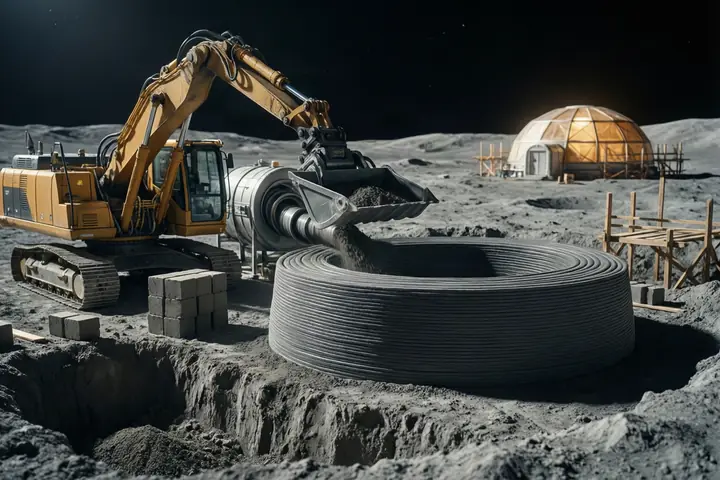 Illustration made with AI image generation; not evidence.