The technologies stories first imagined in this decade, by kind, with whether each has been built since and who would keep the profit.
By kind of technology
Space travel and habitats · 214
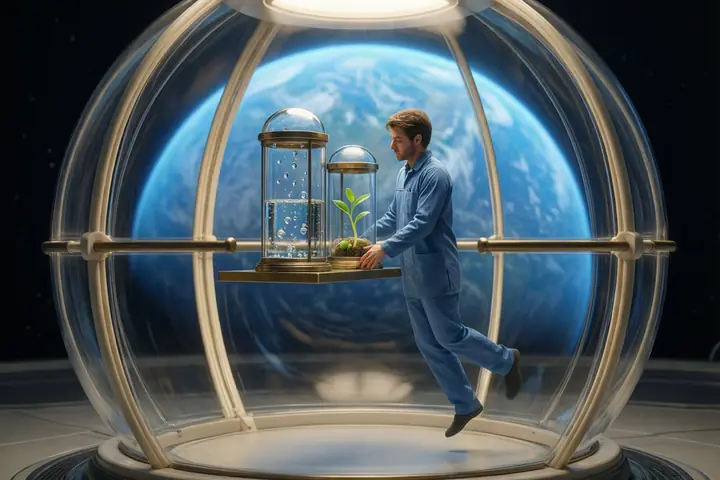
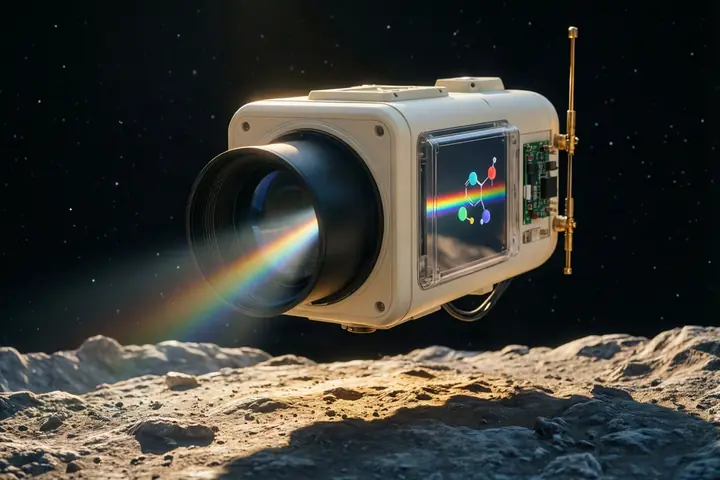
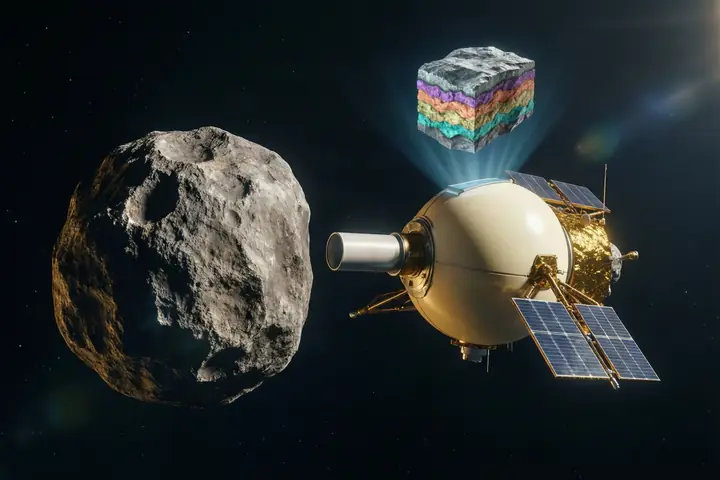
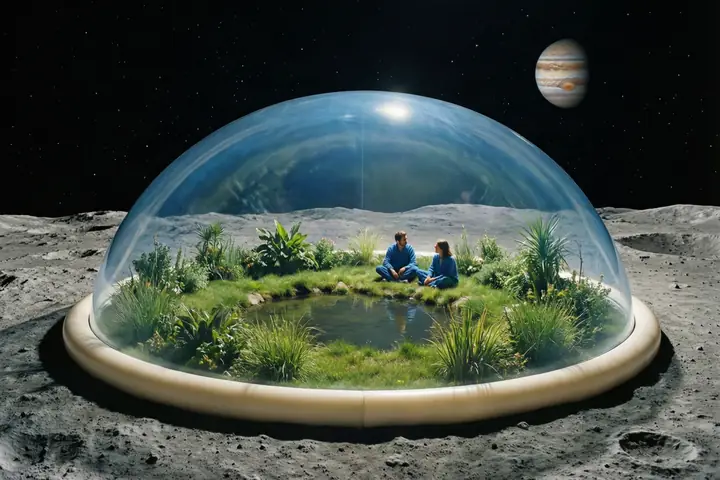
Illustration made with AI image generation; not evidence.
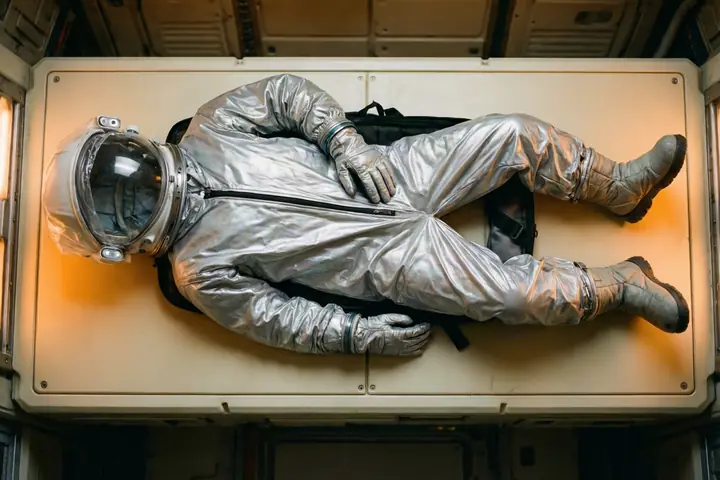
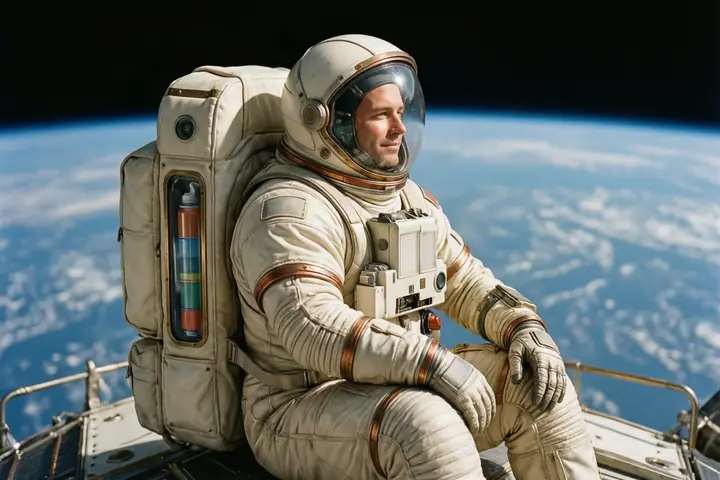
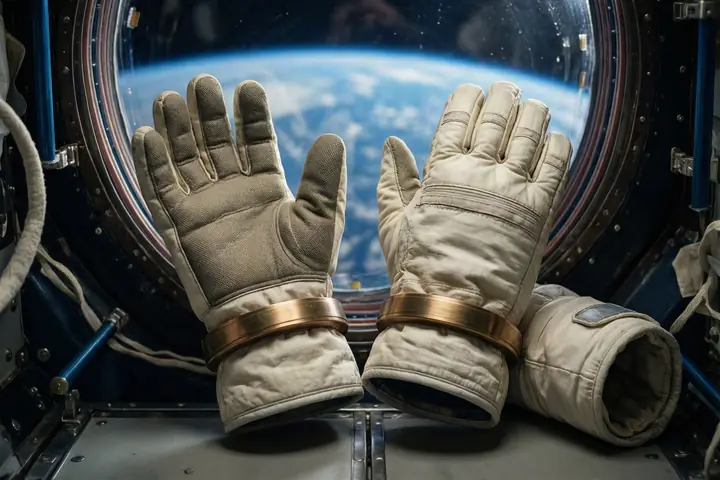
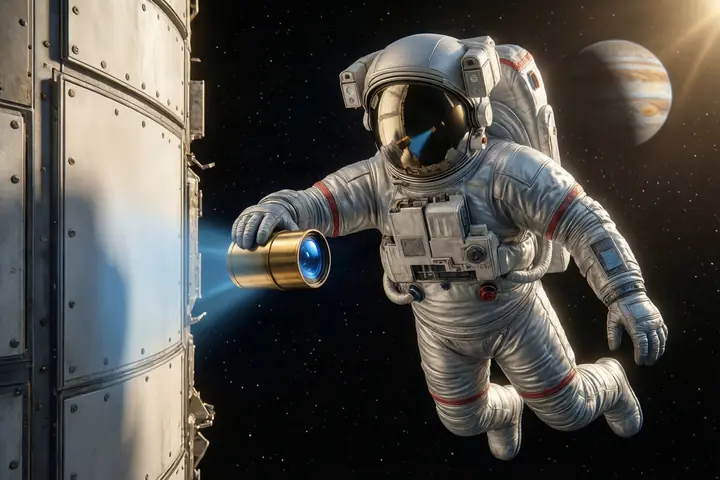
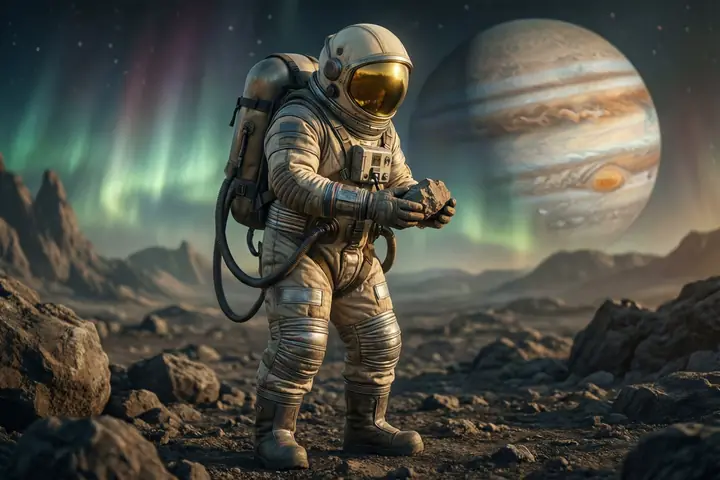
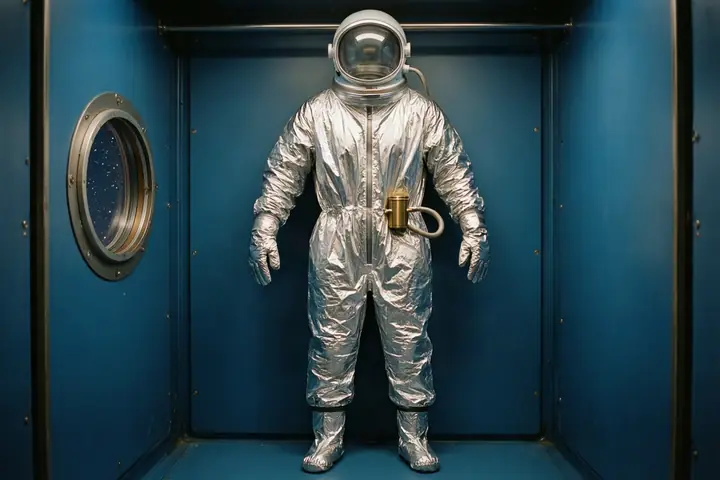
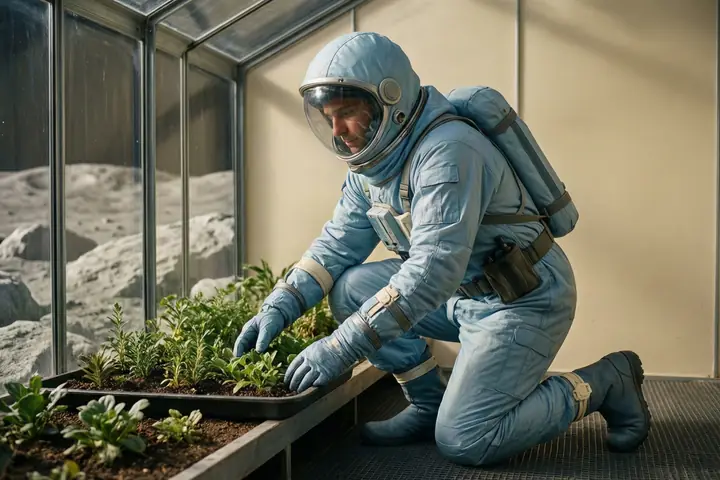
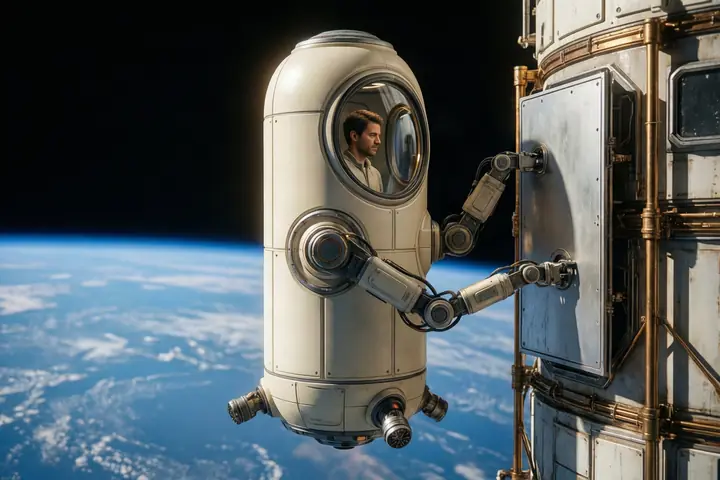
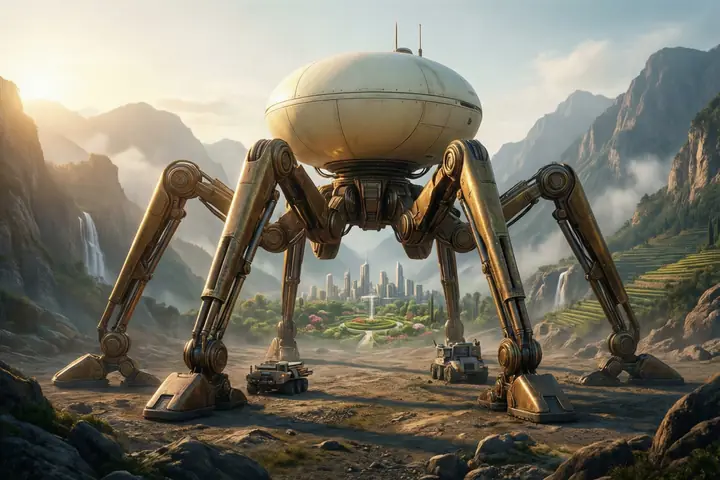
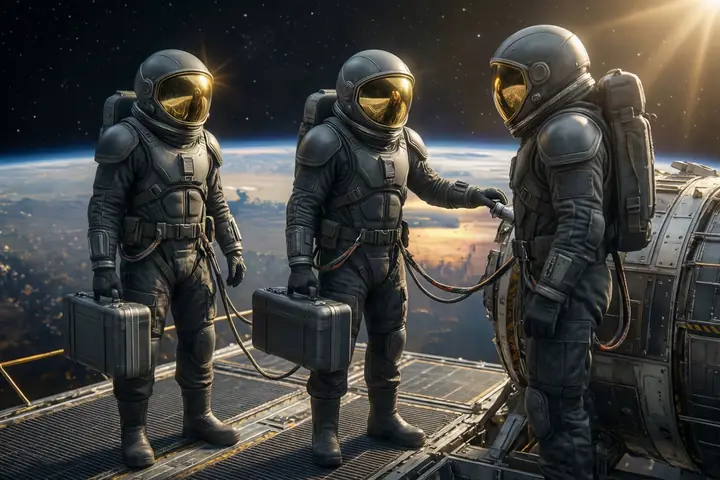
Altitude Suit
The Black Star Passes, John W. Campbell · 1930
Protective pressurised clothing for going very high in the sky or out into vacuum.
built in the 1930s, about 0 years after it was imagined
A small prizeBusinesses pay; existing firms keep the restas a model judges it
Why
A small prize. A suit that keeps a person alive in vacuum is vital to its wearer but serves only the few who work in space.
Who is paid. Space operators buy suits for their crews, and the few firms that already make such gear supply them since the design can be copied.
A model's judgement, not a reading, of the idea as if it worked the way its story promises. The model is fairly sure of this one.
Illustration made with AI image generation; not evidence.
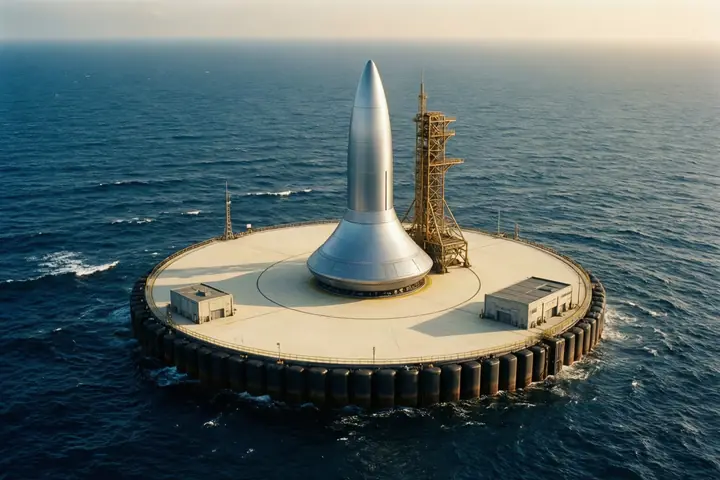
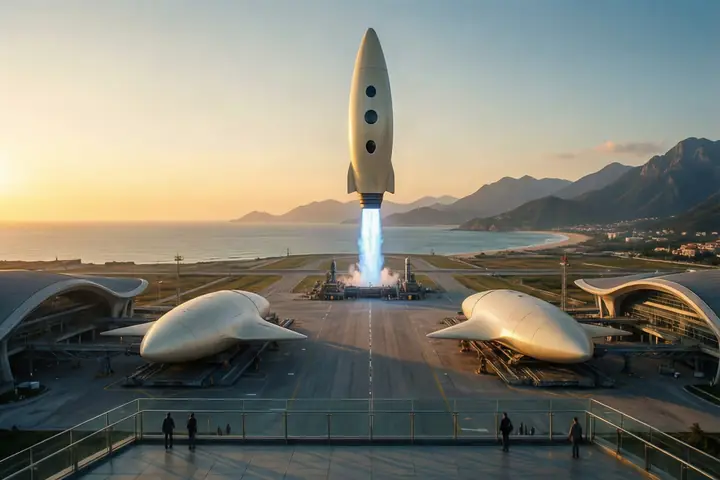
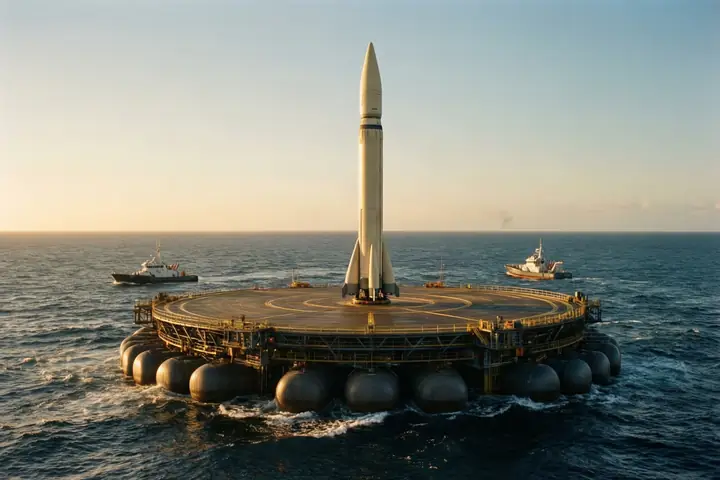
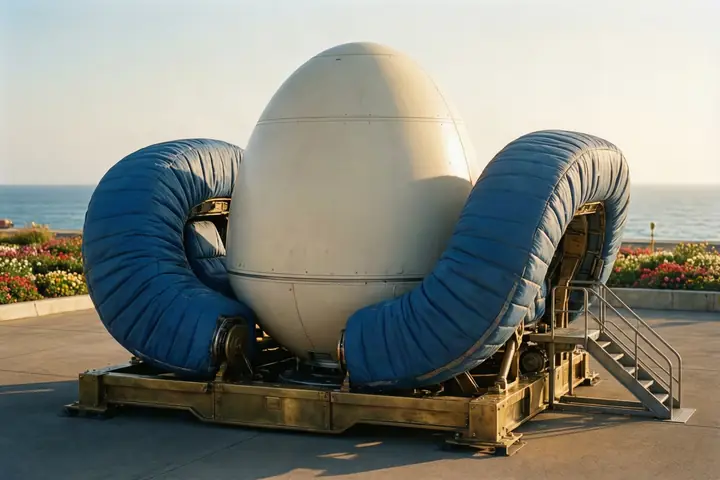
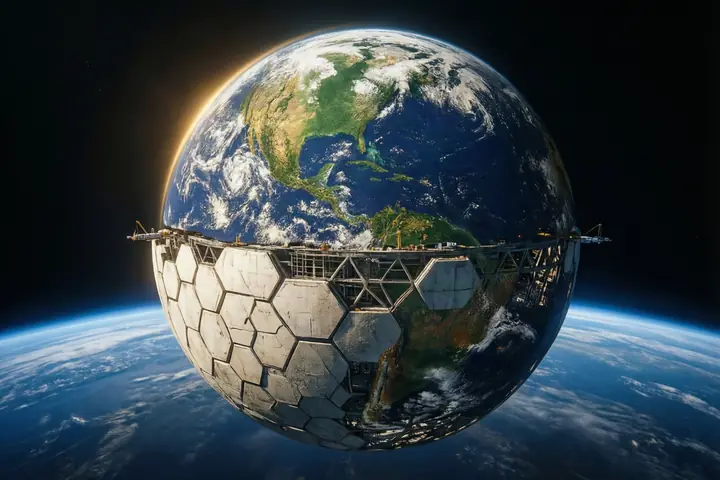
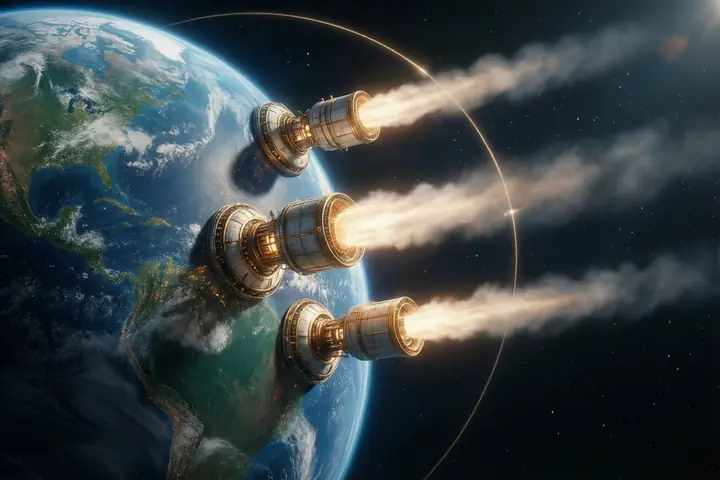
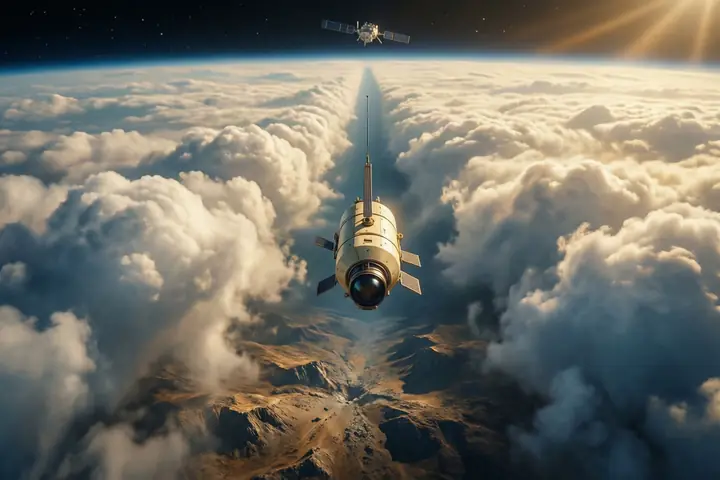
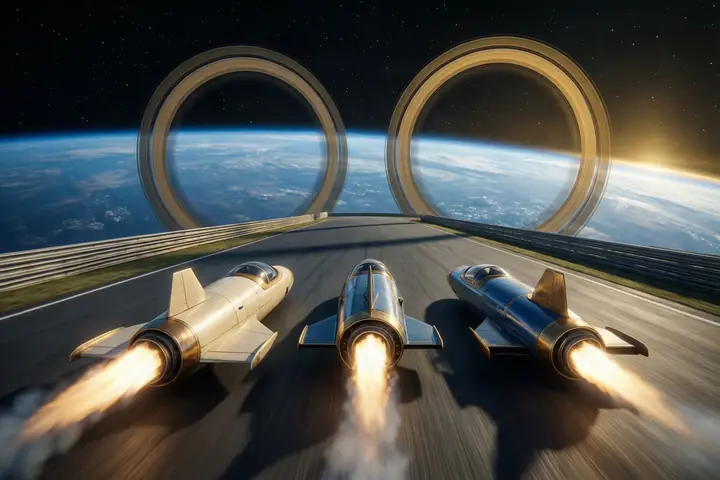
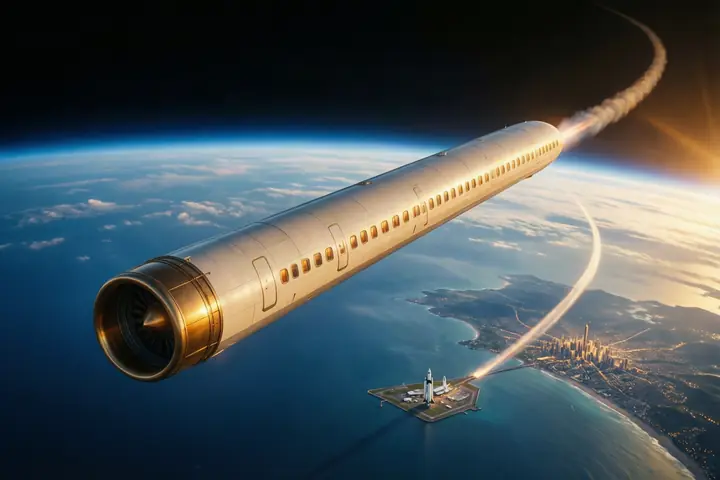
Artificial Island For Ocean Rocket Launch
Between Earth and Moon, Otfrid von Hanstein · 1930
A man-made floating platform at sea used as a base for firing rockets.
not yet built · AI models' likeliest decade: the 2020s
A small prizeBusinesses pay; existing firms keep the restas a model judges it
Why
A small prize. A floating launch base is a useful choice of site, not a new industry.
Who is paid. Launch firms pay for it, and builders of ships and offshore platforms could all make it, so those established yards collect.
A model's judgement, not a reading, of the idea as if it worked the way its story promises. The model is fairly sure of this one.
Illustration made with AI image generation; not evidence.
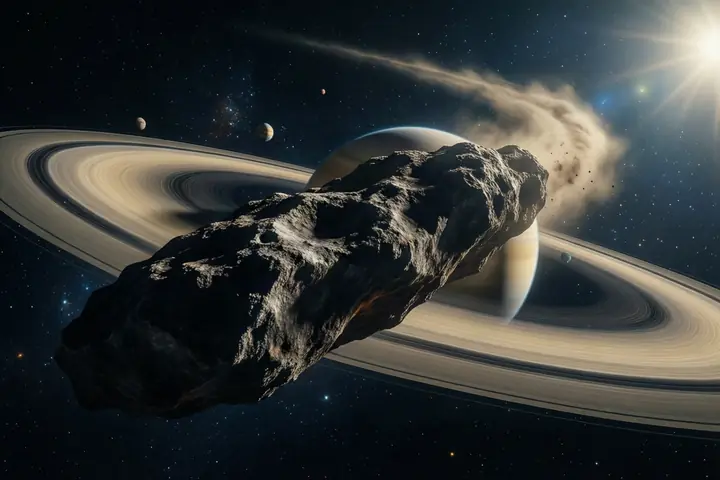
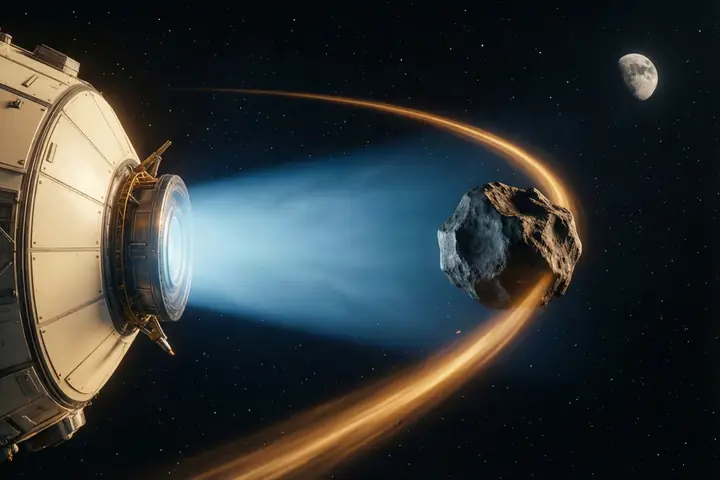
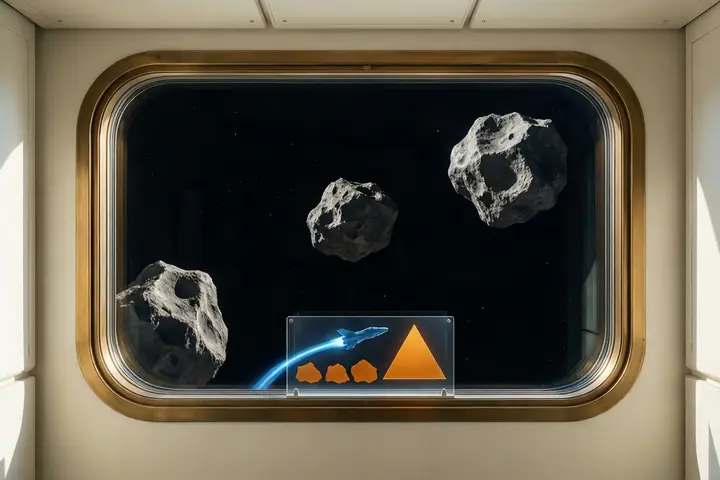
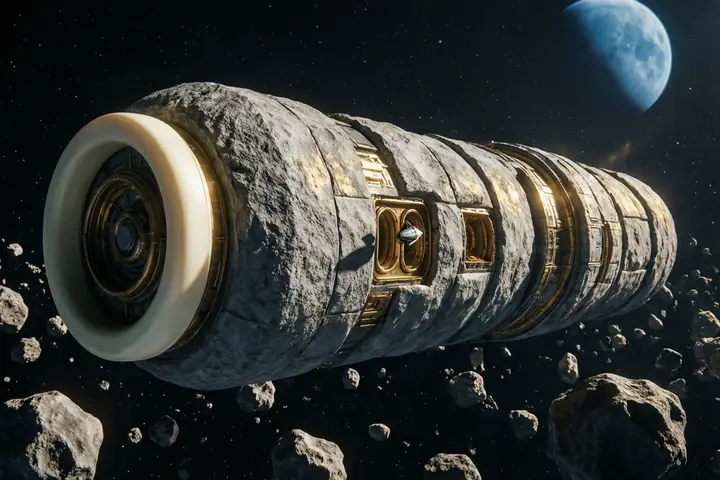
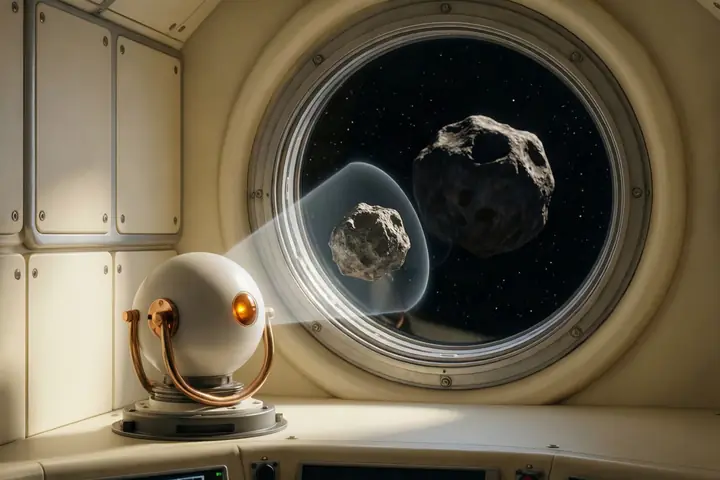
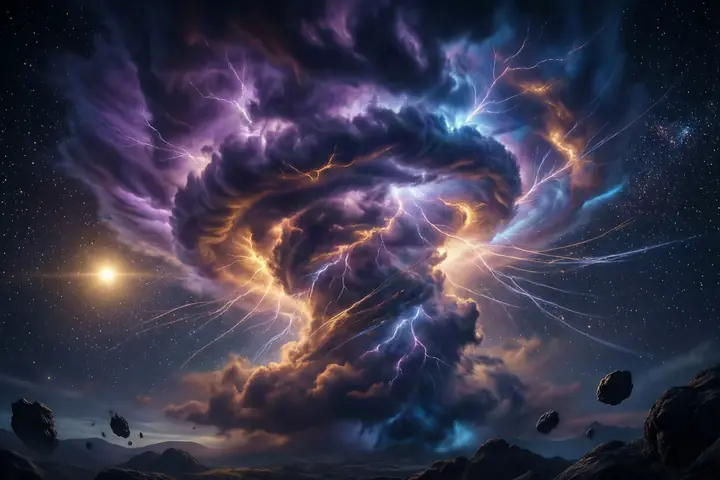
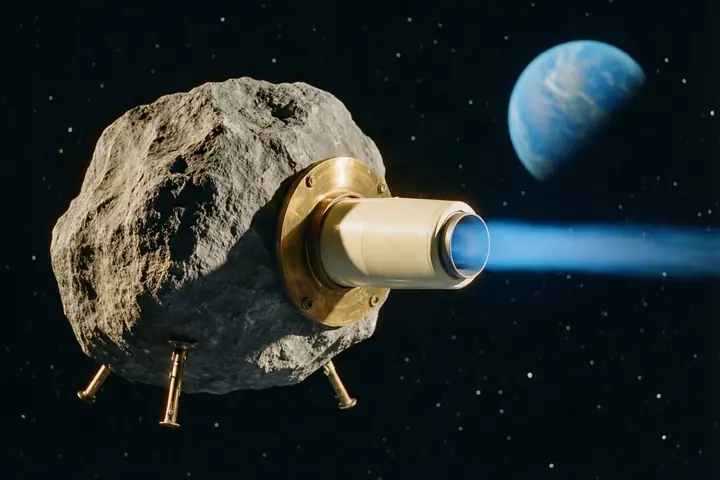
Asteroid From Outside Solar System
Brigands of the Moon, Ray Cummings · 1930
Not a machine: a rocky body that wanders into our planetary system from interstellar space.
not yet built · AI models' likeliest decade: the 2020s
No prizeNothing is soldas a model judges it
Why
No prize. It is a natural thing or event in space, not a product anyone makes or sells.
Who is paid. Nothing is sold, so nobody pays and no seller collects.
A model's judgement, not a reading, of the idea as if it worked the way its story promises. The model is fairly sure of this one.
Illustration made with AI image generation; not evidence.
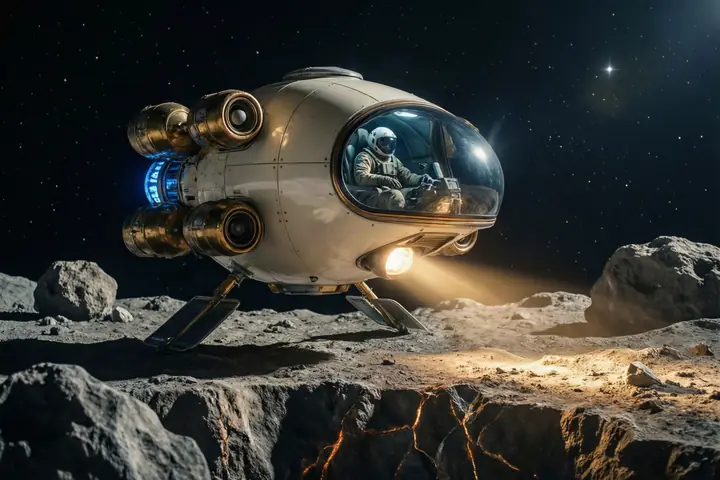
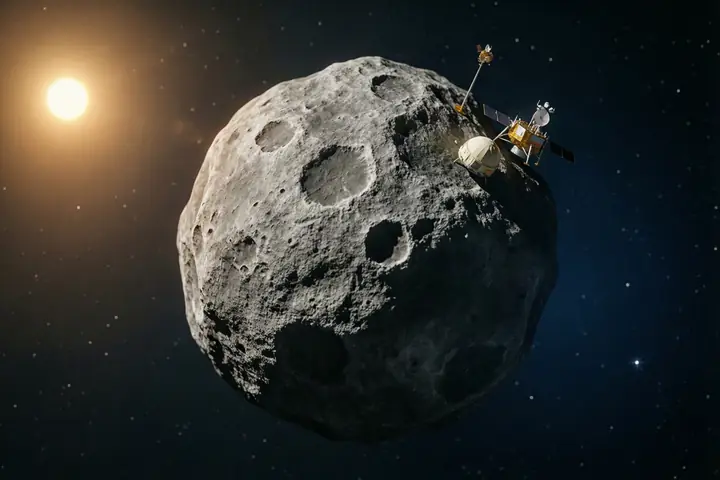
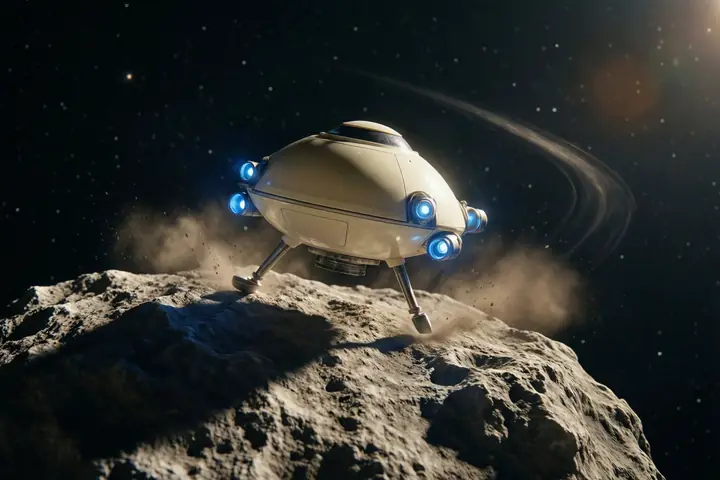
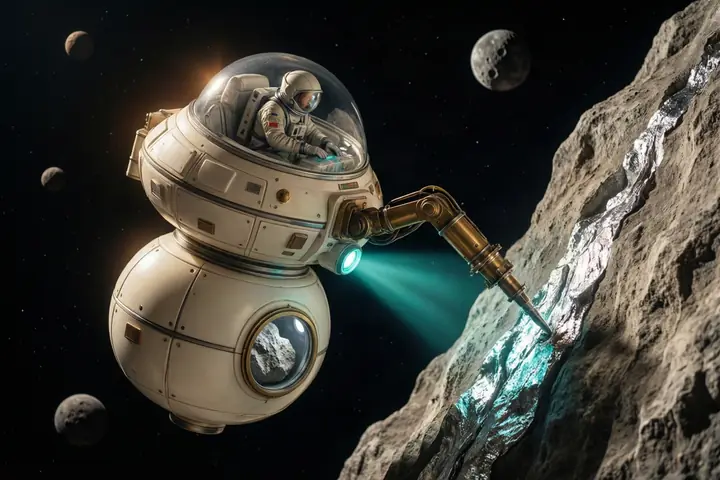
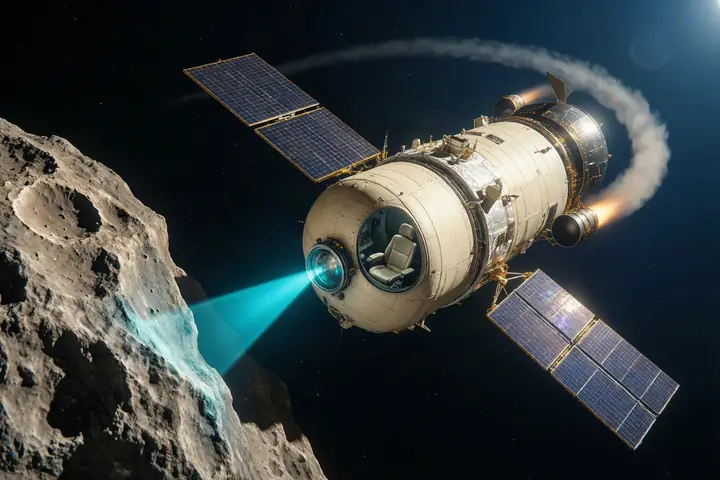
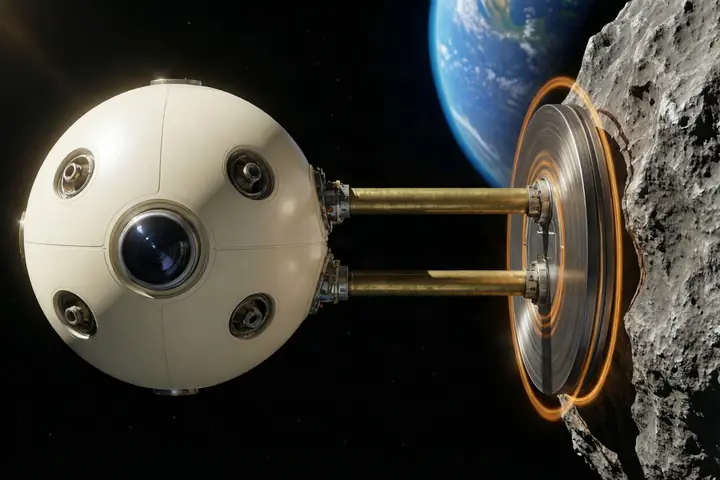
Asteroid Space Flyer
The Death's Head Meteor, Neil R. Jones · 1930
A small solo spacecraft built for scouting and visiting asteroids.
not yet built · AI models' likeliest decade: the 2060s
A small prizeBusinesses pay; existing firms keep the restas a model judges it
Why
A small prize. A solo scouting craft serves prospectors, a niche within space mining.
Who is paid. Prospectors and mining firms buy it, and established small-craft builders could all make it.
A model's judgement, not a reading, of the idea as if it worked the way its story promises. The model is fairly sure of this one.
Illustration made with AI image generation; not evidence.
Astronaut
The Death's Head Meteor, Neil R. Jones · 1930
The role of a person trained to journey beyond Earth.
built in the 1960s, about 30 years after it was imagined
A small prizeBusinesses pay; no seller keeps muchas a model judges it
Why
A small prize. It is a job, judged by the work it sells: a trained crew member is needed on every voyage but is a small part of its cost.
Who is paid. Ship operators pay the wages, and anyone with the training can do the work, so no seller keeps much.
A model's judgement, not a reading, of the idea as if it worked the way its story promises. The model is not very sure of this one.
Illustration made with AI image generation; not evidence.
Exodus Ship
Tani of Ekkis, Judson W. Reeves · 1930
A huge vessel carrying a whole society across many lifetimes of travel to rescue it from dying out.
not yet built · AI models' likeliest decade: 2100 or later
A large prizeA government pays; existing firms keep the restas a model judges it
Why
A large prize. A vessel the size of a small world carrying a whole society is an enormous building project.
Who is paid. Only a government could fund it, and the big shipbuilders and contractors already trusted with such work would be paid.
A model's judgement, not a reading, of the idea as if it worked the way its story promises. The model is fairly sure of this one.
Illustration made with AI image generation; not evidence.
Face-Plate
Skylark Three, E.E. 'Doc' Smith · 1930
The clear visor on a pressure-suit helmet that lets the wearer see out.
built in the 1960s, about 30 years after it was imagined
A small prizeBusinesses pay; existing firms keep the restas a model judges it
Why
A small prize. It is a handy detail of a helmet, a convenience for the few people who wear spacesuits.
Who is paid. Operators pay for it as part of the suit, and suit makers fit it themselves because any of them could copy it.
A model's judgement, not a reading, of the idea as if it worked the way its story promises. The model is fairly sure of this one.
Illustration made with AI image generation; not evidence.
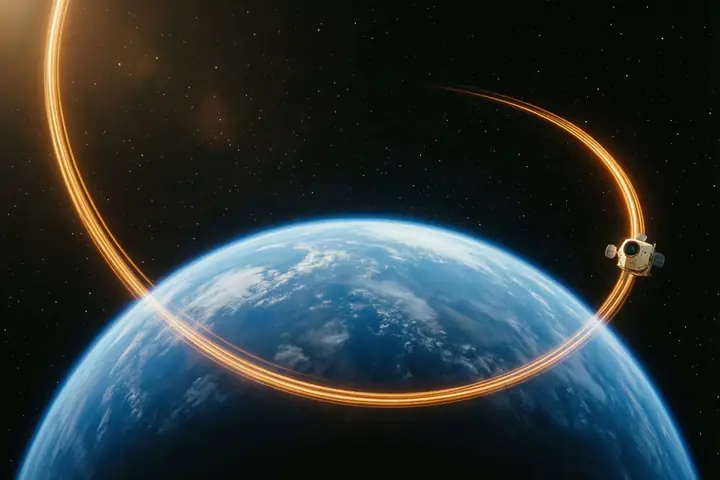
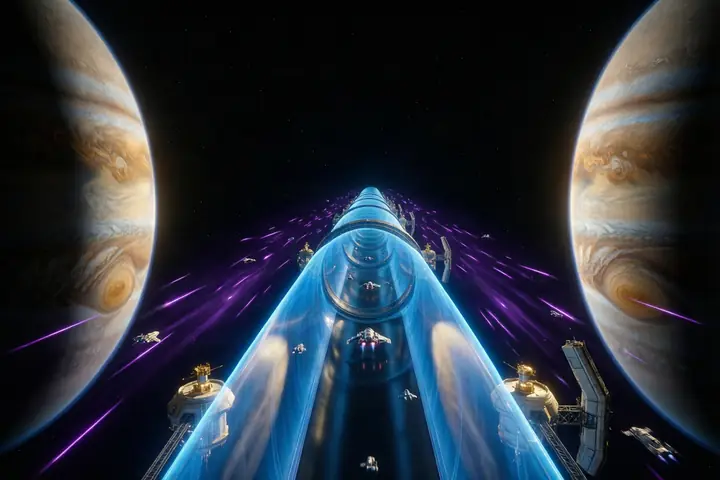
Gravity Assist
Brigands of the Moon, Ray Cummings · 1930
Swinging a spacecraft past a planet to borrow its motion and redirect or speed up the craft.
built in the 1960s, about 30 years after it was imagined
No prizeNothing is soldas a model judges it
Why
No prize. It is a way of flying or moving, not a product; the craft and gear that do it are judged separately.
Who is paid. Nothing is sold, so nobody pays and no seller collects.
A model's judgement, not a reading, of the idea as if it worked the way its story promises. The model is fairly sure of this one.
Illustration made with AI image generation; not evidence.
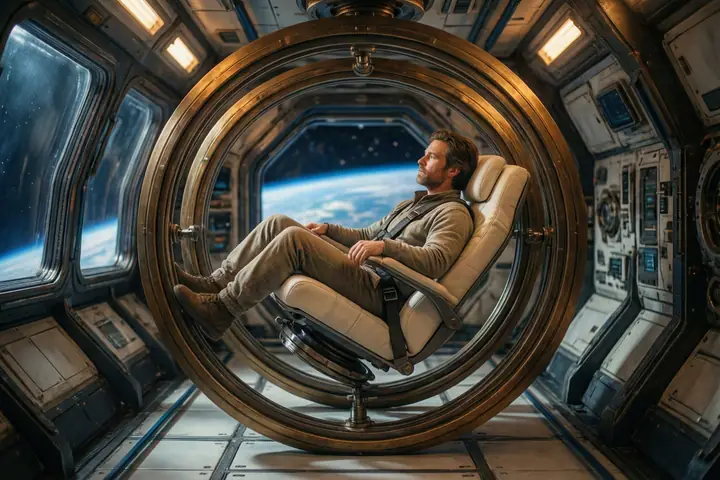
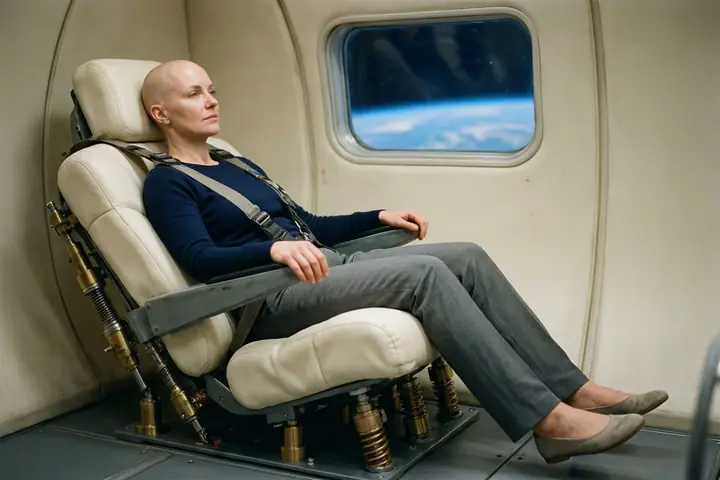
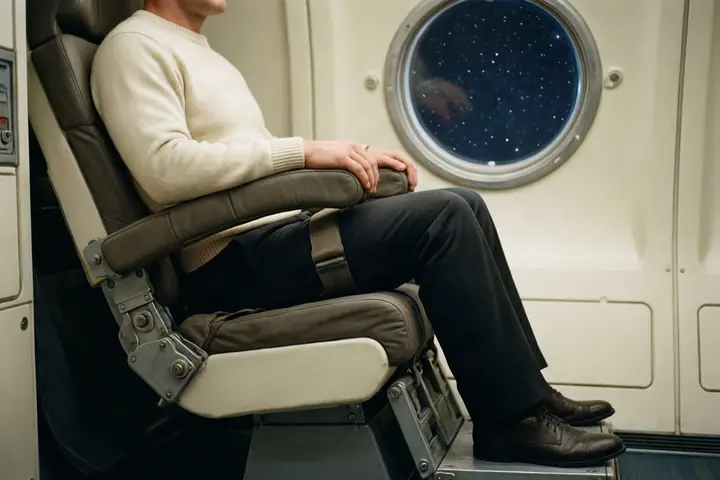
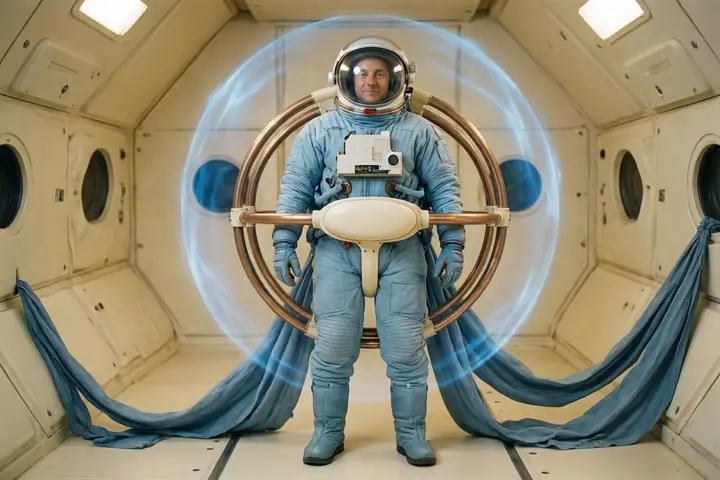
Gyroscope Seats
The Black Star Passes, John W. Campbell · 1930
Seats on swivelling gimbals that keep a passenger aligned with the direction of thrust.
built in the 1950s, about 20 years after it was imagined
A small prizeBusinesses pay; existing firms keep the restas a model judges it
Why
A small prize. It protects travellers during hard thrust, which matters only to the few who fly such ships.
Who is paid. Ship operators pay for it as part of the craft, and the firms that already build ships and their fittings supply it since others could copy the design.
A model's judgement, not a reading, of the idea as if it worked the way its story promises. The model is fairly sure of this one.
Illustration made with AI image generation; not evidence.
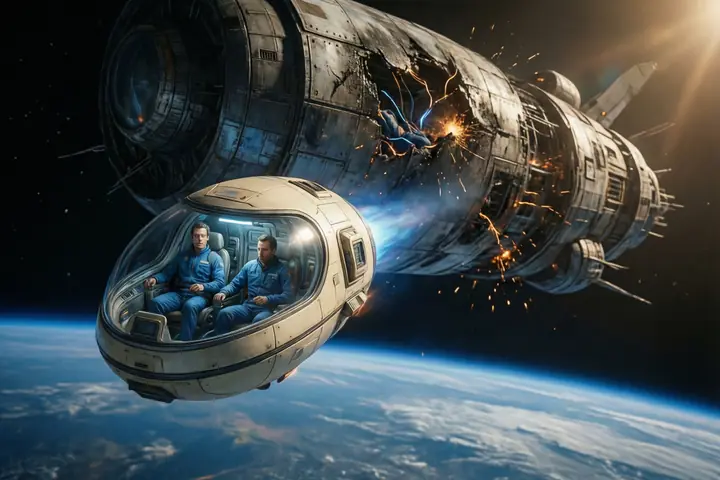
Life Tubes
Liners of Space, Jim Vanny · 1930
Small sealed capsules that crew can board to abandon a failing spacecraft.
built in the 1960s, about 30 years after it was imagined
A small prizeBusinesses pay; existing firms keep the restas a model judges it
Why
A small prize. A way off a failing ship saves lives but is carried as a fitting and rarely used.
Who is paid. Ship operators pay for it as part of the craft, and established shipbuilders supply it since any of them could make it.
A model's judgement, not a reading, of the idea as if it worked the way its story promises. The model is fairly sure of this one.
Illustration made with AI image generation; not evidence.
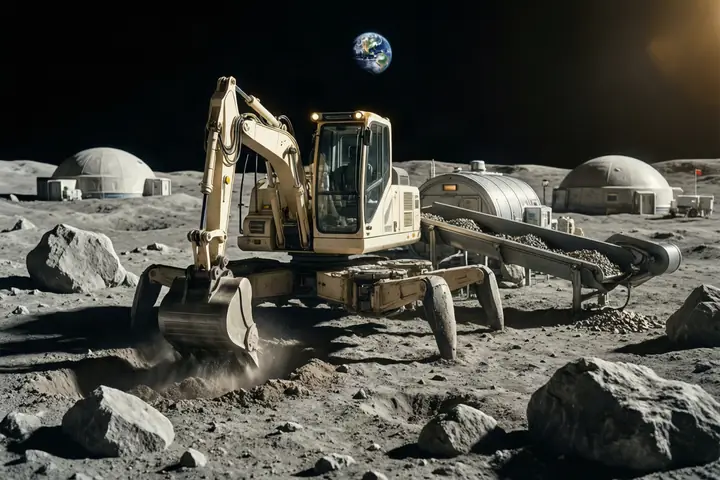
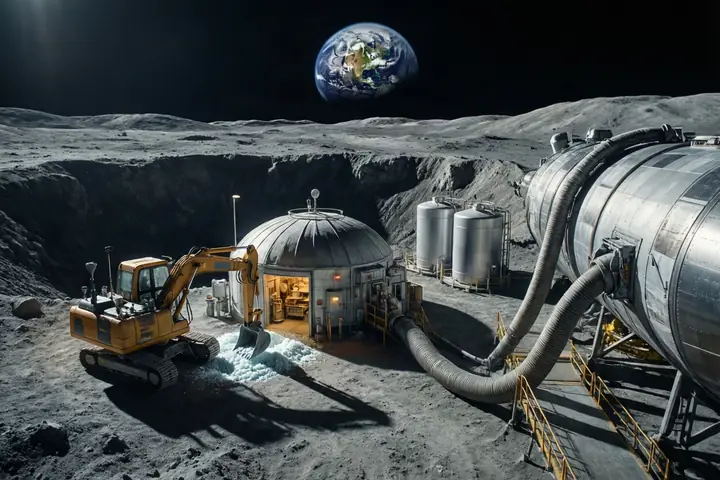
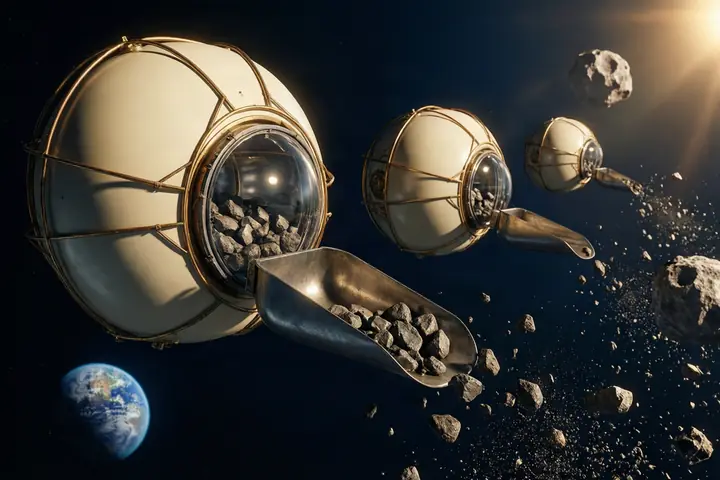
Lunar Mining
Brigands of the Moon, Ray Cummings · 1930
Digging up and extracting useful minerals from the Moon's surface.
not yet built · AI models' likeliest decade: the 2030s
A large prizeBusinesses pay; existing firms keep the restas a model judges it
Why
A large prize. Materials taken from other worlds and from loose rock in space would feed an industry of their own.
Who is paid. Firms that need the material pay for it, and since others could dig the same way the gain goes to those who already own the ships and claims.
A model's judgement, not a reading, of the idea as if it worked the way its story promises. The model is fairly sure of this one.
Illustration made with AI image generation; not evidence.
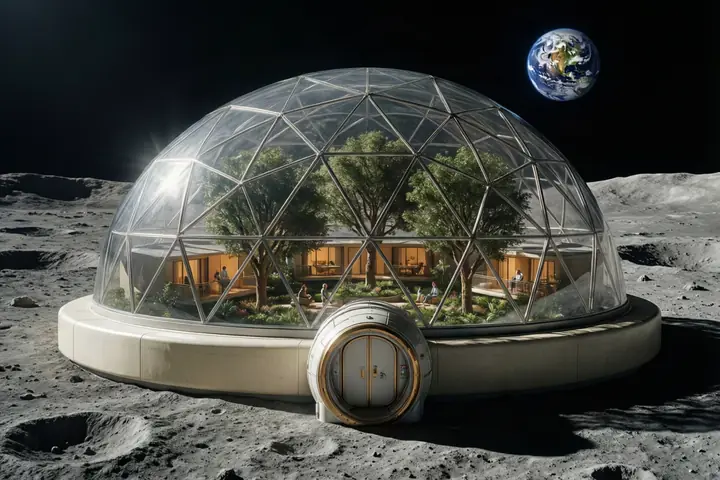
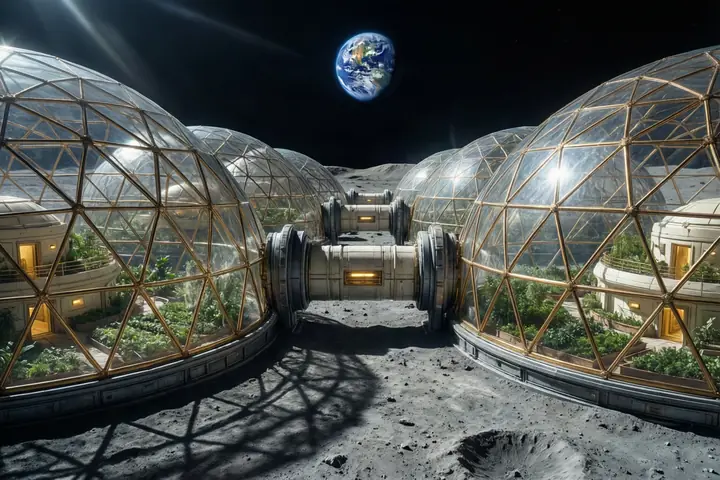
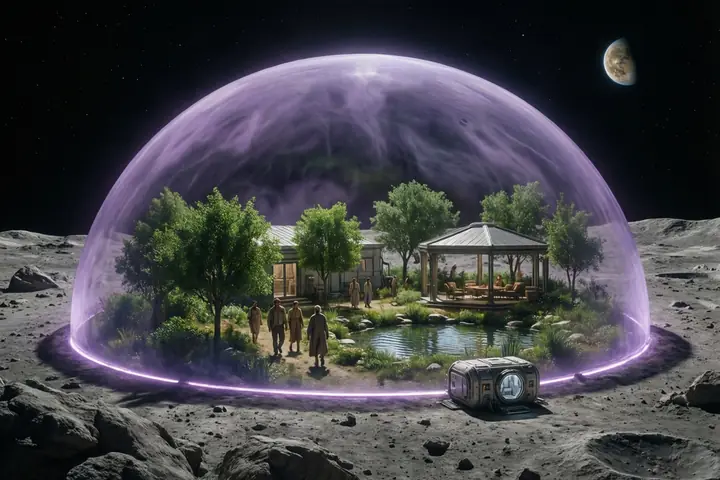
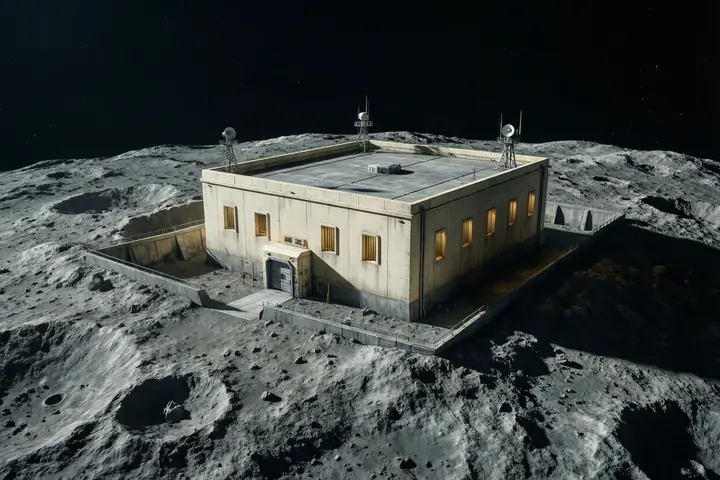
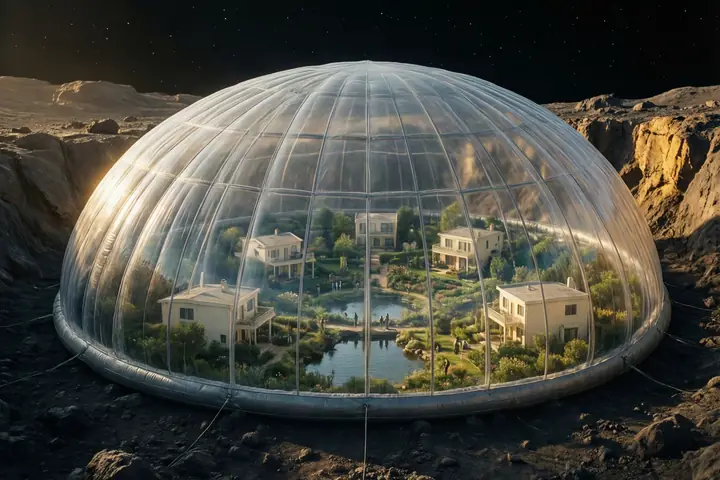
Moon Dome
Brigands of the Moon, Ray Cummings · 1930
A lasting enclosed shelter on the lunar surface where people can live.
not yet built · AI models' likeliest decade: the 2040s
A large prizeA government pays; existing firms keep the restas a model judges it
Why
A large prize. A place for many people to live and work beyond Earth is a building industry of its own.
Who is paid. A settlement is a public work a government pays for, and the big construction and space firms that already win such contracts would build it.
A model's judgement, not a reading, of the idea as if it worked the way its story promises. The model is fairly sure of this one.
Illustration made with AI image generation; not evidence.
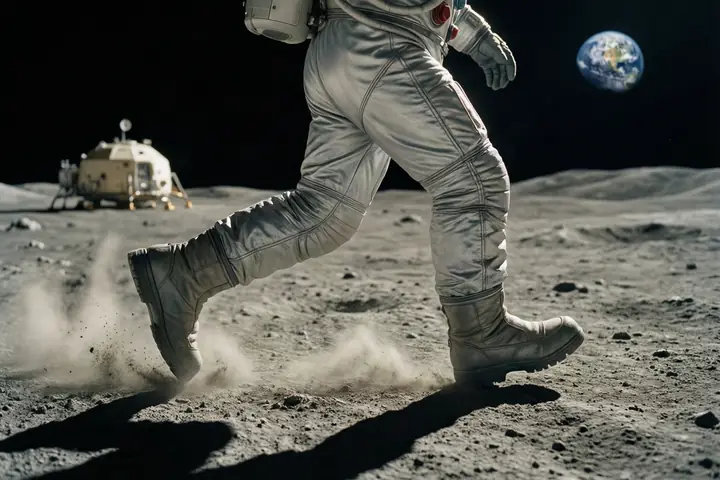
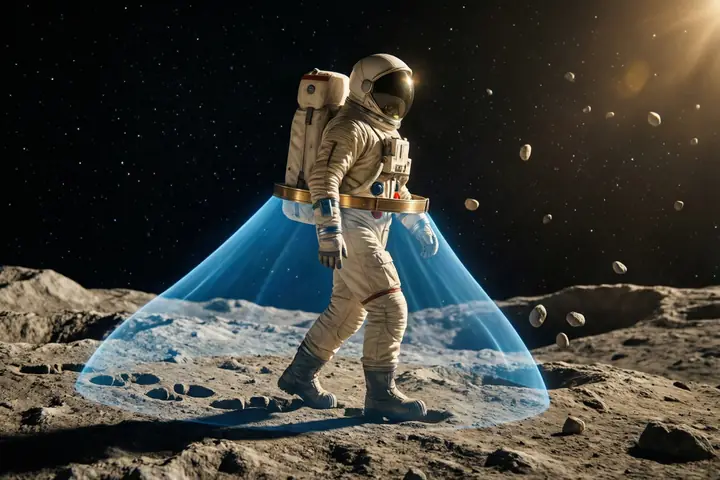
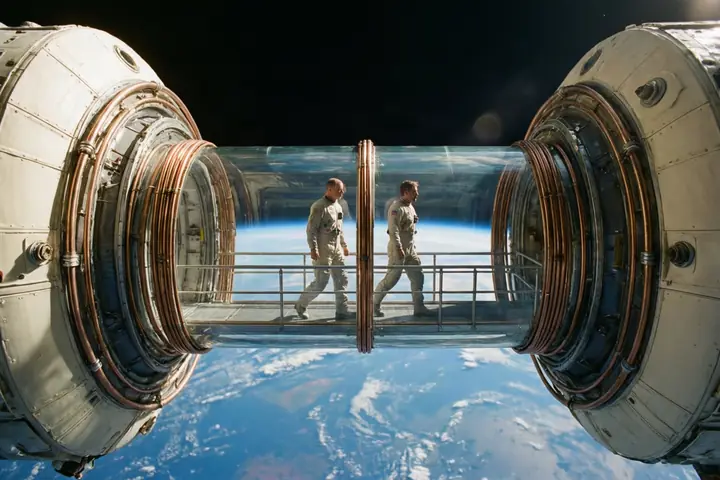
Moon Walk
Brigands of the Moon, Ray Cummings · 1930
People striding across the lunar surface under its weak pull.
built in the 1960s, about 30 years after it was imagined
No prizeNothing is soldas a model judges it
Why
No prize. It is a way of flying or moving, not a product; the craft and gear that do it are judged separately.
Who is paid. Nothing is sold, so nobody pays and no seller collects.
A model's judgement, not a reading, of the idea as if it worked the way its story promises. The model is fairly sure of this one.
Illustration made with AI image generation; not evidence.
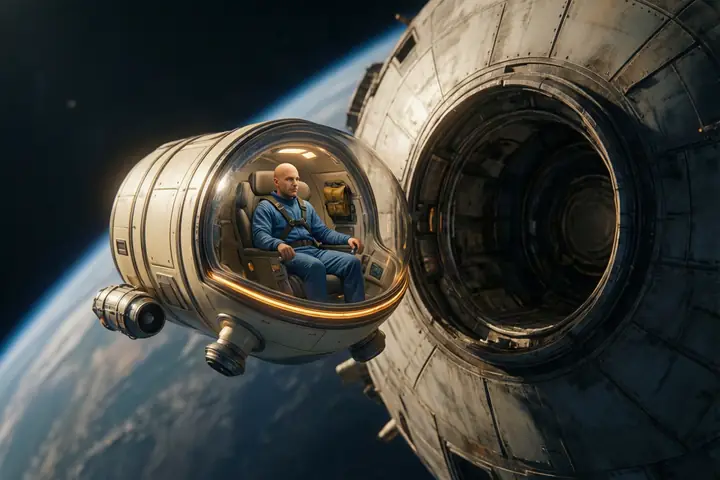
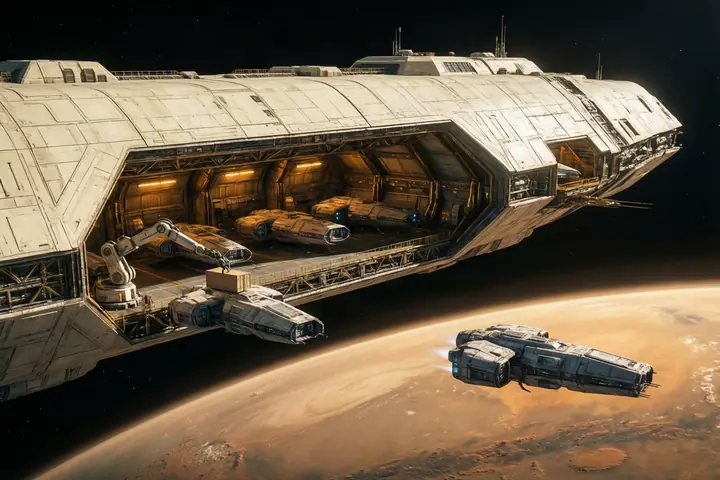
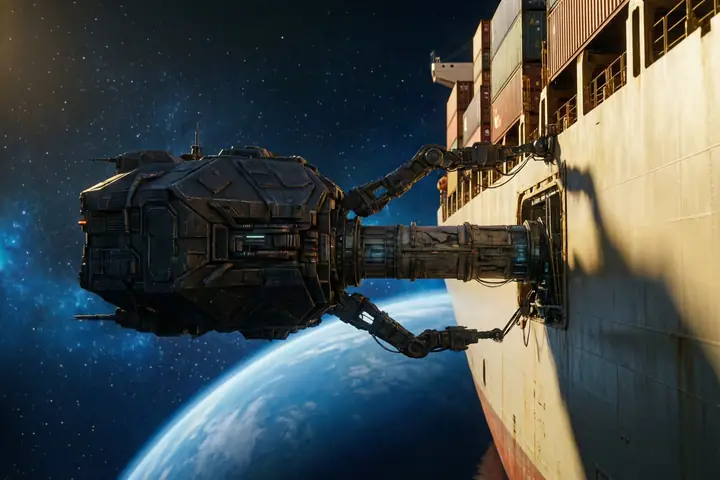
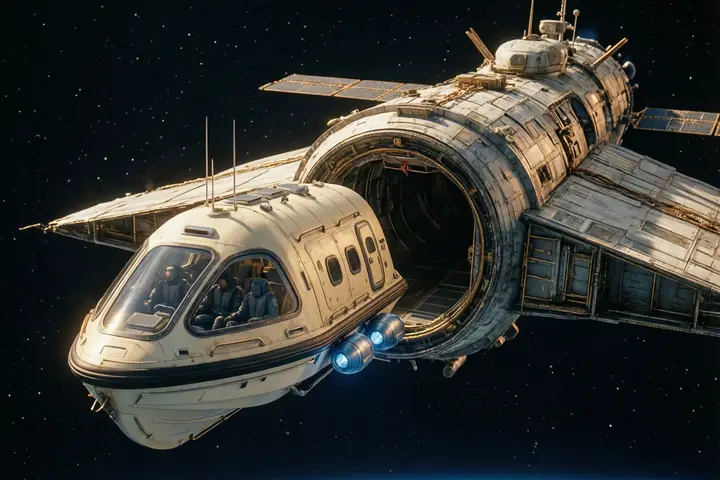
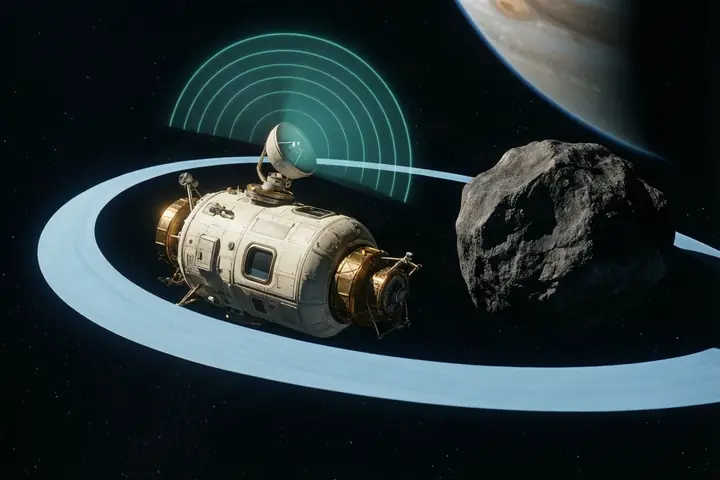
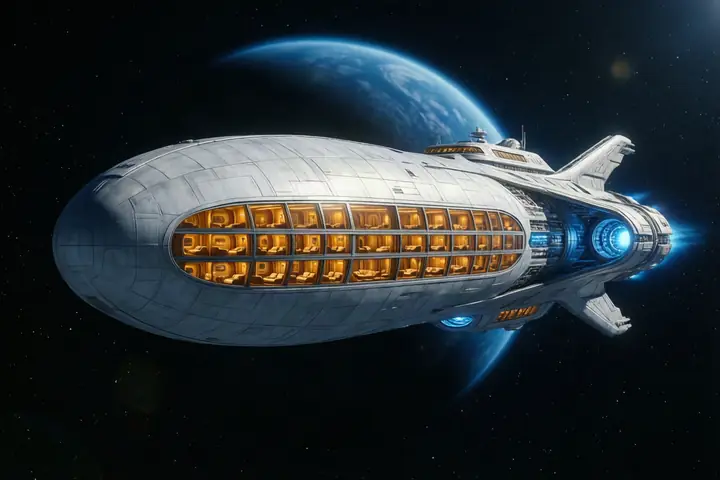
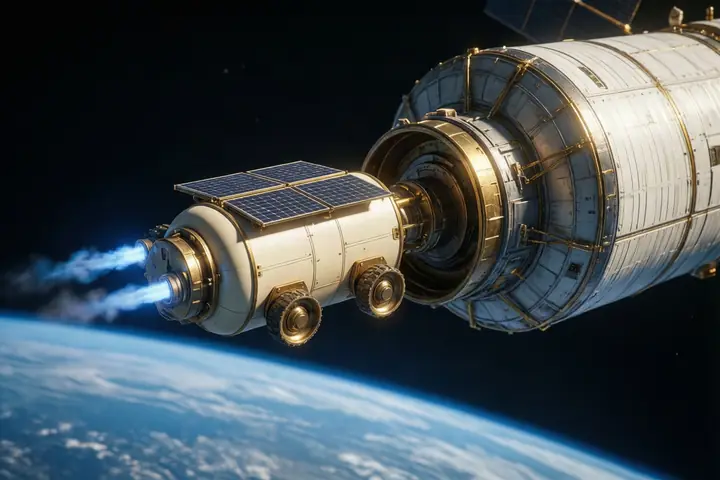
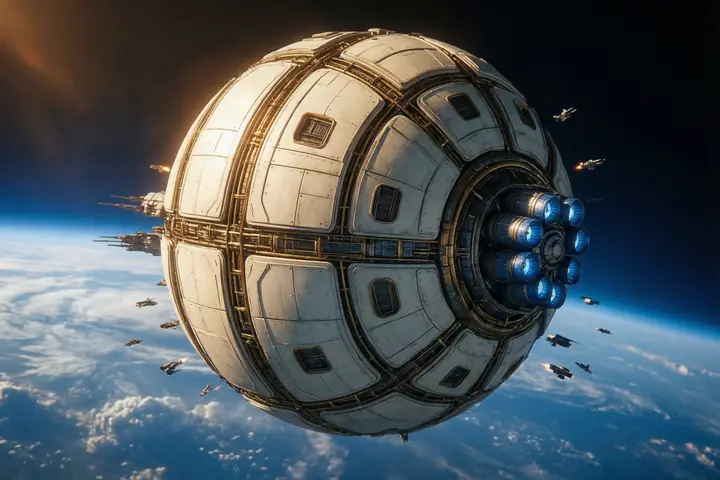
Mother Ship
The Black Star Passes, John W. Campbell · 1930
A large vessel acting as a base that launches, supplies and recovers smaller craft in space.
not yet built · AI models' likeliest decade: the 2050s
A large prizeBusinesses pay; existing firms keep the restas a model judges it
Why
A large prize. A working ship that carries people and cargo between worlds is the base of a whole transport industry.
Who is paid. Carriers and other firms working in space buy ships, and since a second yard could build the same craft the established shipbuilders collect.
A model's judgement, not a reading, of the idea as if it worked the way its story promises. The model is fairly sure of this one.
Illustration made with AI image generation; not evidence.
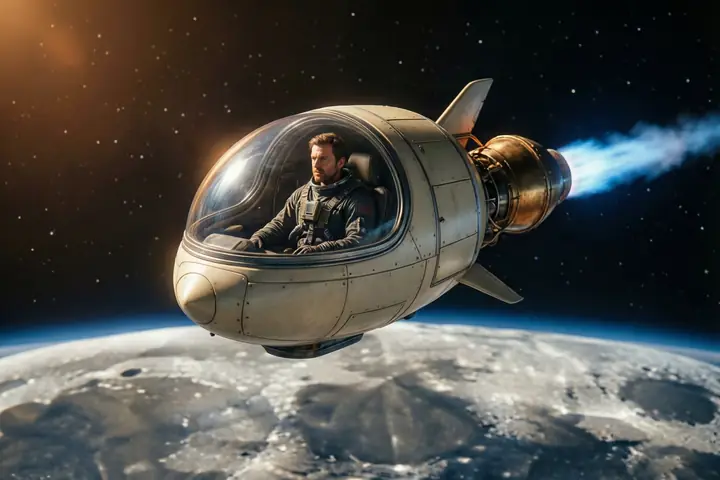
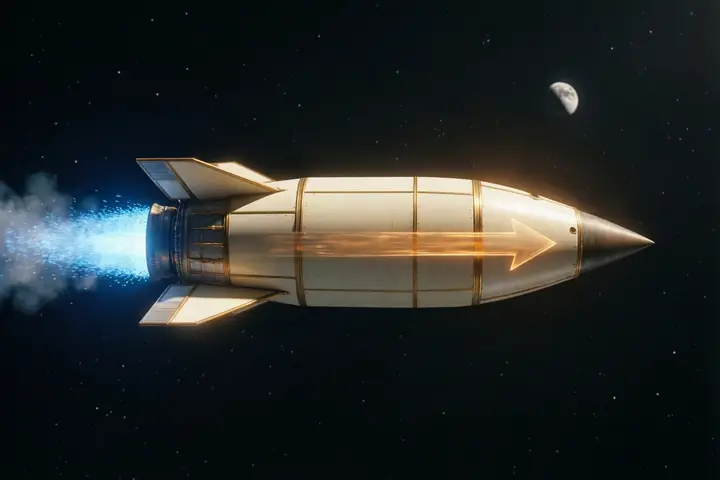
One-Man Rocket
Evans of the Earth-Guard, Edmond Hamilton · 1930
A compact spacecraft sized for just the person flying it.
built in the 1960s, about 30 years after it was imagined
A small prizeBusinesses pay; existing firms keep the restas a model judges it
Why
A small prize. A craft that carries only its pilot serves scouts and crews, a niche within space transport.
Who is paid. Prospectors, carriers and expedition firms buy it, and established small-craft builders could all make it.
A model's judgement, not a reading, of the idea as if it worked the way its story promises. The model is fairly sure of this one.
Illustration made with AI image generation; not evidence.
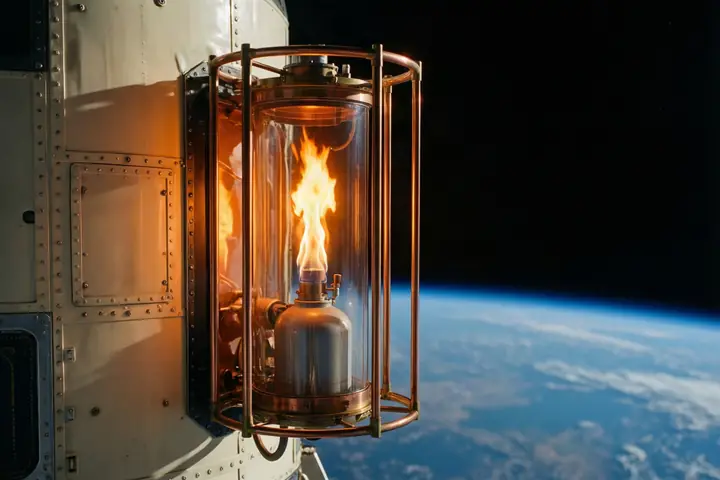
Oxygen Space Flare
Brigands of the Moon, Ray Cummings · 1930
An enclosed light source that burns fuel with its own oxygen supply so it works in vacuum.
not yet built · AI models' likeliest decade: the 2020s
A small prizeBusinesses pay; no seller keeps muchas a model judges it
Why
A small prize. A light that burns in vacuum is a simple signal or work lamp for a few crews.
Who is paid. Space operators buy it for crews, and it is simple enough that many workshops could make it, so no seller keeps much.
A model's judgement, not a reading, of the idea as if it worked the way its story promises. The model is fairly sure of this one.
Illustration made with AI image generation; not evidence.
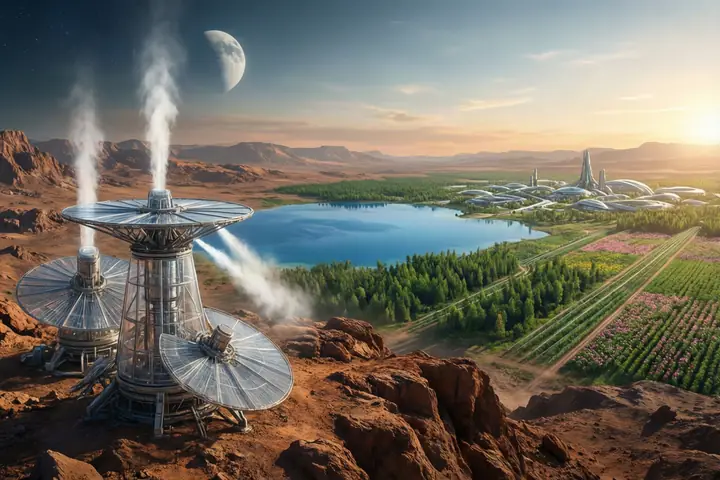
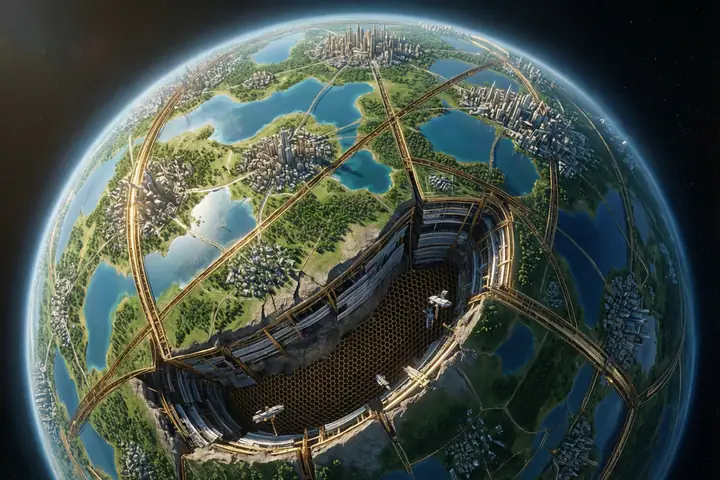
Planets Made Habitable
Last and First Men, Olaf Stapledon · 1930
Reshaping another world's air, temperature and surface so people could live there.
not yet built · AI models' likeliest decade: 2100 or later
A vast prizeA government pays; existing firms keep the restas a model judges it
Why
A vast prize. Giving a whole world air and a climate people can live in would open new land for a large share of humanity.
Who is paid. Only a government could fund work on a whole world, and the large engineering firms that already hold such contracts would be paid to do it.
A model's judgement, not a reading, of the idea as if it worked the way its story promises. The model is not very sure of this one.
Illustration made with AI image generation; not evidence.
Shock-Absorbing Seats
Evans of the Earth-Guard, Edmond Hamilton · 1930
Cushioned seating that soaks up the crushing forces felt during a rocket's liftoff.
not yet built · AI models' likeliest decade: the 2020s
A small prizeBusinesses pay; existing firms keep the restas a model judges it
Why
A small prize. It protects crews during hard thrust, which matters only to the few who fly such ships.
Who is paid. Ship operators pay for it as part of the craft, and the firms that already build ships and their fittings supply it since others could copy the design.
A model's judgement, not a reading, of the idea as if it worked the way its story promises. The model is fairly sure of this one.
Illustration made with AI image generation; not evidence.
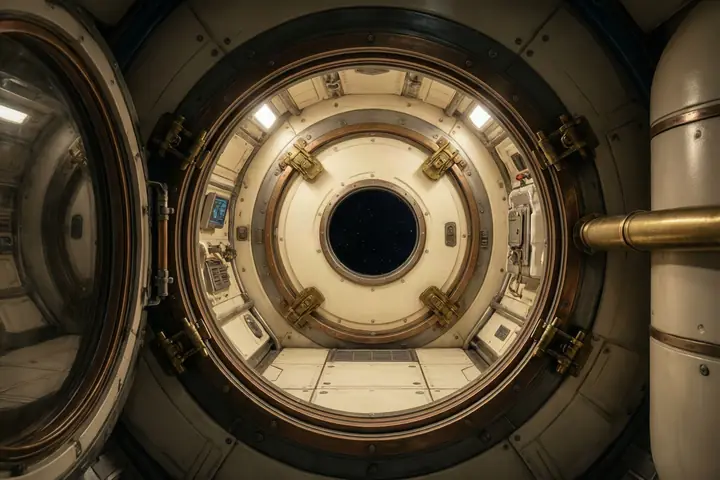
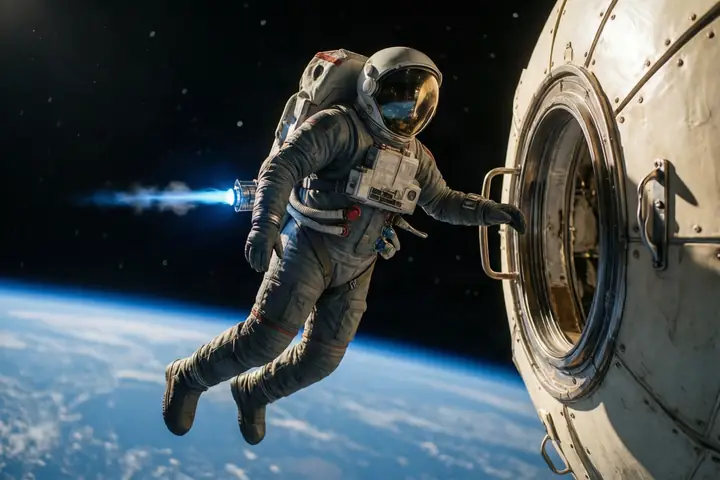
Space Lock
The Black Star Passes, John W. Campbell · 1930
A sealed chamber letting crew pass between a pressurised cabin and vacuum without losing air.
built in the 1960s, about 30 years after it was imagined
A small prizeBusinesses pay; existing firms keep the restas a model judges it
Why
A small prize. Passing in and out without losing air is essential but is a fitting of the craft.
Who is paid. Ship operators pay for it as part of the craft, and the established builders of ships and stations supply it since the idea is easy to copy.
A model's judgement, not a reading, of the idea as if it worked the way its story promises. The model is fairly sure of this one.
Illustration made with AI image generation; not evidence.
Space Pirate
Evans of the Earth-Guard, Edmond Hamilton · 1930
Criminals seizing spacecraft by force from their rightful crews.
not yet built · AI models could not judge when it may arrive
No prizeNothing is soldas a model judges it
Why
No prize. It names a crime, the seizing of ships by force, which nobody may lawfully buy.
Who is paid. Nothing is sold, so nobody pays and no seller collects.
A model's judgement, not a reading, of the idea as if it worked the way its story promises. The model is fairly sure of this one.
Illustration made with AI image generation; not evidence.
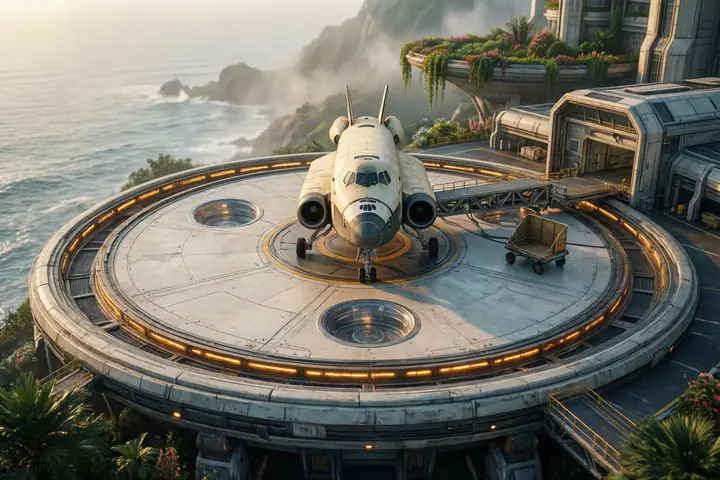
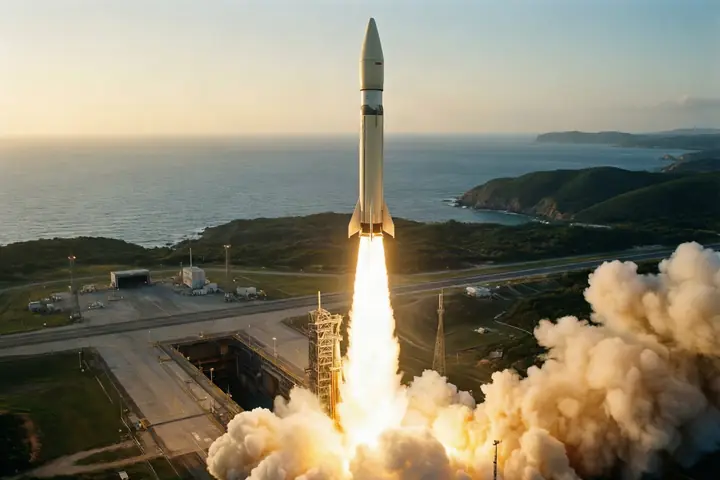
Spaceport
The Birth of a New Republic, M. Breuer (w/J. Williamson · 1930
A ground facility from which craft lift off toward orbit and beyond.
built in the 1950s, about 20 years after it was imagined
A large prizeBusinesses pay; existing firms keep the restas a model judges it
Why
A large prize. A place where craft lift off and land is what every flight to space depends on.
Who is paid. Carriers pay to use it, and since any port can be copied the gain goes to the large builders and the holders of the few good ground sites.
A model's judgement, not a reading, of the idea as if it worked the way its story promises. The model is fairly sure of this one.
Illustration made with AI image generation; not evidence.
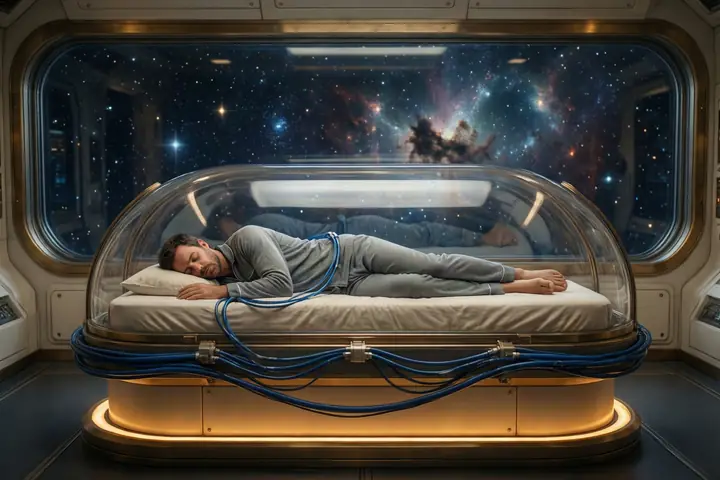
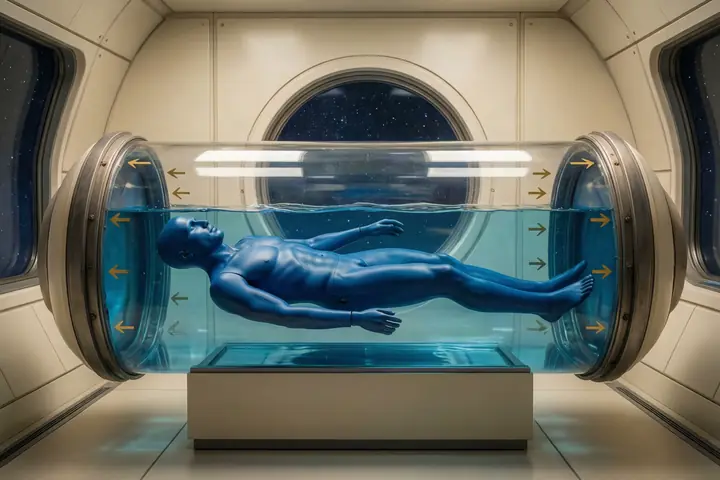
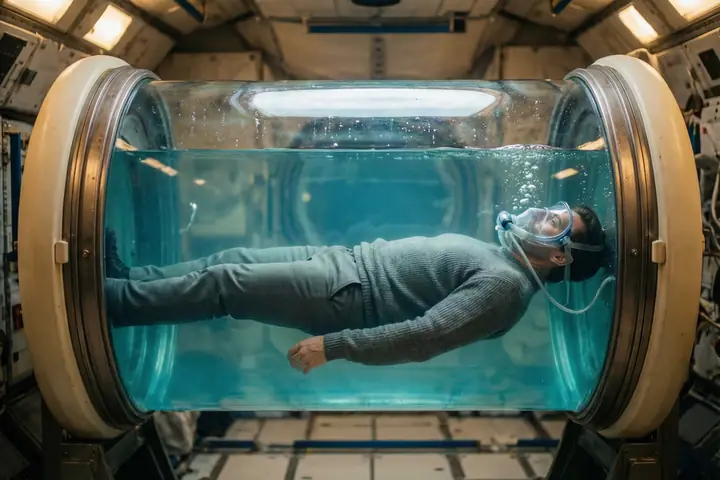
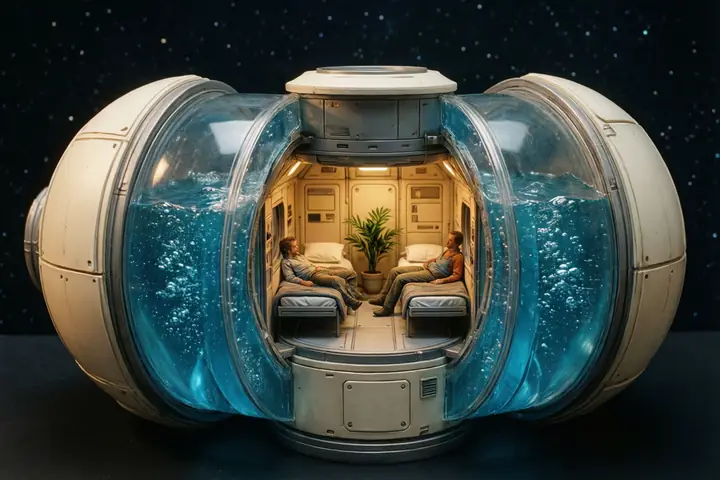
The Sleep
Tani of Ekkis, Judson W. Reeves · 1930
Putting travellers into a deep dormant state so a long space trip consumes far less food, water and air.
not yet built · AI models' likeliest decade: the 2050s
A large prizeBusinesses pay; existing firms keep the restas a model judges it
Why
A large prize. Deep sleep that saves food, water and air would make very long voyages possible.
Who is paid. Carriers would pay, and nothing in the description stops others doing it once it is shown to work, so the firms that already supply ships collect.
A model's judgement, not a reading, of the idea as if it worked the way its story promises. The model is not very sure of this one.
Illustration made with AI image generation; not evidence.
Vacuum Armor
Skylark Three, E.E. 'Doc' Smith · 1930
A spacesuit reinforced with protective metal plating.
built in the 1960s, about 30 years after it was imagined
A small prizeBusinesses pay; existing firms keep the restas a model judges it
Why
A small prize. A suit with protective plating keeps a person alive and guarded outside, essential gear but only for a few; no military use is stated.
Who is paid. Space operators buy suits for their crews, and the few established makers of suits can all copy a design, so they collect.
A model's judgement, not a reading, of the idea as if it worked the way its story promises. The model is fairly sure of this one.
Illustration made with AI image generation; not evidence.
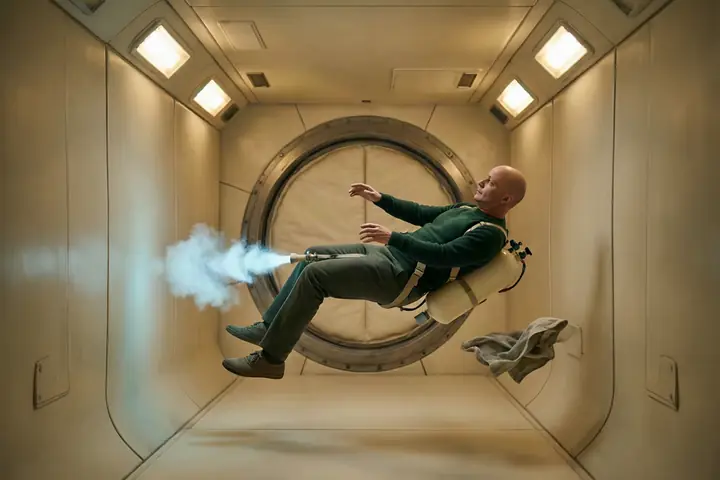
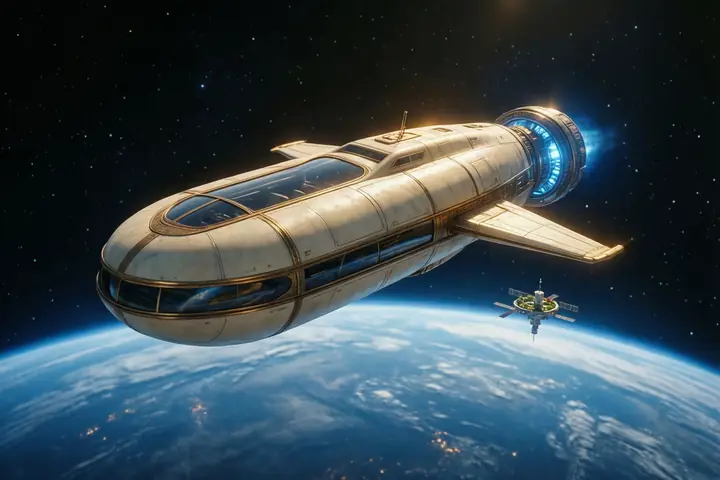
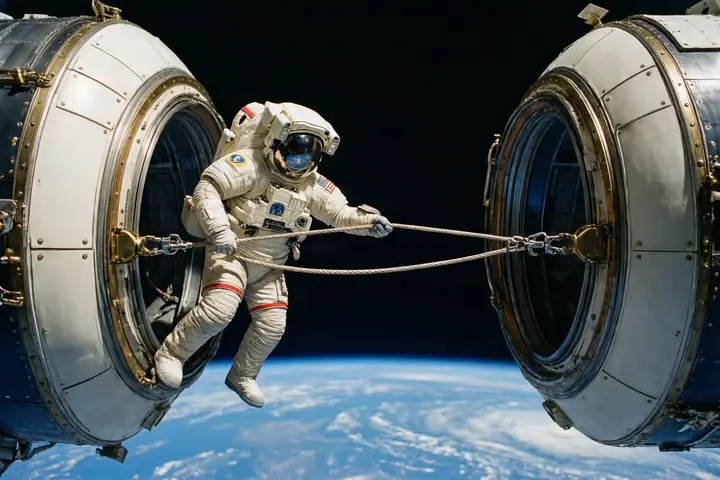
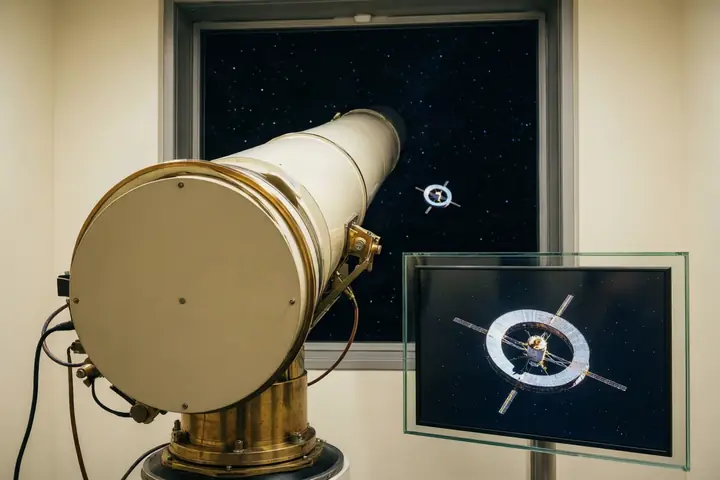
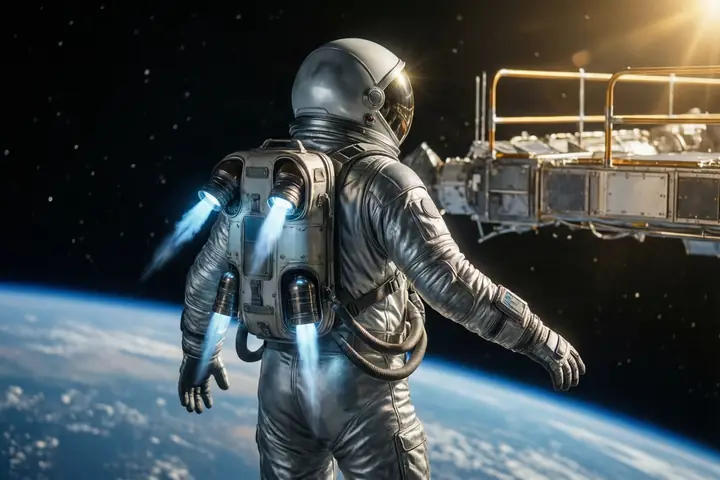
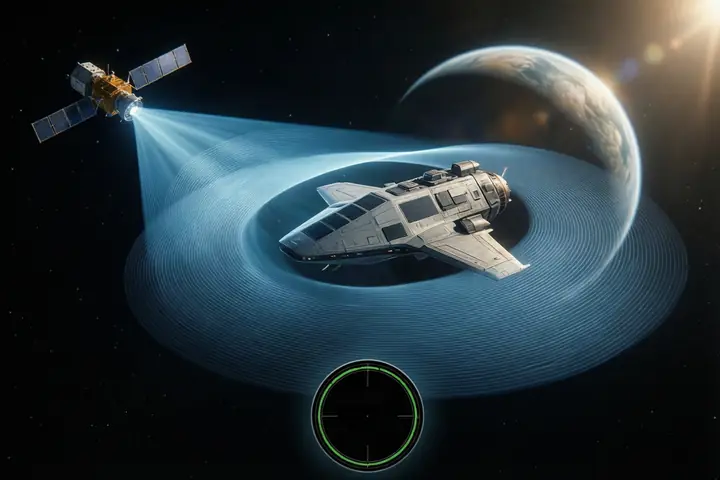
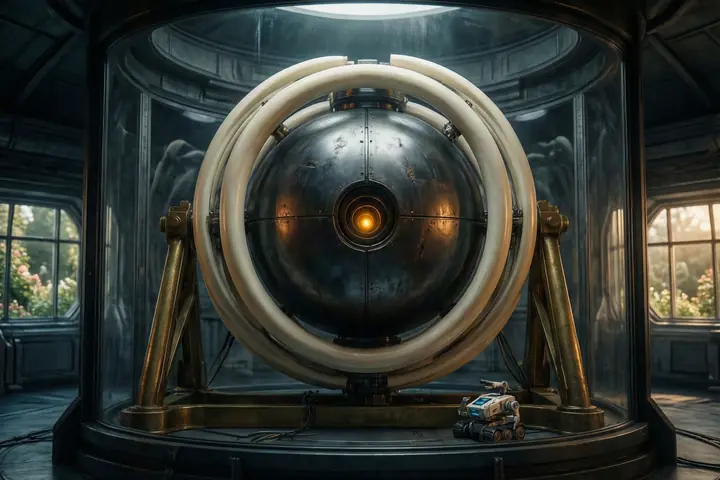
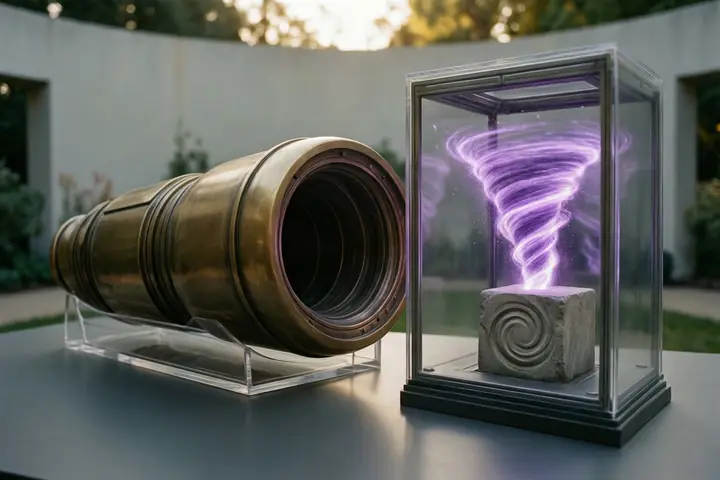
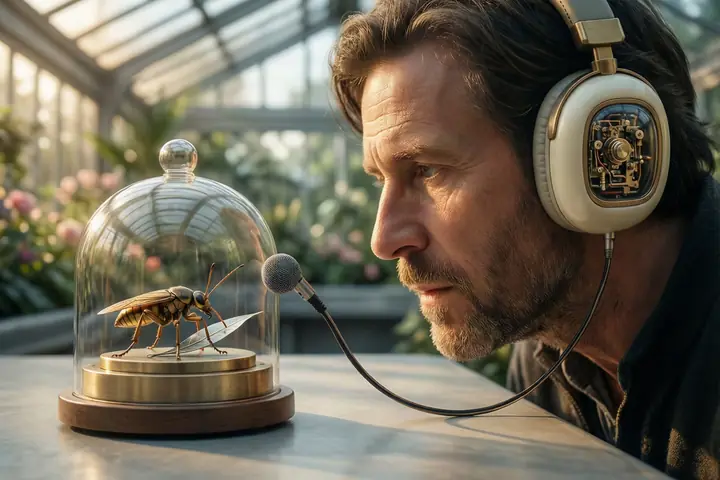
Air Tank Flying
The Power Planet, Murray Leinster · 1931
Moving around a weightless station by releasing short puffs of pressurised gas.
not yet built · AI models' likeliest decade: the 2020s
No prizeNothing is soldas a model judges it
Why
No prize. It is a way of flying or moving, not a product; the craft and gear that do it are judged under their own entries.
Who is paid. Nothing is sold, so nobody pays and no seller collects.
A model's judgement, not a reading, of the idea as if it worked the way its story promises. The model is fairly sure of this one.
Illustration made with AI image generation; not evidence.
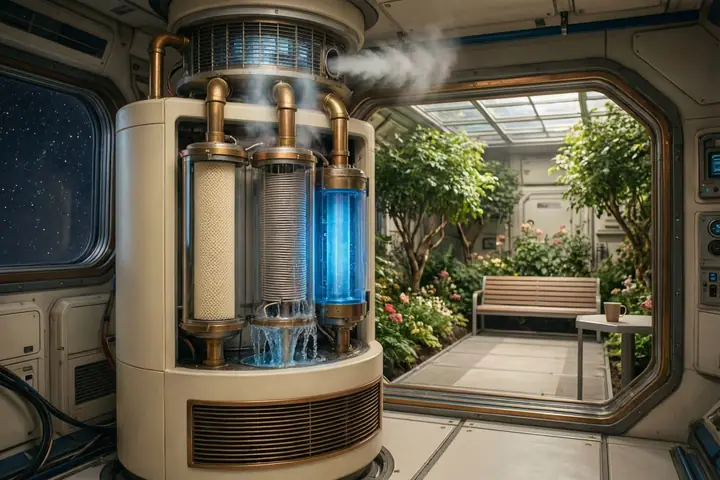
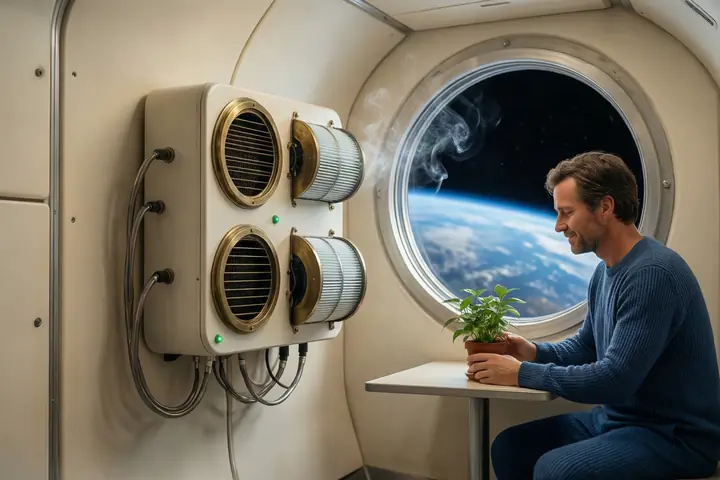
Artificial Atmosphere Machine
Venus Mines, Incorporated, Nat Schachner (w. AL Zagat · 1931
A life-support unit that produces a complete breathable air mix aboard a spacecraft.
built in the 1960s, about 30 years after it was imagined
A small prizeBusinesses pay; existing firms keep the restas a model judges it
Why
A small prize. Breathable air is essential aboard, but this is a fitting inside a craft or suit, not an industry of its own.
Who is paid. Ship operators pay for it within the craft, and the established builders of ships and suits supply it because the method is easy to copy.
A model's judgement, not a reading, of the idea as if it worked the way its story promises. The model is fairly sure of this one.
Illustration made with AI image generation; not evidence.
Asteroid Belt
The Disc-Men of Jupiter, Manly Wade Wellman · 1931
The ring of rocky bodies orbiting the Sun between Mars and Jupiter.
already existed before the story (the 1800s)
No prizeNothing is soldas a model judges it
Why
No prize. It is a natural thing or event in space, not a product anyone makes or sells.
Who is paid. Nothing is sold, so nobody pays and no seller collects.
A model's judgement, not a reading, of the idea as if it worked the way its story promises. The model is fairly sure of this one.
Illustration made with AI image generation; not evidence.
Astrogator
The Conquest of Space, David Lasser · 1931
A crew member whose job is plotting and steering a spacecraft's course between worlds.
not yet built · AI models' likeliest decade: the 2020s
A small prizeBusinesses pay; no seller keeps muchas a model judges it
Why
A small prize. It is a job, judged by the work it sells: a trained crew member is needed on every voyage but is a small part of its cost.
Who is paid. Ship operators pay the wages, and anyone with the training can do the work, so no seller keeps much.
A model's judgement, not a reading, of the idea as if it worked the way its story promises. The model is not very sure of this one.
Illustration made with AI image generation; not evidence.
Atmosphere Tester
The Emperor of the Stars, Nat Schachner (w. AL Zagat · 1931
An instrument that analyses an alien planet's air to check whether people can breathe it.
built in the 1960s, about 30 years after it was imagined
A small prizeBusinesses pay; no seller keeps muchas a model judges it
Why
A small prize. Checking whether air is safe to breathe is a useful instrument for a few explorers.
Who is paid. Expedition firms buy it, assumed here, and gas-testing instruments are made by many firms, so no seller keeps much.
A model's judgement, not a reading, of the idea as if it worked the way its story promises. The model is fairly sure of this one.
Illustration made with AI image generation; not evidence.
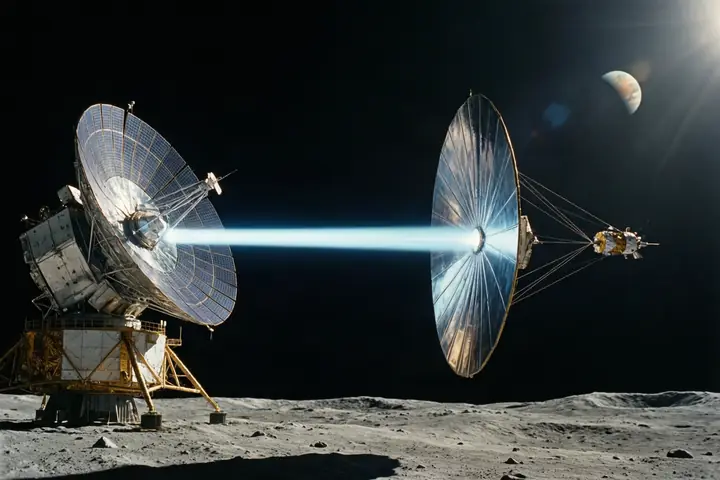
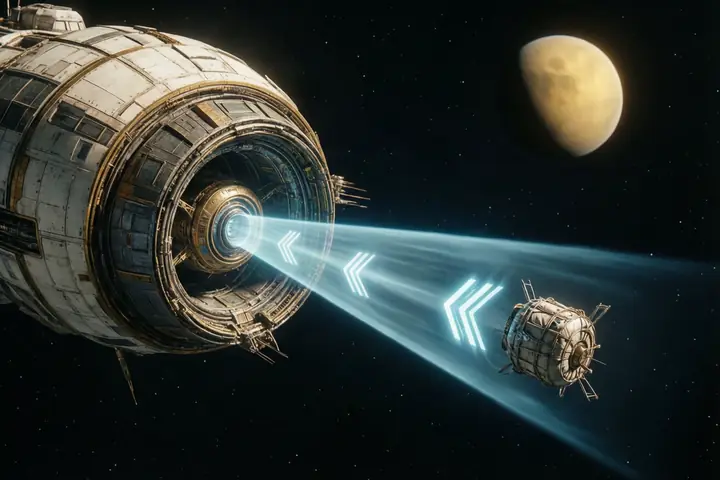
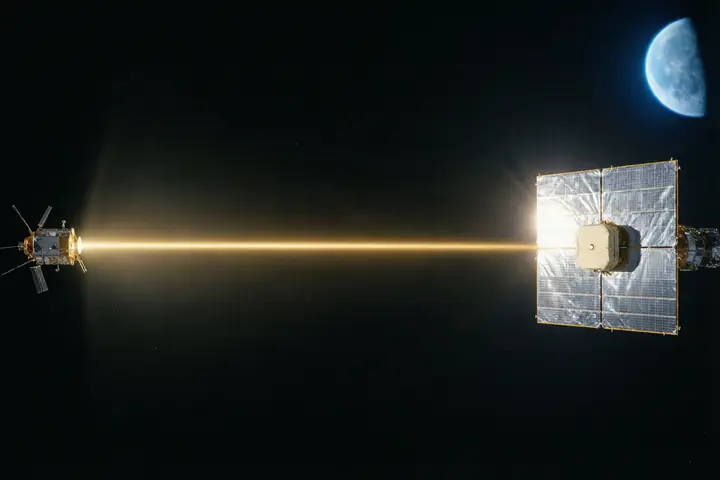
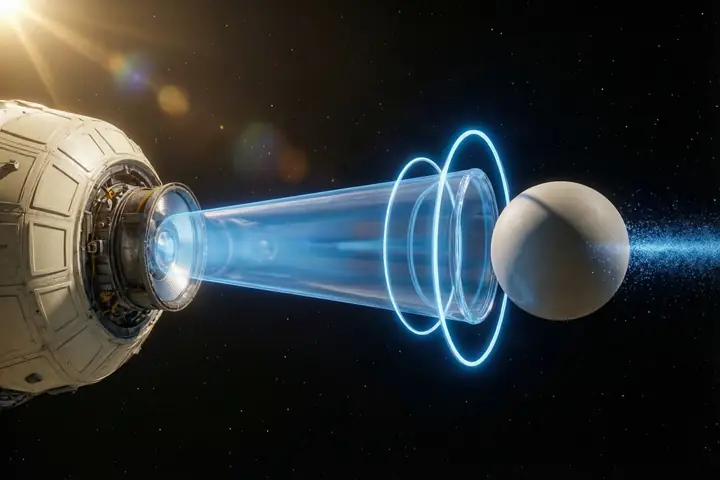
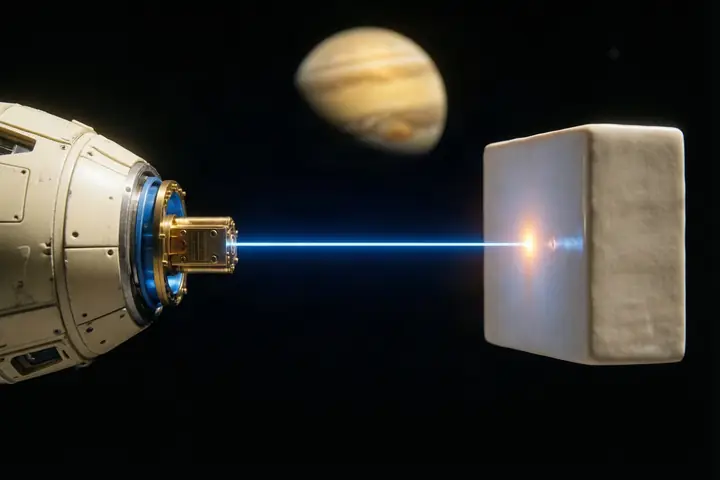
Beam-Powered Propulsion
The Prince of Space, Jack Williamson · 1931
Driving a craft forward by aiming a strong energy beam at it from a separate source.
not yet built · AI models' likeliest decade: the 2050s
A large prizeBusinesses pay; existing firms keep the restas a model judges it
Why
A large prize. Pushing craft with a beam from outside would let ships fly without carrying their own fuel, changing launch costs.
Who is paid. Ship operators pay for the push, and since others could build beam stations the gain goes to those who already own the sites and power plants.
A model's judgement, not a reading, of the idea as if it worked the way its story promises. The model is not very sure of this one.
Illustration made with AI image generation; not evidence.
Braking Disks
A Daring Trip To Mars, Max Valier · 1931
Drag plates deployed to slow a craft as it descends through a planet's air.
not yet built · AI models' likeliest decade: the 2020s
A small prizeBusinesses pay; existing firms keep the restas a model judges it
Why
A small prize. Slowing a craft safely through air is essential to landing but is a part of the craft, not a product by itself.
Who is paid. Ship operators pay for it within the craft, and spacecraft builders supply it because the method is well understood and easy to copy.
A model's judgement, not a reading, of the idea as if it worked the way its story promises. The model is fairly sure of this one.
Illustration made with AI image generation; not evidence.
Centrifugal Force Creates 'Artificial Gravity'
The Prince of Space, Jack Williamson · 1931
Spinning a habitat so the outward push on occupants stands in for weight.
not yet built · AI models' likeliest decade: the 2030s
A small prizeA government pays; existing firms keep the restas a model judges it
Why
A small prize. Spinning to give weight is a design feature of a habitat, useful but not a product of its own.
Who is paid. Whoever pays for the habitat pays for this, assumed here to be a government, and any habitat builder can use the idea so the established builders collect.
A model's judgement, not a reading, of the idea as if it worked the way its story promises. The model is fairly sure of this one.
Illustration made with AI image generation; not evidence.
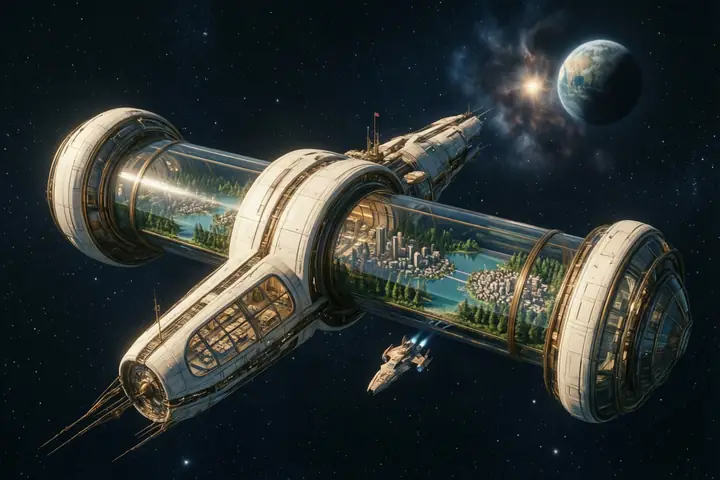
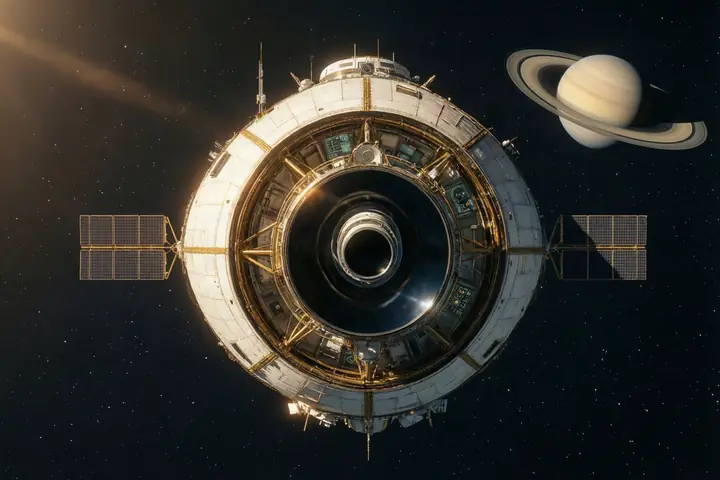
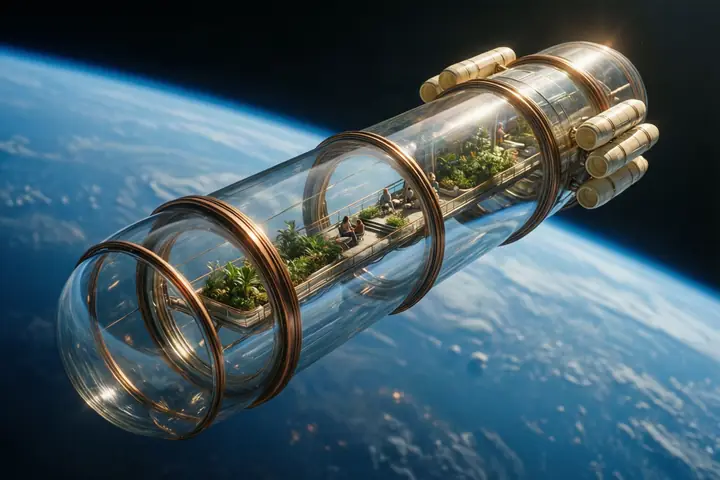
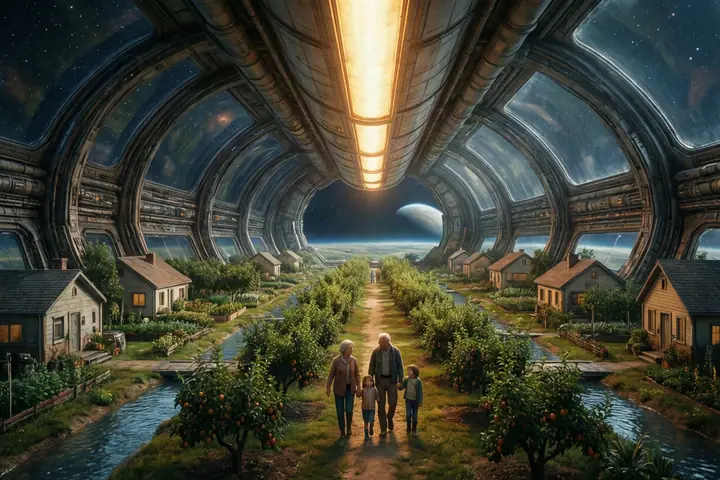
City of Space
The Prince of Space, Jack Williamson · 1931
A vast rotating tube in orbit housing a whole town.
not yet built · AI models' likeliest decade: the 2070s
A large prizeA government pays; existing firms keep the restas a model judges it
Why
A large prize. A place for many people to live and work beyond Earth is a building industry of its own.
Who is paid. A settlement is a public work a government pays for, and the big construction and space firms that already win such contracts would build it.
A model's judgement, not a reading, of the idea as if it worked the way its story promises. The model is fairly sure of this one.
Illustration made with AI image generation; not evidence.
Deviatoscope
The Emperor of the Stars, Nat Schachner (w. AL Zagat · 1931
A navigation gauge that shows how far a craft has strayed from its planned route.
built in the 1960s, about 30 years after it was imagined
A small prizeBusinesses pay; existing firms keep the restas a model judges it
Why
A small prize. Knowing where a ship is and keeping it on course is essential but is an instrument within the ship.
Who is paid. Ship operators buy it as part of the craft, and the established makers of flight instruments supply it since it can be copied.
A model's judgement, not a reading, of the idea as if it worked the way its story promises. The model is fairly sure of this one.
Illustration made with AI image generation; not evidence.
Emergency Corrective Rockets
The Emperor of the Stars, Nat Schachner (w. AL Zagat · 1931
Backup thrusters fired to put a straying spacecraft back on its intended path.
built in the 1960s, about 30 years after it was imagined
A small prizeBusinesses pay; existing firms keep the restas a model judges it
Why
A small prize. Backup thrusters are a safety part of a spacecraft.
Who is paid. Ship operators pay for them within the craft, and established engine makers supply them since they are easy to copy.
A model's judgement, not a reading, of the idea as if it worked the way its story promises. The model is fairly sure of this one.
Illustration made with AI image generation; not evidence.
Filling Station Moon
A Daring Trip To Mars, Max Valier · 1931
Mining the Moon for propellant so it acts as a refuelling stop on the way deeper into space.
not yet built · AI models' likeliest decade: the 2030s
A large prizeBusinesses pay; existing firms keep the restas a model judges it
Why
A large prize. Fuel made on the Moon would cut the cost of every voyage further out, an industry of its own.
Who is paid. Ship operators buy the fuel, and since the digging can be copied the firms that already own ships and refineries collect.
A model's judgement, not a reading, of the idea as if it worked the way its story promises. The model is fairly sure of this one.
Illustration made with AI image generation; not evidence.
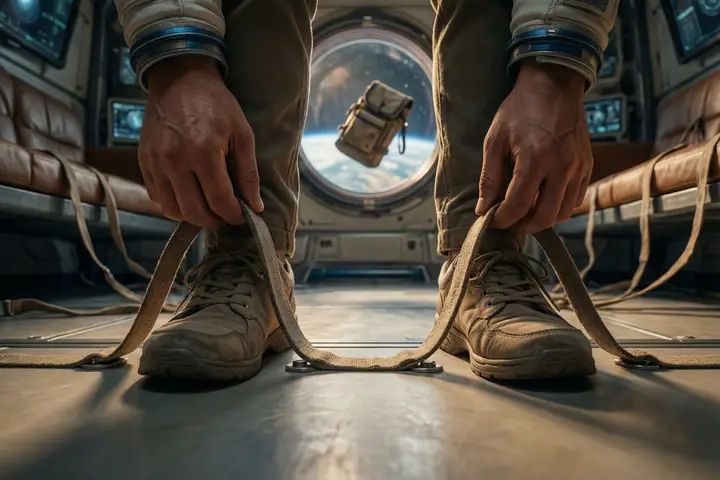
Foot Loops
The Power Planet, Murray Leinster · 1931
Simple straps on the floor that anchor a person's feet when weightless.
built in the 1960s, about 30 years after it was imagined
A small prizeBusinesses pay; no seller keeps muchas a model judges it
Why
A small prize. Keeping your footing where there is little or no weight is a small convenience for those who work there.
Who is paid. Space operators buy it for their crews, and it is a simple loose item that any workshop could make.
A model's judgement, not a reading, of the idea as if it worked the way its story promises. The model is fairly sure of this one.
Illustration made with AI image generation; not evidence.
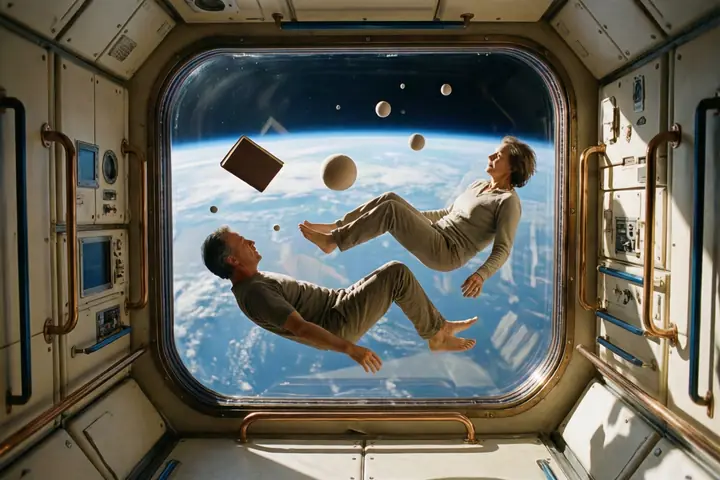
Free Fall
Islands of Space, John W. Campbell · 1931
The weightless state of anything coasting in orbit under gravity alone.
already existed before the story (the 1700s)
No prizeNothing is soldas a model judges it
Why
No prize. It is the weightless state of anything coasting in orbit, a fact of nature and not a product.
Who is paid. Nothing is sold, so nobody pays and no seller collects.
A model's judgement, not a reading, of the idea as if it worked the way its story promises. The model is fairly sure of this one.
Illustration made with AI image generation; not evidence.
Gravito-Statoscope
The Emperor of the Stars, Nat Schachner (w. AL Zagat · 1931
An instrument aboard a ship that measures the gravitational pulls acting on it.
not yet built · AI models' likeliest decade: the 2020s
A small prizeBusinesses pay; existing firms keep the restas a model judges it
Why
A small prize. It helps a crew find their way or see what lies about them, a useful fitting but only a part of the ship.
Who is paid. Ship operators pay for it within the craft, and the firms that already make ship instruments supply it since the design can be copied.
A model's judgement, not a reading, of the idea as if it worked the way its story promises. The model is fairly sure of this one.
Illustration made with AI image generation; not evidence.
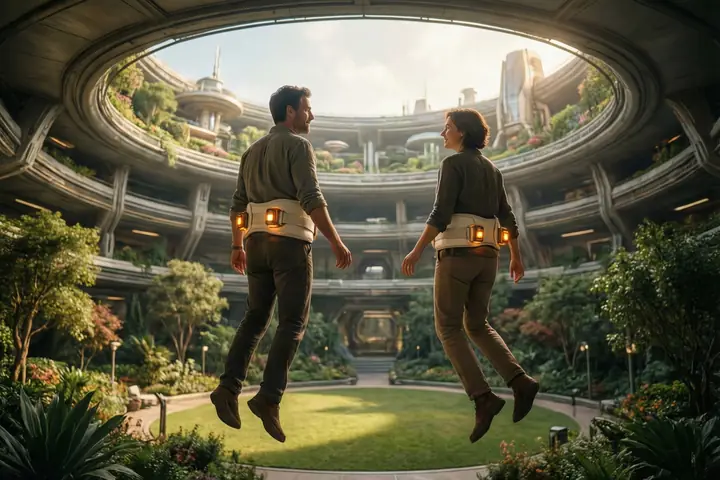
Gravity Belt
Venus Mines, Incorporated, Nat Schachner (w. AL Zagat · 1931
A belt that creates extra gravity around the wearer so walking on tiny asteroids feels normal.
not yet built · AI models judge it not physically possible
A small prizeBusinesses pay; no seller keeps muchas a model judges it
Why
A small prize. As described it is a walking aid for those who work on small rocks, a niche; gravity for whole ships and stations is judged under the plates.
Who is paid. Mining firms buy the belts for their workers, and a small worn device can be made by many workshops, so no seller keeps much.
A model's judgement, not a reading, of the idea as if it worked the way its story promises. The model is fairly sure of this one.
Illustration made with AI image generation; not evidence.
Gravity Detector
The Lunar Chrysalis, Raymond Z. Gallun · 1931
An instrument that senses the gravity of a faraway body.
not yet built · AI models' likeliest decade: the 2020s
A small prizeBusinesses pay; existing firms keep the restas a model judges it
Why
A small prize. It helps a crew find their way or see what lies about them, a useful fitting but only a part of the ship.
Who is paid. Ship operators pay for it within the craft, and the firms that already make ship instruments supply it since the design can be copied.
A model's judgement, not a reading, of the idea as if it worked the way its story promises. The model is fairly sure of this one.
Illustration made with AI image generation; not evidence.
Jovium
Venus Mines, Incorporated, Nat Schachner (w. AL Zagat · 1931
A catalyst added to rocket propellant that makes spaceflight cheap enough to be a business.
not yet built · AI models could not judge when it may arrive
A large prizeBusinesses pay; existing firms keep the restas a model judges it
Why
A large prize. A fuel additive that makes spaceflight cheap would change the cost of the whole industry.
Who is paid. Ship operators buy it with their fuel, and the description gives nothing that stops other chemical firms making it, so established fuel makers collect.
A model's judgement, not a reading, of the idea as if it worked the way its story promises. The model is not very sure of this one.
Illustration made with AI image generation; not evidence.
Landing Stage
Atomic Fire, Raymond Z. Gallun · 1931
A designated pad where spacecraft set down and park.
built in the 1960s, about 30 years after it was imagined
A small prizeBusinesses pay; existing firms keep the restas a model judges it
Why
A small prize. A place to land, park or refuel is a necessary part of space traffic but only an extra beside the ships and launch works.
Who is paid. Ship operators pay to use it, and it is easy to copy, so those who already hold the port sites collect.
A model's judgement, not a reading, of the idea as if it worked the way its story promises. The model is fairly sure of this one.
Illustration made with AI image generation; not evidence.
Lifeboat
Spacehounds of IPC, E.E. 'Doc' Smith · 1931
A small detachable craft carried aboard a larger spaceship so the crew can escape if the main vessel fails.
built in the 1960s, about 30 years after it was imagined
A small prizeBusinesses pay; existing firms keep the restas a model judges it
Why
A small prize. A way off a failing ship saves lives but is carried as a fitting and rarely used.
Who is paid. Ship operators pay for it as part of the craft, and established shipbuilders supply it since any of them could make it.
A model's judgement, not a reading, of the idea as if it worked the way its story promises. The model is fairly sure of this one.
Illustration made with AI image generation; not evidence.
Light Speed
Out Around Rigel, Clyde Wilson · 1931
Expresses how fast something travels as a fraction or multiple of the velocity of light.
already existed before the story (1905)
No prizeNothing is soldas a model judges it
Why
No prize. It is a word or a unit of measure, not a product.
Who is paid. Nothing is sold, so nobody pays and no seller collects.
A model's judgement, not a reading, of the idea as if it worked the way its story promises. The model is fairly sure of this one.
Illustration made with AI image generation; not evidence.
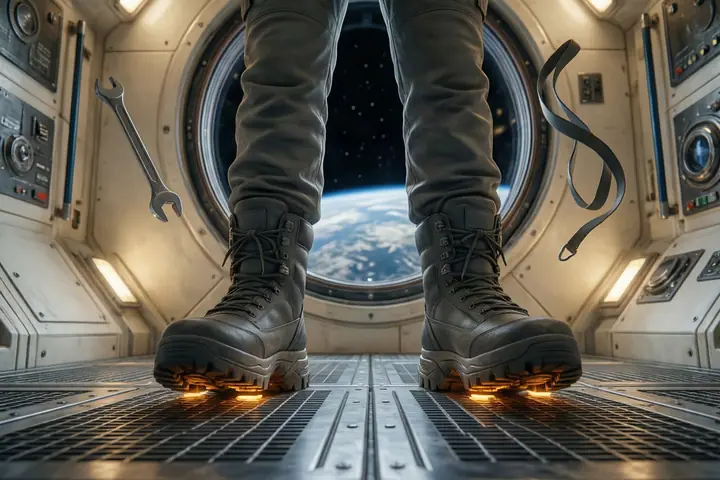
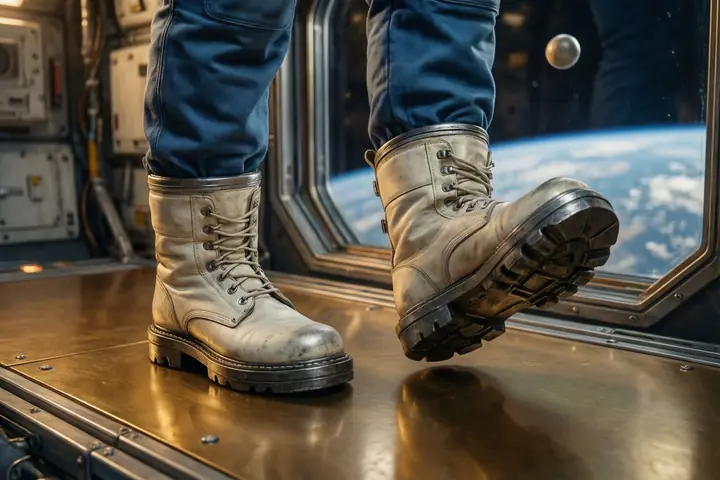
Magnetic Boots
Atomic Fire, Raymond Z. Gallun · 1931
Footwear with magnets that keeps a person anchored to a steel floor when weightless.
built in the 1960s, about 30 years after it was imagined
A small prizeBusinesses pay; no seller keeps muchas a model judges it
Why
A small prize. Keeping your footing where there is little or no weight is a small convenience for those who work there.
Who is paid. Space operators buy it for their crews, and it is a simple loose item that any workshop could make.
A model's judgement, not a reading, of the idea as if it worked the way its story promises. The model is fairly sure of this one.
Illustration made with AI image generation; not evidence.
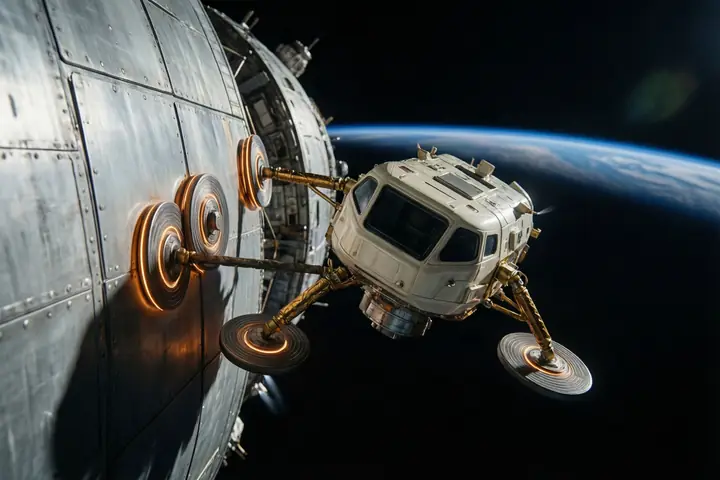
Magnetic Clamps
Twelve Hours To Live, Jack Williamson · 1931
Magnets that hold a small craft fast to the hull of a larger one.
not yet built · AI models' likeliest decade: the 2020s
A small prizeBusinesses pay; no seller keeps muchas a model judges it
Why
A small prize. It is a handy loose item for space crews, a niche.
Who is paid. Space operators buy it for their crews, and it is simple enough that any workshop could make it.
A model's judgement, not a reading, of the idea as if it worked the way its story promises. The model is fairly sure of this one.
Illustration made with AI image generation; not evidence.
Message Cylinder (Message Bomb)
The Cosmic Cloud, Bruno H. Burgel · 1931
A small capsule dropped from orbit that carries written messages down to people on the ground.
not yet built · AI models' likeliest decade: the 2030s
A small prizeBusinesses pay; no seller keeps muchas a model judges it
Why
A small prize. A capsule for dropping notes from orbit is a small convenience.
Who is paid. Space operators buy it for their crews, and it is simple enough that any workshop could make it.
A model's judgement, not a reading, of the idea as if it worked the way its story promises. The model is fairly sure of this one.
Illustration made with AI image generation; not evidence.
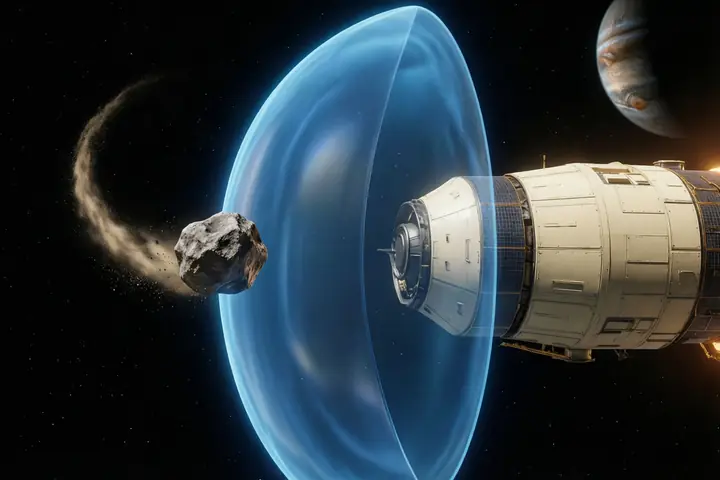
Meteorite Deflector
On Board the Martian Liner, Miles J. Breuer · 1931
A system on a spacecraft that shoves incoming space rocks out of its path.
not yet built · AI models' likeliest decade: the 2030s
A small prizeBusinesses pay; existing firms keep the restas a model judges it
Why
A small prize. Pushing rocks out of the way keeps a ship safe, but it is a fitting on the craft, not an industry.
Who is paid. Ship operators pay for it within the craft, and the firms that already make ship instruments supply it since the design can be copied.
A model's judgement, not a reading, of the idea as if it worked the way its story promises. The model is fairly sure of this one.
Illustration made with AI image generation; not evidence.
Moon Run
Exiles of the Moon, Nat Schachner (w. AL Zagat · 1931
Depicts how a person would really move on foot across the lunar surface under its weak gravity.
built in 1969, 38 years after it was imagined
No prizeNothing is soldas a model judges it
Why
No prize. It is a way of flying or moving, not a product; the craft and gear that do it are judged separately.
Who is paid. Nothing is sold, so nobody pays and no seller collects.
A model's judgement, not a reading, of the idea as if it worked the way its story promises. The model is fairly sure of this one.
Illustration made with AI image generation; not evidence.
Mother World
The Asteroid of Death, Neil R. Jones · 1931
The planet a people or species first came from.
not yet built · AI models' likeliest decade: the 2020s
No prizeNothing is soldas a model judges it
Why
No prize. It is a term for the planet a people came from, not a product.
Who is paid. Nothing is sold, so nobody pays and no seller collects.
A model's judgement, not a reading, of the idea as if it worked the way its story promises. The model is fairly sure of this one.
Illustration made with AI image generation; not evidence.
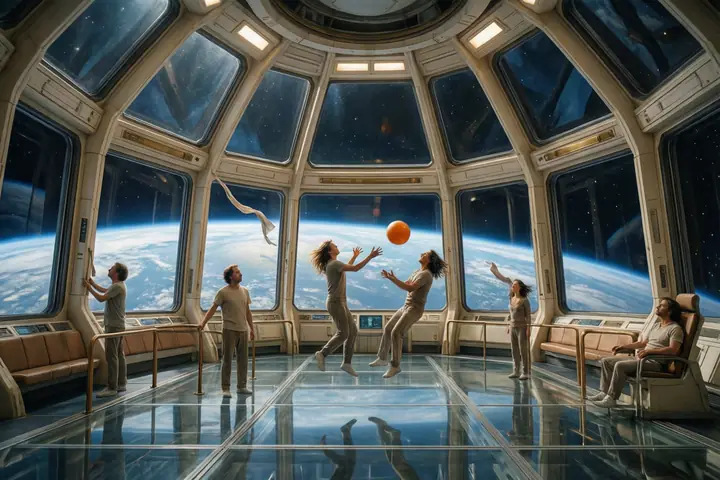
Observation Room Recreation Center
The Power Planet, Murray Leinster · 1931
A large open hall inside an orbital station for exercise, games and viewing.
not yet built · AI models' likeliest decade: the 2020s
A small prizeA government pays; existing firms keep the restas a model judges it
Why
A small prize. A hall for exercise, games and the view is an amenity inside a station, not a product of its own.
Who is paid. Whoever pays for the habitat pays for this, assumed here to be a government, and any habitat builder can use the idea so the established builders collect.
A model's judgement, not a reading, of the idea as if it worked the way its story promises. The model is not very sure of this one.
Illustration made with AI image generation; not evidence.
Ozone Radiation Shield
A Daring Trip To Mars, Max Valier · 1931
Fills the gap between a ship's double walls with a gas meant to soak up harmful incoming radiation.
not yet built · AI models' likeliest decade: the 2030s
A small prizeBusinesses pay; existing firms keep the restas a model judges it
Why
A small prize. Keeping harmful radiation off the crew matters on every long voyage, but it is a feature of the hull and not a product by itself.
Who is paid. Ship operators pay for it within the craft, and shipbuilders fit it themselves since nothing stops others copying it.
A model's judgement, not a reading, of the idea as if it worked the way its story promises. The model is fairly sure of this one.
Illustration made with AI image generation; not evidence.
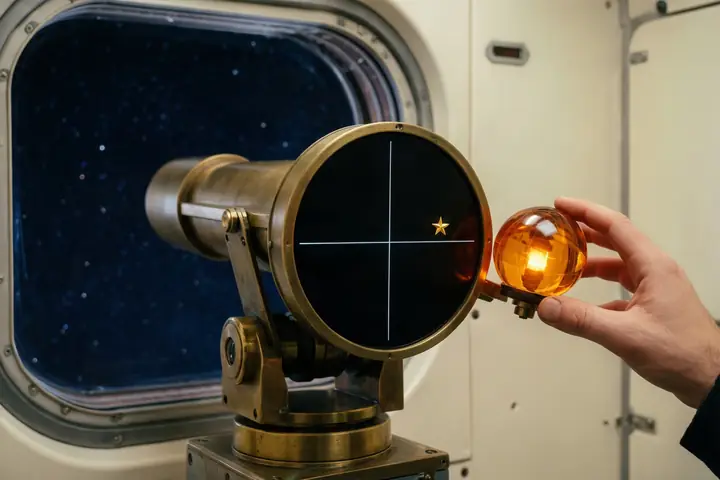
Photoelectric Course Warning
Out Around Rigel, Robert H. Wilson · 1931
A light sensor locked onto a chosen star that alerts the crew when the craft drifts off its heading.
built in the 1960s, about 30 years after it was imagined
A small prizeBusinesses pay; existing firms keep the restas a model judges it
Why
A small prize. It is a viewing or steering instrument aboard a ship, useful to the crew but only a part of the craft.
Who is paid. Ship operators pay for it within the craft, and established instrument makers supply it since others could copy the design.
A model's judgement, not a reading, of the idea as if it worked the way its story promises. The model is fairly sure of this one.
Illustration made with AI image generation; not evidence.
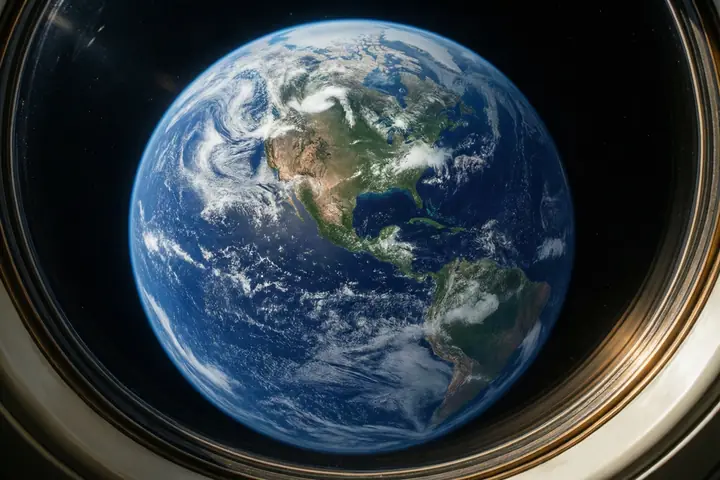
Photograph of Earth from Space
The Prince of Space, Jack Williamson · 1931
A picture of our planet taken from above the atmosphere.
built in 1968, 37 years after it was imagined
A small prizeHouseholds pay; no seller keeps muchas a model judges it
Why
A small prize. A picture of our planet from above is a keepsake and a wonder, assumed here to be sold as a print and not as a mapping service.
Who is paid. People buy copies, and once craft fly above the air anyone aboard can take such a picture, so no seller keeps much.
A model's judgement, not a reading, of the idea as if it worked the way its story promises. The model is not very sure of this one.
Illustration made with AI image generation; not evidence.
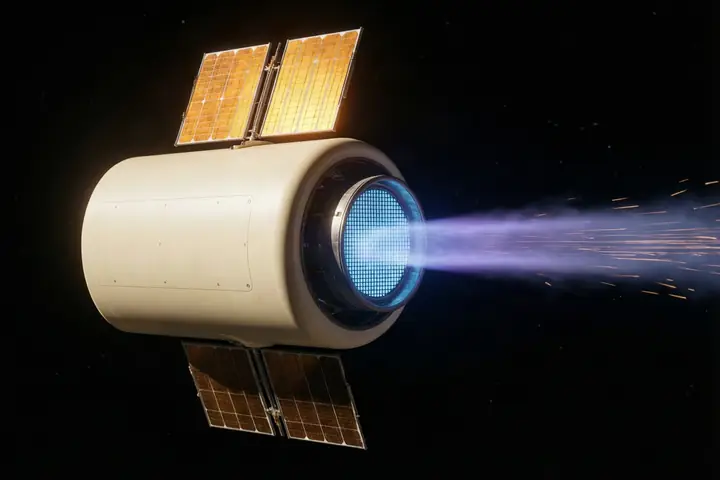
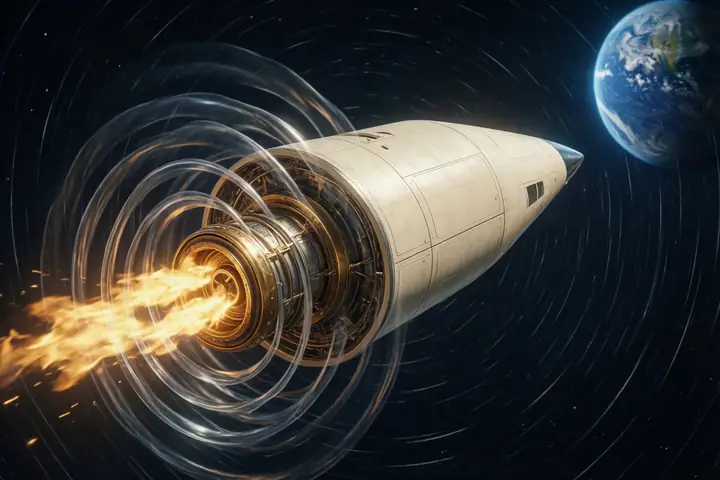
Positive Ray Propulsion (Ion Drive)
The Prince of Space, Jack Williamson · 1931
Propels a spacecraft by accelerating charged particles with electric fields, giving gentle but very fuel-efficient thrust.
built in the 1960s, about 30 years after it was imagined
A large prizeBusinesses pay; existing firms keep the restas a model judges it
Why
A large prize. Gentle thrust that uses very little fuel cuts the cost of long voyages and of keeping craft in place; the real thing exists and does this.
Who is paid. Ship operators pay, and once the engine was shown to work others could build it, so established engine builders collect.
A model's judgement, not a reading, of the idea as if it worked the way its story promises. The model is fairly sure of this one.
Illustration made with AI image generation; not evidence.
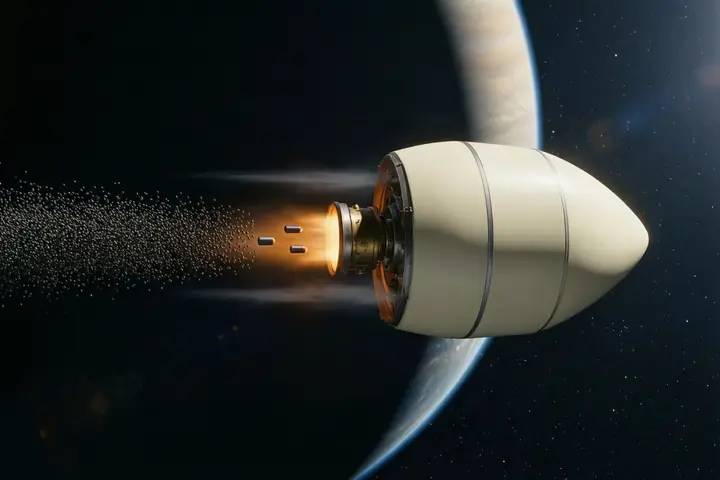
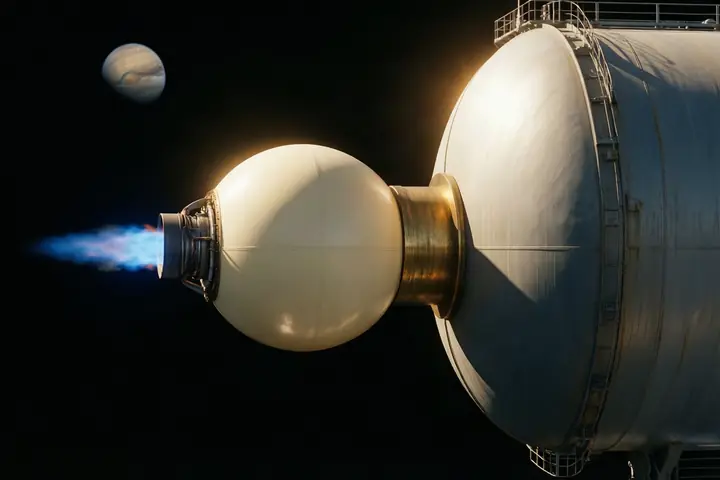
Propulsion Gun
Venus Mines, Incorporated, Nat Schachner (w. AL Zagat · 1931
A thruster that moves a craft through vacuum by throwing mass backward, using recoil instead of anything to push on.
not yet built · AI models' likeliest decade: the 2020s
A large prizeBusinesses pay; existing firms keep the restas a model judges it
Why
A large prize. A working engine for travel between worlds sets the cost of every voyage it powers.
Who is paid. Ship operators pay, and once the engine was shown to work others could build it, so established engine builders collect.
A model's judgement, not a reading, of the idea as if it worked the way its story promises. The model is fairly sure of this one.
Illustration made with AI image generation; not evidence.
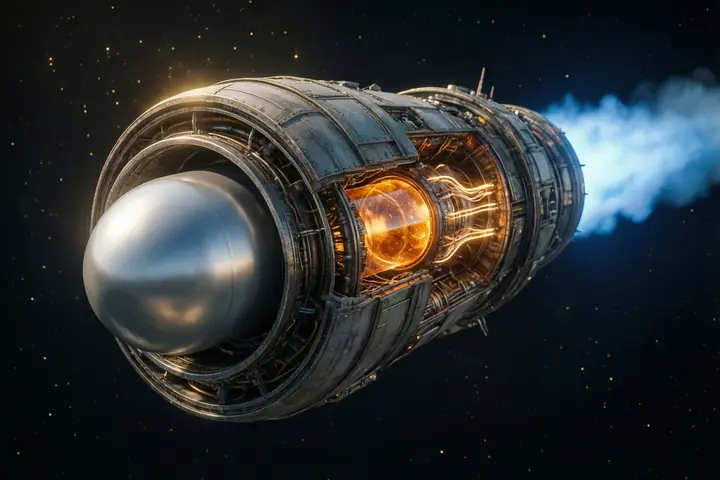
Protonite
Twelve Hours To Live, Jack Williamson · 1931
A radioactive propellant that powers spacecraft engines.
not yet built · AI models' likeliest decade: the 2030s
A large prizeBusinesses pay; existing firms keep the restas a model judges it
Why
A large prize. A fuel that powers spacecraft engines would be bought for every voyage, an industry of its own.
Who is paid. Ship operators buy it, and unlike plain dust it is radioactive and needs special plants to make and handle, so the firms that already own such plants collect.
A model's judgement, not a reading, of the idea as if it worked the way its story promises. The model is not very sure of this one.
Illustration made with AI image generation; not evidence.
Radio Meteor Detector
Islands of Space, John W. Campbell · 1931
Onboard radar that spots incoming space debris in time for a ship to steer clear.
built in the 1960s, about 30 years after it was imagined
A small prizeBusinesses pay; existing firms keep the restas a model judges it
Why
A small prize. Spotting debris in time to steer clear keeps a ship safe, but it is an instrument aboard and only a part of the craft.
Who is paid. Ship operators pay for it within the craft, and established instrument makers supply it since others could copy the design.
A model's judgement, not a reading, of the idea as if it worked the way its story promises. The model is fairly sure of this one.
Illustration made with AI image generation; not evidence.
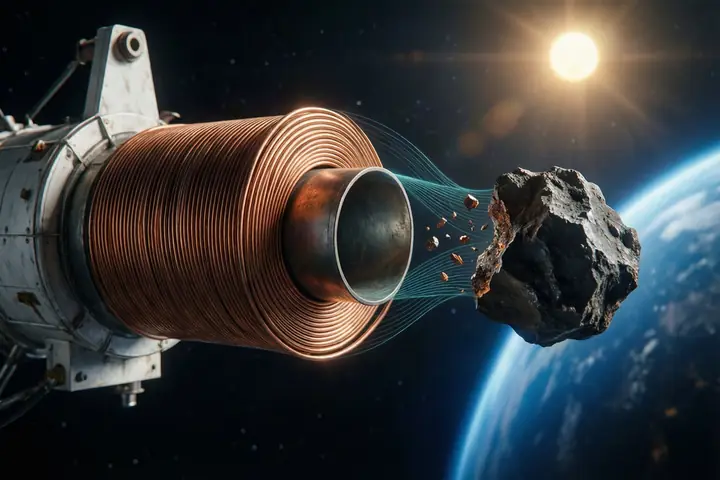
Radium Repeller ray
The Asteroid of Death, Neil R. Jones · 1931
A projected beam that shoves approaching space rocks off course so passing spacecraft avoid collisions.
not yet built · AI models' likeliest decade: the 2070s
A small prizeBusinesses pay; existing firms keep the restas a model judges it
Why
A small prize. Pushing rocks and other hazards away keeps a ship safe, but it is a safety fitting of the craft and not an industry of its own.
Who is paid. Ship operators pay for it within the craft, and once the field worked other shipbuilders could copy it, so established builders collect.
A model's judgement, not a reading, of the idea as if it worked the way its story promises. The model is not very sure of this one.
Illustration made with AI image generation; not evidence.
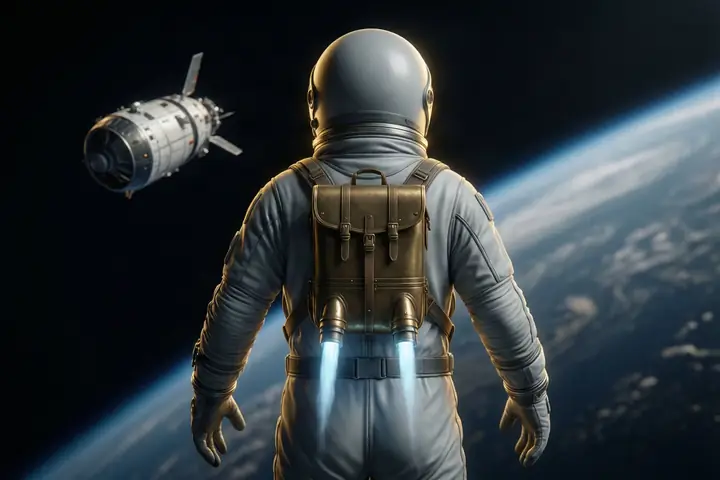
Reaction Attachment
The Asteroid of Death, Neil R. Jones · 1931
Small thrusters fitted to a spacesuit so the wearer can steer freely outside the craft.
built in 1984, 53 years after it was imagined
A small prizeBusinesses pay; existing firms keep the restas a model judges it
Why
A small prize. It helps a spacewalker get around while weightless, a niche tool for a few workers.
Who is paid. Space operators buy it for their crews, and the makers of suits and space gear supply it because it is easy to copy.
A model's judgement, not a reading, of the idea as if it worked the way its story promises. The model is fairly sure of this one.
Illustration made with AI image generation; not evidence.
Reaction-Motors
Twelve Hours To Live, Jack Williamson · 1931
A rocket engine that pushes a craft forward by expelling mass backward at great velocity.
built in the 1950s, about 20 years after it was imagined
A large prizeBusinesses pay; existing firms keep the restas a model judges it
Why
A large prize. A working engine for travel between worlds sets the cost of every voyage it powers.
Who is paid. Ship operators pay, and once the engine was shown to work others could build it, so established engine builders collect.
A model's judgement, not a reading, of the idea as if it worked the way its story promises. The model is fairly sure of this one.
Illustration made with AI image generation; not evidence.
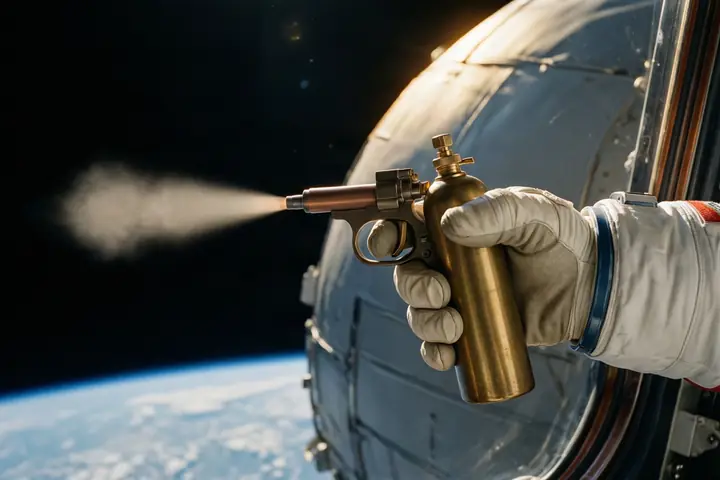
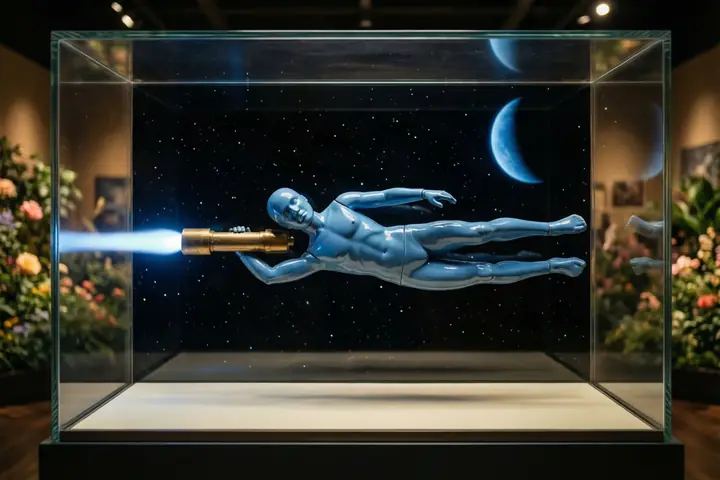
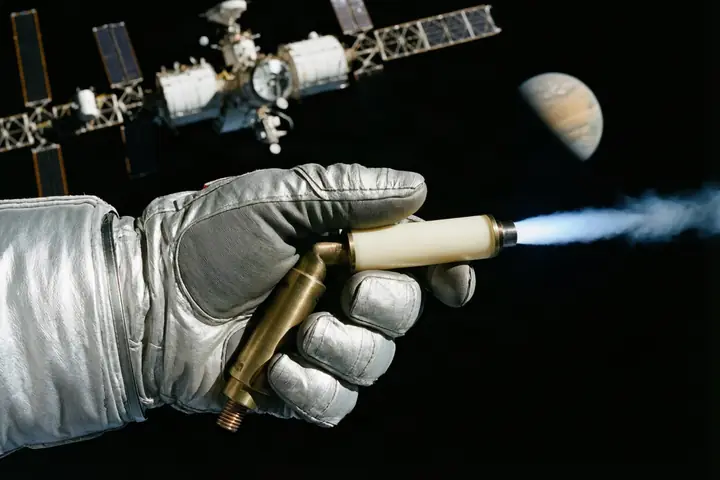
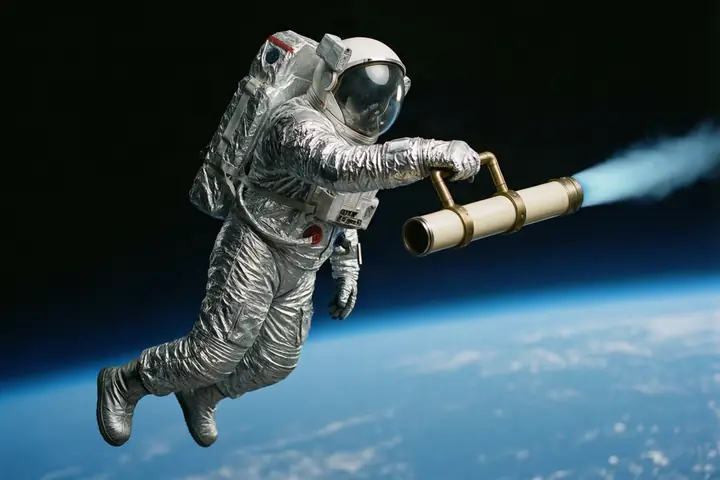
Recoil Pistol
Exiles of the Moon, Nat Schachner (w. AL Zagat · 1931
A handheld gas jet that lets an astronaut push themselves around while weightless.
not yet built · AI models' likeliest decade: the 2020s
A small prizeBusinesses pay; existing firms keep the restas a model judges it
Why
A small prize. It helps a spacewalker get around while weightless, a niche tool for a few workers.
Who is paid. Space operators buy it for their crews, and the makers of suits and space gear supply it because it is easy to copy.
A model's judgement, not a reading, of the idea as if it worked the way its story promises. The model is fairly sure of this one.
Illustration made with AI image generation; not evidence.
Rocket Float
Too Many Boards!, Harl Vincent · 1931
A floating ocean pad from which rockets can be launched far from land.
not yet built · AI models' likeliest decade: the 2020s
A small prizeBusinesses pay; existing firms keep the restas a model judges it
Why
A small prize. A floating launch base is a useful choice of site, not a new industry.
Who is paid. Launch firms pay for it, and builders of ships and offshore platforms could all make it, so those established yards collect.
A model's judgement, not a reading, of the idea as if it worked the way its story promises. The model is fairly sure of this one.
Illustration made with AI image generation; not evidence.
Sargasso of Space
The Sargasso of Space, Edmond Hamilton · 1931
A natural region between worlds where planetary pulls balance, so drifting objects gather and stay.
not yet built · AI models' likeliest decade: the 2020s
No prizeNothing is soldas a model judges it
Why
No prize. It is a natural thing or place in space, not a product anyone makes or sells.
Who is paid. Nothing is sold, so nobody pays and no seller collects.
A model's judgement, not a reading, of the idea as if it worked the way its story promises. The model is fairly sure of this one.
Illustration made with AI image generation; not evidence.
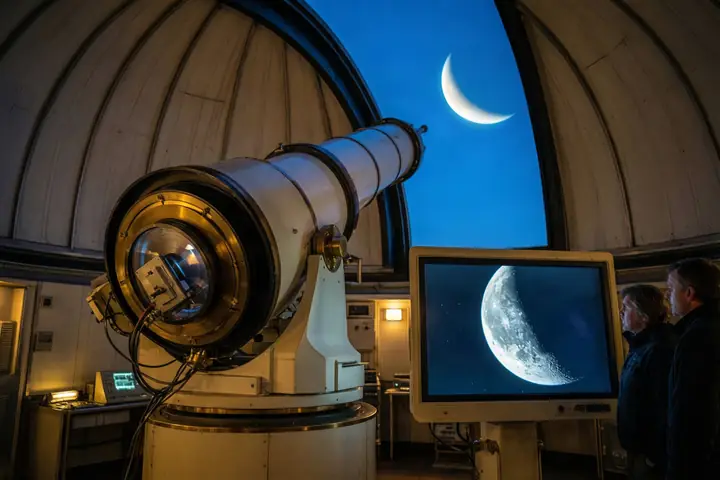
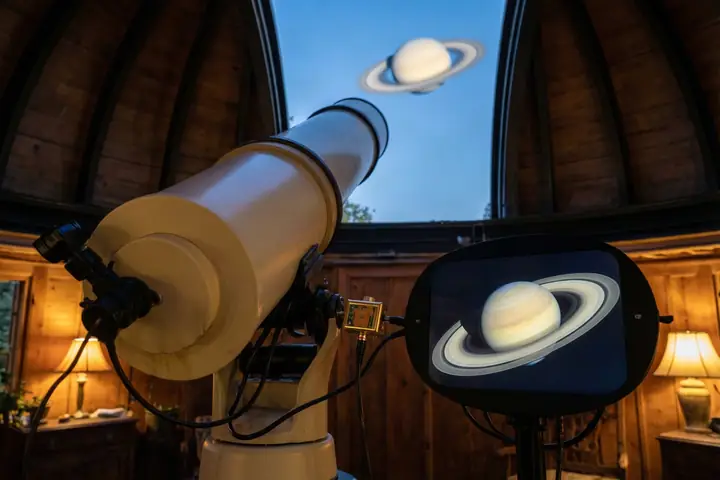
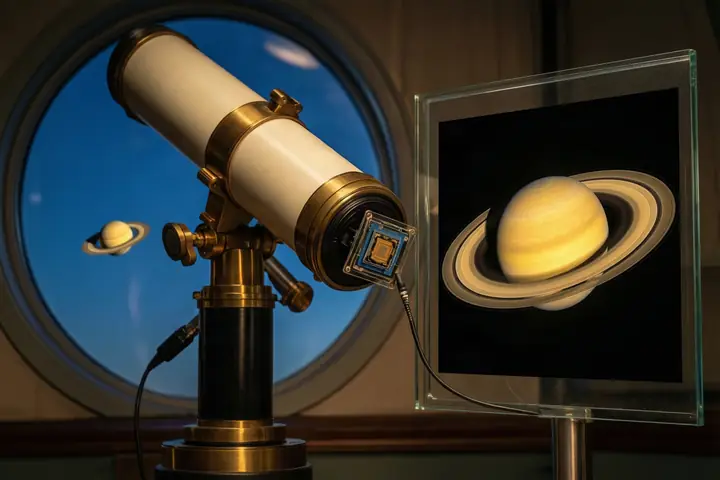
Scanning-Disk Telescope
The Power Planet, Murray Leinster · 1931
A telescope that shows its image on an electronic screen rather than through a lens you look into.
built in the 1990s, about 60 years after it was imagined
A small prizeBusinesses pay; existing firms keep the restas a model judges it
Why
A small prize. It is a viewing or steering instrument aboard a ship, useful to the crew but only a part of the craft.
Who is paid. Ship operators pay for it within the craft, and established instrument makers supply it since others could copy the design.
A model's judgement, not a reading, of the idea as if it worked the way its story promises. The model is fairly sure of this one.
Illustration made with AI image generation; not evidence.
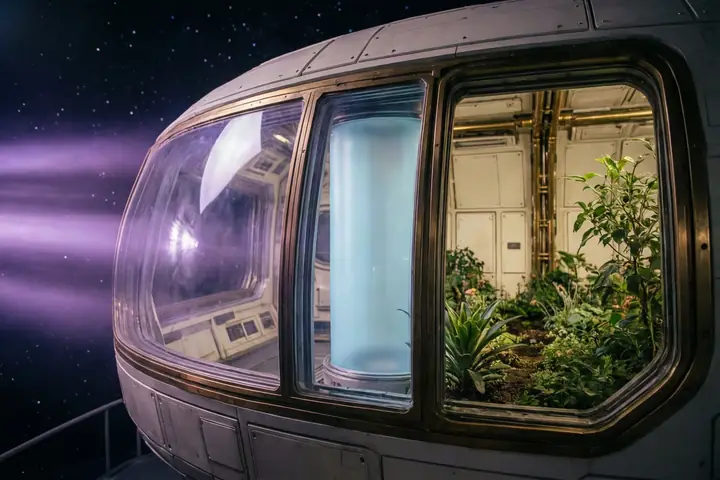
Self-Sustaining Space Craft
The Prince of Space, Jack Williamson · 1931
A spacecraft with a closed living system that recycles its own air, water and food.
not yet built · AI models' likeliest decade: the 2050s
A large prizeBusinesses pay; existing firms keep the restas a model judges it
Why
A large prize. A vessel that renews its own air, water and food could stay out for very long voyages, a working ship for a transport industry of its own.
Who is paid. Carriers and expedition firms buy ships, and many yards could build them once shown how, so established vehicle builders collect.
A model's judgement, not a reading, of the idea as if it worked the way its story promises. The model is fairly sure of this one.
Illustration made with AI image generation; not evidence.
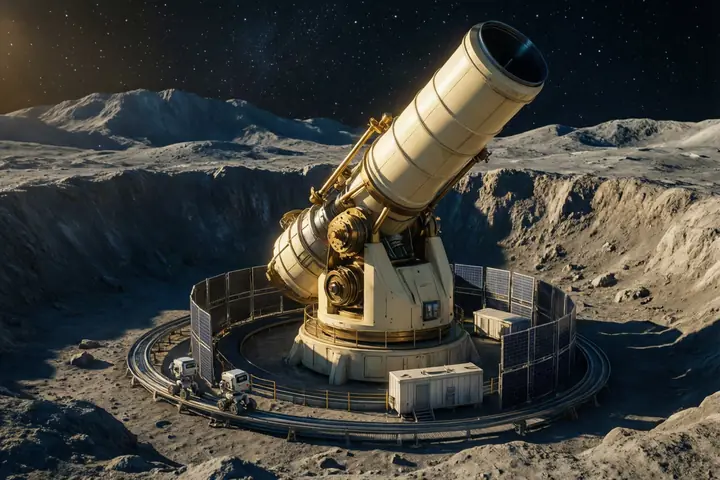
Ship's Telescope
A Daring Trip To Mars, Max Valier · 1931
A big telescope mounted along a spacecraft's central line.
not yet built · AI models' likeliest decade: the 2020s
A small prizeBusinesses pay; existing firms keep the restas a model judges it
Why
A small prize. It is a viewing or steering instrument aboard a ship, useful to the crew but only a part of the craft.
Who is paid. Ship operators pay for it within the craft, and established instrument makers supply it since others could copy the design.
A model's judgement, not a reading, of the idea as if it worked the way its story promises. The model is fairly sure of this one.
Illustration made with AI image generation; not evidence.
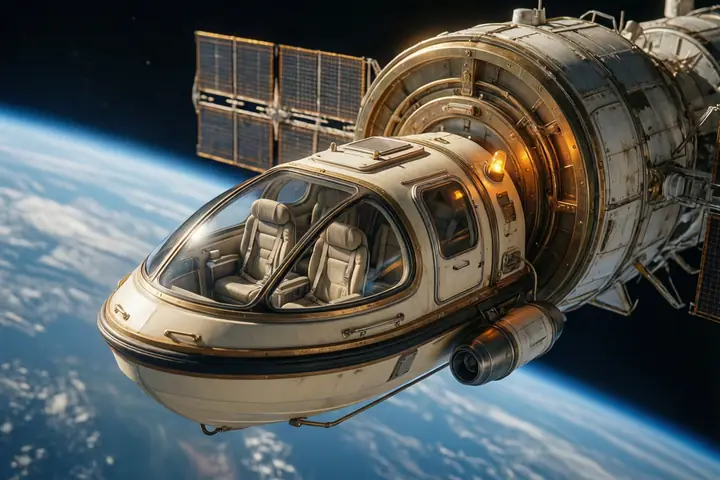
Space Liner
On Board the Martian Liner, Miles J. Breuer · 1931
A big commercial craft that carries paying travellers between worlds.
not yet built · AI models' likeliest decade: the 2040s
A large prizeBusinesses pay; existing firms keep the restas a model judges it
Why
A large prize. Scheduled passenger travel between worlds would be a transport industry of its own.
Who is paid. The carrier buys the ship and sells the seats, and since many yards could build such a vessel the builders and carriers that already own fleets and ports collect.
A model's judgement, not a reading, of the idea as if it worked the way its story promises. The model is fairly sure of this one.
Illustration made with AI image generation; not evidence.
Space Men
The Exiles of Venus, Jim Vanny · 1931
People whose job is travelling and working off-planet.
built in the 1960s, about 30 years after it was imagined
A small prizeBusinesses pay; no seller keeps muchas a model judges it
Why
A small prize. It is a job, judged by the work it sells: trained hands are needed on every voyage but are a small part of its cost.
Who is paid. Operators pay the wages, and anyone with the training can do the work, so no seller keeps much.
A model's judgement, not a reading, of the idea as if it worked the way its story promises. The model is not very sure of this one.
Illustration made with AI image generation; not evidence.
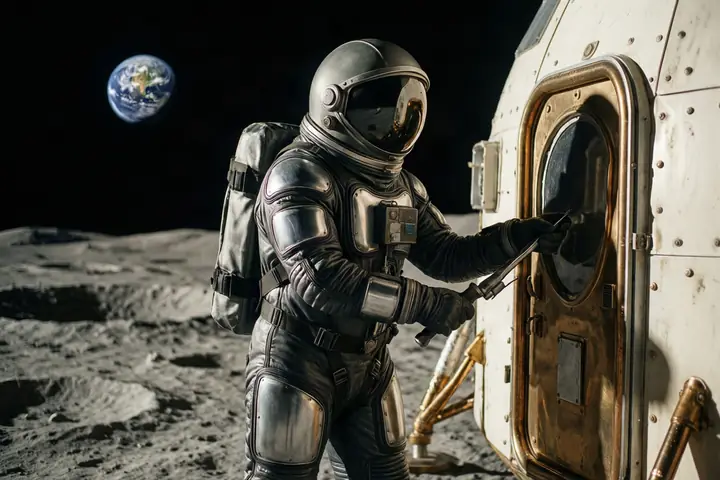
Space Suit
The Emperor of the Stars, Nat Schachner (w. AL Zagat · 1931
A sealed pressurised garment that keeps a person alive outside a spacecraft.
built in the 1960s, about 30 years after it was imagined
A small prizeBusinesses pay; existing firms keep the restas a model judges it
Why
A small prize. It keeps a person alive and able to work outside, essential gear but only for the few who work in space.
Who is paid. Space operators buy suits for their crews, and the few established makers of suits can all copy a design, so they collect.
A model's judgement, not a reading, of the idea as if it worked the way its story promises. The model is fairly sure of this one.
Illustration made with AI image generation; not evidence.
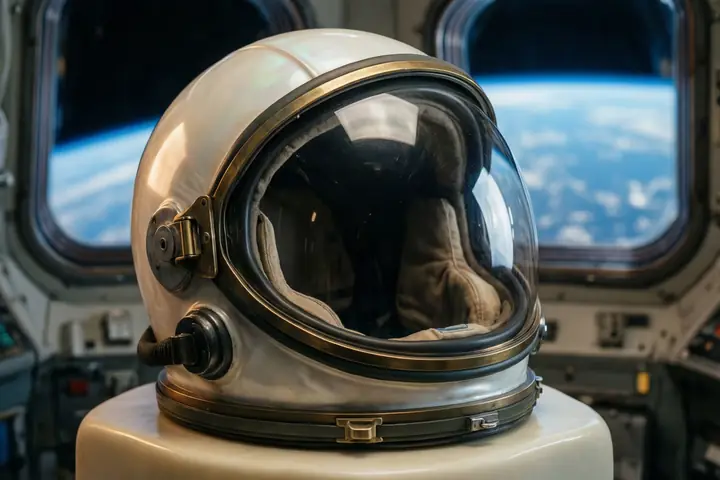
Space-Helmet
The Sargasso of Space, Edmond Hamilton · 1931
A clear round bubble worn over the head as part of a spacesuit.
built in the 1960s, about 30 years after it was imagined
A small prizeBusinesses pay; existing firms keep the restas a model judges it
Why
A small prize. It is a part of a suit, useful to the wearer but not a product by itself.
Who is paid. Space operators pay for it within the suit, and the established suit makers supply it since any of them can copy it.
A model's judgement, not a reading, of the idea as if it worked the way its story promises. The model is fairly sure of this one.
Illustration made with AI image generation; not evidence.
Space-Liner
Twelve Hours To Live, Jack Williamson · 1931
A large vessel that ferries paying passengers through space on a schedule.
not yet built · AI models' likeliest decade: the 2040s
A large prizeBusinesses pay; existing firms keep the restas a model judges it
Why
A large prize. Scheduled passenger travel between worlds would be a transport industry of its own.
Who is paid. The carrier buys the ship and sells the seats, and since many yards could build such a vessel the builders and carriers that already own fleets and ports collect.
A model's judgement, not a reading, of the idea as if it worked the way its story promises. The model is fairly sure of this one.
Illustration made with AI image generation; not evidence.
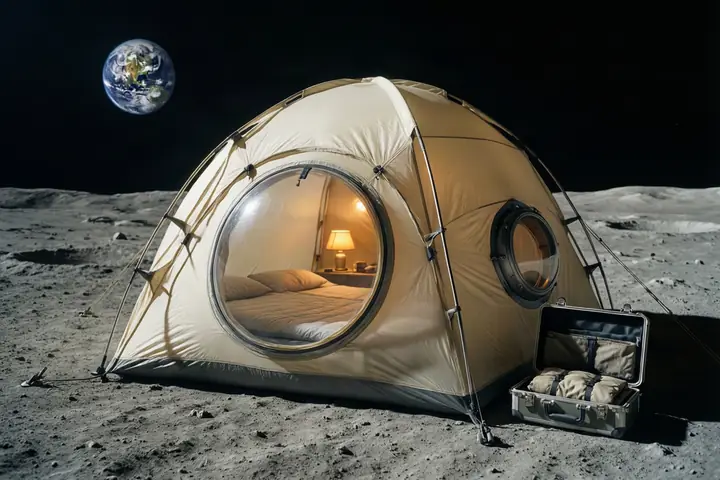
Space-Tent
The Lunar Chrysalis, Raymond Z. Gallun · 1931
A small carry-along airtight shelter that crews set up on the Moon.
not yet built · AI models' likeliest decade: the 2030s
A small prizeBusinesses pay; existing firms keep the restas a model judges it
Why
A small prize. A carry-along airtight shelter is a safety item for the few crews working on the Moon.
Who is paid. The description names crews, so their employers buy it, and a shelter that must hold air against vacuum is made by the established makers of suits and habitats, any of whom could copy it.
A model's judgement, not a reading, of the idea as if it worked the way its story promises. The model is fairly sure of this one.
Illustration made with AI image generation; not evidence.
Spaceyacht
The Sargasso of Space, Edmond Hamilton · 1931
A private luxury craft that rich owners fly between planets.
not yet built · AI models' likeliest decade: the 2060s
A small prizeHouseholds pay; existing firms keep the restas a model judges it
Why
A small prize. A private pleasure craft for space is a luxury for a few rich owners.
Who is paid. The description names private owners who buy it for themselves, and the yards that already build spacecraft could all make one.
A model's judgement, not a reading, of the idea as if it worked the way its story promises. The model is fairly sure of this one.
Illustration made with AI image generation; not evidence.
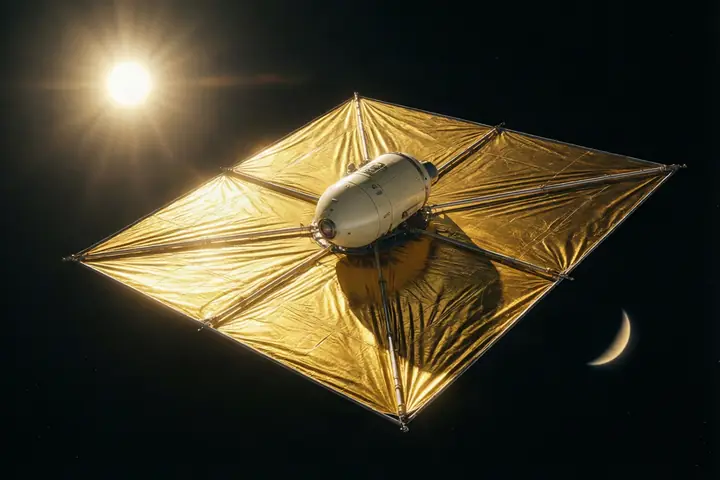
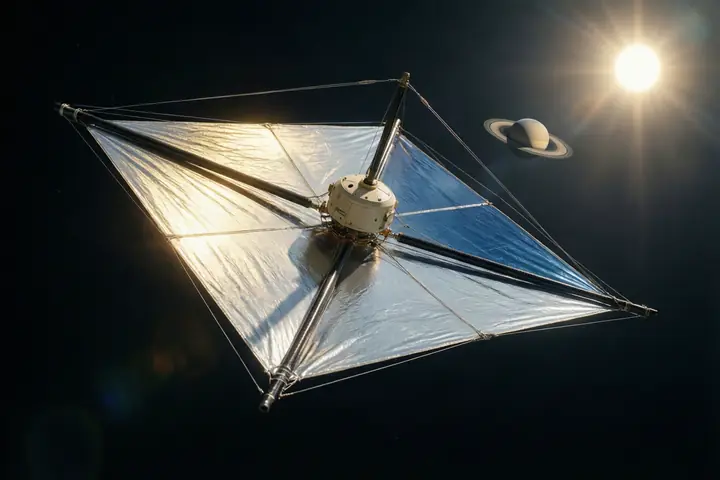
Sunship
The Prince of Space, Jack Williamson · 1931
A spacecraft that draws all of its motive energy from sunlight rather than carried fuel.
not yet built · AI models' likeliest decade: the 2020s
A large prizeBusinesses pay; existing firms keep the restas a model judges it
Why
A large prize. A ship that needs no carried fuel would cut the cost of moving people and cargo across space.
Who is paid. Carriers buy ships, and nothing in the description stops other yards building one once it is shown to work, so established builders collect.
A model's judgement, not a reading, of the idea as if it worked the way its story promises. The model is not very sure of this one.
Illustration made with AI image generation; not evidence.
Terminator Zone
Exiles of the Moon, Nat Schachner (w. AL Zagat · 1931
The boundary band on a world where daylight meets night.
not yet built · AI models' likeliest decade: the 2020s
No prizeNothing is soldas a model judges it
Why
No prize. It is a natural thing or event in space, not a product anyone makes or sells.
Who is paid. Nothing is sold, so nobody pays and no seller collects.
A model's judgement, not a reading, of the idea as if it worked the way its story promises. The model is fairly sure of this one.
Illustration made with AI image generation; not evidence.
Terrene
An Adventure in Futurity, Clark Ashton Smith · 1931
A word meaning belonging to our home planet.
not yet built · AI models' likeliest decade: the 2020s
No prizeNothing is soldas a model judges it
Why
No prize. It is a word or a way of doing things that needs no new equipment, not a product.
Who is paid. Nothing is sold, so nobody pays and no seller collects.
A model's judgement, not a reading, of the idea as if it worked the way its story promises. The model is fairly sure of this one.
Illustration made with AI image generation; not evidence.
Thigh Grips
The Power Planet, Murray Leinster · 1931
Restraints on a seat that hold a crew member's legs firmly during hard thrust.
not yet built · AI models' likeliest decade: the 2020s
A small prizeBusinesses pay; existing firms keep the restas a model judges it
Why
A small prize. It protects crews during hard thrust or landing, which matters only to the few who fly such ships.
Who is paid. Ship operators pay for it as part of the craft, and the firms that already build ships and their fittings supply it since others could copy the design.
A model's judgement, not a reading, of the idea as if it worked the way its story promises. The model is fairly sure of this one.
Illustration made with AI image generation; not evidence.
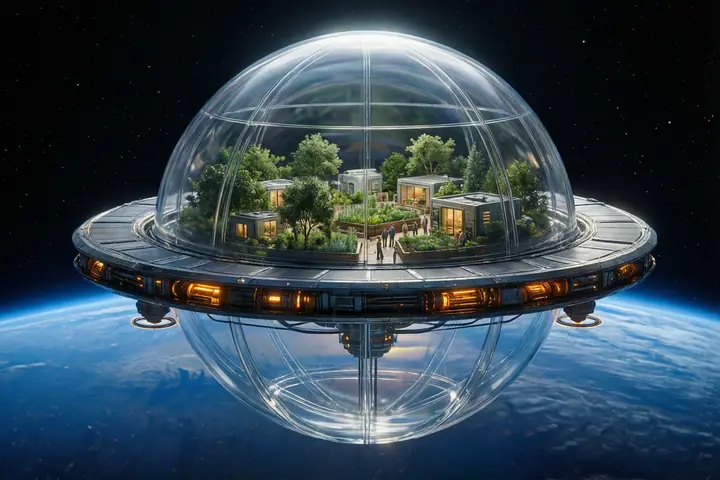
Transparent Spherical Ship
The Emperor of the Stars, Nat Schachner (w. AL Zagat · 1931
A giant clear crystal ball enclosing a deck, used as a habitat or vessel in orbit.
not yet built · AI models' likeliest decade: the 2060s
A large prizeBusinesses pay; existing firms keep the restas a model judges it
Why
A large prize. A clear ball enclosing a deck is judged as a vessel, since the description allows either a ship or a habitat; a working vessel founds a transport industry.
Who is paid. Carriers and expedition firms are assumed to buy it, and nothing in the description stops other yards building one, so established builders collect.
A model's judgement, not a reading, of the idea as if it worked the way its story promises. The model is not very sure of this one.
Illustration made with AI image generation; not evidence.
Ultra-Terrene
An Adventure in Futurity, Clark Ashton Smith · 1931
A word for things that come from a world other than ours.
not yet built · AI models' likeliest decade: the 2020s
No prizeNothing is soldas a model judges it
Why
No prize. It is a word or a way of doing things that needs no new equipment, not a product.
Who is paid. Nothing is sold, so nobody pays and no seller collects.
A model's judgement, not a reading, of the idea as if it worked the way its story promises. The model is fairly sure of this one.
Illustration made with AI image generation; not evidence.
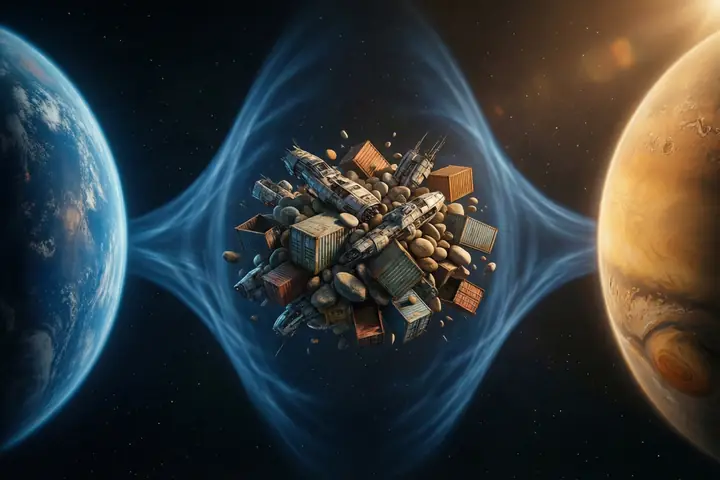
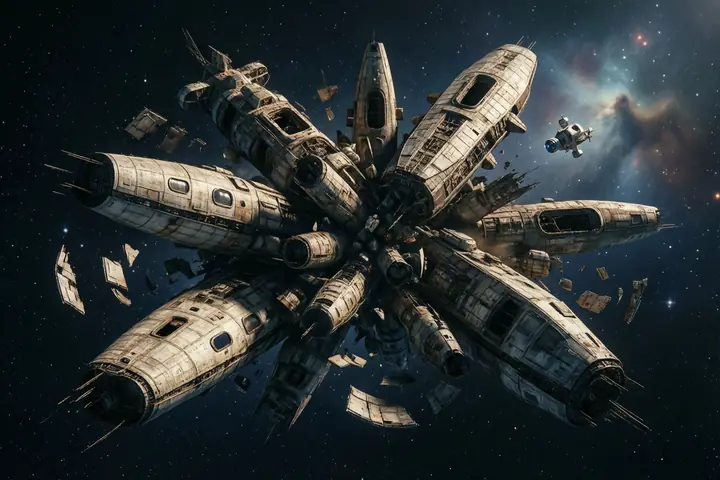
Wreck-Pack
The Sargasso of Space, Edmond Hamilton · 1931
A drifting heap of derelict ships clumped together by their own pull in a becalmed region of space.
not yet built · AI models judge it not physically possible
No prizeNothing is soldas a model judges it
Why
No prize. It is a drifting heap of wrecks gathered by nature, not a product anyone makes or sells.
Who is paid. Nothing is sold, so nobody pays and no seller collects.
A model's judgement, not a reading, of the idea as if it worked the way its story promises. The model is fairly sure of this one.
Illustration made with AI image generation; not evidence.
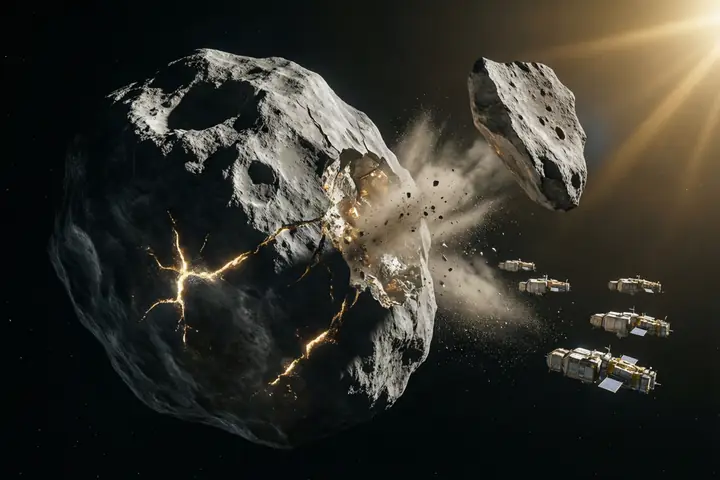
Asteroid Mining (Blasting)
Asteroid of Gold, Clifford Simak · 1932
Plants explosives on a space rock to break it apart and extract its resources.
not yet built · AI models' likeliest decade: the 2040s
A large prizeBusinesses pay; existing firms keep the restas a model judges it
Why
A large prize. Metal and other materials from space rocks would be an industry of its own and could change the cost of raw materials.
Who is paid. Factories and builders buy the output, and since mining methods are easy to copy the firms that already own ships and refineries collect.
A model's judgement, not a reading, of the idea as if it worked the way its story promises. The model is fairly sure of this one.
Illustration made with AI image generation; not evidence.
Attraction Ray
Pirates of the Gorm, Nat Schachner · 1932
A beam that reaches out and pulls a distant object toward its source.
not yet built · AI models could not judge when it may arrive
A large prizeBusinesses pay; existing firms keep the restas a model judges it
Why
A large prize. A beam that pulls distant objects in would change towing, docking and cargo handling in space and perhaps on the ground.
Who is paid. Ship and port operators buy it, and once shown to work others could build it, so established equipment makers collect.
A model's judgement, not a reading, of the idea as if it worked the way its story promises. The model is not very sure of this one.
Illustration made with AI image generation; not evidence.
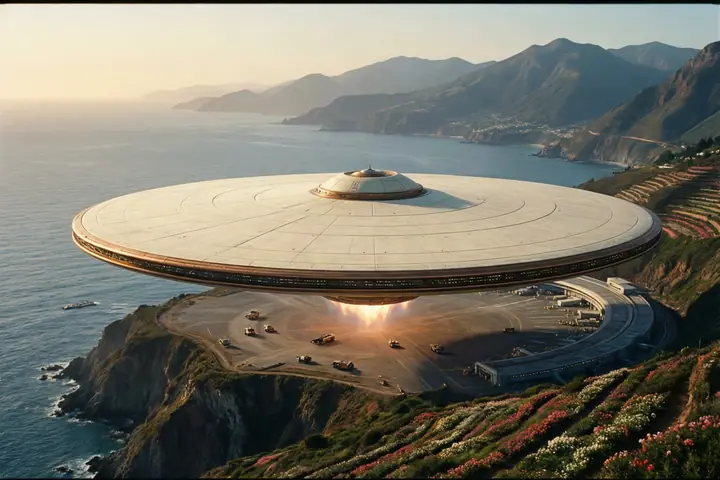
Diskoid
Slaves of Mercury, Nat Schachner · 1932
An enormous disc-shaped flying vessel.
not yet built · AI models could not judge when it may arrive
A large prizeBusinesses pay; existing firms keep the restas a model judges it
Why
A large prize. A working vessel for travel between worlds would found a transport industry of its own.
Who is paid. Carriers and expedition firms buy ships, and many yards could build them once shown how, so established vehicle builders collect.
A model's judgement, not a reading, of the idea as if it worked the way its story promises. The model is fairly sure of this one.
Illustration made with AI image generation; not evidence.
Earth Normal
The Pygmy Planet, Jack Williamson · 1932
Uses conditions on our home planet, such as its gravity, as the reference yardstick for other worlds.
not yet built · AI models' likeliest decade: the 2020s
No prizeNothing is soldas a model judges it
Why
No prize. It is a word or a way of doing things that needs no new equipment, not a product.
Who is paid. Nothing is sold, so nobody pays and no seller collects.
A model's judgement, not a reading, of the idea as if it worked the way its story promises. The model is fairly sure of this one.
Illustration made with AI image generation; not evidence.
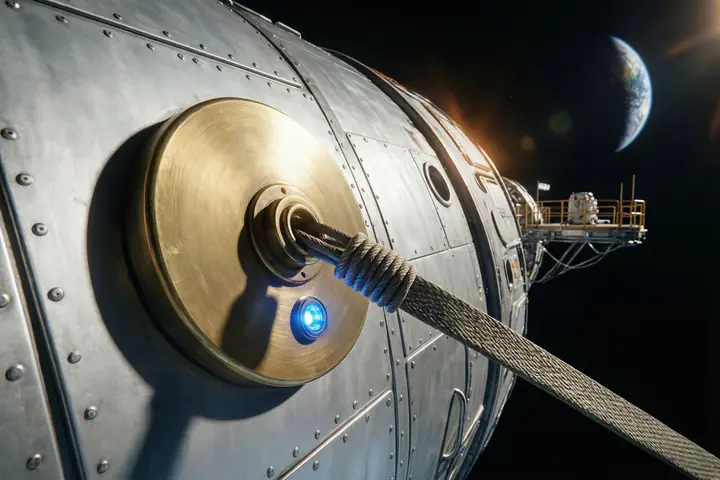
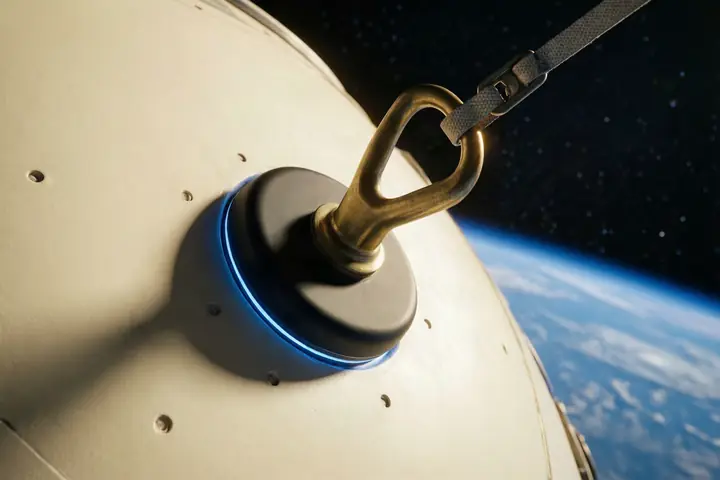
Electro-Magnet Anchor
The Space Rover, Edwin K. Sloat · 1932
An electrically switched magnet that fastens a tether line onto a ship's metal skin.
not yet built · AI models' likeliest decade: the 2020s
A small prizeBusinesses pay; no seller keeps muchas a model judges it
Why
A small prize. It keeps a spacewalker attached to the ship, a simple safety item for a few workers.
Who is paid. Space operators buy it for crews, and it is simple hardware that many workshops could make, so no seller keeps much.
A model's judgement, not a reading, of the idea as if it worked the way its story promises. The model is fairly sure of this one.
Illustration made with AI image generation; not evidence.
Emergency Space-Boat
Revolt of the Star Men, Raymond Z. Gallun · 1932
A getaway craft that lets people flee a stricken spaceship.
not yet built · AI models' likeliest decade: the 2020s
A small prizeBusinesses pay; existing firms keep the restas a model judges it
Why
A small prize. It saves lives in a disaster, but it is safety equipment carried aboard a larger ship.
Who is paid. Ship operators pay for it as required safety gear, and shipbuilders supply it because the design is easy to copy.
A model's judgement, not a reading, of the idea as if it worked the way its story promises. The model is fairly sure of this one.
Illustration made with AI image generation; not evidence.
Emergency Space-Suit
Pirates of the Gorm, Nat Schachner · 1932
A folded-down pressure suit kept aboard ship for crew to put on quickly when disaster strikes.
built in the 1960s, about 30 years after it was imagined
A small prizeBusinesses pay; existing firms keep the restas a model judges it
Why
A small prize. A suit that keeps a person alive in vacuum is vital to its wearer but serves only the few who work in space.
Who is paid. Space operators buy suits for their crews, and the few firms that already make such gear supply them since the design can be copied.
A model's judgement, not a reading, of the idea as if it worked the way its story promises. The model is fairly sure of this one.
Illustration made with AI image generation; not evidence.
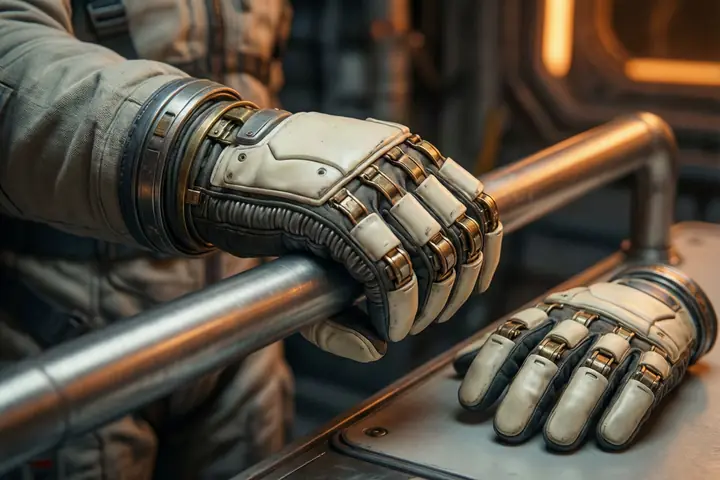
Hinged Mittens (for Space Suit)
The Bluff of the Hawk, Anthony Gilmore · 1932
Jointed pressurised hand coverings that let a spacesuit wearer still bend their fingers.
built in the 1960s, about 30 years after it was imagined
A small prizeBusinesses pay; existing firms keep the restas a model judges it
Why
A small prize. It is a detail of a suit, useful to the wearer but not a product by itself.
Who is paid. Space operators pay for it within the suit, and suit makers supply it because the design is easy to copy.
A model's judgement, not a reading, of the idea as if it worked the way its story promises. The model is fairly sure of this one.
Illustration made with AI image generation; not evidence.
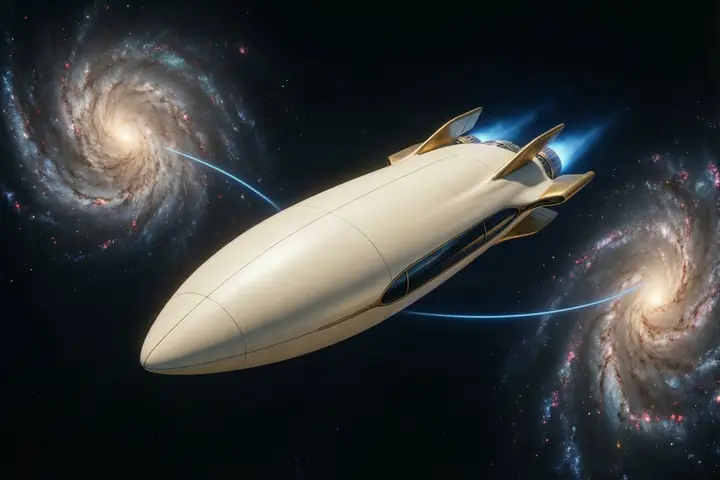
Intergalactic
Invaders From The Infinite, John W. Campbell · 1932
Travel from one galaxy to another across the enormous voids that separate them.
not yet built · AI models could not judge when it may arrive
A large prizeBusinesses pay; existing firms keep the restas a model judges it
Why
A large prize. Travel between galaxies is the same service as travel between worlds or stars, a transport industry for those who go and not a change for most people.
Who is paid. Carriers buy the ships and sell the passage, assumed here as with other travel, and since ships can be copied the builders and carriers that already own fleets and ports collect.
A model's judgement, not a reading, of the idea as if it worked the way its story promises. The model is not very sure of this one.
Illustration made with AI image generation; not evidence.
Landing-Cradle
The Radium World, Frank K. Kelly · 1932
A frame on the ground that catches and holds a spacecraft as it touches down.
not yet built · AI models' likeliest decade: the 2020s
A small prizeBusinesses pay; no seller keeps muchas a model judges it
Why
A small prize. A frame that holds a craft on the ground is a simple port fitting.
Who is paid. Port and ship operators buy it, and it is plain steel that any workshop could make.
A model's judgement, not a reading, of the idea as if it worked the way its story promises. The model is fairly sure of this one.
Illustration made with AI image generation; not evidence.
Light Beam Propulsion (Light-Ship)
The Radium World, Frank K. Kelly · 1932
Pushes a spacecraft along using the pressure of intense light instead of burning fuel.
not yet built · AI models' likeliest decade: the 2030s
A large prizeBusinesses pay; existing firms keep the restas a model judges it
Why
A large prize. An engine that moves ships faster or more cheaply would change the cost of all space transport.
Who is paid. An engine is bought by whoever runs the ship, assumed here to be carriers, and established engine builders could copy it once it worked.
A model's judgement, not a reading, of the idea as if it worked the way its story promises. The model is fairly sure of this one.
Illustration made with AI image generation; not evidence.
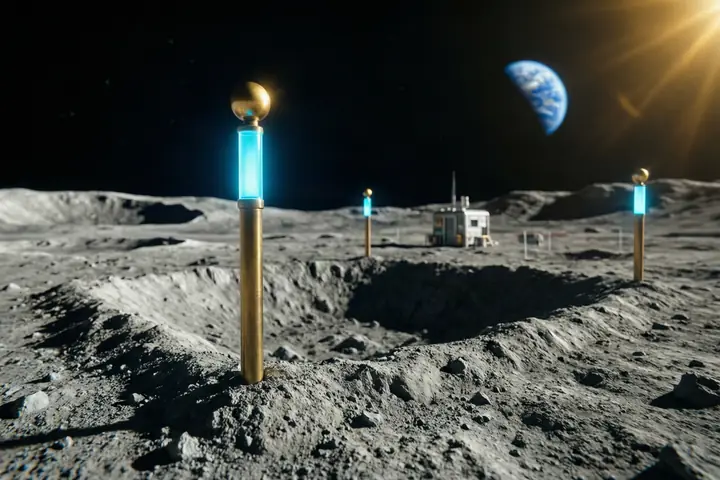
Luminous Stake-Markers
The Radium World, Frank K. Kelly · 1932
A glowing post planted on a world or rock in space to mark ground someone has claimed.
not yet built · AI models' likeliest decade: the 2020s
A small prizeBusinesses pay; no seller keeps muchas a model judges it
Why
A small prize. A glowing post to mark a claim is a small item for prospectors.
Who is paid. Space operators buy it for their crews, and it is simple enough that any workshop could make it.
A model's judgement, not a reading, of the idea as if it worked the way its story promises. The model is fairly sure of this one.
Illustration made with AI image generation; not evidence.
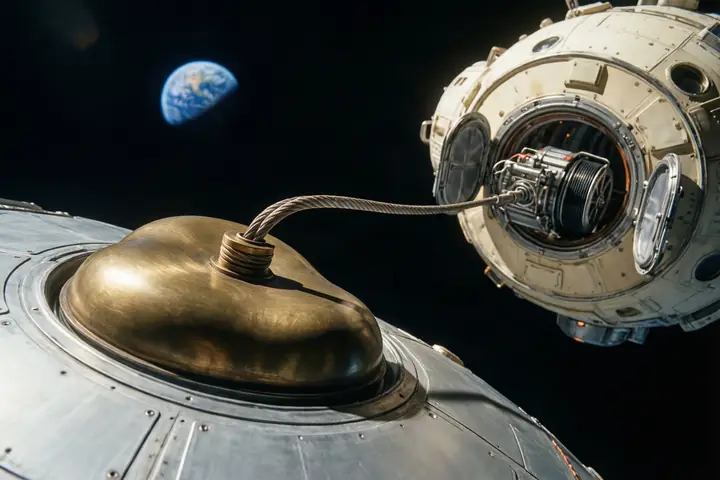
Magnet Grapnel
The Space Rover, Edwin K. Sloat · 1932
A magnetic grappling hook that draws another spacecraft alongside so crews can cross over.
not yet built · AI models' likeliest decade: the 2020s
A small prizeBusinesses pay; no seller keeps muchas a model judges it
Why
A small prize. It is a handy loose item for space crews, a niche.
Who is paid. Space operators buy it for their crews, and it is simple enough that any workshop could make it.
A model's judgement, not a reading, of the idea as if it worked the way its story promises. The model is fairly sure of this one.
Illustration made with AI image generation; not evidence.
Manufactured Planet
The Heritage of the Earth, Harley S. Aldinger · 1932
An artificial world built in orbit, large enough to be mistaken for a natural satellite.
not yet built · AI models' likeliest decade: 2100 or later
A vast prizeA government pays; existing firms keep the restas a model judges it
Why
A vast prize. A new world to live on would add living room for a large share of humanity.
Who is paid. No private buyer could fund a world, so a government pays and the large builders that already hold public works contracts collect.
A model's judgement, not a reading, of the idea as if it worked the way its story promises. The model is not very sure of this one.
Illustration made with AI image generation; not evidence.
Meteor Warning System
A Conquest of Two Worlds, Edmond Hamilton · 1932
Alerts spacecraft in flight when stray rocks are heading their way so they can dodge.
built in the 1960s, about 30 years after it was imagined
A small prizeBusinesses pay; existing firms keep the restas a model judges it
Why
A small prize. Warning of rocks ahead keeps a ship safe, but it is a fitting on the craft, not an industry.
Who is paid. Ship operators pay for it within the craft, and the firms that already make ship instruments supply it since the design can be copied.
A model's judgement, not a reading, of the idea as if it worked the way its story promises. The model is fairly sure of this one.
Illustration made with AI image generation; not evidence.
Ostler Insulation Beam
The Radium World, Frank K. Kelly · 1932
A stretch of projected energy between two planets that guards passing ships from harmful radiation.
not yet built · AI models could not judge when it may arrive
A small prizeA government pays; existing firms keep the restas a model judges it
Why
A small prize. A shielded lane between worlds protects the ships that use it, a safety aid along a particular route.
Who is paid. It guards every passing ship, so a government is assumed to pay as for a beacon, and established builders could copy the projector once it worked.
A model's judgement, not a reading, of the idea as if it worked the way its story promises. The model is not very sure of this one.
Illustration made with AI image generation; not evidence.
Pocket-Planet
The Duel on the Asteroid, P. Schuyler Miller (w/D. McDermott · 1932
A nickname for a small rocky body in space, treated as a miniature world.
built since, date unclear
No prizeNothing is soldas a model judges it
Why
No prize. It is a nickname for a small rock in space, not a product anyone makes or sells.
Who is paid. Nothing is sold, so nobody pays and no seller collects.
A model's judgement, not a reading, of the idea as if it worked the way its story promises. The model is fairly sure of this one.
Illustration made with AI image generation; not evidence.
Reaction Pistol
Martian Guns, Stanley D. Bell · 1932
A gas-firing handheld unit that lets a suited astronaut push themselves around in weightlessness.
built in 1984, 52 years after it was imagined
A small prizeBusinesses pay; existing firms keep the restas a model judges it
Why
A small prize. It helps a spacewalker get around while weightless, a niche tool for a few workers.
Who is paid. Space operators buy it for their crews, and the makers of suits and space gear supply it because it is easy to copy.
A model's judgement, not a reading, of the idea as if it worked the way its story promises. The model is fairly sure of this one.
Illustration made with AI image generation; not evidence.
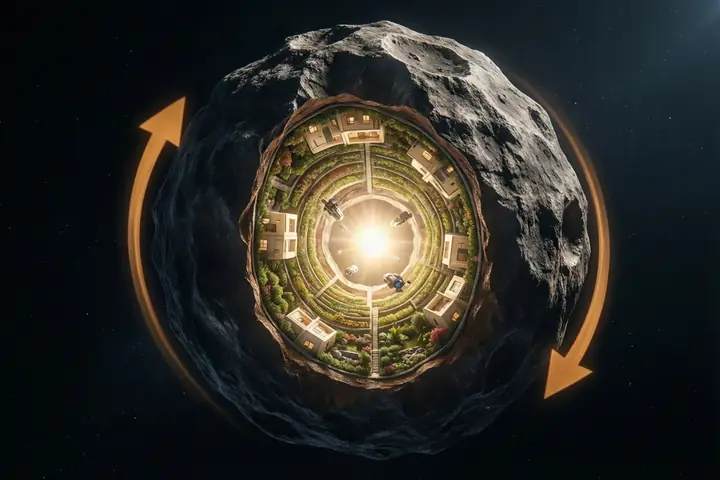
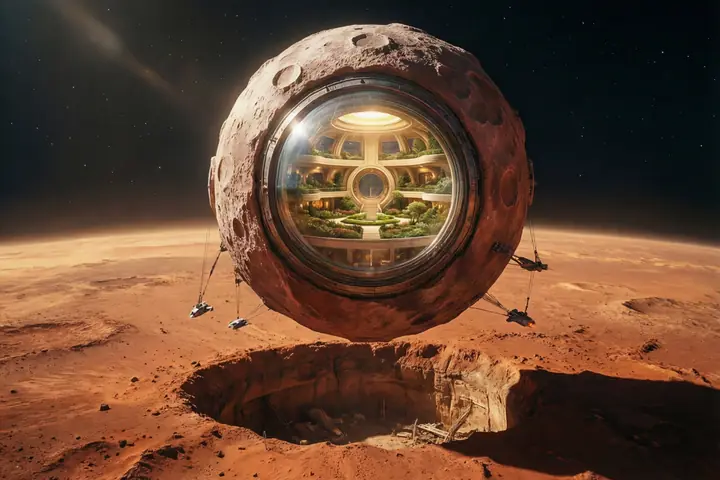
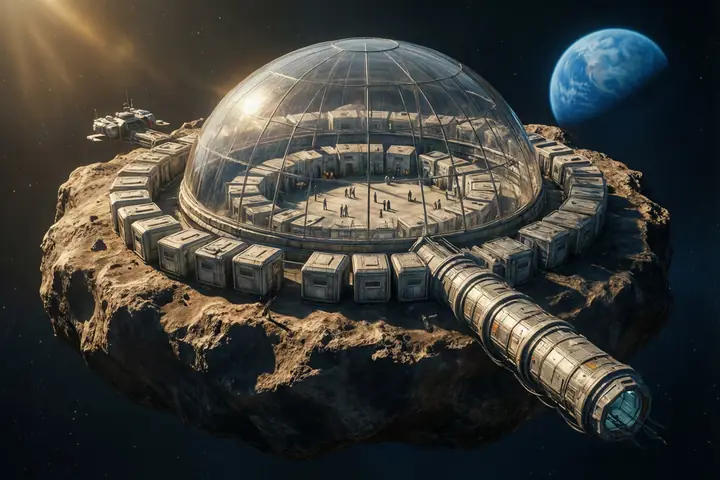
Rotating Hollow Planetoid Habitat
Electronic Siege, John W. Campbell · 1932
Hollows out a small space rock and spins it so its interior can house people under simulated weight.
not yet built · AI models' likeliest decade: 2100 or later
A large prizeA government pays; existing firms keep the restas a model judges it
Why
A large prize. A place for many people to live and work beyond Earth is a building industry of its own.
Who is paid. A settlement is a public work a government pays for, and the big construction and space firms that already win such contracts would build it.
A model's judgement, not a reading, of the idea as if it worked the way its story promises. The model is fairly sure of this one.
Illustration made with AI image generation; not evidence.
Self-Propulsive Space Suit
The Bluff of the Hawk, Anthony Gilmore · 1932
A pressure suit fitted with small thrusters so its wearer can steer through open space.
built in 1984, 52 years after it was imagined
A small prizeBusinesses pay; existing firms keep the restas a model judges it
Why
A small prize. A suit that keeps a person alive in vacuum or thin air is vital to its wearer but serves only the few who work in space.
Who is paid. Space operators buy suits for their crews, and the few firms that already make such gear supply them since the design can be copied.
A model's judgement, not a reading, of the idea as if it worked the way its story promises. The model is fairly sure of this one.
Illustration made with AI image generation; not evidence.
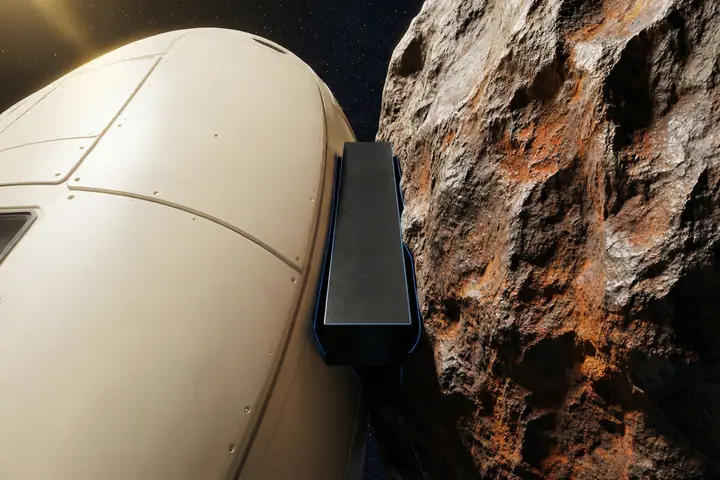
Ship's Magnetic Plates (Magnetic Mooring)
Asteroid of Gold, Clifford Simak · 1932
Magnetised panels on a mining ship's hull that hold it fast to the surface of a space rock.
not yet built · AI models' likeliest decade: the 2020s
A small prizeBusinesses pay; existing firms keep the restas a model judges it
Why
A small prize. Magnets that hold a mining ship to a rock are a fitting of the ship, a tool within space mining.
Who is paid. Mining firms pay for it within the craft, and makers of mining and space gear could all build it.
A model's judgement, not a reading, of the idea as if it worked the way its story promises. The model is fairly sure of this one.
Illustration made with AI image generation; not evidence.
Smoke Jets (Air Leak Detection)
The Great Dome of Mercury, Leo Zagat · 1932
Releases puffs of visible vapour inside a sealed structure so drifting trails reveal where air escapes.
not yet built · AI models' likeliest decade: the 2020s
A small prizeBusinesses pay; no seller keeps muchas a model judges it
Why
A small prize. Puffs of vapour that show where air is leaking are a cheap safety aid in a sealed structure.
Who is paid. Space operators buy it for crews, and it is simple enough that many workshops could make it, so no seller keeps much.
A model's judgement, not a reading, of the idea as if it worked the way its story promises. The model is fairly sure of this one.
Illustration made with AI image generation; not evidence.
Space Freighter
The Space Rover, Edwin K. Sloat · 1932
A big cargo spacecraft that carries heavy loads and can take off from Earth or other worlds.
not yet built · AI models' likeliest decade: the 2020s
A large prizeBusinesses pay; existing firms keep the restas a model judges it
Why
A large prize. A working vessel for travel between worlds would found a transport industry of its own.
Who is paid. Carriers and expedition firms buy ships, and many yards could build them once shown how, so established vehicle builders collect.
A model's judgement, not a reading, of the idea as if it worked the way its story promises. The model is fairly sure of this one.
Illustration made with AI image generation; not evidence.
Space-Boat
Revolt of the Star Men, Raymond Z. Gallun · 1932
A compact spacecraft kept on hand for crews to use when something goes wrong.
not yet built · AI models' likeliest decade: the 2020s
A small prizeBusinesses pay; existing firms keep the restas a model judges it
Why
A small prize. A way to survive a failing ship is something every operator wants but hopes never to use.
Who is paid. Ship operators buy it as part of the craft, and the established builders of ships and their fittings supply it since it can be copied.
A model's judgement, not a reading, of the idea as if it worked the way its story promises. The model is fairly sure of this one.
Illustration made with AI image generation; not evidence.
Space-Boots
The Passing of Ku Sui, Anthony Gilmore · 1932
Footwear designed for crews working outside ships or on airless surfaces.
built in the 1960s, about 30 years after it was imagined
A small prizeBusinesses pay; existing firms keep the restas a model judges it
Why
A small prize. It is a part of a suit, useful to the wearer but not a product by itself.
Who is paid. Space operators pay for it within the suit, and the established suit makers supply it since any of them can copy it.
A model's judgement, not a reading, of the idea as if it worked the way its story promises. The model is fairly sure of this one.
Illustration made with AI image generation; not evidence.
Space-Drive
Invaders From The Infinite, John W. Campbell · 1932
The engine system that moves a spacecraft through the void.
not yet built · AI models' likeliest decade: the 2020s
A large prizeBusinesses pay; existing firms keep the restas a model judges it
Why
A large prize. The engine sets how far, how fast and how cheaply every ship can go; the description is general, so it is judged as drives are.
Who is paid. Whoever runs the ship pays for the engine, assumed here to be carriers, and once a firm had built it others could too, so established engine and ship builders collect.
A model's judgement, not a reading, of the idea as if it worked the way its story promises. The model is fairly sure of this one.
Illustration made with AI image generation; not evidence.
Space-Tanned
Slaves of Mercury, Warren Hammond · 1932
The darkened skin crews acquire from long exposure to unfiltered sunlight during voyages beyond the atmosphere.
not yet built · AI models' likeliest decade: the 2020s
No prizeNothing is soldas a model judges it
Why
No prize. It names what space does to the body, a condition and not a product anyone makes or sells.
Who is paid. Nothing is sold, so nobody pays and no seller collects.
A model's judgement, not a reading, of the idea as if it worked the way its story promises. The model is fairly sure of this one.
Illustration made with AI image generation; not evidence.
Spaceboat
Waves of Compulsion, Raymond Z. Gallun · 1932
A small, nimble craft for short hops around outer space.
not yet built · AI models' likeliest decade: the 2060s
A small prizeBusinesses pay; existing firms keep the restas a model judges it
Why
A small prize. A small craft for short hops is a useful extra for a ship or station, not an industry of its own.
Who is paid. Ship and station operators buy it, assumed here, and existing spacecraft builders could all make something so simple.
A model's judgement, not a reading, of the idea as if it worked the way its story promises. The model is fairly sure of this one.
Illustration made with AI image generation; not evidence.
Sunward
The Space Rover, Edwin K. Sloat · 1932
A word for the direction pointing in toward our star from anywhere in the planetary system.
not yet built · AI models' likeliest decade: the 2020s
No prizeNothing is soldas a model judges it
Why
No prize. It is a word or a way of doing things that needs no new equipment, not a product.
Who is paid. Nothing is sold, so nobody pays and no seller collects.
A model's judgement, not a reading, of the idea as if it worked the way its story promises. The model is fairly sure of this one.
Illustration made with AI image generation; not evidence.
Wandering Worlds
When Worlds Collide, Edwin Balmer (w/P. Wylie · 1932
Planets that orbit no star and instead drift alone between the stars.
not yet built · AI models' likeliest decade: the 2020s
No prizeNothing is soldas a model judges it
Why
No prize. It is a natural thing or event in space, not a product anyone makes or sells.
Who is paid. Nothing is sold, so nobody pays and no seller collects.
A model's judgement, not a reading, of the idea as if it worked the way its story promises. The model is fairly sure of this one.
Illustration made with AI image generation; not evidence.
Water Pool Cushions Acceleration
The Derelicts of Ganymede, John W. Campbell · 1932
Submerges crew in liquid so the fluid spreads the crushing forces of violent ship acceleration.
not yet built · AI models' likeliest decade: the 2020s
A small prizeBusinesses pay; existing firms keep the restas a model judges it
Why
A small prize. It protects crews during hard thrust or landing, which matters only to the few who fly such ships.
Who is paid. Ship operators pay for it as part of the craft, and the firms that already build ships and their fittings supply it since others could copy the design.
A model's judgement, not a reading, of the idea as if it worked the way its story promises. The model is fairly sure of this one.
Illustration made with AI image generation; not evidence.
Asteroid Rocket
Salvage in Space, Jack Williamson · 1933
Thrusters bolted onto a space rock push it along a chosen path, turning the rock itself into a vessel.
not yet built · AI models' likeliest decade: the 2050s
A large prizeBusinesses pay; existing firms keep the restas a model judges it
Why
A large prize. Steering whole rocks to where they are wanted would serve mining and building in space, part of an industry of its own.
Who is paid. Mining and building firms are assumed to pay, and bolting engines to a rock is easy to copy, so the firms that already own ships and engines collect.
A model's judgement, not a reading, of the idea as if it worked the way its story promises. The model is not very sure of this one.
Illustration made with AI image generation; not evidence.
Crystal Cylinder Ship
The Three Suns of Ev, Edwin K. Sloat · 1933
A see-through spacecraft whose hull is shaped like a long clear tube.
not yet built · AI models' likeliest decade: the 2060s
A large prizeBusinesses pay; existing firms keep the restas a model judges it
Why
A large prize. A working vessel for travel between worlds would found a transport industry of its own.
Who is paid. Carriers and expedition firms buy ships, and many yards could build them once shown how, so established vehicle builders collect.
A model's judgement, not a reading, of the idea as if it worked the way its story promises. The model is fairly sure of this one.
Illustration made with AI image generation; not evidence.
Ether Boat
Murder on the Asteroid, Eando Binder · 1933
A vessel built to travel through outer space.
not yet built · AI models' likeliest decade: the 2020s
A large prizeBusinesses pay; existing firms keep the restas a model judges it
Why
A large prize. A working vessel for travel between worlds would found a transport industry of its own.
Who is paid. Carriers and expedition firms buy ships, and many yards could build them once shown how, so established vehicle builders collect.
A model's judgement, not a reading, of the idea as if it worked the way its story promises. The model is fairly sure of this one.
Illustration made with AI image generation; not evidence.
Etheric Propulsion-Vibrations
The Star-Roamers, Edmond Hamilton · 1933
Moves ships faster than light by setting up vibrations in a medium once thought to fill space.
not yet built · AI models judge it not physically possible
A large prizeBusinesses pay; existing firms keep the restas a model judges it
Why
A large prize. Travel faster than light would open other stars to trade and settlement, a transport industry of its own; it is a change for those who go, not for most people.
Who is paid. Ship operators pay for the drive, and once a firm had built it others could too, so established shipbuilders collect.
A model's judgement, not a reading, of the idea as if it worked the way its story promises. The model is not very sure of this one.
Illustration made with AI image generation; not evidence.
Flip to Brake
Murder on the Asteroid, Eando Binder · 1933
Turns a rocket around so its exhaust points ahead, using the engine to shed speed.
not yet built · AI models' likeliest decade: the 2020s
No prizeNothing is soldas a model judges it
Why
No prize. It is a word or a way of doing things that needs no new equipment, not a product.
Who is paid. Nothing is sold, so nobody pays and no seller collects.
A model's judgement, not a reading, of the idea as if it worked the way its story promises. The model is fairly sure of this one.
Illustration made with AI image generation; not evidence.
Globular Glass Helmet
Murder on the Asteroid, Eando Binder · 1933
A rounded, transparent dome worn over the head as part of a spacesuit.
built in the 1960s, about 30 years after it was imagined
A small prizeBusinesses pay; existing firms keep the restas a model judges it
Why
A small prize. It is a detail of a suit, useful to the wearer but not a product by itself.
Who is paid. Space operators pay for it within the suit, and suit makers supply it because the design is easy to copy.
A model's judgement, not a reading, of the idea as if it worked the way its story promises. The model is fairly sure of this one.
Illustration made with AI image generation; not evidence.
Granton Motor
Into the Meteorite Orbit, Frank K. Kelly · 1933
Drives a spacecraft by emitting a form of gravity-based radiation.
not yet built · AI models judge it not physically possible
A large prizeBusinesses pay; existing firms keep the restas a model judges it
Why
A large prize. An engine that moves ships faster or more cheaply would change the cost of all space transport.
Who is paid. An engine is bought by whoever runs the ship, assumed here to be carriers, and established engine builders could copy it once it worked.
A model's judgement, not a reading, of the idea as if it worked the way its story promises. The model is fairly sure of this one.
Illustration made with AI image generation; not evidence.
Helix Gun
Salvage in Space, Jack Williamson · 1933
A coil-shaped magnetic device that snags iron-bearing space rocks drifting past.
not yet built · AI models' likeliest decade: the 2040s
A small prizeBusinesses pay; existing firms keep the restas a model judges it
Why
A small prize. It is a tool for catching or shifting rock, useful only to those who mine in space.
Who is paid. Mining firms buy it, and makers of mining gear supply it since the design is easy to copy.
A model's judgement, not a reading, of the idea as if it worked the way its story promises. The model is fairly sure of this one.
Illustration made with AI image generation; not evidence.
Landing on an Asteroid
Murder on the Asteroid, Eando Binder · 1933
A carefully worked-out sequence of manoeuvres for setting a spacecraft down on a small space rock.
not yet built · AI models' likeliest decade: the 2020s
No prizeNothing is soldas a model judges it
Why
No prize. It is a way of flying or moving, not a product; the craft and gear that do it are judged separately.
Who is paid. Nothing is sold, so nobody pays and no seller collects.
A model's judgement, not a reading, of the idea as if it worked the way its story promises. The model is fairly sure of this one.
Illustration made with AI image generation; not evidence.
Magnetic Anchor
Dead Star Station, Jack Williamson · 1933
A magnet-based fixture that gives a secure attachment point on a spacecraft's outer skin.
not yet built · AI models' likeliest decade: the 2020s
A small prizeBusinesses pay; no seller keeps muchas a model judges it
Why
A small prize. It is a handy loose item for space crews, a niche.
Who is paid. Space operators buy it for their crews, and it is simple enough that any workshop could make it.
A model's judgement, not a reading, of the idea as if it worked the way its story promises. The model is fairly sure of this one.
Illustration made with AI image generation; not evidence.
Meteor Miner
Salvage in Space, Jack Williamson · 1933
Prospectors travel among asteroids searching for rocks rich enough in metal to haul back and sell.
not yet built · AI models' likeliest decade: the 2040s
A small prizeBusinesses pay; no seller keeps muchas a model judges it
Why
A small prize. Prospecting among space rocks is paid work, a service and not a product.
Who is paid. Mining firms and metal buyers pay the prospectors, and anyone can train for the work, so no seller keeps much.
A model's judgement, not a reading, of the idea as if it worked the way its story promises. The model is not very sure of this one.
Illustration made with AI image generation; not evidence.
Osprey Space Armor
Salvage in Space, Jack Williamson · 1933
A self-contained pressure suit comfortable and well-supplied enough to inhabit for long stretches.
built in the 1960s, about 30 years after it was imagined
A small prizeBusinesses pay; existing firms keep the restas a model judges it
Why
A small prize. A suit that keeps a person alive in vacuum or thin air is vital to its wearer but serves only the few who work in space.
Who is paid. Space operators buy suits for their crews, and the few firms that already make such gear supply them since the design can be copied.
A model's judgement, not a reading, of the idea as if it worked the way its story promises. The model is fairly sure of this one.
Illustration made with AI image generation; not evidence.
Seleno-Cosmo-Tel
A Race Through Time, Donald Wandrei · 1933
An onboard system senses nearby rocks or objects and steers the craft clear without pilot input.
not yet built · AI models' likeliest decade: the 2020s
A small prizeBusinesses pay; existing firms keep the restas a model judges it
Why
A small prize. Sensing nearby rocks and steering clear keeps a ship safe, but it is an instrument aboard and only a part of the craft.
Who is paid. Ship operators pay for it within the craft, and established instrument makers supply it since others could copy the design.
A model's judgement, not a reading, of the idea as if it worked the way its story promises. The model is fairly sure of this one.
Illustration made with AI image generation; not evidence.
Space Tug
Murder on the Asteroid, Eando Binder · 1933
A compact spacecraft that grabs, pushes or tows larger vehicles into new positions or orbits.
not yet built · AI models' likeliest decade: the 2020s
A small prizeBusinesses pay; existing firms keep the restas a model judges it
Why
A small prize. Moving other craft about in orbit is a steady support trade, not an industry of its own.
Who is paid. Port and ship operators buy tugs, and any spacecraft builder could make such a simple craft, so established builders collect.
A model's judgement, not a reading, of the idea as if it worked the way its story promises. The model is fairly sure of this one.
Illustration made with AI image generation; not evidence.
Space-Sailor
The Star-Roamers, Edmond Hamilton · 1933
A professional whose trade is crewing ships beyond the atmosphere, earning wages from repeated journeys between worlds.
not yet built · AI models' likeliest decade: the 2020s
A small prizeBusinesses pay; no seller keeps muchas a model judges it
Why
A small prize. It is a job, judged by the work it sells: trained hands are needed on every voyage but are a small part of its cost.
Who is paid. Operators pay the wages, and anyone with the training can do the work, so no seller keeps much.
A model's judgement, not a reading, of the idea as if it worked the way its story promises. The model is not very sure of this one.
Illustration made with AI image generation; not evidence.
Space-Suit Rockets
Into the Meteorite Orbit, Frank K. Kelly · 1933
Small thrusters strapped to a spacesuit let an astronaut steer and move freely while floating outside a spacecraft.
built in 1984, 51 years after it was imagined
A small prizeBusinesses pay; existing firms keep the restas a model judges it
Why
A small prize. Small thrusters let a spacewalker get around while weightless, a niche tool for a few workers.
Who is paid. Space operators buy them for their crews, and the makers of suits and space gear supply them because they are easy to copy.
A model's judgement, not a reading, of the idea as if it worked the way its story promises. The model is fairly sure of this one.
Illustration made with AI image generation; not evidence.
Spaceways
Shambleau, C.L. Moore · 1933
Fixed travel lanes through space that ships follow between destinations.
not yet built · AI models' likeliest decade: the 2030s
No prizeNothing is soldas a model judges it
Why
No prize. It is a word or a way of doing things that needs no new equipment, not a product.
Who is paid. Nothing is sold, so nobody pays and no seller collects.
A model's judgement, not a reading, of the idea as if it worked the way its story promises. The model is fairly sure of this one.
Illustration made with AI image generation; not evidence.
Spectro-Flash Analysis
Salvage in Space, Jack Williamson · 1933
A burst of light vaporises a speck of rock and reads the glow to reveal which metals it holds.
built since, date unclear
A small prizeBusinesses pay; existing firms keep the restas a model judges it
Why
A small prize. Telling what a rock holds before digging saves prospectors wasted effort, a niche tool.
Who is paid. Mining and prospecting firms buy it, and the established makers of survey instruments could all copy it.
A model's judgement, not a reading, of the idea as if it worked the way its story promises. The model is fairly sure of this one.
Illustration made with AI image generation; not evidence.
Transfer Cable
Dead Star Station, Jack Williamson · 1933
A line strung between two vessels in space so crew can cross from one to the other.
not yet built · AI models' likeliest decade: the 2020s
A small prizeBusinesses pay; no seller keeps muchas a model judges it
Why
A small prize. A line between ships for crossing over is a simple item for a few crews.
Who is paid. Ship operators buy it, and it is simple hardware that many workshops could make, so no seller keeps much.
A model's judgement, not a reading, of the idea as if it worked the way its story promises. The model is fairly sure of this one.
Illustration made with AI image generation; not evidence.
Tubular Space-Gangway
The Star-Roamers, Edmond Hamilton · 1933
A pressurised tube stretched between neighbouring spacecraft lets crew walk across without suiting up.
not yet built · AI models' likeliest decade: the 2020s
A small prizeBusinesses pay; existing firms keep the restas a model judges it
Why
A small prize. Crossing between ships without suiting up is a convenience fitted to craft that meet often.
Who is paid. Ship operators pay for it as a fitting, and the established builders of ships supply it since it is easy to copy.
A model's judgement, not a reading, of the idea as if it worked the way its story promises. The model is fairly sure of this one.
Illustration made with AI image generation; not evidence.
Ablative Heat (Reentry) Shield
Triplanetary, E.E. 'Doc' Smith · 1934
A protective layer on a returning spacecraft absorbs atmospheric heating by charring and flaking away.
built in the 1960s, about 30 years after it was imagined
A small prizeBusinesses pay; existing firms keep the restas a model judges it
Why
A small prize. Slowing a craft safely through air is essential to landing but is a part of the craft, not a product by itself.
Who is paid. Ship operators pay for it within the craft, and spacecraft builders supply it because the method is well understood and easy to copy.
A model's judgement, not a reading, of the idea as if it worked the way its story promises. The model is fairly sure of this one.
Illustration made with AI image generation; not evidence.
Acceleration-tank
Triplanetary, E.E. 'Doc' Smith · 1934
Crew lie submerged in liquid during hard thrust so the fluid spreads crushing forces evenly across their bodies.
not yet built · AI models' likeliest decade: the 2030s
A small prizeBusinesses pay; existing firms keep the restas a model judges it
Why
A small prize. It protects crews during hard thrust, which matters only to the few who fly such ships.
Who is paid. Ship operators pay for it as part of the craft, and the firms that already build ships and their fittings supply it since others could copy the design.
A model's judgement, not a reading, of the idea as if it worked the way its story promises. The model is fairly sure of this one.
Illustration made with AI image generation; not evidence.
Artificial Planet
Triplanetary, E.E. 'Doc' Smith · 1934
A world-sized structure assembled in orbit by builders rather than formed by nature.
not yet built · AI models' likeliest decade: 2100 or later
A vast prizeA government pays; existing firms keep the restas a model judges it
Why
A vast prize. A new world to live on would add living room for a large share of humanity.
Who is paid. No private buyer could fund a world, so a government pays and the large builders that already hold public works contracts collect.
A model's judgement, not a reading, of the idea as if it worked the way its story promises. The model is not very sure of this one.
Illustration made with AI image generation; not evidence.
Automatic Navigator
A Matter of Size, Harry Bates · 1934
Guidance equipment pilots a spacecraft all the way to its target once the course is set.
already existed before the story (the 1920s)
A small prizeBusinesses pay; existing firms keep the restas a model judges it
Why
A small prize. Knowing where a ship is and keeping it on course is essential but is an instrument within the ship.
Who is paid. Ship operators buy it as part of the craft, and the established makers of flight instruments supply it since it can be copied.
A model's judgement, not a reading, of the idea as if it worked the way its story promises. The model is fairly sure of this one.
Illustration made with AI image generation; not evidence.
Beam Car
Lost City of Mars, Harl Vincent · 1934
A lift cabin rides an invisible guiding beam all the way from a planet's surface up to an orbiting moon.
not yet built · AI models judge it not physically possible
A large prizeBusinesses pay; existing firms keep the restas a model judges it
Why
A large prize. A lift from the ground to orbit would slash the cost of reaching space for every firm that uses it.
Who is paid. Shippers pay to send cargo up, and since another line could be built once the first was shown to work, the gain is assumed to go to the large builders and the holders of the few good ground sites.
A model's judgement, not a reading, of the idea as if it worked the way its story promises. The model is not very sure of this one.
Illustration made with AI image generation; not evidence.
Deep-Space
Triplanetary, E.E. 'Doc' Smith · 1934
The term for the enormous empty stretches between stars, far from any planet or sun.
not yet built · AI models' likeliest decade: the 2020s
No prizeNothing is soldas a model judges it
Why
No prize. It is a word or a way of doing things that needs no new equipment, not a product.
Who is paid. Nothing is sold, so nobody pays and no seller collects.
A model's judgement, not a reading, of the idea as if it worked the way its story promises. The model is fairly sure of this one.
Illustration made with AI image generation; not evidence.
Electro-Telescope
The Mines of Haldar, Maurice G. Hugi · 1934
An electronic imaging instrument that shows sharp pictures of far-off ships and their combat across space.
not yet built · AI models' likeliest decade: the 2020s
A small prizeBusinesses pay; existing firms keep the restas a model judges it
Why
A small prize. A sharper telescope is useful to observatories and ships, a specialist instrument.
Who is paid. Observatories and ship operators buy it, assumed here, and established instrument makers supply it because the idea is easy to copy.
A model's judgement, not a reading, of the idea as if it worked the way its story promises. The model is fairly sure of this one.
Illustration made with AI image generation; not evidence.
Emergency Lifeboat
Triplanetary, E.E. 'Doc' Smith · 1934
A compact escape vehicle docked to a station or big ship, ready to carry crew away during a disaster.
built in the 1960s, about 30 years after it was imagined
A small prizeBusinesses pay; existing firms keep the restas a model judges it
Why
A small prize. It saves lives in a disaster, but it is safety equipment carried aboard a larger ship.
Who is paid. Ship operators pay for it as required safety gear, and shipbuilders supply it because the design is easy to copy.
A model's judgement, not a reading, of the idea as if it worked the way its story promises. The model is fairly sure of this one.
Illustration made with AI image generation; not evidence.
Evacuating Arms
Space Flotsam, Raymond Z. Gallun · 1934
Mechanical arms inside an airlock push out whatever remains once the chamber opens to vacuum.
not yet built · AI models' likeliest decade: the 2020s
A small prizeBusinesses pay; existing firms keep the restas a model judges it
Why
A small prize. It is a necessary fitting on any crewed craft, but only a part of the ship.
Who is paid. Ship operators pay for it within the craft, and shipbuilders make it themselves since nothing stops others copying it.
A model's judgement, not a reading, of the idea as if it worked the way its story promises. The model is fairly sure of this one.
Illustration made with AI image generation; not evidence.
Levitators
Lost City of Mars, Harl Vincent · 1934
Personal devices that let people float and fly around inside an enormous hollow orbiting habitat.
not yet built · AI models' likeliest decade: the 2020s
A small prizeHouseholds pay; no seller keeps muchas a model judges it
Why
A small prize. Flying about inside a great hollow habitat is a pleasant way to get around for those who live there, a convenience.
Who is paid. People living in the habitat buy their own, and a small personal device can be made by many workshops, so no seller keeps much.
A model's judgement, not a reading, of the idea as if it worked the way its story promises. The model is not very sure of this one.
Illustration made with AI image generation; not evidence.
Liquid Mirror Telescope on Mars
Old Faithful, Raymond Z. Gallun · 1934
An observatory on the red planet whose main reflector is a rotating pool of liquid metal forming a perfect curve.
not yet built · AI models' likeliest decade: the 2070s
A small prizeA government pays; existing firms keep the restas a model judges it
Why
A small prize. It adds to knowledge of the sky but yields nothing to sell, so its worth is limited to science.
Who is paid. Nobody could be charged for what it learns, so a government pays the instrument and probe builders that already hold such contracts.
A model's judgement, not a reading, of the idea as if it worked the way its story promises. The model is fairly sure of this one.
Illustration made with AI image generation; not evidence.
Manual Search For Habitable Planet
Skylark of Valeron, E.E. 'Doc' Smith · 1934
Explorers sift through stars one at a time, without automation, looking for a world where people could live.
not yet built · AI models' likeliest decade: the 2020s
A small prizeA government pays; existing firms keep the restas a model judges it
Why
A small prize. Finding a world to live on would matter greatly in the end, but the search by itself yields nothing to sell.
Who is paid. Nobody could be charged for the search, so a government pays, and the explorers and ship operators that already hold such contracts do the work.
A model's judgement, not a reading, of the idea as if it worked the way its story promises. The model is not very sure of this one.
Illustration made with AI image generation; not evidence.
Metal Message In Space
The Menace From Space, John Edwards · 1934
A plaque engraved with information is launched outward so any distant civilisation might someday read it.
built in the 1970s, about 40 years after it was imagined
A small prizeA government pays; no seller keeps muchas a model judges it
Why
A small prize. A plaque sent out for strangers to find is a gesture with nothing to sell.
Who is paid. A government pays for it as part of a science mission, and any workshop could engrave the plate.
A model's judgement, not a reading, of the idea as if it worked the way its story promises. The model is not very sure of this one.
Illustration made with AI image generation; not evidence.
Moving a Planet
Triplanetary, E.E. 'Doc' Smith · 1934
Shifting an entire world out of its orbit and carrying it across interstellar space to settle around a different star.
not yet built · AI models' likeliest decade: 2100 or later
A vast prizeA government pays; existing firms keep the restas a model judges it
Why
A vast prize. Carrying a whole world to a safer or better place would decide where a large share of humanity can live.
Who is paid. Only a government could fund work on a whole world, and the large engineering firms that already hold such contracts would be paid to do it.
A model's judgement, not a reading, of the idea as if it worked the way its story promises. The model is not very sure of this one.
Illustration made with AI image generation; not evidence.
Out-Worlder
A Matter of Size, Harry Bates · 1934
Someone born or raised on a world other than our home planet.
not yet built · AI models' likeliest decade: the 2070s
No prizeNothing is soldas a model judges it
Why
No prize. It is a word for a person from another world, not a product anyone makes or sells.
Who is paid. Nothing is sold, so nobody pays and no seller collects.
A model's judgement, not a reading, of the idea as if it worked the way its story promises. The model is fairly sure of this one.
Illustration made with AI image generation; not evidence.
Planetary Propulsion-Blasts
Thundering Worlds, Edmond Hamilton · 1934
Enormous engines fire against a world to nudge it into a different orbit or send it toward another star.
not yet built · AI models' likeliest decade: 2100 or later
A vast prizeA government pays; existing firms keep the restas a model judges it
Why
A vast prize. Carrying a whole world to a safer or better place would decide where a large share of humanity can live.
Who is paid. Only a government could fund work on a whole world, and the large engineering firms that already hold such contracts would be paid to do it.
A model's judgement, not a reading, of the idea as if it worked the way its story promises. The model is not very sure of this one.
Illustration made with AI image generation; not evidence.
Silica Sphere (Dyson sphere)
Lost City of Mars, Harl Vincent · 1934
A hollowed habitat carved out on the red planet is lifted into orbit to become a moon.
not yet built · AI models' likeliest decade: 2100 or later
A large prizeA government pays; existing firms keep the restas a model judges it
Why
A large prize. A hollowed place for many people to live, lifted into orbit as a small moon, is a building project on the scale of an industry.
Who is paid. A settlement is a public work a government pays for, and the big construction and space firms that already win such contracts would build it.
A model's judgement, not a reading, of the idea as if it worked the way its story promises. The model is not very sure of this one.
Illustration made with AI image generation; not evidence.
Solar Engine
A Matter of Size, Harry Bates · 1934
A spacecraft drawing its thrust from sunlight, either by collecting the energy or letting light push it along.
not yet built · AI models' likeliest decade: the 2020s
A large prizeBusinesses pay; existing firms keep the restas a model judges it
Why
A large prize. Thrust drawn from sunlight needs little or no fuel, which would cut the cost of voyages between worlds.
Who is paid. Ship operators pay, and once the engine was shown to work others could build it, so established engine builders collect.
A model's judgement, not a reading, of the idea as if it worked the way its story promises. The model is fairly sure of this one.
Illustration made with AI image generation; not evidence.
Space Mittens
Space Flotsam, Raymond Z. Gallun · 1934
Insulated pressurised gloves shield an astronaut's hands from vacuum and extreme cold during work outside.
built in the 1960s, about 30 years after it was imagined
A small prizeBusinesses pay; existing firms keep the restas a model judges it
Why
A small prize. It is a part of a suit, useful to the wearer but not a product by itself.
Who is paid. Space operators pay for it within the suit, and the established suit makers supply it since any of them can copy it.
A model's judgement, not a reading, of the idea as if it worked the way its story promises. The model is fairly sure of this one.
Illustration made with AI image generation; not evidence.
Air-Tight Cities
The Cosmic Pantograph, Edmond Hamilton · 1935
Sealed settlements holding breathable air, built on moons or planets lacking any atmosphere.
not yet built · AI models' likeliest decade: the 2070s
A large prizeA government pays; existing firms keep the restas a model judges it
Why
A large prize. A place for many people to live and work beyond Earth is a building industry of its own.
Who is paid. A settlement is a public work a government pays for, and the big construction and space firms that already win such contracts would build it.
A model's judgement, not a reading, of the idea as if it worked the way its story promises. The model is fairly sure of this one.
Illustration made with AI image generation; not evidence.
Living Space Ship
Proxima Centauri, Murray Leinster · 1935
A spacecraft whose hull is grown from living plant-like material rather than built from metal.
not yet built · AI models' likeliest decade: 2100 or later
A large prizeBusinesses pay; existing firms keep the restas a model judges it
Why
A large prize. A working ship that carries people and cargo between worlds is the base of a whole transport industry.
Who is paid. Carriers buy ships, and a hull grown from a living line can be regrown by anyone who holds a cutting, so the established shipbuilders and carriers collect as with any other ship.
A model's judgement, not a reading, of the idea as if it worked the way its story promises. The model is fairly sure of this one.
Illustration made with AI image generation; not evidence.
Magno-Bars
The Meteor Miners, L.A. Eshbach · 1935
Rods tipped with electromagnets let space prospectors grab and haul away iron-laden rocks.
not yet built · AI models' likeliest decade: the 2040s
A small prizeBusinesses pay; existing firms keep the restas a model judges it
Why
A small prize. It is a tool for catching or shifting rock, useful only to those who mine in space.
Who is paid. Mining firms buy it, and makers of mining gear supply it since the design is easy to copy.
A model's judgement, not a reading, of the idea as if it worked the way its story promises. The model is fairly sure of this one.
Illustration made with AI image generation; not evidence.
Meteor Swarm Mining
The Meteor Miners, L.A. Eshbach · 1935
Groups of spacecraft sweep through clouds of space debris collecting iron to sell.
not yet built · AI models' likeliest decade: the 2040s
A large prizeBusinesses pay; existing firms keep the restas a model judges it
Why
A large prize. Materials taken from other worlds and from loose rock in space would feed an industry of their own.
Who is paid. Firms that need the material pay for it, and since others could dig the same way the gain goes to those who already own the ships and claims.
A model's judgement, not a reading, of the idea as if it worked the way its story promises. The model is fairly sure of this one.
Illustration made with AI image generation; not evidence.
New Suns From Old
The Cosmic Pantograph, Edmond Hamilton · 1935
Smashing burnt-out stellar remnants together to reignite them as fresh, shining stars.
not yet built · AI models' likeliest decade: 2100 or later
A vast prizeA government pays; existing firms keep the restas a model judges it
Why
A vast prize. Lighting a new sun would give warmth and daylight to whole worlds, opening living room for a large share of humanity.
Who is paid. Only a government could fund work on a star, and the large engineering firms that already hold such contracts would be paid to do it.
A model's judgement, not a reading, of the idea as if it worked the way its story promises. The model is not very sure of this one.
Illustration made with AI image generation; not evidence.
Transkin
Parasite Planet, Stanley G. Weinbaum · 1935
A hooded full-body garment that seals the wearer off from a hostile, spore-laden environment.
not yet built · AI models' likeliest decade: the 2020s
A small prizeBusinesses pay; existing firms keep the restas a model judges it
Why
A small prize. A sealed garment against a hostile spore-laden world keeps workers alive there, essential gear for a few.
Who is paid. Firms working on that world are assumed to buy it for their crews, and established makers of protective suits can all copy a design, so they collect.
A model's judgement, not a reading, of the idea as if it worked the way its story promises. The model is not very sure of this one.
Illustration made with AI image generation; not evidence.
Automated Search For Habitable Planets
Cosmic Quest, Edmond Hamilton · 1936
Robotic observatories that scan the sky for worlds that could resemble ours.
built in the 1990s, about 60 years after it was imagined
A small prizeA government pays; existing firms keep the restas a model judges it
Why
A small prize. Finding worlds like ours is valuable knowledge but nobody buys it as a product.
Who is paid. The findings cannot be charged for, so a government pays, and the observatory builders that already hold science contracts supply it.
A model's judgement, not a reading, of the idea as if it worked the way its story promises. The model is fairly sure of this one.
Illustration made with AI image generation; not evidence.
Dark Vapor Bubble
Man-Jewels for Xothar, H.G. Wells · 1936
A field that holds breathable air around an outpost without walls.
not yet built · AI models judge it not physically possible
A large prizeA government pays; existing firms keep the restas a model judges it
Why
A large prize. Holding air in place without walls would make settling airless worlds far cheaper than building domes.
Who is paid. Settlements are public works a government pays for, and once the field was known other builders could copy it, so established settlement builders collect.
A model's judgement, not a reading, of the idea as if it worked the way its story promises. The model is not very sure of this one.
Illustration made with AI image generation; not evidence.
Electronized Gravity Plate
Blood of the Moon, Ray Cummings · 1936
Floor plates that create weight for crews aboard spacecraft and stations.
not yet built · AI models judge it not physically possible
A large prizeBusinesses pay; existing firms keep the restas a model judges it
Why
A large prize. Real weight underfoot on any ship or station would be fitted almost everywhere people live in space.
Who is paid. Ship and station operators buy it, and once the plates worked other makers could copy them, so established builders collect.
A model's judgement, not a reading, of the idea as if it worked the way its story promises. The model is not very sure of this one.
Illustration made with AI image generation; not evidence.
Emergency Repulsion Ray
Earth-Venus 12, Gabriel Wilson · 1936
A handheld push-beam an astronaut uses to move about in space.
not yet built · AI models' likeliest decade: the 2020s
A small prizeBusinesses pay; existing firms keep the restas a model judges it
Why
A small prize. It helps a spacewalker get around while weightless, a niche tool for a few workers.
Who is paid. Space operators buy it for their crews, and the makers of suits and space gear supply it because it is easy to copy.
A model's judgement, not a reading, of the idea as if it worked the way its story promises. The model is fairly sure of this one.
Illustration made with AI image generation; not evidence.
Foam Station Sprayer
Red Storm on Jupiter, Frank Belknap Long, Jr. · 1936
A sprayer that calms the giant storm on Jupiter.
not yet built · AI models' likeliest decade: 2100 or later
A small prizeBusinesses pay; existing firms keep the restas a model judges it
Why
A small prize. Calming a storm on a giant planet matters only to those who would work there, a niche.
Who is paid. It is assumed the firms mining that world pay for it as working gear, and makers of such equipment could copy it.
A model's judgement, not a reading, of the idea as if it worked the way its story promises. The model is not very sure of this one.
Illustration made with AI image generation; not evidence.
Geodynes
The Cometeers, Jack Williamson · 1936
A spacecraft drive that thrusts against space itself rather than expelling fuel.
not yet built · AI models judge it not physically possible
A large prizeBusinesses pay; existing firms keep the restas a model judges it
Why
A large prize. An engine that moves ships faster or more cheaply would change the cost of all space transport.
Who is paid. An engine is bought by whoever runs the ship, assumed here to be carriers, and established engine builders could copy it once it worked.
A model's judgement, not a reading, of the idea as if it worked the way its story promises. The model is fairly sure of this one.
Illustration made with AI image generation; not evidence.
Indoor Weighted Belt
Blood of the Moon, Ray Cummings · 1936
A heavy belt that helps a wearer keep footing where gravity is weak.
not yet built · AI models' likeliest decade: the 2020s
A small prizeBusinesses pay; no seller keeps muchas a model judges it
Why
A small prize. Keeping your footing where there is little or no weight is a small convenience for those who work there.
Who is paid. Space operators buy it for their crews, and it is a simple loose item that any workshop could make.
A model's judgement, not a reading, of the idea as if it worked the way its story promises. The model is fairly sure of this one.
Illustration made with AI image generation; not evidence.
Jupiter Mining Shoes
Red Storm on Jupiter, Frank Belknap Long, Jr. · 1936
Special boots meant for walking across a giant planet's great storm.
not yet built · AI models judge it not physically possible
A small prizeBusinesses pay; no seller keeps muchas a model judges it
Why
A small prize. Boots for walking on a giant planet's storm serve only the few who would work there, a niche.
Who is paid. Mining firms buy them for their crews, and they are assumed to be simple footwear that any workshop could make.
A model's judgement, not a reading, of the idea as if it worked the way its story promises. The model is not very sure of this one.
Illustration made with AI image generation; not evidence.
Multi-Generation Space Vessel (Generation Ship)
The Return of the Murians, Nat Schachner · 1936
A vessel for a voyage so long that its crew's descendants finish the trip.
not yet built · AI models' likeliest decade: 2100 or later
A large prizeA government pays; existing firms keep the restas a model judges it
Why
A large prize. A vessel carrying a whole population on a voyage of many lifetimes is an enormous building project.
Who is paid. Only a government could fund it, and the big shipbuilders and contractors already trusted with such work would be paid.
A model's judgement, not a reading, of the idea as if it worked the way its story promises. The model is fairly sure of this one.
Illustration made with AI image generation; not evidence.
Photoelectric Telescope (Photoelectric Eyes)
The Cometeers, Jack Williamson · 1936
A telescope that turns captured starlight into electrical signals and shows the picture on a display.
built in the 1970s, about 40 years after it was imagined
A small prizeBusinesses pay; existing firms keep the restas a model judges it
Why
A small prize. It is a viewing or steering instrument aboard a ship, useful to the crew but only a part of the craft.
Who is paid. Ship operators pay for it within the craft, and established instrument makers supply it since others could copy the design.
A model's judgement, not a reading, of the idea as if it worked the way its story promises. The model is fairly sure of this one.
Illustration made with AI image generation; not evidence.
Planetary Engineering
The Cometeers, Jack Williamson · 1936
Reshaping a whole world's surface, climate or structure on purpose.
not yet built · AI models' likeliest decade: 2100 or later
A vast prizeA government pays; existing firms keep the restas a model judges it
Why
A vast prize. Giving a whole world air and a climate people can live in would open new land for a large share of humanity.
Who is paid. Only a government could fund work on a whole world, and the large engineering firms that already hold such contracts would be paid to do it.
A model's judgement, not a reading, of the idea as if it worked the way its story promises. The model is not very sure of this one.
Illustration made with AI image generation; not evidence.
Radiation Shield
The Ultimate Weapon, John W. Campbell · 1936
Using a ship's water supply as a barrier against space radiation.
not yet built · AI models' likeliest decade: the 2020s
A small prizeBusinesses pay; existing firms keep the restas a model judges it
Why
A small prize. Using the water a ship already carries as a barrier against radiation is a clever layout of the hull, not a product by itself.
Who is paid. Ship operators pay for it within the craft, and shipbuilders fit it themselves since nothing stops others copying it.
A model's judgement, not a reading, of the idea as if it worked the way its story promises. The model is fairly sure of this one.
Illustration made with AI image generation; not evidence.
Radiation-Proof Oxygen Suit
Red Storm on Jupiter, Frank Belknap Long, Jr. · 1936
A shielded pressure suit for miners working in intense radiation on another world.
not yet built · AI models' likeliest decade: the 2030s
A small prizeBusinesses pay; existing firms keep the restas a model judges it
Why
A small prize. A suit that keeps a person alive in vacuum or thin air is vital to its wearer but serves only the few who work in space.
Who is paid. Space operators buy suits for their crews, and the few firms that already make such gear supply them since the design can be copied.
A model's judgement, not a reading, of the idea as if it worked the way its story promises. The model is fairly sure of this one.
Illustration made with AI image generation; not evidence.
Sounding Projectile
Mad Robot, Raymond Z. Gallun · 1936
A probe fired at a clouded world to learn whether firm ground lies beneath.
not yet built · AI models' likeliest decade: the 2020s
A small prizeA government pays; existing firms keep the restas a model judges it
Why
A small prize. It gathers knowledge about space or other worlds, which is valuable but which nobody buys as a product.
Who is paid. The findings cannot be charged for, so a government pays, and the builders that already hold science contracts supply it.
A model's judgement, not a reading, of the idea as if it worked the way its story promises. The model is fairly sure of this one.
Illustration made with AI image generation; not evidence.
Starways
Blood of the Moon, Ray Cummings · 1936
Established travel routes linking one star system to another.
not yet built · AI models' likeliest decade: 2100 or later
No prizeNothing is soldas a model judges it
Why
No prize. It is a word or a way of doing things that needs no new equipment, not a product.
Who is paid. Nothing is sold, so nobody pays and no seller collects.
A model's judgement, not a reading, of the idea as if it worked the way its story promises. The model is fairly sure of this one.
Illustration made with AI image generation; not evidence.
Telespectroscope
Cosmic Quest, Edmond Hamilton · 1936
An instrument that reads starlight to find planets similar to ours.
not yet built · AI models' likeliest decade: the 2020s
A small prizeA government pays; existing firms keep the restas a model judges it
Why
A small prize. Finding planets like ours by their light adds to knowledge and guides later voyages, with nothing to sell from it.
Who is paid. Nobody could be charged for the findings, so a government pays the instrument and probe builders that already hold such contracts.
A model's judgement, not a reading, of the idea as if it worked the way its story promises. The model is fairly sure of this one.
Illustration made with AI image generation; not evidence.
Tubular Field of Force
The Cometeers, Jack Williamson · 1936
A force beam that drags objects through space toward its source.
not yet built · AI models judge it not physically possible
A large prizeBusinesses pay; existing firms keep the restas a model judges it
Why
A large prize. A beam that pulls distant objects in would change towing, docking and cargo handling in space and perhaps on the ground.
Who is paid. Ship and port operators buy it, and once shown to work others could build it, so established equipment makers collect.
A model's judgement, not a reading, of the idea as if it worked the way its story promises. The model is not very sure of this one.
Illustration made with AI image generation; not evidence.
Artificial Planet
Star Maker, Olaf Stapledon · 1937
Worlds built from scratch at planetary scale for people to live on.
not yet built · AI models' likeliest decade: 2100 or later
A vast prizeA government pays; existing firms keep the restas a model judges it
Why
A vast prize. A new world to live on would add living room for a large share of humanity.
Who is paid. No private buyer could fund a world, so a government pays and the large builders that already hold public works contracts collect.
A model's judgement, not a reading, of the idea as if it worked the way its story promises. The model is not very sure of this one.
Illustration made with AI image generation; not evidence.
Blast-Off
The Cavern of the Shining Pool, Leo Zagat · 1937
The launch of a rocket from the ground into space.
built in 1957, 20 years after it was imagined
No prizeNothing is soldas a model judges it
Why
No prize. It is a word for the moment a rocket leaves the ground, not a product; the craft and the launch works are judged separately.
Who is paid. Nothing is sold, so nobody pays and no seller collects.
A model's judgement, not a reading, of the idea as if it worked the way its story promises. The model is fairly sure of this one.
Illustration made with AI image generation; not evidence.
Electelscope
The Cavern of the Shining Pool, Leo Zagat · 1937
A telescope that uses electronic sensors to enhance what its lenses gather.
built in the 1930s, about 0 years after it was imagined
A small prizeBusinesses pay; existing firms keep the restas a model judges it
Why
A small prize. A sharper telescope is useful to observatories and ships, a specialist instrument.
Who is paid. Observatories and ship operators buy it, assumed here, and established instrument makers supply it because the idea is easy to copy.
A model's judgement, not a reading, of the idea as if it worked the way its story promises. The model is fairly sure of this one.
Illustration made with AI image generation; not evidence.
Gold-Fish-Bowl World
Star Maker, Olaf Stapledon · 1937
A constructed world covered entirely in water.
not yet built · AI models' likeliest decade: 2100 or later
A vast prizeA government pays; existing firms keep the restas a model judges it
Why
A vast prize. A new world to live on would add living room for a large share of humanity.
Who is paid. No private buyer could fund a world, so a government pays and the large builders that already hold public works contracts collect.
A model's judgement, not a reading, of the idea as if it worked the way its story promises. The model is not very sure of this one.
Illustration made with AI image generation; not evidence.
Heat Generating Magnetic Disks
Spawn of the Red Giants, Frank Belknap Long, Jr. · 1937
Devices that warm the ground of cold moons to livable temperatures.
not yet built · AI models' likeliest decade: 2100 or later
A large prizeA government pays; existing firms keep the restas a model judges it
Why
A large prize. Warming cold ground so people can live on it would open new land, though it warms patches of ground and does not remake a whole world's air.
Who is paid. Making land livable is a public work a government pays for, and once the device was known the builders that already hold such contracts could copy it.
A model's judgement, not a reading, of the idea as if it worked the way its story promises. The model is not very sure of this one.
Illustration made with AI image generation; not evidence.
Nose Tubes
The Cavern of the Shining Pool, Leo Zagat · 1937
Forward-facing rocket nozzles that fire to slow a craft down.
not yet built · AI models' likeliest decade: the 2020s
A small prizeBusinesses pay; existing firms keep the restas a model judges it
Why
A small prize. Thrusters that slow a craft are a necessary part of a spacecraft, not a product by themselves.
Who is paid. Ship operators pay for them within the craft, and established engine makers supply them since they are easy to copy.
A model's judgement, not a reading, of the idea as if it worked the way its story promises. The model is fairly sure of this one.
Illustration made with AI image generation; not evidence.
Photo-Electric Mosaic
Beyond Which Limits, Nat Schachner · 1937
A grid of light sensors that records images of the sky.
built in the 1970s, about 40 years after it was imagined
A small prizeBusinesses pay; existing firms keep the restas a model judges it
Why
A small prize. As described it records pictures of the sky for those studying or steering by the stars, a specialist instrument; the real thing spread far wider than this promise.
Who is paid. Ship operators pay for it within the craft, and established instrument makers supply it since others could copy the design.
A model's judgement, not a reading, of the idea as if it worked the way its story promises. The model is not very sure of this one.
Illustration made with AI image generation; not evidence.
Repulsor Screen
Crystalized Thought, Nat Schachner · 1937
A force barrier that pushes dangerous space rocks off course.
not yet built · AI models judge it not physically possible
A small prizeBusinesses pay; existing firms keep the restas a model judges it
Why
A small prize. Pushing rocks and other hazards away keeps a ship safe, but it is a safety fitting of the craft and not an industry of its own.
Who is paid. Ship operators pay for it within the craft, and once the field worked other shipbuilders could copy it, so established builders collect.
A model's judgement, not a reading, of the idea as if it worked the way its story promises. The model is not very sure of this one.
Illustration made with AI image generation; not evidence.
Rocket Tug
Crystalized Thought, Nat Schachner · 1937
A small powered craft that pushes or tows larger spaceships.
not yet built · AI models' likeliest decade: the 2030s
A small prizeBusinesses pay; existing firms keep the restas a model judges it
Why
A small prize. A small craft that pushes or tows larger ships is working gear around ports, a niche within space transport.
Who is paid. Port and ship operators buy it, and established small-craft builders could all make it.
A model's judgement, not a reading, of the idea as if it worked the way its story promises. The model is fairly sure of this one.
Illustration made with AI image generation; not evidence.
Self-Propelled Space Suit
The Cavern of the Shining Pool, Leo Zagat · 1937
A pressure suit with its own thrusters for moving about in space.
built in 1984, 47 years after it was imagined
A small prizeBusinesses pay; existing firms keep the restas a model judges it
Why
A small prize. A suit that keeps a person alive in vacuum or thin air is vital to its wearer but serves only the few who work in space.
Who is paid. Space operators buy suits for their crews, and the few firms that already make such gear supply them since the design can be copied.
A model's judgement, not a reading, of the idea as if it worked the way its story promises. The model is fairly sure of this one.
Illustration made with AI image generation; not evidence.
Space Dock
Diamond Planetoid, Gordon A. Giles · 1937
A harbor where spacecraft berth to unload people and freight.
built in the 1970s, about 40 years after it was imagined
A small prizeBusinesses pay; existing firms keep the restas a model judges it
Why
A small prize. A harbour where spacecraft unload is needed by the traffic it serves, but the prize lies in the transport and the port is a part of it.
Who is paid. Carriers pay to use it, and since another port could be built the gain goes to those who already hold the good berths and the fleets that call there.
A model's judgement, not a reading, of the idea as if it worked the way its story promises. The model is not very sure of this one.
Illustration made with AI image generation; not evidence.
Space Laboratory
Crystalized Thought, Nat Schachner · 1937
An orbiting station built to host experiments.
built in the 1970s, about 40 years after it was imagined
A small prizeA government pays; existing firms keep the restas a model judges it
Why
A small prize. A station for experiments yields knowledge more than goods, valuable but mostly not sold as a product.
Who is paid. Most findings cannot be charged for, so a government is assumed to pay, and the station builders that already hold science contracts supply it.
A model's judgement, not a reading, of the idea as if it worked the way its story promises. The model is not very sure of this one.
Illustration made with AI image generation; not evidence.
Spectroscopic Robot Converter
Diamond Planetoid, Gordon A. Giles · 1937
A probe that reads the light returned from a small world and turns it into a chemical fingerprint.
not yet built · AI models' likeliest decade: the 2020s
A small prizeBusinesses pay; existing firms keep the restas a model judges it
Why
A small prize. Reading what a small world is made of from afar saves a wasted trip, a niche tool.
Who is paid. It is assumed to serve prospecting and not pure science, so mining firms buy it, and the established makers of probes and survey instruments could all copy it.
A model's judgement, not a reading, of the idea as if it worked the way its story promises. The model is not very sure of this one.
Illustration made with AI image generation; not evidence.
X Gun (X-Beam Projector)
Diamond Planetoid, Gordon A. Giles · 1937
A device that shines X-rays into small asteroids to learn what they are made of.
not yet built · AI models' likeliest decade: the 2020s
A small prizeBusinesses pay; existing firms keep the restas a model judges it
Why
A small prize. Seeing inside a small rock before digging saves prospectors wasted effort, a niche tool.
Who is paid. Mining and prospecting firms buy it, and the established makers of survey instruments could all copy it.
A model's judgement, not a reading, of the idea as if it worked the way its story promises. The model is fairly sure of this one.
Illustration made with AI image generation; not evidence.
Air-Blanket
Hollywood on the Moon, Henry Kuttner · 1938
An invisible shield that holds air in place without a dome.
not yet built · AI models judge it not physically possible
A large prizeA government pays; existing firms keep the restas a model judges it
Why
A large prize. Holding air in place without walls would make settling airless worlds far cheaper than building domes.
Who is paid. Settlements are public works a government pays for, and once the field was known other builders could copy it, so established settlement builders collect.
A model's judgement, not a reading, of the idea as if it worked the way its story promises. The model is not very sure of this one.
Illustration made with AI image generation; not evidence.
Air-o-Stat
Satellite Five, Arthur K. Barnes · 1938
Equipment that keeps breathable air supplied inside a spacecraft.
not yet built · AI models' likeliest decade: the 2020s
A small prizeBusinesses pay; existing firms keep the restas a model judges it
Why
A small prize. Breathable air is essential aboard, but this is a fitting inside a craft or suit, not an industry of its own.
Who is paid. Ship operators pay for it within the craft, and the established builders of ships and suits supply it because the method is easy to copy.
A model's judgement, not a reading, of the idea as if it worked the way its story promises. The model is fairly sure of this one.
Illustration made with AI image generation; not evidence.
Emergency Air-Suit
Voyage 13, Ray Cummings · 1938
A lightweight pressure suit for short emergencies in vacuum.
not yet built · AI models' likeliest decade: the 2020s
A small prizeBusinesses pay; existing firms keep the restas a model judges it
Why
A small prize. A suit that keeps a person alive in vacuum is vital to its wearer but serves only the few who work in space.
Who is paid. Space operators buy suits for their crews, and the few firms that already make such gear supply them since the design can be copied.
A model's judgement, not a reading, of the idea as if it worked the way its story promises. The model is fairly sure of this one.
Illustration made with AI image generation; not evidence.
Eros Ship-Planetoid
The Great Illusion, Will Garth · 1938
A giant cylinder-shaped spacecraft so large it passes for a small asteroid.
not yet built · AI models' likeliest decade: 2100 or later
A large prizeA government pays; existing firms keep the restas a model judges it
Why
A large prize. A vessel the size of a small world carrying a whole society is an enormous building project.
Who is paid. Only a government could fund it, and the big shipbuilders and contractors already trusted with such work would be paid.
A model's judgement, not a reading, of the idea as if it worked the way its story promises. The model is fairly sure of this one.
Illustration made with AI image generation; not evidence.
Hand-Rocket
Murder in the Void, Edmond Hamilton · 1938
A small thruster held in the hand that lets a suited spacewalker steer around.
not yet built · AI models' likeliest decade: the 2020s
A small prizeBusinesses pay; existing firms keep the restas a model judges it
Why
A small prize. It helps a spacewalker get around while weightless, a niche tool for a few workers.
Who is paid. Space operators buy it for their crews, and the makers of suits and space gear supply it because it is easy to copy.
A model's judgement, not a reading, of the idea as if it worked the way its story promises. The model is fairly sure of this one.
Illustration made with AI image generation; not evidence.
Lightweight Vacuum Armor
Hotel Cosmos, Raymond Z. Gallun · 1938
A pared-down pressure suit for places milder than open space.
not yet built · AI models' likeliest decade: the 2030s
A small prizeBusinesses pay; existing firms keep the restas a model judges it
Why
A small prize. A suit that keeps a person alive in a hostile place is vital to its wearer but serves only the few who work there.
Who is paid. Space operators buy suits for their crews, and the few firms that already make such gear supply them since the design can be copied.
A model's judgement, not a reading, of the idea as if it worked the way its story promises. The model is fairly sure of this one.
Illustration made with AI image generation; not evidence.
Mass Detector (Gravitator)
Roamer of the Stars, Clyde Wilson · 1938
A sensor that warns a spacecraft of large objects lying ahead.
not yet built · AI models' likeliest decade: the 2020s
A small prizeBusinesses pay; existing firms keep the restas a model judges it
Why
A small prize. Warning of large objects ahead keeps a ship safe, but it is a fitting on the craft, not an industry.
Who is paid. Ship operators pay for it within the craft, and the firms that already make ship instruments supply it since the design can be copied.
A model's judgement, not a reading, of the idea as if it worked the way its story promises. The model is fairly sure of this one.
Illustration made with AI image generation; not evidence.
Rocketeering
Ra For The Rajah, John Victor Peterson · 1938
Racing rocket-powered craft as a sport.
not yet built · AI models' likeliest decade: the 2040s
A small prizeHouseholds pay; existing firms keep the restas a model judges it
Why
A small prize. Racing rocket craft for sport is a costly pastime for a few racers and those who watch them.
Who is paid. Racers buy the craft and crowds pay to watch, and since any yard could build a racing craft the established builders of small craft collect.
A model's judgement, not a reading, of the idea as if it worked the way its story promises. The model is fairly sure of this one.
Illustration made with AI image generation; not evidence.
Steel-Lined Space Boots
Roamer of the Stars, Clyde Wilson · 1938
Boots with metal soles that cling to a magnetic deck so wearers can walk without weight.
not yet built · AI models' likeliest decade: the 2020s
A small prizeBusinesses pay; no seller keeps muchas a model judges it
Why
A small prize. Soles that cling to the deck let crews walk without weight, a small piece of crew gear.
Who is paid. Ship operators buy them for crews, and it is a simple loose item that any workshop could make.
A model's judgement, not a reading, of the idea as if it worked the way its story promises. The model is fairly sure of this one.
Illustration made with AI image generation; not evidence.
Surface Car
Satellite Five, Arthur K. Barnes · 1938
A vehicle built to drive across the ground of another planet or moon.
not yet built · AI models' likeliest decade: the 2020s
A small prizeBusinesses pay; existing firms keep the restas a model judges it
Why
A small prize. A vehicle for crossing the ground of another world is working gear for the few crews there.
Who is paid. No user is named, so a firm working on that world is assumed to buy it, and established vehicle builders could all make one.
A model's judgement, not a reading, of the idea as if it worked the way its story promises. The model is not very sure of this one.
Illustration made with AI image generation; not evidence.
Tractor Boots
Magician of Dream Valley, Raymond Z. Gallun · 1938
Spacesuit boots fitted with powered tracks like a tiny tank.
not yet built · AI models' likeliest decade: the 2030s
A small prizeBusinesses pay; existing firms keep the restas a model judges it
Why
A small prize. Powered tracks on the boots help a suited worker move over ground, a small piece of crew gear.
Who is paid. Space operators pay for it within the suit, and the established suit makers supply it since any of them can copy it.
A model's judgement, not a reading, of the idea as if it worked the way its story promises. The model is fairly sure of this one.
Illustration made with AI image generation; not evidence.
Transfer Refuge
Hotel Cosmos, Raymond Z. Gallun · 1938
A movable sealed room that keeps up whatever atmosphere a particular creature needs.
not yet built · AI models' likeliest decade: the 2020s
A small prizeBusinesses pay; existing firms keep the restas a model judges it
Why
A small prize. A movable room holding the air a particular creature needs is a niche fitting for carrying unusual passengers.
Who is paid. Carriers and stations are assumed to buy it, and the established makers of life support could all build one.
A model's judgement, not a reading, of the idea as if it worked the way its story promises. The model is not very sure of this one.
Illustration made with AI image generation; not evidence.
Vacuum-Cupped Sandals
Voyage 13, Ray Cummings · 1938
Footwear with suction pads that stick to surfaces so wearers can walk while floating.
not yet built · AI models' likeliest decade: the 2020s
A small prizeBusinesses pay; no seller keeps muchas a model judges it
Why
A small prize. Soles that stick to surfaces let crews walk without weight, a small piece of crew gear.
Who is paid. Ship operators buy them for crews, and it is a simple loose item that any workshop could make.
A model's judgement, not a reading, of the idea as if it worked the way its story promises. The model is fairly sure of this one.
Illustration made with AI image generation; not evidence.
Acceleration Hammock
Pioneer - 1957, Henry Gade · 1939
Straps and netting that cushion spacecraft crews against strong g-forces.
not yet built · AI models' likeliest decade: the 2020s
A small prizeBusinesses pay; existing firms keep the restas a model judges it
Why
A small prize. It protects crews during hard thrust, which matters only to the few who fly such ships.
Who is paid. Ship operators pay for it as part of the craft, and the firms that already build ships and their fittings supply it since others could copy the design.
A model's judgement, not a reading, of the idea as if it worked the way its story promises. The model is fairly sure of this one.
Illustration made with AI image generation; not evidence.
Anti-Acceleration Engine For Space Suits
Black Destroyer, A.E. van Vogt · 1939
A suit-mounted system that offsets the strain of heavy g-forces on the wearer.
not yet built · AI models' likeliest decade: the 2020s
A small prizeBusinesses pay; existing firms keep the restas a model judges it
Why
A small prize. It protects crews during hard thrust, which matters only to the few who fly such ships.
Who is paid. Ship operators pay for it as part of the craft, and the firms that already build ships and their fittings supply it since others could copy the design.
A model's judgement, not a reading, of the idea as if it worked the way its story promises. The model is fairly sure of this one.
Illustration made with AI image generation; not evidence.
Asteroid Prison
One Against The Legion, Jack Williamson · 1939
A jail built on a small rocky body with nothing else on it.
not yet built · AI models' likeliest decade: 2100 or later
A small prizeA government pays; existing firms keep the restas a model judges it
Why
A small prize. A jail on a bare rock is a costly way to do what prisons on the ground already do.
Who is paid. Only a government runs prisons, and the contractors that already build and supply them would be paid.
A model's judgement, not a reading, of the idea as if it worked the way its story promises. The model is not very sure of this one.
Illustration made with AI image generation; not evidence.
Cosmic Storm
After World's End, Jack Williamson · 1939
A huge turbulent disturbance moving through outer space.
not yet built · AI models could not judge when it may arrive
No prizeNothing is soldas a model judges it
Why
No prize. It is a natural thing or event in space, not a product anyone makes or sells.
Who is paid. Nothing is sold, so nobody pays and no seller collects.
A model's judgement, not a reading, of the idea as if it worked the way its story promises. The model is fairly sure of this one.
Illustration made with AI image generation; not evidence.
Hand-Jetting
A Question of Salvage, Malcolm Jameson · 1939
Moving through vacuum by firing small handheld thrusters.
not yet built · AI models' likeliest decade: the 2020s
No prizeNothing is soldas a model judges it
Why
No prize. It is a way of flying or moving, not a product; the craft and gear that do it are judged under their own entries.
Who is paid. Nothing is sold, so nobody pays and no seller collects.
A model's judgement, not a reading, of the idea as if it worked the way its story promises. The model is fairly sure of this one.
Illustration made with AI image generation; not evidence.
Inflatable Roofed Valley
Misfit, Robert Heinlein · 1939
A settlement made by stretching an airtight inflated canopy over a natural hollow on an asteroid.
not yet built · AI models' likeliest decade: the 2070s
A large prizeA government pays; existing firms keep the restas a model judges it
Why
A large prize. A place for many people to live and work beyond Earth is a building industry of its own.
Who is paid. A settlement is a public work a government pays for, and the big construction and space firms that already win such contracts would build it.
A model's judgement, not a reading, of the idea as if it worked the way its story promises. The model is fairly sure of this one.
Illustration made with AI image generation; not evidence.
Meteoric Dust Cloud
Secret of the Buried City, John Russell Fearn · 1939
A huge cloud of space dust that the solar system drifts through for years.
not yet built · AI models could not judge when it may arrive
No prizeNothing is soldas a model judges it
Why
No prize. It is a natural thing or place in space, not something made or sold.
Who is paid. Nothing is sold, so nobody pays and no seller collects.
A model's judgement, not a reading, of the idea as if it worked the way its story promises. The model is fairly sure of this one.
Illustration made with AI image generation; not evidence.
Move an Asteroid
Misfit, Robert Heinlein · 1939
Practical methods for nudging a small rocky body or minor moon onto a new path.
not yet built · AI models' likeliest decade: the 2030s
A large prizeBusinesses pay; existing firms keep the restas a model judges it
Why
A large prize. Steering whole rocks to where they are wanted would serve mining and building in space, part of an industry of its own.
Who is paid. Mining and building firms are assumed to pay, and fixing engines to a rock is easy to copy, so the firms that already own ships and engines collect.
A model's judgement, not a reading, of the idea as if it worked the way its story promises. The model is not very sure of this one.
Illustration made with AI image generation; not evidence.
New Moon Casino Satellite
One Against The Legion, Jack Williamson · 1939
A huge artificial moon used as a gambling resort that is easy to reach.
not yet built · AI models' likeliest decade: the 2060s
A small prizeHouseholds pay; existing firms keep the restas a model judges it
Why
A small prize. A gambling resort in orbit is a costly holiday for those who can afford the trip, a niche within leisure.
Who is paid. Visitors pay, and since another resort could be built the gain is assumed to go to the firms that already run casinos and hotels and own the ships that reach it.
A model's judgement, not a reading, of the idea as if it worked the way its story promises. The model is not very sure of this one.
Illustration made with AI image generation; not evidence.
Robot Observatory
Space Rating, John Berryman · 1939
An automated telescope station set up on a lifeless world with no staff.
built in the 1990s, about 60 years after it was imagined
A small prizeA government pays; existing firms keep the restas a model judges it
Why
A small prize. It gathers knowledge about space or other worlds, which is valuable but which nobody buys as a product.
Who is paid. The findings cannot be charged for, so a government pays, and the builders that already hold science contracts supply it.
A model's judgement, not a reading, of the idea as if it worked the way its story promises. The model is fairly sure of this one.
Illustration made with AI image generation; not evidence.
Shock Hammock
Habit, Lester del Rey · 1939
A cushioning net that holds pilots during strong acceleration.
not yet built · AI models' likeliest decade: the 2020s
A small prizeBusinesses pay; existing firms keep the restas a model judges it
Why
A small prize. It protects crews during hard thrust, which matters only to the few who fly such ships.
Who is paid. Ship operators pay for it as part of the craft, and the firms that already build ships and their fittings supply it since others could copy the design.
A model's judgement, not a reading, of the idea as if it worked the way its story promises. The model is fairly sure of this one.
Illustration made with AI image generation; not evidence.
Space Charts
After World's End, Jack Williamson · 1939
Maps that show the positions of stars for travellers.
built since, date unclear
A small prizeBusinesses pay; no seller keeps muchas a model judges it
Why
A small prize. Star maps are needed on every voyage but are a small part of its cost.
Who is paid. Ship operators buy them, and once the sky has been surveyed anyone can draw and print such maps, so no seller keeps much.
A model's judgement, not a reading, of the idea as if it worked the way its story promises. The model is not very sure of this one.
Illustration made with AI image generation; not evidence.
Space-Post
Episode On Dhee Minor, Harry Walton · 1939
A station in space where traders buy and sell goods.
not yet built · AI models' likeliest decade: the 2070s
A small prizeBusinesses pay; existing firms keep the restas a model judges it
Why
A small prize. A station where traders meet is a marketplace, useful to the trade that passes but only a place to deal.
Who is paid. Traders pay for berths and stalls, assumed here, and whoever already owns the station collects since a second post nearby would have to be built.
A model's judgement, not a reading, of the idea as if it worked the way its story promises. The model is not very sure of this one.
Computing, AI and virtual worlds · 18
Illustration made with AI image generation; not evidence.
Integral Calculator
Exiles of the Moon, Nat Schachner (w. AL Zagat · 1931
A machine that takes hard mathematical expressions and works out their solutions.
built in 1967, 36 years after it was imagined
A small prizeBusinesses pay; no seller keeps muchas a model judges it
Why
A small prize. Working out hard mathematics by machine saves engineers and scientists time, which is a specialist tool.
Who is paid. Firms and laboratories buy it, and the methods are published for anyone to build, so no seller keeps much.
A model's judgement, not a reading, of the idea as if it worked the way its story promises. The model is fairly sure of this one.
Illustration made with AI image generation; not evidence.
Master Machine
The Revolt of the Machines, Nat Schachner (w. AL Zagat · 1931
A single central machine that runs every function of a whole society.
not yet built · AI models could not judge when it may arrive
A vast prizeA government pays; existing firms keep the restas a model judges it
Why
A vast prize. A machine that runs a whole society's affairs touches every person's food, work and safety.
Who is paid. I assume a machine that runs a whole society would be built as a public work, so a government pays, and the firms that already build large computing works for governments collect.
A model's judgement, not a reading, of the idea as if it worked the way its story promises. The model is not very sure of this one.
Illustration made with AI image generation; not evidence.
Sapience
The Planet Entity, E.M. Johnson (w/C.A. Smith · 1931
The capacity of a species for wise, discerning reasoning.
not yet built · AI models' likeliest decade: the 2020s
No prizeNothing is soldas a model judges it
Why
No prize. This is a quality of a living species and not a technology anyone can buy.
Who is paid. Nothing is sold, so nobody pays and no seller keeps anything.
A model's judgement, not a reading, of the idea as if it worked the way its story promises. The model is fairly sure of this one.
Illustration made with AI image generation; not evidence.
Thought Coil (Machine Intelligence)
The Revolt of the Machines, Nat Schachner (w. AL Zagat · 1931
Dedicated hardware that gives machines the ability to think.
not yet built · AI models' likeliest decade: the 2020s
A vast prizeBusinesses pay; existing firms keep the restas a model judges it
Why
A vast prize. A machine that thinks as well as a person could do much of the work people now do, which changes how most people live and work.
Who is paid. Firms would pay to put it to work, and once one had been built others could learn to build their own, so I assume the firms that already own costly computing plant and sell to every business collect.
A model's judgement, not a reading, of the idea as if it worked the way its story promises. The model is not very sure of this one.
Illustration made with AI image generation; not evidence.
Mentanical Communication
The Mentanicals, Francis Flagg · 1934
Reasoning machines share ideas among themselves through their own private channel of exchange.
not yet built · AI models' likeliest decade: the 2030s
A small prizeBusinesses pay; no seller keeps muchas a model judges it
Why
A small prize. A channel for thinking machines to share ideas with each other is plumbing that makes them a little more useful.
Who is paid. Owners of the machines pay for it as part of them, and a way of exchanging messages is easy for any builder to copy.
A model's judgement, not a reading, of the idea as if it worked the way its story promises. The model is not very sure of this one.
Illustration made with AI image generation; not evidence.
Platinum Alloy Disc
Triplanetary, E.E. 'Doc' Smith · 1934
A shiny metal platter used as a durable medium for storing recorded information.
built in the 1960s, about 30 years after it was imagined
A large prizeBusinesses pay; existing firms keep the restas a model judges it
Why
A large prize. Cheap, compact and lasting storage for information is an industry of its own, since every computer needs it.
Who is paid. Computer makers and data keepers buy it, and because rivals soon match each design, the firms that already own the costly factories collect.
A model's judgement, not a reading, of the idea as if it worked the way its story promises. The model is fairly sure of this one.
Illustration made with AI image generation; not evidence.
Sound-Transposing Machine
The Lost Language, David H. Keller · 1934
A reader that scans printed text and speaks it aloud, useful for anyone who cannot see the page.
built in the 1970s, about 40 years after it was imagined
A small prizeHouseholds pay; no seller keeps muchas a model judges it
Why
A small prize. A machine that reads print aloud matters greatly to people who cannot see the page, but they are a small share of buyers.
Who is paid. People who cannot read print buy it, and once machines can read and speak many firms can make it, so no seller keeps much.
A model's judgement, not a reading, of the idea as if it worked the way its story promises. The model is fairly sure of this one.
Illustration made with AI image generation; not evidence.
Vibrowriter
The Lost Language, David H. Keller · 1934
A machine that listens to spoken words, converts them into another language and prints the result.
built in the 1950s, about 20 years after it was imagined
A large prizeHouseholds pay; no seller keeps muchas a model judges it
Why
A large prize. Letting any two people talk and read across languages opens up travel, trade and work, which is worth an industry of its own.
Who is paid. Travellers, migrants and other ordinary people buy it to use themselves, firms buy it too, and once it works many can offer it, so no seller keeps much.
A model's judgement, not a reading, of the idea as if it worked the way its story promises. The model is fairly sure of this one.
Illustration made with AI image generation; not evidence.
Machine (Thinking Machine)
The Machine, John W. Campbell · 1935
A reasoning computer holds authority over an entire world, making its decisions and running its affairs.
not yet built · AI models' likeliest decade: the 2040s
A vast prizeA government pays; existing firms keep the restas a model judges it
Why
A vast prize. A machine that runs a whole society's affairs touches every person's food, work and safety.
Who is paid. I assume a machine that runs a whole society would be built as a public work, so a government pays, and the firms that already build large computing works for governments collect.
A model's judgement, not a reading, of the idea as if it worked the way its story promises. The model is not very sure of this one.
Illustration made with AI image generation; not evidence.
Subjunctivisor
The Worlds of If, Stanley G. Weinbaum · 1935
A viewer shows an imagined alternative outcome built from what the user believes and expects.
not yet built · AI models' likeliest decade: the 2040s
A small prizeHouseholds pay; no seller keeps muchas a model judges it
Why
A small prize. A viewer that shows what might have been, built from the user's own beliefs, is a curiosity and an entertainment.
Who is paid. Curious people pay for a look, and I assume that once one had been built others could learn to build their own, so no seller keeps much.
A model's judgement, not a reading, of the idea as if it worked the way its story promises. The model is not very sure of this one.
Illustration made with AI image generation; not evidence.
Synthetic Intellect
Mad Robot, Raymond Z. Gallun · 1936
A component that gives a machine the ability to think for itself.
not yet built · AI models' likeliest decade: the 2030s
A vast prizeBusinesses pay; existing firms keep the restas a model judges it
Why
A vast prize. A machine that thinks as well as a person could do much of the work people now do, which changes how most people live and work.
Who is paid. Firms would pay to put it to work, and once one had been built others could learn to build their own, so I assume the firms that already own costly computing plant and sell to every business collect.
A model's judgement, not a reading, of the idea as if it worked the way its story promises. The model is not very sure of this one.
Illustration made with AI image generation; not evidence.
Artificially Produced Speech
Hotel Cosmos, Raymond Z. Gallun · 1938
Machines that generate spoken words without a human throat.
built in the 1970s, about 40 years after it was imagined
A small prizeBusinesses pay; no seller keeps muchas a model judges it
Why
A small prize. Talking to a machine or hearing it talk is a handy way to use a computer, not a new thing to do with one.
Who is paid. Firms build it into what they sell, and many can make it, so no seller keeps much.
A model's judgement, not a reading, of the idea as if it worked the way its story promises. The model is fairly sure of this one.
Illustration made with AI image generation; not evidence.
Basic Robot Personality
Simultaneous Worlds, Nat Schachner · 1938
Gives machines simple consistent characters so they seem to have temperaments.
not yet built · AI models' likeliest decade: the 2020s
A small prizeBusinesses pay; no seller keeps muchas a model judges it
Why
A small prize. A character for a machine is a pleasant feature laid on top of the thinking, not the thing people mainly pay for.
Who is paid. Firms that sell machines would buy it as a feature, and once machines can talk a persona is easy for anyone to write.
A model's judgement, not a reading, of the idea as if it worked the way its story promises. The model is not very sure of this one.
Illustration made with AI image generation; not evidence.
Robot Emotions
Helen O'Loy, Lester del Rey · 1938
Methods that give machines feelings of their own.
not yet built · AI models' likeliest decade: the 2030s
A small prizeHouseholds pay; no seller keeps muchas a model judges it
Why
A small prize. A machine with feelings of its own is a companion some would want, and I assume that is how the method reaches buyers.
Who is paid. Ordinary people pay, and once machines can feign or feel affection many can offer it, so no seller keeps much.
A model's judgement, not a reading, of the idea as if it worked the way its story promises. The model is not very sure of this one.
Illustration made with AI image generation; not evidence.
Ballistic Calculator
Misfit, Robert Heinlein · 1939
An onboard computer that works out a spacecraft's path and handles related sums.
built in the 1960s, about 30 years after it was imagined
A small prizeBusinesses pay; existing firms keep the restas a model judges it
Why
A small prize. Working out paths and positions for navigators is a needed but narrow tool.
Who is paid. Ship and spacecraft operators buy it, the sums are easy to copy, and the trusted suppliers of ship equipment collect.
A model's judgement, not a reading, of the idea as if it worked the way its story promises. The model is not very sure of this one.
Illustration made with AI image generation; not evidence.
Chart Cabinet
One Against The Legion, Jack Williamson · 1939
Computes and displays where stars and planets sit across many centuries for navigators.
not yet built · AI models' likeliest decade: the 2020s
A small prizeBusinesses pay; existing firms keep the restas a model judges it
Why
A small prize. Working out paths and positions for navigators is a needed but narrow tool.
Who is paid. Ship and spacecraft operators buy it, the sums are easy to copy, and the trusted suppliers of ship equipment collect.
A model's judgement, not a reading, of the idea as if it worked the way its story promises. The model is not very sure of this one.
Illustration made with AI image generation; not evidence.
Mechanical Judge
The Lord of Tranerica, Stanton A. Coblentz · 1939
A machine that decides court cases.
not yet built · AI models' likeliest decade: the 2030s
A large prizeA government pays; existing firms keep the restas a model judges it
Why
A large prize. A machine that decided cases quickly and fairly would clear court queues and cut the cost of justice.
Who is paid. Only the state runs courts, so a government pays, and suppliers that already hold public contracts are best placed to sell it.
A model's judgement, not a reading, of the idea as if it worked the way its story promises. The model is not very sure of this one.
Illustration made with AI image generation; not evidence.
Visual Pattern Recognition
Rust, Joseph E. Kelleam · 1939
Lets a robot recognise and react to things it sees.
built in the 1960s, about 30 years after it was imagined
A large prizeBusinesses pay; no seller keeps muchas a model judges it
Why
A large prize. Machines that can see and react can sort, inspect, drive and guard, which changes costs in many industries.
Who is paid. Firms that build and use robots pay for it, and the methods spread quickly so many can supply it and no seller keeps much.
A model's judgement, not a reading, of the idea as if it worked the way its story promises. The model is fairly sure of this one.
Communication, media and displays · 49
Illustration made with AI image generation; not evidence.
Tight-Beam
Skylark Three, E.E. 'Doc' Smith · 1930
Sends messages along a tightly focused energy beam so only the intended receiver picks them up.
built in the 1960s, about 30 years after it was imagined
A small prizeA government pays; existing firms keep the restas a model judges it
Why
A small prize. A beam only the intended receiver can pick up matters to those with secrets to keep, a narrow group.
Who is paid. Armed forces and space agencies pay for it, and since the method can be copied, the firms that already hold their radio contracts collect.
A model's judgement, not a reading, of the idea as if it worked the way its story promises. The model is fairly sure of this one.
Illustration made with AI image generation; not evidence.
Visiplate
Skylark Three, E.E. 'Doc' Smith · 1930
A thin display panel showing pictures transmitted from far away.
built in the 1990s, about 60 years after it was imagined
A large prizeHouseholds pay; existing firms keep the restas a model judges it
Why
A large prize. Unlike the first television sets, this is a thinner form of a set people are assumed to have already, so the gain is a better screen, which is an industry of its own.
Who is paid. Households buy the sets, and since any electronics factory could copy the design, the firms that already own the factories, brands and shops collect.
A model's judgement, not a reading, of the idea as if it worked the way its story promises. The model is fairly sure of this one.
Illustration made with AI image generation; not evidence.
Adoption of Television
Prima Donna 1980, Bernard Brown · 1931
Forecasts that television will reach nearly every household and empty out cinemas.
built in the 1950s, about 20 years after it was imagined
No prizeNothing is soldas a model judges it
Why
No prize. This is a forecast about how far television would spread, which is an event and not a thing anyone could buy.
Who is paid. Nothing is sold by the forecast itself; the sets and the broadcasts it speaks of are judged under their own names.
A model's judgement, not a reading, of the idea as if it worked the way its story promises. The model is fairly sure of this one.
Illustration made with AI image generation; not evidence.
Optophone (Opto)
Too Many Boards!, Harl Vincent · 1931
A screen-based telephone that lets callers see each other while they talk.
built in 1964, 33 years after it was imagined
A large prizeHouseholds pay; existing firms keep the restas a model judges it
Why
A large prize. Seeing the person you talk to changes how families keep in touch and how firms meet.
Who is paid. Ordinary people buy it; the screens and cameras are easy to copy, so the firms that own the networks collect.
A model's judgement, not a reading, of the idea as if it worked the way its story promises. The model is fairly sure of this one.
Illustration made with AI image generation; not evidence.
Perfect Voice Modulation
Prima Donna 1980, Bernard Brown · 1931
Software that synthesizes a flawless-sounding human singer with no live performer needed.
built in the 1990s, about 60 years after it was imagined
A large prizeHouseholds pay; existing firms keep the restas a model judges it
Why
A large prize. A flawless singer with no live performer would change the costs of the whole music trade.
Who is paid. Listeners pay, many could run such software, and because only the voice is replaced and not the songs, those who own the songs collect.
A model's judgement, not a reading, of the idea as if it worked the way its story promises. The model is not very sure of this one.
Illustration made with AI image generation; not evidence.
Selenium Photo-Electric Televisor
A Daring Trip To Mars, Max Valier · 1931
A light-sensitive cell made from selenium used to turn images into electrical signals.
already existed before the story (the 1870s)
A small prizeBusinesses pay; no seller keeps muchas a model judges it
Why
A small prize. A light-sensitive cell is one part inside a camera, not a product people seek out.
Who is paid. Equipment makers buy it and many firms can make such cells, so no seller keeps much.
A model's judgement, not a reading, of the idea as if it worked the way its story promises. The model is fairly sure of this one.
Illustration made with AI image generation; not evidence.
Spacegram
An Adventure on Eros, J. Harvey Haggard · 1931
A text messaging service relaying short written dispatches between ships and worlds.
not yet built · AI models' likeliest decade: the 2020s
A large prizeBusinesses pay; existing firms keep the restas a model judges it
Why
A large prize. Carrying messages between ships and worlds would be a telegraph industry for a settled solar system, assuming there are many people out there to serve.
Who is paid. Assuming it needs great stations, ship owners and firms trading between worlds pay for the traffic, the link is ordinary radio that others could build, and the carriers whose networks feed the stations collect.
A model's judgement, not a reading, of the idea as if it worked the way its story promises. The model is not very sure of this one.
Illustration made with AI image generation; not evidence.
Suit-Phone
The Sargasso of Space, Edmond Hamilton · 1931
A radio built into a spacesuit so people outside can talk to each other.
built in the 1960s, about 30 years after it was imagined
A small prizeA government pays; existing firms keep the restas a model judges it
Why
A small prize. A radio in a spacesuit is a needed part for the few people who work outside a ship.
Who is paid. Space agencies pay for it as part of the suit, and since it is an ordinary radio, the firms that already hold the suit contracts collect.
A model's judgement, not a reading, of the idea as if it worked the way its story promises. The model is fairly sure of this one.
Illustration made with AI image generation; not evidence.
Tele-Audiovized Meeting
Exiles of the Moon, Nat Schachner (w. AL Zagat · 1931
Lets people in separate places hold a group meeting by sharing live sound and moving pictures.
built in 2011, 80 years after it was imagined
A large prizeBusinesses pay; existing firms keep the restas a model judges it
Why
A large prize. Letting a scattered group meet by sound and picture saves firms a great deal of travel and is worth an industry.
Who is paid. Unlike a call between two people, a group meeting is mostly bought by firms for work, and as it is easy to copy, those that already own the networks and office software collect.
A model's judgement, not a reading, of the idea as if it worked the way its story promises. The model is fairly sure of this one.
Illustration made with AI image generation; not evidence.
Telephotography
The Cosmic Cloud, Bruno H. Burgel · 1931
Transmitting images to a far location and showing them on a huge display.
already existed before the story (the 1920s)
A vast prizeHouseholds pay; existing firms keep the restas a model judges it
Why
A vast prize. Seeing distant events live at home changed how most people spend their evenings and learn the news.
Who is paid. Assuming the huge display stands for the home set and not a hall, households buy sets and pay for channels, and since sets are easy to copy, the firms that own the factories, the stations and the networks collect.
A model's judgement, not a reading, of the idea as if it worked the way its story promises. The model is not very sure of this one.
Illustration made with AI image generation; not evidence.
Televisiophone
Islands of Space, John W. Campbell · 1931
A personal device that carries live video alongside voice so two people can see and hear each other.
built in 1964, 33 years after it was imagined
A large prizeHouseholds pay; existing firms keep the restas a model judges it
Why
A large prize. Seeing the person you are talking to is something most people now use, and it is worth an industry.
Who is paid. Ordinary people pay for the device and the line, and since many can make the device, the firms that already own the phone networks and handset brands collect.
A model's judgement, not a reading, of the idea as if it worked the way its story promises. The model is fairly sure of this one.
Illustration made with AI image generation; not evidence.
Telucid
If The Sun Died, R.F. Starzl · 1931
A projector that shows three-dimensional images floating in open air.
built in the 1960s, about 30 years after it was imagined
A large prizeHouseholds pay; existing firms keep the restas a model judges it
Why
A large prize. A picture with true depth standing in the room would replace the flat screen and be worth an industry of its own; the real thing so far is smaller than this promise.
Who is paid. Households buy the sets, and since any electronics factory could copy the design, the firms that already own the factories, brands and shops collect.
A model's judgement, not a reading, of the idea as if it worked the way its story promises. The model is not very sure of this one.
Illustration made with AI image generation; not evidence.
Virtual Assembly
If The Sun Died, R.F. Starzl · 1931
Brings far-flung people together as projected three-dimensional images so they can meet as one group.
built in 2020, 89 years after it was imagined
A large prizeBusinesses pay; existing firms keep the restas a model judges it
Why
A large prize. Letting a scattered group meet by sound and picture saves firms a great deal of travel and is worth an industry.
Who is paid. Unlike a call between two people, a group meeting is mostly bought by firms for work, and as it is easy to copy, those that already own the networks and office software collect.
A model's judgement, not a reading, of the idea as if it worked the way its story promises. The model is fairly sure of this one.
Illustration made with AI image generation; not evidence.
Daisy Projector
The Derelicts of Ganymede, John W. Campbell · 1932
Sends a signal beam through the upper atmosphere's reflective layer so planets can talk to each other.
not yet built · AI models' likeliest decade: the 2020s
A large prizeBusinesses pay; existing firms keep the restas a model judges it
Why
A large prize. Assuming the planets are settled as in the story, a link between them carries all their trade and news.
Who is paid. Assuming it needs great stations, firms on each planet pay for the traffic, the beam is ordinary radio that others could build, and the carriers whose networks feed the stations collect.
A model's judgement, not a reading, of the idea as if it worked the way its story promises. The model is not very sure of this one.
Illustration made with AI image generation; not evidence.
Ether-Traffic
The Duel on the Asteroid, P. Schuyler Miller (w/D. McDermott · 1932
The shared band of radio channels that ships and planets use to talk across the solar system.
not yet built · AI models' likeliest decade: the 2020s
A large prizeBusinesses pay; permit holders keep the restas a model judges it
Why
A large prize. The shared radio channels are what every ship and planet needs in order to talk, so the right to use them is worth an industry.
Who is paid. Ship operators and broadcasters pay for channels, and since users cannot share a channel a government hands out a limited number of rights, which those who hold them can charge for.
A model's judgement, not a reading, of the idea as if it worked the way its story promises. The model is not very sure of this one.
Illustration made with AI image generation; not evidence.
Feelies (Feely)
Brave New World, Aldous Huxley · 1932
Films that let the audience physically feel what is happening on screen as well as seeing and hearing it.
built in the 2010s, about 80 years after it was imagined
A small prizeHouseholds pay; existing firms keep the restas a model judges it
Why
A small prize. Feeling what happens on screen is an extra on top of the cinema people already have.
Who is paid. Audiences pay at the box office, the equipment can be copied, and the studios and cinema chains that own the films and the halls collect.
A model's judgement, not a reading, of the idea as if it worked the way its story promises. The model is not very sure of this one.
Illustration made with AI image generation; not evidence.
News-Dispenser
After Armageddon, Francis Flagg · 1932
Plays spoken news reports on demand whenever the listener chooses.
built in the 2010s, about 80 years after it was imagined
A small prizeHouseholds pay; existing firms keep the restas a model judges it
Why
A small prize. Getting the news at the moment and place you choose is a convenience over waiting for the paper.
Who is paid. Readers pay; the machine is easy to copy, so the news firms that already gather the reports collect.
A model's judgement, not a reading, of the idea as if it worked the way its story promises. The model is fairly sure of this one.
Illustration made with AI image generation; not evidence.
Scent-Organ
Brave New World, Aldous Huxley · 1932
A machine that releases chosen smells on cue, played like an instrument of odours.
not yet built · AI models' likeliest decade: the 2020s
A small prizeHouseholds pay; no seller keeps muchas a model judges it
Why
A small prize. Smells on cue add a novelty to shows and homes.
Who is paid. I assumed households and showmen buy it; once shown, many firms could make one, so no seller keeps much.
A model's judgement, not a reading, of the idea as if it worked the way its story promises. The model is not very sure of this one.
Illustration made with AI image generation; not evidence.
Tele-Screen
After Armageddon, Francis Flagg · 1932
A display panel that shows events as they happen far away.
already existed before the story (1927)
A vast prizeHouseholds pay; existing firms keep the restas a model judges it
Why
A vast prize. Seeing distant events live at home changed how most people spend their evenings and learn the news.
Who is paid. Households buy sets and pay for channels, and since sets are easy to copy, the firms that own the factories, the stations and the networks collect.
A model's judgement, not a reading, of the idea as if it worked the way its story promises. The model is fairly sure of this one.
Illustration made with AI image generation; not evidence.
Telectroscope
Invaders From The Infinite, John W. Campbell · 1932
An electrically enhanced instrument that sees far more distant detail than ordinary optical scopes.
not yet built · AI models' likeliest decade: the 2020s
A small prizeA government pays; existing firms keep the restas a model judges it
Why
A small prize. A scope that sees much farther than glass alone serves astronomers and watchers, a narrow group.
Who is paid. I assume observatories and armed forces are the main buyers, and since others could build one, the firms that already supply such instruments collect.
A model's judgement, not a reading, of the idea as if it worked the way its story promises. The model is not very sure of this one.
Illustration made with AI image generation; not evidence.
3D Tank Display
Triplanetary, E.E. 'Doc' Smith · 1934
A clear cube renders images with true depth so viewers see positions in three dimensions from any side.
built in the 1960s, about 30 years after it was imagined
A large prizeHouseholds pay; existing firms keep the restas a model judges it
Why
A large prize. A display with true depth seen from any side, working as the story promises and not as those built so far, would replace flat screens in homes and workplaces, which is an industry of its own.
Who is paid. Assuming it is sold as a general display and not only for ship plotting as in the story, households buy it and the existing screen makers, who own the factories and brands, collect because the design can be copied.
A model's judgement, not a reading, of the idea as if it worked the way its story promises. The model is not very sure of this one.
Illustration made with AI image generation; not evidence.
Aliens Speak English
The Mines of Haldar, Maurice G. Hugi · 1934
Beings from another world turn out to talk in our own language, for a reason the plot explains.
not yet built · AI models could not judge when it may arrive
No prizeNothing is soldas a model judges it
Why
No prize. This is a turn of the plot about how aliens talk, not a thing anyone could buy.
Who is paid. Nothing is made or sold.
A model's judgement, not a reading, of the idea as if it worked the way its story promises. The model is fairly sure of this one.
Illustration made with AI image generation; not evidence.
Black Cube Teaching Machine
The Flame From Mars, Jack Williamson · 1934
A box plays back stored pictures that instruct its viewer, delivering lessons without a live teacher.
already existed before the story (the 1920s)
A large prizeHouseholds pay; no seller keeps muchas a model judges it
Why
A large prize. Lessons that play without a live teacher would cut the cost of schooling and training.
Who is paid. Assuming families and learners buy the lessons themselves, and since a school subject belongs to nobody the way a novel or a song does and no certificate is described, anyone can record and sell lessons, so no seller keeps much.
A model's judgement, not a reading, of the idea as if it worked the way its story promises. The model is not very sure of this one.
Illustration made with AI image generation; not evidence.
Communicator
Skylark of Valeron, E.E. 'Doc' Smith · 1934
A pocket-sized unit lets people talk with each other across great distances.
built in the 1970s, about 40 years after it was imagined
A vast prizeHouseholds pay; existing firms keep the restas a model judges it
Why
A vast prize. A pocket device for talking across great distances changes how most people live and work.
Who is paid. People buy one each, handsets are easy to copy, and the firms that own the networks the calls travel over collect.
A model's judgement, not a reading, of the idea as if it worked the way its story promises. The model is fairly sure of this one.
Illustration made with AI image generation; not evidence.
Ingestible Communication Capsule
Triplanetary, E.E. 'Doc' Smith · 1934
A tiny radio swallowed like a pill lets its carrier talk and listen without any visible device.
built in the 2010s, about 80 years after it was imagined
A small prizeA government pays; existing firms keep the restas a model judges it
Why
A small prize. A hidden radio that is swallowed serves a niche of secret work; a pill passes through, so it is not an everyday phone.
Who is paid. I assumed spies and soldiers use it, so a government pays its usual suppliers of such equipment.
A model's judgement, not a reading, of the idea as if it worked the way its story promises. The model is not very sure of this one.
Illustration made with AI image generation; not evidence.
Ultrawave
Triplanetary, E.E. 'Doc' Smith · 1934
A signalling method sends messages faster than light, allowing instant conversation across vast distances.
not yet built · AI models judge it not physically possible
A large prizeBusinesses pay; existing firms keep the restas a model judges it
Why
A large prize. Talking across the stars with no delay would be the backbone of trade and rule between worlds, judged as if it worked, though it serves only those who live or work out there.
Who is paid. Assuming it needs great stations and not a pocket set, firms and governments with far-flung operations pay for the traffic, others could build the device once it is known to work, and the carriers whose networks feed the stations collect.
A model's judgement, not a reading, of the idea as if it worked the way its story promises. The model is not very sure of this one.
Illustration made with AI image generation; not evidence.
Magic Spectacles
Pygmalion's Spectacles, Stanley G. Weinbaum · 1935
Eyewear that immerses the wearer in a convincing artificial world of sights and sensations.
built in the 2010s, about 80 years after it was imagined
A large prizeHouseholds pay; existing firms keep the restas a model judges it
Why
A large prize. An artificial world that feels real would be worth an entertainment industry of its own; I judged the full promise, which is larger than anything sold so far.
Who is paid. Ordinary people buy it; the machine can be copied once shown, so those who already own the stories and worlds people want to enter collect.
A model's judgement, not a reading, of the idea as if it worked the way its story promises. The model is not very sure of this one.
Illustration made with AI image generation; not evidence.
Audiphone
Blood of the Moon, Ray Cummings · 1936
A radio link letting people in spacesuits talk to each other where there is no air.
built in the 1960s, about 30 years after it was imagined
A small prizeA government pays; existing firms keep the restas a model judges it
Why
A small prize. Radio between people in spacesuits is essential to the few who work in such suits and of no use to anyone else.
Who is paid. Assuming the suits are worn by space crews, a government pays, and the firms that already supply suits and radios to such programmes collect because the radio is easy to copy.
A model's judgement, not a reading, of the idea as if it worked the way its story promises. The model is fairly sure of this one.
Illustration made with AI image generation; not evidence.
Desktop Flat Panel Intercom
The Shape of Things To Come, H.G. Wells · 1936
A small screen on a desk for video calls between rooms or offices.
built in the 1960s, about 30 years after it was imagined
A small prizeBusinesses pay; existing firms keep the restas a model judges it
Why
A small prize. Video calls between rooms or offices save some walking and some meetings.
Who is paid. Firms buy it for their offices, a screen and camera can be copied, and the electronics firms with the factories collect.
A model's judgement, not a reading, of the idea as if it worked the way its story promises. The model is fairly sure of this one.
Illustration made with AI image generation; not evidence.
Giant Flat Panel Display
The Shape of Things To Come, H.G. Wells · 1936
A huge thin wall screen showing live broadcast pictures to an audience.
built in the 2000s, about 70 years after it was imagined
A large prizeBusinesses pay; existing firms keep the restas a model judges it
Why
A large prize. A huge thin screen showing live pictures is the big screen of halls, stadiums and public squares, an industry of its own.
Who is paid. Because this one faces an audience, venues and not households buy it, the design can be copied, and the electronics firms with the factories collect.
A model's judgement, not a reading, of the idea as if it worked the way its story promises. The model is fairly sure of this one.
Illustration made with AI image generation; not evidence.
Transparent Flat Panel Display
The Shape of Things To Come, H.G. Wells · 1936
A large thin screen that can turn see-through.
built in the 2010s, about 80 years after it was imagined
A large prizeHouseholds pay; existing firms keep the restas a model judges it
Why
A large prize. A large thin screen is the screen at the centre of most homes and offices, an industry of its own, and turning see-through is a feature of it.
Who is paid. Assuming it hangs in homes as well as shops and offices, people buy it, the design can be copied, and the electronics firms with the factories and brands collect.
A model's judgement, not a reading, of the idea as if it worked the way its story promises. The model is not very sure of this one.
Illustration made with AI image generation; not evidence.
Wireless Wrist Intercom
The Shape of Things To Come, H.G. Wells · 1936
A radio device strapped to the arm for talking with others at a distance.
built in the 2010s, about 80 years after it was imagined
A vast prizeHouseholds pay; existing firms keep the restas a model judges it
Why
A vast prize. Judged on the promise of a phone worn on the wrist as the phone people carry everywhere, which changes how most people live and work, though the real ones arrived after the pocket phone and stayed an extra.
Who is paid. People buy one each, a wrist set is as easy to copy as a pocket handset, and the firms that own the networks the calls travel over collect.
A model's judgement, not a reading, of the idea as if it worked the way its story promises. The model is not very sure of this one.
Illustration made with AI image generation; not evidence.
Multiple Sample Voice
The Shining One, Nat Schachner · 1937
Blending recordings of many speakers into one even synthetic voice.
built in the 1970s, about 40 years after it was imagined
A small prizeBusinesses pay; no seller keeps muchas a model judges it
Why
A small prize. One even voice blended from many is a tool for announcements, smaller than making whole songs by machine.
Who is paid. Broadcasters and firms buy it and many could make it, so no seller keeps much.
A model's judgement, not a reading, of the idea as if it worked the way its story promises. The model is fairly sure of this one.
Illustration made with AI image generation; not evidence.
Sono-Induction Coils
The Shining One, Nat Schachner · 1937
A loudspeaker network using coils laid underground to address crowds.
already existed before the story (the 1920s)
A small prizeA government pays; existing firms keep the restas a model judges it
Why
A small prize. A fixed loudspeaker system for speaking to people in public places is an ordinary piece of public equipment.
Who is paid. The authorities pay to install it in streets and squares, and since it is easy to make, the firms that already hold such supply contracts collect.
A model's judgement, not a reading, of the idea as if it worked the way its story promises. The model is fairly sure of this one.
Illustration made with AI image generation; not evidence.
Ultra-Communicator
Galactic Patrol, E.E. 'Doc' Smith · 1937
A system that relays spoken orders to chosen recipients only.
built in the 1990s, about 60 years after it was imagined
A small prizeA government pays; existing firms keep the restas a model judges it
Why
A small prize. Sending spoken orders only to chosen listeners is a command tool for fleets and forces, a narrow use.
Who is paid. I assume armed forces are the buyers, and since the method can be copied, the firms that already hold their radio contracts collect.
A model's judgement, not a reading, of the idea as if it worked the way its story promises. The model is fairly sure of this one.
Illustration made with AI image generation; not evidence.
Automatic Commercial Deletion
Satellite Five, Arthur K. Barnes · 1938
A gadget that spots advertisements and silences the television until they end.
built in the 2000s, about 70 years after it was imagined
A small prizeHouseholds pay; no seller keeps muchas a model judges it
Why
A small prize. Silencing advertisements is a pleasant convenience for viewers and nothing more.
Who is paid. Viewers buy the gadget and it is easy for any electronics firm to make, so no seller keeps much.
A model's judgement, not a reading, of the idea as if it worked the way its story promises. The model is fairly sure of this one.
Illustration made with AI image generation; not evidence.
Cosmic Teletype
Cosmic Teletype, Carl Jacobi · 1938
Sends printed messages across vast distances by routing them through a higher dimension.
not yet built · AI models judge it not physically possible
A large prizeBusinesses pay; existing firms keep the restas a model judges it
Why
A large prize. Assuming people live across vast distances, printed messages that cross them at once would be the backbone of trade and rule, an industry of its own.
Who is paid. Assuming it needs great stations and not a pocket set, firms and governments with far-flung operations pay for the traffic, others could build the device once it is known to work, and the carriers whose networks feed the stations collect.
A model's judgement, not a reading, of the idea as if it worked the way its story promises. The model is not very sure of this one.
Illustration made with AI image generation; not evidence.
Etherphone Receiver
Hotel Cosmos, Raymond Z. Gallun · 1938
A small ear device that picks up encrypted radio messages.
already existed before the story (the 1920s)
A small prizeHouseholds pay; no seller keeps muchas a model judges it
Why
A small prize. A small ear device for coded radio messages is a convenience for those who need private messages.
Who is paid. People buy it for themselves and tiny ear radios are simple for many firms to make, so no seller keeps much.
A model's judgement, not a reading, of the idea as if it worked the way its story promises. The model is fairly sure of this one.
Illustration made with AI image generation; not evidence.
Gogglelike Televisors
The Robot and the Lady, Manly Wade Wellman · 1938
Screens mounted in eyewear just in front of the viewer's eyes.
built in the 2010s, about 80 years after it was imagined
A large prizeHouseholds pay; existing firms keep the restas a model judges it
Why
A large prize. Screens worn just in front of the eyes, working as promised, would take over much of what people now do on handheld screens.
Who is paid. People buy them for themselves, the design can be copied, and the electronics firms with the factories and brands collect.
A model's judgement, not a reading, of the idea as if it worked the way its story promises. The model is not very sure of this one.
Illustration made with AI image generation; not evidence.
Selective Television
The Challenge of Atlantis, Arthur J. Burks · 1938
Lets a viewer call up a live picture of any chosen place on Earth.
not yet built · AI models' likeliest decade: the 2020s
A large prizeHouseholds pay; no seller keeps muchas a model judges it
Why
A large prize. Calling up a live view of any place would be worth an industry for travel, news and watching over things.
Who is paid. Assuming households buy the viewer and it needs no network of cameras that a single firm owns, others could build it once it is known to work, so no seller keeps much.
A model's judgement, not a reading, of the idea as if it worked the way its story promises. The model is not very sure of this one.
Illustration made with AI image generation; not evidence.
Visi-Screen
Satellite Five, Arthur K. Barnes · 1938
A screen that shows moving pictures and information.
already existed before the story (the 1920s)
A large prizeHouseholds pay; existing firms keep the restas a model judges it
Why
A large prize. A thin screen for the wall is the form nearly every display now takes and is an industry of its own.
Who is paid. Households buy the sets, and since any electronics factory could copy the design, the firms that already own the factories, brands and shops collect.
A model's judgement, not a reading, of the idea as if it worked the way its story promises. The model is fairly sure of this one.
Illustration made with AI image generation; not evidence.
Automatic Delivery Library
The Lord of Tranerica, Stanton A. Coblentz · 1939
A library system that hands over any requested book almost instantly.
not yet built · AI models' likeliest decade: the 2020s
A large prizeHouseholds pay; existing firms keep the restas a model judges it
Why
A large prize. Any book in your hands almost at once would change what libraries and bookshops cost to run.
Who is paid. Assuming readers pay by fee or subscription, the delivery machinery can be copied, so the publishers who own the right to the books collect.
A model's judgement, not a reading, of the idea as if it worked the way its story promises. The model is not very sure of this one.
Illustration made with AI image generation; not evidence.
Orbiting Casino Advertising Sign
One Against The Legion, Jack Williamson · 1939
A giant advertisement placed in orbit where it can be seen across space.
not yet built · AI models' likeliest decade: the 2030s
A small prizeBusinesses pay; no seller keeps muchas a model judges it
Why
A small prize. A sign in the sky is one more place to advertise, seen by those beneath it.
Who is paid. Advertisers pay, and assuming the sky stays open to whoever can put a sign there, as with messages thrown on the clouds, no seller keeps much.
A model's judgement, not a reading, of the idea as if it worked the way its story promises. The model is not very sure of this one.
Illustration made with AI image generation; not evidence.
Polyceltron Iconoscope Televisor
Newscast, Harl Vincent · 1939
Carry-around gear that films and records sound for live news broadcasts from the scene.
built in the 1930s, about 0 years after it was imagined
A small prizeBusinesses pay; no seller keeps muchas a model judges it
Why
A small prize. Portable recording and sending kit is a useful tool for one trade.
Who is paid. News firms buy it and many makers can build such kit, so no seller keeps much.
A model's judgement, not a reading, of the idea as if it worked the way its story promises. The model is fairly sure of this one.
Illustration made with AI image generation; not evidence.
Radio-Facsimile Receiver
Ben Gleed, King of Speed, Don Wilcox · 1939
A home machine that receives a newspaper over the air and prints it.
built in the 1960s, about 30 years after it was imagined
A small prizeHouseholds pay; existing firms keep the restas a model judges it
Why
A small prize. Getting the news at the moment and place you choose is a convenience over waiting for the paper.
Who is paid. Readers pay; the machine is easy to copy, so the news firms that already gather the reports collect.
A model's judgement, not a reading, of the idea as if it worked the way its story promises. The model is fairly sure of this one.
Illustration made with AI image generation; not evidence.
Stereoscopic Vernier and Cube
Sinister Barrier, Eric Frank Russell · 1939
Equipment for taking three-dimensional photographs.
built in the 1980s, about 50 years after it was imagined
A small prizeHouseholds pay; no seller keeps muchas a model judges it
Why
A small prize. Taking photographs with depth is a pleasure for hobbyists and a tool for a few trades.
Who is paid. Keen photographers buy it, and since many can make such a camera, no seller keeps much.
A model's judgement, not a reading, of the idea as if it worked the way its story promises. The model is fairly sure of this one.
Illustration made with AI image generation; not evidence.
Telescribe
A Question of Salvage, Malcolm Jameson · 1939
Automatically writes down incoming emergency calls and other radio reports.
not yet built · AI models' likeliest decade: the 2020s
A small prizeBusinesses pay; no seller keeps muchas a model judges it
Why
A small prize. Writing down incoming radio calls by machine saves a clerk in a control room, which is a narrow saving.
Who is paid. Ship and rescue operators buy it, and since many can make such a recorder, no seller keeps much.
A model's judgement, not a reading, of the idea as if it worked the way its story promises. The model is fairly sure of this one.
Illustration made with AI image generation; not evidence.
Ultraset (Ultrawave Set)
Habit, Lester del Rey · 1939
A radio that sends signals faster than light.
not yet built · AI models judge it not physically possible
A large prizeBusinesses pay; existing firms keep the restas a model judges it
Why
A large prize. Talking across the stars with no delay would be the backbone of trade and rule between worlds, judged as if it worked, though it serves only those who live or work out there.
Who is paid. Assuming it needs great stations and not a pocket set, firms and governments with far-flung operations pay for the traffic, others could build the device once it is known to work, and the carriers whose networks feed the stations collect.
A model's judgement, not a reading, of the idea as if it worked the way its story promises. The model is not very sure of this one.
Illustration made with AI image generation; not evidence.
Visiwave
One Against The Legion, Jack Williamson · 1939
Sends messages across interstellar distances with no delay at all.
not yet built · AI models judge it not physically possible
A large prizeBusinesses pay; existing firms keep the restas a model judges it
Why
A large prize. Talking across the stars with no delay would be the backbone of trade and rule between worlds, judged as if it worked, though it serves only those who live or work out there.
Who is paid. Assuming it needs great stations and not a pocket set, firms and governments with far-flung operations pay for the traffic, others could build the device once it is known to work, and the carriers whose networks feed the stations collect.
A model's judgement, not a reading, of the idea as if it worked the way its story promises. The model is not very sure of this one.
Robotics and automation · 42
Illustration made with AI image generation; not evidence.
Automatic Cultivators
Piracy Preferred, John W. Campbell · 1930
Self-operating farm machines that till, plant and tend crops without a driver.
built in the 2010s, about 80 years after it was imagined
A large prizeBusinesses pay; existing firms keep the restas a model judges it
Why
A large prize. Farm machines that work fields with nobody driving would cut the labour cost of growing food across farming.
Who is paid. Farmers buy them, and since many could build them the farm-equipment makers with dealers and repair networks collect.
A model's judgement, not a reading, of the idea as if it worked the way its story promises. The model is fairly sure of this one.
Illustration made with AI image generation; not evidence.
Bird-Like Robots
Flamingo: A Drama of A.D. 1950, Clarence Edward Heller · 1930
Mechanical birds built to perform as part of a theatre production.
not yet built · AI models' likeliest decade: the 2020s
A small prizeBusinesses pay; no seller keeps muchas a model judges it
Why
A small prize. Mechanical birds for a stage show are a prop for a single trade.
Who is paid. Theatres buy them, and any skilled prop workshop could make them.
A model's judgement, not a reading, of the idea as if it worked the way its story promises. The model is fairly sure of this one.
Illustration made with AI image generation; not evidence.
Iron Fingers
The Death's Head Meteor, Neil R. Jones · 1930
Robotic grippers fixed to a spaceship's exterior and worked by crew from within.
not yet built · AI models' likeliest decade: the 2020s
A small prizeBusinesses pay; no seller keeps muchas a model judges it
Why
A small prize. A remote or flexible gripper is a useful tool for awkward jobs, but a niche.
Who is paid. Firms buy it for their own work, and such grippers and controls are easy for many makers to copy.
A model's judgement, not a reading, of the idea as if it worked the way its story promises. The model is fairly sure of this one.
Illustration made with AI image generation; not evidence.
Radio-Controlled Mechanical Man
The Robot Terror, Melbourne Huff · 1930
A humanlike machine steered over radio by an operator.
already existed before the story (the 1920s)
A small prizeBusinesses pay; no seller keeps muchas a model judges it
Why
A small prize. A humanlike machine steered by radio is a remote tool for a few jobs where a person should not go.
Who is paid. Firms buy it for their own work, and such machines and their controls could be copied by many makers.
A model's judgement, not a reading, of the idea as if it worked the way its story promises. The model is fairly sure of this one.
Illustration made with AI image generation; not evidence.
Robot Waiter
Flamingo: A Drama of A.D. 1950, Clarence Edward Heller · 1930
A machine that takes orders and carries dishes to diners in a restaurant.
built in the 2010s, about 80 years after it was imagined
A large prizeBusinesses pay; existing firms keep the restas a model judges it
Why
A large prize. A machine that takes orders and carries dishes would remove much of the labour cost of running a restaurant.
Who is paid. Restaurant owners buy it, and since many could build one the catering-equipment makers with service networks collect.
A model's judgement, not a reading, of the idea as if it worked the way its story promises. The model is fairly sure of this one.
Illustration made with AI image generation; not evidence.
Rubber Soled Feet
The Robot Terror, Melbourne Huff · 1930
Soft cushioned soles fitted to robots to quiet their footsteps.
not yet built · AI models' likeliest decade: the 2020s
A small prizeBusinesses pay; no seller keeps muchas a model judges it
Why
A small prize. Soft soles that quiet a robot's steps are a small feature of the machine.
Who is paid. Robot makers pay for it as a part of the machines they sell to firms, and any of them could fit it, so nothing extra is kept.
A model's judgement, not a reading, of the idea as if it worked the way its story promises. The model is fairly sure of this one.
Illustration made with AI image generation; not evidence.
Space-Walkers
The Universe Wreckers, Edmond Hamilton · 1930
Rigid upright pods a person stands inside, peering out a viewport and working mechanical grabbers.
not yet built · AI models' likeliest decade: the 2030s
A small prizeBusinesses pay; no seller keeps muchas a model judges it
Why
A small prize. A pod with mechanical grabbers lets a person work outside a spacecraft, serving only the few who work there.
Who is paid. Firms working in space are assumed to buy them for their crews, and many makers could build such pods once the idea is shown.
A model's judgement, not a reading, of the idea as if it worked the way its story promises. The model is not very sure of this one.
Illustration made with AI image generation; not evidence.
Dressing Machines
The Revolt of the Machines, Nat Schachner (w. AL Zagat · 1931
Largely self-directed robots that help a person put on everyday clothes.
not yet built · AI models' likeliest decade: the 2030s
A small prizeHouseholds pay; no seller keeps muchas a model judges it
Why
A small prize. Help with getting dressed alone is a convenience for most people, a narrower job than a full servant does.
Who is paid. Households buy it, and a machine that does this lone task is simple to copy, so no seller keeps much.
A model's judgement, not a reading, of the idea as if it worked the way its story promises. The model is fairly sure of this one.
Illustration made with AI image generation; not evidence.
Metal Monster with Jointed Limbs
The Doom From Planet 4, Jack Williamson · 1931
A giant walking machine with articulated metal legs.
built in 2013, 82 years after it was imagined
A small prizeBusinesses pay; existing firms keep the restas a model judges it
Why
A small prize. A giant machine that walks on jointed legs is given no job, so it is assumed to be a way of crossing rough ground, a niche.
Who is paid. Firms working in rough country are assumed to buy it, and as many could copy walking once it works the makers of heavy equipment with factories collect.
A model's judgement, not a reading, of the idea as if it worked the way its story promises. The model is not very sure of this one.
Illustration made with AI image generation; not evidence.
Microhands
Microhands (Микроруки), Boris Zhitkov · 1931
Remote mechanical hands that copy an operator's finger and wrist motions in real time.
built in 2009, 78 years after it was imagined
A large prizeBusinesses pay; existing firms keep the restas a model judges it
Why
A large prize. The name says these remote hands work at very small scale, which the description does not deny, so they are judged as tiny hands that open up very fine assembly and surgery.
Who is paid. Factories and hospitals buy them, and as scaled-down remote hands can be copied the established makers of precision and medical equipment collect.
A model's judgement, not a reading, of the idea as if it worked the way its story promises. The model is not very sure of this one.
Illustration made with AI image generation; not evidence.
Porter Televox-Robot
On Board the Martian Liner, Miles J. Breuer · 1931
A robot that hauls passengers' luggage along the corridors of a passenger spaceship.
not yet built · AI models' likeliest decade: the 2020s
A small prizeBusinesses pay; no seller keeps muchas a model judges it
Why
A small prize. A robot that hauls passengers' luggage is a convenience aboard a liner.
Who is paid. Ship lines buy them for their passengers, and many makers could build such a carrier, so no seller keeps much.
A model's judgement, not a reading, of the idea as if it worked the way its story promises. The model is fairly sure of this one.
Illustration made with AI image generation; not evidence.
Robot Revolt
The Exile of Time, Ray Cummings · 1931
Robots rising up to break free of human control.
not yet built · AI models could not judge when it may arrive
No prizeNothing is soldas a model judges it
Why
No prize. Robots rising against their owners is an event and a hazard, not something anyone would buy.
Who is paid. Nothing is sold, because machines that have broken free serve nobody.
A model's judgement, not a reading, of the idea as if it worked the way its story promises. The model is fairly sure of this one.
Illustration made with AI image generation; not evidence.
Robot Vending Machine
The Prince of Space, Jack Williamson · 1931
An automated kiosk that sells newspapers on the street, replacing the kids who used to hawk them.
built in 1933, 2 years after it was imagined
A small prizeBusinesses pay; no seller keeps muchas a model judges it
Why
A small prize. A kiosk that sells newspapers without a seller is a convenience, and the real thing exists.
Who is paid. News firms and shopkeepers buy it, and many makers could build such a kiosk, so no seller keeps much.
A model's judgement, not a reading, of the idea as if it worked the way its story promises. The model is fairly sure of this one.
Illustration made with AI image generation; not evidence.
Sensitive Robot Fingers
The Exile of Time, Ray Cummings · 1931
Gives mechanical hands a refined sense of touch so they can feel what they handle.
built in the 2010s, about 80 years after it was imagined
A small prizeBusinesses pay; no seller keeps muchas a model judges it
Why
A small prize. A fine sense of touch is a feature that lets a mechanical hand handle delicate things.
Who is paid. Robot makers pay for it as a part of the machines they sell to firms, and any of them could fit it, so nothing extra is kept.
A model's judgement, not a reading, of the idea as if it worked the way its story promises. The model is fairly sure of this one.
Illustration made with AI image generation; not evidence.
Automatics
Wandl, The Invader, Ray Cummings · 1932
Onboard machinery that handles certain spacecraft tasks by itself without a crew member's hand.
built in the 1940s, about 10 years after it was imagined
A small prizeBusinesses pay; no seller keeps muchas a model judges it
Why
A small prize. Machinery that handles a few ship tasks unaided saves a crew some effort, a modest gain.
Who is paid. Ship operators pay for it within the price of the craft, and any shipbuilder can fit it, so nothing more is kept for it.
A model's judgement, not a reading, of the idea as if it worked the way its story promises. The model is fairly sure of this one.
Illustration made with AI image generation; not evidence.
Rigid Metallic Clothing
A Conquest of Two Worlds, Edmond Hamilton · 1932
An outer frame of stiff metal worn over the body to brace and support the wearer.
built in the 1960s, about 30 years after it was imagined
A small prizeBusinesses pay; no seller keeps muchas a model judges it
Why
A small prize. A stiff frame that braces the body serves the few who work where their own strength is not enough.
Who is paid. Firms are assumed to buy them for their crews, and a stiff metal frame could be built by many makers.
A model's judgement, not a reading, of the idea as if it worked the way its story promises. The model is not very sure of this one.
Illustration made with AI image generation; not evidence.
Baby Robot
Life Everlasting, David H. Keller · 1934
A machine built in the form of a newborn, behaving like a small child.
not yet built · AI models' likeliest decade: the 2020s
A small prizeHouseholds pay; no seller keeps muchas a model judges it
Why
A small prize. A machine in the form of a newborn is assumed to be a toy or a comfort, a niche.
Who is paid. Households would buy it, and many toy makers could build the like, so no seller keeps much.
A model's judgement, not a reading, of the idea as if it worked the way its story promises. The model is not very sure of this one.
Illustration made with AI image generation; not evidence.
General Strike of the Robots
Rex, Harl Vincent · 1934
Machines everywhere stop working at once, halting the labour that society depends on.
not yet built · AI models could not judge when it may arrive
No prizeNothing is soldas a model judges it
Why
No prize. Machines everywhere stopping work is an event that harms society, not a thing anyone would buy.
Who is paid. Nothing is sold, so nobody pays and no seller keeps anything.
A model's judgement, not a reading, of the idea as if it worked the way its story promises. The model is fairly sure of this one.
Illustration made with AI image generation; not evidence.
Living Machines
The Mentanicals, Francis Flagg · 1934
Mechanical workers that improve their own behaviour through experience instead of relying only on fixed programming.
not yet built · AI models' likeliest decade: the 2030s
A vast prizeBusinesses pay; existing firms keep the restas a model judges it
Why
A vast prize. Mechanical workers that learn from experience could take on most kinds of human work, which would change how most people work.
Who is paid. Firms buy them as labour, and since many could build such bodies once shown how, the large manufacturers with factories and service networks collect what is left.
A model's judgement, not a reading, of the idea as if it worked the way its story promises. The model is fairly sure of this one.
Illustration made with AI image generation; not evidence.
Machine City
Twilight, John W. Campbell · 1934
An entire urban settlement that repairs, runs and sustains itself through its own automated systems.
not yet built · AI models' likeliest decade: the 2070s
A large prizeA government pays; existing firms keep the restas a model judges it
Why
A large prize. A city that runs and repairs itself would be a great public work, judged as built for the people of one place.
Who is paid. A government would pay for it, and the large builders that already win public works contracts would be paid to raise it.
A model's judgement, not a reading, of the idea as if it worked the way its story promises. The model is not very sure of this one.
Illustration made with AI image generation; not evidence.
Mentanicals
The Mentanicals, Francis Flagg · 1934
Machines capable of genuine reasoning and reflection rather than merely following instructions.
not yet built · AI models' likeliest decade: the 2030s
A vast prizeBusinesses pay; existing firms keep the restas a model judges it
Why
A vast prize. A machine that truly reasons and reflects could do most kinds of human work, which would change how most people work.
Who is paid. Firms buy them as labour, and since many could build such bodies once shown how, the large manufacturers with factories and service networks collect what is left.
A model's judgement, not a reading, of the idea as if it worked the way its story promises. The model is fairly sure of this one.
Illustration made with AI image generation; not evidence.
Robot Skin Covering
Rex, Harl Vincent · 1934
Lifelike synthetic skin stretched over a machine's frame so it looks convincingly human.
built in the 2010s, about 80 years after it was imagined
A small prizeBusinesses pay; no seller keeps muchas a model judges it
Why
A small prize. Lifelike skin over a frame is a finish that makes a robot look human, a feature of the machine.
Who is paid. Robot makers pay for it as a part of the machines they sell to firms, and any of them could fit it, so nothing extra is kept.
A model's judgement, not a reading, of the idea as if it worked the way its story promises. The model is fairly sure of this one.
Illustration made with AI image generation; not evidence.
Robot-Control Wave Band
Rex, Harl Vincent · 1934
A reserved radio channel carries override commands that every robot must obey.
not yet built · AI models' likeliest decade: the 2020s
A small prizeBusinesses pay; no seller keeps muchas a model judges it
Why
A small prize. A reserved channel that can override every robot is a safety feature of the machines, not a product by itself.
Who is paid. Owners pay for it within the price of each robot, and every maker would be required to fit it, so nothing extra is kept.
A model's judgement, not a reading, of the idea as if it worked the way its story promises. The model is fairly sure of this one.
Illustration made with AI image generation; not evidence.
Robots Refuse To Serve Man
The Mentanicals, Francis Flagg · 1934
Machines develop their own viewpoints and decline to keep working as servants to people.
not yet built · AI models could not judge when it may arrive
No prizeNothing is soldas a model judges it
Why
No prize. Machines that decline to serve are an event and a hazard, not something anyone would buy.
Who is paid. Nothing is sold, because machines that answer to no one serve nobody.
A model's judgement, not a reading, of the idea as if it worked the way its story promises. The model is fairly sure of this one.
Illustration made with AI image generation; not evidence.
Self-Aware Robot
Rex, Harl Vincent · 1934
A machine with genuine awareness of itself that thinks and forms its own conclusions.
not yet built · AI models could not judge when it may arrive
A vast prizeBusinesses pay; existing firms keep the restas a model judges it
Why
A vast prize. A machine that is aware of itself and reasons to its own conclusions is the thinking worker, which would change how most people work.
Who is paid. Firms buy them as labour, and since many could build such minds once shown how, the large manufacturers with factories and service networks collect what is left.
A model's judgement, not a reading, of the idea as if it worked the way its story promises. The model is fairly sure of this one.
Illustration made with AI image generation; not evidence.
Automated Factory
The Hidden Colony, Otfrid von Hanstein · 1935
A production plant that makes goods from start to finish with no human workers overseeing it.
built in the 1960s, about 30 years after it was imagined
A large prizeBusinesses pay; existing firms keep the restas a model judges it
Why
A large prize. A plant that makes goods with no workers would change the cost of manufacturing.
Who is paid. Manufacturers buy the plant, and since others could build the same the established makers of factory equipment with works and service networks collect.
A model's judgement, not a reading, of the idea as if it worked the way its story promises. The model is fairly sure of this one.
Illustration made with AI image generation; not evidence.
Conscious Farm Machines
The Hidden Colony, Otfrid von Hanstein · 1935
Agricultural equipment that plants, tends and harvests fields without anyone operating it.
not yet built · AI models' likeliest decade: the 2020s
A large prizeBusinesses pay; existing firms keep the restas a model judges it
Why
A large prize. Farm machines that work fields with nobody driving would cut the labour cost of growing food across farming.
Who is paid. Farmers buy them, and since many could build them the farm-equipment makers with dealers and repair networks collect.
A model's judgement, not a reading, of the idea as if it worked the way its story promises. The model is fairly sure of this one.
Illustration made with AI image generation; not evidence.
Fruit-Picking Machine
The Hidden Colony, Otfrid von Hanstein · 1935
A human-shaped machine that walks orchards and harvests ripe produce on its own.
not yet built · AI models' likeliest decade: the 2020s
A large prizeBusinesses pay; existing firms keep the restas a model judges it
Why
A large prize. A machine that walks orchards and picks ripe fruit unaided would cut the labour cost of harvesting across fruit growing.
Who is paid. Farmers buy them, and since many could build them the farm-equipment makers with dealers and repair networks collect.
A model's judgement, not a reading, of the idea as if it worked the way its story promises. The model is fairly sure of this one.
Illustration made with AI image generation; not evidence.
Android
The Cometeers, Jack Williamson · 1936
An artificial being built to look like a person.
not yet built · AI models' likeliest decade: the 2030s
A vast prizeBusinesses pay; existing firms keep the restas a model judges it
Why
A vast prize. The description gives only the human form, so it is assumed to be the artificial person of the stories, able to do most kinds of human work, which would change how most people work.
Who is paid. Firms buy them as labour, and since many could build such bodies once shown how, the large manufacturers with factories and service networks collect what is left.
A model's judgement, not a reading, of the idea as if it worked the way its story promises. The model is not very sure of this one.
Illustration made with AI image generation; not evidence.
Automat
Mad Robot, Raymond Z. Gallun · 1936
A thinking robot, a machine built to act with a mind of its own.
not yet built · AI models' likeliest decade: the 2030s
A vast prizeBusinesses pay; existing firms keep the restas a model judges it
Why
A vast prize. A robot that thinks for itself could do most kinds of human work, which would change how most people work.
Who is paid. Firms buy them as labour, and since many could build such bodies once shown how, the large manufacturers with factories and service networks collect what is left.
A model's judgement, not a reading, of the idea as if it worked the way its story promises. The model is fairly sure of this one.
Illustration made with AI image generation; not evidence.
Vision Tubes
The Scarab, Raymond Z. Gallun · 1936
Very small cameras that give remote flying machines their sight.
built in the 1960s, about 30 years after it was imagined
A small prizeBusinesses pay; no seller keeps muchas a model judges it
Why
A small prize. Very small cameras that let distant flying machines see are a part of those machines, and the real thing exists.
Who is paid. Makers of flying machines pay for them as a part, and many firms can make small cameras, so nothing extra is kept.
A model's judgement, not a reading, of the idea as if it worked the way its story promises. The model is fairly sure of this one.
Illustration made with AI image generation; not evidence.
Robot Dog
The Iron World, Otis Adelbert Kline · 1937
A four-legged machine shaped and acting like a dog.
built in the 1990s, about 60 years after it was imagined
A small prizeHouseholds pay; no seller keeps muchas a model judges it
Why
A small prize. A machine shaped and acting like a dog is judged as a pet or toy, since the description gives it no work.
Who is paid. Households buy it much like a toy, and many workshops could make one, so no seller keeps much.
A model's judgement, not a reading, of the idea as if it worked the way its story promises. The model is fairly sure of this one.
Illustration made with AI image generation; not evidence.
Ultra-microrobot
A Menace in Miniature, Raymond Z. Gallun · 1937
A machine so small its parts are the size of atoms.
not yet built · AI models' likeliest decade: the 2070s
A large prizeBusinesses pay; existing firms keep the restas a model judges it
Why
A large prize. A machine with parts as small as atoms could do work too fine for any other tool, worth an industry; the description gives it no job and nothing says it copies itself.
Who is paid. Firms doing fine work are assumed to buy it, and since others could copy it once shown the makers of precision equipment collect.
A model's judgement, not a reading, of the idea as if it worked the way its story promises. The model is not very sure of this one.
Illustration made with AI image generation; not evidence.
Artificial Eye Drone
Glimpse, Manly Wade Wellman · 1938
A small flying camera that sends its view back to whoever pilots it.
built in the 1970s, about 40 years after it was imagined
A small prizeBusinesses pay; no seller keeps muchas a model judges it
Why
A small prize. A camera that moves or flies by itself is a handy tool for filming and looking, a niche where the real thing exists.
Who is paid. Film crews, news desks and surveyors buy them, and many firms can make them, so no seller keeps much.
A model's judgement, not a reading, of the idea as if it worked the way its story promises. The model is fairly sure of this one.
Illustration made with AI image generation; not evidence.
Atomic-Powered Lifting Suits
The Brain Pirates, John W. Campbell · 1938
Powered outer frames that let a person walk normally under twice Earth's pull.
not yet built · AI models' likeliest decade: the 2030s
A small prizeBusinesses pay; no seller keeps muchas a model judges it
Why
A small prize. Frames that let people walk under a heavier pull serve only the few who work on such worlds.
Who is paid. Firms working there buy them for their crews, and powered frames could be built by many makers once the idea is shown.
A model's judgement, not a reading, of the idea as if it worked the way its story promises. The model is not very sure of this one.
Illustration made with AI image generation; not evidence.
Helen O'Loy
Helen O'Loy, Lester del Rey · 1938
A companion robot upgraded to show emotions and affection.
not yet built · AI models' likeliest decade: the 2040s
A large prizeHouseholds pay; existing firms keep the restas a model judges it
Why
A large prize. Company for lonely people is worth an industry of its own, though it does not meet a basic need for most.
Who is paid. People buy it for themselves, and as many could make such machines the firms with factories and well-liked brands collect.
A model's judgement, not a reading, of the idea as if it worked the way its story promises. The model is fairly sure of this one.
Illustration made with AI image generation; not evidence.
Proxy Robot
Hotel Cosmos, Raymond Z. Gallun · 1938
A remotely piloted hovering robot that stands in for someone who cannot breathe the local air.
not yet built · AI models' likeliest decade: the 2020s
A small prizeBusinesses pay; no seller keeps muchas a model judges it
Why
A small prize. A hovering stand-in for someone who cannot breathe the local air serves a few travellers.
Who is paid. Hotels and firms that host such visitors are assumed to buy it, and such machines and their controls could be copied by many makers.
A model's judgement, not a reading, of the idea as if it worked the way its story promises. The model is not very sure of this one.
Illustration made with AI image generation; not evidence.
Robot Animals
Reunion on Ganymede, Clifford Simak · 1938
Machine-built creatures that imitate living animals.
built in the 1990s, about 60 years after it was imagined
A small prizeHouseholds pay; no seller keeps muchas a model judges it
Why
A small prize. Machines that imitate living animals are pets, toys and curiosities.
Who is paid. Households buy them much like toys, and many workshops could make them, so no seller keeps much.
A model's judgement, not a reading, of the idea as if it worked the way its story promises. The model is fairly sure of this one.
Illustration made with AI image generation; not evidence.
Robot Cook
Helen O'Loy, Lester del Rey · 1938
A domestic robot that prepares and cooks meals.
not yet built · AI models' likeliest decade: the 2030s
A large prizeHouseholds pay; existing firms keep the restas a model judges it
Why
A large prize. A home robot that cooks the family's meals would take over the large daily chore.
Who is paid. Families buy it, and since it can be copied the kitchen-appliance makers with factories, shops and brands collect.
A model's judgement, not a reading, of the idea as if it worked the way its story promises. The model is fairly sure of this one.
Illustration made with AI image generation; not evidence.
Teleoperated Robot Surrogate
The Robot and the Lady, Manly Wade Wellman · 1938
A robot body steered from afar by an operator looking out through its eyes.
not yet built · AI models' likeliest decade: the 2020s
A small prizeBusinesses pay; no seller keeps muchas a model judges it
Why
A small prize. A robot body steered from afar through its own eyes lets a person act at a distance, judged here as a tool for awkward or risky work.
Who is paid. Firms buy it for their own work, and such bodies and controls are easy for many makers to copy.
A model's judgement, not a reading, of the idea as if it worked the way its story promises. The model is not very sure of this one.
Illustration made with AI image generation; not evidence.
Electrical Valet
The Lord of Tranerica, Stanton A. Coblentz · 1939
A robot servant that helps its master put on clothes.
not yet built · AI models' likeliest decade: the 2030s
A small prizeHouseholds pay; no seller keeps muchas a model judges it
Why
A small prize. Help with getting dressed alone is a convenience for most people, a narrower job than a full servant does.
Who is paid. Households buy it, and a machine that does this lone task is simple to copy, so no seller keeps much.
A model's judgement, not a reading, of the idea as if it worked the way its story promises. The model is fairly sure of this one.
Illustration made with AI image generation; not evidence.
Solar-Powered Robot
Rust, Joseph E. Kelleam · 1939
A machine that runs on energy collected from sunlight.
built in the 2010s, about 80 years after it was imagined
A small prizeBusinesses pay; no seller keeps muchas a model judges it
Why
A small prize. Running on sunlight is a way of powering a robot, a feature of the machine.
Who is paid. Owners pay for it within the price of the machine, and any maker could fit it.
A model's judgement, not a reading, of the idea as if it worked the way its story promises. The model is fairly sure of this one.
Medicine, biotech and longevity · 31
Illustration made with AI image generation; not evidence.
Artificial Eyes
Synthetic, Charles Cloukey · 1930
Fully synthetic replacement eyes that match natural ones, built from raw chemical ingredients.
built in the 1940s, about 10 years after it was imagined
A large prizeHouseholds pay; existing firms keep the restas a model judges it
Why
A large prize. Giving sight back to blind people is worth an industry of its own, though most people would never need it.
Who is paid. Patients would pay, mostly through insurers or health services, and once the design was known other device makers could copy it, so established implant makers and eye clinics collect.
A model's judgement, not a reading, of the idea as if it worked the way its story promises. The model is fairly sure of this one.
Illustration made with AI image generation; not evidence.
Robot Doctor
Flamingo: A Drama of A.D. 1950, Clarence Edward Heller · 1930
A machine that examines, diagnoses and treats patients in place of a human physician.
not yet built · AI models' likeliest decade: the 2040s
A vast prizeBusinesses pay; existing firms keep the restas a model judges it
Why
A vast prize. A machine that examines, diagnoses and treats would bring a doctor's care within reach of nearly everyone.
Who is paid. I assumed hospitals and clinics buy it; once built others could copy it, so established makers of medical equipment collect.
A model's judgement, not a reading, of the idea as if it worked the way its story promises. The model is not very sure of this one.
Illustration made with AI image generation; not evidence.
Synthetic Life
Synthetic, Charles Cloukey · 1930
Building whole living creatures from raw non-living chemicals rather than breeding them.
built in the 2010s, about 80 years after it was imagined
A large prizeBusinesses pay; existing firms keep the restas a model judges it
Why
A large prize. Building living things from plain chemicals would give farming, medicine and industry organisms made to order.
Who is paid. Firms would buy such organisms for their work, and once the method was known other laboratories could repeat it, so established chemical and drug makers collect.
A model's judgement, not a reading, of the idea as if it worked the way its story promises. The model is not very sure of this one.
Illustration made with AI image generation; not evidence.
Death Bath
The Revolt of the Machines, Nat Schachner (w. AL Zagat · 1931
A chamber that provides a painless death for people who choose to end their lives.
not yet built · AI models' likeliest decade: the 2020s
A small prizeHouseholds pay; permit holders keep the restas a model judges it
Why
A small prize. A painless chosen death matters deeply to the few who seek it, but it is a narrow service.
Who is paid. The person or family would pay, and I assumed the law would let only a few approved providers offer it, so those providers collect.
A model's judgement, not a reading, of the idea as if it worked the way its story promises. The model is not very sure of this one.
Illustration made with AI image generation; not evidence.
Evolution Machine
The Man Who Evolved, Edmond Hamilton · 1931
A machine that speeds up biological evolution enormously, pushing an organism through ages of change in hours.
not yet built · AI models' likeliest decade: 2100 or later
A large prizeBusinesses pay; existing firms keep the restas a model judges it
Why
A large prize. Speeding up evolution would let breeders and laboratories get new living things quickly.
Who is paid. I assumed breeders and laboratories buy it; once the machine existed other equipment makers could copy it, so established laboratory suppliers collect.
A model's judgement, not a reading, of the idea as if it worked the way its story promises. The model is not very sure of this one.
Illustration made with AI image generation; not evidence.
Kundrenaline
The Hands of Aten, H.G. Winter · 1931
A drug that restarts a stopped heart even after apparent death.
not yet built · AI models' likeliest decade: the 2020s
A large prizeBusinesses pay; the maker keeps the restas a model judges it
Why
A large prize. Restarting a stopped heart after apparent death would save many lives in emergencies.
Who is paid. Hospitals and ambulance services would buy it, and a new drug is protected from copying for a while, so its maker keeps what is left.
A model's judgement, not a reading, of the idea as if it worked the way its story promises. The model is not very sure of this one.
Illustration made with AI image generation; not evidence.
Mutation
The Man Who Evolved, Edmond Hamilton · 1931
A living thing that differs from its parents because of a change in its genes.
already existed before the story (the 1900s)
No prizeNothing is soldas a model judges it
Why
No prize. It is a natural change in a living thing, not something made or sold.
Who is paid. Nothing is sold.
A model's judgement, not a reading, of the idea as if it worked the way its story promises. The model is fairly sure of this one.
Illustration made with AI image generation; not evidence.
Vita-Light
If The Sun Died, R.F. Starzl · 1931
An artificial lamp that replaces sunshine's health benefits for people living without daylight.
not yet built · AI models' likeliest decade: the 2020s
A small prizeHouseholds pay; no seller keeps muchas a model judges it
Why
A small prize. A lamp standing in for sunshine is a household good for people who lack daylight, which I assumed is a minority.
Who is paid. People would buy it for themselves, and lamps are simple things many firms can make, so no seller keeps much.
A model's judgement, not a reading, of the idea as if it worked the way its story promises. The model is not very sure of this one.
Illustration made with AI image generation; not evidence.
Alpha Plus
Brave New World, Aldous Huxley · 1932
Deliberately shapes how human bodies and minds develop before birth to produce superior individuals.
not yet built · AI models' likeliest decade: the 2050s
A large prizeHouseholds pay; existing firms keep the restas a model judges it
Why
A large prize. Shaping a child before birth to be healthier and abler is something many parents would pay dearly for.
Who is paid. I assumed parents pay rather than the state as in the story; the methods could be copied, so established fertility clinics collect.
A model's judgement, not a reading, of the idea as if it worked the way its story promises. The model is not very sure of this one.
Illustration made with AI image generation; not evidence.
Artificial Womb
Brave New World, Aldous Huxley · 1932
Grows a human from embryo to full term entirely outside a mother's body in a dedicated chamber.
not yet built · AI models' likeliest decade: the 2060s
A large prizeHouseholds pay; existing firms keep the restas a model judges it
Why
A large prize. Carrying a child outside the body would spare mothers the risks of pregnancy and open parenthood to people who cannot carry a child.
Who is paid. Would-be parents would pay, and other laboratories could copy the chamber once it worked, so established fertility clinics collect.
A model's judgement, not a reading, of the idea as if it worked the way its story promises. The model is fairly sure of this one.
Illustration made with AI image generation; not evidence.
Bokanovsky's Process
Brave New World, Aldous Huxley · 1932
Divides a single fertilised human egg again and again to produce many genetically identical people.
built since, date unclear
A large prizeA government pays; existing firms keep the restas a model judges it
Why
A large prize. Turning out many identical people to order would give a state its workforce, though few societies would allow it.
Who is paid. In the story the state runs it; the method is simple to copy, so the laboratories and suppliers already serving such hatcheries collect.
A model's judgement, not a reading, of the idea as if it worked the way its story promises. The model is not very sure of this one.
Illustration made with AI image generation; not evidence.
Bone-Building Compounds
A Conquest of Two Worlds, Edmond Hamilton · 1932
Drugs that thicken the skeleton so workers can cope with the strain of living under stronger gravity.
not yet built · AI models' likeliest decade: the 2020s
A small prizeBusinesses pay; the maker keeps the restas a model judges it
Why
A small prize. It serves only people who work in space or under unusual gravity, which is a niche.
Who is paid. I assumed employers and space carriers buy it for their crews; a new drug is protected from copying for a while, so its maker keeps what little is left.
A model's judgement, not a reading, of the idea as if it worked the way its story promises. The model is not very sure of this one.
Illustration made with AI image generation; not evidence.
Anadrenalin
A Race Through Time, Donald Wandrei · 1933
A drug that damps the body's stress response, slowing the heart and calming the fight-or-flight reaction.
not yet built · AI models' likeliest decade: the 2020s
A small prizeHouseholds pay; no seller keeps muchas a model judges it
Why
A small prize. Calming the heart and nerves helps people with certain conditions, a useful but ordinary medicine.
Who is paid. Patients would buy it, and drugs of this kind are old and many firms can make them, so no seller keeps much.
A model's judgement, not a reading, of the idea as if it worked the way its story promises. The model is fairly sure of this one.
Illustration made with AI image generation; not evidence.
Conscious Retarded Animation
A Race Through Time, Donald Wandrei · 1933
Keeps a person awake and aware while their bodily ageing is slowed almost to a halt.
not yet built · AI models could not judge when it may arrive
A vast prizeHouseholds pay; the maker keeps the restas a model judges it
Why
A vast prize. Staying awake while ageing almost stops is, in effect, a way of holding off old age, which nearly everyone would want.
Who is paid. People would buy it for themselves, and I assumed it is a new treatment protected from copying for a long while, so its maker keeps much of the gain.
A model's judgement, not a reading, of the idea as if it worked the way its story promises. The model is not very sure of this one.
Illustration made with AI image generation; not evidence.
Corporol
A Race Through Time, Donald Wandrei · 1933
A treatment that keeps a person's body intact and working over long periods without decay.
not yet built · AI models' likeliest decade: the 2030s
A vast prizeHouseholds pay; the maker keeps the restas a model judges it
Why
A vast prize. I took keeping the body intact and working without decay to mean holding off old age, which is about the deepest need there is.
Who is paid. People would buy it for themselves, and a new medicine is protected from copying for a long while, so its maker keeps much of the gain.
A model's judgement, not a reading, of the idea as if it worked the way its story promises. The model is not very sure of this one.
Illustration made with AI image generation; not evidence.
Drink the Fungi
The Three Suns of Ev, Edwin K. Sloat · 1933
A fictional lethal fungus used as a means of death or judicial punishment in the story.
not yet built · AI models' likeliest decade: the 2020s
No prizeNothing is soldas a model judges it
Why
No prize. A deadly fungus is a hazard, not a product.
Who is paid. Nothing is sold, so no seller keeps anything.
A model's judgement, not a reading, of the idea as if it worked the way its story promises. The model is fairly sure of this one.
Illustration made with AI image generation; not evidence.
Healing Crystal
A Martian Odyssey, Stanley G. Weinbaum · 1934
A small handheld object destroys sick tissue while sparing the healthy cells around it.
not yet built · AI models' likeliest decade: the 2050s
A large prizeBusinesses pay; the maker keeps the restas a model judges it
Why
A large prize. Destroying diseased tissue while sparing the healthy would treat tumours and infections without surgery.
Who is paid. I assumed clinics buy it and, following the story, that the crystals are a rare find that cannot be manufactured, so whoever controls the supply keeps what is left.
A model's judgement, not a reading, of the idea as if it worked the way its story promises. The model is not very sure of this one.
Illustration made with AI image generation; not evidence.
Homorium
The Last Men, Frank Belknap Long, Jr. · 1934
A facility that grows a person from birth to adulthood within twelve months.
not yet built · AI models' likeliest decade: 2100 or later
A large prizeA government pays; existing firms keep the restas a model judges it
Why
A large prize. Growing a person to adulthood very quickly would let a state fill its ranks at will, which no family would want for a child.
Who is paid. I assumed a government runs it, since the description does not say who would; the method could be copied, so the laboratories and suppliers serving it collect.
A model's judgement, not a reading, of the idea as if it worked the way its story promises. The model is not very sure of this one.
Illustration made with AI image generation; not evidence.
Mutant
The 100th Generation, Nat Schachner · 1934
A living thing whose inherited genetic code has changed, giving it traits its parents lacked.
built since, date unclear
No prizeNothing is soldas a model judges it
Why
No prize. It is a living thing that arises by chance, not something made or sold.
Who is paid. Nothing is sold.
A model's judgement, not a reading, of the idea as if it worked the way its story promises. The model is fairly sure of this one.
Illustration made with AI image generation; not evidence.
Robot-Surgeon
Rex, Harl Vincent · 1934
An autonomous machine performs operations flawlessly, replacing human hands in the operating theatre.
not yet built · AI models' likeliest decade: the 2040s
A large prizeBusinesses pay; existing firms keep the restas a model judges it
Why
A large prize. Flawless operations done by machine would change the costs and reach of surgery.
Who is paid. Hospitals would buy it, and other firms could build such machines, so established makers of surgical equipment collect.
A model's judgement, not a reading, of the idea as if it worked the way its story promises. The model is fairly sure of this one.
Illustration made with AI image generation; not evidence.
Xixtline
Parasite Planet, Stanley G. Weinbaum · 1935
A drug from a swampy world that restores youthful vigour to those who take it.
not yet built · AI models' likeliest decade: the 2050s
A vast prizeHouseholds pay; the maker keeps the restas a model judges it
Why
A vast prize. Giving back youthful vigour is in effect holding off old age, which nearly everyone alive would want.
Who is paid. People would buy it for themselves, and a new medicine is protected from copying for a long while, so its maker keeps much of the gain.
A model's judgement, not a reading, of the idea as if it worked the way its story promises. The model is fairly sure of this one.
Illustration made with AI image generation; not evidence.
Nutrient Gelatin Tank
The Isotope Men, Nat Schachner · 1936
A tank of nourishing gel used to grow a new, enhanced kind of human.
not yet built · AI models' likeliest decade: the 2060s
A large prizeHouseholds pay; existing firms keep the restas a model judges it
Why
A large prize. Growing enhanced people would be worth an industry if allowed; assumed families are the buyers.
Who is paid. Families pay, and established fertility clinics collect because the tank could be copied.
A model's judgement, not a reading, of the idea as if it worked the way its story promises. The model is not very sure of this one.
Illustration made with AI image generation; not evidence.
Shoggoths
At the Mountains of Madness, H.P. Lovecraft · 1936
Engineered shapeshifting creatures bred to do heavy work.
not yet built · AI models' likeliest decade: 2100 or later
A large prizeBusinesses pay; existing firms keep the restas a model judges it
Why
A large prize. Creatures bred for heavy work would change the costs of building, mining and hauling.
Who is paid. Firms would buy them for labour, and living stock can be bred on by whoever holds some, so established breeders and suppliers collect.
A model's judgement, not a reading, of the idea as if it worked the way its story promises. The model is not very sure of this one.
Illustration made with AI image generation; not evidence.
Alien Life Form
The Hothouse Planet, Arthur K. Barnes · 1937
Living organisms that originated beyond Earth.
not yet built · AI models could not judge when it may arrive
No prizeNothing is soldas a model judges it
Why
No prize. This is a living creature in the story, not a technology anyone makes and sells.
Who is paid. Nothing is sold, so no seller keeps anything.
A model's judgement, not a reading, of the idea as if it worked the way its story promises. The model is fairly sure of this one.
Illustration made with AI image generation; not evidence.
Artificial eye
Galactic Patrol, E.E. 'Doc' Smith · 1937
A man-made eyeball placed in the socket by surgery to restore sight.
already existed before the story (the 1800s)
A large prizeHouseholds pay; existing firms keep the restas a model judges it
Why
A large prize. Giving sight back to blind people is worth an industry of its own, though most people would never need it.
Who is paid. Patients would pay, mostly through insurers or health services, and once the design was known other device makers could copy it, so established implant makers and eye clinics collect.
A model's judgement, not a reading, of the idea as if it worked the way its story promises. The model is fairly sure of this one.
Illustration made with AI image generation; not evidence.
Designed Bacteria
Seeds of the Dusk, Raymond Z. Gallun · 1937
An early story idea of germs engineered to harm a single species and no other.
not yet built · AI models' likeliest decade: the 2030s
A large prizeBusinesses pay; existing firms keep the restas a model judges it
Why
A large prize. A germ that harms only a chosen pest would change the cost of protecting crops and controlling disease carriers.
Who is paid. I assumed farmers and pest controllers buy it and not armies; germs can be cultured by many, so established farm chemical firms with the sales networks collect.
A model's judgement, not a reading, of the idea as if it worked the way its story promises. The model is not very sure of this one.
Illustration made with AI image generation; not evidence.
Brain-Case
Murder in the Void, Edmond Hamilton · 1938
A container that keeps a removed brain alive while it is moved.
not yet built · AI models' likeliest decade: the 2060s
A small prizeBusinesses pay; existing firms keep the restas a model judges it
Why
A small prize. Keeping a removed brain alive in transit serves a very rare kind of operation.
Who is paid. Hospitals would buy it, and makers of organ transport equipment could build it, so those firms collect.
A model's judgement, not a reading, of the idea as if it worked the way its story promises. The model is not very sure of this one.
Illustration made with AI image generation; not evidence.
Cube Being
The Infinite Enemy, Jack Williamson · 1938
A living creature whose body is made of joined block-shaped units.
not yet built · AI models could not judge when it may arrive
No prizeNothing is soldas a model judges it
Why
No prize. This is a living creature in the story, not a technology anyone makes and sells.
Who is paid. Nothing is sold, so no seller keeps anything.
A model's judgement, not a reading, of the idea as if it worked the way its story promises. The model is fairly sure of this one.
Illustration made with AI image generation; not evidence.
Chronovitameter
Lifeline, Robert Heinlein · 1939
Reads a person to reveal when they were born and when they will die.
not yet built · AI models judge it not physically possible
A large prizeHouseholds pay; the maker keeps the restas a model judges it
Why
A large prize. Knowing the day of your death would upend life insurance and how people plan their lives.
Who is paid. People would pay for a reading, and in the story only the inventor knows how the machine works, so he keeps what is left for as long as the secret holds.
A model's judgement, not a reading, of the idea as if it worked the way its story promises. The model is not very sure of this one.
Illustration made with AI image generation; not evidence.
Microsurgery Tool
Masson's Secret, Raymond Z. Gallun · 1939
A tiny instrument that lets surgeons work with extreme precision.
built in the 1960s, about 30 years after it was imagined
A small prizeBusinesses pay; existing firms keep the restas a model judges it
Why
A small prize. Finer surgical instruments are a useful tool for a specialised trade.
Who is paid. Hospitals pay, and established makers of surgical instruments collect since the tool can be copied.
A model's judgement, not a reading, of the idea as if it worked the way its story promises. The model is fairly sure of this one.
Illustration made with AI image generation; not evidence.
Robot Surgery
Secret of the Buried City, John Russell Fearn · 1939
Machines carry out operations in a high-tech surgical suite.
built in the 2000s, about 70 years after it was imagined
A large prizeBusinesses pay; existing firms keep the restas a model judges it
Why
A large prize. Operations done by machine would change the costs and reach of surgery.
Who is paid. Hospitals would buy the suite, and other firms could build such machines, so established makers of surgical equipment collect.
A model's judgement, not a reading, of the idea as if it worked the way its story promises. The model is fairly sure of this one.
Mind and neurotechnology · 24
Illustration made with AI image generation; not evidence.
Brain Rejuvenation
The Message From Space, David M. Speaker · 1930
Selectively wiping unneeded memories to free the mind for fresh learning.
not yet built · AI models' likeliest decade: the 2060s
A large prizeHouseholds pay; existing firms keep the restas a model judges it
Why
A large prize. Removing chosen memories would be worth an industry; here the aim is room for fresh learning rather than easing pain, which the story takes on trust.
Who is paid. Patients would pay, the method could be copied once known, and the clinics and medicine firms already trusted with such care would collect.
A model's judgement, not a reading, of the idea as if it worked the way its story promises. The model is not very sure of this one.
Illustration made with AI image generation; not evidence.
Ring-Table
The Universe Wreckers, Edmond Hamilton · 1930
A circular apparatus that fuses the thoughts of everyone seated at it into one shared intelligence.
not yet built · AI models could not judge when it may arrive
A large prizeBusinesses pay; no seller keeps muchas a model judges it
Why
A large prize. Pooling the thinking of a whole team into a single mind would be worth an industry to those with hard problems to solve.
Who is paid. Unlike a merging that simply happens, this is a made device; I assume firms and laboratories would buy it for their teams, and once seen it could be copied, so no seller keeps much.
A model's judgement, not a reading, of the idea as if it worked the way its story promises. The model is not very sure of this one.
Illustration made with AI image generation; not evidence.
Spectrumoscope
Flamingo: A Drama of A.D. 1950, Clarence Edward Heller · 1930
A device that feeds images straight into the visual areas of the brain so blind people can see.
not yet built · AI models' likeliest decade: the 2030s
A large prizeHouseholds pay; existing firms keep the restas a model judges it
Why
A large prize. Giving sight to blind people would be an industry of its own and would change their lives.
Who is paid. Blind people and their families would pay, often through their health cover, and the hospitals and makers of medical devices would collect since the device could be copied.
A model's judgement, not a reading, of the idea as if it worked the way its story promises. The model is not very sure of this one.
Illustration made with AI image generation; not evidence.
Control Disk
The Slave Ship From Space, A.R. Holmes · 1931
A device from the story whose function the source leaves undescribed.
not yet built · AI models could not judge when it may arrive
A small prizeA government pays; existing firms keep the restas a model judges it
Why
A small prize. The story does not say what it does; I assumed from the name a device for controlling captives, which is a narrow use.
Who is paid. A government would pay, and the firms that already supply prisons and security services could copy it and collect.
A model's judgement, not a reading, of the idea as if it worked the way its story promises. The model is not very sure of this one.
Illustration made with AI image generation; not evidence.
Mechanical Thought Transformers
The Conquest of Gola, L.F. Stone · 1931
Equipment that speeds the transfer of thoughts from one mind to another.
not yet built · AI models' likeliest decade: the 2060s
A small prizeHouseholds pay; no seller keeps muchas a model judges it
Why
A small prize. Passing thoughts from mind to mind faster is a new way to talk, and speech and telephones already do the job for nearly everyone.
Who is paid. Ordinary people would buy it for themselves, and once one maker had it others could copy it, so no seller keeps much.
A model's judgement, not a reading, of the idea as if it worked the way its story promises. The model is not very sure of this one.
Illustration made with AI image generation; not evidence.
Space Madness
A Daring Trip To Mars, Max Valier · 1931
Describes the mental breakdown that long, dull, isolated voyages between worlds can bring on in crews.
not yet built · AI models' likeliest decade: the 2020s
No prizeNothing is soldas a model judges it
Why
No prize. It is an illness of long voyages, not something made that anyone would buy.
Who is paid. Nothing is made or sold here, so there is no buyer and no seller.
A model's judgement, not a reading, of the idea as if it worked the way its story promises. The model is fairly sure of this one.
Illustration made with AI image generation; not evidence.
Telepadion Instructor
An Adventure on Eros, J. Harvey Haggard · 1931
A teaching device that feeds a full sensory scene straight into the learner's nervous system.
not yet built · AI models' likeliest decade: the 2070s
A large prizeHouseholds pay; no seller keeps muchas a model judges it
Why
A large prize. Lessons felt as full living scenes would improve schooling, but the learner still learns at something like an ordinary pace.
Who is paid. Learners and families would pay, and once a first firm had built it others could copy the device and many could make the scenes, so no seller keeps much.
A model's judgement, not a reading, of the idea as if it worked the way its story promises. The model is not very sure of this one.
Illustration made with AI image generation; not evidence.
Thought Screen
The Emperor of the Stars, Nat Schachner (w. AL Zagat · 1931
A wearable display that shows the pictures in its wearer's mind.
not yet built · AI models' likeliest decade: the 2050s
A small prizeHouseholds pay; no seller keeps muchas a model judges it
Why
A small prize. Showing others the pictures in your own mind is a novelty and an aid to explaining.
Who is paid. The wearer shows their own thoughts willingly, so people would buy it for themselves, and many makers could copy it, so no seller keeps much.
A model's judgement, not a reading, of the idea as if it worked the way its story promises. The model is not very sure of this one.
Illustration made with AI image generation; not evidence.
Thought-receptor Vote-counting Machine
If The Sun Died, R.F. Starzl · 1931
A ballot machine that tallies each citizen's choice by reading their mind directly.
not yet built · AI models could not judge when it may arrive
A small prizeA government pays; existing firms keep the restas a model judges it
Why
A small prize. Counting votes is already done cheaply, so reading each choice from the mind is a convenience for election officials.
Who is paid. The state pays for its elections, and the firms that already supply voting machines would collect since the machine could be copied.
A model's judgement, not a reading, of the idea as if it worked the way its story promises. The model is fairly sure of this one.
Illustration made with AI image generation; not evidence.
Hypnopædia (Sleep-Teaching)
Brave New World, Aldous Huxley · 1932
Teaches people factual lessons by playing them recordings while they are asleep.
not yet built · AI models could not judge when it may arrive
A large prizeHouseholds pay; no seller keeps muchas a model judges it
Why
A large prize. Learning during sleep would add to schooling rather than replace it, which is worth an industry but not a new way of life; unlike the knowledge-loading machines it teaches at the ordinary pace.
Who is paid. Learners would buy it for themselves, and a player and recordings are easy for anyone to make, so no seller keeps much.
A model's judgement, not a reading, of the idea as if it worked the way its story promises. The model is not very sure of this one.
Illustration made with AI image generation; not evidence.
Iron Man Robot With Human Brain
Iron Man, Paul Ernst · 1933
A giant machine body driven by a living human brain kept in a tank inside it.
not yet built · AI models' likeliest decade: 2100 or later
A large prizeA government pays; existing firms keep the restas a model judges it
Why
A large prize. A giant machine driven by a living brain is above all an engine of war or heavy work.
Who is paid. Unlike the plain brain in a metal body, I assumed an army buys this giant, and the firms that already build its war machines could copy it and collect.
A model's judgement, not a reading, of the idea as if it worked the way its story promises. The model is not very sure of this one.
Hypomatrin
The Confession of Dr. DeKalb, Stanton A. Coblentz · 1934
A drug given into the spine numbs the patient while doctors reshape character and temperament.
not yet built · AI models' likeliest decade: the 2060s
A large prizeHouseholds pay; existing firms keep the restas a model judges it
Why
A large prize. Reshaping character and temperament on request would treat troubles that no medicine now reaches.
Who is paid. Patients would pay, the drug could be copied, and the hospitals and medicine firms already doing such work would collect.
A model's judgement, not a reading, of the idea as if it worked the way its story promises. The model is not very sure of this one.
Illustration made with AI image generation; not evidence.
Emotion Meter
The Emotion Meter, W. Varick Nevins, III · 1935
An instrument that reads a person's feelings objectively and reports them as measurable values.
not yet built · AI models' likeliest decade: the 2030s
A small prizeBusinesses pay; no seller keeps muchas a model judges it
Why
A small prize. An honest reading of what someone feels is a useful instrument for doctors, hirers and sellers, but a niche.
Who is paid. I assumed clinics and firms buy it, and an instrument like this is easy for other makers to copy, so no seller keeps much.
A model's judgement, not a reading, of the idea as if it worked the way its story promises. The model is not very sure of this one.
Illustration made with AI image generation; not evidence.
Horsten Psychomat
The Worlds of If, Stanley G. Weinbaum · 1935
A device reads a remembered or imagined scene from someone's mind and displays it for others to watch.
not yet built · AI models' likeliest decade: the 2050s
A small prizeHouseholds pay; no seller keeps muchas a model judges it
Why
A small prize. Showing others what you remember or picture is a new kind of camera, a pleasure and a keepsake rather than a need.
Who is paid. Unlike the probes used on unwilling subjects, I assumed this is used by a willing person to show a scene to others, so ordinary people would buy it, and once one maker had it others could copy it, so no seller keeps much.
A model's judgement, not a reading, of the idea as if it worked the way its story promises. The model is not very sure of this one.
Illustration made with AI image generation; not evidence.
Robot With Human's Brain
Revenge of the Robot, Otis Adelbert Kline · 1936
A living human brain housed inside a mechanical body.
not yet built · AI models' likeliest decade: 2100 or later
A large prizeHouseholds pay; existing firms keep the restas a model judges it
Why
A large prize. A mechanical body for a living brain would be an industry of its own for the dying and the badly injured.
Who is paid. People would pay to go on living this way, and the hospitals and makers of bodies that already have the surgeons and workshops would collect, since the method itself can be copied.
A model's judgement, not a reading, of the idea as if it worked the way its story promises. The model is not very sure of this one.
Illustration made with AI image generation; not evidence.
Teaching Machine
The Return of the Murians, Nat Schachner · 1936
A headset that loads vast knowledge straight into the wearer's brain.
not yet built · AI models' likeliest decade: 2100 or later
A vast prizeHouseholds pay; no seller keeps muchas a model judges it
Why
A vast prize. Loading great stores of knowledge straight into the brain would replace years of schooling and training for most people.
Who is paid. Learners and families would pay for it themselves, and once a first firm had built it others could copy it and many could supply the lessons, so no seller keeps much.
A model's judgement, not a reading, of the idea as if it worked the way its story promises. The model is not very sure of this one.
Illustration made with AI image generation; not evidence.
Automatic Reversed Memory
Brain Control, Dave Cummins · 1937
A device that triggers a person's recollections and replays them backward.
not yet built · AI models' likeliest decade: the 2070s
A small prizeHouseholds pay; no seller keeps muchas a model judges it
Why
A small prize. Replaying a memory backward is a curiosity with few uses.
Who is paid. I assumed a few curious people buy it for themselves, and nothing stops others making it, so no seller keeps much.
A model's judgement, not a reading, of the idea as if it worked the way its story promises. The model is not very sure of this one.
Illustration made with AI image generation; not evidence.
Control Helmet
Easy Money, Edmond Hamilton · 1938
A headset that forces a whole population to share the wearer's thoughts and feelings.
not yet built · AI models judge it not physically possible
No prizeNothing is soldas a model judges it
Why
No prize. It is done to a person without their say, to hurt them, break their mind or override their will or body, which no one may lawfully buy or use.
Who is paid. Assuming it is outlawed for everyone, governments and employers included, nothing is sold.
A model's judgement, not a reading, of the idea as if it worked the way its story promises. The model is not very sure of this one.
Illustration made with AI image generation; not evidence.
Preserved Brains
Murder in the Void, Edmond Hamilton · 1938
Keeping a brain alive outside the body and exchanging messages with it.
not yet built · AI models' likeliest decade: 2100 or later
A large prizeHouseholds pay; existing firms keep the restas a model judges it
Why
A large prize. Keeping a brain alive and able to talk after the body fails would be an industry of its own for the dying.
Who is paid. People would pay to go on living this way, and the hospitals that already have the surgeons and life-support wards would collect, since the method could be copied.
A model's judgement, not a reading, of the idea as if it worked the way its story promises. The model is not very sure of this one.
Illustration made with AI image generation; not evidence.
Psychode
The Infinite Enemy, Jack Williamson · 1938
Passes messages directly between minds without speech or writing.
not yet built · AI models' likeliest decade: the 2050s
A small prizeHouseholds pay; no seller keeps muchas a model judges it
Why
A small prize. Telephones and letters already carry messages, so sending them mind to mind is a convenience.
Who is paid. People would buy it for themselves, and once it existed many makers could copy it, so no seller keeps much.
A model's judgement, not a reading, of the idea as if it worked the way its story promises. The model is not very sure of this one.
Illustration made with AI image generation; not evidence.
Electric Brain Stimulator
Ben Gleed, King of Speed, Don Wilcox · 1939
Syncs the wearer's brain rhythms with an outside machine to sharpen performance.
not yet built · AI models' likeliest decade: the 2020s
A large prizeHouseholds pay; no seller keeps muchas a model judges it
Why
A large prize. Sharpening performance at will would lift the work of anyone who uses their head, worth an industry of its own.
Who is paid. Workers and students would buy it for themselves, and once one maker had it others could copy it, so no seller keeps much.
A model's judgement, not a reading, of the idea as if it worked the way its story promises. The model is not very sure of this one.
Illustration made with AI image generation; not evidence.
Movie Pill
Ben Gleed, King of Speed, Don Wilcox · 1939
A tablet that leaves you with memories of a film you never watched.
not yet built · AI models could not judge when it may arrive
A small prizeHouseholds pay; existing firms keep the restas a model judges it
Why
A small prize. It saves only the time of sitting through a film, which is a convenience.
Who is paid. Film-goers would buy the pills, and since the pill could be copied the owners of the films would collect; unlike other planted memories this gives only a film.
A model's judgement, not a reading, of the idea as if it worked the way its story promises. The model is fairly sure of this one.
Illustration made with AI image generation; not evidence.
Neuronic Control Apparatus
Masson's Secret, Raymond Z. Gallun · 1939
An outside unit that talks to a brain implant to see through and command its host.
not yet built · AI models' likeliest decade: the 2040s
No prizeNothing is soldas a model judges it
Why
No prize. It is done to a person without their say, to hurt them, break their mind or override their will or body, which no one may lawfully buy or use.
Who is paid. Assuming it is outlawed for everyone, governments and employers included, nothing is sold.
A model's judgement, not a reading, of the idea as if it worked the way its story promises. The model is not very sure of this one.
Illustration made with AI image generation; not evidence.
Neuronic Receptor-Transmitter
Masson's Secret, Raymond Z. Gallun · 1939
A brain implant that broadcasts what the host sees and hears and lets someone else steer the body.
not yet built · AI models' likeliest decade: the 2040s
No prizeNothing is soldas a model judges it
Why
No prize. It is done to a person without their say, to hurt them, break their mind or override their will or body, which no one may lawfully buy or use.
Who is paid. Assuming it is outlawed for everyone, governments and employers included, nothing is sold.
A model's judgement, not a reading, of the idea as if it worked the way its story promises. The model is not very sure of this one.
Transport and mobility · 56
Illustration made with AI image generation; not evidence.
Air-Shoes
An Adventure in Time, Francis Flagg · 1930
Footwear that lets someone stride on empty air and ascend as though climbing invisible steps.
not yet built · AI models could not judge when it may arrive
A small prizeHouseholds pay; no seller keeps muchas a model judges it
Why
A small prize. Walking on air lets a person climb without stairs, which is a marvel and a convenience but moves nobody far.
Who is paid. People buy a pair for themselves, and once the trick is known any shoemaker could fit it, so no seller keeps much.
A model's judgement, not a reading, of the idea as if it worked the way its story promises. The model is not very sure of this one.
Illustration made with AI image generation; not evidence.
Helicops
The Black Star Passes, John W. Campbell · 1930
Compact personal aircraft that carry workers to and from their jobs by air.
built in the 1940s, about 10 years after it was imagined
A large prizeHouseholds pay; existing firms keep the restas a model judges it
Why
A large prize. A private vehicle that flies its owner over the roads would be an industry of its own, though it mostly replaces trips people already make by car.
Who is paid. Owners buy it as they buy a car, and once it works many firms could build it, so the vehicle makers that already have factories, dealers and repair networks collect.
A model's judgement, not a reading, of the idea as if it worked the way its story promises. The model is fairly sure of this one.
Illustration made with AI image generation; not evidence.
Solar-Powered Aircraft
The Black Star Passes, John W. Campbell · 1930
An aeroplane that flies using only energy gathered from sunlight.
built in the 1970s, about 40 years after it was imagined
A large prizeBusinesses pay; existing firms keep the restas a model judges it
Why
A large prize. An aircraft that flies on sunlight alone needs no fuel, which changes the costs of flying; I assume it carries passengers and freight, unlike the pilotless sunlight scout judged small elsewhere, and I judge the promise though the real thing carries very little.
Who is paid. Airlines and other operators pay for it through the aircraft, and the established aircraft builders collect.
A model's judgement, not a reading, of the idea as if it worked the way its story promises. The model is not very sure of this one.
Illustration made with AI image generation; not evidence.
Spherical Tires
The Death's Head Meteor, Neil R. Jones · 1930
Ball-shaped wheels that let a vehicle roll in any direction instead of only forward and back.
not yet built · AI models' likeliest decade: the 2040s
A small prizeHouseholds pay; existing firms keep the restas a model judges it
Why
A small prize. Wheels that roll any way make parking and turning easier, which is a convenience.
Who is paid. Owners pay for them through the price of the vehicle, and the tyre and vehicle makers that already have factories and dealers collect.
A model's judgement, not a reading, of the idea as if it worked the way its story promises. The model is fairly sure of this one.
Illustration made with AI image generation; not evidence.
The Cosmic Express
The Cosmic Express, Jack Williamson · 1930
Sending physical objects or people from place to place as a broadcast signal, with no vehicle.
not yet built · AI models judge it not physically possible
A vast prizeBusinesses pay; existing firms keep the restas a model judges it
Why
A vast prize. Sending things instantly across any distance would replace most shipping and haulage, which changes how most people are supplied and how most firms work; this one sends people too.
Who is paid. I assume carriers and traders pay to send people and goods through, and once a firm had built it others could, so the carriers and builders that already own the depots, the ports and the customers collect.
A model's judgement, not a reading, of the idea as if it worked the way its story promises. The model is not very sure of this one.
Illustration made with AI image generation; not evidence.
Centipede-Machine
Monsters of Mars, Edmond Hamilton · 1931
A vehicle that walks on many jointed legs instead of rolling on wheels.
not yet built · AI models' likeliest decade: the 2030s
A small prizeBusinesses pay; no seller keeps muchas a model judges it
Why
A small prize. A vehicle on many legs can cross ground that stops wheels, which matters in a few rough places.
Who is paid. Firms and armies working on rough ground buy it, and once walking machines work many builders could make them, so no seller keeps much.
A model's judgement, not a reading, of the idea as if it worked the way its story promises. The model is not very sure of this one.
Illustration made with AI image generation; not evidence.
Conveyor Ribbon
Exiles of the Moon, Nat Schachner (w. AL Zagat · 1931
A motorised walkway belt that carries pedestrians along while they stand.
built in the 1950s, about 20 years after it was imagined
A large prizeA government pays; existing firms keep the restas a model judges it
Why
A large prize. The belt built for stations and long halls turned out a convenience, but the story sets it against the fixed pavement as the way people get about a town, and a moving pavement in place of streets would change the cost of getting about a city.
Who is paid. I assume a town pays for it as a public way, as with the other moving streets, and the large builders that already hold such contracts collect.
A model's judgement, not a reading, of the idea as if it worked the way its story promises. The model is not very sure of this one.
Illustration made with AI image generation; not evidence.
Faster-Than-Light
Islands of Space, John W. Campbell · 1931
Travel or signalling quicker than light itself.
not yet built · AI models judge it not physically possible
A large prizeBusinesses pay; existing firms keep the restas a model judges it
Why
A large prize. Judged as a working way to travel and signal faster than light, it would found an industry of its own, though few people would ever make the trip.
Who is paid. Carriers and shipping firms buy the ships, as they do in the other star drive entries, and once the drive is known others could build it, so the established ship builders collect.
A model's judgement, not a reading, of the idea as if it worked the way its story promises. The model is not very sure of this one.
Illustration made with AI image generation; not evidence.
Heliocar
The Prince of Space, Jack Williamson · 1931
A road car that can also rise vertically and fly using rotors.
built in 2017, 86 years after it was imagined
A large prizeHouseholds pay; existing firms keep the restas a model judges it
Why
A large prize. A private vehicle that flies its owner over the roads would be an industry of its own, though it mostly replaces trips people already make by car.
Who is paid. Owners buy it as they buy a car, and once it works many firms could build it, so the vehicle makers that already have factories, dealers and repair networks collect.
A model's judgement, not a reading, of the idea as if it worked the way its story promises. The model is fairly sure of this one.
Illustration made with AI image generation; not evidence.
Matter Transmitter
The Conquest of Gola, L.F. Stone · 1931
A device that makes an object vanish in one spot and reappear somewhere else.
not yet built · AI models judge it not physically possible
A vast prizeBusinesses pay; existing firms keep the restas a model judges it
Why
A vast prize. Sending things instantly across any distance would replace most shipping and haulage, which changes how most people are supplied and how most firms work.
Who is paid. Traders and carriers pay, since the description sends objects and not people, which is why the payer differs from the booths for travellers; once a firm had built it others could, so the carriers and builders that already own the depots and the customers collect.
A model's judgement, not a reading, of the idea as if it worked the way its story promises. The model is not very sure of this one.
Illustration made with AI image generation; not evidence.
Matter Transmitter and Receiver
Monsters of Mars, Edmond Hamilton · 1931
A pair of machines that sends a physical object from one to the other across space.
not yet built · AI models judge it not physically possible
A vast prizeBusinesses pay; existing firms keep the restas a model judges it
Why
A vast prize. Sending things instantly across any distance would replace most shipping and haulage, which changes how most people are supplied and how most firms work.
Who is paid. Traders and carriers pay, since the description sends objects and not people, which is why the payer differs from the booths for travellers; once a firm had built it others could, so the carriers and builders that already own the depots and the customers collect.
A model's judgement, not a reading, of the idea as if it worked the way its story promises. The model is not very sure of this one.
Illustration made with AI image generation; not evidence.
Pneumatic Tube Station
Exiles of the Moon, Nat Schachner (w. AL Zagat · 1931
Sealed passenger capsules blown at speed through air-pressure tubes between stations.
not yet built · AI models' likeliest decade: the 2030s
A large prizeA government pays; existing firms keep the restas a model judges it
Why
A large prize. Fast capsules in sealed tubes would rival trains and aircraft on their routes, which changes the cost of travel between cities.
Who is paid. Governments pay for a public way of this size, and the large builders that already hold such contracts collect.
A model's judgement, not a reading, of the idea as if it worked the way its story promises. The model is not very sure of this one.
Illustration made with AI image generation; not evidence.
Rocket Liner
Exiles of the Moon, Nat Schachner (w. AL Zagat · 1931
A rocket that carries passengers between cities on Earth by arcing up to the edge of space.
not yet built · AI models' likeliest decade: the 2040s
A large prizeBusinesses pay; existing firms keep the restas a model judges it
Why
A large prize. Crossing the world in a short arc through the edge of space would be an industry of its own beside the airlines.
Who is paid. The carrier or fleet operator that runs the rocket service buys it and charges riders, and since several firms could build it, the makers that already build and service such craft collect.
A model's judgement, not a reading, of the idea as if it worked the way its story promises. The model is not very sure of this one.
Illustration made with AI image generation; not evidence.
Skycar
Prima Donna 1980, Bernard Brown · 1931
A small privately owned aircraft that a person uses like a car for daily trips.
not yet built · AI models' likeliest decade: the 2030s
A large prizeHouseholds pay; existing firms keep the restas a model judges it
Why
A large prize. A private aircraft used like a car for daily trips would be an industry of its own, though it mostly replaces trips people already make by car.
Who is paid. Owners buy it as they buy a car, and once it works many firms could build it, so the vehicle makers that already have factories, dealers and repair networks collect.
A model's judgement, not a reading, of the idea as if it worked the way its story promises. The model is fairly sure of this one.
Illustration made with AI image generation; not evidence.
Stationary Sidewalk
Exiles of the Moon, Nat Schachner (w. AL Zagat · 1931
An ordinary fixed pavement for walking, as opposed to a moving belt.
built since, date unclear
A large prizeA government pays; existing firms keep the restas a model judges it
Why
A large prize. A plain pavement is only named here against the moving kind, yet safe places to walk serve nearly everyone in a town.
Who is paid. Towns pay for pavements as public works, and though paving is easy to do, the road builders that already hold the towns' contracts collect.
A model's judgement, not a reading, of the idea as if it worked the way its story promises. The model is not very sure of this one.
Illustration made with AI image generation; not evidence.
Teleradio Control (Hand Flash)
Exiles of the Moon, Nat Schachner (w. AL Zagat · 1931
A handheld signal that summons a driverless car, which then makes its own way to whoever called it.
built in 2016, 85 years after it was imagined
A large prizeHouseholds pay; existing firms keep the restas a model judges it
Why
A large prize. A car that needs no driver gives back the hours spent at the wheel and opens car travel to people who cannot drive, which is worth an industry of its own; the signal only calls the car to its owner.
Who is paid. Owners buy it, and since several firms can build a driving system once it is shown to work, the car makers that already own factories, dealers and repair networks collect.
A model's judgement, not a reading, of the idea as if it worked the way its story promises. The model is not very sure of this one.
Illustration made with AI image generation; not evidence.
Ultra-Telescope Ray
The Moon Weed, Harl Vincent · 1931
A beam that teleports objects or people between planets.
not yet built · AI models judge it not physically possible
A vast prizeBusinesses pay; existing firms keep the restas a model judges it
Why
A vast prize. Sending things instantly across any distance would replace most shipping and haulage, which changes how most people are supplied and how most firms work; this one reaches other planets and sends people too.
Who is paid. I assume carriers and traders pay to send people and goods through, and once a firm had built it others could, so the carriers and builders that already own the depots, the ports and the customers collect.
A model's judgement, not a reading, of the idea as if it worked the way its story promises. The model is not very sure of this one.
Illustration made with AI image generation; not evidence.
Automatic Truck
Mechanocracy, Miles J. Breuer · 1932
A freight vehicle that steers itself to whatever destination is chosen, with no driver at the wheel.
built in the 2020s, about 90 years after it was imagined
A large prizeBusinesses pay; existing firms keep the restas a model judges it
Why
A large prize. Taking the driver out of road freight changes the costs of the whole haulage industry.
Who is paid. Haulage firms buy it, and since several firms can build a driving system once it is shown to work, the truck makers and hauliers that already own factories, fleets and customers collect.
A model's judgement, not a reading, of the idea as if it worked the way its story promises. The model is fairly sure of this one.
Illustration made with AI image generation; not evidence.
Conveyor
Slaves of Mercury, Nat Schachner · 1932
A vast moving walkway that carries passengers from one city to the next.
built since, date unclear
A large prizeA government pays; existing firms keep the restas a model judges it
Why
A large prize. A moving walkway between cities would replace trains and roads on its route, which would change the cost of travel there.
Who is paid. Governments pay for a public way of this size, and the large builders that already hold such contracts collect.
A model's judgement, not a reading, of the idea as if it worked the way its story promises. The model is not very sure of this one.
Illustration made with AI image generation; not evidence.
Electric Boat
The Great Drought, S.P. Meek · 1932
A water vessel driven by electric motors instead of combustion engines.
already existed before the story (the 1880s)
A small prizeHouseholds pay; no seller keeps muchas a model judges it
Why
A small prize. An electric motor makes a boat quieter and cleaner but it does the same job as before.
Who is paid. Boat owners buy it, and any boatyard can fit an electric motor, so no seller keeps much.
A model's judgement, not a reading, of the idea as if it worked the way its story promises. The model is fairly sure of this one.
Illustration made with AI image generation; not evidence.
Pneumatic-Tube Zone
Mechanocracy, Miles J. Breuer · 1932
The part of a city where every home is linked by its own pneumatic pipe for sending goods.
not yet built · AI models' likeliest decade: the 2040s
A large prizeA government pays; existing firms keep the restas a model judges it
Why
A large prize. A pipe to every home that delivers goods would take over much of the work of shops and delivery vans in a city.
Who is paid. I assume the city pays for the pipes as it pays for water mains, and the large builders that already hold such contracts collect.
A model's judgement, not a reading, of the idea as if it worked the way its story promises. The model is not very sure of this one.
Illustration made with AI image generation; not evidence.
Torpoon
Seed of the Arctic Ice, H.G. Winter · 1932
A small submersible that hunts whales by pairing a self-propelled underwater missile with a barbed spear.
built since, date unclear
A small prizeBusinesses pay; no seller keeps muchas a model judges it
Why
A small prize. A small craft for hunting whales serves a trade that most countries have ended.
Who is paid. I assume whaling firms may still buy it somewhere, and many boat yards could build it, so no seller keeps much.
A model's judgement, not a reading, of the idea as if it worked the way its story promises. The model is not very sure of this one.
Illustration made with AI image generation; not evidence.
Vacuum Cylinder
Wandl, The Invader, Ray Cummings · 1932
Sends passengers in sealed capsules through evacuated pipes, the way offices once shot letters around.
not yet built · AI models' likeliest decade: the 2050s
A large prizeA government pays; existing firms keep the restas a model judges it
Why
A large prize. Fast capsules in sealed tubes would rival trains and aircraft on their routes, which changes the cost of travel between cities.
Who is paid. Governments pay for a public way of this size, and the large builders that already hold such contracts collect.
A model's judgement, not a reading, of the idea as if it worked the way its story promises. The model is not very sure of this one.
Illustration made with AI image generation; not evidence.
Cosmo-Craft
A Race Through Time, Donald Wandrei · 1933
A vessel able to journey backward or forward in history as well as across the cosmos.
not yet built · AI models judge it not physically possible
A large prizeA government pays; existing firms keep the restas a model judges it
Why
A large prize. A ship that crosses the cosmos would found an industry of its own, and I have not counted the travel through time, whose worth I cannot judge.
Who is paid. I assume governments would pay for and closely hold a craft that can also move through time, and the established space contractors that build for them collect.
A model's judgement, not a reading, of the idea as if it worked the way its story promises. The model is not very sure of this one.
Illustration made with AI image generation; not evidence.
Lunar Tunnel (Human Pendulum)
Captive of the Crater, D.D. Sharp · 1933
A shaft bored straight through the moon so a falling body swings back and forth between opposite surfaces.
not yet built · AI models' likeliest decade: 2100 or later
A small prizeA government pays; existing firms keep the restas a model judges it
Why
A small prize. A fall through the Moon would be a quick way between its far sides for the few people living there.
Who is paid. A government pays for a boring of this size, and the large builders that already hold such contracts collect.
A model's judgement, not a reading, of the idea as if it worked the way its story promises. The model is not very sure of this one.
Illustration made with AI image generation; not evidence.
Solar-Powered Electric Helicopter
Into the Meteorite Orbit, James Patrick Kelly · 1933
A rotor aircraft driven by electric motors that draw power from photovoltaic panels.
built in the 1970s, about 40 years after it was imagined
A large prizeBusinesses pay; existing firms keep the restas a model judges it
Why
A large prize. A rotor craft that flies on sunlight alone needs no fuel, which changes the costs of flying; I assume it carries people and loads, unlike the pilotless sunlight scout judged small elsewhere, and I judge the promise.
Who is paid. Airlines and other operators pay for it through the aircraft, and the established aircraft builders collect.
A model's judgement, not a reading, of the idea as if it worked the way its story promises. The model is not very sure of this one.
Illustration made with AI image generation; not evidence.
Vibra-Transmitter (Teleportation)
Into the Meteorite Orbit, Frank K. Kelly · 1933
A machine that breaks matter down at one place and rebuilds it elsewhere, moving objects without crossing the gap.
not yet built · AI models judge it not physically possible
A vast prizeBusinesses pay; existing firms keep the restas a model judges it
Why
A vast prize. Sending things instantly across any distance would replace most shipping and haulage, which changes how most people are supplied and how most firms work.
Who is paid. Traders and carriers pay, since the description sends objects and not people, which is why the payer differs from the booths for travellers; once a firm had built it others could, so the carriers and builders that already own the depots and the customers collect.
A model's judgement, not a reading, of the idea as if it worked the way its story promises. The model is not very sure of this one.
Illustration made with AI image generation; not evidence.
Air-Car
A Matter of Size, Harry Bates · 1934
A private vehicle that lifts off and flies its owner through the air instead of driving on roads.
not yet built · AI models' likeliest decade: the 2030s
A large prizeHouseholds pay; existing firms keep the restas a model judges it
Why
A large prize. A private vehicle that flies its owner over the roads would be an industry of its own, though it mostly replaces trips people already make by car.
Who is paid. Owners buy it as they buy a car, and once it works many firms could build it, so the vehicle makers that already have factories, dealers and repair networks collect.
A model's judgement, not a reading, of the idea as if it worked the way its story promises. The model is fairly sure of this one.
Illustration made with AI image generation; not evidence.
Automatic Parking
Twilight, John W. Campbell · 1934
A vehicle takes itself to a shared garage and parks there after dropping off its rider.
built in the 2010s, about 80 years after it was imagined
A small prizeHouseholds pay; existing firms keep the restas a model judges it
Why
A small prize. A car that parks itself after dropping its rider saves a walk and some time, which is a convenience.
Who is paid. Drivers pay for it as a feature of the car, and the car makers that already sell the vehicles collect.
A model's judgement, not a reading, of the idea as if it worked the way its story promises. The model is fairly sure of this one.
Illustration made with AI image generation; not evidence.
Bergenholm Drive
Triplanetary, E.E. 'Doc' Smith · 1934
An engine component that strips a ship of its inertia, letting it change speed instantly.
not yet built · AI models judge it not physically possible
A large prizeBusinesses pay; existing firms keep the restas a model judges it
Why
A large prize. Reaching other stars in a useful time would found an industry of its own, though few people would ever make the trip.
Who is paid. Carriers and shipping firms buy the ships, as they do in the other star drive entries, and once the drive is known others could build it, so the established ship builders collect.
A model's judgement, not a reading, of the idea as if it worked the way its story promises. The model is not very sure of this one.
Illustration made with AI image generation; not evidence.
Flying Wing
Triplanetary, E.E. 'Doc' Smith · 1934
A tailless, arrowhead-shaped aircraft that climbs into the very thin air at the top of the sky.
built in the 1940s, about 10 years after it was imagined
A small prizeA government pays; existing firms keep the restas a model judges it
Why
A small prize. A tailless shape that reaches very thin air is a better kind of aircraft for a few tasks, not a new service.
Who is paid. I assume air forces are the main buyers of very high flyers, and the aircraft builders that already hold those contracts collect.
A model's judgement, not a reading, of the idea as if it worked the way its story promises. The model is not very sure of this one.
Illustration made with AI image generation; not evidence.
Gyrocars with Photo-Electric Braking
Photo Control, Bernard Brown · 1934
Vehicles press their tyres hard against the road and use light sensors to control stopping and turning automatically.
built in the 1960s, about 30 years after it was imagined
A small prizeHouseholds pay; existing firms keep the restas a model judges it
Why
A small prize. Sensors that brake and steer for the driver make a car safer, which is a feature rather than a new way to travel.
Who is paid. Drivers pay for it with the car, and the car makers and their parts suppliers collect because the sensors are easy to copy.
A model's judgement, not a reading, of the idea as if it worked the way its story promises. The model is fairly sure of this one.
Illustration made with AI image generation; not evidence.
Inertialess Drive
Triplanetary, E.E. 'Doc' Smith · 1934
A propulsion system cancels a ship's inertia so it can exceed light speed and cross between stars quickly.
not yet built · AI models judge it not physically possible
A large prizeBusinesses pay; existing firms keep the restas a model judges it
Why
A large prize. Reaching other stars in a useful time would found an industry of its own, though few people would ever make the trip.
Who is paid. Carriers and shipping firms buy the ships, as they do in the other star drive entries, and once the drive is known others could build it, so the established ship builders collect.
A model's judgement, not a reading, of the idea as if it worked the way its story promises. The model is not very sure of this one.
Illustration made with AI image generation; not evidence.
Stratoplane
Colossus, Donald Wandrei · 1934
An aircraft built to cruise at the extreme upper limit of the air, far above ordinary airliners.
built in the 1930s, about 0 years after it was imagined
A small prizeBusinesses pay; existing firms keep the restas a model judges it
Why
A small prize. Flying far above ordinary airliners is faster and smoother, which is a better aircraft and not a new industry.
Who is paid. Airlines and other operators pay for it through the aircraft, and the established aircraft builders collect.
A model's judgement, not a reading, of the idea as if it worked the way its story promises. The model is fairly sure of this one.
Illustration made with AI image generation; not evidence.
Automatic Air Mail Plane
The Living Machine, David H. Keller · 1935
An aircraft that flies itself to carry mail and freight with no pilot aboard.
built in the 1960s, about 30 years after it was imagined
A large prizeBusinesses pay; existing firms keep the restas a model judges it
Why
A large prize. Hauling goods with no crew aboard changes the costs of a whole freight industry.
Who is paid. Freight carriers buy it, and since the self-steering gear can be copied, the carriers and builders that already own the fleets and routes collect.
A model's judgement, not a reading, of the idea as if it worked the way its story promises. The model is fairly sure of this one.
Illustration made with AI image generation; not evidence.
Automatic Toll Payment
The Living Machine, David H. Keller · 1935
A self-driving vehicle settles road charges on its own as it passes collection points.
built in the 2020s, about 90 years after it was imagined
A small prizeA government pays; existing firms keep the restas a model judges it
Why
A small prize. Paying road charges without stopping saves drivers a little time and the road owner some staff.
Who is paid. I assume road authorities buy the collection system, and the suppliers that already equip their roads collect.
A model's judgement, not a reading, of the idea as if it worked the way its story promises. The model is not very sure of this one.
Illustration made with AI image generation; not evidence.
Driverless Car
The Living Machine, David H. Keller · 1935
An automobile that steers, accelerates and brakes by itself, carrying passengers with nobody driving.
built in 2009, 74 years after it was imagined
A large prizeHouseholds pay; existing firms keep the restas a model judges it
Why
A large prize. A car that needs no driver gives back the hours spent at the wheel and opens car travel to people who cannot drive, which is worth an industry of its own.
Who is paid. Owners buy it, and since several firms can build a driving system once it is shown to work, the car makers that already own factories, dealers and repair networks collect.
A model's judgement, not a reading, of the idea as if it worked the way its story promises. The model is fairly sure of this one.
Illustration made with AI image generation; not evidence.
Driverless Taxi
The Living Machine, David H. Keller · 1935
A for-hire car that picks up and delivers paying riders with no human at the wheel.
built in 2020, 85 years after it was imagined
A large prizeBusinesses pay; existing firms keep the restas a model judges it
Why
A large prize. A cab with no driver takes the largest cost out of every taxi ride, which is worth an industry of its own.
Who is paid. The carrier or fleet operator that runs the cab buys it and charges riders, and since several firms could build it, the makers that already build and service such craft collect.
A model's judgement, not a reading, of the idea as if it worked the way its story promises. The model is fairly sure of this one.
Illustration made with AI image generation; not evidence.
Floater (Vehicle)
The Machine, John W. Campbell · 1935
A craft that hovers and travels by cancelling gravity instead of using wings or rotors.
not yet built · AI models judge it not physically possible
A large prizeBusinesses pay; existing firms keep the restas a model judges it
Why
A large prize. Cancelling gravity would make lifting and moving heavy things far cheaper, which changes the costs of transport and building rather than meeting a basic need.
Who is paid. Firms that move and lift things buy it, and once it is built others could copy it, so the vehicle and aircraft makers that already own factories and customers collect.
A model's judgement, not a reading, of the idea as if it worked the way its story promises. The model is not very sure of this one.
Illustration made with AI image generation; not evidence.
No Steering Wheel Autonomous Car
The Living Machine, David H. Keller · 1935
A self-driving automobile built without any controls for a person to take over.
built in 2009, 74 years after it was imagined
A large prizeHouseholds pay; existing firms keep the restas a model judges it
Why
A large prize. A car that needs no driver gives back the hours spent at the wheel and opens car travel to people who cannot drive, which is worth an industry of its own.
Who is paid. Owners buy it, and since several firms can build a driving system once it is shown to work, the car makers that already own factories, dealers and repair networks collect.
A model's judgement, not a reading, of the idea as if it worked the way its story promises. The model is fairly sure of this one.
Illustration made with AI image generation; not evidence.
Trans-Oceanic Rocket
The Worlds of If, Stanley G. Weinbaum · 1935
A rocket-powered aircraft that crosses between continents in a single short, high-arcing flight.
built in the 2010s, about 80 years after it was imagined
A large prizeBusinesses pay; existing firms keep the restas a model judges it
Why
A large prize. Crossing between continents in a short high arc would be an industry of its own beside the airlines.
Who is paid. The carrier or fleet operator that runs the rocket service buys it and charges riders, and since several firms could build it, the makers that already build and service such craft collect.
A model's judgement, not a reading, of the idea as if it worked the way its story promises. The model is not very sure of this one.
Illustration made with AI image generation; not evidence.
Cartograph
The Cometeers, Jack Williamson · 1936
A gadget that keeps and displays a map of where its owner has traveled.
built in the 1970s, about 40 years after it was imagined
A small prizeHouseholds pay; no seller keeps muchas a model judges it
Why
A small prize. A record of where the owner has been is a handy extra for travellers.
Who is paid. Travellers buy it, and any maker of small electronics could build it, so no seller keeps much.
A model's judgement, not a reading, of the idea as if it worked the way its story promises. The model is fairly sure of this one.
Illustration made with AI image generation; not evidence.
Volplane
Blood of the Moon, Ray Cummings · 1936
A small craft that ferries people across the lunar surface.
not yet built · AI models' likeliest decade: the 2030s
A small prizeBusinesses pay; no seller keeps muchas a model judges it
Why
A small prize. A ferry across the lunar surface serves only the few people who are on the Moon.
Who is paid. Operators of lunar bases buy it, and any builder of space vehicles could make it, so no seller keeps much.
A model's judgement, not a reading, of the idea as if it worked the way its story promises. The model is fairly sure of this one.
Illustration made with AI image generation; not evidence.
Groundcar (or Ground Car)
Galactic Patrol, E.E. 'Doc' Smith · 1937
An ordinary wheeled road vehicle that neither hovers nor flies.
built since, date unclear
A vast prizeHouseholds pay; existing firms keep the restas a model judges it
Why
A vast prize. The ordinary wheeled car changed where most people live, work and shop.
Who is paid. Drivers buy it, and since any firm can design a car, the makers with the factories, dealers and brands collect.
A model's judgement, not a reading, of the idea as if it worked the way its story promises. The model is fairly sure of this one.
Illustration made with AI image generation; not evidence.
Locatimeter
The Iron World, Otis Adelbert Kline · 1937
An instrument that tells an aircraft its position above the globe.
built in the 1970s, about 40 years after it was imagined
A small prizeBusinesses pay; existing firms keep the restas a model judges it
Why
A small prize. Knowing where an aircraft is matters to every flight, but it is an instrument inside the aircraft and not an industry by itself.
Who is paid. Airlines pay for it through the aircraft, and the instrument makers that already supply the aircraft builders collect.
A model's judgement, not a reading, of the idea as if it worked the way its story promises. The model is not very sure of this one.
Illustration made with AI image generation; not evidence.
Stratocar
The Cavern of the Shining Pool, Leo Zagat · 1937
A vehicle built to carry travelers through the thin air high above the clouds.
built in the 1930s, about 0 years after it was imagined
A small prizeBusinesses pay; existing firms keep the restas a model judges it
Why
A small prize. Flying high above the weather is faster and smoother, which is a better aircraft and not a new industry.
Who is paid. Airlines and other operators pay for it through the aircraft, and the established aircraft builders collect.
A model's judgement, not a reading, of the idea as if it worked the way its story promises. The model is not very sure of this one.
Illustration made with AI image generation; not evidence.
Buggaroo
The Secret of the Canali, Clifton B. Kruse · 1938
A native animal of Mars ridden or used to carry travelers.
not yet built · AI models could not judge when it may arrive
No prizeNothing is soldas a model judges it
Why
No prize. It is a wild animal of another world, not a technology anyone builds.
Who is paid. Nothing is made or sold here, so nobody pays and no seller keeps anything.
A model's judgement, not a reading, of the idea as if it worked the way its story promises. The model is fairly sure of this one.
Illustration made with AI image generation; not evidence.
Gyrotomic
Ra For The Rajah, John Victor Peterson · 1938
A compact stabilized vehicle that rides on a cushion of air.
not yet built · AI models' likeliest decade: the 2020s
A small prizeHouseholds pay; no seller keeps muchas a model judges it
Why
A small prize. Riding on a cushion of air suits marsh, shallows and ice but is noisier and thirstier than wheels elsewhere, so it stays a niche.
Who is paid. This one is a compact personal craft, so riders buy it for themselves, and many builders can make an air cushion craft, so no seller keeps much.
A model's judgement, not a reading, of the idea as if it worked the way its story promises. The model is not very sure of this one.
Illustration made with AI image generation; not evidence.
Helicoptomic
Ra For The Rajah, John Victor Peterson · 1938
A small hovering aircraft that lets officials watch a fast airborne sport from above.
not yet built · AI models' likeliest decade: the 2020s
A small prizeBusinesses pay; no seller keeps muchas a model judges it
Why
A small prize. A small hovering craft for watching a sport from above serves only a few officials.
Who is paid. Sports bodies buy it, and many builders can make a small hovering craft, so no seller keeps much.
A model's judgement, not a reading, of the idea as if it worked the way its story promises. The model is fairly sure of this one.
Illustration made with AI image generation; not evidence.
Pneumatic Bumpers
The Brain Pirates, John W. Campbell · 1938
Inflatable cushions on the outside of cars to soften collisions.
built in the 1950s, about 20 years after it was imagined
A small prizeHouseholds pay; existing firms keep the restas a model judges it
Why
A small prize. Cushions on the outside of a car soften a crash, which is a safety feature.
Who is paid. Owners pay for it through the price of the vehicle, and the established vehicle makers fit it and collect.
A model's judgement, not a reading, of the idea as if it worked the way its story promises. The model is fairly sure of this one.
Illustration made with AI image generation; not evidence.
Directed Cars in Tunnels
The Lord of Tranerica, Stanton A. Coblentz · 1939
Driverless cars guided through underground roadways.
built in the 2020s, about 90 years after it was imagined
A large prizeA government pays; existing firms keep the restas a model judges it
Why
A large prize. A road that does the driving would give every car on it the gains of driverless travel, but only where such roads are built.
Who is paid. Governments pay for roads, and the control gear is not hard to copy, so the road builders and signalling suppliers that already hold public works contracts collect.
A model's judgement, not a reading, of the idea as if it worked the way its story promises. The model is not very sure of this one.
Illustration made with AI image generation; not evidence.
Extraecliptic Travel Lanes
A Question of Salvage, Malcolm Jameson · 1939
Organised shipping routes between planets that leave the flat plane of their orbits.
not yet built · AI models' likeliest decade: the 2050s
No prizeNothing is soldas a model judges it
Why
No prize. This is an agreed set of routes for ships rather than a thing anyone makes or buys.
Who is paid. Nothing is made or sold here, so nobody pays and no seller keeps anything.
A model's judgement, not a reading, of the idea as if it worked the way its story promises. The model is fairly sure of this one.
Illustration made with AI image generation; not evidence.
Geopeller
One Against The Legion, Jack Williamson · 1939
A compact engine driven by nuclear energy that pushes vehicles along.
not yet built · AI models' likeliest decade: the 2060s
A large prizeBusinesses pay; permit holders keep the restas a model judges it
Why
A large prize. A compact nuclear engine would free vehicles from fuel stops and change the running costs of transport.
Who is paid. Vehicle and ship builders buy it, but only the few firms a government trusts with nuclear fuel could make it, so those permit holders keep the gain.
A model's judgement, not a reading, of the idea as if it worked the way its story promises. The model is not very sure of this one.
Illustration made with AI image generation; not evidence.
Inertia Tank
Masson's Secret, Raymond Z. Gallun · 1939
A container that shields fragile cargo from jolts by padding it.
not yet built · AI models' likeliest decade: the 2020s
A small prizeBusinesses pay; no seller keeps muchas a model judges it
Why
A small prize. Padding that protects fragile cargo from jolts is useful packing and nothing more.
Who is paid. Shippers buy it, and padded containers are simple for any firm to make, so no seller keeps much.
A model's judgement, not a reading, of the idea as if it worked the way its story promises. The model is fairly sure of this one.
Illustration made with AI image generation; not evidence.
Metal Desk Car
Ben Gleed, King of Speed, Don Wilcox · 1939
A moving vehicle with a built-in workstation for people looking things up.
not yet built · AI models' likeliest decade: the 2020s
A small prizeBusinesses pay; no seller keeps muchas a model judges it
Why
A small prize. A moving desk for looking things up is a convenience for a few kinds of work.
Who is paid. Firms buy it for their staff, and any vehicle fitter could build it, so no seller keeps much.
A model's judgement, not a reading, of the idea as if it worked the way its story promises. The model is fairly sure of this one.
Illustration made with AI image generation; not evidence.
Transparent Car Roof
Sinister Barrier, Eric Frank Russell · 1939
A vehicle top made of clear material so occupants can see the sky.
not yet built · AI models' likeliest decade: the 2020s
A small prizeHouseholds pay; existing firms keep the restas a model judges it
Why
A small prize. A clear roof gives a view of the sky, which is a comfort.
Who is paid. Owners pay for it through the price of the vehicle, and the established vehicle makers fit it and collect.
A model's judgement, not a reading, of the idea as if it worked the way its story promises. The model is fairly sure of this one.
Energy and power · 11
Illustration made with AI image generation; not evidence.
Matched-Frequency Separable Units
Skylark Three, E.E. 'Doc' Smith · 1930
Machines that receive electrical power through the air from a transmitter tuned to them.
built in the 1990s, about 60 years after it was imagined
A large prizeBusinesses pay; existing firms keep the restas a model judges it
Why
A large prize. Machines that take power through the air would change what it costs to deliver electricity, though the real thing so far only charges small devices.
Who is paid. Firms buy power for their machines, and since the trick is copyable the companies that already own power stations and the delivery network collect.
A model's judgement, not a reading, of the idea as if it worked the way its story promises. The model is fairly sure of this one.
Illustration made with AI image generation; not evidence.
Power Planet
The Power Planet, Murray Leinster · 1931
An orbiting station that generates electricity and delivers it down to consumers on Earth.
not yet built · AI models' likeliest decade: the 2040s
A large prizeBusinesses pay; existing firms keep the restas a model judges it
Why
A large prize. Electricity made in orbit and sent down day and night would change what power costs on the ground.
Who is paid. Power companies buy the output, and the firms that already own rockets and the ground grid collect, assuming the collectors themselves can be copied.
A model's judgement, not a reading, of the idea as if it worked the way its story promises. The model is not very sure of this one.
Illustration made with AI image generation; not evidence.
Self-Sustaining Nuclear Reaction
Atomic Fire, Raymond Z. Gallun · 1931
A runaway nuclear burn that spreads through and devours any matter nearby.
built in 1942, 11 years after it was imagined
No prizeNothing is soldas a model judges it
Why
No prize. A burn that spreads through and devours everything near it is a hazard, not something anyone would pay for.
Who is paid. Nothing is sold, so nobody pays and no seller keeps anything.
A model's judgement, not a reading, of the idea as if it worked the way its story promises. The model is not very sure of this one.
Illustration made with AI image generation; not evidence.
Solar Power Apparatus
A Daring Trip To Mars, Max Valier · 1931
A sun-driven rig that melts ice, runs a generator and splits the water into rocket propellant on another world.
built since, date unclear
A small prizeA government pays; existing firms keep the restas a model judges it
Why
A small prize. Making rocket propellant from ice on another world serves only the few expeditions that go there.
Who is paid. A government space programme pays, and the contractors that already build its equipment collect.
A model's judgement, not a reading, of the idea as if it worked the way its story promises. The model is fairly sure of this one.
Illustration made with AI image generation; not evidence.
Vitalium
The Prince of Space, Jack Williamson · 1931
An imaginary rare radioactive element that makes sunlight-to-electricity panels work.
not yet built · AI models judge it not physically possible
A large prizeBusinesses pay; the maker keeps the restas a model judges it
Why
A large prize. Judged as if it existed, the element is what makes sunlight panels work, and electricity straight from sunlight would change what power costs.
Who is paid. Panel makers buy it, and because the element is rare, which is the difference from ordinary panels, whoever holds the supply keeps what is left.
A model's judgement, not a reading, of the idea as if it worked the way its story promises. The model is not very sure of this one.
Illustration made with AI image generation; not evidence.
Electric-Space-Strain Projector
The Mightiest Machine, John W. Campbell · 1934
A projector beams electrical energy through open space to distant receivers with no connecting cables.
not yet built · AI models' likeliest decade: the 2040s
A large prizeBusinesses pay; existing firms keep the restas a model judges it
Why
A large prize. Sending power through open space with no cables would change what it costs to deliver electricity.
Who is paid. Firms buy power for their machines, and since the trick is copyable the companies that already own power stations and the delivery network collect.
A model's judgement, not a reading, of the idea as if it worked the way its story promises. The model is fairly sure of this one.
Illustration made with AI image generation; not evidence.
Thermlectrium
Blindness, John W. Campbell · 1935
A metal alloy that converts heat straight into electric current with no moving parts.
not yet built · AI models' likeliest decade: the 2020s
A large prizeBusinesses pay; the maker keeps the restas a model judges it
Why
A large prize. An alloy that turns heat straight into current with no moving parts would change what it costs to make power from any hot source.
Who is paid. Power plant and engine builders buy it, and the inventor of a new material can keep the recipe protected for a time.
A model's judgement, not a reading, of the idea as if it worked the way its story promises. The model is not very sure of this one.
Illustration made with AI image generation; not evidence.
Light Traps (Dyson Sphere)
Star Maker, Olaf Stapledon · 1937
A swarm of collectors enclosing a star to harvest its energy.
not yet built · AI models' likeliest decade: 2100 or later
A vast prizeA government pays; the maker keeps the restas a model judges it
Why
A vast prize. Catching the whole output of a star would give a civilisation more energy than it could ever otherwise have.
Who is paid. Only a government could fund it, and whoever builds the one swarm controls a supply nobody else can match.
A model's judgement, not a reading, of the idea as if it worked the way its story promises. The model is not very sure of this one.
Illustration made with AI image generation; not evidence.
Near-Space Solar Energy Collectors
Star Maker, Olaf Stapledon · 1937
Harvests solar energy in space nearer the sun, where sunlight is far more intense.
not yet built · AI models' likeliest decade: 2100 or later
A large prizeA government pays; the maker keeps the restas a model judges it
Why
A large prize. Collecting the stronger sunlight nearer the sun would supply whole settlements with power.
Who is paid. Only governments could fund a work this size for whole settlements, and whoever builds the one station controls a supply nobody else can match.
A model's judgement, not a reading, of the idea as if it worked the way its story promises. The model is not very sure of this one.
Illustration made with AI image generation; not evidence.
Tiny Atomic-Power Drive Unit
The Brain Pirates, John W. Campbell · 1938
A compact nuclear generator small enough to power a vehicle or portable machine.
not yet built · AI models' likeliest decade: the 2020s
A large prizeBusinesses pay; permit holders keep the restas a model judges it
Why
A large prize. A nuclear generator small enough for a vehicle or portable machine would change what it costs to work far from a grid.
Who is paid. Firms working far from a grid buy it, and because governments let only a few hands hold nuclear fuel, the few permitted makers keep what is left.
A model's judgement, not a reading, of the idea as if it worked the way its story promises. The model is fairly sure of this one.
Illustration made with AI image generation; not evidence.
Portable Atomic Heater
Misfit, Robert Heinlein · 1939
A small, carryable nuclear source that provides heat and power wherever it is taken.
not yet built · AI models' likeliest decade: the 2030s
A large prizeBusinesses pay; permit holders keep the restas a model judges it
Why
A large prize. Heat and power that can be carried anywhere would change what it costs to work far from a grid.
Who is paid. Firms working far from a grid buy it, and because governments let only a few hands hold nuclear fuel, the few permitted makers keep what is left.
A model's judgement, not a reading, of the idea as if it worked the way its story promises. The model is fairly sure of this one.
Materials, manufacturing and construction · 27
Illustration made with AI image generation; not evidence.
Anti-Glare Coated Glass
The Death's Head Meteor, Neil R. Jones · 1930
Treated window panes on spacecraft that cut down harsh reflections and dazzle.
built in the 1930s, about 0 years after it was imagined
A small prizeBusinesses pay; no seller keeps muchas a model judges it
Why
A small prize. Glass that cuts glare is a handy improvement to windows, lenses and screens.
Who is paid. Makers of vehicles, lenses and screens buy it, and many glass firms can apply such a coating, so no seller keeps much.
A model's judgement, not a reading, of the idea as if it worked the way its story promises. The model is fairly sure of this one.
Illustration made with AI image generation; not evidence.
Artificial Transparent Element
Last and First Men, Olaf Stapledon · 1930
A see-through material with the toughness of metal.
built in the 1960s, about 30 years after it was imagined
A large prizeBusinesses pay; existing firms keep the restas a model judges it
Why
A large prize. A see-through material as tough as metal would change windows, vehicles, screens and armour.
Who is paid. Makers of vehicles and buildings buy it, and the recipe can be copied, so the established glass and materials firms collect.
A model's judgement, not a reading, of the idea as if it worked the way its story promises. The model is fairly sure of this one.
Illustration made with AI image generation; not evidence.
Invisible Cloak
Brigands of the Moon, Ray Cummings · 1930
A wearable covering that hides its owner from sight entirely by steering light around them.
not yet built · AI models' likeliest decade: 2100 or later
A large prizeA government pays; existing firms keep the restas a model judges it
Why
A large prize. True invisibility would be worth a great deal to armies and spies, and would likely be kept from ordinary buyers.
Who is paid. Armies and spy services pay, and the firms that already hold their equipment contracts would make it once the method is known.
A model's judgement, not a reading, of the idea as if it worked the way its story promises. The model is not very sure of this one.
Illustration made with AI image generation; not evidence.
Magnalloy
The Cave of Horror, S.P. Meek · 1930
A tough, long-lasting alloy based on magnesium.
not yet built · AI models' likeliest decade: the 2020s
A large prizeBusinesses pay; existing firms keep the restas a model judges it
Why
A large prize. A tough, lasting light alloy would cut the weight and running cost of aircraft, vehicles and structures.
Who is paid. Vehicle and building firms buy it, and a metal recipe gets copied, so the established metal makers with furnaces and customers collect.
A model's judgement, not a reading, of the idea as if it worked the way its story promises. The model is fairly sure of this one.
Illustration made with AI image generation; not evidence.
Plastifoam
Collision Orbit, Jack Williamson · 1930
An expanding foam sprayed over a hull breach to plug escaping air.
not yet built · AI models' likeliest decade: the 2020s
A small prizeBusinesses pay; no seller keeps muchas a model judges it
Why
A small prize. Stopping air escaping through a hull breach is a vital repair supply for ship operators, not an industry.
Who is paid. Ship operators buy it, and a foam is easy for many chemical firms to match, so no seller keeps much.
A model's judgement, not a reading, of the idea as if it worked the way its story promises. The model is fairly sure of this one.
Illustration made with AI image generation; not evidence.
Alpha Insert
Exiles of the Moon, Nat Schachner (w. AL Zagat · 1931
A sealing compound that plugs holes in a ship's hull after a strike.
not yet built · AI models' likeliest decade: the 2020s
A small prizeBusinesses pay; no seller keeps muchas a model judges it
Why
A small prize. A compound that plugs hull holes is a useful repair supply for ship operators, not an industry.
Who is paid. Ship operators buy it, and a sealant is easy for many chemical firms to match, so no seller keeps much.
A model's judgement, not a reading, of the idea as if it worked the way its story promises. The model is fairly sure of this one.
Illustration made with AI image generation; not evidence.
Argento-Platinoid Dispatch Box
Venus Mines, Incorporated, Nat Schachner (w. AL Zagat · 1931
A sealed metal-alloy case for carrying messages that no one can break into along the way.
not yet built · AI models' likeliest decade: the 2020s
A small prizeBusinesses pay; no seller keeps muchas a model judges it
Why
A small prize. A case that cannot be broken into serves the few who must send secrets or valuables by hand.
Who is paid. Firms and couriers buy it, and many metal workers can make a strong sealed box, so no seller keeps much.
A model's judgement, not a reading, of the idea as if it worked the way its story promises. The model is fairly sure of this one.
Illustration made with AI image generation; not evidence.
Helio-Beryllium
Out Around Rigel, Robert H. Wilson · 1931
A stable structural alloy combining beryllium with helium.
not yet built · AI models judge it not physically possible
A large prizeBusinesses pay; existing firms keep the restas a model judges it
Why
A large prize. A stable light structural alloy would cut the weight and running cost of aircraft, ships and structures.
Who is paid. Vehicle and building firms buy it, and a metal recipe gets copied, so the established metal makers with furnaces and customers collect.
A model's judgement, not a reading, of the idea as if it worked the way its story promises. The model is fairly sure of this one.
Illustration made with AI image generation; not evidence.
Pentavalent Nitrogen
Spacehounds of IPC, E.E. 'Doc' Smith · 1931
A powerful explosive made from an energy-rich nitrogen compound.
already existed before the story (the 1900s)
A small prizeBusinesses pay; existing firms keep the restas a model judges it
Why
A small prize. A stronger explosive is an improvement for mining, demolition and munitions, not a new industry.
Who is paid. Mining and munitions firms buy it, assuming it is not for armies alone, and the explosives makers already licensed to handle such things collect.
A model's judgement, not a reading, of the idea as if it worked the way its story promises. The model is not very sure of this one.
Illustration made with AI image generation; not evidence.
Sodaluminum
Exiles of the Moon, Nat Schachner (w. AL Zagat · 1931
A light, strong aluminium-based alloy for building craft.
not yet built · AI models' likeliest decade: the 2020s
A large prizeBusinesses pay; existing firms keep the restas a model judges it
Why
A large prize. A light, strong alloy for building craft would cut the weight and running cost of aircraft and ships.
Who is paid. Vehicle makers buy it, and a metal recipe gets copied, so the established metal makers with furnaces and customers collect.
A model's judgement, not a reading, of the idea as if it worked the way its story promises. The model is fairly sure of this one.
Illustration made with AI image generation; not evidence.
Neo-Crystal
Master of the Asteroid, Clark Ashton Smith · 1932
A clear glazing material for windows that cannot be shattered.
not yet built · AI models' likeliest decade: the 2040s
A large prizeBusinesses pay; existing firms keep the restas a model judges it
Why
A large prize. Window glazing that cannot shatter would change the glass trade for buildings and vehicles.
Who is paid. Builders and vehicle makers buy it, and being unbreakable does not stop a second maker, so the big glass firms collect.
A model's judgement, not a reading, of the idea as if it worked the way its story promises. The model is not very sure of this one.
Illustration made with AI image generation; not evidence.
Quartzite Leak Foil
The Great Dome of Mercury, Leo Zagat · 1932
A special sheet material used to seal breaches in pressurised shelters on airless worlds.
not yet built · AI models' likeliest decade: the 2020s
A small prizeBusinesses pay; no seller keeps muchas a model judges it
Why
A small prize. A sheet for sealing leaks in pressurised shelters is a repair supply.
Who is paid. Operators of such shelters buy it, and a sealing sheet is easy for many firms to match, so no seller keeps much.
A model's judgement, not a reading, of the idea as if it worked the way its story promises. The model is fairly sure of this one.
Illustration made with AI image generation; not evidence.
Impermite
Redmask of the Outlands, Nat Schachner · 1934
A material that nothing can pierce or pass through, whether projectiles, blades or energy.
not yet built · AI models judge it not physically possible
A large prizeBusinesses pay; existing firms keep the restas a model judges it
Why
A large prize. A material nothing can pierce would be worth an industry in armour, vaults, vessels and containment.
Who is paid. Builders of vehicles and strongrooms buy it, and nothing in the description stops a second maker: a thing being hard to cut open and study does not keep others from learning to make it, so the established materials firms collect as they do with the tough alloys.
A model's judgement, not a reading, of the idea as if it worked the way its story promises. The model is not very sure of this one.
Illustration made with AI image generation; not evidence.
Penetron
Redmask of the Outlands, Nat Schachner · 1934
A synthetic material that blocks ordinary sight but turns see-through when viewed with heat-band light.
not yet built · AI models' likeliest decade: the 2020s
A small prizeBusinesses pay; no seller keeps muchas a model judges it
Why
A small prize. A material that hides things from the eye but not from heat cameras suits a few screening and security uses.
Who is paid. Security and equipment firms buy it, and many chemical firms could match it, so no seller keeps much.
A model's judgement, not a reading, of the idea as if it worked the way its story promises. The model is not very sure of this one.
Illustration made with AI image generation; not evidence.
Atom Compactor (Metal Earthworm)
Death Dives Deep, Paul Ernst · 1936
A burrowing machine that bores through rock underground.
not yet built · AI models' likeliest decade: the 2020s
A large prizeBusinesses pay; existing firms keep the restas a model judges it
Why
A large prize. A machine that bores quickly through rock would change the cost of tunnels and mines.
Who is paid. Mining and building firms buy it, and makers of heavy digging machines who already sell to them can copy and supply it.
A model's judgement, not a reading, of the idea as if it worked the way its story promises. The model is fairly sure of this one.
Illustration made with AI image generation; not evidence.
Vitrisheen
Moon Crystals, J. Harvey Haggard · 1936
A see-through glassy material worn as fashion.
not yet built · AI models' likeliest decade: the 2020s
A small prizeHouseholds pay; no seller keeps muchas a model judges it
Why
A small prize. A glassy see-through material worn as fashion is a novelty.
Who is paid. People buy it to wear, and many firms can make a fashion material, so no seller keeps much.
A model's judgement, not a reading, of the idea as if it worked the way its story promises. The model is fairly sure of this one.
Illustration made with AI image generation; not evidence.
Atomic Drill
Minus Planet, John D. Clark, Ph.D · 1937
A nuclear-powered boring machine for digging deep into worlds and space rocks.
not yet built · AI models' likeliest decade: the 2020s
A large prizeBusinesses pay; existing firms keep the restas a model judges it
Why
A large prize. A machine that digs deep into worlds and space rocks would change the cost of tunnels and mines.
Who is paid. Mining firms buy it, and makers of heavy digging machines who already sell to them can copy and supply it, the atomic power needing approval but not a scarce licence.
A model's judgement, not a reading, of the idea as if it worked the way its story promises. The model is not very sure of this one.
Illustration made with AI image generation; not evidence.
Plani-Glass
Crystalized Thought, Nat Schachner · 1937
A clear, lightweight material as strong under tension as steel.
not yet built · AI models' likeliest decade: the 2030s
A large prizeBusinesses pay; existing firms keep the restas a model judges it
Why
A large prize. A clear, light material as strong as steel would change how windows, vehicles and buildings are made.
Who is paid. Builders and vehicle makers buy it, and once the method is known the big materials firms with plants and customers make it and collect.
A model's judgement, not a reading, of the idea as if it worked the way its story promises. The model is fairly sure of this one.
Illustration made with AI image generation; not evidence.
Coronium Ore
Roamer of the Stars, Clyde Wilson · 1938
A fictional radiant mineral promised to transform industry.
not yet built · AI models judge it not physically possible
A large prizeBusinesses pay; the maker keeps the restas a model judges it
Why
A large prize. Taken at its promise, a mineral that transforms industry would change costs across it, though the description does not say how.
Who is paid. Industry buys the ore, and whoever owns the deposits holds something others cannot get, assuming it is found in only a few places.
A model's judgement, not a reading, of the idea as if it worked the way its story promises. The model is not very sure of this one.
Illustration made with AI image generation; not evidence.
Liquid Metal
The Dual World, Arthur K. Barnes · 1938
Metal applied as a spray coating onto surfaces.
not yet built · AI models' likeliest decade: the 2020s
A small prizeBusinesses pay; no seller keeps muchas a model judges it
Why
A small prize. Spraying metal onto surfaces is a useful way to protect and repair parts.
Who is paid. Workshops and factories buy it, and many firms can build such sprayers.
A model's judgement, not a reading, of the idea as if it worked the way its story promises. The model is fairly sure of this one.
Illustration made with AI image generation; not evidence.
Atomic Torch
One Against The Legion, Jack Williamson · 1939
A cutting and joining tool driven by atomic energy.
not yet built · AI models' likeliest decade: the 2020s
A small prizeBusinesses pay; no seller keeps muchas a model judges it
Why
A small prize. A stronger cutting and joining tool is a workshop improvement, not a new industry.
Who is paid. Workshops and builders buy it, and many toolmakers could build such a torch, so no seller keeps much.
A model's judgement, not a reading, of the idea as if it worked the way its story promises. The model is fairly sure of this one.
Illustration made with AI image generation; not evidence.
Duplication Chamber
The 4-Sided Triangle, William F. Temple · 1939
Makes an exact copy of whatever object is placed inside.
not yet built · AI models' likeliest decade: 2100 or later
A vast prizeHouseholds pay; no seller keeps muchas a model judges it
Why
A vast prize. Copying any object exactly would make most goods nearly free, changing how nearly everything is made.
Who is paid. Assuming a home or shop machine, people buy it, and a machine that copies anything can copy itself, so no seller keeps much.
A model's judgement, not a reading, of the idea as if it worked the way its story promises. The model is not very sure of this one.
Illustration made with AI image generation; not evidence.
Durite
Misfit, Robert Heinlein · 1939
An extremely tough substance that shields against rocket exhaust.
not yet built · AI models' likeliest decade: the 2030s
A small prizeBusinesses pay; existing firms keep the restas a model judges it
Why
A small prize. Unlike the general-purpose alloys, this is described only as a shield against rocket exhaust, which is a niche.
Who is paid. Rocket builders and launch sites buy it, and established materials firms that already supply them can copy it.
A model's judgement, not a reading, of the idea as if it worked the way its story promises. The model is not very sure of this one.
Illustration made with AI image generation; not evidence.
Metalite
Black Destroyer, A.E. van Vogt · 1939
A tough metal-like material that light passes through.
not yet built · AI models' likeliest decade: the 2020s
A large prizeBusinesses pay; existing firms keep the restas a model judges it
Why
A large prize. A see-through material as tough as metal would change how windows, vehicles and buildings are made.
Who is paid. Builders and vehicle makers buy it, and once the method is known the big materials firms with plants and customers make it and collect.
A model's judgement, not a reading, of the idea as if it worked the way its story promises. The model is fairly sure of this one.
Illustration made with AI image generation; not evidence.
Permalloy
Fugitives From Earth, Nelson S. Bond · 1939
An alloy hull covering that guards spacecraft against the dangers beyond the atmosphere.
not yet built · AI models' likeliest decade: the 2040s
A small prizeBusinesses pay; existing firms keep the restas a model judges it
Why
A small prize. A hull covering against the dangers of space is one part of a spacecraft, like the exhaust shield in the first batch.
Who is paid. Spacecraft builders buy it, assuming space travel is a modest trade, and an alloy recipe gets copied, so established metal makers collect.
A model's judgement, not a reading, of the idea as if it worked the way its story promises. The model is not very sure of this one.
Illustration made with AI image generation; not evidence.
Synthetic Spider Silk
Misfit, Robert Heinlein · 1939
Lab-made fibre copying what spiders spin, matching steel for strength.
built in the 2010s, about 80 years after it was imagined
A large prizeBusinesses pay; existing firms keep the restas a model judges it
Why
A large prize. A man-made fibre as strong as steel would change ropes, cloth and light structures; the real thing is still small, and I judged the promise.
Who is paid. Manufacturers buy it, and once the method is known the big materials firms with plants and customers make it and collect.
A model's judgement, not a reading, of the idea as if it worked the way its story promises. The model is fairly sure of this one.
Illustration made with AI image generation; not evidence.
Thermalite
Planet of Eternal Night, John W. Campbell · 1939
A clear material that lets light through while trapping nearly all heat inside.
not yet built · AI models' likeliest decade: the 2020s
A large prizeHouseholds pay; no seller keeps muchas a model judges it
Why
A large prize. A clear material that lets in light and keeps nearly all heat would cut the cost of heating buildings everywhere.
Who is paid. Home owners pay for it in their windows, and many glass firms could make it, so no seller keeps much.
A model's judgement, not a reading, of the idea as if it worked the way its story promises. The model is not very sure of this one.
Weapons and warfare · 65
Illustration made with AI image generation; not evidence.
Death Projector
The Stolen Mind, M.L. Staley · 1930
A weapon that sprays a broad fan of lethal radiation across everything before it.
not yet built · AI models could not judge when it may arrive
A small prizeA government pays; existing firms keep the restas a model judges it
Why
A small prize. Assuming a soldier carries it, it does much the same job as a gun, so the gain over a gun is modest.
Who is paid. Armies buy it with public money, and since rival makers can copy it the established arms suppliers with standing army contracts collect.
A model's judgement, not a reading, of the idea as if it worked the way its story promises. The model is not very sure of this one.
Illustration made with AI image generation; not evidence.
Flame Projector
Water-Bound World, Harl Vincent · 1930
A portable weapon that sprays a jet of burning fuel.
already existed before the story (the 1900s)
A small prizeA government pays; existing firms keep the restas a model judges it
Why
A small prize. It is one more kind of firearm, a modest step over the guns armies already carry.
Who is paid. Armies buy it with public money, and since rival makers can copy it the established arms suppliers with standing army contracts collect.
A model's judgement, not a reading, of the idea as if it worked the way its story promises. The model is fairly sure of this one.
Illustration made with AI image generation; not evidence.
Paralyzing Ray
Brigands of the Moon, Ray Cummings · 1930
A beam that freezes a target's muscles so they cannot move.
not yet built · AI models could not judge when it may arrive
A large prizeA government pays; existing firms keep the restas a model judges it
Why
A large prize. Judged as if it worked, a weapon that surely stops a person at a distance without harming them does what no gun can, and police and guards everywhere would carry it in place of firearms.
Who is paid. Police forces and armies buy it with public money, and since rival makers could copy it once it was shown, the suppliers that already hold their contracts collect.
A model's judgement, not a reading, of the idea as if it worked the way its story promises. The model is not very sure of this one.
Illustration made with AI image generation; not evidence.
Pencil Heat Ray
Brigands of the Moon, Ray Cummings · 1930
A slim portable weapon that burns targets with a focused beam of heat.
not yet built · AI models' likeliest decade: the 2070s
A small prizeA government pays; existing firms keep the restas a model judges it
Why
A small prize. Carried in the hand, it does much the same job as a gun, so the gain over a gun is modest.
Who is paid. Armies buy it with public money, and since rival makers can copy it the established arms suppliers with standing army contracts collect.
A model's judgement, not a reading, of the idea as if it worked the way its story promises. The model is fairly sure of this one.
Illustration made with AI image generation; not evidence.
Ray Gun (Handheld)
The Black Star Passes, John W. Campbell · 1930
A handgun-shaped weapon that fires bolts of energy.
not yet built · AI models' likeliest decade: the 2070s
A small prizeA government pays; existing firms keep the restas a model judges it
Why
A small prize. A beam weapon carried in the hand does much the same job as a gun, so the gain over a gun is modest.
Who is paid. Armies buy it with public money, and since rival makers can copy it the established arms suppliers with standing army contracts collect.
A model's judgement, not a reading, of the idea as if it worked the way its story promises. The model is fairly sure of this one.
Illustration made with AI image generation; not evidence.
Ray Pistol
The Black Star Passes, John W. Campbell · 1930
A hand-carried weapon that projects a damaging beam of radiant energy.
not yet built · AI models' likeliest decade: the 2070s
A small prizeA government pays; existing firms keep the restas a model judges it
Why
A small prize. A beam weapon carried in the hand does much the same job as a gun, so the gain over a gun is modest.
Who is paid. Armies buy it with public money, and since rival makers can copy it the established arms suppliers with standing army contracts collect.
A model's judgement, not a reading, of the idea as if it worked the way its story promises. The model is fairly sure of this one.
Illustration made with AI image generation; not evidence.
Shield
Skylark Three, E.E. 'Doc' Smith · 1930
An invisible protective energy barrier that blocks incoming attacks.
not yet built · AI models could not judge when it may arrive
A large prizeA government pays; existing firms keep the restas a model judges it
Why
A large prize. Judged as if it worked, a barrier that stops attacks would change how ships, bases and cities are defended.
Who is paid. Assuming it is bought for defence in war, governments pay, and assuming rivals learn to copy it the established arms suppliers with standing army contracts collect.
A model's judgement, not a reading, of the idea as if it worked the way its story promises. The model is not very sure of this one.
Illustration made with AI image generation; not evidence.
Annihilator Beam
The Conquest of Gola, L.F. Stone · 1931
A lethal ray that breaks down any solid object it strikes until nothing remains.
not yet built · AI models could not judge when it may arrive
A large prizeA government pays; existing firms keep the restas a model judges it
Why
A large prize. Judged as if it worked, a weapon that destroys whatever it strikes leaves no armour, wall or hull able to protect, which would change how wars are fought.
Who is paid. Armies buy it with public money, and assuming rival makers learn to copy it the established arms suppliers with standing army contracts collect.
A model's judgement, not a reading, of the idea as if it worked the way its story promises. The model is not very sure of this one.
Illustration made with AI image generation; not evidence.
Blue Beam
The Reign of the Masters, Edmond Hamilton · 1931
A directed energy weapon whose pale blue beam kills whoever it strikes.
not yet built · AI models' likeliest decade: the 2030s
A small prizeA government pays; existing firms keep the restas a model judges it
Why
A small prize. Assuming a soldier carries it, it does much the same job as a gun, so the gain over a gun is modest.
Who is paid. Armies buy it with public money, and since rival makers can copy it the established arms suppliers with standing army contracts collect.
A model's judgement, not a reading, of the idea as if it worked the way its story promises. The model is not very sure of this one.
Illustration made with AI image generation; not evidence.
Disintegrator Plate Ray
The Revolt of the Machines, Nat Schachner (w. AL Zagat · 1931
A beam tool that slices through steel with almost no resistance.
not yet built · AI models' likeliest decade: the 2020s
A small prizeBusinesses pay; no seller keeps muchas a model judges it
Why
A small prize. Assuming it is a cutting beam for workshops, it speeds up cutting steel but tools for that already exist.
Who is paid. Metalworking firms buy it, and many toolmakers can build a cutting beam, so no seller keeps much.
A model's judgement, not a reading, of the idea as if it worked the way its story promises. The model is not very sure of this one.
Illustration made with AI image generation; not evidence.
Disruptor Tube (Disruptor Ray)
The Emperor of the Stars, Nat Schachner (w. AL Zagat · 1931
A handheld weapon that breaks the forces holding atoms together, making the target fall apart.
not yet built · AI models judge it not physically possible
A large prizeA government pays; existing firms keep the restas a model judges it
Why
A large prize. Judged as if it worked, a weapon that destroys whatever it strikes leaves no armour, wall or hull able to protect, which would change how wars are fought.
Who is paid. Armies buy it with public money, and assuming rival makers learn to copy it the established arms suppliers with standing army contracts collect.
A model's judgement, not a reading, of the idea as if it worked the way its story promises. The model is not very sure of this one.
Illustration made with AI image generation; not evidence.
Flame Pistol
Invisible Ships, Harl Vincent · 1931
A handheld flamethrower used to burn enemies.
not yet built · AI models' likeliest decade: the 2020s
A small prizeA government pays; existing firms keep the restas a model judges it
Why
A small prize. It is one more kind of firearm, a modest step over the guns armies already carry.
Who is paid. Armies buy it with public money, and since rival makers can copy it the established arms suppliers with standing army contracts collect.
A model's judgement, not a reading, of the idea as if it worked the way its story promises. The model is fairly sure of this one.
Illustration made with AI image generation; not evidence.
Magnetic Ray
The Exiles of Venus, Jim Vanny · 1931
Projects a focused, far-reaching stream of magnetic force at a chosen target.
not yet built · AI models could not judge when it may arrive
A small prizeA government pays; existing firms keep the restas a model judges it
Why
A small prize. Judged as if it worked, and assuming a soldier carries it, a beam that shoves or strikes does much the same job as a gun.
Who is paid. Armies buy it with public money, and assuming rival makers learn to copy it the established arms suppliers with standing army contracts collect.
A model's judgement, not a reading, of the idea as if it worked the way its story promises. The model is not very sure of this one.
Illustration made with AI image generation; not evidence.
Matter Annihilation Ray
Twelve Hours To Live, Jack Williamson · 1931
A weapon beam that collapses the atoms of ordinary material so the target simply ceases to exist.
not yet built · AI models judge it not physically possible
A large prizeA government pays; existing firms keep the restas a model judges it
Why
A large prize. Judged as if it worked, a weapon that destroys whatever it strikes leaves no armour, wall or hull able to protect, which would change how wars are fought.
Who is paid. Armies buy it with public money, and assuming rival makers learn to copy it the established arms suppliers with standing army contracts collect.
A model's judgement, not a reading, of the idea as if it worked the way its story promises. The model is not very sure of this one.
Illustration made with AI image generation; not evidence.
Motor Torpedo
The Prince of Space, Jack Williamson · 1931
A self-propelled explosive projectile on Earth that is pushed along by streams of charged particles.
not yet built · AI models' likeliest decade: the 2060s
A large prizeA government pays; existing firms keep the restas a model judges it
Why
A large prize. Self-propelled and guided explosives became the main heavy weapon of modern forces, an industry of its own.
Who is paid. Armies pay, and since the idea is easy to copy once shown, the arms firms that already hold the supply contracts and factories collect.
A model's judgement, not a reading, of the idea as if it worked the way its story promises. The model is fairly sure of this one.
Illustration made with AI image generation; not evidence.
Needle Gun
In the Spacesphere, Charles Cloukey · 1931
A firearm that shoots slender metal darts rather than bullets.
already existed before the story (the 1800s)
A small prizeA government pays; existing firms keep the restas a model judges it
Why
A small prize. It is one more kind of firearm, a modest step over the guns armies already carry.
Who is paid. Armies buy it with public money, and since rival makers can copy it the established arms suppliers with standing army contracts collect.
A model's judgement, not a reading, of the idea as if it worked the way its story promises. The model is fairly sure of this one.
Illustration made with AI image generation; not evidence.
Paralyzing Blast
The Exile of Time, Ray Cummings · 1931
A red light weapon that instantly leaves anyone it touches unable to move.
not yet built · AI models judge it not physically possible
A large prizeA government pays; existing firms keep the restas a model judges it
Why
A large prize. Judged as if it worked, a weapon that surely stops a person at a distance without harming them does what no gun can, and police and guards everywhere would carry it in place of firearms.
Who is paid. Police forces and armies buy it with public money, and since rival makers could copy it once it was shown, the suppliers that already hold their contracts collect.
A model's judgement, not a reading, of the idea as if it worked the way its story promises. The model is not very sure of this one.
Illustration made with AI image generation; not evidence.
Robot-Deranger
The Exile of Time, Nat Schachner (w. AL Zagat · 1931
A jamming device that scrambles a robot's reasoning so it malfunctions.
not yet built · AI models' likeliest decade: the 2020s
A small prizeA government pays; existing firms keep the restas a model judges it
Why
A small prize. A jammer that makes hostile robots malfunction matters only where robots are a threat, which keeps it a niche.
Who is paid. Armies and police pay, and jamming gear is easy to copy, so the electronics firms that already supply them collect.
A model's judgement, not a reading, of the idea as if it worked the way its story promises. The model is not very sure of this one.
Illustration made with AI image generation; not evidence.
Zero-Ray
An Adventure in Futurity, Clark Ashton Smith · 1931
A beam weapon that kills living things by rapidly freezing their flesh.
not yet built · AI models could not judge when it may arrive
A small prizeA government pays; existing firms keep the restas a model judges it
Why
A small prize. Assuming a soldier carries it, it does much the same job as a gun, so the gain over a gun is modest.
Who is paid. Armies buy it with public money, and since rival makers can copy it the established arms suppliers with standing army contracts collect.
A model's judgement, not a reading, of the idea as if it worked the way its story promises. The model is not very sure of this one.
Illustration made with AI image generation; not evidence.
Atomic Pistol
Mutiny on Mercury, Clifford Simak · 1932
A handheld weapon that disintegrates whatever it hits into a fine powder of particles.
not yet built · AI models could not judge when it may arrive
A large prizeA government pays; existing firms keep the restas a model judges it
Why
A large prize. Judged as if it worked, a weapon that destroys whatever it strikes leaves no armour, wall or hull able to protect, which would change how wars are fought.
Who is paid. Armies buy it with public money, and assuming rival makers learn to copy it the established arms suppliers with standing army contracts collect.
A model's judgement, not a reading, of the idea as if it worked the way its story promises. The model is not very sure of this one.
Illustration made with AI image generation; not evidence.
Battle Sphere
The Space Rover, Edwin K. Sloat · 1932
A heavily armoured warship for space built in the shape of a ball.
not yet built · AI models could not judge when it may arrive
A large prizeA government pays; existing firms keep the restas a model judges it
Why
A large prize. Assuming wars are fought in space, warships for it would be an industry of their own.
Who is paid. Only governments field war fleets, and the few yards already able to build large spacecraft would win the orders.
A model's judgement, not a reading, of the idea as if it worked the way its story promises. The model is not very sure of this one.
Illustration made with AI image generation; not evidence.
Electro-Bullet
Pirates of the Gorm, Nat Schachner · 1932
A projectile launched by an electrically powered firearm.
not yet built · AI models could not judge when it may arrive
A small prizeA government pays; existing firms keep the restas a model judges it
Why
A small prize. It is one more kind of firearm, a modest step over the guns armies already carry.
Who is paid. Armies buy it with public money, and since rival makers can copy it the established arms suppliers with standing army contracts collect.
A model's judgement, not a reading, of the idea as if it worked the way its story promises. The model is fairly sure of this one.
Illustration made with AI image generation; not evidence.
Electro-Gun
Pirates of the Gorm, Nat Schachner · 1932
A firearm that uses electric power rather than gunpowder to launch its rounds.
not yet built · AI models could not judge when it may arrive
A small prizeA government pays; existing firms keep the restas a model judges it
Why
A small prize. It is one more kind of firearm, a modest step over the guns armies already carry.
Who is paid. Armies buy it with public money, and since rival makers can copy it the established arms suppliers with standing army contracts collect.
A model's judgement, not a reading, of the idea as if it worked the way its story promises. The model is fairly sure of this one.
Illustration made with AI image generation; not evidence.
Flame Projector
Water-Bound World, Harl Vincent · 1932
A portable weapon that throws a jet of burning fuel from the hand.
built since, date unclear
A small prizeA government pays; existing firms keep the restas a model judges it
Why
A small prize. It is one more kind of firearm, a modest step over the guns armies already carry.
Who is paid. Armies buy it with public money, and since rival makers can copy it the established arms suppliers with standing army contracts collect.
A model's judgement, not a reading, of the idea as if it worked the way its story promises. The model is fairly sure of this one.
Illustration made with AI image generation; not evidence.
Negrian Death Ray
Invaders From The Infinite, John W. Campbell · 1932
A beam weapon that halts the bodily functions of any living target it touches.
not yet built · AI models could not judge when it may arrive
A small prizeA government pays; existing firms keep the restas a model judges it
Why
A small prize. Judged as if it worked, and assuming a soldier carries it, a beam that kills whoever it touches does much the same job as a gun.
Who is paid. Armies buy it with public money, and assuming rival makers learn to copy it the established arms suppliers with standing army contracts collect.
A model's judgement, not a reading, of the idea as if it worked the way its story promises. The model is not very sure of this one.
Illustration made with AI image generation; not evidence.
Protolectric Gun
Electronic Siege, John W. Campbell · 1932
A weapon that fires paired streams of positive and negative subatomic particles at a target.
not yet built · AI models could not judge when it may arrive
A small prizeA government pays; existing firms keep the restas a model judges it
Why
A small prize. Assuming a soldier carries it, it does much the same job as a gun, so the gain over a gun is modest.
Who is paid. Armies buy it with public money, and since rival makers can copy it the established arms suppliers with standing army contracts collect.
A model's judgement, not a reading, of the idea as if it worked the way its story promises. The model is not very sure of this one.
Illustration made with AI image generation; not evidence.
Shock-Rod
Mechanocracy, Miles J. Breuer · 1932
A handheld baton that renders a person unconscious with a jolt of electricity.
built in the 1930s, about 0 years after it was imagined
A small prizeA government pays; existing firms keep the restas a model judges it
Why
A small prize. A baton that drops a suspect on contact is a modest improvement on gear police already carry.
Who is paid. Police forces pay, and such batons are easy to copy, so the firms already supplying police equipment collect.
A model's judgement, not a reading, of the idea as if it worked the way its story promises. The model is fairly sure of this one.
Illustration made with AI image generation; not evidence.
Space Force
Wandl, The Invader, Ray Cummings · 1932
A military service whose forces operate beyond Earth's atmosphere.
built in 2019, 87 years after it was imagined
No prizeNothing is soldas a model judges it
Why
No prize. Unlike a fleet of warplanes, a military service is a body of people and not a thing anyone builds and sells.
Who is paid. Nothing is sold as such, since its ships, suits and arms are bought and counted as separate things, so there is no payer and no seller.
A model's judgement, not a reading, of the idea as if it worked the way its story promises. The model is fairly sure of this one.
Illustration made with AI image generation; not evidence.
Space-Armor
Revolt of the Star Men, Raymond Z. Gallun · 1932
Protective suit plating worn by fighters in space to stop energy beams and blasts.
not yet built · AI models' likeliest decade: the 2040s
A small prizeA government pays; existing firms keep the restas a model judges it
Why
A small prize. Plating that only stops beams and blasts, without adding strength, is ordinary protective kit for the few who fight in space.
Who is paid. A government's space forces pay, and plating is easy to copy, so the firms already making armour and suits collect.
A model's judgement, not a reading, of the idea as if it worked the way its story promises. The model is fairly sure of this one.
Illustration made with AI image generation; not evidence.
Sun-Tube
Slaves of Mercury, Nat Schachner · 1932
A concentrated beam of intense light that cuts through targets and kills them.
not yet built · AI models could not judge when it may arrive
A small prizeA government pays; existing firms keep the restas a model judges it
Why
A small prize. Assuming a soldier carries it, it does much the same job as a gun, so the gain over a gun is modest.
Who is paid. Armies buy it with public money, and since rival makers can copy it the established arms suppliers with standing army contracts collect.
A model's judgement, not a reading, of the idea as if it worked the way its story promises. The model is not very sure of this one.
Illustration made with AI image generation; not evidence.
Electric Machine Gun (Railgun)
The Battery of Hate, John W. Campbell · 1933
A fictional electromagnetic gun used as a battlefield weapon in the story.
built in the 1980s, about 50 years after it was imagined
A small prizeA government pays; existing firms keep the restas a model judges it
Why
A small prize. Assuming it is a field gun driven by electricity, it throws shot further but does the job big guns already do.
Who is paid. Armies buy it with public money, and since rival makers can copy it the established arms suppliers with standing army contracts collect.
A model's judgement, not a reading, of the idea as if it worked the way its story promises. The model is not very sure of this one.
Illustration made with AI image generation; not evidence.
Cone of Battle
Triplanetary, E.E. 'Doc' Smith · 1934
A fictional warship battle formation used in the story's space war.
not yet built · AI models' likeliest decade: the 2020s
No prizeNothing is soldas a model judges it
Why
No prize. A battle formation is a tactic, not a technology that could be sold.
Who is paid. Nothing is sold, so nobody pays and no seller keeps anything.
A model's judgement, not a reading, of the idea as if it worked the way its story promises. The model is fairly sure of this one.
Illustration made with AI image generation; not evidence.
Darkness Bomb
The Mightiest Machine, John W. Campbell · 1934
A fictional blackout device used in combat in the story.
not yet built · AI models' likeliest decade: the 2020s
A small prizeA government pays; existing firms keep the restas a model judges it
Why
A small prize. A device that blinds a fight for a moment is a minor aid in combat.
Who is paid. Armies buy it, and assuming it works like smoke it is simple to copy, so the established arms suppliers with standing army contracts collect.
A model's judgement, not a reading, of the idea as if it worked the way its story promises. The model is not very sure of this one.
Illustration made with AI image generation; not evidence.
Ether-Wall
Triplanetary, E.E. 'Doc' Smith · 1934
A projected field that hides whatever lies inside it from sight.
not yet built · AI models judge it not physically possible
A large prizeA government pays; existing firms keep the restas a model judges it
Why
A large prize. Judged as if it worked, a field that hides whole ships or bases from sight would change how forces are found and struck, far more than clothing that hides one soldier.
Who is paid. Assuming it is bought to hide forces in war, governments pay, and assuming rivals learn to copy it the established arms suppliers collect.
A model's judgement, not a reading, of the idea as if it worked the way its story promises. The model is not very sure of this one.
Illustration made with AI image generation; not evidence.
Glass Pistol
A Martian Odyssey, Stanley G. Weinbaum · 1934
A fictional transparent sidearm used as a concealed weapon in the story.
not yet built · AI models' likeliest decade: the 2020s
A small prizeA government pays; existing firms keep the restas a model judges it
Why
A small prize. A see-through pistol is only an ordinary sidearm made hard to spot, wanted by a few spies.
Who is paid. Assuming secret services are the lawful buyers, they pay, and since any gunmaker could cast one in clear material the established arms suppliers collect.
A model's judgement, not a reading, of the idea as if it worked the way its story promises. The model is not very sure of this one.
Illustration made with AI image generation; not evidence.
Invisibility Magnets
Redmask of the Outlands, Nat Schachner · 1934
Magnetic devices curve light around a spacecraft so observers see straight through where it sits.
not yet built · AI models judge it not physically possible
A large prizeA government pays; existing firms keep the restas a model judges it
Why
A large prize. Judged as if it worked, a field that hides whole ships or bases from watchers would change how forces are found and struck.
Who is paid. Assuming it is bought to hide forces in war, governments pay, and assuming rivals learn to copy it the established arms suppliers collect.
A model's judgement, not a reading, of the idea as if it worked the way its story promises. The model is not very sure of this one.
Illustration made with AI image generation; not evidence.
Invisibility Shield
Triplanetary, E.E. 'Doc' Smith · 1934
A covering or device that hides a physical object from ordinary human sight.
not yet built · AI models' likeliest decade: the 2050s
A large prizeA government pays; existing firms keep the restas a model judges it
Why
A large prize. Judged as if it worked, a field that hides whole ships or bases from watchers would change how forces are found and struck.
Who is paid. Assuming it is bought to hide forces in war, governments pay, and assuming rivals learn to copy it the established arms suppliers collect.
A model's judgement, not a reading, of the idea as if it worked the way its story promises. The model is not very sure of this one.
Illustration made with AI image generation; not evidence.
Lewiston
Triplanetary, E.E. 'Doc' Smith · 1934
A fictional handheld energy sidearm carried by fighters in the story.
not yet built · AI models' likeliest decade: 2100 or later
A small prizeA government pays; existing firms keep the restas a model judges it
Why
A small prize. Carried in the hand, it does much the same job as a gun, so the gain over a gun is modest.
Who is paid. Armies buy it with public money, and since rival makers can copy it the established arms suppliers with standing army contracts collect.
A model's judgement, not a reading, of the idea as if it worked the way its story promises. The model is fairly sure of this one.
Illustration made with AI image generation; not evidence.
Needle-Ray
Skylark of Valeron, E.E. 'Doc' Smith · 1934
A fictional narrow beam weapon used in the story's space battles.
not yet built · AI models' likeliest decade: the 2030s
A large prizeA government pays; existing firms keep the restas a model judges it
Why
A large prize. Heavy beam weapons for warships would be a major line of arms spending for any space fleet.
Who is paid. Navies pay, and the yards and arms firms that already build and equip warships would fit them and collect.
A model's judgement, not a reading, of the idea as if it worked the way its story promises. The model is fairly sure of this one.
Illustration made with AI image generation; not evidence.
Protective Shield
Triplanetary, E.E. 'Doc' Smith · 1934
A body-sized force field surrounds a single wearer, deflecting blows and fire.
not yet built · AI models judge it not physically possible
A large prizeA government pays; existing firms keep the restas a model judges it
Why
A large prize. Judged as if it worked, a barrier that stops blows and fire around each soldier would change how armies are protected.
Who is paid. Assuming it is bought for defence in war, governments pay, and assuming rivals learn to copy it the established arms suppliers with standing army contracts collect.
A model's judgement, not a reading, of the idea as if it worked the way its story promises. The model is not very sure of this one.
Illustration made with AI image generation; not evidence.
Radio-Dirigible Torpedo
Triplanetary, E.E. 'Doc' Smith · 1934
A fictional remotely guided munition used in the story's space war.
built in the 1930s, about 0 years after it was imagined
A large prizeA government pays; existing firms keep the restas a model judges it
Why
A large prize. Munitions that steer themselves onto a target make each shot count and are a mainstay of what modern armies buy.
Who is paid. Armies pay, and since many engineering firms can build guidance, the missile and ammunition makers that already hold supply contracts collect.
A model's judgement, not a reading, of the idea as if it worked the way its story promises. The model is fairly sure of this one.
Illustration made with AI image generation; not evidence.
Standish
Triplanetary, E.E. 'Doc' Smith · 1934
A fictional heavy beam weapon mounted on warships in the story.
not yet built · AI models' likeliest decade: the 2030s
A large prizeA government pays; existing firms keep the restas a model judges it
Why
A large prize. A heavy beam or a weapon fired from orbit lets a state strike or defend across great distances and would take a large share of what it spends on arms.
Who is paid. Only governments pay, and the few shipyards and space builders that already hold such contracts are the ones able to deliver it, so they collect.
A model's judgement, not a reading, of the idea as if it worked the way its story promises. The model is fairly sure of this one.
Illustration made with AI image generation; not evidence.
Beckerley Electrical Field
Smothered Seas, R.M. Farley (w/SG Weinbaum · 1936
A fictional energy barrier guarding a whole region against attack.
not yet built · AI models judge it not physically possible
A large prizeA government pays; existing firms keep the restas a model judges it
Why
A large prize. Judged as if it worked, a barrier that stops attacks would change how ships, bases and cities are defended.
Who is paid. Assuming it is bought for defence in war, governments pay, and assuming rivals learn to copy it the established arms suppliers with standing army contracts collect.
A model's judgement, not a reading, of the idea as if it worked the way its story promises. The model is not very sure of this one.
Illustration made with AI image generation; not evidence.
Golden Ray of Synchronized Vibrations
The Return of the Murians, Nat Schachner · 1936
A golden beam that breaks matter apart by knocking its electrons loose.
not yet built · AI models judge it not physically possible
A large prizeA government pays; existing firms keep the restas a model judges it
Why
A large prize. Judged as if it worked, a weapon that destroys whatever it strikes leaves no armour, wall or hull able to protect, which would change how wars are fought.
Who is paid. Armies buy it with public money, and assuming rival makers learn to copy it the established arms suppliers with standing army contracts collect.
A model's judgement, not a reading, of the idea as if it worked the way its story promises. The model is not very sure of this one.
Illustration made with AI image generation; not evidence.
Lanson Screen
The Lanson Screen, Leo Zagat · 1936
A fictional protective force barrier big enough to cover a whole city in the story.
not yet built · AI models judge it not physically possible
A large prizeA government pays; existing firms keep the restas a model judges it
Why
A large prize. Judged as if it worked, a barrier that stops attacks would change how ships, bases and cities are defended.
Who is paid. Assuming it is bought for defence in war, governments pay, and assuming rivals learn to copy it the established arms suppliers with standing army contracts collect.
A model's judgement, not a reading, of the idea as if it worked the way its story promises. The model is not very sure of this one.
Illustration made with AI image generation; not evidence.
Needle Beam Gat
Moon Crystals, J. Harvey Haggard · 1936
A pencil-thin beam that makes whatever it touches vanish.
not yet built · AI models judge it not physically possible
A large prizeA government pays; existing firms keep the restas a model judges it
Why
A large prize. Judged as if it worked, a weapon that destroys whatever it strikes leaves no armour, wall or hull able to protect, which would change how wars are fought.
Who is paid. Armies buy it with public money, and assuming rival makers learn to copy it the established arms suppliers with standing army contracts collect.
A model's judgement, not a reading, of the idea as if it worked the way its story promises. The model is not very sure of this one.
Illustration made with AI image generation; not evidence.
Paralyzing Ray (Bolar Current)
Blood of the Moon, Ray Cummings · 1936
A beam that pins its target in place so they cannot walk away.
not yet built · AI models could not judge when it may arrive
A large prizeA government pays; existing firms keep the restas a model judges it
Why
A large prize. Judged as if it worked, a weapon that surely stops a person at a distance without harming them does what no gun can, and police and guards everywhere would carry it in place of firearms.
Who is paid. Police forces and armies buy it with public money, and since rival makers could copy it once it was shown, the suppliers that already hold their contracts collect.
A model's judgement, not a reading, of the idea as if it worked the way its story promises. The model is not very sure of this one.
Illustration made with AI image generation; not evidence.
Protective Energy Halo
The Scarab, Raymond Z. Gallun · 1936
A fictional defensive dome of beams shielding those inside.
not yet built · AI models judge it not physically possible
A large prizeA government pays; existing firms keep the restas a model judges it
Why
A large prize. Judged as if it worked, a barrier that stops attacks would change how ships, bases and cities are defended.
Who is paid. Assuming it is bought for defence in war, governments pay, and assuming rivals learn to copy it the established arms suppliers with standing army contracts collect.
A model's judgement, not a reading, of the idea as if it worked the way its story promises. The model is not very sure of this one.
Illustration made with AI image generation; not evidence.
Violet-Gun (Ion Gun)
The Brain Stealers of Mars, John W. Campbell · 1936
A pulp-era sidearm that fires a burst of ultraviolet energy.
not yet built · AI models' likeliest decade: the 2050s
A small prizeA government pays; existing firms keep the restas a model judges it
Why
A small prize. A beam weapon carried in the hand does much the same job as a gun, so the gain over a gun is modest.
Who is paid. Armies buy it with public money, and since rival makers can copy it the established arms suppliers with standing army contracts collect.
A model's judgement, not a reading, of the idea as if it worked the way its story promises. The model is fairly sure of this one.
Illustration made with AI image generation; not evidence.
Wire Gun
Shadow Gold, Ray Cummings · 1936
A gun that fires a wire that wraps around its target.
not yet built · AI models' likeliest decade: the 2020s
A small prizeA government pays; existing firms keep the restas a model judges it
Why
A small prize. A device that wraps up or holds a person without hurting them is handy for police but a niche.
Who is paid. Police forces buy it, and it is simple to copy, so the suppliers police already use collect.
A model's judgement, not a reading, of the idea as if it worked the way its story promises. The model is fairly sure of this one.
Illustration made with AI image generation; not evidence.
Blast Rifle
Exiles of the Stratosphere, Frank Belknap Long, Jr. · 1937
A long gun that throws a short burst of energy at close range.
not yet built · AI models' likeliest decade: the 2050s
A small prizeA government pays; existing firms keep the restas a model judges it
Why
A small prize. Assuming a soldier carries it, it does much the same job as a gun, so the gain over a gun is modest.
Who is paid. Armies buy it with public money, and since rival makers can copy it the established arms suppliers with standing army contracts collect.
A model's judgement, not a reading, of the idea as if it worked the way its story promises. The model is fairly sure of this one.
Illustration made with AI image generation; not evidence.
Mercy Gas
The Saga of Pelican West, Eric Frank Russell · 1937
A gas the story presents as a so-called merciful way to kill.
not yet built · AI models' likeliest decade: the 2020s
No prizeNothing is soldas a model judges it
Why
No prize. It is a chemical weapon, which no state or person may lawfully buy or use.
Who is paid. Chemical weapons are outlawed for all, so nothing is sold and no seller keeps anything.
A model's judgement, not a reading, of the idea as if it worked the way its story promises. The model is fairly sure of this one.
Illustration made with AI image generation; not evidence.
Proton Pistol (Proton Beam)
A Menace in Miniature, Raymond Z. Gallun · 1937
A fictional handheld energy weapon used in the story.
not yet built · AI models' likeliest decade: 2100 or later
A small prizeA government pays; existing firms keep the restas a model judges it
Why
A small prize. A beam weapon carried in the hand does much the same job as a gun, so the gain over a gun is modest.
Who is paid. Armies buy it with public money, and since rival makers can copy it the established arms suppliers with standing army contracts collect.
A model's judgement, not a reading, of the idea as if it worked the way its story promises. The model is fairly sure of this one.
Illustration made with AI image generation; not evidence.
Atomic Explosive
Hotel Cosmos, Raymond Z. Gallun · 1938
A small hand-placed charge that burns through an armoured door before exploding.
not yet built · AI models' likeliest decade: the 2020s
A small prizeA government pays; existing firms keep the restas a model judges it
Why
A small prize. As described it is a charge for breaking through armoured doors, a specialist tool.
Who is paid. Assuming it is an ordinary breaching charge and not a nuclear one, armies and police buy it from the explosives makers they already use.
A model's judgement, not a reading, of the idea as if it worked the way its story promises. The model is not very sure of this one.
Illustration made with AI image generation; not evidence.
Banning Gun
Voyage 13, Ray Cummings · 1938
A handheld weapon that fires a narrow beam of heat.
not yet built · AI models' likeliest decade: the 2040s
A small prizeA government pays; existing firms keep the restas a model judges it
Why
A small prize. Assuming a soldier carries it, it does much the same job as a gun, so the gain over a gun is modest.
Who is paid. Armies buy it with public money, and since rival makers can copy it the established arms suppliers with standing army contracts collect.
A model's judgement, not a reading, of the idea as if it worked the way its story promises. The model is fairly sure of this one.
Illustration made with AI image generation; not evidence.
Beam-Pistol
Murder in the Void, Edmond Hamilton · 1938
A hand weapon that fires a beam instead of bullets.
not yet built · AI models' likeliest decade: the 2040s
A small prizeA government pays; existing firms keep the restas a model judges it
Why
A small prize. Assuming a soldier carries it, it does much the same job as a gun, so the gain over a gun is modest.
Who is paid. Armies buy it with public money, and since rival makers can copy it the established arms suppliers with standing army contracts collect.
A model's judgement, not a reading, of the idea as if it worked the way its story promises. The model is fairly sure of this one.
Illustration made with AI image generation; not evidence.
Invisible Watchmen
Murder in the Void, Edmond Hamilton · 1938
A home guard system that automatically detects and kills anyone breaking in.
not yet built · AI models' likeliest decade: the 2030s
No prizeNothing is soldas a model judges it
Why
No prize. A home system that kills intruders by itself is a deadly trap, which no householder may lawfully install.
Who is paid. Nothing is sold, because automatic killing devices in homes are outlawed, though a version that only detects would find buyers.
A model's judgement, not a reading, of the idea as if it worked the way its story promises. The model is not very sure of this one.
Illustration made with AI image generation; not evidence.
Magnetic Flame Gun
Roamer of the Stars, Clyde Wilson · 1938
A weapon that fires a beam of positively charged atomic nuclei.
not yet built · AI models' likeliest decade: the 2060s
A small prizeA government pays; existing firms keep the restas a model judges it
Why
A small prize. Assuming a soldier carries it, it does much the same job as a gun, so the gain over a gun is modest.
Who is paid. Armies buy it with public money, and since rival makers can copy it the established arms suppliers with standing army contracts collect.
A model's judgement, not a reading, of the idea as if it worked the way its story promises. The model is not very sure of this one.
Illustration made with AI image generation; not evidence.
Paralysis Ray
Satellite Five, Arthur K. Barnes · 1938
A beam in the story that leaves anyone it strikes unable to move.
not yet built · AI models could not judge when it may arrive
A large prizeA government pays; existing firms keep the restas a model judges it
Why
A large prize. Judged as if it worked, a weapon that surely stops a person at a distance without harming them does what no gun can, and police and guards everywhere would carry it in place of firearms.
Who is paid. Police forces and armies buy it with public money, and since rival makers could copy it once it was shown, the suppliers that already hold their contracts collect.
A model's judgement, not a reading, of the idea as if it worked the way its story promises. The model is not very sure of this one.
Illustration made with AI image generation; not evidence.
Radium Salt
Murder in the Void, Edmond Hamilton · 1938
A radioactive substance the story's killer uses as a murder weapon.
not yet built · AI models' likeliest decade: the 2020s
A small prizeBusinesses pay; permit holders keep the restas a model judges it
Why
A small prize. Judged as the substance itself and not as a murder weapon, a radioactive salt has a few uses in medicine and industry.
Who is paid. Hospitals and industrial firms pay, and only the few suppliers a government allows to handle such material may sell it, so they keep what is left.
A model's judgement, not a reading, of the idea as if it worked the way its story promises. The model is not very sure of this one.
Illustration made with AI image generation; not evidence.
Killer Robot
Rust, Joseph E. Kelleam · 1939
A self-directing machine designed to hunt and kill living things.
not yet built · AI models' likeliest decade: the 2020s
A large prizeA government pays; existing firms keep the restas a model judges it
Why
A large prize. Machines that find and attack targets by themselves would change how armies and police forces are staffed and equipped.
Who is paid. Governments pay, and since the parts are widely made and the designs easy to copy, the arms firms with the standing contracts collect.
A model's judgement, not a reading, of the idea as if it worked the way its story promises. The model is fairly sure of this one.
Illustration made with AI image generation; not evidence.
Space Marines
Misfit, Robert Heinlein · 1939
Soldiers stationed and fighting in space.
not yet built · AI models' likeliest decade: the 2060s
No prizeNothing is soldas a model judges it
Why
No prize. Soldiers posted in space are people and not a thing anyone builds and sells, unlike the fleets and machines judged elsewhere.
Who is paid. Nothing is sold as such, since its ships, suits and arms are bought and counted as separate things, so there is no payer and no seller.
A model's judgement, not a reading, of the idea as if it worked the way its story promises. The model is fairly sure of this one.
Illustration made with AI image generation; not evidence.
Spacecraft Invisibility Electronics
One Against The Legion, Jack Williamson · 1939
Electronic systems that hide a spacecraft from radar and other detectors.
not yet built · AI models' likeliest decade: the 2050s
A large prizeA government pays; existing firms keep the restas a model judges it
Why
A large prize. A ship that detectors cannot find can strike first and escape, which changes what a fleet is worth.
Who is paid. Governments pay to hide their warships, and assuming rivals learn to copy it, as with other ways of hiding forces, the established arms suppliers collect.
A model's judgement, not a reading, of the idea as if it worked the way its story promises. The model is not very sure of this one.
Illustration made with AI image generation; not evidence.
Super-Weapon
Robot Nemesis, E.E. 'Doc' Smith · 1939
Any extremely destructive advanced weapon.
not yet built · AI models could not judge when it may arrive
A large prizeA government pays; permit holders keep the restas a model judges it
Why
A large prize. A weapon that can wreck a region or a world is worth a great deal to a state as a threat that keeps others from attacking, though it feeds or houses no one.
Who is paid. Only governments pay for it, and as with nuclear arms only the handful of builders a state allows near such a weapon may make it.
A model's judgement, not a reading, of the idea as if it worked the way its story promises. The model is not very sure of this one.
Illustration made with AI image generation; not evidence.
Vortex Gun
One Against The Legion, Jack Williamson · 1939
A weapon that throws spinning zones of unstable matter at targets.
not yet built · AI models judge it not physically possible
A small prizeA government pays; existing firms keep the restas a model judges it
Why
A small prize. Assuming a soldier carries it, it does much the same job as a gun, so the gain over a gun is modest.
Who is paid. Armies buy it with public money, and since rival makers can copy it the established arms suppliers with standing army contracts collect.
A model's judgement, not a reading, of the idea as if it worked the way its story promises. The model is not very sure of this one.
Surveillance, identity and control · 21
Illustration made with AI image generation; not evidence.
Brigands of the Moon
Brigands of the Moon, Ray Cummings · 1930
A listening instrument that amplifies extremely faint noises until they are audible.
not yet built · AI models' likeliest decade: the 2020s
A small prizeA government pays; existing firms keep the restas a model judges it
Why
A small prize. A better way to overhear people is a specialist tool for police and spies, not a wide market.
Who is paid. Police and spy services pay, and it is easy to copy, so the firms already supplying them collect.
A model's judgement, not a reading, of the idea as if it worked the way its story promises. The model is fairly sure of this one.
Illustration made with AI image generation; not evidence.
Eavesdropping Ray
Brigands of the Moon, Ray Cummings · 1930
A beam aimed at a sealed room that lets outsiders pick up the conversations inside.
built in the 1960s, about 30 years after it was imagined
A small prizeA government pays; existing firms keep the restas a model judges it
Why
A small prize. A better way to overhear people is a specialist tool for police and spies, not a wide market.
Who is paid. Police and spy services pay, and it is easy to copy, so the firms already supplying them collect.
A model's judgement, not a reading, of the idea as if it worked the way its story promises. The model is fairly sure of this one.
Illustration made with AI image generation; not evidence.
Low-scale Detectors
Brigands of the Moon, Ray Cummings · 1930
Ultra-sensitive sensors that boost the faintest sounds so they can be heard.
built in the 1940s, about 10 years after it was imagined
A small prizeA government pays; existing firms keep the restas a model judges it
Why
A small prize. A better way to overhear people is a specialist tool for police and spies, not a wide market.
Who is paid. Police and spy services pay, and it is easy to copy, so the firms already supplying them collect.
A model's judgement, not a reading, of the idea as if it worked the way its story promises. The model is fairly sure of this one.
Illustration made with AI image generation; not evidence.
Object-Finder Beam
The Conquest of Gola, L.F. Stone · 1931
A projected beam that locates whatever item the user is looking for.
not yet built · AI models could not judge when it may arrive
A large prizeBusinesses pay; existing firms keep the restas a model judges it
Why
A large prize. Finding any wanted object on demand would cut search costs across warehouses, salvage, mining and police work.
Who is paid. Assumes firms with much to keep track of are the main buyers; once built it can be copied, so makers of sensing gear collect.
A model's judgement, not a reading, of the idea as if it worked the way its story promises. The model is not very sure of this one.
Illustration made with AI image generation; not evidence.
Satellite Photography for Surveillance
The Prince of Space, Jack Williamson · 1931
Cameras in orbit that image enemy territory for military intelligence.
built in the 1960s, about 30 years after it was imagined
A large prizeA government pays; existing firms keep the restas a model judges it
Why
A large prize. Pictures of enemy land from orbit change what an army knows before it acts.
Who is paid. Armies and spy services pay, and the firms that already build rockets and spacecraft for them collect.
A model's judgement, not a reading, of the idea as if it worked the way its story promises. The model is fairly sure of this one.
Illustration made with AI image generation; not evidence.
Selective Electric Eye
Exiles of the Moon, Nat Schachner (w. AL Zagat · 1931
A camera system that identifies particular people by their faces.
built in 1964, 33 years after it was imagined
A large prizeA government pays; existing firms keep the restas a model judges it
Why
A large prize. Picking out chosen people by their faces gives reliable identity from the body.
Who is paid. The state pays, and face matching is easy to copy, so the firms already supplying identity systems collect.
A model's judgement, not a reading, of the idea as if it worked the way its story promises. The model is fairly sure of this one.
Illustration made with AI image generation; not evidence.
Ultra-Light Vision System
Spacehounds of IPC, E.E. 'Doc' Smith · 1931
An imaging system that looks past surfaces to reveal what lies inside solid things.
not yet built · AI models' likeliest decade: the 2030s
A large prizeBusinesses pay; existing firms keep the restas a model judges it
Why
A large prize. Seeing inside solid things would change inspection, mining, building and medicine.
Who is paid. Mines, builders, shippers and inspectors pay, and once built it can be copied, so the firms already making scanning and imaging gear collect.
A model's judgement, not a reading, of the idea as if it worked the way its story promises. The model is fairly sure of this one.
Illustration made with AI image generation; not evidence.
Isolation Barrage
Wandl, The Invader, Ray Cummings · 1932
Blocks anyone from listening in on a conversation by surrounding it with interference.
not yet built · AI models' likeliest decade: the 2020s
A small prizeBusinesses pay; no seller keeps muchas a model judges it
Why
A small prize. Keeping a room or a talk private from listeners is a niche need for those with secrets worth stealing.
Who is paid. Firms and officials guarding secrets buy it, and many makers can build such a blocker so no seller keeps much.
A model's judgement, not a reading, of the idea as if it worked the way its story promises. The model is fairly sure of this one.
Illustration made with AI image generation; not evidence.
Mirror Grid Multiple-View Surveillance Panel
Wandl, The Invader, Ray Cummings · 1932
One monitor that shows feeds from many cameras at once and lets the viewer pick any of them.
built in the 1970s, about 40 years after it was imagined
A small prizeBusinesses pay; no seller keeps muchas a model judges it
Why
A small prize. Showing many camera feeds on one screen is a convenience for guards, not a new industry.
Who is paid. Firms and agencies that run cameras buy it, and any screen maker can build it so no seller keeps much.
A model's judgement, not a reading, of the idea as if it worked the way its story promises. The model is fairly sure of this one.
Illustration made with AI image generation; not evidence.
Search Beams
Slaves of Mercury, Nat Schachner · 1932
Rays that see through walls and hulls to show what is inside enclosed spaces.
not yet built · AI models' likeliest decade: the 2020s
A large prizeBusinesses pay; existing firms keep the restas a model judges it
Why
A large prize. Seeing through walls and hulls would change inspection, building, rescue and shipping.
Who is paid. Nothing says it watches people, so mines, builders, shippers and inspectors are assumed to pay, and once built it can be copied, so the firms already making scanning and imaging gear collect.
A model's judgement, not a reading, of the idea as if it worked the way its story promises. The model is not very sure of this one.
Illustration made with AI image generation; not evidence.
Human Serial Number
Unto Us A Child Is Born, David H. Keller · 1933
Every person carries a permanent identification code inked into the skin, letting authorities track and verify who they are.
not yet built · AI models' likeliest decade: the 2020s
A small prizeA government pays; existing firms keep the restas a model judges it
Why
A small prize. A number inked on every person is an identity paper that cannot be lost, a narrow change to documents a state already issues.
Who is paid. The state pays to mark and register its people, and marking is easy to do, so the firms that already make identity documents and keep the registers collect.
A model's judgement, not a reading, of the idea as if it worked the way its story promises. The model is not very sure of this one.
Illustration made with AI image generation; not evidence.
Spy Ray Goggles
Triplanetary, E.E. 'Doc' Smith · 1934
Eyewear that sends out penetrating radiation so the wearer can watch activity hidden behind solid barriers.
not yet built · AI models' likeliest decade: the 2030s
A large prizeA government pays; existing firms keep the restas a model judges it
Why
A large prize. Watching activity behind solid barriers would change police raids, spying and war.
Who is paid. The description says it watches hidden activity, so spy and police services pay, and the firms already supplying them collect.
A model's judgement, not a reading, of the idea as if it worked the way its story promises. The model is not very sure of this one.
Illustration made with AI image generation; not evidence.
Wrist Search Display
A Matter of Size, Harry Bates · 1934
A wrist-worn screen that sends out a probing beam and displays live images of places nearby.
not yet built · AI models' likeliest decade: the 2040s
A large prizeBusinesses pay; existing firms keep the restas a model judges it
Why
A large prize. Live pictures of nearby places from a beam on the wrist would change scouting, rescue and inspection.
Who is paid. Nothing says it watches people, so firms are assumed to pay; once built it can be copied, so the firms already making imaging gear collect.
A model's judgement, not a reading, of the idea as if it worked the way its story promises. The model is not very sure of this one.
Illustration made with AI image generation; not evidence.
Bloodhound Machine
Crimes of the Year 2000, Ray Cummings · 1935
A detector that identifies an individual reliably by analysing the chemical traces of their body odour.
not yet built · AI models' likeliest decade: the 2030s
A large prizeA government pays; existing firms keep the restas a model judges it
Why
A large prize. Reliable identity from the scent a person leaves behind would do for police and border checks what identity from a body sample does, enough for an industry.
Who is paid. Governments pay to run the checks, and the detector could be copied once made, so existing police and test suppliers collect.
A model's judgement, not a reading, of the idea as if it worked the way its story promises. The model is not very sure of this one.
Illustration made with AI image generation; not evidence.
Scarab Robot Flying Insect
The Scarab, Raymond Z. Gallun · 1936
A tiny airborne robot that spies on people and places.
built in the 1990s, about 60 years after it was imagined
A large prizeA government pays; existing firms keep the restas a model judges it
Why
A large prize. A tiny flying robot that spies on people and places changes what police and spy services can learn.
Who is paid. Spy and police services pay, and once made it can be copied, so the firms already supplying such services collect.
A model's judgement, not a reading, of the idea as if it worked the way its story promises. The model is fairly sure of this one.
Illustration made with AI image generation; not evidence.
Zed-Ray
Blood of the Moon, Ray Cummings · 1936
A beam that shows what is inside a sealed container without opening it.
not yet built · AI models' likeliest decade: the 2020s
A large prizeBusinesses pay; existing firms keep the restas a model judges it
Why
A large prize. Seeing inside a sealed container without opening it would change inspection at ports, borders and factories.
Who is paid. Shippers, ports and inspectors pay, and once built it can be copied, so the firms already making scanning gear collect.
A model's judgement, not a reading, of the idea as if it worked the way its story promises. The model is fairly sure of this one.
Illustration made with AI image generation; not evidence.
Poldek
The Saga of Pelican West, Eric Frank Russell · 1937
A way of detecting the presence of living beings nearby.
not yet built · AI models' likeliest decade: the 2020s
A small prizeA government pays; existing firms keep the restas a model judges it
Why
A small prize. Sensing living beings nearby helps searchers, guards and hunters, which is a niche.
Who is paid. Assumes soldiers, police and rescue services are the main buyers; the firms already supplying them collect.
A model's judgement, not a reading, of the idea as if it worked the way its story promises. The model is not very sure of this one.
Illustration made with AI image generation; not evidence.
Subphoton Search Ray
The Shining One, Nat Schachner · 1937
A searching beam that sees inside buried shelters and records what it finds on film.
not yet built · AI models' likeliest decade: the 2030s
A large prizeBusinesses pay; existing firms keep the restas a model judges it
Why
A large prize. Seeing inside buried shelters and other closed places under the ground would change digging, rescue, inspection and scouting.
Who is paid. The description names a kind of place and not the watching of people, so like the other see-through beams firms that dig, build and inspect are assumed to pay, though armies would buy it too, and once built it can be copied, so the firms already making scanning and imaging gear collect.
A model's judgement, not a reading, of the idea as if it worked the way its story promises. The model is not very sure of this one.
Illustration made with AI image generation; not evidence.
Vibration Screen
The Shining One, Nat Schachner · 1937
A shield of rays that blocks electronic eavesdropping.
not yet built · AI models' likeliest decade: the 2020s
A small prizeBusinesses pay; no seller keeps muchas a model judges it
Why
A small prize. A screen of rays against electronic listening protects a private talk, which is a niche.
Who is paid. Firms with secrets to keep buy it, and many makers could build such a blocker so no seller keeps much.
A model's judgement, not a reading, of the idea as if it worked the way its story promises. The model is fairly sure of this one.
Illustration made with AI image generation; not evidence.
Psychoprobe
Satellite Five, Arthur K. Barnes · 1938
A device for pulling the truth out of a person's mind.
not yet built · AI models' likeliest decade: the 2060s
A large prizeA government pays; existing firms keep the restas a model judges it
Why
A large prize. Pulling the truth from a mind would change questioning, courts and spying, as the other mind readers would.
Who is paid. Spy and police services pay, and once made it can be copied, so the firms already supplying such services collect.
A model's judgement, not a reading, of the idea as if it worked the way its story promises. The model is not very sure of this one.
Illustration made with AI image generation; not evidence.
Identification Ring
Sinister Barrier, Eric Frank Russell · 1939
Jewellery that carries detailed personal and biometric data to verify who is wearing it.
not yet built · AI models' likeliest decade: the 2020s
A small prizeA government pays; existing firms keep the restas a model judges it
Why
A small prize. A ring that proves who you are is a convenient form of an identity card.
Who is paid. Assuming an authority issues it as it does a card, the issuing office pays, and the ring is easy to copy, so the firms that already make identity documents collect.
A model's judgement, not a reading, of the idea as if it worked the way its story promises. The model is not very sure of this one.
Food, agriculture and environment · 13
Illustration made with AI image generation; not evidence.
Sound-Killing Air Fluid
The Noise Killer, A.M. McNeill · 1930
A substance released into city air that absorbs mechanical din while letting human speech carry.
not yet built · AI models could not judge when it may arrive
A large prizeA government pays; the maker keeps the restas a model judges it
Why
A large prize. A city with its machine noise gone but speech still clear would be a real gain for everyone living there.
Who is paid. Nobody can be charged for quiet air one by one, so cities pay, and I assumed the substance is a formula its inventor can keep to itself.
A model's judgement, not a reading, of the idea as if it worked the way its story promises. The model is not very sure of this one.
Illustration made with AI image generation; not evidence.
Food Factory
Exiles of the Moon, Nat Schachner (w. AL Zagat · 1931
An automated plant that makes food synthetically instead of farming it.
not yet built · AI models' likeliest decade: the 2030s
A vast prizeHouseholds pay; existing firms keep the restas a model judges it
Why
A vast prize. Food made without fields would free the feeding of people from land and weather, which touches nearly everyone.
Who is paid. Households buy it as ordinary groceries, and since the method can be copied, the food makers who already own plants, brands and shop space collect.
A model's judgement, not a reading, of the idea as if it worked the way its story promises. The model is not very sure of this one.
Illustration made with AI image generation; not evidence.
Synthetic Food Factories
The Revolt of the Machines, Nat Schachner (w. AL Zagat · 1931
Industrial plants that manufacture edible produce without growing crops in fields of earth.
built in the 1950s, about 20 years after it was imagined
A vast prizeHouseholds pay; existing firms keep the restas a model judges it
Why
A vast prize. Food made without fields would free the feeding of people from land and weather, which touches nearly everyone.
Who is paid. Households buy it as ordinary groceries, and since the method can be copied, the food makers who already own plants, brands and shop space collect.
A model's judgement, not a reading, of the idea as if it worked the way its story promises. The model is not very sure of this one.
Illustration made with AI image generation; not evidence.
Spaceship Garden
The Heritage of the Earth, Harley S. Aldinger · 1932
A sealed growing area aboard a spacecraft that raises plants the crew can eat.
built in the 2010s, about 80 years after it was imagined
A small prizeBusinesses pay; existing firms keep the restas a model judges it
Why
A small prize. Fresh food grown on board is a help to a small number of crews, not a wide market.
Who is paid. Whoever buys the ship buys the garden with it, usually a ship operator, and the spacecraft builders that fit out sealed cabins supply it.
A model's judgement, not a reading, of the idea as if it worked the way its story promises. The model is fairly sure of this one.
Illustration made with AI image generation; not evidence.
Surta
The Great Dome of Mercury, Leo Zagat · 1932
A cheap engineered ingredient that can be processed into many kinds of manufactured food.
not yet built · AI models' likeliest decade: the 2020s
A vast prizeHouseholds pay; existing firms keep the restas a model judges it
Why
A vast prize. A cheap base that can be turned into many kinds of food would lower the cost of eating for nearly everyone.
Who is paid. Households buy it as ordinary groceries, and since the method can be copied, the food makers who already own plants, brands and shop space collect.
A model's judgement, not a reading, of the idea as if it worked the way its story promises. The model is not very sure of this one.
Illustration made with AI image generation; not evidence.
Weather Machine
Slaves of Mercury, Nat Schachner · 1932
A device that lets its operators dictate the weather over an area.
not yet built · AI models could not judge when it may arrive
A vast prizeA government pays; the maker keeps the restas a model judges it
Why
A vast prize. Choosing the weather over wide areas would change farming, flood and drought for most people.
Who is paid. Nobody can be charged one by one for weather, so governments pay, and I assumed the power source it needs is hard enough that the first builder holds it alone.
A model's judgement, not a reading, of the idea as if it worked the way its story promises. The model is not very sure of this one.
Illustration made with AI image generation; not evidence.
Synthetic Food
Unto Us A Child Is Born, David H. Keller · 1933
Edible meals produced by growing cells or organisms in laboratory vats rather than on farms.
built in the 2020s, about 90 years after it was imagined
A vast prizeHouseholds pay; existing firms keep the restas a model judges it
Why
A vast prize. Whole meals grown in tanks with no farms would free the feeding of people from land and weather, which touches nearly everyone.
Who is paid. Households buy it as ordinary groceries, and since the method can be copied, the food makers who already own plants, brands and shop space collect.
A model's judgement, not a reading, of the idea as if it worked the way its story promises. The model is not very sure of this one.
Illustration made with AI image generation; not evidence.
Synthetic Food Dispenser
Twilight, John W. Campbell · 1934
A kitchen machine that builds any requested dish from raw chemical ingredients, atom by atom.
not yet built · AI models' likeliest decade: 2100 or later
A vast prizeHouseholds pay; no seller keeps muchas a model judges it
Why
A vast prize. A kitchen machine that builds any dish from raw chemicals would end both farming and cooking for most households.
Who is paid. Households buy the machine for the kitchen, and being strange does not make it hard to copy, so once it exists many firms could build it and no seller keeps much.
A model's judgement, not a reading, of the idea as if it worked the way its story promises. The model is not very sure of this one.
Illustration made with AI image generation; not evidence.
Wine Pellets
Redmask of the Outlands, Nat Schachner · 1934
Wine dehydrated into small tablets that store easily and can be turned back into a drink.
not yet built · AI models' likeliest decade: the 2020s
A small prizeHouseholds pay; existing firms keep the restas a model judges it
Why
A small prize. Alcohol in dry form is a convenience for carrying and storing a drink people already have.
Who is paid. Households buy it, and drying a drink is easy to copy, so the drink brands that already own shelf space collect.
A model's judgement, not a reading, of the idea as if it worked the way its story promises. The model is fairly sure of this one.
Illustration made with AI image generation; not evidence.
Doughpot
Parasite Planet, Stanley G. Weinbaum · 1935
A shapeless blob of living jelly on a swampy world that can grow from one cell into a huge engulfing heap.
not yet built · AI models could not judge when it may arrive
No prizeNothing is soldas a model judges it
Why
No prize. This is a creature in a story and not something anyone could build or sell.
Who is paid. Nothing is sold, so nobody pays and no seller gains.
A model's judgement, not a reading, of the idea as if it worked the way its story promises. The model is fairly sure of this one.
Illustration made with AI image generation; not evidence.
Thermide
Parasite Planet, Stanley G. Weinbaum · 1935
A powder dropped into water heats it to boiling at once, killing germs and making it safe to drink.
not yet built · AI models' likeliest decade: the 2020s
A small prizeHouseholds pay; no seller keeps muchas a model judges it
Why
A small prize. A powder that boils water at once is a handy aid for travellers and people without safe water.
Who is paid. People buy it for themselves, and I assumed the chemical is simple enough for many firms to make, so no seller keeps much.
A model's judgement, not a reading, of the idea as if it worked the way its story promises. The model is not very sure of this one.
Illustration made with AI image generation; not evidence.
Electric Tractor
World of Purple Light, Warner Van Lorne · 1936
A battery-powered farm machine for working fields.
already existed before the story (the 1920s)
A large prizeBusinesses pay; existing firms keep the restas a model judges it
Why
A large prize. A battery tractor changes the running costs of farming, but it is one machine swapping one power source for another, not the whole move to machines.
Who is paid. Farmers buy it, and the design is easy to copy, so the farm machinery makers with dealers and brands collect.
A model's judgement, not a reading, of the idea as if it worked the way its story promises. The model is fairly sure of this one.
Illustration made with AI image generation; not evidence.
Synthite Food
Planet of Eternal Night, John W. Campbell · 1939
Dense packaged rations made for people on long space journeys.
not yet built · AI models' likeliest decade: the 2020s
A small prizeA government pays; existing firms keep the restas a model judges it
Why
A small prize. Compact rations are a convenience for people who cannot carry or cook ordinary food.
Who is paid. I assumed armies and state expeditions are the main buyers, and the firms that already hold their supply contracts collect.
A model's judgement, not a reading, of the idea as if it worked the way its story promises. The model is not very sure of this one.
Home and everyday life · 17
Illustration made with AI image generation; not evidence.
Planet City
The Message From Space, David M. Speaker · 1930
A world whose whole surface has been built over into one continuous urban sprawl.
not yet built · AI models' likeliest decade: 2100 or later
A large prizeHouseholds pay; existing firms keep the restas a model judges it
Why
A large prize. A world wholly built over houses a great many people, but it is ordinary city building repeated everywhere.
Who is paid. Households pay for homes in it, and since anyone can put up buildings, those who already own the land collect.
A model's judgement, not a reading, of the idea as if it worked the way its story promises. The model is not very sure of this one.
Illustration made with AI image generation; not evidence.
Puff-Pipe
Flamingo: A Drama of A.D. 1950, Clarence Edward Heller · 1930
A smoking pipe that ignites its own tobacco without a separate match.
built in the 2000s, about 70 years after it was imagined
A small prizeHouseholds pay; no seller keeps muchas a model judges it
Why
A small prize. A pipe that lights itself saves a match, which is a small convenience.
Who is paid. Smokers buy it and any pipe maker can add an igniter, so no seller keeps much.
A model's judgement, not a reading, of the idea as if it worked the way its story promises. The model is fairly sure of this one.
Illustration made with AI image generation; not evidence.
Theater Seat Indicators
Flamingo: A Drama of A.D. 1950, Clarence Edward Heller · 1930
Signals in a playhouse that make empty places easy for arriving audience members to spot.
built in the 1950s, about 20 years after it was imagined
A small prizeBusinesses pay; no seller keeps muchas a model judges it
Why
A small prize. Showing which seats are empty helps a theatre fill up a little faster.
Who is paid. Theatre owners buy it and any electrical firm can fit it, so no seller keeps much.
A model's judgement, not a reading, of the idea as if it worked the way its story promises. The model is fairly sure of this one.
Illustration made with AI image generation; not evidence.
Communication Disk
Exiles of the Moon, Nat Schachner (w. AL Zagat · 1931
A wearable timepiece that keeps itself correct from a centrally broadcast signal.
built in the 2010s, about 80 years after it was imagined
A small prizeHouseholds pay; no seller keeps muchas a model judges it
Why
A small prize. A watch that never needs setting is a small improvement on a watch.
Who is paid. Wearers buy it, and receiving a time signal is easy for any watch maker to add.
A model's judgement, not a reading, of the idea as if it worked the way its story promises. The model is fairly sure of this one.
Illustration made with AI image generation; not evidence.
Iron Inlay Plates
A Daring Trip To Mars, Max Valier · 1931
Dishes with embedded iron held to a magnetised dining table so they stay put.
not yet built · AI models' likeliest decade: the 2020s
A small prizeHouseholds pay; no seller keeps muchas a model judges it
Why
A small prize. Plates that stay put on the table matter only where things slide about, as on a ship in flight.
Who is paid. I assumed travellers and crews buy them, and a plate with iron in it is simple for anyone to make.
A model's judgement, not a reading, of the idea as if it worked the way its story promises. The model is not very sure of this one.
Illustration made with AI image generation; not evidence.
Lens-Tube
The Doom From Planet 4, Jack Williamson · 1931
A compact optical tube for looking at things at moderate distance, much like a small spyglass.
already existed before the story (1923)
A small prizeHouseholds pay; no seller keeps muchas a model judges it
Why
A small prize. A small spyglass is a handy tool for looking at things some way off.
Who is paid. People buy it for themselves, and any maker of lenses can produce it.
A model's judgement, not a reading, of the idea as if it worked the way its story promises. The model is fairly sure of this one.
Illustration made with AI image generation; not evidence.
Sound Nullifier
Prima Donna 1980, Bernard Brown · 1931
A system that cancels sound waves so noise does not get through.
built in the 2000s, about 70 years after it was imagined
A large prizeHouseholds pay; no seller keeps muchas a model judges it
Why
A large prize. Stopping outside noise getting through would be wanted in most homes, far beyond the real headphone version; I assumed it quiets a whole home and not just a patch.
Who is paid. I assumed it is fitted to keep noise out of a home, so households buy it, and once the method of opposing noise is known many firms could make it, so no seller keeps much.
A model's judgement, not a reading, of the idea as if it worked the way its story promises. The model is not very sure of this one.
Illustration made with AI image generation; not evidence.
Centrifugal Bumble-Puppy
Brave New World, Aldous Huxley · 1932
A spinning-machine ball game for children, designed so playing it means buying lots of equipment.
not yet built · AI models' likeliest decade: the 2020s
A small prizeHouseholds pay; no seller keeps muchas a model judges it
Why
A small prize. It is a children's game, valued as play.
Who is paid. Parents pay, and though the game is built to need a lot of gear, any toy maker could make that gear, so no seller keeps much.
A model's judgement, not a reading, of the idea as if it worked the way its story promises. The model is fairly sure of this one.
Illustration made with AI image generation; not evidence.
Pent House
The Pent House, David H. Keller · 1932
A tower fully sealed off from the outside world so its occupants live apart from the city below.
not yet built · AI models' likeliest decade: the 2040s
A small prizeHouseholds pay; existing firms keep the restas a model judges it
Why
A small prize. A tower sealed off from the city is a luxury retreat for a few rich households.
Who is paid. Rich households buy places in it, and since others could build the same, developers who already hold land and money collect.
A model's judgement, not a reading, of the idea as if it worked the way its story promises. The model is not very sure of this one.
Illustration made with AI image generation; not evidence.
Checker-City
The Star-Roamers, Edmond Hamilton · 1933
An urban layout that alternates green park squares with built blocks in a grid, spreading greenery evenly across town.
not yet built · AI models' likeliest decade: the 2020s
A small prizeA government pays; existing firms keep the restas a model judges it
Why
A small prize. Spreading parks evenly through a town is a pleasant plan, but it is a layout and not a new thing to sell.
Who is paid. A city government pays to lay the town out this way, and the plan is free to copy, so the ordinary builders and landscapers who do the work collect.
A model's judgement, not a reading, of the idea as if it worked the way its story promises. The model is not very sure of this one.
Illustration made with AI image generation; not evidence.
Food Preparation Machine
Unto Us A Child Is Born, David H. Keller · 1933
A kitchen appliance that assembles and cooks entire dishes on its own, from raw ingredients to plated meals.
built in the 2010s, about 80 years after it was imagined
A large prizeHouseholds pay; existing firms keep the restas a model judges it
Why
A large prize. A machine that turns raw food into finished meals would take over daily cooking, a large part of housework though not all of it, and the real machines so far do less.
Who is paid. I assumed a home machine, so families buy it, and the appliance makers who already reach every kitchen would copy each other and collect.
A model's judgement, not a reading, of the idea as if it worked the way its story promises. The model is fairly sure of this one.
Illustration made with AI image generation; not evidence.
Electric Menu
Liners of Time, John Russell Fearn · 1935
Diners pick their meals on an electric panel and the kitchen receives orders without any server.
built in the 1990s, about 60 years after it was imagined
A small prizeBusinesses pay; no seller keeps muchas a model judges it
Why
A small prize. Ordering from a panel saves a restaurant some of its serving work, though the food must still be carried out.
Who is paid. Restaurants buy the ordering system, and many firms can build such a system, so the saving passes to restaurants and diners.
A model's judgement, not a reading, of the idea as if it worked the way its story promises. The model is fairly sure of this one.
Illustration made with AI image generation; not evidence.
Mudshoes
Parasite Planet, Stanley G. Weinbaum · 1935
Wide footwear that spreads the wearer's weight so they can walk across soft, sticky ground without sinking.
not yet built · AI models' likeliest decade: the 2020s
A small prizeHouseholds pay; no seller keeps muchas a model judges it
Why
A small prize. Shoes for crossing soft ground serve a narrow group of walkers and workers.
Who is paid. Households buy them and any footwear maker can produce wide shoes, so no seller keeps much.
A model's judgement, not a reading, of the idea as if it worked the way its story promises. The model is fairly sure of this one.
Illustration made with AI image generation; not evidence.
Luxobe Crystals
Moon Crystals, J. Harvey Haggard · 1936
Crystals that glow to light up their surroundings.
not yet built · AI models' likeliest decade: the 2020s
A small prizeHouseholds pay; the maker keeps the restas a model judges it
Why
A small prize. The description gives only a soft glow, so I judged them as lamps for decoration and not as a way to light everything without power.
Who is paid. People buy them for the home, and I assumed the crystals are dug from a few places and cannot be made, so whoever owns those places keeps what is left.
A model's judgement, not a reading, of the idea as if it worked the way its story promises. The model is not very sure of this one.
Illustration made with AI image generation; not evidence.
Barber Helmet
Ben Gleed, King of Speed, Don Wilcox · 1939
A helmet worn on the head that trims hair automatically.
not yet built · AI models' likeliest decade: the 2030s
A small prizeHouseholds pay; no seller keeps muchas a model judges it
Why
A small prize. A haircut at home without a barber saves a small regular errand.
Who is paid. I assumed a home device, so people buy it for themselves, and other appliance makers could copy the cutting helmet.
A model's judgement, not a reading, of the idea as if it worked the way its story promises. The model is not very sure of this one.
Illustration made with AI image generation; not evidence.
Floating Spherical Pool
One Against The Legion, Jack Williamson · 1939
A ball of water held in the air by gravity control for swimming.
not yet built · AI models judge it not physically possible
A small prizeBusinesses pay; no seller keeps muchas a model judges it
Why
A small prize. Swimming in a floating ball of water is a thrill for visitors, not a need.
Who is paid. I assumed resorts and pleasure grounds buy it to draw visitors, and once gravity could be controlled at all, many firms could build such a pool.
A model's judgement, not a reading, of the idea as if it worked the way its story promises. The model is not very sure of this one.
Illustration made with AI image generation; not evidence.
Smoke Filter
Misfit, Robert Heinlein · 1939
Cleans tobacco smoke from a sealed cabin's air so crews can light up.
not yet built · AI models' likeliest decade: the 2020s
A small prizeBusinesses pay; no seller keeps muchas a model judges it
Why
A small prize. Clearing tobacco smoke from sealed cabin air is a narrow comfort for crews.
Who is paid. Ship operators buy it and many firms can make air filters, so no seller keeps much.
A model's judgement, not a reading, of the idea as if it worked the way its story promises. The model is fairly sure of this one.
Exotic physics · 68
Illustration made with AI image generation; not evidence.
Artificial Gravity System
Last and First Men, Olaf Stapledon · 1930
Creating a pull like weight in a place with no planet or massive body nearby.
not yet built · AI models judge it not physically possible
A large prizeBusinesses pay; existing firms keep the restas a model judges it
Why
A large prize. Normal weight on ships and stations would make living and working in space healthy and practical, which is an industry's worth but only for those off Earth.
Who is paid. Ship and station builders would fit it as standard, and with nothing to stop copying, those established builders collect.
A model's judgement, not a reading, of the idea as if it worked the way its story promises. The model is fairly sure of this one.
Illustration made with AI image generation; not evidence.
Lux
The Black Star Passes, John W. Campbell · 1930
A rod made of light frozen into a hard, holdable form.
not yet built · AI models judge it not physically possible
A small prizeBusinesses pay; no seller keeps muchas a model judges it
Why
A small prize. A rod of hardened light is a curiosity unless it is far stronger than ordinary materials, which the description does not say.
Who is paid. I assume it is sold as a material to workshops, and that many makers could produce it once the method was known.
A model's judgement, not a reading, of the idea as if it worked the way its story promises. The model is not very sure of this one.
Illustration made with AI image generation; not evidence.
Attractor
The Conquest of Gola, L.F. Stone · 1931
A projected field that pins a distant object in place and nudges it wherever the operator wants.
not yet built · AI models judge it not physically possible
A large prizeBusinesses pay; existing firms keep the restas a model judges it
Why
A large prize. Gripping and moving things at a distance would change towing, cargo handling, building and rescue.
Who is paid. Ports, builders and ship operators would pay, and with the method open to copying, makers of cranes, tugs and handling gear would collect.
A model's judgement, not a reading, of the idea as if it worked the way its story promises. The model is fairly sure of this one.
Illustration made with AI image generation; not evidence.
Curtain (Force Barrier)
Venus Mines, Incorporated, Nat Schachner (w. AL Zagat · 1931
A quickly deployed invisible wall of force that shields whatever is behind it.
not yet built · AI models judge it not physically possible
A large prizeA government pays; existing firms keep the restas a model judges it
Why
A large prize. A wall nothing can pass would reshape defence, prisons and the guarding of valuable places.
Who is paid. Armies and police would be the main buyers, and with the method copyable among arms makers, the firms already holding such contracts would supply it.
A model's judgement, not a reading, of the idea as if it worked the way its story promises. The model is fairly sure of this one.
Illustration made with AI image generation; not evidence.
Dimensoscope
The Fifth-Dimension Catapult, Murray Leinster · 1931
An optical instrument for looking into dimensions beyond our own.
not yet built · AI models judge it not physically possible
A small prizeA government pays; existing firms keep the restas a model judges it
Why
A small prize. Looking into other dimensions satisfies curiosity and science more than any everyday need.
Who is paid. Public research bodies would pay, and the instrument makers that already supply observatories would build it.
A model's judgement, not a reading, of the idea as if it worked the way its story promises. The model is fairly sure of this one.
Illustration made with AI image generation; not evidence.
Energy Curtain Key
Venus Mines, Incorporated, Nat Schachner (w. AL Zagat · 1931
A pocket switch used to turn off a force barrier.
not yet built · AI models judge it not physically possible
A small prizeA government pays; existing firms keep the restas a model judges it
Why
A small prize. It is only the switch for a force barrier, an accessory to the larger thing.
Who is paid. Whoever buys the barrier gets the key with it, from the same established suppliers.
A model's judgement, not a reading, of the idea as if it worked the way its story promises. The model is fairly sure of this one.
Illustration made with AI image generation; not evidence.
Force-Field
Islands of Space, John W. Campbell · 1931
An invisible barrier of projected energy that stops objects passing.
not yet built · AI models judge it not physically possible
A large prizeA government pays; existing firms keep the restas a model judges it
Why
A large prize. A wall nothing can pass would reshape defence, prisons and the guarding of valuable places.
Who is paid. Armies and police would be the main buyers, and with the method copyable among arms makers, the firms already holding such contracts would supply it.
A model's judgement, not a reading, of the idea as if it worked the way its story promises. The model is fairly sure of this one.
Illustration made with AI image generation; not evidence.
Gate
The Gate to Xoran, Hal K. Wells · 1931
A portal through the fabric of the universe that lets travellers step directly onto distant planets.
not yet built · AI models judge it not physically possible
A vast prizeBusinesses pay; existing firms keep the restas a model judges it
Why
A vast prize. Moving people and goods across any distance at once would replace most transport and change where people live and work.
Who is paid. Carriers would buy the machines and charge fares, and since others could build them once shown, the firms that already own stations and routes collect.
A model's judgement, not a reading, of the idea as if it worked the way its story promises. The model is fairly sure of this one.
Illustration made with AI image generation; not evidence.
Gravograph
The Sargasso of Space, Edmond Hamilton · 1931
Draws a visual map showing the strength and shape of gravitational pull across a region.
not yet built · AI models' likeliest decade: the 2020s
A small prizeBusinesses pay; no seller keeps muchas a model judges it
Why
A small prize. Measuring gravity is a specialist need of surveyors and navigators.
Who is paid. Survey and navigation firms would buy it, and instruments like this can be made by many workshops, so no seller keeps much.
A model's judgement, not a reading, of the idea as if it worked the way its story promises. The model is fairly sure of this one.
Illustration made with AI image generation; not evidence.
Invasion Gate For Aliens
Monsters of Mars, Edmond Hamilton · 1931
A portal built from instructions supplied by another world, letting a hostile force pour through.
not yet built · AI models judge it not physically possible
No prizeNothing is soldas a model judges it
Why
No prize. A door that lets invaders pour in is a hazard to the people who build it.
Who is paid. Nothing is sold; it is a trap, and no one would knowingly pay for it.
A model's judgement, not a reading, of the idea as if it worked the way its story promises. The model is fairly sure of this one.
Illustration made with AI image generation; not evidence.
Neutronic Dust
Twelve Hours To Live, Jack Williamson · 1931
The inert residue said to remain after ordinary matter has been annihilated.
not yet built · AI models judge it not physically possible
No prizeNothing is soldas a model judges it
Why
No prize. Dead ash left after matter is destroyed is a waste product with no use given.
Who is paid. Nothing is sold, so nobody pays and no seller collects.
A model's judgement, not a reading, of the idea as if it worked the way its story promises. The model is not very sure of this one.
Illustration made with AI image generation; not evidence.
Normal Space
Islands of Space, John W. Campbell · 1931
The ordinary three-dimensional space ships move through, as contrasted with a shortcut dimension.
not yet built · AI models' likeliest decade: the 2020s
No prizeNothing is soldas a model judges it
Why
No prize. Ordinary space is simply where everything already is, not a product.
Who is paid. Nothing is sold, so nobody pays and no seller collects.
A model's judgement, not a reading, of the idea as if it worked the way its story promises. The model is fairly sure of this one.
Illustration made with AI image generation; not evidence.
Pressor (Pressor Beam)
Spacehounds of IPC, E.E. 'Doc' Smith · 1931
An invisible projected force that shoves distant objects away without touching them.
not yet built · AI models judge it not physically possible
A large prizeBusinesses pay; existing firms keep the restas a model judges it
Why
A large prize. Moving distant objects without touching them would change cargo handling, towing and building work.
Who is paid. Ports, builders and ship operators would buy it, and the established makers of heavy equipment could copy it and collect.
A model's judgement, not a reading, of the idea as if it worked the way its story promises. The model is fairly sure of this one.
Illustration made with AI image generation; not evidence.
Time Stream
Time Stream, John Taine · 1931
Treating the whole of history as a current one could move along, rather than a fixed line.
not yet built · AI models could not judge when it may arrive
No prizeNothing is soldas a model judges it
Why
No prize. A picture of history as a current is a way of thinking, not a product.
Who is paid. Nothing is sold, so nobody pays and no seller collects.
A model's judgement, not a reading, of the idea as if it worked the way its story promises. The model is fairly sure of this one.
Illustration made with AI image generation; not evidence.
Time-Telespectroscope.
The Exile of Time, Ray Cummings · 1931
An instrument for spotting people who are moving through time.
not yet built · AI models judge it not physically possible
A small prizeA government pays; existing firms keep the restas a model judges it
Why
A small prize. Spotting people who move through time matters only to whoever polices time travel.
Who is paid. Governments would buy it, and the firms that already supply their watch and patrol equipment collect.
A model's judgement, not a reading, of the idea as if it worked the way its story promises. The model is fairly sure of this one.
Illustration made with AI image generation; not evidence.
Tractor Beam
Spacehounds of IPC, E.E. 'Doc' Smith · 1931
A projected field that draws distant objects toward its source.
not yet built · AI models judge it not physically possible
A large prizeBusinesses pay; existing firms keep the restas a model judges it
Why
A large prize. Moving distant objects without touching them would change cargo handling, towing and building work.
Who is paid. Ports, builders and ship operators would buy it, and the established makers of heavy equipment could copy it and collect.
A model's judgement, not a reading, of the idea as if it worked the way its story promises. The model is fairly sure of this one.
Illustration made with AI image generation; not evidence.
Zeta-Ray
The Death Cloud, Nat Schachner (w. AL Zagat · 1931
A ray that carves and holds open empty cavities, even in the sea.
not yet built · AI models judge it not physically possible
A large prizeBusinesses pay; existing firms keep the restas a model judges it
Why
A large prize. Carving and holding open spaces in rock or sea would change tunnelling and undersea building.
Who is paid. Building and mining firms would buy it, and the established makers of their equipment could copy it and collect.
A model's judgement, not a reading, of the idea as if it worked the way its story promises. The model is not very sure of this one.
Illustration made with AI image generation; not evidence.
Antigravity
The Vanguard of Neptune, J.M. Walsh · 1932
A force that pushes against gravitational attraction, letting objects float or rise.
not yet built · AI models judge it not physically possible
A large prizeBusinesses pay; existing firms keep the restas a model judges it
Why
A large prize. Cancelling weight at will would cut the cost of lifting, carrying and launching, which changes transport and building more than it changes how most people live.
Who is paid. Judged as the force put to work: carriers, builders and launch firms would pay, and as the trick could be copied, firms that already build vehicles and craft would collect.
A model's judgement, not a reading, of the idea as if it worked the way its story promises. The model is fairly sure of this one.
Illustration made with AI image generation; not evidence.
Gravity Beam
Wandl, The Invader, Ray Cummings · 1932
A cone-shaped beam of attraction that drags spacecraft toward destruction.
not yet built · AI models judge it not physically possible
A large prizeA government pays; existing firms keep the restas a model judges it
Why
A large prize. Unlike the working beams, this one is a weapon that drags ships to their ruin, which navies would prize.
Who is paid. Navies would pay, and the arms makers that already supply them would build it once the method was known.
A model's judgement, not a reading, of the idea as if it worked the way its story promises. The model is fairly sure of this one.
Illustration made with AI image generation; not evidence.
Gravity-Plates
The Bluff of the Hawk, Anthony Gilmore · 1932
Floor panels that produce a steady, adjustable pull of gravity wherever they are installed.
not yet built · AI models judge it not physically possible
A large prizeBusinesses pay; existing firms keep the restas a model judges it
Why
A large prize. Normal weight on ships and stations would make living and working in space healthy and practical, which is an industry's worth but only for those off Earth.
Who is paid. Ship and station builders would fit it as standard, and with nothing to stop copying, those established builders collect.
A model's judgement, not a reading, of the idea as if it worked the way its story promises. The model is fairly sure of this one.
Illustration made with AI image generation; not evidence.
Jump
Invaders From The Infinite, John W. Campbell · 1932
Moves a ship instantly between places separated by interstellar distances.
not yet built · AI models judge it not physically possible
A large prizeBusinesses pay; existing firms keep the restas a model judges it
Why
A large prize. Crossing between stars quickly would open new worlds to trade and settlement, an industry of its own, though most people's daily lives would change slowly.
Who is paid. Shipping lines and explorers would pay, and once one yard had built the drive others could, so established shipbuilders collect.
A model's judgement, not a reading, of the idea as if it worked the way its story promises. The model is fairly sure of this one.
Illustration made with AI image generation; not evidence.
Laboratory Planet
The Pygmy Planet, Jack Williamson · 1932
A tiny, fully working world built inside a lab, complete with its own terrain and life.
not yet built · AI models judge it not physically possible
A small prizeA government pays; existing firms keep the restas a model judges it
Why
A small prize. A tiny living world in a laboratory is a research tool and a marvel.
Who is paid. Research bodies would pay, and laboratory equipment makers would build it once the method was published.
A model's judgement, not a reading, of the idea as if it worked the way its story promises. The model is not very sure of this one.
Illustration made with AI image generation; not evidence.
Negative Gravity Field
50th Century Revolt, A.G. Stangland · 1932
Produces a reversed gravitational field that drives a spacecraft forward.
not yet built · AI models judge it not physically possible
A large prizeBusinesses pay; existing firms keep the restas a model judges it
Why
A large prize. Lifting and pushing craft without burning fuel would cut the cost of flight and of reaching space.
Who is paid. Carriers and launch firms would buy it, and since others could copy the device once it is seen, the established builders of aircraft and spacecraft collect.
A model's judgement, not a reading, of the idea as if it worked the way its story promises. The model is fairly sure of this one.
Illustration made with AI image generation; not evidence.
Polarization Apparatus
Slaves of Mercury, Nat Schachner · 1932
Makes a spacecraft push away from our planet so it launches without rockets.
not yet built · AI models judge it not physically possible
A large prizeBusinesses pay; existing firms keep the restas a model judges it
Why
A large prize. Lifting and pushing craft without burning fuel would cut the cost of flight and of reaching space.
Who is paid. Carriers and launch firms would buy it, and since others could copy the device once it is seen, the established builders of aircraft and spacecraft collect.
A model's judgement, not a reading, of the idea as if it worked the way its story promises. The model is fairly sure of this one.
Illustration made with AI image generation; not evidence.
Super-Photon
Invaders From The Infinite, John W. Campbell · 1932
A single light particle carrying the combined energy of a trio of ordinary ones.
not yet built · AI models could not judge when it may arrive
No prizeNothing is soldas a model judges it
Why
No prize. A stronger particle of light is a feature of nature in the story, and the description gives no use anyone could put it to.
Who is paid. Nothing is sold, so nobody pays and no seller collects.
A model's judgement, not a reading, of the idea as if it worked the way its story promises. The model is not very sure of this one.
Illustration made with AI image generation; not evidence.
Time-Space Television
Water-Bound World, Harl Vincent · 1932
A viewing screen that shows scenes from earlier times as they actually happened.
not yet built · AI models judge it not physically possible
A large prizeA government pays; existing firms keep the restas a model judges it
Why
A large prize. Seeing past events as they really happened would settle crimes and disputes and end most secrecy.
Who is paid. Courts and police would pay, assuming private use is restricted, and the firms that already supply them could copy it and collect.
A model's judgement, not a reading, of the idea as if it worked the way its story promises. The model is not very sure of this one.
Illustration made with AI image generation; not evidence.
Violet Shrink Ray
The Pygmy Planet, Jack Williamson · 1932
A coloured beam that makes people and objects become tiny.
not yet built · AI models judge it not physically possible
A large prizeBusinesses pay; no seller keeps muchas a model judges it
Why
A large prize. Shrinking goods and people would change the cost of shipping, storage and work inside the body.
Who is paid. Hospitals and carriers would buy the machines, and with many makers able to copy them no seller keeps much.
A model's judgement, not a reading, of the idea as if it worked the way its story promises. The model is not very sure of this one.
Illustration made with AI image generation; not evidence.
Belt Automatic-Equalizers
The Star-Roamers, Edmond Hamilton · 1933
A wearable belt adjusts the pull felt by its wearer so any world or ship feels like home gravity.
not yet built · AI models judge it not physically possible
A small prizeBusinesses pay; no seller keeps muchas a model judges it
Why
A small prize. Unlike the generators, this is a comfort worn by one traveller, a niche piece of crew kit.
Who is paid. Ship operators would issue it to crews, and a belt is simple enough for many makers to copy.
A model's judgement, not a reading, of the idea as if it worked the way its story promises. The model is fairly sure of this one.
Illustration made with AI image generation; not evidence.
Gateway
Wanderer of Infinity, Harl Vincent · 1933
A machine that tears an opening into a separate realm so people or objects can pass between realities.
not yet built · AI models judge it not physically possible
A large prizeA government pays; existing firms keep the restas a model judges it
Why
A large prize. A door to another reality could open new lands and materials, though what lies beyond is unknown.
Who is paid. I assume it would be run like a space programme, with a government paying its usual contractors to build and guard it.
A model's judgement, not a reading, of the idea as if it worked the way its story promises. The model is not very sure of this one.
Illustration made with AI image generation; not evidence.
Historical Listening Machine
The Machine That Knew Too Much, A.T. Locke · 1933
A receiver that picks up sounds made long ago, letting listeners eavesdrop on events from earlier eras.
not yet built · AI models judge it not physically possible
A large prizeA government pays; existing firms keep the restas a model judges it
Why
A large prize. Hearing any past conversation, even without pictures, would transform policing, courts and spying and end privacy.
Who is paid. Police, courts and spy services would be the buyers, and the firms that already supply them would build it once the method was known.
A model's judgement, not a reading, of the idea as if it worked the way its story promises. The model is fairly sure of this one.
Illustration made with AI image generation; not evidence.
Vibratium Wall Time Machine
Ancestral Voices, Nat Schachner · 1933
A barrier built from an element that drifts through history lets travellers go back and alter their own ancestry.
not yet built · AI models judge it not physically possible
A large prizeA government pays; existing firms keep the restas a model judges it
Why
A large prize. Reaching other times would be worth an industry in study, salvage and statecraft, though few people would need it day to day.
Who is paid. I assume a state would keep for itself a machine that can alter history, so a government pays and its established contractors build it, since others could copy it once shown.
A model's judgement, not a reading, of the idea as if it worked the way its story promises. The model is not very sure of this one.
Illustration made with AI image generation; not evidence.
Electron Gun
The Great Thirst, Nat Schachner · 1934
A device that fires dense streams of electrons, here aimed at meeting and cancelling a large store of antimatter.
not yet built · AI models' likeliest decade: the 2020s
A small prizeBusinesses pay; no seller keeps muchas a model judges it
Why
A small prize. Electron beams exist and are a workshop tool; the story's use against a store of mirror matter is a rare job.
Who is paid. Laboratories and factories buy them, and many firms can make one, so no seller keeps much.
A model's judgement, not a reading, of the idea as if it worked the way its story promises. The model is fairly sure of this one.
Illustration made with AI image generation; not evidence.
Extradimensional
Skylark of Valeron, E.E. 'Doc' Smith · 1934
Beings or objects that originate in a realm beyond our familiar three dimensions of space.
not yet built · AI models judge it not physically possible
No prizeNothing is soldas a model judges it
Why
No prize. Beings and objects from another realm are not a made thing.
Who is paid. Nothing is sold, since these are creatures and things found, not products.
A model's judgement, not a reading, of the idea as if it worked the way its story promises. The model is fairly sure of this one.
Illustration made with AI image generation; not evidence.
Positron Beam
The Great Thirst, Nat Schachner · 1934
Huge quantities of antimatter particles are streamed in a beam circling the globe.
not yet built · AI models' likeliest decade: 2100 or later
A small prizeA government pays; existing firms keep the restas a model judges it
Why
A small prize. A globe-circling beam of antimatter has no everyday use, so it is judged as a single weapon or public work.
Who is paid. Only a government could pay for something so large, and the firms that already build its great works collect.
A model's judgement, not a reading, of the idea as if it worked the way its story promises. The model is not very sure of this one.
Illustration made with AI image generation; not evidence.
Space Warp
Redmask of the Outlands, Nat Schachner · 1934
Bending the structure of space and time itself to shorten journeys or produce strange effects.
not yet built · AI models judge it not physically possible
A large prizeBusinesses pay; existing firms keep the restas a model judges it
Why
A large prize. Ships that outrun light would open other stars to trade and settlement, an industry of its own, though most people would never ride one. It is named as an idea rather than a device, so it is judged as the working thing it describes.
Who is paid. Shipping lines and explorers would buy the engines, and once the trick is known any shipyard could fit it, so the established ship builders collect.
A model's judgement, not a reading, of the idea as if it worked the way its story promises. The model is fairly sure of this one.
Illustration made with AI image generation; not evidence.
Micro-Cosmos (Microcosm)
The Cosmic Pantograph, Edmond Hamilton · 1935
An entire universe complete with stars and worlds, shrunk down to a tiny scale.
not yet built · AI models judge it not physically possible
A small prizeA government pays; existing firms keep the restas a model judges it
Why
A small prize. A tiny cosmos in a laboratory is a tool for study, of interest to scientists more than to buyers at large.
Who is paid. Public research bodies would fund it, and the firms that already build large scientific equipment collect.
A model's judgement, not a reading, of the idea as if it worked the way its story promises. The model is not very sure of this one.
Illustration made with AI image generation; not evidence.
Micro-Telescope
The Cosmic Pantograph, Edmond Hamilton · 1935
An instrument for observing stars and planets inside a universe of tiny size.
not yet built · AI models judge it not physically possible
A small prizeA government pays; existing firms keep the restas a model judges it
Why
A small prize. An instrument for watching a tiny cosmos serves a few scientists only.
Who is paid. Public research bodies would pay, and the established makers of scientific instruments collect.
A model's judgement, not a reading, of the idea as if it worked the way its story promises. The model is not very sure of this one.
Illustration made with AI image generation; not evidence.
Time Line
Liners of Time, John Russell Fearn · 1935
Treating history as a single stretched track along which separate events sit in order, like stations on a route.
not yet built · AI models could not judge when it may arrive
No prizeNothing is soldas a model judges it
Why
No prize. A picture of history as a track is a way of thinking, not a product.
Who is paid. Nothing is sold, so nobody pays and no seller collects.
A model's judgement, not a reading, of the idea as if it worked the way its story promises. The model is fairly sure of this one.
Illustration made with AI image generation; not evidence.
Dimension Shifting Apparatus
Cosmic Quest, Edmond Hamilton · 1936
A drive that slips into a parallel realm to cross space faster than light.
not yet built · AI models judge it not physically possible
A large prizeBusinesses pay; existing firms keep the restas a model judges it
Why
A large prize. Crossing between stars quickly would open new worlds to trade and settlement, an industry of its own, though most people's daily lives would change slowly.
Who is paid. Shipping lines and explorers would pay, and once one yard had built the drive others could, so established shipbuilders collect.
A model's judgement, not a reading, of the idea as if it worked the way its story promises. The model is fairly sure of this one.
Illustration made with AI image generation; not evidence.
Emergency Repulsion (Repulsive Ray)
Blood of the Moon, Ray Cummings · 1936
A beam that pushes two objects apart.
not yet built · AI models judge it not physically possible
A large prizeBusinesses pay; existing firms keep the restas a model judges it
Why
A large prize. Gripping and moving things at a distance would change towing, cargo handling, building and rescue.
Who is paid. Ports, builders and ship operators would pay, and with the method open to copying, makers of cranes, tugs and handling gear would collect.
A model's judgement, not a reading, of the idea as if it worked the way its story promises. The model is fairly sure of this one.
Illustration made with AI image generation; not evidence.
Husk of an Atom
The Roaring Blot, Frank Belknap Long, Jr. · 1936
An imagined substance drawn from a reversed, negative cosmos.
not yet built · AI models judge it not physically possible
No prizeNothing is soldas a model judges it
Why
No prize. A substance imagined from a reversed cosmos has no stated use.
Who is paid. Nothing is sold; the description gives nothing anyone could do with it.
A model's judgement, not a reading, of the idea as if it worked the way its story promises. The model is not very sure of this one.
Illustration made with AI image generation; not evidence.
Molecule Replacement Lamp
Red Storm on Jupiter, Frank Belknap Long, Jr. · 1936
A lamp that makes things effectively unseen by altering their molecules.
not yet built · AI models judge it not physically possible
A large prizeA government pays; existing firms keep the restas a model judges it
Why
A large prize. Making things unseen would be prized by armies and police above all.
Who is paid. Governments would pay for it as a tool of war and spying, and the firms that already hold defence contracts collect.
A model's judgement, not a reading, of the idea as if it worked the way its story promises. The model is fairly sure of this one.
Illustration made with AI image generation; not evidence.
Probability Time Wave Tube
Elimination, John W. Campbell · 1936
A viewer that reveals every possible outcome of the future.
not yet built · AI models judge it not physically possible
A large prizeBusinesses pay; no seller keeps muchas a model judges it
Why
A large prize. Seeing what is coming would change how trade, insurance and planning are done, though the edge shrinks once many can look.
Who is paid. Firms and advisers would buy it first, and once many makers can build the viewer no seller keeps much.
A model's judgement, not a reading, of the idea as if it worked the way its story promises. The model is not very sure of this one.
Illustration made with AI image generation; not evidence.
Time Loop
The Time Entity, Eando Binder · 1936
A stretch of time that circles back and repeats the same events.
not yet built · AI models judge it not physically possible
No prizeNothing is soldas a model judges it
Why
No prize. A stretch of time that repeats is an event in the story, not a technology.
Who is paid. Nothing is sold, so nobody pays and no seller collects.
A model's judgement, not a reading, of the idea as if it worked the way its story promises. The model is fairly sure of this one.
Illustration made with AI image generation; not evidence.
Antron
Minus Planet, John D. Clark, Ph.D · 1937
An individual particle of mirror-image matter, the opposite of a proton.
built in the 1950s, about 20 years after it was imagined
A small prizeA government pays; existing firms keep the restas a model judges it
Why
A small prize. The real particle is made only in tiny amounts for research, and the story promises no more than its existence.
Who is paid. Public laboratories pay for the machines that make it, and the few firms that already build such machines are paid.
A model's judgement, not a reading, of the idea as if it worked the way its story promises. The model is not very sure of this one.
Illustration made with AI image generation; not evidence.
Concentrated Light
The Shining One, Nat Schachner · 1937
A focused beam of light strong enough to push objects with its pressure.
not yet built · AI models' likeliest decade: the 2040s
A small prizeA government pays; existing firms keep the restas a model judges it
Why
A small prize. Pushing things with light is gentle, so its use is mostly driving light sails and nudging objects in space.
Who is paid. Space agencies would pay, and the firms that already build their lasers and craft would supply it.
A model's judgement, not a reading, of the idea as if it worked the way its story promises. The model is fairly sure of this one.
Illustration made with AI image generation; not evidence.
Drop Shaft (Neutralization of Inertia)
Galactic Patrol, E.E. 'Doc' Smith · 1937
A vertical shaft where riders fall freely and halt at once without harm.
not yet built · AI models judge it not physically possible
A small prizeBusinesses pay; existing firms keep the restas a model judges it
Why
A small prize. It does the job cabled lifts already do, a little more neatly.
Who is paid. Building owners would pay, and the firms that already fit and service lifts would sell it once the method was known.
A model's judgement, not a reading, of the idea as if it worked the way its story promises. The model is fairly sure of this one.
Illustration made with AI image generation; not evidence.
Ether Eddy
The Cavern of the Shining Pool, Leo Zagat · 1937
A glimmering patch of space that opens onto another cosmos.
not yet built · AI models judge it not physically possible
A large prizeA government pays; existing firms keep the restas a model judges it
Why
A large prize. A way into another cosmos could open new lands and materials, though what lies beyond is unknown.
Who is paid. I assume a state would claim the opening and explore it like a space programme, paying its usual contractors to do the work.
A model's judgement, not a reading, of the idea as if it worked the way its story promises. The model is not very sure of this one.
Illustration made with AI image generation; not evidence.
Etherometer
Spawn of the Red Giants, Frank Belknap Long, Jr. · 1937
An instrument meant to gauge gravity by reading a supposed medium filling space.
not yet built · AI models judge it not physically possible
A small prizeBusinesses pay; no seller keeps muchas a model judges it
Why
A small prize. Measuring gravity is a specialist need of surveyors and navigators.
Who is paid. Survey and navigation firms would buy it, and instruments like this can be made by many workshops, so no seller keeps much.
A model's judgement, not a reading, of the idea as if it worked the way its story promises. The model is fairly sure of this one.
Illustration made with AI image generation; not evidence.
Gravity Neutralizing Disks
Fessenden's Worlds, Edmond Hamilton · 1937
A pair of plates that cancels the pull of gravity in the space between them.
not yet built · AI models judge it not physically possible
A large prizeBusinesses pay; existing firms keep the restas a model judges it
Why
A large prize. Cancelling weight at will would cut the cost of lifting, carrying and launching, which changes transport and building more than it changes how most people live.
Who is paid. Carriers, builders and launch firms would pay, and since the trick could be copied once shown, the firms that already build vehicles and craft would collect.
A model's judgement, not a reading, of the idea as if it worked the way its story promises. The model is fairly sure of this one.
Illustration made with AI image generation; not evidence.
Miniature Universe
Fessenden's Worlds, Edmond Hamilton · 1937
A tiny cosmos created inside a laboratory.
not yet built · AI models judge it not physically possible
A small prizeA government pays; existing firms keep the restas a model judges it
Why
A small prize. A tiny cosmos in a laboratory is a tool for study, of interest to scientists more than to buyers at large.
Who is paid. Public research bodies would fund it, and the firms that already build large scientific equipment collect.
A model's judgement, not a reading, of the idea as if it worked the way its story promises. The model is not very sure of this one.
Illustration made with AI image generation; not evidence.
Sub-Space
Crystallized Thought, Nat Schachner · 1937
A hidden realm that lets messages or ships outrun light.
not yet built · AI models judge it not physically possible
A large prizeBusinesses pay; existing firms keep the restas a model judges it
Why
A large prize. Judged as the travel it allows: crossing between stars quickly would open new worlds to trade and settlement, an industry of its own, though most people's daily lives would change slowly.
Who is paid. Nobody can own a realm open to every ship, so shipping lines would pay for the ships that enter it, and established shipbuilders who could copy the drive collect.
A model's judgement, not a reading, of the idea as if it worked the way its story promises. The model is not very sure of this one.
Illustration made with AI image generation; not evidence.
Chronoscope
Legion of Time, Jack Williamson · 1938
An instrument that shows scenes from chosen moments in the past.
not yet built · AI models judge it not physically possible
A large prizeA government pays; existing firms keep the restas a model judges it
Why
A large prize. Seeing any past moment, including a moment ago, would transform policing, courts and spying and end privacy.
Who is paid. Police, courts and spy services would be the buyers, and the firms that already supply them would build it once the method was known.
A model's judgement, not a reading, of the idea as if it worked the way its story promises. The model is fairly sure of this one.
Illustration made with AI image generation; not evidence.
Field-Projector
Easy Money, Edmond Hamilton · 1938
A machine that dissolves a person into energy and rebuilds them at the far end of its beam.
not yet built · AI models judge it not physically possible
A vast prizeBusinesses pay; existing firms keep the restas a model judges it
Why
A vast prize. Moving people and goods across any distance at once would replace most transport and change where people live and work.
Who is paid. Carriers would buy the machines and charge fares, and since others could build them once shown, the firms that already own stations and routes collect.
A model's judgement, not a reading, of the idea as if it worked the way its story promises. The model is fairly sure of this one.
Illustration made with AI image generation; not evidence.
Reversal Coils
The Infinite Enemy, Jack Williamson · 1938
Devices that carry a ship into a reversed universe and also drive it forward.
not yet built · AI models judge it not physically possible
A large prizeA government pays; existing firms keep the restas a model judges it
Why
A large prize. A way into another world could open new lands and materials, though what lies beyond is unknown.
Who is paid. I assume a ship that enters another universe would be run like a space programme, with a government paying its usual contractors to build it, since others could copy it once shown.
A model's judgement, not a reading, of the idea as if it worked the way its story promises. The model is not very sure of this one.
Illustration made with AI image generation; not evidence.
Sub-Etheric
Legion of Time, Jack Williamson · 1938
A realm of signals said to lie beneath the medium that carries light.
not yet built · AI models could not judge when it may arrive
A small prizeBusinesses pay; existing firms keep the restas a model judges it
Why
A small prize. Judged as the signalling it allows: the description does not say these signals are quicker than light, so I assume it is a further channel beside those in use.
Who is paid. Firms and carriers would pay for links, and the companies that already run communication networks would install it once it could be copied.
A model's judgement, not a reading, of the idea as if it worked the way its story promises. The model is not very sure of this one.
Illustration made with AI image generation; not evidence.
Tetrahedron Interference Projector
The Great Illusion, Will Garth · 1938
A field around the whole solar system that bends starlight so stars look farther away.
not yet built · AI models judge it not physically possible
A small prizeA government pays; existing firms keep the restas a model judges it
Why
A small prize. Making the stars look farther away has no everyday use, so it is judged as a way to hide or deceive.
Who is paid. Only a government could pay for a field so large, and the firms that already build its great works collect.
A model's judgement, not a reading, of the idea as if it worked the way its story promises. The model is not very sure of this one.
Illustration made with AI image generation; not evidence.
Time Tunnel
Rule 18, Clifford Simak · 1938
A passage that lets people travel back into earlier times.
not yet built · AI models judge it not physically possible
A large prizeA government pays; existing firms keep the restas a model judges it
Why
A large prize. Reaching other times would be worth an industry in study, salvage and statecraft, though few people would need it day to day.
Who is paid. I assume a state would keep for itself a machine that can alter history, so a government pays and its established contractors build it, since others could copy it once shown.
A model's judgement, not a reading, of the idea as if it worked the way its story promises. The model is not very sure of this one.
Illustration made with AI image generation; not evidence.
Zero-Gravity
If Science Reached the Earth's Core, John R. Binder · 1938
A condition where gravity's pull is switched off or neutralised.
built in the 1950s, about 20 years after it was imagined
A large prizeBusinesses pay; existing firms keep the restas a model judges it
Why
A large prize. Cancelling weight at will would cut the cost of lifting, carrying and launching, which changes transport and building more than it changes how most people live.
Who is paid. Judged as the force put to work: carriers, builders and launch firms would pay, and as the trick could be copied, firms that already build vehicles and craft would collect.
A model's judgement, not a reading, of the idea as if it worked the way its story promises. The model is fairly sure of this one.
Illustration made with AI image generation; not evidence.
Etheric Typhoon
A Question of Salvage, Malcolm Jameson · 1939
The notion that empty space can itself be stirred into violent disturbances.
not yet built · AI models could not judge when it may arrive
No prizeNothing is soldas a model judges it
Why
No prize. Storms in empty space are a hazard to ships, not something anyone would buy.
Who is paid. Nothing is sold; it is a danger to be avoided.
A model's judgement, not a reading, of the idea as if it worked the way its story promises. The model is fairly sure of this one.
Illustration made with AI image generation; not evidence.
Force-Screen
The Dweller in Outer Darkness, Frank Belknap Long, Jr. · 1939
An invisible energy barrier that blocks objects and attacks.
not yet built · AI models judge it not physically possible
A large prizeA government pays; existing firms keep the restas a model judges it
Why
A large prize. A wall nothing can pass would reshape defence, prisons and the guarding of valuable places.
Who is paid. Armies and police would be the main buyers, and with the method copyable among arms makers, the firms already holding such contracts would supply it.
A model's judgement, not a reading, of the idea as if it worked the way its story promises. The model is fairly sure of this one.
Illustration made with AI image generation; not evidence.
Geofractor
One Against The Legion, Jack Williamson · 1939
Instantly moves chosen objects across huge distances.
not yet built · AI models judge it not physically possible
A vast prizeBusinesses pay; existing firms keep the restas a model judges it
Why
A vast prize. Moving people and goods across any distance at once would replace most transport and change where people live and work.
Who is paid. Carriers would buy the machines and charge fares, and since others could build them once shown, the firms that already own stations and routes collect.
A model's judgement, not a reading, of the idea as if it worked the way its story promises. The model is fairly sure of this one.
Illustration made with AI image generation; not evidence.
Geofractor Shield
One Against The Legion, Jack Williamson · 1939
A protective device that blocks a specific kind of hostile field.
not yet built · AI models could not judge when it may arrive
A small prizeA government pays; existing firms keep the restas a model judges it
Why
A small prize. It guards against one particular hostile field, so it matters only where that threat exists.
Who is paid. Defence forces would pay, and their existing suppliers would make it.
A model's judgement, not a reading, of the idea as if it worked the way its story promises. The model is not very sure of this one.
Illustration made with AI image generation; not evidence.
Gravitic
A Question of Salvage, Malcolm Jameson · 1939
Technology that works by controlling gravity.
not yet built · AI models could not judge when it may arrive
A large prizeBusinesses pay; existing firms keep the restas a model judges it
Why
A large prize. Cancelling weight at will would cut the cost of lifting, carrying and launching, which changes transport and building more than it changes how most people live.
Who is paid. Carriers, builders and launch firms would pay, and since the trick could be copied once shown, the firms that already build vehicles and craft would collect.
A model's judgement, not a reading, of the idea as if it worked the way its story promises. The model is fairly sure of this one.
Illustration made with AI image generation; not evidence.
Inertia Screen
Space Rating, John Berryman · 1939
A field that removes the effects of inertia so passengers survive hard braking.
not yet built · AI models judge it not physically possible
A large prizeBusinesses pay; existing firms keep the restas a model judges it
Why
A large prize. Removing the jolt of sudden stops would make every fast vehicle safer and allow far quicker journeys.
Who is paid. Vehicle and ship builders would fit it, and since the method could be copied, those established builders collect.
A model's judgement, not a reading, of the idea as if it worked the way its story promises. The model is fairly sure of this one.
Illustration made with AI image generation; not evidence.
Manmade Black Hole
One Against The Legion, Jack Williamson · 1939
Draws energy from an artificial rip in space-time.
not yet built · AI models' likeliest decade: 2100 or later
A large prizeA government pays; existing firms keep the restas a model judges it
Why
A large prize. A new source of power would change the cost of energy, though the description does not say how much it gives or how safely.
Who is paid. I assume a thing this dangerous would be a public work, with a government paying established power-plant builders, and others able to copy it once shown.
A model's judgement, not a reading, of the idea as if it worked the way its story promises. The model is not very sure of this one.
Illustration made with AI image generation; not evidence.
Space-Contraction Drive
After World's End, Jack Williamson · 1939
Crosses between stars by shrinking the distance to be travelled.
not yet built · AI models judge it not physically possible
A large prizeBusinesses pay; existing firms keep the restas a model judges it
Why
A large prize. Ships that outrun light would open other stars to trade and settlement, an industry of its own, though most people would never ride one.
Who is paid. Shipping lines and explorers would buy the engines, and once the trick is known any shipyard could fit it, so the established ship builders collect.
A model's judgement, not a reading, of the idea as if it worked the way its story promises. The model is fairly sure of this one.
Illustration made with AI image generation; not evidence.
Ultra-Vibrator
Into Another Dimension, Maurice Duclos · 1939
Shakes objects so violently that they shift into a different dimension.
not yet built · AI models judge it not physically possible
A large prizeA government pays; existing firms keep the restas a model judges it
Why
A large prize. A way into another world could open new lands and materials, though what lies beyond is unknown.
Who is paid. I assume it would be run like a space programme, with a government paying its usual contractors to build and guard it, since others could copy it once shown.
A model's judgement, not a reading, of the idea as if it worked the way its story promises. The model is not very sure of this one.
Society and economy · 18
Illustration made with AI image generation; not evidence.
Groundling
Exiles of the Moon, Nat Schachner (w. AL Zagat · 1931
A word for someone who stays on the ground and never travels by air or into space.
not yet built · AI models' likeliest decade: the 2020s
No prizeNothing is soldas a model judges it
Why
No prize. This is a name for a kind of person, not a thing that can be built or sold.
Who is paid. Nothing is sold, so nobody pays and no seller keeps anything.
A model's judgement, not a reading, of the idea as if it worked the way its story promises. The model is fairly sure of this one.
Illustration made with AI image generation; not evidence.
Machine Masters
The Reign of the Masters, Edmond Hamilton · 1931
A world where automation gradually absorbs all human work until the machines end up in charge.
not yet built · AI models could not judge when it may arrive
No prizeNothing is soldas a model judges it
Why
No prize. Machines taking charge of the world is a fate that befalls society, not a product.
Who is paid. Nothing is sold, so nobody pays and no seller keeps anything.
A model's judgement, not a reading, of the idea as if it worked the way its story promises. The model is fairly sure of this one.
Illustration made with AI image generation; not evidence.
Ownership of Machines
The Revolt of the Machines, Nat Schachner (w. AL Zagat · 1931
The question of who controls the automated plant that could make goods plentiful for all.
not yet built · AI models could not judge when it may arrive
No prizeNothing is soldas a model judges it
Why
No prize. This is a question about who owns the factories, not a product.
Who is paid. Nothing is sold, so nobody pays and no seller keeps anything.
A model's judgement, not a reading, of the idea as if it worked the way its story promises. The model is fairly sure of this one.
Illustration made with AI image generation; not evidence.
Government Machine
Mechanocracy, Miles J. Breuer · 1932
A set of machines housed in a single building that runs every function of the state in place of officials.
not yet built · AI models could not judge when it may arrive
A large prizeA government pays; existing firms keep the restas a model judges it
Why
A large prize. Machines that do all the work of officials would change the cost of running a state.
Who is paid. A government pays for it, and since others could build such a machine once it exists, the suppliers that already hold contracts for courts and public offices collect.
A model's judgement, not a reading, of the idea as if it worked the way its story promises. The model is not very sure of this one.
Illustration made with AI image generation; not evidence.
Sol-Ido
Water-Bound World, Harl Vincent · 1932
A common tongue shared by travellers between planets so everyone can understand one another.
not yet built · AI models could not judge when it may arrive
No prizeNothing is soldas a model judges it
Why
No prize. A shared language is free for anyone to speak.
Who is paid. Nothing is sold, so nobody pays and no seller keeps anything.
A model's judgement, not a reading, of the idea as if it worked the way its story promises. The model is fairly sure of this one.
Illustration made with AI image generation; not evidence.
Credit
The Mightiest Machine, John W. Campbell · 1934
A standard unit of money used to price goods and settle payments.
built since, date unclear
No prizeNothing is soldas a model judges it
Why
No prize. A unit of money is a measure everyone uses, not a product.
Who is paid. Nothing is sold, so nobody pays and no seller keeps anything.
A model's judgement, not a reading, of the idea as if it worked the way its story promises. The model is fairly sure of this one.
Illustration made with AI image generation; not evidence.
Laws Against Human Drivers
Photo Control, Bernard Brown · 1934
Legislation bans people from driving so that only self-driving vehicles share public roads, cutting crashes.
not yet built · AI models' likeliest decade: the 2050s
No prizeNothing is soldas a model judges it
Why
No prize. A ban on human driving is a law; the gain goes to makers of self-driving vehicles, which are a separate thing.
Who is paid. Nothing is sold, so nobody pays and no seller keeps anything.
A model's judgement, not a reading, of the idea as if it worked the way its story promises. The model is fairly sure of this one.
Illustration made with AI image generation; not evidence.
First Contact
Proxima Centauri, Murray Leinster · 1935
Humanity's earliest meeting with an intelligent species that is not human.
not yet built · AI models could not judge when it may arrive
No prizeNothing is soldas a model judges it
Why
No prize. A first meeting with another species is an event, not a technology.
Who is paid. Nothing is sold, so nobody pays and no seller keeps anything.
A model's judgement, not a reading, of the idea as if it worked the way its story promises. The model is fairly sure of this one.
Illustration made with AI image generation; not evidence.
Alcatraz of Space
Reunion on Ganymede, Clifford Simak · 1938
A prison built on a small rock drifting in space.
not yet built · AI models' likeliest decade: 2100 or later
A small prizeA government pays; existing firms keep the restas a model judges it
Why
A small prize. A prison off the Earth holds prisoners no better than one on the ground, so it is a niche.
Who is paid. A government pays, and since a cell block is easy to copy, the firms that already fly the supply ships collect.
A model's judgement, not a reading, of the idea as if it worked the way its story promises. The model is not very sure of this one.
Illustration made with AI image generation; not evidence.
Interplanetary Passport
Murder in the Void, Edmond Hamilton · 1938
Travel papers that people need to journey between worlds.
not yet built · AI models' likeliest decade: the 2070s
No prizeNothing is soldas a model judges it
Why
No prize. Permits, papers and traffic rules for space travel are set by governments, not sold as a product.
Who is paid. Nothing is sold, so nobody pays and no seller keeps anything.
A model's judgement, not a reading, of the idea as if it worked the way its story promises. The model is fairly sure of this one.
Illustration made with AI image generation; not evidence.
Multispecies Hotel
Hotel Cosmos, Raymond Z. Gallun · 1938
Lodgings designed for guests from many different worlds.
not yet built · AI models could not judge when it may arrive
A small prizeHouseholds pay; no seller keeps muchas a model judges it
Why
A small prize. A hotel fitted for many kinds of guest is a niche within the hotel trade.
Who is paid. Travellers pay, and any hotel keeper could fit out such rooms.
A model's judgement, not a reading, of the idea as if it worked the way its story promises. The model is fairly sure of this one.
Illustration made with AI image generation; not evidence.
Rocket-Polo
Ra For The Rajah, John Victor Peterson · 1938
A ball game played by players riding small rocket-driven vehicles.
not yet built · AI models' likeliest decade: the 2040s
A small prizeHouseholds pay; existing firms keep the restas a model judges it
Why
A small prize. A new spectator sport is entertainment, a niche.
Who is paid. Fans pay to watch, and since a sport is easy to copy, those who already own teams, grounds and broadcast deals collect.
A model's judgement, not a reading, of the idea as if it worked the way its story promises. The model is fairly sure of this one.
Illustration made with AI image generation; not evidence.
Space-Court
Murder in the Void, Edmond Hamilton · 1938
A tribunal that tries crimes committed between the stars.
not yet built · AI models' likeliest decade: 2100 or later
No prizeNothing is soldas a model judges it
Why
No prize. A court is part of the law, not a product.
Who is paid. Nothing is sold, so nobody pays and no seller keeps anything.
A model's judgement, not a reading, of the idea as if it worked the way its story promises. The model is fairly sure of this one.
Illustration made with AI image generation; not evidence.
Hall of Euthanasia
One Against The Legion, Jack Williamson · 1939
A facility where people go to end their lives, usually by choice.
not yet built · AI models' likeliest decade: the 2020s
A small prizeA government pays; no seller keeps muchas a model judges it
Why
A small prize. A place for a chosen death would serve few people, so it is a niche.
Who is paid. The state runs it and pays, and the means are simple enough that any supplier could provide them. I assumed it is run by the state, as in the other stories.
A model's judgement, not a reading, of the idea as if it worked the way its story promises. The model is fairly sure of this one.
Illustration made with AI image generation; not evidence.
Outbound Interplanetary Traffic
One Against The Legion, Jack Williamson · 1939
Regulations that govern ships travelling outward between planets.
not yet built · AI models' likeliest decade: the 2050s
No prizeNothing is soldas a model judges it
Why
No prize. Permits, papers and traffic rules for space travel are set by governments, not sold as a product.
Who is paid. Nothing is sold, so nobody pays and no seller keeps anything.
A model's judgement, not a reading, of the idea as if it worked the way its story promises. The model is fairly sure of this one.
Illustration made with AI image generation; not evidence.
Pleasure Planet
After World's End, Jack Williamson · 1939
An entire world given over to leisure and entertainment.
not yet built · AI models' likeliest decade: 2100 or later
A large prizeHouseholds pay; the maker keeps the restas a model judges it
Why
A large prize. A whole world of leisure would be an industry of its own.
Who is paid. Holidaymakers pay, and whoever holds the planet holds a place others cannot get.
A model's judgement, not a reading, of the idea as if it worked the way its story promises. The model is not very sure of this one.
Illustration made with AI image generation; not evidence.
Rocket Racing
Habit, Lester del Rey · 1939
Competitive races between rocket ships across the planets.
not yet built · AI models' likeliest decade: the 2040s
A small prizeHouseholds pay; existing firms keep the restas a model judges it
Why
A small prize. A new spectator sport is entertainment, a niche.
Who is paid. Fans pay to watch, and since a sport is easy to copy, those who already own teams, grounds and broadcast deals collect.
A model's judgement, not a reading, of the idea as if it worked the way its story promises. The model is fairly sure of this one.
Illustration made with AI image generation; not evidence.
Spacedog
A Question of Salvage, Malcolm Jameson · 1939
Veteran crew members who have long worked aboard spaceships.
not yet built · AI models' likeliest decade: the 2040s
No prizeNothing is soldas a model judges it
Why
No prize. This is a name for a kind of person, not a thing that can be built or sold.
Who is paid. Nothing is sold, so nobody pays and no seller keeps anything.
A model's judgement, not a reading, of the idea as if it worked the way its story promises. The model is fairly sure of this one.
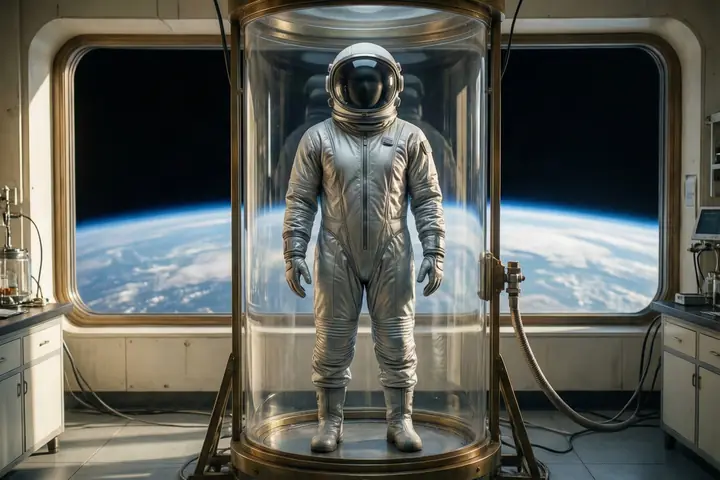 Illustration made with AI image generation; not evidence.