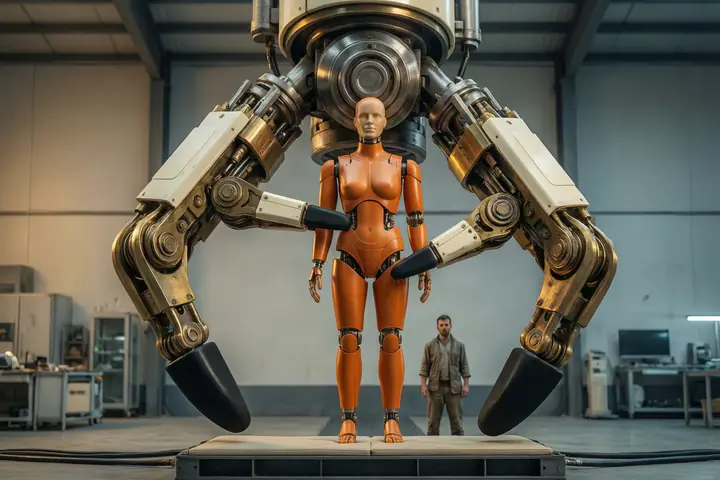
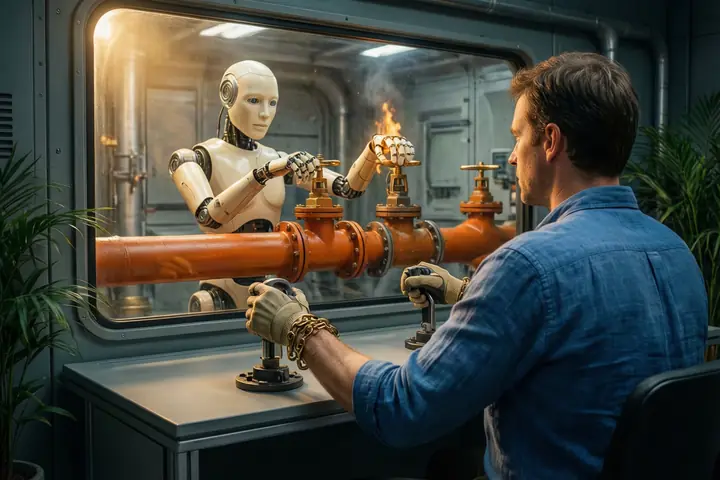
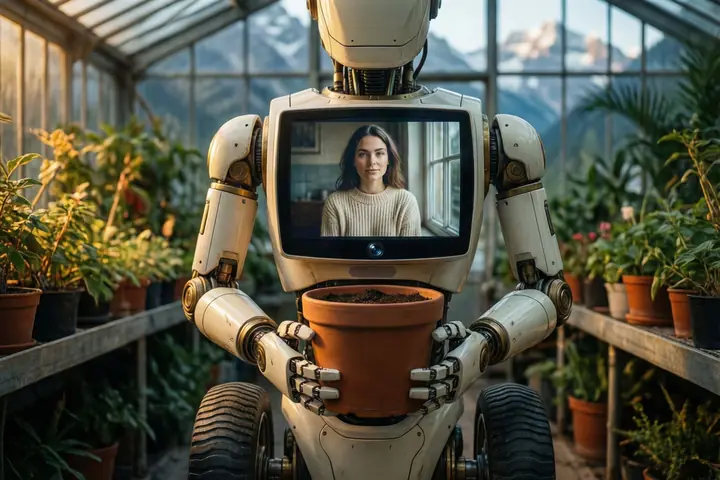
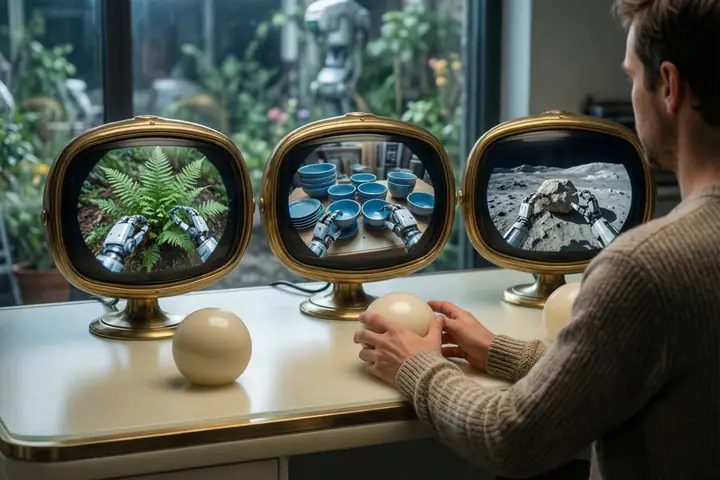
The technologies stories first imagined in this decade, by kind, with whether each has been built since and who would keep the profit.
By kind of technology
Space travel and habitats · 27
Illustration made with AI image generation; not evidence.
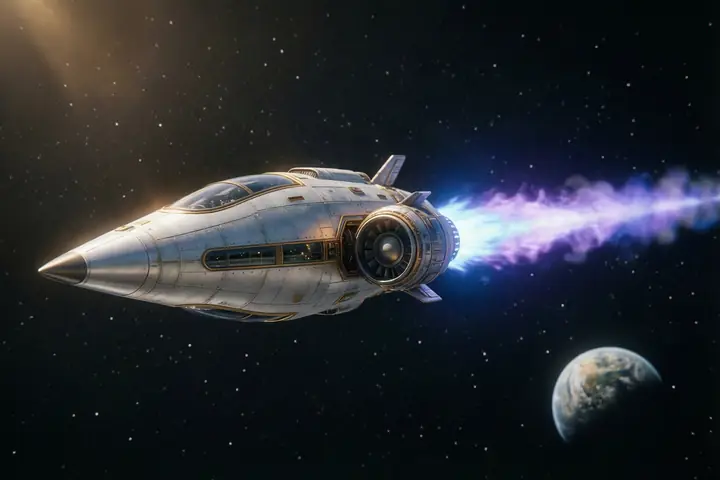
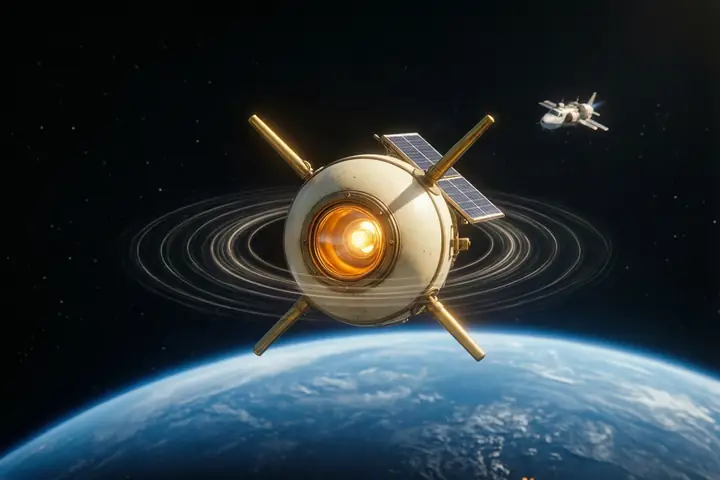
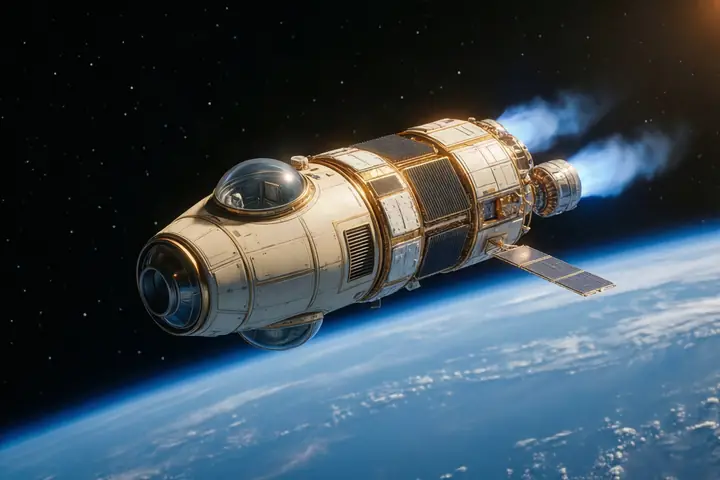
Starship
War in Space, Raymond Quiex · 1926
A craft that carries people or cargo through space.
built since, date unclear
A large prizeBusinesses pay; existing firms keep the restas a model judges it
Why
A large prize. A working vessel for travel between worlds would found a transport industry of its own.
Who is paid. Carriers and expedition firms buy ships, and many yards could build them once shown how, so established vehicle builders collect.
A model's judgement, not a reading, of the idea as if it worked the way its story promises. The model is fairly sure of this one.
Illustration made with AI image generation; not evidence.
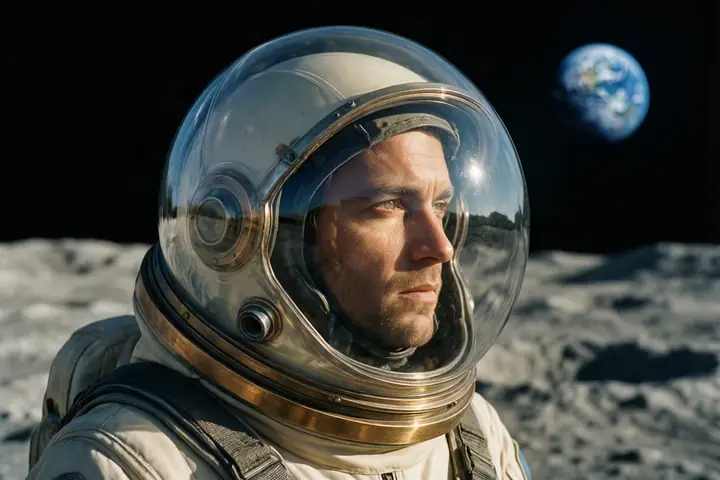
Transparent Dome Helmet
The Man from the Atom, G. Peyton Wertenbaker · 1926
A clear bubble helmet that seals a space suit while letting the wearer look around.
built in the 1960s, about 40 years after it was imagined
A small prizeBusinesses pay; existing firms keep the restas a model judges it
Why
A small prize. It is a part of a suit, useful to the wearer but not a product by itself.
Who is paid. Space operators pay for it within the suit, and the established suit makers supply it since any of them can copy it.
A model's judgement, not a reading, of the idea as if it worked the way its story promises. The model is fairly sure of this one.
Illustration made with AI image generation; not evidence.
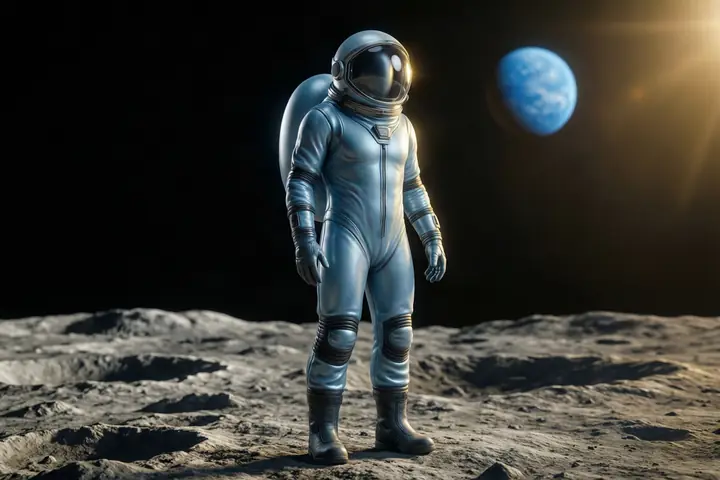
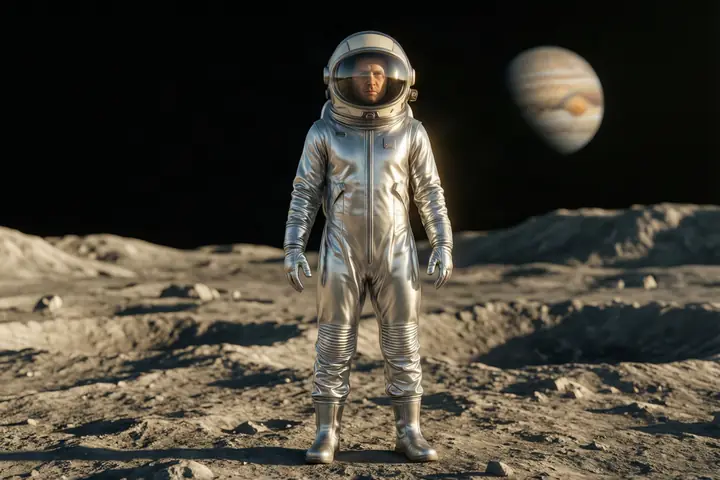
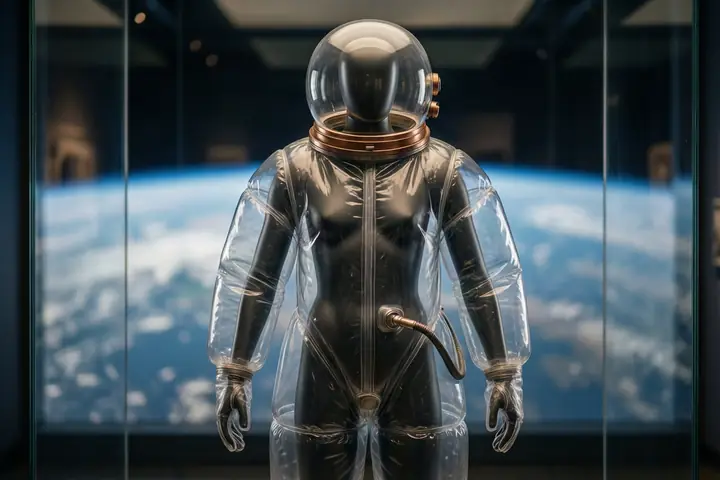
Vacuum Suit
The Man from the Atom, G. Peyton Wertenbaker · 1926
A sealed garment that keeps a person alive in airless space.
built in the 1960s, about 40 years after it was imagined
A small prizeBusinesses pay; existing firms keep the restas a model judges it
Why
A small prize. It keeps a person alive and able to work outside, essential gear but only for the few who work in space.
Who is paid. Space operators buy suits for their crews, and the few established makers of suits can all copy a design, so they collect.
A model's judgement, not a reading, of the idea as if it worked the way its story promises. The model is fairly sure of this one.
Illustration made with AI image generation; not evidence.
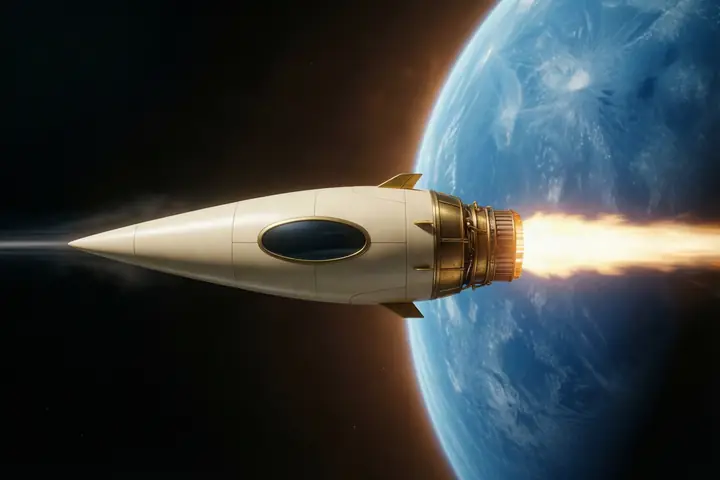
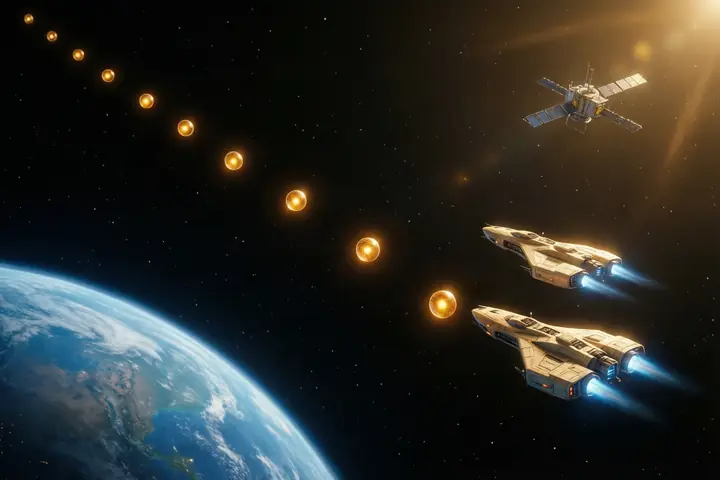
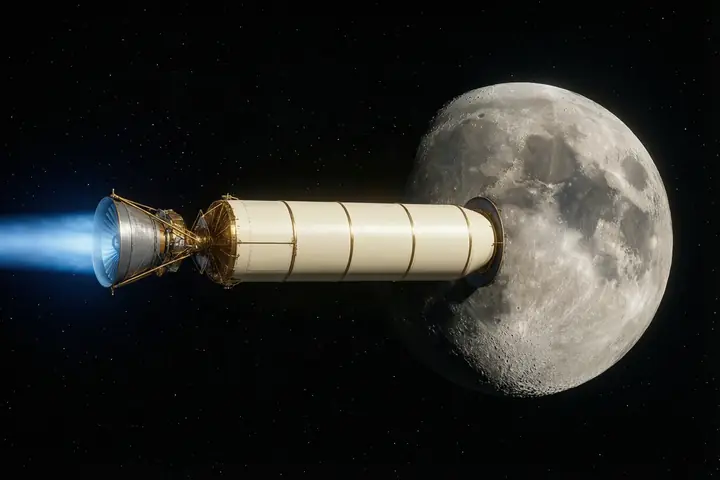
Repulsor Ray
The Time-Raider, Edmond Hamilton · 1927
Pushes a craft forward by expelling a stream of charged particles.
not yet built · AI models' likeliest decade: the 2020s
A large prizeBusinesses pay; existing firms keep the restas a model judges it
Why
A large prize. A working engine for travel between worlds sets the cost of every voyage it powers.
Who is paid. Ship operators pay, and once the engine was shown to work others could build it, so established engine builders collect.
A model's judgement, not a reading, of the idea as if it worked the way its story promises. The model is fairly sure of this one.
Illustration made with AI image generation; not evidence.
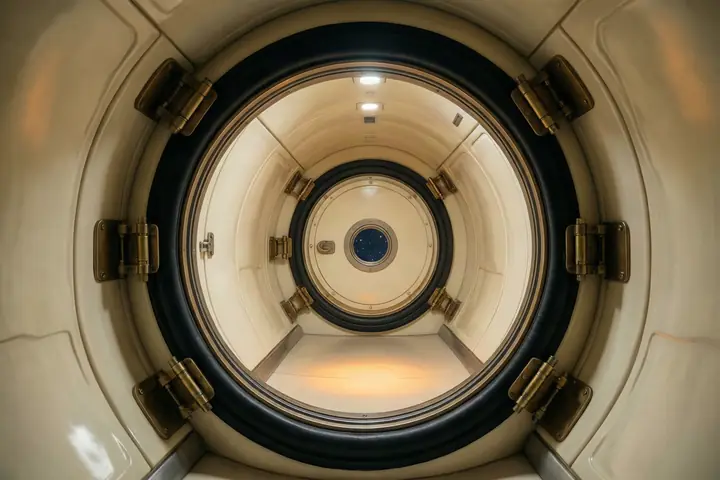
Airlock
Skylark of Space, E.E. 'Doc' Smith · 1928
A sealed chamber between a spacecraft's interior and outer space for safe passage.
built in the 1960s, about 40 years after it was imagined
A small prizeBusinesses pay; existing firms keep the restas a model judges it
Why
A small prize. It is a necessary fitting on any crewed craft, but only a part of the ship.
Who is paid. Ship operators pay for it within the craft, and shipbuilders make it themselves since nothing stops others copying it.
A model's judgement, not a reading, of the idea as if it worked the way its story promises. The model is fairly sure of this one.
Illustration made with AI image generation; not evidence.
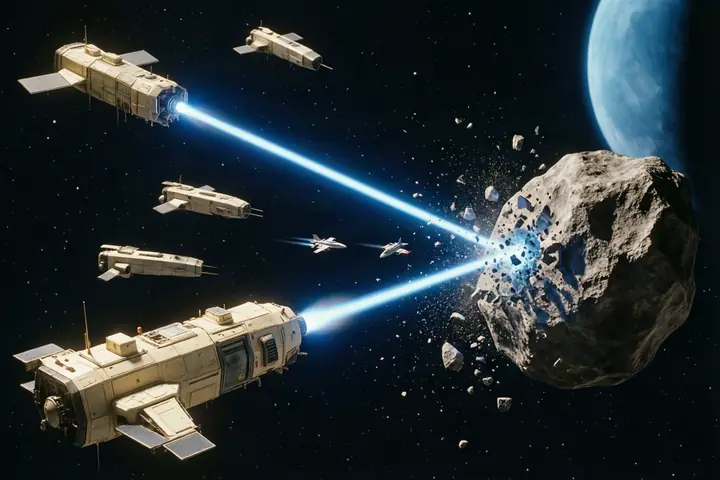
Meteor-Sweeps
Crashing Suns, Edmond Hamilton · 1928
Operations that hunt down and blast apart dangerous meteor swarms to keep space routes safe.
not yet built · AI models' likeliest decade: the 2030s
A small prizeA government pays; existing firms keep the restas a model judges it
Why
A small prize. Clearing dangerous rocks keeps space routes safe, a useful service but only a support to the traffic.
Who is paid. No single ship could be charged for a clear route, so a government pays, and operators that already hold armed ships and such contracts do the work.
A model's judgement, not a reading, of the idea as if it worked the way its story promises. The model is not very sure of this one.
Illustration made with AI image generation; not evidence.
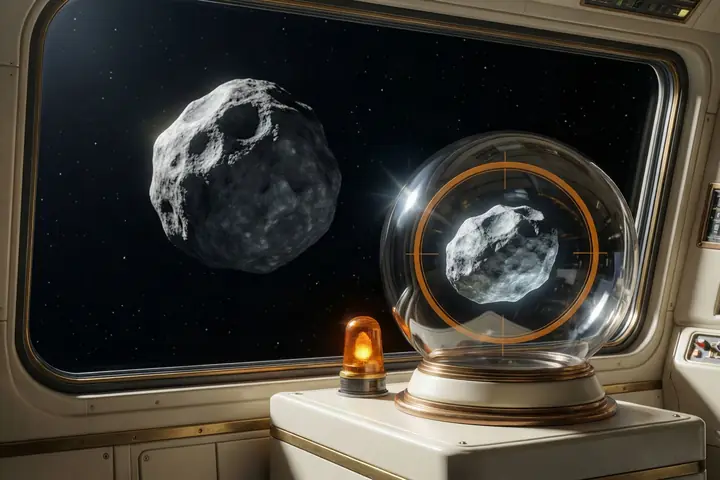
Meteorometer
Crashing Suns, Edmond Hamilton · 1928
Warns a spacecraft of incoming meteors in its path.
not yet built · AI models' likeliest decade: the 2020s
A small prizeBusinesses pay; existing firms keep the restas a model judges it
Why
A small prize. Warning of rocks ahead keeps a ship safe, but it is a fitting on the craft, not an industry.
Who is paid. Ship operators pay for it within the craft, and the firms that already make ship instruments supply it since the design can be copied.
A model's judgement, not a reading, of the idea as if it worked the way its story promises. The model is fairly sure of this one.
Illustration made with AI image generation; not evidence.
Mother World
The Moon of Doom, Earl L. Bell · 1928
A term for the planet where a species or person originated.
not yet built · AI models' likeliest decade: the 2020s
No prizeNothing is soldas a model judges it
Why
No prize. It is a term for the planet a people came from, not a product.
Who is paid. Nothing is sold, so nobody pays and no seller collects.
A model's judgement, not a reading, of the idea as if it worked the way its story promises. The model is fairly sure of this one.
Illustration made with AI image generation; not evidence.
Negative Acceleration
Skylark of Space, E.E. 'Doc' Smith · 1928
Flipping a rocket around and firing its engine forward to slow down.
not yet built · AI models' likeliest decade: the 2020s
No prizeNothing is soldas a model judges it
Why
No prize. It is a word or a way of doing things that needs no new equipment, not a product.
Who is paid. Nothing is sold, so nobody pays and no seller collects.
A model's judgement, not a reading, of the idea as if it worked the way its story promises. The model is fairly sure of this one.
Illustration made with AI image generation; not evidence.
Pressure-Suit
Skylark of Space, E.E. 'Doc' Smith · 1928
A sealed, pressurised outfit that protects a person in vacuum.
built in the 1960s, about 40 years after it was imagined
A small prizeBusinesses pay; existing firms keep the restas a model judges it
Why
A small prize. A suit that keeps a person alive in vacuum or thin air is vital to its wearer but serves only the few who work in space.
Who is paid. Space operators buy suits for their crews, and the few firms that already make such gear supply them since the design can be copied.
A model's judgement, not a reading, of the idea as if it worked the way its story promises. The model is fairly sure of this one.
Illustration made with AI image generation; not evidence.
Private Space Cruiser
Crashing Suns, Edmond Hamilton · 1928
A spacecraft owned and flown by a private party rather than a government.
built in the 2000s, about 80 years after it was imagined
A large prizeHouseholds pay; existing firms keep the restas a model judges it
Why
A large prize. A spaceship a private person can own and fly would open a new kind of private travel.
Who is paid. Private owners buy the ship; the description says only a private party, assumed here to be people and not firms, and since the design could be copied the established builders of craft collect.
A model's judgement, not a reading, of the idea as if it worked the way its story promises. The model is not very sure of this one.
Illustration made with AI image generation; not evidence.
Space Buoy
Crashing Suns, Edmond Hamilton · 1928
A beacon placed in space to mark a location for navigators.
not yet built · AI models' likeliest decade: the 2020s
A small prizeA government pays; no seller keeps muchas a model judges it
Why
A small prize. A marker in space for navigators is a minor aid to navigation.
Who is paid. A beacon serves all ships and none can be charged, so a government pays, and a simple transmitter or light is something many firms could build.
A model's judgement, not a reading, of the idea as if it worked the way its story promises. The model is fairly sure of this one.
Illustration made with AI image generation; not evidence.
Space-Lanes
Crashing Suns, Edmond Hamilton · 1928
Established routes that spacecraft routinely follow.
not yet built · AI models' likeliest decade: the 2020s
No prizeNothing is soldas a model judges it
Why
No prize. It is a word or a way of doing things that needs no new equipment, not a product.
Who is paid. Nothing is sold, so nobody pays and no seller collects.
A model's judgement, not a reading, of the idea as if it worked the way its story promises. The model is fairly sure of this one.
Illustration made with AI image generation; not evidence.
Steering a Star
Crashing Suns, Edmond Hamilton · 1928
Pushes a whole star off its natural course and moves it somewhere else.
not yet built · AI models' likeliest decade: 2100 or later
A vast prizeA government pays; existing firms keep the restas a model judges it
Why
A vast prize. Moving a whole star would decide the fate of every world around it, which is assumed here to mean saving or resettling whole peoples.
Who is paid. Only a government could fund work on that scale, and the large engineering firms that already hold such contracts would be paid to do it.
A model's judgement, not a reading, of the idea as if it worked the way its story promises. The model is not very sure of this one.
Illustration made with AI image generation; not evidence.
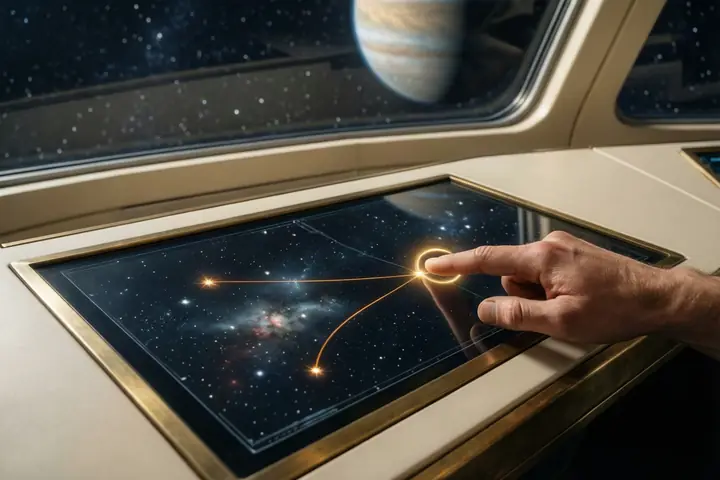
Telechart
Crashing Suns, Edmond Hamilton · 1928
A touch-sensitive panel that displays star positions for plotting courses between stars.
not yet built · AI models' likeliest decade: the 2020s
A small prizeBusinesses pay; existing firms keep the restas a model judges it
Why
A small prize. A panel for plotting courses between stars is essential to the voyage but is an instrument within the ship.
Who is paid. Ship operators buy it as part of the craft, and the established makers of flight instruments supply it since it can be copied.
A model's judgement, not a reading, of the idea as if it worked the way its story promises. The model is fairly sure of this one.
Illustration made with AI image generation; not evidence.
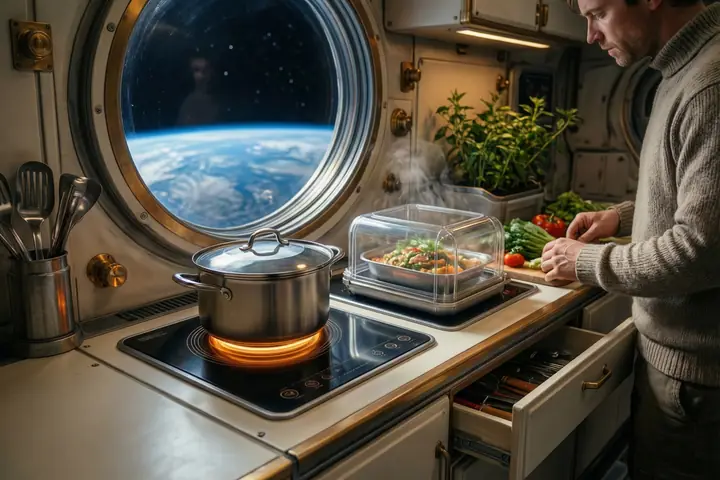
Electric Kitchen
The Shot Into Infinity, Otto Willi Gail · 1929
Cooking gear designed to prepare meals safely aboard a spacecraft without open flame.
built in the 1990s, about 70 years after it was imagined
A small prizeBusinesses pay; existing firms keep the restas a model judges it
Why
A small prize. Safe cooking aboard ship is a comfort for crews, a small fitting.
Who is paid. Ship operators pay for it within the craft, and appliance and galley makers could all supply it.
A model's judgement, not a reading, of the idea as if it worked the way its story promises. The model is fairly sure of this one.
Illustration made with AI image generation; not evidence.
Pneumatic Suit
The Shot Into Infinity, Otto Willi Gail · 1929
A sealed pressurised garment that keeps its wearer alive in vacuum.
built in the 1960s, about 40 years after it was imagined
A small prizeBusinesses pay; existing firms keep the restas a model judges it
Why
A small prize. A suit that keeps a person alive in vacuum or thin air is vital to its wearer but serves only the few who work in space.
Who is paid. Space operators buy suits for their crews, and the few firms that already make such gear supply them since the design can be copied.
A model's judgement, not a reading, of the idea as if it worked the way its story promises. The model is fairly sure of this one.
Illustration made with AI image generation; not evidence.
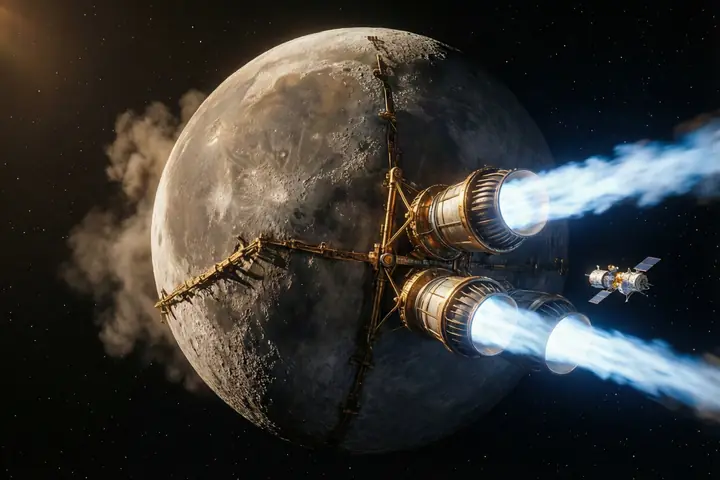
Rocket Engine Moves Moon
The Space Dwellers, Raymond Z. Gallun · 1929
Bolting a spacecraft's engines onto a minor moon or asteroid and firing them to shift where it travels.
not yet built · AI models' likeliest decade: the 2050s
A large prizeBusinesses pay; existing firms keep the restas a model judges it
Why
A large prize. Steering whole rocks to where they are wanted would serve mining and building in space, part of an industry of its own.
Who is paid. Mining and building firms are assumed to pay, and fixing engines to a rock is easy to copy, so the firms that already own ships and engines collect.
A model's judgement, not a reading, of the idea as if it worked the way its story promises. The model is not very sure of this one.
Illustration made with AI image generation; not evidence.
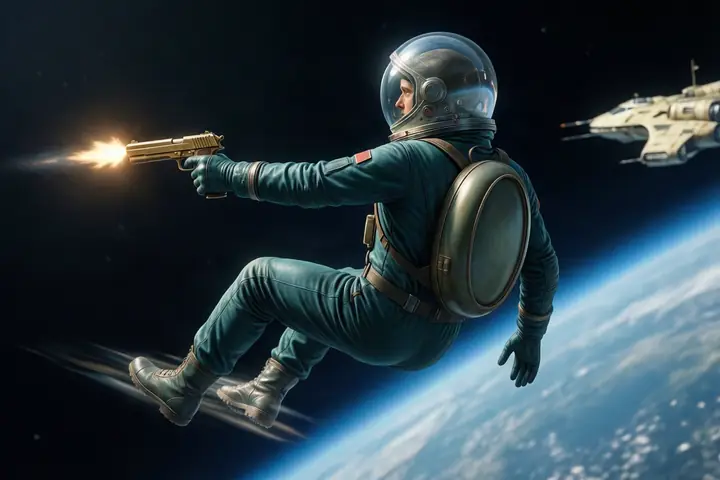
Rocket Pistol
Buck Rogers, 2430 AD, Philip Nowlan (w/D. Calkins · 1929
Using a handgun's recoil as a thruster, letting a floating astronaut push themselves in a chosen direction.
not yet built · AI models' likeliest decade: the 2020s
A small prizeBusinesses pay; existing firms keep the restas a model judges it
Why
A small prize. Using a handgun's kick to move while weightless is a makeshift version of a niche tool for a few workers.
Who is paid. Space operators buy it for their crews, and the makers of suits and space gear supply it because it is easy to copy.
A model's judgement, not a reading, of the idea as if it worked the way its story promises. The model is not very sure of this one.
Illustration made with AI image generation; not evidence.
Ship Pushes Moon
Buck Rogers, 2430 AD, Philip Nowlan (w/D. Calkins · 1929
Nudging a small moon onto a new course by pressing a spacecraft's engine thrust against it.
not yet built · AI models' likeliest decade: the 2050s
A large prizeBusinesses pay; existing firms keep the restas a model judges it
Why
A large prize. Steering whole rocks to where they are wanted would serve mining and building in space, part of an industry of its own.
Who is paid. Mining and building firms are assumed to pay, and fixing engines to a rock is easy to copy, so the firms that already own ships and engines collect.
A model's judgement, not a reading, of the idea as if it worked the way its story promises. The model is not very sure of this one.
Illustration made with AI image generation; not evidence.
Ship's Artificial Gravity
Buck Rogers, 2430 AD, Philip Nowlan (w/D. Calkins · 1929
Onboard means of giving crew a sense of weight while their spacecraft travels.
not yet built · AI models' likeliest decade: the 2040s
A large prizeBusinesses pay; existing firms keep the restas a model judges it
Why
A large prize. Weight underfoot on any ship would be fitted almost everywhere people live in space, assuming here a generator and not a spinning hull.
Who is paid. Ship and station operators buy it, and once it worked other makers could copy it, so established builders collect.
A model's judgement, not a reading, of the idea as if it worked the way its story promises. The model is not very sure of this one.
Illustration made with AI image generation; not evidence.
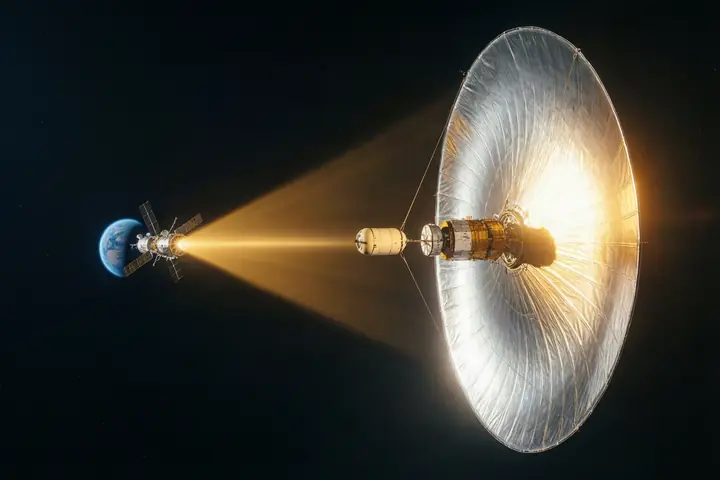
Ships Propelled By Light Pressure
The Comet Doom, Edmond Hamilton · 1929
Spacecraft driven by a powerful beam of light aimed at them from a far-off station.
not yet built · AI models' likeliest decade: the 2060s
A large prizeBusinesses pay; existing firms keep the restas a model judges it
Why
A large prize. Pushing craft with a beam of light from a far-off station would let ships fly without carrying their own fuel.
Who is paid. Ship operators pay for the push, and since others could build beam stations the gain goes to those who already own the sites and power plants.
A model's judgement, not a reading, of the idea as if it worked the way its story promises. The model is not very sure of this one.
Illustration made with AI image generation; not evidence.
Sol
Out of Void, L.F. Stone · 1929
Not a device but a label: the everyday name used for our home star.
built since, date unclear
No prizeNothing is soldas a model judges it
Why
No prize. It is a name for our own star, not a product anyone makes or sells.
Who is paid. Nothing is sold, so nobody pays and no seller collects.
A model's judgement, not a reading, of the idea as if it worked the way its story promises. The model is fairly sure of this one.
Illustration made with AI image generation; not evidence.
Space Craft
Night-Thing, Wilford Allen · 1929
A vessel built to fly through the vacuum beyond the atmosphere.
built in the 1960s, about 40 years after it was imagined
A large prizeBusinesses pay; existing firms keep the restas a model judges it
Why
A large prize. A working vessel for travel between worlds would found a transport industry of its own.
Who is paid. Carriers and expedition firms buy ships, and many yards could build them once shown how, so established vehicle builders collect.
A model's judgement, not a reading, of the idea as if it worked the way its story promises. The model is fairly sure of this one.
Illustration made with AI image generation; not evidence.
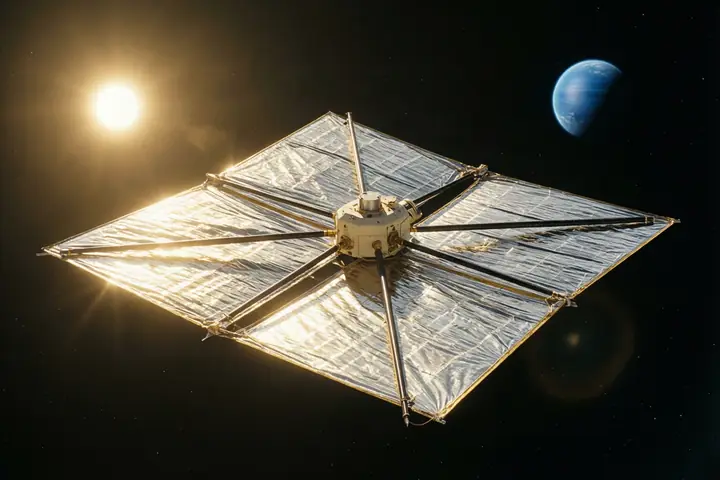
Space Sailing
The World, The Flesh And The Devil, J.D. Bernal · 1929
A spacecraft pushed along by the stream of particles and light flowing outward from the Sun, needing no fuel.
not yet built · AI models' likeliest decade: the 2030s
A large prizeBusinesses pay; existing firms keep the restas a model judges it
Why
A large prize. Travel that needs no fuel would cut the cost of moving ships and cargo across space.
Who is paid. Ship operators buy the sail as their engine, and a thin reflecting sheet is something other makers could copy, so established ship builders collect.
A model's judgement, not a reading, of the idea as if it worked the way its story promises. The model is not very sure of this one.
Illustration made with AI image generation; not evidence.
Space Travel
A Baby on Neptune, Clare Winger Harris (w/MJ Breuer · 1929
Carrying people beyond the atmosphere to journey between worlds.
built in 1961, 32 years after it was imagined
A large prizeBusinesses pay; existing firms keep the restas a model judges it
Why
A large prize. Carrying people between worlds would be a transport industry of its own; it changes life for those who go, not for most people.
Who is paid. Carriers buy the ships and sell the passage, assumed here as with other ships, and since ships can be copied the builders and carriers that already own fleets and ports collect.
A model's judgement, not a reading, of the idea as if it worked the way its story promises. The model is not very sure of this one.
Illustration made with AI image generation; not evidence.
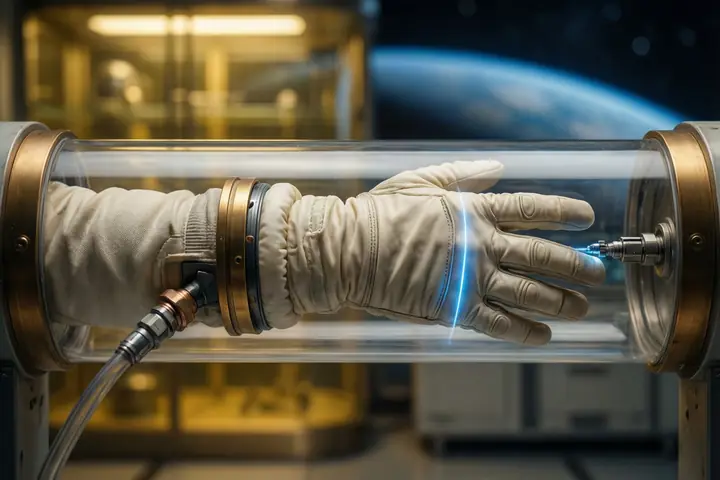
Spacesuit Testing
The Shot Into Infinity, Otto Willi Gail · 1929
Equipment and procedures for checking that pressure suits hold up before astronauts rely on them.
built in the 1960s, about 40 years after it was imagined
A small prizeBusinesses pay; existing firms keep the restas a model judges it
Why
A small prize. Checking that suits hold before crews rely on them is a needed routine, part of making and keeping suits.
Who is paid. Suit makers and space operators pay for the test gear, and the established makers of suits and test equipment supply it since it can be copied.
A model's judgement, not a reading, of the idea as if it worked the way its story promises. The model is fairly sure of this one.
Computing, AI and virtual worlds · 4
Illustration made with AI image generation; not evidence.
Artificial Brain
The Metal Giants, Edmond Hamilton · 1926
A synthetic thinking machine whose architecture copies the human brain.
not yet built · AI models' likeliest decade: the 2030s
A vast prizeBusinesses pay; existing firms keep the restas a model judges it
Why
A vast prize. A machine that truly thinks could do much of the mental work people do now, which would change how most people work.
Who is paid. Firms would pay to put it to work, and once one had been built others could learn to build their own, so I assume the firms that already own costly computing plant and sell to every business collect.
A model's judgement, not a reading, of the idea as if it worked the way its story promises. The model is not very sure of this one.
Illustration made with AI image generation; not evidence.
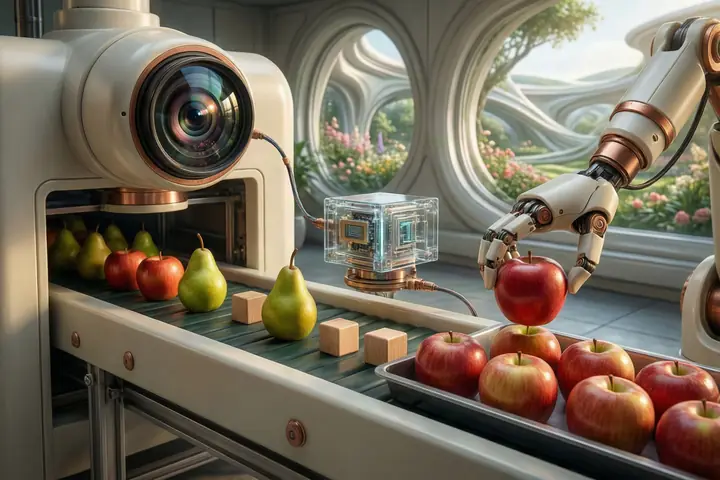
Computer Vision (Artificial Eye)
The Metal Giants, Edmond Hamilton · 1926
Gives a computer the ability to see and interpret images through a camera.
built in the 2010s, about 90 years after it was imagined
A large prizeBusinesses pay; no seller keeps muchas a model judges it
Why
A large prize. Machines that can see make possible inspection, driving, sorting and watching without a person.
Who is paid. Firms buy it inside their machines, and the methods spread quickly, so no seller keeps much.
A model's judgement, not a reading, of the idea as if it worked the way its story promises. The model is fairly sure of this one.
Illustration made with AI image generation; not evidence.
Grantline Comptometer
Beyond the Stars, Ray Cummings · 1928
A keyboard calculating machine that solves advanced maths like calculus with ease.
built in the 1970s, about 50 years after it was imagined
A small prizeBusinesses pay; no seller keeps muchas a model judges it
Why
A small prize. Fast sums in the hand or on the desk are a convenience for people who calculate.
Who is paid. Firms and students buy them, and anyone can make one, so no seller keeps much.
A model's judgement, not a reading, of the idea as if it worked the way its story promises. The model is fairly sure of this one.
Illustration made with AI image generation; not evidence.
Chemical Brain
The Chemical Brain, Francis Flagg · 1929
A thinking machine built entirely from chemical reactions rather than electronics or living cells.
not yet built · AI models' likeliest decade: the 2070s
A vast prizeBusinesses pay; existing firms keep the restas a model judges it
Why
A vast prize. A machine that truly thinks, whatever chemistry it runs on, could do much of the mental work people do now, which would change how most people work.
Who is paid. Firms would pay to put it to work, and once one had been built others could learn to build their own, so I assume the firms that already own costly computing plant and sell to every business collect.
A model's judgement, not a reading, of the idea as if it worked the way its story promises. The model is not very sure of this one.
Communication, media and displays · 16
Illustration made with AI image generation; not evidence.
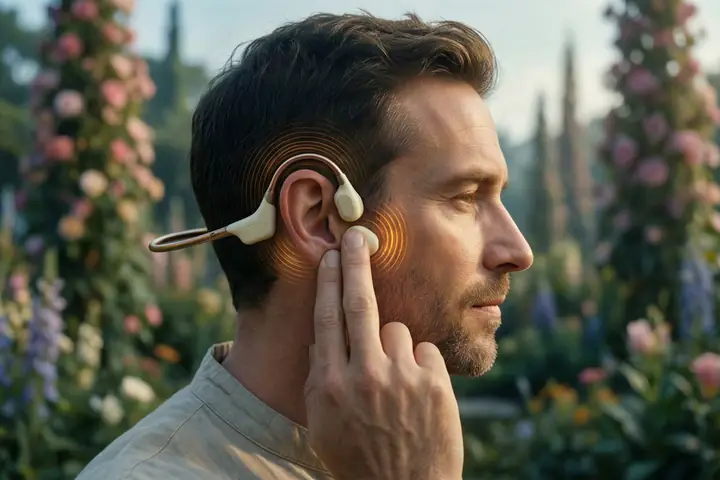
Acoustic Apparatus (Osophone)
Acoustic Apparatus, Hugo Gernsback · 1923
Delivers sound to the inner ear through vibrations in the skull.
built in 2012, 89 years after it was imagined
A small prizeHouseholds pay; no seller keeps muchas a model judges it
Why
A small prize. Hearing through the skull bones helps some people with poor hearing and suits a few uses, but for most it is one more kind of earphone.
Who is paid. People buy it for themselves and the vibrating part is simple to make, so many firms sell it and none keeps much.
A model's judgement, not a reading, of the idea as if it worked the way its story promises. The model is fairly sure of this one.
Illustration made with AI image generation; not evidence.
Networked Telephone Answering Machine
Men Like Gods, H.G. Wells · 1923
Records spoken messages and lets the owner play them back by calling in from elsewhere.
built in the 1970s, about 50 years after it was imagined
A small prizeHouseholds pay; existing firms keep the restas a model judges it
Why
A small prize. Hearing your messages from anywhere is a convenience.
Who is paid. Phone users pay; it is easy to copy, so the firms that own the phone networks collect.
A model's judgement, not a reading, of the idea as if it worked the way its story promises. The model is fairly sure of this one.
Illustration made with AI image generation; not evidence.
Wireless Access Point
Men Like Gods, H.G. Wells · 1923
Infrastructure that beams both electricity and data through the air to nearby devices.
built in 1999, 76 years after it was imagined
A large prizeHouseholds pay; existing firms keep the restas a model judges it
Why
A large prize. Beaming power as well as data through the air would free devices from plugs and batteries, which goes well beyond the real thing that only carries data.
Who is paid. Households and firms pay for the service, and since the method could be copied, the firms that already own the power lines and networks collect.
A model's judgement, not a reading, of the idea as if it worked the way its story promises. The model is not very sure of this one.
Illustration made with AI image generation; not evidence.
Chest Disc
Armageddon: 2419 A.D., Philip Frances Nowlan · 1928
A chest-worn radio that transmits whenever the wearer speaks.
built in 2011, 83 years after it was imagined
A small prizeBusinesses pay; no seller keeps muchas a model judges it
Why
A small prize. A radio worn on the chest that sends whenever you speak is a hands-free tool for teams, not a phone for everyone.
Who is paid. Unlike a pocket phone on a public network, this is a short-range team radio that work crews and soldiers would be issued, and many firms can make it, so no seller keeps much.
A model's judgement, not a reading, of the idea as if it worked the way its story promises. The model is not very sure of this one.
Illustration made with AI image generation; not evidence.
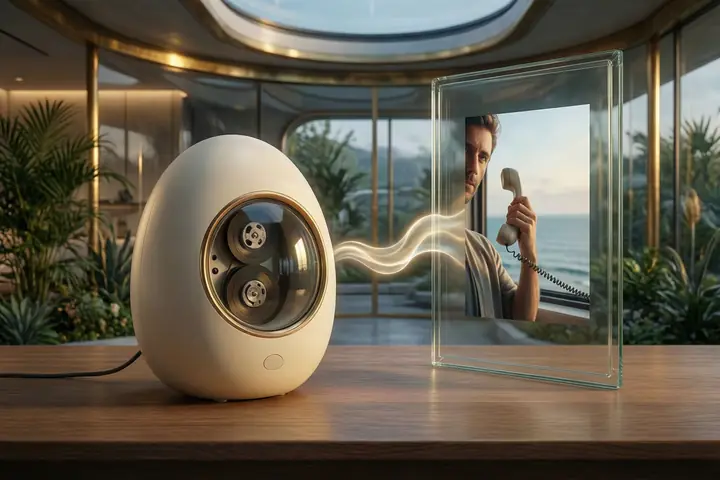
Telestereo
Crashing Suns, Edmond Hamilton · 1928
A round screen showing a live image of someone calling from far away.
not yet built · AI models' likeliest decade: the 2020s
A large prizeHouseholds pay; existing firms keep the restas a model judges it
Why
A large prize. Seeing the person you are talking to is something most people now use, and it is worth an industry.
Who is paid. Ordinary people pay for the device and the line, and since many can make the device, the firms that already own the phone networks and handset brands collect.
A model's judgement, not a reading, of the idea as if it worked the way its story promises. The model is fairly sure of this one.
Illustration made with AI image generation; not evidence.
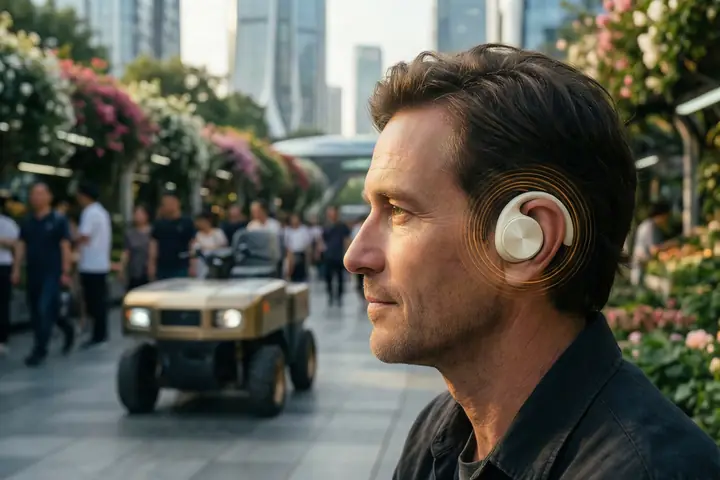
Ultraphone Ear-Disc
Armageddon: 2419 A.D., Philip Frances Nowlan · 1928
Wireless earpieces that sit on the ears and cut out background noise.
built in the 1980s, about 60 years after it was imagined
A small prizeHouseholds pay; no seller keeps muchas a model judges it
Why
A small prize. Earpieces that shut out background noise are a comfort many like but few need.
Who is paid. People buy them for themselves and small earpieces are simple for many firms to make, so no seller keeps much.
A model's judgement, not a reading, of the idea as if it worked the way its story promises. The model is fairly sure of this one.
Illustration made with AI image generation; not evidence.
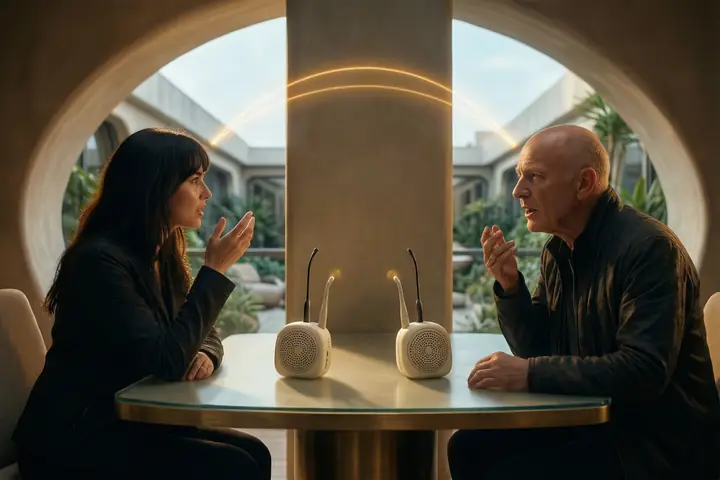
Ultrophone
Armageddon: 2419 A.D., Philip Frances Nowlan · 1928
A radio link letting both sides talk and listen at the same moment.
built in the 1920s, about 0 years after it was imagined
A small prizeBusinesses pay; no seller keeps muchas a model judges it
Why
A small prize. Letting both sides talk at once is an improvement to radio sets that already exist.
Who is paid. Operators of ships and aircraft buy the sets, and since many can make them, no seller keeps much.
A model's judgement, not a reading, of the idea as if it worked the way its story promises. The model is not very sure of this one.
Illustration made with AI image generation; not evidence.
Videophone
The Golden Girl of Munan, Harl Vincent · 1928
A personal link that sends pictures along with voices between two people.
built in the 1930s, about 10 years after it was imagined
A large prizeHouseholds pay; existing firms keep the restas a model judges it
Why
A large prize. Seeing the person you are talking to is something most people now use, and it is worth an industry.
Who is paid. Ordinary people pay for the device and the line, and since many can make the device, the firms that already own the phone networks and handset brands collect.
A model's judgement, not a reading, of the idea as if it worked the way its story promises. The model is fairly sure of this one.
Illustration made with AI image generation; not evidence.
Viewplate
Armageddon: 2419 A.D., Philip Frances Nowlan · 1928
A thin flat screen for showing pictures.
built in the 1990s, about 70 years after it was imagined
A large prizeHouseholds pay; existing firms keep the restas a model judges it
Why
A large prize. A thin screen for the wall is the form nearly every display now takes and is an industry of its own.
Who is paid. Households buy the sets, and since any electronics factory could copy the design, the firms that already own the factories, brands and shops collect.
A model's judgement, not a reading, of the idea as if it worked the way its story promises. The model is fairly sure of this one.
Illustration made with AI image generation; not evidence.
Instant Photography
The Silent Destroyer, Henri Dahl Juve · 1929
A camera that produces a finished print within moments of taking the shot.
built in the 1940s, about 20 years after it was imagined
A small prizeHouseholds pay; no seller keeps muchas a model judges it
Why
A small prize. A finished print in moments is a convenience over waiting for film to be developed.
Who is paid. People buy the camera and the film, and once the trick of a self-developing print is known other camera makers could copy it, so no seller keeps much.
A model's judgement, not a reading, of the idea as if it worked the way its story promises. The model is fairly sure of this one.
Illustration made with AI image generation; not evidence.
Life Chamber
The Chamber of Life, G. Peyton Wertenbaker · 1929
A room where machines surround a visitor with sights, sounds and sensations so convincing it feels like living another reality.
not yet built · AI models' likeliest decade: the 2050s
A large prizeHouseholds pay; existing firms keep the restas a model judges it
Why
A large prize. An artificial world that feels real would be worth an entertainment industry of its own; I judged the full promise, which is larger than anything sold so far.
Who is paid. Ordinary people buy it; the machine can be copied once shown, so those who already own the stories and worlds people want to enter collect.
A model's judgement, not a reading, of the idea as if it worked the way its story promises. The model is not very sure of this one.
Illustration made with AI image generation; not evidence.
Massive Open Learning
The Threat of the Robot, David H. Keller · 1929
Recorded lessons from top instructors distributed widely so many students learn from the same material.
built in the 2000s, about 80 years after it was imagined
A large prizeHouseholds pay; no seller keeps muchas a model judges it
Why
A large prize. The best teachers reaching every student would cut the cost of schooling; I judged the promise, which is larger than what was built.
Who is paid. Assuming students and families pay for the lessons themselves, and since a school subject belongs to nobody the way a novel or a song does and no certificate is described, anyone can record and sell lessons, so no seller keeps much.
A model's judgement, not a reading, of the idea as if it worked the way its story promises. The model is not very sure of this one.
Illustration made with AI image generation; not evidence.
Pay Per View TV
The Threat of the Robot, David H. Keller · 1929
Viewers pay a fee to watch a live sporting event streamed or broadcast to their own home screen.
built in the 1970s, about 50 years after it was imagined
A large prizeHouseholds pay; existing firms keep the restas a model judges it
Why
A large prize. Paying to watch a live match at home is worth an industry of its own.
Who is paid. Viewers pay; the sending is easy to copy, so those who already own the sporting events and the broadcast networks collect.
A model's judgement, not a reading, of the idea as if it worked the way its story promises. The model is fairly sure of this one.
Illustration made with AI image generation; not evidence.
Teleview
The Phantom Teleview, Bob Olsen · 1929
An apparatus for watching faraway scenes as they happen.
built in the 1940s, about 20 years after it was imagined
A vast prizeHouseholds pay; existing firms keep the restas a model judges it
Why
A vast prize. Seeing distant events live at home changed how most people spend their evenings and learn the news.
Who is paid. Households buy sets and pay for channels, and since sets are easy to copy, the firms that own the factories, the stations and the networks collect.
A model's judgement, not a reading, of the idea as if it worked the way its story promises. The model is fairly sure of this one.
Illustration made with AI image generation; not evidence.
Television Sheet
The Threat of the Robot, David H. Keller · 1929
A thin, wide display panel that hangs like a picture and shows broadcast video in the home.
built in the 1990s, about 70 years after it was imagined
A large prizeHouseholds pay; existing firms keep the restas a model judges it
Why
A large prize. Unlike the first television sets, this is a thinner form of a set people are assumed to have already, so the gain is a better screen, which is an industry of its own.
Who is paid. Households buy the sets, and since any electronics factory could copy the design, the firms that already own the factories, brands and shops collect.
A model's judgement, not a reading, of the idea as if it worked the way its story promises. The model is fairly sure of this one.
Illustration made with AI image generation; not evidence.
Televisor
The Phantom Teleview, Bob Olsen · 1929
A screen that displays images sent from elsewhere.
built in the 1920s, about 0 years after it was imagined
A vast prizeHouseholds pay; existing firms keep the restas a model judges it
Why
A vast prize. Seeing distant events live at home changed how most people spend their evenings and learn the news.
Who is paid. Households buy sets and pay for channels, and since sets are easy to copy, the firms that own the factories, the stations and the networks collect.
A model's judgement, not a reading, of the idea as if it worked the way its story promises. The model is fairly sure of this one.
Robotics and automation · 14
Illustration made with AI image generation; not evidence.
Robot
R.U.R., Karel Capek · 1920
A manufactured worker, usually humanlike in shape, able to do what people can do.
built in the 1960s, about 40 years after it was imagined
A vast prizeBusinesses pay; existing firms keep the restas a model judges it
Why
A vast prize. A manufactured worker able to do what people can do would change how most people work.
Who is paid. Firms buy them as labour, and since many could build such bodies once shown how, the large manufacturers with factories and service networks collect what is left.
A model's judgement, not a reading, of the idea as if it worked the way its story promises. The model is fairly sure of this one.
Illustration made with AI image generation; not evidence.
Robotess
R.U.R., Karel Capek · 1920
A humanoid machine built to look like a woman.
not yet built · AI models' likeliest decade: the 2030s
A vast prizeBusinesses pay; existing firms keep the restas a model judges it
Why
A vast prize. The description gives only a woman's shape, so it is judged as the artificial worker of the stories, which would change how most people work.
Who is paid. Firms buy them as labour, and since many could build such bodies once shown how, the large manufacturers with factories and service networks collect what is left.
A model's judgement, not a reading, of the idea as if it worked the way its story promises. The model is not very sure of this one.
Illustration made with AI image generation; not evidence.
Flexible Metal Arms (Tentacles)
The Metal Giants, Edmond Hamilton · 1926
Bendable mechanical limbs that curl and grip like an octopus's arms.
not yet built · AI models' likeliest decade: the 2020s
A small prizeBusinesses pay; no seller keeps muchas a model judges it
Why
A small prize. A remote or flexible gripper is a useful tool for awkward jobs, but a niche.
Who is paid. Firms buy it for their own work, and such grippers and controls are easy for many makers to copy.
A model's judgement, not a reading, of the idea as if it worked the way its story promises. The model is fairly sure of this one.
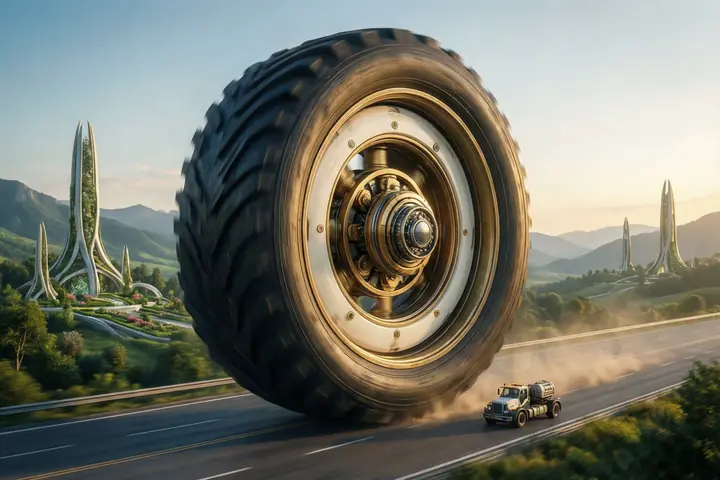
Illustration made with AI image generation; not evidence.
Robot Wheel
The Metal Giants, Edmond Hamilton · 1926
A gigantic self-driving machine shaped like a single rolling wheel.
not yet built · AI models' likeliest decade: the 2030s
A small prizeBusinesses pay; existing firms keep the restas a model judges it
Why
A small prize. The description gives this giant rolling machine no job, so it is judged as a heavy carrier of unusual shape, a niche.
Who is paid. Firms moving heavy loads are assumed to buy it, and as many could copy the shape the makers of heavy equipment with factories collect.
A model's judgement, not a reading, of the idea as if it worked the way its story promises. The model is not very sure of this one.
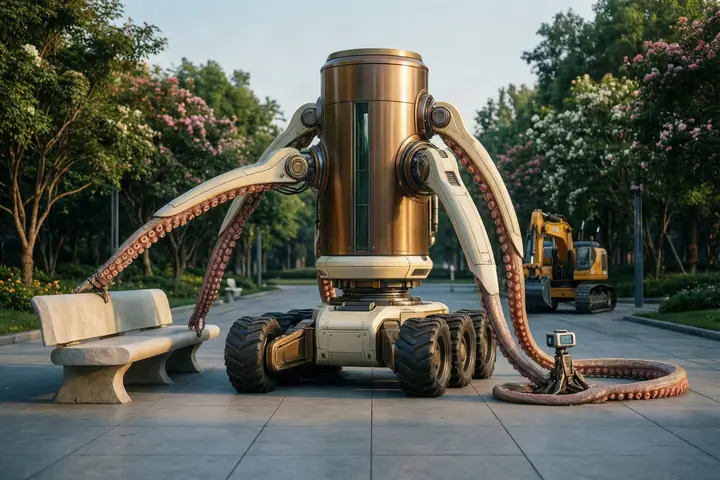
Illustration made with AI image generation; not evidence.
Tentacle Machines
The Metal Giants, Edmond Hamilton · 1926
Huge self-directed machines with cylinder bodies and snaking arms.
not yet built · AI models' likeliest decade: the 2050s
A small prizeBusinesses pay; existing firms keep the restas a model judges it
Why
A small prize. The description gives these huge machines with snaking arms no job, so they are judged as heavy handling machines of unusual shape, a niche.
Who is paid. Firms doing heavy work are assumed to buy them, and as many could copy the shape the makers of heavy equipment with factories collect.
A model's judgement, not a reading, of the idea as if it worked the way its story promises. The model is not very sure of this one.
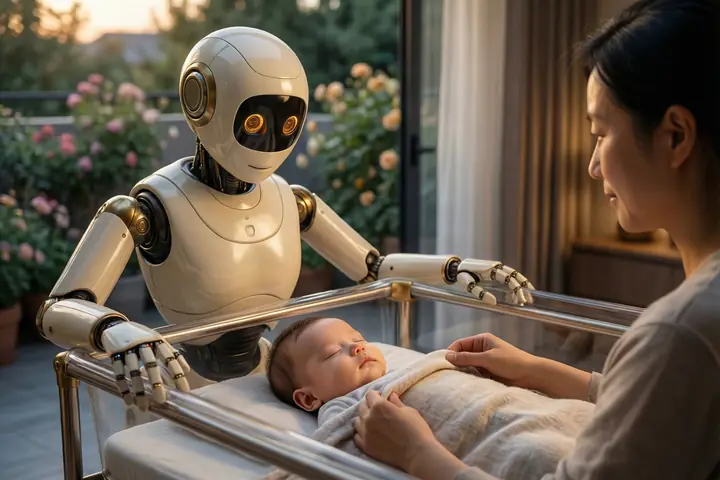
Illustration made with AI image generation; not evidence.
Psychophonic Nurse
The Psychophonic Nurse, David H. Keller · 1928
A robot that looks after infants and young children.
not yet built · AI models' likeliest decade: the 2030s
A large prizeHouseholds pay; existing firms keep the restas a model judges it
Why
A large prize. Reliable care for infants and young children at home would be worth an industry of its own.
Who is paid. Families buy it, and since they are assumed to trust only known names with their children the established makers with strong brands collect.
A model's judgement, not a reading, of the idea as if it worked the way its story promises. The model is fairly sure of this one.
Illustration made with AI image generation; not evidence.
Governing Keyboard
The Threat of the Robot, David H. Keller · 1929
Typing instructions on a key console to direct a distant robot's actions.
built in the 1970s, about 50 years after it was imagined
A small prizeBusinesses pay; no seller keeps muchas a model judges it
Why
A small prize. Typing orders to a distant robot is a way of working a machine from afar, a useful tool but a niche.
Who is paid. Firms buy it for their own work, and such controls are easy for many makers to copy.
A model's judgement, not a reading, of the idea as if it worked the way its story promises. The model is fairly sure of this one.
Illustration made with AI image generation; not evidence.
Mechanical Hand
Buck Rogers, 2430 AD, Philip Nowlan (w/D. Calkins · 1929
A giant machine-driven claw able to seize and hold a grown human.
built in the 1960s, about 40 years after it was imagined
A small prizeBusinesses pay; no seller keeps muchas a model judges it
Why
A small prize. A giant claw that can seize and hold a person is a gripper with few uses, assumed here to be for handling and rescue work.
Who is paid. Firms buy it for their own work, and such grippers and controls are easy for many makers to copy.
A model's judgement, not a reading, of the idea as if it worked the way its story promises. The model is not very sure of this one.
Illustration made with AI image generation; not evidence.
Mechanical Men
The Ancient Brain, A.G. Stangland · 1929
Humanlike machines steered from a distance to handle hazardous jobs so people stay out of harm's way.
built in the 1960s, about 40 years after it was imagined
A small prizeBusinesses pay; no seller keeps muchas a model judges it
Why
A small prize. Humanlike machines steered from afar keep people out of danger in a few hazardous trades.
Who is paid. Firms with dangerous work buy them, and such machines and their controls could be copied by many makers.
A model's judgement, not a reading, of the idea as if it worked the way its story promises. The model is fairly sure of this one.
Illustration made with AI image generation; not evidence.
Remote Telepresence Robot
Buck Rogers, 2430 AD, Philip Nowlan (w/D. Calkins · 1929
A machine a distant operator drives to see, hear and act in a place without being there.
built in the 2010s, about 90 years after it was imagined
A small prizeBusinesses pay; no seller keeps muchas a model judges it
Why
A small prize. A machine that lets a distant operator see, hear and act in a place is a useful tool for some jobs, and the real thing exists as a niche.
Who is paid. Firms buy it for their own work, and such machines and their controls could be copied by many makers.
A model's judgement, not a reading, of the idea as if it worked the way its story promises. The model is fairly sure of this one.
Illustration made with AI image generation; not evidence.
Robot Control Board
The Robot Master, O.L. Beckwith · 1929
An operator console with small monitors each showing the camera feed from a separate robot.
built in the 1970s, about 50 years after it was imagined
A small prizeBusinesses pay; no seller keeps muchas a model judges it
Why
A small prize. A console showing the view from each of many robots is a control tool, valued as part of running them.
Who is paid. Firms buy it for their own work, and such controls are easy for many makers to copy.
A model's judgement, not a reading, of the idea as if it worked the way its story promises. The model is fairly sure of this one.
Illustration made with AI image generation; not evidence.
Robots Take Human Jobs
The Threat of the Robot, David H. Keller · 1929
Machines take over paid work that people once did, pushing human workers out of their jobs.
not yet built · AI models' likeliest decade: the 2030s
No prizeNothing is soldas a model judges it
Why
No prize. Machines pushing people out of paid work is a result of other technologies, not a technology that could be sold.
Who is paid. Nothing is sold here; the working robots themselves are judged under their own names.
A model's judgement, not a reading, of the idea as if it worked the way its story promises. The model is fairly sure of this one.
Illustration made with AI image generation; not evidence.
Ships With Legs
Buck Rogers, 2430 AD, Philip Nowlan (w/D. Calkins · 1929
Spacecraft fitted with mechanical legs so they can walk across the ground after landing.
not yet built · AI models could not judge when it may arrive
A small prizeBusinesses pay; no seller keeps muchas a model judges it
Why
A small prize. Legs that let a landed spacecraft walk are a feature of the craft, handy on rough ground.
Who is paid. Operators of spacecraft, assumed here to be firms, pay for it within the price of the craft, and any shipbuilder could fit it.
A model's judgement, not a reading, of the idea as if it worked the way its story promises. The model is not very sure of this one.
Illustration made with AI image generation; not evidence.
Shovel-Handed Digging Machines
The Onslaught From Venus, Frank Phillips · 1929
Enormous walking machines on many legs with scoop-like arms that excavate and move soil.
not yet built · AI models' likeliest decade: the 2020s
A large prizeBusinesses pay; existing firms keep the restas a model judges it
Why
A large prize. Huge walking machines that dig and move soil would cut the cost of earthworks and mining.
Who is paid. Mining and building firms buy them, and since many could build them the heavy-equipment makers with dealers and repair networks collect.
A model's judgement, not a reading, of the idea as if it worked the way its story promises. The model is fairly sure of this one.
Medicine, biotech and longevity · 7
Illustration made with AI image generation; not evidence.
Spinning Mill for Veins (Artificial Organs)
R.U.R., Karel Capek · 1920
Factory production of replacement body parts such as blood vessels and guts.
built in the 1960s, about 40 years after it was imagined
A large prizeHouseholds pay; existing firms keep the restas a model judges it
Why
A large prize. Replacement body parts made in quantity would be worth an industry of their own to the many whose organs fail.
Who is paid. Patients would pay, mostly through insurers or health services, and several firms could run such factories, so established medical makers collect.
A model's judgement, not a reading, of the idea as if it worked the way its story promises. The model is fairly sure of this one.
Artificial Life
Across Space, Edmond Hamilton · 1926
Builds living organisms out of non-living chemical ingredients.
not yet built · AI models' likeliest decade: the 2050s
A large prizeBusinesses pay; existing firms keep the restas a model judges it
Why
A large prize. Building living things from plain chemicals would give farming, medicine and industry organisms made to order.
Who is paid. Firms would buy such organisms for their work, and once the method was known other laboratories could repeat it, so established chemical and drug makers collect.
A model's judgement, not a reading, of the idea as if it worked the way its story promises. The model is not very sure of this one.
Illustration made with AI image generation; not evidence.
Gyro-Hat
An Experiment in Gyro-Hats, Ellis Parker Butler · 1926
A spinning gyroscope hidden in a hat that keeps its wearer from swaying or falling.
not yet built · AI models' likeliest decade: the 2030s
A small prizeHouseholds pay; no seller keeps muchas a model judges it
Why
A small prize. A hat that keeps its wearer steady is a novelty.
Who is paid. Wearers would buy it, and any workshop could fit a spinning wheel into a hat, so no seller keeps much.
A model's judgement, not a reading, of the idea as if it worked the way its story promises. The model is fairly sure of this one.
Illustration made with AI image generation; not evidence.
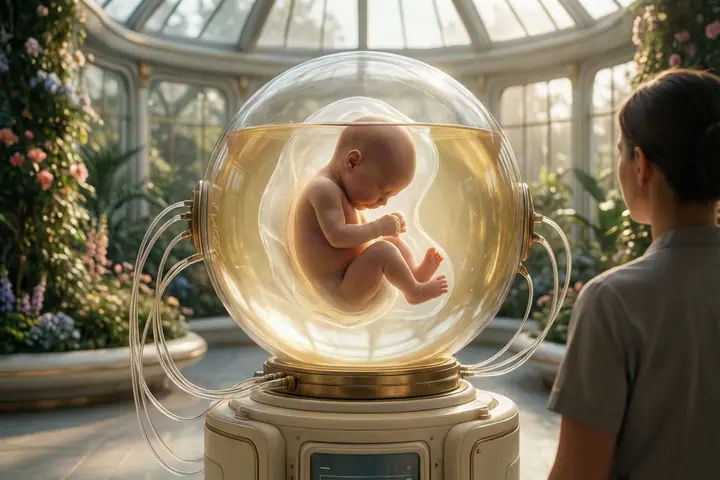
Synthetic Babies
A Biological Experiment, David H. Keller · 1928
Grows fertilised eggs into full-term infants outside a mother's body.
not yet built · AI models' likeliest decade: the 2050s
A large prizeHouseholds pay; existing firms keep the restas a model judges it
Why
A large prize. Carrying a child outside the body would spare mothers the risks of pregnancy and open parenthood to people who cannot carry a child.
Who is paid. Would-be parents would pay, and other laboratories could copy the chamber once it worked, so established fertility clinics collect.
A model's judgement, not a reading, of the idea as if it worked the way its story promises. The model is fairly sure of this one.
Illustration made with AI image generation; not evidence.
Anti-Fatigue Pill
The Silent Destroyer, Henri Dahl Juve · 1929
A drug that keeps people alert and functioning when they have slept too little.
not yet built · AI models' likeliest decade: the 2020s
A large prizeHouseholds pay; no seller keeps muchas a model judges it
Why
A large prize. Staying alert on too little sleep is something a great many workers, drivers and students would use.
Who is paid. People would buy it for themselves, and stimulants of this kind are old chemistry many firms can make, so no seller keeps much.
A model's judgement, not a reading, of the idea as if it worked the way its story promises. The model is fairly sure of this one.
Illustration made with AI image generation; not evidence.
Electro-Culturer
The Ancient Brain, A.G. Stangland · 1929
Applies electrical currents to tissue to speed up how cells multiply and mature.
not yet built · AI models' likeliest decade: the 2020s
A large prizeBusinesses pay; existing firms keep the restas a model judges it
Why
A large prize. Making cells multiply faster would speed healing and the growing of tissue for medicine.
Who is paid. I assumed hospitals and laboratories buy it; an electrical device of this kind could be copied, so established medical equipment firms collect.
A model's judgement, not a reading, of the idea as if it worked the way its story promises. The model is not very sure of this one.
Illustration made with AI image generation; not evidence.
Human Blood Chlorophyll
The Murgatroyd Experiment, S.P. Meek · 1929
Swapping parts of a person's bloodstream for the green pigment plants use to capture sunlight.
not yet built · AI models' likeliest decade: 2100 or later
A small prizeHouseholds pay; existing firms keep the restas a model judges it
Why
A small prize. The story promises only a little energy from sunlight, which is a curiosity beside ordinary food.
Who is paid. I assumed people buy it for themselves from clinics; the method could be copied, so clinics already offering such treatments collect.
A model's judgement, not a reading, of the idea as if it worked the way its story promises. The model is not very sure of this one.
Mind and neurotechnology · 5
Illustration made with AI image generation; not evidence.
Psycho-Phone
A Biological Experiment, David H. Keller · 1928
Captures a person's thoughts and replays them later.
not yet built · AI models' likeliest decade: the 2060s
A small prizeHouseholds pay; no seller keeps muchas a model judges it
Why
A small prize. Keeping your own thoughts to play back later is a notebook that needs no writing, a convenience.
Who is paid. The user records their own thoughts, so people would buy it for themselves, and many makers could copy it, so no seller keeps much.
A model's judgement, not a reading, of the idea as if it worked the way its story promises. The model is not very sure of this one.
Illustration made with AI image generation; not evidence.
Brain Placed In Metal Body
The Comet Doom, Edmond Hamilton · 1929
A living human brain kept alive by machinery and housed inside a mechanical body it controls.
not yet built · AI models' likeliest decade: 2100 or later
A large prizeHouseholds pay; existing firms keep the restas a model judges it
Why
A large prize. A machine body for a living brain would give the dying more years, though few would choose such a life.
Who is paid. The dying and their families would pay, and hospitals and makers of medical machinery could copy it and collect.
A model's judgement, not a reading, of the idea as if it worked the way its story promises. The model is not very sure of this one.
Illustration made with AI image generation; not evidence.
Diagnostic Type Sense Transmitter
The Sky Maniac, Henri Dahl Juve · 1929
A link that lets a physician experience a patient's bodily sensations firsthand to help pin down what is wrong.
not yet built · AI models' likeliest decade: the 2070s
A small prizeBusinesses pay; existing firms keep the restas a model judges it
Why
A small prize. Letting a doctor feel what the patient feels is one more aid to diagnosis among many.
Who is paid. Hospitals and clinics would buy it, and the makers of medical equipment who already sell to them could copy it and collect.
A model's judgement, not a reading, of the idea as if it worked the way its story promises. The model is fairly sure of this one.
Illustration made with AI image generation; not evidence.
Hypnotelevisor
Buck Rogers, 2430 AD, Philip Nowlan (w/D. Calkins · 1929
A headset that reads what a person remembers and shows those recalled scenes as pictures on a visor screen.
not yet built · AI models' likeliest decade: the 2060s
A small prizeHouseholds pay; no seller keeps muchas a model judges it
Why
A small prize. Showing others what you remember or picture is a new kind of camera, a pleasure and a keepsake rather than a need.
Who is paid. Unlike the probes used on unwilling subjects, I assumed this headset is worn by a willing person to show their own recollections, so ordinary people would buy it, and once one maker had it others could copy it, so no seller keeps much.
A model's judgement, not a reading, of the idea as if it worked the way its story promises. The model is not very sure of this one.
Illustration made with AI image generation; not evidence.
Overmind
The Chemical Brain, Francis Flagg · 1929
A merged awareness formed when many separate individuals' thinking is absorbed into one greater intelligence.
not yet built · AI models could not judge when it may arrive
No prizeNothing is soldas a model judges it
Why
No prize. As described it is a merging of minds with no made device behind it, a way of being and not a product.
Who is paid. I assume nothing made or sold causes the merging, since the description names none, so there is no buyer and no seller.
A model's judgement, not a reading, of the idea as if it worked the way its story promises. The model is not very sure of this one.
Transport and mobility · 14
Illustration made with AI image generation; not evidence.
Pocket-Wings
A Journey to the Year 2025, Clement Fezandie · 1921
Personal powered gear that lets one person fly.
not yet built · AI models' likeliest decade: the 2020s
A large prizeHouseholds pay; no seller keeps muchas a model judges it
Why
A large prize. Free personal flight with no limit stated would be an industry of its own, replacing many trips now made by car.
Who is paid. Riders buy it for themselves, and a light craft like this could be built by many workshops once the trick is known, so no seller keeps much.
A model's judgement, not a reading, of the idea as if it worked the way its story promises. The model is not very sure of this one.
Illustration made with AI image generation; not evidence.
Atoplane
The Moon of Doom, Earl L. Bell · 1928
A nuclear-powered aeroplane that flies very fast over huge ranges.
not yet built · AI models' likeliest decade: 2100 or later
A large prizeBusinesses pay; existing firms keep the restas a model judges it
Why
A large prize. An aircraft that flies very fast with almost no limit on range would change the costs of long-distance flight.
Who is paid. Airlines and freight carriers buy the aeroplane, and it is judged as a craft, not as its power source, so the aircraft makers that already build and service fleets collect.
A model's judgement, not a reading, of the idea as if it worked the way its story promises. The model is not very sure of this one.
Illustration made with AI image generation; not evidence.
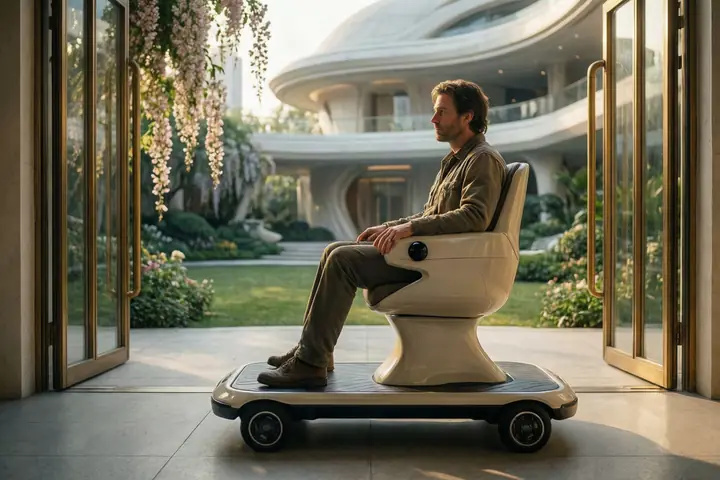
Auto-Car
The Revolt of the Pedestrians, David H. Keller · 1928
A small personal vehicle a person can drive both inside buildings and on streets.
not yet built · AI models' likeliest decade: the 2020s
A small prizeHouseholds pay; no seller keeps muchas a model judges it
Why
A small prize. A little vehicle for indoors and the street helps people who find walking hard, and is a convenience for others.
Who is paid. Riders buy it, and many firms can make a small electric cart, so no seller keeps much.
A model's judgement, not a reading, of the idea as if it worked the way its story promises. The model is fairly sure of this one.
Illustration made with AI image generation; not evidence.
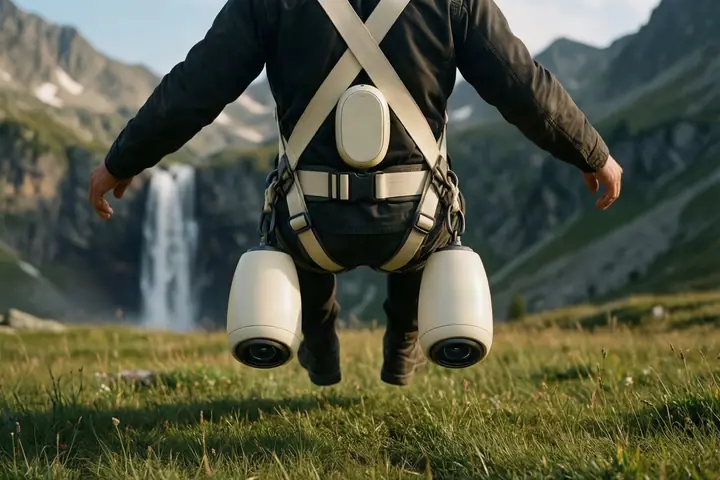
Flying Harness
Skylark of Space, E.E. 'Doc' Smith · 1928
A strap-on rig that lets its wearer fly around freely.
not yet built · AI models' likeliest decade: the 2020s
A large prizeHouseholds pay; no seller keeps muchas a model judges it
Why
A large prize. A rig that lets a person fly wherever they please, working as promised, would be an industry of its own as the motorbike is; the description gives no limit on range or weather, so I assume there is no such limit.
Who is paid. Riders buy it for themselves, and a light craft like this could be built by many workshops once the trick is known, so no seller keeps much.
A model's judgement, not a reading, of the idea as if it worked the way its story promises. The model is not very sure of this one.
Illustration made with AI image generation; not evidence.
Aerocab
Buck Rogers, 2430 AD, Philip Nowlan (w/D. Calkins · 1929
A hired passenger vehicle that hovers and flies people across a city.
not yet built · AI models' likeliest decade: the 2020s
A large prizeBusinesses pay; existing firms keep the restas a model judges it
Why
A large prize. Hired flight across a city, working as promised, would be an industry of its own beside road cabs.
Who is paid. The carrier or fleet operator that runs the air cab buys it and charges riders, and since several firms could build it, the makers that already build and service such craft collect.
A model's judgement, not a reading, of the idea as if it worked the way its story promises. The model is not very sure of this one.
Illustration made with AI image generation; not evidence.
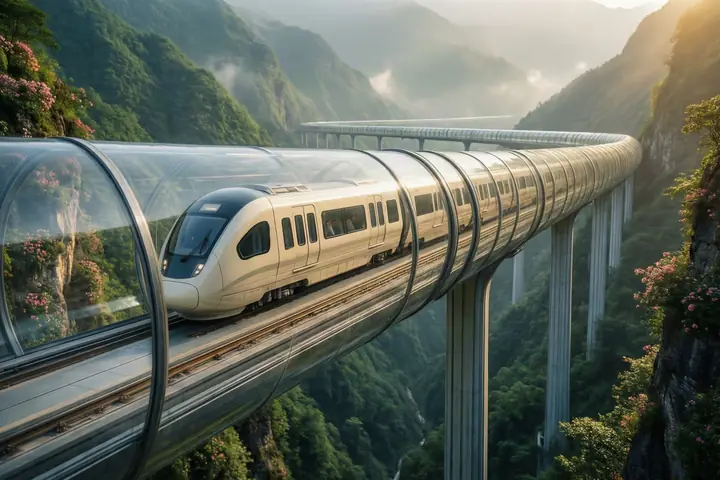
Air Tunnel
Through the Air Tunnel, Harl Vincent · 1929
A route that carries railway cars aloft through the sky rather than along ground tracks.
not yet built · AI models could not judge when it may arrive
A large prizeA government pays; existing firms keep the restas a model judges it
Why
A large prize. A railway carried through the sky would cross rivers, hills and cities without land or tunnels, changing the cost of building lines.
Who is paid. Governments pay for railways on this scale, and the builders that already hold such contracts collect.
A model's judgement, not a reading, of the idea as if it worked the way its story promises. The model is not very sure of this one.
Illustration made with AI image generation; not evidence.
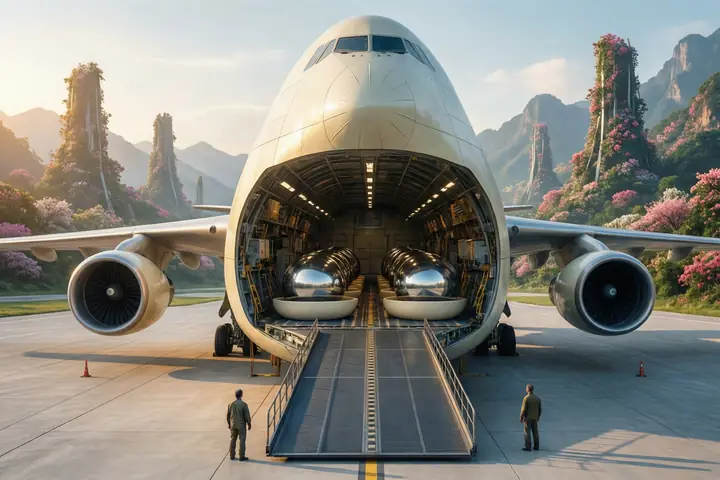
Air-Freighter Cargo Plane
The Invisible Raiders, Ed Earl Repp · 1929
A giant aeroplane built to haul goods between distant cities.
built in the 1940s, about 20 years after it was imagined
A large prizeBusinesses pay; existing firms keep the restas a model judges it
Why
A large prize. Flying goods between distant cities is an industry of its own that made fast long-distance delivery ordinary.
Who is paid. Freight carriers buy the aircraft, and since any large builder can make a cargo plane, the builders and carriers that already own the factories and fleets collect.
A model's judgement, not a reading, of the idea as if it worked the way its story promises. The model is fairly sure of this one.
Illustration made with AI image generation; not evidence.
Atmospheric Pressure Control Plane
Around the World in 24 Hours, R.H. Romans · 1929
An aircraft that stays aloft by generating zones of higher air pressure beneath and lower above it.
not yet built · AI models could not judge when it may arrive
A small prizeBusinesses pay; existing firms keep the restas a model judges it
Why
A small prize. The description gives only a different way of staying aloft, so I assume it does what other aircraft already do.
Who is paid. Airlines would buy it, and the established aircraft builders collect because a new lifting method can be copied once shown.
A model's judgement, not a reading, of the idea as if it worked the way its story promises. The model is not very sure of this one.
Illustration made with AI image generation; not evidence.
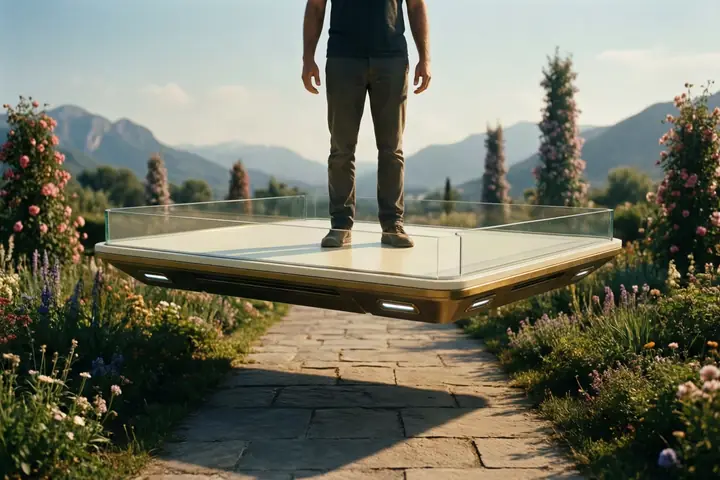
Flying Platform
Locked Worlds, Edmond Hamilton · 1929
Plain flat panels that lift off and hold position in midair, serving as flying rafts.
not yet built · AI models' likeliest decade: the 2030s
A small prizeHouseholds pay; no seller keeps muchas a model judges it
Why
A small prize. A flat panel that lifts and holds still in the air is a small flying raft, useful for odd jobs and short hops rather than everyday travel.
Who is paid. Riders buy it for themselves, and a light craft like this could be built by many workshops once the trick is known, so no seller keeps much.
A model's judgement, not a reading, of the idea as if it worked the way its story promises. The model is not very sure of this one.
Illustration made with AI image generation; not evidence.
Local Time Clock
The Silent Destroyer, Henri Dahl Juve · 1929
An aircraft clock that automatically adjusts to show the hour of whatever ground lies beneath.
not yet built · AI models' likeliest decade: the 2020s
A small prizeBusinesses pay; no seller keeps muchas a model judges it
Why
A small prize. A clock that shows the hour of the ground below is a handy extra for crews and passengers.
Who is paid. Airlines buy it with the aircraft, and any instrument maker could build it, so no seller keeps much.
A model's judgement, not a reading, of the idea as if it worked the way its story promises. The model is fairly sure of this one.
Illustration made with AI image generation; not evidence.
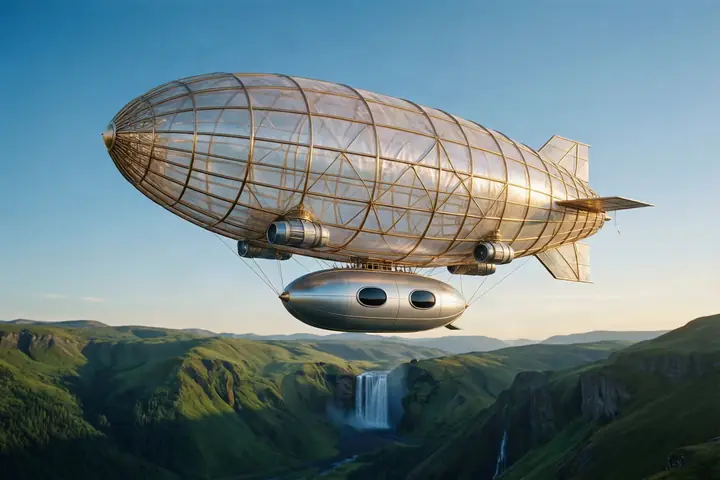
O-220
Tarzan at the Eath's Core, Edgar Rice Burroughs · 1929
An exceptionally light rigid airship built for long-range exploration flights.
not yet built · AI models' likeliest decade: the 2030s
A small prizeBusinesses pay; no seller keeps muchas a model judges it
Why
A small prize. A lighter-than-air craft is slow and carries little beside aircraft and trains, so it stays a niche; this one is built for long exploring flights.
Who is paid. Operators buy it, and airships are simple enough for many builders to make, so no seller keeps much.
A model's judgement, not a reading, of the idea as if it worked the way its story promises. The model is fairly sure of this one.
Illustration made with AI image generation; not evidence.
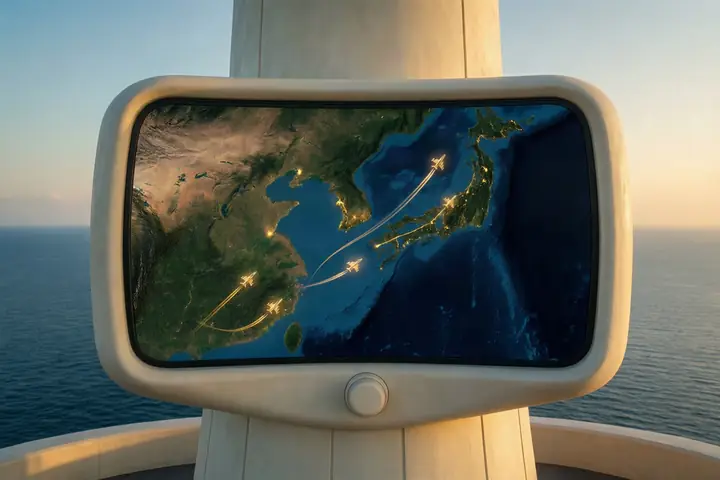
Position Locator Display
Flight of the Eastern Star, Ed Earl Repp · 1929
A screen that tracks and plots the locations of many aircraft at once.
built in the 1950s, about 30 years after it was imagined
A small prizeA government pays; existing firms keep the restas a model judges it
Why
A small prize. A screen showing where many aircraft are is a needed tool for those who direct air traffic, and few buy it.
Who is paid. Governments run air traffic control and pay for it, and the electronics firms that already hold those contracts collect.
A model's judgement, not a reading, of the idea as if it worked the way its story promises. The model is fairly sure of this one.
Illustration made with AI image generation; not evidence.
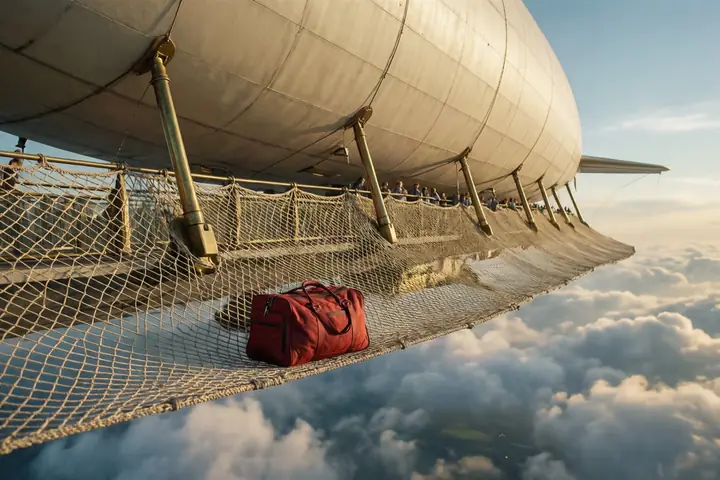
Rescue Nets
Flight of the Eastern Star, Ed Earl Repp · 1929
Safety netting deployed around the rim of a huge aircraft to catch people or objects that fall.
not yet built · AI models could not judge when it may arrive
A small prizeBusinesses pay; no seller keeps muchas a model judges it
Why
A small prize. Nets round the rim of a huge aircraft are a safety fitting.
Who is paid. The operator of the aircraft buys them, and netting is simple to make, so no seller keeps much.
A model's judgement, not a reading, of the idea as if it worked the way its story promises. The model is fairly sure of this one.
Illustration made with AI image generation; not evidence.
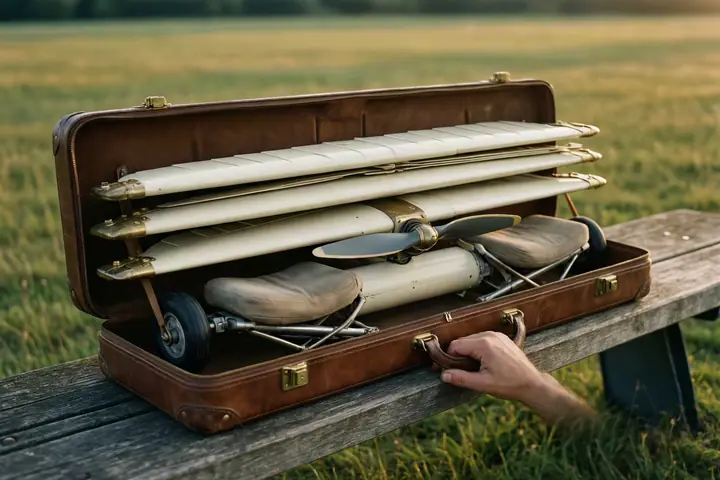
Suitcase Airplane
Suitcase Airplanes, E.D. Skinner · 1929
A tiny two-seat biplane that folds down small enough to pack and carry.
not yet built · AI models' likeliest decade: the 2020s
A large prizeHouseholds pay; no seller keeps muchas a model judges it
Why
A large prize. A plane that folds small enough to carry puts flight in private hands, and the description states no limit on where it can fly, so it is judged with the free personal flyers as an industry of its own.
Who is paid. Riders buy it for themselves, and a light craft like this could be built by many workshops once the trick is known, so no seller keeps much.
A model's judgement, not a reading, of the idea as if it worked the way its story promises. The model is not very sure of this one.
Energy and power · 5
Illustration made with AI image generation; not evidence.
Atomic Energy Motor
The Man from the Atom, G. Peyton Wertenbaker · 1926
A motor that draws its power from nuclear reactions.
not yet built · AI models' likeliest decade: the 2020s
A large prizeBusinesses pay; permit holders keep the restas a model judges it
Why
A large prize. Plentiful power from a little fuel would change what electricity and heavy transport cost.
Who is paid. Power and transport firms buy it, and because governments let only a few hands hold nuclear fuel, the few permitted makers keep what is left.
A model's judgement, not a reading, of the idea as if it worked the way its story promises. The model is fairly sure of this one.
Illustration made with AI image generation; not evidence.
Harvest Power From Stray Energy
The Golden Girl of Munan, Harl Vincent · 1928
Gathers ambient electrical energy from the surroundings to run a small device.
not yet built · AI models' likeliest decade: the 2020s
A small prizeHouseholds pay; no seller keeps muchas a model judges it
Why
A small prize. Running a small device on stray energy saves a battery, which is a convenience.
Who is paid. People buy it inside small gadgets, and any gadget maker can add it so no seller keeps much.
A model's judgement, not a reading, of the idea as if it worked the way its story promises. The model is fairly sure of this one.
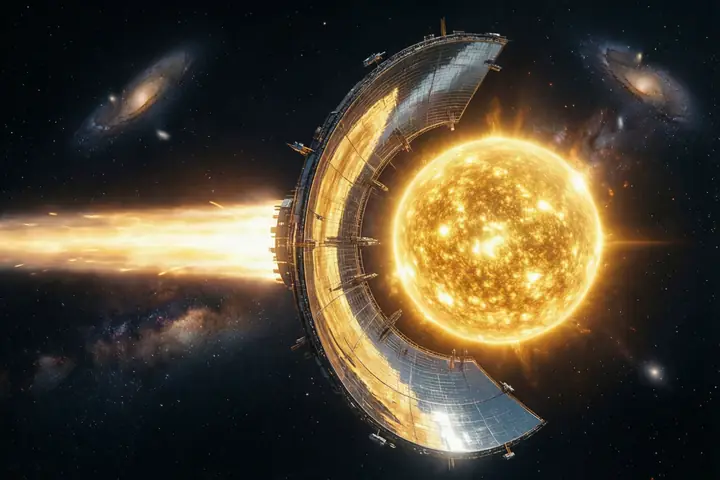
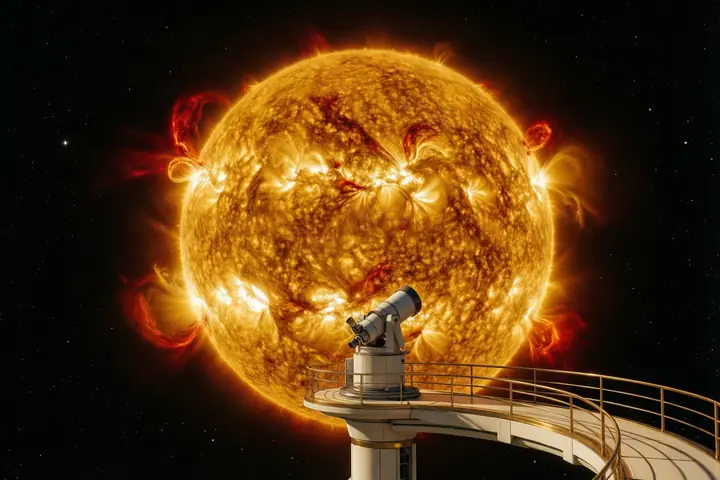
Heat Transmitter
Crashing Suns, Edmond Hamilton · 1928
Collects sunlight near the sun and sends it as focused energy to distant, colder planets.
not yet built · AI models' likeliest decade: 2100 or later
A large prizeA government pays; the maker keeps the restas a model judges it
Why
A large prize. Sunlight gathered near the sun and sent to cold planets would supply whole settlements that have no other source.
Who is paid. Only governments could fund a work this size for whole settlements, and whoever builds the one station controls a supply nobody else can match.
A model's judgement, not a reading, of the idea as if it worked the way its story promises. The model is not very sure of this one.
Illustration made with AI image generation; not evidence.
Helium Tubes
The Cubic City, Louis Tucker, D.D. · 1929
Lamps whose glow reproduces the full spectrum of daylight.
not yet built · AI models' likeliest decade: the 2020s
A small prizeHouseholds pay; no seller keeps muchas a model judges it
Why
A small prize. Lamps that match daylight are a nicer light, which is a convenience.
Who is paid. People buy them for homes and shops, and any lamp maker can produce them so no seller keeps much.
A model's judgement, not a reading, of the idea as if it worked the way its story promises. The model is fairly sure of this one.
Illustration made with AI image generation; not evidence.
Indirect Cold Light
The Silent Destroyer, Henri Dahl Juve · 1929
Illumination that seems to come from nowhere, turning nearly all its power into light rather than warmth.
built in 1962, 33 years after it was imagined
A large prizeBusinesses pay; no seller keeps muchas a model judges it
Why
A large prize. Light that wastes almost no power as warmth changes what lighting costs everywhere.
Who is paid. Building owners and lamp fitters buy it, assumed here to be the main buyers, and many factories can make it so no seller keeps much.
A model's judgement, not a reading, of the idea as if it worked the way its story promises. The model is fairly sure of this one.
Materials, manufacturing and construction · 11
Illustration made with AI image generation; not evidence.
Living Metal Cubes
The Metal Monster, Abraham Merritt · 1920
Swarms of tiny metal modules that join together to form bigger structures.
not yet built · AI models' likeliest decade: the 2050s
A large prizeBusinesses pay; existing firms keep the restas a model judges it
Why
A large prize. Tiny modules that join into larger structures by themselves would change the cost of construction.
Who is paid. Builders buy them, and once they can be copied the established makers of building materials collect.
A model's judgement, not a reading, of the idea as if it worked the way its story promises. The model is not very sure of this one.
Illustration made with AI image generation; not evidence.
Bolognium
Transactions of Amer Soc for Steel Treating, Edgar Bain · 1926
A made-up chemical element coined humorously by metallurgists, with no defined uses.
not yet built · AI models could not judge when it may arrive
No prizeNothing is soldas a model judges it
Why
No prize. It is a joke element with no stated use, so there is nothing for anyone to buy.
Who is paid. Nothing is sold, so nobody pays and no seller keeps anything.
A model's judgement, not a reading, of the idea as if it worked the way its story promises. The model is fairly sure of this one.
Illustration made with AI image generation; not evidence.
Inertron
Armageddon: 2419 A.D., Philip Frances Nowlan · 1928
A metal that behaves like dense heavy metals yet weighs far less.
not yet built · AI models' likeliest decade: the 2030s
A large prizeBusinesses pay; existing firms keep the restas a model judges it
Why
A large prize. A metal with the strength of heavy metals at far less weight would cut the weight and running cost of aircraft, ships and structures.
Who is paid. Vehicle and building firms buy it, and a metal recipe gets copied, so the established metal makers with furnaces and customers collect.
A model's judgement, not a reading, of the idea as if it worked the way its story promises. The model is fairly sure of this one.
Illustration made with AI image generation; not evidence.
Ultron
Armageddon: 2419 A.D., Philip Frances Nowlan · 1928
A substance that neither reflects light nor can be seen at all.
not yet built · AI models judge it not physically possible
A large prizeA government pays; existing firms keep the restas a model judges it
Why
A large prize. A substance that cannot be seen at all would be prized for hiding soldiers, craft and equipment.
Who is paid. Governments pay, assuming hiding is its main use, and the firms that already hold military supply contracts make it.
A model's judgement, not a reading, of the idea as if it worked the way its story promises. The model is not very sure of this one.
Illustration made with AI image generation; not evidence.
Ultron Wire
Armageddon: 2419 A.D., Philip Frances Nowlan · 1928
An extremely thin, very strong wire so fine it cannot be seen.
not yet built · AI models' likeliest decade: the 2040s
A large prizeBusinesses pay; existing firms keep the restas a model judges it
Why
A large prize. A very thin, very strong wire would change the cost of cables and structures; being too fine to see does not alter that.
Who is paid. Builders and vehicle makers buy it, and once the method is known the big materials firms with plants and customers make it and collect.
A model's judgement, not a reading, of the idea as if it worked the way its story promises. The model is fairly sure of this one.
Illustration made with AI image generation; not evidence.
Boring Heat Machine
The Onslaught From Venus, Frank Phillips · 1929
A tunnelling machine that uses heat to turn the excavated rock and soil into usable construction material.
not yet built · AI models' likeliest decade: the 2030s
A large prizeBusinesses pay; existing firms keep the restas a model judges it
Why
A large prize. A borer that also turns the spoil into building material would change the cost of tunnels and mines.
Who is paid. Mining and building firms buy it, and makers of heavy digging machines who already sell to them can copy and supply it.
A model's judgement, not a reading, of the idea as if it worked the way its story promises. The model is fairly sure of this one.
Illustration made with AI image generation; not evidence.
Harbenite
Tarzan at the Eath's Core, Edgar Rice Burroughs · 1929
A metal of extraordinary lightness for building strong structures that weigh very little.
not yet built · AI models could not judge when it may arrive
A large prizeBusinesses pay; existing firms keep the restas a model judges it
Why
A large prize. A strong metal of extraordinary lightness would cut the weight and running cost of aircraft, ships and structures.
Who is paid. Vehicle and building firms buy it, and a metal recipe gets copied, so the established metal makers with furnaces and customers collect.
A model's judgement, not a reading, of the idea as if it worked the way its story promises. The model is fairly sure of this one.
Illustration made with AI image generation; not evidence.
Invisible Cloak
Brigands of the Moon, Ray Cummings · 1929
A garment that bends or masks light around the person wearing it so onlookers see straight through them.
not yet built · AI models' likeliest decade: 2100 or later
A large prizeA government pays; existing firms keep the restas a model judges it
Why
A large prize. True invisibility would be worth a great deal to armies and spies, and would likely be kept from ordinary buyers.
Who is paid. Armies and spy services pay, and the firms that already hold their equipment contracts would make it once the method is known.
A model's judgement, not a reading, of the idea as if it worked the way its story promises. The model is not very sure of this one.
Illustration made with AI image generation; not evidence.
Magnetic Shoes
The Silent Destroyer, Henri Dahl Juve · 1929
Boots with magnets in the soles so workers can grip and walk on iron or steel surfaces.
not yet built · AI models' likeliest decade: the 2020s
A small prizeBusinesses pay; no seller keeps muchas a model judges it
Why
A small prize. Boots that grip metal help the few who work on hulls and steel frames.
Who is paid. Employers buy them for their workers, and any bootmaker can fit magnets to a sole.
A model's judgement, not a reading, of the idea as if it worked the way its story promises. The model is fairly sure of this one.
Illustration made with AI image generation; not evidence.
Metalloglass
Buck Rogers, 2430 AD, Philip Nowlan (w/D. Calkins · 1929
A see-through structural material with the strength and composition of metal.
not yet built · AI models' likeliest decade: the 2020s
A large prizeBusinesses pay; existing firms keep the restas a model judges it
Why
A large prize. A see-through material with the strength of metal would change how windows, vehicles and buildings are made.
Who is paid. Builders and vehicle makers buy it, and once the method is known the big materials firms with plants and customers make it and collect.
A model's judgement, not a reading, of the idea as if it worked the way its story promises. The model is fairly sure of this one.
Illustration made with AI image generation; not evidence.
Reflectocosmic Spectrometer
Buck Rogers, 2430 AD, Philip Nowlan (w/D. Calkins · 1929
An instrument that reads how cosmic radiation bounces off buried or hidden metals to identify and locate them.
not yet built · AI models' likeliest decade: the 2020s
A large prizeBusinesses pay; existing firms keep the restas a model judges it
Why
A large prize. Finding and naming buried metals from the surface would change the cost of prospecting for the whole mining trade.
Who is paid. Mining firms buy it, and an instrument can be studied and copied, so established instrument makers and survey firms collect.
A model's judgement, not a reading, of the idea as if it worked the way its story promises. The model is not very sure of this one.
Weapons and warfare · 14
Illustration made with AI image generation; not evidence.
Blaster
When the Green Star Waned, Nictzin Dyalhis · 1925
A weapon firing an energy beam that wrecks anything it hits.
not yet built · AI models' likeliest decade: the 2030s
A small prizeA government pays; existing firms keep the restas a model judges it
Why
A small prize. Assuming a soldier carries it, it does much the same job as a gun, so the gain over a gun is modest.
Who is paid. Armies buy it with public money, and since rival makers can copy it the established arms suppliers with standing army contracts collect.
A model's judgement, not a reading, of the idea as if it worked the way its story promises. The model is not very sure of this one.
Illustration made with AI image generation; not evidence.
Blue Ray of Death
Across Space, Edmond Hamilton · 1926
A beam that instantly burns a living creature to ash.
not yet built · AI models could not judge when it may arrive
A small prizeA government pays; existing firms keep the restas a model judges it
Why
A small prize. Assuming a soldier carries it, it does much the same job as a gun, so the gain over a gun is modest.
Who is paid. Armies buy it with public money, and since rival makers can copy it the established arms suppliers with standing army contracts collect.
A model's judgement, not a reading, of the idea as if it worked the way its story promises. The model is not very sure of this one.
Illustration made with AI image generation; not evidence.
Paralyzing Cone
The Atomic Conquerors, Edmond Hamilton · 1927
A weapon that locks up a target's muscles so they cannot move.
not yet built · AI models' likeliest decade: the 2020s
A large prizeA government pays; existing firms keep the restas a model judges it
Why
A large prize. Judged as if it worked, a weapon that surely stops a person at a distance without harming them does what no gun can, and police and guards everywhere would carry it in place of firearms.
Who is paid. Police forces and armies buy it with public money, and since rival makers could copy it once it was shown, the suppliers that already hold their contracts collect.
A model's judgement, not a reading, of the idea as if it worked the way its story promises. The model is not very sure of this one.
Illustration made with AI image generation; not evidence.
Death-Beam
Crashing Suns, Edmond Hamilton · 1928
Bright energy beams fired between ships in space combat.
not yet built · AI models' likeliest decade: the 2050s
A large prizeA government pays; existing firms keep the restas a model judges it
Why
A large prize. A heavy beam that can strike ships or aircraft at the speed of light would reshape how fleets are armed and defended.
Who is paid. Armies buy it with public money, and since rival makers can copy it the established arms suppliers with standing army contracts collect.
A model's judgement, not a reading, of the idea as if it worked the way its story promises. The model is not very sure of this one.
Illustration made with AI image generation; not evidence.
Disintegrator Ray (Dis Ray)
Armageddon: 2419 A.D., Philip Frances Nowlan · 1928
A beam that makes matter vanish entirely.
not yet built · AI models judge it not physically possible
A large prizeA government pays; existing firms keep the restas a model judges it
Why
A large prize. Judged as if it worked, a weapon that destroys whatever it strikes leaves no armour, wall or hull able to protect, which would change how wars are fought.
Who is paid. Armies buy it with public money, and assuming rival makers learn to copy it the established arms suppliers with standing army contracts collect.
A model's judgement, not a reading, of the idea as if it worked the way its story promises. The model is not very sure of this one.
Illustration made with AI image generation; not evidence.
Needle Pipe
Beyond the Stars, Ray Cummings · 1928
A weapon that fires metal splinters at nearly the speed of light.
not yet built · AI models' likeliest decade: 2100 or later
A small prizeA government pays; existing firms keep the restas a model judges it
Why
A small prize. Assuming a soldier carries it, a gun that throws splinters faster than any other still does the job guns already do.
Who is paid. Armies buy it with public money, and assuming rival makers learn to copy it the established arms suppliers with standing army contracts collect.
A model's judgement, not a reading, of the idea as if it worked the way its story promises. The model is not very sure of this one.
Illustration made with AI image generation; not evidence.
Neutralizing Wall
The Golden Girl of Munan, Harl Vincent · 1928
A barrier that blocks electrical and mechanical disturbances so whatever lies behind it cannot be detected.
not yet built · AI models could not judge when it may arrive
A large prizeA government pays; existing firms keep the restas a model judges it
Why
A large prize. Judged as if it worked, a field that hides whole ships or bases from watchers would change how forces are found and struck.
Who is paid. Assuming it is bought to hide forces in war, governments pay, and assuming rivals learn to copy it the established arms suppliers collect.
A model's judgement, not a reading, of the idea as if it worked the way its story promises. The model is not very sure of this one.
Illustration made with AI image generation; not evidence.
Pain Ray
Crashing Suns, Edmond Hamilton · 1928
A weapon that causes intense pain by stimulating nerves from a distance.
not yet built · AI models' likeliest decade: the 2020s
A small prizeA government pays; existing firms keep the restas a model judges it
Why
A small prize. Unlike a device for hurting a held prisoner, a beam that drives off free people through pain is a weapon police may lawfully carry, but it only moves a crowd along, a niche.
Who is paid. Police and prison services pay, and the firms that already supply them would add it to their range and collect.
A model's judgement, not a reading, of the idea as if it worked the way its story promises. The model is not very sure of this one.
Illustration made with AI image generation; not evidence.
Rocket Gun
Armageddon: 2419 A.D., Philip Frances Nowlan · 1928
A shoulder-fired launcher that shoots small rockets.
built in the 1940s, about 20 years after it was imagined
A small prizeA government pays; existing firms keep the restas a model judges it
Why
A small prize. A launcher one soldier carries is one more kind of firearm, a modest step over the guns armies already have.
Who is paid. Armies buy it with public money, and since rival makers can copy it the established arms suppliers with standing army contracts collect.
A model's judgement, not a reading, of the idea as if it worked the way its story promises. The model is not very sure of this one.
Illustration made with AI image generation; not evidence.
Atomic Shell
Buck Rogers, 2430 AD, Philip Nowlan (w/D. Calkins · 1929
An artillery round carrying a nuclear warhead.
not yet built · AI models' likeliest decade: the 2020s
A large prizeA government pays; permit holders keep the restas a model judges it
Why
A large prize. A weapon that can end a war or prevent one is worth a great deal to the state that holds it.
Who is paid. Only governments pay for it, and only the handful of builders a state allows near the material may make it.
A model's judgement, not a reading, of the idea as if it worked the way its story promises. The model is fairly sure of this one.
Illustration made with AI image generation; not evidence.
Disrupter Ray (Molecule Disrupter)
The Silent Destroyer, Henri Dahl Juve · 1929
A beam that breaks the bonds holding matter together so solid objects fall apart.
not yet built · AI models judge it not physically possible
A large prizeA government pays; existing firms keep the restas a model judges it
Why
A large prize. Judged as if it worked, a weapon that destroys whatever it strikes leaves no armour, wall or hull able to protect, which would change how wars are fought.
Who is paid. Armies buy it with public money, and assuming rival makers learn to copy it the established arms suppliers with standing army contracts collect.
A model's judgement, not a reading, of the idea as if it worked the way its story promises. The model is not very sure of this one.
Illustration made with AI image generation; not evidence.
Fan Ray
The Onslaught From Venus, Frank Phillips · 1929
A defensive energy barrier projected outward in a widening cone to block attacks.
not yet built · AI models judge it not physically possible
A large prizeA government pays; existing firms keep the restas a model judges it
Why
A large prize. Judged as if it worked, a barrier that stops attacks would change how ships, bases and cities are defended.
Who is paid. Assuming it is bought for defence in war, governments pay, and assuming rivals learn to copy it the established arms suppliers with standing army contracts collect.
A model's judgement, not a reading, of the idea as if it worked the way its story promises. The model is not very sure of this one.
Illustration made with AI image generation; not evidence.
Force-Ray
Buck Rogers, 2430 AD, Philip Nowlan (w/D. Calkins · 1929
A handheld shaft that projects a beam of pure force to strike or push targets.
not yet built · AI models judge it not physically possible
A small prizeA government pays; existing firms keep the restas a model judges it
Why
A small prize. Judged as if it worked, and assuming a soldier carries it, a beam that shoves or strikes does much the same job as a gun.
Who is paid. Armies buy it with public money, and assuming rival makers learn to copy it the established arms suppliers with standing army contracts collect.
A model's judgement, not a reading, of the idea as if it worked the way its story promises. The model is not very sure of this one.
Illustration made with AI image generation; not evidence.
Ray-Pistol
The War of the Planets, Harl Vincent · 1929
A pistol that fires a beam of energy instead of bullets.
not yet built · AI models' likeliest decade: the 2070s
A small prizeA government pays; existing firms keep the restas a model judges it
Why
A small prize. A beam weapon carried in the hand does much the same job as a gun, so the gain over a gun is modest.
Who is paid. Armies buy it with public money, and since rival makers can copy it the established arms suppliers with standing army contracts collect.
A model's judgement, not a reading, of the idea as if it worked the way its story promises. The model is fairly sure of this one.
Surveillance, identity and control · 3
Illustration made with AI image generation; not evidence.
Membrane
We, Yevgeny Zamyatin · 1922
A hidden microphone that eavesdrops on conversations.
not yet built · AI models' likeliest decade: the 2020s
A small prizeA government pays; existing firms keep the restas a model judges it
Why
A small prize. A better way to overhear people is a specialist tool for police and spies, not a wide market.
Who is paid. Police and spy services pay, and it is easy to copy, so the firms already supplying them collect.
A model's judgement, not a reading, of the idea as if it worked the way its story promises. The model is fairly sure of this one.
Illustration made with AI image generation; not evidence.
Raytron Apparatus
Beyond the Stars, Ray Cummings · 1928
An airborne camera that sends overhead pictures back to its operator.
not yet built · AI models' likeliest decade: the 2020s
A large prizeA government pays; existing firms keep the restas a model judges it
Why
A large prize. A camera in the air sending back pictures from overhead changes what an army or police force can see.
Who is paid. Spy and police services pay, and once made it can be copied, so the firms already supplying such services collect.
A model's judgement, not a reading, of the idea as if it worked the way its story promises. The model is fairly sure of this one.
Illustration made with AI image generation; not evidence.
Personal Metallic Record Disc
The Ancient Brain, A.G. Stangland · 1929
A durable stamped metal token carrying an individual's complete personal file in portable form.
not yet built · AI models' likeliest decade: the 2020s
A small prizeA government pays; existing firms keep the restas a model judges it
Why
A small prize. A token carrying a person's whole file is a sturdier identity paper, a convenience for the authority that issues it.
Who is paid. Whoever issues the credential pays, assumed here to be a state, and the firms that already make official papers and registers collect.
A model's judgement, not a reading, of the idea as if it worked the way its story promises. The model is not very sure of this one.
Food, agriculture and environment · 1
Illustration made with AI image generation; not evidence.
Concentro
Armageddon: 2419 A.D., Philip Frances Nowlan · 1928
Compact manufactured food packs for soldiers and travellers.
already existed before the story (the 1910s)
A small prizeA government pays; existing firms keep the restas a model judges it
Why
A small prize. Compact rations are a convenience for people who cannot carry or cook ordinary food.
Who is paid. I assumed armies and state expeditions are the main buyers, and the firms that already hold their supply contracts collect.
A model's judgement, not a reading, of the idea as if it worked the way its story promises. The model is not very sure of this one.
Home and everyday life · 5
Illustration made with AI image generation; not evidence.
Phonographic Locks
A Journey to the Year 2025, Clement Fezandie · 1921
A door lock that opens when it recognises a person's voice.
built in 2017, 96 years after it was imagined
A small prizeHouseholds pay; no seller keeps muchas a model judges it
Why
A small prize. Opening a door by voice saves carrying a key, which is a convenience.
Who is paid. Households buy it and any lock maker can build it, so no seller keeps much.
A model's judgement, not a reading, of the idea as if it worked the way its story promises. The model is fairly sure of this one.
Illustration made with AI image generation; not evidence.
Atomic Percolator
The Golden Girl of Munan, Harl Vincent · 1928
Brews coffee using heat from radioactive material.
not yet built · AI models' likeliest decade: 2100 or later
A small prizeHouseholds pay; no seller keeps muchas a model judges it
Why
A small prize. It makes coffee, which ordinary heat already does well.
Who is paid. Households buy it, and the story has it sold freely, so I assumed any appliance maker may buy the radioactive source and build the same thing, and no seller keeps much.
A model's judgement, not a reading, of the idea as if it worked the way its story promises. The model is not very sure of this one.
Illustration made with AI image generation; not evidence.
Electric Diaper
The Psychophonic Nurse, David H. Keller · 1928
A nappy that signals when it needs changing.
not yet built · AI models' likeliest decade: the 2020s
A small prizeHouseholds pay; existing firms keep the restas a model judges it
Why
A small prize. A nappy that says when it is wet saves parents some checking.
Who is paid. Parents buy it, and the signal is easy to add, so the nappy brands that already fill the shop shelves collect.
A model's judgement, not a reading, of the idea as if it worked the way its story promises. The model is fairly sure of this one.
Illustration made with AI image generation; not evidence.
Cubic City
The Cubic City, Louis Tucker, D.D. · 1929
An entire town housed within one enormous structure, with homes, work and services stacked inside.
not yet built · AI models' likeliest decade: the 2050s
A large prizeHouseholds pay; existing firms keep the restas a model judges it
Why
A large prize. Housing a whole town with its work and services in a single structure is a building project on the scale of an industry.
Who is paid. Residents buy or lease the homes and shops inside, as they would in any large development, and since others could put up such a structure the developers and landowners who already hold the sites collect.
A model's judgement, not a reading, of the idea as if it worked the way its story promises. The model is not very sure of this one.
Illustration made with AI image generation; not evidence.
Sunparlor
The Cubic City, Louis Tucker, D.D. · 1929
A huge glass-roofed promenade inside a giant building where residents can bask in daylight indoors.
not yet built · AI models' likeliest decade: the 2020s
A small prizeBusinesses pay; existing firms keep the restas a model judges it
Why
A small prize. A glass-roofed promenade is a pleasant shared space inside a giant building.
Who is paid. The building owner pays for it, and anyone can build a glass roof, so the developers who already hold the building collect.
A model's judgement, not a reading, of the idea as if it worked the way its story promises. The model is fairly sure of this one.
Exotic physics · 17
Clockwork Man
The Clockwork Man, E.V. Odle · 1923
A body-implanted mechanism that lets its wearer control the flow of time.
not yet built · AI models judge it not physically possible
A large prizeHouseholds pay; existing firms keep the restas a model judges it
Why
A large prize. Speeding or slowing one's own time would be worth a great deal to the person who has it.
Who is paid. I assume it is fitted like a medical implant for private buyers, and that once one firm made it others could, so the makers and clinics that already fit implants collect.
A model's judgement, not a reading, of the idea as if it worked the way its story promises. The model is not very sure of this one.
Illustration made with AI image generation; not evidence.
Parallel Universe
Men Like Gods, H.G. Wells · 1923
A separate reality existing alongside ours that one might visit.
not yet built · AI models could not judge when it may arrive
A large prizeA government pays; existing firms keep the restas a model judges it
Why
A large prize. Judged as the visit the description allows: a way into another world could open new lands and materials, though what lies beyond is unknown.
Who is paid. I assume a state would claim the way across and explore it like a space programme, paying its usual contractors to do the work.
A model's judgement, not a reading, of the idea as if it worked the way its story promises. The model is not very sure of this one.
Illustration made with AI image generation; not evidence.
Quadraturin
Quadraturin, Sigizmund Krzhizhanowsky · 1925
A coating that enlarges a room's interior without changing its outside.
not yet built · AI models judge it not physically possible
A large prizeHouseholds pay; existing firms keep the restas a model judges it
Why
A large prize. More room inside the same walls would cut the cost of housing where land is scarce.
Who is paid. Households would buy it, and since the coating could be copied the paint and building firms with factories and shops collect.
A model's judgement, not a reading, of the idea as if it worked the way its story promises. The model is not very sure of this one.
Illustration made with AI image generation; not evidence.
Atomic Machine
The Man from the Atom, G. Peyton Wertenbaker · 1926
A wearable device that makes its user grow or shrink in size.
not yet built · AI models judge it not physically possible
A large prizeBusinesses pay; no seller keeps muchas a model judges it
Why
A large prize. A worker who can shrink or grow could repair, inspect and operate where no tool reaches.
Who is paid. I assume hospitals and engineering firms buy it for staff, and a wearable device could be copied by many makers once shown.
A model's judgement, not a reading, of the idea as if it worked the way its story promises. The model is not very sure of this one.
Illustration made with AI image generation; not evidence.
Cold Ray
The Atomic Conquerors, Edmond Hamilton · 1927
A beam that drains heat from whatever it is pointed at.
not yet built · AI models judge it not physically possible
A large prizeBusinesses pay; existing firms keep the restas a model judges it
Why
A large prize. Cooling at a distance would change refrigeration, firefighting and heavy industry.
Who is paid. Factories, food firms and fire services would buy it, and makers of cooling equipment would sell it once the method was known.
A model's judgement, not a reading, of the idea as if it worked the way its story promises. The model is not very sure of this one.
Illustration made with AI image generation; not evidence.
Anti-Gravity Belt
Armageddon: 2419 A.D., Philip Frances Nowlan · 1928
A worn belt that lessens the pull of gravity on its wearer.
not yet built · AI models judge it not physically possible
A large prizeHouseholds pay; no seller keeps muchas a model judges it
Why
A large prize. Personal flight without wings or fuel would be a new kind of everyday travel, though a narrower use than lifting freight and vehicles.
Who is paid. Ordinary people would buy it as they buy bicycles, and once one firm made it many could, so no seller keeps much.
A model's judgement, not a reading, of the idea as if it worked the way its story promises. The model is fairly sure of this one.
Illustration made with AI image generation; not evidence.
Attractive Ray
Crashing Suns, Edmond Hamilton · 1928
A beam that draws objects toward its source.
not yet built · AI models judge it not physically possible
A large prizeBusinesses pay; existing firms keep the restas a model judges it
Why
A large prize. Gripping and moving things at a distance would change towing, cargo handling, building and rescue.
Who is paid. Ports, builders and ship operators would pay, and with the method open to copying, makers of cranes, tugs and handling gear would collect.
A model's judgement, not a reading, of the idea as if it worked the way its story promises. The model is fairly sure of this one.
Illustration made with AI image generation; not evidence.
De-atomizing Ray
Crashing Suns, Edmond Hamilton · 1928
A beam that breaks matter apart into its smallest pieces.
not yet built · AI models judge it not physically possible
A large prizeA government pays; existing firms keep the restas a model judges it
Why
A large prize. A beam that takes anything apart would be a decisive weapon and a tool for demolition.
Who is paid. Armies would be the first buyers, and the arms makers that already hold their contracts would supply it.
A model's judgement, not a reading, of the idea as if it worked the way its story promises. The model is fairly sure of this one.
Illustration made with AI image generation; not evidence.
Floater
Armageddon: 2419 A.D., Philip Frances Nowlan · 1928
Lets a person hover in mid-air with no visible support.
not yet built · AI models' likeliest decade: the 2030s
A large prizeHouseholds pay; no seller keeps muchas a model judges it
Why
A large prize. Personal flight without wings or fuel would be a new kind of everyday travel, though a narrower use than lifting freight and vehicles.
Who is paid. Ordinary people would buy it as they buy bicycles, and once one firm made it many could, so no seller keeps much.
A model's judgement, not a reading, of the idea as if it worked the way its story promises. The model is fairly sure of this one.
Illustration made with AI image generation; not evidence.
Gravity-Screen
Crashing Suns, Edmond Hamilton · 1928
A shield that blocks gravity's pull on whatever sits behind it.
not yet built · AI models judge it not physically possible
A large prizeBusinesses pay; existing firms keep the restas a model judges it
Why
A large prize. Cancelling weight at will would cut the cost of lifting, carrying and launching, which changes transport and building more than it changes how most people live.
Who is paid. Carriers, builders and launch firms would pay, and since the trick could be copied once shown, the firms that already build vehicles and craft would collect.
A model's judgement, not a reading, of the idea as if it worked the way its story promises. The model is fairly sure of this one.
Illustration made with AI image generation; not evidence.
Hyper-space
The Invisible Bubble, Kirk Meadowcroft · 1928
An alternative realm where ships can journey faster than light.
not yet built · AI models judge it not physically possible
A large prizeBusinesses pay; existing firms keep the restas a model judges it
Why
A large prize. Judged as the travel it allows: crossing between stars quickly would open new worlds to trade and settlement, an industry of its own, though most people's daily lives would change slowly.
Who is paid. Nobody can own a realm open to every ship, so shipping lines would pay for the ships that enter it, and established shipbuilders who could copy the drive collect.
A model's judgement, not a reading, of the idea as if it worked the way its story promises. The model is not very sure of this one.
Illustration made with AI image generation; not evidence.
Jumper
Armageddon: 2419 A.D., Philip Frances Nowlan · 1928
A belt that cancels its wearer's weight so they can leap huge distances.
not yet built · AI models judge it not physically possible
A large prizeHouseholds pay; no seller keeps muchas a model judges it
Why
A large prize. Personal flight without wings or fuel would be a new kind of everyday travel, though a narrower use than lifting freight and vehicles.
Who is paid. Ordinary people would buy it as they buy bicycles, and once one firm made it many could, so no seller keeps much.
A model's judgement, not a reading, of the idea as if it worked the way its story promises. The model is fairly sure of this one.
Illustration made with AI image generation; not evidence.
Repellor Anti-Gravity Rays
Armageddon: 2419 A.D., Philip Frances Nowlan · 1928
A beam that counteracts gravity to hold aircraft aloft over a planet.
not yet built · AI models judge it not physically possible
A large prizeBusinesses pay; existing firms keep the restas a model judges it
Why
A large prize. Lifting and pushing craft without burning fuel would cut the cost of flight and of reaching space.
Who is paid. Carriers and launch firms would buy it, and since others could copy the device once it is seen, the established builders of aircraft and spacecraft collect.
A model's judgement, not a reading, of the idea as if it worked the way its story promises. The model is fairly sure of this one.
Illustration made with AI image generation; not evidence.
Vibration-Propelled Cruiser
Crashing Suns, Edmond Hamilton · 1928
A spaceship propelled by making ripples in the fabric of spacetime.
not yet built · AI models judge it not physically possible
A large prizeBusinesses pay; existing firms keep the restas a model judges it
Why
A large prize. Lifting and pushing craft without burning fuel would cut the cost of flight and of reaching space.
Who is paid. Carriers and launch firms would buy it, and since others could copy the device once it is seen, the established builders of aircraft and spacecraft collect.
A model's judgement, not a reading, of the idea as if it worked the way its story promises. The model is fairly sure of this one.
Illustration made with AI image generation; not evidence.
Gravity Nullifier
The Sky Maniac, Henri Dahl Juve · 1929
A shield that cancels the pull of gravity on a large object so it floats.
not yet built · AI models judge it not physically possible
A large prizeBusinesses pay; existing firms keep the restas a model judges it
Why
A large prize. Cancelling weight at will would cut the cost of lifting, carrying and launching, which changes transport and building more than it changes how most people live.
Who is paid. Carriers, builders and launch firms would pay, and since the trick could be copied once shown, the firms that already build vehicles and craft would collect.
A model's judgement, not a reading, of the idea as if it worked the way its story promises. The model is fairly sure of this one.
Illustration made with AI image generation; not evidence.
Pocket Gravity Nullifier
The Sky Maniac, Henri Dahl Juve · 1929
A carry-sized gadget that switches off gravity for the person holding it.
not yet built · AI models judge it not physically possible
A large prizeHouseholds pay; no seller keeps muchas a model judges it
Why
A large prize. A pocket device that frees its holder from gravity would give people personal flight, a new industry beside cars.
Who is paid. People would buy it for themselves, and with many makers able to copy a small gadget no seller keeps much.
A model's judgement, not a reading, of the idea as if it worked the way its story promises. The model is not very sure of this one.
Illustration made with AI image generation; not evidence.
Vibration Machine
The Comet Doom, Edmond Hamilton · 1929
A device that cancels the Sun's gravitational hold on Earth.
not yet built · AI models judge it not physically possible
No prizeNothing is soldas a model judges it
Why
No prize. Cutting the planet loose from the Sun would kill everyone on it, so it is a hazard no one may use.
Who is paid. Nothing is sold, so nobody pays and no seller collects.
A model's judgement, not a reading, of the idea as if it worked the way its story promises. The model is not very sure of this one.
Society and economy · 3
Illustration made with AI image generation; not evidence.
Hall of the Council
Crashing Suns, Edmond Hamilton · 1928
A vast assembly chamber built to seat representatives from across a galaxy.
not yet built · AI models' likeliest decade: the 2020s
A small prizeA government pays; no seller keeps muchas a model judges it
Why
A small prize. A very large meeting hall is one building, a niche.
Who is paid. The government pays, and any large builder can put it up.
A model's judgement, not a reading, of the idea as if it worked the way its story promises. The model is fairly sure of this one.
Illustration made with AI image generation; not evidence.
Universal Sterilization Law
A Biological Experiment, David H. Keller · 1928
A policy that makes every young person infertile and replaces births with laboratory-made people.
not yet built · AI models could not judge when it may arrive
No prizeNothing is soldas a model judges it
Why
No prize. A policy or worry about who may have children is a matter of rule and society, not something anyone would buy.
Who is paid. Nothing is sold, so nobody pays and no seller keeps anything.
A model's judgement, not a reading, of the idea as if it worked the way its story promises. The model is fairly sure of this one.
Illustration made with AI image generation; not evidence.
Inurbanity (Inurbane)
The Cubic City, Louis Tucker, D.D. · 1929
Legal punishments for people who fail to conduct themselves decently in densely packed megastructure housing.
not yet built · AI models' likeliest decade: the 2020s
No prizeNothing is soldas a model judges it
Why
No prize. Punishments for bad manners in crowded housing are law, not a product.
Who is paid. Nothing is sold, so nobody pays and no seller keeps anything.
A model's judgement, not a reading, of the idea as if it worked the way its story promises. The model is fairly sure of this one.
 Illustration made with AI image generation; not evidence.