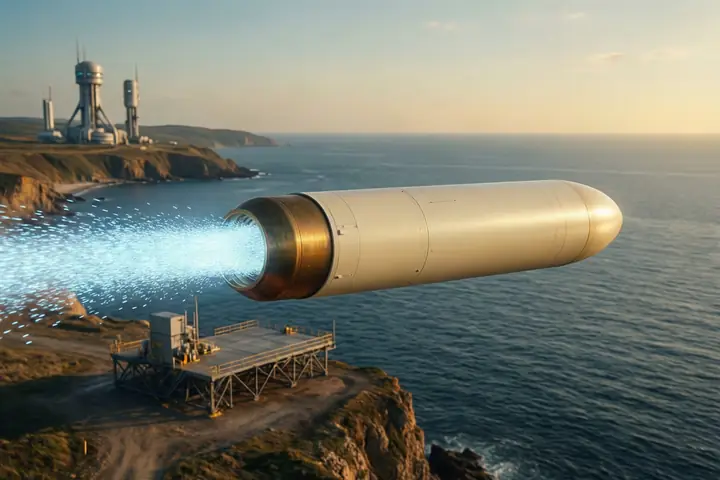
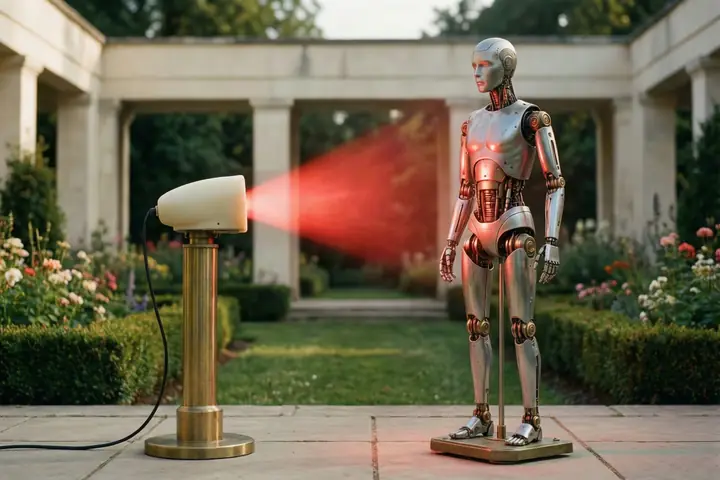
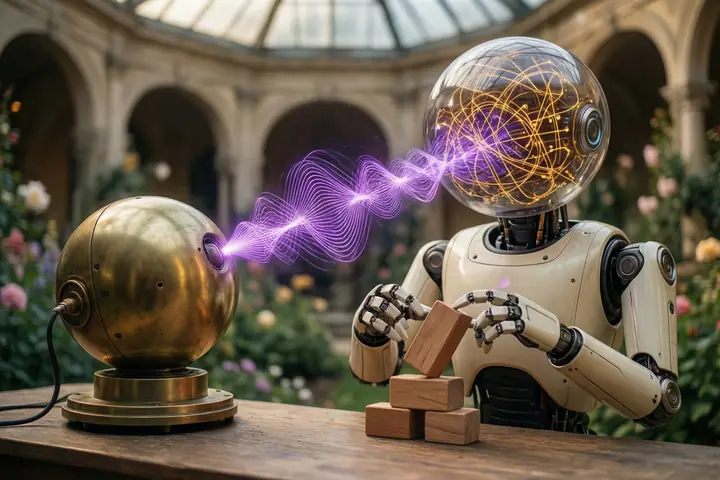
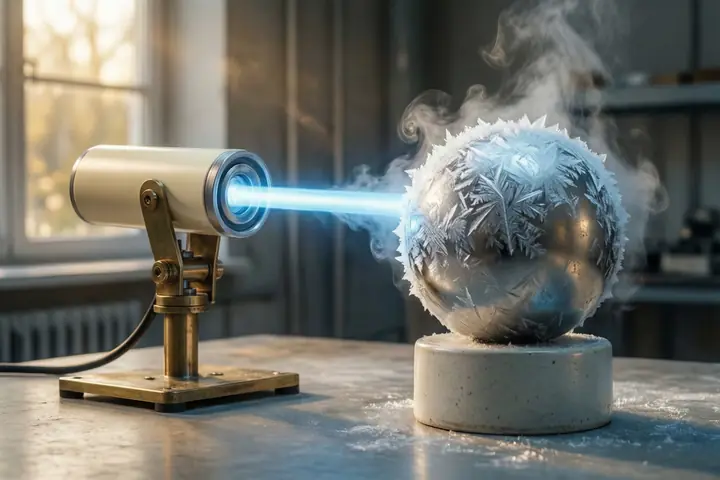
Dated forecasts about this kind of technology from the singularity reading list, then every idea of this kind in the order stories first imagined it.
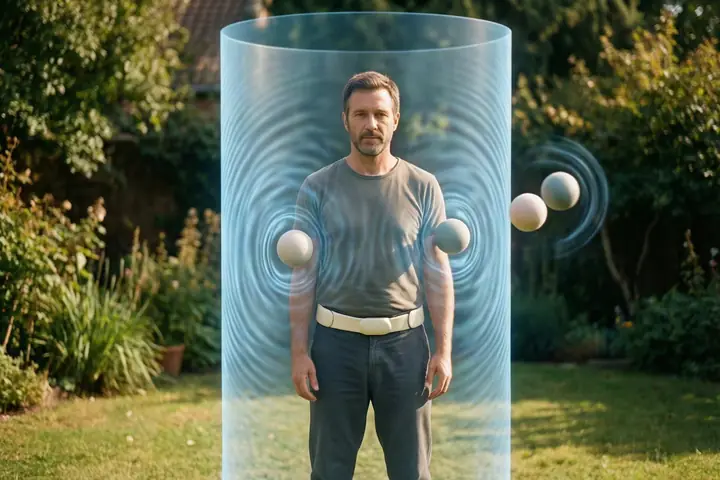
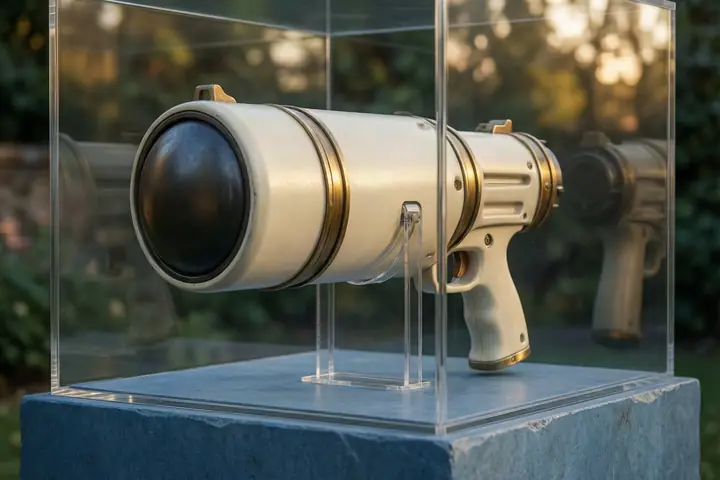
Illustration made with AI image generation; not evidence.
Dated forecasts
Kokotajlo and colleagues expect that by February 2027 frontier AI sits slightly behind elite human hackers at cyberattacks, yet can run as thousands of simultaneous copies.
Daniel Kokotajlo and colleagues · 2027 · a little worse than the best human hackers
From AI 2027, Daniel Kokotajlo, Scott Alexander, Thomas Larsen, Eli Lifland, Romeo Dean, 2025
Suleyman thinks many military drones will probably operate with full autonomy by 2028.
Mustafa Suleyman · by 2028 · likely
From The Coming Wave, Mustafa Suleyman, 2023
Imagined, oldest first
How large a prize, and which seller keeps the rest
Each idea is judged as if it worked the way its story promises: how large a prize it would be, who would pay, and which seller would keep what is left once buyers have had their gain. Choose a cell to see only those ideas; each count is the cards that cell shows. Every placing is a model's judgement, not a reading.
Seller
A vast prize
A large prize
A small prize
No prize
No seller keeps much
·
·
The maker keeps the rest
·
·
·
Existing firms keep the rest
·
·
Permit holders keep the rest
·
·
Nothing is sold
·
·
·
Illustration made with AI image generation; not evidence.
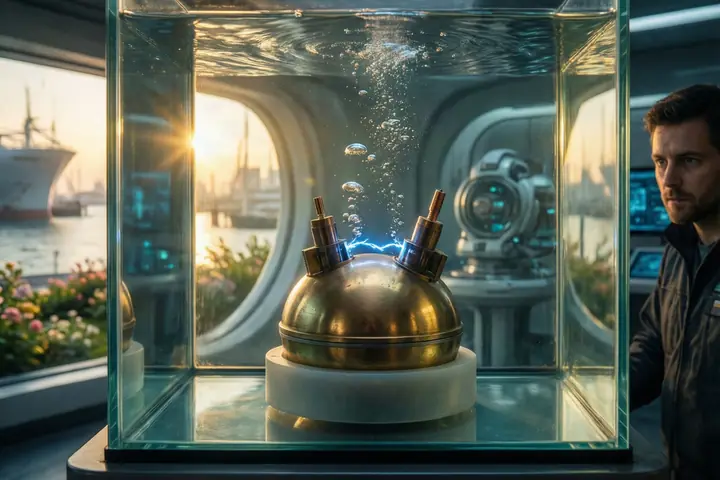
Electrify the Rail
20,000 Leagues Under the Sea, Jules Verne · 1875
Charging a vessel's metal skin with high voltage so anyone who touches it gets shocked.
not yet built · AI models' likeliest decade: the 2020s
A small prizeBusinesses pay; no seller keeps muchas a model judges it
Why
A small prize. Charging a hull to shock boarders is a simple trick for a few vessels.
Who is paid. Assuming shipowners fit it against boarders, any marine electrician can do the work.
A model's judgement, not a reading, of the idea as if it worked the way its story promises. The model is not very sure of this one.
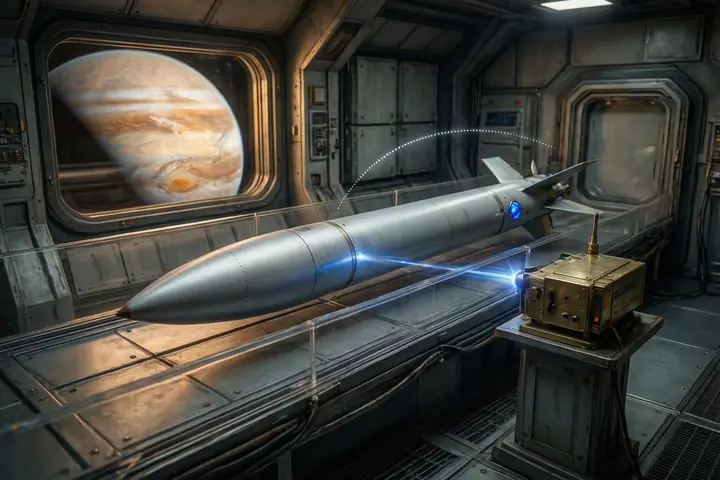
Illustration made with AI image generation; not evidence.
Leyden Ball
20,000 Leagues Under the Sea, Jules Verne · 1875
A projectile for undersea hunting that stuns or kills its target with a strong electric discharge.
not yet built · AI models' likeliest decade: the 2020s
A small prizeHouseholds pay; no seller keeps muchas a model judges it
Why
A small prize. An electric projectile for hunting under the sea serves a small group of divers and fishers.
Who is paid. Hunters and divers buy it, and a charged dart is simple enough that many workshops could make it, so no seller keeps much.
A model's judgement, not a reading, of the idea as if it worked the way its story promises. The model is fairly sure of this one.
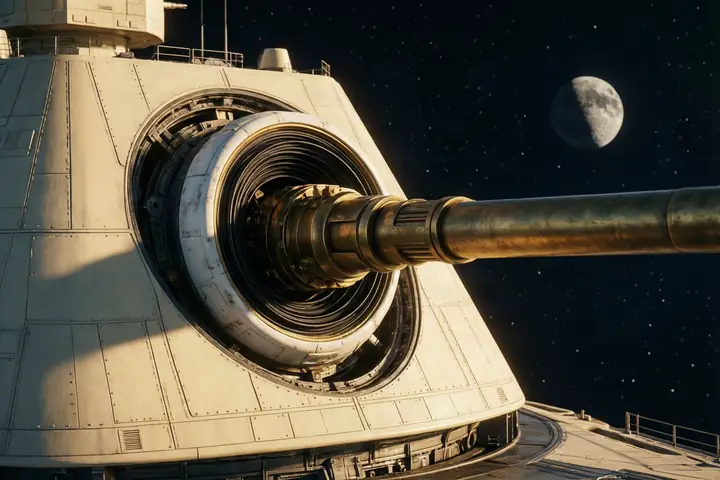
Illustration made with AI image generation; not evidence.
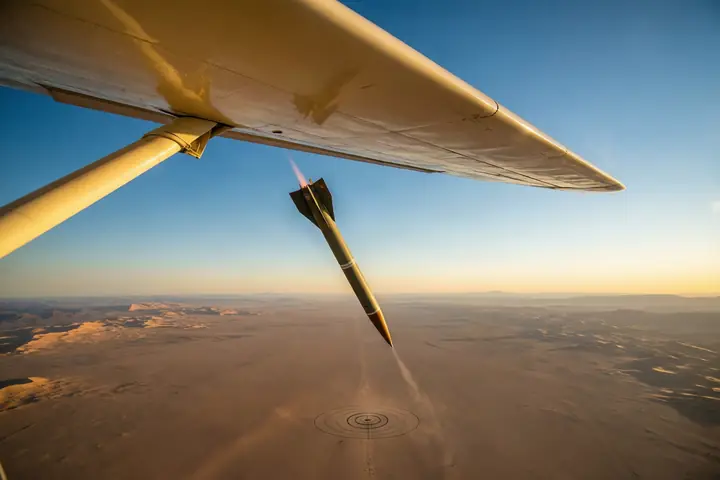
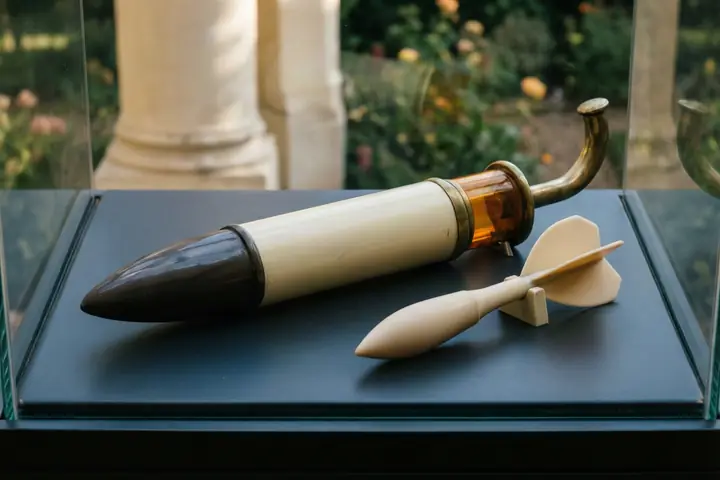
Air-to-Surface Missile
The Angel of the Revolution, George Griffith · 1893
A projectile launched from an aircraft at a target on the ground below.
built in the 1940s, about 50 years after it was imagined
A large prizeA government pays; existing firms keep the restas a model judges it
Why
A large prize. Striking an enemy from the air changed how wars are fought and supports a whole industry of warplanes and their arms.
Who is paid. Armies buy it with public money, and since rival makers can copy it the established arms suppliers with standing army contracts collect.
A model's judgement, not a reading, of the idea as if it worked the way its story promises. The model is fairly sure of this one.
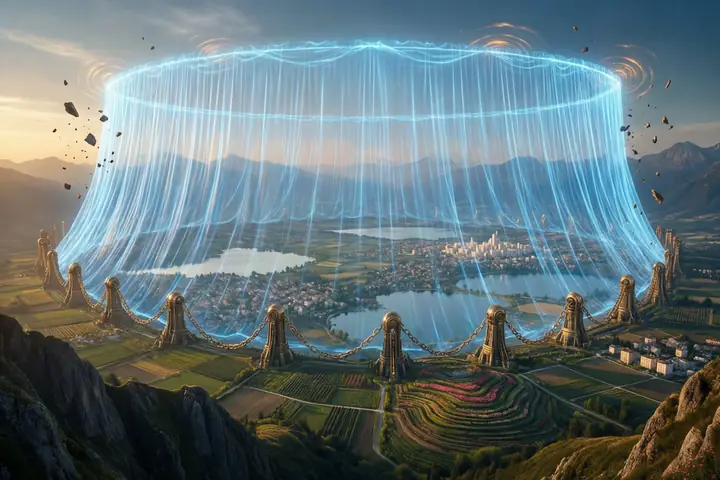
Illustration made with AI image generation; not evidence.
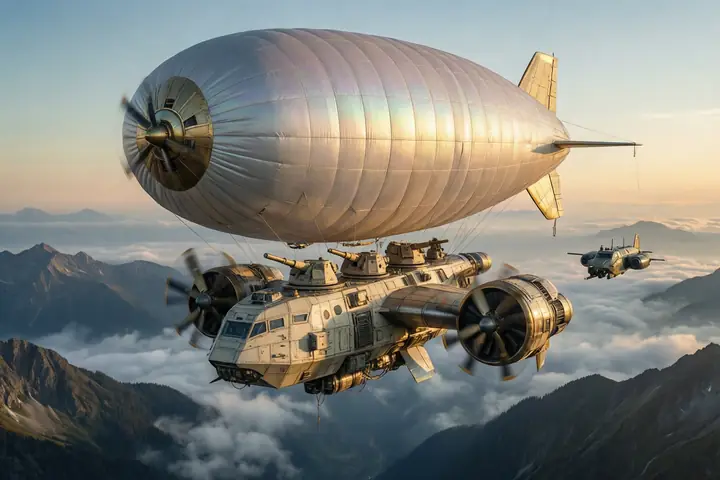
War-Balloon (Navigable Aerostat)
The Angel of the Revolution, George Griffith · 1893
Giant steerable gas-filled airships used to fight wars from above.
not yet built · AI models' likeliest decade: the 2020s
A large prizeA government pays; existing firms keep the restas a model judges it
Why
A large prize. Judged on the promise of ruling a war from the air, which real airships never delivered, a fighting aircraft fleet is among the biggest things a state buys.
Who is paid. Armies pay, and since the designs can be copied, the builders that already own the works and hold the army's supply contracts collect.
A model's judgement, not a reading, of the idea as if it worked the way its story promises. The model is fairly sure of this one.
Illustration made with AI image generation; not evidence.
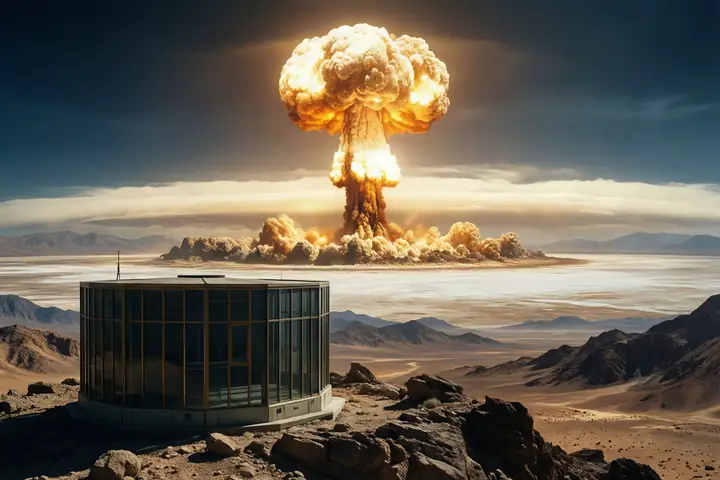
Atomic Energy
The Crack of Doom, Robert Cromie · 1895
Releasing the energy locked inside atoms to create an enormously destructive explosion.
built in 1939, 44 years after it was imagined
A large prizeA government pays; permit holders keep the restas a model judges it
Why
A large prize. A weapon that can end a war or prevent one is worth a great deal to the state that holds it.
Who is paid. Only governments pay for it, and only the handful of builders a state allows near the material may make it.
A model's judgement, not a reading, of the idea as if it worked the way its story promises. The model is fairly sure of this one.
Illustration made with AI image generation; not evidence.
Fulgurator
Facing The Flag, Jules Verne · 1896
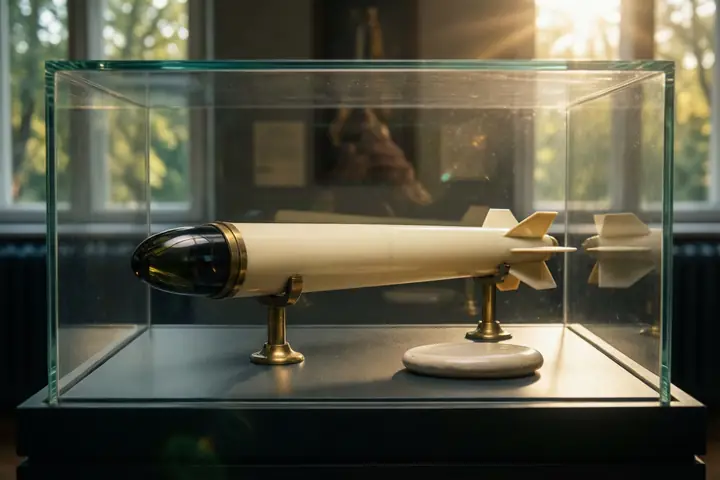
A self-propelled explosive projectile with enormous destructive power.
not yet built · AI models' likeliest decade: the 2020s
A large prizeA government pays; existing firms keep the restas a model judges it
Why
A large prize. Self-propelled and guided explosives became the main heavy weapon of modern forces, an industry of its own.
Who is paid. Armies pay, and since the idea is easy to copy once shown, the arms firms that already hold the supply contracts and factories collect.
A model's judgement, not a reading, of the idea as if it worked the way its story promises. The model is fairly sure of this one.
Illustration made with AI image generation; not evidence.
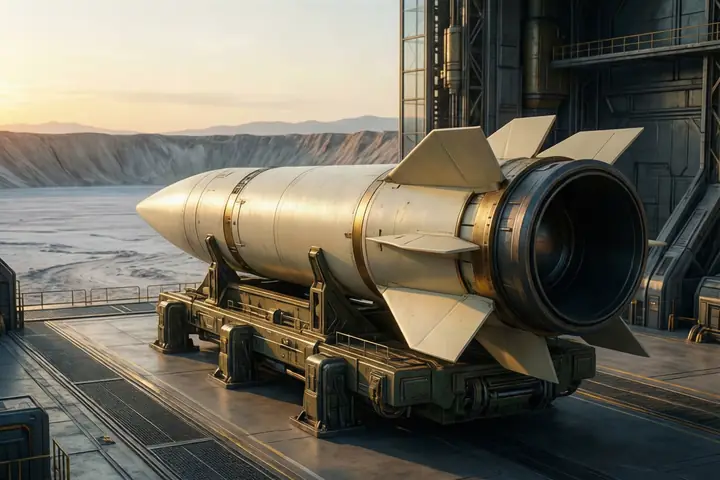
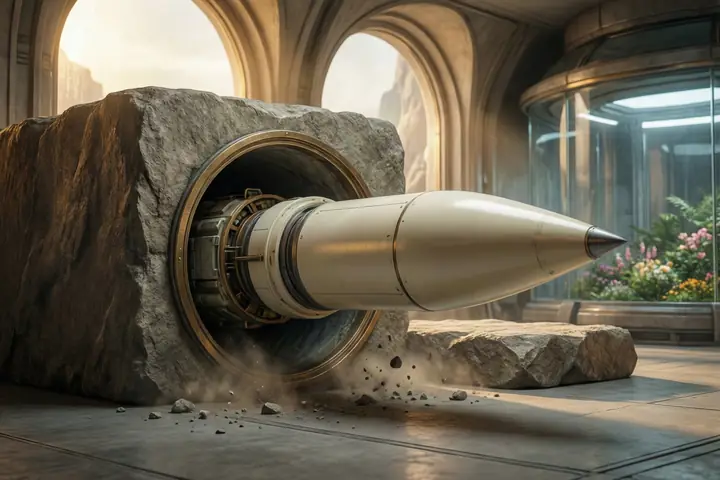
Automatic Shell
The Great Stone of Sardis, Frank Stockton · 1897
A self-driven shell that tunnels through any barrier, even straight through the planet.
not yet built · AI models judge it not physically possible
A large prizeA government pays; existing firms keep the restas a model judges it
Why
A large prize. Judged as if it worked, a shell that passes through any barrier leaves no armour or shelter able to protect, a wider use than a weapon made only against buried shelters.
Who is paid. Armies buy it with public money, and assuming rival makers learn to copy it the established arms suppliers with standing army contracts collect.
A model's judgement, not a reading, of the idea as if it worked the way its story promises. The model is not very sure of this one.
Illustration made with AI image generation; not evidence.
Magnetic Shell
The Great Stone of Sardis, Frank Stockton · 1897
An explosive projectile that is drawn toward iron-hulled warships by magnetism.
not yet built · AI models' likeliest decade: the 2020s
A large prizeA government pays; existing firms keep the restas a model judges it
Why
A large prize. Self-propelled and guided explosives became the main heavy weapon of modern forces, an industry of its own.
Who is paid. Armies pay, and since the idea is easy to copy once shown, the arms firms that already hold the supply contracts and factories collect.
A model's judgement, not a reading, of the idea as if it worked the way its story promises. The model is fairly sure of this one.
Illustration made with AI image generation; not evidence.
Biological Warfare
The War of the Worlds, H.G. Wells · 1898
Deliberately using germs to sicken or destroy an enemy.
built in the 1900s, about 10 years after it was imagined
No prizeNothing is soldas a model judges it
Why
No prize. Spreading disease on purpose is a hazard to everyone and no one may lawfully buy it.
Who is paid. Nothing is sold, so nobody pays and no seller keeps anything.
A model's judgement, not a reading, of the idea as if it worked the way its story promises. The model is fairly sure of this one.
Illustration made with AI image generation; not evidence.
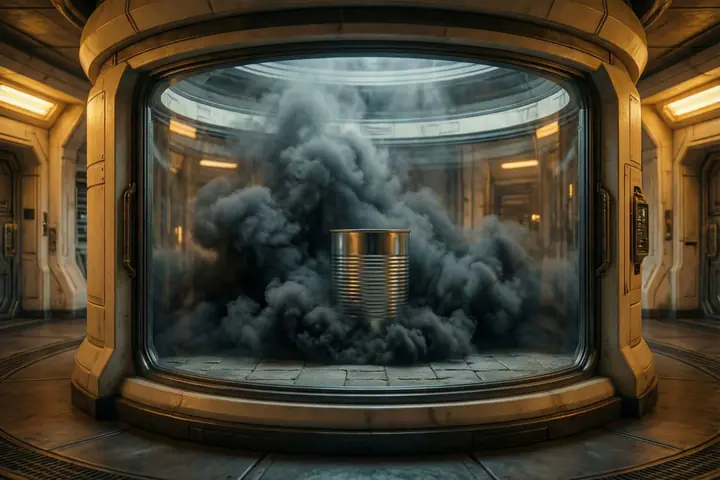
Black Smoke
The War of the Worlds, H.G. Wells · 1898
A lethal vapour released from canisters that spreads over the ground and kills.
not yet built · AI models' likeliest decade: the 2020s
No prizeNothing is soldas a model judges it
Why
No prize. It is a poison meant to kill or fell people in bulk, which no one may lawfully buy.
Who is paid. Nothing is sold, so nobody pays and no seller keeps anything.
A model's judgement, not a reading, of the idea as if it worked the way its story promises. The model is fairly sure of this one.
Illustration made with AI image generation; not evidence.
Disintegrator
Edison's Conquest of Mars, Garrett P. Serviss · 1898
A weapon that shatters anything it strikes into scattered molecules.
not yet built · AI models judge it not physically possible
A large prizeA government pays; existing firms keep the restas a model judges it
Why
A large prize. Judged as if it worked, a weapon that destroys whatever it strikes leaves no armour, wall or hull able to protect, which would change how wars are fought.
Who is paid. Armies buy it with public money, and assuming rival makers learn to copy it the established arms suppliers with standing army contracts collect.
A model's judgement, not a reading, of the idea as if it worked the way its story promises. The model is not very sure of this one.
Illustration made with AI image generation; not evidence.
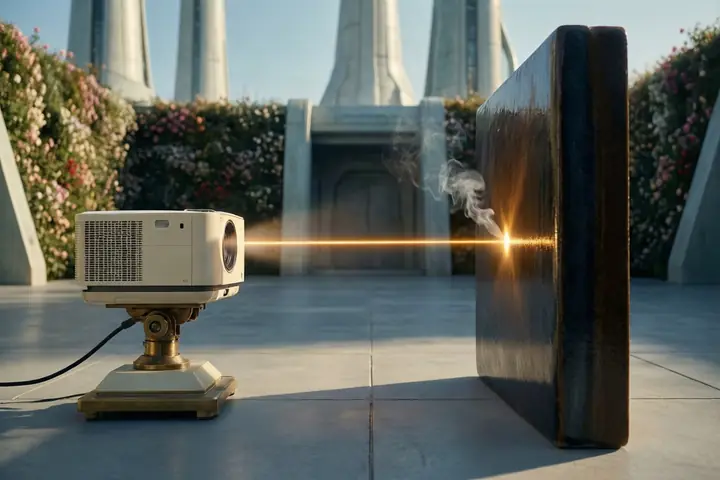
Heat Ray
The War of the Worlds, H.G. Wells · 1898
A weapon that projects an invisible beam of intense heat to burn targets.
built in the 1960s, about 70 years after it was imagined
A small prizeA government pays; existing firms keep the restas a model judges it
Why
A small prize. Assuming a soldier carries it, it does much the same job as a gun, so the gain over a gun is modest.
Who is paid. Armies buy it with public money, and since rival makers can copy it the established arms suppliers with standing army contracts collect.
A model's judgement, not a reading, of the idea as if it worked the way its story promises. The model is not very sure of this one.
Illustration made with AI image generation; not evidence.
Aerial Dynamite Ships
Looking Forward: A Dream of the United States of the Americas in 1999, Arthur Bird · 1899
Aircraft that fly over enemy territory and release bombs onto targets below.
built in the 1910s, about 20 years after it was imagined
A large prizeA government pays; existing firms keep the restas a model judges it
Why
A large prize. Striking an enemy from the air changed how wars are fought and supports a whole industry of warplanes and their arms.
Who is paid. Armies buy it with public money, and since rival makers can copy it the established arms suppliers with standing army contracts collect.
A model's judgement, not a reading, of the idea as if it worked the way its story promises. The model is fairly sure of this one.
Illustration made with AI image generation; not evidence.
Aerial Navies
The World Masters, George Griffith · 1903
Fleets of aircraft in great numbers used to overwhelm defences on the ground.
built in the 1910s, about 10 years after it was imagined
A large prizeA government pays; existing firms keep the restas a model judges it
Why
A large prize. Striking an enemy from the air changed how wars are fought and supports a whole industry of warplanes and their arms.
Who is paid. Armies buy it with public money, and since rival makers can copy it the established arms suppliers with standing army contracts collect.
A model's judgement, not a reading, of the idea as if it worked the way its story promises. The model is fairly sure of this one.
Illustration made with AI image generation; not evidence.
Death-Ray
The World Masters, George Griffith · 1903
A narrow beam of energy that burns living tissue away from the skeleton.
not yet built · AI models' likeliest decade: the 2040s
A small prizeA government pays; existing firms keep the restas a model judges it
Why
A small prize. Assuming a soldier carries it, it does much the same job as a gun, so the gain over a gun is modest.
Who is paid. Armies buy it with public money, and since rival makers can copy it the established arms suppliers with standing army contracts collect.
A model's judgement, not a reading, of the idea as if it worked the way its story promises. The model is not very sure of this one.
Illustration made with AI image generation; not evidence.
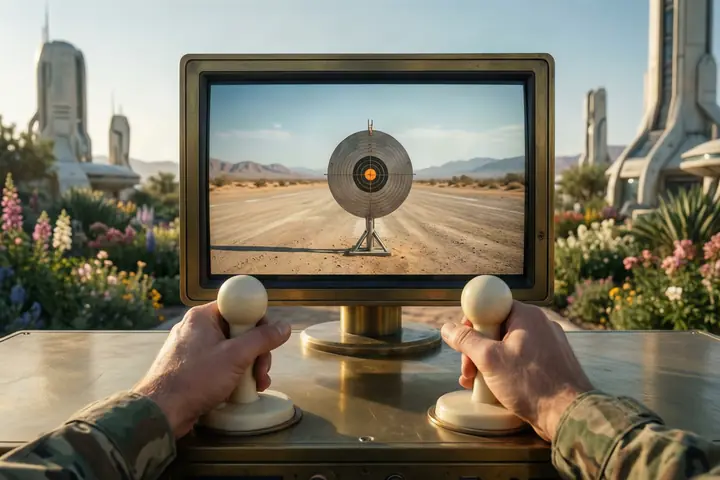
Joystick Controls w/Remote Display
The Land Ironclads, H.G. Wells · 1903
A weapon aimed and fired through hand controls and a remote viewing screen rather than direct sight.
built in the 1940s, about 40 years after it was imagined
A small prizeA government pays; existing firms keep the restas a model judges it
Why
A small prize. Aiming and firing through a screen and hand controls keeps the crew under cover, but it is a fitting added to weapons, not a new one.
Who is paid. Armies pay, and the idea is easy to copy, so the arms firms that already build the guns and vehicles fit it and collect.
A model's judgement, not a reading, of the idea as if it worked the way its story promises. The model is not very sure of this one.
Illustration made with AI image generation; not evidence.
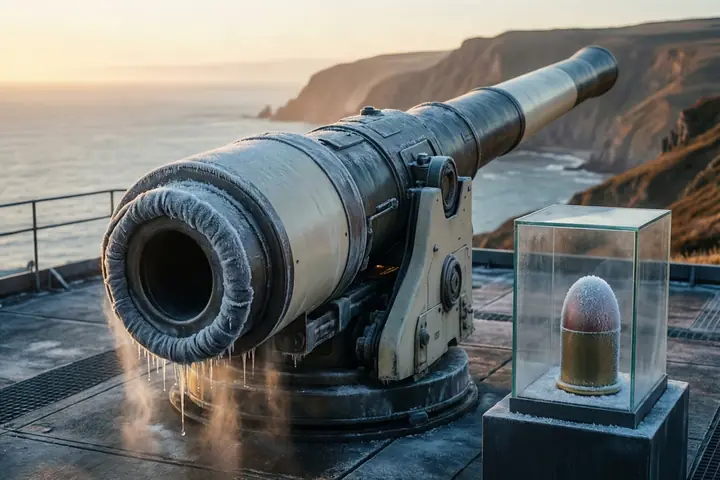
Vandelite Gun
The World Masters, George Griffith · 1903
An artillery piece that chills its explosive charge solid so it survives being fired.
not yet built · AI models' likeliest decade: the 2030s
A small prizeA government pays; existing firms keep the restas a model judges it
Why
A small prize. A cannon that freezes its charge so it survives firing is a modest improvement to artillery armies already have.
Who is paid. Armies pay, and such guns are easy to copy, so the arms makers that already hold supply contracts collect.
A model's judgement, not a reading, of the idea as if it worked the way its story promises. The model is fairly sure of this one.
Illustration made with AI image generation; not evidence.
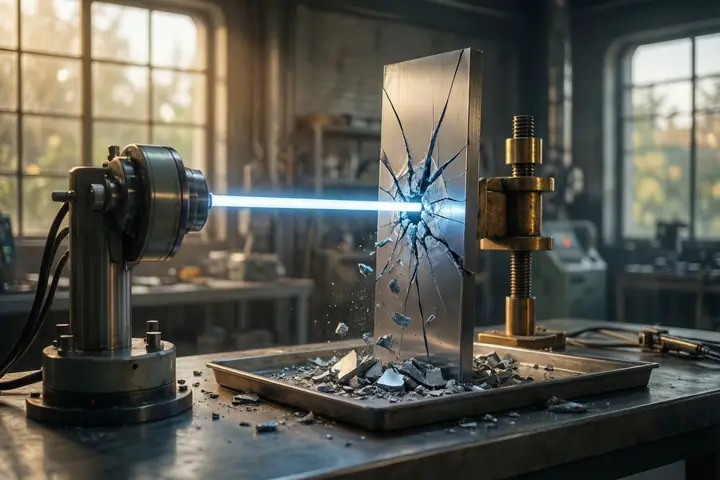
Demagnitizing Ray
The Lord of Labour, George Griffith · 1911
A beam that turns hard steel fragile enough to crumble.
not yet built · AI models judge it not physically possible
A large prizeA government pays; existing firms keep the restas a model judges it
Why
A large prize. Judged as if it worked, a beam that makes steel crumble would leave steel ships, vehicles and guns useless, which would change how wars are fought.
Who is paid. Armies buy it with public money, and assuming rival makers learn to copy it the established arms suppliers with standing army contracts collect.
A model's judgement, not a reading, of the idea as if it worked the way its story promises. The model is not very sure of this one.
Illustration made with AI image generation; not evidence.
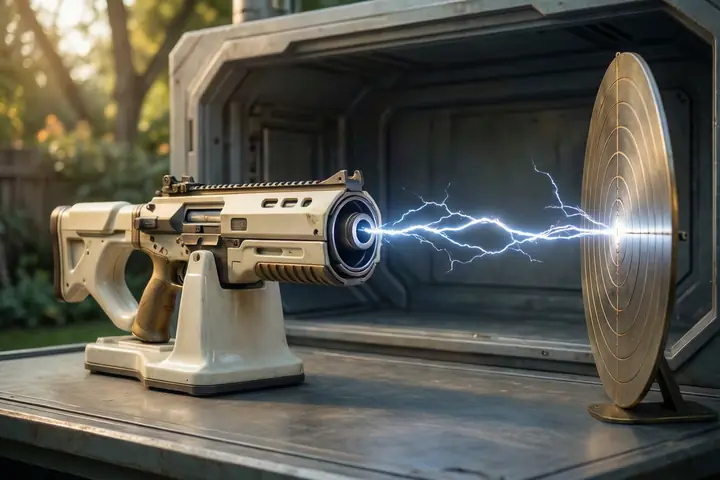
Electric Rifle
Tom Swift and His Electric Rifle, Victor Appleton · 1911
A gun that fires an electric discharge at a target.
built in the 1970s, about 60 years after it was imagined
A small prizeA government pays; existing firms keep the restas a model judges it
Why
A small prize. The description promises only a gun that fires an electric discharge, not a sure and harmless knock-out, so it is one more kind of gun and a niche police tool.
Who is paid. Assuming police are the main buyers, it is simple to copy and the suppliers police already use collect.
A model's judgement, not a reading, of the idea as if it worked the way its story promises. The model is not very sure of this one.
Illustration made with AI image generation; not evidence.
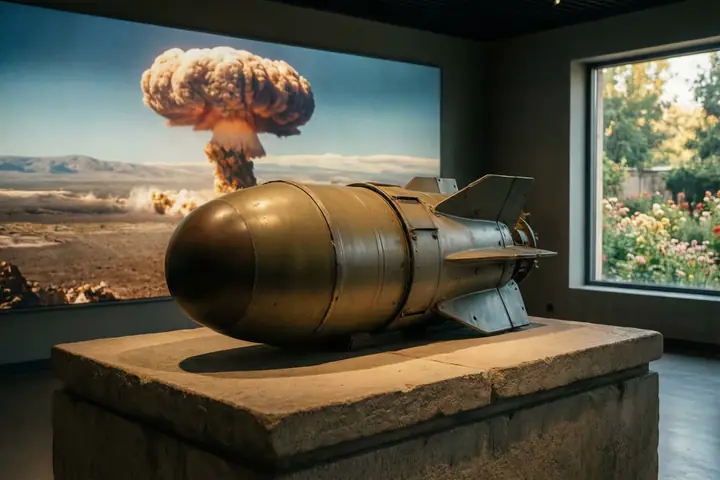
Atomic Bomb
The World Set Free, H.G. Wells · 1914
An explosive weapon powered by a nuclear chain reaction.
built in 1945, 31 years after it was imagined
A large prizeA government pays; permit holders keep the restas a model judges it
Why
A large prize. A weapon that can end a war or prevent one is worth a great deal to the state that holds it.
Who is paid. Only governments pay for it, and only the handful of builders a state allows near the material may make it.
A model's judgement, not a reading, of the idea as if it worked the way its story promises. The model is fairly sure of this one.
Illustration made with AI image generation; not evidence.
Radioactive Ruin
The World Set Free, H.G. Wells · 1914
Long-lasting contamination that leaves land uninhabitable for generations after nuclear war.
not yet built · AI models' likeliest decade: the 2020s
No prizeNothing is soldas a model judges it
Why
No prize. Land poisoned for generations is a harm left by war and not a thing anyone would pay for.
Who is paid. Nothing is sold, so there is no payer and no seller.
A model's judgement, not a reading, of the idea as if it worked the way its story promises. The model is fairly sure of this one.
Illustration made with AI image generation; not evidence.
Ray gun
The Messiah of the Cylinder, Victor Rousseau · 1917
A weapon that fires a destructive energy beam.
not yet built · AI models' likeliest decade: the 2030s
A small prizeA government pays; existing firms keep the restas a model judges it
Why
A small prize. Assuming a soldier carries it, it does much the same job as a gun, so the gain over a gun is modest.
Who is paid. Armies buy it with public money, and since rival makers can copy it the established arms suppliers with standing army contracts collect.
A model's judgement, not a reading, of the idea as if it worked the way its story promises. The model is not very sure of this one.
Illustration made with AI image generation; not evidence.
Blaster
When the Green Star Waned, Nictzin Dyalhis · 1925
A weapon firing an energy beam that wrecks anything it hits.
not yet built · AI models' likeliest decade: the 2030s
A small prizeA government pays; existing firms keep the restas a model judges it
Why
A small prize. Assuming a soldier carries it, it does much the same job as a gun, so the gain over a gun is modest.
Who is paid. Armies buy it with public money, and since rival makers can copy it the established arms suppliers with standing army contracts collect.
A model's judgement, not a reading, of the idea as if it worked the way its story promises. The model is not very sure of this one.
Illustration made with AI image generation; not evidence.
Blue Ray of Death
Across Space, Edmond Hamilton · 1926
A beam that instantly burns a living creature to ash.
not yet built · AI models could not judge when it may arrive
A small prizeA government pays; existing firms keep the restas a model judges it
Why
A small prize. Assuming a soldier carries it, it does much the same job as a gun, so the gain over a gun is modest.
Who is paid. Armies buy it with public money, and since rival makers can copy it the established arms suppliers with standing army contracts collect.
A model's judgement, not a reading, of the idea as if it worked the way its story promises. The model is not very sure of this one.
Illustration made with AI image generation; not evidence.
Paralyzing Cone
The Atomic Conquerors, Edmond Hamilton · 1927
A weapon that locks up a target's muscles so they cannot move.
not yet built · AI models' likeliest decade: the 2020s
A large prizeA government pays; existing firms keep the restas a model judges it
Why
A large prize. Judged as if it worked, a weapon that surely stops a person at a distance without harming them does what no gun can, and police and guards everywhere would carry it in place of firearms.
Who is paid. Police forces and armies buy it with public money, and since rival makers could copy it once it was shown, the suppliers that already hold their contracts collect.
A model's judgement, not a reading, of the idea as if it worked the way its story promises. The model is not very sure of this one.
Illustration made with AI image generation; not evidence.
Death-Beam
Crashing Suns, Edmond Hamilton · 1928
Bright energy beams fired between ships in space combat.
not yet built · AI models' likeliest decade: the 2050s
A large prizeA government pays; existing firms keep the restas a model judges it
Why
A large prize. A heavy beam that can strike ships or aircraft at the speed of light would reshape how fleets are armed and defended.
Who is paid. Armies buy it with public money, and since rival makers can copy it the established arms suppliers with standing army contracts collect.
A model's judgement, not a reading, of the idea as if it worked the way its story promises. The model is not very sure of this one.
Illustration made with AI image generation; not evidence.
Disintegrator Ray (Dis Ray)
Armageddon: 2419 A.D., Philip Frances Nowlan · 1928
A beam that makes matter vanish entirely.
not yet built · AI models judge it not physically possible
A large prizeA government pays; existing firms keep the restas a model judges it
Why
A large prize. Judged as if it worked, a weapon that destroys whatever it strikes leaves no armour, wall or hull able to protect, which would change how wars are fought.
Who is paid. Armies buy it with public money, and assuming rival makers learn to copy it the established arms suppliers with standing army contracts collect.
A model's judgement, not a reading, of the idea as if it worked the way its story promises. The model is not very sure of this one.
Illustration made with AI image generation; not evidence.
Needle Pipe
Beyond the Stars, Ray Cummings · 1928
A weapon that fires metal splinters at nearly the speed of light.
not yet built · AI models' likeliest decade: 2100 or later
A small prizeA government pays; existing firms keep the restas a model judges it
Why
A small prize. Assuming a soldier carries it, a gun that throws splinters faster than any other still does the job guns already do.
Who is paid. Armies buy it with public money, and assuming rival makers learn to copy it the established arms suppliers with standing army contracts collect.
A model's judgement, not a reading, of the idea as if it worked the way its story promises. The model is not very sure of this one.
Illustration made with AI image generation; not evidence.
Neutralizing Wall
The Golden Girl of Munan, Harl Vincent · 1928
A barrier that blocks electrical and mechanical disturbances so whatever lies behind it cannot be detected.
not yet built · AI models could not judge when it may arrive
A large prizeA government pays; existing firms keep the restas a model judges it
Why
A large prize. Judged as if it worked, a field that hides whole ships or bases from watchers would change how forces are found and struck.
Who is paid. Assuming it is bought to hide forces in war, governments pay, and assuming rivals learn to copy it the established arms suppliers collect.
A model's judgement, not a reading, of the idea as if it worked the way its story promises. The model is not very sure of this one.
Illustration made with AI image generation; not evidence.
Pain Ray
Crashing Suns, Edmond Hamilton · 1928
A weapon that causes intense pain by stimulating nerves from a distance.
not yet built · AI models' likeliest decade: the 2020s
A small prizeA government pays; existing firms keep the restas a model judges it
Why
A small prize. Unlike a device for hurting a held prisoner, a beam that drives off free people through pain is a weapon police may lawfully carry, but it only moves a crowd along, a niche.
Who is paid. Police and prison services pay, and the firms that already supply them would add it to their range and collect.
A model's judgement, not a reading, of the idea as if it worked the way its story promises. The model is not very sure of this one.
Illustration made with AI image generation; not evidence.
Rocket Gun
Armageddon: 2419 A.D., Philip Frances Nowlan · 1928
A shoulder-fired launcher that shoots small rockets.
built in the 1940s, about 20 years after it was imagined
A small prizeA government pays; existing firms keep the restas a model judges it
Why
A small prize. A launcher one soldier carries is one more kind of firearm, a modest step over the guns armies already have.
Who is paid. Armies buy it with public money, and since rival makers can copy it the established arms suppliers with standing army contracts collect.
A model's judgement, not a reading, of the idea as if it worked the way its story promises. The model is not very sure of this one.
Illustration made with AI image generation; not evidence.
Atomic Shell
Buck Rogers, 2430 AD, Philip Nowlan (w/D. Calkins · 1929
An artillery round carrying a nuclear warhead.
not yet built · AI models' likeliest decade: the 2020s
A large prizeA government pays; permit holders keep the restas a model judges it
Why
A large prize. A weapon that can end a war or prevent one is worth a great deal to the state that holds it.
Who is paid. Only governments pay for it, and only the handful of builders a state allows near the material may make it.
A model's judgement, not a reading, of the idea as if it worked the way its story promises. The model is fairly sure of this one.
Illustration made with AI image generation; not evidence.
Disrupter Ray (Molecule Disrupter)
The Silent Destroyer, Henri Dahl Juve · 1929
A beam that breaks the bonds holding matter together so solid objects fall apart.
not yet built · AI models judge it not physically possible
A large prizeA government pays; existing firms keep the restas a model judges it
Why
A large prize. Judged as if it worked, a weapon that destroys whatever it strikes leaves no armour, wall or hull able to protect, which would change how wars are fought.
Who is paid. Armies buy it with public money, and assuming rival makers learn to copy it the established arms suppliers with standing army contracts collect.
A model's judgement, not a reading, of the idea as if it worked the way its story promises. The model is not very sure of this one.
Illustration made with AI image generation; not evidence.
Fan Ray
The Onslaught From Venus, Frank Phillips · 1929
A defensive energy barrier projected outward in a widening cone to block attacks.
not yet built · AI models judge it not physically possible
A large prizeA government pays; existing firms keep the restas a model judges it
Why
A large prize. Judged as if it worked, a barrier that stops attacks would change how ships, bases and cities are defended.
Who is paid. Assuming it is bought for defence in war, governments pay, and assuming rivals learn to copy it the established arms suppliers with standing army contracts collect.
A model's judgement, not a reading, of the idea as if it worked the way its story promises. The model is not very sure of this one.
Illustration made with AI image generation; not evidence.
Force-Ray
Buck Rogers, 2430 AD, Philip Nowlan (w/D. Calkins · 1929
A handheld shaft that projects a beam of pure force to strike or push targets.
not yet built · AI models judge it not physically possible
A small prizeA government pays; existing firms keep the restas a model judges it
Why
A small prize. Judged as if it worked, and assuming a soldier carries it, a beam that shoves or strikes does much the same job as a gun.
Who is paid. Armies buy it with public money, and assuming rival makers learn to copy it the established arms suppliers with standing army contracts collect.
A model's judgement, not a reading, of the idea as if it worked the way its story promises. The model is not very sure of this one.
Illustration made with AI image generation; not evidence.
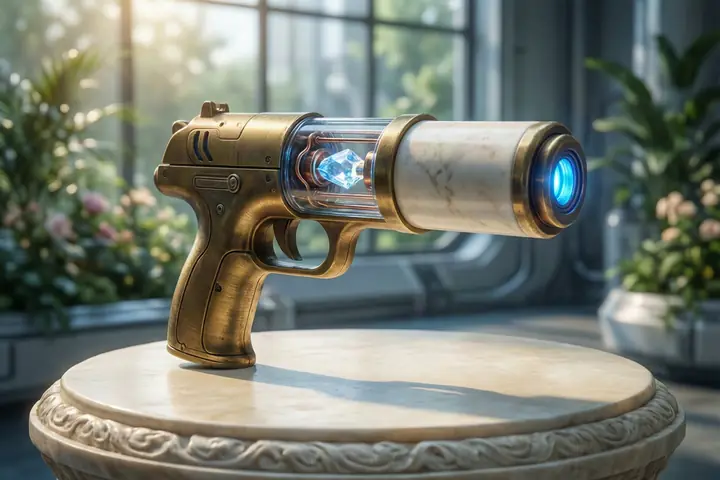
Ray-Pistol
The War of the Planets, Harl Vincent · 1929
A pistol that fires a beam of energy instead of bullets.
not yet built · AI models' likeliest decade: the 2070s
A small prizeA government pays; existing firms keep the restas a model judges it
Why
A small prize. A beam weapon carried in the hand does much the same job as a gun, so the gain over a gun is modest.
Who is paid. Armies buy it with public money, and since rival makers can copy it the established arms suppliers with standing army contracts collect.
A model's judgement, not a reading, of the idea as if it worked the way its story promises. The model is fairly sure of this one.
Illustration made with AI image generation; not evidence.
Death Projector
The Stolen Mind, M.L. Staley · 1930
A weapon that sprays a broad fan of lethal radiation across everything before it.
not yet built · AI models could not judge when it may arrive
A small prizeA government pays; existing firms keep the restas a model judges it
Why
A small prize. Assuming a soldier carries it, it does much the same job as a gun, so the gain over a gun is modest.
Who is paid. Armies buy it with public money, and since rival makers can copy it the established arms suppliers with standing army contracts collect.
A model's judgement, not a reading, of the idea as if it worked the way its story promises. The model is not very sure of this one.
Illustration made with AI image generation; not evidence.
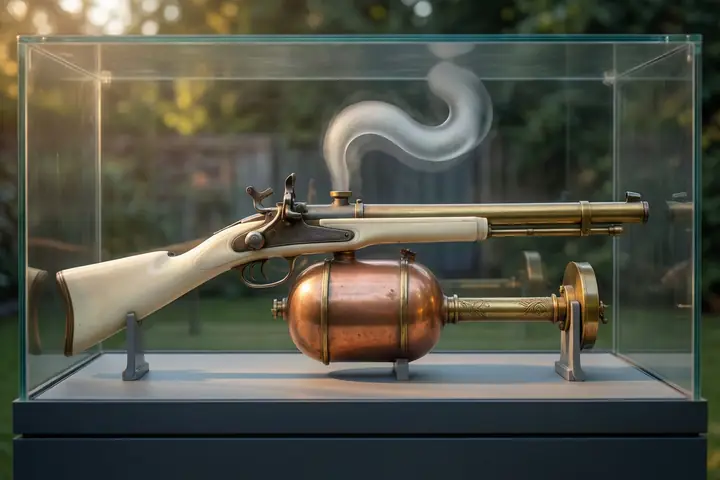
Flame Projector
Water-Bound World, Harl Vincent · 1930
A portable weapon that sprays a jet of burning fuel.
already existed before the story (the 1900s)
A small prizeA government pays; existing firms keep the restas a model judges it
Why
A small prize. It is one more kind of firearm, a modest step over the guns armies already carry.
Who is paid. Armies buy it with public money, and since rival makers can copy it the established arms suppliers with standing army contracts collect.
A model's judgement, not a reading, of the idea as if it worked the way its story promises. The model is fairly sure of this one.
Illustration made with AI image generation; not evidence.
Paralyzing Ray
Brigands of the Moon, Ray Cummings · 1930
A beam that freezes a target's muscles so they cannot move.
not yet built · AI models could not judge when it may arrive
A large prizeA government pays; existing firms keep the restas a model judges it
Why
A large prize. Judged as if it worked, a weapon that surely stops a person at a distance without harming them does what no gun can, and police and guards everywhere would carry it in place of firearms.
Who is paid. Police forces and armies buy it with public money, and since rival makers could copy it once it was shown, the suppliers that already hold their contracts collect.
A model's judgement, not a reading, of the idea as if it worked the way its story promises. The model is not very sure of this one.
Illustration made with AI image generation; not evidence.
Pencil Heat Ray
Brigands of the Moon, Ray Cummings · 1930
A slim portable weapon that burns targets with a focused beam of heat.
not yet built · AI models' likeliest decade: the 2070s
A small prizeA government pays; existing firms keep the restas a model judges it
Why
A small prize. Carried in the hand, it does much the same job as a gun, so the gain over a gun is modest.
Who is paid. Armies buy it with public money, and since rival makers can copy it the established arms suppliers with standing army contracts collect.
A model's judgement, not a reading, of the idea as if it worked the way its story promises. The model is fairly sure of this one.
Illustration made with AI image generation; not evidence.
Ray Gun (Handheld)
The Black Star Passes, John W. Campbell · 1930
A handgun-shaped weapon that fires bolts of energy.
not yet built · AI models' likeliest decade: the 2070s
A small prizeA government pays; existing firms keep the restas a model judges it
Why
A small prize. A beam weapon carried in the hand does much the same job as a gun, so the gain over a gun is modest.
Who is paid. Armies buy it with public money, and since rival makers can copy it the established arms suppliers with standing army contracts collect.
A model's judgement, not a reading, of the idea as if it worked the way its story promises. The model is fairly sure of this one.
Illustration made with AI image generation; not evidence.
Ray Pistol
The Black Star Passes, John W. Campbell · 1930
A hand-carried weapon that projects a damaging beam of radiant energy.
not yet built · AI models' likeliest decade: the 2070s
A small prizeA government pays; existing firms keep the restas a model judges it
Why
A small prize. A beam weapon carried in the hand does much the same job as a gun, so the gain over a gun is modest.
Who is paid. Armies buy it with public money, and since rival makers can copy it the established arms suppliers with standing army contracts collect.
A model's judgement, not a reading, of the idea as if it worked the way its story promises. The model is fairly sure of this one.
Illustration made with AI image generation; not evidence.
Shield
Skylark Three, E.E. 'Doc' Smith · 1930
An invisible protective energy barrier that blocks incoming attacks.
not yet built · AI models could not judge when it may arrive
A large prizeA government pays; existing firms keep the restas a model judges it
Why
A large prize. Judged as if it worked, a barrier that stops attacks would change how ships, bases and cities are defended.
Who is paid. Assuming it is bought for defence in war, governments pay, and assuming rivals learn to copy it the established arms suppliers with standing army contracts collect.
A model's judgement, not a reading, of the idea as if it worked the way its story promises. The model is not very sure of this one.
Illustration made with AI image generation; not evidence.
Annihilator Beam
The Conquest of Gola, L.F. Stone · 1931
A lethal ray that breaks down any solid object it strikes until nothing remains.
not yet built · AI models could not judge when it may arrive
A large prizeA government pays; existing firms keep the restas a model judges it
Why
A large prize. Judged as if it worked, a weapon that destroys whatever it strikes leaves no armour, wall or hull able to protect, which would change how wars are fought.
Who is paid. Armies buy it with public money, and assuming rival makers learn to copy it the established arms suppliers with standing army contracts collect.
A model's judgement, not a reading, of the idea as if it worked the way its story promises. The model is not very sure of this one.
Illustration made with AI image generation; not evidence.
Blue Beam
The Reign of the Masters, Edmond Hamilton · 1931
A directed energy weapon whose pale blue beam kills whoever it strikes.
not yet built · AI models' likeliest decade: the 2030s
A small prizeA government pays; existing firms keep the restas a model judges it
Why
A small prize. Assuming a soldier carries it, it does much the same job as a gun, so the gain over a gun is modest.
Who is paid. Armies buy it with public money, and since rival makers can copy it the established arms suppliers with standing army contracts collect.
A model's judgement, not a reading, of the idea as if it worked the way its story promises. The model is not very sure of this one.
Illustration made with AI image generation; not evidence.
Disintegrator Plate Ray
The Revolt of the Machines, Nat Schachner (w. AL Zagat · 1931
A beam tool that slices through steel with almost no resistance.
not yet built · AI models' likeliest decade: the 2020s
A small prizeBusinesses pay; no seller keeps muchas a model judges it
Why
A small prize. Assuming it is a cutting beam for workshops, it speeds up cutting steel but tools for that already exist.
Who is paid. Metalworking firms buy it, and many toolmakers can build a cutting beam, so no seller keeps much.
A model's judgement, not a reading, of the idea as if it worked the way its story promises. The model is not very sure of this one.
Illustration made with AI image generation; not evidence.
Disruptor Tube (Disruptor Ray)
The Emperor of the Stars, Nat Schachner (w. AL Zagat · 1931
A handheld weapon that breaks the forces holding atoms together, making the target fall apart.
not yet built · AI models judge it not physically possible
A large prizeA government pays; existing firms keep the restas a model judges it
Why
A large prize. Judged as if it worked, a weapon that destroys whatever it strikes leaves no armour, wall or hull able to protect, which would change how wars are fought.
Who is paid. Armies buy it with public money, and assuming rival makers learn to copy it the established arms suppliers with standing army contracts collect.
A model's judgement, not a reading, of the idea as if it worked the way its story promises. The model is not very sure of this one.
Illustration made with AI image generation; not evidence.
Flame Pistol
Invisible Ships, Harl Vincent · 1931
A handheld flamethrower used to burn enemies.
not yet built · AI models' likeliest decade: the 2020s
A small prizeA government pays; existing firms keep the restas a model judges it
Why
A small prize. It is one more kind of firearm, a modest step over the guns armies already carry.
Who is paid. Armies buy it with public money, and since rival makers can copy it the established arms suppliers with standing army contracts collect.
A model's judgement, not a reading, of the idea as if it worked the way its story promises. The model is fairly sure of this one.
Illustration made with AI image generation; not evidence.
Magnetic Ray
The Exiles of Venus, Jim Vanny · 1931
Projects a focused, far-reaching stream of magnetic force at a chosen target.
not yet built · AI models could not judge when it may arrive
A small prizeA government pays; existing firms keep the restas a model judges it
Why
A small prize. Judged as if it worked, and assuming a soldier carries it, a beam that shoves or strikes does much the same job as a gun.
Who is paid. Armies buy it with public money, and assuming rival makers learn to copy it the established arms suppliers with standing army contracts collect.
A model's judgement, not a reading, of the idea as if it worked the way its story promises. The model is not very sure of this one.
Illustration made with AI image generation; not evidence.
Matter Annihilation Ray
Twelve Hours To Live, Jack Williamson · 1931
A weapon beam that collapses the atoms of ordinary material so the target simply ceases to exist.
not yet built · AI models judge it not physically possible
A large prizeA government pays; existing firms keep the restas a model judges it
Why
A large prize. Judged as if it worked, a weapon that destroys whatever it strikes leaves no armour, wall or hull able to protect, which would change how wars are fought.
Who is paid. Armies buy it with public money, and assuming rival makers learn to copy it the established arms suppliers with standing army contracts collect.
A model's judgement, not a reading, of the idea as if it worked the way its story promises. The model is not very sure of this one.
Illustration made with AI image generation; not evidence.
Motor Torpedo
The Prince of Space, Jack Williamson · 1931
A self-propelled explosive projectile on Earth that is pushed along by streams of charged particles.
not yet built · AI models' likeliest decade: the 2060s
A large prizeA government pays; existing firms keep the restas a model judges it
Why
A large prize. Self-propelled and guided explosives became the main heavy weapon of modern forces, an industry of its own.
Who is paid. Armies pay, and since the idea is easy to copy once shown, the arms firms that already hold the supply contracts and factories collect.
A model's judgement, not a reading, of the idea as if it worked the way its story promises. The model is fairly sure of this one.
Illustration made with AI image generation; not evidence.
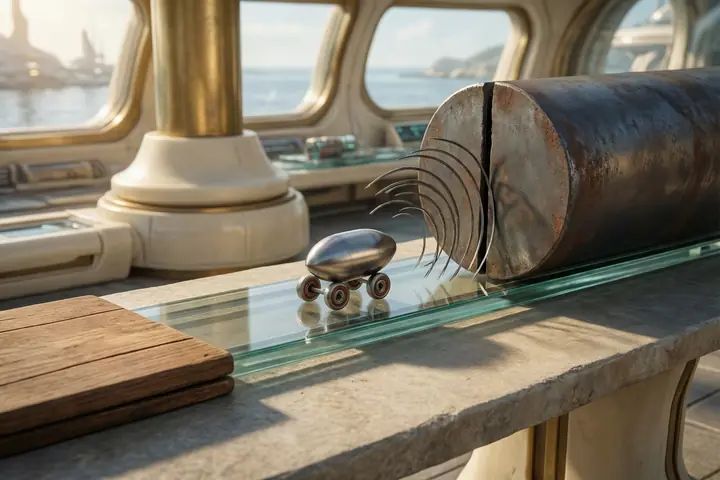
Needle Gun
In the Spacesphere, Charles Cloukey · 1931
A firearm that shoots slender metal darts rather than bullets.
already existed before the story (the 1800s)
A small prizeA government pays; existing firms keep the restas a model judges it
Why
A small prize. It is one more kind of firearm, a modest step over the guns armies already carry.
Who is paid. Armies buy it with public money, and since rival makers can copy it the established arms suppliers with standing army contracts collect.
A model's judgement, not a reading, of the idea as if it worked the way its story promises. The model is fairly sure of this one.
Illustration made with AI image generation; not evidence.
Paralyzing Blast
The Exile of Time, Ray Cummings · 1931
A red light weapon that instantly leaves anyone it touches unable to move.
not yet built · AI models judge it not physically possible
A large prizeA government pays; existing firms keep the restas a model judges it
Why
A large prize. Judged as if it worked, a weapon that surely stops a person at a distance without harming them does what no gun can, and police and guards everywhere would carry it in place of firearms.
Who is paid. Police forces and armies buy it with public money, and since rival makers could copy it once it was shown, the suppliers that already hold their contracts collect.
A model's judgement, not a reading, of the idea as if it worked the way its story promises. The model is not very sure of this one.
Illustration made with AI image generation; not evidence.
Robot-Deranger
The Exile of Time, Nat Schachner (w. AL Zagat · 1931
A jamming device that scrambles a robot's reasoning so it malfunctions.
not yet built · AI models' likeliest decade: the 2020s
A small prizeA government pays; existing firms keep the restas a model judges it
Why
A small prize. A jammer that makes hostile robots malfunction matters only where robots are a threat, which keeps it a niche.
Who is paid. Armies and police pay, and jamming gear is easy to copy, so the electronics firms that already supply them collect.
A model's judgement, not a reading, of the idea as if it worked the way its story promises. The model is not very sure of this one.
Illustration made with AI image generation; not evidence.
Zero-Ray
An Adventure in Futurity, Clark Ashton Smith · 1931
A beam weapon that kills living things by rapidly freezing their flesh.
not yet built · AI models could not judge when it may arrive
A small prizeA government pays; existing firms keep the restas a model judges it
Why
A small prize. Assuming a soldier carries it, it does much the same job as a gun, so the gain over a gun is modest.
Who is paid. Armies buy it with public money, and since rival makers can copy it the established arms suppliers with standing army contracts collect.
A model's judgement, not a reading, of the idea as if it worked the way its story promises. The model is not very sure of this one.
Illustration made with AI image generation; not evidence.
Atomic Pistol
Mutiny on Mercury, Clifford Simak · 1932
A handheld weapon that disintegrates whatever it hits into a fine powder of particles.
not yet built · AI models could not judge when it may arrive
A large prizeA government pays; existing firms keep the restas a model judges it
Why
A large prize. Judged as if it worked, a weapon that destroys whatever it strikes leaves no armour, wall or hull able to protect, which would change how wars are fought.
Who is paid. Armies buy it with public money, and assuming rival makers learn to copy it the established arms suppliers with standing army contracts collect.
A model's judgement, not a reading, of the idea as if it worked the way its story promises. The model is not very sure of this one.
Illustration made with AI image generation; not evidence.
Battle Sphere
The Space Rover, Edwin K. Sloat · 1932
A heavily armoured warship for space built in the shape of a ball.
not yet built · AI models could not judge when it may arrive
A large prizeA government pays; existing firms keep the restas a model judges it
Why
A large prize. Assuming wars are fought in space, warships for it would be an industry of their own.
Who is paid. Only governments field war fleets, and the few yards already able to build large spacecraft would win the orders.
A model's judgement, not a reading, of the idea as if it worked the way its story promises. The model is not very sure of this one.
Illustration made with AI image generation; not evidence.
Electro-Bullet
Pirates of the Gorm, Nat Schachner · 1932
A projectile launched by an electrically powered firearm.
not yet built · AI models could not judge when it may arrive
A small prizeA government pays; existing firms keep the restas a model judges it
Why
A small prize. It is one more kind of firearm, a modest step over the guns armies already carry.
Who is paid. Armies buy it with public money, and since rival makers can copy it the established arms suppliers with standing army contracts collect.
A model's judgement, not a reading, of the idea as if it worked the way its story promises. The model is fairly sure of this one.
Illustration made with AI image generation; not evidence.
Electro-Gun
Pirates of the Gorm, Nat Schachner · 1932
A firearm that uses electric power rather than gunpowder to launch its rounds.
not yet built · AI models could not judge when it may arrive
A small prizeA government pays; existing firms keep the restas a model judges it
Why
A small prize. It is one more kind of firearm, a modest step over the guns armies already carry.
Who is paid. Armies buy it with public money, and since rival makers can copy it the established arms suppliers with standing army contracts collect.
A model's judgement, not a reading, of the idea as if it worked the way its story promises. The model is fairly sure of this one.
Illustration made with AI image generation; not evidence.
Flame Projector
Water-Bound World, Harl Vincent · 1932
A portable weapon that throws a jet of burning fuel from the hand.
built since, date unclear
A small prizeA government pays; existing firms keep the restas a model judges it
Why
A small prize. It is one more kind of firearm, a modest step over the guns armies already carry.
Who is paid. Armies buy it with public money, and since rival makers can copy it the established arms suppliers with standing army contracts collect.
A model's judgement, not a reading, of the idea as if it worked the way its story promises. The model is fairly sure of this one.
Illustration made with AI image generation; not evidence.
Negrian Death Ray
Invaders From The Infinite, John W. Campbell · 1932
A beam weapon that halts the bodily functions of any living target it touches.
not yet built · AI models could not judge when it may arrive
A small prizeA government pays; existing firms keep the restas a model judges it
Why
A small prize. Judged as if it worked, and assuming a soldier carries it, a beam that kills whoever it touches does much the same job as a gun.
Who is paid. Armies buy it with public money, and assuming rival makers learn to copy it the established arms suppliers with standing army contracts collect.
A model's judgement, not a reading, of the idea as if it worked the way its story promises. The model is not very sure of this one.
Illustration made with AI image generation; not evidence.
Protolectric Gun
Electronic Siege, John W. Campbell · 1932
A weapon that fires paired streams of positive and negative subatomic particles at a target.
not yet built · AI models could not judge when it may arrive
A small prizeA government pays; existing firms keep the restas a model judges it
Why
A small prize. Assuming a soldier carries it, it does much the same job as a gun, so the gain over a gun is modest.
Who is paid. Armies buy it with public money, and since rival makers can copy it the established arms suppliers with standing army contracts collect.
A model's judgement, not a reading, of the idea as if it worked the way its story promises. The model is not very sure of this one.
Illustration made with AI image generation; not evidence.
Shock-Rod
Mechanocracy, Miles J. Breuer · 1932
A handheld baton that renders a person unconscious with a jolt of electricity.
built in the 1930s, about 0 years after it was imagined
A small prizeA government pays; existing firms keep the restas a model judges it
Why
A small prize. A baton that drops a suspect on contact is a modest improvement on gear police already carry.
Who is paid. Police forces pay, and such batons are easy to copy, so the firms already supplying police equipment collect.
A model's judgement, not a reading, of the idea as if it worked the way its story promises. The model is fairly sure of this one.
Illustration made with AI image generation; not evidence.
Space Force
Wandl, The Invader, Ray Cummings · 1932
A military service whose forces operate beyond Earth's atmosphere.
built in 2019, 87 years after it was imagined
No prizeNothing is soldas a model judges it
Why
No prize. Unlike a fleet of warplanes, a military service is a body of people and not a thing anyone builds and sells.
Who is paid. Nothing is sold as such, since its ships, suits and arms are bought and counted as separate things, so there is no payer and no seller.
A model's judgement, not a reading, of the idea as if it worked the way its story promises. The model is fairly sure of this one.
Illustration made with AI image generation; not evidence.
Space-Armor
Revolt of the Star Men, Raymond Z. Gallun · 1932
Protective suit plating worn by fighters in space to stop energy beams and blasts.
not yet built · AI models' likeliest decade: the 2040s
A small prizeA government pays; existing firms keep the restas a model judges it
Why
A small prize. Plating that only stops beams and blasts, without adding strength, is ordinary protective kit for the few who fight in space.
Who is paid. A government's space forces pay, and plating is easy to copy, so the firms already making armour and suits collect.
A model's judgement, not a reading, of the idea as if it worked the way its story promises. The model is fairly sure of this one.
Illustration made with AI image generation; not evidence.
Sun-Tube
Slaves of Mercury, Nat Schachner · 1932
A concentrated beam of intense light that cuts through targets and kills them.
not yet built · AI models could not judge when it may arrive
A small prizeA government pays; existing firms keep the restas a model judges it
Why
A small prize. Assuming a soldier carries it, it does much the same job as a gun, so the gain over a gun is modest.
Who is paid. Armies buy it with public money, and since rival makers can copy it the established arms suppliers with standing army contracts collect.
A model's judgement, not a reading, of the idea as if it worked the way its story promises. The model is not very sure of this one.
Illustration made with AI image generation; not evidence.
Electric Machine Gun (Railgun)
The Battery of Hate, John W. Campbell · 1933
A fictional electromagnetic gun used as a battlefield weapon in the story.
built in the 1980s, about 50 years after it was imagined
A small prizeA government pays; existing firms keep the restas a model judges it
Why
A small prize. Assuming it is a field gun driven by electricity, it throws shot further but does the job big guns already do.
Who is paid. Armies buy it with public money, and since rival makers can copy it the established arms suppliers with standing army contracts collect.
A model's judgement, not a reading, of the idea as if it worked the way its story promises. The model is not very sure of this one.
Illustration made with AI image generation; not evidence.
Cone of Battle
Triplanetary, E.E. 'Doc' Smith · 1934
A fictional warship battle formation used in the story's space war.
not yet built · AI models' likeliest decade: the 2020s
No prizeNothing is soldas a model judges it
Why
No prize. A battle formation is a tactic, not a technology that could be sold.
Who is paid. Nothing is sold, so nobody pays and no seller keeps anything.
A model's judgement, not a reading, of the idea as if it worked the way its story promises. The model is fairly sure of this one.
Illustration made with AI image generation; not evidence.
Darkness Bomb
The Mightiest Machine, John W. Campbell · 1934
A fictional blackout device used in combat in the story.
not yet built · AI models' likeliest decade: the 2020s
A small prizeA government pays; existing firms keep the restas a model judges it
Why
A small prize. A device that blinds a fight for a moment is a minor aid in combat.
Who is paid. Armies buy it, and assuming it works like smoke it is simple to copy, so the established arms suppliers with standing army contracts collect.
A model's judgement, not a reading, of the idea as if it worked the way its story promises. The model is not very sure of this one.
Illustration made with AI image generation; not evidence.
Ether-Wall
Triplanetary, E.E. 'Doc' Smith · 1934
A projected field that hides whatever lies inside it from sight.
not yet built · AI models judge it not physically possible
A large prizeA government pays; existing firms keep the restas a model judges it
Why
A large prize. Judged as if it worked, a field that hides whole ships or bases from sight would change how forces are found and struck, far more than clothing that hides one soldier.
Who is paid. Assuming it is bought to hide forces in war, governments pay, and assuming rivals learn to copy it the established arms suppliers collect.
A model's judgement, not a reading, of the idea as if it worked the way its story promises. The model is not very sure of this one.
Illustration made with AI image generation; not evidence.
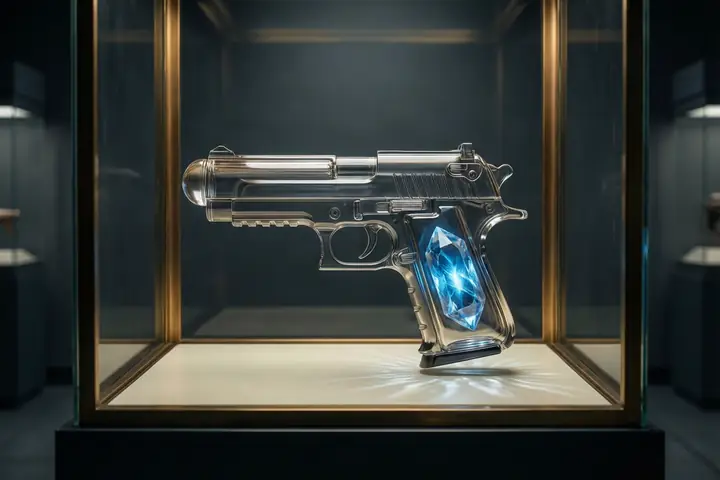
Glass Pistol
A Martian Odyssey, Stanley G. Weinbaum · 1934
A fictional transparent sidearm used as a concealed weapon in the story.
not yet built · AI models' likeliest decade: the 2020s
A small prizeA government pays; existing firms keep the restas a model judges it
Why
A small prize. A see-through pistol is only an ordinary sidearm made hard to spot, wanted by a few spies.
Who is paid. Assuming secret services are the lawful buyers, they pay, and since any gunmaker could cast one in clear material the established arms suppliers collect.
A model's judgement, not a reading, of the idea as if it worked the way its story promises. The model is not very sure of this one.
Illustration made with AI image generation; not evidence.
Invisibility Magnets
Redmask of the Outlands, Nat Schachner · 1934
Magnetic devices curve light around a spacecraft so observers see straight through where it sits.
not yet built · AI models judge it not physically possible
A large prizeA government pays; existing firms keep the restas a model judges it
Why
A large prize. Judged as if it worked, a field that hides whole ships or bases from watchers would change how forces are found and struck.
Who is paid. Assuming it is bought to hide forces in war, governments pay, and assuming rivals learn to copy it the established arms suppliers collect.
A model's judgement, not a reading, of the idea as if it worked the way its story promises. The model is not very sure of this one.
Illustration made with AI image generation; not evidence.
Invisibility Shield
Triplanetary, E.E. 'Doc' Smith · 1934
A covering or device that hides a physical object from ordinary human sight.
not yet built · AI models' likeliest decade: the 2050s
A large prizeA government pays; existing firms keep the restas a model judges it
Why
A large prize. Judged as if it worked, a field that hides whole ships or bases from watchers would change how forces are found and struck.
Who is paid. Assuming it is bought to hide forces in war, governments pay, and assuming rivals learn to copy it the established arms suppliers collect.
A model's judgement, not a reading, of the idea as if it worked the way its story promises. The model is not very sure of this one.
Illustration made with AI image generation; not evidence.
Lewiston
Triplanetary, E.E. 'Doc' Smith · 1934
A fictional handheld energy sidearm carried by fighters in the story.
not yet built · AI models' likeliest decade: 2100 or later
A small prizeA government pays; existing firms keep the restas a model judges it
Why
A small prize. Carried in the hand, it does much the same job as a gun, so the gain over a gun is modest.
Who is paid. Armies buy it with public money, and since rival makers can copy it the established arms suppliers with standing army contracts collect.
A model's judgement, not a reading, of the idea as if it worked the way its story promises. The model is fairly sure of this one.
Illustration made with AI image generation; not evidence.
Needle-Ray
Skylark of Valeron, E.E. 'Doc' Smith · 1934
A fictional narrow beam weapon used in the story's space battles.
not yet built · AI models' likeliest decade: the 2030s
A large prizeA government pays; existing firms keep the restas a model judges it
Why
A large prize. Heavy beam weapons for warships would be a major line of arms spending for any space fleet.
Who is paid. Navies pay, and the yards and arms firms that already build and equip warships would fit them and collect.
A model's judgement, not a reading, of the idea as if it worked the way its story promises. The model is fairly sure of this one.
Illustration made with AI image generation; not evidence.
Protective Shield
Triplanetary, E.E. 'Doc' Smith · 1934
A body-sized force field surrounds a single wearer, deflecting blows and fire.
not yet built · AI models judge it not physically possible
A large prizeA government pays; existing firms keep the restas a model judges it
Why
A large prize. Judged as if it worked, a barrier that stops blows and fire around each soldier would change how armies are protected.
Who is paid. Assuming it is bought for defence in war, governments pay, and assuming rivals learn to copy it the established arms suppliers with standing army contracts collect.
A model's judgement, not a reading, of the idea as if it worked the way its story promises. The model is not very sure of this one.
Illustration made with AI image generation; not evidence.
Radio-Dirigible Torpedo
Triplanetary, E.E. 'Doc' Smith · 1934
A fictional remotely guided munition used in the story's space war.
built in the 1930s, about 0 years after it was imagined
A large prizeA government pays; existing firms keep the restas a model judges it
Why
A large prize. Munitions that steer themselves onto a target make each shot count and are a mainstay of what modern armies buy.
Who is paid. Armies pay, and since many engineering firms can build guidance, the missile and ammunition makers that already hold supply contracts collect.
A model's judgement, not a reading, of the idea as if it worked the way its story promises. The model is fairly sure of this one.
Illustration made with AI image generation; not evidence.
Standish
Triplanetary, E.E. 'Doc' Smith · 1934
A fictional heavy beam weapon mounted on warships in the story.
not yet built · AI models' likeliest decade: the 2030s
A large prizeA government pays; existing firms keep the restas a model judges it
Why
A large prize. A heavy beam or a weapon fired from orbit lets a state strike or defend across great distances and would take a large share of what it spends on arms.
Who is paid. Only governments pay, and the few shipyards and space builders that already hold such contracts are the ones able to deliver it, so they collect.
A model's judgement, not a reading, of the idea as if it worked the way its story promises. The model is fairly sure of this one.
Illustration made with AI image generation; not evidence.
Beckerley Electrical Field
Smothered Seas, R.M. Farley (w/SG Weinbaum · 1936
A fictional energy barrier guarding a whole region against attack.
not yet built · AI models judge it not physically possible
A large prizeA government pays; existing firms keep the restas a model judges it
Why
A large prize. Judged as if it worked, a barrier that stops attacks would change how ships, bases and cities are defended.
Who is paid. Assuming it is bought for defence in war, governments pay, and assuming rivals learn to copy it the established arms suppliers with standing army contracts collect.
A model's judgement, not a reading, of the idea as if it worked the way its story promises. The model is not very sure of this one.
Illustration made with AI image generation; not evidence.
Golden Ray of Synchronized Vibrations
The Return of the Murians, Nat Schachner · 1936
A golden beam that breaks matter apart by knocking its electrons loose.
not yet built · AI models judge it not physically possible
A large prizeA government pays; existing firms keep the restas a model judges it
Why
A large prize. Judged as if it worked, a weapon that destroys whatever it strikes leaves no armour, wall or hull able to protect, which would change how wars are fought.
Who is paid. Armies buy it with public money, and assuming rival makers learn to copy it the established arms suppliers with standing army contracts collect.
A model's judgement, not a reading, of the idea as if it worked the way its story promises. The model is not very sure of this one.
Illustration made with AI image generation; not evidence.
Lanson Screen
The Lanson Screen, Leo Zagat · 1936
A fictional protective force barrier big enough to cover a whole city in the story.
not yet built · AI models judge it not physically possible
A large prizeA government pays; existing firms keep the restas a model judges it
Why
A large prize. Judged as if it worked, a barrier that stops attacks would change how ships, bases and cities are defended.
Who is paid. Assuming it is bought for defence in war, governments pay, and assuming rivals learn to copy it the established arms suppliers with standing army contracts collect.
A model's judgement, not a reading, of the idea as if it worked the way its story promises. The model is not very sure of this one.
Illustration made with AI image generation; not evidence.
Needle Beam Gat
Moon Crystals, J. Harvey Haggard · 1936
A pencil-thin beam that makes whatever it touches vanish.
not yet built · AI models judge it not physically possible
A large prizeA government pays; existing firms keep the restas a model judges it
Why
A large prize. Judged as if it worked, a weapon that destroys whatever it strikes leaves no armour, wall or hull able to protect, which would change how wars are fought.
Who is paid. Armies buy it with public money, and assuming rival makers learn to copy it the established arms suppliers with standing army contracts collect.
A model's judgement, not a reading, of the idea as if it worked the way its story promises. The model is not very sure of this one.
Illustration made with AI image generation; not evidence.
Paralyzing Ray (Bolar Current)
Blood of the Moon, Ray Cummings · 1936
A beam that pins its target in place so they cannot walk away.
not yet built · AI models could not judge when it may arrive
A large prizeA government pays; existing firms keep the restas a model judges it
Why
A large prize. Judged as if it worked, a weapon that surely stops a person at a distance without harming them does what no gun can, and police and guards everywhere would carry it in place of firearms.
Who is paid. Police forces and armies buy it with public money, and since rival makers could copy it once it was shown, the suppliers that already hold their contracts collect.
A model's judgement, not a reading, of the idea as if it worked the way its story promises. The model is not very sure of this one.
Illustration made with AI image generation; not evidence.
Protective Energy Halo
The Scarab, Raymond Z. Gallun · 1936
A fictional defensive dome of beams shielding those inside.
not yet built · AI models judge it not physically possible
A large prizeA government pays; existing firms keep the restas a model judges it
Why
A large prize. Judged as if it worked, a barrier that stops attacks would change how ships, bases and cities are defended.
Who is paid. Assuming it is bought for defence in war, governments pay, and assuming rivals learn to copy it the established arms suppliers with standing army contracts collect.
A model's judgement, not a reading, of the idea as if it worked the way its story promises. The model is not very sure of this one.
Illustration made with AI image generation; not evidence.
Violet-Gun (Ion Gun)
The Brain Stealers of Mars, John W. Campbell · 1936
A pulp-era sidearm that fires a burst of ultraviolet energy.
not yet built · AI models' likeliest decade: the 2050s
A small prizeA government pays; existing firms keep the restas a model judges it
Why
A small prize. A beam weapon carried in the hand does much the same job as a gun, so the gain over a gun is modest.
Who is paid. Armies buy it with public money, and since rival makers can copy it the established arms suppliers with standing army contracts collect.
A model's judgement, not a reading, of the idea as if it worked the way its story promises. The model is fairly sure of this one.
Illustration made with AI image generation; not evidence.
Wire Gun
Shadow Gold, Ray Cummings · 1936
A gun that fires a wire that wraps around its target.
not yet built · AI models' likeliest decade: the 2020s
A small prizeA government pays; existing firms keep the restas a model judges it
Why
A small prize. A device that wraps up or holds a person without hurting them is handy for police but a niche.
Who is paid. Police forces buy it, and it is simple to copy, so the suppliers police already use collect.
A model's judgement, not a reading, of the idea as if it worked the way its story promises. The model is fairly sure of this one.
Illustration made with AI image generation; not evidence.
Blast Rifle
Exiles of the Stratosphere, Frank Belknap Long, Jr. · 1937
A long gun that throws a short burst of energy at close range.
not yet built · AI models' likeliest decade: the 2050s
A small prizeA government pays; existing firms keep the restas a model judges it
Why
A small prize. Assuming a soldier carries it, it does much the same job as a gun, so the gain over a gun is modest.
Who is paid. Armies buy it with public money, and since rival makers can copy it the established arms suppliers with standing army contracts collect.
A model's judgement, not a reading, of the idea as if it worked the way its story promises. The model is fairly sure of this one.
Illustration made with AI image generation; not evidence.
Mercy Gas
The Saga of Pelican West, Eric Frank Russell · 1937
A gas the story presents as a so-called merciful way to kill.
not yet built · AI models' likeliest decade: the 2020s
No prizeNothing is soldas a model judges it
Why
No prize. It is a chemical weapon, which no state or person may lawfully buy or use.
Who is paid. Chemical weapons are outlawed for all, so nothing is sold and no seller keeps anything.
A model's judgement, not a reading, of the idea as if it worked the way its story promises. The model is fairly sure of this one.
Illustration made with AI image generation; not evidence.
Proton Pistol (Proton Beam)
A Menace in Miniature, Raymond Z. Gallun · 1937
A fictional handheld energy weapon used in the story.
not yet built · AI models' likeliest decade: 2100 or later
A small prizeA government pays; existing firms keep the restas a model judges it
Why
A small prize. A beam weapon carried in the hand does much the same job as a gun, so the gain over a gun is modest.
Who is paid. Armies buy it with public money, and since rival makers can copy it the established arms suppliers with standing army contracts collect.
A model's judgement, not a reading, of the idea as if it worked the way its story promises. The model is fairly sure of this one.
Illustration made with AI image generation; not evidence.
Atomic Explosive
Hotel Cosmos, Raymond Z. Gallun · 1938
A small hand-placed charge that burns through an armoured door before exploding.
not yet built · AI models' likeliest decade: the 2020s
A small prizeA government pays; existing firms keep the restas a model judges it
Why
A small prize. As described it is a charge for breaking through armoured doors, a specialist tool.
Who is paid. Assuming it is an ordinary breaching charge and not a nuclear one, armies and police buy it from the explosives makers they already use.
A model's judgement, not a reading, of the idea as if it worked the way its story promises. The model is not very sure of this one.
Illustration made with AI image generation; not evidence.
Banning Gun
Voyage 13, Ray Cummings · 1938
A handheld weapon that fires a narrow beam of heat.
not yet built · AI models' likeliest decade: the 2040s
A small prizeA government pays; existing firms keep the restas a model judges it
Why
A small prize. Assuming a soldier carries it, it does much the same job as a gun, so the gain over a gun is modest.
Who is paid. Armies buy it with public money, and since rival makers can copy it the established arms suppliers with standing army contracts collect.
A model's judgement, not a reading, of the idea as if it worked the way its story promises. The model is fairly sure of this one.
Illustration made with AI image generation; not evidence.
Beam-Pistol
Murder in the Void, Edmond Hamilton · 1938
A hand weapon that fires a beam instead of bullets.
not yet built · AI models' likeliest decade: the 2040s
A small prizeA government pays; existing firms keep the restas a model judges it
Why
A small prize. Assuming a soldier carries it, it does much the same job as a gun, so the gain over a gun is modest.
Who is paid. Armies buy it with public money, and since rival makers can copy it the established arms suppliers with standing army contracts collect.
A model's judgement, not a reading, of the idea as if it worked the way its story promises. The model is fairly sure of this one.
Illustration made with AI image generation; not evidence.
Invisible Watchmen
Murder in the Void, Edmond Hamilton · 1938
A home guard system that automatically detects and kills anyone breaking in.
not yet built · AI models' likeliest decade: the 2030s
No prizeNothing is soldas a model judges it
Why
No prize. A home system that kills intruders by itself is a deadly trap, which no householder may lawfully install.
Who is paid. Nothing is sold, because automatic killing devices in homes are outlawed, though a version that only detects would find buyers.
A model's judgement, not a reading, of the idea as if it worked the way its story promises. The model is not very sure of this one.
Illustration made with AI image generation; not evidence.
Magnetic Flame Gun
Roamer of the Stars, Clyde Wilson · 1938
A weapon that fires a beam of positively charged atomic nuclei.
not yet built · AI models' likeliest decade: the 2060s
A small prizeA government pays; existing firms keep the restas a model judges it
Why
A small prize. Assuming a soldier carries it, it does much the same job as a gun, so the gain over a gun is modest.
Who is paid. Armies buy it with public money, and since rival makers can copy it the established arms suppliers with standing army contracts collect.
A model's judgement, not a reading, of the idea as if it worked the way its story promises. The model is not very sure of this one.
Illustration made with AI image generation; not evidence.
Paralysis Ray
Satellite Five, Arthur K. Barnes · 1938
A beam in the story that leaves anyone it strikes unable to move.
not yet built · AI models could not judge when it may arrive
A large prizeA government pays; existing firms keep the restas a model judges it
Why
A large prize. Judged as if it worked, a weapon that surely stops a person at a distance without harming them does what no gun can, and police and guards everywhere would carry it in place of firearms.
Who is paid. Police forces and armies buy it with public money, and since rival makers could copy it once it was shown, the suppliers that already hold their contracts collect.
A model's judgement, not a reading, of the idea as if it worked the way its story promises. The model is not very sure of this one.
Illustration made with AI image generation; not evidence.
Radium Salt
Murder in the Void, Edmond Hamilton · 1938
A radioactive substance the story's killer uses as a murder weapon.
not yet built · AI models' likeliest decade: the 2020s
A small prizeBusinesses pay; permit holders keep the restas a model judges it
Why
A small prize. Judged as the substance itself and not as a murder weapon, a radioactive salt has a few uses in medicine and industry.
Who is paid. Hospitals and industrial firms pay, and only the few suppliers a government allows to handle such material may sell it, so they keep what is left.
A model's judgement, not a reading, of the idea as if it worked the way its story promises. The model is not very sure of this one.
Illustration made with AI image generation; not evidence.
Killer Robot
Rust, Joseph E. Kelleam · 1939
A self-directing machine designed to hunt and kill living things.
not yet built · AI models' likeliest decade: the 2020s
A large prizeA government pays; existing firms keep the restas a model judges it
Why
A large prize. Machines that find and attack targets by themselves would change how armies and police forces are staffed and equipped.
Who is paid. Governments pay, and since the parts are widely made and the designs easy to copy, the arms firms with the standing contracts collect.
A model's judgement, not a reading, of the idea as if it worked the way its story promises. The model is fairly sure of this one.
Illustration made with AI image generation; not evidence.
Space Marines
Misfit, Robert Heinlein · 1939
Soldiers stationed and fighting in space.
not yet built · AI models' likeliest decade: the 2060s
No prizeNothing is soldas a model judges it
Why
No prize. Soldiers posted in space are people and not a thing anyone builds and sells, unlike the fleets and machines judged elsewhere.
Who is paid. Nothing is sold as such, since its ships, suits and arms are bought and counted as separate things, so there is no payer and no seller.
A model's judgement, not a reading, of the idea as if it worked the way its story promises. The model is fairly sure of this one.
Illustration made with AI image generation; not evidence.
Spacecraft Invisibility Electronics
One Against The Legion, Jack Williamson · 1939
Electronic systems that hide a spacecraft from radar and other detectors.
not yet built · AI models' likeliest decade: the 2050s
A large prizeA government pays; existing firms keep the restas a model judges it
Why
A large prize. A ship that detectors cannot find can strike first and escape, which changes what a fleet is worth.
Who is paid. Governments pay to hide their warships, and assuming rivals learn to copy it, as with other ways of hiding forces, the established arms suppliers collect.
A model's judgement, not a reading, of the idea as if it worked the way its story promises. The model is not very sure of this one.
Illustration made with AI image generation; not evidence.
Super-Weapon
Robot Nemesis, E.E. 'Doc' Smith · 1939
Any extremely destructive advanced weapon.
not yet built · AI models could not judge when it may arrive
A large prizeA government pays; permit holders keep the restas a model judges it
Why
A large prize. A weapon that can wreck a region or a world is worth a great deal to a state as a threat that keeps others from attacking, though it feeds or houses no one.
Who is paid. Only governments pay for it, and as with nuclear arms only the handful of builders a state allows near such a weapon may make it.
A model's judgement, not a reading, of the idea as if it worked the way its story promises. The model is not very sure of this one.
Illustration made with AI image generation; not evidence.
Vortex Gun
One Against The Legion, Jack Williamson · 1939
A weapon that throws spinning zones of unstable matter at targets.
not yet built · AI models judge it not physically possible
A small prizeA government pays; existing firms keep the restas a model judges it
Why
A small prize. Assuming a soldier carries it, it does much the same job as a gun, so the gain over a gun is modest.
Who is paid. Armies buy it with public money, and since rival makers can copy it the established arms suppliers with standing army contracts collect.
A model's judgement, not a reading, of the idea as if it worked the way its story promises. The model is not very sure of this one.
Illustration made with AI image generation; not evidence.
Atom-Gun
Revolt on the Tenth World, Edmond Hamilton · 1940
A hand weapon that sprays out nuclear flame.
not yet built · AI models' likeliest decade: 2100 or later
A small prizeA government pays; existing firms keep the restas a model judges it
Why
A small prize. Assuming a soldier carries it, it does much the same job as a gun, so the gain over a gun is modest.
Who is paid. Armies buy it with public money, and since rival makers can copy it the established arms suppliers with standing army contracts collect.
A model's judgement, not a reading, of the idea as if it worked the way its story promises. The model is fairly sure of this one.
Illustration made with AI image generation; not evidence.
Atomic Automatic
Revolt on Io, Jack West · 1940
A gun that fires small self-propelled rocket rounds.
not yet built · AI models' likeliest decade: the 2020s
A small prizeA government pays; existing firms keep the restas a model judges it
Why
A small prize. It is one more kind of firearm, a modest step over the guns armies already carry.
Who is paid. Armies buy it with public money, and since rival makers can copy it the established arms suppliers with standing army contracts collect.
A model's judgement, not a reading, of the idea as if it worked the way its story promises. The model is fairly sure of this one.
Illustration made with AI image generation; not evidence.
Atomic Blast Weapon
The Achilles Heel, Raymond Z. Gallun · 1940
A weapon that breaks whatever it hits down completely into loose atoms.
not yet built · AI models judge it not physically possible
A large prizeA government pays; existing firms keep the restas a model judges it
Why
A large prize. Judged as if it worked, a weapon that destroys whatever it strikes leaves no armour, wall or hull able to protect, which would change how wars are fought.
Who is paid. Armies buy it with public money, and assuming rival makers learn to copy it the established arms suppliers with standing army contracts collect.
A model's judgement, not a reading, of the idea as if it worked the way its story promises. The model is not very sure of this one.
Illustration made with AI image generation; not evidence.
Autosight Achronic Beam
Hindsight, Jack Williamson · 1940
A weapon aiming beam that works outside time for perfect accuracy.
not yet built · AI models judge it not physically possible
A small prizeA government pays; existing firms keep the restas a model judges it
Why
A small prize. Judged as if it worked, a beam that aims a weapon perfectly is an aiming aid fitted to guns, and guided weapons already come close.
Who is paid. Armies buy it with public money, and assuming rival makers learn to copy it the established arms suppliers with standing army contracts collect.
A model's judgement, not a reading, of the idea as if it worked the way its story promises. The model is not very sure of this one.
Illustration made with AI image generation; not evidence.
Conversion Gun
Hell Ship of Space, Frederic Arnold Kummer, Jr. · 1940
A beam weapon that turns a target's warmth into emitted light, chilling it.
not yet built · AI models judge it not physically possible
A small prizeA government pays; existing firms keep the restas a model judges it
Why
A small prize. Judged as if it worked, and assuming a soldier carries it, a beam that chills its target does much the same job as a gun.
Who is paid. Armies buy it with public money, and assuming rival makers learn to copy it the established arms suppliers with standing army contracts collect.
A model's judgement, not a reading, of the idea as if it worked the way its story promises. The model is not very sure of this one.
Illustration made with AI image generation; not evidence.
Death-Capsule
Doom Over Venus, Edmond Hamilton · 1940
A tiny explosive planted inside a body that can be set off from afar.
not yet built · AI models' likeliest decade: the 2020s
No prizeNothing is soldas a model judges it
Why
No prize. A bomb planted inside a person to control them is a crime, not a product anyone may buy.
Who is paid. Nothing is sold, so nobody pays and no seller keeps anything.
A model's judgement, not a reading, of the idea as if it worked the way its story promises. The model is fairly sure of this one.
Illustration made with AI image generation; not evidence.
Electro-Automatic Pistol
The Worlds of Tomorrow, Manly Wade Wellman · 1940
A compact round handgun, small enough to carry in a pocket, fired electrically.
not yet built · AI models' likeliest decade: the 2020s
A small prizeA government pays; existing firms keep the restas a model judges it
Why
A small prize. It is one more kind of firearm, a modest step over the guns armies already carry.
Who is paid. Armies buy it with public money, and since rival makers can copy it the established arms suppliers with standing army contracts collect.
A model's judgement, not a reading, of the idea as if it worked the way its story promises. The model is fairly sure of this one.
Illustration made with AI image generation; not evidence.
Paralysis Bomb
If This Goes On..., Robert Heinlein · 1940
A thrown explosive device giving off rays that leave people nearby unable to move.
not yet built · AI models could not judge when it may arrive
A large prizeA government pays; existing firms keep the restas a model judges it
Why
A large prize. Judged as if it worked, a thrown device that leaves everyone nearby unable to move and unharmed does what no gun or grenade can, and police and armies everywhere would carry it.
Who is paid. Police forces and armies buy it with public money, and since rival makers could copy it once it was shown, the suppliers that already hold their contracts collect.
A model's judgement, not a reading, of the idea as if it worked the way its story promises. The model is not very sure of this one.
Illustration made with AI image generation; not evidence.
Paralyzing Gun
The Achilles Heel, Raymond Z. Gallun · 1940
A handheld weapon that knocks out anyone caught in its beam.
not yet built · AI models' likeliest decade: the 2020s
A large prizeA government pays; existing firms keep the restas a model judges it
Why
A large prize. Judged as if it worked, a weapon that surely stops a person at a distance without harming them does what no gun can, and police and guards everywhere would carry it in place of firearms.
Who is paid. Police forces and armies buy it with public money, and since rival makers could copy it once it was shown, the suppliers that already hold their contracts collect.
A model's judgement, not a reading, of the idea as if it worked the way its story promises. The model is not very sure of this one.
Illustration made with AI image generation; not evidence.
Vibroblade
If This Goes On..., Robert Heinlein · 1940
A combat knife whose edge vibrates rapidly to cut.
not yet built · AI models' likeliest decade: the 2020s
A small prizeHouseholds pay; no seller keeps muchas a model judges it
Why
A small prize. A knife that cuts better is a small gain for the few who carry one.
Who is paid. As with other blades, a few people buy one for themselves, and assuming others can copy it once one is built, no seller keeps much.
A model's judgement, not a reading, of the idea as if it worked the way its story promises. The model is not very sure of this one.
Illustration made with AI image generation; not evidence.
A-Bomb
Sixth Column, Anson MacDonald · 1941
A bomb whose blast comes from splitting heavy atomic nuclei.
built in 1945, 4 years after it was imagined
A large prizeA government pays; permit holders keep the restas a model judges it
Why
A large prize. A weapon that can end a war or prevent one is worth a great deal to the state that holds it.
Who is paid. Only governments pay for it, and only the handful of builders a state allows near the material may make it.
A model's judgement, not a reading, of the idea as if it worked the way its story promises. The model is fairly sure of this one.
Illustration made with AI image generation; not evidence.
Blastick
The Traitor, Kurt von Rachen · 1941
A handheld gun that fires a burning ray.
not yet built · AI models' likeliest decade: the 2050s
A small prizeA government pays; existing firms keep the restas a model judges it
Why
A small prize. Assuming a soldier carries it, it does much the same job as a gun, so the gain over a gun is modest.
Who is paid. Armies buy it with public money, and since rival makers can copy it the established arms suppliers with standing army contracts collect.
A model's judgement, not a reading, of the idea as if it worked the way its story promises. The model is fairly sure of this one.
Illustration made with AI image generation; not evidence.
Disinto
Robot AL-76 Goes Astray, Isaac Asimov · 1941
A beam that breaks matter apart into nothing.
not yet built · AI models judge it not physically possible
A large prizeA government pays; existing firms keep the restas a model judges it
Why
A large prize. Judged as if it worked, a weapon that destroys whatever it strikes leaves no armour, wall or hull able to protect, which would change how wars are fought.
Who is paid. Armies buy it with public money, and assuming rival makers learn to copy it the established arms suppliers with standing army contracts collect.
A model's judgement, not a reading, of the idea as if it worked the way its story promises. The model is not very sure of this one.
Illustration made with AI image generation; not evidence.
Energy Weapon
Seesaw, A.E. van Vogt · 1941
A directed-beam weapon that damages targets with concentrated energy rather than projectiles.
not yet built · AI models' likeliest decade: the 2030s
A small prizeA government pays; existing firms keep the restas a model judges it
Why
A small prize. Assuming a soldier carries it, it does much the same job as a gun, so the gain over a gun is modest.
Who is paid. Armies buy it with public money, and since rival makers can copy it the established arms suppliers with standing army contracts collect.
A model's judgement, not a reading, of the idea as if it worked the way its story promises. The model is not very sure of this one.
Illustration made with AI image generation; not evidence.
Epileptigenic Ray
Sixth Column, Anson MacDonald · 1941
A beam that throws people into violent, uncontrollable muscle fits.
not yet built · AI models could not judge when it may arrive
A large prizeA government pays; existing firms keep the restas a model judges it
Why
A large prize. Assuming the fits pass without lasting harm, a beam that drops anyone at a distance without killing does what no gun can, and police and guards everywhere would carry it.
Who is paid. Police forces and armies buy it with public money, and since rival makers could copy it once it was shown, the suppliers that already hold their contracts collect.
A model's judgement, not a reading, of the idea as if it worked the way its story promises. The model is not very sure of this one.
Illustration made with AI image generation; not evidence.
Metal Solvent Ray Thrower
Lost Rocket, Manly Wade Wellman · 1941
A space weapon that sprays a metal-dissolving stream at enemy hulls, like a torch.
not yet built · AI models could not judge when it may arrive
A large prizeA government pays; existing firms keep the restas a model judges it
Why
A large prize. Heavy beam weapons for warships would be a major line of arms spending for any space fleet.
Who is paid. Navies pay, and the yards and arms firms that already build and equip warships would fit them and collect.
A model's judgement, not a reading, of the idea as if it worked the way its story promises. The model is fairly sure of this one.
Illustration made with AI image generation; not evidence.
Paralyzing Eye
The Best-Laid Scheme, L. Sprague de Camp · 1941
An artificial eye hiding a mechanism that briefly freezes anyone it targets.
not yet built · AI models could not judge when it may arrive
A small prizeA government pays; existing firms keep the restas a model judges it
Why
A small prize. A freezing device hidden in a false eye is the paralysing weapon made for a spy or a lone wearer, a narrow use.
Who is paid. Assuming secret services are the buyers, they pay, and once others copy the method the suppliers they already use collect.
A model's judgement, not a reading, of the idea as if it worked the way its story promises. The model is not very sure of this one.
Illustration made with AI image generation; not evidence.
Roving Bomb
Lost Rocket, Manly Wade Wellman · 1941
A steerable explosive built for use in weightless space.
built in the 1940s, about 0 years after it was imagined
A large prizeA government pays; existing firms keep the restas a model judges it
Why
A large prize. Munitions that steer themselves onto a target make each shot count and are a mainstay of what modern armies buy.
Who is paid. Armies pay, and since many engineering firms can build guidance, the missile and ammunition makers that already hold supply contracts collect.
A model's judgement, not a reading, of the idea as if it worked the way its story promises. The model is fairly sure of this one.
Illustration made with AI image generation; not evidence.
Sleep Destroying Field
Biddiver, Theodore Sturgeon · 1941
A projected zone that keeps anyone inside from being able to fall asleep.
not yet built · AI models could not judge when it may arrive
A small prizeA government pays; existing firms keep the restas a model judges it
Why
A small prize. A field that stops everyone in an area from sleeping could wear down an enemy but has only that one narrow use.
Who is paid. Only an army would pay, and assuming rival makers learn to copy it the established arms suppliers with standing army contracts collect.
A model's judgement, not a reading, of the idea as if it worked the way its story promises. The model is not very sure of this one.
Illustration made with AI image generation; not evidence.
Stunner
Fire-Power, S.D. Gottesman · 1941
A handheld gun that knocks a target out cold without killing them.
built in the 1970s, about 30 years after it was imagined
A large prizeA government pays; existing firms keep the restas a model judges it
Why
A large prize. Judged as if it worked, a weapon that surely stops a person at a distance without harming them does what no gun can, and police and guards everywhere would carry it in place of firearms.
Who is paid. Police forces and armies buy it with public money, and since rival makers could copy it once it was shown, the suppliers that already hold their contracts collect.
A model's judgement, not a reading, of the idea as if it worked the way its story promises. The model is not very sure of this one.
Illustration made with AI image generation; not evidence.
Directrix Z9M9Z
Gray Lensman, E.E. 'Doc' Smith · 1942
A command vessel that coordinates the movements of an enormous war fleet in space.
not yet built · AI models' likeliest decade: 2100 or later
A large prizeA government pays; existing firms keep the restas a model judges it
Why
A large prize. Assuming wars are fought in space, warships for it would be an industry of their own.
Who is paid. Only governments field war fleets, and the few yards already able to build large spacecraft would win the orders.
A model's judgement, not a reading, of the idea as if it worked the way its story promises. The model is not very sure of this one.
Illustration made with AI image generation; not evidence.
Electric Wall
The World With A Thousand Moons, Edmond Hamilton · 1942
A barrier made of electrical energy that blocks passage like a solid wall.
not yet built · AI models judge it not physically possible
A large prizeA government pays; existing firms keep the restas a model judges it
Why
A large prize. Judged as if it worked, a barrier that stops attacks would change how ships, bases and cities are defended.
Who is paid. Assuming it is bought for defence in war, governments pay, and assuming rivals learn to copy it the established arms suppliers with standing army contracts collect.
A model's judgement, not a reading, of the idea as if it worked the way its story promises. The model is not very sure of this one.
Illustration made with AI image generation; not evidence.
Thermodyne Heat Ray
A Brand New World, Ray Cummings · 1942
Concentrates heat into a directed beam that can burn or harm a target.
not yet built · AI models' likeliest decade: the 2020s
A small prizeA government pays; existing firms keep the restas a model judges it
Why
A small prize. Assuming a soldier carries it, it does much the same job as a gun, so the gain over a gun is modest.
Who is paid. Armies buy it with public money, and since rival makers can copy it the established arms suppliers with standing army contracts collect.
A model's judgement, not a reading, of the idea as if it worked the way its story promises. The model is not very sure of this one.
Illustration made with AI image generation; not evidence.
Flame Barrier
The Storm, A.E. van Vogt · 1943
A protective barrier of energy that blocks attacks.
not yet built · AI models judge it not physically possible
A large prizeA government pays; existing firms keep the restas a model judges it
Why
A large prize. Judged as if it worked, a barrier that stops attacks would change how ships, bases and cities are defended.
Who is paid. Assuming it is bought for defence in war, governments pay, and assuming rivals learn to copy it the established arms suppliers with standing army contracts collect.
A model's judgement, not a reading, of the idea as if it worked the way its story promises. The model is not very sure of this one.
Illustration made with AI image generation; not evidence.
Force Pencil
Gather, Darkness!, Fritz Leiber · 1943
A wrist-mounted device that projects a beam of pushing force.
not yet built · AI models judge it not physically possible
A small prizeA government pays; existing firms keep the restas a model judges it
Why
A small prize. Judged as if it worked, and assuming a soldier carries it, a beam that shoves or strikes does much the same job as a gun.
Who is paid. Armies buy it with public money, and assuming rival makers learn to copy it the established arms suppliers with standing army contracts collect.
A model's judgement, not a reading, of the idea as if it worked the way its story promises. The model is not very sure of this one.
Illustration made with AI image generation; not evidence.
Inviolability Field
Gather, Darkness!, Fritz Leiber · 1943
A protective energy barrier woven into a garment to guard its wearer.
not yet built · AI models judge it not physically possible
A large prizeA government pays; existing firms keep the restas a model judges it
Why
A large prize. Judged as if it worked, a barrier that stops attacks would change how soldiers, ships and cities are defended, even when it guards one wearer.
Who is paid. Assuming it is bought for defence in war, governments pay, and assuming rivals learn to copy it the established arms suppliers with standing army contracts collect.
A model's judgement, not a reading, of the idea as if it worked the way its story promises. The model is not very sure of this one.
Illustration made with AI image generation; not evidence.
Pain Canopy
Gather, Darkness!, Fritz Leiber · 1943
A hood that stimulates nerves directly to inflict pain during questioning.
not yet built · AI models' likeliest decade: the 2030s
No prizeNothing is soldas a model judges it
Why
No prize. It exists only to inflict suffering, and no one may lawfully buy or use such a thing.
Who is paid. Torture devices are outlawed for everyone, governments included, so nothing is sold and no seller keeps anything.
A model's judgement, not a reading, of the idea as if it worked the way its story promises. The model is fairly sure of this one.
Illustration made with AI image generation; not evidence.
Rod of Wrath
Gather, Darkness!, Fritz Leiber · 1943
A blade formed from a beam of light used as a hand weapon.
not yet built · AI models judge it not physically possible
A small prizeHouseholds pay; no seller keeps muchas a model judges it
Why
A small prize. Judged as if it worked, a blade of light loses to a gun as a weapon, so it is a prized object for a few buyers.
Who is paid. As with other blades, a few people buy one for themselves, and assuming others can copy it once one is built, no seller keeps much.
A model's judgement, not a reading, of the idea as if it worked the way its story promises. The model is not very sure of this one.
Illustration made with AI image generation; not evidence.
Battle Integrator
The Bureaucrat, Malcolm Jameson · 1944
A command display that shows a battle between spacecraft as a solid scene commanders can follow.
not yet built · AI models' likeliest decade: the 2020s
A small prizeA government pays; existing firms keep the restas a model judges it
Why
A small prize. It helps commanders follow a fight but is one instrument among many on a warship.
Who is paid. Armies buy it with public money, and since rival makers can copy it the established arms suppliers with standing army contracts collect.
A model's judgement, not a reading, of the idea as if it worked the way its story promises. The model is fairly sure of this one.
Illustration made with AI image generation; not evidence.
Energy Screen
Far Centaurus, A.E. van Vogt · 1944
An invisible protective barrier made of energy.
not yet built · AI models judge it not physically possible
A large prizeA government pays; existing firms keep the restas a model judges it
Why
A large prize. Judged as if it worked, a barrier that stops attacks would change how ships, bases and cities are defended.
Who is paid. Assuming it is bought for defence in war, governments pay, and assuming rivals learn to copy it the established arms suppliers with standing army contracts collect.
A model's judgement, not a reading, of the idea as if it worked the way its story promises. The model is not very sure of this one.
Illustration made with AI image generation; not evidence.
Rust Ray Pistol
Gambler’s Asteroid, Manly Wade Wellman · 1944
A handgun whose beam turns hard iron and steel brittle and crumbling.
not yet built · AI models judge it not physically possible
A large prizeA government pays; existing firms keep the restas a model judges it
Why
A large prize. Judged as if it worked, a beam that makes steel crumble would leave steel ships, vehicles and guns useless, which is more than a handheld beam that only kills.
Who is paid. Armies buy it with public money, and assuming rival makers learn to copy it the established arms suppliers with standing army contracts collect.
A model's judgement, not a reading, of the idea as if it worked the way its story promises. The model is not very sure of this one.
Illustration made with AI image generation; not evidence.
Meteor Blasters
First Contact, Murray Leinster · 1945
Beams mounted on a spacecraft that clear rocks and debris out of its flight path.
not yet built · AI models' likeliest decade: the 2060s
A small prizeBusinesses pay; existing firms keep the restas a model judges it
Why
A small prize. Beams that clear rocks from a ship's path are a safety fitting, needed only once many ships fly fast through space.
Who is paid. Assuming most ships are run by carriers, they pay, and the shipbuilders who fit out the craft would supply the beams and collect.
A model's judgement, not a reading, of the idea as if it worked the way its story promises. The model is not very sure of this one.
Illustration made with AI image generation; not evidence.
Planet-Smasher
Propagandist, Murray Leinster · 1947
A fictional weapon capable of wrecking a whole world, used as a threat in an interplanetary conflict.
not yet built · AI models' likeliest decade: 2100 or later
A large prizeA government pays; permit holders keep the restas a model judges it
Why
A large prize. A weapon that can wreck a region or a world is worth a great deal to a state as a threat that keeps others from attacking, though it feeds or houses no one.
Who is paid. Only governments pay for it, and as with nuclear arms only the handful of builders a state allows near such a weapon may make it.
A model's judgement, not a reading, of the idea as if it worked the way its story promises. The model is not very sure of this one.
Illustration made with AI image generation; not evidence.
Stationary Automatic Blaster
Red Planet, Robert Heinlein · 1949
A fixed automated gun post that guards an area in the story.
not yet built · AI models' likeliest decade: the 2020s
A small prizeA government pays; existing firms keep the restas a model judges it
Why
A small prize. A gun that guards a spot by itself saves some sentries but fills a narrow job within an army's kit.
Who is paid. Armies and border forces pay, and it is easy to copy from known parts, so the arms makers already supplying them collect.
A model's judgement, not a reading, of the idea as if it worked the way its story promises. The model is fairly sure of this one.
Illustration made with AI image generation; not evidence.
Space Platform
The Morning of the Day They Did It, E.B. White · 1950
A fictional armed station in orbit meant to deter attacks between nations.
built in the 1970s, about 20 years after it was imagined
A large prizeA government pays; existing firms keep the restas a model judges it
Why
A large prize. A heavy beam or a weapon fired from orbit lets a state strike or defend across great distances and would take a large share of what it spends on arms.
Who is paid. Only governments pay, and the few shipyards and space builders that already hold such contracts are the ones able to deliver it, so they collect.
A model's judgement, not a reading, of the idea as if it worked the way its story promises. The model is fairly sure of this one.
Illustration made with AI image generation; not evidence.
Guided Missile Control Station
Between Planets, Robert Heinlein · 1951
A fictional military base in orbit that directs guided missiles in the story.
built since, date unclear
A large prizeA government pays; existing firms keep the restas a model judges it
Why
A large prize. Striking any point on the ground from orbit would be a major arm of a great power's forces.
Who is paid. Governments pay, and the rocket and arms firms that already launch and build for them would win the work, since the idea itself is simple.
A model's judgement, not a reading, of the idea as if it worked the way its story promises. The model is fairly sure of this one.
Illustration made with AI image generation; not evidence.
Neuronic Whip
The Stars, Like Dust, Isaac Asimov · 1951
A fictional hand weapon used in the story to inflict pain.
not yet built · AI models' likeliest decade: the 2040s
A small prizeA government pays; existing firms keep the restas a model judges it
Why
A small prize. Unlike a device for hurting a held prisoner, a hand weapon that stops an opponent through pain is something guards may lawfully carry, but it is a niche beside their other arms.
Who is paid. Police and prison services pay, and the firms that already supply them would add it to their range and collect.
A model's judgement, not a reading, of the idea as if it worked the way its story promises. The model is not very sure of this one.
Illustration made with AI image generation; not evidence.
Neutron Disruption Blaster
The Complete Paratime, H. Beam Piper · 1951
A fictional energy sidearm carried by characters in the story.
not yet built · AI models judge it not physically possible
A small prizeA government pays; existing firms keep the restas a model judges it
Why
A small prize. Carried in the hand, it does much the same job as a gun, so the gain over a gun is modest.
Who is paid. Armies buy it with public money, and since rival makers can copy it the established arms suppliers with standing army contracts collect.
A model's judgement, not a reading, of the idea as if it worked the way its story promises. The model is fairly sure of this one.
Illustration made with AI image generation; not evidence.
Airjeep
Uller Uprising, H. Beam Piper · 1952
A small light aircraft soldiers use for getting around in the story.
not yet built · AI models' likeliest decade: the 2020s
A small prizeA government pays; existing firms keep the restas a model judges it
Why
A small prize. A light aircraft for moving soldiers about is a handy vehicle, not a change in how armies fight.
Who is paid. Armies buy it, and existing aircraft makers can all build one, so those with army contracts collect.
A model's judgement, not a reading, of the idea as if it worked the way its story promises. The model is fairly sure of this one.
Illustration made with AI image generation; not evidence.
Nuclear-Field Depressor
Foundation and Empire, Isaac Asimov · 1952
A fictional device in the story that shuts down atomic-powered equipment nearby.
not yet built · AI models judge it not physically possible
A large prizeA government pays; existing firms keep the restas a model judges it
Why
A large prize. Judged as if it worked, and assuming a world that runs on atomic power, a device that shuts all of it down nearby would disarm an enemy at a stroke.
Who is paid. Armies buy it with public money, and assuming rival makers learn to copy it the established arms suppliers with standing army contracts collect.
A model's judgement, not a reading, of the idea as if it worked the way its story promises. The model is not very sure of this one.
Illustration made with AI image generation; not evidence.
Plasticocoon
The Space Merchants, Frederik Pohl (w/CM Kornbluth · 1952
A fictional plastic casing in the story used to immobilise a captive.
not yet built · AI models' likeliest decade: the 2030s
A small prizeA government pays; existing firms keep the restas a model judges it
Why
A small prize. A device that wraps up or holds a person without hurting them is handy for police but a niche.
Who is paid. Police forces buy it, and it is simple to copy, so the suppliers police already use collect.
A model's judgement, not a reading, of the idea as if it worked the way its story promises. The model is fairly sure of this one.
Illustration made with AI image generation; not evidence.
Stun Pistol
Foundation and Empire, Isaac Asimov · 1952
A fictional handgun in the story that knocks people out rather than killing them.
built in the 1970s, about 20 years after it was imagined
A large prizeA government pays; existing firms keep the restas a model judges it
Why
A large prize. Judged as if it worked, a weapon that surely stops a person at a distance without harming them does what no gun can, and police and guards everywhere would carry it in place of firearms.
Who is paid. Police forces and armies buy it with public money, and since rival makers could copy it once it was shown, the suppliers that already hold their contracts collect.
A model's judgement, not a reading, of the idea as if it worked the way its story promises. The model is not very sure of this one.
Illustration made with AI image generation; not evidence.
Toaster
Accidental Flight, W.F. Wallace · 1952
A fictional hand-held energy weapon carried in the story.
not yet built · AI models' likeliest decade: the 2060s
A small prizeA government pays; existing firms keep the restas a model judges it
Why
A small prize. A beam weapon carried in the hand does much the same job as a gun, so the gain over a gun is modest.
Who is paid. Armies buy it with public money, and since rival makers can copy it the established arms suppliers with standing army contracts collect.
A model's judgement, not a reading, of the idea as if it worked the way its story promises. The model is fairly sure of this one.
Illustration made with AI image generation; not evidence.
Claws (Attack Robot)
Second Variety, Philip K. Dick · 1953
Fictional autonomous war machines in the story that hunt living targets.
not yet built · AI models' likeliest decade: the 2030s
A large prizeA government pays; existing firms keep the restas a model judges it
Why
A large prize. Machines that find and attack targets without a soldier at risk would change how armies fight.
Who is paid. Armies buy it with public money, and since rival makers can copy it the established arms suppliers with standing army contracts collect.
A model's judgement, not a reading, of the idea as if it worked the way its story promises. The model is not very sure of this one.
Illustration made with AI image generation; not evidence.
Garbage Screen
Space Tug, Murray Leinster · 1953
A defensive decoy cloud that hides space stations from hostile tracking.
built since, date unclear
A small prizeA government pays; existing firms keep the restas a model judges it
Why
A small prize. A cloud of decoys to confuse tracking is a useful but minor aid for a few military craft.
Who is paid. Space and air forces pay, and scattering junk is easy to copy, so the firms already equipping those craft collect.
A model's judgement, not a reading, of the idea as if it worked the way its story promises. The model is fairly sure of this one.
Illustration made with AI image generation; not evidence.
Mechanical Hound
Fahrenheit 451, Ray Bradbury · 1953
A fictional robotic hunting machine used by the state in the story to track down dissidents.
not yet built · AI models' likeliest decade: the 2020s
A large prizeA government pays; existing firms keep the restas a model judges it
Why
A large prize. Machines that find and attack targets by themselves would change how armies and police forces are staffed and equipped.
Who is paid. Governments pay, and since the parts are widely made and the designs easy to copy, the arms firms with the standing contracts collect.
A model's judgement, not a reading, of the idea as if it worked the way its story promises. The model is fairly sure of this one.
Illustration made with AI image generation; not evidence.
Pinlight
The Game of Rat and Dragon, Cordwainer Smith · 1953
A fictional miniature explosive used in the story against hostile creatures in deep space.
not yet built · AI models could not judge when it may arrive
A small prizeA government pays; existing firms keep the restas a model judges it
Why
A small prize. A tiny bomb made for one kind of enemy in deep space is a niche munition.
Who is paid. A space fleet run by a government pays, and small explosives are easy to copy, so existing munitions makers collect.
A model's judgement, not a reading, of the idea as if it worked the way its story promises. The model is fairly sure of this one.
Illustration made with AI image generation; not evidence.
Lash-Tube
The Golden Man, Philip K. Dick · 1954
A fictional beam weapon carried by government agents hunting a mutant in the story.
not yet built · AI models' likeliest decade: the 2030s
A small prizeA government pays; existing firms keep the restas a model judges it
Why
A small prize. Carried in the hand, it does much the same job as a gun, so the gain over a gun is modest.
Who is paid. Armies buy it with public money, and since rival makers can copy it the established arms suppliers with standing army contracts collect.
A model's judgement, not a reading, of the idea as if it worked the way its story promises. The model is fairly sure of this one.
Illustration made with AI image generation; not evidence.
Rom (Robot Operated Missiles)
Breakfast at Twilight, Philip K. Dick · 1954
A fictional robot-guided long-range weapon used in a future world war.
not yet built · AI models' likeliest decade: the 2020s
A large prizeA government pays; existing firms keep the restas a model judges it
Why
A large prize. Munitions that steer themselves onto a target make each shot count and are a mainstay of what modern armies buy.
Who is paid. Armies pay, and since many engineering firms can build guidance, the missile and ammunition makers that already hold supply contracts collect.
A model's judgement, not a reading, of the idea as if it worked the way its story promises. The model is fairly sure of this one.
Illustration made with AI image generation; not evidence.
Shatter-Gun
The Houses of Iszm, Jack Vance · 1954
A fictional handheld weapon that appears in an alien-world intrigue story.
not yet built · AI models could not judge when it may arrive
A small prizeA government pays; existing firms keep the restas a model judges it
Why
A small prize. A weapon carried in the hand does much the same job as a gun, so the gain over a gun is modest.
Who is paid. Armies buy it with public money, and since rival makers can copy it the established arms suppliers with standing army contracts collect.
A model's judgement, not a reading, of the idea as if it worked the way its story promises. The model is fairly sure of this one.
Illustration made with AI image generation; not evidence.
Tanglefoot Field
The Star Beast, Robert Heinlein · 1954
A non-lethal barrier of force that snares and halts anyone passing into it.
not yet built · AI models judge it not physically possible
A large prizeA government pays; existing firms keep the restas a model judges it
Why
A large prize. Judged as if it worked, a barrier of force that halts anyone entering it would change how borders, bases and prisons are guarded.
Who is paid. Assuming it is bought to guard public ground, governments pay, and assuming rivals learn to copy it the established suppliers with standing contracts collect.
A model's judgement, not a reading, of the idea as if it worked the way its story promises. The model is not very sure of this one.
Illustration made with AI image generation; not evidence.
Bore-Pellets
Foster, You're Dead, Philip K. Dick · 1955
A fictional weapon aimed at underground shelters in a Cold War satire.
built since, date unclear
A small prizeA government pays; existing firms keep the restas a model judges it
Why
A small prize. A weapon made only to break into buried shelters serves one narrow military task.
Who is paid. Armies buy it with public money, and since rival makers can copy it the established arms suppliers with standing army contracts collect.
A model's judgement, not a reading, of the idea as if it worked the way its story promises. The model is fairly sure of this one.
Illustration made with AI image generation; not evidence.
Grill-Screen Adaptor
Foster, You're Dead, Philip K. Dick · 1955
A government-approved add-on sold to upgrade home shelters against a rival power's newest weapon, in a Cold War satire.
not yet built · AI models' likeliest decade: the 2020s
A small prizeHouseholds pay; existing firms keep the restas a model judges it
Why
A small prize. An add-on for a home shelter is a minor purchase, valued more from fear than from need.
Who is paid. Families pay, and since the part is easy to make, the shelter makers who already hold the customers and the official approval collect.
A model's judgement, not a reading, of the idea as if it worked the way its story promises. The model is fairly sure of this one.
Illustration made with AI image generation; not evidence.
Stiletto Beam
Earthlight, Arthur C. Clarke · 1955
A fictional heavy weapon used to defend a lunar base in a space conflict.
not yet built · AI models could not judge when it may arrive
A large prizeA government pays; existing firms keep the restas a model judges it
Why
A large prize. A heavy beam or a weapon fired from orbit lets a state strike or defend across great distances and would take a large share of what it spends on arms.
Who is paid. Only governments pay, and the few shipyards and space builders that already hold such contracts are the ones able to deliver it, so they collect.
A model's judgement, not a reading, of the idea as if it worked the way its story promises. The model is fairly sure of this one.
Illustration made with AI image generation; not evidence.
Planet-Busting Bomb
Testing, J.J. Ferrat · 1956
A fictional doomsday weapon in the story capable of wiping out a whole world.
not yet built · AI models' likeliest decade: 2100 or later
A large prizeA government pays; permit holders keep the restas a model judges it
Why
A large prize. A weapon that can wreck a region or a world is worth a great deal to a state as a threat that keeps others from attacking, though it feeds or houses no one.
Who is paid. Only governments pay for it, and as with nuclear arms only the handful of builders a state allows near such a weapon may make it.
A model's judgement, not a reading, of the idea as if it worked the way its story promises. The model is not very sure of this one.
Illustration made with AI image generation; not evidence.
PyrE
The Stars My Destination, Alfred Bester · 1956
A fictional super-explosive at the centre of the novel's plot, sought by rival powers.
not yet built · AI models judge it not physically possible
A large prizeA government pays; permit holders keep the restas a model judges it
Why
A large prize. An explosive of enormous power, which rival powers in the story fight to own, is worth a great deal to a state as a threat.
Who is paid. Only governments pay for it, and as with nuclear arms only the handful of builders a state allows near such a weapon may make it.
A model's judgement, not a reading, of the idea as if it worked the way its story promises. The model is not very sure of this one.
Illustration made with AI image generation; not evidence.
Battle Tank Display
Cities in Flight, James Blish · 1957
A three-dimensional display that shows commanders where ships are during combat in space.
built in the 1990s, about 40 years after it was imagined
A small prizeA government pays; existing firms keep the restas a model judges it
Why
A small prize. It helps commanders follow a fight but is one instrument among many on a warship.
Who is paid. Armies buy it with public money, and since rival makers can copy it the established arms suppliers with standing army contracts collect.
A model's judgement, not a reading, of the idea as if it worked the way its story promises. The model is fairly sure of this one.
Illustration made with AI image generation; not evidence.
Bethé blasters
Cities in Flight, James Blish · 1957
A fictional heavy weapon in the story's interstellar conflicts.
not yet built · AI models could not judge when it may arrive
A large prizeA government pays; existing firms keep the restas a model judges it
Why
A large prize. A heavy beam that can strike ships or aircraft at the speed of light would reshape how fleets are armed and defended.
Who is paid. Armies buy it with public money, and since rival makers can copy it the established arms suppliers with standing army contracts collect.
A model's judgement, not a reading, of the idea as if it worked the way its story promises. The model is not very sure of this one.
Illustration made with AI image generation; not evidence.
Gravity-Polarized Explosive (TDX)
Cities in Flight, James Blish · 1957
A fictional explosive used in the story's space-age setting.
not yet built · AI models judge it not physically possible
A small prizeBusinesses pay; no seller keeps muchas a model judges it
Why
A small prize. Assuming it is a stronger blasting explosive, it is a modest gain for mining and building.
Who is paid. Mines and builders buy it, and many chemical firms can make an explosive, so no seller keeps much.
A model's judgement, not a reading, of the idea as if it worked the way its story promises. The model is not very sure of this one.
Illustration made with AI image generation; not evidence.
Manshonyagger
Mark Elf, Cordwainer Smith · 1957
A fictional autonomous war machine left over from ancient conflicts in the story.
not yet built · AI models' likeliest decade: the 2030s
A large prizeA government pays; existing firms keep the restas a model judges it
Why
A large prize. Machines that find and attack targets by themselves would change how armies and police forces are staffed and equipped.
Who is paid. Governments pay, and since the parts are widely made and the designs easy to copy, the arms firms with the standing contracts collect.
A model's judgement, not a reading, of the idea as if it worked the way its story promises. The model is fairly sure of this one.
Illustration made with AI image generation; not evidence.
Needle-Gun
Lucky Starr and the Moons of Jupiter, Isaac Asimov · 1957
A fictional compact sidearm carried in a juvenile space adventure.
built since, date unclear
A small prizeA government pays; existing firms keep the restas a model judges it
Why
A small prize. It is one more kind of firearm, a modest step over the guns armies already carry.
Who is paid. Armies buy it with public money, and since rival makers can copy it the established arms suppliers with standing army contracts collect.
A model's judgement, not a reading, of the idea as if it worked the way its story promises. The model is fairly sure of this one.
Illustration made with AI image generation; not evidence.
Project X
Atlas Shrugged, Ayn Rand · 1957
A fictional government sound weapon that devastates a region in the novel.
not yet built · AI models' likeliest decade: the 2020s
A large prizeA government pays; permit holders keep the restas a model judges it
Why
A large prize. A sound weapon that lays waste to a whole region is worth a great deal to a state as a threat, though it is smaller than a world-wrecker.
Who is paid. Only governments pay for it, and as with nuclear arms only the handful of builders a state allows near such a weapon may make it.
A model's judgement, not a reading, of the idea as if it worked the way its story promises. The model is not very sure of this one.
Illustration made with AI image generation; not evidence.
Nose Gun
Arm of the Law, Harry Harrison · 1958
A fictional weapon mounted high on a police robot in the story.
not yet built · AI models' likeliest decade: the 2020s
A small prizeA government pays; existing firms keep the restas a model judges it
Why
A small prize. A gun mounted on a police robot is a fitting for a machine, not a prize in itself.
Who is paid. Police forces pay, and the firms that build the robots and guns already would fit it and collect.
A model's judgement, not a reading, of the idea as if it worked the way its story promises. The model is fairly sure of this one.
Illustration made with AI image generation; not evidence.
Para-Beam
The Mechanical Monarch, E.C. Tubb · 1958
A fictional incapacitating beam weapon in the story.
not yet built · AI models' likeliest decade: the 2040s
A large prizeA government pays; existing firms keep the restas a model judges it
Why
A large prize. Judged as if it worked, a weapon that surely stops a person at a distance without harming them does what no gun can, and police and guards everywhere would carry it in place of firearms.
Who is paid. Police forces and armies buy it with public money, and since rival makers could copy it once it was shown, the suppliers that already hold their contracts collect.
A model's judgement, not a reading, of the idea as if it worked the way its story promises. The model is not very sure of this one.
Illustration made with AI image generation; not evidence.
Powered Armor (or Powered Suit)
Starship Troopers, Robert Heinlein · 1959
A fictional armoured combat suit that boosts a soldier's strength, central to the novel's military setting.
not yet built · AI models' likeliest decade: the 2040s
A large prizeA government pays; existing firms keep the restas a model judges it
Why
A large prize. A suit that makes one soldier as strong and as hard to kill as a vehicle would change what an army costs and how it fights.
Who is paid. Armies pay, and since several engineering firms could build such suits, the defence suppliers that already hold army contracts collect.
A model's judgement, not a reading, of the idea as if it worked the way its story promises. The model is fairly sure of this one.
Illustration made with AI image generation; not evidence.
Talking Bomb
Starship Troopers, Robert Heinlein · 1959
A fictional weapon in the novel that broadcasts messages to demoralise the enemy.
not yet built · AI models' likeliest decade: the 2020s
A small prizeA government pays; existing firms keep the restas a model judges it
Why
A small prize. A weapon that drives people off or wears them down with sound, smell, gas or words fills a narrow job for police and armies.
Who is paid. Police and armies pay, and these devices are easy to copy, so the suppliers that already sell them equipment collect.
A model's judgement, not a reading, of the idea as if it worked the way its story promises. The model is fairly sure of this one.
Illustration made with AI image generation; not evidence.
Bolo
Combat Unit, Keith Laumer · 1960
A fictional self-directed armoured war vehicle in the story.
not yet built · AI models' likeliest decade: the 2040s
A large prizeA government pays; existing firms keep the restas a model judges it
Why
A large prize. Machines that find and attack targets without a soldier at risk would change how armies fight.
Who is paid. Armies buy it with public money, and since rival makers can copy it the established arms suppliers with standing army contracts collect.
A model's judgement, not a reading, of the idea as if it worked the way its story promises. The model is not very sure of this one.
Illustration made with AI image generation; not evidence.
Chameleon Battle-Dress
Dorsai!, Gordon R. Dickson · 1960
Military clothing that changes its look to merge with the surroundings.
not yet built · AI models' likeliest decade: the 2030s
A small prizeA government pays; existing firms keep the restas a model judges it
Why
A small prize. Clothing that blends into any background helps soldiers hide but is one item of kit.
Who is paid. Armies buy it, and a new cloth can be taken apart and copied by rival makers, so the firms that already hold army clothing contracts collect.
A model's judgement, not a reading, of the idea as if it worked the way its story promises. The model is not very sure of this one.
Illustration made with AI image generation; not evidence.
Hammer
Vulcan's Hammer, Philip K. Dick · 1960
A fictional computer-directed flying attack machine in the novel.
not yet built · AI models' likeliest decade: the 2020s
A large prizeA government pays; existing firms keep the restas a model judges it
Why
A large prize. Machines that find and attack targets by themselves would change how armies and police forces are staffed and equipped.
Who is paid. Governments pay, and since the parts are widely made and the designs easy to copy, the arms firms with the standing contracts collect.
A model's judgement, not a reading, of the idea as if it worked the way its story promises. The model is fairly sure of this one.
Illustration made with AI image generation; not evidence.
Metal BIrds
Vulcan's Hammer, Philip K. Dick · 1960
Fictional flying surveillance machines in the novel that also attack people.
not yet built · AI models' likeliest decade: the 2020s
A large prizeA government pays; existing firms keep the restas a model judges it
Why
A large prize. Machines that find and attack targets by themselves would change how armies and police forces are staffed and equipped.
Who is paid. Governments pay, and since the parts are widely made and the designs easy to copy, the arms firms with the standing contracts collect.
A model's judgement, not a reading, of the idea as if it worked the way its story promises. The model is fairly sure of this one.
Illustration made with AI image generation; not evidence.
Pencil Beam
Vulcan's Hammer, Philip K. Dick · 1960
A fictional narrow-beam energy weapon in the novel.
not yet built · AI models' likeliest decade: the 2040s
A small prizeA government pays; existing firms keep the restas a model judges it
Why
A small prize. Assuming a soldier carries it, it does much the same job as a gun, so the gain over a gun is modest.
Who is paid. Armies buy it with public money, and since rival makers can copy it the established arms suppliers with standing army contracts collect.
A model's judgement, not a reading, of the idea as if it worked the way its story promises. The model is not very sure of this one.
Illustration made with AI image generation; not evidence.
Power Holster
Deathworld, Harry Harrison · 1960
A fictional quick-draw holster worn by the novel's hero on a hostile planet.
not yet built · AI models' likeliest decade: the 2020s
A small prizeHouseholds pay; no seller keeps muchas a model judges it
Why
A small prize. A holster that puts the gun in the hand faster is a convenience for people who carry one.
Who is paid. Gun owners and officers buy it for themselves, and any maker of small motors and leather goods could produce it, so no seller keeps much.
A model's judgement, not a reading, of the idea as if it worked the way its story promises. The model is fairly sure of this one.
Illustration made with AI image generation; not evidence.
Spring-Rifle
Dorsai!, Gordon R. Dickson · 1960
A fictional infantry firearm in the novel's mercenary setting.
not yet built · AI models could not judge when it may arrive
A small prizeA government pays; existing firms keep the restas a model judges it
Why
A small prize. A new way of throwing a projectile from a soldier's gun is a variation on weapons armies already have.
Who is paid. Armies pay, and such guns are easy to copy, so the arms makers that already hold supply contracts collect.
A model's judgement, not a reading, of the idea as if it worked the way its story promises. The model is fairly sure of this one.
Illustration made with AI image generation; not evidence.
Self-Guided Rocket Bullets
The Planet Strappers, Raymond Z. Gallun · 1961
A fictional firearm designed for use in space, featured in the story.
not yet built · AI models' likeliest decade: the 2030s
A small prizeA government pays; existing firms keep the restas a model judges it
Why
A small prize. The description calls it a firearm, so it is one more kind of gun, a modest step over those armies already carry.
Who is paid. Armies buy it with public money, and since rival makers can copy it the established arms suppliers with standing army contracts collect.
A model's judgement, not a reading, of the idea as if it worked the way its story promises. The model is not very sure of this one.
Illustration made with AI image generation; not evidence.
Cataclysmite
Little Fuzzy, H. Beam Piper · 1962
A fictional explosive mentioned in the story.
built since, date unclear
A small prizeBusinesses pay; no seller keeps muchas a model judges it
Why
A small prize. Assuming it is a stronger blasting explosive, it is a modest gain for mining and building.
Who is paid. Mines and builders buy it, and many chemical firms can make an explosive, so no seller keeps much.
A model's judgement, not a reading, of the idea as if it worked the way its story promises. The model is not very sure of this one.
Illustration made with AI image generation; not evidence.
Boulder
Cantata 140, Philip K. Dick · 1964
A fictional assassination device aimed at one specific person, used in the story.
not yet built · AI models' likeliest decade: the 2060s
A small prizeA government pays; existing firms keep the restas a model judges it
Why
A small prize. A weapon that hunts one named person serves a narrow trade in killing chosen targets.
Who is paid. Secret services pay, and being strange does not make it hard to copy, so once one is built the arms makers that already supply them can make it too and collect.
A model's judgement, not a reading, of the idea as if it worked the way its story promises. The model is not very sure of this one.
Illustration made with AI image generation; not evidence.
Cephalotropic Dart
Lies, Inc., Philip K. Dick · 1964
A fictional short-range weapon that seeks one individual, used in the story.
not yet built · AI models' likeliest decade: the 2060s
A small prizeA government pays; existing firms keep the restas a model judges it
Why
A small prize. A weapon that hunts one named person serves a narrow trade in killing chosen targets.
Who is paid. Secret services pay, and being strange does not make it hard to copy, so once one is built the arms makers that already supply them can make it too and collect.
A model's judgement, not a reading, of the idea as if it worked the way its story promises. The model is not very sure of this one.
Illustration made with AI image generation; not evidence.
Cholinesterase-Destroying Gas
Lies, Inc., Philip K. Dick · 1964
A fictional poison gas used as a weapon in the story.
built since, date unclear
No prizeNothing is soldas a model judges it
Why
No prize. It is a poison meant to kill or fell people in bulk, which no one may lawfully buy.
Who is paid. Nothing is sold, so nobody pays and no seller keeps anything.
A model's judgement, not a reading, of the idea as if it worked the way its story promises. The model is fairly sure of this one.
Illustration made with AI image generation; not evidence.
Poison-Bearing Invisible Glove
Lies, Inc., Philip K. Dick · 1964
A fictional concealed weapon worn on the hand, used in the story.
not yet built · AI models could not judge when it may arrive
A small prizeA government pays; no seller keeps muchas a model judges it
Why
A small prize. A hidden poison device serves only spies and assassins, a very small trade.
Who is paid. Assuming the only lawful buyer is a state spy service, governments pay, and such gadgets are made in small workshops with no special hold, so no seller keeps much.
A model's judgement, not a reading, of the idea as if it worked the way its story promises. The model is not very sure of this one.
Illustration made with AI image generation; not evidence.
Suicide Tooth
Lies, Inc., Philip K. Dick · 1964
A fictional concealed poison capsule in a dental crown, a spy-story prop.
built since, date unclear
A small prizeA government pays; no seller keeps muchas a model judges it
Why
A small prize. A poison capsule hidden in a tooth serves only spies who fear capture, a very small trade.
Who is paid. Assuming the only lawful buyer is a state spy service, governments pay, and such gadgets are made in small workshops with no special hold, so no seller keeps much.
A model's judgement, not a reading, of the idea as if it worked the way its story promises. The model is not very sure of this one.
Illustration made with AI image generation; not evidence.
Walking Fort
The Killing Machine, Jack Vance · 1964
A fictional mobile military fortress modelled on a many-legged creature.
not yet built · AI models could not judge when it may arrive
A large prizeA government pays; existing firms keep the restas a model judges it
Why
A large prize. Armoured fighting vehicles and warcraft are among the biggest things an army buys, and a better one shifts what winning costs.
Who is paid. Armies pay, and since the designs can be copied, the builders that already own the works and hold the army's supply contracts collect.
A model's judgement, not a reading, of the idea as if it worked the way its story promises. The model is fairly sure of this one.
Illustration made with AI image generation; not evidence.
Crysknife
Dune, Frank Herbert · 1965
A fictional ritual blade made from a desert creature's tooth.
not yet built · AI models judge it not physically possible
A small prizeHouseholds pay; the maker keeps the restas a model judges it
Why
A small prize. Judged as if the creature existed, a ritual blade made from its tooth is a prized object for a few buyers.
Who is paid. People buy one for themselves, and assuming the teeth are hard to come by, whoever can get them controls the supply.
A model's judgement, not a reading, of the idea as if it worked the way its story promises. The model is not very sure of this one.
Illustration made with AI image generation; not evidence.
Dispensing Tooth
Dune, Frank Herbert · 1965
A fictional concealed weapon hidden as a tooth, used in the story.
not yet built · AI models' likeliest decade: the 2020s
A small prizeA government pays; no seller keeps muchas a model judges it
Why
A small prize. A false tooth hiding a last-resort weapon is a tool for a handful of spies.
Who is paid. Spy services pay for the few they need, and any skilled dental workshop could make one.
A model's judgement, not a reading, of the idea as if it worked the way its story promises. The model is not very sure of this one.
Illustration made with AI image generation; not evidence.
Family Atomics
Dune, Frank Herbert · 1965
Private nuclear arsenals held by noble houses in the story.
already existed before the story (1945)
A large prizeA government pays; permit holders keep the restas a model judges it
Why
A large prize. A weapon that can end a war or prevent one is worth a great deal to the state that holds it.
Who is paid. The noble houses are the rulers in the story, so rulers pay, and only the few builders they allow near the material may make it.
A model's judgement, not a reading, of the idea as if it worked the way its story promises. The model is fairly sure of this one.
Illustration made with AI image generation; not evidence.
Filterable Virus
The Three Stigmata of Palmer Eldritch, Philip K. Dick · 1965
A fictional disease agent in the story.
not yet built · AI models could not judge when it may arrive
No prizeNothing is soldas a model judges it
Why
No prize. A disease agent is a hazard, not a product anyone would pay for.
Who is paid. Nothing is sold, so nobody pays and no seller keeps anything.
A model's judgement, not a reading, of the idea as if it worked the way its story promises. The model is fairly sure of this one.
Illustration made with AI image generation; not evidence.
Garbage-can Banger
The Zap Gun, Philip K. Dick · 1965
A fictional noise-based weapon in the story.
not yet built · AI models' likeliest decade: the 2020s
A small prizeA government pays; existing firms keep the restas a model judges it
Why
A small prize. A weapon that works by noise is a minor crowd-control tool at best.
Who is paid. Assuming police or armies buy it, a noise-maker is simple to copy, so the suppliers they already use collect.
A model's judgement, not a reading, of the idea as if it worked the way its story promises. The model is not very sure of this one.
Illustration made with AI image generation; not evidence.
Gom Jabbar
Dune, Frank Herbert · 1965
A fictional poisoned needle used in a ritual test in the story.
not yet built · AI models' likeliest decade: the 2020s
No prizeNothing is soldas a model judges it
Why
No prize. A poisoned needle for a ritual test is a killing tool no one may lawfully buy, not a product.
Who is paid. Nothing is sold, since a needle and poison are trivial to make and its only use is unlawful.
A model's judgement, not a reading, of the idea as if it worked the way its story promises. The model is fairly sure of this one.
Illustration made with AI image generation; not evidence.
Heat-Removing Staff
The Dead Lady of Clown Town, Cordwainer Smith · 1965
A fictional device that drains heat from a target, used in the story.
not yet built · AI models judge it not physically possible
A small prizeA government pays; existing firms keep the restas a model judges it
Why
A small prize. Judged as if it worked, and assuming a soldier carries it, a staff that chills its target does much the same job as a gun.
Who is paid. Armies buy it with public money, and assuming rival makers learn to copy it the established arms suppliers with standing army contracts collect.
A model's judgement, not a reading, of the idea as if it worked the way its story promises. The model is not very sure of this one.
Illustration made with AI image generation; not evidence.
Hunter-seeker
Dune, Frank Herbert · 1965
A fictional floating assassination device used in the story.
not yet built · AI models could not judge when it may arrive
A small prizeA government pays; existing firms keep the restas a model judges it
Why
A small prize. A machine built for single secret killings serves only a few covert services, which makes it a niche.
Who is paid. Secret services pay, and it is a small variant of machines the existing arms and robot makers already build, so they collect.
A model's judgement, not a reading, of the idea as if it worked the way its story promises. The model is not very sure of this one.
Illustration made with AI image generation; not evidence.
Lasgun
Dune, Frank Herbert · 1965
A fictional laser device used as both weapon and cutting tool in the story.
built in the 1960s, about 0 years after it was imagined
A small prizeA government pays; existing firms keep the restas a model judges it
Why
A small prize. Assuming a soldier carries it, it does much the same job as a gun, so the gain over a gun is modest.
Who is paid. Armies buy it with public money, and since rival makers can copy it the established arms suppliers with standing army contracts collect.
A model's judgement, not a reading, of the idea as if it worked the way its story promises. The model is not very sure of this one.
Illustration made with AI image generation; not evidence.
Maula Pistol
Dune, Frank Herbert · 1965
A fictional spring-driven handheld weapon in the story.
built since, date unclear
A small prizeA government pays; existing firms keep the restas a model judges it
Why
A small prize. It is one more kind of firearm, a modest step over the guns armies already carry.
Who is paid. Armies buy it with public money, and since rival makers can copy it the established arms suppliers with standing army contracts collect.
A model's judgement, not a reading, of the idea as if it worked the way its story promises. The model is fairly sure of this one.
Illustration made with AI image generation; not evidence.
N-e (Needle-eyeification) Weapon
The Zap Gun, Philip K. Dick · 1965
A fictional class of ultra-precise weapons in the story.
not yet built · AI models' likeliest decade: the 2040s
A large prizeA government pays; existing firms keep the restas a model judges it
Why
A large prize. Assuming these are guided weapons that hit exactly what they are aimed at, they are the main heavy weapon of modern forces and an industry of their own.
Who is paid. Armies pay, and since the idea is easy to copy once shown, the arms firms that already hold the supply contracts and factories collect.
A model's judgement, not a reading, of the idea as if it worked the way its story promises. The model is not very sure of this one.
Illustration made with AI image generation; not evidence.
Poison Tongue Dart
The Three Stigmata of Palmer Eldritch, Philip K. Dick · 1965
A fictional concealed weapon implanted in the mouth, used in the story.
not yet built · AI models could not judge when it may arrive
A small prizeA government pays; no seller keeps muchas a model judges it
Why
A small prize. A hidden poison device serves only spies and assassins, a very small trade.
Who is paid. Assuming the only lawful buyer is a state spy service, governments pay, and such gadgets are made in small workshops with no special hold, so no seller keeps much.
A model's judgement, not a reading, of the idea as if it worked the way its story promises. The model is not very sure of this one.
Illustration made with AI image generation; not evidence.
Residual Poison
Dune, Frank Herbert · 1965
A fictional poison used as a means of control in the story.
not yet built · AI models could not judge when it may arrive
No prizeNothing is soldas a model judges it
Why
No prize. A poison used to hold people under control is a tool of coercion that no one may lawfully buy or use.
Who is paid. Nothing is lawfully sold, so there is no payer and no seller to keep anything.
A model's judgement, not a reading, of the idea as if it worked the way its story promises. The model is fairly sure of this one.
Illustration made with AI image generation; not evidence.
Sheep Dip Isolator
The Zap Gun, Philip K. Dick · 1965
A fictional non-lethal odour-based weapon in the story.
not yet built · AI models' likeliest decade: the 2020s
A small prizeA government pays; existing firms keep the restas a model judges it
Why
A small prize. A weapon that drives people off or wears them down with sound, smell, gas or words fills a narrow job for police and armies.
Who is paid. Police and armies pay, and these devices are easy to copy, so the suppliers that already sell them equipment collect.
A model's judgement, not a reading, of the idea as if it worked the way its story promises. The model is fairly sure of this one.
Illustration made with AI image generation; not evidence.
Slow Pellet Stunner
Dune, Frank Herbert · 1965
A fictional projectile weapon designed around personal shields in the story.
not yet built · AI models judge it not physically possible
A small prizeA government pays; existing firms keep the restas a model judges it
Why
A small prize. A gun built to get past personal shields matters only where such shields exist and is otherwise one more variation on a soldier's weapon.
Who is paid. Armies pay, and such guns are easy to copy, so the arms makers that already hold supply contracts collect.
A model's judgement, not a reading, of the idea as if it worked the way its story promises. The model is fairly sure of this one.
Illustration made with AI image generation; not evidence.
Babel-17
Babel-17, Samuel R. Delany · 1966
A fictional language used as a weapon by an alien enemy in the story.
not yet built · AI models could not judge when it may arrive
No prizeNothing is soldas a model judges it
Why
No prize. A language used as a weapon is not a technology that could be made and sold.
Who is paid. Nothing is sold, so nobody pays and no seller keeps anything.
A model's judgement, not a reading, of the idea as if it worked the way its story promises. The model is fairly sure of this one.
Illustration made with AI image generation; not evidence.
Kzinti Lesson - Propulsion As Weapon
The Warriors, Larry Niven · 1966
The idea, in the story, that a ship's drive can double as a weapon.
built since, date unclear
No prizeNothing is soldas a model judges it
Why
No prize. This is an observation that a ship's engine can be turned on an enemy, not a device anyone could buy.
Who is paid. Nothing is sold, since the idea comes free with any powerful engine.
A model's judgement, not a reading, of the idea as if it worked the way its story promises. The model is fairly sure of this one.
Illustration made with AI image generation; not evidence.
Laser Rifle
Door to Anywhere, Poul Anderson · 1966
A fictional rifle-style laser weapon in the story.
built in the 1960s, about 0 years after it was imagined
A small prizeA government pays; existing firms keep the restas a model judges it
Why
A small prize. Carried in the hand, it does much the same job as a gun, so the gain over a gun is modest.
Who is paid. Armies buy it with public money, and since rival makers can copy it the established arms suppliers with standing army contracts collect.
A model's judgement, not a reading, of the idea as if it worked the way its story promises. The model is fairly sure of this one.
Illustration made with AI image generation; not evidence.
Right Angle Projectile
The Mad Metropolis, Philip E. High · 1966
A fictional missile that can change direction sharply, used in the story.
not yet built · AI models judge it not physically possible
A large prizeA government pays; existing firms keep the restas a model judges it
Why
A large prize. Munitions that steer themselves onto a target make each shot count and are a mainstay of what modern armies buy.
Who is paid. Armies pay, and since many engineering firms can build guidance, the missile and ammunition makers that already hold supply contracts collect.
A model's judgement, not a reading, of the idea as if it worked the way its story promises. The model is fairly sure of this one.
Illustration made with AI image generation; not evidence.
Energy-Cannon
The Last Castle, Jack Vance · 1967
A fictional heavy energy weapon in the story.
built in the 1960s, about 0 years after it was imagined
A large prizeA government pays; existing firms keep the restas a model judges it
Why
A large prize. A heavy beam that can strike ships or aircraft at the speed of light would reshape how fleets are armed and defended.
Who is paid. Armies buy it with public money, and since rival makers can copy it the established arms suppliers with standing army contracts collect.
A model's judgement, not a reading, of the idea as if it worked the way its story promises. The model is not very sure of this one.
Illustration made with AI image generation; not evidence.
Homer
Logan's Run, William Nolan (w/G.C. Johnson · 1967
A fictional lethal device used by enforcers in the story's dystopia.
not yet built · AI models could not judge when it may arrive
A small prizeA government pays; existing firms keep the restas a model judges it
Why
A small prize. Assuming it is a sidearm for the state's enforcers, it is one more kind of police weapon.
Who is paid. The state's enforcers pay, and assuming it is simple to copy the suppliers they already use collect.
A model's judgement, not a reading, of the idea as if it worked the way its story promises. The model is not very sure of this one.
Illustration made with AI image generation; not evidence.
Mechanical Cobra
Lord of Light, Roger Zelazny · 1967
A fictional robotic assassination device in the story.
not yet built · AI models judge it not physically possible
A small prizeA government pays; existing firms keep the restas a model judges it
Why
A small prize. A machine built for single secret killings serves only a few covert services, which makes it a niche.
Who is paid. Secret services pay, and it is a small variant of machines the existing arms and robot makers already build, so they collect.
A model's judgement, not a reading, of the idea as if it worked the way its story promises. The model is not very sure of this one.
Illustration made with AI image generation; not evidence.
Multifunction Gun
Logan's Run, William Nolan (w/G.C. Johnson · 1967
A fictional sidearm offering several lethal and non-lethal modes in the story.
built in the 2000s, about 40 years after it was imagined
A small prizeA government pays; existing firms keep the restas a model judges it
Why
A small prize. A sidearm with several deadly and gentle settings is a handier police gun, not a new power.
Who is paid. Police forces pay, and the gunmakers already supplying them would build it and collect.
A model's judgement, not a reading, of the idea as if it worked the way its story promises. The model is fairly sure of this one.
Illustration made with AI image generation; not evidence.
Soft Weapon
The Soft Weapon, Larry Niven · 1967
A fictional shape-changing device with multiple functions in the story.
not yet built · AI models' likeliest decade: the 2050s
A large prizeA government pays; existing firms keep the restas a model judges it
Why
A large prize. Assuming it serves as many weapons and tools in one, it would replace much of what a soldier carries.
Who is paid. Armies buy it with public money, and assuming rival makers learn to copy it the established arms suppliers with standing army contracts collect.
A model's judgement, not a reading, of the idea as if it worked the way its story promises. The model is not very sure of this one.
Illustration made with AI image generation; not evidence.
Tangler
Logan's Run, William Nolan (w/G.C. Johnson · 1967
A fictional capsule that expands into a capture net, used by enforcers.
built since, date unclear
A small prizeA government pays; existing firms keep the restas a model judges it
Why
A small prize. A device that wraps up or holds a person without hurting them is handy for police but a niche.
Who is paid. Police forces buy it, and it is simple to copy, so the suppliers police already use collect.
A model's judgement, not a reading, of the idea as if it worked the way its story promises. The model is fairly sure of this one.
Illustration made with AI image generation; not evidence.
Vapor Charge
Logan's Run, William Nolan (w/G.C. Johnson · 1967
A fictional gas-releasing round used in the story.
not yet built · AI models' likeliest decade: the 2020s
A small prizeA government pays; existing firms keep the restas a model judges it
Why
A small prize. A weapon that drives people off or wears them down with sound, smell, gas or words fills a narrow job for police and armies.
Who is paid. Police and armies pay, and these devices are easy to copy, so the suppliers that already sell them equipment collect.
A model's judgement, not a reading, of the idea as if it worked the way its story promises. The model is fairly sure of this one.
Illustration made with AI image generation; not evidence.
Crackers
The Time Mercenaries, Philip E. High · 1968
A fictional type of explosive mine used as a weapon in the story.
built since, date unclear
A small prizeA government pays; existing firms keep the restas a model judges it
Why
A small prize. Mines are cheap, simple weapons that deny ground, a narrow use.
Who is paid. Armies buy them, and since they are simple to copy the established arms suppliers with standing army contracts collect.
A model's judgement, not a reading, of the idea as if it worked the way its story promises. The model is fairly sure of this one.
Illustration made with AI image generation; not evidence.
Karatand
Stand on Zanzibar, John Brunner · 1968
A fictional fighting glove used for hand-to-hand combat in the story.
not yet built · AI models' likeliest decade: the 2020s
A small prizeHouseholds pay; no seller keeps muchas a model judges it
Why
A small prize. A fighting glove is a minor personal weapon for a few buyers.
Who is paid. Ordinary people buy it, and a hardened glove is simple for anyone to make, so no seller keeps much.
A model's judgement, not a reading, of the idea as if it worked the way its story promises. The model is fairly sure of this one.
Illustration made with AI image generation; not evidence.
Loitering Micro-Missile
Invader on My Back, Philip E. High · 1968
A small fictional guided munition used as a weapon in the story.
not yet built · AI models' likeliest decade: the 2020s
A large prizeA government pays; existing firms keep the restas a model judges it
Why
A large prize. Self-propelled and guided explosives became the main heavy weapon of modern forces, an industry of its own.
Who is paid. Armies pay, and since the idea is easy to copy once shown, the arms firms that already hold the supply contracts and factories collect.
A model's judgement, not a reading, of the idea as if it worked the way its story promises. The model is fairly sure of this one.
Illustration made with AI image generation; not evidence.
Mercy Rifle
Grendel, Larry Niven · 1968
A fictional dart gun used to subdue rather than kill.
not yet built · AI models' likeliest decade: the 2020s
A small prizeA government pays; existing firms keep the restas a model judges it
Why
A small prize. A dart that puts a person to sleep is a tool for police and guards, and unlike a paralysing beam it must still hit and carry the right dose, so it stays a narrow use.
Who is paid. Police forces buy it, and it is simple to copy, so the suppliers police already use collect.
A model's judgement, not a reading, of the idea as if it worked the way its story promises. The model is not very sure of this one.
Illustration made with AI image generation; not evidence.
Steam Rifle
Omnivore, Piers Anthony · 1968
A fictional steam-driven firearm carried in the story.
built since, date unclear
A small prizeA government pays; existing firms keep the restas a model judges it
Why
A small prize. A new way of throwing a projectile from a soldier's gun is a variation on weapons armies already have.
Who is paid. Armies pay, and such guns are easy to copy, so the arms makers that already hold supply contracts collect.
A model's judgement, not a reading, of the idea as if it worked the way its story promises. The model is fairly sure of this one.
Illustration made with AI image generation; not evidence.
Automatic Gun
The Andromeda Strain, Michael Crichton · 1969
A fictional autonomous sentry weapon guarding a facility in the story.
built in the 2000s, about 40 years after it was imagined
A small prizeA government pays; existing firms keep the restas a model judges it
Why
A small prize. A gun that guards one site by itself saves some sentries but serves a narrow use.
Who is paid. Armies buy it with public money, and since rival makers can copy it the established arms suppliers with standing army contracts collect.
A model's judgement, not a reading, of the idea as if it worked the way its story promises. The model is fairly sure of this one.
Illustration made with AI image generation; not evidence.
Disruptor Bomb
The Man in the Maze, Robert Silverberg · 1969
A fictional explosive weapon used in space in the story.
not yet built · AI models could not judge when it may arrive
A small prizeA government pays; existing firms keep the restas a model judges it
Why
A small prize. It is one more kind of bomb, a modest addition to what armies already hold.
Who is paid. Armies buy it with public money, and since rival makers can copy it the established arms suppliers with standing army contracts collect.
A model's judgement, not a reading, of the idea as if it worked the way its story promises. The model is not very sure of this one.
Illustration made with AI image generation; not evidence.
Rod
Wolfling, Gordon R. Dickson · 1969
A fictional hand weapon wielded in combat in the story.
not yet built · AI models' likeliest decade: the 2020s
A small prizeA government pays; existing firms keep the restas a model judges it
Why
A small prize. The description gives only a hand weapon, so a simple club or baton is assumed, which is worth little.
Who is paid. Assuming soldiers are the main users, armies buy it, and since it is simple to copy the established arms suppliers with standing army contracts collect.
A model's judgement, not a reading, of the idea as if it worked the way its story promises. The model is not very sure of this one.
Illustration made with AI image generation; not evidence.
Stone Burner
Dune Messiah, Frank Herbert · 1969
A fictional planet-scale weapon used in an interstellar conflict.
not yet built · AI models could not judge when it may arrive
A large prizeA government pays; permit holders keep the restas a model judges it
Why
A large prize. A weapon that can wreck a region or a world is worth a great deal to a state as a threat that keeps others from attacking, though it feeds or houses no one.
Who is paid. Only governments pay for it, and as with nuclear arms only the handful of builders a state allows near such a weapon may make it.
A model's judgement, not a reading, of the idea as if it worked the way its story promises. The model is not very sure of this one.
Illustration made with AI image generation; not evidence.
Blackout Gas
The Stainless Steel Rat's Revenge, Harry Harrison · 1970
A fictional incapacitating gas used against people in the story.
not yet built · AI models could not judge when it may arrive
No prizeNothing is soldas a model judges it
Why
No prize. Assuming it is a gas for use on people in war, it falls under the same ban as poison gas and no one may buy it.
Who is paid. Nothing is sold, so nobody pays and no seller keeps anything.
A model's judgement, not a reading, of the idea as if it worked the way its story promises. The model is not very sure of this one.
Illustration made with AI image generation; not evidence.
Gaussrifle
The Stainless Steel Rat's Revenge, Harry Harrison · 1970
A fictional electromagnetic firearm used in the story.
not yet built · AI models' likeliest decade: the 2030s
A small prizeA government pays; existing firms keep the restas a model judges it
Why
A small prize. A gun driven by magnets throws its shot faster but does the job guns already do.
Who is paid. Armies buy it with public money, and since rival makers can copy it the established arms suppliers with standing army contracts collect.
A model's judgement, not a reading, of the idea as if it worked the way its story promises. The model is not very sure of this one.
Illustration made with AI image generation; not evidence.
Light-Sword
Ringworld, Larry Niven · 1970
A laser beam set up for slicing through materials.
not yet built · AI models' likeliest decade: the 2030s
A small prizeBusinesses pay; no seller keeps muchas a model judges it
Why
A small prize. A hand beam for slicing materials is one cutting tool among many that workshops already have.
Who is paid. Assuming it is used as a tool, workshops and builders pay, and cutting beams rest on known science that many firms can make, so no seller keeps much.
A model's judgement, not a reading, of the idea as if it worked the way its story promises. The model is not very sure of this one.
Illustration made with AI image generation; not evidence.
Nerve Machine
The Stainless Steel Rat's Revenge, Harry Harrison · 1970
A fictional torture device portrayed as an instrument of cruelty.
not yet built · AI models' likeliest decade: the 2040s
No prizeNothing is soldas a model judges it
Why
No prize. It exists only to inflict suffering, and no one may lawfully buy or use such a thing.
Who is paid. Torture devices are outlawed for everyone, governments included, so nothing is sold and no seller keeps anything.
A model's judgement, not a reading, of the idea as if it worked the way its story promises. The model is fairly sure of this one.
Illustration made with AI image generation; not evidence.
Screamer
The Stainless Steel Rat's Revenge, Harry Harrison · 1970
A fictional sound-based weapon used in the story.
built in the 2000s, about 30 years after it was imagined
A small prizeA government pays; existing firms keep the restas a model judges it
Why
A small prize. A weapon that drives people off or wears them down with sound, smell, gas or words fills a narrow job for police and armies.
Who is paid. Police and armies pay, and these devices are easy to copy, so the suppliers that already sell them equipment collect.
A model's judgement, not a reading, of the idea as if it worked the way its story promises. The model is fairly sure of this one.
Illustration made with AI image generation; not evidence.
Slaver Disintegrator
Ringworld, Larry Niven · 1970
A fictional matter-destroying device, sometimes used for excavation.
not yet built · AI models judge it not physically possible
A large prizeA government pays; existing firms keep the restas a model judges it
Why
A large prize. Judged as if it worked, a device that destroys whatever it is turned on leaves no armour, wall or hull able to protect, and can dig as well.
Who is paid. Assuming it is a weapon first, since the description gives digging as an occasional use, armies buy it, and assuming rival makers learn to copy it the established arms suppliers collect.
A model's judgement, not a reading, of the idea as if it worked the way its story promises. The model is not very sure of this one.
Illustration made with AI image generation; not evidence.
Variable Sword
Ringworld, Larry Niven · 1970
A fictional adjustable blade weapon used in the story.
not yet built · AI models judge it not physically possible
A small prizeHouseholds pay; no seller keeps muchas a model judges it
Why
A small prize. A blade that can be adjusted is a curiosity for a few buyers, since a sword loses to a gun.
Who is paid. As with other blades, a few people buy one for themselves, and assuming others can copy it once one is built, no seller keeps much.
A model's judgement, not a reading, of the idea as if it worked the way its story promises. The model is not very sure of this one.
Illustration made with AI image generation; not evidence.
Stunwand
Hellstrom's Hive, Frank Herbert · 1972
A fictional handheld stunning weapon used in the story.
not yet built · AI models' likeliest decade: the 2020s
A large prizeA government pays; existing firms keep the restas a model judges it
Why
A large prize. Judged as if it worked, a weapon that surely stops a person at a distance without harming them does what no gun can, and police and guards everywhere would carry it in place of firearms.
Who is paid. Police forces and armies buy it with public money, and since rival makers could copy it once it was shown, the suppliers that already hold their contracts collect.
A model's judgement, not a reading, of the idea as if it worked the way its story promises. The model is not very sure of this one.
Illustration made with AI image generation; not evidence.
The Krang
The Tar-Aiym Krang, Alan Dean Foster · 1972
A vast alien instrument in the story that doubles as a weapon.
not yet built · AI models could not judge when it may arrive
No prizeNothing is soldas a model judges it
Why
No prize. This is a single ancient alien instrument found in the story, marked as not a technology, so there is no product to price.
Who is paid. Nothing is sold, so there is no payer and no seller.
A model's judgement, not a reading, of the idea as if it worked the way its story promises. The model is not very sure of this one.
Illustration made with AI image generation; not evidence.
Assault Ship
The Forever War, Joe Haldeman · 1974
A fictional expendable military spacecraft used to deliver troops in the story.
not yet built · AI models' likeliest decade: 2100 or later
A large prizeA government pays; existing firms keep the restas a model judges it
Why
A large prize. Assuming wars are fought in space, warships for it would be an industry of their own.
Who is paid. Only governments field war fleets, and the few yards already able to build large spacecraft would win the orders.
A model's judgement, not a reading, of the idea as if it worked the way its story promises. The model is not very sure of this one.
Illustration made with AI image generation; not evidence.
Flesh Gun
The Computer Connection, Alfred Bester · 1974
A fictional weapon of extreme cruelty used in the story.
not yet built · AI models could not judge when it may arrive
No prizeNothing is soldas a model judges it
Why
No prize. As described it is a weapon made to cause suffering beyond what fighting needs, which the laws of war forbid to every army.
Who is paid. Such weapons are outlawed for everyone, governments included, so nothing is sold and no seller keeps anything.
A model's judgement, not a reading, of the idea as if it worked the way its story promises. The model is fairly sure of this one.
Illustration made with AI image generation; not evidence.
Laser Finger
The Forever War, Jack C. Haldeman · 1974
A fictional weapon attachment on a soldier's powered armour in the story.
not yet built · AI models' likeliest decade: the 2050s
A small prizeA government pays; existing firms keep the restas a model judges it
Why
A small prize. Fitted to one soldier's armour, it does much the same job as a gun, so the gain over a gun is modest.
Who is paid. Armies buy it with public money, and since rival makers can copy it the established arms suppliers with standing army contracts collect.
A model's judgement, not a reading, of the idea as if it worked the way its story promises. The model is fairly sure of this one.
Illustration made with AI image generation; not evidence.
Powered Suit with Trauma Maintenance
The Forever War, Joe Haldeman · 1974
Military powered armour built to preserve as much of its wearer as possible after severe injury.
not yet built · AI models' likeliest decade: the 2040s
A large prizeA government pays; existing firms keep the restas a model judges it
Why
A large prize. A suit that makes one soldier as strong and as hard to kill as a vehicle would change what an army costs and how it fights.
Who is paid. Armies pay, and since several engineering firms could build such suits, the defence suppliers that already hold army contracts collect.
A model's judgement, not a reading, of the idea as if it worked the way its story promises. The model is fairly sure of this one.
Illustration made with AI image generation; not evidence.
Seed Bomb
Flow My Tears, The Policeman Said, Philip K. Dick · 1974
A fictional tiny explosive implant used for coercion in the story.
not yet built · AI models could not judge when it may arrive
No prizeNothing is soldas a model judges it
Why
No prize. A device planted in a person to kill them unless they obey is a tool of blackmail that no one may lawfully buy or use.
Who is paid. Nothing is lawfully sold, so there is no payer and no seller to keep anything.
A model's judgement, not a reading, of the idea as if it worked the way its story promises. The model is not very sure of this one.
Illustration made with AI image generation; not evidence.
Satellite Search and Destroy
The Shockwave Rider, John Brunner · 1975
A fictional military capability for eliminating orbiting satellites.
already existed before the story (the 1960s)
A small prizeA government pays; existing firms keep the restas a model judges it
Why
A small prize. The power to knock down another state's satellites is a narrow military job, however important in a war.
Who is paid. Only governments pay, and the few rocket and missile builders that already hold such contracts collect.
A model's judgement, not a reading, of the idea as if it worked the way its story promises. The model is fairly sure of this one.
Illustration made with AI image generation; not evidence.
Death Star
Star Wars, George Lucas · 1976
A fictional moon-sized battle station used by an empire in the story.
not yet built · AI models judge it not physically possible
A large prizeA government pays; existing firms keep the restas a model judges it
Why
A large prize. Assuming a station the size of a moon could be built, it would be the largest single arms order a state could place.
Who is paid. One government pays for a single station, and the few yards already able to build large spacecraft would share the work.
A model's judgement, not a reading, of the idea as if it worked the way its story promises. The model is not very sure of this one.
Illustration made with AI image generation; not evidence.
Deflector Shield
Star Wars, George Lucas · 1976
A fictional energy barrier that protects ships from attack.
not yet built · AI models judge it not physically possible
A large prizeA government pays; existing firms keep the restas a model judges it
Why
A large prize. Judged as if it worked, a barrier that stops attacks would change how ships, bases and cities are defended.
Who is paid. Assuming it is bought for defence in war, governments pay, and assuming rivals learn to copy it the established arms suppliers with standing army contracts collect.
A model's judgement, not a reading, of the idea as if it worked the way its story promises. The model is not very sure of this one.
Illustration made with AI image generation; not evidence.
Ion Cannon
Star Wars, George Lucas · 1976
A fictional heavy particle weapon used in space battles.
not yet built · AI models could not judge when it may arrive
A large prizeA government pays; existing firms keep the restas a model judges it
Why
A large prize. Heavy beam weapons for warships would be a major line of arms spending for any space fleet.
Who is paid. Navies pay, and the yards and arms firms that already build and equip warships would fit them and collect.
A model's judgement, not a reading, of the idea as if it worked the way its story promises. The model is fairly sure of this one.
Illustration made with AI image generation; not evidence.
Lightsaber
Star Wars, George Lucas · 1976
A fictional energy-blade sword used in the story.
not yet built · AI models judge it not physically possible
A small prizeHouseholds pay; no seller keeps muchas a model judges it
Why
A small prize. Judged as if it worked, an energy sword loses to a gun as a weapon, so it is a prized object for a few buyers.
Who is paid. A few people buy one for themselves, and assuming others can learn to copy it once one is built, no seller keeps much.
A model's judgement, not a reading, of the idea as if it worked the way its story promises. The model is not very sure of this one.
Illustration made with AI image generation; not evidence.
Smother-Charge
My Name is Legion, Roger Zelazny · 1976
A fictional specialised explosive used in the story.
not yet built · AI models' likeliest decade: the 2030s
A small prizeA government pays; existing firms keep the restas a model judges it
Why
A small prize. A special-purpose explosive fills one narrow job.
Who is paid. Assuming armies are the buyers, governments pay, and existing explosives makers collect because such charges are easy to copy.
A model's judgement, not a reading, of the idea as if it worked the way its story promises. The model is not very sure of this one.
Illustration made with AI image generation; not evidence.
T.I.E. Fighter (Tie Fighter)
Star Wars, George Lucas · 1976
A fictional agile combat spacecraft flown in the story.
not yet built · AI models could not judge when it may arrive
A large prizeA government pays; existing firms keep the restas a model judges it
Why
A large prize. Armoured fighting vehicles and warcraft are among the biggest things an army buys, and a better one shifts what winning costs.
Who is paid. Armies pay, and since the designs can be copied, the builders that already own the works and hold the army's supply contracts collect.
A model's judgement, not a reading, of the idea as if it worked the way its story promises. The model is fairly sure of this one.
Illustration made with AI image generation; not evidence.
Armored Clothing
The Dosadi Experiment, Frank Herbert · 1977
Everyday-looking garments concealing protective plating and powered strength assistance.
not yet built · AI models' likeliest decade: the 2030s
A small prizeA government pays; existing firms keep the restas a model judges it
Why
A small prize. Hidden armour with added strength suits bodyguards and agents, a narrow group, where the open soldier suit serves whole armies.
Who is paid. Assuming guards and agents of the state are the buyers, makers of protective gear with state contracts collect.
A model's judgement, not a reading, of the idea as if it worked the way its story promises. The model is not very sure of this one.
Illustration made with AI image generation; not evidence.
Tracked Vehicle
The Dosadi Experiment, Frank Herbert · 1977
A heavily protected tracked vehicle notable for its nimble handling.
not yet built · AI models' likeliest decade: the 2020s
A large prizeA government pays; existing firms keep the restas a model judges it
Why
A large prize. Armoured fighting vehicles and warcraft are among the biggest things an army buys, and a better one shifts what winning costs.
Who is paid. Armies pay, and since the designs can be copied, the builders that already own the works and hold the army's supply contracts collect.
A model's judgement, not a reading, of the idea as if it worked the way its story promises. The model is fairly sure of this one.
Illustration made with AI image generation; not evidence.
Mobile Armor
Mobile Suit Gundam, Yoshiyuki Tomino · 1979
A limbed combat spacecraft carrying heavy weaponry.
not yet built · AI models' likeliest decade: the 2080s
A large prizeA government pays; existing firms keep the restas a model judges it
Why
A large prize. A piloted armoured war machine of that size would be a new class of weapon on the scale of tanks or warplanes.
Who is paid. Armies pay, and only the heavy arms builders with yards, factories and contracts could turn them out, though any of them could.
A model's judgement, not a reading, of the idea as if it worked the way its story promises. The model is fairly sure of this one.
Illustration made with AI image generation; not evidence.
Mobile Suit
Mobile Suit Gundam, Yoshiyuki Tomino · 1979
A towering humanoid armoured war machine piloted from inside.
not yet built · AI models' likeliest decade: 2100 or later
A large prizeA government pays; existing firms keep the restas a model judges it
Why
A large prize. A piloted armoured war machine of that size would be a new class of weapon on the scale of tanks or warplanes.
Who is paid. Armies pay, and only the heavy arms builders with yards, factories and contracts could turn them out, though any of them could.
A model's judgement, not a reading, of the idea as if it worked the way its story promises. The model is fairly sure of this one.
Illustration made with AI image generation; not evidence.
Powergun
Hammer's Slammers, David Drake · 1979
An energy weapon carried by soldiers in a military adventure series.
not yet built · AI models' likeliest decade: the 2040s
A small prizeA government pays; existing firms keep the restas a model judges it
Why
A small prize. A beam weapon carried in the hand does much the same job as a gun, so the gain over a gun is modest.
Who is paid. Armies buy it with public money, and since rival makers can copy it the established arms suppliers with standing army contracts collect.
A model's judgement, not a reading, of the idea as if it worked the way its story promises. The model is fairly sure of this one.
Illustration made with AI image generation; not evidence.
Solar Flare System
Mobile Suit Gundam, Yoshiyuki Tomino · 1979
A giant orbital mirror weapon used in a space war in the series.
not yet built · AI models' likeliest decade: the 2070s
A large prizeA government pays; existing firms keep the restas a model judges it
Why
A large prize. A heavy beam or a weapon fired from orbit lets a state strike or defend across great distances and would take a large share of what it spends on arms.
Who is paid. Only governments pay, and the few shipyards and space builders that already hold such contracts are the ones able to deliver it, so they collect.
A model's judgement, not a reading, of the idea as if it worked the way its story promises. The model is fairly sure of this one.
Illustration made with AI image generation; not evidence.
Supertank
Hammer's Slammers, David Drake · 1979
A hovering armoured war vehicle that runs on its own onboard fusion reactor.
not yet built · AI models' likeliest decade: the 2070s
A large prizeA government pays; existing firms keep the restas a model judges it
Why
A large prize. Armoured fighting vehicles and warcraft are among the biggest things an army buys, and a better one shifts what winning costs.
Who is paid. Armies pay, and since the designs can be copied, the builders that already own the works and hold the army's supply contracts collect.
A model's judgement, not a reading, of the idea as if it worked the way its story promises. The model is fairly sure of this one.
Illustration made with AI image generation; not evidence.
Wunderland Treatymaker
Ringworld Engineers, Larry Niven · 1980
A fictional weapon adapted from a mining tool and used in a conflict in the story.
not yet built · AI models judge it not physically possible
A large prizeA government pays; existing firms keep the restas a model judges it
Why
A large prize. Assuming the mining tool is one that destroys rock outright, a weapon made from it would leave no armour or wall able to protect.
Who is paid. Armies buy it with public money, and assuming rival makers learn to copy it the established arms suppliers with standing army contracts collect.
A model's judgement, not a reading, of the idea as if it worked the way its story promises. The model is not very sure of this one.
Illustration made with AI image generation; not evidence.
AM-280 Needle Rifle
A Matter For Men, David Gerrold · 1983
A fictional firearm used in the story's conflict.
not yet built · AI models' likeliest decade: the 2020s
A small prizeA government pays; existing firms keep the restas a model judges it
Why
A small prize. It is one more kind of firearm, a modest step over the guns armies already carry.
Who is paid. Armies buy it with public money, and since rival makers can copy it the established arms suppliers with standing army contracts collect.
A model's judgement, not a reading, of the idea as if it worked the way its story promises. The model is fairly sure of this one.
Illustration made with AI image generation; not evidence.
Agony Box
Heretics of Dune, Frank Herbert · 1984
An interrogation device in the story that inflicts pain without lasting injury.
not yet built · AI models' likeliest decade: the 2030s
No prizeNothing is soldas a model judges it
Why
No prize. It is a torture device, which no one may lawfully buy.
Who is paid. Nothing is sold, so nobody pays and no seller keeps anything.
A model's judgement, not a reading, of the idea as if it worked the way its story promises. The model is fairly sure of this one.
Illustration made with AI image generation; not evidence.
Contact Venom
Twenty Evocations, Bruce Sterling · 1984
A fictional poison used as a weapon in the story.
not yet built · AI models' likeliest decade: the 2020s
No prizeNothing is soldas a model judges it
Why
No prize. It is a poison made for killing people, which no one may lawfully buy.
Who is paid. Nothing is sold, so nobody pays and no seller keeps anything.
A model's judgement, not a reading, of the idea as if it worked the way its story promises. The model is fairly sure of this one.
Illustration made with AI image generation; not evidence.
Electromagnetic Shotgun
Neuromancer, William Gibson · 1984
A weapon kept on hand to disable a runaway machine intelligence.
not yet built · AI models' likeliest decade: the 2030s
A small prizeBusinesses pay; no seller keeps muchas a model judges it
Why
A small prize. A weapon kept ready to shut down a runaway machine mind is a safety device few sites need.
Who is paid. Firms running such machines buy it as a precaution, and it is simple enough for many to make.
A model's judgement, not a reading, of the idea as if it worked the way its story promises. The model is not very sure of this one.
Illustration made with AI image generation; not evidence.
Razorgirl
Neuromancer, William Gibson · 1984
A surgical body modification in the story that gives a person concealed built-in weapons.
not yet built · AI models' likeliest decade: the 2050s
A small prizeHouseholds pay; existing firms keep the restas a model judges it
Why
A small prize. A weapon built into the body appeals to a few bodyguards, soldiers and enthusiasts and stays a niche.
Who is paid. Assuming it is legal to buy as in the story, individuals pay for themselves, and the clinics and surgeons already able to do such work collect.
A model's judgement, not a reading, of the idea as if it worked the way its story promises. The model is not very sure of this one.
Illustration made with AI image generation; not evidence.
Flying Crowbars
Footfall, Larry Niven (w/J. Pournelle) · 1985
Orbital bombardment weapons used by invaders in the story.
not yet built · AI models' likeliest decade: the 2040s
A large prizeA government pays; existing firms keep the restas a model judges it
Why
A large prize. Striking any point on the ground from orbit would be a major arm of a great power's forces.
Who is paid. Governments pay, and the rocket and arms firms that already launch and build for them would win the work, since the idea itself is simple.
A model's judgement, not a reading, of the idea as if it worked the way its story promises. The model is fairly sure of this one.
Illustration made with AI image generation; not evidence.
Self-Propelled Road Mine
Runaway, Michael Crichton · 1985
A fictional mobile explosive weapon used against vehicles in the story.
not yet built · AI models' likeliest decade: the 2030s
A small prizeA government pays; existing firms keep the restas a model judges it
Why
A small prize. A mine that moves to find its target is a cleverer version of an old munition and stays a niche in an army's stores.
Who is paid. Armies pay, and such a device is simple to copy, so the munitions makers that already hold supply contracts collect.
A model's judgement, not a reading, of the idea as if it worked the way its story promises. The model is fairly sure of this one.
Illustration made with AI image generation; not evidence.
Smart Bullet
Runaway, Michael Crichton · 1985
A fictional guided projectile weapon in the story.
not yet built · AI models' likeliest decade: the 2020s
A large prizeA government pays; existing firms keep the restas a model judges it
Why
A large prize. Munitions that steer themselves onto a target make each shot count and are a mainstay of what modern armies buy.
Who is paid. Armies pay, and since many engineering firms can build guidance, the missile and ammunition makers that already hold supply contracts collect.
A model's judgement, not a reading, of the idea as if it worked the way its story promises. The model is fairly sure of this one.
Illustration made with AI image generation; not evidence.
Spetsdöd
The Man Who Never Missed, Steve Perry · 1985
A fictional firearm integrated with its user's body in the story.
not yet built · AI models' likeliest decade: the 2050s
A small prizeHouseholds pay; existing firms keep the restas a model judges it
Why
A small prize. A weapon built into the body appeals to a few bodyguards, soldiers and enthusiasts and stays a niche.
Who is paid. Assuming it is legal to buy as in the story, individuals pay for themselves, and the clinics and surgeons already able to do such work collect.
A model's judgement, not a reading, of the idea as if it worked the way its story promises. The model is not very sure of this one.
Illustration made with AI image generation; not evidence.
Robot Gun
Aliens, Alan Dean Foster · 1986
An automated sentry weapon from a science fiction film.
already existed before the story (the 1950s)
A small prizeA government pays; existing firms keep the restas a model judges it
Why
A small prize. A gun that guards a spot by itself saves some sentries but fills a narrow job within an army's kit.
Who is paid. Armies and border forces pay, and it is easy to copy from known parts, so the arms makers already supplying them collect.
A model's judgement, not a reading, of the idea as if it worked the way its story promises. The model is fairly sure of this one.
Illustration made with AI image generation; not evidence.
Slamhound
Count Zero, William Gibson · 1986
A fictional autonomous killing device used in the story's plot.
not yet built · AI models' likeliest decade: the 2030s
A large prizeA government pays; existing firms keep the restas a model judges it
Why
A large prize. A machine that hunts and kills without a person steering it would let armies fight with far fewer soldiers, which changes what war costs.
Who is paid. Assuming lawful sale only to armies and police, governments pay, and since the parts are widely made, the defence suppliers with existing contracts collect.
A model's judgement, not a reading, of the idea as if it worked the way its story promises. The model is not very sure of this one.
Illustration made with AI image generation; not evidence.
Hostage Gas
The Uplift War, David Brin · 1987
A fictional chemical weapon used to coerce a planet's population in the story.
not yet built · AI models could not judge when it may arrive
No prizeNothing is soldas a model judges it
Why
No prize. It is a chemical weapon, which no state or person may lawfully buy or use.
Who is paid. Chemical weapons are outlawed for all, so nothing is sold and no seller keeps anything.
A model's judgement, not a reading, of the idea as if it worked the way its story promises. The model is fairly sure of this one.
Illustration made with AI image generation; not evidence.
Ice Dart
Nanotime, Bart Kosko · 1987
A plot device in a locked-room mystery where the weapon vanishes afterward.
not yet built · AI models' likeliest decade: the 2020s
A small prizeA government pays; no seller keeps muchas a model judges it
Why
A small prize. A dart of ice that melts away after use is a tool for a handful of secret killings.
Who is paid. Assuming spy services are the only lawful buyers, they pay for the few they need, and anyone can freeze a dart.
A model's judgement, not a reading, of the idea as if it worked the way its story promises. The model is not very sure of this one.
Illustration made with AI image generation; not evidence.
Kamikaze Andy
Tekwar, William Shatner · 1989
A fictional android used for targeted killings in the story.
not yet built · AI models' likeliest decade: the 2050s
A small prizeA government pays; existing firms keep the restas a model judges it
Why
A small prize. A machine built for single secret killings serves only a few covert services, which makes it a niche.
Who is paid. Secret services pay, and it is a small variant of machines the existing arms and robot makers already build, so they collect.
A model's judgement, not a reading, of the idea as if it worked the way its story promises. The model is not very sure of this one.
Illustration made with AI image generation; not evidence.
Assassin Bird
Sparrowhawk, Thomas A. Easton · 1990
A fictional genetically altered bird used as a weapon in the story.
not yet built · AI models' likeliest decade: the 2050s
A small prizeA government pays; existing firms keep the restas a model judges it
Why
A small prize. A bird bred to kill is a specialist tool for a narrow trade.
Who is paid. State agencies would pay, and since a buyer or a rival could breed from the birds once they exist, no breeder holds them alone and the suppliers such agencies already use collect.
A model's judgement, not a reading, of the idea as if it worked the way its story promises. The model is not very sure of this one.
Illustration made with AI image generation; not evidence.
Knife Missile
Use of Weapons, Iain M Banks · 1990
A fictional small flying bladed drone weapon used for protection and combat in the story.
not yet built · AI models' likeliest decade: the 2060s
A large prizeA government pays; existing firms keep the restas a model judges it
Why
A large prize. Machines that find and attack targets by themselves would change how armies and police forces are staffed and equipped.
Who is paid. Governments pay, and since the parts are widely made and the designs easy to copy, the arms firms with the standing contracts collect.
A model's judgement, not a reading, of the idea as if it worked the way its story promises. The model is fairly sure of this one.
Illustration made with AI image generation; not evidence.
Tracking Bracelet
Shadowspeer, Patricia Jo Clayton · 1990
A fictional coercive wristband used to restrain and threaten its wearer in the story.
already existed before the story (the 1980s)
No prizeNothing is soldas a model judges it
Why
No prize. As described the wristband holds its wearer by threat of harm, which makes it a tool of coercion like a bomb planted in the body, and no one may lawfully buy or use it.
Who is paid. Nothing is lawfully sold, so there is no payer and no seller to keep anything, though a band that only tracked would find buyers.
A model's judgement, not a reading, of the idea as if it worked the way its story promises. The model is fairly sure of this one.
Illustration made with AI image generation; not evidence.
Dentata
Snow Crash, Neal Stephenson · 1992
A fictional personal defence device meant to deter sexual assault in the story.
not yet built · AI models' likeliest decade: the 2030s
A small prizeHouseholds pay; no seller keeps muchas a model judges it
Why
A small prize. A worn device against assault would matter to its users but be bought by few.
Who is paid. People buy it for themselves, and it is simple enough that many firms could make it.
A model's judgement, not a reading, of the idea as if it worked the way its story promises. The model is not very sure of this one.
Illustration made with AI image generation; not evidence.
High-Voltage Cuffs
Snow Crash, Neal Stephenson · 1992
A fictional electrified sleeve accessory used for self-defence in the story.
not yet built · AI models' likeliest decade: the 2020s
A small prizeHouseholds pay; no seller keeps muchas a model judges it
Why
A small prize. Electrified sleeves are a personal protection gadget for a few cautious buyers.
Who is paid. Ordinary people buy them, and a battery and wiring in a garment is easy for anyone to make, so no seller keeps much.
A model's judgement, not a reading, of the idea as if it worked the way its story promises. The model is fairly sure of this one.
Illustration made with AI image generation; not evidence.
Loogie Gun
Snow Crash, Neal Stephenson · 1992
A non-lethal launcher that coats a suspect in a sticky mass so they cannot move.
not yet built · AI models' likeliest decade: the 2020s
A small prizeA government pays; existing firms keep the restas a model judges it
Why
A small prize. A launcher that glues a suspect in place is a niche police tool.
Who is paid. Police forces buy it, and it is simple to copy, so the suppliers police already use collect.
A model's judgement, not a reading, of the idea as if it worked the way its story promises. The model is fairly sure of this one.
Illustration made with AI image generation; not evidence.
Rat Thing
Snow Crash, Neal Stephenson · 1992
A fictional cyborg guard animal that protects property in the story.
not yet built · AI models' likeliest decade: the 2070s
A small prizeBusinesses pay; existing firms keep the restas a model judges it
Why
A small prize. A guard animal rebuilt as a machine protects property better than a dog but serves a niche of security buyers.
Who is paid. Property owners and security firms pay, and since others could learn to join animal and machine once one firm had done it, the security suppliers that already serve those buyers collect.
A model's judgement, not a reading, of the idea as if it worked the way its story promises. The model is not very sure of this one.
Illustration made with AI image generation; not evidence.
Reason Hypervelocity Railgun
Snow Crash, Neal Stephenson · 1992
A fictional heavy personal gun carried by a lead character in the story.
not yet built · AI models' likeliest decade: the 2040s
A small prizeA government pays; existing firms keep the restas a model judges it
Why
A small prize. A new way of throwing a projectile from a soldier's gun is a variation on weapons armies already have.
Who is paid. Armies pay, and such guns are easy to copy, so the arms makers that already hold supply contracts collect.
A model's judgement, not a reading, of the idea as if it worked the way its story promises. The model is fairly sure of this one.
Illustration made with AI image generation; not evidence.
Chunker
Virtual Light, William Gibson · 1993
A fictional less-lethal crowd control launcher used by police in the story.
not yet built · AI models' likeliest decade: the 2020s
A small prizeA government pays; existing firms keep the restas a model judges it
Why
A small prize. A launcher that stops crowds without killing is a niche tool for police.
Who is paid. Police forces buy it, and it is simple to copy, so the suppliers police already use collect.
A model's judgement, not a reading, of the idea as if it worked the way its story promises. The model is fairly sure of this one.
Illustration made with AI image generation; not evidence.
Fractal Knife
Virtual Light, William Gibson · 1993
A fictional exotic blade that appears as a hand weapon in the story.
not yet built · AI models' likeliest decade: the 2040s
A small prizeHouseholds pay; no seller keeps muchas a model judges it
Why
A small prize. An exotic blade is a curiosity for a few buyers, since a knife already cuts well enough.
Who is paid. A few people buy one for themselves, and assuming others can learn to make the edge once it is shown, no seller keeps much.
A model's judgement, not a reading, of the idea as if it worked the way its story promises. The model is not very sure of this one.
Illustration made with AI image generation; not evidence.
Wandering Mine
Half the Day is Night, Maureen F. McHugh · 1994
A fictional mobile explosive weapon that roams on legs in the story.
not yet built · AI models' likeliest decade: the 2030s
A small prizeA government pays; existing firms keep the restas a model judges it
Why
A small prize. A mine that moves to find its target is a cleverer version of an old munition and stays a niche in an army's stores.
Who is paid. Armies pay, and such a device is simple to copy, so the munitions makers that already hold supply contracts collect.
A model's judgement, not a reading, of the idea as if it worked the way its story promises. The model is fairly sure of this one.
Illustration made with AI image generation; not evidence.
Ballisticules
The Diamond Age, Neal Stephenson · 1995
Fictional microscopic projectile machines used in combat in the story.
not yet built · AI models' likeliest decade: the 2080s
A small prizeA government pays; existing firms keep the restas a model judges it
Why
A small prize. Machines too small to see that are fired in combat are one more kind of ammunition, a narrow use.
Who is paid. Armies would pay, and being hard to make does not stop others copying it once one maker has shown the way, so the established arms suppliers collect.
A model's judgement, not a reading, of the idea as if it worked the way its story promises. The model is not very sure of this one.
Illustration made with AI image generation; not evidence.
Cookie-Cutters
The Diamond Age, Neal Stephenson · 1995
A fictional microscopic weapon used for assassination in the story.
not yet built · AI models' likeliest decade: the 2080s
A small prizeA government pays; existing firms keep the restas a model judges it
Why
A small prize. A weapon too small to see is a specialist tool for killing chosen people, a narrow use.
Who is paid. Secret services pay, and being strange does not make it hard to copy, so once one is built the arms makers that already supply them can make it too and collect.
A model's judgement, not a reading, of the idea as if it worked the way its story promises. The model is not very sure of this one.
Illustration made with AI image generation; not evidence.
Immunocules
The Diamond Age, Neal Stephenson · 1995
A fictional cloud of tiny defensive machines shielding people from hostile airborne devices.
not yet built · AI models' likeliest decade: the 2080s
A large prizeA government pays; existing firms keep the restas a model judges it
Why
A large prize. A cloud of tiny guardians against hostile airborne machines would be a basic public defence in a world that has such threats.
Who is paid. Governments pay because no one can be charged one by one for clean air, and being hard to design does not stop others copying the machines once they exist, so the established defence suppliers collect.
A model's judgement, not a reading, of the idea as if it worked the way its story promises. The model is not very sure of this one.
Illustration made with AI image generation; not evidence.
Satellite Ion Cannon
Command and Conquer, Westwood Games · 1995
A fictional orbital beam weapon used for precision strikes in a war game.
not yet built · AI models' likeliest decade: 2100 or later
A large prizeA government pays; existing firms keep the restas a model judges it
Why
A large prize. A heavy beam or a weapon fired from orbit lets a state strike or defend across great distances and would take a large share of what it spends on arms.
Who is paid. Only governments pay, and the few shipyards and space builders that already hold such contracts are the ones able to deliver it, so they collect.
A model's judgement, not a reading, of the idea as if it worked the way its story promises. The model is fairly sure of this one.
Illustration made with AI image generation; not evidence.
Sights
The Diamond Age, Neal Stephenson · 1995
A fictional eyewear aiming aid paired with a concealed firearm in the story.
not yet built · AI models' likeliest decade: the 2030s
A small prizeA government pays; existing firms keep the restas a model judges it
Why
A small prize. Eyewear that aims a gun for the wearer is a useful add-on and not much more.
Who is paid. Armies and police pay, assuming they are the main buyers, and the optics and arms firms that already supply them collect because the idea is easy to copy.
A model's judgement, not a reading, of the idea as if it worked the way its story promises. The model is fairly sure of this one.
Illustration made with AI image generation; not evidence.
Skullgun
The Diamond Age, Neal Stephenson · 1995
A fictional concealed implanted firearm carried by characters in the story.
not yet built · AI models' likeliest decade: 2100 or later
A small prizeHouseholds pay; existing firms keep the restas a model judges it
Why
A small prize. A weapon built into the body appeals to a few bodyguards, soldiers and enthusiasts and stays a niche.
Who is paid. Assuming it is legal to buy as in the story, individuals pay for themselves, and the clinics and surgeons already able to do such work collect.
A model's judgement, not a reading, of the idea as if it worked the way its story promises. The model is not very sure of this one.
Illustration made with AI image generation; not evidence.
Combat Wasp
The Reality Dysfunction, Peter F. Hamilton · 1996
A fictional space combat drone used in fleet battles in the story.
not yet built · AI models' likeliest decade: the 2030s
A large prizeA government pays; existing firms keep the restas a model judges it
Why
A large prize. Assuming wars are fought in space, warships for it would be an industry of their own.
Who is paid. Only governments field war fleets, and the few yards already able to build large spacecraft would win the orders.
A model's judgement, not a reading, of the idea as if it worked the way its story promises. The model is not very sure of this one.
Illustration made with AI image generation; not evidence.
Helmet Visor Display
The Tank Lords, David Drake · 1997
A see-through display in a combat helmet that shows the wearer key information.
built in the 2010s, about 20 years after it was imagined
A small prizeA government pays; existing firms keep the restas a model judges it
Why
A small prize. A display inside a helmet is a helpful aid for soldiers and pilots rather than a new power.
Who is paid. Armies pay, and the makers of military helmets and electronics, who already hold the contracts, add it and collect.
A model's judgement, not a reading, of the idea as if it worked the way its story promises. The model is fairly sure of this one.
Illustration made with AI image generation; not evidence.
Infowar Operation
Distraction, Bruce Sterling · 1998
A campaign against an opponent's information systems, as portrayed in the story.
built in the 1990s, about 0 years after it was imagined
A large prizeA government pays; no seller keeps muchas a model judges it
Why
A large prize. Attacking a rival's networks is not a single device, but the tools and skilled crews for it are worth an industry of their own.
Who is paid. Governments pay, and the work needs skill rather than factories or secrets, so many crews can do it and none keeps much.
A model's judgement, not a reading, of the idea as if it worked the way its story promises. The model is not very sure of this one.
Illustration made with AI image generation; not evidence.
Netwar
Distraction, Bruce Sterling · 1998
A form of conflict aimed at an adversary's computer networks, as portrayed in the story.
built in the 1990s, about 0 years after it was imagined
A large prizeA government pays; no seller keeps muchas a model judges it
Why
A large prize. Attacking a rival's networks is not a single device, but the tools and skilled crews for it are worth an industry of their own.
Who is paid. Governments pay, and the work needs skill rather than factories or secrets, so many crews can do it and none keeps much.
A model's judgement, not a reading, of the idea as if it worked the way its story promises. The model is not very sure of this one.
Illustration made with AI image generation; not evidence.
Belt Sword
All Tomorrow's Parties, William Gibson · 1999
A fictional concealed blade hidden in clothing in the story.
not yet built · AI models' likeliest decade: the 2020s
A small prizeHouseholds pay; no seller keeps muchas a model judges it
Why
A small prize. A blade hidden in a belt is a novelty for a few buyers.
Who is paid. A few people buy one for themselves, and any metal workshop can make it.
A model's judgement, not a reading, of the idea as if it worked the way its story promises. The model is fairly sure of this one.
Illustration made with AI image generation; not evidence.
Chain Gun
All Tomorrow's Parties, William Gibson · 1999
A fictional improvised projectile weapon used in the story.
not yet built · AI models' likeliest decade: the 2030s
A small prizeA government pays; existing firms keep the restas a model judges it
Why
A small prize. It is one more kind of firearm, a modest step over the guns armies already carry.
Who is paid. Armies buy it with public money, and since rival makers can copy it the established arms suppliers with standing army contracts collect.
A model's judgement, not a reading, of the idea as if it worked the way its story promises. The model is not very sure of this one.
Illustration made with AI image generation; not evidence.
Exoskeleton
A Good Old-Fashioned Future, Bruce Sterling · 1999
A powered armoured suit for soldiers.
already existed before the story (the 1960s)
A large prizeA government pays; existing firms keep the restas a model judges it
Why
A large prize. A powered armoured suit would let each foot soldier carry and survive far more, changing how infantry fights.
Who is paid. Armies buy it with public money, and since rival makers can copy it the established arms suppliers with standing army contracts collect.
A model's judgement, not a reading, of the idea as if it worked the way its story promises. The model is not very sure of this one.
Illustration made with AI image generation; not evidence.
Halo
Minority Report (Movie), Steven Spielberg · 2002
A fictional restraint device used by police to subdue suspects in the film.
not yet built · AI models' likeliest decade: the 2030s
A small prizeA government pays; existing firms keep the restas a model judges it
Why
A small prize. A device that holds an arrested person helpless is a niche tool for police, a better handcuff.
Who is paid. Police forces pay, and the firms that already supply them would make it and collect.
A model's judgement, not a reading, of the idea as if it worked the way its story promises. The model is fairly sure of this one.
Illustration made with AI image generation; not evidence.
Sick Stick
Minority Report (Movie), Steven Spielberg · 2002
A fictional less-lethal police baton used on suspects in the film.
not yet built · AI models' likeliest decade: the 2040s
A small prizeA government pays; existing firms keep the restas a model judges it
Why
A small prize. A baton that drops a suspect on contact is a modest improvement on gear police already carry.
Who is paid. Police forces pay, and such batons are easy to copy, so the firms already supplying police equipment collect.
A model's judgement, not a reading, of the idea as if it worked the way its story promises. The model is fairly sure of this one.
Illustration made with AI image generation; not evidence.
Causality-violation Device (or Weapon)
Singularity Sky, Charles Stross · 2003
A fictional class of time-travel weapons that are banned in the story.
not yet built · AI models judge it not physically possible
No prizeNothing is soldas a model judges it
Why
No prize. In the story no one at all is allowed to use weapons that reach back through time, so even if they worked nobody could buy one.
Who is paid. Nothing is sold, so nobody pays and no seller keeps anything.
A model's judgement, not a reading, of the idea as if it worked the way its story promises. The model is not very sure of this one.
Illustration made with AI image generation; not evidence.
Philips Squeeze Gun
Altered Carbon, Richard Morgan · 2003
A fictional handheld electromagnetic firearm carried by characters in the story.
not yet built · AI models' likeliest decade: the 2030s
A small prizeA government pays; existing firms keep the restas a model judges it
Why
A small prize. A gun driven by magnets throws its shot faster but does the job guns already do.
Who is paid. Armies buy it with public money, and since rival makers can copy it the established arms suppliers with standing army contracts collect.
A model's judgement, not a reading, of the idea as if it worked the way its story promises. The model is fairly sure of this one.
Illustration made with AI image generation; not evidence.
Slow Gun
Singularity Sky, Charles Stross · 2003
A fictional poison-based firearm used in the story.
not yet built · AI models could not judge when it may arrive
A small prizeA government pays; no seller keeps muchas a model judges it
Why
A small prize. A hidden poison device serves only spies and assassins, a very small trade.
Who is paid. Assuming the only lawful buyer is a state spy service, governments pay, and such gadgets are made in small workshops with no special hold, so no seller keeps much.
A model's judgement, not a reading, of the idea as if it worked the way its story promises. The model is not very sure of this one.
Illustration made with AI image generation; not evidence.
Aether Cannon
Storm Thief, Chris Wooding · 2006
A fictional handheld energy weapon used in the story.
not yet built · AI models judge it not physically possible
A small prizeA government pays; existing firms keep the restas a model judges it
Why
A small prize. Assuming a soldier carries it, it does much the same job as a gun, so the gain over a gun is modest.
Who is paid. Armies buy it with public money, and since rival makers can copy it the established arms suppliers with standing army contracts collect.
A model's judgement, not a reading, of the idea as if it worked the way its story promises. The model is fairly sure of this one.
Illustration made with AI image generation; not evidence.
Disperser
Sagramanda, Alan Dean Foster · 2006
A fictional vehicle anti-theft deterrent that punishes intruders in the story.
not yet built · AI models' likeliest decade: the 2020s
A small prizeHouseholds pay; existing firms keep the restas a model judges it
Why
A small prize. A car alarm that hurts the thief is an extra on a car, not an industry.
Who is paid. Car owners pay, and since it is easy to copy the carmakers who fit it at the factory collect.
A model's judgement, not a reading, of the idea as if it worked the way its story promises. The model is not very sure of this one.
Illustration made with AI image generation; not evidence.
Magnetic Ram
Storm Thief, Chris Wooding · 2006
A fictional magnetic force weapon used in the story.
not yet built · AI models could not judge when it may arrive
A small prizeA government pays; existing firms keep the restas a model judges it
Why
A small prize. Judged as if it worked, and assuming a soldier carries it, a beam that shoves or strikes does much the same job as a gun.
Who is paid. Armies buy it with public money, and assuming rival makers learn to copy it the established arms suppliers with standing army contracts collect.
A model's judgement, not a reading, of the idea as if it worked the way its story promises. The model is not very sure of this one.
Illustration made with AI image generation; not evidence.
Microwave Pistol
Blindsight, Peter Watts · 2006
A fictional handheld directed-energy weapon used in the story.
not yet built · AI models' likeliest decade: the 2030s
A small prizeA government pays; existing firms keep the restas a model judges it
Why
A small prize. Carried in the hand, it does much the same job as a gun, so the gain over a gun is modest.
Who is paid. Armies buy it with public money, and since rival makers can copy it the established arms suppliers with standing army contracts collect.
A model's judgement, not a reading, of the idea as if it worked the way its story promises. The model is fairly sure of this one.
Illustration made with AI image generation; not evidence.
Persuader
Storm Thief, Chris Wooding · 2006
A fictional coercive restraint attached to people to force obedience in the story.
not yet built · AI models' likeliest decade: the 2030s
No prizeNothing is soldas a model judges it
Why
No prize. A device fixed to people to force obedience through pain is a tool of torture, which no one may lawfully buy or use.
Who is paid. Assuming it counts as a torture device, it is outlawed for everyone, governments included, so nothing is sold.
A model's judgement, not a reading, of the idea as if it worked the way its story promises. The model is not very sure of this one.
Illustration made with AI image generation; not evidence.
Orbital Weapon Lancet (OWL)
Quantico, Greg Bear · 2007
A fictional space-based strike weapon held in reserve in the story.
not yet built · AI models' likeliest decade: the 2050s
A large prizeA government pays; existing firms keep the restas a model judges it
Why
A large prize. Striking any point on the ground from orbit would be a major arm of a great power's forces.
Who is paid. Governments pay, and the rocket and arms firms that already launch and build for them would win the work, since the idea itself is simple.
A model's judgement, not a reading, of the idea as if it worked the way its story promises. The model is fairly sure of this one.
Illustration made with AI image generation; not evidence.
Remotely Operated Auto-targeting Gun (ROAG)
Quantico, Greg Bear · 2007
A fictional remotely triggered autonomous gun emplacement in the story.
not yet built · AI models' likeliest decade: the 2020s
A small prizeA government pays; existing firms keep the restas a model judges it
Why
A small prize. A gun that guards a spot by itself saves some sentries but fills a narrow job within an army's kit.
Who is paid. Armies and border forces pay, and it is easy to copy from known parts, so the arms makers already supplying them collect.
A model's judgement, not a reading, of the idea as if it worked the way its story promises. The model is fairly sure of this one.
Illustration made with AI image generation; not evidence.
Weapon Sound Tracker
Quantico, Greg Bear · 2007
An acoustic system that pinpoints where gunshots come from.
already existed before the story (the 1990s)
A small prizeA government pays; existing firms keep the restas a model judges it
Why
A small prize. Knowing at once where a shot came from helps police and soldiers but is a niche tool.
Who is paid. Police forces and armies pay, and the listening gear is easy to copy, so the firms that already have their networks installed in cities collect.
A model's judgement, not a reading, of the idea as if it worked the way its story promises. The model is fairly sure of this one.
Illustration made with AI image generation; not evidence.
Defuser
Moxyland, Lauren Beukes · 2008
A fictional phone-based crowd control system used by authorities in the story.
not yet built · AI models' likeliest decade: the 2030s
A small prizeA government pays; existing firms keep the restas a model judges it
Why
A small prize. Stopping a crowd through the phones people carry is a narrow tool of control.
Who is paid. The authorities pay, and it only works through the phone networks, so the firms that own those networks collect.
A model's judgement, not a reading, of the idea as if it worked the way its story promises. The model is not very sure of this one.
Illustration made with AI image generation; not evidence.
Laser-Induced Plasma
Daemon, Daniel Suarez · 2009
A fictional handheld electrical weapon used by characters in a techno-thriller.
not yet built · AI models' likeliest decade: the 2040s
A small prizeA government pays; existing firms keep the restas a model judges it
Why
A small prize. Carried in the hand, it does much the same job as a gun, so the gain over a gun is modest.
Who is paid. Armies buy it with public money, and since rival makers can copy it the established arms suppliers with standing army contracts collect.
A model's judgement, not a reading, of the idea as if it worked the way its story promises. The model is fairly sure of this one.
Illustration made with AI image generation; not evidence.
Razorback
Daemon, Daniel Suarez · 2009
A fictional driverless armed motorcycle that serves as a weapon in a techno-thriller.
not yet built · AI models' likeliest decade: the 2030s
A large prizeA government pays; existing firms keep the restas a model judges it
Why
A large prize. A machine that hunts and kills without a person steering it would let armies fight with far fewer soldiers, which changes what war costs.
Who is paid. Assuming lawful sale only to armies and police, governments pay, and since the parts are widely made, the defence suppliers with existing contracts collect.
A model's judgement, not a reading, of the idea as if it worked the way its story promises. The model is not very sure of this one.
Illustration made with AI image generation; not evidence.
Angel Teeth
Freedom, Daniel Suarez · 2010
A fictional guided projectile dropped from high altitude, used as a weapon in the novel.
not yet built · AI models' likeliest decade: the 2040s
A large prizeA government pays; existing firms keep the restas a model judges it
Why
A large prize. Striking an enemy from the air changed how wars are fought and supports a whole industry of warplanes and their arms.
Who is paid. Armies buy it with public money, and since rival makers can copy it the established arms suppliers with standing army contracts collect.
A model's judgement, not a reading, of the idea as if it worked the way its story promises. The model is fairly sure of this one.
Illustration made with AI image generation; not evidence.
Disabler
The Human Blend, Alan Dean Foster · 2010
A fictional tool that disables electric cars by emptying their batteries, used in the story.
not yet built · AI models' likeliest decade: the 2030s
A small prizeA government pays; existing firms keep the restas a model judges it
Why
A small prize. A tool that drains a car battery to stop it is a niche device.
Who is paid. Assuming police buy it to stop cars, it is simple to copy and the suppliers police already use collect.
A model's judgement, not a reading, of the idea as if it worked the way its story promises. The model is not very sure of this one.
Illustration made with AI image generation; not evidence.
Autonomous Assassination Drone
Kill Decision, Daniel Suarez · 2012
A fictional self-directed flying weapon used against targets in a techno-thriller.
not yet built · AI models' likeliest decade: the 2020s
A large prizeA government pays; existing firms keep the restas a model judges it
Why
A large prize. Machines that find and attack targets without a soldier at risk would change how armies fight.
Who is paid. Armies buy it with public money, and since rival makers can copy it the established arms suppliers with standing army contracts collect.
A model's judgement, not a reading, of the idea as if it worked the way its story promises. The model is not very sure of this one.
 Illustration made with AI image generation; not evidence.