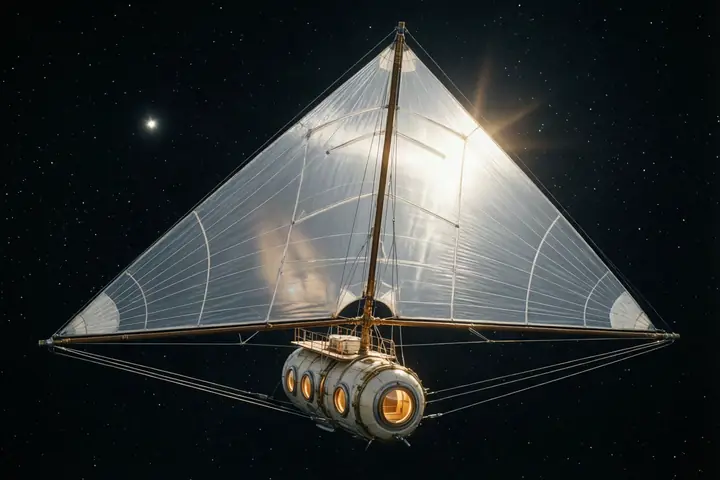
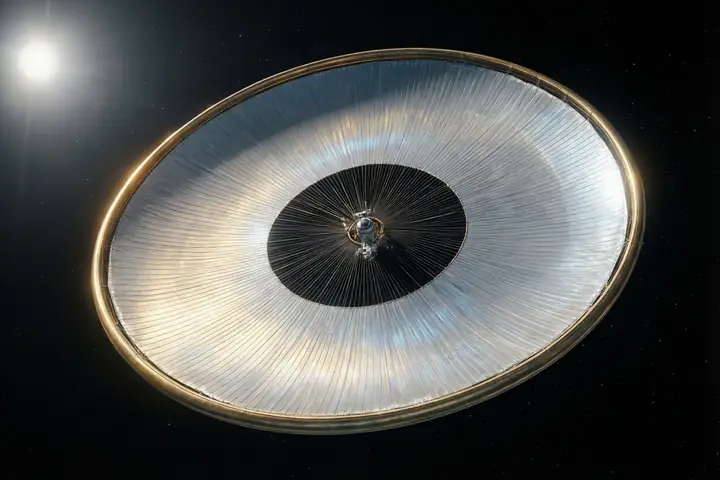
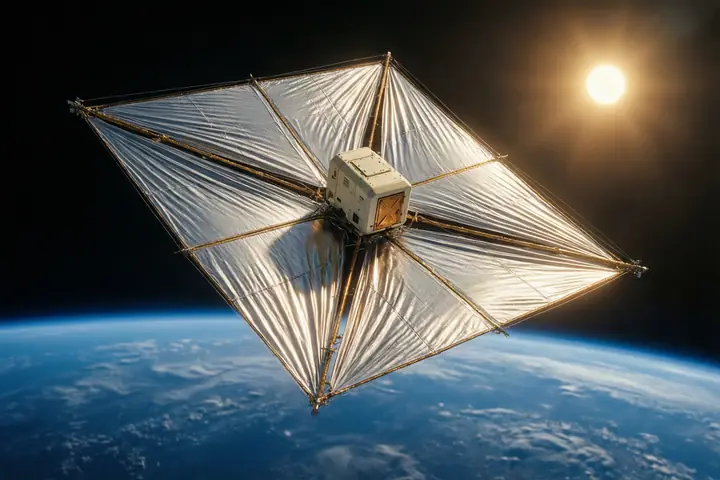
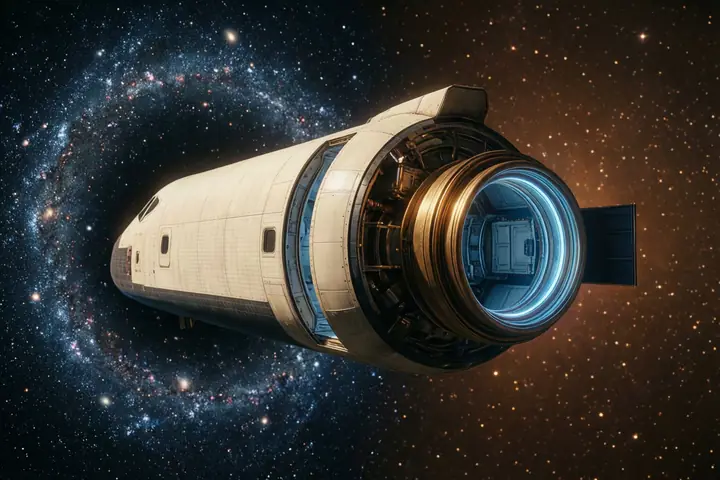
Dated forecasts about this kind of technology from the singularity reading list, then every idea of this kind in the order stories first imagined it.
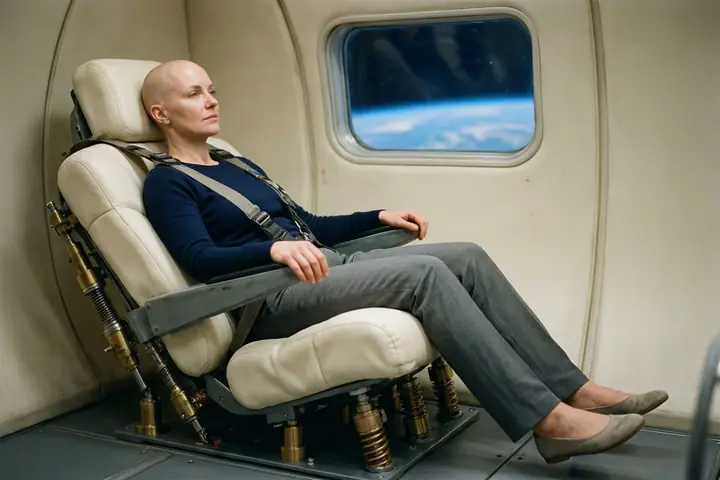
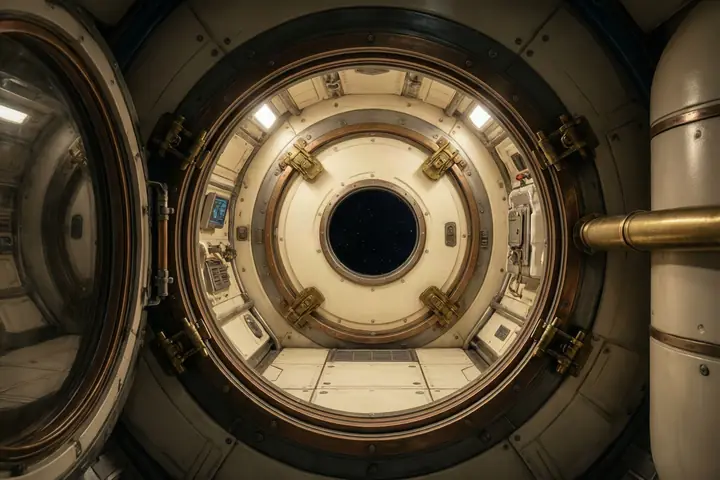
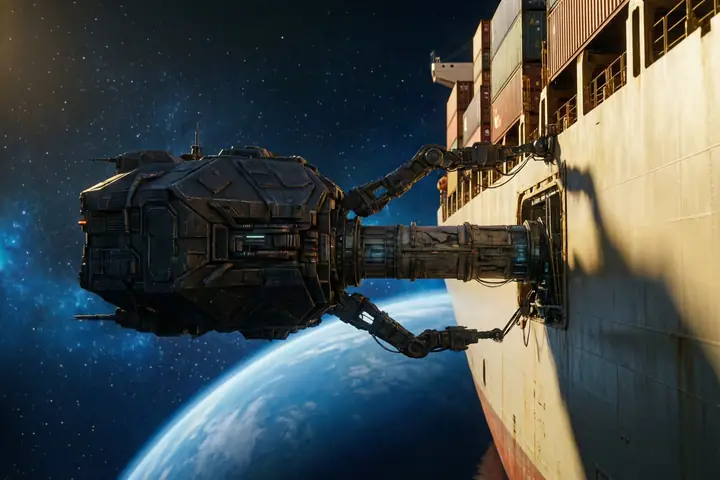
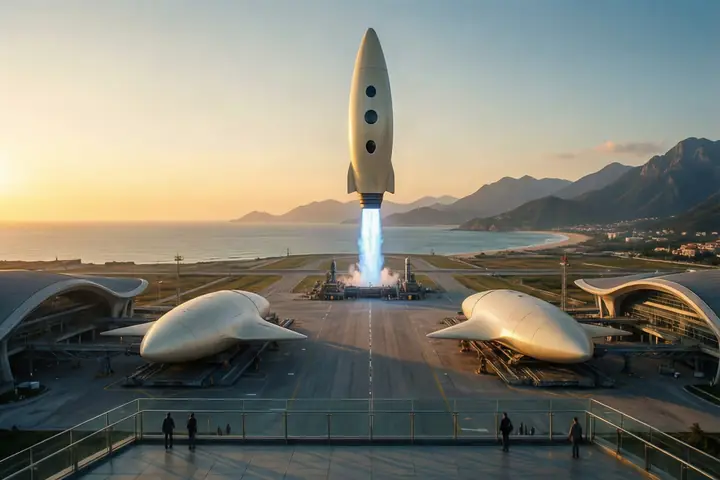
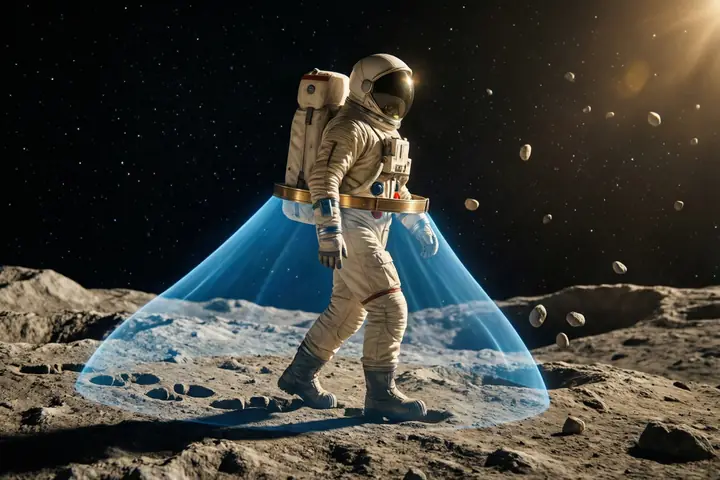
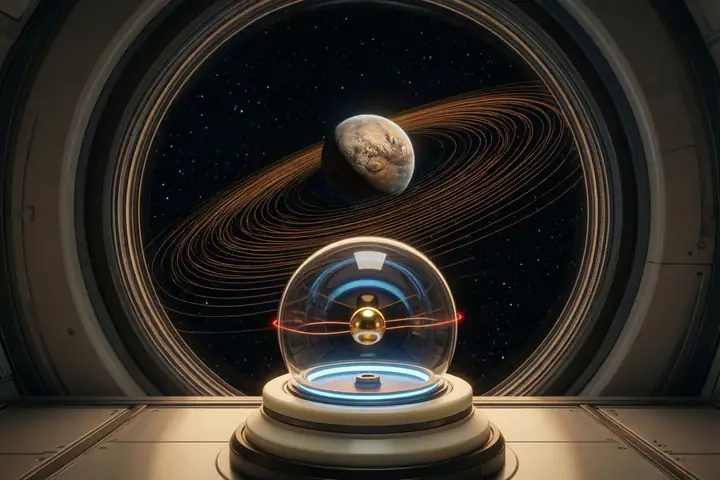
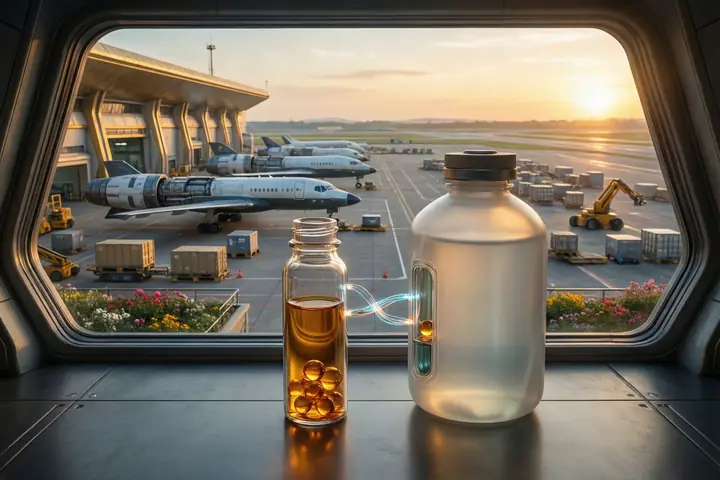
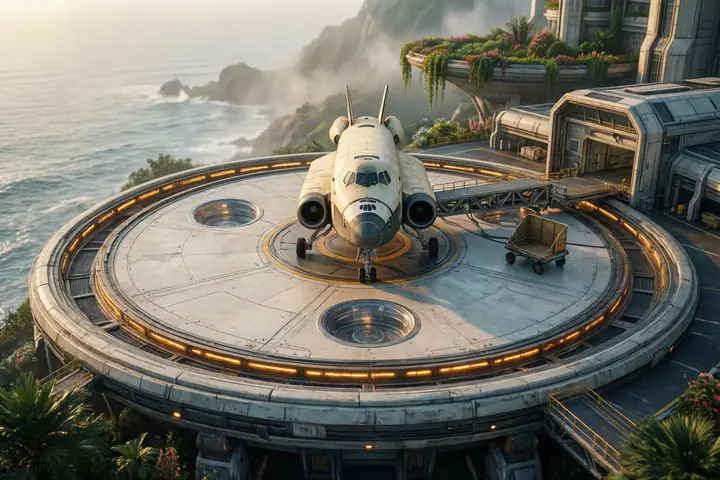
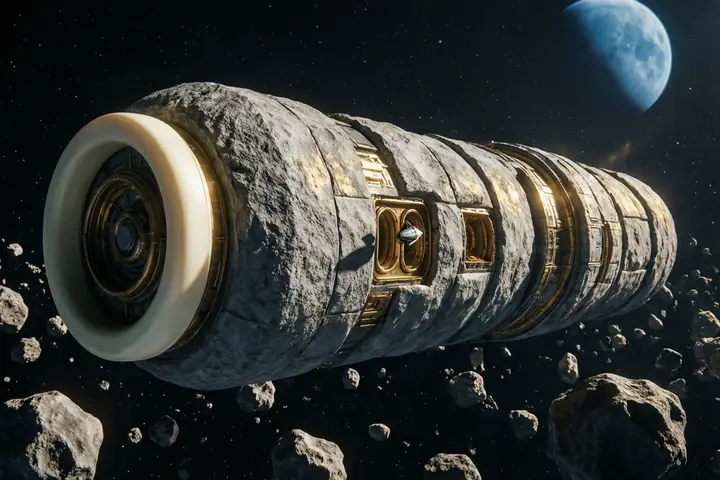
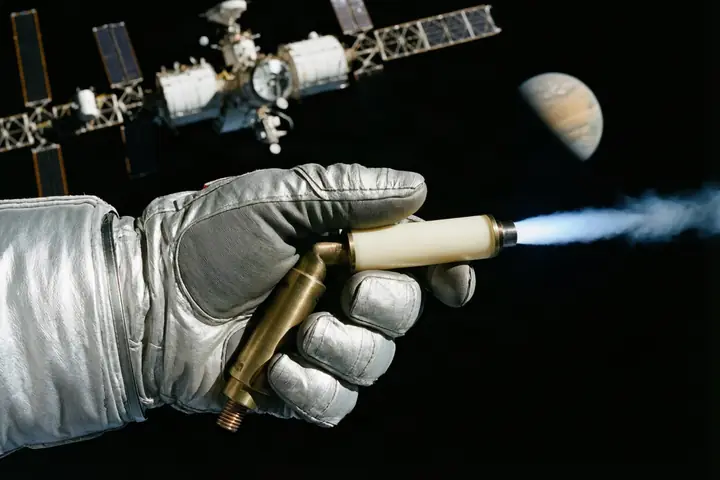
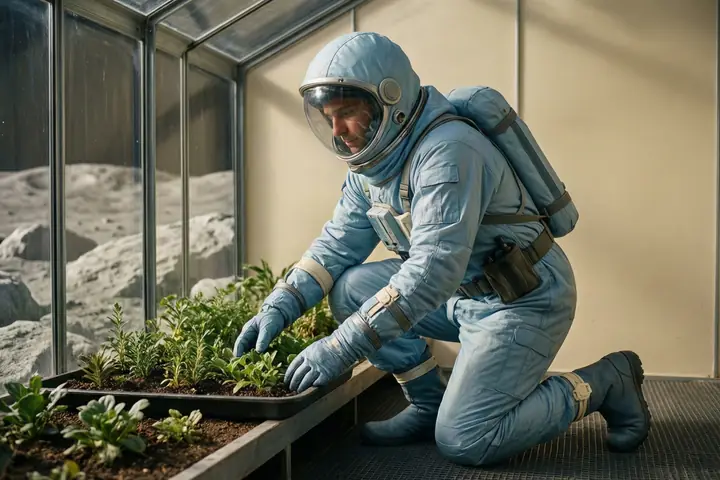
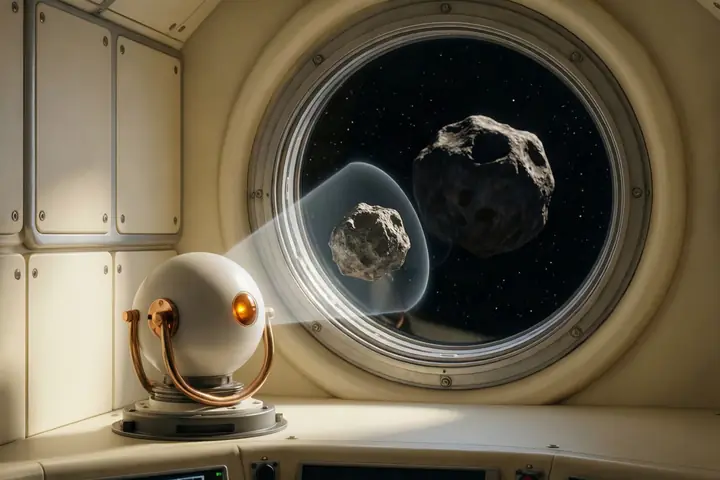
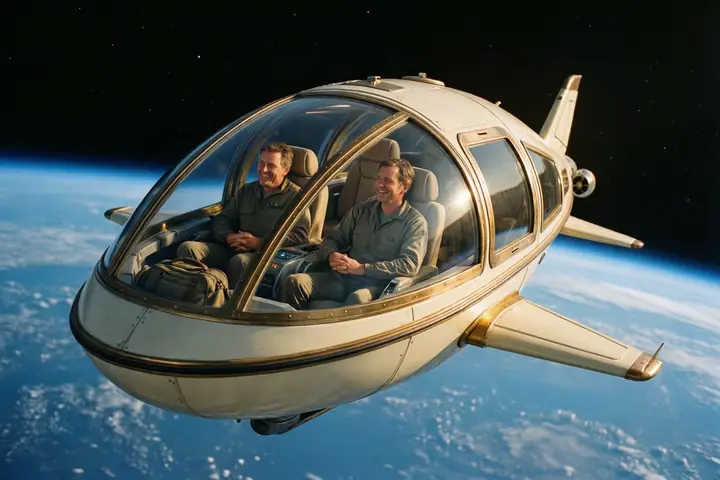
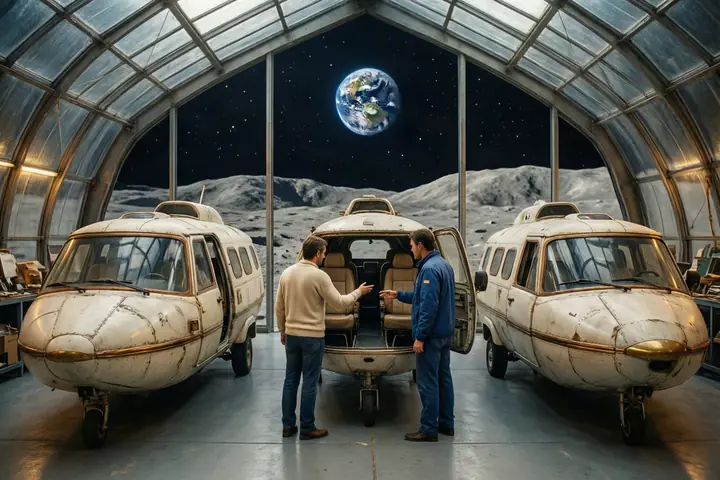
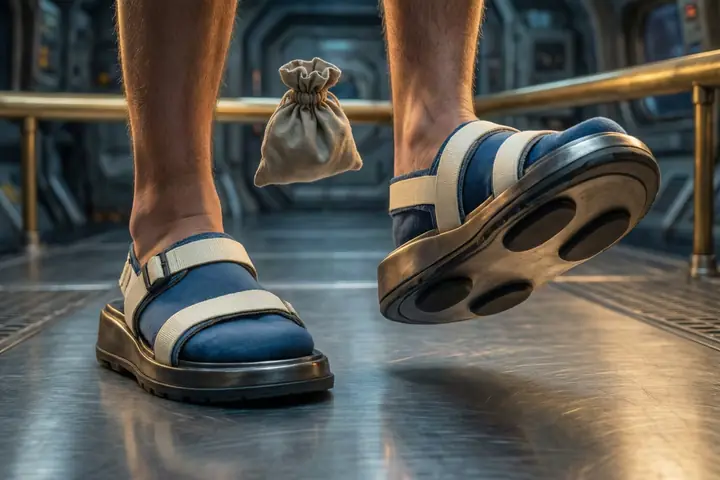
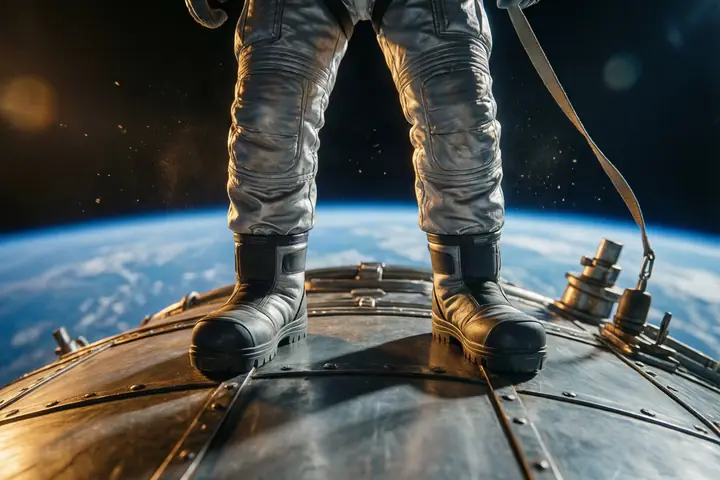
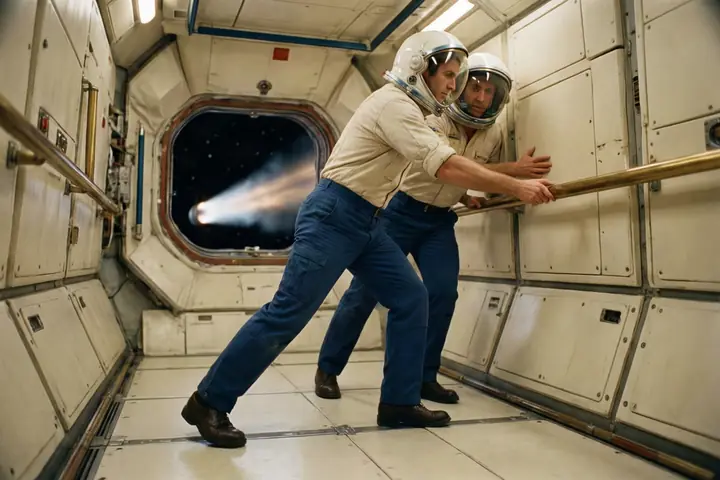
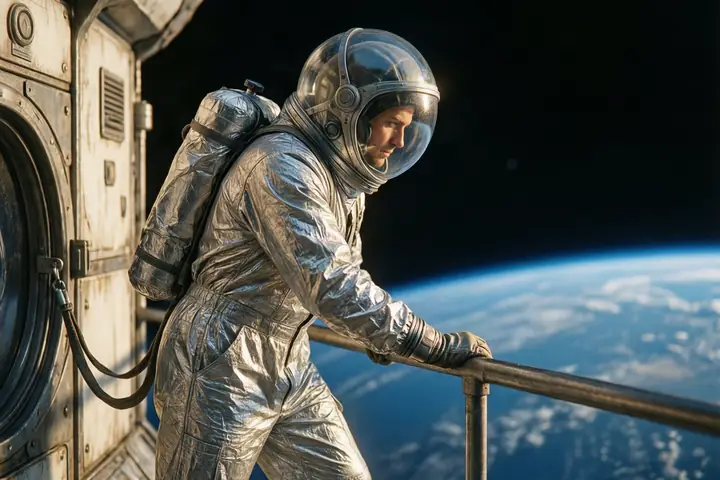
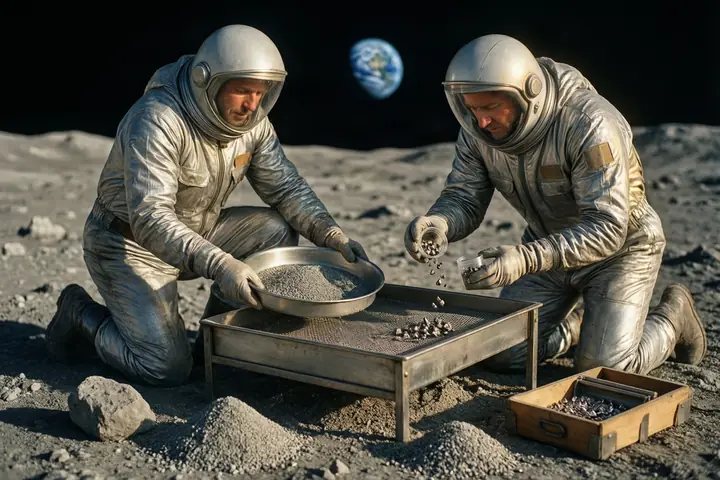
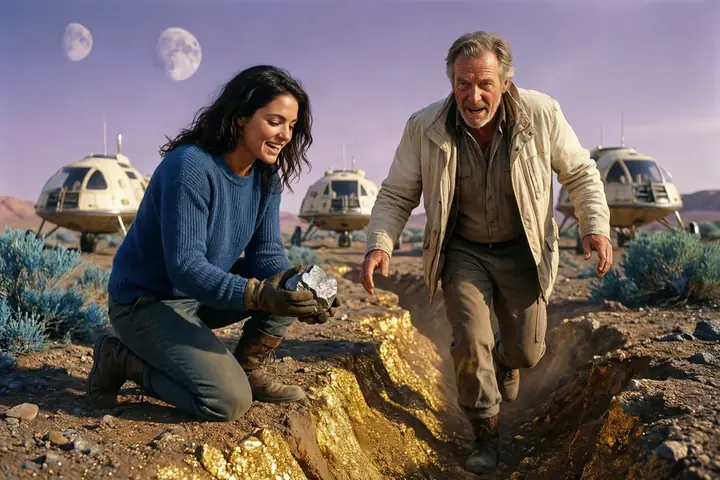
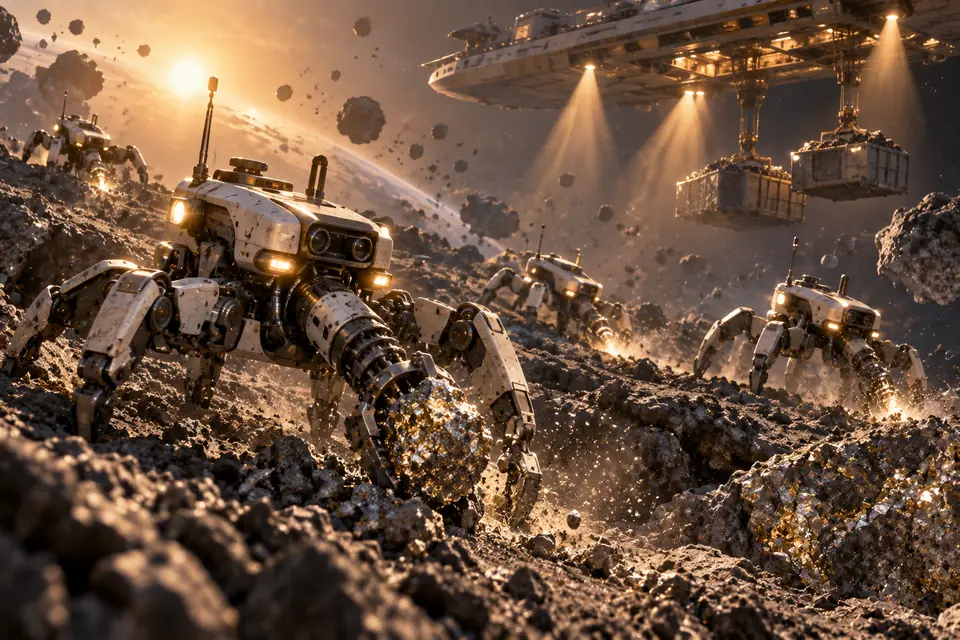
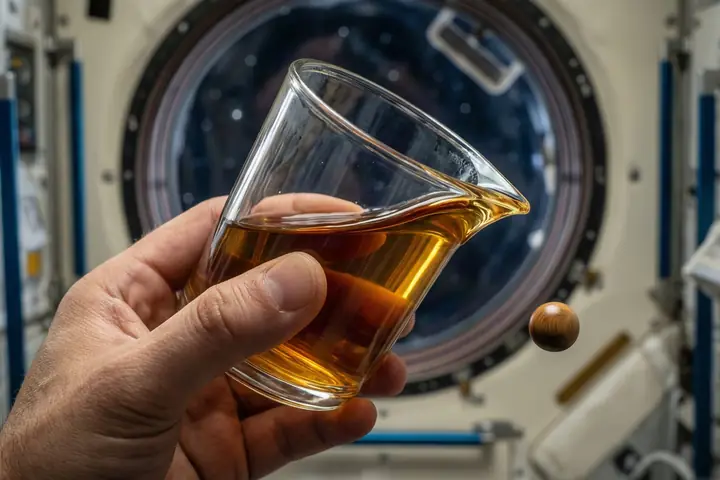
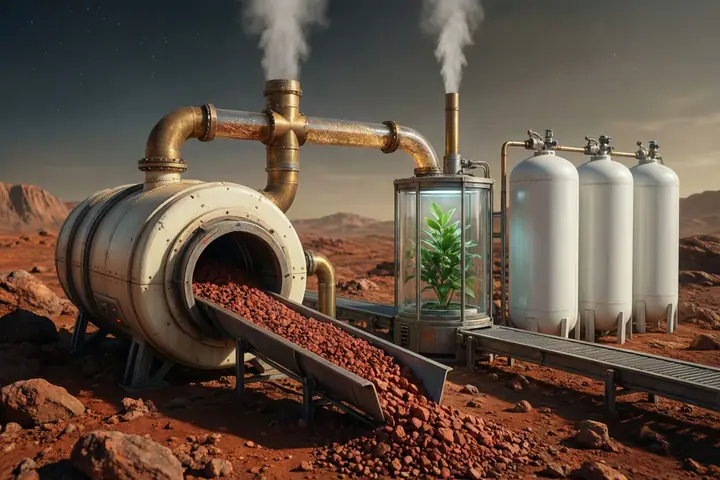
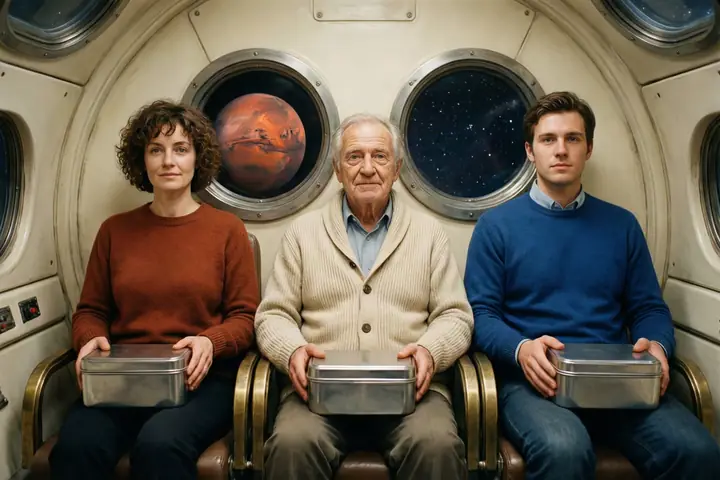
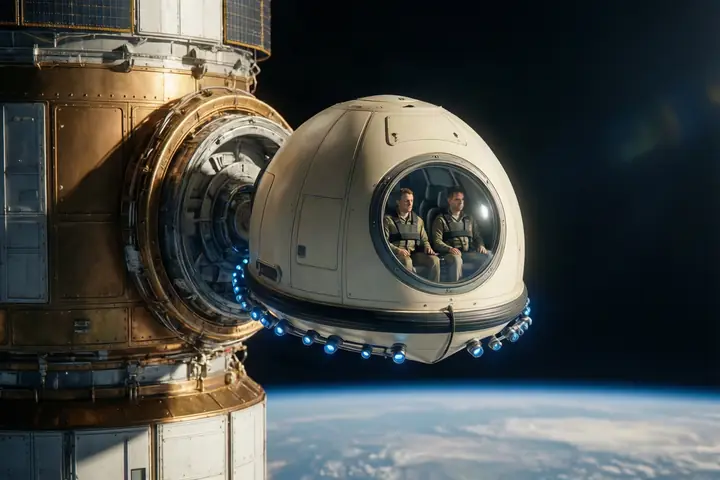
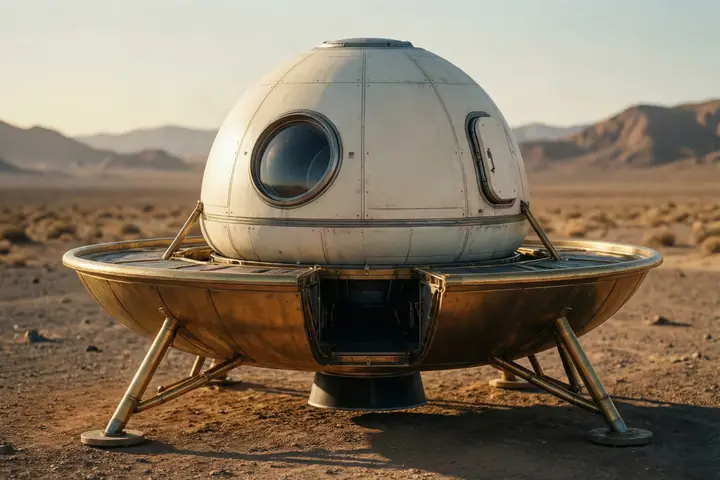
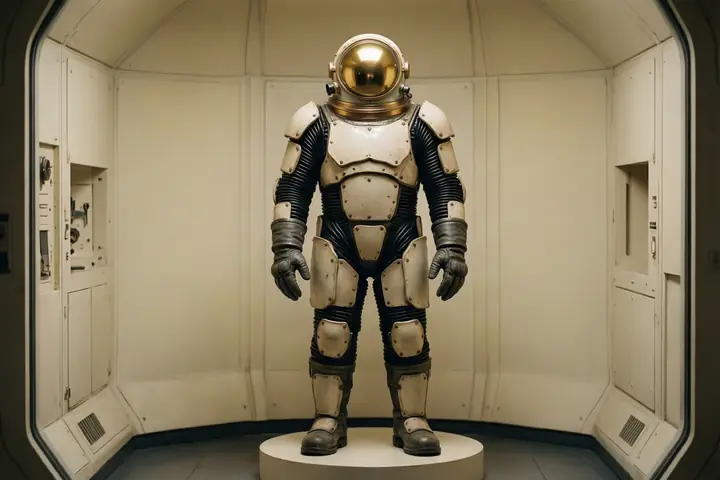
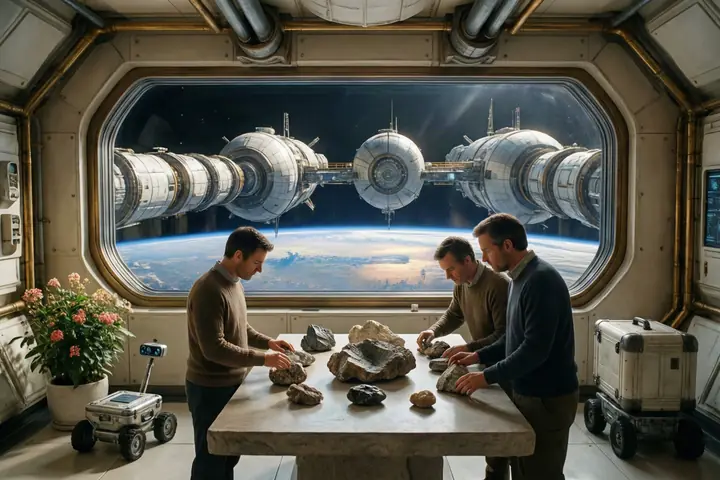
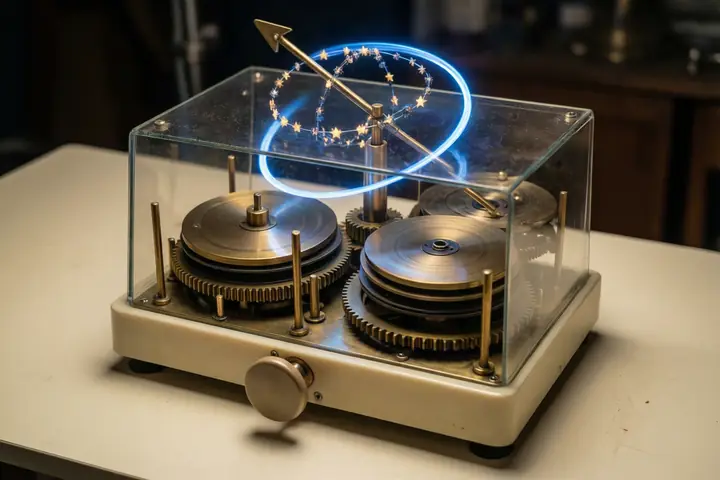
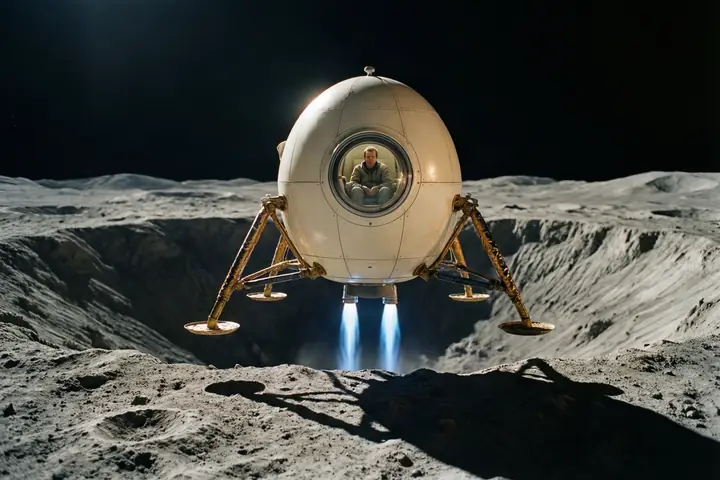
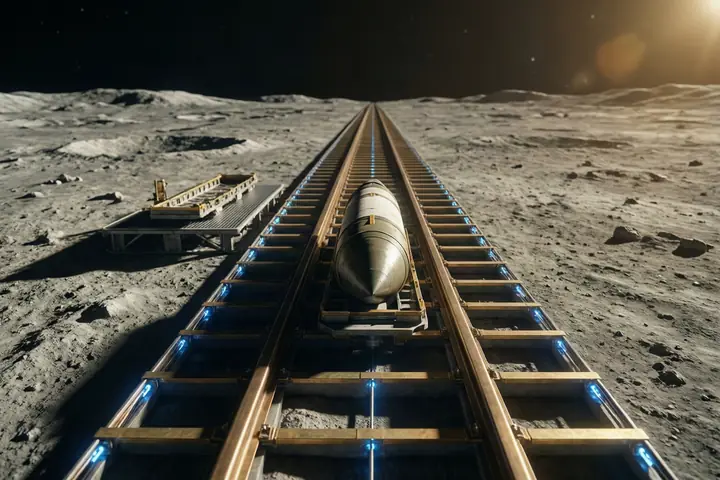
Illustration made with AI image generation; not evidence.
Imagined, oldest first
How large a prize, and which seller keeps the rest
Each idea is judged as if it worked the way its story promises: how large a prize it would be, who would pay, and which seller would keep what is left once buyers have had their gain. Choose a cell to see only those ideas; each count is the cards that cell shows. Every placing is a model's judgement, not a reading.
Seller
A vast prize
A large prize
A small prize
No prize
No seller keeps much
·
·
·
The maker keeps the rest
·
·
·
·
Existing firms keep the rest
·
Permit holders keep the rest
·
·
·
·
Nothing is sold
·
·
·
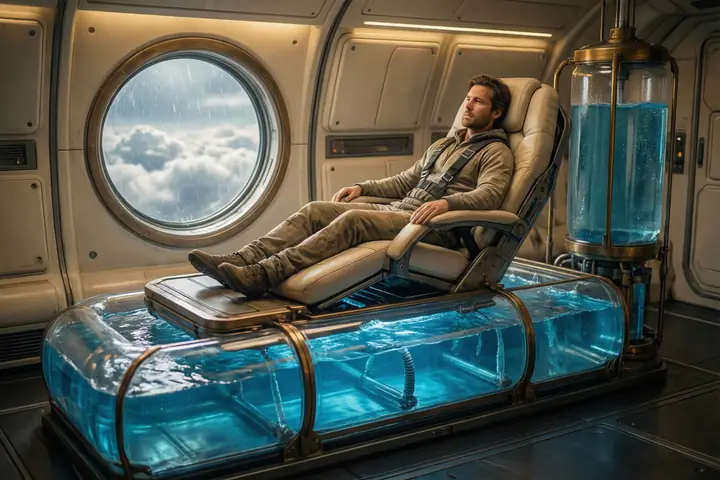
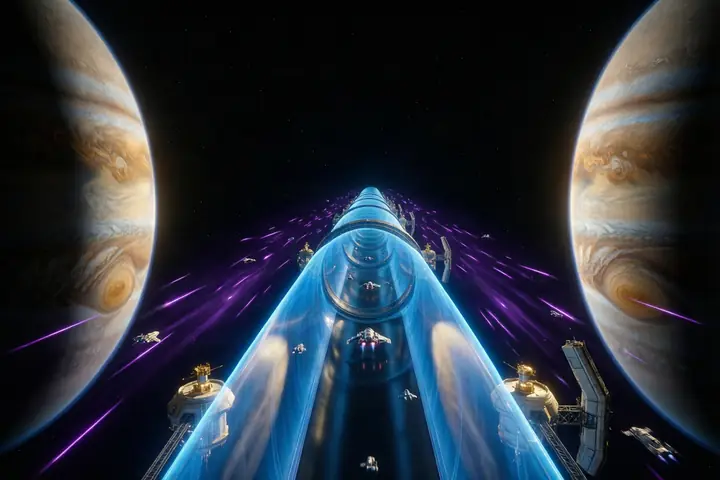
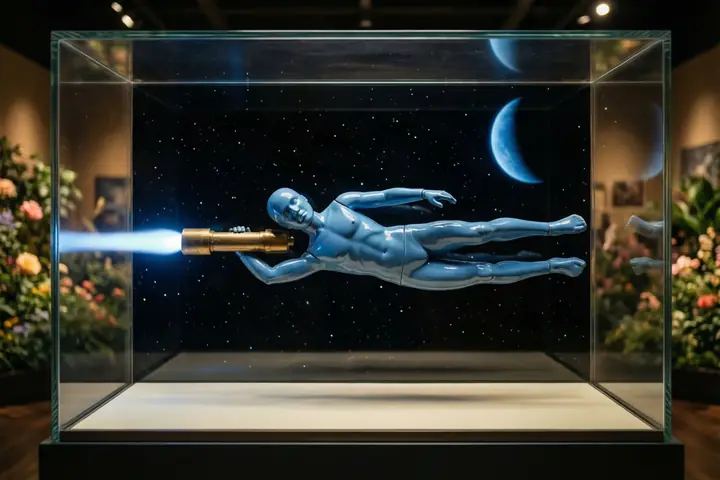
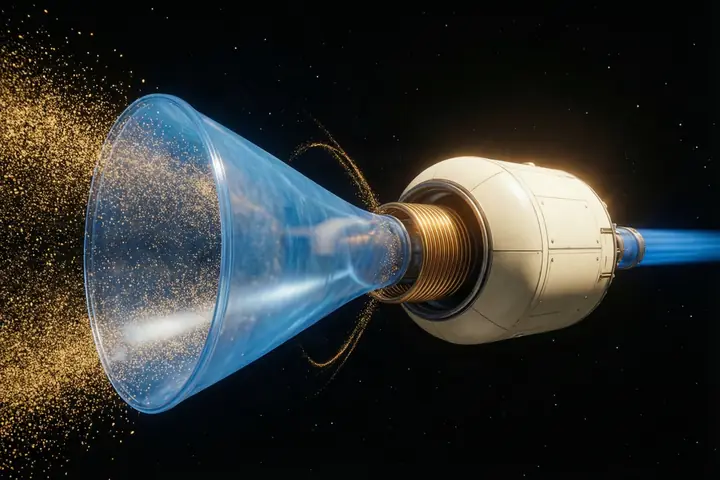
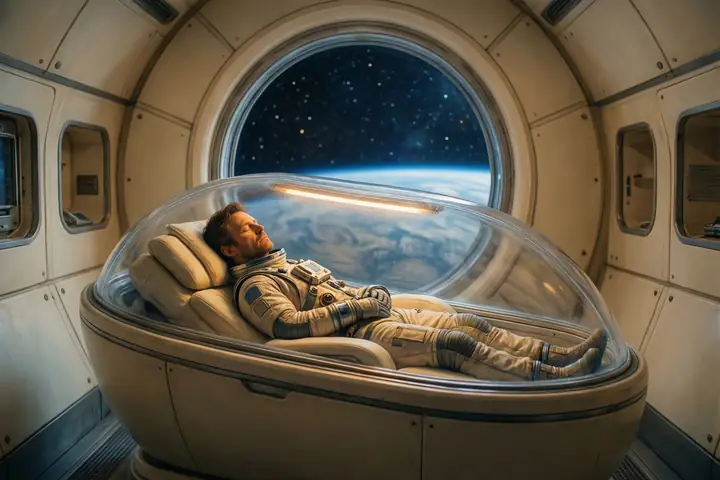
Illustration made with AI image generation; not evidence.
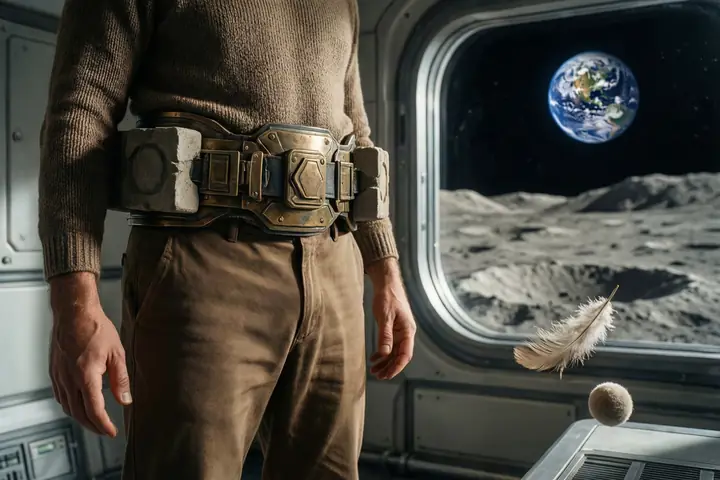
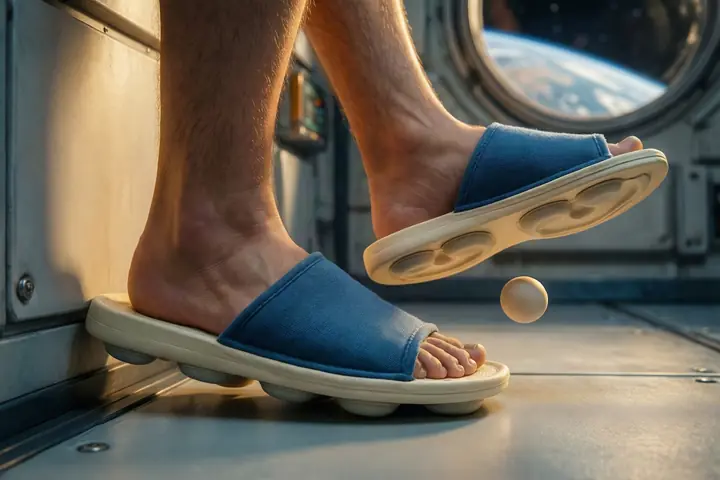
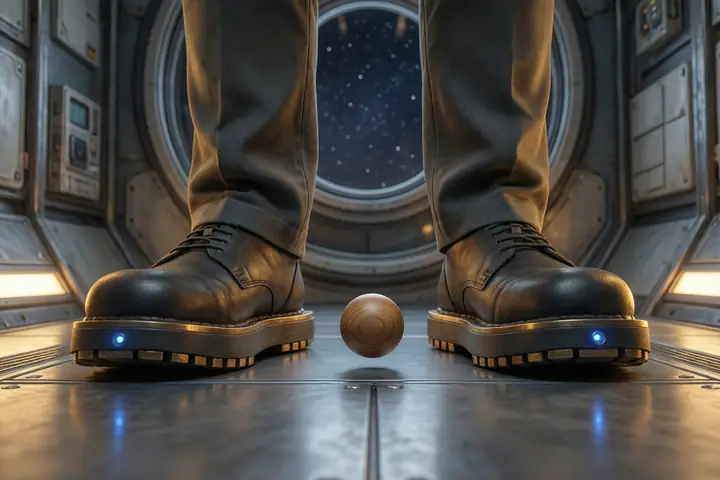
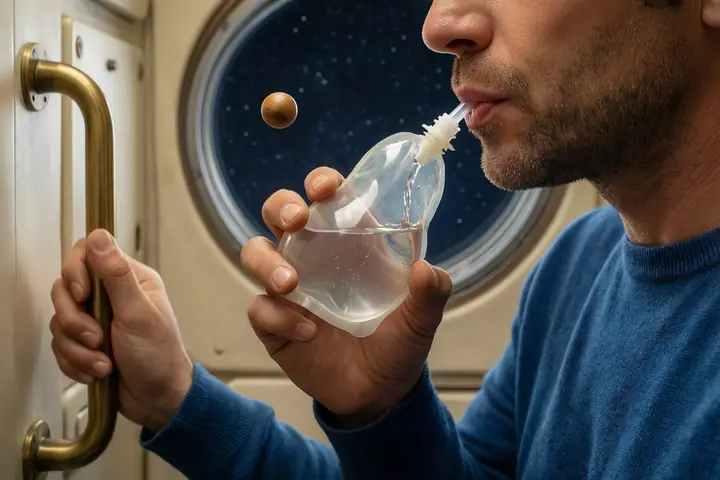
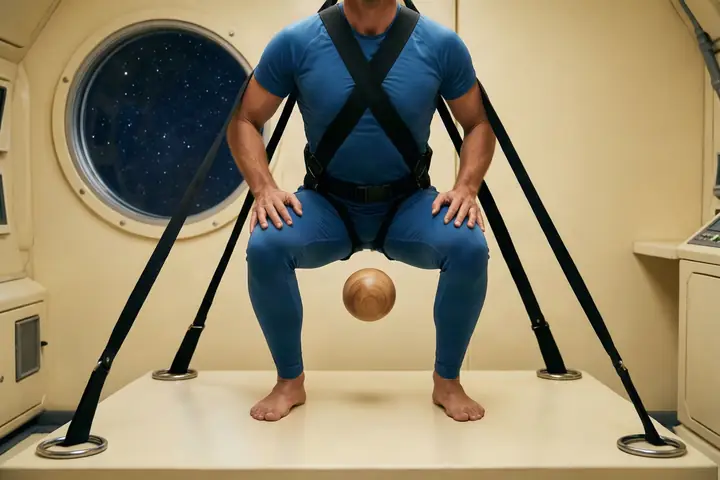
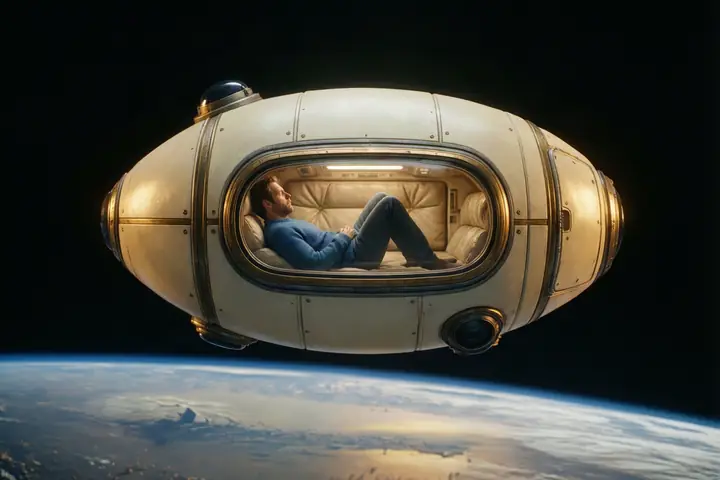
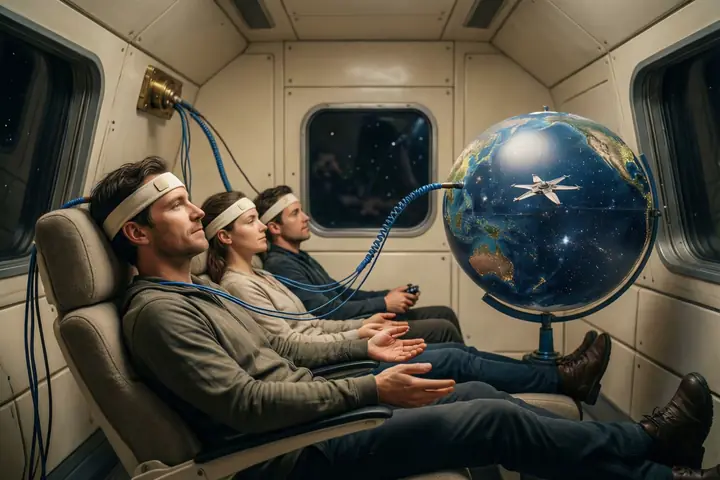
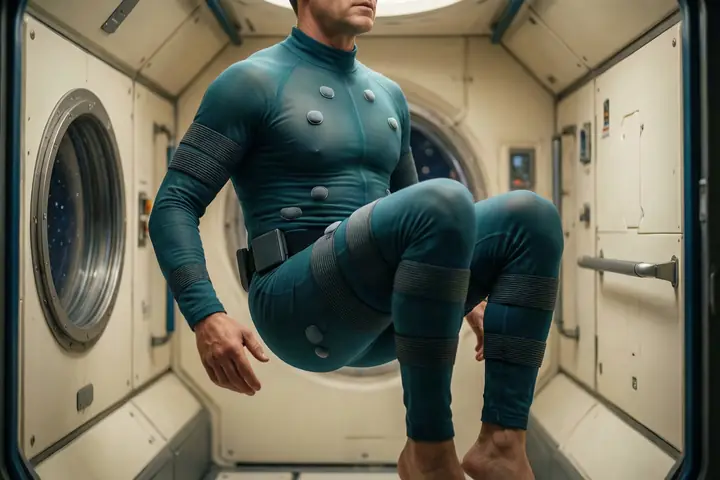
Weightlessness (Kepler)
Somnium (The Dream), Johannes Kepler · 1634
The idea that somewhere between worlds a body would feel no pull of gravity.
built in 1998, 364 years after it was imagined
No prizeNothing is soldas a model judges it
Why
No prize. It is an idea about what travellers would feel, not a product anyone makes or sells.
Who is paid. Nothing is sold, so nobody pays and no seller collects.
A model's judgement, not a reading, of the idea as if it worked the way its story promises. The model is fairly sure of this one.
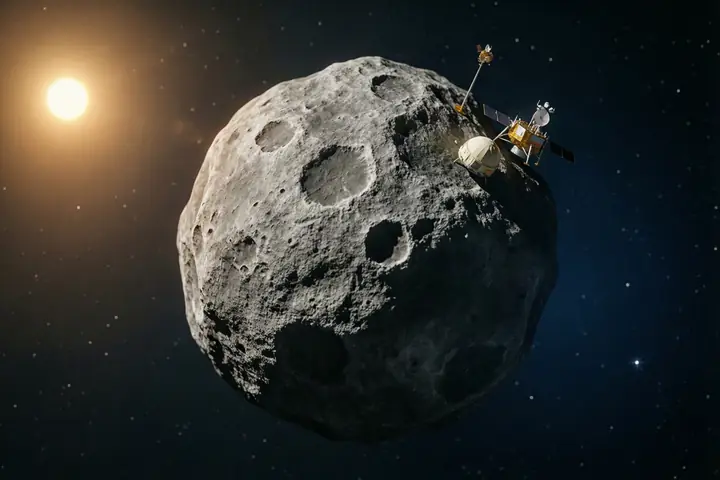
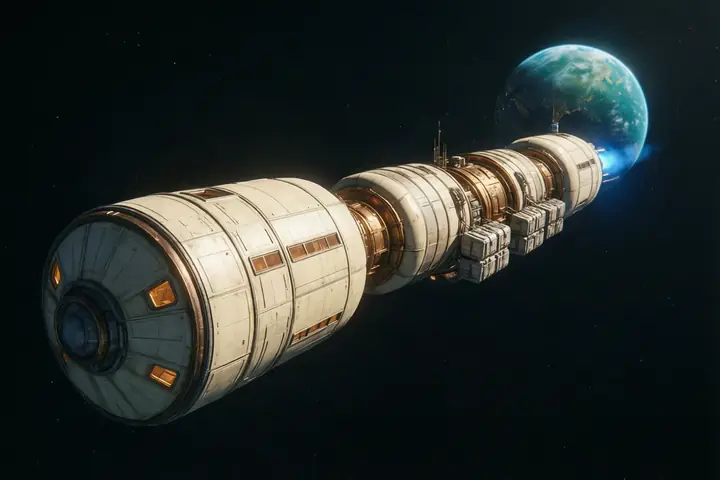
Illustration made with AI image generation; not evidence.
Gansas
The Man in the Moone, Francis Godwin · 1638
Wild birds whose seasonal flights carry them across space to the Moon.
not yet built · AI models judge it not physically possible
No prizeNothing is soldas a model judges it
Why
No prize. They are wild birds, creatures and not a technology.
Who is paid. Nothing is sold, so nobody pays and no seller collects.
A model's judgement, not a reading, of the idea as if it worked the way its story promises. The model is fairly sure of this one.
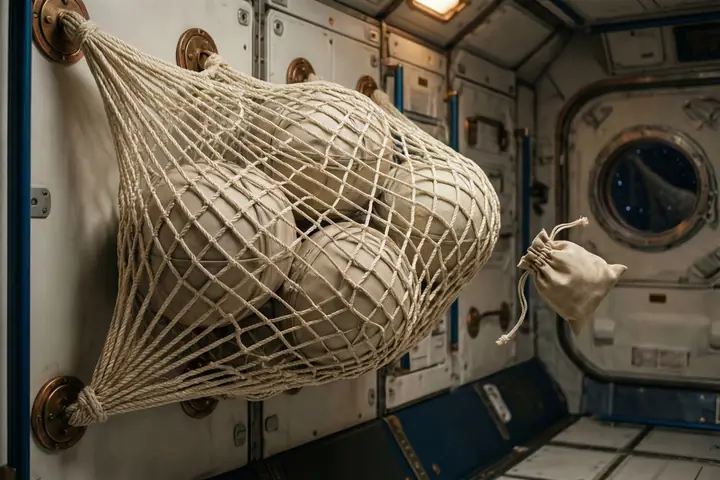
Illustration made with AI image generation; not evidence.
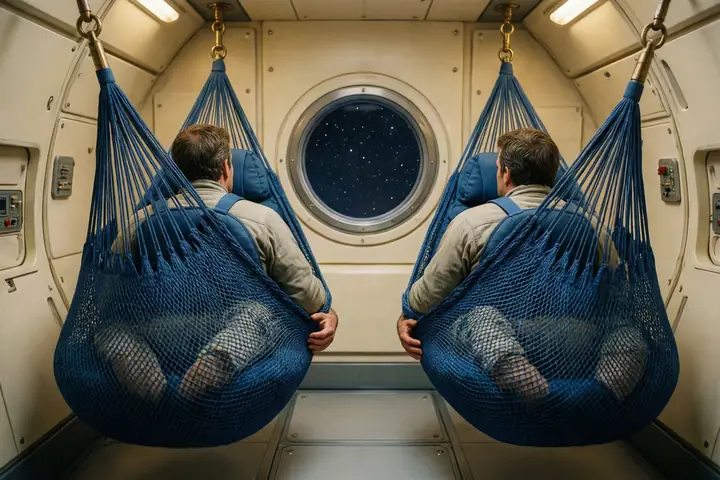
Weightlessness in Space
The Man in the Moone, Francis Godwin · 1638
An early notion that travellers far above the Earth would float free of weight.
built in 1998, 360 years after it was imagined
No prizeNothing is soldas a model judges it
Why
No prize. It is an early idea about what travellers would feel, not a product anyone makes or sells.
Who is paid. Nothing is sold, so nobody pays and no seller collects.
A model's judgement, not a reading, of the idea as if it worked the way its story promises. The model is fairly sure of this one.
Illustration made with AI image generation; not evidence.
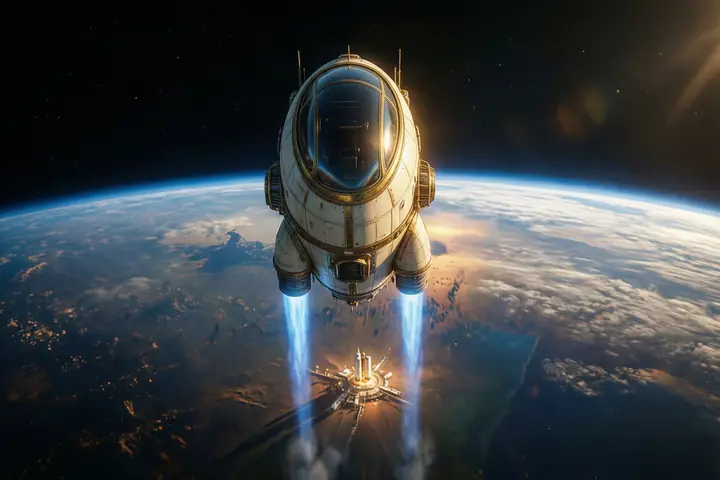
Moon Machine
A Voyage to the Moon, Cyrano de Bergerac · 1657
A vehicle that lifts a person off the Earth and carries them all the way to the Moon.
not yet built · AI models' likeliest decade: the 2030s
A large prizeBusinesses pay; existing firms keep the restas a model judges it
Why
A large prize. A working ship that carries people and cargo between worlds is the base of a whole transport industry.
Who is paid. Carriers and other firms working in space buy ships, and since a second yard could build the same craft the established shipbuilders collect.
A model's judgement, not a reading, of the idea as if it worked the way its story promises. The model is fairly sure of this one.
Illustration made with AI image generation; not evidence.
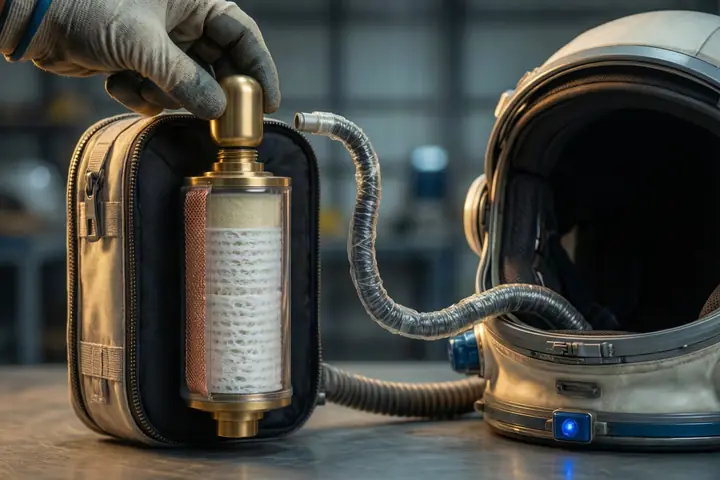
Barrels of Air
The Mummy! A Tale of the Twenty-Second Century, Jane Webb Loudon · 1828
Carrying a sealed supply of air to breathe at heights where none remains.
not yet built · AI models' likeliest decade: the 2020s
A small prizeBusinesses pay; existing firms keep the restas a model judges it
Why
A small prize. Breathable air is essential aboard, but this is a fitting inside a craft or suit, not an industry of its own.
Who is paid. Ship operators pay for it within the craft, and the established builders of ships and suits supply it because the method is easy to copy.
A model's judgement, not a reading, of the idea as if it worked the way its story promises. The model is fairly sure of this one.
Illustration made with AI image generation; not evidence.
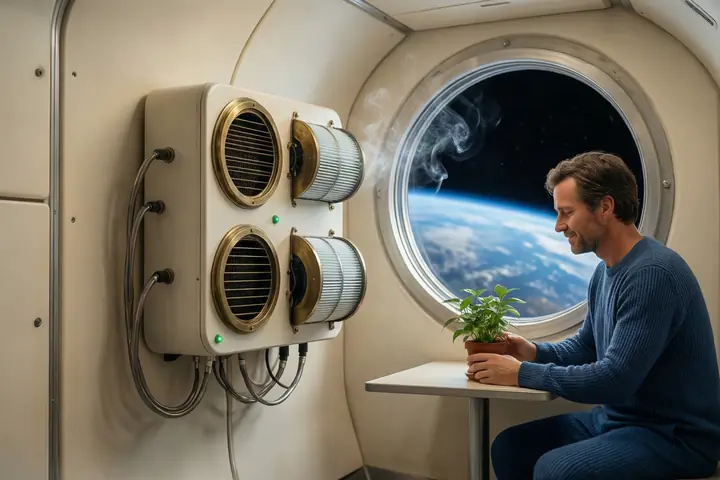
Air Renewal
From the Earth to the Moon, Jules Verne · 1867
Restoring oxygen to the cabin air of a sealed spacecraft during flight.
built in the 1960s, about 100 years after it was imagined
A small prizeBusinesses pay; existing firms keep the restas a model judges it
Why
A small prize. Breathable air is essential aboard, but this is a fitting inside a craft or suit, not an industry of its own.
Who is paid. Ship operators pay for it within the craft, and the established builders of ships and suits supply it because the method is easy to copy.
A model's judgement, not a reading, of the idea as if it worked the way its story promises. The model is fairly sure of this one.
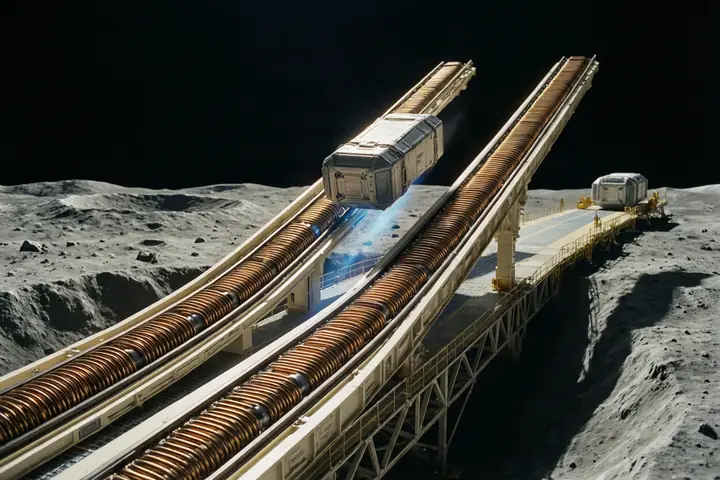
Illustration made with AI image generation; not evidence.
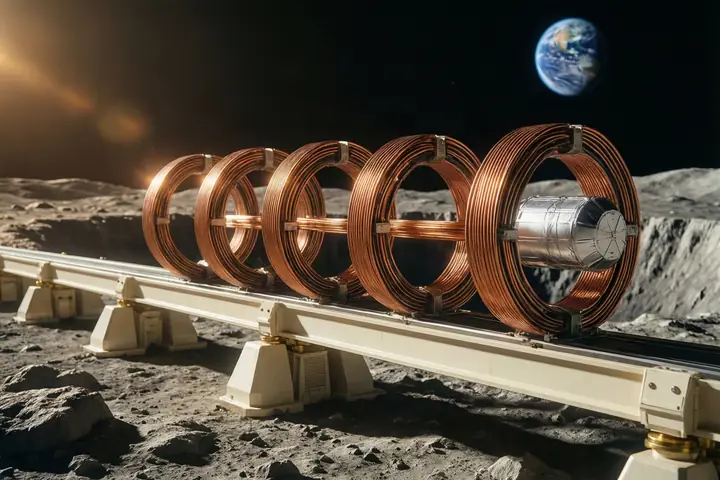
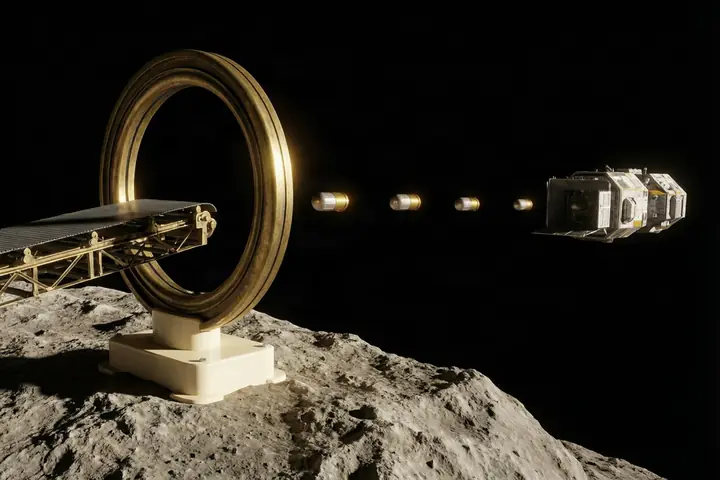
Columbiad
From the Earth to the Moon, Jules Verne · 1867
A colossal gun meant to fire a payload from the ground to the Moon.
not yet built · AI models could not judge when it may arrive
A large prizeBusinesses pay; existing firms keep the restas a model judges it
Why
A large prize. Flinging payloads to space without rockets would change the cost of the whole launch industry.
Who is paid. Firms with cargo to launch pay, and since others could build such a track or gun the gain goes to those who already own launch sites and power.
A model's judgement, not a reading, of the idea as if it worked the way its story promises. The model is fairly sure of this one.
Illustration made with AI image generation; not evidence.
Free Return Trajectory
From the Earth to the Moon, Jules Verne · 1867
A flight path that swings around the Moon and brings a craft home without extra steering.
built in the 1960s, about 100 years after it was imagined
No prizeNothing is soldas a model judges it
Why
No prize. It is a way of flying or moving, not a product; the craft and gear that do it are judged separately.
Who is paid. Nothing is sold, so nobody pays and no seller collects.
A model's judgement, not a reading, of the idea as if it worked the way its story promises. The model is fairly sure of this one.
Illustration made with AI image generation; not evidence.
Gourmet Space Cuisine
From the Earth to the Moon, Jules Verne · 1867
Fine restaurant-quality cooking served to travellers beyond Earth.
not yet built · AI models' likeliest decade: the 2020s
A small prizeHouseholds pay; no seller keeps muchas a model judges it
Why
A small prize. Fine food on a voyage is a pleasant extra for travellers, a convenience.
Who is paid. Travellers pay for their meals, assumed here to be on top of the fare, and any good cook could offer the same.
A model's judgement, not a reading, of the idea as if it worked the way its story promises. The model is not very sure of this one.
Illustration made with AI image generation; not evidence.
Launching Facility
From the Earth to the Moon, Jules Verne · 1867
A dedicated site equipped to send vehicles into space.
not yet built · AI models' likeliest decade: the 2020s
A large prizeBusinesses pay; existing firms keep the restas a model judges it
Why
A large prize. A site built to send craft to space is what the whole launch industry runs from.
Who is paid. Firms with craft to launch pay to use it, and since others could build one the gain goes to those who already own good sites.
A model's judgement, not a reading, of the idea as if it worked the way its story promises. The model is fairly sure of this one.
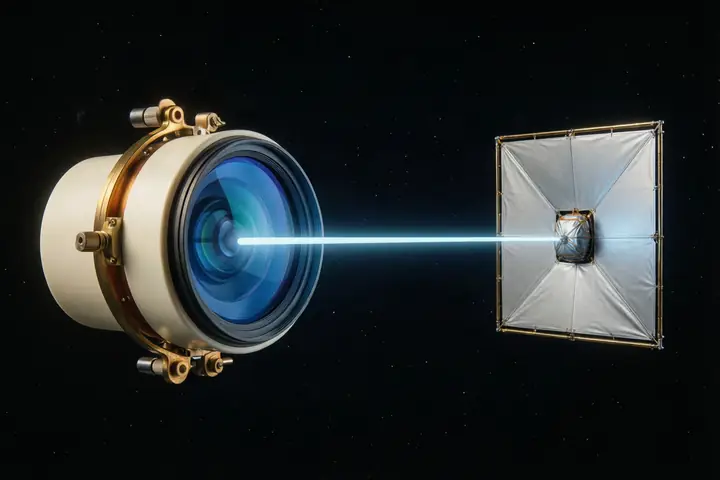
Illustration made with AI image generation; not evidence.
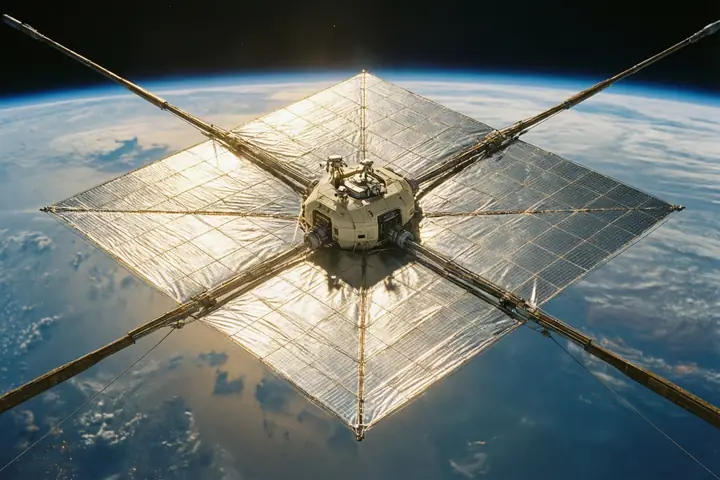
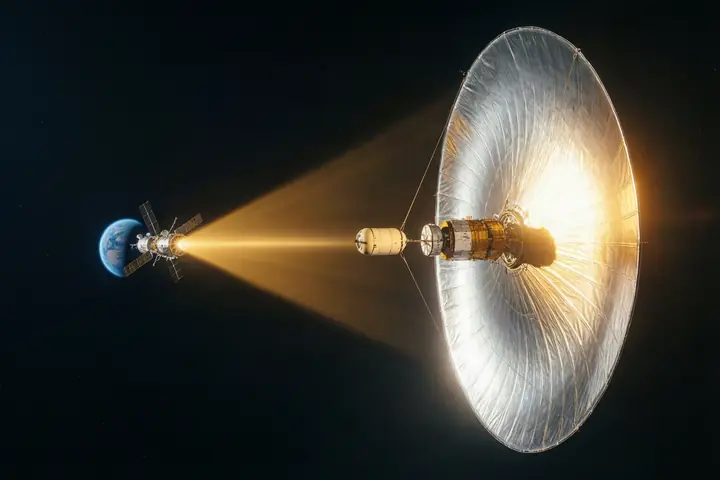
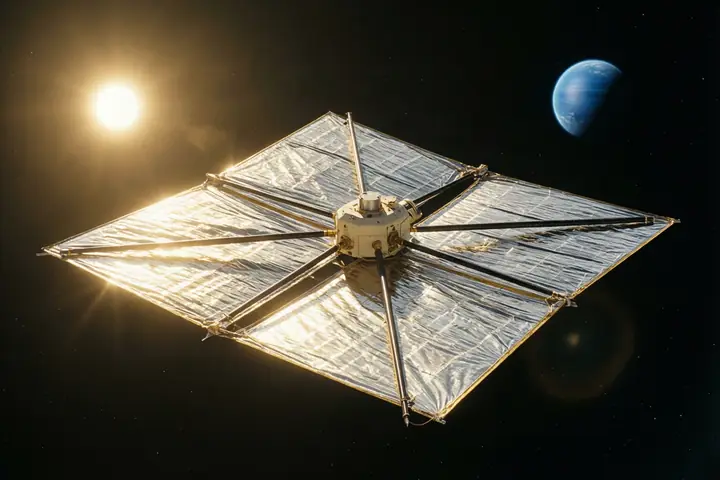
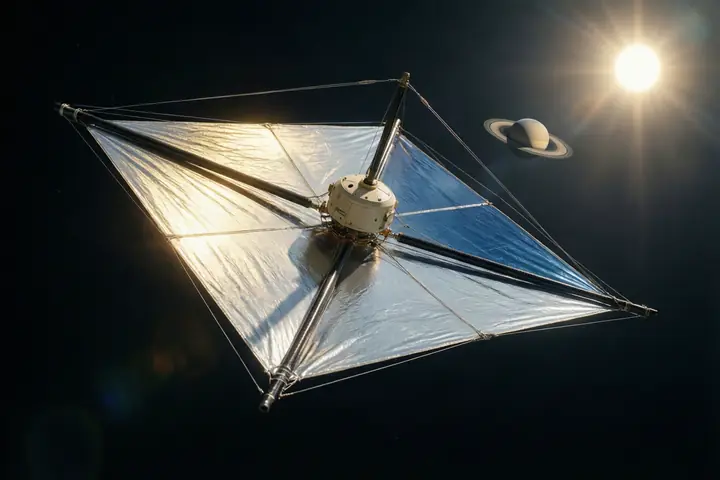
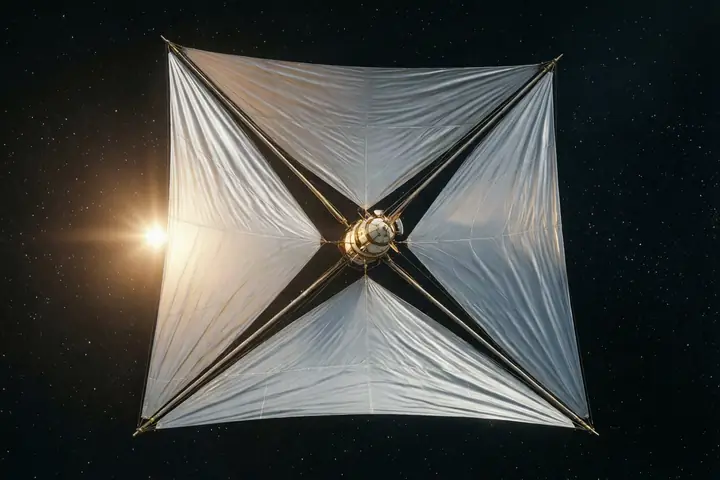
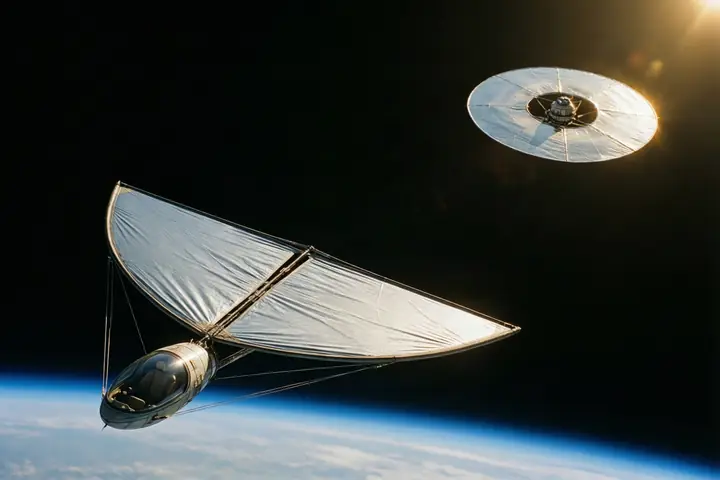
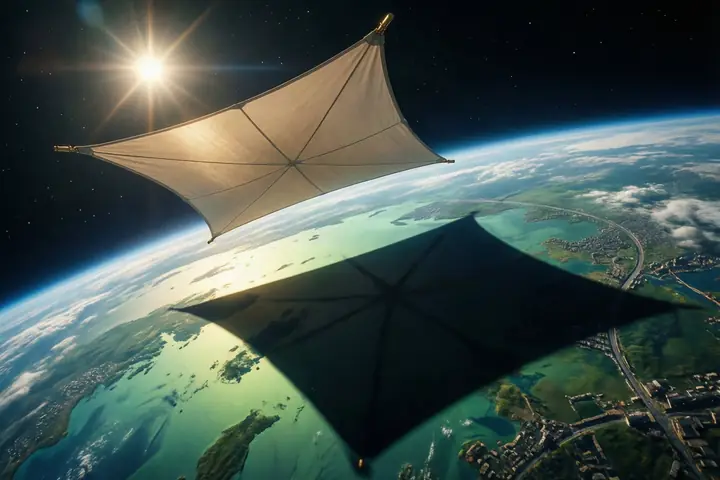
Light Pressure Propulsion
From the Earth to the Moon, Jules Verne · 1867
Pushing a spacecraft forward using the gentle pressure of sunlight on a sail.
built in the 2010s, about 150 years after it was imagined
A large prizeBusinesses pay; existing firms keep the restas a model judges it
Why
A large prize. The promise is travel with no fuel at all, which would change the cost of space transport; the real sails so far push only small test craft.
Who is paid. An engine is bought by whoever runs the ship, assumed here to be carriers, and established engine builders could copy it once it worked.
A model's judgement, not a reading, of the idea as if it worked the way its story promises. The model is fairly sure of this one.
Illustration made with AI image generation; not evidence.
Projectile-Vehicle
From the Earth to the Moon, Jules Verne · 1867
A sealed shell holding people, hurled from a giant gun all the way to the Moon.
not yet built · AI models judge it not physically possible
A small prizeBusinesses pay; existing firms keep the restas a model judges it
Why
A small prize. A sealed shell for a few travellers is the bare cabin; the prize of the trip lies with the gun that hurls it.
Who is paid. Whoever runs the gun would buy it, assumed here to be a launch firm, and existing spacecraft builders could all make something so simple.
A model's judgement, not a reading, of the idea as if it worked the way its story promises. The model is not very sure of this one.
Illustration made with AI image generation; not evidence.
Retro-Rockets
From the Earth to the Moon, Jules Verne · 1867
Small thrusters firing against the direction of travel to slow or halt a spacecraft.
built in the 1960s, about 100 years after it was imagined
A small prizeBusinesses pay; existing firms keep the restas a model judges it
Why
A small prize. Thrusters that slow a craft are a necessary part of a spacecraft, not a product by themselves.
Who is paid. Ship operators pay for them within the craft, and established engine makers supply them since they are easy to copy.
A model's judgement, not a reading, of the idea as if it worked the way its story promises. The model is fairly sure of this one.
Illustration made with AI image generation; not evidence.
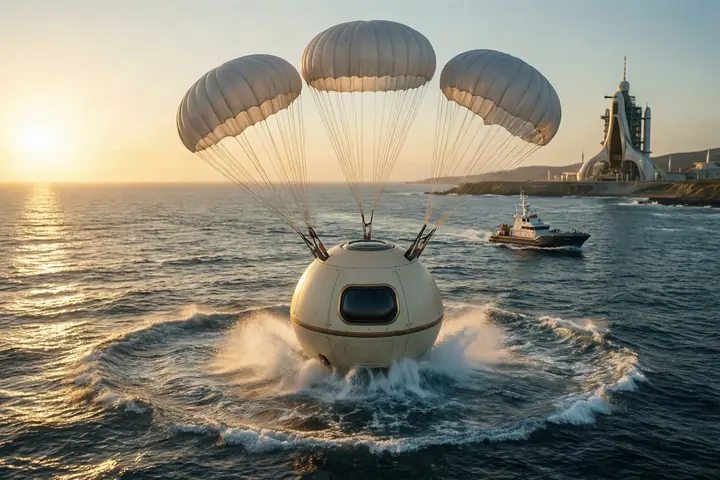
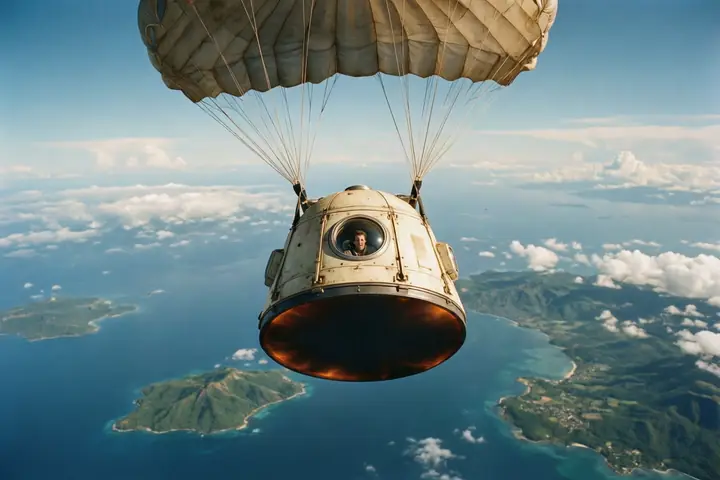
Splashdown
From the Earth to the Moon, Jules Verne · 1867
Bringing a returning spacecraft down onto the ocean rather than land.
built in the 1960s, about 100 years after it was imagined
No prizeNothing is soldas a model judges it
Why
No prize. It is a way of landing, not a product; the capsule and the recovery ships are judged under their own entries.
Who is paid. Nothing is sold, so nobody pays and no seller collects.
A model's judgement, not a reading, of the idea as if it worked the way its story promises. The model is fairly sure of this one.
Illustration made with AI image generation; not evidence.
Water-Springs
From the Earth to the Moon, Jules Verne · 1867
A layer of liquid used to soften the crushing force of launch on a spacecraft's crew.
not yet built · AI models' likeliest decade: the 2020s
A small prizeBusinesses pay; existing firms keep the restas a model judges it
Why
A small prize. It protects crews during hard thrust or landing, which matters only to the few who fly such ships.
Who is paid. Ship operators pay for it as part of the craft, and the firms that already build ships and their fittings supply it since others could copy the design.
A model's judgement, not a reading, of the idea as if it worked the way its story promises. The model is fairly sure of this one.
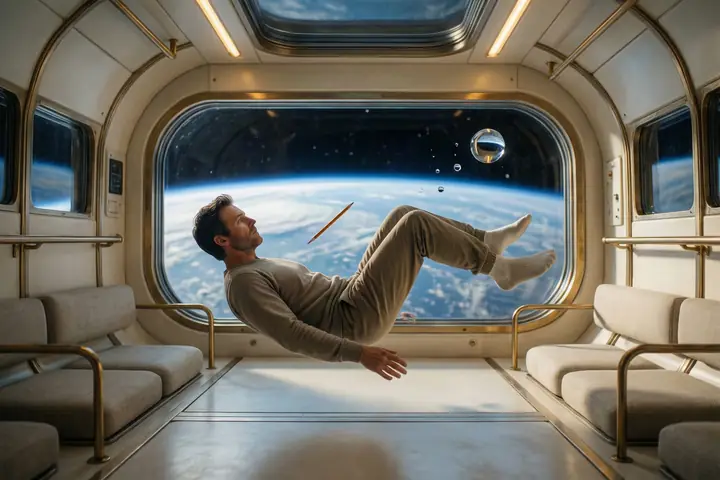
Illustration made with AI image generation; not evidence.
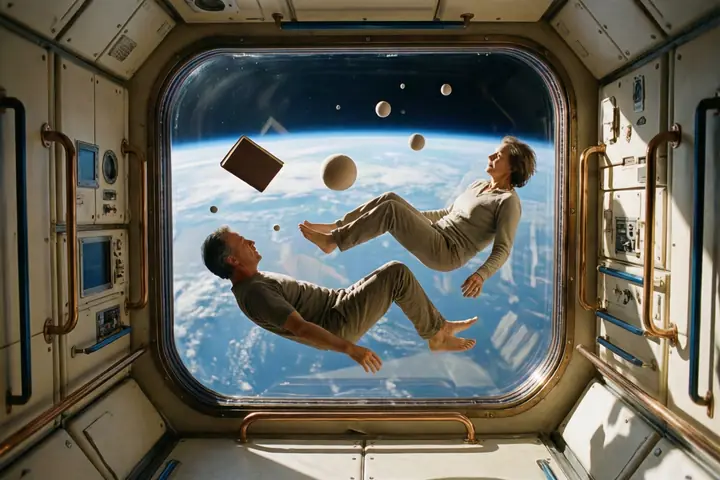
Weightlessness
From the Earth to the Moon, Jules Verne · 1867
The floating sensation of free fall, when a traveller seems to weigh nothing.
built in 1961, 94 years after it was imagined
No prizeNothing is soldas a model judges it
Why
No prize. It names what space does to the body, a condition and not a product anyone makes or sells.
Who is paid. Nothing is sold, so nobody pays and no seller collects.
A model's judgement, not a reading, of the idea as if it worked the way its story promises. The model is fairly sure of this one.
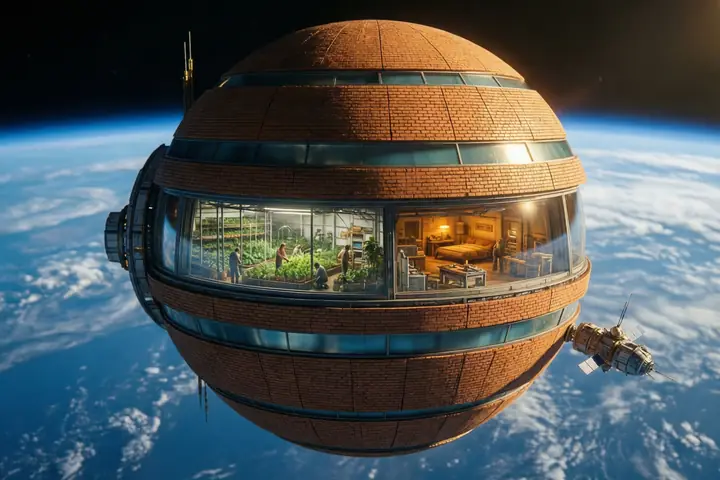
Illustration made with AI image generation; not evidence.
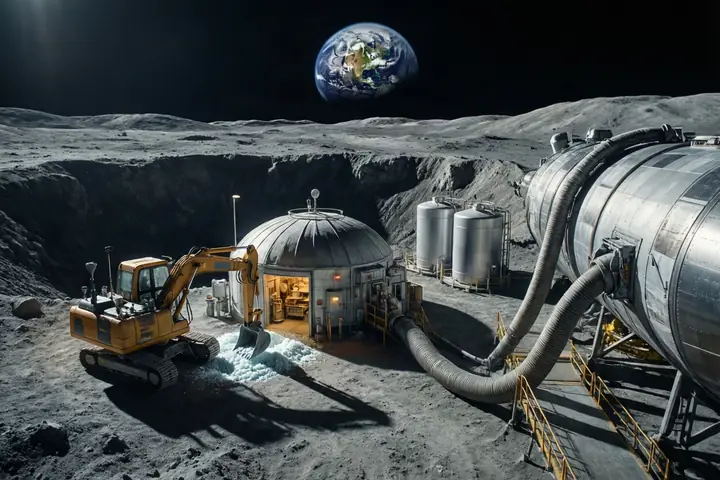
Brick Moon
The Brick Moon, Edward Everett Hale · 1869
An orbiting habitat placed above Earth where people can live and work.
not yet built · AI models' likeliest decade: the 2020s
A large prizeA government pays; existing firms keep the restas a model judges it
Why
A large prize. A place for many people to live and work beyond Earth is a building industry of its own.
Who is paid. A settlement is a public work a government pays for, and the big construction and space firms that already win such contracts would build it.
A model's judgement, not a reading, of the idea as if it worked the way its story promises. The model is fairly sure of this one.
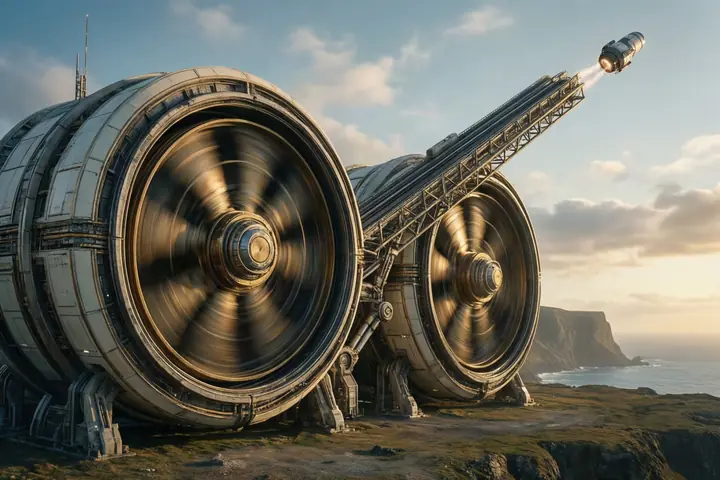
Illustration made with AI image generation; not evidence.
Flywheel Launcher
The Brick Moon, Edward Everett Hale · 1869
Huge spinning wheels store energy and then fling a vehicle upward fast enough to reach space.
not yet built · AI models' likeliest decade: the 2040s
A large prizeBusinesses pay; existing firms keep the restas a model judges it
Why
A large prize. Flinging or pushing payloads to space without big rockets would change the cost of the whole launch industry.
Who is paid. Firms with cargo to launch pay, and since others could build such works the gain goes to those who already own launch sites and power.
A model's judgement, not a reading, of the idea as if it worked the way its story promises. The model is fairly sure of this one.
Illustration made with AI image generation; not evidence.
Astronaut (Ship)
Across the Zodiac, Percy Greg · 1880
A vehicle designed to travel through outer space rather than air or water.
not yet built · AI models' likeliest decade: the 2020s
A large prizeBusinesses pay; existing firms keep the restas a model judges it
Why
A large prize. A working vessel for travel between worlds would found a transport industry of its own.
Who is paid. Carriers and expedition firms buy ships, and many yards could build them once shown how, so established vehicle builders collect.
A model's judgement, not a reading, of the idea as if it worked the way its story promises. The model is fairly sure of this one.
Illustration made with AI image generation; not evidence.
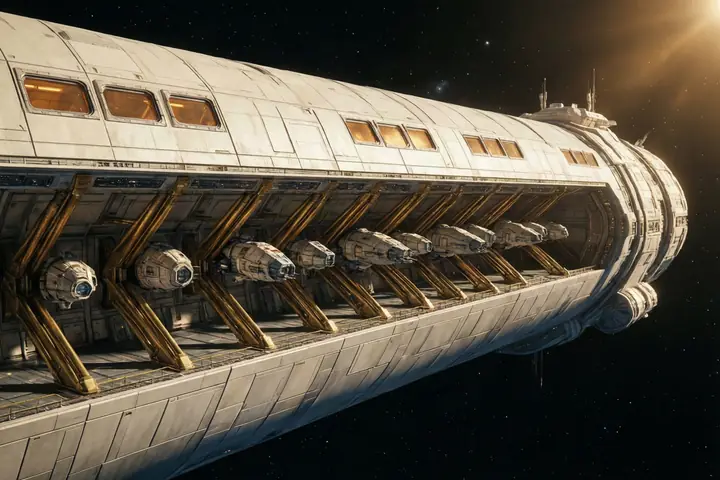
Ether Ship
Aleriel or A Voyage to Other Worlds, W.S. Lach-Szyrma · 1886
A ship built to sail through space beyond the atmosphere.
not yet built · AI models' likeliest decade: the 2020s
A large prizeBusinesses pay; existing firms keep the restas a model judges it
Why
A large prize. A working vessel for travel between worlds would found a transport industry of its own.
Who is paid. Carriers and expedition firms buy ships, and many yards could build them once shown how, so established vehicle builders collect.
A model's judgement, not a reading, of the idea as if it worked the way its story promises. The model is fairly sure of this one.
Illustration made with AI image generation; not evidence.
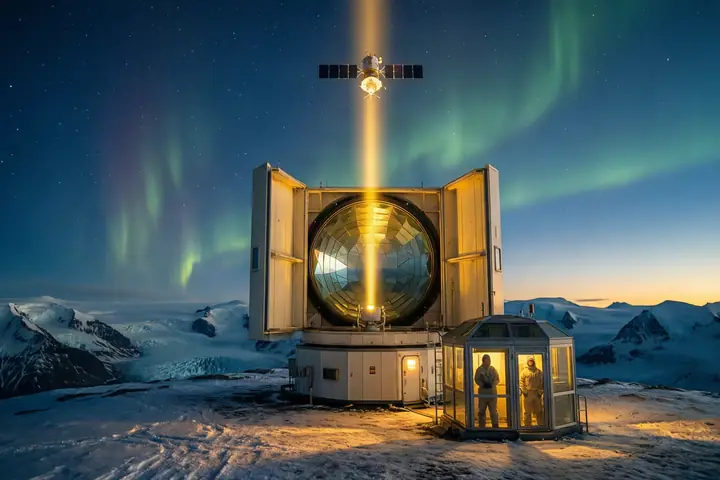
Arctic Signal Light
A Journey In Other Worlds, John Jacob Astor IV · 1894
A powerful beacon on the ground that sends signals to vessels travelling in space.
not yet built · AI models' likeliest decade: the 2020s
A small prizeA government pays; no seller keeps muchas a model judges it
Why
A small prize. A ground beacon for ships in space is a minor aid to navigation.
Who is paid. A beacon serves all ships and none can be charged, so a government pays, and a bright light is something many firms could build.
A model's judgement, not a reading, of the idea as if it worked the way its story promises. The model is fairly sure of this one.
Illustration made with AI image generation; not evidence.
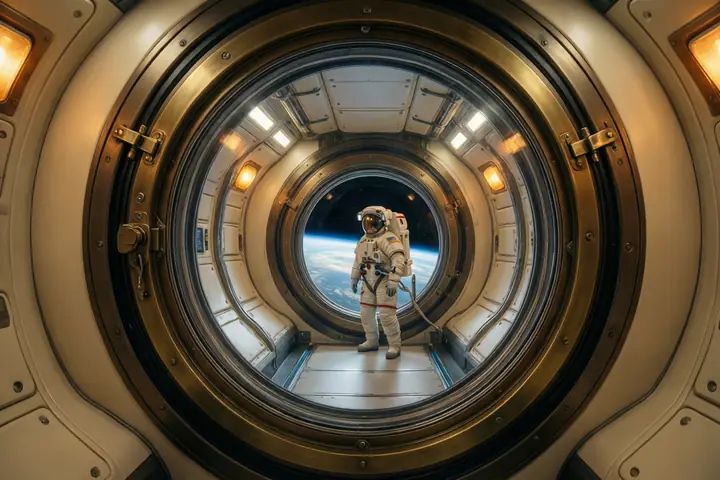
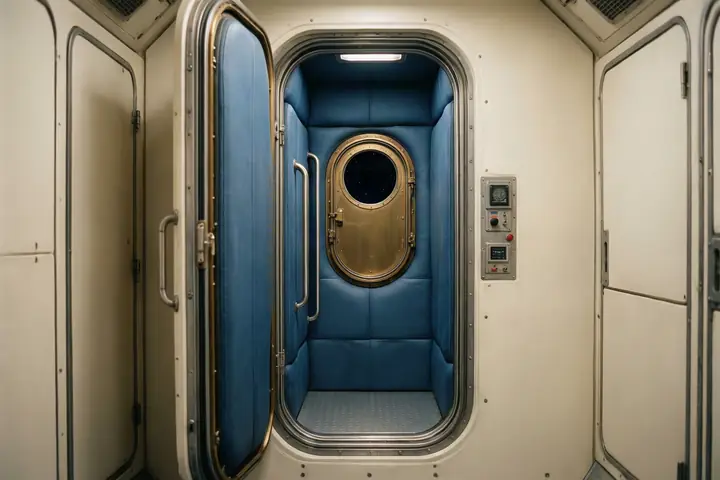
Double-Door Vestibule
A Journey In Other Worlds, John Jacob Astor IV · 1894
An airlock chamber that lets crew pass between a pressurised cabin and vacuum without losing air.
built in the 1960s, about 70 years after it was imagined
A small prizeBusinesses pay; existing firms keep the restas a model judges it
Why
A small prize. It is a necessary fitting on any crewed craft, but only a part of the ship.
Who is paid. Ship operators pay for it within the craft, and shipbuilders make it themselves since nothing stops others copying it.
A model's judgement, not a reading, of the idea as if it worked the way its story promises. The model is fairly sure of this one.
Illustration made with AI image generation; not evidence.
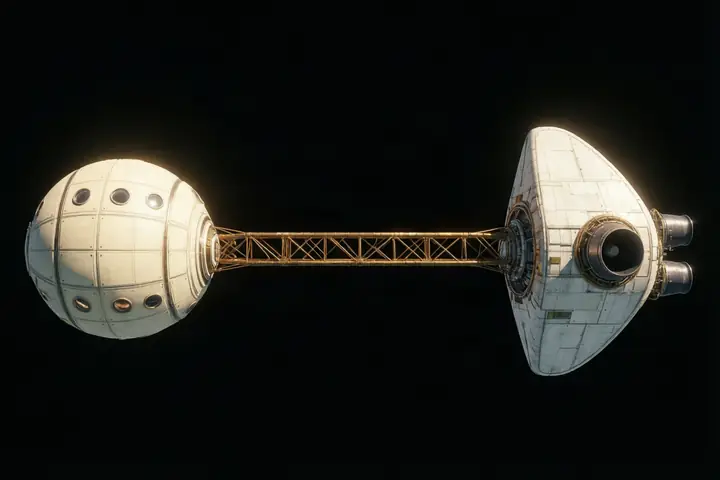
Space-ship
A Journey In Other Worlds, John Jacob Astor IV · 1894
A craft for carrying people or cargo beyond Earth's atmosphere.
built in the 1950s, about 60 years after it was imagined
A large prizeBusinesses pay; existing firms keep the restas a model judges it
Why
A large prize. A working vessel for travel between worlds would found a transport industry of its own.
Who is paid. Carriers and expedition firms buy ships, and many yards could build them once shown how, so established vehicle builders collect.
A model's judgement, not a reading, of the idea as if it worked the way its story promises. The model is fairly sure of this one.
Illustration made with AI image generation; not evidence.
Electric Gun (Mass Driver)
A Trip to Venus, John Munro · 1897
An electromagnetic accelerator that hurls payload capsules fast enough to reach orbit.
not yet built · AI models' likeliest decade: the 2060s
A large prizeBusinesses pay; existing firms keep the restas a model judges it
Why
A large prize. Flinging payloads to space without rockets would change the cost of the whole launch industry.
Who is paid. Firms with cargo to launch pay, and since others could build such a track or gun the gain goes to those who already own launch sites and power.
A model's judgement, not a reading, of the idea as if it worked the way its story promises. The model is fairly sure of this one.
Illustration made with AI image generation; not evidence.
Gravitational Wave Viewer
Two Planets, Kurd Lasswitz · 1897
An instrument that uses ripples in gravity to observe objects across vast cosmic distances.
not yet built · AI models' likeliest decade: the 2020s
A small prizeA government pays; existing firms keep the restas a model judges it
Why
A small prize. It adds to knowledge of the sky but yields nothing to sell, so its worth is limited to science.
Who is paid. Nobody could be charged for what it learns, so a government pays the instrument and probe builders that already hold such contracts.
A model's judgement, not a reading, of the idea as if it worked the way its story promises. The model is fairly sure of this one.
Illustration made with AI image generation; not evidence.
Home Planet
In the Deep of Time, George Parsons Lathrop · 1897
The world on which a species first arose, treated as its point of origin.
not yet built · AI models' likeliest decade: the 2020s
No prizeNothing is soldas a model judges it
Why
No prize. It is a term for the planet a people came from, not a product.
Who is paid. Nothing is sold, so nobody pays and no seller collects.
A model's judgement, not a reading, of the idea as if it worked the way its story promises. The model is fairly sure of this one.
Illustration made with AI image generation; not evidence.
Interstellar Express Car
In the Deep of Time, George Parsons Lathrop · 1897
A space vehicle built from gravity-repelling metal that reaches immense speeds between stars.
not yet built · AI models judge it not physically possible
A large prizeBusinesses pay; existing firms keep the restas a model judges it
Why
A large prize. A working ship that carries people and cargo between worlds is the base of a whole transport industry.
Who is paid. Carriers and other firms working in space buy ships, and since a second yard could build the same craft the established shipbuilders collect.
A model's judgement, not a reading, of the idea as if it worked the way its story promises. The model is fairly sure of this one.
Illustration made with AI image generation; not evidence.
Sun-Telephone
In the Deep of Time, George Parsons Lathrop · 1897
A receiver that picks up signals given off by the Sun itself.
not yet built · AI models' likeliest decade: the 2020s
A small prizeA government pays; existing firms keep the restas a model judges it
Why
A small prize. Listening to signals from the Sun adds to knowledge, with nothing to sell from it.
Who is paid. Nobody could be charged for the findings, so a government pays the instrument and probe builders that already hold such contracts.
A model's judgement, not a reading, of the idea as if it worked the way its story promises. The model is not very sure of this one.
Illustration made with AI image generation; not evidence.
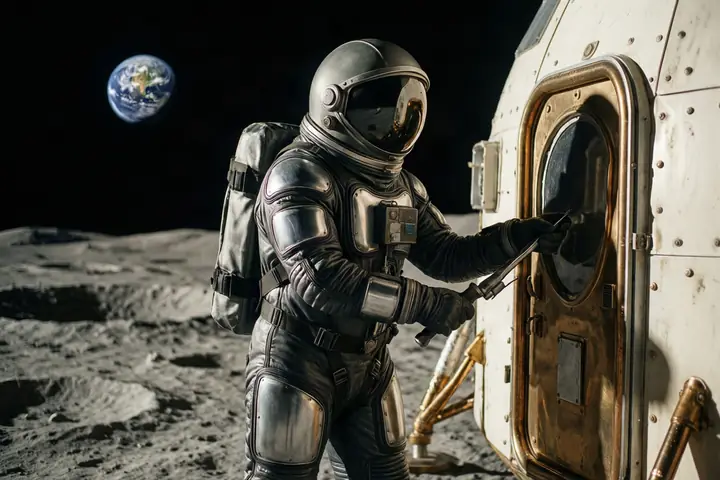
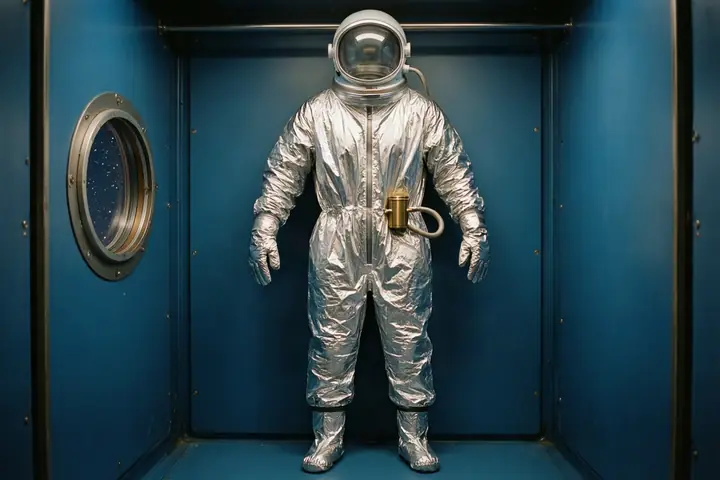
Air-Tight Suit
Edison's Conquest of Mars, Garrett P. Serviss · 1898
A sealed garment that keeps a person alive in the vacuum of space.
built in the 1960s, about 70 years after it was imagined
A small prizeBusinesses pay; existing firms keep the restas a model judges it
Why
A small prize. A suit that keeps a person alive in vacuum is vital to its wearer but serves only the few who work in space.
Who is paid. Space operators buy suits for their crews, and the few firms that already make such gear supply them since the design can be copied.
A model's judgement, not a reading, of the idea as if it worked the way its story promises. The model is fairly sure of this one.
Illustration made with AI image generation; not evidence.
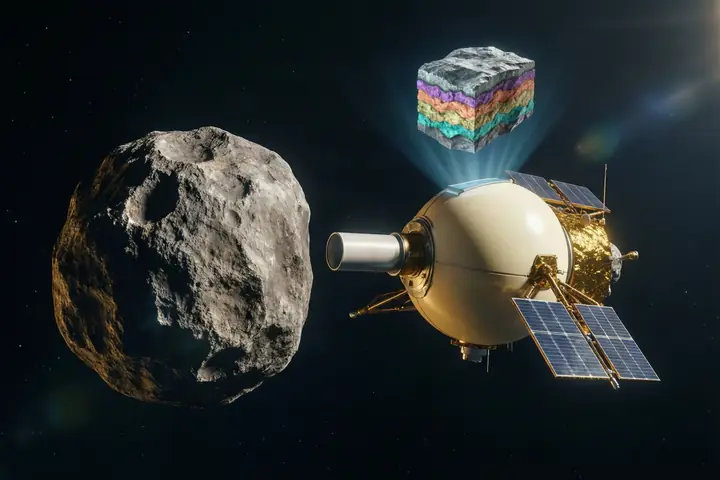
Asteroid Mining
Edison's Conquest of Mars, Garrett P. Serviss · 1898
Flying to small rocky bodies in space to extract their metals.
not yet built · AI models' likeliest decade: the 2040s
A large prizeBusinesses pay; existing firms keep the restas a model judges it
Why
A large prize. Metal and other materials from space rocks would be an industry of its own and could change the cost of raw materials.
Who is paid. Factories and builders buy the output, and since mining methods are easy to copy the firms that already own ships and refineries collect.
A model's judgement, not a reading, of the idea as if it worked the way its story promises. The model is fairly sure of this one.
Illustration made with AI image generation; not evidence.
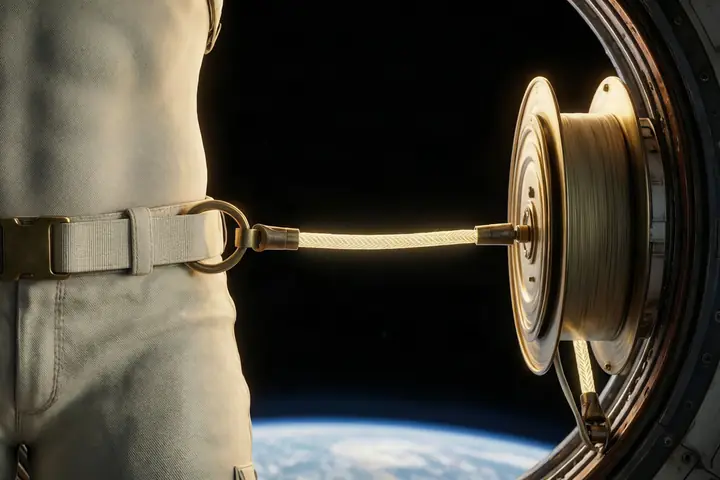
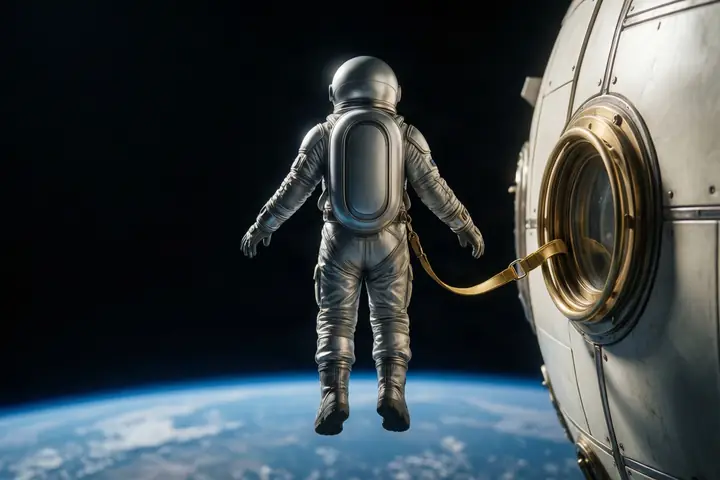
Electrical 'Tether'
Edison's Conquest of Mars, Garrett P. Serviss · 1898
A line or device that lets a floating spacewalker get safely back to the ship.
not yet built · AI models' likeliest decade: the 2020s
A small prizeBusinesses pay; no seller keeps muchas a model judges it
Why
A small prize. It keeps a spacewalker attached to the ship, a simple safety item for a few workers.
Who is paid. Space operators buy it for crews, and it is simple hardware that many workshops could make, so no seller keeps much.
A model's judgement, not a reading, of the idea as if it worked the way its story promises. The model is fairly sure of this one.
Illustration made with AI image generation; not evidence.
Space Walk
Edison's Conquest of Mars, Garrett P. Serviss · 1898
Leaving a spacecraft briefly to move around outside it in open space.
built in 1965, 67 years after it was imagined
No prizeNothing is soldas a model judges it
Why
No prize. It is a way of working outside a ship, done with the suit and tether judged elsewhere, not a product of its own.
Who is paid. Nothing is sold, so nobody pays and no seller collects.
A model's judgement, not a reading, of the idea as if it worked the way its story promises. The model is fairly sure of this one.
Illustration made with AI image generation; not evidence.
Breathing Dresses
A Honeymoon In Space, George Griffith · 1901
Protective clothing with an air supply that lets people survive on the lunar surface.
not yet built · AI models' likeliest decade: the 2020s
A small prizeBusinesses pay; existing firms keep the restas a model judges it
Why
A small prize. A suit that keeps a person alive in vacuum is vital to its wearer but serves only the few who work in space.
Who is paid. Space operators buy suits for their crews, and the few firms that already make such gear supply them since the design can be copied.
A model's judgement, not a reading, of the idea as if it worked the way its story promises. The model is fairly sure of this one.
Illustration made with AI image generation; not evidence.
Homeworld (Home-World)
A Honeymoon In Space, George Griffith · 1901
A term for the planet where a people or species originated.
not yet built · AI models' likeliest decade: the 2020s
No prizeNothing is soldas a model judges it
Why
No prize. It is a term for the planet a people came from, not a product.
Who is paid. Nothing is sold, so nobody pays and no seller collects.
A model's judgement, not a reading, of the idea as if it worked the way its story promises. The model is fairly sure of this one.
Illustration made with AI image generation; not evidence.
Neutral (Point)
On The Martian Way, Harry Gore Bishop · 1907
The spot in space where a planet's pull and the Sun's pull on an object balance out.
not yet built · AI models' likeliest decade: the 2020s
No prizeNothing is soldas a model judges it
Why
No prize. It is a natural thing or place in space, not a product anyone makes or sells.
Who is paid. Nothing is sold, so nobody pays and no seller collects.
A model's judgement, not a reading, of the idea as if it worked the way its story promises. The model is fairly sure of this one.
Illustration made with AI image generation; not evidence.
Etheroneph
Red Star, Aleksandr Bogdanov · 1908
A crewed spacecraft whose engines draw their power from nuclear fuel.
not yet built · AI models' likeliest decade: the 2030s
A large prizeBusinesses pay; existing firms keep the restas a model judges it
Why
A large prize. A working vessel for travel between worlds would found a transport industry of its own.
Who is paid. Carriers and expedition firms buy ships, and many yards could build them once shown how, so established vehicle builders collect.
A model's judgement, not a reading, of the idea as if it worked the way its story promises. The model is fairly sure of this one.
Illustration made with AI image generation; not evidence.
Space-Sick
Ralph 124c 41 +, Hugo Gernsback · 1911
Names the queasy discomfort people feel when travelling beyond Earth.
not yet built · AI models' likeliest decade: the 2020s
No prizeNothing is soldas a model judges it
Why
No prize. It names what space does to the body, a condition and not a product anyone makes or sells.
Who is paid. Nothing is sold, so nobody pays and no seller collects.
A model's judgement, not a reading, of the idea as if it worked the way its story promises. The model is fairly sure of this one.
Illustration made with AI image generation; not evidence.
Starship
War in Space, Raymond Quiex · 1926
A craft that carries people or cargo through space.
built since, date unclear
A large prizeBusinesses pay; existing firms keep the restas a model judges it
Why
A large prize. A working vessel for travel between worlds would found a transport industry of its own.
Who is paid. Carriers and expedition firms buy ships, and many yards could build them once shown how, so established vehicle builders collect.
A model's judgement, not a reading, of the idea as if it worked the way its story promises. The model is fairly sure of this one.
Illustration made with AI image generation; not evidence.
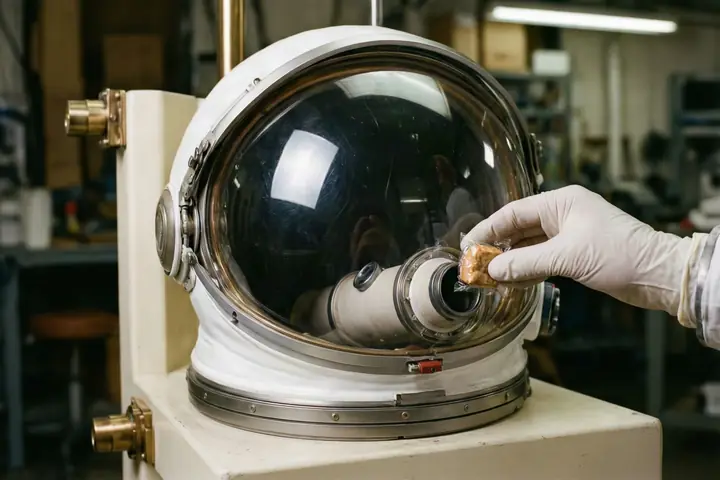
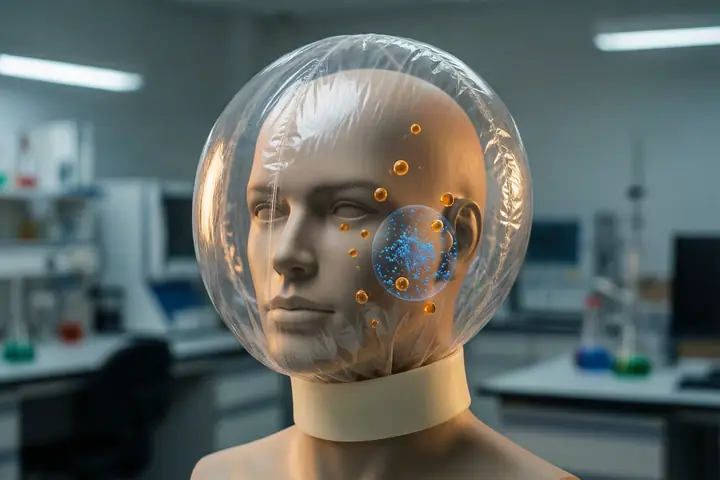
Transparent Dome Helmet
The Man from the Atom, G. Peyton Wertenbaker · 1926
A clear bubble helmet that seals a space suit while letting the wearer look around.
built in the 1960s, about 40 years after it was imagined
A small prizeBusinesses pay; existing firms keep the restas a model judges it
Why
A small prize. It is a part of a suit, useful to the wearer but not a product by itself.
Who is paid. Space operators pay for it within the suit, and the established suit makers supply it since any of them can copy it.
A model's judgement, not a reading, of the idea as if it worked the way its story promises. The model is fairly sure of this one.
Illustration made with AI image generation; not evidence.
Vacuum Suit
The Man from the Atom, G. Peyton Wertenbaker · 1926
A sealed garment that keeps a person alive in airless space.
built in the 1960s, about 40 years after it was imagined
A small prizeBusinesses pay; existing firms keep the restas a model judges it
Why
A small prize. It keeps a person alive and able to work outside, essential gear but only for the few who work in space.
Who is paid. Space operators buy suits for their crews, and the few established makers of suits can all copy a design, so they collect.
A model's judgement, not a reading, of the idea as if it worked the way its story promises. The model is fairly sure of this one.
Illustration made with AI image generation; not evidence.
Repulsor Ray
The Time-Raider, Edmond Hamilton · 1927
Pushes a craft forward by expelling a stream of charged particles.
not yet built · AI models' likeliest decade: the 2020s
A large prizeBusinesses pay; existing firms keep the restas a model judges it
Why
A large prize. A working engine for travel between worlds sets the cost of every voyage it powers.
Who is paid. Ship operators pay, and once the engine was shown to work others could build it, so established engine builders collect.
A model's judgement, not a reading, of the idea as if it worked the way its story promises. The model is fairly sure of this one.
Illustration made with AI image generation; not evidence.
Airlock
Skylark of Space, E.E. 'Doc' Smith · 1928
A sealed chamber between a spacecraft's interior and outer space for safe passage.
built in the 1960s, about 40 years after it was imagined
A small prizeBusinesses pay; existing firms keep the restas a model judges it
Why
A small prize. It is a necessary fitting on any crewed craft, but only a part of the ship.
Who is paid. Ship operators pay for it within the craft, and shipbuilders make it themselves since nothing stops others copying it.
A model's judgement, not a reading, of the idea as if it worked the way its story promises. The model is fairly sure of this one.
Illustration made with AI image generation; not evidence.
Meteor-Sweeps
Crashing Suns, Edmond Hamilton · 1928
Operations that hunt down and blast apart dangerous meteor swarms to keep space routes safe.
not yet built · AI models' likeliest decade: the 2030s
A small prizeA government pays; existing firms keep the restas a model judges it
Why
A small prize. Clearing dangerous rocks keeps space routes safe, a useful service but only a support to the traffic.
Who is paid. No single ship could be charged for a clear route, so a government pays, and operators that already hold armed ships and such contracts do the work.
A model's judgement, not a reading, of the idea as if it worked the way its story promises. The model is not very sure of this one.
Illustration made with AI image generation; not evidence.
Meteorometer
Crashing Suns, Edmond Hamilton · 1928
Warns a spacecraft of incoming meteors in its path.
not yet built · AI models' likeliest decade: the 2020s
A small prizeBusinesses pay; existing firms keep the restas a model judges it
Why
A small prize. Warning of rocks ahead keeps a ship safe, but it is a fitting on the craft, not an industry.
Who is paid. Ship operators pay for it within the craft, and the firms that already make ship instruments supply it since the design can be copied.
A model's judgement, not a reading, of the idea as if it worked the way its story promises. The model is fairly sure of this one.
Illustration made with AI image generation; not evidence.
Mother World
The Moon of Doom, Earl L. Bell · 1928
A term for the planet where a species or person originated.
not yet built · AI models' likeliest decade: the 2020s
No prizeNothing is soldas a model judges it
Why
No prize. It is a term for the planet a people came from, not a product.
Who is paid. Nothing is sold, so nobody pays and no seller collects.
A model's judgement, not a reading, of the idea as if it worked the way its story promises. The model is fairly sure of this one.
Illustration made with AI image generation; not evidence.
Negative Acceleration
Skylark of Space, E.E. 'Doc' Smith · 1928
Flipping a rocket around and firing its engine forward to slow down.
not yet built · AI models' likeliest decade: the 2020s
No prizeNothing is soldas a model judges it
Why
No prize. It is a word or a way of doing things that needs no new equipment, not a product.
Who is paid. Nothing is sold, so nobody pays and no seller collects.
A model's judgement, not a reading, of the idea as if it worked the way its story promises. The model is fairly sure of this one.
Illustration made with AI image generation; not evidence.
Pressure-Suit
Skylark of Space, E.E. 'Doc' Smith · 1928
A sealed, pressurised outfit that protects a person in vacuum.
built in the 1960s, about 40 years after it was imagined
A small prizeBusinesses pay; existing firms keep the restas a model judges it
Why
A small prize. A suit that keeps a person alive in vacuum or thin air is vital to its wearer but serves only the few who work in space.
Who is paid. Space operators buy suits for their crews, and the few firms that already make such gear supply them since the design can be copied.
A model's judgement, not a reading, of the idea as if it worked the way its story promises. The model is fairly sure of this one.
Illustration made with AI image generation; not evidence.
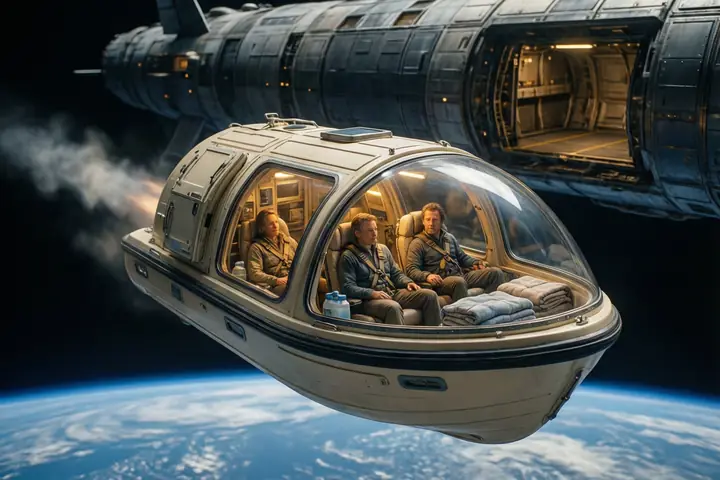
Private Space Cruiser
Crashing Suns, Edmond Hamilton · 1928
A spacecraft owned and flown by a private party rather than a government.
built in the 2000s, about 80 years after it was imagined
A large prizeHouseholds pay; existing firms keep the restas a model judges it
Why
A large prize. A spaceship a private person can own and fly would open a new kind of private travel.
Who is paid. Private owners buy the ship; the description says only a private party, assumed here to be people and not firms, and since the design could be copied the established builders of craft collect.
A model's judgement, not a reading, of the idea as if it worked the way its story promises. The model is not very sure of this one.
Illustration made with AI image generation; not evidence.
Space Buoy
Crashing Suns, Edmond Hamilton · 1928
A beacon placed in space to mark a location for navigators.
not yet built · AI models' likeliest decade: the 2020s
A small prizeA government pays; no seller keeps muchas a model judges it
Why
A small prize. A marker in space for navigators is a minor aid to navigation.
Who is paid. A beacon serves all ships and none can be charged, so a government pays, and a simple transmitter or light is something many firms could build.
A model's judgement, not a reading, of the idea as if it worked the way its story promises. The model is fairly sure of this one.
Illustration made with AI image generation; not evidence.
Space-Lanes
Crashing Suns, Edmond Hamilton · 1928
Established routes that spacecraft routinely follow.
not yet built · AI models' likeliest decade: the 2020s
No prizeNothing is soldas a model judges it
Why
No prize. It is a word or a way of doing things that needs no new equipment, not a product.
Who is paid. Nothing is sold, so nobody pays and no seller collects.
A model's judgement, not a reading, of the idea as if it worked the way its story promises. The model is fairly sure of this one.
Illustration made with AI image generation; not evidence.
Steering a Star
Crashing Suns, Edmond Hamilton · 1928
Pushes a whole star off its natural course and moves it somewhere else.
not yet built · AI models' likeliest decade: 2100 or later
A vast prizeA government pays; existing firms keep the restas a model judges it
Why
A vast prize. Moving a whole star would decide the fate of every world around it, which is assumed here to mean saving or resettling whole peoples.
Who is paid. Only a government could fund work on that scale, and the large engineering firms that already hold such contracts would be paid to do it.
A model's judgement, not a reading, of the idea as if it worked the way its story promises. The model is not very sure of this one.
Illustration made with AI image generation; not evidence.
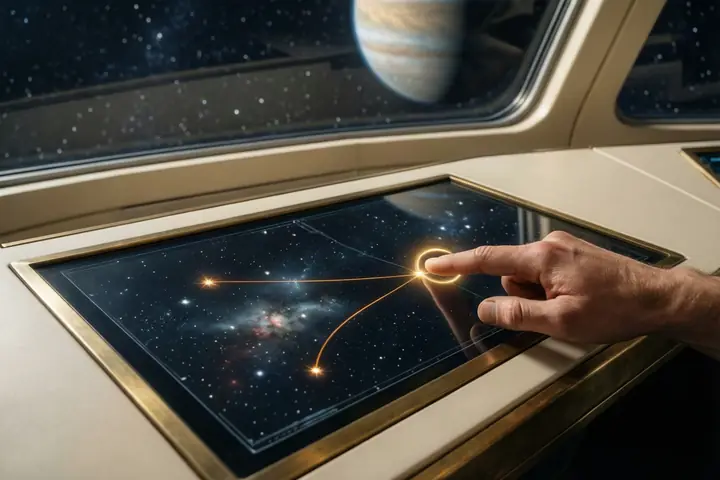
Telechart
Crashing Suns, Edmond Hamilton · 1928
A touch-sensitive panel that displays star positions for plotting courses between stars.
not yet built · AI models' likeliest decade: the 2020s
A small prizeBusinesses pay; existing firms keep the restas a model judges it
Why
A small prize. A panel for plotting courses between stars is essential to the voyage but is an instrument within the ship.
Who is paid. Ship operators buy it as part of the craft, and the established makers of flight instruments supply it since it can be copied.
A model's judgement, not a reading, of the idea as if it worked the way its story promises. The model is fairly sure of this one.
Illustration made with AI image generation; not evidence.
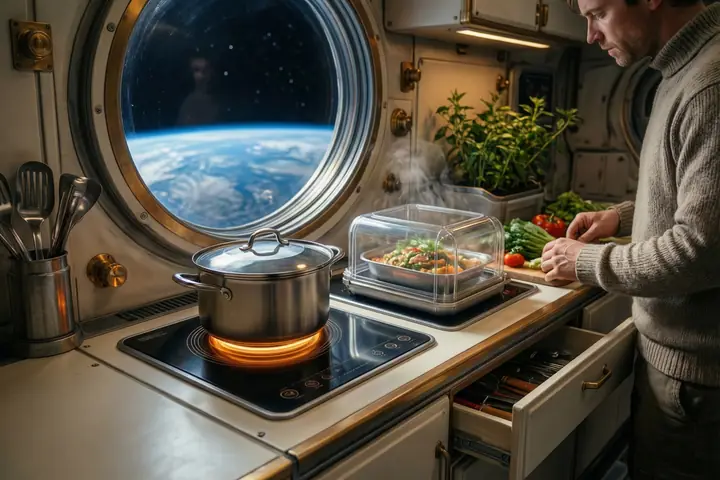
Electric Kitchen
The Shot Into Infinity, Otto Willi Gail · 1929
Cooking gear designed to prepare meals safely aboard a spacecraft without open flame.
built in the 1990s, about 70 years after it was imagined
A small prizeBusinesses pay; existing firms keep the restas a model judges it
Why
A small prize. Safe cooking aboard ship is a comfort for crews, a small fitting.
Who is paid. Ship operators pay for it within the craft, and appliance and galley makers could all supply it.
A model's judgement, not a reading, of the idea as if it worked the way its story promises. The model is fairly sure of this one.
Illustration made with AI image generation; not evidence.
Pneumatic Suit
The Shot Into Infinity, Otto Willi Gail · 1929
A sealed pressurised garment that keeps its wearer alive in vacuum.
built in the 1960s, about 40 years after it was imagined
A small prizeBusinesses pay; existing firms keep the restas a model judges it
Why
A small prize. A suit that keeps a person alive in vacuum or thin air is vital to its wearer but serves only the few who work in space.
Who is paid. Space operators buy suits for their crews, and the few firms that already make such gear supply them since the design can be copied.
A model's judgement, not a reading, of the idea as if it worked the way its story promises. The model is fairly sure of this one.
Illustration made with AI image generation; not evidence.
Rocket Engine Moves Moon
The Space Dwellers, Raymond Z. Gallun · 1929
Bolting a spacecraft's engines onto a minor moon or asteroid and firing them to shift where it travels.
not yet built · AI models' likeliest decade: the 2050s
A large prizeBusinesses pay; existing firms keep the restas a model judges it
Why
A large prize. Steering whole rocks to where they are wanted would serve mining and building in space, part of an industry of its own.
Who is paid. Mining and building firms are assumed to pay, and fixing engines to a rock is easy to copy, so the firms that already own ships and engines collect.
A model's judgement, not a reading, of the idea as if it worked the way its story promises. The model is not very sure of this one.
Illustration made with AI image generation; not evidence.
Rocket Pistol
Buck Rogers, 2430 AD, Philip Nowlan (w/D. Calkins · 1929
Using a handgun's recoil as a thruster, letting a floating astronaut push themselves in a chosen direction.
not yet built · AI models' likeliest decade: the 2020s
A small prizeBusinesses pay; existing firms keep the restas a model judges it
Why
A small prize. Using a handgun's kick to move while weightless is a makeshift version of a niche tool for a few workers.
Who is paid. Space operators buy it for their crews, and the makers of suits and space gear supply it because it is easy to copy.
A model's judgement, not a reading, of the idea as if it worked the way its story promises. The model is not very sure of this one.
Illustration made with AI image generation; not evidence.
Ship Pushes Moon
Buck Rogers, 2430 AD, Philip Nowlan (w/D. Calkins · 1929
Nudging a small moon onto a new course by pressing a spacecraft's engine thrust against it.
not yet built · AI models' likeliest decade: the 2050s
A large prizeBusinesses pay; existing firms keep the restas a model judges it
Why
A large prize. Steering whole rocks to where they are wanted would serve mining and building in space, part of an industry of its own.
Who is paid. Mining and building firms are assumed to pay, and fixing engines to a rock is easy to copy, so the firms that already own ships and engines collect.
A model's judgement, not a reading, of the idea as if it worked the way its story promises. The model is not very sure of this one.
Illustration made with AI image generation; not evidence.
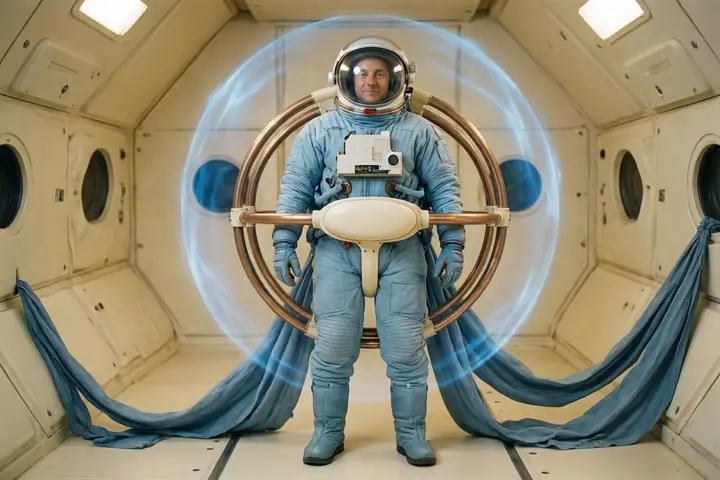
Ship's Artificial Gravity
Buck Rogers, 2430 AD, Philip Nowlan (w/D. Calkins · 1929
Onboard means of giving crew a sense of weight while their spacecraft travels.
not yet built · AI models' likeliest decade: the 2040s
A large prizeBusinesses pay; existing firms keep the restas a model judges it
Why
A large prize. Weight underfoot on any ship would be fitted almost everywhere people live in space, assuming here a generator and not a spinning hull.
Who is paid. Ship and station operators buy it, and once it worked other makers could copy it, so established builders collect.
A model's judgement, not a reading, of the idea as if it worked the way its story promises. The model is not very sure of this one.
Illustration made with AI image generation; not evidence.
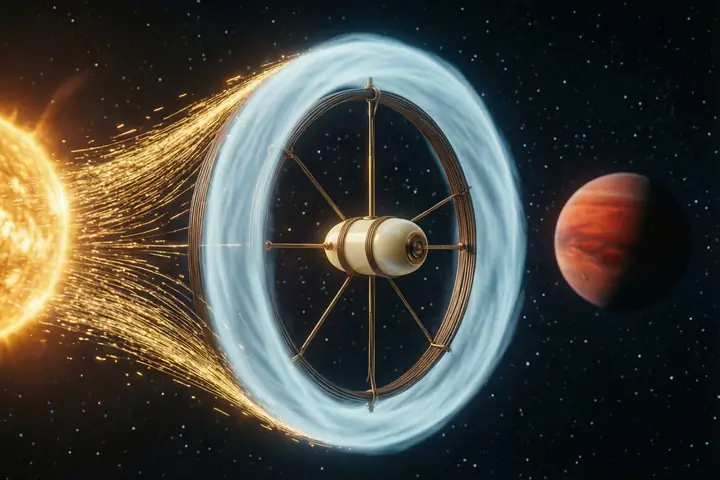
Ships Propelled By Light Pressure
The Comet Doom, Edmond Hamilton · 1929
Spacecraft driven by a powerful beam of light aimed at them from a far-off station.
not yet built · AI models' likeliest decade: the 2060s
A large prizeBusinesses pay; existing firms keep the restas a model judges it
Why
A large prize. Pushing craft with a beam of light from a far-off station would let ships fly without carrying their own fuel.
Who is paid. Ship operators pay for the push, and since others could build beam stations the gain goes to those who already own the sites and power plants.
A model's judgement, not a reading, of the idea as if it worked the way its story promises. The model is not very sure of this one.
Illustration made with AI image generation; not evidence.
Sol
Out of Void, L.F. Stone · 1929
Not a device but a label: the everyday name used for our home star.
built since, date unclear
No prizeNothing is soldas a model judges it
Why
No prize. It is a name for our own star, not a product anyone makes or sells.
Who is paid. Nothing is sold, so nobody pays and no seller collects.
A model's judgement, not a reading, of the idea as if it worked the way its story promises. The model is fairly sure of this one.
Illustration made with AI image generation; not evidence.
Space Craft
Night-Thing, Wilford Allen · 1929
A vessel built to fly through the vacuum beyond the atmosphere.
built in the 1960s, about 40 years after it was imagined
A large prizeBusinesses pay; existing firms keep the restas a model judges it
Why
A large prize. A working vessel for travel between worlds would found a transport industry of its own.
Who is paid. Carriers and expedition firms buy ships, and many yards could build them once shown how, so established vehicle builders collect.
A model's judgement, not a reading, of the idea as if it worked the way its story promises. The model is fairly sure of this one.
Illustration made with AI image generation; not evidence.
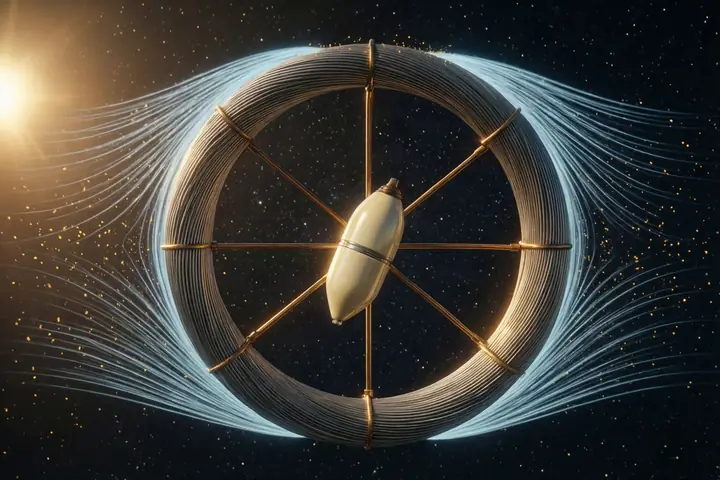
Space Sailing
The World, The Flesh And The Devil, J.D. Bernal · 1929
A spacecraft pushed along by the stream of particles and light flowing outward from the Sun, needing no fuel.
not yet built · AI models' likeliest decade: the 2030s
A large prizeBusinesses pay; existing firms keep the restas a model judges it
Why
A large prize. Travel that needs no fuel would cut the cost of moving ships and cargo across space.
Who is paid. Ship operators buy the sail as their engine, and a thin reflecting sheet is something other makers could copy, so established ship builders collect.
A model's judgement, not a reading, of the idea as if it worked the way its story promises. The model is not very sure of this one.
Illustration made with AI image generation; not evidence.
Space Travel
A Baby on Neptune, Clare Winger Harris (w/MJ Breuer · 1929
Carrying people beyond the atmosphere to journey between worlds.
built in 1961, 32 years after it was imagined
A large prizeBusinesses pay; existing firms keep the restas a model judges it
Why
A large prize. Carrying people between worlds would be a transport industry of its own; it changes life for those who go, not for most people.
Who is paid. Carriers buy the ships and sell the passage, assumed here as with other ships, and since ships can be copied the builders and carriers that already own fleets and ports collect.
A model's judgement, not a reading, of the idea as if it worked the way its story promises. The model is not very sure of this one.
Illustration made with AI image generation; not evidence.
Spacesuit Testing
The Shot Into Infinity, Otto Willi Gail · 1929
Equipment and procedures for checking that pressure suits hold up before astronauts rely on them.
built in the 1960s, about 40 years after it was imagined
A small prizeBusinesses pay; existing firms keep the restas a model judges it
Why
A small prize. Checking that suits hold before crews rely on them is a needed routine, part of making and keeping suits.
Who is paid. Suit makers and space operators pay for the test gear, and the established makers of suits and test equipment supply it since it can be copied.
A model's judgement, not a reading, of the idea as if it worked the way its story promises. The model is fairly sure of this one.
Illustration made with AI image generation; not evidence.
Altitude Suit
The Black Star Passes, John W. Campbell · 1930
Protective pressurised clothing for going very high in the sky or out into vacuum.
built in the 1930s, about 0 years after it was imagined
A small prizeBusinesses pay; existing firms keep the restas a model judges it
Why
A small prize. A suit that keeps a person alive in vacuum is vital to its wearer but serves only the few who work in space.
Who is paid. Space operators buy suits for their crews, and the few firms that already make such gear supply them since the design can be copied.
A model's judgement, not a reading, of the idea as if it worked the way its story promises. The model is fairly sure of this one.
Illustration made with AI image generation; not evidence.
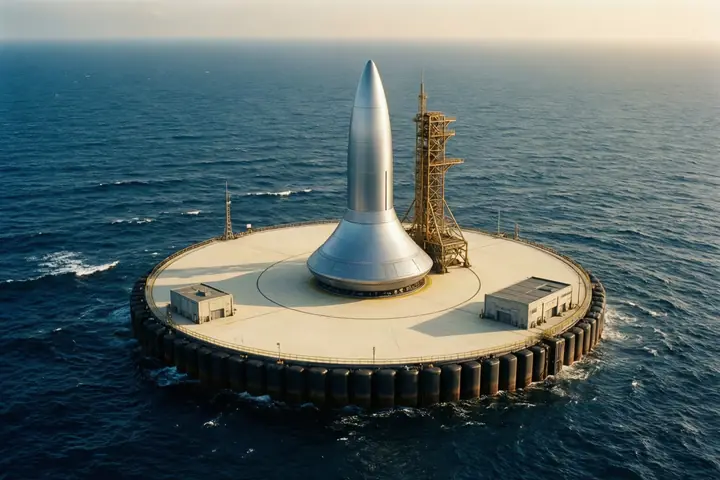
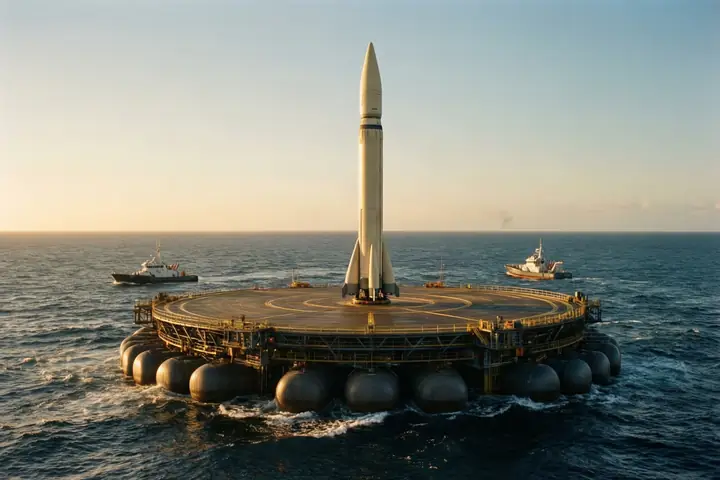
Artificial Island For Ocean Rocket Launch
Between Earth and Moon, Otfrid von Hanstein · 1930
A man-made floating platform at sea used as a base for firing rockets.
not yet built · AI models' likeliest decade: the 2020s
A small prizeBusinesses pay; existing firms keep the restas a model judges it
Why
A small prize. A floating launch base is a useful choice of site, not a new industry.
Who is paid. Launch firms pay for it, and builders of ships and offshore platforms could all make it, so those established yards collect.
A model's judgement, not a reading, of the idea as if it worked the way its story promises. The model is fairly sure of this one.
Illustration made with AI image generation; not evidence.
Asteroid From Outside Solar System
Brigands of the Moon, Ray Cummings · 1930
Not a machine: a rocky body that wanders into our planetary system from interstellar space.
not yet built · AI models' likeliest decade: the 2020s
No prizeNothing is soldas a model judges it
Why
No prize. It is a natural thing or event in space, not a product anyone makes or sells.
Who is paid. Nothing is sold, so nobody pays and no seller collects.
A model's judgement, not a reading, of the idea as if it worked the way its story promises. The model is fairly sure of this one.
Illustration made with AI image generation; not evidence.
Asteroid Space Flyer
The Death's Head Meteor, Neil R. Jones · 1930
A small solo spacecraft built for scouting and visiting asteroids.
not yet built · AI models' likeliest decade: the 2060s
A small prizeBusinesses pay; existing firms keep the restas a model judges it
Why
A small prize. A solo scouting craft serves prospectors, a niche within space mining.
Who is paid. Prospectors and mining firms buy it, and established small-craft builders could all make it.
A model's judgement, not a reading, of the idea as if it worked the way its story promises. The model is fairly sure of this one.
Illustration made with AI image generation; not evidence.
Astronaut
The Death's Head Meteor, Neil R. Jones · 1930
The role of a person trained to journey beyond Earth.
built in the 1960s, about 30 years after it was imagined
A small prizeBusinesses pay; no seller keeps muchas a model judges it
Why
A small prize. It is a job, judged by the work it sells: a trained crew member is needed on every voyage but is a small part of its cost.
Who is paid. Ship operators pay the wages, and anyone with the training can do the work, so no seller keeps much.
A model's judgement, not a reading, of the idea as if it worked the way its story promises. The model is not very sure of this one.
Illustration made with AI image generation; not evidence.
Exodus Ship
Tani of Ekkis, Judson W. Reeves · 1930
A huge vessel carrying a whole society across many lifetimes of travel to rescue it from dying out.
not yet built · AI models' likeliest decade: 2100 or later
A large prizeA government pays; existing firms keep the restas a model judges it
Why
A large prize. A vessel the size of a small world carrying a whole society is an enormous building project.
Who is paid. Only a government could fund it, and the big shipbuilders and contractors already trusted with such work would be paid.
A model's judgement, not a reading, of the idea as if it worked the way its story promises. The model is fairly sure of this one.
Illustration made with AI image generation; not evidence.
Face-Plate
Skylark Three, E.E. 'Doc' Smith · 1930
The clear visor on a pressure-suit helmet that lets the wearer see out.
built in the 1960s, about 30 years after it was imagined
A small prizeBusinesses pay; existing firms keep the restas a model judges it
Why
A small prize. It is a handy detail of a helmet, a convenience for the few people who wear spacesuits.
Who is paid. Operators pay for it as part of the suit, and suit makers fit it themselves because any of them could copy it.
A model's judgement, not a reading, of the idea as if it worked the way its story promises. The model is fairly sure of this one.
Illustration made with AI image generation; not evidence.
Gravity Assist
Brigands of the Moon, Ray Cummings · 1930
Swinging a spacecraft past a planet to borrow its motion and redirect or speed up the craft.
built in the 1960s, about 30 years after it was imagined
No prizeNothing is soldas a model judges it
Why
No prize. It is a way of flying or moving, not a product; the craft and gear that do it are judged separately.
Who is paid. Nothing is sold, so nobody pays and no seller collects.
A model's judgement, not a reading, of the idea as if it worked the way its story promises. The model is fairly sure of this one.
Illustration made with AI image generation; not evidence.
Gyroscope Seats
The Black Star Passes, John W. Campbell · 1930
Seats on swivelling gimbals that keep a passenger aligned with the direction of thrust.
built in the 1950s, about 20 years after it was imagined
A small prizeBusinesses pay; existing firms keep the restas a model judges it
Why
A small prize. It protects travellers during hard thrust, which matters only to the few who fly such ships.
Who is paid. Ship operators pay for it as part of the craft, and the firms that already build ships and their fittings supply it since others could copy the design.
A model's judgement, not a reading, of the idea as if it worked the way its story promises. The model is fairly sure of this one.
Illustration made with AI image generation; not evidence.
Life Tubes
Liners of Space, Jim Vanny · 1930
Small sealed capsules that crew can board to abandon a failing spacecraft.
built in the 1960s, about 30 years after it was imagined
A small prizeBusinesses pay; existing firms keep the restas a model judges it
Why
A small prize. A way off a failing ship saves lives but is carried as a fitting and rarely used.
Who is paid. Ship operators pay for it as part of the craft, and established shipbuilders supply it since any of them could make it.
A model's judgement, not a reading, of the idea as if it worked the way its story promises. The model is fairly sure of this one.
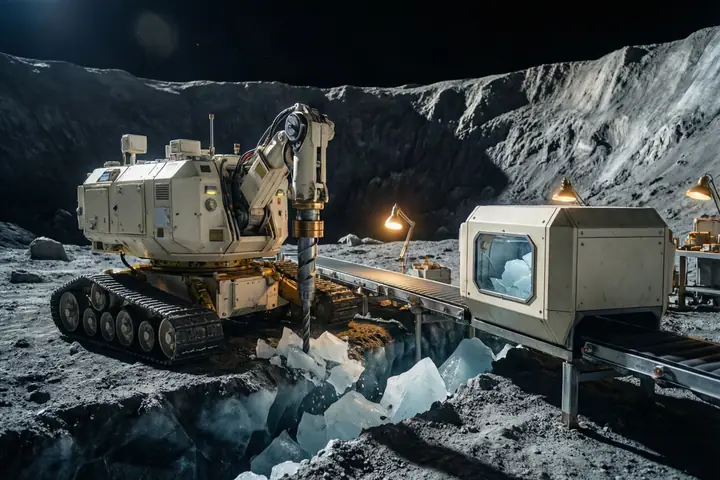
Illustration made with AI image generation; not evidence.
Lunar Mining
Brigands of the Moon, Ray Cummings · 1930
Digging up and extracting useful minerals from the Moon's surface.
not yet built · AI models' likeliest decade: the 2030s
A large prizeBusinesses pay; existing firms keep the restas a model judges it
Why
A large prize. Materials taken from other worlds and from loose rock in space would feed an industry of their own.
Who is paid. Firms that need the material pay for it, and since others could dig the same way the gain goes to those who already own the ships and claims.
A model's judgement, not a reading, of the idea as if it worked the way its story promises. The model is fairly sure of this one.
Illustration made with AI image generation; not evidence.
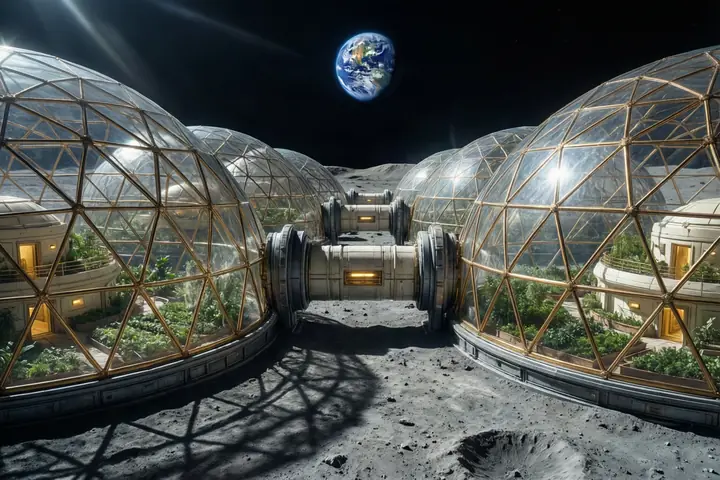
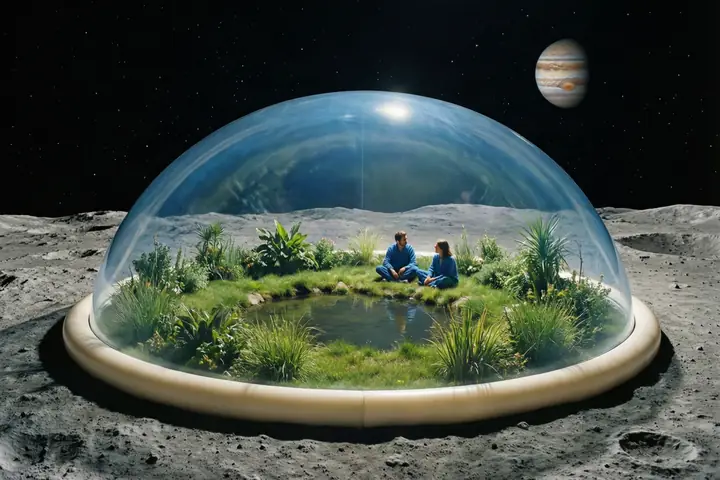
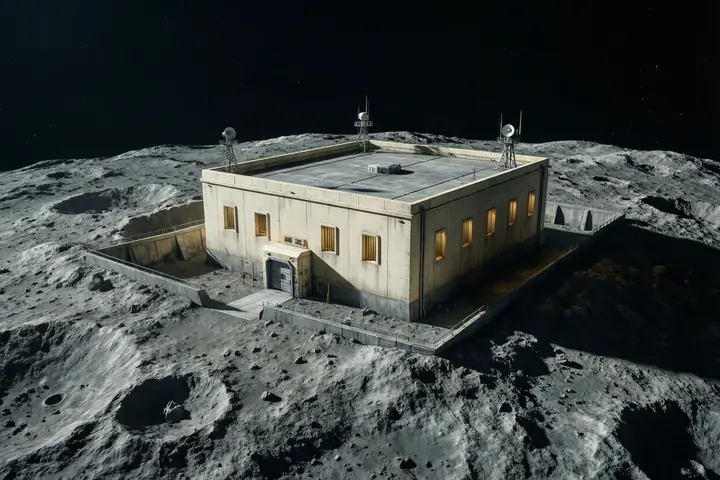
Moon Dome
Brigands of the Moon, Ray Cummings · 1930
A lasting enclosed shelter on the lunar surface where people can live.
not yet built · AI models' likeliest decade: the 2040s
A large prizeA government pays; existing firms keep the restas a model judges it
Why
A large prize. A place for many people to live and work beyond Earth is a building industry of its own.
Who is paid. A settlement is a public work a government pays for, and the big construction and space firms that already win such contracts would build it.
A model's judgement, not a reading, of the idea as if it worked the way its story promises. The model is fairly sure of this one.
Illustration made with AI image generation; not evidence.
Moon Walk
Brigands of the Moon, Ray Cummings · 1930
People striding across the lunar surface under its weak pull.
built in the 1960s, about 30 years after it was imagined
No prizeNothing is soldas a model judges it
Why
No prize. It is a way of flying or moving, not a product; the craft and gear that do it are judged separately.
Who is paid. Nothing is sold, so nobody pays and no seller collects.
A model's judgement, not a reading, of the idea as if it worked the way its story promises. The model is fairly sure of this one.
Illustration made with AI image generation; not evidence.
Mother Ship
The Black Star Passes, John W. Campbell · 1930
A large vessel acting as a base that launches, supplies and recovers smaller craft in space.
not yet built · AI models' likeliest decade: the 2050s
A large prizeBusinesses pay; existing firms keep the restas a model judges it
Why
A large prize. A working ship that carries people and cargo between worlds is the base of a whole transport industry.
Who is paid. Carriers and other firms working in space buy ships, and since a second yard could build the same craft the established shipbuilders collect.
A model's judgement, not a reading, of the idea as if it worked the way its story promises. The model is fairly sure of this one.
Illustration made with AI image generation; not evidence.
One-Man Rocket
Evans of the Earth-Guard, Edmond Hamilton · 1930
A compact spacecraft sized for just the person flying it.
built in the 1960s, about 30 years after it was imagined
A small prizeBusinesses pay; existing firms keep the restas a model judges it
Why
A small prize. A craft that carries only its pilot serves scouts and crews, a niche within space transport.
Who is paid. Prospectors, carriers and expedition firms buy it, and established small-craft builders could all make it.
A model's judgement, not a reading, of the idea as if it worked the way its story promises. The model is fairly sure of this one.
Illustration made with AI image generation; not evidence.
Oxygen Space Flare
Brigands of the Moon, Ray Cummings · 1930
An enclosed light source that burns fuel with its own oxygen supply so it works in vacuum.
not yet built · AI models' likeliest decade: the 2020s
A small prizeBusinesses pay; no seller keeps muchas a model judges it
Why
A small prize. A light that burns in vacuum is a simple signal or work lamp for a few crews.
Who is paid. Space operators buy it for crews, and it is simple enough that many workshops could make it, so no seller keeps much.
A model's judgement, not a reading, of the idea as if it worked the way its story promises. The model is fairly sure of this one.
Illustration made with AI image generation; not evidence.
Planets Made Habitable
Last and First Men, Olaf Stapledon · 1930
Reshaping another world's air, temperature and surface so people could live there.
not yet built · AI models' likeliest decade: 2100 or later
A vast prizeA government pays; existing firms keep the restas a model judges it
Why
A vast prize. Giving a whole world air and a climate people can live in would open new land for a large share of humanity.
Who is paid. Only a government could fund work on a whole world, and the large engineering firms that already hold such contracts would be paid to do it.
A model's judgement, not a reading, of the idea as if it worked the way its story promises. The model is not very sure of this one.
Illustration made with AI image generation; not evidence.
Shock-Absorbing Seats
Evans of the Earth-Guard, Edmond Hamilton · 1930
Cushioned seating that soaks up the crushing forces felt during a rocket's liftoff.
not yet built · AI models' likeliest decade: the 2020s
A small prizeBusinesses pay; existing firms keep the restas a model judges it
Why
A small prize. It protects crews during hard thrust, which matters only to the few who fly such ships.
Who is paid. Ship operators pay for it as part of the craft, and the firms that already build ships and their fittings supply it since others could copy the design.
A model's judgement, not a reading, of the idea as if it worked the way its story promises. The model is fairly sure of this one.
Illustration made with AI image generation; not evidence.
Space Lock
The Black Star Passes, John W. Campbell · 1930
A sealed chamber letting crew pass between a pressurised cabin and vacuum without losing air.
built in the 1960s, about 30 years after it was imagined
A small prizeBusinesses pay; existing firms keep the restas a model judges it
Why
A small prize. Passing in and out without losing air is essential but is a fitting of the craft.
Who is paid. Ship operators pay for it as part of the craft, and the established builders of ships and stations supply it since the idea is easy to copy.
A model's judgement, not a reading, of the idea as if it worked the way its story promises. The model is fairly sure of this one.
Illustration made with AI image generation; not evidence.
Space Pirate
Evans of the Earth-Guard, Edmond Hamilton · 1930
Criminals seizing spacecraft by force from their rightful crews.
not yet built · AI models could not judge when it may arrive
No prizeNothing is soldas a model judges it
Why
No prize. It names a crime, the seizing of ships by force, which nobody may lawfully buy.
Who is paid. Nothing is sold, so nobody pays and no seller collects.
A model's judgement, not a reading, of the idea as if it worked the way its story promises. The model is fairly sure of this one.
Illustration made with AI image generation; not evidence.
Spaceport
The Birth of a New Republic, M. Breuer (w/J. Williamson · 1930
A ground facility from which craft lift off toward orbit and beyond.
built in the 1950s, about 20 years after it was imagined
A large prizeBusinesses pay; existing firms keep the restas a model judges it
Why
A large prize. A place where craft lift off and land is what every flight to space depends on.
Who is paid. Carriers pay to use it, and since any port can be copied the gain goes to the large builders and the holders of the few good ground sites.
A model's judgement, not a reading, of the idea as if it worked the way its story promises. The model is fairly sure of this one.
Illustration made with AI image generation; not evidence.
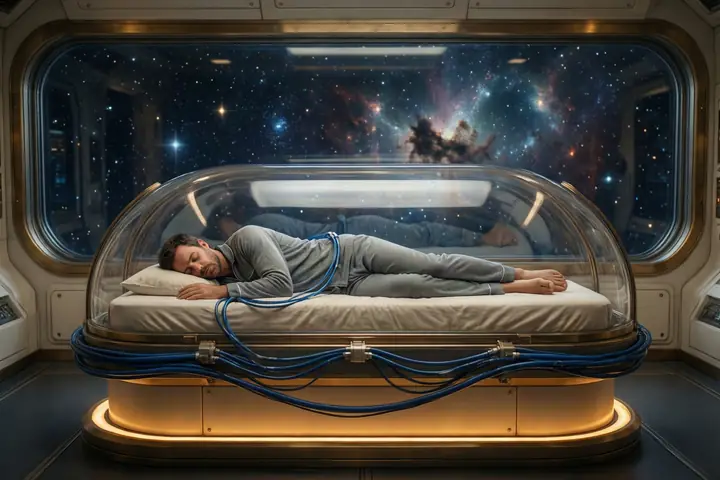
The Sleep
Tani of Ekkis, Judson W. Reeves · 1930
Putting travellers into a deep dormant state so a long space trip consumes far less food, water and air.
not yet built · AI models' likeliest decade: the 2050s
A large prizeBusinesses pay; existing firms keep the restas a model judges it
Why
A large prize. Deep sleep that saves food, water and air would make very long voyages possible.
Who is paid. Carriers would pay, and nothing in the description stops others doing it once it is shown to work, so the firms that already supply ships collect.
A model's judgement, not a reading, of the idea as if it worked the way its story promises. The model is not very sure of this one.
Illustration made with AI image generation; not evidence.
Vacuum Armor
Skylark Three, E.E. 'Doc' Smith · 1930
A spacesuit reinforced with protective metal plating.
built in the 1960s, about 30 years after it was imagined
A small prizeBusinesses pay; existing firms keep the restas a model judges it
Why
A small prize. A suit with protective plating keeps a person alive and guarded outside, essential gear but only for a few; no military use is stated.
Who is paid. Space operators buy suits for their crews, and the few established makers of suits can all copy a design, so they collect.
A model's judgement, not a reading, of the idea as if it worked the way its story promises. The model is fairly sure of this one.
Illustration made with AI image generation; not evidence.
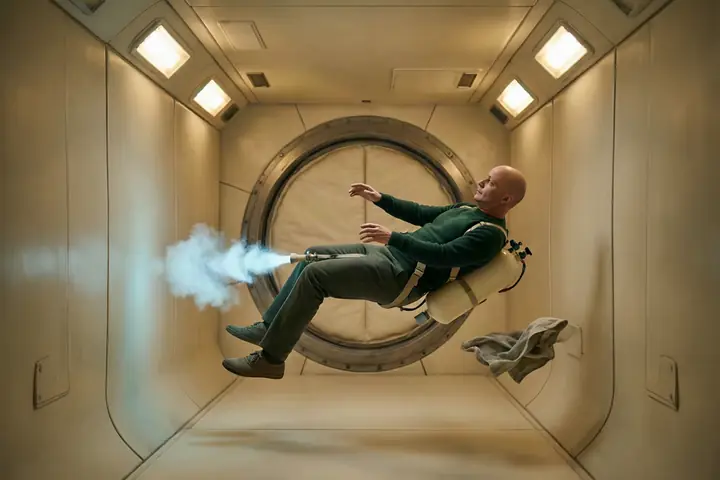
Air Tank Flying
The Power Planet, Murray Leinster · 1931
Moving around a weightless station by releasing short puffs of pressurised gas.
not yet built · AI models' likeliest decade: the 2020s
No prizeNothing is soldas a model judges it
Why
No prize. It is a way of flying or moving, not a product; the craft and gear that do it are judged under their own entries.
Who is paid. Nothing is sold, so nobody pays and no seller collects.
A model's judgement, not a reading, of the idea as if it worked the way its story promises. The model is fairly sure of this one.
Illustration made with AI image generation; not evidence.
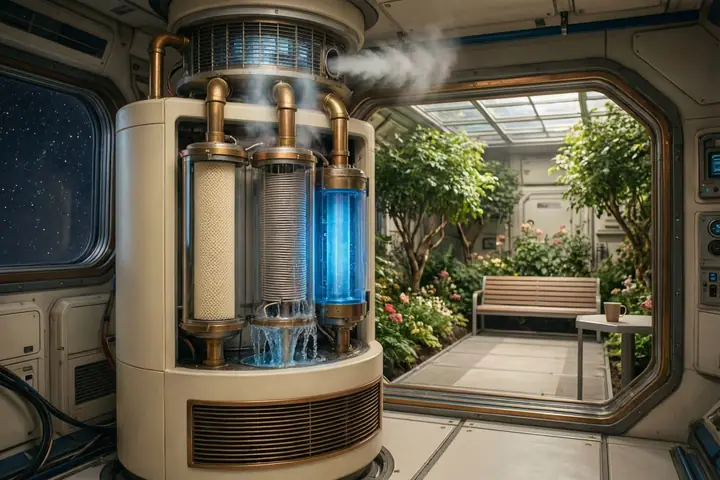
Artificial Atmosphere Machine
Venus Mines, Incorporated, Nat Schachner (w. AL Zagat · 1931
A life-support unit that produces a complete breathable air mix aboard a spacecraft.
built in the 1960s, about 30 years after it was imagined
A small prizeBusinesses pay; existing firms keep the restas a model judges it
Why
A small prize. Breathable air is essential aboard, but this is a fitting inside a craft or suit, not an industry of its own.
Who is paid. Ship operators pay for it within the craft, and the established builders of ships and suits supply it because the method is easy to copy.
A model's judgement, not a reading, of the idea as if it worked the way its story promises. The model is fairly sure of this one.
Illustration made with AI image generation; not evidence.
Asteroid Belt
The Disc-Men of Jupiter, Manly Wade Wellman · 1931
The ring of rocky bodies orbiting the Sun between Mars and Jupiter.
already existed before the story (the 1800s)
No prizeNothing is soldas a model judges it
Why
No prize. It is a natural thing or event in space, not a product anyone makes or sells.
Who is paid. Nothing is sold, so nobody pays and no seller collects.
A model's judgement, not a reading, of the idea as if it worked the way its story promises. The model is fairly sure of this one.
Illustration made with AI image generation; not evidence.
Astrogator
The Conquest of Space, David Lasser · 1931
A crew member whose job is plotting and steering a spacecraft's course between worlds.
not yet built · AI models' likeliest decade: the 2020s
A small prizeBusinesses pay; no seller keeps muchas a model judges it
Why
A small prize. It is a job, judged by the work it sells: a trained crew member is needed on every voyage but is a small part of its cost.
Who is paid. Ship operators pay the wages, and anyone with the training can do the work, so no seller keeps much.
A model's judgement, not a reading, of the idea as if it worked the way its story promises. The model is not very sure of this one.
Illustration made with AI image generation; not evidence.
Atmosphere Tester
The Emperor of the Stars, Nat Schachner (w. AL Zagat · 1931
An instrument that analyses an alien planet's air to check whether people can breathe it.
built in the 1960s, about 30 years after it was imagined
A small prizeBusinesses pay; no seller keeps muchas a model judges it
Why
A small prize. Checking whether air is safe to breathe is a useful instrument for a few explorers.
Who is paid. Expedition firms buy it, assumed here, and gas-testing instruments are made by many firms, so no seller keeps much.
A model's judgement, not a reading, of the idea as if it worked the way its story promises. The model is fairly sure of this one.
Illustration made with AI image generation; not evidence.
Beam-Powered Propulsion
The Prince of Space, Jack Williamson · 1931
Driving a craft forward by aiming a strong energy beam at it from a separate source.
not yet built · AI models' likeliest decade: the 2050s
A large prizeBusinesses pay; existing firms keep the restas a model judges it
Why
A large prize. Pushing craft with a beam from outside would let ships fly without carrying their own fuel, changing launch costs.
Who is paid. Ship operators pay for the push, and since others could build beam stations the gain goes to those who already own the sites and power plants.
A model's judgement, not a reading, of the idea as if it worked the way its story promises. The model is not very sure of this one.
Illustration made with AI image generation; not evidence.
Braking Disks
A Daring Trip To Mars, Max Valier · 1931
Drag plates deployed to slow a craft as it descends through a planet's air.
not yet built · AI models' likeliest decade: the 2020s
A small prizeBusinesses pay; existing firms keep the restas a model judges it
Why
A small prize. Slowing a craft safely through air is essential to landing but is a part of the craft, not a product by itself.
Who is paid. Ship operators pay for it within the craft, and spacecraft builders supply it because the method is well understood and easy to copy.
A model's judgement, not a reading, of the idea as if it worked the way its story promises. The model is fairly sure of this one.
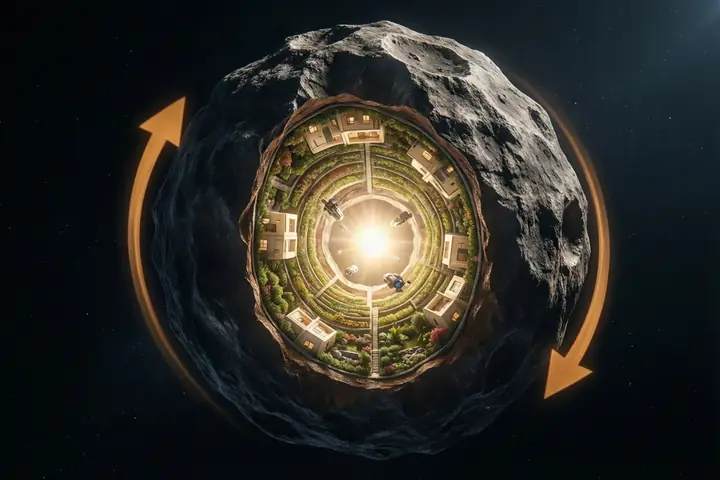
Illustration made with AI image generation; not evidence.
Centrifugal Force Creates 'Artificial Gravity'
The Prince of Space, Jack Williamson · 1931
Spinning a habitat so the outward push on occupants stands in for weight.
not yet built · AI models' likeliest decade: the 2030s
A small prizeA government pays; existing firms keep the restas a model judges it
Why
A small prize. Spinning to give weight is a design feature of a habitat, useful but not a product of its own.
Who is paid. Whoever pays for the habitat pays for this, assumed here to be a government, and any habitat builder can use the idea so the established builders collect.
A model's judgement, not a reading, of the idea as if it worked the way its story promises. The model is fairly sure of this one.
Illustration made with AI image generation; not evidence.
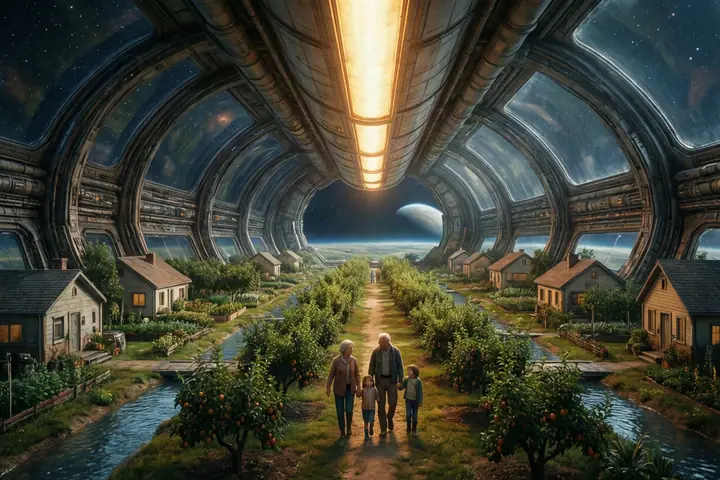
City of Space
The Prince of Space, Jack Williamson · 1931
A vast rotating tube in orbit housing a whole town.
not yet built · AI models' likeliest decade: the 2070s
A large prizeA government pays; existing firms keep the restas a model judges it
Why
A large prize. A place for many people to live and work beyond Earth is a building industry of its own.
Who is paid. A settlement is a public work a government pays for, and the big construction and space firms that already win such contracts would build it.
A model's judgement, not a reading, of the idea as if it worked the way its story promises. The model is fairly sure of this one.
Illustration made with AI image generation; not evidence.
Deviatoscope
The Emperor of the Stars, Nat Schachner (w. AL Zagat · 1931
A navigation gauge that shows how far a craft has strayed from its planned route.
built in the 1960s, about 30 years after it was imagined
A small prizeBusinesses pay; existing firms keep the restas a model judges it
Why
A small prize. Knowing where a ship is and keeping it on course is essential but is an instrument within the ship.
Who is paid. Ship operators buy it as part of the craft, and the established makers of flight instruments supply it since it can be copied.
A model's judgement, not a reading, of the idea as if it worked the way its story promises. The model is fairly sure of this one.
Illustration made with AI image generation; not evidence.
Emergency Corrective Rockets
The Emperor of the Stars, Nat Schachner (w. AL Zagat · 1931
Backup thrusters fired to put a straying spacecraft back on its intended path.
built in the 1960s, about 30 years after it was imagined
A small prizeBusinesses pay; existing firms keep the restas a model judges it
Why
A small prize. Backup thrusters are a safety part of a spacecraft.
Who is paid. Ship operators pay for them within the craft, and established engine makers supply them since they are easy to copy.
A model's judgement, not a reading, of the idea as if it worked the way its story promises. The model is fairly sure of this one.
Illustration made with AI image generation; not evidence.
Filling Station Moon
A Daring Trip To Mars, Max Valier · 1931
Mining the Moon for propellant so it acts as a refuelling stop on the way deeper into space.
not yet built · AI models' likeliest decade: the 2030s
A large prizeBusinesses pay; existing firms keep the restas a model judges it
Why
A large prize. Fuel made on the Moon would cut the cost of every voyage further out, an industry of its own.
Who is paid. Ship operators buy the fuel, and since the digging can be copied the firms that already own ships and refineries collect.
A model's judgement, not a reading, of the idea as if it worked the way its story promises. The model is fairly sure of this one.
Illustration made with AI image generation; not evidence.
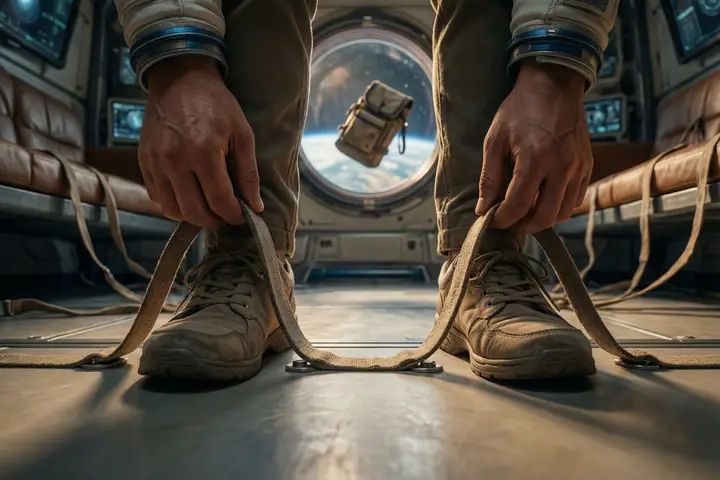
Foot Loops
The Power Planet, Murray Leinster · 1931
Simple straps on the floor that anchor a person's feet when weightless.
built in the 1960s, about 30 years after it was imagined
A small prizeBusinesses pay; no seller keeps muchas a model judges it
Why
A small prize. Keeping your footing where there is little or no weight is a small convenience for those who work there.
Who is paid. Space operators buy it for their crews, and it is a simple loose item that any workshop could make.
A model's judgement, not a reading, of the idea as if it worked the way its story promises. The model is fairly sure of this one.
Illustration made with AI image generation; not evidence.
Free Fall
Islands of Space, John W. Campbell · 1931
The weightless state of anything coasting in orbit under gravity alone.
already existed before the story (the 1700s)
No prizeNothing is soldas a model judges it
Why
No prize. It is the weightless state of anything coasting in orbit, a fact of nature and not a product.
Who is paid. Nothing is sold, so nobody pays and no seller collects.
A model's judgement, not a reading, of the idea as if it worked the way its story promises. The model is fairly sure of this one.
Illustration made with AI image generation; not evidence.
Gravito-Statoscope
The Emperor of the Stars, Nat Schachner (w. AL Zagat · 1931
An instrument aboard a ship that measures the gravitational pulls acting on it.
not yet built · AI models' likeliest decade: the 2020s
A small prizeBusinesses pay; existing firms keep the restas a model judges it
Why
A small prize. It helps a crew find their way or see what lies about them, a useful fitting but only a part of the ship.
Who is paid. Ship operators pay for it within the craft, and the firms that already make ship instruments supply it since the design can be copied.
A model's judgement, not a reading, of the idea as if it worked the way its story promises. The model is fairly sure of this one.
Illustration made with AI image generation; not evidence.
Gravity Belt
Venus Mines, Incorporated, Nat Schachner (w. AL Zagat · 1931
A belt that creates extra gravity around the wearer so walking on tiny asteroids feels normal.
not yet built · AI models judge it not physically possible
A small prizeBusinesses pay; no seller keeps muchas a model judges it
Why
A small prize. As described it is a walking aid for those who work on small rocks, a niche; gravity for whole ships and stations is judged under the plates.
Who is paid. Mining firms buy the belts for their workers, and a small worn device can be made by many workshops, so no seller keeps much.
A model's judgement, not a reading, of the idea as if it worked the way its story promises. The model is fairly sure of this one.
Illustration made with AI image generation; not evidence.
Gravity Detector
The Lunar Chrysalis, Raymond Z. Gallun · 1931
An instrument that senses the gravity of a faraway body.
not yet built · AI models' likeliest decade: the 2020s
A small prizeBusinesses pay; existing firms keep the restas a model judges it
Why
A small prize. It helps a crew find their way or see what lies about them, a useful fitting but only a part of the ship.
Who is paid. Ship operators pay for it within the craft, and the firms that already make ship instruments supply it since the design can be copied.
A model's judgement, not a reading, of the idea as if it worked the way its story promises. The model is fairly sure of this one.
Illustration made with AI image generation; not evidence.
Jovium
Venus Mines, Incorporated, Nat Schachner (w. AL Zagat · 1931
A catalyst added to rocket propellant that makes spaceflight cheap enough to be a business.
not yet built · AI models could not judge when it may arrive
A large prizeBusinesses pay; existing firms keep the restas a model judges it
Why
A large prize. A fuel additive that makes spaceflight cheap would change the cost of the whole industry.
Who is paid. Ship operators buy it with their fuel, and the description gives nothing that stops other chemical firms making it, so established fuel makers collect.
A model's judgement, not a reading, of the idea as if it worked the way its story promises. The model is not very sure of this one.
Illustration made with AI image generation; not evidence.
Landing Stage
Atomic Fire, Raymond Z. Gallun · 1931
A designated pad where spacecraft set down and park.
built in the 1960s, about 30 years after it was imagined
A small prizeBusinesses pay; existing firms keep the restas a model judges it
Why
A small prize. A place to land, park or refuel is a necessary part of space traffic but only an extra beside the ships and launch works.
Who is paid. Ship operators pay to use it, and it is easy to copy, so those who already hold the port sites collect.
A model's judgement, not a reading, of the idea as if it worked the way its story promises. The model is fairly sure of this one.
Illustration made with AI image generation; not evidence.
Lifeboat
Spacehounds of IPC, E.E. 'Doc' Smith · 1931
A small detachable craft carried aboard a larger spaceship so the crew can escape if the main vessel fails.
built in the 1960s, about 30 years after it was imagined
A small prizeBusinesses pay; existing firms keep the restas a model judges it
Why
A small prize. A way off a failing ship saves lives but is carried as a fitting and rarely used.
Who is paid. Ship operators pay for it as part of the craft, and established shipbuilders supply it since any of them could make it.
A model's judgement, not a reading, of the idea as if it worked the way its story promises. The model is fairly sure of this one.
Illustration made with AI image generation; not evidence.
Light Speed
Out Around Rigel, Clyde Wilson · 1931
Expresses how fast something travels as a fraction or multiple of the velocity of light.
already existed before the story (1905)
No prizeNothing is soldas a model judges it
Why
No prize. It is a word or a unit of measure, not a product.
Who is paid. Nothing is sold, so nobody pays and no seller collects.
A model's judgement, not a reading, of the idea as if it worked the way its story promises. The model is fairly sure of this one.
Illustration made with AI image generation; not evidence.
Magnetic Boots
Atomic Fire, Raymond Z. Gallun · 1931
Footwear with magnets that keeps a person anchored to a steel floor when weightless.
built in the 1960s, about 30 years after it was imagined
A small prizeBusinesses pay; no seller keeps muchas a model judges it
Why
A small prize. Keeping your footing where there is little or no weight is a small convenience for those who work there.
Who is paid. Space operators buy it for their crews, and it is a simple loose item that any workshop could make.
A model's judgement, not a reading, of the idea as if it worked the way its story promises. The model is fairly sure of this one.
Illustration made with AI image generation; not evidence.
Magnetic Clamps
Twelve Hours To Live, Jack Williamson · 1931
Magnets that hold a small craft fast to the hull of a larger one.
not yet built · AI models' likeliest decade: the 2020s
A small prizeBusinesses pay; no seller keeps muchas a model judges it
Why
A small prize. It is a handy loose item for space crews, a niche.
Who is paid. Space operators buy it for their crews, and it is simple enough that any workshop could make it.
A model's judgement, not a reading, of the idea as if it worked the way its story promises. The model is fairly sure of this one.
Illustration made with AI image generation; not evidence.
Message Cylinder (Message Bomb)
The Cosmic Cloud, Bruno H. Burgel · 1931
A small capsule dropped from orbit that carries written messages down to people on the ground.
not yet built · AI models' likeliest decade: the 2030s
A small prizeBusinesses pay; no seller keeps muchas a model judges it
Why
A small prize. A capsule for dropping notes from orbit is a small convenience.
Who is paid. Space operators buy it for their crews, and it is simple enough that any workshop could make it.
A model's judgement, not a reading, of the idea as if it worked the way its story promises. The model is fairly sure of this one.
Illustration made with AI image generation; not evidence.
Meteorite Deflector
On Board the Martian Liner, Miles J. Breuer · 1931
A system on a spacecraft that shoves incoming space rocks out of its path.
not yet built · AI models' likeliest decade: the 2030s
A small prizeBusinesses pay; existing firms keep the restas a model judges it
Why
A small prize. Pushing rocks out of the way keeps a ship safe, but it is a fitting on the craft, not an industry.
Who is paid. Ship operators pay for it within the craft, and the firms that already make ship instruments supply it since the design can be copied.
A model's judgement, not a reading, of the idea as if it worked the way its story promises. The model is fairly sure of this one.
Illustration made with AI image generation; not evidence.
Moon Run
Exiles of the Moon, Nat Schachner (w. AL Zagat · 1931
Depicts how a person would really move on foot across the lunar surface under its weak gravity.
built in 1969, 38 years after it was imagined
No prizeNothing is soldas a model judges it
Why
No prize. It is a way of flying or moving, not a product; the craft and gear that do it are judged separately.
Who is paid. Nothing is sold, so nobody pays and no seller collects.
A model's judgement, not a reading, of the idea as if it worked the way its story promises. The model is fairly sure of this one.
Illustration made with AI image generation; not evidence.
Mother World
The Asteroid of Death, Neil R. Jones · 1931
The planet a people or species first came from.
not yet built · AI models' likeliest decade: the 2020s
No prizeNothing is soldas a model judges it
Why
No prize. It is a term for the planet a people came from, not a product.
Who is paid. Nothing is sold, so nobody pays and no seller collects.
A model's judgement, not a reading, of the idea as if it worked the way its story promises. The model is fairly sure of this one.
Illustration made with AI image generation; not evidence.
Observation Room Recreation Center
The Power Planet, Murray Leinster · 1931
A large open hall inside an orbital station for exercise, games and viewing.
not yet built · AI models' likeliest decade: the 2020s
A small prizeA government pays; existing firms keep the restas a model judges it
Why
A small prize. A hall for exercise, games and the view is an amenity inside a station, not a product of its own.
Who is paid. Whoever pays for the habitat pays for this, assumed here to be a government, and any habitat builder can use the idea so the established builders collect.
A model's judgement, not a reading, of the idea as if it worked the way its story promises. The model is not very sure of this one.
Illustration made with AI image generation; not evidence.
Ozone Radiation Shield
A Daring Trip To Mars, Max Valier · 1931
Fills the gap between a ship's double walls with a gas meant to soak up harmful incoming radiation.
not yet built · AI models' likeliest decade: the 2030s
A small prizeBusinesses pay; existing firms keep the restas a model judges it
Why
A small prize. Keeping harmful radiation off the crew matters on every long voyage, but it is a feature of the hull and not a product by itself.
Who is paid. Ship operators pay for it within the craft, and shipbuilders fit it themselves since nothing stops others copying it.
A model's judgement, not a reading, of the idea as if it worked the way its story promises. The model is fairly sure of this one.
Illustration made with AI image generation; not evidence.
Photoelectric Course Warning
Out Around Rigel, Robert H. Wilson · 1931
A light sensor locked onto a chosen star that alerts the crew when the craft drifts off its heading.
built in the 1960s, about 30 years after it was imagined
A small prizeBusinesses pay; existing firms keep the restas a model judges it
Why
A small prize. It is a viewing or steering instrument aboard a ship, useful to the crew but only a part of the craft.
Who is paid. Ship operators pay for it within the craft, and established instrument makers supply it since others could copy the design.
A model's judgement, not a reading, of the idea as if it worked the way its story promises. The model is fairly sure of this one.
Illustration made with AI image generation; not evidence.
Photograph of Earth from Space
The Prince of Space, Jack Williamson · 1931
A picture of our planet taken from above the atmosphere.
built in 1968, 37 years after it was imagined
A small prizeHouseholds pay; no seller keeps muchas a model judges it
Why
A small prize. A picture of our planet from above is a keepsake and a wonder, assumed here to be sold as a print and not as a mapping service.
Who is paid. People buy copies, and once craft fly above the air anyone aboard can take such a picture, so no seller keeps much.
A model's judgement, not a reading, of the idea as if it worked the way its story promises. The model is not very sure of this one.
Illustration made with AI image generation; not evidence.
Positive Ray Propulsion (Ion Drive)
The Prince of Space, Jack Williamson · 1931
Propels a spacecraft by accelerating charged particles with electric fields, giving gentle but very fuel-efficient thrust.
built in the 1960s, about 30 years after it was imagined
A large prizeBusinesses pay; existing firms keep the restas a model judges it
Why
A large prize. Gentle thrust that uses very little fuel cuts the cost of long voyages and of keeping craft in place; the real thing exists and does this.
Who is paid. Ship operators pay, and once the engine was shown to work others could build it, so established engine builders collect.
A model's judgement, not a reading, of the idea as if it worked the way its story promises. The model is fairly sure of this one.
Illustration made with AI image generation; not evidence.
Propulsion Gun
Venus Mines, Incorporated, Nat Schachner (w. AL Zagat · 1931
A thruster that moves a craft through vacuum by throwing mass backward, using recoil instead of anything to push on.
not yet built · AI models' likeliest decade: the 2020s
A large prizeBusinesses pay; existing firms keep the restas a model judges it
Why
A large prize. A working engine for travel between worlds sets the cost of every voyage it powers.
Who is paid. Ship operators pay, and once the engine was shown to work others could build it, so established engine builders collect.
A model's judgement, not a reading, of the idea as if it worked the way its story promises. The model is fairly sure of this one.
Illustration made with AI image generation; not evidence.
Protonite
Twelve Hours To Live, Jack Williamson · 1931
A radioactive propellant that powers spacecraft engines.
not yet built · AI models' likeliest decade: the 2030s
A large prizeBusinesses pay; existing firms keep the restas a model judges it
Why
A large prize. A fuel that powers spacecraft engines would be bought for every voyage, an industry of its own.
Who is paid. Ship operators buy it, and unlike plain dust it is radioactive and needs special plants to make and handle, so the firms that already own such plants collect.
A model's judgement, not a reading, of the idea as if it worked the way its story promises. The model is not very sure of this one.
Illustration made with AI image generation; not evidence.
Radio Meteor Detector
Islands of Space, John W. Campbell · 1931
Onboard radar that spots incoming space debris in time for a ship to steer clear.
built in the 1960s, about 30 years after it was imagined
A small prizeBusinesses pay; existing firms keep the restas a model judges it
Why
A small prize. Spotting debris in time to steer clear keeps a ship safe, but it is an instrument aboard and only a part of the craft.
Who is paid. Ship operators pay for it within the craft, and established instrument makers supply it since others could copy the design.
A model's judgement, not a reading, of the idea as if it worked the way its story promises. The model is fairly sure of this one.
Illustration made with AI image generation; not evidence.
Radium Repeller ray
The Asteroid of Death, Neil R. Jones · 1931
A projected beam that shoves approaching space rocks off course so passing spacecraft avoid collisions.
not yet built · AI models' likeliest decade: the 2070s
A small prizeBusinesses pay; existing firms keep the restas a model judges it
Why
A small prize. Pushing rocks and other hazards away keeps a ship safe, but it is a safety fitting of the craft and not an industry of its own.
Who is paid. Ship operators pay for it within the craft, and once the field worked other shipbuilders could copy it, so established builders collect.
A model's judgement, not a reading, of the idea as if it worked the way its story promises. The model is not very sure of this one.
Illustration made with AI image generation; not evidence.
Reaction Attachment
The Asteroid of Death, Neil R. Jones · 1931
Small thrusters fitted to a spacesuit so the wearer can steer freely outside the craft.
built in 1984, 53 years after it was imagined
A small prizeBusinesses pay; existing firms keep the restas a model judges it
Why
A small prize. It helps a spacewalker get around while weightless, a niche tool for a few workers.
Who is paid. Space operators buy it for their crews, and the makers of suits and space gear supply it because it is easy to copy.
A model's judgement, not a reading, of the idea as if it worked the way its story promises. The model is fairly sure of this one.
Illustration made with AI image generation; not evidence.
Reaction-Motors
Twelve Hours To Live, Jack Williamson · 1931
A rocket engine that pushes a craft forward by expelling mass backward at great velocity.
built in the 1950s, about 20 years after it was imagined
A large prizeBusinesses pay; existing firms keep the restas a model judges it
Why
A large prize. A working engine for travel between worlds sets the cost of every voyage it powers.
Who is paid. Ship operators pay, and once the engine was shown to work others could build it, so established engine builders collect.
A model's judgement, not a reading, of the idea as if it worked the way its story promises. The model is fairly sure of this one.
Illustration made with AI image generation; not evidence.
Recoil Pistol
Exiles of the Moon, Nat Schachner (w. AL Zagat · 1931
A handheld gas jet that lets an astronaut push themselves around while weightless.
not yet built · AI models' likeliest decade: the 2020s
A small prizeBusinesses pay; existing firms keep the restas a model judges it
Why
A small prize. It helps a spacewalker get around while weightless, a niche tool for a few workers.
Who is paid. Space operators buy it for their crews, and the makers of suits and space gear supply it because it is easy to copy.
A model's judgement, not a reading, of the idea as if it worked the way its story promises. The model is fairly sure of this one.
Illustration made with AI image generation; not evidence.
Rocket Float
Too Many Boards!, Harl Vincent · 1931
A floating ocean pad from which rockets can be launched far from land.
not yet built · AI models' likeliest decade: the 2020s
A small prizeBusinesses pay; existing firms keep the restas a model judges it
Why
A small prize. A floating launch base is a useful choice of site, not a new industry.
Who is paid. Launch firms pay for it, and builders of ships and offshore platforms could all make it, so those established yards collect.
A model's judgement, not a reading, of the idea as if it worked the way its story promises. The model is fairly sure of this one.
Illustration made with AI image generation; not evidence.
Sargasso of Space
The Sargasso of Space, Edmond Hamilton · 1931
A natural region between worlds where planetary pulls balance, so drifting objects gather and stay.
not yet built · AI models' likeliest decade: the 2020s
No prizeNothing is soldas a model judges it
Why
No prize. It is a natural thing or place in space, not a product anyone makes or sells.
Who is paid. Nothing is sold, so nobody pays and no seller collects.
A model's judgement, not a reading, of the idea as if it worked the way its story promises. The model is fairly sure of this one.
Illustration made with AI image generation; not evidence.
Scanning-Disk Telescope
The Power Planet, Murray Leinster · 1931
A telescope that shows its image on an electronic screen rather than through a lens you look into.
built in the 1990s, about 60 years after it was imagined
A small prizeBusinesses pay; existing firms keep the restas a model judges it
Why
A small prize. It is a viewing or steering instrument aboard a ship, useful to the crew but only a part of the craft.
Who is paid. Ship operators pay for it within the craft, and established instrument makers supply it since others could copy the design.
A model's judgement, not a reading, of the idea as if it worked the way its story promises. The model is fairly sure of this one.
Illustration made with AI image generation; not evidence.
Self-Sustaining Space Craft
The Prince of Space, Jack Williamson · 1931
A spacecraft with a closed living system that recycles its own air, water and food.
not yet built · AI models' likeliest decade: the 2050s
A large prizeBusinesses pay; existing firms keep the restas a model judges it
Why
A large prize. A vessel that renews its own air, water and food could stay out for very long voyages, a working ship for a transport industry of its own.
Who is paid. Carriers and expedition firms buy ships, and many yards could build them once shown how, so established vehicle builders collect.
A model's judgement, not a reading, of the idea as if it worked the way its story promises. The model is fairly sure of this one.
Illustration made with AI image generation; not evidence.
Ship's Telescope
A Daring Trip To Mars, Max Valier · 1931
A big telescope mounted along a spacecraft's central line.
not yet built · AI models' likeliest decade: the 2020s
A small prizeBusinesses pay; existing firms keep the restas a model judges it
Why
A small prize. It is a viewing or steering instrument aboard a ship, useful to the crew but only a part of the craft.
Who is paid. Ship operators pay for it within the craft, and established instrument makers supply it since others could copy the design.
A model's judgement, not a reading, of the idea as if it worked the way its story promises. The model is fairly sure of this one.
Illustration made with AI image generation; not evidence.
Space Liner
On Board the Martian Liner, Miles J. Breuer · 1931
A big commercial craft that carries paying travellers between worlds.
not yet built · AI models' likeliest decade: the 2040s
A large prizeBusinesses pay; existing firms keep the restas a model judges it
Why
A large prize. Scheduled passenger travel between worlds would be a transport industry of its own.
Who is paid. The carrier buys the ship and sells the seats, and since many yards could build such a vessel the builders and carriers that already own fleets and ports collect.
A model's judgement, not a reading, of the idea as if it worked the way its story promises. The model is fairly sure of this one.
Illustration made with AI image generation; not evidence.
Space Men
The Exiles of Venus, Jim Vanny · 1931
People whose job is travelling and working off-planet.
built in the 1960s, about 30 years after it was imagined
A small prizeBusinesses pay; no seller keeps muchas a model judges it
Why
A small prize. It is a job, judged by the work it sells: trained hands are needed on every voyage but are a small part of its cost.
Who is paid. Operators pay the wages, and anyone with the training can do the work, so no seller keeps much.
A model's judgement, not a reading, of the idea as if it worked the way its story promises. The model is not very sure of this one.
Illustration made with AI image generation; not evidence.
Space Suit
The Emperor of the Stars, Nat Schachner (w. AL Zagat · 1931
A sealed pressurised garment that keeps a person alive outside a spacecraft.
built in the 1960s, about 30 years after it was imagined
A small prizeBusinesses pay; existing firms keep the restas a model judges it
Why
A small prize. It keeps a person alive and able to work outside, essential gear but only for the few who work in space.
Who is paid. Space operators buy suits for their crews, and the few established makers of suits can all copy a design, so they collect.
A model's judgement, not a reading, of the idea as if it worked the way its story promises. The model is fairly sure of this one.
Illustration made with AI image generation; not evidence.
Space-Helmet
The Sargasso of Space, Edmond Hamilton · 1931
A clear round bubble worn over the head as part of a spacesuit.
built in the 1960s, about 30 years after it was imagined
A small prizeBusinesses pay; existing firms keep the restas a model judges it
Why
A small prize. It is a part of a suit, useful to the wearer but not a product by itself.
Who is paid. Space operators pay for it within the suit, and the established suit makers supply it since any of them can copy it.
A model's judgement, not a reading, of the idea as if it worked the way its story promises. The model is fairly sure of this one.
Illustration made with AI image generation; not evidence.
Space-Liner
Twelve Hours To Live, Jack Williamson · 1931
A large vessel that ferries paying passengers through space on a schedule.
not yet built · AI models' likeliest decade: the 2040s
A large prizeBusinesses pay; existing firms keep the restas a model judges it
Why
A large prize. Scheduled passenger travel between worlds would be a transport industry of its own.
Who is paid. The carrier buys the ship and sells the seats, and since many yards could build such a vessel the builders and carriers that already own fleets and ports collect.
A model's judgement, not a reading, of the idea as if it worked the way its story promises. The model is fairly sure of this one.
Illustration made with AI image generation; not evidence.
Space-Tent
The Lunar Chrysalis, Raymond Z. Gallun · 1931
A small carry-along airtight shelter that crews set up on the Moon.
not yet built · AI models' likeliest decade: the 2030s
A small prizeBusinesses pay; existing firms keep the restas a model judges it
Why
A small prize. A carry-along airtight shelter is a safety item for the few crews working on the Moon.
Who is paid. The description names crews, so their employers buy it, and a shelter that must hold air against vacuum is made by the established makers of suits and habitats, any of whom could copy it.
A model's judgement, not a reading, of the idea as if it worked the way its story promises. The model is fairly sure of this one.
Illustration made with AI image generation; not evidence.
Spaceyacht
The Sargasso of Space, Edmond Hamilton · 1931
A private luxury craft that rich owners fly between planets.
not yet built · AI models' likeliest decade: the 2060s
A small prizeHouseholds pay; existing firms keep the restas a model judges it
Why
A small prize. A private pleasure craft for space is a luxury for a few rich owners.
Who is paid. The description names private owners who buy it for themselves, and the yards that already build spacecraft could all make one.
A model's judgement, not a reading, of the idea as if it worked the way its story promises. The model is fairly sure of this one.
Illustration made with AI image generation; not evidence.
Sunship
The Prince of Space, Jack Williamson · 1931
A spacecraft that draws all of its motive energy from sunlight rather than carried fuel.
not yet built · AI models' likeliest decade: the 2020s
A large prizeBusinesses pay; existing firms keep the restas a model judges it
Why
A large prize. A ship that needs no carried fuel would cut the cost of moving people and cargo across space.
Who is paid. Carriers buy ships, and nothing in the description stops other yards building one once it is shown to work, so established builders collect.
A model's judgement, not a reading, of the idea as if it worked the way its story promises. The model is not very sure of this one.
Illustration made with AI image generation; not evidence.
Terminator Zone
Exiles of the Moon, Nat Schachner (w. AL Zagat · 1931
The boundary band on a world where daylight meets night.
not yet built · AI models' likeliest decade: the 2020s
No prizeNothing is soldas a model judges it
Why
No prize. It is a natural thing or event in space, not a product anyone makes or sells.
Who is paid. Nothing is sold, so nobody pays and no seller collects.
A model's judgement, not a reading, of the idea as if it worked the way its story promises. The model is fairly sure of this one.
Illustration made with AI image generation; not evidence.
Terrene
An Adventure in Futurity, Clark Ashton Smith · 1931
A word meaning belonging to our home planet.
not yet built · AI models' likeliest decade: the 2020s
No prizeNothing is soldas a model judges it
Why
No prize. It is a word or a way of doing things that needs no new equipment, not a product.
Who is paid. Nothing is sold, so nobody pays and no seller collects.
A model's judgement, not a reading, of the idea as if it worked the way its story promises. The model is fairly sure of this one.
Illustration made with AI image generation; not evidence.
Thigh Grips
The Power Planet, Murray Leinster · 1931
Restraints on a seat that hold a crew member's legs firmly during hard thrust.
not yet built · AI models' likeliest decade: the 2020s
A small prizeBusinesses pay; existing firms keep the restas a model judges it
Why
A small prize. It protects crews during hard thrust or landing, which matters only to the few who fly such ships.
Who is paid. Ship operators pay for it as part of the craft, and the firms that already build ships and their fittings supply it since others could copy the design.
A model's judgement, not a reading, of the idea as if it worked the way its story promises. The model is fairly sure of this one.
Illustration made with AI image generation; not evidence.
Transparent Spherical Ship
The Emperor of the Stars, Nat Schachner (w. AL Zagat · 1931
A giant clear crystal ball enclosing a deck, used as a habitat or vessel in orbit.
not yet built · AI models' likeliest decade: the 2060s
A large prizeBusinesses pay; existing firms keep the restas a model judges it
Why
A large prize. A clear ball enclosing a deck is judged as a vessel, since the description allows either a ship or a habitat; a working vessel founds a transport industry.
Who is paid. Carriers and expedition firms are assumed to buy it, and nothing in the description stops other yards building one, so established builders collect.
A model's judgement, not a reading, of the idea as if it worked the way its story promises. The model is not very sure of this one.
Illustration made with AI image generation; not evidence.
Ultra-Terrene
An Adventure in Futurity, Clark Ashton Smith · 1931
A word for things that come from a world other than ours.
not yet built · AI models' likeliest decade: the 2020s
No prizeNothing is soldas a model judges it
Why
No prize. It is a word or a way of doing things that needs no new equipment, not a product.
Who is paid. Nothing is sold, so nobody pays and no seller collects.
A model's judgement, not a reading, of the idea as if it worked the way its story promises. The model is fairly sure of this one.
Illustration made with AI image generation; not evidence.
Wreck-Pack
The Sargasso of Space, Edmond Hamilton · 1931
A drifting heap of derelict ships clumped together by their own pull in a becalmed region of space.
not yet built · AI models judge it not physically possible
No prizeNothing is soldas a model judges it
Why
No prize. It is a drifting heap of wrecks gathered by nature, not a product anyone makes or sells.
Who is paid. Nothing is sold, so nobody pays and no seller collects.
A model's judgement, not a reading, of the idea as if it worked the way its story promises. The model is fairly sure of this one.
Illustration made with AI image generation; not evidence.
Asteroid Mining (Blasting)
Asteroid of Gold, Clifford Simak · 1932
Plants explosives on a space rock to break it apart and extract its resources.
not yet built · AI models' likeliest decade: the 2040s
A large prizeBusinesses pay; existing firms keep the restas a model judges it
Why
A large prize. Metal and other materials from space rocks would be an industry of its own and could change the cost of raw materials.
Who is paid. Factories and builders buy the output, and since mining methods are easy to copy the firms that already own ships and refineries collect.
A model's judgement, not a reading, of the idea as if it worked the way its story promises. The model is fairly sure of this one.
Illustration made with AI image generation; not evidence.
Attraction Ray
Pirates of the Gorm, Nat Schachner · 1932
A beam that reaches out and pulls a distant object toward its source.
not yet built · AI models could not judge when it may arrive
A large prizeBusinesses pay; existing firms keep the restas a model judges it
Why
A large prize. A beam that pulls distant objects in would change towing, docking and cargo handling in space and perhaps on the ground.
Who is paid. Ship and port operators buy it, and once shown to work others could build it, so established equipment makers collect.
A model's judgement, not a reading, of the idea as if it worked the way its story promises. The model is not very sure of this one.
Illustration made with AI image generation; not evidence.
Diskoid
Slaves of Mercury, Nat Schachner · 1932
An enormous disc-shaped flying vessel.
not yet built · AI models could not judge when it may arrive
A large prizeBusinesses pay; existing firms keep the restas a model judges it
Why
A large prize. A working vessel for travel between worlds would found a transport industry of its own.
Who is paid. Carriers and expedition firms buy ships, and many yards could build them once shown how, so established vehicle builders collect.
A model's judgement, not a reading, of the idea as if it worked the way its story promises. The model is fairly sure of this one.
Illustration made with AI image generation; not evidence.
Earth Normal
The Pygmy Planet, Jack Williamson · 1932
Uses conditions on our home planet, such as its gravity, as the reference yardstick for other worlds.
not yet built · AI models' likeliest decade: the 2020s
No prizeNothing is soldas a model judges it
Why
No prize. It is a word or a way of doing things that needs no new equipment, not a product.
Who is paid. Nothing is sold, so nobody pays and no seller collects.
A model's judgement, not a reading, of the idea as if it worked the way its story promises. The model is fairly sure of this one.
Illustration made with AI image generation; not evidence.
Electro-Magnet Anchor
The Space Rover, Edwin K. Sloat · 1932
An electrically switched magnet that fastens a tether line onto a ship's metal skin.
not yet built · AI models' likeliest decade: the 2020s
A small prizeBusinesses pay; no seller keeps muchas a model judges it
Why
A small prize. It keeps a spacewalker attached to the ship, a simple safety item for a few workers.
Who is paid. Space operators buy it for crews, and it is simple hardware that many workshops could make, so no seller keeps much.
A model's judgement, not a reading, of the idea as if it worked the way its story promises. The model is fairly sure of this one.
Illustration made with AI image generation; not evidence.
Emergency Space-Boat
Revolt of the Star Men, Raymond Z. Gallun · 1932
A getaway craft that lets people flee a stricken spaceship.
not yet built · AI models' likeliest decade: the 2020s
A small prizeBusinesses pay; existing firms keep the restas a model judges it
Why
A small prize. It saves lives in a disaster, but it is safety equipment carried aboard a larger ship.
Who is paid. Ship operators pay for it as required safety gear, and shipbuilders supply it because the design is easy to copy.
A model's judgement, not a reading, of the idea as if it worked the way its story promises. The model is fairly sure of this one.
Illustration made with AI image generation; not evidence.
Emergency Space-Suit
Pirates of the Gorm, Nat Schachner · 1932
A folded-down pressure suit kept aboard ship for crew to put on quickly when disaster strikes.
built in the 1960s, about 30 years after it was imagined
A small prizeBusinesses pay; existing firms keep the restas a model judges it
Why
A small prize. A suit that keeps a person alive in vacuum is vital to its wearer but serves only the few who work in space.
Who is paid. Space operators buy suits for their crews, and the few firms that already make such gear supply them since the design can be copied.
A model's judgement, not a reading, of the idea as if it worked the way its story promises. The model is fairly sure of this one.
Illustration made with AI image generation; not evidence.
Hinged Mittens (for Space Suit)
The Bluff of the Hawk, Anthony Gilmore · 1932
Jointed pressurised hand coverings that let a spacesuit wearer still bend their fingers.
built in the 1960s, about 30 years after it was imagined
A small prizeBusinesses pay; existing firms keep the restas a model judges it
Why
A small prize. It is a detail of a suit, useful to the wearer but not a product by itself.
Who is paid. Space operators pay for it within the suit, and suit makers supply it because the design is easy to copy.
A model's judgement, not a reading, of the idea as if it worked the way its story promises. The model is fairly sure of this one.
Illustration made with AI image generation; not evidence.
Intergalactic
Invaders From The Infinite, John W. Campbell · 1932
Travel from one galaxy to another across the enormous voids that separate them.
not yet built · AI models could not judge when it may arrive
A large prizeBusinesses pay; existing firms keep the restas a model judges it
Why
A large prize. Travel between galaxies is the same service as travel between worlds or stars, a transport industry for those who go and not a change for most people.
Who is paid. Carriers buy the ships and sell the passage, assumed here as with other travel, and since ships can be copied the builders and carriers that already own fleets and ports collect.
A model's judgement, not a reading, of the idea as if it worked the way its story promises. The model is not very sure of this one.
Illustration made with AI image generation; not evidence.
Landing-Cradle
The Radium World, Frank K. Kelly · 1932
A frame on the ground that catches and holds a spacecraft as it touches down.
not yet built · AI models' likeliest decade: the 2020s
A small prizeBusinesses pay; no seller keeps muchas a model judges it
Why
A small prize. A frame that holds a craft on the ground is a simple port fitting.
Who is paid. Port and ship operators buy it, and it is plain steel that any workshop could make.
A model's judgement, not a reading, of the idea as if it worked the way its story promises. The model is fairly sure of this one.
Illustration made with AI image generation; not evidence.
Light Beam Propulsion (Light-Ship)
The Radium World, Frank K. Kelly · 1932
Pushes a spacecraft along using the pressure of intense light instead of burning fuel.
not yet built · AI models' likeliest decade: the 2030s
A large prizeBusinesses pay; existing firms keep the restas a model judges it
Why
A large prize. An engine that moves ships faster or more cheaply would change the cost of all space transport.
Who is paid. An engine is bought by whoever runs the ship, assumed here to be carriers, and established engine builders could copy it once it worked.
A model's judgement, not a reading, of the idea as if it worked the way its story promises. The model is fairly sure of this one.
Illustration made with AI image generation; not evidence.
Luminous Stake-Markers
The Radium World, Frank K. Kelly · 1932
A glowing post planted on a world or rock in space to mark ground someone has claimed.
not yet built · AI models' likeliest decade: the 2020s
A small prizeBusinesses pay; no seller keeps muchas a model judges it
Why
A small prize. A glowing post to mark a claim is a small item for prospectors.
Who is paid. Space operators buy it for their crews, and it is simple enough that any workshop could make it.
A model's judgement, not a reading, of the idea as if it worked the way its story promises. The model is fairly sure of this one.
Illustration made with AI image generation; not evidence.
Magnet Grapnel
The Space Rover, Edwin K. Sloat · 1932
A magnetic grappling hook that draws another spacecraft alongside so crews can cross over.
not yet built · AI models' likeliest decade: the 2020s
A small prizeBusinesses pay; no seller keeps muchas a model judges it
Why
A small prize. It is a handy loose item for space crews, a niche.
Who is paid. Space operators buy it for their crews, and it is simple enough that any workshop could make it.
A model's judgement, not a reading, of the idea as if it worked the way its story promises. The model is fairly sure of this one.
Illustration made with AI image generation; not evidence.
Manufactured Planet
The Heritage of the Earth, Harley S. Aldinger · 1932
An artificial world built in orbit, large enough to be mistaken for a natural satellite.
not yet built · AI models' likeliest decade: 2100 or later
A vast prizeA government pays; existing firms keep the restas a model judges it
Why
A vast prize. A new world to live on would add living room for a large share of humanity.
Who is paid. No private buyer could fund a world, so a government pays and the large builders that already hold public works contracts collect.
A model's judgement, not a reading, of the idea as if it worked the way its story promises. The model is not very sure of this one.
Illustration made with AI image generation; not evidence.
Meteor Warning System
A Conquest of Two Worlds, Edmond Hamilton · 1932
Alerts spacecraft in flight when stray rocks are heading their way so they can dodge.
built in the 1960s, about 30 years after it was imagined
A small prizeBusinesses pay; existing firms keep the restas a model judges it
Why
A small prize. Warning of rocks ahead keeps a ship safe, but it is a fitting on the craft, not an industry.
Who is paid. Ship operators pay for it within the craft, and the firms that already make ship instruments supply it since the design can be copied.
A model's judgement, not a reading, of the idea as if it worked the way its story promises. The model is fairly sure of this one.
Illustration made with AI image generation; not evidence.
Ostler Insulation Beam
The Radium World, Frank K. Kelly · 1932
A stretch of projected energy between two planets that guards passing ships from harmful radiation.
not yet built · AI models could not judge when it may arrive
A small prizeA government pays; existing firms keep the restas a model judges it
Why
A small prize. A shielded lane between worlds protects the ships that use it, a safety aid along a particular route.
Who is paid. It guards every passing ship, so a government is assumed to pay as for a beacon, and established builders could copy the projector once it worked.
A model's judgement, not a reading, of the idea as if it worked the way its story promises. The model is not very sure of this one.
Illustration made with AI image generation; not evidence.
Pocket-Planet
The Duel on the Asteroid, P. Schuyler Miller (w/D. McDermott · 1932
A nickname for a small rocky body in space, treated as a miniature world.
built since, date unclear
No prizeNothing is soldas a model judges it
Why
No prize. It is a nickname for a small rock in space, not a product anyone makes or sells.
Who is paid. Nothing is sold, so nobody pays and no seller collects.
A model's judgement, not a reading, of the idea as if it worked the way its story promises. The model is fairly sure of this one.
Illustration made with AI image generation; not evidence.
Reaction Pistol
Martian Guns, Stanley D. Bell · 1932
A gas-firing handheld unit that lets a suited astronaut push themselves around in weightlessness.
built in 1984, 52 years after it was imagined
A small prizeBusinesses pay; existing firms keep the restas a model judges it
Why
A small prize. It helps a spacewalker get around while weightless, a niche tool for a few workers.
Who is paid. Space operators buy it for their crews, and the makers of suits and space gear supply it because it is easy to copy.
A model's judgement, not a reading, of the idea as if it worked the way its story promises. The model is fairly sure of this one.
Illustration made with AI image generation; not evidence.
Rotating Hollow Planetoid Habitat
Electronic Siege, John W. Campbell · 1932
Hollows out a small space rock and spins it so its interior can house people under simulated weight.
not yet built · AI models' likeliest decade: 2100 or later
A large prizeA government pays; existing firms keep the restas a model judges it
Why
A large prize. A place for many people to live and work beyond Earth is a building industry of its own.
Who is paid. A settlement is a public work a government pays for, and the big construction and space firms that already win such contracts would build it.
A model's judgement, not a reading, of the idea as if it worked the way its story promises. The model is fairly sure of this one.
Illustration made with AI image generation; not evidence.
Self-Propulsive Space Suit
The Bluff of the Hawk, Anthony Gilmore · 1932
A pressure suit fitted with small thrusters so its wearer can steer through open space.
built in 1984, 52 years after it was imagined
A small prizeBusinesses pay; existing firms keep the restas a model judges it
Why
A small prize. A suit that keeps a person alive in vacuum or thin air is vital to its wearer but serves only the few who work in space.
Who is paid. Space operators buy suits for their crews, and the few firms that already make such gear supply them since the design can be copied.
A model's judgement, not a reading, of the idea as if it worked the way its story promises. The model is fairly sure of this one.
Illustration made with AI image generation; not evidence.
Ship's Magnetic Plates (Magnetic Mooring)
Asteroid of Gold, Clifford Simak · 1932
Magnetised panels on a mining ship's hull that hold it fast to the surface of a space rock.
not yet built · AI models' likeliest decade: the 2020s
A small prizeBusinesses pay; existing firms keep the restas a model judges it
Why
A small prize. Magnets that hold a mining ship to a rock are a fitting of the ship, a tool within space mining.
Who is paid. Mining firms pay for it within the craft, and makers of mining and space gear could all build it.
A model's judgement, not a reading, of the idea as if it worked the way its story promises. The model is fairly sure of this one.
Illustration made with AI image generation; not evidence.
Smoke Jets (Air Leak Detection)
The Great Dome of Mercury, Leo Zagat · 1932
Releases puffs of visible vapour inside a sealed structure so drifting trails reveal where air escapes.
not yet built · AI models' likeliest decade: the 2020s
A small prizeBusinesses pay; no seller keeps muchas a model judges it
Why
A small prize. Puffs of vapour that show where air is leaking are a cheap safety aid in a sealed structure.
Who is paid. Space operators buy it for crews, and it is simple enough that many workshops could make it, so no seller keeps much.
A model's judgement, not a reading, of the idea as if it worked the way its story promises. The model is fairly sure of this one.
Illustration made with AI image generation; not evidence.
Space Freighter
The Space Rover, Edwin K. Sloat · 1932
A big cargo spacecraft that carries heavy loads and can take off from Earth or other worlds.
not yet built · AI models' likeliest decade: the 2020s
A large prizeBusinesses pay; existing firms keep the restas a model judges it
Why
A large prize. A working vessel for travel between worlds would found a transport industry of its own.
Who is paid. Carriers and expedition firms buy ships, and many yards could build them once shown how, so established vehicle builders collect.
A model's judgement, not a reading, of the idea as if it worked the way its story promises. The model is fairly sure of this one.
Illustration made with AI image generation; not evidence.
Space-Boat
Revolt of the Star Men, Raymond Z. Gallun · 1932
A compact spacecraft kept on hand for crews to use when something goes wrong.
not yet built · AI models' likeliest decade: the 2020s
A small prizeBusinesses pay; existing firms keep the restas a model judges it
Why
A small prize. A way to survive a failing ship is something every operator wants but hopes never to use.
Who is paid. Ship operators buy it as part of the craft, and the established builders of ships and their fittings supply it since it can be copied.
A model's judgement, not a reading, of the idea as if it worked the way its story promises. The model is fairly sure of this one.
Illustration made with AI image generation; not evidence.
Space-Boots
The Passing of Ku Sui, Anthony Gilmore · 1932
Footwear designed for crews working outside ships or on airless surfaces.
built in the 1960s, about 30 years after it was imagined
A small prizeBusinesses pay; existing firms keep the restas a model judges it
Why
A small prize. It is a part of a suit, useful to the wearer but not a product by itself.
Who is paid. Space operators pay for it within the suit, and the established suit makers supply it since any of them can copy it.
A model's judgement, not a reading, of the idea as if it worked the way its story promises. The model is fairly sure of this one.
Illustration made with AI image generation; not evidence.
Space-Drive
Invaders From The Infinite, John W. Campbell · 1932
The engine system that moves a spacecraft through the void.
not yet built · AI models' likeliest decade: the 2020s
A large prizeBusinesses pay; existing firms keep the restas a model judges it
Why
A large prize. The engine sets how far, how fast and how cheaply every ship can go; the description is general, so it is judged as drives are.
Who is paid. Whoever runs the ship pays for the engine, assumed here to be carriers, and once a firm had built it others could too, so established engine and ship builders collect.
A model's judgement, not a reading, of the idea as if it worked the way its story promises. The model is fairly sure of this one.
Illustration made with AI image generation; not evidence.
Space-Tanned
Slaves of Mercury, Warren Hammond · 1932
The darkened skin crews acquire from long exposure to unfiltered sunlight during voyages beyond the atmosphere.
not yet built · AI models' likeliest decade: the 2020s
No prizeNothing is soldas a model judges it
Why
No prize. It names what space does to the body, a condition and not a product anyone makes or sells.
Who is paid. Nothing is sold, so nobody pays and no seller collects.
A model's judgement, not a reading, of the idea as if it worked the way its story promises. The model is fairly sure of this one.
Illustration made with AI image generation; not evidence.
Spaceboat
Waves of Compulsion, Raymond Z. Gallun · 1932
A small, nimble craft for short hops around outer space.
not yet built · AI models' likeliest decade: the 2060s
A small prizeBusinesses pay; existing firms keep the restas a model judges it
Why
A small prize. A small craft for short hops is a useful extra for a ship or station, not an industry of its own.
Who is paid. Ship and station operators buy it, assumed here, and existing spacecraft builders could all make something so simple.
A model's judgement, not a reading, of the idea as if it worked the way its story promises. The model is fairly sure of this one.
Illustration made with AI image generation; not evidence.
Sunward
The Space Rover, Edwin K. Sloat · 1932
A word for the direction pointing in toward our star from anywhere in the planetary system.
not yet built · AI models' likeliest decade: the 2020s
No prizeNothing is soldas a model judges it
Why
No prize. It is a word or a way of doing things that needs no new equipment, not a product.
Who is paid. Nothing is sold, so nobody pays and no seller collects.
A model's judgement, not a reading, of the idea as if it worked the way its story promises. The model is fairly sure of this one.
Illustration made with AI image generation; not evidence.
Wandering Worlds
When Worlds Collide, Edwin Balmer (w/P. Wylie · 1932
Planets that orbit no star and instead drift alone between the stars.
not yet built · AI models' likeliest decade: the 2020s
No prizeNothing is soldas a model judges it
Why
No prize. It is a natural thing or event in space, not a product anyone makes or sells.
Who is paid. Nothing is sold, so nobody pays and no seller collects.
A model's judgement, not a reading, of the idea as if it worked the way its story promises. The model is fairly sure of this one.
Illustration made with AI image generation; not evidence.
Water Pool Cushions Acceleration
The Derelicts of Ganymede, John W. Campbell · 1932
Submerges crew in liquid so the fluid spreads the crushing forces of violent ship acceleration.
not yet built · AI models' likeliest decade: the 2020s
A small prizeBusinesses pay; existing firms keep the restas a model judges it
Why
A small prize. It protects crews during hard thrust or landing, which matters only to the few who fly such ships.
Who is paid. Ship operators pay for it as part of the craft, and the firms that already build ships and their fittings supply it since others could copy the design.
A model's judgement, not a reading, of the idea as if it worked the way its story promises. The model is fairly sure of this one.
Illustration made with AI image generation; not evidence.
Asteroid Rocket
Salvage in Space, Jack Williamson · 1933
Thrusters bolted onto a space rock push it along a chosen path, turning the rock itself into a vessel.
not yet built · AI models' likeliest decade: the 2050s
A large prizeBusinesses pay; existing firms keep the restas a model judges it
Why
A large prize. Steering whole rocks to where they are wanted would serve mining and building in space, part of an industry of its own.
Who is paid. Mining and building firms are assumed to pay, and bolting engines to a rock is easy to copy, so the firms that already own ships and engines collect.
A model's judgement, not a reading, of the idea as if it worked the way its story promises. The model is not very sure of this one.
Illustration made with AI image generation; not evidence.
Crystal Cylinder Ship
The Three Suns of Ev, Edwin K. Sloat · 1933
A see-through spacecraft whose hull is shaped like a long clear tube.
not yet built · AI models' likeliest decade: the 2060s
A large prizeBusinesses pay; existing firms keep the restas a model judges it
Why
A large prize. A working vessel for travel between worlds would found a transport industry of its own.
Who is paid. Carriers and expedition firms buy ships, and many yards could build them once shown how, so established vehicle builders collect.
A model's judgement, not a reading, of the idea as if it worked the way its story promises. The model is fairly sure of this one.
Illustration made with AI image generation; not evidence.
Ether Boat
Murder on the Asteroid, Eando Binder · 1933
A vessel built to travel through outer space.
not yet built · AI models' likeliest decade: the 2020s
A large prizeBusinesses pay; existing firms keep the restas a model judges it
Why
A large prize. A working vessel for travel between worlds would found a transport industry of its own.
Who is paid. Carriers and expedition firms buy ships, and many yards could build them once shown how, so established vehicle builders collect.
A model's judgement, not a reading, of the idea as if it worked the way its story promises. The model is fairly sure of this one.
Illustration made with AI image generation; not evidence.
Etheric Propulsion-Vibrations
The Star-Roamers, Edmond Hamilton · 1933
Moves ships faster than light by setting up vibrations in a medium once thought to fill space.
not yet built · AI models judge it not physically possible
A large prizeBusinesses pay; existing firms keep the restas a model judges it
Why
A large prize. Travel faster than light would open other stars to trade and settlement, a transport industry of its own; it is a change for those who go, not for most people.
Who is paid. Ship operators pay for the drive, and once a firm had built it others could too, so established shipbuilders collect.
A model's judgement, not a reading, of the idea as if it worked the way its story promises. The model is not very sure of this one.
Illustration made with AI image generation; not evidence.
Flip to Brake
Murder on the Asteroid, Eando Binder · 1933
Turns a rocket around so its exhaust points ahead, using the engine to shed speed.
not yet built · AI models' likeliest decade: the 2020s
No prizeNothing is soldas a model judges it
Why
No prize. It is a word or a way of doing things that needs no new equipment, not a product.
Who is paid. Nothing is sold, so nobody pays and no seller collects.
A model's judgement, not a reading, of the idea as if it worked the way its story promises. The model is fairly sure of this one.
Illustration made with AI image generation; not evidence.
Globular Glass Helmet
Murder on the Asteroid, Eando Binder · 1933
A rounded, transparent dome worn over the head as part of a spacesuit.
built in the 1960s, about 30 years after it was imagined
A small prizeBusinesses pay; existing firms keep the restas a model judges it
Why
A small prize. It is a detail of a suit, useful to the wearer but not a product by itself.
Who is paid. Space operators pay for it within the suit, and suit makers supply it because the design is easy to copy.
A model's judgement, not a reading, of the idea as if it worked the way its story promises. The model is fairly sure of this one.
Illustration made with AI image generation; not evidence.
Granton Motor
Into the Meteorite Orbit, Frank K. Kelly · 1933
Drives a spacecraft by emitting a form of gravity-based radiation.
not yet built · AI models judge it not physically possible
A large prizeBusinesses pay; existing firms keep the restas a model judges it
Why
A large prize. An engine that moves ships faster or more cheaply would change the cost of all space transport.
Who is paid. An engine is bought by whoever runs the ship, assumed here to be carriers, and established engine builders could copy it once it worked.
A model's judgement, not a reading, of the idea as if it worked the way its story promises. The model is fairly sure of this one.
Illustration made with AI image generation; not evidence.
Helix Gun
Salvage in Space, Jack Williamson · 1933
A coil-shaped magnetic device that snags iron-bearing space rocks drifting past.
not yet built · AI models' likeliest decade: the 2040s
A small prizeBusinesses pay; existing firms keep the restas a model judges it
Why
A small prize. It is a tool for catching or shifting rock, useful only to those who mine in space.
Who is paid. Mining firms buy it, and makers of mining gear supply it since the design is easy to copy.
A model's judgement, not a reading, of the idea as if it worked the way its story promises. The model is fairly sure of this one.
Illustration made with AI image generation; not evidence.
Landing on an Asteroid
Murder on the Asteroid, Eando Binder · 1933
A carefully worked-out sequence of manoeuvres for setting a spacecraft down on a small space rock.
not yet built · AI models' likeliest decade: the 2020s
No prizeNothing is soldas a model judges it
Why
No prize. It is a way of flying or moving, not a product; the craft and gear that do it are judged separately.
Who is paid. Nothing is sold, so nobody pays and no seller collects.
A model's judgement, not a reading, of the idea as if it worked the way its story promises. The model is fairly sure of this one.
Illustration made with AI image generation; not evidence.
Magnetic Anchor
Dead Star Station, Jack Williamson · 1933
A magnet-based fixture that gives a secure attachment point on a spacecraft's outer skin.
not yet built · AI models' likeliest decade: the 2020s
A small prizeBusinesses pay; no seller keeps muchas a model judges it
Why
A small prize. It is a handy loose item for space crews, a niche.
Who is paid. Space operators buy it for their crews, and it is simple enough that any workshop could make it.
A model's judgement, not a reading, of the idea as if it worked the way its story promises. The model is fairly sure of this one.
Illustration made with AI image generation; not evidence.
Meteor Miner
Salvage in Space, Jack Williamson · 1933
Prospectors travel among asteroids searching for rocks rich enough in metal to haul back and sell.
not yet built · AI models' likeliest decade: the 2040s
A small prizeBusinesses pay; no seller keeps muchas a model judges it
Why
A small prize. Prospecting among space rocks is paid work, a service and not a product.
Who is paid. Mining firms and metal buyers pay the prospectors, and anyone can train for the work, so no seller keeps much.
A model's judgement, not a reading, of the idea as if it worked the way its story promises. The model is not very sure of this one.
Illustration made with AI image generation; not evidence.
Osprey Space Armor
Salvage in Space, Jack Williamson · 1933
A self-contained pressure suit comfortable and well-supplied enough to inhabit for long stretches.
built in the 1960s, about 30 years after it was imagined
A small prizeBusinesses pay; existing firms keep the restas a model judges it
Why
A small prize. A suit that keeps a person alive in vacuum or thin air is vital to its wearer but serves only the few who work in space.
Who is paid. Space operators buy suits for their crews, and the few firms that already make such gear supply them since the design can be copied.
A model's judgement, not a reading, of the idea as if it worked the way its story promises. The model is fairly sure of this one.
Illustration made with AI image generation; not evidence.
Seleno-Cosmo-Tel
A Race Through Time, Donald Wandrei · 1933
An onboard system senses nearby rocks or objects and steers the craft clear without pilot input.
not yet built · AI models' likeliest decade: the 2020s
A small prizeBusinesses pay; existing firms keep the restas a model judges it
Why
A small prize. Sensing nearby rocks and steering clear keeps a ship safe, but it is an instrument aboard and only a part of the craft.
Who is paid. Ship operators pay for it within the craft, and established instrument makers supply it since others could copy the design.
A model's judgement, not a reading, of the idea as if it worked the way its story promises. The model is fairly sure of this one.
Illustration made with AI image generation; not evidence.
Space Tug
Murder on the Asteroid, Eando Binder · 1933
A compact spacecraft that grabs, pushes or tows larger vehicles into new positions or orbits.
not yet built · AI models' likeliest decade: the 2020s
A small prizeBusinesses pay; existing firms keep the restas a model judges it
Why
A small prize. Moving other craft about in orbit is a steady support trade, not an industry of its own.
Who is paid. Port and ship operators buy tugs, and any spacecraft builder could make such a simple craft, so established builders collect.
A model's judgement, not a reading, of the idea as if it worked the way its story promises. The model is fairly sure of this one.
Illustration made with AI image generation; not evidence.
Space-Sailor
The Star-Roamers, Edmond Hamilton · 1933
A professional whose trade is crewing ships beyond the atmosphere, earning wages from repeated journeys between worlds.
not yet built · AI models' likeliest decade: the 2020s
A small prizeBusinesses pay; no seller keeps muchas a model judges it
Why
A small prize. It is a job, judged by the work it sells: trained hands are needed on every voyage but are a small part of its cost.
Who is paid. Operators pay the wages, and anyone with the training can do the work, so no seller keeps much.
A model's judgement, not a reading, of the idea as if it worked the way its story promises. The model is not very sure of this one.
Illustration made with AI image generation; not evidence.
Space-Suit Rockets
Into the Meteorite Orbit, Frank K. Kelly · 1933
Small thrusters strapped to a spacesuit let an astronaut steer and move freely while floating outside a spacecraft.
built in 1984, 51 years after it was imagined
A small prizeBusinesses pay; existing firms keep the restas a model judges it
Why
A small prize. Small thrusters let a spacewalker get around while weightless, a niche tool for a few workers.
Who is paid. Space operators buy them for their crews, and the makers of suits and space gear supply them because they are easy to copy.
A model's judgement, not a reading, of the idea as if it worked the way its story promises. The model is fairly sure of this one.
Illustration made with AI image generation; not evidence.
Spaceways
Shambleau, C.L. Moore · 1933
Fixed travel lanes through space that ships follow between destinations.
not yet built · AI models' likeliest decade: the 2030s
No prizeNothing is soldas a model judges it
Why
No prize. It is a word or a way of doing things that needs no new equipment, not a product.
Who is paid. Nothing is sold, so nobody pays and no seller collects.
A model's judgement, not a reading, of the idea as if it worked the way its story promises. The model is fairly sure of this one.
Illustration made with AI image generation; not evidence.
Spectro-Flash Analysis
Salvage in Space, Jack Williamson · 1933
A burst of light vaporises a speck of rock and reads the glow to reveal which metals it holds.
built since, date unclear
A small prizeBusinesses pay; existing firms keep the restas a model judges it
Why
A small prize. Telling what a rock holds before digging saves prospectors wasted effort, a niche tool.
Who is paid. Mining and prospecting firms buy it, and the established makers of survey instruments could all copy it.
A model's judgement, not a reading, of the idea as if it worked the way its story promises. The model is fairly sure of this one.
Illustration made with AI image generation; not evidence.
Transfer Cable
Dead Star Station, Jack Williamson · 1933
A line strung between two vessels in space so crew can cross from one to the other.
not yet built · AI models' likeliest decade: the 2020s
A small prizeBusinesses pay; no seller keeps muchas a model judges it
Why
A small prize. A line between ships for crossing over is a simple item for a few crews.
Who is paid. Ship operators buy it, and it is simple hardware that many workshops could make, so no seller keeps much.
A model's judgement, not a reading, of the idea as if it worked the way its story promises. The model is fairly sure of this one.
Illustration made with AI image generation; not evidence.
Tubular Space-Gangway
The Star-Roamers, Edmond Hamilton · 1933
A pressurised tube stretched between neighbouring spacecraft lets crew walk across without suiting up.
not yet built · AI models' likeliest decade: the 2020s
A small prizeBusinesses pay; existing firms keep the restas a model judges it
Why
A small prize. Crossing between ships without suiting up is a convenience fitted to craft that meet often.
Who is paid. Ship operators pay for it as a fitting, and the established builders of ships supply it since it is easy to copy.
A model's judgement, not a reading, of the idea as if it worked the way its story promises. The model is fairly sure of this one.
Illustration made with AI image generation; not evidence.
Ablative Heat (Reentry) Shield
Triplanetary, E.E. 'Doc' Smith · 1934
A protective layer on a returning spacecraft absorbs atmospheric heating by charring and flaking away.
built in the 1960s, about 30 years after it was imagined
A small prizeBusinesses pay; existing firms keep the restas a model judges it
Why
A small prize. Slowing a craft safely through air is essential to landing but is a part of the craft, not a product by itself.
Who is paid. Ship operators pay for it within the craft, and spacecraft builders supply it because the method is well understood and easy to copy.
A model's judgement, not a reading, of the idea as if it worked the way its story promises. The model is fairly sure of this one.
Illustration made with AI image generation; not evidence.
Acceleration-tank
Triplanetary, E.E. 'Doc' Smith · 1934
Crew lie submerged in liquid during hard thrust so the fluid spreads crushing forces evenly across their bodies.
not yet built · AI models' likeliest decade: the 2030s
A small prizeBusinesses pay; existing firms keep the restas a model judges it
Why
A small prize. It protects crews during hard thrust, which matters only to the few who fly such ships.
Who is paid. Ship operators pay for it as part of the craft, and the firms that already build ships and their fittings supply it since others could copy the design.
A model's judgement, not a reading, of the idea as if it worked the way its story promises. The model is fairly sure of this one.
Illustration made with AI image generation; not evidence.
Artificial Planet
Triplanetary, E.E. 'Doc' Smith · 1934
A world-sized structure assembled in orbit by builders rather than formed by nature.
not yet built · AI models' likeliest decade: 2100 or later
A vast prizeA government pays; existing firms keep the restas a model judges it
Why
A vast prize. A new world to live on would add living room for a large share of humanity.
Who is paid. No private buyer could fund a world, so a government pays and the large builders that already hold public works contracts collect.
A model's judgement, not a reading, of the idea as if it worked the way its story promises. The model is not very sure of this one.
Illustration made with AI image generation; not evidence.
Automatic Navigator
A Matter of Size, Harry Bates · 1934
Guidance equipment pilots a spacecraft all the way to its target once the course is set.
already existed before the story (the 1920s)
A small prizeBusinesses pay; existing firms keep the restas a model judges it
Why
A small prize. Knowing where a ship is and keeping it on course is essential but is an instrument within the ship.
Who is paid. Ship operators buy it as part of the craft, and the established makers of flight instruments supply it since it can be copied.
A model's judgement, not a reading, of the idea as if it worked the way its story promises. The model is fairly sure of this one.
Illustration made with AI image generation; not evidence.
Beam Car
Lost City of Mars, Harl Vincent · 1934
A lift cabin rides an invisible guiding beam all the way from a planet's surface up to an orbiting moon.
not yet built · AI models judge it not physically possible
A large prizeBusinesses pay; existing firms keep the restas a model judges it
Why
A large prize. A lift from the ground to orbit would slash the cost of reaching space for every firm that uses it.
Who is paid. Shippers pay to send cargo up, and since another line could be built once the first was shown to work, the gain is assumed to go to the large builders and the holders of the few good ground sites.
A model's judgement, not a reading, of the idea as if it worked the way its story promises. The model is not very sure of this one.
Illustration made with AI image generation; not evidence.
Deep-Space
Triplanetary, E.E. 'Doc' Smith · 1934
The term for the enormous empty stretches between stars, far from any planet or sun.
not yet built · AI models' likeliest decade: the 2020s
No prizeNothing is soldas a model judges it
Why
No prize. It is a word or a way of doing things that needs no new equipment, not a product.
Who is paid. Nothing is sold, so nobody pays and no seller collects.
A model's judgement, not a reading, of the idea as if it worked the way its story promises. The model is fairly sure of this one.
Illustration made with AI image generation; not evidence.
Electro-Telescope
The Mines of Haldar, Maurice G. Hugi · 1934
An electronic imaging instrument that shows sharp pictures of far-off ships and their combat across space.
not yet built · AI models' likeliest decade: the 2020s
A small prizeBusinesses pay; existing firms keep the restas a model judges it
Why
A small prize. A sharper telescope is useful to observatories and ships, a specialist instrument.
Who is paid. Observatories and ship operators buy it, assumed here, and established instrument makers supply it because the idea is easy to copy.
A model's judgement, not a reading, of the idea as if it worked the way its story promises. The model is fairly sure of this one.
Illustration made with AI image generation; not evidence.
Emergency Lifeboat
Triplanetary, E.E. 'Doc' Smith · 1934
A compact escape vehicle docked to a station or big ship, ready to carry crew away during a disaster.
built in the 1960s, about 30 years after it was imagined
A small prizeBusinesses pay; existing firms keep the restas a model judges it
Why
A small prize. It saves lives in a disaster, but it is safety equipment carried aboard a larger ship.
Who is paid. Ship operators pay for it as required safety gear, and shipbuilders supply it because the design is easy to copy.
A model's judgement, not a reading, of the idea as if it worked the way its story promises. The model is fairly sure of this one.
Illustration made with AI image generation; not evidence.
Evacuating Arms
Space Flotsam, Raymond Z. Gallun · 1934
Mechanical arms inside an airlock push out whatever remains once the chamber opens to vacuum.
not yet built · AI models' likeliest decade: the 2020s
A small prizeBusinesses pay; existing firms keep the restas a model judges it
Why
A small prize. It is a necessary fitting on any crewed craft, but only a part of the ship.
Who is paid. Ship operators pay for it within the craft, and shipbuilders make it themselves since nothing stops others copying it.
A model's judgement, not a reading, of the idea as if it worked the way its story promises. The model is fairly sure of this one.
Illustration made with AI image generation; not evidence.
Levitators
Lost City of Mars, Harl Vincent · 1934
Personal devices that let people float and fly around inside an enormous hollow orbiting habitat.
not yet built · AI models' likeliest decade: the 2020s
A small prizeHouseholds pay; no seller keeps muchas a model judges it
Why
A small prize. Flying about inside a great hollow habitat is a pleasant way to get around for those who live there, a convenience.
Who is paid. People living in the habitat buy their own, and a small personal device can be made by many workshops, so no seller keeps much.
A model's judgement, not a reading, of the idea as if it worked the way its story promises. The model is not very sure of this one.
Illustration made with AI image generation; not evidence.
Liquid Mirror Telescope on Mars
Old Faithful, Raymond Z. Gallun · 1934
An observatory on the red planet whose main reflector is a rotating pool of liquid metal forming a perfect curve.
not yet built · AI models' likeliest decade: the 2070s
A small prizeA government pays; existing firms keep the restas a model judges it
Why
A small prize. It adds to knowledge of the sky but yields nothing to sell, so its worth is limited to science.
Who is paid. Nobody could be charged for what it learns, so a government pays the instrument and probe builders that already hold such contracts.
A model's judgement, not a reading, of the idea as if it worked the way its story promises. The model is fairly sure of this one.
Illustration made with AI image generation; not evidence.
Manual Search For Habitable Planet
Skylark of Valeron, E.E. 'Doc' Smith · 1934
Explorers sift through stars one at a time, without automation, looking for a world where people could live.
not yet built · AI models' likeliest decade: the 2020s
A small prizeA government pays; existing firms keep the restas a model judges it
Why
A small prize. Finding a world to live on would matter greatly in the end, but the search by itself yields nothing to sell.
Who is paid. Nobody could be charged for the search, so a government pays, and the explorers and ship operators that already hold such contracts do the work.
A model's judgement, not a reading, of the idea as if it worked the way its story promises. The model is not very sure of this one.
Illustration made with AI image generation; not evidence.
Metal Message In Space
The Menace From Space, John Edwards · 1934
A plaque engraved with information is launched outward so any distant civilisation might someday read it.
built in the 1970s, about 40 years after it was imagined
A small prizeA government pays; no seller keeps muchas a model judges it
Why
A small prize. A plaque sent out for strangers to find is a gesture with nothing to sell.
Who is paid. A government pays for it as part of a science mission, and any workshop could engrave the plate.
A model's judgement, not a reading, of the idea as if it worked the way its story promises. The model is not very sure of this one.
Illustration made with AI image generation; not evidence.
Moving a Planet
Triplanetary, E.E. 'Doc' Smith · 1934
Shifting an entire world out of its orbit and carrying it across interstellar space to settle around a different star.
not yet built · AI models' likeliest decade: 2100 or later
A vast prizeA government pays; existing firms keep the restas a model judges it
Why
A vast prize. Carrying a whole world to a safer or better place would decide where a large share of humanity can live.
Who is paid. Only a government could fund work on a whole world, and the large engineering firms that already hold such contracts would be paid to do it.
A model's judgement, not a reading, of the idea as if it worked the way its story promises. The model is not very sure of this one.
Illustration made with AI image generation; not evidence.
Out-Worlder
A Matter of Size, Harry Bates · 1934
Someone born or raised on a world other than our home planet.
not yet built · AI models' likeliest decade: the 2070s
No prizeNothing is soldas a model judges it
Why
No prize. It is a word for a person from another world, not a product anyone makes or sells.
Who is paid. Nothing is sold, so nobody pays and no seller collects.
A model's judgement, not a reading, of the idea as if it worked the way its story promises. The model is fairly sure of this one.
Illustration made with AI image generation; not evidence.
Planetary Propulsion-Blasts
Thundering Worlds, Edmond Hamilton · 1934
Enormous engines fire against a world to nudge it into a different orbit or send it toward another star.
not yet built · AI models' likeliest decade: 2100 or later
A vast prizeA government pays; existing firms keep the restas a model judges it
Why
A vast prize. Carrying a whole world to a safer or better place would decide where a large share of humanity can live.
Who is paid. Only a government could fund work on a whole world, and the large engineering firms that already hold such contracts would be paid to do it.
A model's judgement, not a reading, of the idea as if it worked the way its story promises. The model is not very sure of this one.
Illustration made with AI image generation; not evidence.
Silica Sphere (Dyson sphere)
Lost City of Mars, Harl Vincent · 1934
A hollowed habitat carved out on the red planet is lifted into orbit to become a moon.
not yet built · AI models' likeliest decade: 2100 or later
A large prizeA government pays; existing firms keep the restas a model judges it
Why
A large prize. A hollowed place for many people to live, lifted into orbit as a small moon, is a building project on the scale of an industry.
Who is paid. A settlement is a public work a government pays for, and the big construction and space firms that already win such contracts would build it.
A model's judgement, not a reading, of the idea as if it worked the way its story promises. The model is not very sure of this one.
Illustration made with AI image generation; not evidence.
Solar Engine
A Matter of Size, Harry Bates · 1934
A spacecraft drawing its thrust from sunlight, either by collecting the energy or letting light push it along.
not yet built · AI models' likeliest decade: the 2020s
A large prizeBusinesses pay; existing firms keep the restas a model judges it
Why
A large prize. Thrust drawn from sunlight needs little or no fuel, which would cut the cost of voyages between worlds.
Who is paid. Ship operators pay, and once the engine was shown to work others could build it, so established engine builders collect.
A model's judgement, not a reading, of the idea as if it worked the way its story promises. The model is fairly sure of this one.
Illustration made with AI image generation; not evidence.
Space Mittens
Space Flotsam, Raymond Z. Gallun · 1934
Insulated pressurised gloves shield an astronaut's hands from vacuum and extreme cold during work outside.
built in the 1960s, about 30 years after it was imagined
A small prizeBusinesses pay; existing firms keep the restas a model judges it
Why
A small prize. It is a part of a suit, useful to the wearer but not a product by itself.
Who is paid. Space operators pay for it within the suit, and the established suit makers supply it since any of them can copy it.
A model's judgement, not a reading, of the idea as if it worked the way its story promises. The model is fairly sure of this one.
Illustration made with AI image generation; not evidence.
Air-Tight Cities
The Cosmic Pantograph, Edmond Hamilton · 1935
Sealed settlements holding breathable air, built on moons or planets lacking any atmosphere.
not yet built · AI models' likeliest decade: the 2070s
A large prizeA government pays; existing firms keep the restas a model judges it
Why
A large prize. A place for many people to live and work beyond Earth is a building industry of its own.
Who is paid. A settlement is a public work a government pays for, and the big construction and space firms that already win such contracts would build it.
A model's judgement, not a reading, of the idea as if it worked the way its story promises. The model is fairly sure of this one.
Illustration made with AI image generation; not evidence.
Living Space Ship
Proxima Centauri, Murray Leinster · 1935
A spacecraft whose hull is grown from living plant-like material rather than built from metal.
not yet built · AI models' likeliest decade: 2100 or later
A large prizeBusinesses pay; existing firms keep the restas a model judges it
Why
A large prize. A working ship that carries people and cargo between worlds is the base of a whole transport industry.
Who is paid. Carriers buy ships, and a hull grown from a living line can be regrown by anyone who holds a cutting, so the established shipbuilders and carriers collect as with any other ship.
A model's judgement, not a reading, of the idea as if it worked the way its story promises. The model is fairly sure of this one.
Illustration made with AI image generation; not evidence.
Magno-Bars
The Meteor Miners, L.A. Eshbach · 1935
Rods tipped with electromagnets let space prospectors grab and haul away iron-laden rocks.
not yet built · AI models' likeliest decade: the 2040s
A small prizeBusinesses pay; existing firms keep the restas a model judges it
Why
A small prize. It is a tool for catching or shifting rock, useful only to those who mine in space.
Who is paid. Mining firms buy it, and makers of mining gear supply it since the design is easy to copy.
A model's judgement, not a reading, of the idea as if it worked the way its story promises. The model is fairly sure of this one.
Illustration made with AI image generation; not evidence.
Meteor Swarm Mining
The Meteor Miners, L.A. Eshbach · 1935
Groups of spacecraft sweep through clouds of space debris collecting iron to sell.
not yet built · AI models' likeliest decade: the 2040s
A large prizeBusinesses pay; existing firms keep the restas a model judges it
Why
A large prize. Materials taken from other worlds and from loose rock in space would feed an industry of their own.
Who is paid. Firms that need the material pay for it, and since others could dig the same way the gain goes to those who already own the ships and claims.
A model's judgement, not a reading, of the idea as if it worked the way its story promises. The model is fairly sure of this one.
Illustration made with AI image generation; not evidence.
New Suns From Old
The Cosmic Pantograph, Edmond Hamilton · 1935
Smashing burnt-out stellar remnants together to reignite them as fresh, shining stars.
not yet built · AI models' likeliest decade: 2100 or later
A vast prizeA government pays; existing firms keep the restas a model judges it
Why
A vast prize. Lighting a new sun would give warmth and daylight to whole worlds, opening living room for a large share of humanity.
Who is paid. Only a government could fund work on a star, and the large engineering firms that already hold such contracts would be paid to do it.
A model's judgement, not a reading, of the idea as if it worked the way its story promises. The model is not very sure of this one.
Illustration made with AI image generation; not evidence.
Transkin
Parasite Planet, Stanley G. Weinbaum · 1935
A hooded full-body garment that seals the wearer off from a hostile, spore-laden environment.
not yet built · AI models' likeliest decade: the 2020s
A small prizeBusinesses pay; existing firms keep the restas a model judges it
Why
A small prize. A sealed garment against a hostile spore-laden world keeps workers alive there, essential gear for a few.
Who is paid. Firms working on that world are assumed to buy it for their crews, and established makers of protective suits can all copy a design, so they collect.
A model's judgement, not a reading, of the idea as if it worked the way its story promises. The model is not very sure of this one.
Illustration made with AI image generation; not evidence.
Automated Search For Habitable Planets
Cosmic Quest, Edmond Hamilton · 1936
Robotic observatories that scan the sky for worlds that could resemble ours.
built in the 1990s, about 60 years after it was imagined
A small prizeA government pays; existing firms keep the restas a model judges it
Why
A small prize. Finding worlds like ours is valuable knowledge but nobody buys it as a product.
Who is paid. The findings cannot be charged for, so a government pays, and the observatory builders that already hold science contracts supply it.
A model's judgement, not a reading, of the idea as if it worked the way its story promises. The model is fairly sure of this one.
Illustration made with AI image generation; not evidence.
Dark Vapor Bubble
Man-Jewels for Xothar, H.G. Wells · 1936
A field that holds breathable air around an outpost without walls.
not yet built · AI models judge it not physically possible
A large prizeA government pays; existing firms keep the restas a model judges it
Why
A large prize. Holding air in place without walls would make settling airless worlds far cheaper than building domes.
Who is paid. Settlements are public works a government pays for, and once the field was known other builders could copy it, so established settlement builders collect.
A model's judgement, not a reading, of the idea as if it worked the way its story promises. The model is not very sure of this one.
Illustration made with AI image generation; not evidence.
Electronized Gravity Plate
Blood of the Moon, Ray Cummings · 1936
Floor plates that create weight for crews aboard spacecraft and stations.
not yet built · AI models judge it not physically possible
A large prizeBusinesses pay; existing firms keep the restas a model judges it
Why
A large prize. Real weight underfoot on any ship or station would be fitted almost everywhere people live in space.
Who is paid. Ship and station operators buy it, and once the plates worked other makers could copy them, so established builders collect.
A model's judgement, not a reading, of the idea as if it worked the way its story promises. The model is not very sure of this one.
Illustration made with AI image generation; not evidence.
Emergency Repulsion Ray
Earth-Venus 12, Gabriel Wilson · 1936
A handheld push-beam an astronaut uses to move about in space.
not yet built · AI models' likeliest decade: the 2020s
A small prizeBusinesses pay; existing firms keep the restas a model judges it
Why
A small prize. It helps a spacewalker get around while weightless, a niche tool for a few workers.
Who is paid. Space operators buy it for their crews, and the makers of suits and space gear supply it because it is easy to copy.
A model's judgement, not a reading, of the idea as if it worked the way its story promises. The model is fairly sure of this one.
Illustration made with AI image generation; not evidence.
Foam Station Sprayer
Red Storm on Jupiter, Frank Belknap Long, Jr. · 1936
A sprayer that calms the giant storm on Jupiter.
not yet built · AI models' likeliest decade: 2100 or later
A small prizeBusinesses pay; existing firms keep the restas a model judges it
Why
A small prize. Calming a storm on a giant planet matters only to those who would work there, a niche.
Who is paid. It is assumed the firms mining that world pay for it as working gear, and makers of such equipment could copy it.
A model's judgement, not a reading, of the idea as if it worked the way its story promises. The model is not very sure of this one.
Illustration made with AI image generation; not evidence.
Geodynes
The Cometeers, Jack Williamson · 1936
A spacecraft drive that thrusts against space itself rather than expelling fuel.
not yet built · AI models judge it not physically possible
A large prizeBusinesses pay; existing firms keep the restas a model judges it
Why
A large prize. An engine that moves ships faster or more cheaply would change the cost of all space transport.
Who is paid. An engine is bought by whoever runs the ship, assumed here to be carriers, and established engine builders could copy it once it worked.
A model's judgement, not a reading, of the idea as if it worked the way its story promises. The model is fairly sure of this one.
Illustration made with AI image generation; not evidence.
Indoor Weighted Belt
Blood of the Moon, Ray Cummings · 1936
A heavy belt that helps a wearer keep footing where gravity is weak.
not yet built · AI models' likeliest decade: the 2020s
A small prizeBusinesses pay; no seller keeps muchas a model judges it
Why
A small prize. Keeping your footing where there is little or no weight is a small convenience for those who work there.
Who is paid. Space operators buy it for their crews, and it is a simple loose item that any workshop could make.
A model's judgement, not a reading, of the idea as if it worked the way its story promises. The model is fairly sure of this one.
Illustration made with AI image generation; not evidence.
Jupiter Mining Shoes
Red Storm on Jupiter, Frank Belknap Long, Jr. · 1936
Special boots meant for walking across a giant planet's great storm.
not yet built · AI models judge it not physically possible
A small prizeBusinesses pay; no seller keeps muchas a model judges it
Why
A small prize. Boots for walking on a giant planet's storm serve only the few who would work there, a niche.
Who is paid. Mining firms buy them for their crews, and they are assumed to be simple footwear that any workshop could make.
A model's judgement, not a reading, of the idea as if it worked the way its story promises. The model is not very sure of this one.
Illustration made with AI image generation; not evidence.
Multi-Generation Space Vessel (Generation Ship)
The Return of the Murians, Nat Schachner · 1936
A vessel for a voyage so long that its crew's descendants finish the trip.
not yet built · AI models' likeliest decade: 2100 or later
A large prizeA government pays; existing firms keep the restas a model judges it
Why
A large prize. A vessel carrying a whole population on a voyage of many lifetimes is an enormous building project.
Who is paid. Only a government could fund it, and the big shipbuilders and contractors already trusted with such work would be paid.
A model's judgement, not a reading, of the idea as if it worked the way its story promises. The model is fairly sure of this one.
Illustration made with AI image generation; not evidence.
Photoelectric Telescope (Photoelectric Eyes)
The Cometeers, Jack Williamson · 1936
A telescope that turns captured starlight into electrical signals and shows the picture on a display.
built in the 1970s, about 40 years after it was imagined
A small prizeBusinesses pay; existing firms keep the restas a model judges it
Why
A small prize. It is a viewing or steering instrument aboard a ship, useful to the crew but only a part of the craft.
Who is paid. Ship operators pay for it within the craft, and established instrument makers supply it since others could copy the design.
A model's judgement, not a reading, of the idea as if it worked the way its story promises. The model is fairly sure of this one.
Illustration made with AI image generation; not evidence.
Planetary Engineering
The Cometeers, Jack Williamson · 1936
Reshaping a whole world's surface, climate or structure on purpose.
not yet built · AI models' likeliest decade: 2100 or later
A vast prizeA government pays; existing firms keep the restas a model judges it
Why
A vast prize. Giving a whole world air and a climate people can live in would open new land for a large share of humanity.
Who is paid. Only a government could fund work on a whole world, and the large engineering firms that already hold such contracts would be paid to do it.
A model's judgement, not a reading, of the idea as if it worked the way its story promises. The model is not very sure of this one.
Illustration made with AI image generation; not evidence.
Radiation Shield
The Ultimate Weapon, John W. Campbell · 1936
Using a ship's water supply as a barrier against space radiation.
not yet built · AI models' likeliest decade: the 2020s
A small prizeBusinesses pay; existing firms keep the restas a model judges it
Why
A small prize. Using the water a ship already carries as a barrier against radiation is a clever layout of the hull, not a product by itself.
Who is paid. Ship operators pay for it within the craft, and shipbuilders fit it themselves since nothing stops others copying it.
A model's judgement, not a reading, of the idea as if it worked the way its story promises. The model is fairly sure of this one.
Illustration made with AI image generation; not evidence.
Radiation-Proof Oxygen Suit
Red Storm on Jupiter, Frank Belknap Long, Jr. · 1936
A shielded pressure suit for miners working in intense radiation on another world.
not yet built · AI models' likeliest decade: the 2030s
A small prizeBusinesses pay; existing firms keep the restas a model judges it
Why
A small prize. A suit that keeps a person alive in vacuum or thin air is vital to its wearer but serves only the few who work in space.
Who is paid. Space operators buy suits for their crews, and the few firms that already make such gear supply them since the design can be copied.
A model's judgement, not a reading, of the idea as if it worked the way its story promises. The model is fairly sure of this one.
Illustration made with AI image generation; not evidence.
Sounding Projectile
Mad Robot, Raymond Z. Gallun · 1936
A probe fired at a clouded world to learn whether firm ground lies beneath.
not yet built · AI models' likeliest decade: the 2020s
A small prizeA government pays; existing firms keep the restas a model judges it
Why
A small prize. It gathers knowledge about space or other worlds, which is valuable but which nobody buys as a product.
Who is paid. The findings cannot be charged for, so a government pays, and the builders that already hold science contracts supply it.
A model's judgement, not a reading, of the idea as if it worked the way its story promises. The model is fairly sure of this one.
Illustration made with AI image generation; not evidence.
Starways
Blood of the Moon, Ray Cummings · 1936
Established travel routes linking one star system to another.
not yet built · AI models' likeliest decade: 2100 or later
No prizeNothing is soldas a model judges it
Why
No prize. It is a word or a way of doing things that needs no new equipment, not a product.
Who is paid. Nothing is sold, so nobody pays and no seller collects.
A model's judgement, not a reading, of the idea as if it worked the way its story promises. The model is fairly sure of this one.
Illustration made with AI image generation; not evidence.
Telespectroscope
Cosmic Quest, Edmond Hamilton · 1936
An instrument that reads starlight to find planets similar to ours.
not yet built · AI models' likeliest decade: the 2020s
A small prizeA government pays; existing firms keep the restas a model judges it
Why
A small prize. Finding planets like ours by their light adds to knowledge and guides later voyages, with nothing to sell from it.
Who is paid. Nobody could be charged for the findings, so a government pays the instrument and probe builders that already hold such contracts.
A model's judgement, not a reading, of the idea as if it worked the way its story promises. The model is fairly sure of this one.
Illustration made with AI image generation; not evidence.
Tubular Field of Force
The Cometeers, Jack Williamson · 1936
A force beam that drags objects through space toward its source.
not yet built · AI models judge it not physically possible
A large prizeBusinesses pay; existing firms keep the restas a model judges it
Why
A large prize. A beam that pulls distant objects in would change towing, docking and cargo handling in space and perhaps on the ground.
Who is paid. Ship and port operators buy it, and once shown to work others could build it, so established equipment makers collect.
A model's judgement, not a reading, of the idea as if it worked the way its story promises. The model is not very sure of this one.
Illustration made with AI image generation; not evidence.
Artificial Planet
Star Maker, Olaf Stapledon · 1937
Worlds built from scratch at planetary scale for people to live on.
not yet built · AI models' likeliest decade: 2100 or later
A vast prizeA government pays; existing firms keep the restas a model judges it
Why
A vast prize. A new world to live on would add living room for a large share of humanity.
Who is paid. No private buyer could fund a world, so a government pays and the large builders that already hold public works contracts collect.
A model's judgement, not a reading, of the idea as if it worked the way its story promises. The model is not very sure of this one.
Illustration made with AI image generation; not evidence.
Blast-Off
The Cavern of the Shining Pool, Leo Zagat · 1937
The launch of a rocket from the ground into space.
built in 1957, 20 years after it was imagined
No prizeNothing is soldas a model judges it
Why
No prize. It is a word for the moment a rocket leaves the ground, not a product; the craft and the launch works are judged separately.
Who is paid. Nothing is sold, so nobody pays and no seller collects.
A model's judgement, not a reading, of the idea as if it worked the way its story promises. The model is fairly sure of this one.
Illustration made with AI image generation; not evidence.
Electelscope
The Cavern of the Shining Pool, Leo Zagat · 1937
A telescope that uses electronic sensors to enhance what its lenses gather.
built in the 1930s, about 0 years after it was imagined
A small prizeBusinesses pay; existing firms keep the restas a model judges it
Why
A small prize. A sharper telescope is useful to observatories and ships, a specialist instrument.
Who is paid. Observatories and ship operators buy it, assumed here, and established instrument makers supply it because the idea is easy to copy.
A model's judgement, not a reading, of the idea as if it worked the way its story promises. The model is fairly sure of this one.
Illustration made with AI image generation; not evidence.
Gold-Fish-Bowl World
Star Maker, Olaf Stapledon · 1937
A constructed world covered entirely in water.
not yet built · AI models' likeliest decade: 2100 or later
A vast prizeA government pays; existing firms keep the restas a model judges it
Why
A vast prize. A new world to live on would add living room for a large share of humanity.
Who is paid. No private buyer could fund a world, so a government pays and the large builders that already hold public works contracts collect.
A model's judgement, not a reading, of the idea as if it worked the way its story promises. The model is not very sure of this one.
Illustration made with AI image generation; not evidence.
Heat Generating Magnetic Disks
Spawn of the Red Giants, Frank Belknap Long, Jr. · 1937
Devices that warm the ground of cold moons to livable temperatures.
not yet built · AI models' likeliest decade: 2100 or later
A large prizeA government pays; existing firms keep the restas a model judges it
Why
A large prize. Warming cold ground so people can live on it would open new land, though it warms patches of ground and does not remake a whole world's air.
Who is paid. Making land livable is a public work a government pays for, and once the device was known the builders that already hold such contracts could copy it.
A model's judgement, not a reading, of the idea as if it worked the way its story promises. The model is not very sure of this one.
Illustration made with AI image generation; not evidence.
Nose Tubes
The Cavern of the Shining Pool, Leo Zagat · 1937
Forward-facing rocket nozzles that fire to slow a craft down.
not yet built · AI models' likeliest decade: the 2020s
A small prizeBusinesses pay; existing firms keep the restas a model judges it
Why
A small prize. Thrusters that slow a craft are a necessary part of a spacecraft, not a product by themselves.
Who is paid. Ship operators pay for them within the craft, and established engine makers supply them since they are easy to copy.
A model's judgement, not a reading, of the idea as if it worked the way its story promises. The model is fairly sure of this one.
Illustration made with AI image generation; not evidence.
Photo-Electric Mosaic
Beyond Which Limits, Nat Schachner · 1937
A grid of light sensors that records images of the sky.
built in the 1970s, about 40 years after it was imagined
A small prizeBusinesses pay; existing firms keep the restas a model judges it
Why
A small prize. As described it records pictures of the sky for those studying or steering by the stars, a specialist instrument; the real thing spread far wider than this promise.
Who is paid. Ship operators pay for it within the craft, and established instrument makers supply it since others could copy the design.
A model's judgement, not a reading, of the idea as if it worked the way its story promises. The model is not very sure of this one.
Illustration made with AI image generation; not evidence.
Repulsor Screen
Crystalized Thought, Nat Schachner · 1937
A force barrier that pushes dangerous space rocks off course.
not yet built · AI models judge it not physically possible
A small prizeBusinesses pay; existing firms keep the restas a model judges it
Why
A small prize. Pushing rocks and other hazards away keeps a ship safe, but it is a safety fitting of the craft and not an industry of its own.
Who is paid. Ship operators pay for it within the craft, and once the field worked other shipbuilders could copy it, so established builders collect.
A model's judgement, not a reading, of the idea as if it worked the way its story promises. The model is not very sure of this one.
Illustration made with AI image generation; not evidence.
Rocket Tug
Crystalized Thought, Nat Schachner · 1937
A small powered craft that pushes or tows larger spaceships.
not yet built · AI models' likeliest decade: the 2030s
A small prizeBusinesses pay; existing firms keep the restas a model judges it
Why
A small prize. A small craft that pushes or tows larger ships is working gear around ports, a niche within space transport.
Who is paid. Port and ship operators buy it, and established small-craft builders could all make it.
A model's judgement, not a reading, of the idea as if it worked the way its story promises. The model is fairly sure of this one.
Illustration made with AI image generation; not evidence.
Self-Propelled Space Suit
The Cavern of the Shining Pool, Leo Zagat · 1937
A pressure suit with its own thrusters for moving about in space.
built in 1984, 47 years after it was imagined
A small prizeBusinesses pay; existing firms keep the restas a model judges it
Why
A small prize. A suit that keeps a person alive in vacuum or thin air is vital to its wearer but serves only the few who work in space.
Who is paid. Space operators buy suits for their crews, and the few firms that already make such gear supply them since the design can be copied.
A model's judgement, not a reading, of the idea as if it worked the way its story promises. The model is fairly sure of this one.
Illustration made with AI image generation; not evidence.
Space Dock
Diamond Planetoid, Gordon A. Giles · 1937
A harbor where spacecraft berth to unload people and freight.
built in the 1970s, about 40 years after it was imagined
A small prizeBusinesses pay; existing firms keep the restas a model judges it
Why
A small prize. A harbour where spacecraft unload is needed by the traffic it serves, but the prize lies in the transport and the port is a part of it.
Who is paid. Carriers pay to use it, and since another port could be built the gain goes to those who already hold the good berths and the fleets that call there.
A model's judgement, not a reading, of the idea as if it worked the way its story promises. The model is not very sure of this one.
Illustration made with AI image generation; not evidence.
Space Laboratory
Crystalized Thought, Nat Schachner · 1937
An orbiting station built to host experiments.
built in the 1970s, about 40 years after it was imagined
A small prizeA government pays; existing firms keep the restas a model judges it
Why
A small prize. A station for experiments yields knowledge more than goods, valuable but mostly not sold as a product.
Who is paid. Most findings cannot be charged for, so a government is assumed to pay, and the station builders that already hold science contracts supply it.
A model's judgement, not a reading, of the idea as if it worked the way its story promises. The model is not very sure of this one.
Illustration made with AI image generation; not evidence.
Spectroscopic Robot Converter
Diamond Planetoid, Gordon A. Giles · 1937
A probe that reads the light returned from a small world and turns it into a chemical fingerprint.
not yet built · AI models' likeliest decade: the 2020s
A small prizeBusinesses pay; existing firms keep the restas a model judges it
Why
A small prize. Reading what a small world is made of from afar saves a wasted trip, a niche tool.
Who is paid. It is assumed to serve prospecting and not pure science, so mining firms buy it, and the established makers of probes and survey instruments could all copy it.
A model's judgement, not a reading, of the idea as if it worked the way its story promises. The model is not very sure of this one.
Illustration made with AI image generation; not evidence.
X Gun (X-Beam Projector)
Diamond Planetoid, Gordon A. Giles · 1937
A device that shines X-rays into small asteroids to learn what they are made of.
not yet built · AI models' likeliest decade: the 2020s
A small prizeBusinesses pay; existing firms keep the restas a model judges it
Why
A small prize. Seeing inside a small rock before digging saves prospectors wasted effort, a niche tool.
Who is paid. Mining and prospecting firms buy it, and the established makers of survey instruments could all copy it.
A model's judgement, not a reading, of the idea as if it worked the way its story promises. The model is fairly sure of this one.
Illustration made with AI image generation; not evidence.
Air-Blanket
Hollywood on the Moon, Henry Kuttner · 1938
An invisible shield that holds air in place without a dome.
not yet built · AI models judge it not physically possible
A large prizeA government pays; existing firms keep the restas a model judges it
Why
A large prize. Holding air in place without walls would make settling airless worlds far cheaper than building domes.
Who is paid. Settlements are public works a government pays for, and once the field was known other builders could copy it, so established settlement builders collect.
A model's judgement, not a reading, of the idea as if it worked the way its story promises. The model is not very sure of this one.
Illustration made with AI image generation; not evidence.
Air-o-Stat
Satellite Five, Arthur K. Barnes · 1938
Equipment that keeps breathable air supplied inside a spacecraft.
not yet built · AI models' likeliest decade: the 2020s
A small prizeBusinesses pay; existing firms keep the restas a model judges it
Why
A small prize. Breathable air is essential aboard, but this is a fitting inside a craft or suit, not an industry of its own.
Who is paid. Ship operators pay for it within the craft, and the established builders of ships and suits supply it because the method is easy to copy.
A model's judgement, not a reading, of the idea as if it worked the way its story promises. The model is fairly sure of this one.
Illustration made with AI image generation; not evidence.
Emergency Air-Suit
Voyage 13, Ray Cummings · 1938
A lightweight pressure suit for short emergencies in vacuum.
not yet built · AI models' likeliest decade: the 2020s
A small prizeBusinesses pay; existing firms keep the restas a model judges it
Why
A small prize. A suit that keeps a person alive in vacuum is vital to its wearer but serves only the few who work in space.
Who is paid. Space operators buy suits for their crews, and the few firms that already make such gear supply them since the design can be copied.
A model's judgement, not a reading, of the idea as if it worked the way its story promises. The model is fairly sure of this one.
Illustration made with AI image generation; not evidence.
Eros Ship-Planetoid
The Great Illusion, Will Garth · 1938
A giant cylinder-shaped spacecraft so large it passes for a small asteroid.
not yet built · AI models' likeliest decade: 2100 or later
A large prizeA government pays; existing firms keep the restas a model judges it
Why
A large prize. A vessel the size of a small world carrying a whole society is an enormous building project.
Who is paid. Only a government could fund it, and the big shipbuilders and contractors already trusted with such work would be paid.
A model's judgement, not a reading, of the idea as if it worked the way its story promises. The model is fairly sure of this one.
Illustration made with AI image generation; not evidence.
Hand-Rocket
Murder in the Void, Edmond Hamilton · 1938
A small thruster held in the hand that lets a suited spacewalker steer around.
not yet built · AI models' likeliest decade: the 2020s
A small prizeBusinesses pay; existing firms keep the restas a model judges it
Why
A small prize. It helps a spacewalker get around while weightless, a niche tool for a few workers.
Who is paid. Space operators buy it for their crews, and the makers of suits and space gear supply it because it is easy to copy.
A model's judgement, not a reading, of the idea as if it worked the way its story promises. The model is fairly sure of this one.
Illustration made with AI image generation; not evidence.
Lightweight Vacuum Armor
Hotel Cosmos, Raymond Z. Gallun · 1938
A pared-down pressure suit for places milder than open space.
not yet built · AI models' likeliest decade: the 2030s
A small prizeBusinesses pay; existing firms keep the restas a model judges it
Why
A small prize. A suit that keeps a person alive in a hostile place is vital to its wearer but serves only the few who work there.
Who is paid. Space operators buy suits for their crews, and the few firms that already make such gear supply them since the design can be copied.
A model's judgement, not a reading, of the idea as if it worked the way its story promises. The model is fairly sure of this one.
Illustration made with AI image generation; not evidence.
Mass Detector (Gravitator)
Roamer of the Stars, Clyde Wilson · 1938
A sensor that warns a spacecraft of large objects lying ahead.
not yet built · AI models' likeliest decade: the 2020s
A small prizeBusinesses pay; existing firms keep the restas a model judges it
Why
A small prize. Warning of large objects ahead keeps a ship safe, but it is a fitting on the craft, not an industry.
Who is paid. Ship operators pay for it within the craft, and the firms that already make ship instruments supply it since the design can be copied.
A model's judgement, not a reading, of the idea as if it worked the way its story promises. The model is fairly sure of this one.
Illustration made with AI image generation; not evidence.
Rocketeering
Ra For The Rajah, John Victor Peterson · 1938
Racing rocket-powered craft as a sport.
not yet built · AI models' likeliest decade: the 2040s
A small prizeHouseholds pay; existing firms keep the restas a model judges it
Why
A small prize. Racing rocket craft for sport is a costly pastime for a few racers and those who watch them.
Who is paid. Racers buy the craft and crowds pay to watch, and since any yard could build a racing craft the established builders of small craft collect.
A model's judgement, not a reading, of the idea as if it worked the way its story promises. The model is fairly sure of this one.
Illustration made with AI image generation; not evidence.
Steel-Lined Space Boots
Roamer of the Stars, Clyde Wilson · 1938
Boots with metal soles that cling to a magnetic deck so wearers can walk without weight.
not yet built · AI models' likeliest decade: the 2020s
A small prizeBusinesses pay; no seller keeps muchas a model judges it
Why
A small prize. Soles that cling to the deck let crews walk without weight, a small piece of crew gear.
Who is paid. Ship operators buy them for crews, and it is a simple loose item that any workshop could make.
A model's judgement, not a reading, of the idea as if it worked the way its story promises. The model is fairly sure of this one.
Illustration made with AI image generation; not evidence.
Surface Car
Satellite Five, Arthur K. Barnes · 1938
A vehicle built to drive across the ground of another planet or moon.
not yet built · AI models' likeliest decade: the 2020s
A small prizeBusinesses pay; existing firms keep the restas a model judges it
Why
A small prize. A vehicle for crossing the ground of another world is working gear for the few crews there.
Who is paid. No user is named, so a firm working on that world is assumed to buy it, and established vehicle builders could all make one.
A model's judgement, not a reading, of the idea as if it worked the way its story promises. The model is not very sure of this one.
Illustration made with AI image generation; not evidence.
Tractor Boots
Magician of Dream Valley, Raymond Z. Gallun · 1938
Spacesuit boots fitted with powered tracks like a tiny tank.
not yet built · AI models' likeliest decade: the 2030s
A small prizeBusinesses pay; existing firms keep the restas a model judges it
Why
A small prize. Powered tracks on the boots help a suited worker move over ground, a small piece of crew gear.
Who is paid. Space operators pay for it within the suit, and the established suit makers supply it since any of them can copy it.
A model's judgement, not a reading, of the idea as if it worked the way its story promises. The model is fairly sure of this one.
Illustration made with AI image generation; not evidence.
Transfer Refuge
Hotel Cosmos, Raymond Z. Gallun · 1938
A movable sealed room that keeps up whatever atmosphere a particular creature needs.
not yet built · AI models' likeliest decade: the 2020s
A small prizeBusinesses pay; existing firms keep the restas a model judges it
Why
A small prize. A movable room holding the air a particular creature needs is a niche fitting for carrying unusual passengers.
Who is paid. Carriers and stations are assumed to buy it, and the established makers of life support could all build one.
A model's judgement, not a reading, of the idea as if it worked the way its story promises. The model is not very sure of this one.
Illustration made with AI image generation; not evidence.
Vacuum-Cupped Sandals
Voyage 13, Ray Cummings · 1938
Footwear with suction pads that stick to surfaces so wearers can walk while floating.
not yet built · AI models' likeliest decade: the 2020s
A small prizeBusinesses pay; no seller keeps muchas a model judges it
Why
A small prize. Soles that stick to surfaces let crews walk without weight, a small piece of crew gear.
Who is paid. Ship operators buy them for crews, and it is a simple loose item that any workshop could make.
A model's judgement, not a reading, of the idea as if it worked the way its story promises. The model is fairly sure of this one.
Illustration made with AI image generation; not evidence.
Acceleration Hammock
Pioneer - 1957, Henry Gade · 1939
Straps and netting that cushion spacecraft crews against strong g-forces.
not yet built · AI models' likeliest decade: the 2020s
A small prizeBusinesses pay; existing firms keep the restas a model judges it
Why
A small prize. It protects crews during hard thrust, which matters only to the few who fly such ships.
Who is paid. Ship operators pay for it as part of the craft, and the firms that already build ships and their fittings supply it since others could copy the design.
A model's judgement, not a reading, of the idea as if it worked the way its story promises. The model is fairly sure of this one.
Illustration made with AI image generation; not evidence.
Anti-Acceleration Engine For Space Suits
Black Destroyer, A.E. van Vogt · 1939
A suit-mounted system that offsets the strain of heavy g-forces on the wearer.
not yet built · AI models' likeliest decade: the 2020s
A small prizeBusinesses pay; existing firms keep the restas a model judges it
Why
A small prize. It protects crews during hard thrust, which matters only to the few who fly such ships.
Who is paid. Ship operators pay for it as part of the craft, and the firms that already build ships and their fittings supply it since others could copy the design.
A model's judgement, not a reading, of the idea as if it worked the way its story promises. The model is fairly sure of this one.
Illustration made with AI image generation; not evidence.
Asteroid Prison
One Against The Legion, Jack Williamson · 1939
A jail built on a small rocky body with nothing else on it.
not yet built · AI models' likeliest decade: 2100 or later
A small prizeA government pays; existing firms keep the restas a model judges it
Why
A small prize. A jail on a bare rock is a costly way to do what prisons on the ground already do.
Who is paid. Only a government runs prisons, and the contractors that already build and supply them would be paid.
A model's judgement, not a reading, of the idea as if it worked the way its story promises. The model is not very sure of this one.
Illustration made with AI image generation; not evidence.
Cosmic Storm
After World's End, Jack Williamson · 1939
A huge turbulent disturbance moving through outer space.
not yet built · AI models could not judge when it may arrive
No prizeNothing is soldas a model judges it
Why
No prize. It is a natural thing or event in space, not a product anyone makes or sells.
Who is paid. Nothing is sold, so nobody pays and no seller collects.
A model's judgement, not a reading, of the idea as if it worked the way its story promises. The model is fairly sure of this one.
Illustration made with AI image generation; not evidence.
Hand-Jetting
A Question of Salvage, Malcolm Jameson · 1939
Moving through vacuum by firing small handheld thrusters.
not yet built · AI models' likeliest decade: the 2020s
No prizeNothing is soldas a model judges it
Why
No prize. It is a way of flying or moving, not a product; the craft and gear that do it are judged under their own entries.
Who is paid. Nothing is sold, so nobody pays and no seller collects.
A model's judgement, not a reading, of the idea as if it worked the way its story promises. The model is fairly sure of this one.
Illustration made with AI image generation; not evidence.
Inflatable Roofed Valley
Misfit, Robert Heinlein · 1939
A settlement made by stretching an airtight inflated canopy over a natural hollow on an asteroid.
not yet built · AI models' likeliest decade: the 2070s
A large prizeA government pays; existing firms keep the restas a model judges it
Why
A large prize. A place for many people to live and work beyond Earth is a building industry of its own.
Who is paid. A settlement is a public work a government pays for, and the big construction and space firms that already win such contracts would build it.
A model's judgement, not a reading, of the idea as if it worked the way its story promises. The model is fairly sure of this one.
Illustration made with AI image generation; not evidence.
Meteoric Dust Cloud
Secret of the Buried City, John Russell Fearn · 1939
A huge cloud of space dust that the solar system drifts through for years.
not yet built · AI models could not judge when it may arrive
No prizeNothing is soldas a model judges it
Why
No prize. It is a natural thing or place in space, not something made or sold.
Who is paid. Nothing is sold, so nobody pays and no seller collects.
A model's judgement, not a reading, of the idea as if it worked the way its story promises. The model is fairly sure of this one.
Illustration made with AI image generation; not evidence.
Move an Asteroid
Misfit, Robert Heinlein · 1939
Practical methods for nudging a small rocky body or minor moon onto a new path.
not yet built · AI models' likeliest decade: the 2030s
A large prizeBusinesses pay; existing firms keep the restas a model judges it
Why
A large prize. Steering whole rocks to where they are wanted would serve mining and building in space, part of an industry of its own.
Who is paid. Mining and building firms are assumed to pay, and fixing engines to a rock is easy to copy, so the firms that already own ships and engines collect.
A model's judgement, not a reading, of the idea as if it worked the way its story promises. The model is not very sure of this one.
Illustration made with AI image generation; not evidence.
New Moon Casino Satellite
One Against The Legion, Jack Williamson · 1939
A huge artificial moon used as a gambling resort that is easy to reach.
not yet built · AI models' likeliest decade: the 2060s
A small prizeHouseholds pay; existing firms keep the restas a model judges it
Why
A small prize. A gambling resort in orbit is a costly holiday for those who can afford the trip, a niche within leisure.
Who is paid. Visitors pay, and since another resort could be built the gain is assumed to go to the firms that already run casinos and hotels and own the ships that reach it.
A model's judgement, not a reading, of the idea as if it worked the way its story promises. The model is not very sure of this one.
Illustration made with AI image generation; not evidence.
Robot Observatory
Space Rating, John Berryman · 1939
An automated telescope station set up on a lifeless world with no staff.
built in the 1990s, about 60 years after it was imagined
A small prizeA government pays; existing firms keep the restas a model judges it
Why
A small prize. It gathers knowledge about space or other worlds, which is valuable but which nobody buys as a product.
Who is paid. The findings cannot be charged for, so a government pays, and the builders that already hold science contracts supply it.
A model's judgement, not a reading, of the idea as if it worked the way its story promises. The model is fairly sure of this one.
Illustration made with AI image generation; not evidence.
Shock Hammock
Habit, Lester del Rey · 1939
A cushioning net that holds pilots during strong acceleration.
not yet built · AI models' likeliest decade: the 2020s
A small prizeBusinesses pay; existing firms keep the restas a model judges it
Why
A small prize. It protects crews during hard thrust, which matters only to the few who fly such ships.
Who is paid. Ship operators pay for it as part of the craft, and the firms that already build ships and their fittings supply it since others could copy the design.
A model's judgement, not a reading, of the idea as if it worked the way its story promises. The model is fairly sure of this one.
Illustration made with AI image generation; not evidence.
Space Charts
After World's End, Jack Williamson · 1939
Maps that show the positions of stars for travellers.
built since, date unclear
A small prizeBusinesses pay; no seller keeps muchas a model judges it
Why
A small prize. Star maps are needed on every voyage but are a small part of its cost.
Who is paid. Ship operators buy them, and once the sky has been surveyed anyone can draw and print such maps, so no seller keeps much.
A model's judgement, not a reading, of the idea as if it worked the way its story promises. The model is not very sure of this one.
Illustration made with AI image generation; not evidence.
Space-Post
Episode On Dhee Minor, Harry Walton · 1939
A station in space where traders buy and sell goods.
not yet built · AI models' likeliest decade: the 2070s
A small prizeBusinesses pay; existing firms keep the restas a model judges it
Why
A small prize. A station where traders meet is a marketplace, useful to the trade that passes but only a place to deal.
Who is paid. Traders pay for berths and stalls, assumed here, and whoever already owns the station collects since a second post nearby would have to be built.
A model's judgement, not a reading, of the idea as if it worked the way its story promises. The model is not very sure of this one.
Illustration made with AI image generation; not evidence.
Cyclotronic Ore-Hurler
Exit From Asteroid 60, D.L. James · 1940
Uses an asteroid's magnetism to fling mined rock across space.
not yet built · AI models' likeliest decade: the 2040s
A small prizeBusinesses pay; existing firms keep the restas a model judges it
Why
A small prize. Unlike a launch track serving all cargo, this only moves ore from a mine, a tool within space mining.
Who is paid. Mining firms pay for it, and makers of mining and launch gear could all build it.
A model's judgement, not a reading, of the idea as if it worked the way its story promises. The model is fairly sure of this one.
Illustration made with AI image generation; not evidence.
Darkened Glass Face Plate
The Achilles Heel, Raymond Z. Gallun · 1940
A tinted helmet visor that shields a spacewalker's eyes from harsh sunlight.
built in the 1960s, about 20 years after it was imagined
A small prizeBusinesses pay; existing firms keep the restas a model judges it
Why
A small prize. It is a handy detail of a helmet, a convenience for the few people who wear spacesuits.
Who is paid. Operators pay for it as part of the suit, and suit makers fit it themselves because any of them could copy it.
A model's judgement, not a reading, of the idea as if it worked the way its story promises. The model is fairly sure of this one.
Illustration made with AI image generation; not evidence.
Escape Port
Hell Ship of Space, Frederic Arnold Kummer, Jr. · 1940
A one-person emergency exit for leaving a spacecraft in a crisis.
not yet built · AI models' likeliest decade: the 2020s
A small prizeBusinesses pay; existing firms keep the restas a model judges it
Why
A small prize. It saves lives in a disaster, but it is safety equipment carried aboard a larger ship.
Who is paid. Ship operators pay for it as required safety gear, and shipbuilders supply it because the design is easy to copy.
A model's judgement, not a reading, of the idea as if it worked the way its story promises. The model is fairly sure of this one.
Illustration made with AI image generation; not evidence.
Humanoid
Homo Sol, Isaac Asimov · 1940
A being from another world whose body resembles a person's in form and look.
not yet built · AI models could not judge when it may arrive
No prizeNothing is soldas a model judges it
Why
No prize. It is a being from another world, a creature and not a technology.
Who is paid. Nothing is sold, so nobody pays and no seller collects.
A model's judgement, not a reading, of the idea as if it worked the way its story promises. The model is fairly sure of this one.
Illustration made with AI image generation; not evidence.
Life-Ship
The Invisible World, Ed Earl Repp · 1940
A small craft for escaping and surviving when the main vessel is lost.
not yet built · AI models' likeliest decade: the 2020s
A small prizeBusinesses pay; existing firms keep the restas a model judges it
Why
A small prize. A way off a failing ship saves lives but is carried as a fitting and rarely used.
Who is paid. Ship operators pay for it as part of the craft, and established shipbuilders supply it since any of them could make it.
A model's judgement, not a reading, of the idea as if it worked the way its story promises. The model is fairly sure of this one.
Illustration made with AI image generation; not evidence.
Moon Skis
Requiem, Robert Heinlein · 1940
Broad skis made for gliding over loose lunar dust.
not yet built · AI models' likeliest decade: the 2030s
A small prizeBusinesses pay; no seller keeps muchas a model judges it
Why
A small prize. Skis for crossing loose Moon dust are a small aid to those who work there.
Who is paid. Space operators buy it for their crews, and it is a simple loose item that any workshop could make.
A model's judgement, not a reading, of the idea as if it worked the way its story promises. The model is fairly sure of this one.
Illustration made with AI image generation; not evidence.
Neutronium Slippers
Revolt on the Tenth World, Edmond Hamilton · 1940
Extremely dense shoes that keep a wearer planted on worlds with weak gravity.
not yet built · AI models judge it not physically possible
A small prizeBusinesses pay; existing firms keep the restas a model judges it
Why
A small prize. Heavy shoes that keep a worker planted where things weigh little are a niche aid for a few crews.
Who is paid. Space operators buy it for their crews, and unlike plain weighted shoes it needs a dense material no workshop has, so the established makers of space gear supply it, though any of them could copy it.
A model's judgement, not a reading, of the idea as if it worked the way its story promises. The model is not very sure of this one.
Illustration made with AI image generation; not evidence.
Planetfall
Quicksands of Youthwardness, Malcolm Jameson · 1940
Bringing a spacecraft down from orbit to a controlled touchdown on a world's surface.
built in the 1960s, about 20 years after it was imagined
No prizeNothing is soldas a model judges it
Why
No prize. It is a word or a way of doing things that needs no new equipment, not a product.
Who is paid. Nothing is sold, so nobody pays and no seller collects.
A model's judgement, not a reading, of the idea as if it worked the way its story promises. The model is fairly sure of this one.
Illustration made with AI image generation; not evidence.
Rocket Cruiser
The Worlds of Tomorrow, Manly Wade Wellman · 1940
A spaceship owned and flown by a private individual rather than a state.
not yet built · AI models' likeliest decade: the 2050s
A large prizeHouseholds pay; existing firms keep the restas a model judges it
Why
A large prize. A spaceship a private person can own and fly would open a new kind of private travel.
Who is paid. Private owners buy the ship, assumed here to be ordinary people and not firms, and since the design could be copied the established builders of craft collect.
A model's judgement, not a reading, of the idea as if it worked the way its story promises. The model is not very sure of this one.
Illustration made with AI image generation; not evidence.
Space Shuttle
Hell Ship of Space, Frederic Arnold Kummer, Jr. · 1940
A reusable craft that ferries people and cargo between the ground and an orbiting ship.
built in the 1980s, about 40 years after it was imagined
A large prizeBusinesses pay; existing firms keep the restas a model judges it
Why
A large prize. A cheap reusable way from the ground to orbit would cut the cost of everything done in space.
Who is paid. Carriers buy the craft to move people and cargo, and once it flew other builders could copy it, so established craft builders collect.
A model's judgement, not a reading, of the idea as if it worked the way its story promises. The model is fairly sure of this one.
Illustration made with AI image generation; not evidence.
Space Tramp
The Invisible World, Ed Earl Repp · 1940
A worn-out, slow cargo ship that drifts between ports in space.
not yet built · AI models' likeliest decade: the 2060s
A large prizeBusinesses pay; existing firms keep the restas a model judges it
Why
A large prize. A cargo ship, even an old slow one, is the working vessel of trade between worlds, a transport industry of its own.
Who is paid. Shippers and carriers buy and run such ships, and many yards could build them, so established builders and fleet owners collect.
A model's judgement, not a reading, of the idea as if it worked the way its story promises. The model is fairly sure of this one.
Illustration made with AI image generation; not evidence.
Test Box
The Devil's Pocket, F.E. Hardart · 1940
A remotely operated container that grabs small bits of matter drifting in space.
not yet built · AI models' likeliest decade: the 2020s
A small prizeBusinesses pay; existing firms keep the restas a model judges it
Why
A small prize. A remote box for catching drifting specks is a tool for sampling, assumed here to serve prospecting or testing.
Who is paid. Firms working in space buy it, assumed here, and the established makers of space equipment could all copy it.
A model's judgement, not a reading, of the idea as if it worked the way its story promises. The model is not very sure of this one.
Illustration made with AI image generation; not evidence.
Asteroid Lanes
Jurisdiction, Nat Schachner · 1941
Predictable paths along which space rocks regularly travel.
not yet built · AI models' likeliest decade: the 2020s
No prizeNothing is soldas a model judges it
Why
No prize. It is a natural thing or event in space, not a product anyone makes or sells.
Who is paid. Nothing is sold, so nobody pays and no seller collects.
A model's judgement, not a reading, of the idea as if it worked the way its story promises. The model is fairly sure of this one.
Illustration made with AI image generation; not evidence.
Astrogation (to Astrogate)
Methuselah's Children, Robert Heinlein · 1941
Finding and steering a course for a craft between worlds.
built in the 1950s, about 10 years after it was imagined
A small prizeBusinesses pay; no seller keeps muchas a model judges it
Why
A small prize. It is a skill, judged by the work it sells: plotting a course is needed on every voyage but is a small part of its cost.
Who is paid. Ship operators pay the wages, and anyone with the training can do the work, so no seller keeps much.
A model's judgement, not a reading, of the idea as if it worked the way its story promises. The model is not very sure of this one.
Illustration made with AI image generation; not evidence.
Automatic Refueling Screen
Biddiver, Theodore Sturgeon · 1941
A field around a craft that pushes away big debris and scoops up small particles as fuel.
not yet built · AI models judge it not physically possible
A large prizeBusinesses pay; existing firms keep the restas a model judges it
Why
A large prize. A field that both shields a ship from debris and gathers fuel as it flies would cut the cost of every voyage.
Who is paid. Ship operators pay, and once the field worked other shipbuilders could copy it, so established builders collect.
A model's judgement, not a reading, of the idea as if it worked the way its story promises. The model is not very sure of this one.
Illustration made with AI image generation; not evidence.
Chardion Field
Star of Dreams, Jack Williamson · 1941
An invisible barrier that holds breathable air around very small planets.
not yet built · AI models judge it not physically possible
A large prizeA government pays; existing firms keep the restas a model judges it
Why
A large prize. Holding air in place without walls would make settling airless worlds far cheaper than building domes.
Who is paid. Settlements are public works a government pays for, and once the field was known other builders could copy it, so established settlement builders collect.
A model's judgement, not a reading, of the idea as if it worked the way its story promises. The model is not very sure of this one.
Illustration made with AI image generation; not evidence.
Charted Planetoid Mines
The Day We Celebrate, Nelson S. Bond · 1941
Mapping small bodies in space to find and claim ore worth digging.
not yet built · AI models' likeliest decade: the 2050s
A large prizeBusinesses pay; existing firms keep the restas a model judges it
Why
A large prize. Metal and other materials from space rocks would be an industry of its own and could change the cost of raw materials.
Who is paid. Factories and builders buy the output, and since mining methods are easy to copy the firms that already own ships and refineries collect.
A model's judgement, not a reading, of the idea as if it worked the way its story promises. The model is fairly sure of this one.
Illustration made with AI image generation; not evidence.
Delayed Action Stereoscopic Principle
Methuselah's Children, Robert Heinlein · 1941
Spotting distant ships by how they shift across the background of stars over time.
not yet built · AI models' likeliest decade: the 2020s
No prizeNothing is soldas a model judges it
Why
No prize. It is a word or a way of doing things that needs no new equipment, not a product.
Who is paid. Nothing is sold, so nobody pays and no seller collects.
A model's judgement, not a reading, of the idea as if it worked the way its story promises. The model is fairly sure of this one.
Illustration made with AI image generation; not evidence.
Docking-Cradle
They Never Came Back, Fritz Leiber · 1941
A ground frame that supports a spaceship's weight while it sits on a planet.
not yet built · AI models' likeliest decade: the 2020s
A small prizeBusinesses pay; no seller keeps muchas a model judges it
Why
A small prize. A frame to hold a landed ship is plain ground equipment at a port.
Who is paid. Port operators buy it, and a steel frame is something many firms could make.
A model's judgement, not a reading, of the idea as if it worked the way its story promises. The model is fairly sure of this one.
Illustration made with AI image generation; not evidence.
Electrono-Mirror
The Day We Celebrate, Nelson S. Bond · 1941
A reflector that concentrates sunlight on another world to reshape its climate.
not yet built · AI models' likeliest decade: 2100 or later
A vast prizeA government pays; existing firms keep the restas a model judges it
Why
A vast prize. Giving a whole world air and a climate people can live in would open new land for a large share of humanity.
Who is paid. Only a government could fund work on a whole world, and the large engineering firms that already hold such contracts would be paid to do it.
A model's judgement, not a reading, of the idea as if it worked the way its story promises. The model is not very sure of this one.
Illustration made with AI image generation; not evidence.
Geodesic Inflexors
Star of Dreams, Jack Williamson · 1941
Drives a craft by bending the fabric of space itself rather than expelling mass.
not yet built · AI models judge it not physically possible
A large prizeBusinesses pay; existing firms keep the restas a model judges it
Why
A large prize. An engine that moves ships faster or more cheaply would change the cost of all space transport.
Who is paid. An engine is bought by whoever runs the ship, assumed here to be carriers, and established engine builders could copy it once it worked.
A model's judgement, not a reading, of the idea as if it worked the way its story promises. The model is fairly sure of this one.
Illustration made with AI image generation; not evidence.
Joy-boat Junior
Methuselah's Children, Robert Heinlein · 1941
A personally owned pleasure craft that can make short hops above the atmosphere.
not yet built · AI models' likeliest decade: the 2040s
A small prizeHouseholds pay; existing firms keep the restas a model judges it
Why
A small prize. A private pleasure craft for hops above the air is a luxury for a few owners, like the other yachts.
Who is paid. Ordinary people buy the craft for themselves, and since others could copy it the established vehicle builders and their dealers collect.
A model's judgement, not a reading, of the idea as if it worked the way its story promises. The model is fairly sure of this one.
Illustration made with AI image generation; not evidence.
Lunar Used Spacecraft Lot
Methuselah's Children, Robert Heinlein · 1941
A dealership on the Moon that resells second-hand spaceships.
not yet built · AI models' likeliest decade: the 2080s
A small prizeBusinesses pay; no seller keeps muchas a model judges it
Why
A small prize. A yard that resells old ships is an ordinary trade, a convenience for buyers.
Who is paid. Small operators buy the ships, and anyone with a patch of ground could open such a yard, so no seller keeps much.
A model's judgement, not a reading, of the idea as if it worked the way its story promises. The model is not very sure of this one.
Illustration made with AI image generation; not evidence.
Magnetic Sandals
Star of Dreams, Jack Williamson · 1941
Shoes that cling to a ship's floor so wearers can walk in weightlessness.
not yet built · AI models' likeliest decade: the 2020s
A small prizeBusinesses pay; no seller keeps muchas a model judges it
Why
A small prize. Keeping your footing where there is little or no weight is a small convenience for those who work there.
Who is paid. Space operators buy it for their crews, and it is a simple loose item that any workshop could make.
A model's judgement, not a reading, of the idea as if it worked the way its story promises. The model is fairly sure of this one.
Illustration made with AI image generation; not evidence.
Magnetized Boots
Lost Rocket, Manly Wade Wellman · 1941
Shoes that grip a steel hull so one can walk without artificial weight.
not yet built · AI models' likeliest decade: the 2020s
A small prizeBusinesses pay; no seller keeps muchas a model judges it
Why
A small prize. Keeping your footing where there is little or no weight is a small convenience for those who work there.
Who is paid. Space operators buy it for their crews, and it is a simple loose item that any workshop could make.
A model's judgement, not a reading, of the idea as if it worked the way its story promises. The model is fairly sure of this one.
Illustration made with AI image generation; not evidence.
Orbital Mirror
Completely Automatic, Theodore Sturgeon · 1941
A giant reflector circling a world that directs sunlight down onto the ground.
not yet built · AI models' likeliest decade: the 2040s
A large prizeA government pays; existing firms keep the restas a model judges it
Why
A large prize. Unlike a mirror that remakes a whole world, this lights or warms chosen regions of the ground, worth an industry but not a new world.
Who is paid. Light falling on a region cannot be charged to each person under it, so a government is assumed to pay, and established satellite builders supply it.
A model's judgement, not a reading, of the idea as if it worked the way its story promises. The model is not very sure of this one.
Illustration made with AI image generation; not evidence.
Oxygen Freshener
Lost Rocket, Manly Wade Wellman · 1941
Removes exhaled carbon dioxide from cabin air and restores breathable oxygen.
built in the 1960s, about 20 years after it was imagined
A small prizeBusinesses pay; existing firms keep the restas a model judges it
Why
A small prize. Breathable air is essential, but this is a fitting inside a craft, suit or camp, not an industry of its own.
Who is paid. Ship and expedition operators pay for it with their other gear, and the established builders of ships and suits supply it because the method is easy to copy.
A model's judgement, not a reading, of the idea as if it worked the way its story promises. The model is fairly sure of this one.
Illustration made with AI image generation; not evidence.
Parking Orbit
Methuselah's Children, Robert Heinlein · 1941
A holding path around a world from which a small shuttle can reach the ground easily.
built in the 1960s, about 20 years after it was imagined
No prizeNothing is soldas a model judges it
Why
No prize. It is a word or a way of doing things that needs no new equipment, not a product.
Who is paid. Nothing is sold, so nobody pays and no seller collects.
A model's judgement, not a reading, of the idea as if it worked the way its story promises. The model is fairly sure of this one.
Illustration made with AI image generation; not evidence.
Pilot Beam
Methuselah's Children, Murray Leinster · 1941
A guidance signal that descending craft follow down to a safe touchdown.
not yet built · AI models' likeliest decade: the 2020s
A small prizeBusinesses pay; existing firms keep the restas a model judges it
Why
A small prize. A signal that guides craft down to a safe landing is a necessary piece of port equipment, not an industry of its own.
Who is paid. Port operators buy it, and established makers of radio and landing gear could all supply it.
A model's judgement, not a reading, of the idea as if it worked the way its story promises. The model is fairly sure of this one.
Illustration made with AI image generation; not evidence.
Space Legs
Methuselah's Children, Robert Heinlein · 1941
The trained knack of walking steadily aboard a ship under heavy thrust.
not yet built · AI models' likeliest decade: the 2020s
No prizeNothing is soldas a model judges it
Why
No prize. It is a knack a crew member picks up with practice, not a product or a service sold by itself.
Who is paid. Nothing is sold, so nobody pays and no seller collects.
A model's judgement, not a reading, of the idea as if it worked the way its story promises. The model is fairly sure of this one.
Illustration made with AI image generation; not evidence.
Space Overalls
Lost Rocket, Manly Wade Wellman · 1941
A thin, lightweight pressure garment for easy work in space.
built in the 1960s, about 20 years after it was imagined
A small prizeBusinesses pay; existing firms keep the restas a model judges it
Why
A small prize. It keeps a person alive and able to work outside, essential gear but only for the few who work in space.
Who is paid. Space operators buy suits for their crews, and the few established makers of suits can all copy a design, so they collect.
A model's judgement, not a reading, of the idea as if it worked the way its story promises. The model is fairly sure of this one.
Illustration made with AI image generation; not evidence.
Space Placers
The Day We Celebrate, Nelson S. Bond · 1941
Prospectors who sift loose deposits on other worlds using methods borrowed from terrestrial mining.
not yet built · AI models' likeliest decade: the 2060s
A small prizeBusinesses pay; no seller keeps muchas a model judges it
Why
A small prize. It is a job, judged by the work it sells: sifting loose deposits by hand is small-scale digging beside the mines.
Who is paid. Mining firms or buyers of the ore pay for the work, assumed here, and anyone with a pan and the training can do it, so no seller keeps much.
A model's judgement, not a reading, of the idea as if it worked the way its story promises. The model is not very sure of this one.
Illustration made with AI image generation; not evidence.
Space Rush
Jurisdiction, Nat Schachner · 1941
A scramble of prospectors racing to claim riches found off Earth.
not yet built · AI models' likeliest decade: the 2050s
No prizeNothing is soldas a model judges it
Why
No prize. It is an event, a crowd racing to stake claims, not a product anyone makes or sells.
Who is paid. Nothing is sold, so nobody pays and no seller collects.
A model's judgement, not a reading, of the idea as if it worked the way its story promises. The model is fairly sure of this one.
Illustration made with AI image generation; not evidence.
Space Socks
Lost Rocket, Manly Wade Wellman · 1941
Protective footwear layers worn by crews off-world.
not yet built · AI models' likeliest decade: the 2020s
A small prizeBusinesses pay; existing firms keep the restas a model judges it
Why
A small prize. It is a part of a suit, useful to the wearer but not a product by itself.
Who is paid. Space operators pay for it within the suit, and the established suit makers supply it since any of them can copy it.
A model's judgement, not a reading, of the idea as if it worked the way its story promises. The model is fairly sure of this one.
Illustration made with AI image generation; not evidence.
Space Station
Backlash, Jack Williamson · 1941
An orbiting outpost that serves as a working base above a planet.
built in the 1970s, about 30 years after it was imagined
A large prizeA government pays; existing firms keep the restas a model judges it
Why
A large prize. A place for people to live and work beyond Earth is a building industry of its own.
Who is paid. A station is a public work a government pays for, and the big construction and space firms that already win such contracts would build it.
A model's judgement, not a reading, of the idea as if it worked the way its story promises. The model is fairly sure of this one.
Illustration made with AI image generation; not evidence.
Space Tanned
Methuselah's Children, Robert Heinlein · 1941
Skin darkening from unfiltered sunlight received beyond the air's protective shield.
not yet built · AI models' likeliest decade: the 2020s
No prizeNothing is soldas a model judges it
Why
No prize. It names what space does to the body, a condition and not a product anyone makes or sells.
Who is paid. Nothing is sold, so nobody pays and no seller collects.
A model's judgement, not a reading, of the idea as if it worked the way its story promises. The model is fairly sure of this one.
Illustration made with AI image generation; not evidence.
Space Tunnel
The Man Who Bought Mars, Polton Cross · 1941
A sealed walkway stretched between two ships so crews can cross.
not yet built · AI models' likeliest decade: the 2020s
A small prizeBusinesses pay; existing firms keep the restas a model judges it
Why
A small prize. Crossing between ships without suiting up is a convenience fitted to craft that meet often.
Who is paid. Ship operators pay for it as a fitting, and the established builders of ships supply it since it is easy to copy.
A model's judgement, not a reading, of the idea as if it worked the way its story promises. The model is fairly sure of this one.
Illustration made with AI image generation; not evidence.
Spacehound
Beast of Space, F.E. Hardart · 1941
A dog-like animal that senses minds and burrows into space rocks after metal.
not yet built · AI models judge it not physically possible
No prizeNothing is soldas a model judges it
Why
No prize. It is a creature found in space, not bred or built by anyone, so it is not a product.
Who is paid. Nothing is sold, so nobody pays and no seller collects.
A model's judgement, not a reading, of the idea as if it worked the way its story promises. The model is not very sure of this one.
Illustration made with AI image generation; not evidence.
Squeaker
Beast of Space, F.E. Hardart · 1941
A handheld detector that finds radioactive ore on small space rocks.
not yet built · AI models' likeliest decade: the 2020s
A small prizeBusinesses pay; no seller keeps muchas a model judges it
Why
A small prize. A handheld finder for radioactive ore is a prospector's tool, a niche.
Who is paid. Prospecting firms buy it, and radiation detectors are ordinary instruments that many firms make, so no seller keeps much.
A model's judgement, not a reading, of the idea as if it worked the way its story promises. The model is fairly sure of this one.
Illustration made with AI image generation; not evidence.
Sweep Field
Methuselah's Children, Robert Heinlein · 1941
A field that draws in dust and gas between planets to feed a ship's drive.
not yet built · AI models could not judge when it may arrive
A large prizeBusinesses pay; existing firms keep the restas a model judges it
Why
A large prize. Gathering fuel from the dust and gas along the way would free a ship from carrying it, a large gain for every voyage.
Who is paid. Whoever runs the ship pays for the engine, assumed here to be carriers, and once a firm had built it others could too, so established engine and ship builders collect.
A model's judgement, not a reading, of the idea as if it worked the way its story promises. The model is not very sure of this one.
Illustration made with AI image generation; not evidence.
Broomstick Speedster
Waldo, Robert Heinlein · 1942
A small two-person vehicle that reaches orbit using power beamed to it from outside.
not yet built · AI models' likeliest decade: the 2070s
A large prizeHouseholds pay; existing firms keep the restas a model judges it
Why
A large prize. A small personal vehicle that reaches orbit would open a new kind of private travel.
Who is paid. Ordinary people buy the vehicle, but it only flies on beamed power, so the owners of the power stations collect most.
A model's judgement, not a reading, of the idea as if it worked the way its story promises. The model is not very sure of this one.
Illustration made with AI image generation; not evidence.
Dirigible Space Armor (Working Space Suits)
Collision Orbit, Jack Williamson · 1942
Rugged steerable pressure suits worn by miners working on space rocks.
not yet built · AI models' likeliest decade: the 2030s
A small prizeBusinesses pay; existing firms keep the restas a model judges it
Why
A small prize. A suit that keeps a person alive in vacuum is vital to its wearer but serves only the few who work in space.
Who is paid. Space operators buy suits for their crews, and the few firms that already make such gear supply them since the design can be copied.
A model's judgement, not a reading, of the idea as if it worked the way its story promises. The model is fairly sure of this one.
Illustration made with AI image generation; not evidence.
Igloo-Shaped Space Shelter
Collision Orbit, Jack Williamson · 1942
A dome-shaped habitat that goes up quickly on airless rocks in space.
not yet built · AI models' likeliest decade: the 2040s
A small prizeBusinesses pay; existing firms keep the restas a model judges it
Why
A small prize. A shelter that goes up quickly serves small parties working on airless ground, a niche.
Who is paid. No user is named, so it is assumed that firms working on other worlds buy it as working gear, and a shelter that must hold air against vacuum is made by the established makers of suits and habitats, any of whom could copy it.
A model's judgement, not a reading, of the idea as if it worked the way its story promises. The model is not very sure of this one.
Illustration made with AI image generation; not evidence.
Insosuit
Runaround, Isaac Asimov · 1942
Protective spacewear built to survive intense heat on scorching worlds.
not yet built · AI models' likeliest decade: the 2040s
A small prizeBusinesses pay; existing firms keep the restas a model judges it
Why
A small prize. A suit that keeps a person alive in a hostile place is vital to its wearer but serves only the few who work there.
Who is paid. Space operators buy suits for their crews, and the few firms that already make such gear supply them since the design can be copied.
A model's judgement, not a reading, of the idea as if it worked the way its story promises. The model is fairly sure of this one.
Illustration made with AI image generation; not evidence.
Meteorscope
The World With A Thousand Moons, Edmond Hamilton · 1942
Scans the route ahead of a ship to spot clouds of dangerous space debris.
not yet built · AI models' likeliest decade: the 2040s
A small prizeBusinesses pay; existing firms keep the restas a model judges it
Why
A small prize. Warning of rocks ahead keeps a ship safe, but it is a fitting on the craft, not an industry.
Who is paid. Ship operators pay for it within the craft, and the firms that already make ship instruments supply it since the design can be copied.
A model's judgement, not a reading, of the idea as if it worked the way its story promises. The model is fairly sure of this one.
Illustration made with AI image generation; not evidence.
Negative Safety-Field
Collision Orbit, Jack Williamson · 1942
An artificial gravity barrier that pushes hazards away from a ship.
not yet built · AI models judge it not physically possible
A small prizeBusinesses pay; existing firms keep the restas a model judges it
Why
A small prize. Pushing rocks and other hazards away keeps a ship safe, but it is a safety fitting of the craft and not an industry of its own.
Who is paid. Ship operators pay for it within the craft, and once the field worked other shipbuilders could copy it, so established builders collect.
A model's judgement, not a reading, of the idea as if it worked the way its story promises. The model is not very sure of this one.
Illustration made with AI image generation; not evidence.
Paragravity
Collision Orbit, Jack Williamson · 1942
Generates gravity artificially inside a ship without spinning it.
not yet built · AI models judge it not physically possible
A large prizeBusinesses pay; existing firms keep the restas a model judges it
Why
A large prize. Real weight underfoot without spinning the ship would be fitted almost everywhere people live in space.
Who is paid. Ship and station operators buy it, and once it worked other makers could copy it, so established builders collect.
A model's judgement, not a reading, of the idea as if it worked the way its story promises. The model is not very sure of this one.
Illustration made with AI image generation; not evidence.
Seetee Blinker
Collision Orbit, Jack Williamson · 1942
A warning beacon placed on antimatter rocks so ships can navigate around them.
not yet built · AI models judge it not physically possible
A small prizeA government pays; no seller keeps muchas a model judges it
Why
A small prize. A marker in space for navigators is a minor aid to navigation.
Who is paid. A beacon serves all ships and none can be charged, so a government pays, and a simple transmitter or light is something many firms could build.
A model's judgement, not a reading, of the idea as if it worked the way its story promises. The model is fairly sure of this one.
Illustration made with AI image generation; not evidence.
Space Tugs
Describe a Circle, Eric Frank Russell · 1942
Small working craft that push and tow other vessels around in orbit.
not yet built · AI models' likeliest decade: the 2020s
A small prizeBusinesses pay; existing firms keep the restas a model judges it
Why
A small prize. Moving other craft about in orbit is a steady support trade, not an industry of its own.
Who is paid. Port and ship operators buy tugs, and any spacecraft builder could make such a simple craft, so established builders collect.
A model's judgement, not a reading, of the idea as if it worked the way its story promises. The model is fairly sure of this one.
Illustration made with AI image generation; not evidence.
Space-Burned
Collision Orbit, Jack Williamson · 1942
Skin damage from harsh unfiltered sunlight beyond the atmosphere.
not yet built · AI models' likeliest decade: the 2020s
No prizeNothing is soldas a model judges it
Why
No prize. It names what space does to the body, a condition and not a product anyone makes or sells.
Who is paid. Nothing is sold, so nobody pays and no seller collects.
A model's judgement, not a reading, of the idea as if it worked the way its story promises. The model is fairly sure of this one.
Illustration made with AI image generation; not evidence.
Terraforming
Collision Orbit, Jack Williamson · 1942
Reshaping a whole planet's surface, air and ecosystems until it resembles Earth.
not yet built · AI models' likeliest decade: 2100 or later
A vast prizeA government pays; existing firms keep the restas a model judges it
Why
A vast prize. Giving a whole world air and a climate people can live in would open new land for a large share of humanity.
Who is paid. Only a government could fund work on a whole world, and the large engineering firms that already hold such contracts would be paid to do it.
A model's judgement, not a reading, of the idea as if it worked the way its story promises. The model is not very sure of this one.
Illustration made with AI image generation; not evidence.
Thermalarm Relays
Collision Orbit, Jack Williamson · 1942
Senses nearby objects through their infrared glow so ships can steer clear.
not yet built · AI models' likeliest decade: the 2030s
A small prizeBusinesses pay; existing firms keep the restas a model judges it
Why
A small prize. Sensing nearby objects so a ship can steer clear is essential but is an instrument within the ship.
Who is paid. Ship operators buy it as part of the craft, and the established makers of flight instruments supply it since it can be copied.
A model's judgement, not a reading, of the idea as if it worked the way its story promises. The model is fairly sure of this one.
Illustration made with AI image generation; not evidence.
Vac Suit
Child of the Sun, Leigh Brackett · 1942
A sealed outfit that lets a person survive and work in airless space.
not yet built · AI models' likeliest decade: the 2020s
A small prizeBusinesses pay; existing firms keep the restas a model judges it
Why
A small prize. It keeps a person alive and able to work outside, essential gear but only for the few who work in space.
Who is paid. Space operators buy suits for their crews, and the few established makers of suits can all copy a design, so they collect.
A model's judgement, not a reading, of the idea as if it worked the way its story promises. The model is fairly sure of this one.
Illustration made with AI image generation; not evidence.
Weight-Shoes
The World With A Thousand Moons, Edmond Hamilton · 1942
Heavy footwear that helps people keep their footing on low-gravity worlds.
not yet built · AI models' likeliest decade: the 2030s
A small prizeBusinesses pay; no seller keeps muchas a model judges it
Why
A small prize. Heavy shoes that steady the wearer on a light world are a small piece of crew gear.
Who is paid. No buyer is named, so firms working on such worlds are assumed to buy them for crews, and it is a simple loose item that any workshop could make.
A model's judgement, not a reading, of the idea as if it worked the way its story promises. The model is not very sure of this one.
Illustration made with AI image generation; not evidence.
Wheelchair Space Station
Waldo, Robert Heinlein · 1942
A private orbiting dwelling where someone lives permanently above Earth.
not yet built · AI models' likeliest decade: the 2050s
A small prizeHouseholds pay; existing firms keep the restas a model judges it
Why
A small prize. A private home in orbit is a dwelling for a very few who could afford and want it.
Who is paid. Unlike other stations the description names a private resident, who pays for it, and established station builders could all make one.
A model's judgement, not a reading, of the idea as if it worked the way its story promises. The model is not very sure of this one.
Illustration made with AI image generation; not evidence.
Xenephrene Interstellar World
A Brand New World, Ray Cummings · 1942
A planet drifting freely through interstellar space without a parent star.
not yet built · AI models' likeliest decade: the 2020s
No prizeNothing is soldas a model judges it
Why
No prize. It is a natural thing or event in space, not a product anyone makes or sells.
Who is paid. Nothing is sold, so nobody pays and no seller collects.
A model's judgement, not a reading, of the idea as if it worked the way its story promises. The model is fairly sure of this one.
Illustration made with AI image generation; not evidence.
Deceleration Chambers
The Storm, A.E. van Vogt · 1943
Ship sections designed to split off under strain so each piece might keep its occupants alive.
not yet built · AI models' likeliest decade: the 2040s
A small prizeBusinesses pay; existing firms keep the restas a model judges it
Why
A small prize. It saves lives in a disaster, but it is safety equipment carried aboard a larger ship.
Who is paid. Ship operators pay for it as required safety gear, and shipbuilders supply it because the design is easy to copy.
A model's judgement, not a reading, of the idea as if it worked the way its story promises. The model is fairly sure of this one.
Illustration made with AI image generation; not evidence.
Manshell
Sunward Flight, Leo Zagat · 1943
A tiny spacecraft sized for one occupant, also used as a lifeboat.
not yet built · AI models' likeliest decade: the 2040s
A small prizeBusinesses pay; existing firms keep the restas a model judges it
Why
A small prize. A tiny craft for a lone occupant that also serves as a lifeboat is a niche fitting.
Who is paid. Ship operators pay for it as part of the craft, and established shipbuilders supply it since any of them could make it.
A model's judgement, not a reading, of the idea as if it worked the way its story promises. The model is fairly sure of this one.
Illustration made with AI image generation; not evidence.
Meteor-Spotting Radar
Recoil, George O. Smith · 1943
Onboard radar that alerts a ship to approaching space rocks.
built in the 1960s, about 20 years after it was imagined
A small prizeBusinesses pay; existing firms keep the restas a model judges it
Why
A small prize. Warning of rocks ahead keeps a ship safe, but it is a fitting on the craft, not an industry.
Who is paid. Ship operators pay for it within the craft, and the firms that already make ship instruments supply it since the design can be copied.
A model's judgement, not a reading, of the idea as if it worked the way its story promises. The model is fairly sure of this one.
Illustration made with AI image generation; not evidence.
Off-World
Judgement Night, C.L. Moore · 1943
Describes anything originating somewhere other than our home planet.
not yet built · AI models' likeliest decade: the 2020s
No prizeNothing is soldas a model judges it
Why
No prize. It is a word, not a product anyone makes or sells.
Who is paid. Nothing is sold, so nobody pays and no seller collects.
A model's judgement, not a reading, of the idea as if it worked the way its story promises. The model is fairly sure of this one.
Illustration made with AI image generation; not evidence.
Rocketeer
Sunward Flight, Leo Zagat · 1943
A person whose job is flying rocket-powered craft.
not yet built · AI models' likeliest decade: the 2020s
A small prizeBusinesses pay; no seller keeps muchas a model judges it
Why
A small prize. It is a job, judged by the work it sells: a trained pilot is needed on every flight but is a small part of its cost.
Who is paid. Ship operators pay the wages, and anyone with the training can do the work, so no seller keeps much.
A model's judgement, not a reading, of the idea as if it worked the way its story promises. The model is not very sure of this one.
Illustration made with AI image generation; not evidence.
Space Cadet
Sunward Flight, Leo Zagat · 1943
A youngster in training to become a crew member on spacecraft.
not yet built · AI models' likeliest decade: the 2020s
A small prizeBusinesses pay; no seller keeps muchas a model judges it
Why
A small prize. It is a trainee crew role, judged like the other jobs by the work and training it involves, a small part of what a voyage costs.
Who is paid. Ship operators are assumed to pay to train and keep their trainee crews, and anyone can apply and learn, so no seller keeps much.
A model's judgement, not a reading, of the idea as if it worked the way its story promises. The model is not very sure of this one.
Illustration made with AI image generation; not evidence.
Space Weather Map
The Storm, A.E. van Vogt · 1943
Charts dangerous radiation and particle conditions across a region of space.
not yet built · AI models' likeliest decade: the 2020s
A small prizeA government pays; existing firms keep the restas a model judges it
Why
A small prize. A chart of dangerous radiation helps the few ships in a region plan safe passage.
Who is paid. Like a weather service it serves all ships and is hard to charge each of them for, so a government is assumed to pay the forecasting bodies and suppliers that already do such work.
A model's judgement, not a reading, of the idea as if it worked the way its story promises. The model is not very sure of this one.
Illustration made with AI image generation; not evidence.
Stratoyacht
Sunward Flight, Leo Zagat · 1943
A personal luxury vessel that can climb into orbit for recreation.
not yet built · AI models' likeliest decade: the 2060s
A small prizeHouseholds pay; existing firms keep the restas a model judges it
Why
A small prize. A private pleasure craft for space is a luxury for a few rich owners.
Who is paid. The description names private owners who buy it for themselves, and the yards that already build spacecraft could all make one.
A model's judgement, not a reading, of the idea as if it worked the way its story promises. The model is fairly sure of this one.
Illustration made with AI image generation; not evidence.
Asteroid Mining Robot
Catch That Rabbit, Isaac Asimov · 1944
A self-directed machine that extracts metals and other resources from asteroids.
not yet built · AI models' likeliest decade: the 2040s
A large prizeBusinesses pay; existing firms keep the restas a model judges it
Why
A large prize. Metal and other materials from space rocks would be an industry of its own and could change the cost of raw materials.
Who is paid. Factories and builders buy the output, and since mining methods are easy to copy the firms that already own ships and refineries collect.
A model's judgement, not a reading, of the idea as if it worked the way its story promises. The model is fairly sure of this one.
Illustration made with AI image generation; not evidence.
Hollow Asteroid
Juke Box Asteroid, Joseph Farrell · 1944
An asteroid with its interior dug out so people can live inside it.
not yet built · AI models' likeliest decade: 2100 or later
A large prizeA government pays; existing firms keep the restas a model judges it
Why
A large prize. A place for many people to live and work beyond Earth is a building industry of its own.
Who is paid. A settlement is a public work a government pays for, and the big construction and space firms that already win such contracts would build it.
A model's judgement, not a reading, of the idea as if it worked the way its story promises. The model is fairly sure of this one.
Illustration made with AI image generation; not evidence.
Star Base
Star Base X, R.M. Williams · 1944
An outpost placed at a strategic point between the stars.
not yet built · AI models' likeliest decade: 2100 or later
A large prizeA government pays; existing firms keep the restas a model judges it
Why
A large prize. An outpost at a strategic point between the stars is a very large building project.
Who is paid. A strategic outpost is assumed to be military, so a government pays, and the big builders that already hold defence and space contracts collect.
A model's judgement, not a reading, of the idea as if it worked the way its story promises. The model is not very sure of this one.
Illustration made with AI image generation; not evidence.
Turnover
Off the Beam, George O. Smith · 1944
The midway moment when a thrusting spacecraft flips around to begin slowing down.
not yet built · AI models' likeliest decade: the 2020s
No prizeNothing is soldas a model judges it
Why
No prize. It is a way of flying, the flip at the midpoint of a trip, that needs no new equipment and is not a product.
Who is paid. Nothing is sold, so nobody pays and no seller collects.
A model's judgement, not a reading, of the idea as if it worked the way its story promises. The model is fairly sure of this one.
Illustration made with AI image generation; not evidence.
Escapecraft
The Ethical Equations, Murray Leinster · 1945
A small lifeboat vessel the crew boards when they must leave the main ship.
not yet built · AI models' likeliest decade: the 2020s
A small prizeBusinesses pay; existing firms keep the restas a model judges it
Why
A small prize. It saves lives in a disaster, but it is safety equipment carried aboard a larger ship.
Who is paid. Ship operators pay for it as required safety gear, and shipbuilders supply it because the design is easy to copy.
A model's judgement, not a reading, of the idea as if it worked the way its story promises. The model is fairly sure of this one.
Illustration made with AI image generation; not evidence.
Geosynchronous Satellite
V2 for Ionospheric Research, Arthur C. Clarke · 1945
A relay satellite whose orbit matches the planet's daily spin, so it stays fixed above one place.
built in 1964, 19 years after it was imagined
A large prizeBusinesses pay; existing firms keep the restas a model judges it
Why
A large prize. A relay that stays over one place carries broadcasts and calls across the world, an industry of its own.
Who is paid. Broadcasters and phone firms pay for the relay, and since many builders can make such satellites the gain goes to operators that already hold the orbit places and networks.
A model's judgement, not a reading, of the idea as if it worked the way its story promises. The model is fairly sure of this one.
Illustration made with AI image generation; not evidence.
Asteroid Mine
Love Among The Robots, Emmett McDowell · 1946
Finding asteroids rich in metal and extracting their ore.
not yet built · AI models' likeliest decade: the 2050s
A large prizeBusinesses pay; existing firms keep the restas a model judges it
Why
A large prize. Metal and other materials from space rocks would be an industry of its own and could change the cost of raw materials.
Who is paid. Factories and builders buy the output, and since mining methods are easy to copy the firms that already own ships and refineries collect.
A model's judgement, not a reading, of the idea as if it worked the way its story promises. The model is fairly sure of this one.
Illustration made with AI image generation; not evidence.
Gravity Port
Shadow Over Venus, Frank Belknap Long, Jr. · 1946
A port facility where spacecraft stop to take on fuel.
not yet built · AI models could not judge when it may arrive
A small prizeBusinesses pay; existing firms keep the restas a model judges it
Why
A small prize. A place to land, park or refuel is a necessary part of space traffic but only an extra beside the ships and launch works.
Who is paid. Ship operators pay to use it, and it is easy to copy, so those who already hold the port sites collect.
A model's judgement, not a reading, of the idea as if it worked the way its story promises. The model is fairly sure of this one.
Illustration made with AI image generation; not evidence.
Plastic Igloo
Love Among The Robots, Emmett McDowell · 1946
A sturdy dome-shaped plastic dwelling that holds air for living where there is none outside.
not yet built · AI models' likeliest decade: the 2030s
A small prizeHouseholds pay; existing firms keep the restas a model judges it
Why
A small prize. It lets a settler family live on an airless world, a niche for the few who homestead there.
Who is paid. It is a dwelling, so settlers are assumed to buy it for themselves, and a shelter that must hold air against vacuum is made by the established makers of suits and habitats, any of whom could copy it.
A model's judgement, not a reading, of the idea as if it worked the way its story promises. The model is not very sure of this one.
Illustration made with AI image generation; not evidence.
Star Travel
Forgotten World, Edmond Hamilton · 1946
Voyages from our solar system to other stars.
not yet built · AI models' likeliest decade: 2100 or later
A large prizeBusinesses pay; existing firms keep the restas a model judges it
Why
A large prize. Voyages to other stars are the same service as travel between worlds, a transport industry of its own for those who go and not a change for most people.
Who is paid. Carriers buy the ships and sell the passage, assumed here as with travel between worlds, and since ships can be copied the builders and carriers that already own fleets and ports collect.
A model's judgement, not a reading, of the idea as if it worked the way its story promises. The model is not very sure of this one.
Illustration made with AI image generation; not evidence.
Wandering Sunless Planet
Dead Hand, Isaac Asimov · 1946
A planet drifting through space without orbiting any star.
not yet built · AI models' likeliest decade: the 2020s
No prizeNothing is soldas a model judges it
Why
No prize. It is a natural thing or event in space, not a product anyone makes or sells.
Who is paid. Nothing is sold, so nobody pays and no seller collects.
A model's judgement, not a reading, of the idea as if it worked the way its story promises. The model is fairly sure of this one.
Illustration made with AI image generation; not evidence.
Asteroid Nets
Asteroid Justice, V.E. Thiessen · 1947
Nets launched on rockets to snare small asteroids and rock fragments.
not yet built · AI models' likeliest decade: the 2040s
A small prizeBusinesses pay; existing firms keep the restas a model judges it
Why
A small prize. A net for catching small rocks is a tool within space mining, not the industry itself.
Who is paid. Mining firms buy it, and the makers of mining and space gear could all produce it, which is why it earns less than mining as a whole.
A model's judgement, not a reading, of the idea as if it worked the way its story promises. The model is fairly sure of this one.
Illustration made with AI image generation; not evidence.
Ion Drive
Equalizer, Jack Williamson · 1947
A spacecraft engine that pushes out charged particles, accelerating slowly but steadily to great speed.
built in the 1960s, about 20 years after it was imagined
A large prizeBusinesses pay; existing firms keep the restas a model judges it
Why
A large prize. The promise is a steady engine that takes ships to great speed on little fuel, which would change the cost of space transport; the real engine so far moves only small craft.
Who is paid. An engine is bought by whoever runs the ship, assumed here to be carriers, and established engine builders could copy it once it worked.
A model's judgement, not a reading, of the idea as if it worked the way its story promises. The model is fairly sure of this one.
Illustration made with AI image generation; not evidence.
Space-Dory
Asteroid Justice, V.E. Thiessen · 1947
A small auxiliary spacecraft that can double as an escape boat.
not yet built · AI models' likeliest decade: the 2020s
A small prizeBusinesses pay; existing firms keep the restas a model judges it
Why
A small prize. A small extra craft that can serve as an escape boat is something every operator wants aboard.
Who is paid. Ship operators buy it as part of the craft, and the established builders of ships and their fittings supply it since it can be copied.
A model's judgement, not a reading, of the idea as if it worked the way its story promises. The model is fairly sure of this one.
Illustration made with AI image generation; not evidence.
Atmospheric Braking
Space Cadet, Robert Heinlein · 1948
Slowing a spacecraft by dipping it repeatedly through a planet's upper air.
built in the 1960s, about 20 years after it was imagined
No prizeNothing is soldas a model judges it
Why
No prize. It is a way of flying or moving, not a product; the craft and gear that do it are judged under their own entries.
Who is paid. Nothing is sold, so nobody pays and no seller collects.
A model's judgement, not a reading, of the idea as if it worked the way its story promises. The model is fairly sure of this one.
Illustration made with AI image generation; not evidence.
Gravity Centrifuge
Space Cadet, Robert Heinlein · 1948
A spinning training rig that lets people in weak gravity keep their muscles strong.
not yet built · AI models' likeliest decade: the 2020s
A small prizeBusinesses pay; existing firms keep the restas a model judges it
Why
A small prize. Keeping muscles strong in weak gravity matters to the few who live there, a niche.
Who is paid. Operators of bases and ships buy it for their crews, and established builders of such fittings supply it since it is easy to copy.
A model's judgement, not a reading, of the idea as if it worked the way its story promises. The model is not very sure of this one.
Illustration made with AI image generation; not evidence.
Moonbase (or Moon Base)
240,000 Miles Straight Up, L. Ron Hubbard · 1948
A permanent outpost on the lunar surface.
built in the 2020s, about 80 years after it was imagined
A large prizeA government pays; existing firms keep the restas a model judges it
Why
A large prize. A place for many people to live and work beyond Earth is a building industry of its own.
Who is paid. A settlement is a public work a government pays for, and the big construction and space firms that already win such contracts would build it.
A model's judgement, not a reading, of the idea as if it worked the way its story promises. The model is fairly sure of this one.
Illustration made with AI image generation; not evidence.
Moonquake-Proof Habitats
Gentlemen, Be Seated, Robert Heinlein · 1948
Lunar outposts engineered to ride out tremors in the Moon's crust.
not yet built · AI models' likeliest decade: the 2040s
A large prizeA government pays; existing firms keep the restas a model judges it
Why
A large prize. A place for many people to live and work beyond Earth is a building industry of its own.
Who is paid. A settlement is a public work a government pays for, and the big construction and space firms that already win such contracts would build it.
A model's judgement, not a reading, of the idea as if it worked the way its story promises. The model is fairly sure of this one.
Illustration made with AI image generation; not evidence.
Personal Rocket Jet
Space Cadet, Robert Heinlein · 1948
A hand-held thruster that lets an astronaut move around freely outside a ship.
built in the 1960s, about 20 years after it was imagined
A small prizeBusinesses pay; existing firms keep the restas a model judges it
Why
A small prize. It helps a spacewalker get around while weightless, a niche tool for a few workers.
Who is paid. Space operators buy it for their crews, and the makers of suits and space gear supply it because it is easy to copy.
A model's judgement, not a reading, of the idea as if it worked the way its story promises. The model is fairly sure of this one.
Illustration made with AI image generation; not evidence.
Space Ark
Decision Illogical, N.B. Wilkinson · 1948
A giant vessel that carries a whole population across space.
not yet built · AI models' likeliest decade: 2100 or later
A large prizeA government pays; existing firms keep the restas a model judges it
Why
A large prize. A vessel carrying a whole population on a voyage of many lifetimes is an enormous building project.
Who is paid. Only a government could fund it, and the big shipbuilders and contractors already trusted with such work would be paid.
A model's judgement, not a reading, of the idea as if it worked the way its story promises. The model is fairly sure of this one.
Illustration made with AI image generation; not evidence.
Star Drive
Genius, Poul Anderson · 1948
An engine powerful enough to carry a ship between the stars.
not yet built · AI models' likeliest decade: 2100 or later
A large prizeBusinesses pay; existing firms keep the restas a model judges it
Why
A large prize. Travel to other stars would open them to trade and settlement, a transport industry of its own; it is a change for those who go, not for most people.
Who is paid. Ship operators pay for the drive, and once a firm had built it others could too, so established shipbuilders collect.
A model's judgement, not a reading, of the idea as if it worked the way its story promises. The model is not very sure of this one.
Illustration made with AI image generation; not evidence.
Tag-Along Balloon
Gentlemen, Be Seated, Robert Heinlein · 1948
A floating bladder that drifts to an air leak in a sealed habitat and plugs it until repairs.
not yet built · AI models' likeliest decade: the 2030s
A small prizeA government pays; no seller keeps muchas a model judges it
Why
A small prize. A drifting bladder that plugs a leak until repairs come is a simple safety item for a sealed habitat.
Who is paid. Whoever pays for the habitat pays for this, assumed here to be a government, and it is simple enough that many firms could make it.
A model's judgement, not a reading, of the idea as if it worked the way its story promises. The model is not very sure of this one.
Illustration made with AI image generation; not evidence.
Bubble Armor Space Suit
Agent of Vega, James Schmitz · 1949
A rigid round metal shell worn instead of a soft pressure suit.
not yet built · AI models' likeliest decade: the 2020s
A small prizeBusinesses pay; existing firms keep the restas a model judges it
Why
A small prize. A suit that keeps a person alive in vacuum is vital to its wearer but serves only the few who work in space.
Who is paid. Space operators buy suits for their crews, and the few firms that already make such gear supply them since the design can be copied.
A model's judgement, not a reading, of the idea as if it worked the way its story promises. The model is fairly sure of this one.
Illustration made with AI image generation; not evidence.
Gee
Sacred Martian Pig (Idris' Pig), Margaret St. Clair · 1949
Using the physicist's symbol for gravity as a unit for measuring acceleration loads.
built since, date unclear
No prizeNothing is soldas a model judges it
Why
No prize. It is a word or a unit of measure, not a product.
Who is paid. Nothing is sold, so nobody pays and no seller collects.
A model's judgement, not a reading, of the idea as if it worked the way its story promises. The model is fairly sure of this one.
Illustration made with AI image generation; not evidence.
Building With Lunar Materials
The Moon is Hell, John W. Campbell · 1950
Making structures and supplies on the Moon from local rock and soil instead of shipping them up.
not yet built · AI models' likeliest decade: the 2030s
A large prizeA government pays; existing firms keep the restas a model judges it
Why
A large prize. Building from local rock would sharply cut the cost of any base on the Moon.
Who is paid. A government is assumed to pay for lunar bases, and the method can be copied, so the contractors already building there collect.
A model's judgement, not a reading, of the idea as if it worked the way its story promises. The model is fairly sure of this one.
Illustration made with AI image generation; not evidence.
Earthport
The Ballad of Lost C'Mell, Cordwainer Smith · 1950
A colossal launch tower rising from the ground to the top of the sky.
not yet built · AI models' likeliest decade: 2100 or later
A large prizeBusinesses pay; existing firms keep the restas a model judges it
Why
A large prize. A lift from the ground to orbit would slash the cost of reaching space for every firm that uses it.
Who is paid. Shippers pay to send cargo up, and since another line could be built once the first was shown to work, the gain is assumed to go to the large builders and the holders of the few good ground sites.
A model's judgement, not a reading, of the idea as if it worked the way its story promises. The model is not very sure of this one.
Illustration made with AI image generation; not evidence.
Hybrid Mass Driver
The Man Who Sold The Moon, Robert Heinlein · 1950
An electric catapult that flings spacecraft through the opening leg of their climb to orbit.
not yet built · AI models' likeliest decade: the 2050s
A large prizeBusinesses pay; existing firms keep the restas a model judges it
Why
A large prize. Flinging or pushing payloads to space without big rockets would change the cost of the whole launch industry.
Who is paid. Firms with cargo to launch pay, and since others could build such works the gain goes to those who already own launch sites and power.
A model's judgement, not a reading, of the idea as if it worked the way its story promises. The model is fairly sure of this one.
Illustration made with AI image generation; not evidence.
Mass-Conversion Ship
Farmer in the Sky, Robert Heinlein · 1950
A spacecraft powered by turning matter completely into energy.
not yet built · AI models' likeliest decade: 2100 or later
A large prizeBusinesses pay; existing firms keep the restas a model judges it
Why
A large prize. A working ship that carries people and cargo between worlds is the base of a whole transport industry.
Who is paid. Carriers and other firms working in space buy ships, and since a second yard could build the same craft the established shipbuilders collect.
A model's judgement, not a reading, of the idea as if it worked the way its story promises. The model is fairly sure of this one.
Illustration made with AI image generation; not evidence.
Shuttle
Stars are Styx, Theodore Sturgeon · 1950
A craft that ferries people or cargo on direct hops between places in space.
built in the 1970s, about 20 years after it was imagined
A large prizeBusinesses pay; existing firms keep the restas a model judges it
Why
A large prize. A working vessel for travel between worlds would found a transport industry of its own.
Who is paid. Carriers and expedition firms buy ships, and many yards could build them once shown how, so established vehicle builders collect.
A model's judgement, not a reading, of the idea as if it worked the way its story promises. The model is fairly sure of this one.
Illustration made with AI image generation; not evidence.
Torch
Farmer in the Sky, Robert Heinlein · 1950
The exhaust nozzle of a nuclear-powered rocket.
already existed before the story (the 1930s)
A large prizeBusinesses pay; existing firms keep the restas a model judges it
Why
A large prize. The nozzle stands here for the nuclear rocket it belongs to, an engine that would set how far and fast ships can go.
Who is paid. Whoever runs the ship pays for the engine, assumed here to be carriers, and once a firm had built it others could too, so established engine and ship builders collect.
A model's judgement, not a reading, of the idea as if it worked the way its story promises. The model is not very sure of this one.
Illustration made with AI image generation; not evidence.
Water From Lunar Gypsum
The Moon is Hell, John W. Campbell · 1950
Baking water out of lunar minerals, then splitting it for breathable oxygen.
not yet built · AI models' likeliest decade: the 2040s
A large prizeBusinesses pay; existing firms keep the restas a model judges it
Why
A large prize. Water and air made on the Moon would spare hauling them from Earth, lowering costs for everything based there.
Who is paid. Firms working on the Moon buy the water and air, and baking rock is a method any miner could copy, so the operators that already hold the sites and plant collect.
A model's judgement, not a reading, of the idea as if it worked the way its story promises. The model is fairly sure of this one.
Illustration made with AI image generation; not evidence.
Airtight Tent
Asteroid of Fear, Raymond Z. Gallun · 1951
A sealed pop-up shelter that lets people live briefly on worlds without air.
not yet built · AI models' likeliest decade: the 2030s
A small prizeBusinesses pay; existing firms keep the restas a model judges it
Why
A small prize. A shelter that goes up quickly serves small parties on airless ground, a niche.
Who is paid. No user is named, so it is assumed that firms working on other worlds buy it as working gear, and a shelter that must hold air against vacuum is made by the established makers of suits and habitats, any of whom could copy it.
A model's judgement, not a reading, of the idea as if it worked the way its story promises. The model is not very sure of this one.
Illustration made with AI image generation; not evidence.
Asteroid Garden
Asteroid of Fear, Raymond Z. Gallun · 1951
A way to set up a sealed greenhouse on a tiny world with no atmosphere.
not yet built · AI models' likeliest decade: the 2070s
A small prizeHouseholds pay; existing firms keep the restas a model judges it
Why
A small prize. It lets a settler family grow food on an airless rock, a niche for the few who homestead there.
Who is paid. Settlers are assumed to buy it for themselves, and a shelter that must hold air against vacuum is made by the established makers of suits and habitats, any of whom could copy it.
A model's judgement, not a reading, of the idea as if it worked the way its story promises. The model is not very sure of this one.
Illustration made with AI image generation; not evidence.
Asteroid Homesteaders' School
Asteroid of Fear, Raymond Z. Gallun · 1951
A training college for ordinary settlers learning to farm on small rocky bodies in space.
not yet built · AI models' likeliest decade: the 2070s
A small prizeHouseholds pay; no seller keeps muchas a model judges it
Why
A small prize. Training for would-be settlers is a niche service for the few who go.
Who is paid. Settlers pay their own fees, assumed here, and anyone with the knowledge can open a school, so no seller keeps much.
A model's judgement, not a reading, of the idea as if it worked the way its story promises. The model is not very sure of this one.
Illustration made with AI image generation; not evidence.
Flying Saucer
The Puppet Masters, Robert Heinlein · 1951
A disc-shaped craft piloted by an invading alien species in the story.
not yet built · AI models' likeliest decade: the 2020s
A large prizeBusinesses pay; existing firms keep the restas a model judges it
Why
A large prize. A working ship that carries people and cargo between worlds is the base of a whole transport industry.
Who is paid. The story's craft belongs to invaders, but judged as a ship it is assumed carriers would buy it, and a second yard could build the same craft so established shipbuilders collect.
A model's judgement, not a reading, of the idea as if it worked the way its story promises. The model is not very sure of this one.
Illustration made with AI image generation; not evidence.
Oxygen Concentrator
Duel on Syrtis, Poul Anderson · 1951
A portable unit that enriches thin air until a person can breathe it.
built since, date unclear
A small prizeBusinesses pay; existing firms keep the restas a model judges it
Why
A small prize. Thickening thin air until a person can breathe it is a useful piece of kit for the few who work on such worlds.
Who is paid. Ship and expedition operators pay for it with their other gear, and the established builders of ships and suits supply it because the method is easy to copy.
A model's judgement, not a reading, of the idea as if it worked the way its story promises. The model is fairly sure of this one.
Illustration made with AI image generation; not evidence.
Shuttle Ship
Between Planets, Robert Heinlein · 1951
A reusable orbiter that launches, meets a station in orbit and glides home to land.
built in the 1980s, about 30 years after it was imagined
A large prizeBusinesses pay; existing firms keep the restas a model judges it
Why
A large prize. A reusable craft flying between the ground and a station is the working vessel of a transport industry of its own; the real thing flew but cost far more than the promise.
Who is paid. Carriers and expedition firms buy ships, and many yards could build them once shown how, so established vehicle builders collect.
A model's judgement, not a reading, of the idea as if it worked the way its story promises. The model is fairly sure of this one.
Illustration made with AI image generation; not evidence.
Space Station One
The Sands of Mars, Arthur C. Clarke · 1951
An orbiting outpost assembled piece by piece, adding modules over the years.
built in the 1970s, about 20 years after it was imagined
A large prizeA government pays; existing firms keep the restas a model judges it
Why
A large prize. An outpost built up piece by piece for people to live and work in orbit is a building industry of its own.
Who is paid. A station is a public work a government pays for, and the big construction and space firms that already win such contracts would build it.
A model's judgement, not a reading, of the idea as if it worked the way its story promises. The model is fairly sure of this one.
Illustration made with AI image generation; not evidence.
Space Transfer Station
Between Planets, Robert Heinlein · 1951
An orbiting waypoint where travellers change ships before heading further out.
built in the 1970s, about 20 years after it was imagined
A small prizeBusinesses pay; existing firms keep the restas a model judges it
Why
A small prize. A waypoint where travellers change ships is needed by the traffic it serves, but the prize lies in the transport and the port is a part of it.
Who is paid. Unlike other stations this is a port, so the carriers that call there are assumed to pay to use it as they would a spaceport, and since such a port can be copied the large builders and port owners collect.
A model's judgement, not a reading, of the idea as if it worked the way its story promises. The model is not very sure of this one.
Illustration made with AI image generation; not evidence.
Spinning Pressurized Drum
Between Planets, Robert Heinlein · 1951
A rotating sealed section of a space station that gives its occupants artificial weight.
not yet built · AI models' likeliest decade: the 2030s
A small prizeA government pays; existing firms keep the restas a model judges it
Why
A small prize. Spinning to give weight is a design feature of a station, useful but not a product of its own.
Who is paid. Whoever pays for the station pays for this, assumed here to be a government, and any station builder can use the idea so the established builders collect.
A model's judgement, not a reading, of the idea as if it worked the way its story promises. The model is fairly sure of this one.
Illustration made with AI image generation; not evidence.
Sun Dome
The Illustrated Man, Ray Bradbury · 1951
A warm, brightly lit shelter where settlers on a rain-soaked world can dry off.
not yet built · AI models' likeliest decade: 2100 or later
A small prizeA government pays; existing firms keep the restas a model judges it
Why
A small prize. A warm dry shelter is a local comfort for settlers on a rain-soaked world.
Who is paid. The shelters are assumed to be public refuges open to any settler, so a government pays, and ordinary building firms supply them.
A model's judgement, not a reading, of the idea as if it worked the way its story promises. The model is not very sure of this one.
Illustration made with AI image generation; not evidence.
Trantor
Foundation, Isaac Asimov · 1951
A world whose whole surface is one continuous built-up metropolis.
not yet built · AI models' likeliest decade: 2100 or later
A large prizeHouseholds pay; existing firms keep the restas a model judges it
Why
A large prize. A world covered from end to end by city is a settlement at the largest scale, an enormous building project.
Who is paid. Residents and shopkeepers each pay for their own space in open air, as in any city, and the developers, builders and landowners already there collect.
A model's judgement, not a reading, of the idea as if it worked the way its story promises. The model is not very sure of this one.
Illustration made with AI image generation; not evidence.
Winged Rocket Shuttle
Between Planets, Robert Heinlein · 1951
A rocket plane that hops briefly above the atmosphere to fly quickly between distant cities.
built in the 1980s, about 30 years after it was imagined
A large prizeBusinesses pay; existing firms keep the restas a model judges it
Why
A large prize. Fast flight between distant cities by way of space would change long-distance travel.
Who is paid. Airlines and carriers buy the craft, and once it flew other builders could copy it, so established craft builders and carriers collect.
A model's judgement, not a reading, of the idea as if it worked the way its story promises. The model is fairly sure of this one.
Illustration made with AI image generation; not evidence.
Beeper
Islands in the Sky, Arthur C. Clarke · 1952
A pocket radar used in orbit to locate tools and objects that float away.
already existed before the story (the 1930s)
A small prizeBusinesses pay; no seller keeps muchas a model judges it
Why
A small prize. A pocket finder for lost tools is a small convenience for orbital workers.
Who is paid. Space operators buy it for crews, and it is ordinary electronics that many firms could make.
A model's judgement, not a reading, of the idea as if it worked the way its story promises. The model is fairly sure of this one.
Illustration made with AI image generation; not evidence.
Broomstick
Islands in the Sky, Arthur C. Clarke · 1952
A small thruster stick an astronaut rides to get around while weightless.
not yet built · AI models' likeliest decade: the 2020s
A small prizeBusinesses pay; existing firms keep the restas a model judges it
Why
A small prize. It helps a spacewalker get around while weightless, a niche tool for a few workers.
Who is paid. Space operators buy it for their crews, and the makers of suits and space gear supply it because it is easy to copy.
A model's judgement, not a reading, of the idea as if it worked the way its story promises. The model is fairly sure of this one.
Illustration made with AI image generation; not evidence.
Cylinder Space Suit
Islands in the Sky, Arthur C. Clarke · 1952
A stiff tube-shaped pressure suit for working outside a spacecraft.
not yet built · AI models' likeliest decade: the 2030s
A small prizeBusinesses pay; existing firms keep the restas a model judges it
Why
A small prize. A suit that keeps a person alive in vacuum is vital to its wearer but serves only the few who work in space.
Who is paid. Space operators buy suits for their crews, and the few firms that already make such gear supply them since the design can be copied.
A model's judgement, not a reading, of the idea as if it worked the way its story promises. The model is fairly sure of this one.
Illustration made with AI image generation; not evidence.
Gas Giant
Solar Plexus, James Blish · 1952
A huge planet made mostly of thick gases wrapped around a small rocky centre.
built since, date unclear
No prizeNothing is soldas a model judges it
Why
No prize. It is a natural thing or place in space, not something made or sold.
Who is paid. Nothing is sold, so nobody pays and no seller collects.
A model's judgement, not a reading, of the idea as if it worked the way its story promises. The model is fairly sure of this one.
Illustration made with AI image generation; not evidence.
Leak Disk
Islands in the Sky, Arthur C. Clarke · 1952
A simple patch slapped over a puncture in a ship's hull as a stopgap.
not yet built · AI models' likeliest decade: the 2020s
A small prizeBusinesses pay; no seller keeps muchas a model judges it
Why
A small prize. A quick patch for a holed hull can save a crew, but it is a cheap spare, a niche.
Who is paid. Space operators buy it for their crews, and it is simple enough that any workshop could make it.
A model's judgement, not a reading, of the idea as if it worked the way its story promises. The model is fairly sure of this one.
Illustration made with AI image generation; not evidence.
Magneslippers
Accidental Flight, W.F. Wallace · 1952
Magnetic footwear that keeps astronauts planted on a ship's metal deck when weightless.
not yet built · AI models' likeliest decade: the 2020s
A small prizeBusinesses pay; no seller keeps muchas a model judges it
Why
A small prize. Keeping your footing where there is little or no weight is a small convenience for those who work there.
Who is paid. Space operators buy it for their crews, and it is a simple loose item that any workshop could make.
A model's judgement, not a reading, of the idea as if it worked the way its story promises. The model is fairly sure of this one.
Illustration made with AI image generation; not evidence.
Off-Planet
Uller Uprising, H. Beam Piper · 1952
A term for leaving a world's surface for space or another world.
not yet built · AI models' likeliest decade: the 2020s
No prizeNothing is soldas a model judges it
Why
No prize. It is a word, not a product anyone makes or sells.
Who is paid. Nothing is sold, so nobody pays and no seller collects.
A model's judgement, not a reading, of the idea as if it worked the way its story promises. The model is fairly sure of this one.
Illustration made with AI image generation; not evidence.
Ribbon World
Foundation and Empire, Isaac Asimov · 1952
A tidally locked planet where only the twilight band between day side and night side is livable.
not yet built · AI models' likeliest decade: the 2020s
No prizeNothing is soldas a model judges it
Why
No prize. It is a kind of planet, a natural thing and not a product anyone makes or sells.
Who is paid. Nothing is sold, so nobody pays and no seller collects.
A model's judgement, not a reading, of the idea as if it worked the way its story promises. The model is fairly sure of this one.
Illustration made with AI image generation; not evidence.
Space-Weather Men
Revenge of the Robots, Lawrence Chandler · 1952
Forecasters who predict solar storms and other hazards beyond the atmosphere.
not yet built · AI models' likeliest decade: the 2020s
A small prizeA government pays; existing firms keep the restas a model judges it
Why
A small prize. Forecasts of storms in space are useful to every voyage but a small part of its cost; the forecasters and their map are the same service.
Who is paid. As with the weather map, a forecast serves every ship and is hard to charge for, so a government is assumed to pay, and the forecasting bodies that already hold the watching instruments collect.
A model's judgement, not a reading, of the idea as if it worked the way its story promises. The model is not very sure of this one.
Illustration made with AI image generation; not evidence.
Tourist Rocket
The Space Merchants, Frederik Pohl (w/CM Kornbluth · 1952
A budget, cramped and uncomfortable passenger rocket for holidaymakers.
not yet built · AI models' likeliest decade: the 2030s
A large prizeBusinesses pay; existing firms keep the restas a model judges it
Why
A large prize. Cheap passenger rockets for holidays would open space travel to ordinary people, a travel industry of its own.
Who is paid. The carrier buys the rocket and holidaymakers buy seats from it, as with a liner, and since the rockets could be copied the builders and carriers that already own fleets and ports collect.
A model's judgement, not a reading, of the idea as if it worked the way its story promises. The model is fairly sure of this one.
Illustration made with AI image generation; not evidence.
Triple Airlock
Uller Uprising, H. Beam Piper · 1952
A three-stage entry chamber that keeps a caustic outside atmosphere from getting in.
not yet built · AI models' likeliest decade: the 2020s
A small prizeBusinesses pay; existing firms keep the restas a model judges it
Why
A small prize. Keeping a caustic outside air from getting in is essential on such a world but is a fitting of the building or craft.
Who is paid. Ship operators pay for it as part of the craft, and the established builders of ships and stations supply it since the idea is easy to copy.
A model's judgement, not a reading, of the idea as if it worked the way its story promises. The model is fairly sure of this one.
Illustration made with AI image generation; not evidence.
Water Bulb
The Space Merchants, Frederik Pohl (w/CM Kornbluth · 1952
A squeezable pouch for drinking when there is no gravity.
not yet built · AI models' likeliest decade: the 2020s
A small prizeBusinesses pay; no seller keeps muchas a model judges it
Why
A small prize. A squeeze pouch for drinking without weight is a small convenience for crews.
Who is paid. Space operators buy it for crews, and it is simple hardware that many workshops could make, so no seller keeps much.
A model's judgement, not a reading, of the idea as if it worked the way its story promises. The model is fairly sure of this one.
Illustration made with AI image generation; not evidence.
Zero 'g' (Zero Gee)
Islands in the Sky, Arthur C. Clarke · 1952
The weightless condition felt aboard a craft coasting in orbit.
built in the 1950s, about 0 years after it was imagined
No prizeNothing is soldas a model judges it
Why
No prize. It names what space does to the body, a condition and not a product anyone makes or sells.
Who is paid. Nothing is sold, so nobody pays and no seller collects.
A model's judgement, not a reading, of the idea as if it worked the way its story promises. The model is fairly sure of this one.
Illustration made with AI image generation; not evidence.
Galactography
Second Foundation, Isaac Asimov · 1953
Mapping and describing the layout of the whole galaxy the way geographers map a planet.
not yet built · AI models' likeliest decade: the 2020s
A small prizeA government pays; existing firms keep the restas a model judges it
Why
A small prize. A map of the galaxy guides travellers and scholars but is a survey, with little to sell beyond the charts.
Who is paid. As with other sky surveys a government is assumed to pay, and the survey bodies that already hold such contracts would do the work.
A model's judgement, not a reading, of the idea as if it worked the way its story promises. The model is not very sure of this one.
Illustration made with AI image generation; not evidence.
Gravity-Simulator Harness
Space Tug, Murray Leinster · 1953
A strap rig that loads the body during exercise in orbit so muscles stay strong.
not yet built · AI models' likeliest decade: the 2020s
A small prizeBusinesses pay; no seller keeps muchas a model judges it
Why
A small prize. Keeping muscles strong in orbit matters to the few who live there, a niche.
Who is paid. Operators buy it for their crews, and unlike the spinning rig it is only straps, which any workshop could make.
A model's judgement, not a reading, of the idea as if it worked the way its story promises. The model is fairly sure of this one.
Illustration made with AI image generation; not evidence.
Inflatable Air Lock
Space Tug, Murray Leinster · 1953
A blow-up entry chamber whose soft walls make a roomy passage into a spacecraft.
not yet built · AI models' likeliest decade: the 2030s
A small prizeBusinesses pay; existing firms keep the restas a model judges it
Why
A small prize. It is a necessary fitting on any crewed craft, but only a part of the ship.
Who is paid. Ship operators pay for it within the craft, and shipbuilders make it themselves since nothing stops others copying it.
A model's judgement, not a reading, of the idea as if it worked the way its story promises. The model is fairly sure of this one.
Illustration made with AI image generation; not evidence.
Pushpot
Space Tug, Murray Leinster · 1953
A standalone thruster module that clamps onto cargo and pushes it into orbit.
not yet built · AI models' likeliest decade: the 2020s
A large prizeBusinesses pay; existing firms keep the restas a model judges it
Why
A large prize. A thruster that clamps onto any cargo and pushes it to orbit would change the cost of launching goods.
Who is paid. Firms with cargo to launch pay, and since others could build such thrusters the established engine and launch firms collect.
A model's judgement, not a reading, of the idea as if it worked the way its story promises. The model is not very sure of this one.
Illustration made with AI image generation; not evidence.
Space Flight Simulator
Space Tug, Murray Leinster · 1953
A ground-based trainer that lets pilots rehearse handling a spacecraft before ever leaving Earth.
built in the 1950s, about 0 years after it was imagined
A small prizeBusinesses pay; existing firms keep the restas a model judges it
Why
A small prize. A ground trainer for pilots is needed by every operator but is a small part of what flying costs.
Who is paid. Ship operators and flight schools buy it, and the firms that already build craft and their controls could all make it.
A model's judgement, not a reading, of the idea as if it worked the way its story promises. The model is fairly sure of this one.
Illustration made with AI image generation; not evidence.
Space Wagon
Space Tug, Murray Leinster · 1953
An open-frame orbital tug with no crew compartment, used to haul things nearby.
not yet built · AI models' likeliest decade: the 2030s
A small prizeBusinesses pay; existing firms keep the restas a model judges it
Why
A small prize. A bare open frame for hauling things nearby is the simplest kind of orbital tug, a support tool.
Who is paid. Port and ship operators buy tugs, and any spacecraft builder could make such a simple craft, so established builders collect.
A model's judgement, not a reading, of the idea as if it worked the way its story promises. The model is fairly sure of this one.
Illustration made with AI image generation; not evidence.
Spacecraft Ejection Seat
Space Tug, Murray Leinster · 1953
A rocket-propelled seat that throws a crew member clear if a launch goes wrong.
not yet built · AI models' likeliest decade: the 2020s
A small prizeBusinesses pay; existing firms keep the restas a model judges it
Why
A small prize. A way to survive a failing ship is something every operator wants but hopes never to use.
Who is paid. Ship operators buy it as part of the craft, and the established builders of ships and their fittings supply it since it can be copied.
A model's judgement, not a reading, of the idea as if it worked the way its story promises. The model is fairly sure of this one.
Illustration made with AI image generation; not evidence.
Stardrive
Childhood's End, Arthur C. Clarke · 1953
An engine that quickly pushes a ship almost to light speed.
not yet built · AI models' likeliest decade: 2100 or later
A large prizeBusinesses pay; existing firms keep the restas a model judges it
Why
A large prize. An engine that quickly reaches almost the speed of light would open other stars to trade and settlement, a transport industry of its own; it is a change for those who go, not for most people.
Who is paid. Ship operators pay for the drive, and once a firm had built it others could too, so established shipbuilders collect.
A model's judgement, not a reading, of the idea as if it worked the way its story promises. The model is not very sure of this one.
Illustration made with AI image generation; not evidence.
The Shed
Space Tug, Murray Leinster · 1953
A colossal hangar for assembling huge rockets and station parts.
not yet built · AI models' likeliest decade: the 2020s
A small prizeBusinesses pay; existing firms keep the restas a model judges it
Why
A small prize. A hangar for assembling big rockets and station parts is ground equipment for the launch trade.
Who is paid. Builders of rockets and stations pay for it, assumed here, and large construction firms could all put up such a hall.
A model's judgement, not a reading, of the idea as if it worked the way its story promises. The model is not very sure of this one.
Illustration made with AI image generation; not evidence.
Torchship
Sky Lift, Robert Heinlein · 1953
A spacecraft that can keep up hard thrust for long periods, cutting travel times.
not yet built · AI models' likeliest decade: 2100 or later
A large prizeBusinesses pay; existing firms keep the restas a model judges it
Why
A large prize. A ship that can keep up hard thrust for long periods would cut travel times between worlds, a transport industry of its own.
Who is paid. Carriers and expedition firms buy ships, and many yards could build them once shown how, so established vehicle builders collect.
A model's judgement, not a reading, of the idea as if it worked the way its story promises. The model is fairly sure of this one.
Illustration made with AI image generation; not evidence.
Zero-G Cups
Space Tug, Murray Leinster · 1953
Drinking vessels shaped so liquid stays put without gravity.
built in the 1960s, about 10 years after it was imagined
A small prizeBusinesses pay; no seller keeps muchas a model judges it
Why
A small prize. Cups that hold liquid without weight are a small convenience for crews.
Who is paid. Space operators buy it for crews, and it is simple hardware that many workshops could make, so no seller keeps much.
A model's judgement, not a reading, of the idea as if it worked the way its story promises. The model is fairly sure of this one.
Illustration made with AI image generation; not evidence.
Airmakers
The Big Rain, Poul Anderson · 1954
Machinery that extracts oxygen from a foreign world's native materials to make a breathable atmosphere.
not yet built · AI models' likeliest decade: the 2040s
A vast prizeA government pays; existing firms keep the restas a model judges it
Why
A vast prize. Giving a whole world air and a climate people can live in would open new land for a large share of humanity.
Who is paid. Only a government could fund work on a whole world, and the large engineering firms that already hold such contracts would be paid to do it.
A model's judgement, not a reading, of the idea as if it worked the way its story promises. The model is not very sure of this one.
Illustration made with AI image generation; not evidence.
Commute Ship
Sales Pitch, Philip K. Dick · 1954
A spacecraft that carries workers back and forth each day between Earth and jobs on other planets.
not yet built · AI models' likeliest decade: 2100 or later
A large prizeBusinesses pay; existing firms keep the restas a model judges it
Why
A large prize. Daily travel to work on other planets would change where many people can hold jobs.
Who is paid. The carrier buys the ship and workers buy fares from it, as with a liner, and since the ships could be copied the builders and carriers that already own fleets and ports collect.
A model's judgement, not a reading, of the idea as if it worked the way its story promises. The model is fairly sure of this one.
Illustration made with AI image generation; not evidence.
Escape Pod
The Vanisher, Michael Shaara · 1954
A small self-guided lifeboat carried by a spaceship or orbital base for evacuating people in a crisis.
built in the 1960s, about 10 years after it was imagined
A small prizeBusinesses pay; existing firms keep the restas a model judges it
Why
A small prize. It saves lives in a disaster, but it is safety equipment carried aboard a larger ship.
Who is paid. Ship operators pay for it as required safety gear, and shipbuilders supply it because the design is easy to copy.
A model's judgement, not a reading, of the idea as if it worked the way its story promises. The model is fairly sure of this one.
Illustration made with AI image generation; not evidence.
Space Capsule
Space Capsule, E.R. James · 1954
A small, bare-bones vehicle for carrying people or cargo beyond the atmosphere.
built in the 1960s, about 10 years after it was imagined
A small prizeBusinesses pay; existing firms keep the restas a model judges it
Why
A small prize. A bare capsule for a few travellers or a little cargo is a cheap niche form of space transport.
Who is paid. Carriers or expedition firms would buy it, assumed here, and existing spacecraft builders could all make something so simple.
A model's judgement, not a reading, of the idea as if it worked the way its story promises. The model is not very sure of this one.
Illustration made with AI image generation; not evidence.
Spacelanes Traffic Jam
Sales Pitch, Philip K. Dick · 1954
Congested routes of everyday travellers commuting between worlds by spacecraft.
not yet built · AI models' likeliest decade: 2100 or later
No prizeNothing is soldas a model judges it
Why
No prize. It is an event, crowded routes, not a product; the commuter craft are judged elsewhere.
Who is paid. Nothing is sold, so nobody pays and no seller collects.
A model's judgement, not a reading, of the idea as if it worked the way its story promises. The model is fairly sure of this one.
Illustration made with AI image generation; not evidence.
Spaceward Lunar Hemisphere
Dawn of the Demigods, Raymond Z. Gallun · 1954
A term for the side of the Moon that always faces away from Earth.
not yet built · AI models' likeliest decade: the 2020s
No prizeNothing is soldas a model judges it
Why
No prize. It is a natural thing or event in space, not a product anyone makes or sells.
Who is paid. Nothing is sold, so nobody pays and no seller collects.
A model's judgement, not a reading, of the idea as if it worked the way its story promises. The model is fairly sure of this one.
Illustration made with AI image generation; not evidence.
Central City (Lunar Habitat)
Earthlight, Arthur C. Clarke · 1955
A civilian settlement on the Moon built for people to live and work.
not yet built · AI models' likeliest decade: the 2030s
A large prizeA government pays; existing firms keep the restas a model judges it
Why
A large prize. A place for many people to live and work beyond Earth is a building industry of its own.
Who is paid. A settlement is a public work a government pays for, and the big construction and space firms that already win such contracts would build it.
A model's judgement, not a reading, of the idea as if it worked the way its story promises. The model is fairly sure of this one.
Illustration made with AI image generation; not evidence.
Finely Divided Dust Propellant
Earthlight, Arthur C. Clarke · 1955
Powdered material expelled as reaction mass to push a spacecraft.
not yet built · AI models' likeliest decade: the 2020s
A small prizeBusinesses pay; no seller keeps muchas a model judges it
Why
A small prize. Powder as reaction mass is a cheap fuel choice, a minor saving for ship operators.
Who is paid. Ship operators buy it, and ground rock is something anyone can supply, so no seller keeps much.
A model's judgement, not a reading, of the idea as if it worked the way its story promises. The model is fairly sure of this one.
Illustration made with AI image generation; not evidence.
Generation Ship
Star Ship, E.C. Tubb · 1955
A vast spacecraft on which a whole community lives and raises children during a voyage lasting generations.
not yet built · AI models' likeliest decade: 2100 or later
A large prizeA government pays; existing firms keep the restas a model judges it
Why
A large prize. A ship that carries a whole community for generations is a vast building job, but a rare one.
Who is paid. Only a government could fund a voyage with no return, and the big shipbuilders that already hold public contracts would build it.
A model's judgement, not a reading, of the idea as if it worked the way its story promises. The model is fairly sure of this one.
Illustration made with AI image generation; not evidence.
Inflatable Lunar Resort
Solar Lottery, Philip K. Dick · 1955
A blow-up building on the Moon where people living there can go to unwind.
not yet built · AI models' likeliest decade: the 2040s
A small prizeHouseholds pay; existing firms keep the restas a model judges it
Why
A small prize. A place for Moon dwellers to unwind is a local leisure spot, a convenience.
Who is paid. The people living there pay to visit, and the building is easy to copy, so whoever already holds ground and supply lines on the Moon collects.
A model's judgement, not a reading, of the idea as if it worked the way its story promises. The model is not very sure of this one.
Illustration made with AI image generation; not evidence.
Landing-Grid
Sand Doom, Murray Leinster · 1955
A prepared surface on another world where spacecraft set down and take off.
built since, date unclear
A small prizeBusinesses pay; existing firms keep the restas a model judges it
Why
A small prize. A place to land, park or refuel is a necessary part of space traffic but only an extra beside the ships and launch works.
Who is paid. Ship operators pay to use it, and it is easy to copy, so those who already hold the port sites collect.
A model's judgement, not a reading, of the idea as if it worked the way its story promises. The model is fairly sure of this one.
Illustration made with AI image generation; not evidence.
Lunar Monorail
Earthlight, Arthur C. Clarke · 1955
An elevated single-rail line carrying passengers across the Moon's surface.
not yet built · AI models' likeliest decade: the 2060s
A small prizeBusinesses pay; existing firms keep the restas a model judges it
Why
A small prize. A rail line across the Moon serves only those who live and work there, a niche.
Who is paid. No owner is named, so it is assumed a carrier buys it like other surface vehicles and sells seats, and established rail builders could all make it.
A model's judgement, not a reading, of the idea as if it worked the way its story promises. The model is not very sure of this one.
Illustration made with AI image generation; not evidence.
Schrieber Analyzer
Diabologic, Eric Frank Russell · 1955
An automatic instrument that tests the air of a new world to tell if it is safe to breathe.
not yet built · AI models' likeliest decade: the 2020s
A small prizeBusinesses pay; no seller keeps muchas a model judges it
Why
A small prize. Checking whether air is safe to breathe is a useful instrument for a few explorers.
Who is paid. Expedition firms buy it, assumed here, and gas-testing instruments are made by many firms, so no seller keeps much.
A model's judgement, not a reading, of the idea as if it worked the way its story promises. The model is fairly sure of this one.
Illustration made with AI image generation; not evidence.
Scout-Base
Diabologic, Eric Frank Russell · 1955
A built spherical station serving as a forward post at the edge of explored space.
not yet built · AI models' likeliest decade: the 2060s
A small prizeA government pays; existing firms keep the restas a model judges it
Why
A small prize. A forward post at the edge of explored space serves scouts and patrols, an outpost and not a town.
Who is paid. Exploring and guarding a frontier is assumed to be a government's work, and the established station builders would be paid.
A model's judgement, not a reading, of the idea as if it worked the way its story promises. The model is not very sure of this one.
Illustration made with AI image generation; not evidence.
Space Craft Rope Ladder
Diabologic, Eric Frank Russell · 1955
A flexible ladder lowered from a landed spacecraft so crew can climb down.
built since, date unclear
A small prizeBusinesses pay; no seller keeps muchas a model judges it
Why
A small prize. A ladder for climbing down from a landed ship is plain equipment.
Who is paid. Space operators buy it for crews, and it is simple enough that many workshops could make it, so no seller keeps much.
A model's judgement, not a reading, of the idea as if it worked the way its story promises. The model is fairly sure of this one.
Illustration made with AI image generation; not evidence.
Bug
Brightside Crossing, Alan E. Nourse · 1956
A small crewed rover built to cross the harsh terrain of other planets.
not yet built · AI models' likeliest decade: the 2030s
A small prizeBusinesses pay; existing firms keep the restas a model judges it
Why
A small prize. A vehicle for crossing another world serves a few expeditions, a niche.
Who is paid. No user is named, so it is assumed that firms working on other worlds buy it like other working gear, and established vehicle builders could all make it.
A model's judgement, not a reading, of the idea as if it worked the way its story promises. The model is not very sure of this one.
Illustration made with AI image generation; not evidence.
Eetee (E.T - extraterrestrial)
Double Star, Robert Heinlein · 1956
A slang label for a thinking creature from beyond Earth.
not yet built · AI models could not judge when it may arrive
No prizeNothing is soldas a model judges it
Why
No prize. It is a word for a creature from another world, not a technology anyone makes or sells.
Who is paid. Nothing is sold, so nobody pays and no seller collects.
A model's judgement, not a reading, of the idea as if it worked the way its story promises. The model is fairly sure of this one.
Illustration made with AI image generation; not evidence.
Floating Lunar Dust
Dust Rag, Hal Clement · 1956
Electrically charged grains of Moon dust that hover above the ground.
not yet built · AI models' likeliest decade: the 2020s
No prizeNothing is soldas a model judges it
Why
No prize. It is a natural thing or place in space, not something made or sold.
Who is paid. Nothing is sold, so nobody pays and no seller collects.
A model's judgement, not a reading, of the idea as if it worked the way its story promises. The model is fairly sure of this one.
Illustration made with AI image generation; not evidence.
Landing Pit (Drydock and Construction)
The Stars My Destination, Alfred Bester · 1956
A deep round shaft where spacecraft are eased down by gravity-cancelling screens for landing and repair.
not yet built · AI models judge it not physically possible
A small prizeBusinesses pay; existing firms keep the restas a model judges it
Why
A small prize. A place to land, park or refuel is a necessary part of space traffic but only an extra beside the ships and launch works.
Who is paid. Ship operators pay to use it, and it is easy to copy, so those who already hold the port sites collect.
A model's judgement, not a reading, of the idea as if it worked the way its story promises. The model is fairly sure of this one.
Illustration made with AI image generation; not evidence.
Sargasso Asteroid
The Stars My Destination, Alfred Bester · 1956
A small world pieced together from bare asteroid rock and the hulks of lost spaceships.
not yet built · AI models' likeliest decade: the 2060s
No prizeNothing is soldas a model judges it
Why
No prize. It is a makeshift refuge pieced together from rock and wrecks, assumed here to be made by castaways for themselves and never bought or sold.
Who is paid. Nothing is sold, so nobody pays and no seller collects.
A model's judgement, not a reading, of the idea as if it worked the way its story promises. The model is not very sure of this one.
Illustration made with AI image generation; not evidence.
Space-Beacon
Exploration Team, Murray Leinster · 1956
A transmitter that helps a ship locate a settled world or colony.
not yet built · AI models' likeliest decade: the 2020s
A small prizeA government pays; no seller keeps muchas a model judges it
Why
A small prize. A beacon marking a settled world is a minor aid to navigation.
Who is paid. A beacon serves all ships and none can be charged, so a government pays, and a simple transmitter is something many firms could build.
A model's judgement, not a reading, of the idea as if it worked the way its story promises. The model is fairly sure of this one.
Illustration made with AI image generation; not evidence.
Space-Boat (Rocket Boat)
Exploration Team, Murray Leinster · 1956
A small craft that drops down to a planet and later lifts off again.
not yet built · AI models' likeliest decade: the 2020s
A small prizeBusinesses pay; existing firms keep the restas a model judges it
Why
A small prize. A small craft that lands and lifts off again is a ship's own ferry, an extra rather than an industry.
Who is paid. Ship and station operators buy it, assumed here, and existing spacecraft builders could all make something so simple.
A model's judgement, not a reading, of the idea as if it worked the way its story promises. The model is fairly sure of this one.
Illustration made with AI image generation; not evidence.
Teakettle
Double Star, Robert Heinlein · 1956
An ordinary rocket that burns hydrogen to climb out of the atmosphere.
already existed before the story (the 1900s)
A large prizeBusinesses pay; existing firms keep the restas a model judges it
Why
A large prize. An ordinary rocket to orbit is the plain workhorse of space transport, an industry of its own.
Who is paid. Carriers buy rockets to move people and cargo, and many builders can make an ordinary one, so established builders collect.
A model's judgement, not a reading, of the idea as if it worked the way its story promises. The model is fairly sure of this one.
Illustration made with AI image generation; not evidence.
Trolling Tether Cable
Atom Drive, Charles Fontenay · 1956
A long line dangled from a passing craft to snag cargo and haul it off a planet.
not yet built · AI models' likeliest decade: the 2040s
A large prizeBusinesses pay; existing firms keep the restas a model judges it
Why
A large prize. Snagging cargo off a planet from a passing craft would be a new and cheaper way to lift goods to space.
Who is paid. Shippers pay to send cargo up, and once it was shown to work another line could be flown, so the builders and carriers already in the trade collect.
A model's judgement, not a reading, of the idea as if it worked the way its story promises. The model is not very sure of this one.
Illustration made with AI image generation; not evidence.
Bats' Cave
The Menace From Earth, Robert Heinlein · 1957
A large lunar cave used by settlers to store air and as a place for human-powered flying.
not yet built · AI models' likeliest decade: the 2060s
A small prizeHouseholds pay; existing firms keep the restas a model judges it
Why
A small prize. A cave for storing air and for flying as a pastime is a local amenity for settlers.
Who is paid. Settlers pay to fly there, assumed here, and whoever already owns the cave collects since such caves are few.
A model's judgement, not a reading, of the idea as if it worked the way its story promises. The model is not very sure of this one.
Illustration made with AI image generation; not evidence.
Galactovue
Citizen of the Galaxy, Robert Heinlein · 1957
A display that shows a map of the stars.
not yet built · AI models' likeliest decade: the 2020s
A small prizeBusinesses pay; existing firms keep the restas a model judges it
Why
A small prize. It helps a crew find their way or see what lies about them, a useful fitting but only a part of the ship.
Who is paid. Ship operators pay for it within the craft, and the firms that already make ship instruments supply it since the design can be copied.
A model's judgement, not a reading, of the idea as if it worked the way its story promises. The model is fairly sure of this one.
Illustration made with AI image generation; not evidence.
Jump-Along
The Lady Was A Tramp, Rose Sharon · 1957
A computer that works out the course for each leap between stars.
not yet built · AI models judge it not physically possible
A small prizeBusinesses pay; existing firms keep the restas a model judges it
Why
A small prize. It helps a crew find their way or see what lies about them, a useful fitting but only a part of the ship.
Who is paid. Ship operators pay for it within the craft, and the firms that already make ship instruments supply it since the design can be copied.
A model's judgement, not a reading, of the idea as if it worked the way its story promises. The model is fairly sure of this one.
Illustration made with AI image generation; not evidence.
Jumpship
The Lady Was A Tramp, Rose Sharon · 1957
A starship able to cross enormous distances in an instant.
not yet built · AI models judge it not physically possible
A large prizeBusinesses pay; existing firms keep the restas a model judges it
Why
A large prize. A ship that crosses between stars in an instant is the base of a transport industry, the size settled for faster-than-light travel elsewhere.
Who is paid. Carriers and other firms working in space buy ships, and since a second yard could build the same craft the established shipbuilders collect.
A model's judgement, not a reading, of the idea as if it worked the way its story promises. The model is not very sure of this one.
Illustration made with AI image generation; not evidence.
Launching Cradle
Needler, Gordon Randall Garrett · 1957
A supporting frame that holds a ball-shaped spacecraft upright on the ground.
built since, date unclear
A small prizeBusinesses pay; no seller keeps muchas a model judges it
Why
A small prize. A frame that holds a craft on the ground is a simple port fitting.
Who is paid. Port and ship operators buy it, and it is plain steel that any workshop could make.
A model's judgement, not a reading, of the idea as if it worked the way its story promises. The model is fairly sure of this one.
Illustration made with AI image generation; not evidence.
Space Armor
Cities in Flight, James Blish · 1957
Heavy protective suits for working in the airless void of space.
built in the 1960s, about 10 years after it was imagined
A small prizeBusinesses pay; existing firms keep the restas a model judges it
Why
A small prize. A suit that keeps a person alive in vacuum or thin air is vital to its wearer but serves only the few who work in space.
Who is paid. Space operators buy suits for their crews, and the few firms that already make such gear supply them since the design can be copied.
A model's judgement, not a reading, of the idea as if it worked the way its story promises. The model is fairly sure of this one.
Illustration made with AI image generation; not evidence.
Spacefaring
Citizen of the Galaxy, Robert Heinlein · 1957
A people or country that operates beyond Earth to explore and do business.
not yet built · AI models' likeliest decade: the 2020s
No prizeNothing is soldas a model judges it
Why
No prize. It is a word or a way of doing things that needs no new equipment, not a product.
Who is paid. Nothing is sold, so nobody pays and no seller collects.
A model's judgement, not a reading, of the idea as if it worked the way its story promises. The model is fairly sure of this one.
Illustration made with AI image generation; not evidence.
Stellar Analog Computers
The Lady Was A Tramp, Rose Sharon · 1957
Specialised machines that compute safe leaps for travel between stars.
not yet built · AI models judge it not physically possible
A small prizeBusinesses pay; existing firms keep the restas a model judges it
Why
A small prize. Working out a safe course between stars is essential to such travel but is an instrument within the ship.
Who is paid. Ship operators buy it as part of the craft, and the established makers of flight instruments supply it since it can be copied.
A model's judgement, not a reading, of the idea as if it worked the way its story promises. The model is fairly sure of this one.
Illustration made with AI image generation; not evidence.
Asteroid-Metal
The Mechanical Monarch, E.C. Tubb · 1958
Metal extracted from asteroids.
not yet built · AI models' likeliest decade: the 2050s
A large prizeBusinesses pay; existing firms keep the restas a model judges it
Why
A large prize. Metal and other materials from space rocks would be an industry of its own and could change the cost of raw materials.
Who is paid. Factories and builders buy the output, and since mining methods are easy to copy the firms that already own ships and refineries collect.
A model's judgement, not a reading, of the idea as if it worked the way its story promises. The model is fairly sure of this one.
Illustration made with AI image generation; not evidence.
Build A Planet With Asteroids
And Then the Town Took Off, Richard Wilson · 1958
Collecting enough of the solar system's asteroids to assemble a new world from the pieces.
not yet built · AI models' likeliest decade: 2100 or later
A vast prizeA government pays; existing firms keep the restas a model judges it
Why
A vast prize. A new world to live on would add living room for a large share of humanity.
Who is paid. No private buyer could fund a world, so a government pays and the large builders that already hold public works contracts collect.
A model's judgement, not a reading, of the idea as if it worked the way its story promises. The model is not very sure of this one.
Illustration made with AI image generation; not evidence.
Chin Plates
Have Space Suit - Will Travel, Robert Heinlein · 1958
Controls inside a spacesuit helmet that the wearer operates by pressing with the chin.
built in the 1960s, about 10 years after it was imagined
A small prizeBusinesses pay; existing firms keep the restas a model judges it
Why
A small prize. It is a handy detail of a helmet, a convenience for the few people who wear spacesuits.
Who is paid. Operators pay for it as part of the suit, and suit makers fit it themselves because any of them could copy it.
A model's judgement, not a reading, of the idea as if it worked the way its story promises. The model is fairly sure of this one.
Illustration made with AI image generation; not evidence.
Chin Window
Have Space Suit - Will Travel, Robert Heinlein · 1958
A low viewing port in a spacesuit helmet so the wearer can look down past the chin.
built in the 1960s, about 10 years after it was imagined
A small prizeBusinesses pay; existing firms keep the restas a model judges it
Why
A small prize. It is a handy detail of a helmet, a convenience for the few people who wear spacesuits.
Who is paid. Operators pay for it as part of the suit, and suit makers fit it themselves because any of them could copy it.
A model's judgement, not a reading, of the idea as if it worked the way its story promises. The model is fairly sure of this one.
Illustration made with AI image generation; not evidence.
Farside
We Have Fed Our Sea, Poul Anderson · 1958
The half of the Moon permanently turned away from our planet.
not yet built · AI models' likeliest decade: the 2020s
No prizeNothing is soldas a model judges it
Why
No prize. It is a natural thing or event in space, not a product anyone makes or sells.
Who is paid. Nothing is sold, so nobody pays and no seller collects.
A model's judgement, not a reading, of the idea as if it worked the way its story promises. The model is fairly sure of this one.
Illustration made with AI image generation; not evidence.
Impactor Determines Composition
The Mechanical Monarch, E.C. Tubb · 1958
Crashing a probe into a minor body in space and studying the debris to learn what it is made of.
built in the 1990s, about 40 years after it was imagined
A small prizeA government pays; existing firms keep the restas a model judges it
Why
A small prize. It adds to knowledge of the sky but yields nothing to sell, so its worth is limited to science.
Who is paid. Nobody could be charged for what it learns, so a government pays the instrument and probe builders that already hold such contracts.
A model's judgement, not a reading, of the idea as if it worked the way its story promises. The model is fairly sure of this one.
Illustration made with AI image generation; not evidence.
Lunar Observatory
We Have Fed Our Sea, Poul Anderson · 1958
A telescope station on the Moon's hidden hemisphere, shielded from Earth's noise.
built in the 1990s, about 40 years after it was imagined
A small prizeA government pays; existing firms keep the restas a model judges it
Why
A small prize. It adds to knowledge of the sky but yields nothing to sell, so its worth is limited to science.
Who is paid. Nobody could be charged for what it learns, so a government pays the instrument and probe builders that already hold such contracts.
A model's judgement, not a reading, of the idea as if it worked the way its story promises. The model is fairly sure of this one.
Illustration made with AI image generation; not evidence.
Skew-Flip Turnover
Have Space Suit - Will Travel, Robert Heinlein · 1958
A manoeuvre where a constantly thrusting ship turns around at the midpoint to start braking for arrival.
not yet built · AI models' likeliest decade: 2100 or later
No prizeNothing is soldas a model judges it
Why
No prize. It is a word or a way of doing things that needs no new equipment, not a product.
Who is paid. Nothing is sold, so nobody pays and no seller collects.
A model's judgement, not a reading, of the idea as if it worked the way its story promises. The model is fairly sure of this one.
Illustration made with AI image generation; not evidence.
The Hub
Worlds of Origin, Jack Vance · 1958
A large holiday complex in space made of livable bubbles held together by a metal lattice.
not yet built · AI models' likeliest decade: the 2050s
A large prizeHouseholds pay; existing firms keep the restas a model judges it
Why
A large prize. A holiday resort in space would be a travel industry of its own.
Who is paid. Unlike other stations this one is sold to holidaymakers, who pay for their stay, and since the structure could be copied the resort owners and builders already in the trade collect.
A model's judgement, not a reading, of the idea as if it worked the way its story promises. The model is not very sure of this one.
Illustration made with AI image generation; not evidence.
Venus Cities Float In Atmosphere
Bread Overhead!, Fritz Leiber · 1958
Settlements that float high in the atmosphere of Venus.
not yet built · AI models' likeliest decade: the 2060s
A large prizeA government pays; existing firms keep the restas a model judges it
Why
A large prize. Cities afloat in the air of another world would be places for many people to live, a building industry of its own.
Who is paid. A settlement is a public work a government pays for, and the big construction and space firms that already win such contracts would build it.
A model's judgement, not a reading, of the idea as if it worked the way its story promises. The model is not very sure of this one.
Illustration made with AI image generation; not evidence.
Hyperspace Beacon
The Repairman, Harry Harrison · 1959
Transmitters in ordinary space that give travellers fixed landmarks for steering through a faster-than-light realm.
not yet built · AI models judge it not physically possible
A small prizeA government pays; existing firms keep the restas a model judges it
Why
A small prize. Fixed landmarks make faster-than-light travel safer, but a beacon is an aid to traffic and not an industry.
Who is paid. No passing ship can be charged for a beacon, so a government pays, and the firms that already build such aids supply it.
A model's judgement, not a reading, of the idea as if it worked the way its story promises. The model is fairly sure of this one.
Illustration made with AI image generation; not evidence.
Robot Spectra Analyzer
The Repairman, Harry Harrison · 1959
An instrument that works out a ship's location by reading the light of nearby stars.
not yet built · AI models' likeliest decade: the 2020s
A small prizeBusinesses pay; existing firms keep the restas a model judges it
Why
A small prize. It is a viewing or steering instrument aboard a ship, useful to the crew but only a part of the craft.
Who is paid. Ship operators pay for it within the craft, and established instrument makers supply it since others could copy the design.
A model's judgement, not a reading, of the idea as if it worked the way its story promises. The model is fairly sure of this one.
Illustration made with AI image generation; not evidence.
Adiabatic Pods
The Lady Who Sailed The Soul, Cordwainer Smith · 1960
Cramped capsules just big enough to carry a lone traveller through space.
not yet built · AI models' likeliest decade: the 2030s
A small prizeBusinesses pay; existing firms keep the restas a model judges it
Why
A small prize. A bare capsule for a lone traveller is a cheap niche form of space transport.
Who is paid. Carriers or expedition firms would buy it, assumed here, and existing spacecraft builders could all make something so simple.
A model's judgement, not a reading, of the idea as if it worked the way its story promises. The model is not very sure of this one.
Illustration made with AI image generation; not evidence.
Ball and Hammer Ship
Dorsai!, Gordon R. Dickson · 1960
A spacecraft built as two separate bodies joined by a long connecting spine.
not yet built · AI models' likeliest decade: the 2030s
A large prizeBusinesses pay; existing firms keep the restas a model judges it
Why
A large prize. A working vessel for travel between worlds would found a transport industry of its own.
Who is paid. Carriers and expedition firms buy ships, and many yards could build them once shown how, so established vehicle builders collect.
A model's judgement, not a reading, of the idea as if it worked the way its story promises. The model is fairly sure of this one.
Illustration made with AI image generation; not evidence.
Starlight Sail (Light Sail)
The Lady Who Sailed The Soul, Cordwainer Smith · 1960
A huge reflective sheet pushed by light that carries a ship from one star system to another.
not yet built · AI models' likeliest decade: the 2040s
A large prizeBusinesses pay; existing firms keep the restas a model judges it
Why
A large prize. A sail pushed by light that carries a ship to another star would open other stars to those who go, a transport industry of its own.
Who is paid. Ship operators buy the sail as their engine, and a thin reflecting sheet is something other makers could copy, so established ship builders collect.
A model's judgement, not a reading, of the idea as if it worked the way its story promises. The model is not very sure of this one.
Illustration made with AI image generation; not evidence.
Air-Restorer Capsule
The Planet Strappers, Raymond Z. Gallun · 1961
A small cartridge that refreshes the breathing air inside a spacesuit.
not yet built · AI models' likeliest decade: the 2020s
A small prizeBusinesses pay; existing firms keep the restas a model judges it
Why
A small prize. Breathable air is essential aboard, but this is a fitting inside a craft or suit, not an industry of its own.
Who is paid. Ship operators pay for it within the craft, and the established builders of ships and suits supply it because the method is easy to copy.
A model's judgement, not a reading, of the idea as if it worked the way its story promises. The model is fairly sure of this one.
Illustration made with AI image generation; not evidence.
Astroposit
The Hunch, Christopher Anvil · 1961
An old-fashioned instrument panel that reports your location wherever you are among the stars.
not yet built · AI models' likeliest decade: the 2030s
A small prizeBusinesses pay; existing firms keep the restas a model judges it
Why
A small prize. Knowing where a ship is and keeping it on course is essential but is an instrument within the ship.
Who is paid. Ship operators buy it as part of the craft, and the established makers of flight instruments supply it since it can be copied.
A model's judgement, not a reading, of the idea as if it worked the way its story promises. The model is fairly sure of this one.
Illustration made with AI image generation; not evidence.
Flitterboat
A Spaceship Named McGuire, Gordon Randall Garrett · 1961
A small single-pilot craft for hauling freight through space.
not yet built · AI models' likeliest decade: the 2040s
A small prizeBusinesses pay; existing firms keep the restas a model judges it
Why
A small prize. A small craft for a lone pilot or a short job is a niche form of space transport.
Who is paid. Firms working in space buy it as working gear, and existing spacecraft builders could all make something so simple.
A model's judgement, not a reading, of the idea as if it worked the way its story promises. The model is fairly sure of this one.
Illustration made with AI image generation; not evidence.
Igloo Inflatable Moon Habitat
A Fall of Moondust, Arthur C. Clarke · 1961
A blow-up shelter for the Moon that can be carried about and pitched quickly.
not yet built · AI models' likeliest decade: the 2030s
A small prizeBusinesses pay; existing firms keep the restas a model judges it
Why
A small prize. A shelter that goes up quickly serves small parties working on airless ground, a niche.
Who is paid. No user is named, so it is assumed that firms working on other worlds buy it as working gear, and a shelter that must hold air against vacuum is made by the established makers of suits and habitats, any of whom could copy it.
A model's judgement, not a reading, of the idea as if it worked the way its story promises. The model is not very sure of this one.
Illustration made with AI image generation; not evidence.
Inflatable Living-Globe
The Beat Cluster, Fritz Leiber · 1961
A blow-up sphere in orbit that people can live inside.
not yet built · AI models' likeliest decade: the 2030s
A large prizeA government pays; existing firms keep the restas a model judges it
Why
A large prize. A cheap blown-up home in orbit is assumed to be a place for many to live, a building industry of its own.
Who is paid. A settlement is a public work a government pays for, and the big construction and space firms that already win such contracts would build it.
A model's judgement, not a reading, of the idea as if it worked the way its story promises. The model is not very sure of this one.
Illustration made with AI image generation; not evidence.
Lyle Drive
Stranger in a Strange Land, Robert Heinlein · 1961
A powerful engine that moves ships quickly between the planets of our solar system.
not yet built · AI models' likeliest decade: the 2080s
A large prizeBusinesses pay; existing firms keep the restas a model judges it
Why
A large prize. An engine that moves ships faster or more cheaply would change the cost of all space transport.
Who is paid. An engine is bought by whoever runs the ship, assumed here to be carriers, and established engine builders could copy it once it worked.
A model's judgement, not a reading, of the idea as if it worked the way its story promises. The model is fairly sure of this one.
Illustration made with AI image generation; not evidence.
Magnetic Soles
A Spaceship Named McGuire, Gordon Randall Garrett · 1961
Magnetised boots that keep the wearer planted on metal floors where gravity is weak.
not yet built · AI models' likeliest decade: the 2020s
A small prizeBusinesses pay; no seller keeps muchas a model judges it
Why
A small prize. Keeping your footing where there is little or no weight is a small convenience for those who work there.
Who is paid. Space operators buy it for their crews, and it is a simple loose item that any workshop could make.
A model's judgement, not a reading, of the idea as if it worked the way its story promises. The model is fairly sure of this one.
Illustration made with AI image generation; not evidence.
Moondozer
A Fall of Moondust, Arthur C. Clarke · 1961
Earthmoving equipment built for work on the Moon.
not yet built · AI models' likeliest decade: the 2030s
A small prizeBusinesses pay; existing firms keep the restas a model judges it
Why
A small prize. Earthmoving gear for the Moon serves the few who build there, a niche.
Who is paid. No user is named, so it is assumed that firms working on other worlds buy it like other working gear, and established vehicle builders could all make it.
A model's judgement, not a reading, of the idea as if it worked the way its story promises. The model is not very sure of this one.
Illustration made with AI image generation; not evidence.
Precipitrons
The Beat Cluster, Fritz Leiber · 1961
Air cleaners that strip dust and particles from the atmosphere of an orbiting habitat.
already existed before the story (the 1920s)
A small prizeA government pays; existing firms keep the restas a model judges it
Why
A small prize. Cleaning dust from the air is a fitting of the habitat, needed by those who live there but not a product of its own.
Who is paid. Whoever pays for the habitat pays for this, assumed here to be a government, and any habitat builder can use the idea so the established builders collect.
A model's judgement, not a reading, of the idea as if it worked the way its story promises. The model is not very sure of this one.
Illustration made with AI image generation; not evidence.
Skip-Glide
The Planet Strappers, Raymond Z. Gallun · 1961
A reentry technique that bounces a craft off the upper air to shed speed gently.
not yet built · AI models' likeliest decade: the 2020s
No prizeNothing is soldas a model judges it
Why
No prize. It is a way of flying or moving, not a product; the craft and gear that do it are judged under their own entries.
Who is paid. Nothing is sold, so nobody pays and no seller collects.
A model's judgement, not a reading, of the idea as if it worked the way its story promises. The model is fairly sure of this one.
Illustration made with AI image generation; not evidence.
Space Bubble (Bubb)
The Planet Strappers, Raymond Z. Gallun · 1961
A spacecraft whose hull is inflated rather than built rigid.
not yet built · AI models' likeliest decade: the 2020s
A large prizeBusinesses pay; existing firms keep the restas a model judges it
Why
A large prize. A hull that is inflated and not built rigid would make working vessels cheaper to build and launch, part of a transport industry of its own.
Who is paid. Carriers and expedition firms buy ships, and many yards could build them once shown how, so established vehicle builders collect.
A model's judgement, not a reading, of the idea as if it worked the way its story promises. The model is not very sure of this one.
Illustration made with AI image generation; not evidence.
Sun-Powered Ionic Drive Motor
The Planet Strappers, Raymond Z. Gallun · 1961
A spacecraft engine that runs on sunlight-generated electricity to accelerate ions.
not yet built · AI models' likeliest decade: the 2020s
A large prizeBusinesses pay; existing firms keep the restas a model judges it
Why
A large prize. A better engine sets how far, how fast and how cheaply every ship can go.
Who is paid. Whoever runs the ship pays for the engine, assumed here to be carriers, and once a firm had built it others could too, so established engine and ship builders collect.
A model's judgement, not a reading, of the idea as if it worked the way its story promises. The model is fairly sure of this one.
Illustration made with AI image generation; not evidence.
Sun-Quilt
The Beat Cluster, Fritz Leiber · 1961
A bright cloth with a mirrored backing that shades an orbital habitat from strong sunlight.
not yet built · AI models' likeliest decade: the 2020s
A small prizeA government pays; no seller keeps muchas a model judges it
Why
A small prize. A mirrored cloth that shades a habitat is a simple fitting, useful but not a product of its own.
Who is paid. Whoever pays for the habitat pays for this, assumed here to be a government, and it is simple enough that many firms could make it.
A model's judgement, not a reading, of the idea as if it worked the way its story promises. The model is not very sure of this one.
Illustration made with AI image generation; not evidence.
Light-Sail Ship
Think Blue, Count Two, Cordwainer Smith · 1962
A vessel pushed through space by light on a giant reflective sail.
not yet built · AI models' likeliest decade: the 2040s
A large prizeBusinesses pay; existing firms keep the restas a model judges it
Why
A large prize. A working ship that carries people and cargo between worlds is the base of a whole transport industry.
Who is paid. Carriers and other firms working in space buy ships, and since a second yard could build the same craft the established shipbuilders collect.
A model's judgement, not a reading, of the idea as if it worked the way its story promises. The model is fairly sure of this one.
Illustration made with AI image generation; not evidence.
Photonic Sail
Think Blue, Count Two, Cordwainer Smith · 1962
A thin sheet that propels a craft using the push of light.
not yet built · AI models' likeliest decade: the 2020s
A large prizeBusinesses pay; existing firms keep the restas a model judges it
Why
A large prize. A sail pushed by light needs no fuel, which would cut the cost of slow cargo voyages between worlds.
Who is paid. Ship operators pay, and once the engine was shown to work others could build it, so established engine builders collect.
A model's judgement, not a reading, of the idea as if it worked the way its story promises. The model is fairly sure of this one.
Illustration made with AI image generation; not evidence.
Solar Sail (Light Sail)
Sail 25, Jack Vance · 1962
A large reflective sheet that moves a spacecraft by catching sunlight or beamed light.
not yet built · AI models' likeliest decade: the 2020s
A large prizeBusinesses pay; existing firms keep the restas a model judges it
Why
A large prize. A sail pushed by light needs no fuel, which would cut the cost of slow cargo voyages between worlds.
Who is paid. Ship operators pay, and once the engine was shown to work others could build it, so established engine builders collect.
A model's judgement, not a reading, of the idea as if it worked the way its story promises. The model is fairly sure of this one.
Illustration made with AI image generation; not evidence.
Jump Drive
Ethical Engineer, Harry Harrison · 1963
Lets ships reach distant points without crossing the space between them.
not yet built · AI models judge it not physically possible
A large prizeBusinesses pay; existing firms keep the restas a model judges it
Why
A large prize. Crossing between stars without the long journey would open a transport industry of its own, the size settled for faster-than-light travel elsewhere.
Who is paid. An engine is bought by whoever runs the ship, assumed here to be carriers, and being strange does not stop established engine builders copying it once it worked.
A model's judgement, not a reading, of the idea as if it worked the way its story promises. The model is not very sure of this one.
Illustration made with AI image generation; not evidence.
Solar Yacht
Sunjammer, Arthur C. Clarke · 1963
A spacecraft driven by sunlight pressing on a large sail, raced for sport.
not yet built · AI models' likeliest decade: the 2040s
A small prizeHouseholds pay; existing firms keep the restas a model judges it
Why
A small prize. Unlike a working ship, this sail craft is raced for sport, a costly pastime for a few.
Who is paid. Private racers buy it, and makers of sails and small craft could all build it, so established builders collect.
A model's judgement, not a reading, of the idea as if it worked the way its story promises. The model is not very sure of this one.
Illustration made with AI image generation; not evidence.
Solar Yacht Periscope
Sunjammer, Arthur C. Clarke · 1963
A viewing instrument used inside a sail-driven spacecraft's cramped cabin.
built since, date unclear
A small prizeHouseholds pay; existing firms keep the restas a model judges it
Why
A small prize. It is a viewing instrument for the cramped cabin of a sail craft, a small part of a pastime vessel.
Who is paid. It follows the racing craft it is part of, so private racers pay for it within the craft, and established instrument makers supply it since others could copy the design.
A model's judgement, not a reading, of the idea as if it worked the way its story promises. The model is not very sure of this one.
Illustration made with AI image generation; not evidence.
Chowlock
The Starfox, Poul Anderson · 1965
A small port in a spacesuit helmet for passing food through.
built in the 1960s, about 0 years after it was imagined
A small prizeBusinesses pay; existing firms keep the restas a model judges it
Why
A small prize. It is a handy detail of a helmet, a convenience for the few people who wear spacesuits.
Who is paid. Operators pay for it as part of the suit, and suit makers fit it themselves because any of them could copy it.
A model's judgement, not a reading, of the idea as if it worked the way its story promises. The model is fairly sure of this one.
Illustration made with AI image generation; not evidence.
Heighliner
Dune, Frank Herbert · 1965
A gigantic starship that carries fleets between stars.
not yet built · AI models judge it not physically possible
A large prizeBusinesses pay; existing firms keep the restas a model judges it
Why
A large prize. A giant ship that carries whole fleets between stars would be the backbone of trade between worlds.
Who is paid. Carriers and other firms working in space buy ships, and since a second yard could build the same craft the established shipbuilders collect.
A model's judgement, not a reading, of the idea as if it worked the way its story promises. The model is fairly sure of this one.
Illustration made with AI image generation; not evidence.
Ramscoop
World of Ptavvs, Larry Niven · 1965
A starship that gathers interstellar gas with a vast magnetic field and burns it for propulsion.
not yet built · AI models' likeliest decade: 2100 or later
A large prizeBusinesses pay; existing firms keep the restas a model judges it
Why
A large prize. A starship that gathers its fuel as it flies would found a transport industry between the stars.
Who is paid. Carriers and expedition firms buy ships, and many yards could build them once shown how, so established vehicle builders collect.
A model's judgement, not a reading, of the idea as if it worked the way its story promises. The model is fairly sure of this one.
Illustration made with AI image generation; not evidence.
Bubbleworld
At the Bottom of a Hole, Larry Niven · 1966
A spinning cylindrical space habitat that simulates gravity.
not yet built · AI models' likeliest decade: the 2060s
A large prizeA government pays; existing firms keep the restas a model judges it
Why
A large prize. A place for many people to live and work beyond Earth is a building industry of its own.
Who is paid. A settlement is a public work a government pays for, and the big construction and space firms that already win such contracts would build it.
A model's judgement, not a reading, of the idea as if it worked the way its story promises. The model is fairly sure of this one.
Illustration made with AI image generation; not evidence.
Confinement Asteroid
At the Bottom of a Hole, Larry Niven · 1966
A spun-gravity habitat where miners' infants grow up with proper weight.
not yet built · AI models' likeliest decade: the 2070s
A large prizeA government pays; existing firms keep the restas a model judges it
Why
A large prize. A place for many people to live and work beyond Earth is a building industry of its own.
Who is paid. A settlement is a public work a government pays for, and the big construction and space firms that already win such contracts would build it.
A model's judgement, not a reading, of the idea as if it worked the way its story promises. The model is fairly sure of this one.
Illustration made with AI image generation; not evidence.
Ground-to-Orbit Ferry
The Moon is a Harsh Mistress, Robert Heinlein · 1966
A shuttle carrying people and cargo between a surface and orbit.
built in the 1980s, about 20 years after it was imagined
A large prizeBusinesses pay; existing firms keep the restas a model judges it
Why
A large prize. A regular ferry between the ground and orbit is the base of a whole transport industry.
Who is paid. Carriers and other firms working in space buy ships, and since a second yard could build the same craft the established shipbuilders collect.
A model's judgement, not a reading, of the idea as if it worked the way its story promises. The model is fairly sure of this one.
Illustration made with AI image generation; not evidence.
Laser Cannon
Neutron Star, Larry Niven · 1966
A very powerful laser used to push sail-driven spacecraft.
not yet built · AI models' likeliest decade: the 2050s
A large prizeBusinesses pay; existing firms keep the restas a model judges it
Why
A large prize. Pushing sail ships with a powerful laser would let them fly without carrying fuel, changing the cost of space transport.
Who is paid. Whoever runs the ships pays for the push, assumed here to be carriers, and others could build such lasers, so the owners of the power and sites collect.
A model's judgement, not a reading, of the idea as if it worked the way its story promises. The model is not very sure of this one.
Illustration made with AI image generation; not evidence.
Lunar Ice Mining
The Moon is a Harsh Mistress, Robert Heinlein · 1966
Extracting frozen water from the Moon.
not yet built · AI models' likeliest decade: the 2030s
A large prizeBusinesses pay; existing firms keep the restas a model judges it
Why
A large prize. Water dug on the Moon would supply drink, air and fuel for everything else done in space.
Who is paid. Firms that need the material pay for it, and since others could dig the same way the gain goes to those who already own the ships and claims.
A model's judgement, not a reading, of the idea as if it worked the way its story promises. The model is fairly sure of this one.
Illustration made with AI image generation; not evidence.
Mass-Driver Catapult
The Moon is a Harsh Mistress, Robert Heinlein · 1966
An electromagnetic launcher that hurls cargo off the Moon into orbit.
not yet built · AI models' likeliest decade: the 2050s
A large prizeBusinesses pay; existing firms keep the restas a model judges it
Why
A large prize. Hurling cargo off the Moon without rockets would change the cost of everything built in space.
Who is paid. Firms with cargo to launch pay, and since others could build such works the gain goes to those who already own launch sites and power.
A model's judgement, not a reading, of the idea as if it worked the way its story promises. The model is fairly sure of this one.
Illustration made with AI image generation; not evidence.
Stellarimeter
Babel-17, Samuel R. Delany · 1966
An instrument that helps navigators find their way among the stars.
built since, date unclear
A small prizeBusinesses pay; existing firms keep the restas a model judges it
Why
A small prize. Finding the way and keeping the ship safe is essential but is an instrument within the ship.
Who is paid. Ship operators buy it as part of the craft, and the established makers of flight instruments supply it since it can be copied.
A model's judgement, not a reading, of the idea as if it worked the way its story promises. The model is fairly sure of this one.
Illustration made with AI image generation; not evidence.
Ramrobot
The Ethics of Madness, Larry Niven · 1967
An uncrewed interstellar probe that scoops up hydrogen to power itself.
not yet built · AI models' likeliest decade: 2100 or later
A small prizeA government pays; existing firms keep the restas a model judges it
Why
A small prize. An uncrewed probe sent to another star gathers knowledge, which is valuable but which nobody buys as a product.
Who is paid. The findings cannot be charged for, so a government pays, and the builders that already hold science contracts supply it.
A model's judgement, not a reading, of the idea as if it worked the way its story promises. The model is not very sure of this one.
Illustration made with AI image generation; not evidence.
Rogue Planet
Satan's World, Poul Anderson · 1967
A starless planet drifting through interstellar space.
not yet built · AI models' likeliest decade: the 2020s
No prizeNothing is soldas a model judges it
Why
No prize. It is a natural thing or place in space, not a product anyone makes or sells.
Who is paid. Nothing is sold, so nobody pays and no seller collects.
A model's judgement, not a reading, of the idea as if it worked the way its story promises. The model is fairly sure of this one.
Illustration made with AI image generation; not evidence.
Shuttlecraft
Star Trek, Author Unknown · 1967
A small spacecraft for short trips from a larger ship.
built in the 1960s, about 0 years after it was imagined
A small prizeBusinesses pay; existing firms keep the restas a model judges it
Why
A small prize. A small craft for short trips from a larger ship is carried aboard as part of that ship's equipment.
Who is paid. Prospectors, carriers and expedition firms buy it, and established small-craft builders could all make it.
A model's judgement, not a reading, of the idea as if it worked the way its story promises. The model is fairly sure of this one.
Illustration made with AI image generation; not evidence.
Slowboat
The Ethics of Madness, Larry Niven · 1967
A sub-light ship that carries people between stars over long voyages.
not yet built · AI models' likeliest decade: 2100 or later
A large prizeA government pays; existing firms keep the restas a model judges it
Why
A large prize. A slow ship carrying people between stars is an enormous building project, assumed here to carry settlers and not paying passengers.
Who is paid. Only a government could fund a voyage with no return for so long, and the big shipbuilders and contractors already trusted with such work would be paid.
A model's judgement, not a reading, of the idea as if it worked the way its story promises. The model is not very sure of this one.
Illustration made with AI image generation; not evidence.
Emergency Shelter
2001: A Space Odyssey, Arthur C. Clarke · 1968
A small sealed refuge aboard a ship for crew if the cabin air escapes.
not yet built · AI models' likeliest decade: the 2020s
A small prizeBusinesses pay; existing firms keep the restas a model judges it
Why
A small prize. It saves lives in a disaster, but it is safety equipment carried aboard a larger ship.
Who is paid. Ship operators pay for it as required safety gear, and shipbuilders supply it because the design is easy to copy.
A model's judgement, not a reading, of the idea as if it worked the way its story promises. The model is fairly sure of this one.
Illustration made with AI image generation; not evidence.
Flex-Wheels
2001: A Space Odyssey, Arthur C. Clarke · 1968
Flexible wheels built for vehicles crossing lunar terrain.
not yet built · AI models' likeliest decade: the 2020s
A small prizeBusinesses pay; existing firms keep the restas a model judges it
Why
A small prize. A vehicle for crossing another world serves a few expeditions, a niche.
Who is paid. No user is named, so it is assumed that firms working on other worlds buy it like other working gear, and established vehicle builders could all make it.
A model's judgement, not a reading, of the idea as if it worked the way its story promises. The model is not very sure of this one.
Illustration made with AI image generation; not evidence.
Grip Shoes
2001: A Space Odyssey, Arthur C. Clarke · 1968
Footwear with hook-and-loop soles so wearers can walk without gravity.
built in the 1960s, about 0 years after it was imagined
A small prizeBusinesses pay; no seller keeps muchas a model judges it
Why
A small prize. Keeping your footing where there is little or no weight is a small convenience for those who work there.
Who is paid. Space operators buy it for their crews, and it is a simple loose item that any workshop could make.
A model's judgement, not a reading, of the idea as if it worked the way its story promises. The model is fairly sure of this one.
Illustration made with AI image generation; not evidence.
Mobile Lab
2001: A Space Odyssey, Arthur C. Clarke · 1968
A laboratory on wheels that carries research equipment around a site.
not yet built · AI models' likeliest decade: the 2020s
A small prizeBusinesses pay; existing firms keep the restas a model judges it
Why
A small prize. A laboratory on wheels helps a research party at a site, a niche.
Who is paid. No user is named, so it is assumed that firms working on other worlds buy it like other working gear, and established vehicle builders could all make it.
A model's judgement, not a reading, of the idea as if it worked the way its story promises. The model is not very sure of this one.
Illustration made with AI image generation; not evidence.
Seven Vane Starship
Nova, Samuel R. Delany · 1968
A faster-than-light vessel steered through the linked nerves of its crew.
not yet built · AI models judge it not physically possible
A large prizeBusinesses pay; existing firms keep the restas a model judges it
Why
A large prize. A vessel that outruns light would found a transport industry between the stars, however it is steered.
Who is paid. Carriers and expedition firms buy ships, and many yards could build them once shown how, so established vehicle builders collect.
A model's judgement, not a reading, of the idea as if it worked the way its story promises. The model is not very sure of this one.
Illustration made with AI image generation; not evidence.
Claim Beacon
Retief, the Long-Awaited Master, Keith Laumer · 1969
A transmitter that announces ownership of a planet to all comers.
not yet built · AI models' likeliest decade: the 2020s
A small prizeBusinesses pay; no seller keeps muchas a model judges it
Why
A small prize. A transmitter announcing a claim is a cheap marker; the value lies in the claim, not the device.
Who is paid. Prospecting firms buy it, and a simple transmitter is something many firms could make.
A model's judgement, not a reading, of the idea as if it worked the way its story promises. The model is fairly sure of this one.
Illustration made with AI image generation; not evidence.
Drop-Capsule
The Man in the Maze, Robert Silverberg · 1969
A bare-bones spacecraft for dropping a traveller down to a planet.
not yet built · AI models' likeliest decade: the 2020s
A small prizeBusinesses pay; existing firms keep the restas a model judges it
Why
A small prize. A bare capsule for a lone traveller is a cheap niche form of space transport.
Who is paid. Carriers or expedition firms would buy it, assumed here, and existing spacecraft builders could all make something so simple.
A model's judgement, not a reading, of the idea as if it worked the way its story promises. The model is not very sure of this one.
Illustration made with AI image generation; not evidence.
Membrane Balloon Helmet
The Flight of the Horse, Larry Niven · 1969
A bubble helmet made of a film that lets only chosen gases through.
not yet built · AI models' likeliest decade: the 2040s
A small prizeBusinesses pay; existing firms keep the restas a model judges it
Why
A small prize. It is a detail of a suit, useful to the wearer but not a product by itself.
Who is paid. Space operators pay for it within the suit, and suit makers supply it because the design is easy to copy.
A model's judgement, not a reading, of the idea as if it worked the way its story promises. The model is fairly sure of this one.
Illustration made with AI image generation; not evidence.
Messagecraft
The Faithful Messenger, George Scithers · 1969
A robotic spacecraft that relays messages as part of a network between stars.
not yet built · AI models' likeliest decade: 2100 or later
A large prizeBusinesses pay; existing firms keep the restas a model judges it
Why
A large prize. A network that carries messages between stars would be the only link between settled worlds, an industry of its own.
Who is paid. Those who send messages pay the network, and since others could build such craft the gain goes to whoever already runs the relays.
A model's judgement, not a reading, of the idea as if it worked the way its story promises. The model is not very sure of this one.
Illustration made with AI image generation; not evidence.
Project Scoop
The Andromeda Strain, Michael Crichton · 1969
A spacecraft system that gathers particles from space for analysis.
built since, date unclear
A small prizeA government pays; existing firms keep the restas a model judges it
Why
A small prize. It gathers knowledge about space or other worlds, which is valuable but which nobody buys as a product.
Who is paid. The findings cannot be charged for, so a government pays, and the builders that already hold science contracts supply it.
A model's judgement, not a reading, of the idea as if it worked the way its story promises. The model is fairly sure of this one.
Illustration made with AI image generation; not evidence.
Singleship
Death by Ecstasy, Larry Niven · 1969
A spacecraft built to carry a single pilot.
not yet built · AI models' likeliest decade: the 2030s
A small prizeBusinesses pay; existing firms keep the restas a model judges it
Why
A small prize. A craft that carries only its pilot serves scouts and crews, a niche within space transport.
Who is paid. Prospectors, carriers and expedition firms buy it, and established small-craft builders could all make it.
A model's judgement, not a reading, of the idea as if it worked the way its story promises. The model is fairly sure of this one.
Illustration made with AI image generation; not evidence.
Webfoam Cradle
The Man in the Maze, Robert Silverberg · 1969
A cushioning foam bed that protects spacecraft passengers during touchdown.
not yet built · AI models' likeliest decade: the 2020s
A small prizeBusinesses pay; existing firms keep the restas a model judges it
Why
A small prize. It protects crews during hard thrust or landing, which matters only to the few who fly such ships.
Who is paid. Ship operators pay for it as part of the craft, and the firms that already build ships and their fittings supply it since others could copy the design.
A model's judgement, not a reading, of the idea as if it worked the way its story promises. The model is fairly sure of this one.
Illustration made with AI image generation; not evidence.
Weightless Work Area
Galactic Pot-Healer, Philip K. Dick · 1969
A small enclosed space on a planet where gravity is switched off for work.
not yet built · AI models judge it not physically possible
A large prizeBusinesses pay; existing firms keep the restas a model judges it
Why
A large prize. Switching weight off on the ground would let factories make things that today can only be made in orbit, and is judged as other control of gravity is.
Who is paid. Manufacturers buy the room, and once it worked other makers could copy it, so established equipment builders collect.
A model's judgement, not a reading, of the idea as if it worked the way its story promises. The model is not very sure of this one.
Illustration made with AI image generation; not evidence.
Airmaker
Ringworld, Larry Niven · 1970
A device that produces a breathable gas blend drawn from the surrounding air.
not yet built · AI models' likeliest decade: the 2030s
A small prizeBusinesses pay; existing firms keep the restas a model judges it
Why
A small prize. Breathable air is essential aboard, but this is a fitting inside a craft or suit, not an industry of its own.
Who is paid. Ship operators pay for it within the craft, and the established builders of ships and suits supply it because the method is easy to copy.
A model's judgement, not a reading, of the idea as if it worked the way its story promises. The model is fairly sure of this one.
Illustration made with AI image generation; not evidence.
Electromagnetic Cannon
Ringworld, Larry Niven · 1970
Rim-mounted launchers that help ships land on a fast-spinning megastructure.
not yet built · AI models' likeliest decade: 2100 or later
A small prizeA government pays; existing firms keep the restas a model judges it
Why
A small prize. Unlike a launch track open to all cargo, this is a landing aid built into a lone giant structure.
Who is paid. Whoever pays for the great structure pays for this, assumed to be a government, and its established builders supply it.
A model's judgement, not a reading, of the idea as if it worked the way its story promises. The model is not very sure of this one.
Illustration made with AI image generation; not evidence.
Kemplerer (Klemperer) Rosette
Ringworld, Larry Niven · 1970
An arrangement of worlds circling a shared empty centre with no sun.
not yet built · AI models' likeliest decade: 2100 or later
No prizeNothing is soldas a model judges it
Why
No prize. As described it is a layout of worlds, not a thing made or sold; if the story means the worlds were moved into place, it would be judged as a built world instead.
Who is paid. Nothing is sold, so nobody pays and no seller collects.
A model's judgement, not a reading, of the idea as if it worked the way its story promises. The model is not very sure of this one.
Illustration made with AI image generation; not evidence.
Ringworld
Ringworld, Larry Niven · 1970
A vast habitable band encircling a star, far larger than any planet.
not yet built · AI models judge it not physically possible
A vast prizeA government pays; existing firms keep the restas a model judges it
Why
A vast prize. A band around a star with far more room than any planet would add living room for a large share of humanity.
Who is paid. No private buyer could fund a world, so a government pays and the large builders that already hold public works contracts collect.
A model's judgement, not a reading, of the idea as if it worked the way its story promises. The model is not very sure of this one.
Illustration made with AI image generation; not evidence.
Shadow Square
Ringworld, Larry Niven · 1970
Giant sunshades orbiting a star to create day and night on the world below.
not yet built · AI models' likeliest decade: 2100 or later
A small prizeA government pays; existing firms keep the restas a model judges it
Why
A small prize. Shades that give a built world day and night are a part of that giant structure, not a product of their own.
Who is paid. Whoever pays for the great structure pays for this, assumed to be a government, and its established builders supply it.
A model's judgement, not a reading, of the idea as if it worked the way its story promises. The model is not very sure of this one.
Illustration made with AI image generation; not evidence.
Launching Laser
The Fourth Profession, Larry Niven · 1971
Powerful ground-based lasers that push spacecraft by beaming energy to them.
not yet built · AI models' likeliest decade: the 2060s
A large prizeBusinesses pay; existing firms keep the restas a model judges it
Why
A large prize. Flinging or pushing payloads to space without big rockets would change the cost of the whole launch industry.
Who is paid. Firms with cargo to launch pay, and since others could build such works the gain goes to those who already own launch sites and power.
A model's judgement, not a reading, of the idea as if it worked the way its story promises. The model is fairly sure of this one.
Illustration made with AI image generation; not evidence.
Skin Suit
Dinosaur Beach, Keith Laumer · 1971
A close-fitting pressure garment for space, also usable as a disguise.
built since, date unclear
A small prizeBusinesses pay; existing firms keep the restas a model judges it
Why
A small prize. A suit that keeps a person alive in vacuum or thin air is vital to its wearer but serves only the few who work in space.
Who is paid. Space operators buy suits for their crews, and the few firms that already make such gear supply them since the design can be copied.
A model's judgement, not a reading, of the idea as if it worked the way its story promises. The model is fairly sure of this one.
Illustration made with AI image generation; not evidence.
Gravity Lens
Protector, Larry Niven · 1973
A telescope that uses gravity's bending of light as its lens.
not yet built · AI models judge it not physically possible
A small prizeA government pays; existing firms keep the restas a model judges it
Why
A small prize. It adds to knowledge of the sky but yields nothing to sell, so its worth is limited to science.
Who is paid. Nobody could be charged for what it learns, so a government pays the instrument and probe builders that already hold such contracts.
A model's judgement, not a reading, of the idea as if it worked the way its story promises. The model is fairly sure of this one.
Illustration made with AI image generation; not evidence.
Moon Hopper
Rider in the Sky, Raymond F. Jones · 1973
A small rocket-driven craft that carries one person across the lunar surface.
not yet built · AI models' likeliest decade: the 2030s
A small prizeBusinesses pay; existing firms keep the restas a model judges it
Why
A small prize. A vehicle for crossing or working another world's surface serves a few expeditions, a niche.
Who is paid. No user is named, so it is assumed that firms working on other worlds buy it like other working gear, and established vehicle builders could all make it.
A model's judgement, not a reading, of the idea as if it worked the way its story promises. The model is not very sure of this one.
Illustration made with AI image generation; not evidence.
Ram Field
Protector, Larry Niven · 1973
A field that sweeps up interstellar hydrogen to fuel a starship's engine.
not yet built · AI models' likeliest decade: 2100 or later
A large prizeBusinesses pay; existing firms keep the restas a model judges it
Why
A large prize. A field that gathers fuel from the space between stars would free a starship from carrying its own, changing the cost of the longest voyages.
Who is paid. Ship operators pay, and once the engine was shown to work others could build it, so established engine builders collect.
A model's judgement, not a reading, of the idea as if it worked the way its story promises. The model is not very sure of this one.
Illustration made with AI image generation; not evidence.
Slowboat
Protector, Larry Niven · 1973
A sub-light starship used to settle distant worlds.
not yet built · AI models' likeliest decade: 2100 or later
A large prizeA government pays; existing firms keep the restas a model judges it
Why
A large prize. A slow ship built to settle distant worlds is an enormous building project.
Who is paid. Only a government could fund a voyage with no return for so long, and the big shipbuilders and contractors already trusted with such work would be paid.
A model's judgement, not a reading, of the idea as if it worked the way its story promises. The model is fairly sure of this one.
Illustration made with AI image generation; not evidence.
Twing
Protector, Larry Niven · 1973
Cargo netting that keeps goods secured aboard ships during free fall or thrust.
not yet built · AI models' likeliest decade: the 2020s
A small prizeBusinesses pay; no seller keeps muchas a model judges it
Why
A small prize. Netting that holds cargo in place is a plain piece of ship's gear.
Who is paid. Space operators buy it for crews, and it is simple hardware that many workshops could make, so no seller keeps much.
A model's judgement, not a reading, of the idea as if it worked the way its story promises. The model is fairly sure of this one.
Illustration made with AI image generation; not evidence.
Acceleration Chair
The Mote in God's Eye, Larry Niven (w/J. Pournelle) · 1974
A mobile seat that lets crew move around while a ship is under heavy thrust.
not yet built · AI models' likeliest decade: the 2030s
A small prizeBusinesses pay; existing firms keep the restas a model judges it
Why
A small prize. It protects crews during hard thrust, which matters only to the few who fly such ships.
Who is paid. Ship operators pay for it as part of the craft, and the firms that already build ships and their fittings supply it since others could copy the design.
A model's judgement, not a reading, of the idea as if it worked the way its story promises. The model is fairly sure of this one.
Illustration made with AI image generation; not evidence.
Acceleration Couch
The Mote in God's Eye, Larry Niven (w/J. Pournelle) · 1974
A seat that protects occupants while a ship thrusts hard at several gravities.
not yet built · AI models' likeliest decade: the 2020s
A small prizeBusinesses pay; existing firms keep the restas a model judges it
Why
A small prize. It protects crews during hard thrust, which matters only to the few who fly such ships.
Who is paid. Ship operators pay for it as part of the craft, and the firms that already build ships and their fittings supply it since others could copy the design.
A model's judgement, not a reading, of the idea as if it worked the way its story promises. The model is fairly sure of this one.
Illustration made with AI image generation; not evidence.
Acceleration Shell
The Forever War, Joe Haldeman · 1974
A protective suit that lets its wearer withstand extreme acceleration forces.
not yet built · AI models' likeliest decade: the 2070s
A small prizeBusinesses pay; existing firms keep the restas a model judges it
Why
A small prize. It protects crews during hard thrust, which matters only to the few who fly such ships.
Who is paid. Ship operators pay for it as part of the craft, and the firms that already build ships and their fittings supply it since others could copy the design.
A model's judgement, not a reading, of the idea as if it worked the way its story promises. The model is fairly sure of this one.
Illustration made with AI image generation; not evidence.
Atmosphere Control
The Mote in God's Eye, Larry Niven (w/J. Pournelle) · 1974
Ongoing management keeping the air of a newly engineered planet breathable.
not yet built · AI models' likeliest decade: 2100 or later
A vast prizeA government pays; existing firms keep the restas a model judges it
Why
A vast prize. Giving a whole world air and a climate people can live in would open new land for a large share of humanity.
Who is paid. Only a government could fund work on a whole world, and the large engineering firms that already hold such contracts would be paid to do it.
A model's judgement, not a reading, of the idea as if it worked the way its story promises. The model is not very sure of this one.
Illustration made with AI image generation; not evidence.
Cryocapsule
The Computer Connection, Alfred Bester · 1974
A ship compartment holding crew in suspended animation inside sealed pods.
not yet built · AI models' likeliest decade: the 2070s
A large prizeBusinesses pay; existing firms keep the restas a model judges it
Why
A large prize. Suspending and preserving the body would make very long voyages possible and, assumed here, would matter to medicine too.
Who is paid. Carriers and hospitals would pay, and nothing in the description stops others making it once it is shown to work, so the firms that already supply ships and hospitals collect.
A model's judgement, not a reading, of the idea as if it worked the way its story promises. The model is not very sure of this one.
Illustration made with AI image generation; not evidence.
Cryonaut
The Computer Connection, Alfred Bester · 1974
A space traveller kept in frozen suspended animation.
not yet built · AI models' likeliest decade: the 2070s
No prizeNothing is soldas a model judges it
Why
No prize. It names the traveller who is asleep, not anything made or sold; the sleep itself is judged under the capsule and the gel.
Who is paid. Nothing is sold as a product, so nobody pays and no seller collects.
A model's judgement, not a reading, of the idea as if it worked the way its story promises. The model is fairly sure of this one.
Illustration made with AI image generation; not evidence.
Gee Bath
The Mote in God's Eye, Larry Niven (w/J. Pournelle) · 1974
A fluid-filled bed cushioning older or unfit travellers through strong ship acceleration.
not yet built · AI models' likeliest decade: the 2030s
A small prizeBusinesses pay; existing firms keep the restas a model judges it
Why
A small prize. It protects travellers during hard thrust, which matters only to the few who fly such ships.
Who is paid. Ship operators pay for it as part of the craft, and the firms that already build ships and their fittings supply it since others could copy the design.
A model's judgement, not a reading, of the idea as if it worked the way its story promises. The model is fairly sure of this one.
Illustration made with AI image generation; not evidence.
Harvesting Saturn's Rings
The Computer Connection, Alfred Bester · 1974
Extracting material from a giant planet's rings for industry.
not yet built · AI models' likeliest decade: 2100 or later
A large prizeBusinesses pay; existing firms keep the restas a model judges it
Why
A large prize. Materials taken from other worlds and from loose rock in space would feed an industry of their own.
Who is paid. Firms that need the material pay for it, and since others could dig the same way the gain goes to those who already own the ships and claims.
A model's judgement, not a reading, of the idea as if it worked the way its story promises. The model is fairly sure of this one.
Illustration made with AI image generation; not evidence.
Asymptotic Drive
Imperial Earth, Arthur C. Clarke · 1976
A spacecraft engine powered by a captured miniature black hole.
not yet built · AI models judge it not physically possible
A large prizeBusinesses pay; existing firms keep the restas a model judges it
Why
A large prize. An engine with almost limitless thrust would change the cost of all travel between worlds.
Who is paid. Ship operators pay, and once a firm had shown how to catch and hold such a black hole others could do the same, so established engine builders collect.
A model's judgement, not a reading, of the idea as if it worked the way its story promises. The model is not very sure of this one.
Illustration made with AI image generation; not evidence.
Biological Package Probe
A World Out of Time, Larry Niven · 1976
A probe carrying living material; the source gives few details.
not yet built · AI models' likeliest decade: 2100 or later
A small prizeA government pays; existing firms keep the restas a model judges it
Why
A small prize. A probe carrying living material is assumed to be a rare science or seeding mission.
Who is paid. Nobody could be charged for such a mission, so a government pays the probe builders that already hold such contracts.
A model's judgement, not a reading, of the idea as if it worked the way its story promises. The model is not very sure of this one.
Illustration made with AI image generation; not evidence.
Bussard Ramjet
A World Out of Time, Larry Niven · 1976
A starship engine that gathers fuel from interstellar gas using magnetic fields.
not yet built · AI models' likeliest decade: 2100 or later
A large prizeBusinesses pay; existing firms keep the restas a model judges it
Why
A large prize. An engine that gathers its fuel on the way would make travel to other stars possible.
Who is paid. An engine is bought by whoever runs the ship, assumed here to be carriers as with other drives, and established engine builders could copy it once it worked.
A model's judgement, not a reading, of the idea as if it worked the way its story promises. The model is not very sure of this one.
Illustration made with AI image generation; not evidence.
Escape Pod (Life Pod, Boat Pod)
Star Wars, George Lucas · 1976
A small craft used only as a lifeboat to abandon a larger ship.
not yet built · AI models' likeliest decade: the 2020s
A small prizeBusinesses pay; existing firms keep the restas a model judges it
Why
A small prize. It saves lives in a disaster, but it is safety equipment carried aboard a larger ship.
Who is paid. Ship operators pay for it as required safety gear, and shipbuilders supply it because the design is easy to copy.
A model's judgement, not a reading, of the idea as if it worked the way its story promises. The model is fairly sure of this one.
Illustration made with AI image generation; not evidence.
Habitable Exoplanet Moon
Star Wars, George Lucas · 1976
An Earthlike moon circling a gas giant, able to support life.
not yet built · AI models could not judge when it may arrive
No prizeNothing is soldas a model judges it
Why
No prize. It is a natural thing or place in space, not something made or sold.
Who is paid. Nothing is sold, so nobody pays and no seller collects.
A model's judgement, not a reading, of the idea as if it worked the way its story promises. The model is fairly sure of this one.
Illustration made with AI image generation; not evidence.
Lunar Disneyland
The Phantom of Kansas, John Varley · 1976
An enormous cavern dug on the Moon and used for large-scale entertainment.
not yet built · AI models' likeliest decade: the 2070s
A large prizeHouseholds pay; existing firms keep the restas a model judges it
Why
A large prize. Entertainment on a grand scale on the Moon would draw visitors enough for a travel industry of its own.
Who is paid. Visitors pay to come, and another cavern could be dug, so the gain goes to those who already hold the ground and the ships that bring people.
A model's judgement, not a reading, of the idea as if it worked the way its story promises. The model is not very sure of this one.
Illustration made with AI image generation; not evidence.
Orbital Factory
Bind Your Sons To Exile, Jerry Pournelle · 1976
Manufacturing carried out on stations circling the planet.
built in 2023, 47 years after it was imagined
A large prizeBusinesses pay; existing firms keep the restas a model judges it
Why
A large prize. Making goods in orbit would be an industry of its own if the goods are worth bringing down.
Who is paid. Firms buy the goods, and since others could build such plants the gain goes to those that already own launchers and factory know-how.
A model's judgement, not a reading, of the idea as if it worked the way its story promises. The model is not very sure of this one.
Illustration made with AI image generation; not evidence.
Supralight Drive
Star Wars, George Lucas · 1976
An engine that lets ships outrun light.
not yet built · AI models judge it not physically possible
A large prizeBusinesses pay; existing firms keep the restas a model judges it
Why
A large prize. Travel faster than light would open other stars to trade and settlement, a transport industry of its own; it is a change for those who go, not for most people.
Who is paid. Ship operators pay for the drive, and once a firm had built it others could too, so established shipbuilders collect.
A model's judgement, not a reading, of the idea as if it worked the way its story promises. The model is not very sure of this one.
Illustration made with AI image generation; not evidence.
Womb Room
A World Out of Time, Larry Niven · 1976
A fully immersive ship's control room surrounding the pilot with displays.
not yet built · AI models' likeliest decade: the 2050s
A small prizeBusinesses pay; existing firms keep the restas a model judges it
Why
A small prize. A control room that surrounds the pilot with displays is a better cockpit, a fitting of the ship.
Who is paid. Ship operators buy it as part of the craft, and the established makers of flight instruments supply it since it can be copied.
A model's judgement, not a reading, of the idea as if it worked the way its story promises. The model is fairly sure of this one.
Illustration made with AI image generation; not evidence.
Centrifuge Room
The Ophiuchi Hotline, John Varley · 1977
A small rotating chamber on a minor planet that simulates gravity by spinning.
not yet built · AI models' likeliest decade: the 2050s
A small prizeA government pays; existing firms keep the restas a model judges it
Why
A small prize. Spinning to give weight is a design feature of a habitat, useful but not a product of its own.
Who is paid. Whoever pays for the habitat pays for this, assumed here to be a government, and any habitat builder can use the idea so the established builders collect.
A model's judgement, not a reading, of the idea as if it worked the way its story promises. The model is fairly sure of this one.
Illustration made with AI image generation; not evidence.
Rogue World
Dying of the Light, George RR Martin · 1977
A planet drifting through interstellar space with no star to orbit.
not yet built · AI models' likeliest decade: the 2020s
No prizeNothing is soldas a model judges it
Why
No prize. It is a natural thing or place in space, not a product anyone makes or sells.
Who is paid. Nothing is sold, so nobody pays and no seller collects.
A model's judgement, not a reading, of the idea as if it worked the way its story promises. The model is fairly sure of this one.
Illustration made with AI image generation; not evidence.
Operation Cleanup
The Fountains of Paradise, Arthur C. Clarke · 1978
A program that clears dead satellites and fragments out of low orbit.
not yet built · AI models' likeliest decade: the 2030s
A small prizeA government pays; existing firms keep the restas a model judges it
Why
A small prize. Clearing junk from orbit protects every satellite, a useful service but a modest part of what space work costs.
Who is paid. No satellite owner can be charged for a cleaner sky, so a government is assumed to pay, and the established builders of small craft do the work.
A model's judgement, not a reading, of the idea as if it worked the way its story promises. The model is not very sure of this one.
Illustration made with AI image generation; not evidence.
Orbiting Factories
The Fountains of Paradise, Arthur C. Clarke · 1978
Production plants circling the planet that make goods in weightless conditions.
not yet built · AI models' likeliest decade: the 2030s
A large prizeBusinesses pay; existing firms keep the restas a model judges it
Why
A large prize. Making goods in orbit would be an industry of its own if the goods are worth bringing down.
Who is paid. Firms buy the goods, and since others could build such plants the gain goes to those that already own launchers and factory know-how.
A model's judgement, not a reading, of the idea as if it worked the way its story promises. The model is not very sure of this one.
Illustration made with AI image generation; not evidence.
Space Elevator (Orbital Tower)
The Fountains of Paradise, Arthur C. Clarke · 1978
A cable tower linking the equator to a satellite far overhead for cheap access to orbit.
not yet built · AI models' likeliest decade: the 2080s
A large prizeBusinesses pay; existing firms keep the restas a model judges it
Why
A large prize. A fixed way up from the ground to the edge of space would slash the cost of reaching orbit for every firm that uses it.
Who is paid. Shippers pay to send cargo up, and since another could be built once the idea was shown to work, the gain is assumed to go to the large builders and the holders of the few good ground sites.
A model's judgement, not a reading, of the idea as if it worked the way its story promises. The model is not very sure of this one.
Illustration made with AI image generation; not evidence.
Needles (Chocolate and Vanilla)
Sundiver, David Brin · 1979
Gigantic inflatable towers reaching the thin upper edge of the atmosphere.
not yet built · AI models' likeliest decade: the 2060s
A large prizeBusinesses pay; existing firms keep the restas a model judges it
Why
A large prize. A fixed way up from the ground to the edge of space would slash the cost of reaching orbit for every firm that uses it.
Who is paid. Shippers are assumed to pay to launch from the top, and since another tower could be built once any had stood, the gain is assumed to go to the large builders and the holders of the few good ground sites.
A model's judgement, not a reading, of the idea as if it worked the way its story promises. The model is not very sure of this one.
Sub-Etha Sens-O-Matic
The Hitchhiker's Guide to the Galaxy, Douglas Adams · 1979
A pocket gadget that alerts a traveller when a starship is passing nearby.
not yet built · AI models judge it not physically possible
A small prizeHouseholds pay; no seller keeps muchas a model judges it
Why
A small prize. A pocket alarm for passing ships is a gadget for the few travellers who want a ride.
Who is paid. The description names a traveller carrying it, so ordinary people are assumed to buy it, and it is pocket electronics that many firms could make.
A model's judgement, not a reading, of the idea as if it worked the way its story promises. The model is not very sure of this one.
Illustration made with AI image generation; not evidence.
Whoopee Drive
Space Angel, John Maddox Roberts · 1979
A cartoon spacecraft engine with no stated working principle.
not yet built · AI models could not judge when it may arrive
A large prizeBusinesses pay; existing firms keep the restas a model judges it
Why
A large prize. It is judged as an engine that works, since the story gives no principle; any working engine sets how far and fast ships can go.
Who is paid. Whoever runs the ship pays for the engine, assumed here to be carriers, and once a firm had built it others could too, so established engine and ship builders collect.
A model's judgement, not a reading, of the idea as if it worked the way its story promises. The model is not very sure of this one.
Illustration made with AI image generation; not evidence.
Wire-Gun
Mobile Suit Gundam, Yoshiyuki Tomino · 1979
A tether launcher that helps a person pull themselves around in weightlessness.
not yet built · AI models' likeliest decade: the 2030s
A small prizeBusinesses pay; no seller keeps muchas a model judges it
Why
A small prize. A launcher for a line helps a person pull about without weight, a simple tool for a few workers.
Who is paid. Space operators buy it for crews, and it is simple hardware that many workshops could make, so no seller keeps much.
A model's judgement, not a reading, of the idea as if it worked the way its story promises. The model is fairly sure of this one.
Illustration made with AI image generation; not evidence.
Oort Cloud Processor
Beyond the Blue Event Horizon, Frederik Pohl · 1980
A vast alien vessel that converts icy outer-system material into food.
not yet built · AI models' likeliest decade: 2100 or later
A vast prizeHouseholds pay; existing firms keep the restas a model judges it
Why
A vast prize. Food made from ice with no fields at all is the same promise as any food factory, and would feed a large share of humanity.
Who is paid. What is sold is food, so people are assumed to pay in the end, and once such a plant worked others could build their own, so the firms that already own ships and food plants collect.
A model's judgement, not a reading, of the idea as if it worked the way its story promises. The model is not very sure of this one.
Illustration made with AI image generation; not evidence.
Beanstalk
Friday, Robert Heinlein · 1982
Another name for a cable tower lifting cargo from the ground to orbit.
not yet built · AI models' likeliest decade: the 2080s
A large prizeBusinesses pay; existing firms keep the restas a model judges it
Why
A large prize. A lift from the ground to orbit would slash the cost of reaching space for every firm that uses it.
Who is paid. Shippers pay to send cargo up, and since another line could be built once the first was shown to work, the gain is assumed to go to the large builders and the holders of the few good ground sites.
A model's judgement, not a reading, of the idea as if it worked the way its story promises. The model is not very sure of this one.
Illustration made with AI image generation; not evidence.
Nullboxing Bubble
Streetlethal, Steven Barnes · 1983
A zero-gravity arena for a combat sport fought while floating.
not yet built · AI models' likeliest decade: the 2040s
A small prizeBusinesses pay; existing firms keep the restas a model judges it
Why
A small prize. An arena for a floating combat sport is a venue for a niche pastime.
Who is paid. Sports promoters are assumed to pay for the arena and charge the crowd, and any habitat builder could make such a hall.
A model's judgement, not a reading, of the idea as if it worked the way its story promises. The model is not very sure of this one.
Illustration made with AI image generation; not evidence.
Scooter
Against Infinity, Gregory Benford · 1983
An engineered crawling organism set to work reshaping the surface of an outer-planet moon.
not yet built · AI models' likeliest decade: 2100 or later
A large prizeA government pays; existing firms keep the restas a model judges it
Why
A large prize. A creature that reshapes the surface of a moon by itself would change the cost of preparing a world for people.
Who is paid. Remaking a moon is a public work a government pays for, and a creature that breeds can be raised by others once any stock exists, so the firms that already win such contracts collect.
A model's judgement, not a reading, of the idea as if it worked the way its story promises. The model is not very sure of this one.
Illustration made with AI image generation; not evidence.
Tether Space Station
Tank Farm Dynamo, David Brin · 1983
An orbital outpost split into two halves joined by a very long cable.
not yet built · AI models' likeliest decade: the 2040s
A large prizeA government pays; existing firms keep the restas a model judges it
Why
A large prize. An outpost in orbit for people to live and work in is a building industry of its own; the long cable is a design choice.
Who is paid. A station is a public work a government pays for, and the big construction and space firms that already win such contracts would build it.
A model's judgement, not a reading, of the idea as if it worked the way its story promises. The model is not very sure of this one.
Illustration made with AI image generation; not evidence.
Freeside Orbital Resort
Neuromancer, William Gibson · 1984
A luxury holiday destination circling the planet.
not yet built · AI models' likeliest decade: the 2040s
A large prizeHouseholds pay; existing firms keep the restas a model judges it
Why
A large prize. Holidays in orbit would be a travel industry of its own.
Who is paid. Guests pay for their stay, and since another resort could be built the gain goes to the firms that already own the stations and the ships that reach them.
A model's judgement, not a reading, of the idea as if it worked the way its story promises. The model is fairly sure of this one.
Illustration made with AI image generation; not evidence.
JAL Shuttle
Neuromancer, William Gibson · 1984
A commercial airline's passenger craft that flies up to low orbit.
built since, date unclear
A large prizeBusinesses pay; existing firms keep the restas a model judges it
Why
A large prize. Regular passenger flights to orbit would be the base of a whole transport industry.
Who is paid. The airline buys the craft and passengers buy seats from it, and since a second yard could build the same craft the established builders and carriers collect.
A model's judgement, not a reading, of the idea as if it worked the way its story promises. The model is fairly sure of this one.
Illustration made with AI image generation; not evidence.
Lado-Acheson System
Neuromancer, William Gibson · 1984
A system that channels sunlight into an enclosed orbital colony.
not yet built · AI models' likeliest decade: the 2050s
A small prizeA government pays; existing firms keep the restas a model judges it
Why
A small prize. Bringing sunlight into a closed colony is needed for life there, but it is a part of the habitat.
Who is paid. A part follows the settlement, which a government pays for, and the builders that already win such contracts supply it since it can be copied.
A model's judgement, not a reading, of the idea as if it worked the way its story promises. The model is fairly sure of this one.
Illustration made with AI image generation; not evidence.
Low-Gravity Velodrome
Neuromancer, William Gibson · 1984
A cycling track inside an orbiting holiday resort.
not yet built · AI models' likeliest decade: the 2040s
A small prizeHouseholds pay; existing firms keep the restas a model judges it
Why
A small prize. A cycling track is one amusement inside a resort, a convenience.
Who is paid. Guests pay through the resort, and the track is easy to copy, so the resort owners collect.
A model's judgement, not a reading, of the idea as if it worked the way its story promises. The model is fairly sure of this one.
Illustration made with AI image generation; not evidence.
No-Ship
Heretics of Dune, Frank Herbert · 1984
A starship cloaked by a special field so that no sensor can find it.
not yet built · AI models' likeliest decade: the 2060s
A large prizeA government pays; existing firms keep the restas a model judges it
Why
A large prize. A starship no sensor can find would be prized above any other warship or courier.
Who is paid. Unlike other ships, hiding from every sensor serves armed forces most, so a government is assumed to pay, and once the field was known other yards could copy it, so established warship builders collect.
A model's judgement, not a reading, of the idea as if it worked the way its story promises. The model is not very sure of this one.
Illustration made with AI image generation; not evidence.
Temporary Quarters
Neuromancer, William Gibson · 1984
Movable partitions that divide a big hall on an orbital station into private rooms.
not yet built · AI models' likeliest decade: the 2030s
A small prizeA government pays; no seller keeps muchas a model judges it
Why
A small prize. Movable walls that make private rooms in a station hall are a simple comfort.
Who is paid. Whoever pays for the habitat pays for this, assumed here to be a government, and it is simple enough that many firms could make it.
A model's judgement, not a reading, of the idea as if it worked the way its story promises. The model is not very sure of this one.
Illustration made with AI image generation; not evidence.
Tug
Neuromancer, William Gibson · 1984
A small spacecraft that pushes or tows objects drifting in orbit.
not yet built · AI models' likeliest decade: the 2020s
A small prizeBusinesses pay; existing firms keep the restas a model judges it
Why
A small prize. Moving other craft about in orbit is a steady support trade, not an industry of its own.
Who is paid. Port and ship operators buy tugs, and any spacecraft builder could make such a simple craft, so established builders collect.
A model's judgement, not a reading, of the idea as if it worked the way its story promises. The model is fairly sure of this one.
Illustration made with AI image generation; not evidence.
Battleroom
Ender's Game, Orson Scott Card · 1985
A large weightless chamber where cadets practise combat tactics.
not yet built · AI models' likeliest decade: the 2040s
A small prizeA government pays; existing firms keep the restas a model judges it
Why
A small prize. A weightless hall for training cadets serves only a military school.
Who is paid. The armed forces pay, and the contractors that already build their training sites would supply it.
A model's judgement, not a reading, of the idea as if it worked the way its story promises. The model is fairly sure of this one.
Illustration made with AI image generation; not evidence.
Beta Beam Satellite
Limits, Larry Niven · 1985
An orbiting beam satellite named in the story without further detail.
not yet built · AI models could not judge when it may arrive
A small prizeA government pays; existing firms keep the restas a model judges it
Why
A small prize. The story gives no detail, so it is assumed to be a specialist satellite of limited use.
Who is paid. A government is assumed to pay as with most such satellites, and established satellite builders would supply it.
A model's judgement, not a reading, of the idea as if it worked the way its story promises. The model is not very sure of this one.
Illustration made with AI image generation; not evidence.
Big Push
Limits, Larry Niven · 1985
A long electromagnetic launch track that flings payloads to high speed.
not yet built · AI models' likeliest decade: the 2050s
A large prizeBusinesses pay; existing firms keep the restas a model judges it
Why
A large prize. Flinging payloads to space without rockets would change the cost of the whole launch industry.
Who is paid. Firms with cargo to launch pay, and since others could build such a track or gun the gain goes to those who already own launch sites and power.
A model's judgement, not a reading, of the idea as if it worked the way its story promises. The model is fairly sure of this one.
Illustration made with AI image generation; not evidence.
Circumlunar
Schismatrix, Bruce Sterling · 1985
A big settlement circling the Moon.
not yet built · AI models' likeliest decade: the 2050s
A large prizeA government pays; existing firms keep the restas a model judges it
Why
A large prize. A place for many people to live and work beyond Earth is a building industry of its own.
Who is paid. A settlement is a public work a government pays for, and the big construction and space firms that already win such contracts would build it.
A model's judgement, not a reading, of the idea as if it worked the way its story promises. The model is fairly sure of this one.
Illustration made with AI image generation; not evidence.
Interstellar Laser Propulsion System
Rocheworld, Robert Forward · 1985
Starships pushed toward other stars by giant lasers based near home shining on their sails.
not yet built · AI models' likeliest decade: 2100 or later
A large prizeBusinesses pay; existing firms keep the restas a model judges it
Why
A large prize. Pushing ships with light from home would let them reach other stars without carrying fuel, opening a transport industry of its own.
Who is paid. Whoever runs the ships pays for the push, assumed here to be carriers, and others could build such lasers, so the owners of the power and sites collect.
A model's judgement, not a reading, of the idea as if it worked the way its story promises. The model is not very sure of this one.
Illustration made with AI image generation; not evidence.
Michael (Orion Ship)
Footfall, Larry Niven (w/J. Pournelle) · 1985
A nuclear-pulse spacecraft humanity launches to fight an alien invasion.
not yet built · AI models' likeliest decade: the 2050s
A large prizeA government pays; existing firms keep the restas a model judges it
Why
A large prize. A warship strong enough to defend a whole planet is worth a great deal to the government that needs it, though such ships would be built rarely.
Who is paid. It is military, so a government pays, and the arms and space firms that already hold such contracts build it.
A model's judgement, not a reading, of the idea as if it worked the way its story promises. The model is fairly sure of this one.
Illustration made with AI image generation; not evidence.
Orbital Retirement Hotel
Contact, Carl Sagan · 1985
A residence for elderly people placed in orbit close to the planet.
not yet built · AI models' likeliest decade: the 2060s
A small prizeHouseholds pay; existing firms keep the restas a model judges it
Why
A small prize. A home in orbit for the elderly, where weighing little eases frail bodies, would serve the few who could afford it.
Who is paid. Residents or their families pay, and since others could build such a home the firms that already run care homes and own the ships collect.
A model's judgement, not a reading, of the idea as if it worked the way its story promises. The model is not very sure of this one.
Illustration made with AI image generation; not evidence.
Plug-Ups
Passage at Arms, Glen Cook · 1985
Small plastic pellets that plug holes in a spacecraft's hull.
not yet built · AI models' likeliest decade: the 2030s
A small prizeBusinesses pay; no seller keeps muchas a model judges it
Why
A small prize. Pellets that plug a hole in the hull are a cheap safety item carried aboard.
Who is paid. Space operators buy it for crews, and it is simple enough that many workshops could make it, so no seller keeps much.
A model's judgement, not a reading, of the idea as if it worked the way its story promises. The model is fairly sure of this one.
Illustration made with AI image generation; not evidence.
Sours
Schismatrix, Bruce Sterling · 1985
The stale smell that builds up in sealed habitats from the microbes their soil needs.
not yet built · AI models' likeliest decade: the 2050s
No prizeNothing is soldas a model judges it
Why
No prize. It is a stale smell that builds up in sealed habitats, a nuisance and not a product.
Who is paid. Nothing is sold, so nobody pays and no seller collects.
A model's judgement, not a reading, of the idea as if it worked the way its story promises. The model is fairly sure of this one.
Illustration made with AI image generation; not evidence.
Survival Bubble (Beach Ball)
Footfall, Larry Niven (w/J. Pournelle) · 1985
The most basic inflatable pod for staying alive after a spacecraft emergency.
not yet built · AI models' likeliest decade: the 2030s
A small prizeBusinesses pay; existing firms keep the restas a model judges it
Why
A small prize. The most basic pod for staying alive after an emergency is something every operator wants but hopes never to use.
Who is paid. Ship operators buy it as part of the craft, and the established builders of ships and their fittings supply it since it can be copied.
A model's judgement, not a reading, of the idea as if it worked the way its story promises. The model is fairly sure of this one.
Illustration made with AI image generation; not evidence.
Orbital Terminus
Count Zero, William Gibson · 1986
A passenger terminal located in space serving flights to low orbit.
not yet built · AI models' likeliest decade: the 2060s
A small prizeBusinesses pay; existing firms keep the restas a model judges it
Why
A small prize. A harbour in space is needed by the traffic it serves, but the prize lies in the transport and the port is a part of it.
Who is paid. Carriers pay to use it, and since another port could be built the gain goes to those who already hold the good berths and the fleets that call there.
A model's judgement, not a reading, of the idea as if it worked the way its story promises. The model is not very sure of this one.
Illustration made with AI image generation; not evidence.
Skydozer
A Little Further Up The Fox..., George M. Ewing · 1987
A small craft that clears junk out of orbit.
not yet built · AI models' likeliest decade: the 2030s
A small prizeA government pays; existing firms keep the restas a model judges it
Why
A small prize. A small craft that clears junk from orbit protects every satellite, a useful service but a modest part of what space work costs.
Who is paid. No satellite owner can be charged for a cleaner sky, so a government is assumed to pay, and the established builders of small craft do the work.
A model's judgement, not a reading, of the idea as if it worked the way its story promises. The model is not very sure of this one.
Illustration made with AI image generation; not evidence.
Automated Space Factories
Mona Lisa Overdrive, William Gibson · 1988
Robotic plants in orbit that produce goods without crews on board.
built since, date unclear
A large prizeBusinesses pay; existing firms keep the restas a model judges it
Why
A large prize. Making goods in orbit without crews would be an industry of its own if the goods are worth bringing down.
Who is paid. Firms buy the goods, and since others could build such plants the gain goes to those that already own launchers and factory know-how.
A model's judgement, not a reading, of the idea as if it worked the way its story promises. The model is not very sure of this one.
Illustration made with AI image generation; not evidence.
High Orbit Archipelago
Mona Lisa Overdrive, William Gibson · 1988
The scattered inhabited stations circling far above the planet.
not yet built · AI models' likeliest decade: the 2070s
A large prizeA government pays; existing firms keep the restas a model judges it
Why
A large prize. The name covers the inhabited stations themselves, and a place for many people to live and work beyond Earth is a building industry of its own.
Who is paid. A settlement is a public work a government pays for, and the big construction and space firms that already win such contracts would build it.
A model's judgement, not a reading, of the idea as if it worked the way its story promises. The model is not very sure of this one.
Illustration made with AI image generation; not evidence.
Jet-Down
Prelude to Foundation, Isaac Asimov · 1988
A small craft that descends from orbit to fly over and survey a world's surface.
not yet built · AI models' likeliest decade: the 2040s
A small prizeBusinesses pay; existing firms keep the restas a model judges it
Why
A small prize. A small craft for a lone pilot or a short job is a niche form of space transport.
Who is paid. Firms working in space buy it as working gear, and existing spacecraft builders could all make something so simple.
A model's judgement, not a reading, of the idea as if it worked the way its story promises. The model is fairly sure of this one.
Illustration made with AI image generation; not evidence.
Can City
Hyperion, Dan Simmons · 1989
A settlement inside a rotating cylinder-shaped colony in space.
not yet built · AI models' likeliest decade: the 2070s
A large prizeA government pays; existing firms keep the restas a model judges it
Why
A large prize. A place for many people to live and work beyond Earth is a building industry of its own.
Who is paid. A settlement is a public work a government pays for, and the big construction and space firms that already win such contracts would build it.
A model's judgement, not a reading, of the idea as if it worked the way its story promises. The model is fairly sure of this one.
Illustration made with AI image generation; not evidence.
Lifezone
Tides of Light, Gregory Benford · 1989
A sealed greenhouse module fixed to a spaceship to sustain a living ecosystem.
not yet built · AI models' likeliest decade: the 2040s
A small prizeBusinesses pay; existing firms keep the restas a model judges it
Why
A small prize. A living greenhouse keeps a crew fed and the air fresh, but it is a part of the craft, not an industry of its own.
Who is paid. Ship operators pay for it within the craft, and established shipbuilders supply it because others could copy it.
A model's judgement, not a reading, of the idea as if it worked the way its story promises. The model is fairly sure of this one.
Illustration made with AI image generation; not evidence.
Orbiting Penal Colony
Tekwar, William Shatner · 1989
A jail housed on a station circling the planet.
not yet built · AI models' likeliest decade: the 2080s
A small prizeA government pays; existing firms keep the restas a model judges it
Why
A small prize. A jail in orbit is a costly way to do what prisons on the ground already do.
Who is paid. Only a government runs prisons, and the contractors that already build and supply them would be paid.
A model's judgement, not a reading, of the idea as if it worked the way its story promises. The model is not very sure of this one.
Illustration made with AI image generation; not evidence.
Rotated Solid Space Habitat
Iron, Poul Anderson · 1989
A solid structure set spinning in space so its occupants feel artificial gravity.
not yet built · AI models' likeliest decade: the 2050s
A large prizeA government pays; existing firms keep the restas a model judges it
Why
A large prize. A place for many people to live and work beyond Earth is a building industry of its own.
Who is paid. A settlement is a public work a government pays for, and the big construction and space firms that already win such contracts would build it.
A model's judgement, not a reading, of the idea as if it worked the way its story promises. The model is fairly sure of this one.
Illustration made with AI image generation; not evidence.
Treeship
Hyperion, Dan Simmons · 1989
A gigantic living tree cultivated to serve as a starship.
not yet built · AI models' likeliest decade: 2100 or later
A large prizeBusinesses pay; existing firms keep the restas a model judges it
Why
A large prize. A ship that grows by itself would found a transport industry as other ships would.
Who is paid. Carriers buy it, and a tree sets seed, so once such ships exist other growers could raise them and the established shipbuilders and carriers collect.
A model's judgement, not a reading, of the idea as if it worked the way its story promises. The model is fairly sure of this one.
Illustration made with AI image generation; not evidence.
Polar Ice
The Ring of Charon, Roger MacBride Allen · 1990
Frozen water deposits in lunar polar craters treated as a resource for settlement.
built in the 1990s, about 0 years after it was imagined
No prizeNothing is soldas a model judges it
Why
No prize. It is a natural deposit, not a product anyone makes; the mining that turns such ice into water and fuel is judged as its own entry.
Who is paid. Nothing is sold, so nobody pays and no seller collects.
A model's judgement, not a reading, of the idea as if it worked the way its story promises. The model is not very sure of this one.
Illustration made with AI image generation; not evidence.
Seeder Ramship
Rammer, Larry Niven · 1991
An interstellar ship that travels between stars and reshapes planets so people can live there.
not yet built · AI models' likeliest decade: 2100 or later
A vast prizeA government pays; existing firms keep the restas a model judges it
Why
A vast prize. Giving a whole world air and a climate people can live in would open new land for a large share of humanity.
Who is paid. Only a government could fund work on a whole world, and the large engineering firms that already hold such contracts would be paid to do it.
A model's judgement, not a reading, of the idea as if it worked the way its story promises. The model is not very sure of this one.
Illustration made with AI image generation; not evidence.
Stimsuit
Heavy Time, C.J. Cherryh · 1991
A tight stretchy garment that counters the bodily harm of weightlessness for astronauts.
built in 2000, 9 years after it was imagined
A small prizeBusinesses pay; existing firms keep the restas a model judges it
Why
A small prize. It guards crews against the bodily harm of long weightlessness, useful gear but only for the few who work in space.
Who is paid. Space operators buy it for their crews, and the established makers of suits and space gear can all copy a design, so they collect.
A model's judgement, not a reading, of the idea as if it worked the way its story promises. The model is fairly sure of this one.
Illustration made with AI image generation; not evidence.
Timeslip
Red Mars, Spider Robinson · 1992
A timekeeping convention that absorbs the longer Martian day into a pause off the clock.
built in 2021, 29 years after it was imagined
No prizeNothing is soldas a model judges it
Why
No prize. It is a way of keeping time on Mars that needs no new equipment, not a product.
Who is paid. Nothing is sold, so nobody pays and no seller collects.
A model's judgement, not a reading, of the idea as if it worked the way its story promises. The model is fairly sure of this one.
Illustration made with AI image generation; not evidence.
Crash Web
Crashlander, Larry Niven · 1994
A simple mechanical trigger that switches on a force-field crash protector.
not yet built · AI models judge it not physically possible
A small prizeBusinesses pay; existing firms keep the restas a model judges it
Why
A small prize. This is only the trigger for a crash protector, a safety part within a ship.
Who is paid. Ship operators pay for it within the craft, assumed here, and shipbuilders could all fit such a simple trigger.
A model's judgement, not a reading, of the idea as if it worked the way its story promises. The model is fairly sure of this one.
Illustration made with AI image generation; not evidence.
Inflatable Expansion Bubble
Crashlander, Larry Niven · 1994
A pop-out inflatable module that adds living room to a cramped spaceship.
not yet built · AI models' likeliest decade: the 2020s
A small prizeBusinesses pay; existing firms keep the restas a model judges it
Why
A small prize. It adds room or comfort to a ship but is a part of the craft, not an industry of its own.
Who is paid. Ship operators pay for it within the craft, and established shipbuilders supply it because others could copy it.
A model's judgement, not a reading, of the idea as if it worked the way its story promises. The model is fairly sure of this one.
Illustration made with AI image generation; not evidence.
D-9 Motherspinner
The Golden Globe, John Varley · 1998
A giant bioengineered spider that spins large structures in orbit.
not yet built · AI models' likeliest decade: 2100 or later
A large prizeBusinesses pay; existing firms keep the restas a model judges it
Why
A large prize. A creature that spins large structures in orbit would change the cost of building in space.
Who is paid. Builders in space pay for its work, and a creature that breeds can be raised by others once any stock exists, so the established space builders collect.
A model's judgement, not a reading, of the idea as if it worked the way its story promises. The model is not very sure of this one.
Illustration made with AI image generation; not evidence.
Magsail
Falling Stars, Michael Flynn · 1998
A spacecraft between planets pushed by solar wind caught in a magnetic field.
not yet built · AI models' likeliest decade: the 2050s
A large prizeBusinesses pay; existing firms keep the restas a model judges it
Why
A large prize. An engine that moves ships faster or more cheaply would change the cost of all space transport.
Who is paid. An engine is bought by whoever runs the ship, assumed here to be carriers, and established engine builders could copy it once it worked.
A model's judgement, not a reading, of the idea as if it worked the way its story promises. The model is fairly sure of this one.
Illustration made with AI image generation; not evidence.
Magship
Falling Stars, Michael Flynn · 1998
A spacecraft that rides the solar wind using a large magnetic field.
not yet built · AI models' likeliest decade: the 2050s
A large prizeBusinesses pay; existing firms keep the restas a model judges it
Why
A large prize. A working ship that carries people and cargo between worlds is the base of a whole transport industry.
Who is paid. Carriers and other firms working in space buy ships, and since a second yard could build the same craft the established shipbuilders collect.
A model's judgement, not a reading, of the idea as if it worked the way its story promises. The model is fairly sure of this one.
Illustration made with AI image generation; not evidence.
Robot Handlers
The Golden Globe, John Varley · 1998
Little helper robots aboard spacecraft that do assorted chores.
not yet built · AI models' likeliest decade: the 2030s
A small prizeBusinesses pay; existing firms keep the restas a model judges it
Why
A small prize. Small robots doing chores aboard a ship save a crew some labour, a fitting of the craft as described.
Who is paid. Ship operators pay for them within the craft, and established builders of ships and their fittings could all supply them.
A model's judgement, not a reading, of the idea as if it worked the way its story promises. The model is not very sure of this one.
Illustration made with AI image generation; not evidence.
Spaceplane (Clarke-class)
A Quantum Murder, Peter F. Hamilton · 1998
A winged craft that flies to low orbit at low cost.
not yet built · AI models' likeliest decade: the 2030s
A large prizeBusinesses pay; existing firms keep the restas a model judges it
Why
A large prize. A cheap reusable way from the ground to orbit would cut the cost of everything done in space.
Who is paid. Carriers buy the craft to move people and cargo, and once it flew other builders could copy it, so established craft builders collect.
A model's judgement, not a reading, of the idea as if it worked the way its story promises. The model is fairly sure of this one.
Illustration made with AI image generation; not evidence.
Robofish (Mitsubishi Robot Turbot)
Slow Life, Michael Swanwick · 2002
A robot swimmer that samples liquid seas on distant moons.
not yet built · AI models' likeliest decade: the 2040s
A small prizeA government pays; existing firms keep the restas a model judges it
Why
A small prize. A robot that samples the seas of distant moons gathers knowledge, which is valuable but which nobody buys as a product.
Who is paid. The findings cannot be charged for, so a government pays, and the builders that already hold science contracts supply it.
A model's judgement, not a reading, of the idea as if it worked the way its story promises. The model is fairly sure of this one.
Illustration made with AI image generation; not evidence.
Starwisp
Accelerando, Charles Stross · 2005
A tiny probe pushed to other stars by light on a thin sail.
not yet built · AI models' likeliest decade: the 2060s
A small prizeA government pays; existing firms keep the restas a model judges it
Why
A small prize. A tiny probe sent to another star brings back knowledge, with nothing to sell from it.
Who is paid. Nobody could be charged for such a mission, so a government pays the probe builders that already hold such contracts.
A model's judgement, not a reading, of the idea as if it worked the way its story promises. The model is fairly sure of this one.
Illustration made with AI image generation; not evidence.
Anemopter
Finisterra, David Moles · 2007
An aircraft designed to cruise inside the thick air of a gas giant world.
not yet built · AI models' likeliest decade: 2100 or later
A small prizeBusinesses pay; existing firms keep the restas a model judges it
Why
A small prize. An aircraft for the skies of a giant planet serves a few expeditions, a niche.
Who is paid. No user is named, so it is assumed that firms working on other worlds buy it like other working gear, and established aircraft builders could all make it.
A model's judgement, not a reading, of the idea as if it worked the way its story promises. The model is not very sure of this one.
Illustration made with AI image generation; not evidence.
Sky-Bike
The Last Theorem, Arthur C. Clarke (w/Pohl · 2008
A pedal-driven flying bike used for sport in low lunar gravity.
not yet built · AI models' likeliest decade: the 2070s
A small prizeHouseholds pay; no seller keeps muchas a model judges it
Why
A small prize. A pedal flyer for sport where things weigh little is a pastime for settlers on the Moon.
Who is paid. Settlers buy it for themselves, and a light pedal machine is something many workshops could make, so no seller keeps much.
A model's judgement, not a reading, of the idea as if it worked the way its story promises. The model is not very sure of this one.
Illustration made with AI image generation; not evidence.
Cosmoline (Warm Sleep)
War Dogs, Greg Bear · 2014
A gel that keeps space travellers in suspended dormancy while repairing their bodies.
not yet built · AI models' likeliest decade: the 2050s
A large prizeBusinesses pay; existing firms keep the restas a model judges it
Why
A large prize. Suspending and preserving the body would make very long voyages possible and, assumed here, would matter to medicine too.
Who is paid. Carriers and hospitals would pay, and nothing in the description stops others making it once it is shown to work, so the firms that already supply ships and hospitals collect.
A model's judgement, not a reading, of the idea as if it worked the way its story promises. The model is not very sure of this one.
Illustration made with AI image generation; not evidence.
Oxygen Fountain
War Dogs, Greg Bear · 2014
A compact plant that produces breathable air from resources on another planet.
not yet built · AI models' likeliest decade: the 2040s
A small prizeBusinesses pay; existing firms keep the restas a model judges it
Why
A small prize. Making breathable air from what another planet offers is essential to a camp there, but it is a piece of life support and not an industry of its own.
Who is paid. No user is named, so it is assumed that expedition firms buy it like other working gear, and established makers of life support could all build it.
A model's judgement, not a reading, of the idea as if it worked the way its story promises. The model is not very sure of this one.
Illustration made with AI image generation; not evidence.
Puff (Puff Balls)
War Dogs, Greg Bear · 2014
Cushioning material that slows soldiers landing on another planet from high speed.
not yet built · AI models' likeliest decade: the 2040s
A small prizeA government pays; existing firms keep the restas a model judges it
Why
A small prize. Cushioning for troops landing at speed serves only armed forces.
Who is paid. The armed forces pay, and the contractors that already supply their landing gear would make it.
A model's judgement, not a reading, of the idea as if it worked the way its story promises. The model is not very sure of this one.
Illustration made with AI image generation; not evidence.
Skintight
War Dogs, Greg Bear · 2014
A close-fitting pressure garment letting people work in thin planetary atmospheres.
not yet built · AI models' likeliest decade: the 2030s
A small prizeBusinesses pay; existing firms keep the restas a model judges it
Why
A small prize. A suit that keeps a person alive in vacuum or thin air is vital to its wearer but serves only the few who work in space.
Who is paid. Space operators buy suits for their crews, and the few firms that already make such gear supply them since the design can be copied.
A model's judgement, not a reading, of the idea as if it worked the way its story promises. The model is fairly sure of this one.
Illustration made with AI image generation; not evidence.
Timeout
War Dogs, Greg Bear · 2014
The stretch of a soldier's life spent dormant while travelling between worlds.
not yet built · AI models' likeliest decade: the 2060s
No prizeNothing is soldas a model judges it
Why
No prize. It is a word for time spent asleep in transit, not a product; the sleep itself is judged elsewhere.
Who is paid. Nothing is sold, so nobody pays and no seller collects.
A model's judgement, not a reading, of the idea as if it worked the way its story promises. The model is fairly sure of this one.
Illustration made with AI image generation; not evidence.
Centipede
Killing Titan, Greg Bear · 2015
A segmented vehicle made to crawl across icy, slushy lakes on a distant moon.
not yet built · AI models' likeliest decade: the 2060s
A small prizeBusinesses pay; existing firms keep the restas a model judges it
Why
A small prize. A vehicle for crossing another world serves a few expeditions, a niche.
Who is paid. No user is named, so it is assumed that firms working on other worlds buy it like other working gear, and established vehicle builders could all make it.
A model's judgement, not a reading, of the idea as if it worked the way its story promises. The model is not very sure of this one.
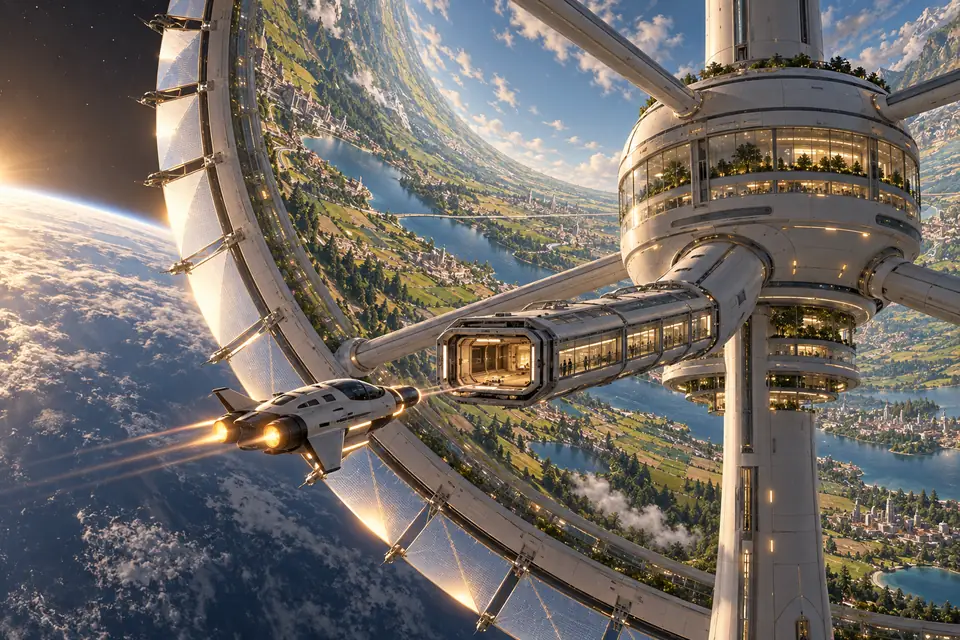
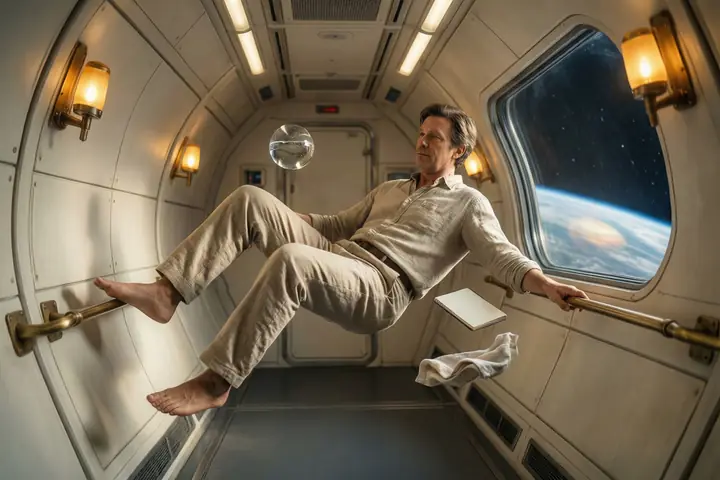 Illustration made with AI image generation; not evidence.