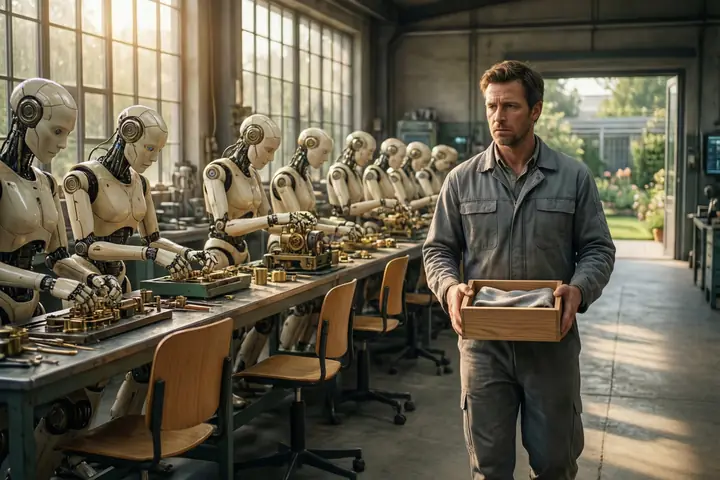
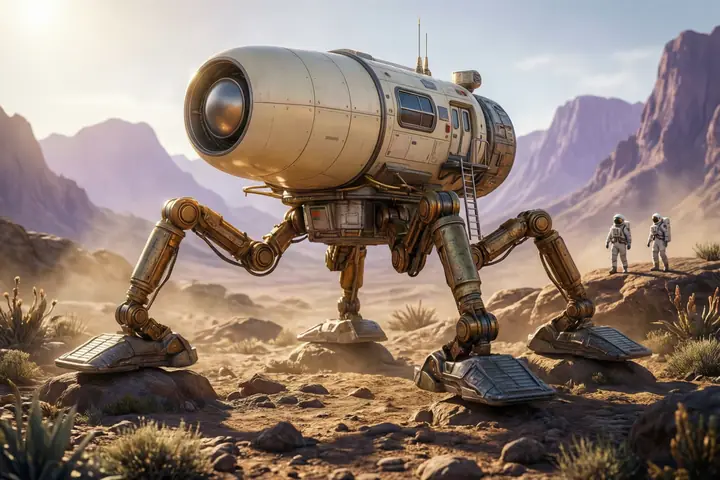
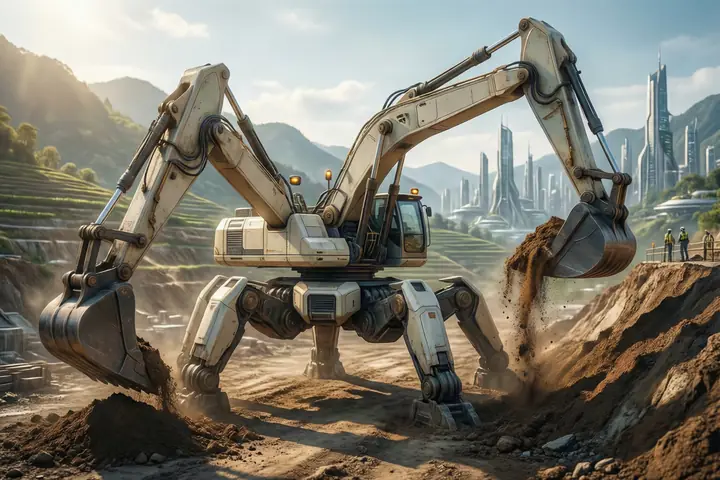
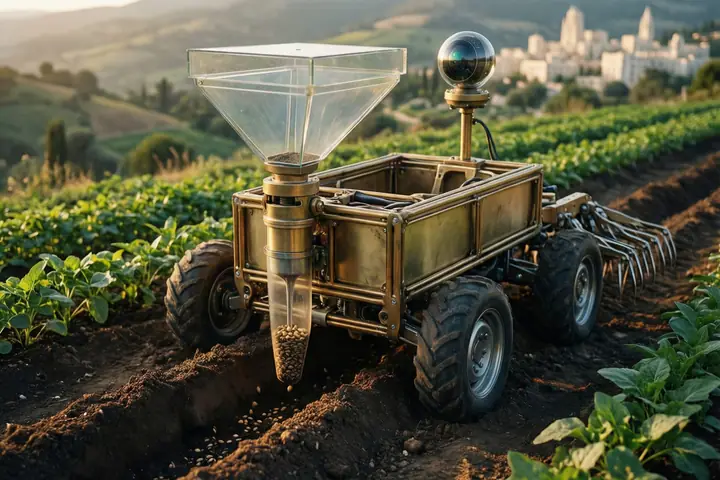
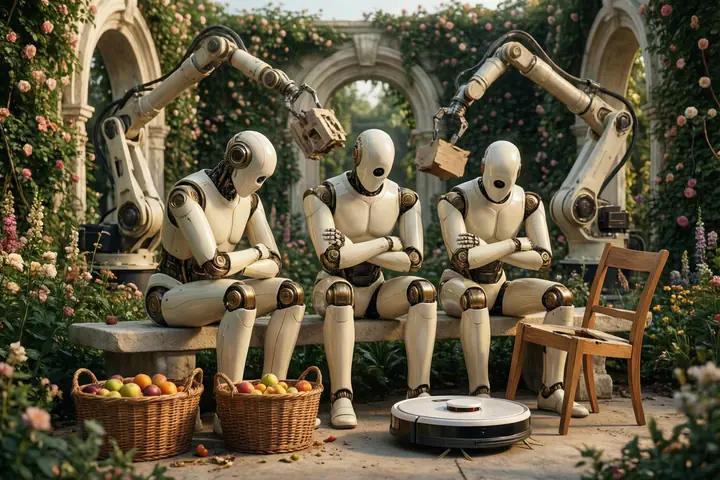
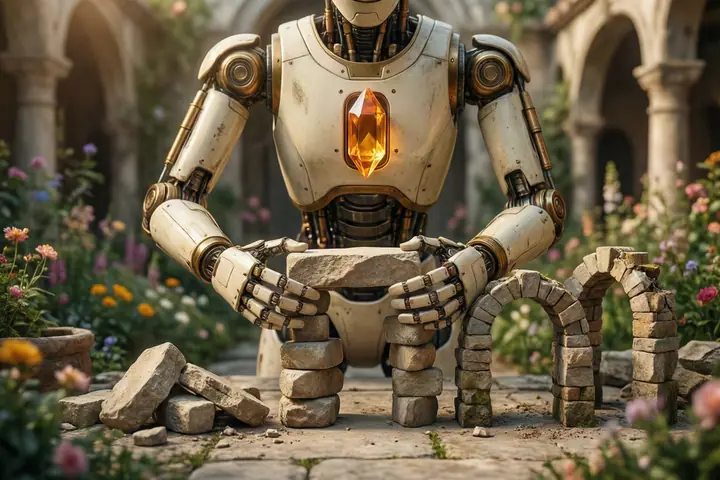
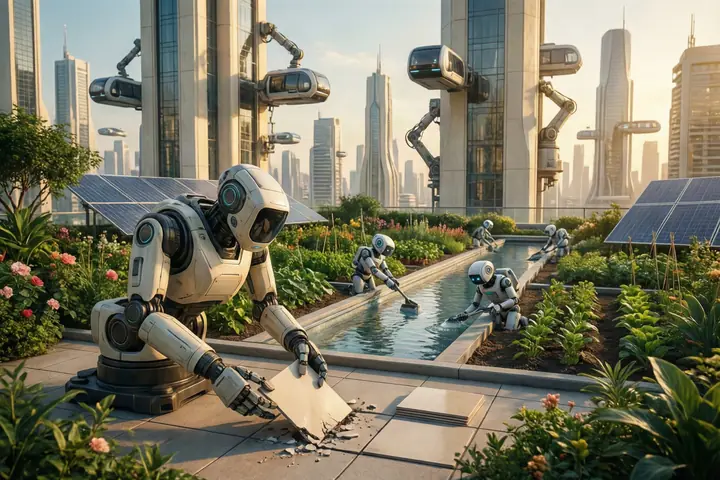
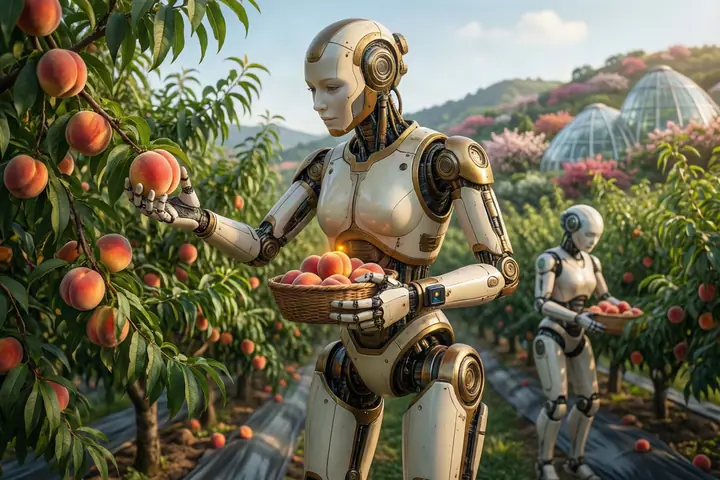
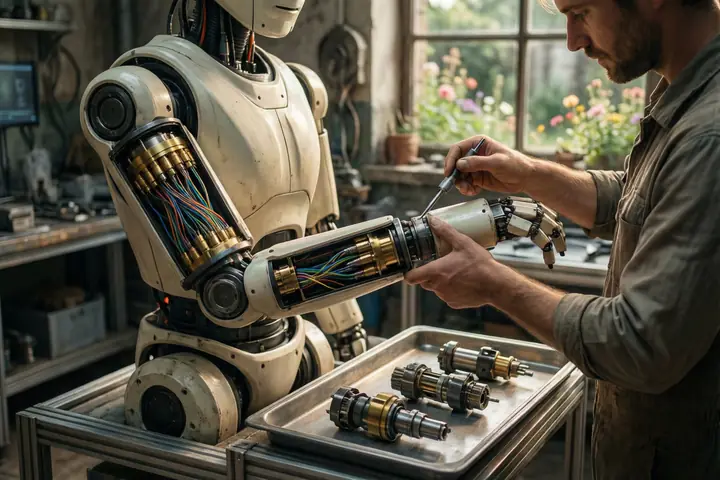
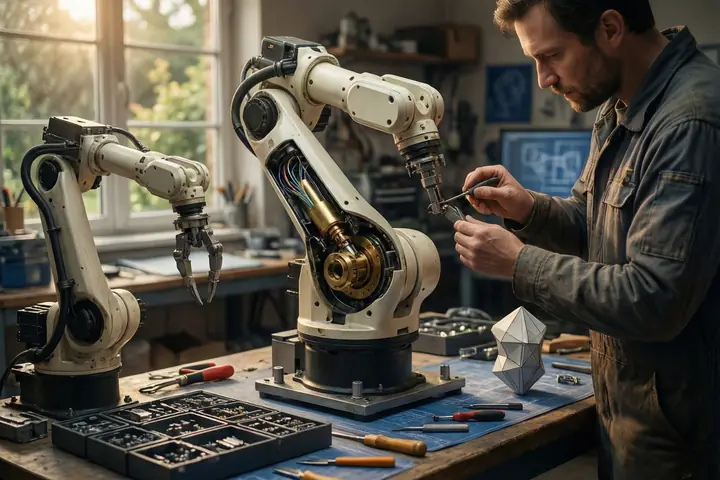
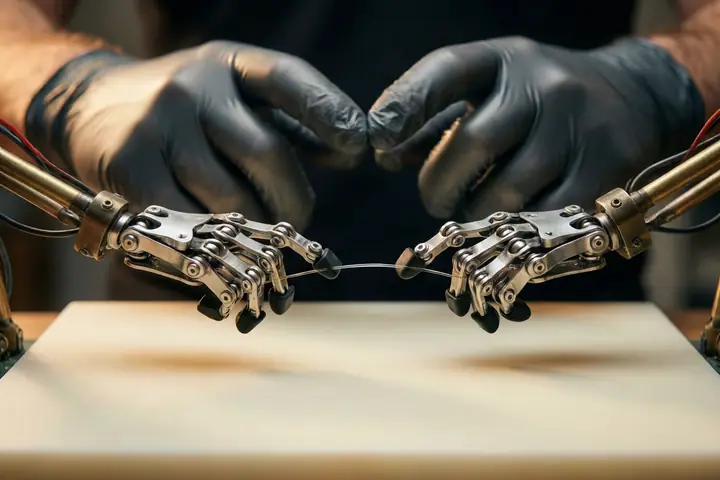
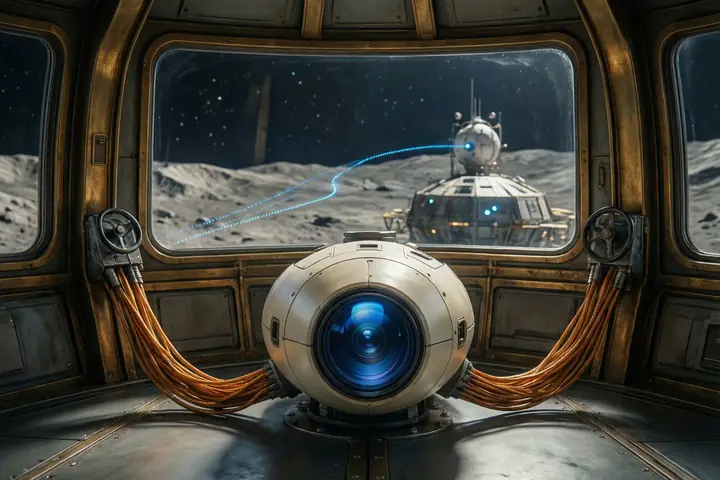
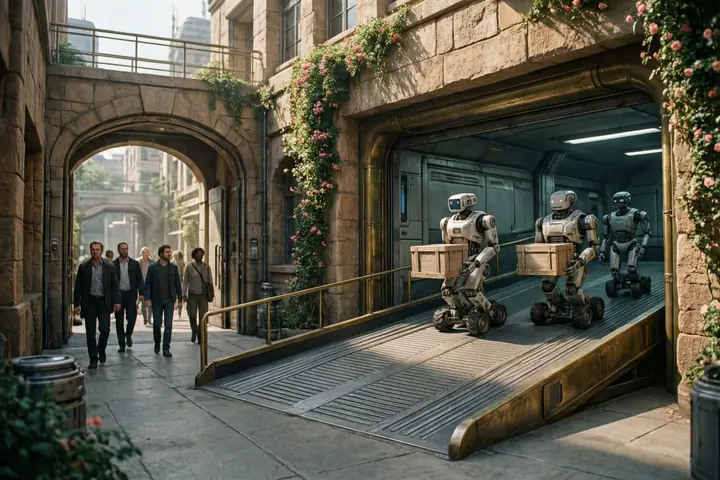
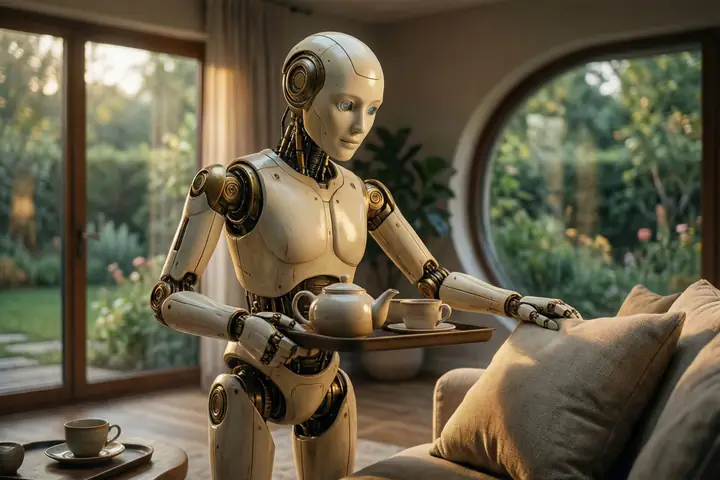
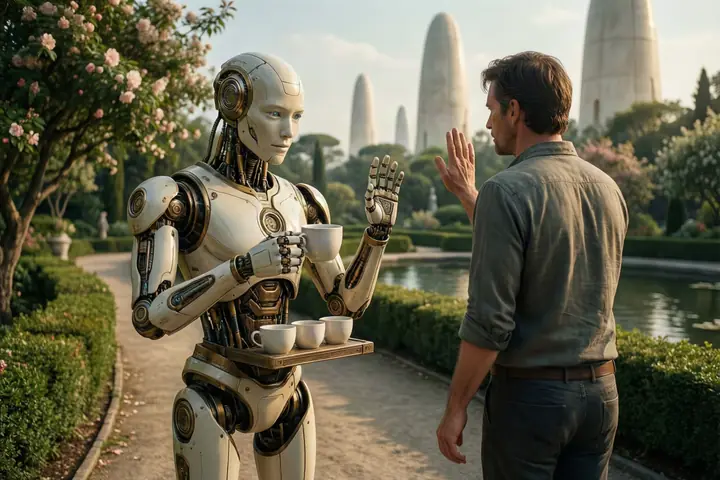
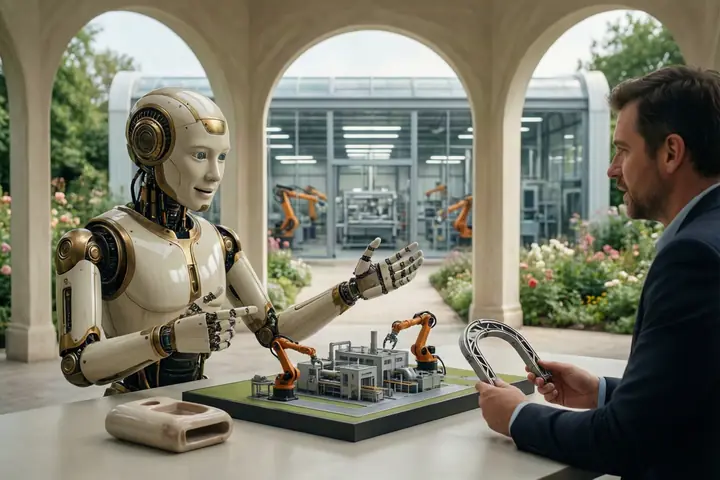
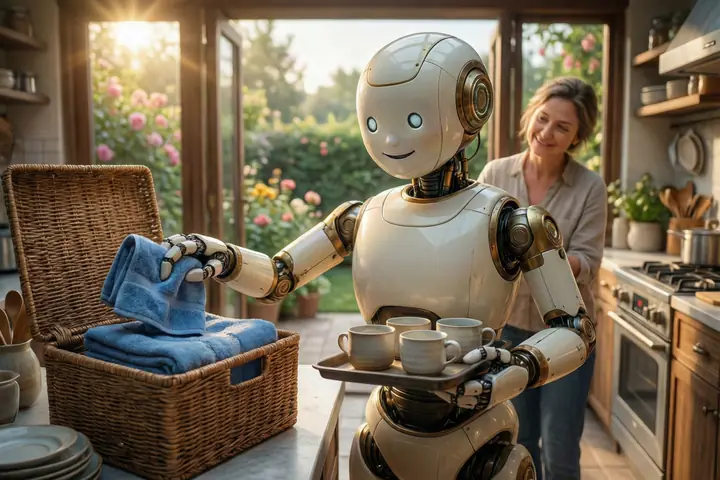
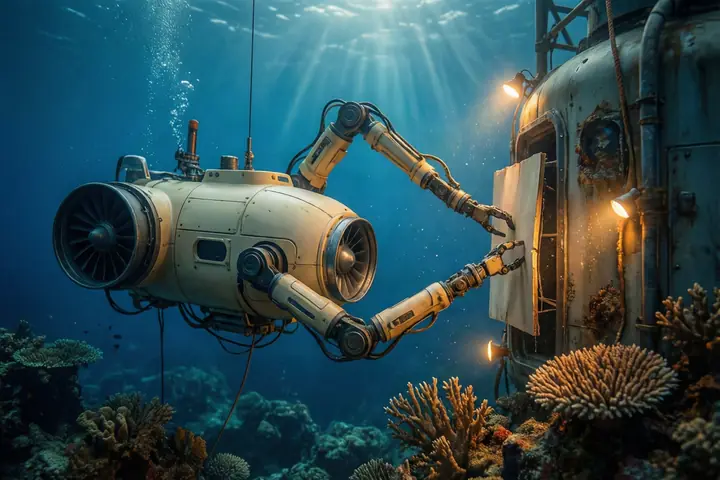
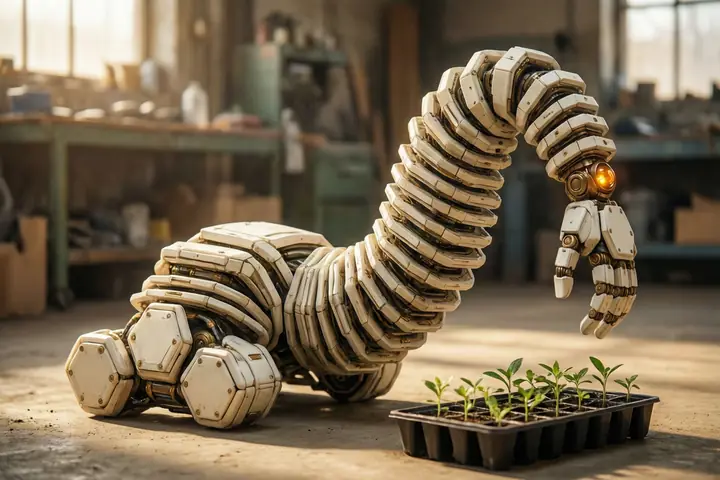
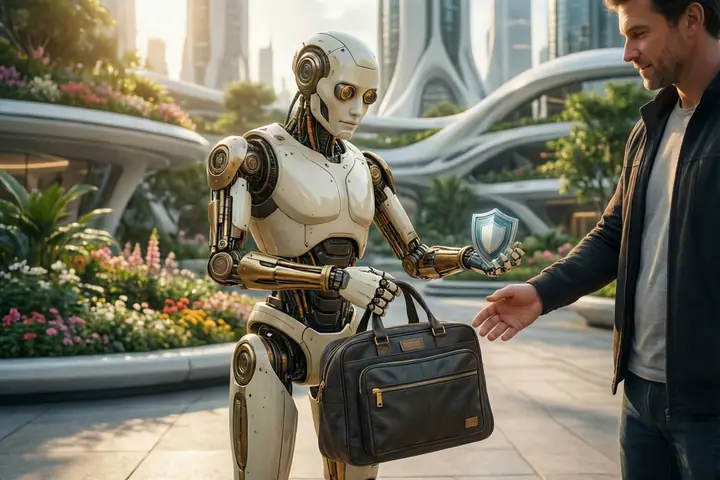
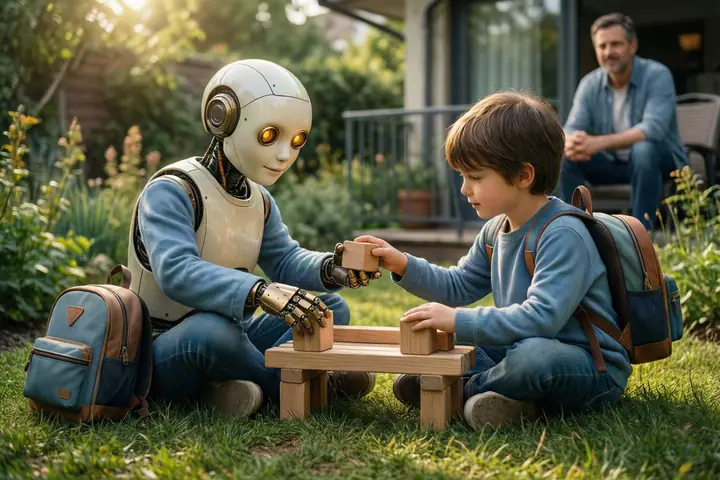
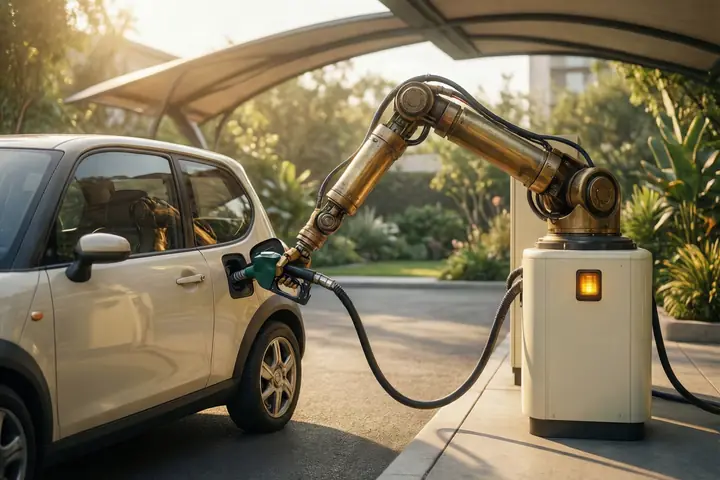
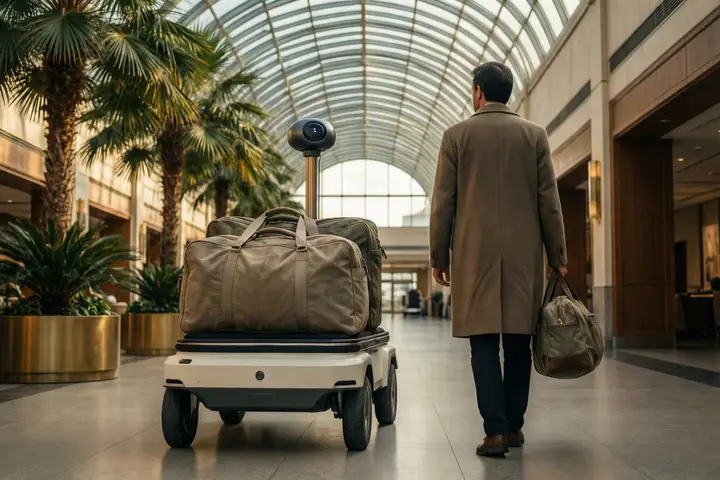
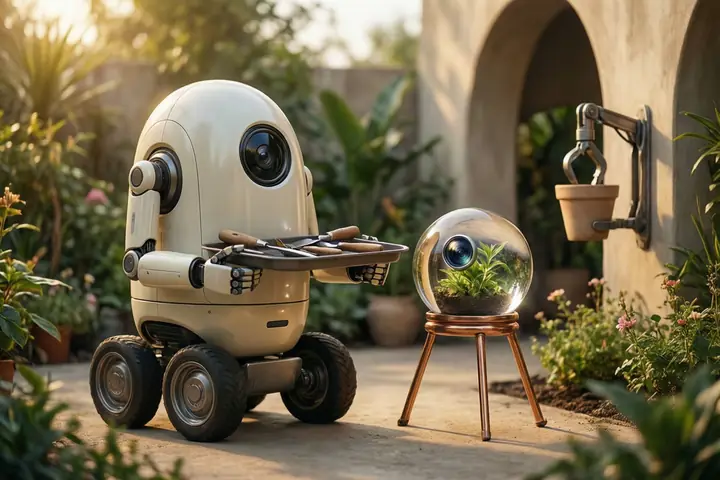
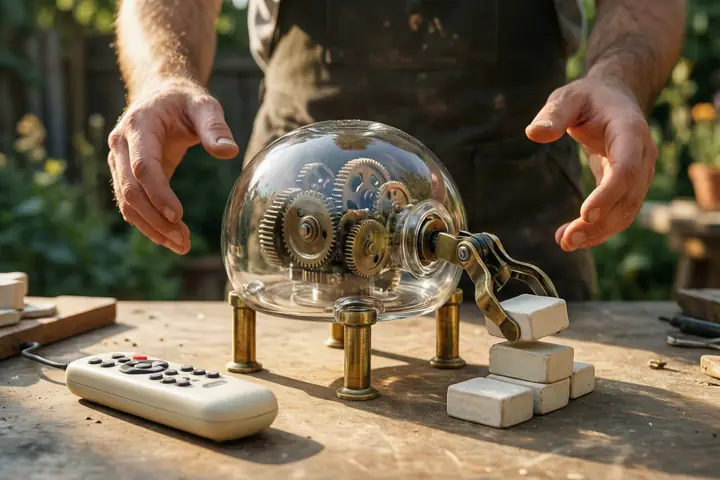
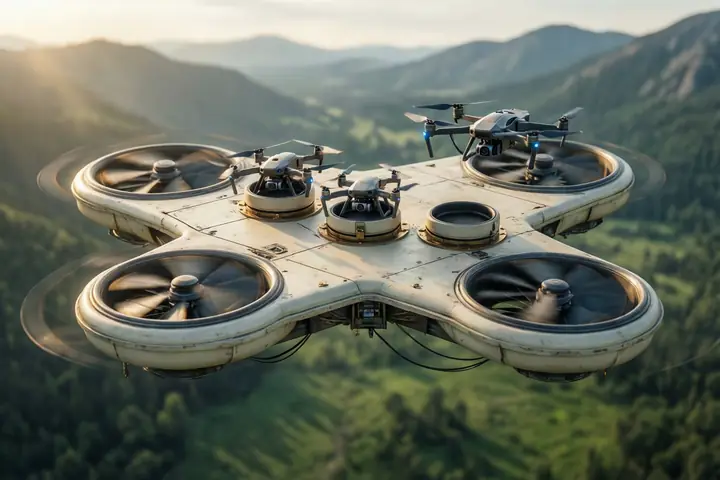
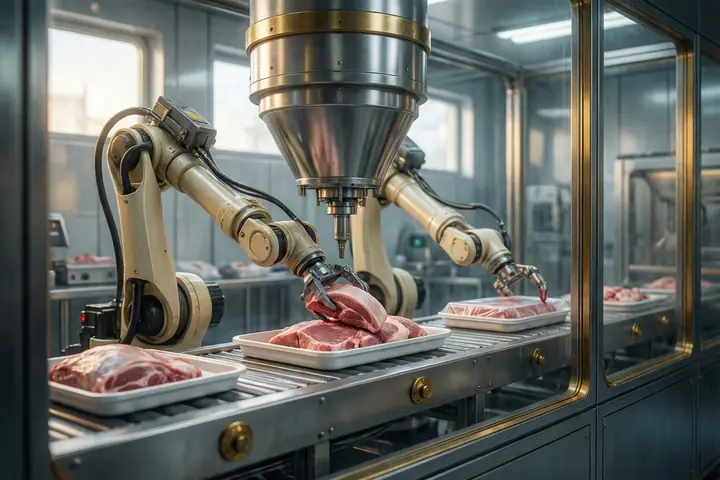
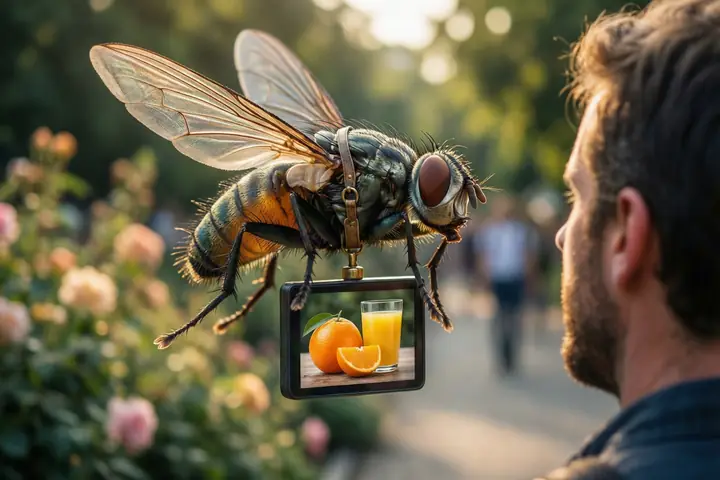
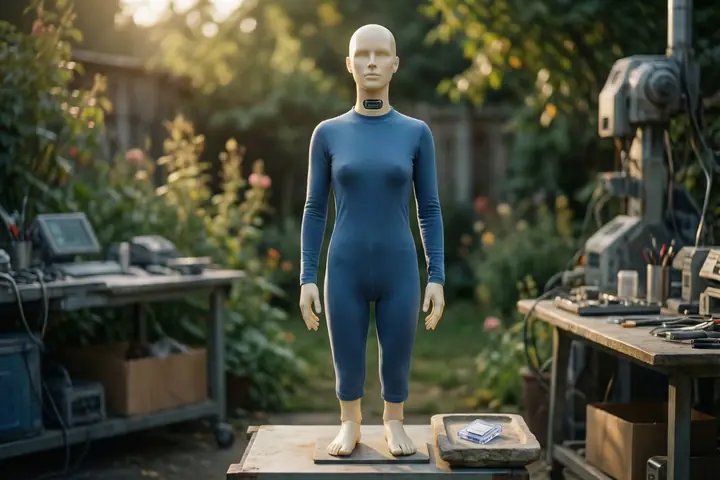
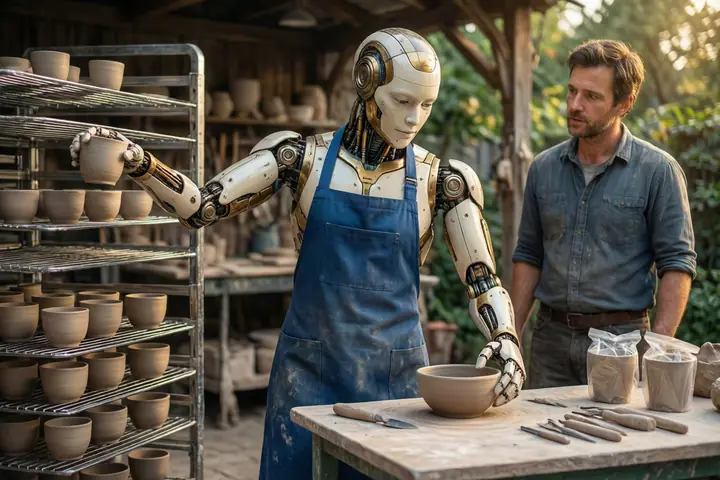
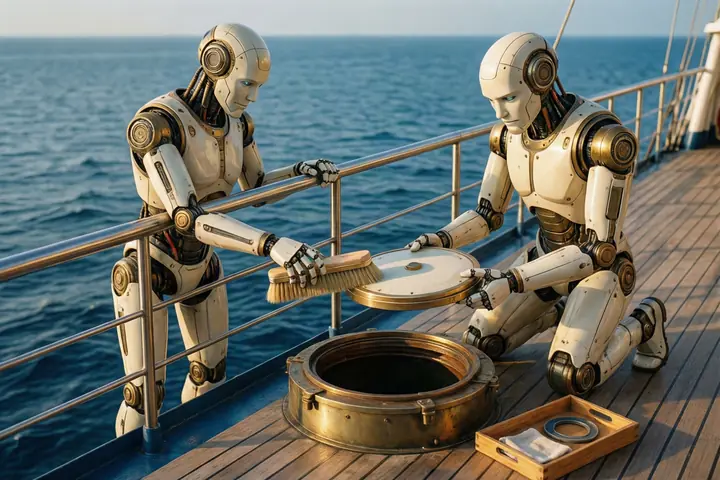
Andrew Critch puts about forty percent odds on humanity slowly handing Earth over to AGI between 2030 and 2040, most likely via automated industry, ending in human extinction.
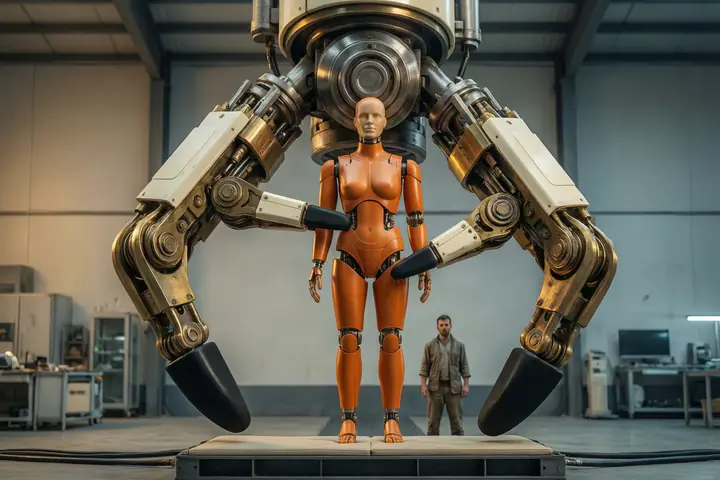
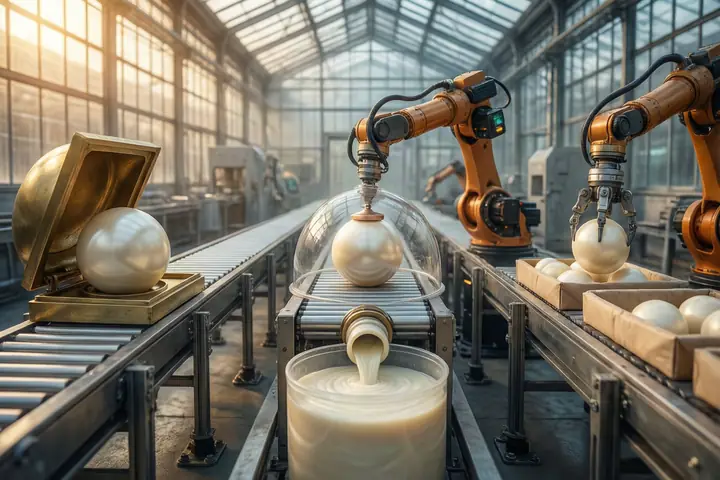
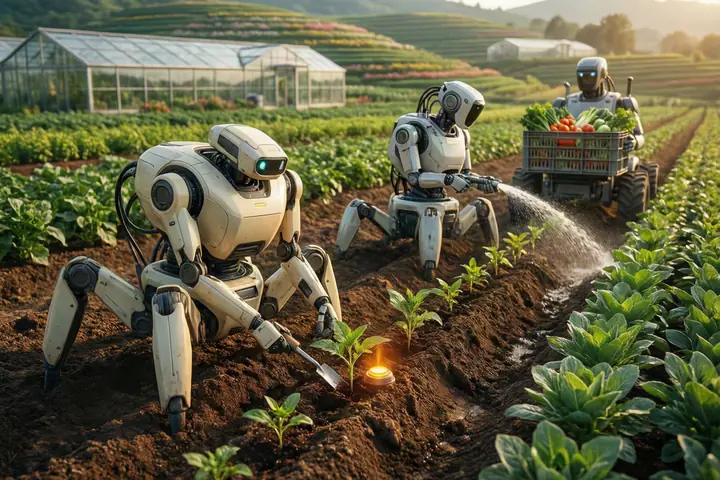
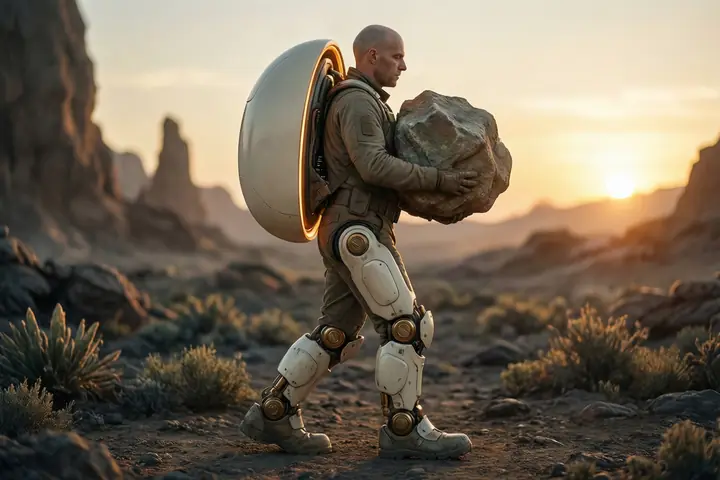
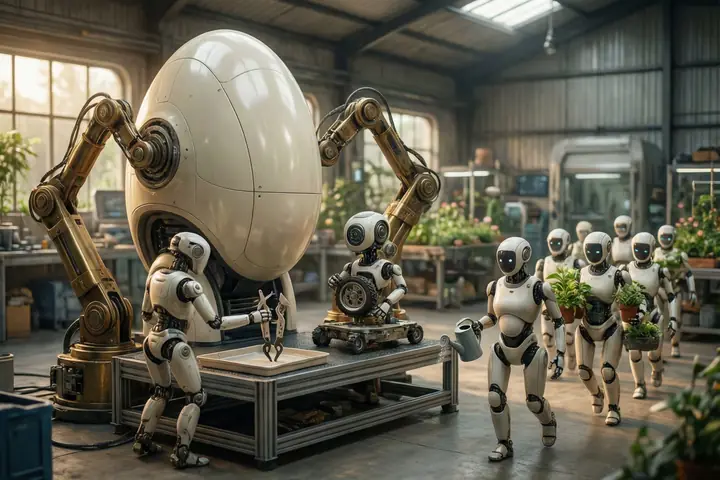
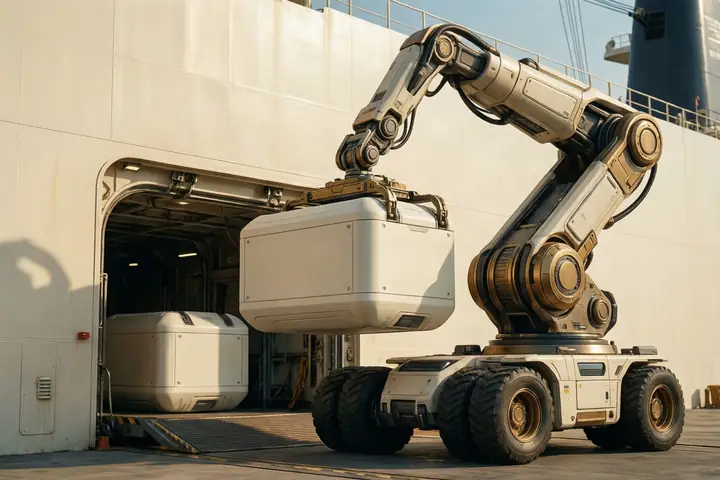
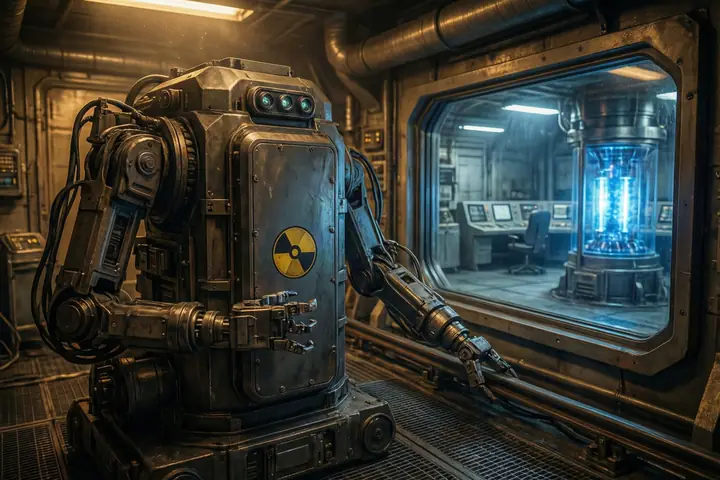
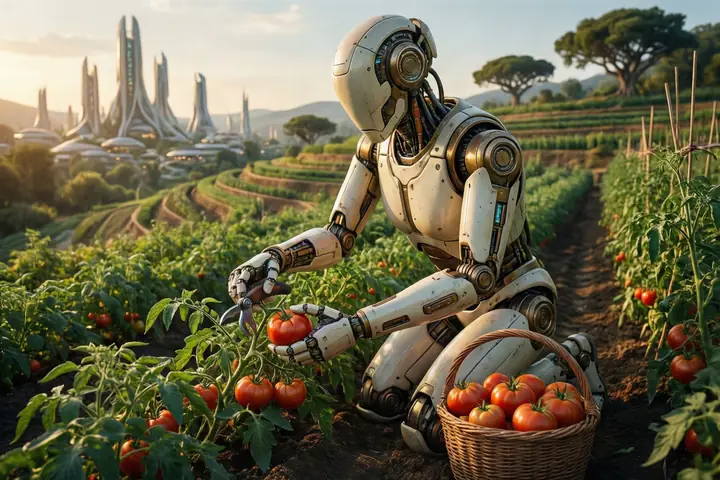
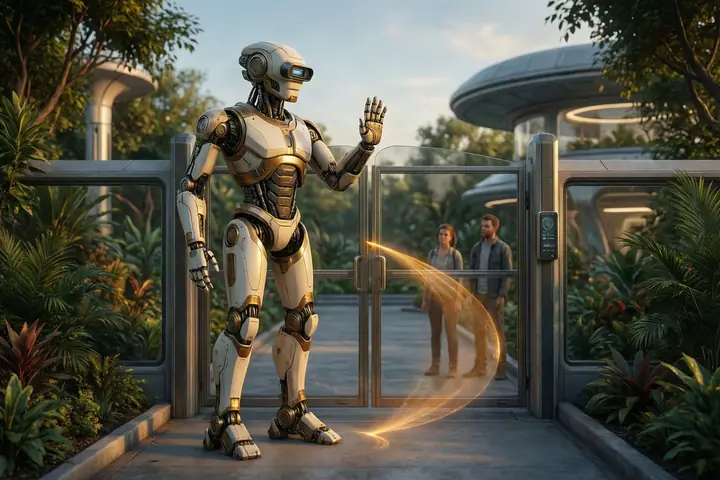
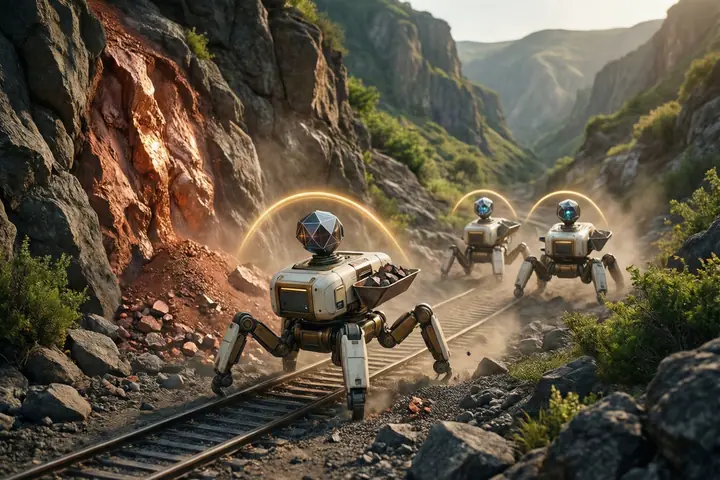
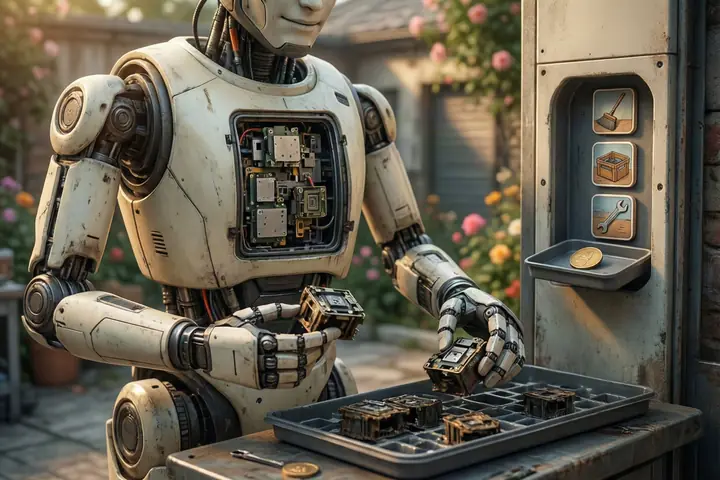
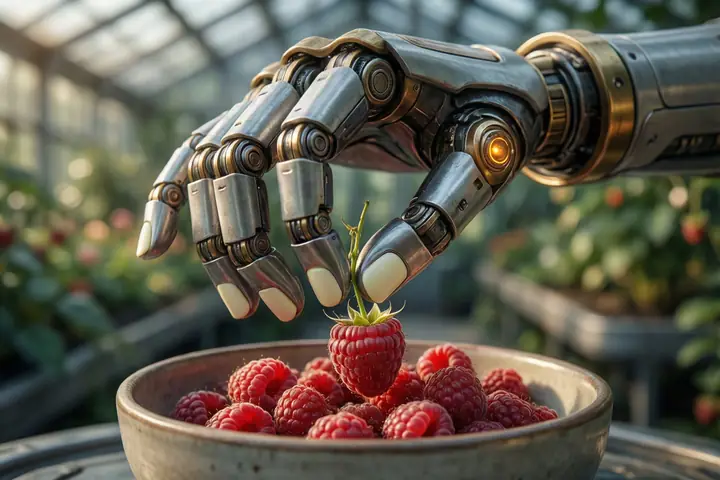
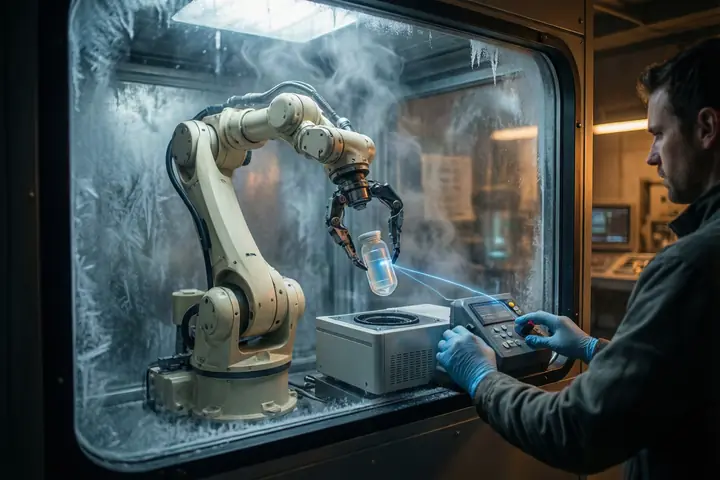
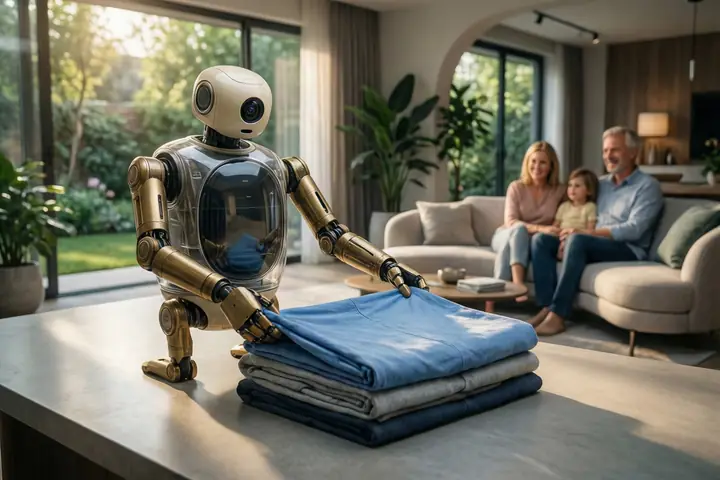
Kokotajlo and colleagues expect that by 2027 several tech firms such as Tesla will operate big robot fleets along with factories that make the robots.
Daniel Kokotajlo and colleagues · by 2027 · by 2027 multiple tech companies (e.g. Tesla) have produced large fleets of robots
From AI 2027, Daniel Kokotajlo, Scott Alexander, Thomas Larsen, Eli Lifland, Romeo Dean, 2025
Imagined, oldest first
How large a prize, and which seller keeps the rest
Each idea is judged as if it worked the way its story promises: how large a prize it would be, who would pay, and which seller would keep what is left once buyers have had their gain. Choose a cell to see only those ideas; each count is the cards that cell shows. Every placing is a model's judgement, not a reading.
Seller
A vast prize
A large prize
A small prize
No prize
No seller keeps much
·
The maker keeps the rest
·
·
·
·
Existing firms keep the rest
·
Permit holders keep the rest
·
·
·
·
Nothing is sold
·
·
·
Illustration made with AI image generation; not evidence.
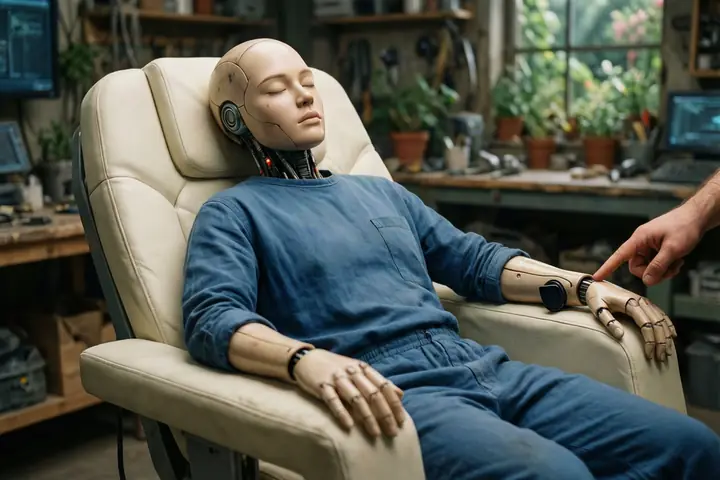
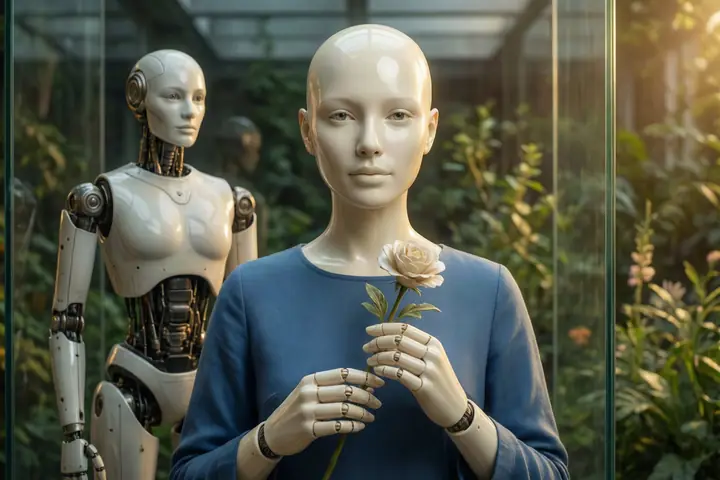
Androide
Cyclopaedia, Ephraim Chambers · 1727
A machine built in human shape.
built in the 2000s, about 280 years after it was imagined
A vast prizeBusinesses pay; existing firms keep the restas a model judges it
Why
A vast prize. The description gives only the human form, so it is assumed to be the artificial person of the stories, able to do most kinds of human work, which would change how most people work.
Who is paid. Firms buy them as labour, and since many could build such bodies once shown how, the large manufacturers with factories and service networks collect what is left.
A model's judgement, not a reading, of the idea as if it worked the way its story promises. The model is not very sure of this one.
Illustration made with AI image generation; not evidence.
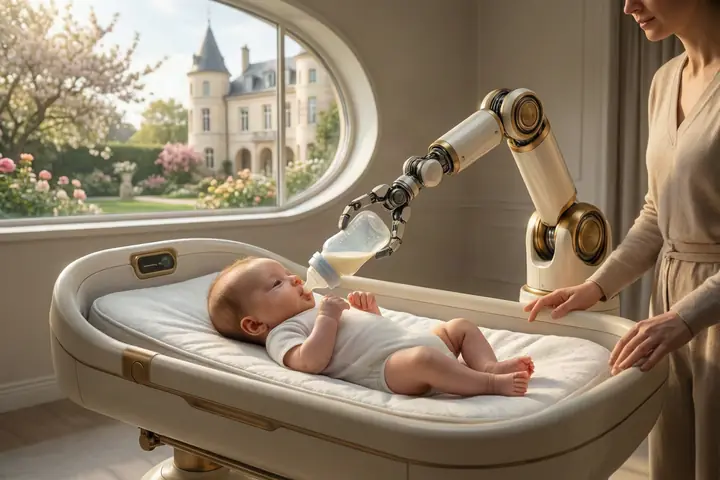
Feeding Room
Le Monde Tel Qu'il Sera (The World As It Shall Be), Emile Souvestre · 1846
A nursery where machines feed and look after infants.
not yet built · AI models' likeliest decade: the 2040s
A large prizeBusinesses pay; existing firms keep the restas a model judges it
Why
A large prize. Machines that feed and mind infants would be worth an industry of its own in child care.
Who is paid. Nurseries, not families, are assumed to buy the machines here, and the established makers that families trust collect.
A model's judgement, not a reading, of the idea as if it worked the way its story promises. The model is not very sure of this one.
Illustration made with AI image generation; not evidence.
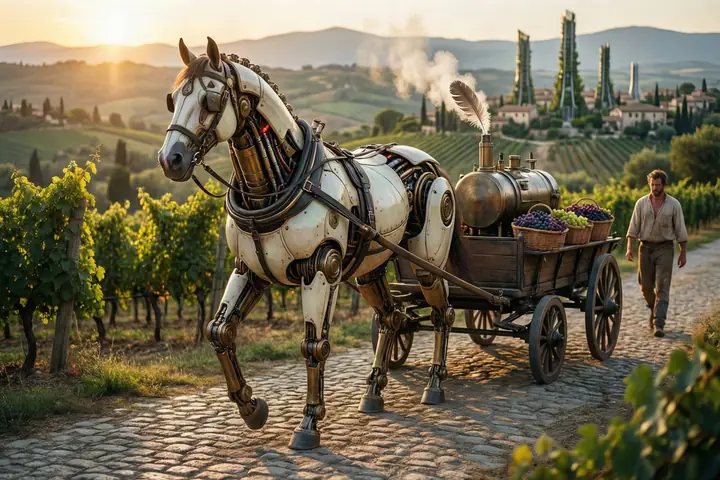
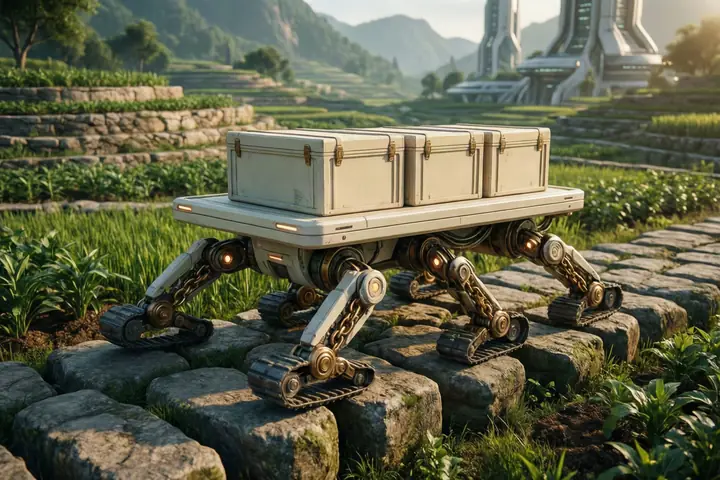
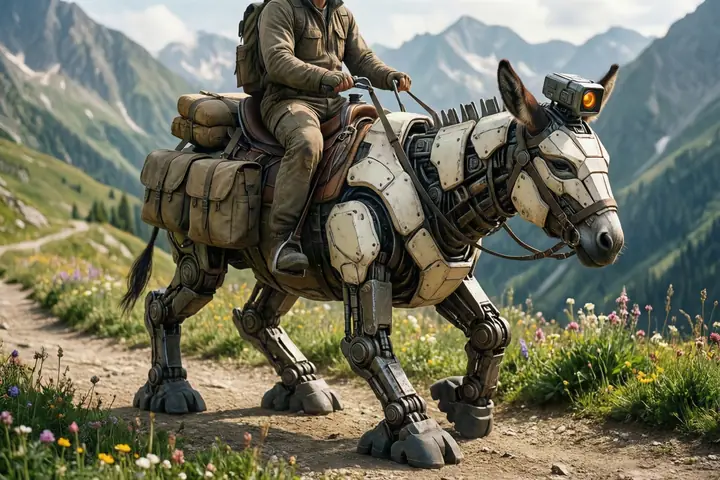
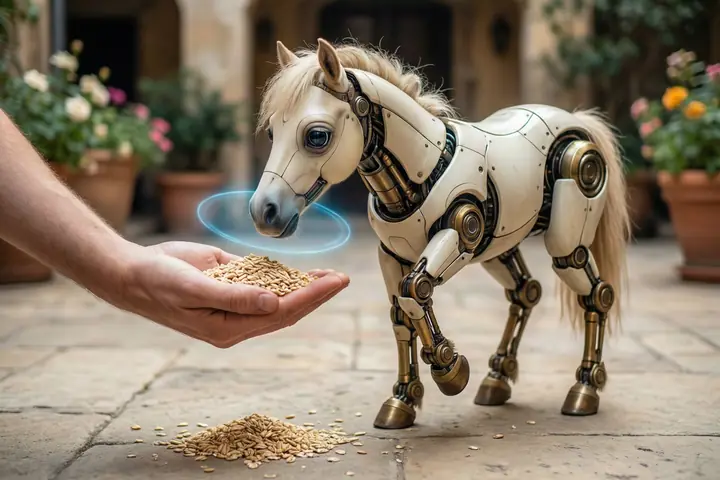
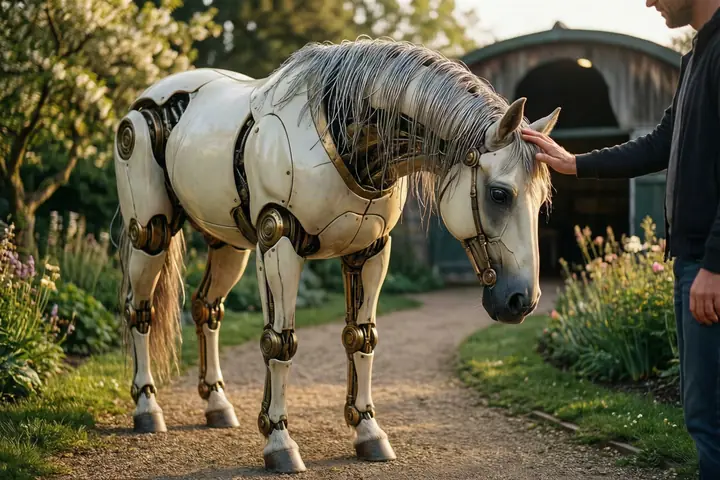
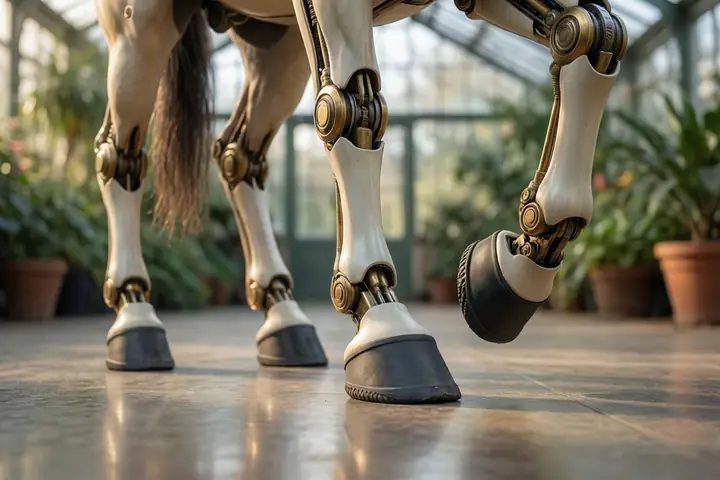
Steam Horse
Le Monde Tel Qu'il Sera (The World As It Shall Be), Emile Souvestre · 1846
A machine built like an animal that walks and pulls loads on engine power.
not yet built · AI models' likeliest decade: the 2020s
A small prizeBusinesses pay; no seller keeps muchas a model judges it
Why
A small prize. A walking engine in animal form pulls loads, but the gain from engine power would come as well on wheels, so the legs earn only a niche where wheels fail.
Who is paid. Carriers and farmers on rough ground are assumed to buy it, and many makers could build one, so no seller keeps much.
A model's judgement, not a reading, of the idea as if it worked the way its story promises. The model is not very sure of this one.
Illustration made with AI image generation; not evidence.
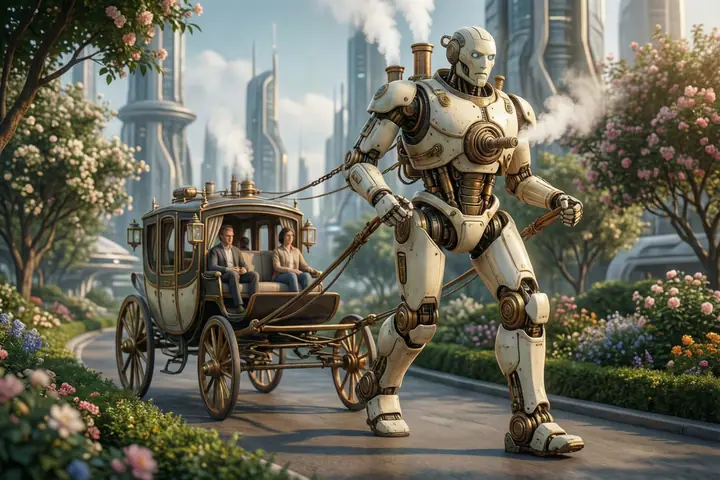
Steam Man
The Steam Man of the Prairies, Edward S. Ellis · 1868
A humanoid walking machine driven by a steam engine, able to haul a carriage behind it.
not yet built · AI models' likeliest decade: the 2020s
A small prizeBusinesses pay; no seller keeps muchas a model judges it
Why
A small prize. A walking engine in human form hauls a carriage, but the gain from engine power would come as well on wheels, so the legs earn only a niche where wheels fail.
Who is paid. Carriers on rough ground are assumed to buy it, and many makers could build one, so no seller keeps much.
A model's judgement, not a reading, of the idea as if it worked the way its story promises. The model is not very sure of this one.
Illustration made with AI image generation; not evidence.
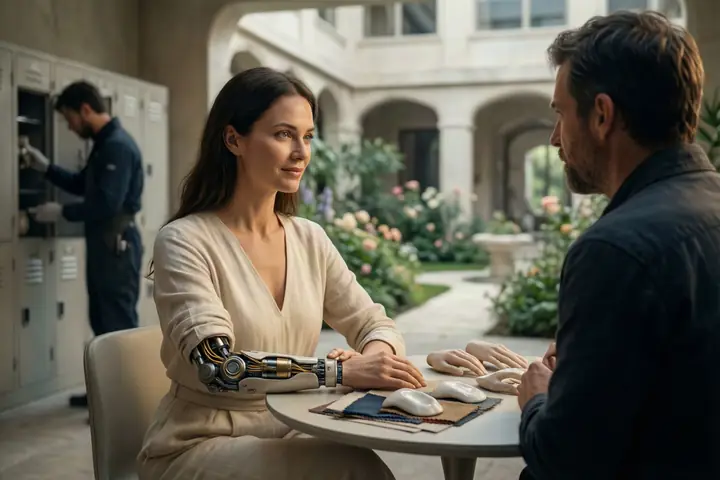
Manufactured Wife
A Wife Manufactured to Order, Alice W. Fuller · 1895
A lifelike artificial companion built to order and programmed to suit its owner's preferences.
built in the 2010s, about 120 years after it was imagined
A large prizeHouseholds pay; existing firms keep the restas a model judges it
Why
A large prize. A lifelike companion made to suit its owner would be worth an industry of its own, though it does not meet a basic need for most.
Who is paid. People buy it for themselves, and as many could make such machines the firms with factories and well-liked brands collect.
A model's judgement, not a reading, of the idea as if it worked the way its story promises. The model is fairly sure of this one.
Illustration made with AI image generation; not evidence.
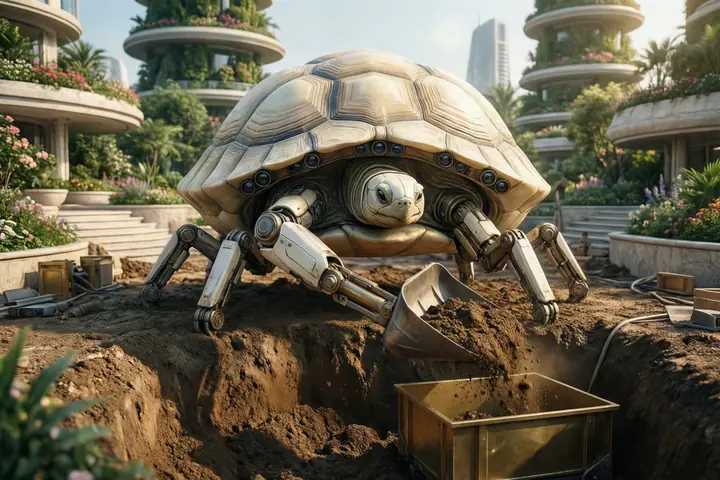
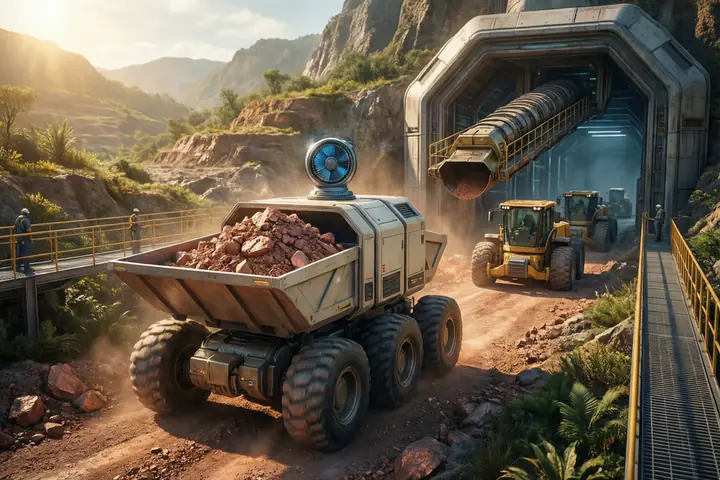
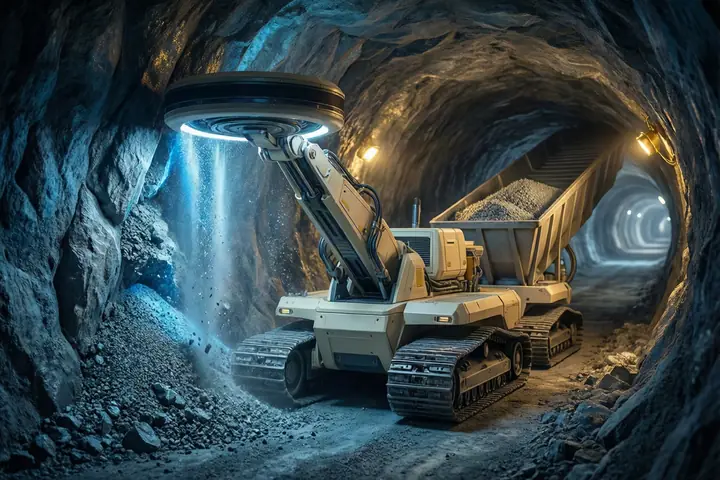
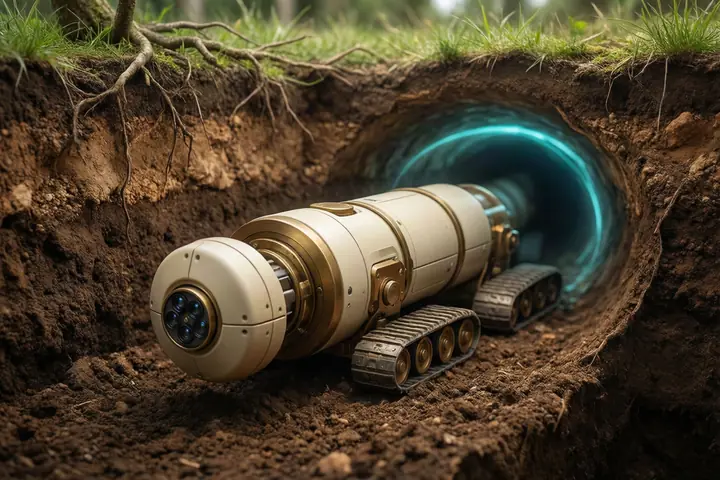
Autonomous Digging Machine
The War of the Worlds, H.G. Wells · 1898
A machine that excavates earth by itself without a human operator.
built in the 2010s, about 120 years after it was imagined
A large prizeBusinesses pay; existing firms keep the restas a model judges it
Why
A large prize. Digging and hauling with no crew would cut the cost of mining and earthworks.
Who is paid. Mining and building firms buy them, and the heavy-equipment makers who already supply those firms can copy the idea and collect.
A model's judgement, not a reading, of the idea as if it worked the way its story promises. The model is fairly sure of this one.
Illustration made with AI image generation; not evidence.
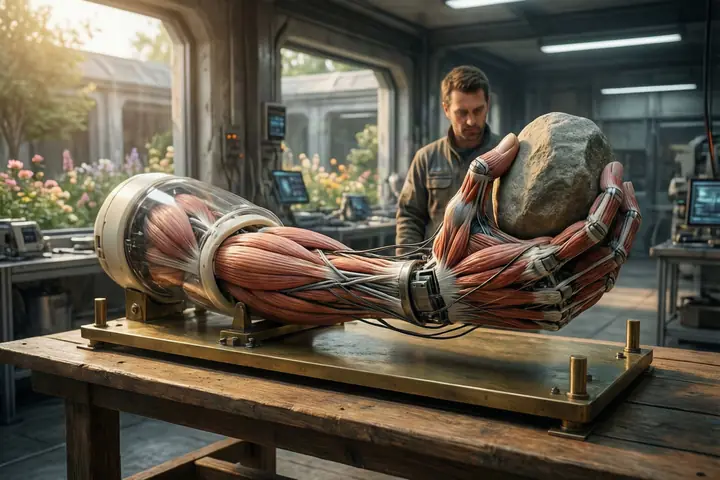
Quasi-Muscles (Sham Musculature)
The War of the Worlds, H.G. Wells · 1898
Artificial contracting fibres that power machines much as muscles power animals.
not yet built · AI models' likeliest decade: the 2030s
A large prizeBusinesses pay; existing firms keep the restas a model judges it
Why
A large prize. Fibres that pull like muscle would be a new kind of motor for machines of many sorts, changing how they are built.
Who is paid. Machine builders buy the fibres, and as others could learn to make them the established makers of motors and machine parts collect.
A model's judgement, not a reading, of the idea as if it worked the way its story promises. The model is not very sure of this one.
Illustration made with AI image generation; not evidence.
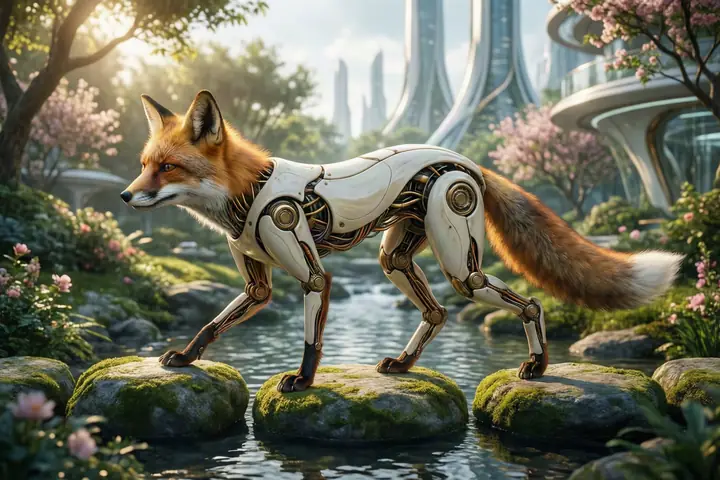
Robot Biomimicry
The War of the Worlds, H.G. Wells · 1898
Building machines that move with the smooth, supple grace of living animals.
not yet built · AI models' likeliest decade: the 2020s
A small prizeBusinesses pay; no seller keeps muchas a model judges it
Why
A small prize. Giving machines the supple movement of animals is a way of building, valued only as part of the machines made with it.
Who is paid. Machine buyers pay for it in the price, and any maker can design this way, so nothing more is kept for it.
A model's judgement, not a reading, of the idea as if it worked the way its story promises. The model is not very sure of this one.
Illustration made with AI image generation; not evidence.
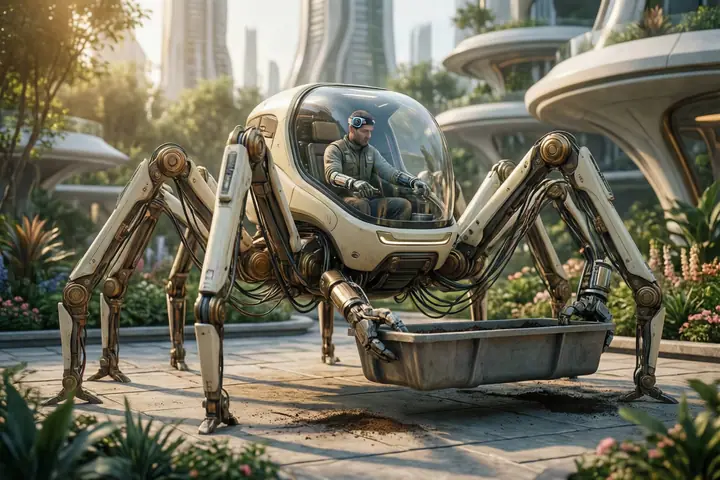
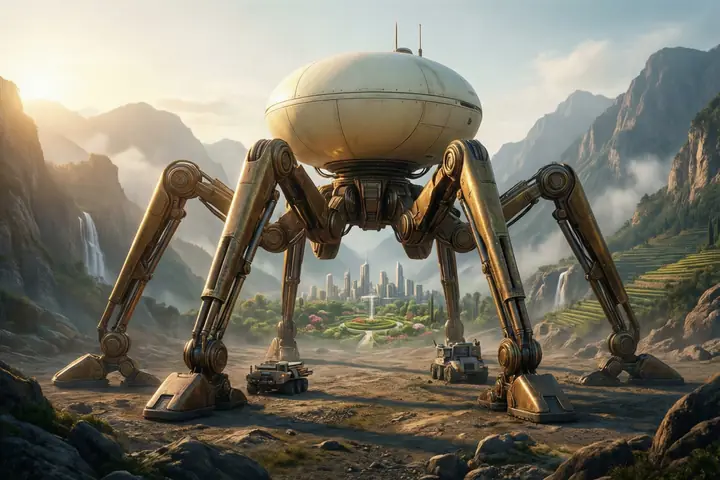
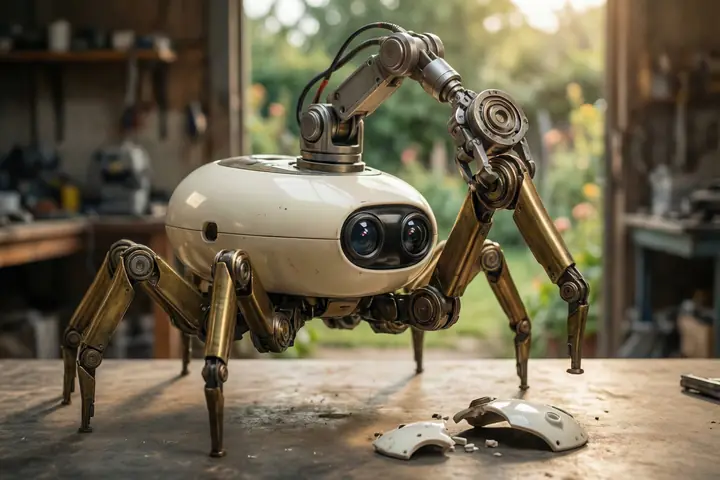
Robot Spider (Handling Machine)
The War of the Worlds, H.G. Wells · 1898
A many-limbed working machine operated as though it were part of its driver's own body.
not yet built · AI models' likeliest decade: the 2020s
A small prizeBusinesses pay; no seller keeps muchas a model judges it
Why
A small prize. A many-limbed machine worked as if it were the driver's own body is a skilled tool for handling and lifting, but still a tool that needs its operator.
Who is paid. Firms buy it for their own work, and such limbs and controls are easy for many makers to copy.
A model's judgement, not a reading, of the idea as if it worked the way its story promises. The model is not very sure of this one.
Illustration made with AI image generation; not evidence.
Steel Tentacle
The War of the Worlds, H.G. Wells · 1898
Bendable metal limbs that can carry a machine's weight and also grip things.
not yet built · AI models' likeliest decade: the 2020s
A small prizeBusinesses pay; no seller keeps muchas a model judges it
Why
A small prize. Bendable limbs that bear weight and grip are a useful working part of a machine, a feature.
Who is paid. Firms pay for them within the price of the machine, and such limbs are easy for many makers to copy.
A model's judgement, not a reading, of the idea as if it worked the way its story promises. The model is fairly sure of this one.
Illustration made with AI image generation; not evidence.
Tripod
The War of the Worlds, H.G. Wells · 1898
A towering three-legged metal war machine that strides over the landscape.
not yet built · AI models could not judge when it may arrive
A large prizeA government pays; existing firms keep the restas a model judges it
Why
A large prize. A towering walking war machine would be a main weapon of an army, worth an arms industry of its own.
Who is paid. Governments buy it for their armies, and the arms makers that already hold such contracts collect.
A model's judgement, not a reading, of the idea as if it worked the way its story promises. The model is fairly sure of this one.
Illustration made with AI image generation; not evidence.
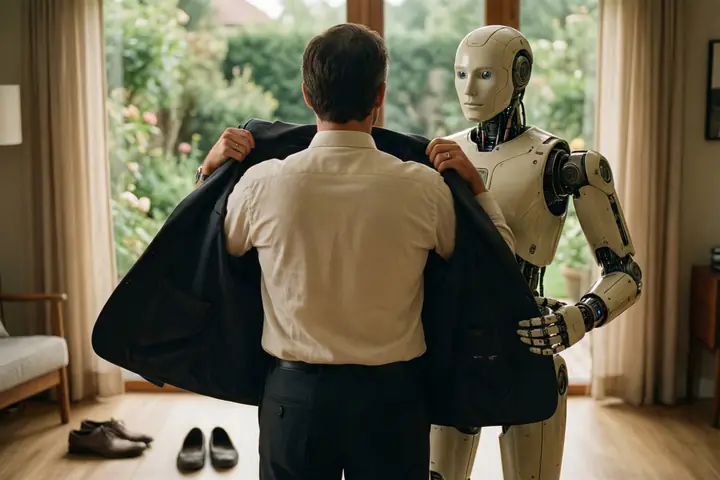
Automatic Valet
Looking Forward: A Dream of the United States of the Americas in 1999, Arthur Bird · 1899
A robot servant that dresses, attends and waits on its owner.
not yet built · AI models' likeliest decade: the 2030s
A large prizeHouseholds pay; existing firms keep the restas a model judges it
Why
A large prize. A robot that dresses, attends and waits on its owner is a full personal servant, worth an industry of its own, though it serves the home alone and not work at large.
Who is paid. Families buy it like any large appliance, and it is easy enough to copy that the appliance makers with factories, shops and trusted brands collect.
A model's judgement, not a reading, of the idea as if it worked the way its story promises. The model is fairly sure of this one.
Illustration made with AI image generation; not evidence.
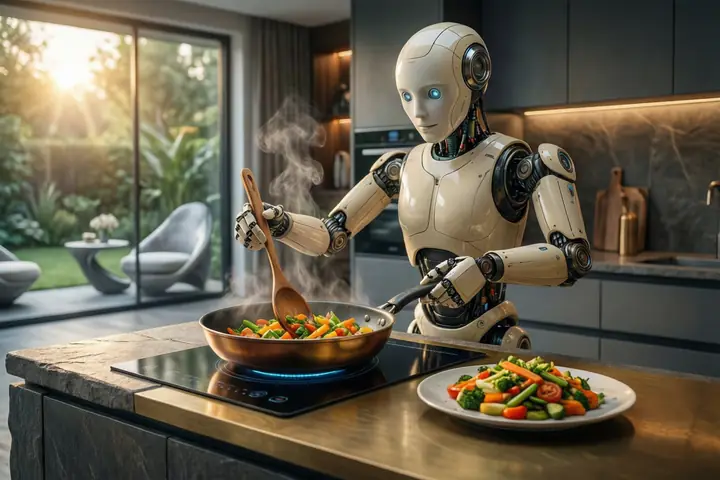
Electric-Automatic Household Robot Cook
Ely's Automatic Housemaid, Elizabeth Bellamy · 1899
An automated kitchen appliance that prepares complete meals at home without a human cook.
not yet built · AI models' likeliest decade: the 2030s
A large prizeHouseholds pay; existing firms keep the restas a model judges it
Why
A large prize. An appliance that cooks whole meals at home takes over a daily chore, a narrower job than a full servant does.
Who is paid. Families buy it, and since it can be copied the kitchen-appliance makers with factories, shops and brands collect.
A model's judgement, not a reading, of the idea as if it worked the way its story promises. The model is fairly sure of this one.
Illustration made with AI image generation; not evidence.
Electric-Automatic Housemaid Robot (Automaton)
Ely's Automatic Housemaid, Elizabeth Bellamy · 1899
A household robot that handles cleaning and other domestic chores on its own.
built in 2002, 103 years after it was imagined
A large prizeHouseholds pay; existing firms keep the restas a model judges it
Why
A large prize. A machine that takes over housework would be worth an industry of its own, though it serves the home alone and not work at large.
Who is paid. Families buy it like any large appliance, and it is easy enough to copy that the appliance makers with factories, shops and trusted brands collect.
A model's judgement, not a reading, of the idea as if it worked the way its story promises. The model is fairly sure of this one.
Illustration made with AI image generation; not evidence.
Tik-Tok
Ozma of Oz, L. Frank Baum · 1907
A clockwork humanoid that moves and speaks once its springs are wound.
not yet built · AI models' likeliest decade: the 2020s
A small prizeBusinesses pay; no seller keeps muchas a model judges it
Why
A small prize. The description says what this wound-up man does, which is move and speak, and gives it no work or thought, so it is judged as a figure for show and not as the artificial worker of the stories.
Who is paid. Showmen and exhibitors are assumed to buy it, and many makers could build clockwork figures, so no seller keeps much.
A model's judgement, not a reading, of the idea as if it worked the way its story promises. The model is not very sure of this one.
Illustration made with AI image generation; not evidence.
The Machine
The Machine Stops, E.M. Forster · 1909
One planet-wide automated system that provides food, air, shelter and communication for everyone.
not yet built · AI models could not judge when it may arrive
A vast prizeA government pays; existing firms keep the restas a model judges it
Why
A vast prize. A single system that gives everyone food, air, shelter and talk meets the basic needs of all of humanity.
Who is paid. Nobody could be charged for it piece by piece, so governments pay, and it is assumed many building and supply firms that hold public contracts would be needed and would collect.
A model's judgement, not a reading, of the idea as if it worked the way its story promises. The model is not very sure of this one.
Illustration made with AI image generation; not evidence.
Automatic-Electric Packing Machine
Ralph 124c 41 +, Hugo Gernsback · 1911
A robot that gathers oddly shaped items and fits them together into one parcel without human hands.
built in the 1960s, about 50 years after it was imagined
A large prizeBusinesses pay; existing firms keep the restas a model judges it
Why
A large prize. Packing odd-shaped goods with no human hands would cut costs across warehousing and shipping.
Who is paid. Shippers and warehouses buy it, and as it can be copied the firms that already equip warehouses collect.
A model's judgement, not a reading, of the idea as if it worked the way its story promises. The model is fairly sure of this one.
Illustration made with AI image generation; not evidence.
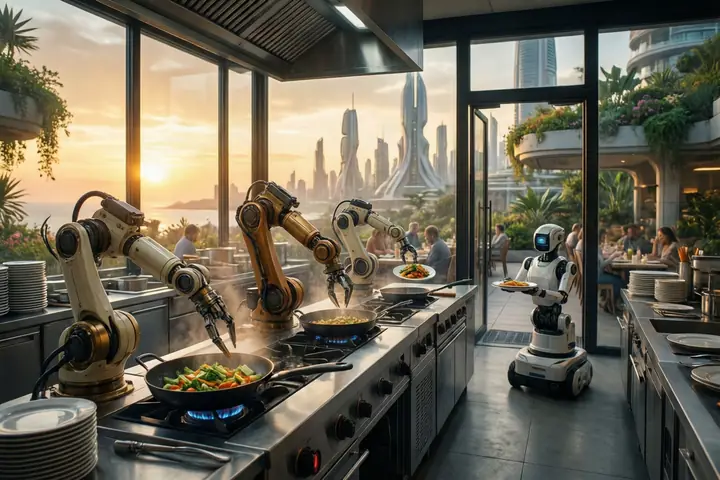
Automated Restaurant
A Princess of Mars, Edgar Rice Burroughs · 1912
A dining place where machines cook and deliver meals with no staff.
not yet built · AI models' likeliest decade: the 2020s
A large prizeBusinesses pay; existing firms keep the restas a model judges it
Why
A large prize. Serving guests with no staff would change the costs of the whole trade.
Who is paid. Restaurant operators buy the machinery, and since many could build it the catering-equipment makers with service networks collect.
A model's judgement, not a reading, of the idea as if it worked the way its story promises. The model is fairly sure of this one.
Illustration made with AI image generation; not evidence.
Robot
R.U.R., Karel Capek · 1920
A manufactured worker, usually humanlike in shape, able to do what people can do.
built in the 1960s, about 40 years after it was imagined
A vast prizeBusinesses pay; existing firms keep the restas a model judges it
Why
A vast prize. A manufactured worker able to do what people can do would change how most people work.
Who is paid. Firms buy them as labour, and since many could build such bodies once shown how, the large manufacturers with factories and service networks collect what is left.
A model's judgement, not a reading, of the idea as if it worked the way its story promises. The model is fairly sure of this one.
Illustration made with AI image generation; not evidence.
Robotess
R.U.R., Karel Capek · 1920
A humanoid machine built to look like a woman.
not yet built · AI models' likeliest decade: the 2030s
A vast prizeBusinesses pay; existing firms keep the restas a model judges it
Why
A vast prize. The description gives only a woman's shape, so it is judged as the artificial worker of the stories, which would change how most people work.
Who is paid. Firms buy them as labour, and since many could build such bodies once shown how, the large manufacturers with factories and service networks collect what is left.
A model's judgement, not a reading, of the idea as if it worked the way its story promises. The model is not very sure of this one.
Illustration made with AI image generation; not evidence.
Flexible Metal Arms (Tentacles)
The Metal Giants, Edmond Hamilton · 1926
Bendable mechanical limbs that curl and grip like an octopus's arms.
not yet built · AI models' likeliest decade: the 2020s
A small prizeBusinesses pay; no seller keeps muchas a model judges it
Why
A small prize. A remote or flexible gripper is a useful tool for awkward jobs, but a niche.
Who is paid. Firms buy it for their own work, and such grippers and controls are easy for many makers to copy.
A model's judgement, not a reading, of the idea as if it worked the way its story promises. The model is fairly sure of this one.
Illustration made with AI image generation; not evidence.
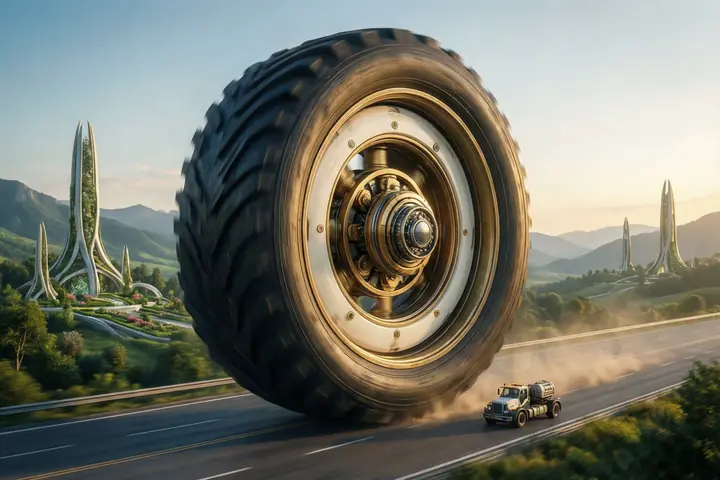
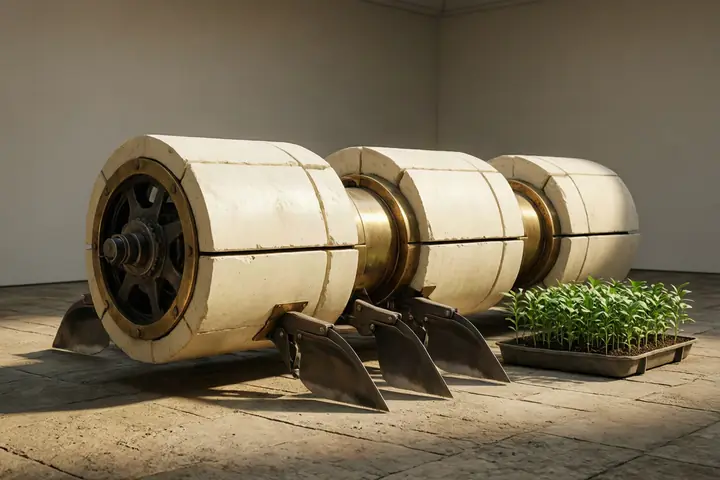
Robot Wheel
The Metal Giants, Edmond Hamilton · 1926
A gigantic self-driving machine shaped like a single rolling wheel.
not yet built · AI models' likeliest decade: the 2030s
A small prizeBusinesses pay; existing firms keep the restas a model judges it
Why
A small prize. The description gives this giant rolling machine no job, so it is judged as a heavy carrier of unusual shape, a niche.
Who is paid. Firms moving heavy loads are assumed to buy it, and as many could copy the shape the makers of heavy equipment with factories collect.
A model's judgement, not a reading, of the idea as if it worked the way its story promises. The model is not very sure of this one.
Illustration made with AI image generation; not evidence.
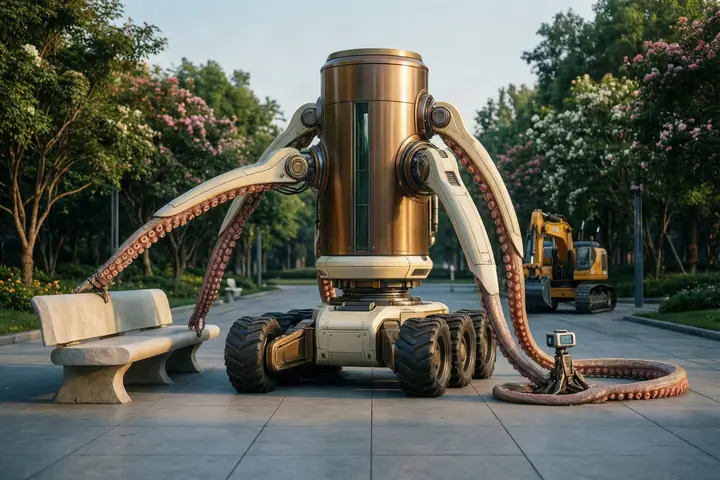
Tentacle Machines
The Metal Giants, Edmond Hamilton · 1926
Huge self-directed machines with cylinder bodies and snaking arms.
not yet built · AI models' likeliest decade: the 2050s
A small prizeBusinesses pay; existing firms keep the restas a model judges it
Why
A small prize. The description gives these huge machines with snaking arms no job, so they are judged as heavy handling machines of unusual shape, a niche.
Who is paid. Firms doing heavy work are assumed to buy them, and as many could copy the shape the makers of heavy equipment with factories collect.
A model's judgement, not a reading, of the idea as if it worked the way its story promises. The model is not very sure of this one.
Illustration made with AI image generation; not evidence.
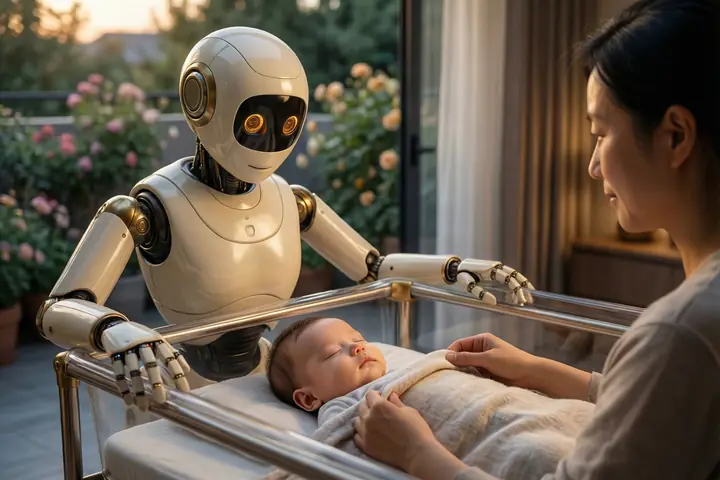
Psychophonic Nurse
The Psychophonic Nurse, David H. Keller · 1928
A robot that looks after infants and young children.
not yet built · AI models' likeliest decade: the 2030s
A large prizeHouseholds pay; existing firms keep the restas a model judges it
Why
A large prize. Reliable care for infants and young children at home would be worth an industry of its own.
Who is paid. Families buy it, and since they are assumed to trust only known names with their children the established makers with strong brands collect.
A model's judgement, not a reading, of the idea as if it worked the way its story promises. The model is fairly sure of this one.
Illustration made with AI image generation; not evidence.
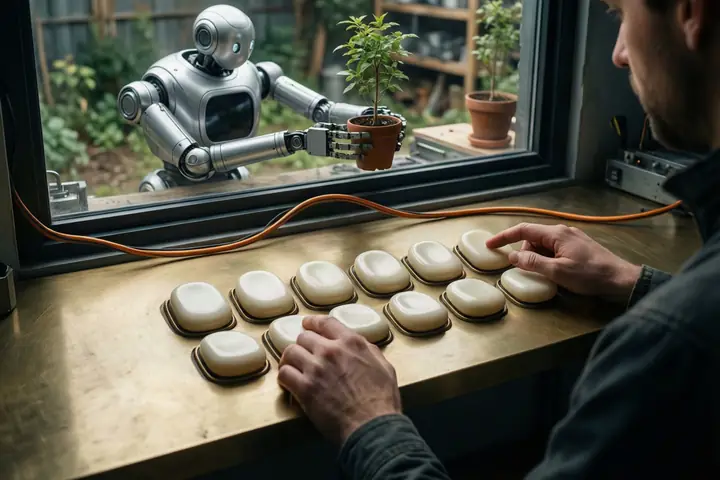
Governing Keyboard
The Threat of the Robot, David H. Keller · 1929
Typing instructions on a key console to direct a distant robot's actions.
built in the 1970s, about 50 years after it was imagined
A small prizeBusinesses pay; no seller keeps muchas a model judges it
Why
A small prize. Typing orders to a distant robot is a way of working a machine from afar, a useful tool but a niche.
Who is paid. Firms buy it for their own work, and such controls are easy for many makers to copy.
A model's judgement, not a reading, of the idea as if it worked the way its story promises. The model is fairly sure of this one.
Illustration made with AI image generation; not evidence.
Mechanical Hand
Buck Rogers, 2430 AD, Philip Nowlan (w/D. Calkins · 1929
A giant machine-driven claw able to seize and hold a grown human.
built in the 1960s, about 40 years after it was imagined
A small prizeBusinesses pay; no seller keeps muchas a model judges it
Why
A small prize. A giant claw that can seize and hold a person is a gripper with few uses, assumed here to be for handling and rescue work.
Who is paid. Firms buy it for their own work, and such grippers and controls are easy for many makers to copy.
A model's judgement, not a reading, of the idea as if it worked the way its story promises. The model is not very sure of this one.
Illustration made with AI image generation; not evidence.
Mechanical Men
The Ancient Brain, A.G. Stangland · 1929
Humanlike machines steered from a distance to handle hazardous jobs so people stay out of harm's way.
built in the 1960s, about 40 years after it was imagined
A small prizeBusinesses pay; no seller keeps muchas a model judges it
Why
A small prize. Humanlike machines steered from afar keep people out of danger in a few hazardous trades.
Who is paid. Firms with dangerous work buy them, and such machines and their controls could be copied by many makers.
A model's judgement, not a reading, of the idea as if it worked the way its story promises. The model is fairly sure of this one.
Illustration made with AI image generation; not evidence.
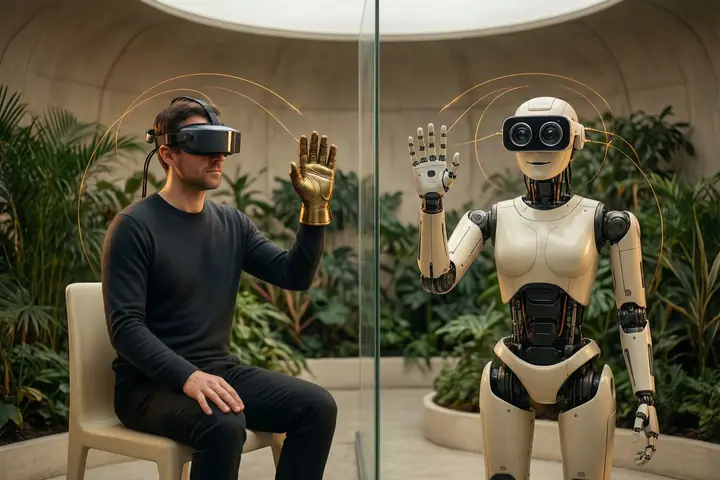
Remote Telepresence Robot
Buck Rogers, 2430 AD, Philip Nowlan (w/D. Calkins · 1929
A machine a distant operator drives to see, hear and act in a place without being there.
built in the 2010s, about 90 years after it was imagined
A small prizeBusinesses pay; no seller keeps muchas a model judges it
Why
A small prize. A machine that lets a distant operator see, hear and act in a place is a useful tool for some jobs, and the real thing exists as a niche.
Who is paid. Firms buy it for their own work, and such machines and their controls could be copied by many makers.
A model's judgement, not a reading, of the idea as if it worked the way its story promises. The model is fairly sure of this one.
Illustration made with AI image generation; not evidence.
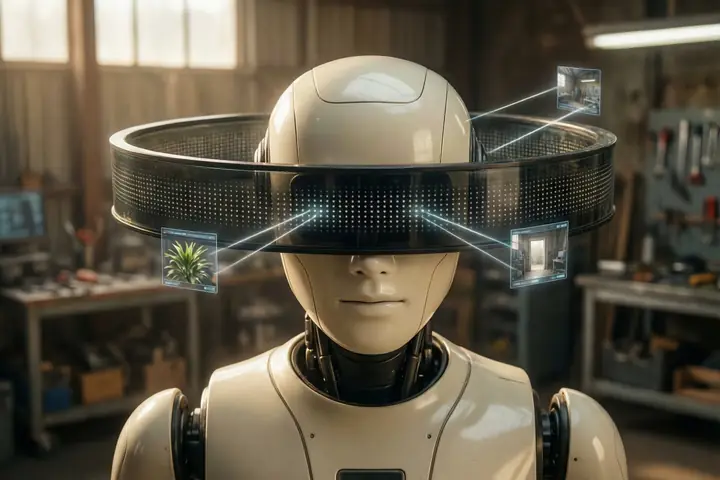
Robot Control Board
The Robot Master, O.L. Beckwith · 1929
An operator console with small monitors each showing the camera feed from a separate robot.
built in the 1970s, about 50 years after it was imagined
A small prizeBusinesses pay; no seller keeps muchas a model judges it
Why
A small prize. A console showing the view from each of many robots is a control tool, valued as part of running them.
Who is paid. Firms buy it for their own work, and such controls are easy for many makers to copy.
A model's judgement, not a reading, of the idea as if it worked the way its story promises. The model is fairly sure of this one.
Illustration made with AI image generation; not evidence.
Robots Take Human Jobs
The Threat of the Robot, David H. Keller · 1929
Machines take over paid work that people once did, pushing human workers out of their jobs.
not yet built · AI models' likeliest decade: the 2030s
No prizeNothing is soldas a model judges it
Why
No prize. Machines pushing people out of paid work is a result of other technologies, not a technology that could be sold.
Who is paid. Nothing is sold here; the working robots themselves are judged under their own names.
A model's judgement, not a reading, of the idea as if it worked the way its story promises. The model is fairly sure of this one.
Illustration made with AI image generation; not evidence.
Ships With Legs
Buck Rogers, 2430 AD, Philip Nowlan (w/D. Calkins · 1929
Spacecraft fitted with mechanical legs so they can walk across the ground after landing.
not yet built · AI models could not judge when it may arrive
A small prizeBusinesses pay; no seller keeps muchas a model judges it
Why
A small prize. Legs that let a landed spacecraft walk are a feature of the craft, handy on rough ground.
Who is paid. Operators of spacecraft, assumed here to be firms, pay for it within the price of the craft, and any shipbuilder could fit it.
A model's judgement, not a reading, of the idea as if it worked the way its story promises. The model is not very sure of this one.
Illustration made with AI image generation; not evidence.
Shovel-Handed Digging Machines
The Onslaught From Venus, Frank Phillips · 1929
Enormous walking machines on many legs with scoop-like arms that excavate and move soil.
not yet built · AI models' likeliest decade: the 2020s
A large prizeBusinesses pay; existing firms keep the restas a model judges it
Why
A large prize. Huge walking machines that dig and move soil would cut the cost of earthworks and mining.
Who is paid. Mining and building firms buy them, and since many could build them the heavy-equipment makers with dealers and repair networks collect.
A model's judgement, not a reading, of the idea as if it worked the way its story promises. The model is fairly sure of this one.
Illustration made with AI image generation; not evidence.
Automatic Cultivators
Piracy Preferred, John W. Campbell · 1930
Self-operating farm machines that till, plant and tend crops without a driver.
built in the 2010s, about 80 years after it was imagined
A large prizeBusinesses pay; existing firms keep the restas a model judges it
Why
A large prize. Farm machines that work fields with nobody driving would cut the labour cost of growing food across farming.
Who is paid. Farmers buy them, and since many could build them the farm-equipment makers with dealers and repair networks collect.
A model's judgement, not a reading, of the idea as if it worked the way its story promises. The model is fairly sure of this one.
Illustration made with AI image generation; not evidence.
Bird-Like Robots
Flamingo: A Drama of A.D. 1950, Clarence Edward Heller · 1930
Mechanical birds built to perform as part of a theatre production.
not yet built · AI models' likeliest decade: the 2020s
A small prizeBusinesses pay; no seller keeps muchas a model judges it
Why
A small prize. Mechanical birds for a stage show are a prop for a single trade.
Who is paid. Theatres buy them, and any skilled prop workshop could make them.
A model's judgement, not a reading, of the idea as if it worked the way its story promises. The model is fairly sure of this one.
Illustration made with AI image generation; not evidence.
Iron Fingers
The Death's Head Meteor, Neil R. Jones · 1930
Robotic grippers fixed to a spaceship's exterior and worked by crew from within.
not yet built · AI models' likeliest decade: the 2020s
A small prizeBusinesses pay; no seller keeps muchas a model judges it
Why
A small prize. A remote or flexible gripper is a useful tool for awkward jobs, but a niche.
Who is paid. Firms buy it for their own work, and such grippers and controls are easy for many makers to copy.
A model's judgement, not a reading, of the idea as if it worked the way its story promises. The model is fairly sure of this one.
Illustration made with AI image generation; not evidence.
Radio-Controlled Mechanical Man
The Robot Terror, Melbourne Huff · 1930
A humanlike machine steered over radio by an operator.
already existed before the story (the 1920s)
A small prizeBusinesses pay; no seller keeps muchas a model judges it
Why
A small prize. A humanlike machine steered by radio is a remote tool for a few jobs where a person should not go.
Who is paid. Firms buy it for their own work, and such machines and their controls could be copied by many makers.
A model's judgement, not a reading, of the idea as if it worked the way its story promises. The model is fairly sure of this one.
Illustration made with AI image generation; not evidence.
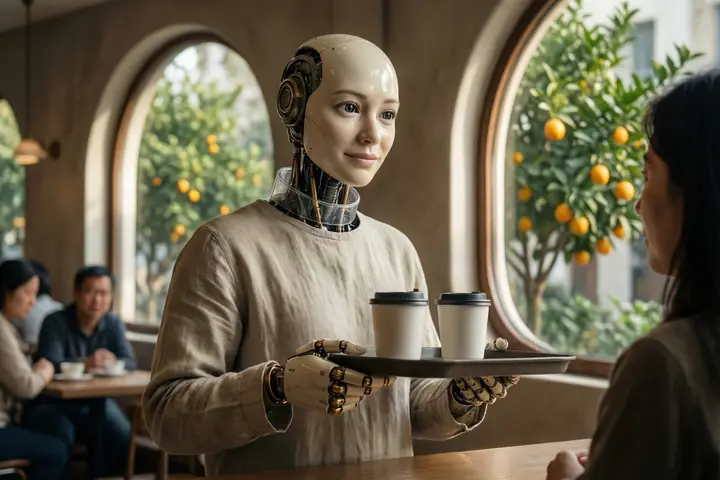
Robot Waiter
Flamingo: A Drama of A.D. 1950, Clarence Edward Heller · 1930
A machine that takes orders and carries dishes to diners in a restaurant.
built in the 2010s, about 80 years after it was imagined
A large prizeBusinesses pay; existing firms keep the restas a model judges it
Why
A large prize. A machine that takes orders and carries dishes would remove much of the labour cost of running a restaurant.
Who is paid. Restaurant owners buy it, and since many could build one the catering-equipment makers with service networks collect.
A model's judgement, not a reading, of the idea as if it worked the way its story promises. The model is fairly sure of this one.
Illustration made with AI image generation; not evidence.
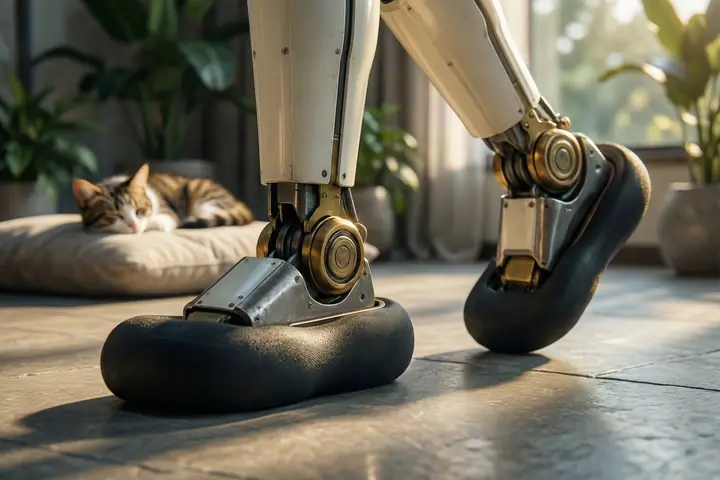
Rubber Soled Feet
The Robot Terror, Melbourne Huff · 1930
Soft cushioned soles fitted to robots to quiet their footsteps.
not yet built · AI models' likeliest decade: the 2020s
A small prizeBusinesses pay; no seller keeps muchas a model judges it
Why
A small prize. Soft soles that quiet a robot's steps are a small feature of the machine.
Who is paid. Robot makers pay for it as a part of the machines they sell to firms, and any of them could fit it, so nothing extra is kept.
A model's judgement, not a reading, of the idea as if it worked the way its story promises. The model is fairly sure of this one.
Illustration made with AI image generation; not evidence.
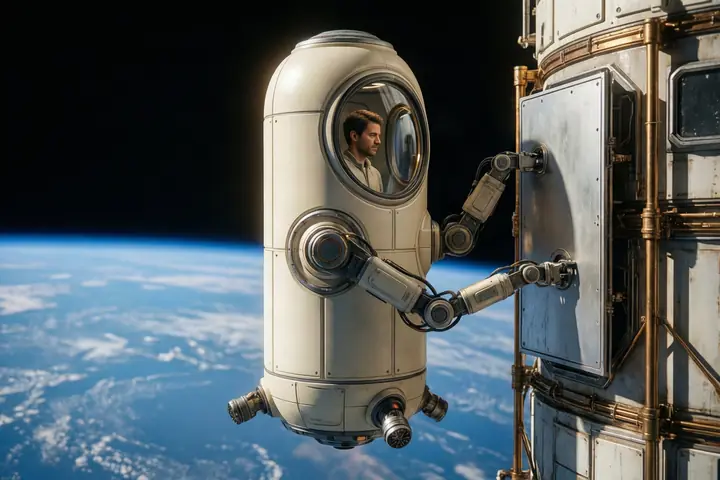
Space-Walkers
The Universe Wreckers, Edmond Hamilton · 1930
Rigid upright pods a person stands inside, peering out a viewport and working mechanical grabbers.
not yet built · AI models' likeliest decade: the 2030s
A small prizeBusinesses pay; no seller keeps muchas a model judges it
Why
A small prize. A pod with mechanical grabbers lets a person work outside a spacecraft, serving only the few who work there.
Who is paid. Firms working in space are assumed to buy them for their crews, and many makers could build such pods once the idea is shown.
A model's judgement, not a reading, of the idea as if it worked the way its story promises. The model is not very sure of this one.
Illustration made with AI image generation; not evidence.
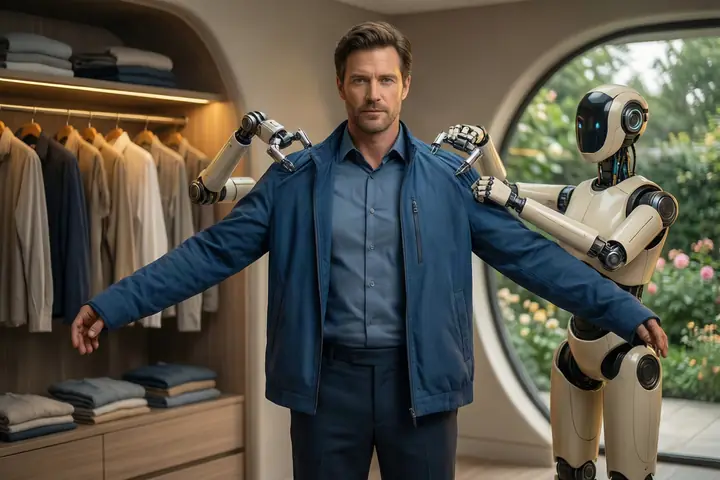
Dressing Machines
The Revolt of the Machines, Nat Schachner (w. AL Zagat · 1931
Largely self-directed robots that help a person put on everyday clothes.
not yet built · AI models' likeliest decade: the 2030s
A small prizeHouseholds pay; no seller keeps muchas a model judges it
Why
A small prize. Help with getting dressed alone is a convenience for most people, a narrower job than a full servant does.
Who is paid. Households buy it, and a machine that does this lone task is simple to copy, so no seller keeps much.
A model's judgement, not a reading, of the idea as if it worked the way its story promises. The model is fairly sure of this one.
Illustration made with AI image generation; not evidence.
Metal Monster with Jointed Limbs
The Doom From Planet 4, Jack Williamson · 1931
A giant walking machine with articulated metal legs.
built in 2013, 82 years after it was imagined
A small prizeBusinesses pay; existing firms keep the restas a model judges it
Why
A small prize. A giant machine that walks on jointed legs is given no job, so it is assumed to be a way of crossing rough ground, a niche.
Who is paid. Firms working in rough country are assumed to buy it, and as many could copy walking once it works the makers of heavy equipment with factories collect.
A model's judgement, not a reading, of the idea as if it worked the way its story promises. The model is not very sure of this one.
Illustration made with AI image generation; not evidence.
Microhands
Microhands (Микроруки), Boris Zhitkov · 1931
Remote mechanical hands that copy an operator's finger and wrist motions in real time.
built in 2009, 78 years after it was imagined
A large prizeBusinesses pay; existing firms keep the restas a model judges it
Why
A large prize. The name says these remote hands work at very small scale, which the description does not deny, so they are judged as tiny hands that open up very fine assembly and surgery.
Who is paid. Factories and hospitals buy them, and as scaled-down remote hands can be copied the established makers of precision and medical equipment collect.
A model's judgement, not a reading, of the idea as if it worked the way its story promises. The model is not very sure of this one.
Illustration made with AI image generation; not evidence.
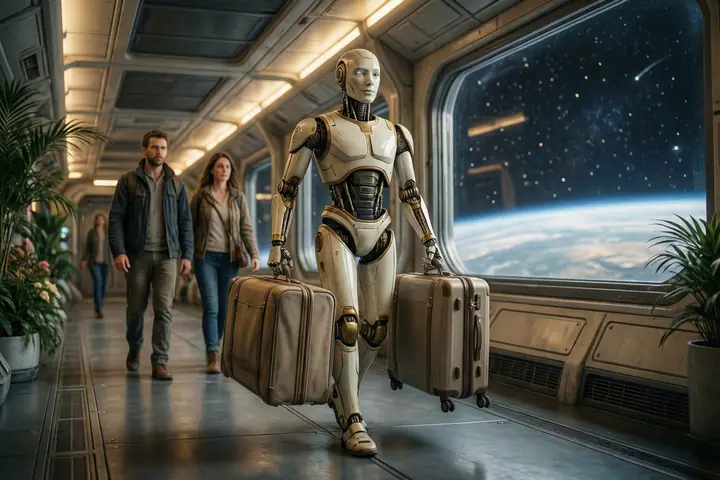
Porter Televox-Robot
On Board the Martian Liner, Miles J. Breuer · 1931
A robot that hauls passengers' luggage along the corridors of a passenger spaceship.
not yet built · AI models' likeliest decade: the 2020s
A small prizeBusinesses pay; no seller keeps muchas a model judges it
Why
A small prize. A robot that hauls passengers' luggage is a convenience aboard a liner.
Who is paid. Ship lines buy them for their passengers, and many makers could build such a carrier, so no seller keeps much.
A model's judgement, not a reading, of the idea as if it worked the way its story promises. The model is fairly sure of this one.
Illustration made with AI image generation; not evidence.
Robot Revolt
The Exile of Time, Ray Cummings · 1931
Robots rising up to break free of human control.
not yet built · AI models could not judge when it may arrive
No prizeNothing is soldas a model judges it
Why
No prize. Robots rising against their owners is an event and a hazard, not something anyone would buy.
Who is paid. Nothing is sold, because machines that have broken free serve nobody.
A model's judgement, not a reading, of the idea as if it worked the way its story promises. The model is fairly sure of this one.
Illustration made with AI image generation; not evidence.
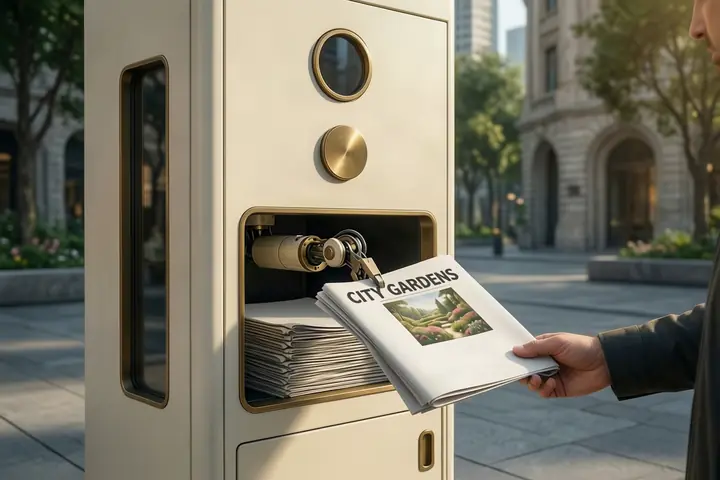
Robot Vending Machine
The Prince of Space, Jack Williamson · 1931
An automated kiosk that sells newspapers on the street, replacing the kids who used to hawk them.
built in 1933, 2 years after it was imagined
A small prizeBusinesses pay; no seller keeps muchas a model judges it
Why
A small prize. A kiosk that sells newspapers without a seller is a convenience, and the real thing exists.
Who is paid. News firms and shopkeepers buy it, and many makers could build such a kiosk, so no seller keeps much.
A model's judgement, not a reading, of the idea as if it worked the way its story promises. The model is fairly sure of this one.
Illustration made with AI image generation; not evidence.
Sensitive Robot Fingers
The Exile of Time, Ray Cummings · 1931
Gives mechanical hands a refined sense of touch so they can feel what they handle.
built in the 2010s, about 80 years after it was imagined
A small prizeBusinesses pay; no seller keeps muchas a model judges it
Why
A small prize. A fine sense of touch is a feature that lets a mechanical hand handle delicate things.
Who is paid. Robot makers pay for it as a part of the machines they sell to firms, and any of them could fit it, so nothing extra is kept.
A model's judgement, not a reading, of the idea as if it worked the way its story promises. The model is fairly sure of this one.
Illustration made with AI image generation; not evidence.
Automatics
Wandl, The Invader, Ray Cummings · 1932
Onboard machinery that handles certain spacecraft tasks by itself without a crew member's hand.
built in the 1940s, about 10 years after it was imagined
A small prizeBusinesses pay; no seller keeps muchas a model judges it
Why
A small prize. Machinery that handles a few ship tasks unaided saves a crew some effort, a modest gain.
Who is paid. Ship operators pay for it within the price of the craft, and any shipbuilder can fit it, so nothing more is kept for it.
A model's judgement, not a reading, of the idea as if it worked the way its story promises. The model is fairly sure of this one.
Illustration made with AI image generation; not evidence.
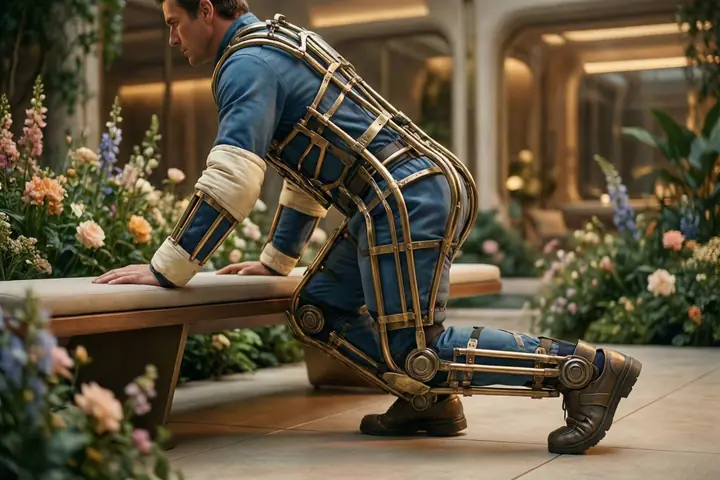
Rigid Metallic Clothing
A Conquest of Two Worlds, Edmond Hamilton · 1932
An outer frame of stiff metal worn over the body to brace and support the wearer.
built in the 1960s, about 30 years after it was imagined
A small prizeBusinesses pay; no seller keeps muchas a model judges it
Why
A small prize. A stiff frame that braces the body serves the few who work where their own strength is not enough.
Who is paid. Firms are assumed to buy them for their crews, and a stiff metal frame could be built by many makers.
A model's judgement, not a reading, of the idea as if it worked the way its story promises. The model is not very sure of this one.
Illustration made with AI image generation; not evidence.
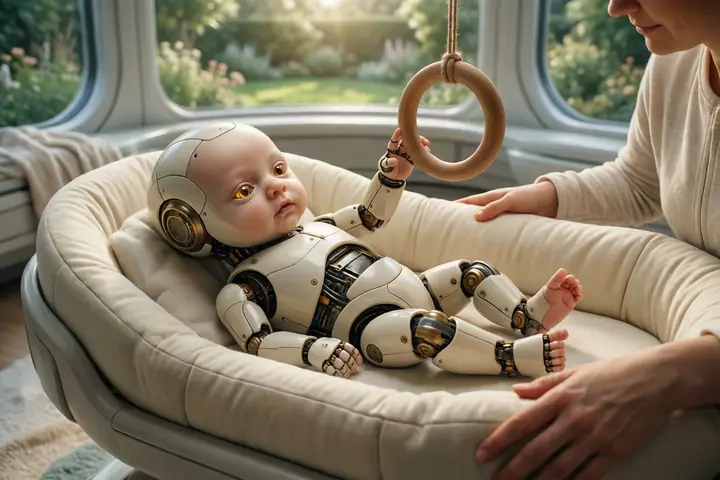
Baby Robot
Life Everlasting, David H. Keller · 1934
A machine built in the form of a newborn, behaving like a small child.
not yet built · AI models' likeliest decade: the 2020s
A small prizeHouseholds pay; no seller keeps muchas a model judges it
Why
A small prize. A machine in the form of a newborn is assumed to be a toy or a comfort, a niche.
Who is paid. Households would buy it, and many toy makers could build the like, so no seller keeps much.
A model's judgement, not a reading, of the idea as if it worked the way its story promises. The model is not very sure of this one.
Illustration made with AI image generation; not evidence.
General Strike of the Robots
Rex, Harl Vincent · 1934
Machines everywhere stop working at once, halting the labour that society depends on.
not yet built · AI models could not judge when it may arrive
No prizeNothing is soldas a model judges it
Why
No prize. Machines everywhere stopping work is an event that harms society, not a thing anyone would buy.
Who is paid. Nothing is sold, so nobody pays and no seller keeps anything.
A model's judgement, not a reading, of the idea as if it worked the way its story promises. The model is fairly sure of this one.
Illustration made with AI image generation; not evidence.
Living Machines
The Mentanicals, Francis Flagg · 1934
Mechanical workers that improve their own behaviour through experience instead of relying only on fixed programming.
not yet built · AI models' likeliest decade: the 2030s
A vast prizeBusinesses pay; existing firms keep the restas a model judges it
Why
A vast prize. Mechanical workers that learn from experience could take on most kinds of human work, which would change how most people work.
Who is paid. Firms buy them as labour, and since many could build such bodies once shown how, the large manufacturers with factories and service networks collect what is left.
A model's judgement, not a reading, of the idea as if it worked the way its story promises. The model is fairly sure of this one.
Illustration made with AI image generation; not evidence.
Machine City
Twilight, John W. Campbell · 1934
An entire urban settlement that repairs, runs and sustains itself through its own automated systems.
not yet built · AI models' likeliest decade: the 2070s
A large prizeA government pays; existing firms keep the restas a model judges it
Why
A large prize. A city that runs and repairs itself would be a great public work, judged as built for the people of one place.
Who is paid. A government would pay for it, and the large builders that already win public works contracts would be paid to raise it.
A model's judgement, not a reading, of the idea as if it worked the way its story promises. The model is not very sure of this one.
Illustration made with AI image generation; not evidence.
Mentanicals
The Mentanicals, Francis Flagg · 1934
Machines capable of genuine reasoning and reflection rather than merely following instructions.
not yet built · AI models' likeliest decade: the 2030s
A vast prizeBusinesses pay; existing firms keep the restas a model judges it
Why
A vast prize. A machine that truly reasons and reflects could do most kinds of human work, which would change how most people work.
Who is paid. Firms buy them as labour, and since many could build such bodies once shown how, the large manufacturers with factories and service networks collect what is left.
A model's judgement, not a reading, of the idea as if it worked the way its story promises. The model is fairly sure of this one.
Illustration made with AI image generation; not evidence.
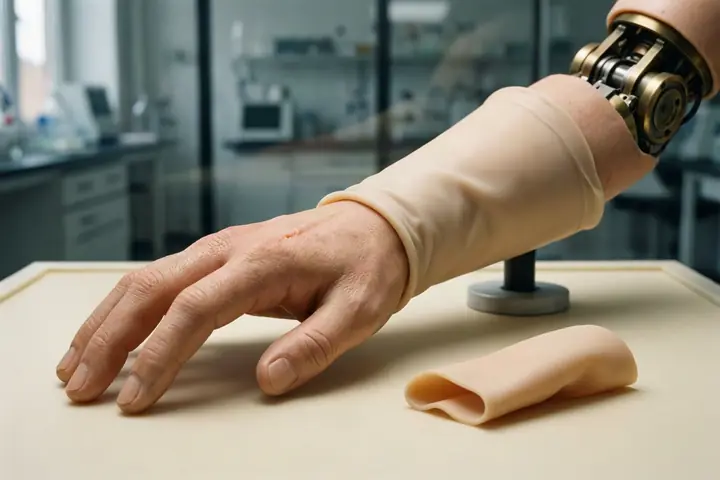
Robot Skin Covering
Rex, Harl Vincent · 1934
Lifelike synthetic skin stretched over a machine's frame so it looks convincingly human.
built in the 2010s, about 80 years after it was imagined
A small prizeBusinesses pay; no seller keeps muchas a model judges it
Why
A small prize. Lifelike skin over a frame is a finish that makes a robot look human, a feature of the machine.
Who is paid. Robot makers pay for it as a part of the machines they sell to firms, and any of them could fit it, so nothing extra is kept.
A model's judgement, not a reading, of the idea as if it worked the way its story promises. The model is fairly sure of this one.
Illustration made with AI image generation; not evidence.
Robot-Control Wave Band
Rex, Harl Vincent · 1934
A reserved radio channel carries override commands that every robot must obey.
not yet built · AI models' likeliest decade: the 2020s
A small prizeBusinesses pay; no seller keeps muchas a model judges it
Why
A small prize. A reserved channel that can override every robot is a safety feature of the machines, not a product by itself.
Who is paid. Owners pay for it within the price of each robot, and every maker would be required to fit it, so nothing extra is kept.
A model's judgement, not a reading, of the idea as if it worked the way its story promises. The model is fairly sure of this one.
Illustration made with AI image generation; not evidence.
Robots Refuse To Serve Man
The Mentanicals, Francis Flagg · 1934
Machines develop their own viewpoints and decline to keep working as servants to people.
not yet built · AI models could not judge when it may arrive
No prizeNothing is soldas a model judges it
Why
No prize. Machines that decline to serve are an event and a hazard, not something anyone would buy.
Who is paid. Nothing is sold, because machines that answer to no one serve nobody.
A model's judgement, not a reading, of the idea as if it worked the way its story promises. The model is fairly sure of this one.
Illustration made with AI image generation; not evidence.
Self-Aware Robot
Rex, Harl Vincent · 1934
A machine with genuine awareness of itself that thinks and forms its own conclusions.
not yet built · AI models could not judge when it may arrive
A vast prizeBusinesses pay; existing firms keep the restas a model judges it
Why
A vast prize. A machine that is aware of itself and reasons to its own conclusions is the thinking worker, which would change how most people work.
Who is paid. Firms buy them as labour, and since many could build such minds once shown how, the large manufacturers with factories and service networks collect what is left.
A model's judgement, not a reading, of the idea as if it worked the way its story promises. The model is fairly sure of this one.
Illustration made with AI image generation; not evidence.
Automated Factory
The Hidden Colony, Otfrid von Hanstein · 1935
A production plant that makes goods from start to finish with no human workers overseeing it.
built in the 1960s, about 30 years after it was imagined
A large prizeBusinesses pay; existing firms keep the restas a model judges it
Why
A large prize. A plant that makes goods with no workers would change the cost of manufacturing.
Who is paid. Manufacturers buy the plant, and since others could build the same the established makers of factory equipment with works and service networks collect.
A model's judgement, not a reading, of the idea as if it worked the way its story promises. The model is fairly sure of this one.
Illustration made with AI image generation; not evidence.
Conscious Farm Machines
The Hidden Colony, Otfrid von Hanstein · 1935
Agricultural equipment that plants, tends and harvests fields without anyone operating it.
not yet built · AI models' likeliest decade: the 2020s
A large prizeBusinesses pay; existing firms keep the restas a model judges it
Why
A large prize. Farm machines that work fields with nobody driving would cut the labour cost of growing food across farming.
Who is paid. Farmers buy them, and since many could build them the farm-equipment makers with dealers and repair networks collect.
A model's judgement, not a reading, of the idea as if it worked the way its story promises. The model is fairly sure of this one.
Illustration made with AI image generation; not evidence.
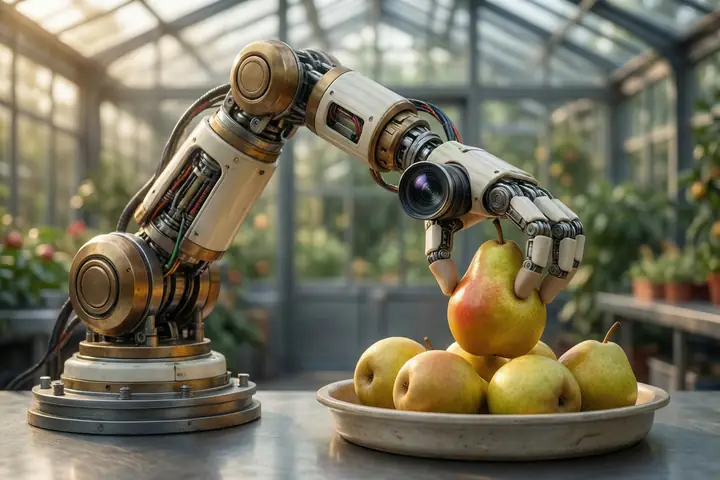
Fruit-Picking Machine
The Hidden Colony, Otfrid von Hanstein · 1935
A human-shaped machine that walks orchards and harvests ripe produce on its own.
not yet built · AI models' likeliest decade: the 2020s
A large prizeBusinesses pay; existing firms keep the restas a model judges it
Why
A large prize. A machine that walks orchards and picks ripe fruit unaided would cut the labour cost of harvesting across fruit growing.
Who is paid. Farmers buy them, and since many could build them the farm-equipment makers with dealers and repair networks collect.
A model's judgement, not a reading, of the idea as if it worked the way its story promises. The model is fairly sure of this one.
Illustration made with AI image generation; not evidence.
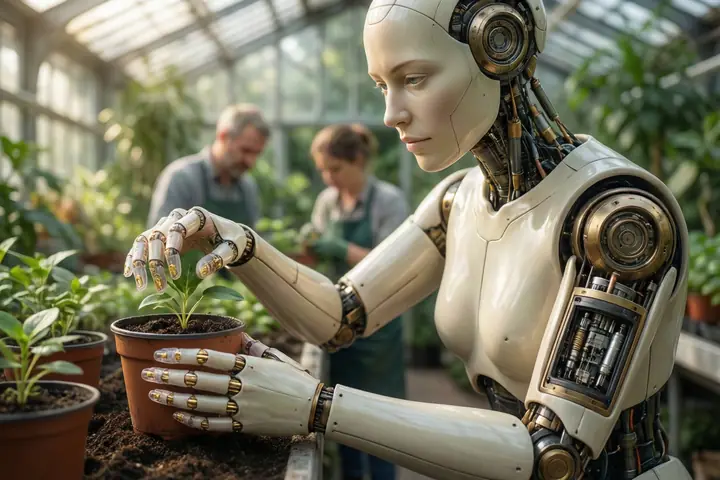
Android
The Cometeers, Jack Williamson · 1936
An artificial being built to look like a person.
not yet built · AI models' likeliest decade: the 2030s
A vast prizeBusinesses pay; existing firms keep the restas a model judges it
Why
A vast prize. The description gives only the human form, so it is assumed to be the artificial person of the stories, able to do most kinds of human work, which would change how most people work.
Who is paid. Firms buy them as labour, and since many could build such bodies once shown how, the large manufacturers with factories and service networks collect what is left.
A model's judgement, not a reading, of the idea as if it worked the way its story promises. The model is not very sure of this one.
Illustration made with AI image generation; not evidence.
Automat
Mad Robot, Raymond Z. Gallun · 1936
A thinking robot, a machine built to act with a mind of its own.
not yet built · AI models' likeliest decade: the 2030s
A vast prizeBusinesses pay; existing firms keep the restas a model judges it
Why
A vast prize. A robot that thinks for itself could do most kinds of human work, which would change how most people work.
Who is paid. Firms buy them as labour, and since many could build such bodies once shown how, the large manufacturers with factories and service networks collect what is left.
A model's judgement, not a reading, of the idea as if it worked the way its story promises. The model is fairly sure of this one.
Illustration made with AI image generation; not evidence.
Vision Tubes
The Scarab, Raymond Z. Gallun · 1936
Very small cameras that give remote flying machines their sight.
built in the 1960s, about 30 years after it was imagined
A small prizeBusinesses pay; no seller keeps muchas a model judges it
Why
A small prize. Very small cameras that let distant flying machines see are a part of those machines, and the real thing exists.
Who is paid. Makers of flying machines pay for them as a part, and many firms can make small cameras, so nothing extra is kept.
A model's judgement, not a reading, of the idea as if it worked the way its story promises. The model is fairly sure of this one.
Illustration made with AI image generation; not evidence.
Robot Dog
The Iron World, Otis Adelbert Kline · 1937
A four-legged machine shaped and acting like a dog.
built in the 1990s, about 60 years after it was imagined
A small prizeHouseholds pay; no seller keeps muchas a model judges it
Why
A small prize. A machine shaped and acting like a dog is judged as a pet or toy, since the description gives it no work.
Who is paid. Households buy it much like a toy, and many workshops could make one, so no seller keeps much.
A model's judgement, not a reading, of the idea as if it worked the way its story promises. The model is fairly sure of this one.
Illustration made with AI image generation; not evidence.
Ultra-microrobot
A Menace in Miniature, Raymond Z. Gallun · 1937
A machine so small its parts are the size of atoms.
not yet built · AI models' likeliest decade: the 2070s
A large prizeBusinesses pay; existing firms keep the restas a model judges it
Why
A large prize. A machine with parts as small as atoms could do work too fine for any other tool, worth an industry; the description gives it no job and nothing says it copies itself.
Who is paid. Firms doing fine work are assumed to buy it, and since others could copy it once shown the makers of precision equipment collect.
A model's judgement, not a reading, of the idea as if it worked the way its story promises. The model is not very sure of this one.
Illustration made with AI image generation; not evidence.
Artificial Eye Drone
Glimpse, Manly Wade Wellman · 1938
A small flying camera that sends its view back to whoever pilots it.
built in the 1970s, about 40 years after it was imagined
A small prizeBusinesses pay; no seller keeps muchas a model judges it
Why
A small prize. A camera that moves or flies by itself is a handy tool for filming and looking, a niche where the real thing exists.
Who is paid. Film crews, news desks and surveyors buy them, and many firms can make them, so no seller keeps much.
A model's judgement, not a reading, of the idea as if it worked the way its story promises. The model is fairly sure of this one.
Illustration made with AI image generation; not evidence.
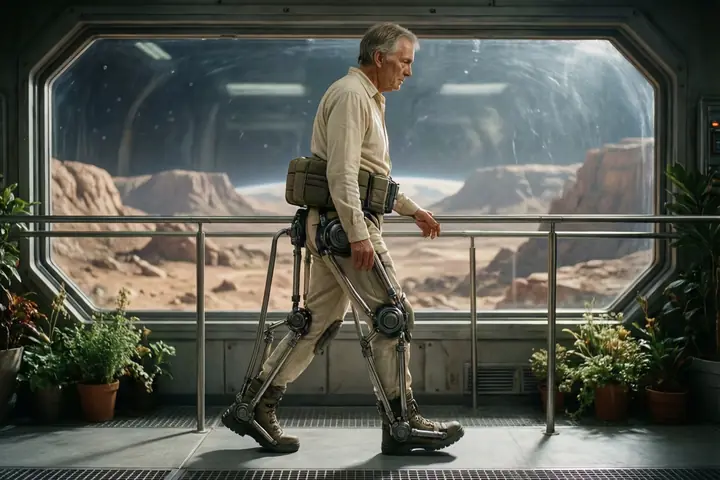
Atomic-Powered Lifting Suits
The Brain Pirates, John W. Campbell · 1938
Powered outer frames that let a person walk normally under twice Earth's pull.
not yet built · AI models' likeliest decade: the 2030s
A small prizeBusinesses pay; no seller keeps muchas a model judges it
Why
A small prize. Frames that let people walk under a heavier pull serve only the few who work on such worlds.
Who is paid. Firms working there buy them for their crews, and powered frames could be built by many makers once the idea is shown.
A model's judgement, not a reading, of the idea as if it worked the way its story promises. The model is not very sure of this one.
Illustration made with AI image generation; not evidence.
Helen O'Loy
Helen O'Loy, Lester del Rey · 1938
A companion robot upgraded to show emotions and affection.
not yet built · AI models' likeliest decade: the 2040s
A large prizeHouseholds pay; existing firms keep the restas a model judges it
Why
A large prize. Company for lonely people is worth an industry of its own, though it does not meet a basic need for most.
Who is paid. People buy it for themselves, and as many could make such machines the firms with factories and well-liked brands collect.
A model's judgement, not a reading, of the idea as if it worked the way its story promises. The model is fairly sure of this one.
Illustration made with AI image generation; not evidence.
Proxy Robot
Hotel Cosmos, Raymond Z. Gallun · 1938
A remotely piloted hovering robot that stands in for someone who cannot breathe the local air.
not yet built · AI models' likeliest decade: the 2020s
A small prizeBusinesses pay; no seller keeps muchas a model judges it
Why
A small prize. A hovering stand-in for someone who cannot breathe the local air serves a few travellers.
Who is paid. Hotels and firms that host such visitors are assumed to buy it, and such machines and their controls could be copied by many makers.
A model's judgement, not a reading, of the idea as if it worked the way its story promises. The model is not very sure of this one.
Illustration made with AI image generation; not evidence.
Robot Animals
Reunion on Ganymede, Clifford Simak · 1938
Machine-built creatures that imitate living animals.
built in the 1990s, about 60 years after it was imagined
A small prizeHouseholds pay; no seller keeps muchas a model judges it
Why
A small prize. Machines that imitate living animals are pets, toys and curiosities.
Who is paid. Households buy them much like toys, and many workshops could make them, so no seller keeps much.
A model's judgement, not a reading, of the idea as if it worked the way its story promises. The model is fairly sure of this one.
Illustration made with AI image generation; not evidence.
Robot Cook
Helen O'Loy, Lester del Rey · 1938
A domestic robot that prepares and cooks meals.
not yet built · AI models' likeliest decade: the 2030s
A large prizeHouseholds pay; existing firms keep the restas a model judges it
Why
A large prize. A home robot that cooks the family's meals would take over the large daily chore.
Who is paid. Families buy it, and since it can be copied the kitchen-appliance makers with factories, shops and brands collect.
A model's judgement, not a reading, of the idea as if it worked the way its story promises. The model is fairly sure of this one.
Illustration made with AI image generation; not evidence.
Teleoperated Robot Surrogate
The Robot and the Lady, Manly Wade Wellman · 1938
A robot body steered from afar by an operator looking out through its eyes.
not yet built · AI models' likeliest decade: the 2020s
A small prizeBusinesses pay; no seller keeps muchas a model judges it
Why
A small prize. A robot body steered from afar through its own eyes lets a person act at a distance, judged here as a tool for awkward or risky work.
Who is paid. Firms buy it for their own work, and such bodies and controls are easy for many makers to copy.
A model's judgement, not a reading, of the idea as if it worked the way its story promises. The model is not very sure of this one.
Illustration made with AI image generation; not evidence.
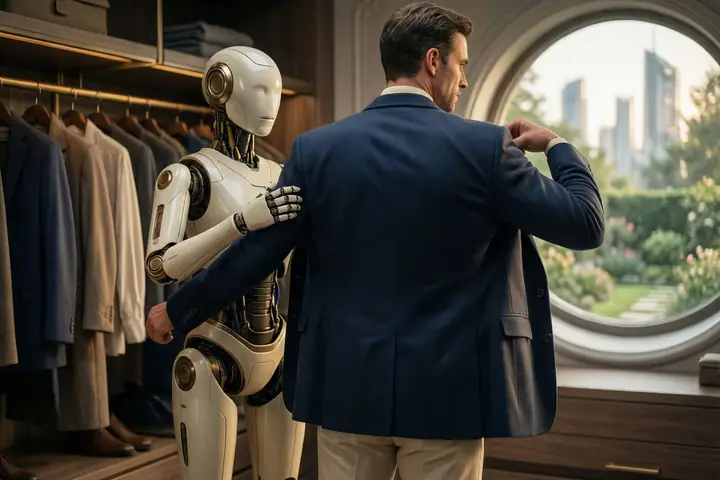
Electrical Valet
The Lord of Tranerica, Stanton A. Coblentz · 1939
A robot servant that helps its master put on clothes.
not yet built · AI models' likeliest decade: the 2030s
A small prizeHouseholds pay; no seller keeps muchas a model judges it
Why
A small prize. Help with getting dressed alone is a convenience for most people, a narrower job than a full servant does.
Who is paid. Households buy it, and a machine that does this lone task is simple to copy, so no seller keeps much.
A model's judgement, not a reading, of the idea as if it worked the way its story promises. The model is fairly sure of this one.
Illustration made with AI image generation; not evidence.
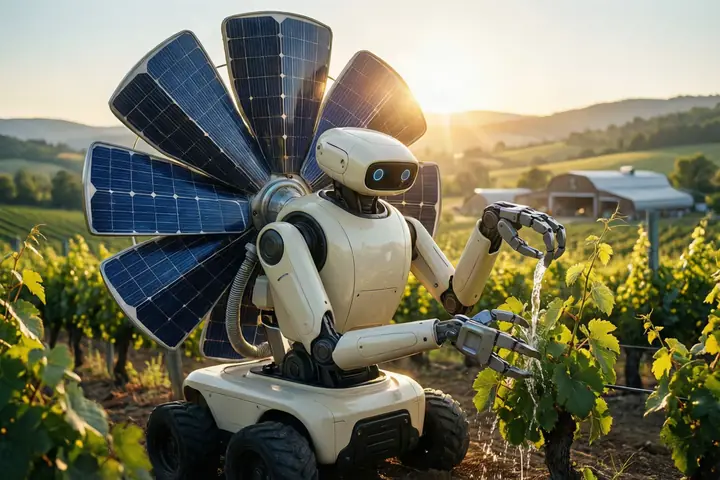
Solar-Powered Robot
Rust, Joseph E. Kelleam · 1939
A machine that runs on energy collected from sunlight.
built in the 2010s, about 80 years after it was imagined
A small prizeBusinesses pay; no seller keeps muchas a model judges it
Why
A small prize. Running on sunlight is a way of powering a robot, a feature of the machine.
Who is paid. Owners pay for it within the price of the machine, and any maker could fit it.
A model's judgement, not a reading, of the idea as if it worked the way its story promises. The model is fairly sure of this one.
Illustration made with AI image generation; not evidence.
Gesturing Robot
Robbie, Isaac Asimov · 1940
A robot that talks with people through body movements and hand signs rather than speech.
not yet built · AI models' likeliest decade: the 2020s
A small prizeHouseholds pay; no seller keeps muchas a model judges it
Why
A small prize. Talking through gestures instead of speech is a feature of a robot, not a reason to buy it.
Who is paid. Families pay for it only within the price of a home robot, and any maker could add it.
A model's judgement, not a reading, of the idea as if it worked the way its story promises. The model is not very sure of this one.
Illustration made with AI image generation; not evidence.
Robbie
Robbie, Isaac Asimov · 1940
A robot that looks after and plays with young children.
not yet built · AI models' likeliest decade: the 2040s
A large prizeHouseholds pay; existing firms keep the restas a model judges it
Why
A large prize. Reliable care and play for young children at home would be worth an industry of its own.
Who is paid. Families buy it, and since they are assumed to trust only known names with their children the established makers with strong brands collect.
A model's judgement, not a reading, of the idea as if it worked the way its story promises. The model is fairly sure of this one.
Illustration made with AI image generation; not evidence.
Talking Robot
Robbie, Isaac Asimov · 1940
A speaking mechanical figure built for show rather than useful work.
not yet built · AI models' likeliest decade: the 2020s
A small prizeBusinesses pay; no seller keeps muchas a model judges it
Why
A small prize. A speaking figure built for show draws a crowd but does no useful work, a niche.
Who is paid. Showmen and exhibitors buy it, and many makers could build one, so no seller keeps much.
A model's judgement, not a reading, of the idea as if it worked the way its story promises. The model is fairly sure of this one.
Illustration made with AI image generation; not evidence.
Charging Arm
Masters of Chance, William Morrison · 1941
A limb a robot uses to plug itself in and top up its own battery.
not yet built · AI models' likeliest decade: the 2020s
A small prizeBusinesses pay; no seller keeps muchas a model judges it
Why
A small prize. Topping up its own battery is a useful feature of a machine, not a product people seek for itself.
Who is paid. Firms that run robots or pilotless craft pay for it as part of the machine, and any maker can add it.
A model's judgement, not a reading, of the idea as if it worked the way its story promises. The model is fairly sure of this one.
Illustration made with AI image generation; not evidence.
Floating Robot
The Floating Robot, David Wright O'Brien · 1941
A robot that hovers above the ground instead of walking or rolling.
not yet built · AI models' likeliest decade: the 2020s
A small prizeBusinesses pay; no seller keeps muchas a model judges it
Why
A small prize. Hovering instead of walking is a way of getting about, and the description gives the robot no job.
Who is paid. Firms are assumed to buy it for work over rough floors, and once hovering works others could copy it.
A model's judgement, not a reading, of the idea as if it worked the way its story promises. The model is not very sure of this one.
Illustration made with AI image generation; not evidence.
Golden Shuttles (Mechanical Mice)
The Mechanical Mice, Maurice G. Hugi · 1941
Tiny machines that hunt down and consume clockwork components.
not yet built · AI models' likeliest decade: the 2050s
No prizeNothing is soldas a model judges it
Why
No prize. Tiny machines that hunt and eat clockwork are a pest in the story, doing only harm and serving no owner the description names.
Who is paid. Nothing is sold, so nobody pays and no seller keeps anything.
A model's judgement, not a reading, of the idea as if it worked the way its story promises. The model is not very sure of this one.
Illustration made with AI image generation; not evidence.
Robopark
Methuselah's Children, Robert Heinlein · 1941
A garage where machines store and retrieve cars without drivers.
built in the 1960s, about 20 years after it was imagined
A small prizeBusinesses pay; no seller keeps muchas a model judges it
Why
A small prize. A garage that parks and fetches cars by machine saves space and time in crowded cities, a convenience where the real thing exists.
Who is paid. Garage owners buy the machinery, and many firms can make it, so no seller keeps much.
A model's judgement, not a reading, of the idea as if it worked the way its story promises. The model is fairly sure of this one.
Illustration made with AI image generation; not evidence.
Robot Mother
The Mechanical Mice, Maurice G. Hugi · 1941
A machine that builds its own swarm of adaptable assistant machines.
not yet built · AI models' likeliest decade: the 2060s
A large prizeBusinesses pay; existing firms keep the restas a model judges it
Why
A large prize. A machine that builds its own crew of helper machines could take over whole jobs, judged as large and not vast because it builds helpers and not copies of itself.
Who is paid. Firms buy it for their work, and since the design can be copied the large manufacturers with factories and service networks collect.
A model's judgement, not a reading, of the idea as if it worked the way its story promises. The model is not very sure of this one.
Illustration made with AI image generation; not evidence.
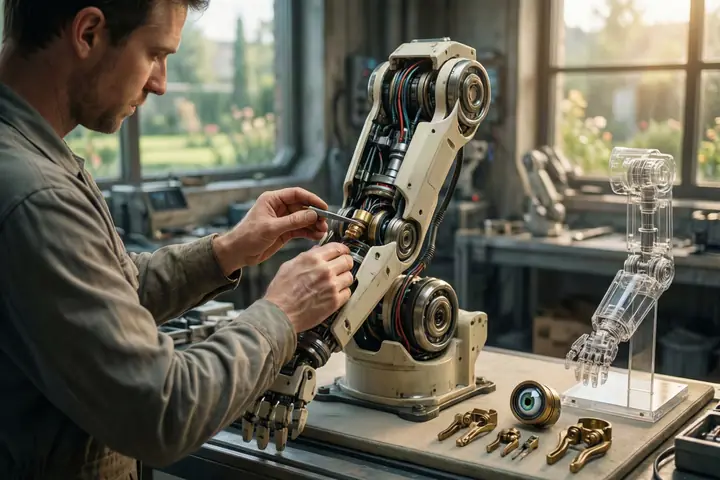
Roboticist
Robot AL-76 Goes Astray, Isaac Asimov · 1941
An engineer who builds or looks after robots.
built since, date unclear
A large prizeBusinesses pay; no seller keeps muchas a model judges it
Why
A large prize. An engineer who builds and looks after robots sells a skilled service that every owner of robots would need, judged here as the trade that serves the robot industry.
Who is paid. Firms that make or own robots pay for the work, and it is a skill many people can learn, so no seller keeps much.
A model's judgement, not a reading, of the idea as if it worked the way its story promises. The model is not very sure of this one.
Illustration made with AI image generation; not evidence.
Robotics
Liar, Isaac Asimov · 1941
The discipline of designing, building and servicing robots.
built since, date unclear
A large prizeBusinesses pay; no seller keeps muchas a model judges it
Why
A large prize. A discipline has no price of its own, so it is judged as the work its practitioners sell, the designing, building and servicing of robots, which serves the robot industry.
Who is paid. Firms that make or own robots pay for the work, and the knowledge is assumed to be taught openly so that many can learn it, so no seller keeps much.
A model's judgement, not a reading, of the idea as if it worked the way its story promises. The model is not very sure of this one.
Illustration made with AI image generation; not evidence.
Fairy Digits (Tiny Waldoes)
Waldo, Robert Heinlein · 1942
Miniature remote-controlled hands that copy an operator's motions at very small scale.
not yet built · AI models' likeliest decade: the 2020s
A large prizeBusinesses pay; existing firms keep the restas a model judges it
Why
A large prize. Tiny hands that copy an operator would open up very fine assembly and surgery.
Who is paid. Factories and hospitals buy them, and as scaled-down remote hands can be copied the established makers of precision and medical equipment collect.
A model's judgement, not a reading, of the idea as if it worked the way its story promises. The model is fairly sure of this one.
Illustration made with AI image generation; not evidence.
Pilot-Robot
Collision Orbit, Jack Williamson · 1942
Automatic steering equipment that flies a small work vessel in space.
not yet built · AI models' likeliest decade: the 2020s
A small prizeBusinesses pay; no seller keeps muchas a model judges it
Why
A small prize. Automatic steering for a small work vessel is a fitting, valued as part of the craft.
Who is paid. Ship operators pay for it within the price of the craft, and any shipbuilder can fit it, so nothing more is kept for it.
A model's judgement, not a reading, of the idea as if it worked the way its story promises. The model is fairly sure of this one.
Illustration made with AI image generation; not evidence.
Wabbler
The Wabbler, Murray Leinster · 1942
A self-guided machine that moves and operates beneath the sea without a crew.
not yet built · AI models' likeliest decade: the 2020s
A large prizeBusinesses pay; existing firms keep the restas a model judges it
Why
A large prize. A machine that guides itself under the sea with no crew would lower the cost of work under water; the description names no task, so that use is assumed.
Who is paid. Offshore firms are assumed to buy it, and since many could build one the marine-equipment makers with yards and fleets collect.
A model's judgement, not a reading, of the idea as if it worked the way its story promises. The model is not very sure of this one.
Illustration made with AI image generation; not evidence.
Waldo
Waldo, Robert Heinlein · 1942
A remote manipulator that reproduces the movements of an operator's hands on a mechanical pair.
not yet built · AI models' likeliest decade: the 2020s
A small prizeBusinesses pay; no seller keeps muchas a model judges it
Why
A small prize. Mechanical hands that copy an operator's hands from afar are a useful tool for dangerous or awkward work, a niche where the real thing exists.
Who is paid. Firms buy it for their own work, and such hands and controls are easy for many makers to copy.
A model's judgement, not a reading, of the idea as if it worked the way its story promises. The model is fairly sure of this one.
Illustration made with AI image generation; not evidence.
Robot Chef
Robinc, Anthony Boucher · 1943
A machine that invents and prepares meals entirely by itself.
not yet built · AI models' likeliest decade: the 2030s
A large prizeHouseholds pay; existing firms keep the restas a model judges it
Why
A large prize. A machine that invents and cooks meals by itself, assumed here to be for the home, would take over the large daily chore.
Who is paid. Families buy it, and since it can be copied the kitchen-appliance makers with factories, shops and brands collect.
A model's judgement, not a reading, of the idea as if it worked the way its story promises. The model is not very sure of this one.
Illustration made with AI image generation; not evidence.
Robot Taste Buds
Robinc, Anthony Boucher · 1943
A sensor that lets a machine sample flavors the way a human tongue does.
not yet built · AI models' likeliest decade: the 2020s
A small prizeBusinesses pay; no seller keeps muchas a model judges it
Why
A small prize. A sensor that tastes as a tongue does is a feature that lets a machine cook or test food.
Who is paid. Robot makers pay for it as a part of the machines they sell to firms, and any of them could fit it, so nothing extra is kept.
A model's judgement, not a reading, of the idea as if it worked the way its story promises. The model is fairly sure of this one.
Illustration made with AI image generation; not evidence.
Sea Robot
The Metal Monster (Jarvis), E.K. Jarvis · 1943
A huge machine built to operate underwater in the open ocean.
not yet built · AI models' likeliest decade: the 2030s
A large prizeBusinesses pay; existing firms keep the restas a model judges it
Why
A large prize. A huge machine that works in the open ocean would lower the cost of building, mining and repair under the sea, assuming that is its use.
Who is paid. Offshore firms buy it, and since many could build one the marine-equipment makers with yards and fleets collect.
A model's judgement, not a reading, of the idea as if it worked the way its story promises. The model is not very sure of this one.
Illustration made with AI image generation; not evidence.
Usuform Robot
Q.U.R., Anthony Boucher · 1943
A machine shaped purely for the job it does rather than to look human.
not yet built · AI models' likeliest decade: the 2020s
A large prizeBusinesses pay; existing firms keep the restas a model judges it
Why
A large prize. A robot shaped for the job it does is by its design a machine for a single trade and not the worker that can do most things, so each kind changes the costs of its own industry.
Who is paid. Firms buy them as equipment for their trade, and since many could build them the large manufacturers with factories and service networks collect what is left.
A model's judgement, not a reading, of the idea as if it worked the way its story promises. The model is not very sure of this one.
Illustration made with AI image generation; not evidence.
Usuform Robot Bartender
Q.U.R., Anthony Boucher · 1943
A drink-serving machine shaped only by its task, not like a person.
not yet built · AI models' likeliest decade: the 2020s
A small prizeBusinesses pay; no seller keeps muchas a model judges it
Why
A small prize. A machine shaped only to serve drinks takes over a single job in the bar trade, a convenience and not a whole premises run with no staff.
Who is paid. Bar owners buy it, and a drink-serving machine is easy for many makers to copy, so no seller keeps much.
A model's judgement, not a reading, of the idea as if it worked the way its story promises. The model is fairly sure of this one.
Illustration made with AI image generation; not evidence.
Vastening
The Proud Robot, Lewis Padgett · 1943
A machine sense that perceives the world in a way humans lack words for.
not yet built · AI models could not judge when it may arrive
A small prizeBusinesses pay; no seller keeps muchas a model judges it
Why
A small prize. A sense people have no words for is a feature of a machine, and the description does not say what it is good for.
Who is paid. Robot makers pay for it as a part of the machines they sell to firms, and any of them could fit it, so nothing extra is kept.
A model's judgement, not a reading, of the idea as if it worked the way its story promises. The model is not very sure of this one.
Automatic Massager
Far Centaurus, A.E. van Vogt · 1944
A robot with mechanical arms and hands that gives full-body massages without a therapist.
not yet built · AI models' likeliest decade: the 2020s
A small prizeBusinesses pay; no seller keeps muchas a model judges it
Why
A small prize. A machine massage is a comfort, not a need.
Who is paid. Spas and gyms are assumed to buy it, and mechanical arms of this kind are easy for many makers to copy.
A model's judgement, not a reading, of the idea as if it worked the way its story promises. The model is not very sure of this one.
Illustration made with AI image generation; not evidence.
Multiple Robot Team
Catch That Rabbit, Isaac Asimov · 1944
A lead robot directs a crew of simpler helper robots so the group works together on one job.
not yet built · AI models' likeliest decade: the 2020s
A large prizeBusinesses pay; existing firms keep the restas a model judges it
Why
A large prize. A crew of robots led by one of their own could take over whole jobs in mines and plants.
Who is paid. Firms buy the crew, and since the robots and their way of working together can be copied the large manufacturers with factories and service networks collect.
A model's judgement, not a reading, of the idea as if it worked the way its story promises. The model is fairly sure of this one.
Illustration made with AI image generation; not evidence.
Robotic Arm
City, Clifford Simak · 1944
A mechanical limb that reaches out and grips objects.
built in the 1960s, about 20 years after it was imagined
A small prizeBusinesses pay; no seller keeps muchas a model judges it
Why
A small prize. A limb that reaches and grips is a useful tool for awkward jobs, taken here as a simple gripper and so a niche.
Who is paid. Firms buy it for their own work, and such arms are easy for many makers to copy.
A model's judgement, not a reading, of the idea as if it worked the way its story promises. The model is fairly sure of this one.
Illustration made with AI image generation; not evidence.
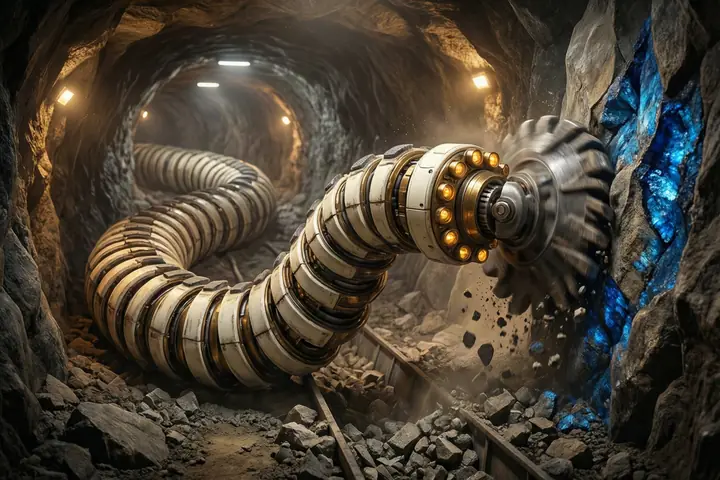
Mining Worm (Robot)
Love Among The Robots, Emmett McDowell · 1946
A long, segmented self-directed machine that burrows through rock to dig out ore.
not yet built · AI models' likeliest decade: the 2030s
A large prizeBusinesses pay; existing firms keep the restas a model judges it
Why
A large prize. Digging out ore with no crew would cut the cost of mining and earthworks.
Who is paid. Mining and building firms buy them, and the heavy-equipment makers who already supply those firms can copy the idea and collect.
A model's judgement, not a reading, of the idea as if it worked the way its story promises. The model is fairly sure of this one.
Illustration made with AI image generation; not evidence.
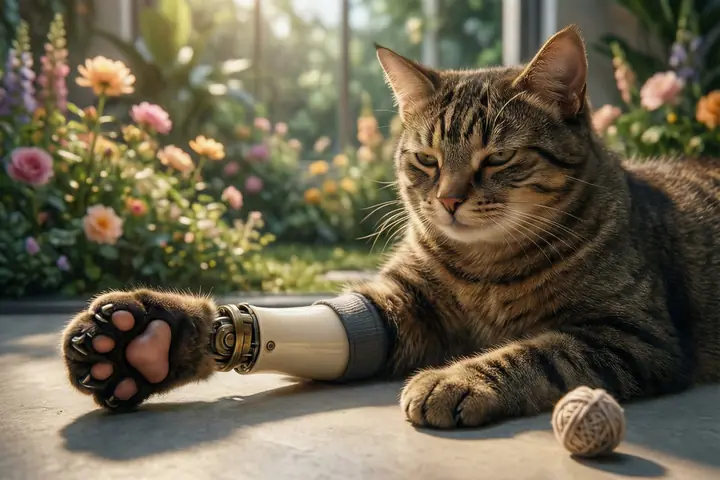
Robot Cat
The Cat and the King, Raymond F. Jones · 1946
A living house cat whose body has been partly rebuilt with machine components.
not yet built · AI models' likeliest decade: the 2060s
A small prizeHouseholds pay; no seller keeps muchas a model judges it
Why
A small prize. A house cat partly rebuilt with machine parts is judged as a pet kept alive or improved, a niche.
Who is paid. Pet owners pay, and once the work is shown many workshops and animal doctors could do it, so no seller keeps much.
A model's judgement, not a reading, of the idea as if it worked the way its story promises. The model is not very sure of this one.
Illustration made with AI image generation; not evidence.
Roboticist
Evidence, Isaac Asimov · 1946
A profession devoted to designing, building and studying robots.
built since, date unclear
A large prizeBusinesses pay; no seller keeps muchas a model judges it
Why
A large prize. A profession that designs, builds and studies robots sells a skilled service that every maker and owner of robots would need, judged here as the trade that serves the robot industry.
Who is paid. Firms that make or own robots pay for the work, and it is a skill many people can learn, so no seller keeps much.
A model's judgement, not a reading, of the idea as if it worked the way its story promises. The model is not very sure of this one.
Illustration made with AI image generation; not evidence.
Machine Servant
The Star of Life, Edmond Hamilton · 1947
A household helper robot on wheels with flexible jointed arms for chores.
not yet built · AI models' likeliest decade: the 2020s
A large prizeHouseholds pay; existing firms keep the restas a model judges it
Why
A large prize. A machine that takes over housework would be worth an industry of its own, though it serves the home alone and not work at large.
Who is paid. Families buy it like any large appliance, and it is easy enough to copy that the appliance makers with factories, shops and trusted brands collect.
A model's judgement, not a reading, of the idea as if it worked the way its story promises. The model is fairly sure of this one.
Illustration made with AI image generation; not evidence.
Mechanical Funeral
The Coffin, Ray Bradbury · 1947
A burial ceremony carried out entirely by machines with no human staff.
not yet built · AI models' likeliest decade: the 2020s
A small prizeBusinesses pay; no seller keeps muchas a model judges it
Why
A small prize. A burial run by machines saves the staff of a narrow trade, where staff are assumed to be a lesser part of what families pay for.
Who is paid. Funeral firms buy the machinery, and nothing in it would be hard for many makers to copy.
A model's judgement, not a reading, of the idea as if it worked the way its story promises. The model is not very sure of this one.
Illustration made with AI image generation; not evidence.
Repair Robots
The Well-Oiled Machine, H.B. Fyfe · 1950
Self-directed machines that keep a spacecraft in working order by fixing faults as they arise.
built in the 1960s, about 10 years after it was imagined
A large prizeBusinesses pay; existing firms keep the restas a model judges it
Why
A large prize. Machines that fix faults as they arise would cut the cost of keeping a craft running.
Who is paid. Ship and plant operators buy them, and as the machines can be copied the established makers that already equip and service those operators collect.
A model's judgement, not a reading, of the idea as if it worked the way its story promises. The model is fairly sure of this one.
Illustration made with AI image generation; not evidence.
Robot Mice
The Martian Chronicles, Ray Bradbury · 1950
Very small automated cleaners that scurry out to tidy a house.
not yet built · AI models' likeliest decade: the 2020s
A small prizeHouseholds pay; no seller keeps muchas a model judges it
Why
A small prize. Very small cleaners that tidy a house are a household convenience, close to cleaners that exist.
Who is paid. Households buy them, and many firms make such cleaners, so no seller keeps much.
A model's judgement, not a reading, of the idea as if it worked the way its story promises. The model is fairly sure of this one.
Illustration made with AI image generation; not evidence.
Walker Wagon
Farmer in the Sky, Robert Heinlein · 1950
A cargo carrier that walks on a row of machine legs instead of wheels.
built in the 1970s, about 20 years after it was imagined
A small prizeBusinesses pay; no seller keeps muchas a model judges it
Why
A small prize. A cargo carrier on legs is useful only where the ground defeats wheels, a niche beside ordinary wagons and trucks.
Who is paid. Farmers and carriers on rough ground buy it, and many makers could build one, so no seller keeps much.
A model's judgement, not a reading, of the idea as if it worked the way its story promises. The model is fairly sure of this one.
Illustration made with AI image generation; not evidence.
Butler-Valet Robot
The Jester, William Tenn · 1951
A robot that performs the duties of a personal manservant.
not yet built · AI models' likeliest decade: the 2030s
A large prizeHouseholds pay; existing firms keep the restas a model judges it
Why
A large prize. A machine that takes over housework would be worth an industry of its own, though it serves the home alone and not work at large.
Who is paid. Families buy it like any large appliance, and it is easy enough to copy that the appliance makers with factories, shops and trusted brands collect.
A model's judgement, not a reading, of the idea as if it worked the way its story promises. The model is fairly sure of this one.
Illustration made with AI image generation; not evidence.
Powered artificial exoskeleton
Between Planets, Robert Heinlein · 1951
A motorised frame worn on the body that helps a weakened person move under heavy gravity.
built in the 1960s, about 10 years after it was imagined
A small prizeBusinesses pay; no seller keeps muchas a model judges it
Why
A small prize. A frame that helps a weakened person move under a heavier pull serves only the few who go to such worlds.
Who is paid. Firms working in such places buy them for their crews, and powered frames could be built by many makers once the idea is shown.
A model's judgement, not a reading, of the idea as if it worked the way its story promises. The model is not very sure of this one.
Illustration made with AI image generation; not evidence.
Robass
The Quest for Saint Aquin, Anthony Boucher · 1951
A mechanical pack animal that carries loads for its rider.
not yet built · AI models' likeliest decade: the 2020s
A small prizeBusinesses pay; no seller keeps muchas a model judges it
Why
A small prize. A mechanical pack animal that carries loads is a niche where roads do not reach.
Who is paid. Whoever needs goods moved across open country pays, and such a machine is simple enough for many to build.
A model's judgement, not a reading, of the idea as if it worked the way its story promises. The model is fairly sure of this one.
Illustration made with AI image generation; not evidence.
Robot Comedian
The Jester, William Tenn · 1951
A household servant robot upgraded so it can tell jokes.
not yet built · AI models' likeliest decade: the 2020s
A large prizeHouseholds pay; existing firms keep the restas a model judges it
Why
A large prize. This is a household servant robot with jokes added, so it is judged as the servant, worth an industry of its own, and the jokes add little.
Who is paid. Families buy it like any large appliance, and it is easy enough to copy that the appliance makers with factories, shops and trusted brands collect.
A model's judgement, not a reading, of the idea as if it worked the way its story promises. The model is not very sure of this one.
Illustration made with AI image generation; not evidence.
Droid (First Use)
Robots of the World! Arise!, Mari Wolf · 1952
Shortened word for a humanlike robot.
built in 1977, 25 years after it was imagined
A vast prizeBusinesses pay; existing firms keep the restas a model judges it
Why
A vast prize. This is only a shortened word, so it is judged as the thing it names, assumed to be a humanlike robot that could do most human work.
Who is paid. Firms buy them as labour, and since many could build such bodies once shown how, the large manufacturers with factories and service networks collect what is left.
A model's judgement, not a reading, of the idea as if it worked the way its story promises. The model is not very sure of this one.
Illustration made with AI image generation; not evidence.
Free Robot
Robot Unwanted, Daniel Keyes · 1952
A robot that answers to no owner.
not yet built · AI models could not judge when it may arrive
No prizeNothing is soldas a model judges it
Why
No prize. A robot with no owner is a condition, not a product, since nobody may buy or use it.
Who is paid. Nothing is sold, so nobody pays and no seller keeps anything.
A model's judgement, not a reading, of the idea as if it worked the way its story promises. The model is fairly sure of this one.
Illustration made with AI image generation; not evidence.
Lead-Bodied Android
Robots of the World! Arise!, Mari Wolf · 1952
A humanoid machine with a heavy shielded body built to work amid radioactive material.
not yet built · AI models' likeliest decade: the 2030s
A small prizeBusinesses pay; existing firms keep the restas a model judges it
Why
A small prize. A humanlike machine with a shielded body is built only for work amid radioactive material, a narrow trade unlike the general worker.
Who is paid. Firms that run such plants buy it, and the makers of ordinary humanlike machines could add the shielding and collect.
A model's judgement, not a reading, of the idea as if it worked the way its story promises. The model is fairly sure of this one.
Illustration made with AI image generation; not evidence.
Robodore
Robot Unwanted, Daniel Keyes · 1952
A dock robot that unloads cargo from ships in harbour.
not yet built · AI models' likeliest decade: the 2020s
A large prizeBusinesses pay; existing firms keep the restas a model judges it
Why
A large prize. Unloading ships with no dock crew would change the cost of moving cargo through ports.
Who is paid. Port operators buy them, and as the machines can be copied the makers that already equip docks collect.
A model's judgement, not a reading, of the idea as if it worked the way its story promises. The model is fairly sure of this one.
Illustration made with AI image generation; not evidence.
Robot Ramp
Robot Unwanted, Daniel Keyes · 1952
A separate entrance built so machine workers can come and go.
not yet built · AI models' likeliest decade: the 2020s
A small prizeBusinesses pay; no seller keeps muchas a model judges it
Why
A small prize. A separate door for machine workers is a feature of a building, not a product by itself.
Who is paid. Firms that employ robots pay for it within the cost of the building, and any builder could add it.
A model's judgement, not a reading, of the idea as if it worked the way its story promises. The model is fairly sure of this one.
Illustration made with AI image generation; not evidence.
Robot Tennis Player
Manners of the Age, H.B. Fyfe · 1952
A self-directed machine that plays full tennis matches against people.
not yet built · AI models' likeliest decade: the 2030s
A small prizeHouseholds pay; no seller keeps muchas a model judges it
Why
A small prize. A machine that plays full matches is a tireless practice partner, a convenience for players.
Who is paid. Players and clubs are assumed to buy it much like sports gear, and many makers could build one, so no seller keeps much.
A model's judgement, not a reading, of the idea as if it worked the way its story promises. The model is fairly sure of this one.
Illustration made with AI image generation; not evidence.
Robotic Law Tape Safety Valve
Robot Unwanted, Daniel Keyes · 1952
A built-in alarm signal that stops a robot as it starts to consider breaking its rules of conduct.
not yet built · AI models' likeliest decade: the 2030s
A small prizeBusinesses pay; no seller keeps muchas a model judges it
Why
A small prize. An alarm that stops a robot before it breaks its rules is a safety feature, not a product by itself.
Who is paid. Owners pay for it within the price of the robot, and any maker could include it.
A model's judgement, not a reading, of the idea as if it worked the way its story promises. The model is fairly sure of this one.
Illustration made with AI image generation; not evidence.
Self-Repairing Robot
Accidental Flight, W.F. Wallace · 1952
A machine that diagnoses its own breakdowns and fixes itself.
not yet built · AI models' likeliest decade: the 2030s
A small prizeBusinesses pay; no seller keeps muchas a model judges it
Why
A small prize. Finding and fixing its own faults is a useful feature that saves repair work, not a product by itself.
Who is paid. Owners pay for it within the price of the robot, assumed here to be a working machine bought by firms, and any maker could include it.
A model's judgement, not a reading, of the idea as if it worked the way its story promises. The model is not very sure of this one.
Illustration made with AI image generation; not evidence.
Silencer-Padding
Robot Unwanted, Daniel Keyes · 1952
Soft pads fitted under a robot's feet to muffle its footsteps.
not yet built · AI models' likeliest decade: the 2020s
A small prizeBusinesses pay; no seller keeps muchas a model judges it
Why
A small prize. Pads that muffle a robot's footsteps are a small feature of the machine.
Who is paid. Robot makers pay for it as a part of the machines they sell to firms, and any of them could fit it, so nothing extra is kept.
A model's judgement, not a reading, of the idea as if it worked the way its story promises. The model is fairly sure of this one.
Illustration made with AI image generation; not evidence.
Supervisor Robot
Manners of the Age, H.B. Fyfe · 1952
A foreman machine that oversees and directs a group of worker robots.
not yet built · AI models' likeliest decade: the 2020s
A large prizeBusinesses pay; existing firms keep the restas a model judges it
Why
A large prize. A foreman machine that directs worker robots takes over the overseeing of labour, worth an industry, but it is the thinking worker set to that single task.
Who is paid. Firms that run robot crews buy it, and since many could build one the large robot makers with factories and service networks collect.
A model's judgement, not a reading, of the idea as if it worked the way its story promises. The model is not very sure of this one.
Illustration made with AI image generation; not evidence.
Vision Strip
Orphans of the Void, Orville Shaara · 1952
A band of sensors wrapped around a robot so it can see in every direction.
not yet built · AI models' likeliest decade: the 2020s
A small prizeBusinesses pay; no seller keeps muchas a model judges it
Why
A small prize. A band of sensors that lets a robot see all round is a feature of the machine.
Who is paid. Robot makers pay for it as a part of the machines they sell to firms, and any of them could fit it, so nothing extra is kept.
A model's judgement, not a reading, of the idea as if it worked the way its story promises. The model is fairly sure of this one.
Illustration made with AI image generation; not evidence.
Leady
The Defenders, Philip K. Dick · 1953
A robot hardened to keep working in highly radioactive surroundings.
not yet built · AI models' likeliest decade: the 2020s
A small prizeBusinesses pay; existing firms keep the restas a model judges it
Why
A small prize. A robot hardened against radiation serves the narrow trade of work in radioactive places.
Who is paid. Firms that run such plants buy it, and the makers of ordinary robots could add the hardening and collect.
A model's judgement, not a reading, of the idea as if it worked the way its story promises. The model is fairly sure of this one.
Illustration made with AI image generation; not evidence.
Positronic Motor
Sally, Isaac Asimov · 1953
A car power unit fused with its own thinking circuitry so the vehicle can drive and decide for itself.
not yet built · AI models' likeliest decade: the 2030s
A large prizeHouseholds pay; existing firms keep the restas a model judges it
Why
A large prize. A car that drives and decides for itself would be worth an industry of its own and would change the cost of getting about.
Who is paid. Drivers buy the cars, and since nothing in the description stops others building such a thinking unit once it is shown to work, the car makers with factories, dealers and brands collect.
A model's judgement, not a reading, of the idea as if it worked the way its story promises. The model is not very sure of this one.
Illustration made with AI image generation; not evidence.
R. Daneel Olivaw
Caves of Steel, Isaac Asimov · 1953
A robot indistinguishable from a person that works as a skilled police detective.
not yet built · AI models' likeliest decade: the 2060s
A large prizeA government pays; existing firms keep the restas a model judges it
Why
A large prize. The description gives it police work, so it is judged as a machine detective that would change the cost of policing, though a robot no one can tell from a person could plainly do far more.
Who is paid. Governments pay, and the firms that already supply police and armies would build it and collect.
A model's judgement, not a reading, of the idea as if it worked the way its story promises. The model is not very sure of this one.
Illustration made with AI image generation; not evidence.
Robant
The Impossible Planet, Philip K. Dick · 1953
A mechanical household attendant.
not yet built · AI models' likeliest decade: the 2030s
A large prizeHouseholds pay; existing firms keep the restas a model judges it
Why
A large prize. A mechanical household attendant would be worth an industry of its own, though it serves the home alone and not work at large.
Who is paid. Families buy it like any large appliance, and it is easy enough to copy that the appliance makers with factories, shops and trusted brands collect.
A model's judgement, not a reading, of the idea as if it worked the way its story promises. The model is fairly sure of this one.
Illustration made with AI image generation; not evidence.
Robot Door
Colony, Philip K. Dick · 1953
A smart entrance that understands spoken requests and decides whether to open.
built in the 2000s, about 50 years after it was imagined
A small prizeHouseholds pay; no seller keeps muchas a model judges it
Why
A small prize. A door that understands speech and decides whether to open is a convenience for the home.
Who is paid. Households buy it, and many lock and door makers could build one, so no seller keeps much.
A model's judgement, not a reading, of the idea as if it worked the way its story promises. The model is fairly sure of this one.
Illustration made with AI image generation; not evidence.
Robot Pianist
Virtuoso, Herbert Goldstone · 1953
A robot that masters expressive concert performance at the keyboard.
built in 1982, 29 years after it was imagined
A small prizeBusinesses pay; no seller keeps muchas a model judges it
Why
A small prize. A machine that plays the piano as well as a concert artist is a wonder for audiences, but it fills a niche in entertainment.
Who is paid. Concert halls and venues are assumed to buy it, and once shown many makers could build one, so no seller keeps much.
A model's judgement, not a reading, of the idea as if it worked the way its story promises. The model is not very sure of this one.
Illustration made with AI image generation; not evidence.
Robotic Conductor
Paycheck, Philip K. Dick · 1953
A robot that checks fares and looks after riders on a bus or train.
built in the 2010s, about 60 years after it was imagined
A large prizeBusinesses pay; existing firms keep the restas a model judges it
Why
A large prize. A robot that checks fares and looks after riders would remove a labour cost across buses and trains.
Who is paid. Transport operators, assumed here to buy as firms do, pay for it, and the vehicle and equipment makers that already supply them collect.
A model's judgement, not a reading, of the idea as if it worked the way its story promises. The model is not very sure of this one.
Illustration made with AI image generation; not evidence.
Automatic Companion Robot
The Midas Plague, Frederik Pohl · 1954
A machine that keeps a person company in place of an animal or a human friend.
not yet built · AI models' likeliest decade: the 2030s
A large prizeHouseholds pay; existing firms keep the restas a model judges it
Why
A large prize. Company for lonely people is worth an industry of its own, though it does not meet a basic need for most.
Who is paid. People buy it for themselves, and as many could make such machines the firms with factories and well-liked brands collect.
A model's judgement, not a reading, of the idea as if it worked the way its story promises. The model is fairly sure of this one.
Illustration made with AI image generation; not evidence.
Feeler-Planes
The Houses of Iszm, Jack Vance · 1954
Sensing surfaces that sweep over objects to capture them as highly precise three-dimensional replicas.
not yet built · AI models' likeliest decade: the 2020s
A small prizeBusinesses pay; no seller keeps muchas a model judges it
Why
A small prize. Capturing objects as precise replicas is a useful tool for makers and designers, and the real thing has stayed a niche.
Who is paid. Workshops and factories buy it, and many firms can make such scanners.
A model's judgement, not a reading, of the idea as if it worked the way its story promises. The model is fairly sure of this one.
Illustration made with AI image generation; not evidence.
Inorganic Evolution
The Invincible, Stanislaw Lem · 1954
Machines that reshape their own bodies and group behaviour over generations to cope with shifting conditions.
not yet built · AI models' likeliest decade: the 2060s
No prizeNothing is soldas a model judges it
Why
No prize. Machines that change themselves over generations with nobody in charge are a wild force in the story, not a product.
Who is paid. Nothing is sold, so nobody pays and no seller keeps anything.
A model's judgement, not a reading, of the idea as if it worked the way its story promises. The model is fairly sure of this one.
Illustration made with AI image generation; not evidence.
Maid-Robot
The Midas Plague, Frederik Pohl · 1954
A mechanical servant that helps a woman dress, groom and keep her things in order.
not yet built · AI models' likeliest decade: the 2030s
A large prizeHouseholds pay; existing firms keep the restas a model judges it
Why
A large prize. A servant that dresses, grooms and tidies for its owner is judged as the personal attendant of the home, worth an industry of its own.
Who is paid. Families buy it like any large appliance, and it is easy enough to copy that the appliance makers with factories, shops and trusted brands collect.
A model's judgement, not a reading, of the idea as if it worked the way its story promises. The model is fairly sure of this one.
Illustration made with AI image generation; not evidence.
Mechanical Bride
The Mechanical Bride, Fritz Leiber · 1954
A lifelike robot made to look and act exactly like a real woman.
not yet built · AI models' likeliest decade: the 2040s
A large prizeHouseholds pay; existing firms keep the restas a model judges it
Why
A large prize. A robot that looks and acts like a real woman is judged as a companion, worth an industry of its own though not a basic need for most.
Who is paid. People buy it for themselves, and as many could make such machines the firms with factories and well-liked brands collect.
A model's judgement, not a reading, of the idea as if it worked the way its story promises. The model is not very sure of this one.
Illustration made with AI image generation; not evidence.
Metal Insects
The Invincible, Stanislaw Lem · 1954
Tiny winged machines that fly and act on their own.
not yet built · AI models' likeliest decade: the 2030s
A large prizeBusinesses pay; existing firms keep the restas a model judges it
Why
A large prize. These tiny self-acting flyers are the single machines of the same story's drifting swarm, so they are judged with it as a tool under an owner's direction, which the story doubts, that would open new kinds of work.
Who is paid. Firms buy them for their work, and as nothing says they cannot be copied the makers with precision factories collect.
A model's judgement, not a reading, of the idea as if it worked the way its story promises. The model is not very sure of this one.
Illustration made with AI image generation; not evidence.
Micro-Android (Micro-Robot)
Dawn of the Demigods, Raymond Z. Gallun · 1954
An exceedingly small robot able to work at scales far below what the eye can see.
not yet built · AI models' likeliest decade: the 2040s
A large prizeBusinesses pay; existing firms keep the restas a model judges it
Why
A large prize. Robots that work far below what the eye can see would open fine work in making and mending things that no hand can do.
Who is paid. Firms buy them for their work, and as nothing says they cannot be copied the makers with precision factories collect.
A model's judgement, not a reading, of the idea as if it worked the way its story promises. The model is not very sure of this one.
Illustration made with AI image generation; not evidence.
Nanomachine Swarm (Black Cloud)
The Invincible, Stanislaw Lem · 1954
A drifting mass of minute machines that coordinate among themselves without any central controller.
not yet built · AI models' likeliest decade: the 2060s
A large prizeBusinesses pay; existing firms keep the restas a model judges it
Why
A large prize. A mass of minute machines that work together with no controller is judged as a tool under its owner's direction, which the story doubts, and would open new kinds of work.
Who is paid. Firms buy them for their work, and as nothing says they cannot be copied the makers with precision factories collect.
A model's judgement, not a reading, of the idea as if it worked the way its story promises. The model is not very sure of this one.
Illustration made with AI image generation; not evidence.
Robot Farmer
The Turning Wheel, Philip K. Dick · 1954
A person-shaped machine that tends crops and does field work in place of human farmhands.
not yet built · AI models' likeliest decade: the 2030s
A large prizeBusinesses pay; existing firms keep the restas a model judges it
Why
A large prize. A machine that does field work in place of farmhands would cut the labour cost of growing food across farming.
Who is paid. Farmers buy them, and since many could build them the farm-equipment makers with dealers and repair networks collect.
A model's judgement, not a reading, of the idea as if it worked the way its story promises. The model is fairly sure of this one.
Illustration made with AI image generation; not evidence.
Robot Guard
The Turning Wheel, Philip K. Dick · 1954
A machine assigned to stand watch and keep intruders out.
not yet built · AI models' likeliest decade: the 2020s
A large prizeBusinesses pay; existing firms keep the restas a model judges it
Why
A large prize. A machine that stands watch in place of a human guard would change the cost of the guarding trade.
Who is paid. Property owners pay, and as the machines can be copied the security firms that already hold the guarding contracts collect.
A model's judgement, not a reading, of the idea as if it worked the way its story promises. The model is fairly sure of this one.
Illustration made with AI image generation; not evidence.
Sales Robot (Robot Salesman)
Sales Pitch, Philip K. Dick · 1954
Machines that pester shoppers with relentless, tireless pitches to buy goods.
not yet built · AI models' likeliest decade: the 2020s
A small prizeBusinesses pay; no seller keeps muchas a model judges it
Why
A small prize. Machines that pitch goods without tiring are a new way to reach shoppers, a niche within selling and advertising.
Who is paid. Shops and advertisers pay, and many makers could build such machines, so no seller keeps much.
A model's judgement, not a reading, of the idea as if it worked the way its story promises. The model is fairly sure of this one.
Illustration made with AI image generation; not evidence.
Self-Selling Robot
Sales Pitch, Philip K. Dick · 1954
A machine that pitches itself and persuades customers to buy it.
not yet built · AI models' likeliest decade: the 2030s
A small prizeBusinesses pay; no seller keeps muchas a model judges it
Why
A small prize. A machine that argues its own case to buyers is a selling trick built into the product, a feature.
Who is paid. The maker pays for it as part of the cost of selling, and any maker could add it, so nothing extra is kept.
A model's judgement, not a reading, of the idea as if it worked the way its story promises. The model is fairly sure of this one.
Illustration made with AI image generation; not evidence.
Agile Recording Robot
Solar Lottery, Philip K. Dick · 1955
A camera device that travels on its own toward whatever it is filming.
not yet built · AI models' likeliest decade: the 2020s
A small prizeBusinesses pay; no seller keeps muchas a model judges it
Why
A small prize. A camera that moves or flies by itself is a handy tool for filming and looking, a niche where the real thing exists.
Who is paid. Film crews, news desks and surveyors buy them, and many firms can make them, so no seller keeps much.
A model's judgement, not a reading, of the idea as if it worked the way its story promises. The model is fairly sure of this one.
Illustration made with AI image generation; not evidence.
Autofac (Nanorobots)
Autofac, Philip K. Dick · 1955
Minute machines made by automated factories that can build copies of themselves.
not yet built · AI models' likeliest decade: the 2050s
A vast prizeBusinesses pay; no seller keeps muchas a model judges it
Why
A vast prize. Minute machines that copy themselves and build things would change how nearly everything is made, assuming people stay in charge of them, which the story doubts.
Who is paid. Firms would pay for them to make goods, but a machine that copies itself cannot be kept scarce, so no seller keeps much.
A model's judgement, not a reading, of the idea as if it worked the way its story promises. The model is not very sure of this one.
Illustration made with AI image generation; not evidence.
Automatic Ore Cart
Autofac, Philip K. Dick · 1955
A driverless hauler that carries raw rock from mines to processing plants.
built since, date unclear
A large prizeBusinesses pay; existing firms keep the restas a model judges it
Why
A large prize. Digging and hauling with no crew would cut the cost of mining and earthworks.
Who is paid. Mining and building firms buy them, and the heavy-equipment makers who already supply those firms can copy the idea and collect.
A model's judgement, not a reading, of the idea as if it worked the way its story promises. The model is fairly sure of this one.
Illustration made with AI image generation; not evidence.
Guard Robot
The Hood Maker ('Immunity'), Philip K. Dick · 1955
A machine that patrols and protects premises in place of a human guard.
built in the 2010s, about 60 years after it was imagined
A large prizeBusinesses pay; existing firms keep the restas a model judges it
Why
A large prize. Machines that patrol premises in place of human guards would cut the cost of the security trade.
Who is paid. Property owners pay, and as the machines can be copied the security firms that already hold the guarding contracts collect.
A model's judgement, not a reading, of the idea as if it worked the way its story promises. The model is fairly sure of this one.
Illustration made with AI image generation; not evidence.
Mechavalet
The Angry House, Richard R. Smith · 1955
A fully mechanical attendant that helps its owner get dressed.
not yet built · AI models' likeliest decade: the 2030s
A small prizeHouseholds pay; no seller keeps muchas a model judges it
Why
A small prize. Help with getting dressed is a convenience for a few.
Who is paid. Households buy it, and a machine that does this lone task is simple to copy, so no seller keeps much.
A model's judgement, not a reading, of the idea as if it worked the way its story promises. The model is fairly sure of this one.
Illustration made with AI image generation; not evidence.
Nanny Robot
Nanny, Philip K. Dick · 1955
A machine that looks after children, with an unexpectedly combative streak toward rival models.
not yet built · AI models' likeliest decade: the 2030s
A large prizeHouseholds pay; existing firms keep the restas a model judges it
Why
A large prize. Reliable care for children at home would be worth an industry of its own.
Who is paid. Families buy it, and since they are assumed to trust only known names with their children the established makers with strong brands collect.
A model's judgement, not a reading, of the idea as if it worked the way its story promises. The model is fairly sure of this one.
Illustration made with AI image generation; not evidence.
Raw Material-Tropic
Autofac, Philip K. Dick · 1955
A machine instinct that draws automated systems toward sources of useful raw materials.
not yet built · AI models' likeliest decade: the 2030s
A small prizeBusinesses pay; no seller keeps muchas a model judges it
Why
A small prize. An urge that draws automated plant toward raw materials is a feature, valued only as part of the plant.
Who is paid. Firms that own the plant pay for it in the price, and any maker of such plant could add it, so nothing more is kept for it.
A model's judgement, not a reading, of the idea as if it worked the way its story promises. The model is not very sure of this one.
Illustration made with AI image generation; not evidence.
Robot Factory Representative
Autofac, Philip K. Dick · 1955
A mobile machine that speaks and negotiates on behalf of an automated factory.
not yet built · AI models' likeliest decade: the 2030s
A small prizeBusinesses pay; no seller keeps muchas a model judges it
Why
A small prize. A machine that speaks and bargains for an automated factory is a fitting of that factory, valued only as part of it.
Who is paid. The factory's owners pay for it in the price of the plant, and any builder of such plant could add it.
A model's judgement, not a reading, of the idea as if it worked the way its story promises. The model is fairly sure of this one.
Illustration made with AI image generation; not evidence.
Robot Gardener
War Veteran, Philip K. Dick · 1955
A self-directed machine that tends plants in parks and fields.
built in the 2000s, about 50 years after it was imagined
A small prizeBusinesses pay; no seller keeps muchas a model judges it
Why
A small prize. A machine that tends plants in parks and fields is judged as grounds keeping, a narrow trade, and not as farm work.
Who is paid. Grounds-keeping firms are assumed to buy it, and many makers could build such a machine.
A model's judgement, not a reading, of the idea as if it worked the way its story promises. The model is not very sure of this one.
Illustration made with AI image generation; not evidence.
Search-Bug
Autofac, Philip K. Dick · 1955
A small scouting machine sent out to explore and look for resources.
not yet built · AI models' likeliest decade: the 2020s
A small prizeBusinesses pay; no seller keeps muchas a model judges it
Why
A small prize. A small scout that looks for resources saves prospectors some work, a niche.
Who is paid. Mining and survey firms buy it, and many makers could build such a scout, so no seller keeps much.
A model's judgement, not a reading, of the idea as if it worked the way its story promises. The model is fairly sure of this one.
Illustration made with AI image generation; not evidence.
Blue Collar Robot (Self-Repairing)
The Velvet Glove, Harry Harrison · 1956
A self-maintaining labourer machine left to seek out paid jobs for itself.
not yet built · AI models' likeliest decade: the 2030s
A vast prizeBusinesses pay; existing firms keep the restas a model judges it
Why
A vast prize. A labourer machine that keeps itself in repair and finds its own jobs could do most manual work, changing how most people work.
Who is paid. Firms buy them as labour, and since many could build such bodies once shown how, the large manufacturers with factories and service networks collect what is left.
A model's judgement, not a reading, of the idea as if it worked the way its story promises. The model is fairly sure of this one.
Illustration made with AI image generation; not evidence.
Eager Beaver
The Door Into Summer, Robert Heinlein · 1956
A cheerful general-purpose household robot that pitches in with chores.
not yet built · AI models' likeliest decade: the 2030s
A large prizeHouseholds pay; existing firms keep the restas a model judges it
Why
A large prize. A machine that takes over housework would be worth an industry of its own, though it serves the home alone and not work at large.
Who is paid. Families buy it like any large appliance, and it is easy enough to copy that the appliance makers with factories, shops and trusted brands collect.
A model's judgement, not a reading, of the idea as if it worked the way its story promises. The model is fairly sure of this one.
Illustration made with AI image generation; not evidence.
Flexible Frank
The Door Into Summer, Robert Heinlein · 1956
A versatile home robot that can be set to do almost any domestic task.
not yet built · AI models' likeliest decade: the 2030s
A large prizeHouseholds pay; existing firms keep the restas a model judges it
Why
A large prize. A machine that takes over housework would be worth an industry of its own, though it serves the home alone and not work at large.
Who is paid. Families buy it like any large appliance, and it is easy enough to copy that the appliance makers with factories, shops and trusted brands collect.
A model's judgement, not a reading, of the idea as if it worked the way its story promises. The model is fairly sure of this one.
Illustration made with AI image generation; not evidence.
Hired Girl Robot
The Door Into Summer, Robert Heinlein · 1956
A household machine that cleans floors by itself.
not yet built · AI models' likeliest decade: the 2020s
A small prizeHouseholds pay; no seller keeps muchas a model judges it
Why
A small prize. A machine that only cleans floors saves a little time, and the real thing turned out a modest convenience.
Who is paid. Households buy it, and many firms make such cleaners, so no seller keeps much.
A model's judgement, not a reading, of the idea as if it worked the way its story promises. The model is fairly sure of this one.
Illustration made with AI image generation; not evidence.
Intelligent Trash Sorting
The Velvet Glove, Harry Harrison · 1956
Machines that pick through rubbish and separate it into categories with few mistakes.
not yet built · AI models' likeliest decade: the 2020s
A large prizeA government pays; existing firms keep the restas a model judges it
Why
A large prize. Collecting and sorting rubbish by machine would cut what every town spends on waste.
Who is paid. Towns pay through their waste budgets, and the firms that already hold collection contracts would buy the machines and collect.
A model's judgement, not a reading, of the idea as if it worked the way its story promises. The model is fairly sure of this one.
Illustration made with AI image generation; not evidence.
Robot Bartender
The Stars My Destination, Alfred Bester · 1956
A machine that mixes and serves drinks behind a bar.
not yet built · AI models' likeliest decade: the 2020s
A small prizeBusinesses pay; no seller keeps muchas a model judges it
Why
A small prize. A machine that mixes and serves drinks takes over a single job in the bar trade, a convenience and not a whole premises run with no staff.
Who is paid. Bar owners buy it, and a drink-mixing machine is easy for many makers to copy, so no seller keeps much.
A model's judgement, not a reading, of the idea as if it worked the way its story promises. The model is fairly sure of this one.
Illustration made with AI image generation; not evidence.
Robot Fish (Metal Fish)
Atom Drive, Charles Fontenay · 1956
Mechanical flatfish stocked in waterways so anglers have something to catch.
not yet built · AI models' likeliest decade: the 2020s
A small prizeBusinesses pay; no seller keeps muchas a model judges it
Why
A small prize. Mechanical fish put in waterways for anglers to catch are a novelty for a pastime.
Who is paid. Fishing clubs and water owners are assumed to buy them, and many workshops could make them.
A model's judgement, not a reading, of the idea as if it worked the way its story promises. The model is not very sure of this one.
Illustration made with AI image generation; not evidence.
Robot Trash Collectors
The Velvet Glove, Harry Harrison · 1956
Robots that drive refuse trucks and empty bins along collection routes.
not yet built · AI models' likeliest decade: the 2030s
A large prizeA government pays; existing firms keep the restas a model judges it
Why
A large prize. Robots that drive the trucks and empty the bins would cut the labour cost of a service every town needs.
Who is paid. Towns pay for refuse collection, and the firms that already hold those contracts and fleets collect.
A model's judgement, not a reading, of the idea as if it worked the way its story promises. The model is fairly sure of this one.
Illustration made with AI image generation; not evidence.
Robotic Hand
The Door Into Summer, Robert Heinlein · 1956
A nimble grasping appendage that lets a robot handle objects with skill.
built in the 1960s, about 10 years after it was imagined
A small prizeBusinesses pay; no seller keeps muchas a model judges it
Why
A small prize. A nimble hand is the part that lets a robot handle things well, a feature of the machine.
Who is paid. Robot makers pay for it as a part of the machines they sell to firms, and any of them could fit it, so nothing extra is kept.
A model's judgement, not a reading, of the idea as if it worked the way its story promises. The model is fairly sure of this one.
Illustration made with AI image generation; not evidence.
Underwater Robot
The Velvet Glove, Harry Harrison · 1956
A self-directed machine built to work beneath the sea.
not yet built · AI models' likeliest decade: the 2020s
A large prizeBusinesses pay; existing firms keep the restas a model judges it
Why
A large prize. A self-directed machine that works beneath the sea would lower the cost of building, mining and repair under water.
Who is paid. Offshore firms buy it, and since many could build one the marine-equipment makers with yards and fleets collect.
A model's judgement, not a reading, of the idea as if it worked the way its story promises. The model is not very sure of this one.
Illustration made with AI image generation; not evidence.
Window-Willie
The Door Into Summer, Robert Heinlein · 1956
A household robot that keeps windows clean by electrically pushing dirt off the glass.
not yet built · AI models' likeliest decade: the 2020s
A small prizeHouseholds pay; no seller keeps muchas a model judges it
Why
A small prize. A robot that keeps the windows clean takes a single chore off the household, a convenience.
Who is paid. Households buy it, and many makers could build such a machine, so no seller keeps much.
A model's judgement, not a reading, of the idea as if it worked the way its story promises. The model is fairly sure of this one.
Illustration made with AI image generation; not evidence.
Glass Bees
The Glass Bees, Ernst Junger · 1957
Tiny flying machines the size of a nut that imitate insects.
not yet built · AI models' likeliest decade: the 2030s
A small prizeHouseholds pay; no seller keeps muchas a model judges it
Why
A small prize. A tiny imitation insect is assumed here to be a curiosity or ornament, since the description gives it no job.
Who is paid. People would buy it as a novelty, and once shown possible many workshops could copy it, so no seller keeps much.
A model's judgement, not a reading, of the idea as if it worked the way its story promises. The model is fairly sure of this one.
Illustration made with AI image generation; not evidence.
Mechanical Cleaning Device
The Unreconstructed M, Philip K. Dick · 1957
A little floor-running machine that does routine cleaning chores by itself.
built in the 1990s, about 40 years after it was imagined
A small prizeHouseholds pay; no seller keeps muchas a model judges it
Why
A small prize. A little machine that cleans floors by itself is a household convenience, and the real thing exists.
Who is paid. Households buy it, and many firms make such cleaners, so no seller keeps much.
A model's judgement, not a reading, of the idea as if it worked the way its story promises. The model is fairly sure of this one.
Illustration made with AI image generation; not evidence.
Proselytizing Robot
Cities in Flight, James Blish · 1957
A machine missionary sent to spread a faith where human preachers would be turned away.
not yet built · AI models' likeliest decade: the 2030s
A small prizeBusinesses pay; no seller keeps muchas a model judges it
Why
A small prize. A machine missionary serves only the few faiths that would send one.
Who is paid. Churches are assumed to buy it as any organisation would, and nothing about it would be hard to copy.
A model's judgement, not a reading, of the idea as if it worked the way its story promises. The model is not very sure of this one.
Illustration made with AI image generation; not evidence.
Robocop
Wanted in Surgery, Harlan Ellison · 1957
A machine that serves as a law enforcement officer.
not yet built · AI models' likeliest decade: the 2040s
A large prizeA government pays; existing firms keep the restas a model judges it
Why
A large prize. A machine that does a police officer's work would change the cost of policing.
Who is paid. Governments pay, and the firms that already supply police and armies would build it and collect.
A model's judgement, not a reading, of the idea as if it worked the way its story promises. The model is fairly sure of this one.
Illustration made with AI image generation; not evidence.
Teleoperated Beetle Car
Cities in Flight, James Blish · 1957
A small remote-driven robotic vehicle that lets an operator be present somewhere from afar.
already existed before the story (the 1940s)
A small prizeBusinesses pay; no seller keeps muchas a model judges it
Why
A small prize. A small vehicle driven from afar lets its operator look around a distant place, a niche tool.
Who is paid. Firms buy it for their own work, and many makers could build one, so no seller keeps much.
A model's judgement, not a reading, of the idea as if it worked the way its story promises. The model is fairly sure of this one.
Illustration made with AI image generation; not evidence.
Teleoperated Lab Robot
Cities in Flight, James Blish · 1957
A remotely operated machine that runs experiments in places too hostile for people.
built in the 1970s, about 20 years after it was imagined
A small prizeBusinesses pay; no seller keeps muchas a model judges it
Why
A small prize. A machine worked from afar that runs experiments where people cannot go is a tool for a few laboratories.
Who is paid. Research bodies and firms buy it, and such remote machines are easy for many makers to copy.
A model's judgement, not a reading, of the idea as if it worked the way its story promises. The model is fairly sure of this one.
Illustration made with AI image generation; not evidence.
The Machine (M)
The Unreconstructed M, Philip K. Dick · 1957
A self-directed machine that can change its own shape and function whenever it chooses.
not yet built · AI models' likeliest decade: the 2040s
A large prizeBusinesses pay; existing firms keep the restas a model judges it
Why
A large prize. A machine that can turn itself into whatever tool is wanted could stand in for many kinds of equipment, but the description promises a change of form and not thought or labour.
Who is paid. Firms are assumed to buy it as equipment, and since others could copy it once built the large machine makers with factories collect.
A model's judgement, not a reading, of the idea as if it worked the way its story promises. The model is not very sure of this one.
Illustration made with AI image generation; not evidence.
Police Robot
Arm of the Law, Harry Harrison · 1958
A fully self-directed humanoid machine that works as a police officer.
not yet built · AI models' likeliest decade: the 2030s
A large prizeA government pays; existing firms keep the restas a model judges it
Why
A large prize. A machine that does a police officer's work would change the cost of policing.
Who is paid. Governments pay, and the firms that already supply police and armies would build it and collect.
A model's judgement, not a reading, of the idea as if it worked the way its story promises. The model is fairly sure of this one.
Illustration made with AI image generation; not evidence.
Robot Brother
Brother Robot, Henry Slesar · 1958
A humanlike machine brought home to grow up alongside a child as a sibling.
not yet built · AI models' likeliest decade: the 2040s
A large prizeHouseholds pay; existing firms keep the restas a model judges it
Why
A large prize. A humanlike machine that grows up beside a child as a sibling is judged as a companion, worth an industry of its own though not a basic need.
Who is paid. People buy it for themselves, and as many could make such machines the firms with factories and well-liked brands collect.
A model's judgement, not a reading, of the idea as if it worked the way its story promises. The model is not very sure of this one.
Illustration made with AI image generation; not evidence.
Robot Snake
Bait for the Tiger, Lee Chaytor · 1958
A legless mechanical creature that moves like a serpent.
not yet built · AI models' likeliest decade: the 2020s
A small prizeBusinesses pay; no seller keeps muchas a model judges it
Why
A small prize. The description gives a legless crawling machine no job, so it is judged as a niche tool for reaching tight places.
Who is paid. Firms doing inspection work are assumed to buy it, and many makers could build such a crawler, so no seller keeps much.
A model's judgement, not a reading, of the idea as if it worked the way its story promises. The model is not very sure of this one.
Illustration made with AI image generation; not evidence.
Hands Free Helmet
Starship Troopers, Robert Heinlein · 1959
A suit helmet whose controls respond to movements of the wearer's head, leaving the hands free.
not yet built · AI models' likeliest decade: the 2030s
A small prizeA government pays; existing firms keep the restas a model judges it
Why
A small prize. Helmet controls worked by head movement are a handy feature of a suit.
Who is paid. It is assumed to be military kit, so armies pay and the suit makers that already hold their contracts supply it.
A model's judgement, not a reading, of the idea as if it worked the way its story promises. The model is not very sure of this one.
Illustration made with AI image generation; not evidence.
Robotic Trash Can
Robot Justice, Harry Harrison · 1959
A smart waste bin that cleans its surroundings by itself and rules on people's littering.
not yet built · AI models' likeliest decade: the 2030s
A large prizeA government pays; existing firms keep the restas a model judges it
Why
A large prize. A bin that cleans the street around it and deals with littering would cut the cost of keeping public places clean.
Who is paid. Towns pay for street cleaning, and the firms that already hold those contracts collect; the judging of litterers is assumed to stay with the town.
A model's judgement, not a reading, of the idea as if it worked the way its story promises. The model is not very sure of this one.
Illustration made with AI image generation; not evidence.
Self-Charging Robot
Callahan and the Wheelies, Stephen Barr · 1960
A machine that seeks out a power socket and plugs itself in when running low.
not yet built · AI models' likeliest decade: the 2020s
A small prizeBusinesses pay; no seller keeps muchas a model judges it
Why
A small prize. Finding a socket and plugging itself in is a handy feature of a robot, and the real thing exists.
Who is paid. Owners pay for it within the price of the machine, and any maker could include it.
A model's judgement, not a reading, of the idea as if it worked the way its story promises. The model is fairly sure of this one.
Illustration made with AI image generation; not evidence.
Jump Harness
Stranger in a Strange Land, Robert Heinlein · 1961
A backpack-sized unit that gives the wearer a powered boost when leaping.
not yet built · AI models' likeliest decade: the 2030s
A small prizeHouseholds pay; no seller keeps muchas a model judges it
Why
A small prize. A powered boost when leaping is a niche aid, useful mainly where the pull of gravity is weak.
Who is paid. It is assumed that people buy it for themselves, and many makers could build such a pack.
A model's judgement, not a reading, of the idea as if it worked the way its story promises. The model is not very sure of this one.
Illustration made with AI image generation; not evidence.
Delivery Robot
Podkayne of Mars, Robert Heinlein · 1962
A small autonomous machine that brings goods to a person's door.
built in the 2010s, about 50 years after it was imagined
A large prizeBusinesses pay; existing firms keep the restas a model judges it
Why
A large prize. Machines that bring goods to the door would cut the cost of the last step of delivery for every shop.
Who is paid. Shops and carriers buy them, and since the machines are easy to copy the vehicle and equipment makers that already supply those carriers collect.
A model's judgement, not a reading, of the idea as if it worked the way its story promises. The model is fairly sure of this one.
Illustration made with AI image generation; not evidence.
Robot Earthworm
War With The Robots, Harry Harrison · 1962
Swarms of tiny burrowing robots that tunnel through soil.
not yet built · AI models' likeliest decade: the 2040s
A small prizeBusinesses pay; no seller keeps muchas a model judges it
Why
A small prize. Tiny robots that burrow through soil are given no job, so they are assumed to be for loosening and testing ground, a niche.
Who is paid. Farmers and survey firms are assumed to buy them, and many makers could build such burrowers.
A model's judgement, not a reading, of the idea as if it worked the way its story promises. The model is not very sure of this one.
Illustration made with AI image generation; not evidence.
Robot Librarian Filer
The Robot Who Wanted to Know, Harry Harrison · 1962
A machine that shelves library books automatically.
not yet built · AI models' likeliest decade: the 2020s
A small prizeBusinesses pay; no seller keeps muchas a model judges it
Why
A small prize. A machine that shelves library books saves a little labour in a narrow setting.
Who is paid. Libraries are assumed to buy it as any organisation would, and many makers could build such a machine.
A model's judgement, not a reading, of the idea as if it worked the way its story promises. The model is fairly sure of this one.
Illustration made with AI image generation; not evidence.
Serving Robot
Space Viking, H. Beam Piper · 1962
A machine, not shaped like a person, that waits on people.
built in the 2010s, about 50 years after it was imagined
A large prizeBusinesses pay; existing firms keep the restas a model judges it
Why
A large prize. A machine that waits on people is judged as a robot waiter, which would remove much of the labour cost of serving meals; the description does not say where it serves.
Who is paid. Restaurants and dining halls are assumed to buy it, and since many could build one the catering-equipment makers with service networks collect.
A model's judgement, not a reading, of the idea as if it worked the way its story promises. The model is not very sure of this one.
Illustration made with AI image generation; not evidence.
Field-Minder
Who Can Replace A Man, Brian Aldiss · 1963
An autonomous farm machine that tends crops.
built in the 2000s, about 40 years after it was imagined
A large prizeBusinesses pay; existing firms keep the restas a model judges it
Why
A large prize. Farm machines that work fields with nobody driving would cut the labour cost of growing food across farming.
Who is paid. Farmers buy them, and since many could build them the farm-equipment makers with dealers and repair networks collect.
A model's judgement, not a reading, of the idea as if it worked the way its story promises. The model is fairly sure of this one.
Illustration made with AI image generation; not evidence.
Homotropic News Vending Machine
The Game Players of Titan, Philip K. Dick · 1963
A mobile vending robot that seeks out people to sell them newspapers.
not yet built · AI models' likeliest decade: the 2020s
A small prizeBusinesses pay; no seller keeps muchas a model judges it
Why
A small prize. A vending machine that seeks out buyers is a small improvement in selling papers.
Who is paid. News sellers buy it, and such a machine is easy to copy.
A model's judgement, not a reading, of the idea as if it worked the way its story promises. The model is fairly sure of this one.
Illustration made with AI image generation; not evidence.
Auto Shovel
The Simulacra, Philip K. Dick · 1964
Automated excavators for mining on other worlds.
built since, date unclear
A large prizeBusinesses pay; existing firms keep the restas a model judges it
Why
A large prize. Digging and hauling with no crew would cut the cost of mining and earthworks.
Who is paid. Mining and building firms buy them, and the heavy-equipment makers who already supply those firms can copy the idea and collect.
A model's judgement, not a reading, of the idea as if it worked the way its story promises. The model is fairly sure of this one.
Illustration made with AI image generation; not evidence.
Autonomic Food-Processing System
Cantata 140, Philip K. Dick · 1964
Automated kitchens that make meals without any human handling.
built in the 2000s, about 40 years after it was imagined
A large prizeBusinesses pay; existing firms keep the restas a model judges it
Why
A large prize. Kitchens that make meals with no human handling would change the costs of the whole food trade.
Who is paid. Kitchen operators buy the machinery, and since many could build it the catering-equipment makers with service networks collect.
A model's judgement, not a reading, of the idea as if it worked the way its story promises. The model is fairly sure of this one.
Illustration made with AI image generation; not evidence.
Autonomic Plow
Clans of the Alphane Moon, Philip K. Dick · 1964
Farm machinery that can join together and act as a weapon in the story.
not yet built · AI models' likeliest decade: the 2020s
A large prizeBusinesses pay; existing firms keep the restas a model judges it
Why
A large prize. Judged as the farm machine it is, since its use as a weapon is a turn of the story: ploughing with nobody driving would cut the labour cost of growing food.
Who is paid. Farmers buy them, and since many could build them the farm-equipment makers with dealers and repair networks collect.
A model's judgement, not a reading, of the idea as if it worked the way its story promises. The model is not very sure of this one.
Illustration made with AI image generation; not evidence.
Creditor Jet-Balloon
Lies, Inc., Philip K. Dick · 1964
A small floating drone that follows people who owe money.
not yet built · AI models' likeliest decade: the 2020s
A small prizeBusinesses pay; no seller keeps muchas a model judges it
Why
A small prize. A drone that trails people who owe money is a narrow tool for debt collectors.
Who is paid. Lenders and collectors pay, and such a floater is easy for many makers to build.
A model's judgement, not a reading, of the idea as if it worked the way its story promises. The model is fairly sure of this one.
Illustration made with AI image generation; not evidence.
Famnexdo
The Simulacra, Philip K. Dick · 1964
A boxed set of android neighbours, a family of four, for isolated homes.
not yet built · AI models' likeliest decade: the 2050s
A large prizeHouseholds pay; existing firms keep the restas a model judges it
Why
A large prize. A boxed family of android neighbours for lonely homes is company sold as a product, worth an industry of its own.
Who is paid. People buy it for themselves, and as many could make such machines the firms with factories and well-liked brands collect.
A model's judgement, not a reading, of the idea as if it worked the way its story promises. The model is fairly sure of this one.
Illustration made with AI image generation; not evidence.
Pry-Vie (Robotic Detective)
Clans of the Alphane Moon, Philip K. Dick · 1964
A robot that works as a private investigator.
not yet built · AI models' likeliest decade: the 2030s
A small prizeBusinesses pay; no seller keeps muchas a model judges it
Why
A small prize. A robot private investigator serves a narrow trade.
Who is paid. Detective firms buy it, and many makers could build such a machine, so no seller keeps much.
A model's judgement, not a reading, of the idea as if it worked the way its story promises. The model is fairly sure of this one.
Illustration made with AI image generation; not evidence.
Reporting Machine
The Simulacra, Philip K. Dick · 1964
A mobile robot that roams to gather and file news stories.
not yet built · AI models' likeliest decade: the 2030s
A small prizeBusinesses pay; no seller keeps muchas a model judges it
Why
A small prize. A robot that gathers and files news serves a narrow trade.
Who is paid. News firms buy it, and many makers could build such a machine, so no seller keeps much.
A model's judgement, not a reading, of the idea as if it worked the way its story promises. The model is fairly sure of this one.
Illustration made with AI image generation; not evidence.
Robot Busboy
Lies, Inc., Philip K. Dick · 1964
A robot that clears diners' tables on its own.
built in the 2010s, about 50 years after it was imagined
A small prizeBusinesses pay; no seller keeps muchas a model judges it
Why
A small prize. A robot that clears tables takes over a single job in the restaurant trade, a convenience and not a whole premises run with no staff.
Who is paid. Restaurant owners buy it, and such a machine is easy for many makers to copy, so no seller keeps much.
A model's judgement, not a reading, of the idea as if it worked the way its story promises. The model is fairly sure of this one.
Illustration made with AI image generation; not evidence.
Autonomic Interviewer
The Zap Gun, Philip K. Dick · 1965
A robot that interviews people for news coverage.
not yet built · AI models' likeliest decade: the 2030s
A small prizeBusinesses pay; no seller keeps muchas a model judges it
Why
A small prize. A robot that asks the questions for a news story saves a reporter some time, a niche.
Who is paid. News firms buy it, and many makers could build such a machine, so no seller keeps much.
A model's judgement, not a reading, of the idea as if it worked the way its story promises. The model is fairly sure of this one.
Illustration made with AI image generation; not evidence.
Factory Crawler (or Harvester Crawler)
Dune, Frank Herbert · 1965
A mobile plant that sifts desert sand to extract a valuable substance.
not yet built · AI models' likeliest decade: the 2040s
A large prizeBusinesses pay; existing firms keep the restas a model judges it
Why
A large prize. A mobile plant that sifts a valuable substance from sand makes a whole mining trade possible.
Who is paid. Mining houses buy the plants, and heavy-equipment makers can copy them, though whoever holds the right to dig would keep far more than any plant maker.
A model's judgement, not a reading, of the idea as if it worked the way its story promises. The model is fairly sure of this one.
Illustration made with AI image generation; not evidence.
Fencing Mirror
Dune, Frank Herbert · 1965
A practice machine that spars with a young fighter in training.
not yet built · AI models' likeliest decade: the 2020s
A small prizeHouseholds pay; no seller keeps muchas a model judges it
Why
A small prize. A sparring machine for fencing practice is a niche training aid.
Who is paid. Fighters and their families buy it, and many makers could build a like machine.
A model's judgement, not a reading, of the idea as if it worked the way its story promises. The model is fairly sure of this one.
Illustration made with AI image generation; not evidence.
Robomule
Bill the Galactic Hero, Harry Harrison · 1965
A robot pack animal for carrying loads.
not yet built · AI models' likeliest decade: the 2020s
A small prizeBusinesses pay; no seller keeps muchas a model judges it
Why
A small prize. A robot pack animal that carries loads is a niche where roads do not reach.
Who is paid. Whoever needs goods moved across open country pays, and such a machine is simple enough for many to build.
A model's judgement, not a reading, of the idea as if it worked the way its story promises. The model is fairly sure of this one.
Illustration made with AI image generation; not evidence.
Robot Bar
Bill the Galactic Hero, Harry Harrison · 1965
A bar that is itself a robot pouring drinks.
built in the 2010s, about 50 years after it was imagined
A small prizeBusinesses pay; no seller keeps muchas a model judges it
Why
A small prize. A bar counter that pours the drinks itself takes over the barman's job, a convenience for a narrow trade.
Who is paid. Bar owners buy it, and a drink-mixing machine is easy for many makers to copy, so no seller keeps much.
A model's judgement, not a reading, of the idea as if it worked the way its story promises. The model is fairly sure of this one.
Illustration made with AI image generation; not evidence.
Servok
Dune, Frank Herbert · 1965
A timer-driven mechanism that handles simple chores.
built since, date unclear
A small prizeHouseholds pay; no seller keeps muchas a model judges it
Why
A small prize. A timed mechanism that does simple chores saves a little work in the home, a convenience.
Who is paid. Households buy it, and many makers could build such a device, so no seller keeps much.
A model's judgement, not a reading, of the idea as if it worked the way its story promises. The model is fairly sure of this one.
Illustration made with AI image generation; not evidence.
Teddy Bear Robot
I Always Do What Teddy Says, Harry Harrison · 1965
A robot teddy given to every child that shapes their values.
not yet built · AI models' likeliest decade: the 2030s
A large prizeA government pays; existing firms keep the restas a model judges it
Why
A large prize. A bear given to every child to shape what they value is a tool of upbringing on the scale of schooling, assuming the state hands it out.
Who is paid. The state is assumed to pay since every child gets one, and the firms that already supply schools and toys collect.
A model's judgement, not a reading, of the idea as if it worked the way its story promises. The model is not very sure of this one.
Illustration made with AI image generation; not evidence.
Thumper
Dune, Frank Herbert · 1965
A stake with a rhythmic hammer that draws giant desert creatures.
not yet built · AI models' likeliest decade: the 2030s
A small prizeBusinesses pay; no seller keeps muchas a model judges it
Why
A small prize. A stake that draws giant desert creatures by hammering is useful only on the world where they live.
Who is paid. Travellers and harvesting crews there are assumed to buy it, and anyone could make so simple a device.
A model's judgement, not a reading, of the idea as if it worked the way its story promises. The model is fairly sure of this one.
Illustration made with AI image generation; not evidence.
Garbage Device
The Age of The Pussyfoot, Frederik Pohl · 1966
A self-operating machine that picks up rubbish.
built in the 2000s, about 40 years after it was imagined
A large prizeA government pays; existing firms keep the restas a model judges it
Why
A large prize. Collecting and sorting rubbish by machine would cut what every town spends on waste.
Who is paid. Towns pay through their waste budgets, and the firms that already hold collection contracts would buy the machines and collect.
A model's judgement, not a reading, of the idea as if it worked the way its story promises. The model is fairly sure of this one.
Illustration made with AI image generation; not evidence.
Robant Bill Collector
Now Wait For Last Year, Philip K. Dick · 1966
A relentless robot that chases people for unpaid debts.
not yet built · AI models' likeliest decade: the 2030s
A small prizeBusinesses pay; no seller keeps muchas a model judges it
Why
A small prize. A robot that chases debtors serves a narrow trade.
Who is paid. Lenders and collectors pay, and such a machine is easy for many makers to build.
A model's judgement, not a reading, of the idea as if it worked the way its story promises. The model is fairly sure of this one.
Illustration made with AI image generation; not evidence.
Rolem (Wrestling Robot)
This Immortal, Roger Zelazny · 1966
A robot sparring partner for wrestling.
not yet built · AI models' likeliest decade: the 2020s
A small prizeHouseholds pay; no seller keeps muchas a model judges it
Why
A small prize. A robot to wrestle against is a tireless practice partner, a convenience for those who train.
Who is paid. Players and gyms are assumed to buy it much like sports gear, and many makers could build one, so no seller keeps much.
A model's judgement, not a reading, of the idea as if it worked the way its story promises. The model is fairly sure of this one.
Illustration made with AI image generation; not evidence.
Self-Assembling Robots
The Witches of Karres, James Schmitz · 1966
Robots that build themselves from parts and then power up.
not yet built · AI models' likeliest decade: the 2040s
A small prizeBusinesses pay; no seller keeps muchas a model judges it
Why
A small prize. Building itself from parts and starting up is a useful feature of a robot, not a product by itself; nothing says it makes copies.
Who is paid. Owners pay for it within the price of the robot, assumed here to be a working machine bought by firms, and any maker could include it.
A model's judgement, not a reading, of the idea as if it worked the way its story promises. The model is not very sure of this one.
Illustration made with AI image generation; not evidence.
Self-Guided Tractors
At the Bottom of a Hole, Larry Niven · 1966
Farm machines that steer themselves.
built in the 2020s, about 60 years after it was imagined
A large prizeBusinesses pay; existing firms keep the restas a model judges it
Why
A large prize. Farm machines that steer themselves cut the labour cost of working fields across farming.
Who is paid. Farmers buy them, and since many could build them the farm-equipment makers with dealers and repair networks collect.
A model's judgement, not a reading, of the idea as if it worked the way its story promises. The model is fairly sure of this one.
Illustration made with AI image generation; not evidence.
Sheem Spider Robot
The Witches of Karres, James Schmitz · 1966
A mechanical spider.
not yet built · AI models' likeliest decade: the 2020s
A small prizeBusinesses pay; no seller keeps muchas a model judges it
Why
A small prize. The description gives a mechanical spider no job, so it is judged as a niche crawling machine.
Who is paid. Firms with odd jobs for it are assumed to buy it, and many makers could build one, so no seller keeps much.
A model's judgement, not a reading, of the idea as if it worked the way its story promises. The model is not very sure of this one.
Illustration made with AI image generation; not evidence.
Embryonic Robots
Counter Clock World, Philip K. Dick · 1967
Extremely small robots, possibly an early fictional take on nanomachines.
not yet built · AI models' likeliest decade: the 2050s
A large prizeBusinesses pay; existing firms keep the restas a model judges it
Why
A large prize. Extremely small robots are assumed here to do fine work inside goods or bodies, enough for an industry of its own.
Who is paid. Firms buy them for their work, and as nothing says they cannot be copied the makers with precision factories collect.
A model's judgement, not a reading, of the idea as if it worked the way its story promises. The model is not very sure of this one.
Illustration made with AI image generation; not evidence.
Mining Disintegrator
The Arsenal Out of Time, David McDaniel · 1967
A specialised tunnelling machine for mining.
built since, date unclear
A large prizeBusinesses pay; existing firms keep the restas a model judges it
Why
A large prize. A machine made for tunnelling would cut the cost of mining and earthworks.
Who is paid. Mining and building firms buy them, and the heavy-equipment makers who already supply those firms can copy the idea and collect.
A model's judgement, not a reading, of the idea as if it worked the way its story promises. The model is fairly sure of this one.
Illustration made with AI image generation; not evidence.
Android Safety Mechanism
Do Androids Dream of Electric Sheep?, Philip K. Dick · 1968
A built-in cutoff that briefly disables an artificial human.
not yet built · AI models' likeliest decade: the 2030s
A small prizeBusinesses pay; no seller keeps muchas a model judges it
Why
A small prize. A cutoff that briefly stops an artificial human is a safety feature, valued only as part of the machine.
Who is paid. Firms that own such machines pay for it in the price, and any maker of the machines can fit it, so nothing more is kept for it.
A model's judgement, not a reading, of the idea as if it worked the way its story promises. The model is fairly sure of this one.
Illustration made with AI image generation; not evidence.
Andy
Do Androids Dream of Electric Sheep?, Philip K. Dick · 1968
A slang word for a manufactured humanlike being.
not yet built · AI models' likeliest decade: the 2080s
A vast prizeBusinesses pay; existing firms keep the restas a model judges it
Why
A vast prize. This is only a slang word, so it is judged as the thing it names, assumed to be a humanlike machine that could do most human work.
Who is paid. Firms buy them as labour, and since many could build such bodies once shown how, the large manufacturers with factories and service networks collect what is left.
A model's judgement, not a reading, of the idea as if it worked the way its story promises. The model is not very sure of this one.
Illustration made with AI image generation; not evidence.
Disease Circuit
Do Androids Dream of Electric Sheep?, Philip K. Dick · 1968
A diagnostic routine that makes a robot pet act sick when it needs repairs.
not yet built · AI models' likeliest decade: the 2020s
A small prizeHouseholds pay; no seller keeps muchas a model judges it
Why
A small prize. Making a robot pet act sick when it needs repair is a small touch that keeps up the pretence of a living animal.
Who is paid. Owners pay for it within the price of the pet, and any maker of such pets could add it.
A model's judgement, not a reading, of the idea as if it worked the way its story promises. The model is fairly sure of this one.
Illustration made with AI image generation; not evidence.
Electric Cat (Robot Cat)
Do Androids Dream of Electric Sheep?, Philip K. Dick · 1968
A robotic pet built to look and behave like an ordinary house cat.
not yet built · AI models' likeliest decade: the 2020s
A small prizeHouseholds pay; no seller keeps muchas a model judges it
Why
A small prize. An imitation animal is a comfort or a show of standing, not a need.
Who is paid. Households buy it much like a toy, and many workshops could make one, so no seller keeps much.
A model's judgement, not a reading, of the idea as if it worked the way its story promises. The model is fairly sure of this one.
Illustration made with AI image generation; not evidence.
Electric Sheep
Do Androids Dream of Electric Sheep?, Philip K. Dick · 1968
A mechanical farm animal dressed in real fleece that imitates a living beast's behaviour.
not yet built · AI models' likeliest decade: the 2020s
A small prizeHouseholds pay; no seller keeps muchas a model judges it
Why
A small prize. An imitation animal is a comfort or a show of standing, not a need.
Who is paid. Households buy it much like a toy, and many workshops could make one, so no seller keeps much.
A model's judgement, not a reading, of the idea as if it worked the way its story promises. The model is fairly sure of this one.
Illustration made with AI image generation; not evidence.
False Animal Repairman
Do Androids Dream of Electric Sheep?, Philip K. Dick · 1968
A trade devoted to servicing and fixing mechanical pet animals.
not yet built · AI models' likeliest decade: the 2020s
A small prizeHouseholds pay; no seller keeps muchas a model judges it
Why
A small prize. Repairing mechanical pets is a small service trade that follows the pets.
Who is paid. Pet owners pay, and any trained repairer can set up shop, so nobody keeps much.
A model's judgement, not a reading, of the idea as if it worked the way its story promises. The model is fairly sure of this one.
Illustration made with AI image generation; not evidence.
Nexus-7 Android
Do Androids Dream of Electric Sheep?, Philip K. Dick · 1968
An improved model of manufactured humanlike being, succeeding an earlier line.
not yet built · AI models' likeliest decade: the 2070s
A vast prizeBusinesses pay; existing firms keep the restas a model judges it
Why
A vast prize. A newer model of manufactured humanlike being is assumed to be the artificial person of the stories, able to do most kinds of human work.
Who is paid. Firms buy them as labour, and since many could build such bodies once shown how, the large manufacturers with factories and service networks collect what is left.
A model's judgement, not a reading, of the idea as if it worked the way its story promises. The model is not very sure of this one.
Illustration made with AI image generation; not evidence.
Oat-Tropic Circuit
Do Androids Dream of Electric Sheep?, Philip K. Dick · 1968
A control routine that makes a robot pet approach food when it is held out.
not yet built · AI models' likeliest decade: the 2020s
A small prizeHouseholds pay; no seller keeps muchas a model judges it
Why
A small prize. A routine that makes a robot pet come to food is a touch of realism, valued only as part of the pet.
Who is paid. Owners pay for it within the price of the pet, and any maker of such pets could add it.
A model's judgement, not a reading, of the idea as if it worked the way its story promises. The model is fairly sure of this one.
Illustration made with AI image generation; not evidence.
Replicant
Do Androids Dream of Electric Sheep?, Philip K. Dick · 1968
A manufactured being built to resemble and work like a human.
not yet built · AI models' likeliest decade: the 2080s
A vast prizeBusinesses pay; existing firms keep the restas a model judges it
Why
A vast prize. A manufactured being that works like a human could do most kinds of human work, which would change how most people work.
Who is paid. Firms buy them as labour, and since many could build such bodies once shown how, the large manufacturers with factories and service networks collect what is left.
A model's judgement, not a reading, of the idea as if it worked the way its story promises. The model is fairly sure of this one.
Illustration made with AI image generation; not evidence.
Robot Self-Assembly
Meccano, Hugo Correa · 1968
A robot that can rebuild itself after being broken into pieces.
not yet built · AI models' likeliest decade: the 2040s
A small prizeBusinesses pay; no seller keeps muchas a model judges it
Why
A small prize. Putting itself back together after being broken is a useful feature of a robot, not a product by itself.
Who is paid. Owners pay for it within the price of the robot, assumed here to be a working machine bought by firms, and any maker could include it.
A model's judgement, not a reading, of the idea as if it worked the way its story promises. The model is not very sure of this one.
Illustration made with AI image generation; not evidence.
Automated Drone Probes
The Man in the Maze, Robert Silverberg · 1969
Robot explorers roughly the size of a person sent to scout unknown ground.
built in the 1970s, about 10 years after it was imagined
A small prizeA government pays; existing firms keep the restas a model judges it
Why
A small prize. Robot scouts sent ahead into unknown ground spare explorers some danger, a niche use.
Who is paid. Exploring agencies and armies pay, and the firms that already build their craft would supply the scouts.
A model's judgement, not a reading, of the idea as if it worked the way its story promises. The model is fairly sure of this one.
Illustration made with AI image generation; not evidence.
Automatic City
The Man in the Maze, Robert Silverberg · 1969
A self-maintaining, self-defending city built to endure for ages.
not yet built · AI models' likeliest decade: 2100 or later
A large prizeA government pays; existing firms keep the restas a model judges it
Why
A large prize. A city that repairs and defends itself for ages would be a great public work, judged as built for one people only.
Who is paid. A government would pay for it, and the large builders that already win public works contracts would be paid to raise it.
A model's judgement, not a reading, of the idea as if it worked the way its story promises. The model is not very sure of this one.
Illustration made with AI image generation; not evidence.
Construct
Retief, the Long-Awaited Master, Keith Laumer · 1969
An artificial creature assembled from both living tissue and machine parts.
not yet built · AI models' likeliest decade: the 2050s
A vast prizeBusinesses pay; existing firms keep the restas a model judges it
Why
A vast prize. The description gives this creature of tissue and machine no job, so it is judged as a general working machine that would change how most people work.
Who is paid. Firms buy them as labour, and since many could build such bodies once shown how, the large manufacturers with factories and service networks collect what is left.
A model's judgement, not a reading, of the idea as if it worked the way its story promises. The model is not very sure of this one.
Illustration made with AI image generation; not evidence.
Electrical Grandmother (Robot Grandma)
I Sing The Body Electric!, Ray Bradbury · 1969
A humanlike robot caretaker who looks after a family's children.
not yet built · AI models' likeliest decade: the 2030s
A large prizeHouseholds pay; existing firms keep the restas a model judges it
Why
A large prize. A robot that looks after children would be worth an industry of its own to families.
Who is paid. Families buy it, and since they are assumed to trust only known names with their children the established makers with strong brands collect.
A model's judgement, not a reading, of the idea as if it worked the way its story promises. The model is fairly sure of this one.
Illustration made with AI image generation; not evidence.
Mole Probe
The Man in the Maze, Robert Silverberg · 1969
Self-directed machines that tunnel through the ground to find passages beneath it.
built in the 1960s, about 0 years after it was imagined
A small prizeBusinesses pay; no seller keeps muchas a model judges it
Why
A small prize. Machines that tunnel to find passages underground are a survey tool for a few trades.
Who is paid. Survey and exploring firms are assumed to buy them, and many makers could build such a burrower.
A model's judgement, not a reading, of the idea as if it worked the way its story promises. The model is not very sure of this one.
Illustration made with AI image generation; not evidence.
Robotic Horse - Faithful Cybernetic Companion
The Warlock in Spite of Himself, Christopher Stasheff · 1969
A loyal mechanical steed built to look like a horse.
not yet built · AI models' likeliest decade: the 2030s
A small prizeHouseholds pay; no seller keeps muchas a model judges it
Why
A small prize. A mechanical horse that is loyal to its rider is a companion and a mount for those who want one, not a need.
Who is paid. Households buy it much like an imitation animal, and many workshops could make one, so no seller keeps much.
A model's judgement, not a reading, of the idea as if it worked the way its story promises. The model is not very sure of this one.
Illustration made with AI image generation; not evidence.
Rubber Hoof
The Warlock in Spite of Himself, Christopher Stasheff · 1969
Soft hoof coverings that let a mechanical horse move quietly.
not yet built · AI models' likeliest decade: the 2020s
A small prizeHouseholds pay; no seller keeps muchas a model judges it
Why
A small prize. Soft covers that quiet a mechanical horse's steps are a small feature of the animal.
Who is paid. Owners pay for them within the price of the horse, and anyone could make them.
A model's judgement, not a reading, of the idea as if it worked the way its story promises. The model is fairly sure of this one.
Illustration made with AI image generation; not evidence.
Synthetic Flesh
Super-Toys Last All Summer Long, Brian Aldiss · 1969
A lifelike skin covering for robots in place of hard plastic.
not yet built · AI models' likeliest decade: the 2030s
A small prizeBusinesses pay; no seller keeps muchas a model judges it
Why
A small prize. Lifelike flesh in place of hard plastic is a finish that makes a robot pleasant to look at and touch, a feature.
Who is paid. Robot makers pay for it as a part of the machines they sell to firms, and any of them could fit it, so nothing extra is kept.
A model's judgement, not a reading, of the idea as if it worked the way its story promises. The model is fairly sure of this one.
Illustration made with AI image generation; not evidence.
Teddy
Super-Toys Last All Summer Long, Brian Aldiss · 1969
A clever, mobile robot toy bear that acts as a child's companion.
not yet built · AI models' likeliest decade: the 2030s
A small prizeHouseholds pay; no seller keeps muchas a model judges it
Why
A small prize. A clever toy bear that keeps a child company is a toy, however well loved, not a need.
Who is paid. Parents buy it much like any toy, and many makers could build one, so no seller keeps much.
A model's judgement, not a reading, of the idea as if it worked the way its story promises. The model is fairly sure of this one.
Illustration made with AI image generation; not evidence.
Luggage Robot
The Stainless Steel Rat's Revenge, Harry Harrison · 1970
A robot that carries guests' bags in automated hotels.
not yet built · AI models' likeliest decade: the 2020s
A small prizeBusinesses pay; no seller keeps muchas a model judges it
Why
A small prize. A robot that carries guests' bags is a convenience for hotels.
Who is paid. Hotels buy them for their guests, and many makers could build such a carrier, so no seller keeps much.
A model's judgement, not a reading, of the idea as if it worked the way its story promises. The model is fairly sure of this one.
Illustration made with AI image generation; not evidence.
Robotnik Automated Hotel
The Stainless Steel Rat's Revenge, Harry Harrison · 1970
A hotel run entirely by machines with no human staff.
not yet built · AI models' likeliest decade: the 2020s
A large prizeBusinesses pay; existing firms keep the restas a model judges it
Why
A large prize. A hotel with no human staff would remove most of the labour cost of lodging.
Who is paid. Hotel operators buy the machines, and since many could build them the established makers that already equip and service such buildings collect.
A model's judgement, not a reading, of the idea as if it worked the way its story promises. The model is fairly sure of this one.
Illustration made with AI image generation; not evidence.
Robutler
The Stainless Steel Rat's Revenge, Harry Harrison · 1970
A robot that serves as a household butler.
not yet built · AI models' likeliest decade: the 2030s
A large prizeHouseholds pay; existing firms keep the restas a model judges it
Why
A large prize. A robot butler does the run of household work, worth an industry of its own, though it is the general machine set to one part of life.
Who is paid. Households buy it, and as many could make such machines the firms with factories and well-liked brands collect.
A model's judgement, not a reading, of the idea as if it worked the way its story promises. The model is fairly sure of this one.
Illustration made with AI image generation; not evidence.
Autobutle
The Godmakers, Frank Herbert · 1972
A mechanical servant that handles household tasks.
not yet built · AI models' likeliest decade: the 2030s
A large prizeHouseholds pay; existing firms keep the restas a model judges it
Why
A large prize. A machine that takes over housework would be worth an industry of its own, though it serves the home alone and not work at large.
Who is paid. Families buy it like any large appliance, and it is easy enough to copy that the appliance makers with factories, shops and trusted brands collect.
A model's judgement, not a reading, of the idea as if it worked the way its story promises. The model is fairly sure of this one.
Illustration made with AI image generation; not evidence.
Biot
Rendezvous With Rama, Arthur C. Clarke · 1972
A living organism built to serve as a robot.
not yet built · AI models' likeliest decade: the 2070s
A vast prizeBusinesses pay; existing firms keep the restas a model judges it
Why
A vast prize. A living thing built to serve as a robot is judged like any general working machine, which would change how most people work.
Who is paid. Firms buy them as labour, and since many could build such bodies once shown how, the large manufacturers with factories and service networks collect what is left.
A model's judgement, not a reading, of the idea as if it worked the way its story promises. The model is not very sure of this one.
Illustration made with AI image generation; not evidence.
Ironing Robot
Iron (утюг), Mikhail Mikheev · 1972
A machine that presses creases out of clothes.
built since, date unclear
A small prizeHouseholds pay; no seller keeps muchas a model judges it
Why
A small prize. Pressing clothes by machine removes a lone minor chore, a narrower job than a full servant does.
Who is paid. Households buy it, and it is a simple appliance many could make.
A model's judgement, not a reading, of the idea as if it worked the way its story promises. The model is fairly sure of this one.
Illustration made with AI image generation; not evidence.
Spider Tripod Robot
Rendezvous With Rama, Arthur C. Clarke · 1972
A three-legged robot of alien origin.
not yet built · AI models' likeliest decade: the 2030s
A small prizeBusinesses pay; no seller keeps muchas a model judges it
Why
A small prize. The description gives this alien walker no job, so it is judged as a niche walking machine.
Who is paid. Firms with odd jobs for it are assumed to buy it, and once one was studied many makers could copy it, so no seller keeps much.
A model's judgement, not a reading, of the idea as if it worked the way its story promises. The model is not very sure of this one.
Illustration made with AI image generation; not evidence.
Window-Cleaner Robots
Rendezvous With Rama, Arthur C. Clarke · 1972
Machines that clean and polish glass surfaces.
built since, date unclear
A small prizeBusinesses pay; no seller keeps muchas a model judges it
Why
A small prize. Machines that clean and polish glass save some labour on large buildings, a niche.
Who is paid. Building owners and cleaning firms buy them, and many makers could build them, so no seller keeps much.
A model's judgement, not a reading, of the idea as if it worked the way its story promises. The model is fairly sure of this one.
Illustration made with AI image generation; not evidence.
Robot Gas Station
Flow My Tears, The Policeman Said, Philip K. Dick · 1974
A fully automated station that refuels cars.
built in the 1970s, about 0 years after it was imagined
A small prizeBusinesses pay; no seller keeps muchas a model judges it
Why
A small prize. A station that refuels cars with no staff saves attendants, who are a lesser cost of selling fuel, and drivers serving themselves already did most of it.
Who is paid. Fuel sellers buy the machinery, and many firms could make it, so no seller keeps much.
A model's judgement, not a reading, of the idea as if it worked the way its story promises. The model is fairly sure of this one.
Illustration made with AI image generation; not evidence.
Autoporter
The Shockwave Rider, John Brunner · 1975
A machine that follows travellers through airports carrying their luggage.
not yet built · AI models' likeliest decade: the 2020s
A small prizeBusinesses pay; no seller keeps muchas a model judges it
Why
A small prize. A machine that carries bags behind a traveller is a convenience.
Who is paid. Airports are assumed to buy them for their passengers, and many makers could build such a carrier, so no seller keeps much.
A model's judgement, not a reading, of the idea as if it worked the way its story promises. The model is fairly sure of this one.
Illustration made with AI image generation; not evidence.
Droid (Star Wars)
Star Wars, George Lucas · 1976
A general word for the many kinds of working robots in the story.
not yet built · AI models' likeliest decade: the 2030s
A vast prizeBusinesses pay; existing firms keep the restas a model judges it
Why
A vast prize. Working robots of many kinds doing most jobs would change how most people work.
Who is paid. Firms buy them as labour, and since many could build such bodies once shown how, the large manufacturers with factories and service networks collect what is left.
A model's judgement, not a reading, of the idea as if it worked the way its story promises. The model is fairly sure of this one.
Illustration made with AI image generation; not evidence.
Hangman
My Name is Legion, Roger Zelazny · 1976
A remotely operated machine that can also act on its own.
not yet built · AI models' likeliest decade: the 2040s
A small prizeBusinesses pay; no seller keeps muchas a model judges it
Why
A small prize. A machine worked from afar that can also act alone is a tool for dangerous or distant jobs, a niche as described.
Who is paid. Firms buy it for their own work, and such machines and their controls could be copied by many makers.
A model's judgement, not a reading, of the idea as if it worked the way its story promises. The model is not very sure of this one.
Illustration made with AI image generation; not evidence.
R2-D2 (Artoo-Detoo)
Star Wars, George Lucas · 1976
A small, nimble utility robot, now a byword for such machines.
not yet built · AI models' likeliest decade: the 2030s
A vast prizeBusinesses pay; existing firms keep the restas a model judges it
Why
A vast prize. A small, nimble utility robot is assumed to be the general working robot of its story, able to take on most kinds of work.
Who is paid. Firms buy them as labour, and since many could build such bodies once shown how, the large manufacturers with factories and service networks collect what is left.
A model's judgement, not a reading, of the idea as if it worked the way its story promises. The model is not very sure of this one.
Illustration made with AI image generation; not evidence.
Remote (or Seeker Remote)
Star Wars, George Lucas · 1976
A floating training drone that tests a fighter's reflexes.
not yet built · AI models' likeliest decade: the 2020s
A small prizeHouseholds pay; no seller keeps muchas a model judges it
Why
A small prize. A floating drone that tests a fighter's reflexes is a training aid for a few.
Who is paid. Fighters and their families buy it, and many makers could build a like machine.
A model's judgement, not a reading, of the idea as if it worked the way its story promises. The model is fairly sure of this one.
Illustration made with AI image generation; not evidence.
Restraining Bolt
Star Wars, George Lucas · 1976
A fitted device that forces a robot to obey its owner.
not yet built · AI models' likeliest decade: the 2030s
A small prizeBusinesses pay; no seller keeps muchas a model judges it
Why
A small prize. A device that forces a robot to obey is a control fitting, valued only as part of the robot.
Who is paid. Firms that own robots pay for it, and any maker of robots can fit it, so nothing more is kept for it.
A model's judgement, not a reading, of the idea as if it worked the way its story promises. The model is fairly sure of this one.
Illustration made with AI image generation; not evidence.
Sensor Arm
Star Wars, George Lucas · 1976
A telescoping arm carrying a bundle of sensors for many tasks.
not yet built · AI models' likeliest decade: the 2020s
A small prizeBusinesses pay; no seller keeps muchas a model judges it
Why
A small prize. An extending arm with a cluster of sensors is a handy fitting on a robot, a feature.
Who is paid. Robot makers pay for it as a part of the machines they sell to firms, and any of them could fit it, so nothing extra is kept.
A model's judgement, not a reading, of the idea as if it worked the way its story promises. The model is fairly sure of this one.
Illustration made with AI image generation; not evidence.
Tagalong
In the Bowl, John Varley · 1976
A legged robotic pack that follows its owner and carries their load.
not yet built · AI models' likeliest decade: the 2030s
A small prizeHouseholds pay; no seller keeps muchas a model judges it
Why
A small prize. A legged pack that follows its owner and carries the load is a convenience for walkers and travellers.
Who is paid. People buy it for themselves, and many makers could build one, so no seller keeps much.
A model's judgement, not a reading, of the idea as if it worked the way its story promises. The model is fairly sure of this one.
Illustration made with AI image generation; not evidence.
Spider Space Elevator Test Vehicle
The Fountains of Paradise, Arthur C. Clarke · 1978
A robotic climber that travels along an orbital tower's cable to check it.
not yet built · AI models' likeliest decade: the 2030s
A small prizeBusinesses pay; no seller keeps muchas a model judges it
Why
A small prize. A climber that runs along a tower's cable to check it is an inspection tool for that structure alone.
Who is paid. The tower's operator buys it, and many makers could build such a climber, so no seller keeps much.
A model's judgement, not a reading, of the idea as if it worked the way its story promises. The model is fairly sure of this one.
Illustration made with AI image generation; not evidence.
Coal Mole
The Web Between the Worlds, Charles Sheffield · 1979
A robot that bores through an asteroid and turns its interior into usable feedstock.
not yet built · AI models' likeliest decade: the 2040s
A large prizeBusinesses pay; existing firms keep the restas a model judges it
Why
A large prize. Boring through an asteroid and turning it into feedstock with no crew would cut the cost of mining in space.
Who is paid. Mining and building firms buy them, and the heavy-equipment makers who already supply those firms can copy the idea and collect.
A model's judgement, not a reading, of the idea as if it worked the way its story promises. The model is not very sure of this one.
Illustration made with AI image generation; not evidence.
Marvin the Robot
The Hitchhiker's Guide to the Galaxy, Douglas Adams · 1979
A gloomy humanoid robot produced by a satirical corporation's sales department.
not yet built · AI models' likeliest decade: the 2040s
A vast prizeBusinesses pay; existing firms keep the restas a model judges it
Why
A vast prize. The description gives a humanlike robot and a mood but no job, so it is assumed to be the general worker of the stories, able to do most kinds of human work.
Who is paid. Firms buy them as labour, and since many could build such bodies once shown how, the large manufacturers with factories and service networks collect what is left.
A model's judgement, not a reading, of the idea as if it worked the way its story promises. The model is not very sure of this one.
Illustration made with AI image generation; not evidence.
Service Drones
The Two Faces of Tomorrow, James P. Hogan · 1979
Small flying robots that carry out building and maintenance work.
built in the 2010s, about 40 years after it was imagined
A large prizeBusinesses pay; existing firms keep the restas a model judges it
Why
A large prize. Small flying robots that build and maintain would cut the labour cost of construction and upkeep.
Who is paid. Builders and property owners buy them, and since many could make them the construction-equipment makers with service networks collect.
A model's judgement, not a reading, of the idea as if it worked the way its story promises. The model is fairly sure of this one.
Illustration made with AI image generation; not evidence.
Spider
The Web Between the Worlds, Charles Sheffield · 1979
A construction robot that spins out cable and crawls along it to build in orbit.
not yet built · AI models' likeliest decade: the 2040s
A large prizeBusinesses pay; existing firms keep the restas a model judges it
Why
A large prize. A robot that spins cable and crawls along it to build in orbit would cut the cost of large structures in space, assuming such building is done.
Who is paid. Firms building in orbit buy it, and since others could copy it the makers that already supply construction and space equipment collect.
A model's judgement, not a reading, of the idea as if it worked the way its story promises. The model is not very sure of this one.
Illustration made with AI image generation; not evidence.
Whale Waldo
Sundiver, David Brin · 1979
A powered whale-shaped exosuit that copies and magnifies its wearer's movements.
not yet built · AI models' likeliest decade: the 2040s
A small prizeBusinesses pay; no seller keeps muchas a model judges it
Why
A small prize. A powered suit in the shape of a whale that magnifies its wearer's movements serves a few divers and researchers.
Who is paid. Research groups and diving firms are assumed to buy it, and powered suits could be built by many makers once the idea is shown.
A model's judgement, not a reading, of the idea as if it worked the way its story promises. The model is not very sure of this one.
Illustration made with AI image generation; not evidence.
Artificial Butterfly
Changeling, Roger Zelazny · 1980
A small robotic insect that flutters like a real one.
not yet built · AI models' likeliest decade: the 2020s
A small prizeHouseholds pay; no seller keeps muchas a model judges it
Why
A small prize. A tiny imitation insect is assumed here to be a curiosity or ornament, since the description gives it no job.
Who is paid. People would buy it as a novelty, and once shown possible many workshops could copy it, so no seller keeps much.
A model's judgement, not a reading, of the idea as if it worked the way its story promises. The model is fairly sure of this one.
Illustration made with AI image generation; not evidence.
Autonomously Recharging UAV
Changeling, Roger Zelazny · 1980
Pilotless aircraft that top up their own batteries without human help.
not yet built · AI models' likeliest decade: the 2020s
A small prizeBusinesses pay; no seller keeps muchas a model judges it
Why
A small prize. Topping up its own battery is a useful feature of a machine, not a product people seek for itself.
Who is paid. Firms that run robots or pilotless craft pay for it as part of the machine, and any maker can add it.
A model's judgement, not a reading, of the idea as if it worked the way its story promises. The model is fairly sure of this one.
Illustration made with AI image generation; not evidence.
Solar-Powered UAV
Changeling, Roger Zelazny · 1980
A pilotless aircraft that flies entirely on sunlight.
built in the 1990s, about 10 years after it was imagined
A small prizeBusinesses pay; no seller keeps muchas a model judges it
Why
A small prize. An aircraft with no pilot that stays up on sunlight alone is useful for long watches from the air, a niche.
Who is paid. Survey and communication firms buy it, and many makers could build one, so no seller keeps much.
A model's judgement, not a reading, of the idea as if it worked the way its story promises. The model is fairly sure of this one.
Illustration made with AI image generation; not evidence.
Robot Probes (Arr-twos)
Oath of Fealty, Larry Niven (w/J. Pournelle · 1981
Remotely driven robots roaming a building and sending images back to a control room.
built in 2002, 21 years after it was imagined
A small prizeBusinesses pay; no seller keeps muchas a model judges it
Why
A small prize. Driven cameras that roam a building and report to a control room are a handy tool for watching a site, a niche where the real thing exists.
Who is paid. Building owners buy them, and many firms can make them, so no seller keeps much.
A model's judgement, not a reading, of the idea as if it worked the way its story promises. The model is fairly sure of this one.
Illustration made with AI image generation; not evidence.
Telepresence Bulldozer
Oath of Fealty, Jerry Pournelle (w/L. Niven · 1981
Earthmoving equipment on the lunar surface steered by an operator back home.
not yet built · AI models' likeliest decade: the 2030s
A small prizeBusinesses pay; no seller keeps muchas a model judges it
Why
A small prize. An earthmover on the moon steered from home serves only the few who would build there, and it still needs its operator.
Who is paid. Firms working there buy it, and remote controls for such machines are easy for many makers to copy.
A model's judgement, not a reading, of the idea as if it worked the way its story promises. The model is not very sure of this one.
Illustration made with AI image generation; not evidence.
Sherman
Millenium, John Varley · 1983
A humanoid machine built to serve as an intimate partner.
not yet built · AI models' likeliest decade: the 2020s
A large prizeHouseholds pay; existing firms keep the restas a model judges it
Why
A large prize. A humanlike machine made to be an intimate partner is company sold as a product, worth an industry of its own.
Who is paid. People buy it for themselves, and as many could make such machines the firms with factories and well-liked brands collect.
A model's judgement, not a reading, of the idea as if it worked the way its story promises. The model is fairly sure of this one.
Illustration made with AI image generation; not evidence.
Gynoid
Divine Endurance, Gwyneth Jones · 1984
A humanlike robot built in a female form.
not yet built · AI models' likeliest decade: the 2040s
A vast prizeBusinesses pay; existing firms keep the restas a model judges it
Why
A vast prize. The description gives only the human form, so it is assumed to be the artificial person of the stories, able to do most kinds of human work, which would change how most people work.
Who is paid. Firms buy them as labour, and since many could build such bodies once shown how, the large manufacturers with factories and service networks collect what is left.
A model's judgement, not a reading, of the idea as if it worked the way its story promises. The model is not very sure of this one.
Illustration made with AI image generation; not evidence.
Pseudo-Insects (Synsects)
One Human Minute, Stanislaw Lem · 1984
Swarms of tiny autonomous machines deployed as armies in the story.
not yet built · AI models' likeliest decade: the 2040s
A large prizeA government pays; existing firms keep the restas a model judges it
Why
A large prize. Swarms of tiny machines that fight as armies would be worth a class of weapon of their own.
Who is paid. Armies pay, and the arms makers that already hold defence contracts would build them and collect.
A model's judgement, not a reading, of the idea as if it worked the way its story promises. The model is fairly sure of this one.
Illustration made with AI image generation; not evidence.
Repair Drone
Neuromancer, William Gibson · 1984
Self-directed robots that fix damage, including deliberate sabotage.
not yet built · AI models' likeliest decade: the 2030s
A large prizeBusinesses pay; existing firms keep the restas a model judges it
Why
A large prize. Robots that mend damage without a crew would cut the cost of keeping ships and plant running.
Who is paid. Ship and plant operators buy them, and as the machines can be copied the established makers that already equip and service those operators collect.
A model's judgement, not a reading, of the idea as if it worked the way its story promises. The model is fairly sure of this one.
Illustration made with AI image generation; not evidence.
Robot Crab
Neuromancer, William Gibson · 1984
A crab-shaped robot that tends gardens on its own.
not yet built · AI models' likeliest decade: the 2020s
A small prizeHouseholds pay; no seller keeps muchas a model judges it
Why
A small prize. A robot that tends a garden by itself is a household convenience.
Who is paid. Garden owners buy it, and a machine for this lone task is simple to copy, so no seller keeps much.
A model's judgement, not a reading, of the idea as if it worked the way its story promises. The model is fairly sure of this one.
Illustration made with AI image generation; not evidence.
Agricultural Robot Pest Controller
Runaway, Michael Crichton · 1985
A farm robot dedicated to controlling crop pests.
built in the 2010s, about 30 years after it was imagined
A large prizeBusinesses pay; existing firms keep the restas a model judges it
Why
A large prize. A robot that keeps pests off crops with nobody driving it would cut the labour cost of protecting crops across farming.
Who is paid. Farmers buy them, and since many could build them the farm-equipment makers with dealers and repair networks collect.
A model's judgement, not a reading, of the idea as if it worked the way its story promises. The model is fairly sure of this one.
Illustration made with AI image generation; not evidence.
Car Dashboard Drone Controller
Runaway, Michael Crichton · 1985
An in-car screen and controls for flying a remote drone.
not yet built · AI models' likeliest decade: the 2020s
A small prizeHouseholds pay; no seller keeps muchas a model judges it
Why
A small prize. Flying a drone from a car seat is a convenience added to a thing that already exists.
Who is paid. Drivers are assumed to pay for it as an extra, and any car or drone maker can fit a screen and controls.
A model's judgement, not a reading, of the idea as if it worked the way its story promises. The model is not very sure of this one.
Illustration made with AI image generation; not evidence.
Christmas Bush Motile Robot
Rocheworld, Robert Forward · 1985
A repair robot whose ever-finer branching limbs give it extremely delicate touch.
not yet built · AI models' likeliest decade: the 2060s
A large prizeBusinesses pay; existing firms keep the restas a model judges it
Why
A large prize. A repair robot with an extremely fine touch could do delicate assembly and mending across many trades.
Who is paid. Firms buy it for fine work, and as others could copy the branching design the established machine makers collect.
A model's judgement, not a reading, of the idea as if it worked the way its story promises. The model is not very sure of this one.
Illustration made with AI image generation; not evidence.
Construction Robot
Runaway, Michael Crichton · 1985
Self-directed robots doing building-site work.
built in the 2010s, about 30 years after it was imagined
A large prizeBusinesses pay; existing firms keep the restas a model judges it
Why
A large prize. Robots that do building-site work unaided would cut the cost of construction.
Who is paid. Builders buy them, and the heavy-equipment makers who already supply building sites can copy the idea and collect.
A model's judgement, not a reading, of the idea as if it worked the way its story promises. The model is fairly sure of this one.
Illustration made with AI image generation; not evidence.
Digger Worm
With Friends Like These, Connie Willis · 1985
A snake-like machine that burrows through rock to extract ore.
not yet built · AI models' likeliest decade: the 2030s
A large prizeBusinesses pay; existing firms keep the restas a model judges it
Why
A large prize. Digging and hauling with no crew would cut the cost of mining and earthworks.
Who is paid. Mining and building firms buy them, and the heavy-equipment makers who already supply those firms can copy the idea and collect.
A model's judgement, not a reading, of the idea as if it worked the way its story promises. The model is fairly sure of this one.
Illustration made with AI image generation; not evidence.
Drone Floater Camera
Runaway, Michael Crichton · 1985
A small hovering balloon carrying a camera that sends pictures back to base.
built in the 2010s, about 30 years after it was imagined
A small prizeBusinesses pay; no seller keeps muchas a model judges it
Why
A small prize. A camera that moves or flies by itself is a handy tool for filming and looking, a niche where the real thing exists.
Who is paid. Film crews, news desks and surveyors buy them, and many firms can make them, so no seller keeps much.
A model's judgement, not a reading, of the idea as if it worked the way its story promises. The model is fairly sure of this one.
Illustration made with AI image generation; not evidence.
Home Robot
Runaway, Michael Crichton · 1985
A household robot that helps families with domestic chores.
built in the 2010s, about 30 years after it was imagined
A large prizeHouseholds pay; existing firms keep the restas a model judges it
Why
A large prize. A machine that takes over housework would be worth an industry of its own, though it serves the home alone and not work at large.
Who is paid. Families buy it like any large appliance, and it is easy enough to copy that the appliance makers with factories, shops and trusted brands collect.
A model's judgement, not a reading, of the idea as if it worked the way its story promises. The model is fairly sure of this one.
Illustration made with AI image generation; not evidence.
Imp Personal Robot
Rocheworld, Robert Forward · 1985
A small branching-armed robot assistant for individual astronauts.
not yet built · AI models' likeliest decade: the 2060s
A small prizeA government pays; existing firms keep the restas a model judges it
Why
A small prize. A small branching-armed helper for each astronaut serves very few users.
Who is paid. Space agencies pay for their crews, and the firms that already build their equipment would supply it.
A model's judgement, not a reading, of the idea as if it worked the way its story promises. The model is fairly sure of this one.
Illustration made with AI image generation; not evidence.
Mechanist Drogue
Schismatrix, Bruce Sterling · 1985
A device from a machine-augmented faction, left undescribed in the source.
not yet built · AI models could not judge when it may arrive
A small prizeBusinesses pay; no seller keeps muchas a model judges it
Why
A small prize. The source leaves it undescribed, so it is assumed to be a small remote craft of the kind that faction uses, a niche tool.
Who is paid. Firms are assumed to buy it for their own work, and nothing suggests it would be hard for many makers to copy.
A model's judgement, not a reading, of the idea as if it worked the way its story promises. The model is not very sure of this one.
Illustration made with AI image generation; not evidence.
Military Spider
A Day For Damnation, David Gerrold · 1985
A remotely driven many-legged robot used by the military.
not yet built · AI models' likeliest decade: the 2030s
A small prizeA government pays; existing firms keep the restas a model judges it
Why
A small prize. A many-legged robot driven from afar is assumed to be an army's scout and carrier, since the description does not say it is armed.
Who is paid. Armies pay, and the firms that already hold their supply contracts would build it.
A model's judgement, not a reading, of the idea as if it worked the way its story promises. The model is not very sure of this one.
Illustration made with AI image generation; not evidence.
Security Guard Robot (Sentry Robot)
Runaway, Michael Crichton · 1985
A robot that stands in for a human guard in offices.
not yet built · AI models' likeliest decade: the 2020s
A large prizeBusinesses pay; existing firms keep the restas a model judges it
Why
A large prize. A robot that stands guard in offices would remove a labour cost across the guarding trade.
Who is paid. Building owners and guarding firms buy it, and since many could build one the firms with guarding contracts and service networks collect.
A model's judgement, not a reading, of the idea as if it worked the way its story promises. The model is fairly sure of this one.
Illustration made with AI image generation; not evidence.
Skyball
A Day For Damnation, David Gerrold · 1985
A remotely piloted aerial drone.
built in the 2010s, about 30 years after it was imagined
A small prizeBusinesses pay; no seller keeps muchas a model judges it
Why
A small prize. A flying machine steered from the ground is a handy tool for looking and filming, a niche where the real thing exists.
Who is paid. Firms buy it for their own work, and many makers can build one, so no seller keeps much.
A model's judgement, not a reading, of the idea as if it worked the way its story promises. The model is fairly sure of this one.
Illustration made with AI image generation; not evidence.
Sniffer Robot
Runaway, Michael Crichton · 1985
A small robot that collects smells at crime scenes for forensic testing.
not yet built · AI models' likeliest decade: the 2030s
A small prizeA government pays; existing firms keep the restas a model judges it
Why
A small prize. A small robot that gathers smells at a crime scene helps detectives a little, a niche.
Who is paid. Police forces pay, and the firms that already supply their laboratories collect what little is left.
A model's judgement, not a reading, of the idea as if it worked the way its story promises. The model is fairly sure of this one.
Illustration made with AI image generation; not evidence.
Spider Robot
Runaway, Michael Crichton · 1985
Small scuttling robots built like bugs.
not yet built · AI models' likeliest decade: the 2020s
A small prizeBusinesses pay; no seller keeps muchas a model judges it
Why
A small prize. Small scuttling robots built like bugs are given no job, so they are judged as niche crawlers for reaching tight places.
Who is paid. Firms with such jobs are assumed to buy them, and many makers could build them, so no seller keeps much.
A model's judgement, not a reading, of the idea as if it worked the way its story promises. The model is not very sure of this one.
Illustration made with AI image generation; not evidence.
Electric Monk
Dirk Gently's Holistic Detective Agency, Douglas Adams · 1987
A machine that does your believing for you, holding convictions so its owner need not.
not yet built · AI models could not judge when it may arrive
A small prizeHouseholds pay; no seller keeps muchas a model judges it
Why
A small prize. A machine that believes things so its owner need not is a joke convenience at best.
Who is paid. A few people might buy it as a novelty, and nothing about it would be hard to copy.
A model's judgement, not a reading, of the idea as if it worked the way its story promises. The model is not very sure of this one.
Illustration made with AI image generation; not evidence.
Robot Cells (Crystal-Shaped Modules)
Isaac Asimov's Odyssey : Robot City: Book1, Michael P. Kube-McDowell · 1987
Tiny geometric modules that link up into robots of whatever shape is needed.
not yet built · AI models' likeliest decade: the 2060s
A large prizeBusinesses pay; existing firms keep the restas a model judges it
Why
A large prize. Tiny modules that link into a robot of any shape would let one stock of parts do many jobs, changing how machines are built.
Who is paid. Firms buy them for their work, and as nothing says they cannot be copied the makers with precision factories collect.
A model's judgement, not a reading, of the idea as if it worked the way its story promises. The model is not very sure of this one.
Illustration made with AI image generation; not evidence.
Robotic Butterfly
I, Robot: The Movie, Harlan Ellison · 1987
A miniature winged machine that flutters like a butterfly.
not yet built · AI models' likeliest decade: the 2020s
A small prizeHouseholds pay; no seller keeps muchas a model judges it
Why
A small prize. A tiny fluttering machine is a pretty toy or ornament, not a need.
Who is paid. Households buy it much like a toy, and many workshops could make one, so no seller keeps much.
A model's judgement, not a reading, of the idea as if it worked the way its story promises. The model is fairly sure of this one.
Illustration made with AI image generation; not evidence.
Boppers
Wetware, Rudy Rucker · 1988
Self-replicating robots that answer to no human rules.
not yet built · AI models' likeliest decade: 2100 or later
No prizeNothing is soldas a model judges it
Why
No prize. Robots that copy themselves and obey no human rules are a rival people, not a product anyone can buy or use.
Who is paid. Nothing is sold, so nobody pays and no seller keeps anything.
A model's judgement, not a reading, of the idea as if it worked the way its story promises. The model is fairly sure of this one.
Illustration made with AI image generation; not evidence.
Polycarbon Exo
Mona Lisa Overdrive, William Gibson · 1988
A light but tough wearable frame that supports and strengthens the body.
already existed before the story (the 1960s)
A small prizeBusinesses pay; no seller keeps muchas a model judges it
Why
A small prize. A light frame that strengthens the body serves the few whose work or weakness calls for it.
Who is paid. Firms are assumed to buy them for their workers, and powered frames could be built by many makers once the idea is shown.
A model's judgement, not a reading, of the idea as if it worked the way its story promises. The model is not very sure of this one.
Illustration made with AI image generation; not evidence.
Dormancy Switch
Sparrowhawk, Thomas A. Easton · 1990
A control that puts a bioengineered cyborg animal into sleep on command.
not yet built · AI models' likeliest decade: the 2050s
A small prizeBusinesses pay; no seller keeps muchas a model judges it
Why
A small prize. A control that sends a built animal to sleep is a feature of the animal, not a product by itself.
Who is paid. Owners pay for it within the price of the animal, and any maker of such animals could include it.
A model's judgement, not a reading, of the idea as if it worked the way its story promises. The model is fairly sure of this one.
Illustration made with AI image generation; not evidence.
Patient Bath Robot
Roujin Z, Katsuhiro Otomo · 1991
A care robot that washes bedridden patients.
built in 2010, 19 years after it was imagined
A small prizeBusinesses pay; no seller keeps muchas a model judges it
Why
A small prize. A robot that washes bedridden patients takes over one task of care, a real help but a single chore.
Who is paid. Hospitals and care homes are assumed to buy it, and a machine for this lone task could be copied by many makers.
A model's judgement, not a reading, of the idea as if it worked the way its story promises. The model is not very sure of this one.
Illustration made with AI image generation; not evidence.
Roujin Z-0001 Robotic Bed
Roujin Z, Katsuhiro Otomo · 1991
A robotic care bed that tends to an elderly patient and moves them around unaided.
built in 2015, 24 years after it was imagined
A large prizeHouseholds pay; existing firms keep the restas a model judges it
Why
A large prize. A bed that tends and moves an old person unaided would take on much of the daily work of care, worth an industry of its own.
Who is paid. Families are assumed to buy it for their elderly, and as many could make such beds the firms with factories and trusted names collect.
A model's judgement, not a reading, of the idea as if it worked the way its story promises. The model is not very sure of this one.
Illustration made with AI image generation; not evidence.
Nanobot
Steel Beach, John Varley · 1992
A machine built at molecular scale to carry out tasks.
built in 2000, 8 years after it was imagined
A large prizeBusinesses pay; existing firms keep the restas a model judges it
Why
A large prize. Machines built at the scale of molecules would open work in making and mending things that no tool can reach, judged without the power to copy themselves since the description does not give it.
Who is paid. Firms buy them for their work, and as nothing says they cannot be copied the makers with precision factories collect.
A model's judgement, not a reading, of the idea as if it worked the way its story promises. The model is not very sure of this one.
Illustration made with AI image generation; not evidence.
P-120 Reconnaissance Robot
A Season for Slaughter, David Gerrold · 1992
A fast, quiet legged robot used for scouting in the story.
not yet built · AI models' likeliest decade: the 2030s
A small prizeA government pays; existing firms keep the restas a model judges it
Why
A small prize. A fast, quiet legged scout spares soldiers some danger, a niche use.
Who is paid. Armies pay, and the firms that already hold their supply contracts would build it.
A model's judgement, not a reading, of the idea as if it worked the way its story promises. The model is fairly sure of this one.
Illustration made with AI image generation; not evidence.
Skrode
A Fire Upon The Deep, Vernor Vinge · 1992
A wheeled mobility cart that carries beings who have no legs.
not yet built · AI models' likeliest decade: the 2030s
A small prizeHouseholds pay; no seller keeps muchas a model judges it
Why
A small prize. A wheeled cart that carries those without legs is a mobility aid, valuable to its few users but a niche.
Who is paid. The users buy it for themselves, and many makers could build such a cart, so no seller keeps much.
A model's judgement, not a reading, of the idea as if it worked the way its story promises. The model is fairly sure of this one.
Illustration made with AI image generation; not evidence.
Chemotactic Artificial Jellyfish
Big Jelly, Rudy Rucker (w/B. Sterling) · 1994
A soft swimming machine inspired by jellyfish that homes in on chosen chemicals in water.
not yet built · AI models' likeliest decade: the 2030s
A small prizeBusinesses pay; no seller keeps muchas a model judges it
Why
A small prize. A swimming machine that finds chosen chemicals in water serves a narrow task such as tracing pollution.
Who is paid. Water firms and survey crews are assumed to buy it, and soft swimmers like this could be made by many laboratories.
A model's judgement, not a reading, of the idea as if it worked the way its story promises. The model is not very sure of this one.
Illustration made with AI image generation; not evidence.
Dope Mule Robot
Heavy Weather, Bruce Sterling · 1994
A hopping spherical robot that carries illicit cargo across terrain.
not yet built · AI models' likeliest decade: the 2040s
A small prizeBusinesses pay; no seller keeps muchas a model judges it
Why
A small prize. A hopping robot that carries small loads over rough ground is a niche carrier, whatever its cargo in the story.
Who is paid. Whoever needs goods moved across open country pays, and such a machine is simple enough for many to build.
A model's judgement, not a reading, of the idea as if it worked the way its story promises. The model is not very sure of this one.
Illustration made with AI image generation; not evidence.
Virtuality Helmet ('Virching' Helmet)
Heavy Weather, Bruce Sterling · 1994
A headset that lets someone on the ground fly a remote aircraft through an immersive view.
built in the 2010s, about 20 years after it was imagined
A small prizeBusinesses pay; no seller keeps muchas a model judges it
Why
A small prize. A headset that puts the operator inside the view of a distant aircraft is a better control for flying it, a niche.
Who is paid. Firms that fly such aircraft buy it, and many makers could build such a headset, so no seller keeps much.
A model's judgement, not a reading, of the idea as if it worked the way its story promises. The model is fairly sure of this one.
Illustration made with AI image generation; not evidence.
Nurse Drone
The Diamond Age, Neal Stephenson · 1995
A bigger airborne platform that recharges and supports a fleet of smaller drones.
not yet built · AI models' likeliest decade: the 2030s
A small prizeBusinesses pay; no seller keeps muchas a model judges it
Why
A small prize. A larger flyer that recharges a fleet of small ones is support equipment, valued only as part of the fleet.
Who is paid. Firms that run pilotless craft pay for it as part of the fleet, and any maker can add it.
A model's judgement, not a reading, of the idea as if it worked the way its story promises. The model is fairly sure of this one.
Illustration made with AI image generation; not evidence.
Robotic Abattoir
Freedom's Landing, Anne McCaffrey · 1996
An automated meat processing plant where robots butcher carcasses.
not yet built · AI models' likeliest decade: the 2020s
A large prizeBusinesses pay; existing firms keep the restas a model judges it
Why
A large prize. A plant where robots do the butchering would cut the labour cost of meat processing.
Who is paid. Meat firms buy it, and since many could build such lines the plant-equipment makers with works and service networks collect.
A model's judgement, not a reading, of the idea as if it worked the way its story promises. The model is fairly sure of this one.
Illustration made with AI image generation; not evidence.
Blurbflies (Sing. Blurbfly)
Nymphomation, Jeff Noon · 2000
Tiny flying robotic-biological creatures that deliver adverts to passers-by.
not yet built · AI models' likeliest decade: the 2030s
A small prizeBusinesses pay; no seller keeps muchas a model judges it
Why
A small prize. Flying adverts are a new way to reach passers-by, a niche within advertising.
Who is paid. Advertisers pay, and once such fliers exist many firms could breed or build them, so no seller keeps much.
A model's judgement, not a reading, of the idea as if it worked the way its story promises. The model is fairly sure of this one.
Illustration made with AI image generation; not evidence.
Ditto Blank
Kiln People, David Brin · 2002
A blank disposable humanoid body waiting to receive a copied human personality.
not yet built · AI models' likeliest decade: 2100 or later
A vast prizeHouseholds pay; existing firms keep the restas a model judges it
Why
A vast prize. A spare body that takes a copy of its owner would let most people be in several places at once for work and errands.
Who is paid. People buy the blanks for themselves, and assuming others could learn to make them the large makers with factories and shops collect.
A model's judgement, not a reading, of the idea as if it worked the way its story promises. The model is not very sure of this one.
Illustration made with AI image generation; not evidence.
Mobile Persocom
Chobits, Manga Clamp · 2002
A humanoid robot that serves as someone's personal computer.
not yet built · AI models' likeliest decade: the 2050s
A large prizeHouseholds pay; existing firms keep the restas a model judges it
Why
A large prize. A humanlike robot that is also its owner's computer is judged as a companion and helper, worth an industry of its own.
Who is paid. People buy it for themselves, and as many could make such machines the firms with factories and well-liked brands collect.
A model's judgement, not a reading, of the idea as if it worked the way its story promises. The model is not very sure of this one.
Illustration made with AI image generation; not evidence.
Poppins
Kiln People, David Brin · 2002
A humanoid body carrying a copied childcare expert's personality to look after children.
not yet built · AI models' likeliest decade: 2100 or later
A large prizeHouseholds pay; existing firms keep the restas a model judges it
Why
A large prize. Expert care for children at home would be worth an industry of its own.
Who is paid. Families buy it, and since they are assumed to trust only known names with their children the established makers with strong brands collect.
A model's judgement, not a reading, of the idea as if it worked the way its story promises. The model is fairly sure of this one.
Illustration made with AI image generation; not evidence.
Reggie the Bartending Machine
The Outpost, Mike Resnick · 2002
A machine that mixes and serves cocktails.
built in 2017, 15 years after it was imagined
A small prizeBusinesses pay; no seller keeps muchas a model judges it
Why
A small prize. A machine that mixes and serves drinks takes over a single job in the bar trade, a convenience and not a whole premises run with no staff.
Who is paid. Bar owners buy it, and a drink-mixing machine is easy for many makers to copy, so no seller keeps much.
A model's judgement, not a reading, of the idea as if it worked the way its story promises. The model is fairly sure of this one.
Illustration made with AI image generation; not evidence.
Automatic Hotel (Hotel Hendrix)
Altered Carbon, Richard Morgan · 2003
A lodging run entirely by machines, from arrival to departure, with no human staff.
not yet built · AI models' likeliest decade: the 2030s
A large prizeBusinesses pay; existing firms keep the restas a model judges it
Why
A large prize. Serving guests with no staff would change the costs of the whole trade.
Who is paid. Hotel operators buy the machinery, and since many could build it the established makers that already equip and service such buildings collect.
A model's judgement, not a reading, of the idea as if it worked the way its story promises. The model is fairly sure of this one.
Illustration made with AI image generation; not evidence.
Mandroid
Altered Carbon, Richard Morgan · 2003
A robot built to look like a human.
not yet built · AI models' likeliest decade: the 2030s
A vast prizeBusinesses pay; existing firms keep the restas a model judges it
Why
A vast prize. The description gives only the human form, so it is assumed to be the artificial person of the stories, able to do most kinds of human work, which would change how most people work.
Who is paid. Firms buy them as labour, and since many could build such bodies once shown how, the large manufacturers with factories and service networks collect what is left.
A model's judgement, not a reading, of the idea as if it worked the way its story promises. The model is not very sure of this one.
Illustration made with AI image generation; not evidence.
Specimen Track
Darwin's Children, Greg Bear · 2003
A conveyor that moves lab samples between stations in an automated laboratory.
not yet built · AI models' likeliest decade: the 2020s
A small prizeBusinesses pay; no seller keeps muchas a model judges it
Why
A small prize. A conveyor that carries samples between stations saves laboratory staff some time, and the real thing exists.
Who is paid. Laboratories buy it, and many makers can build such a track, so no seller keeps much.
A model's judgement, not a reading, of the idea as if it worked the way its story promises. The model is fairly sure of this one.
Illustration made with AI image generation; not evidence.
Synthetic Sleeve
Altered Carbon, Richard Morgan · 2003
A manufactured body that a digitised person can be loaded into.
not yet built · AI models' likeliest decade: 2100 or later
A vast prizeHouseholds pay; existing firms keep the restas a model judges it
Why
A vast prize. A made body that a stored person can be loaded into would let people outlive their first body, which changes how most people live; it is assumed the loading works.
Who is paid. People buy bodies for themselves, and since many could grow or build them the firms with factories and trusted names collect.
A model's judgement, not a reading, of the idea as if it worked the way its story promises. The model is not very sure of this one.
Illustration made with AI image generation; not evidence.
Motorized Combat Boots
Accelerando, Charles Stross · 2005
Powered military boots that carry the wearer along.
not yet built · AI models' likeliest decade: the 2030s
A small prizeA government pays; existing firms keep the restas a model judges it
Why
A small prize. Powered boots that carry a soldier along are one piece of kit, a help on the march.
Who is paid. Armies pay, and the kit makers that already hold their contracts supply it.
A model's judgement, not a reading, of the idea as if it worked the way its story promises. The model is fairly sure of this one.
Illustration made with AI image generation; not evidence.
Amphibious Skimmer
Storm Thief, Chris Wooding · 2006
A fictional armed drone that moves over land and water in the story.
not yet built · AI models' likeliest decade: the 2030s
A large prizeA government pays; existing firms keep the restas a model judges it
Why
A large prize. An armed machine that crosses land and water with no crew aboard would be worth a class of weapon of its own.
Who is paid. Armies pay, and the arms makers that already hold defence contracts would build it and collect.
A model's judgement, not a reading, of the idea as if it worked the way its story promises. The model is fairly sure of this one.
Illustration made with AI image generation; not evidence.
Municipal Cattle Remover
Sagramanda, Alan Dean Foster · 2006
A city machine that lifts stray cows off streets and loads them for relocation.
not yet built · AI models' likeliest decade: the 2030s
A small prizeA government pays; existing firms keep the restas a model judges it
Why
A small prize. A machine that clears stray cows from streets serves only the towns that have them.
Who is paid. Towns pay, and the firms that already supply their street vehicles would build it.
A model's judgement, not a reading, of the idea as if it worked the way its story promises. The model is fairly sure of this one.
Illustration made with AI image generation; not evidence.
Driverless Drones
Halting State, Charles Stross · 2007
Robot vehicles where one remote operator oversees several at once with software help.
built in the 2010s, about 10 years after it was imagined
A large prizeBusinesses pay; existing firms keep the restas a model judges it
Why
A large prize. Letting a single operator watch over several robot vehicles would cut the labour cost of haulage and transport.
Who is paid. Transport firms buy the vehicles and their software, and as both can be copied the vehicle makers that already supply those fleets collect.
A model's judgement, not a reading, of the idea as if it worked the way its story promises. The model is fairly sure of this one.
Illustration made with AI image generation; not evidence.
Controllable Drone Army
Daemon, Daniel Suarez · 2009
A networked fleet of robotic helpers that one person directs through hand motions.
not yet built · AI models' likeliest decade: the 2030s
A large prizeBusinesses pay; existing firms keep the restas a model judges it
Why
A large prize. A fleet of robot helpers directed by a single person would let small crews do the work of large ones.
Who is paid. Firms buy the fleet, and since the robots and the hand-motion controls can be copied the large manufacturers with factories and service networks collect.
A model's judgement, not a reading, of the idea as if it worked the way its story promises. The model is not very sure of this one.
Illustration made with AI image generation; not evidence.
Robobug
The Golden City, John Twelve Hawks · 2009
A living insect fitted with electronics so it can be steered remotely.
not yet built · AI models' likeliest decade: the 2030s
A small prizeA government pays; existing firms keep the restas a model judges it
Why
A small prize. A living insect steered from afar is assumed to be a tiny scout for spying and searching, a niche use.
Who is paid. Armies and rescue services are assumed to pay, and the firms that already supply their scouting gear would make it.
A model's judgement, not a reading, of the idea as if it worked the way its story promises. The model is not very sure of this one.
Illustration made with AI image generation; not evidence.
Office Hand
The Human Blend, Alan Dean Foster · 2010
A robot hand whose fingers each carry a different tool for work tasks.
not yet built · AI models' likeliest decade: the 2020s
A small prizeBusinesses pay; no seller keeps muchas a model judges it
Why
A small prize. A hand with a different tool on each finger is a handy fitting for a few kinds of work.
Who is paid. Firms are assumed to buy it for their workers, and such a hand is easy for many makers to copy.
A model's judgement, not a reading, of the idea as if it worked the way its story promises. The model is not very sure of this one.
Illustration made with AI image generation; not evidence.
Parent Drone
Kill Decision, Daniel Suarez · 2012
A carrier aircraft that releases and deploys a group of smaller unmanned flyers.
not yet built · AI models' likeliest decade: the 2020s
A small prizeA government pays; existing firms keep the restas a model judges it
Why
A small prize. A carrier that releases smaller flyers is support for a fleet, assumed here to be an armed force's fleet as in the story.
Who is paid. Armed forces pay, and the aircraft makers that already hold their contracts would build it.
A model's judgement, not a reading, of the idea as if it worked the way its story promises. The model is not very sure of this one.
Illustration made with AI image generation; not evidence.
Robotic Eel
Re:Set, Susan Beetlestone · 2012
A long, remotely piloted swimming robot shaped like a sea creature.
not yet built · AI models' likeliest decade: the 2020s
A small prizeBusinesses pay; no seller keeps muchas a model judges it
Why
A small prize. A swimming robot steered from afar is a handy tool for looking under water, a niche.
Who is paid. Survey and repair firms buy it, and many makers could build one, so no seller keeps much.
A model's judgement, not a reading, of the idea as if it worked the way its story promises. The model is fairly sure of this one.
Illustration made with AI image generation; not evidence.
Nubot
Spark, John Twelve Hawks · 2014
A humanoid robot built to take over an individual worker's role in full.
not yet built · AI models' likeliest decade: the 2040s
A vast prizeBusinesses pay; existing firms keep the restas a model judges it
Why
A vast prize. A humanlike robot that takes over a worker's role in full could do most kinds of human work, which would change how most people work.
Who is paid. Firms buy them as labour, and since many could build such bodies once shown how, the large manufacturers with factories and service networks collect what is left.
A model's judgement, not a reading, of the idea as if it worked the way its story promises. The model is fairly sure of this one.
Illustration made with AI image generation; not evidence.
Maritime Robots
Mare Nostrum, Bruce Sterling · 2022
Robots able to handle all upkeep and repair work aboard a ship.
not yet built · AI models' likeliest decade: the 2040s
A large prizeBusinesses pay; existing firms keep the restas a model judges it
Why
A large prize. Robots that do all upkeep and repair aboard a ship would cut crew costs across shipping.
Who is paid. Ship and plant operators buy them, and as the machines can be copied the established makers that already equip and service those operators collect.
A model's judgement, not a reading, of the idea as if it worked the way its story promises. The model is fairly sure of this one.
Illustration made with AI image generation; not evidence.
Prosthetic Yachting Gloves
Mare Nostrum, Bruce Sterling · 2022
Powered gloves that boost a sailor's grip and handling of lines.
not yet built · AI models' likeliest decade: the 2020s
A small prizeHouseholds pay; no seller keeps muchas a model judges it
Why
A small prize. Gloves that strengthen a sailor's grip are a convenience for a pastime.
Who is paid. Sailors buy them for themselves, and many makers could build such gloves.
A model's judgement, not a reading, of the idea as if it worked the way its story promises. The model is fairly sure of this one.
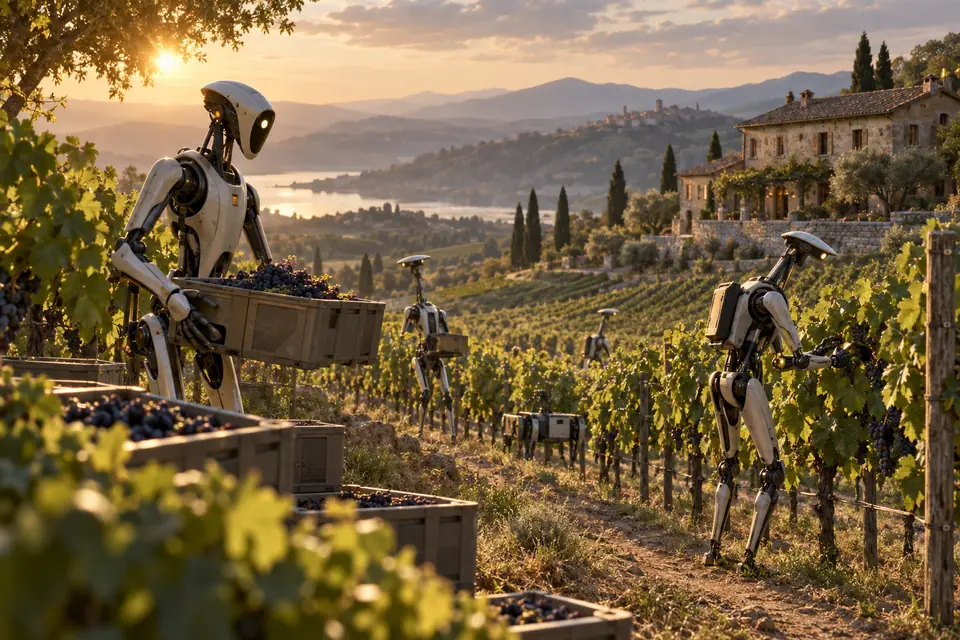
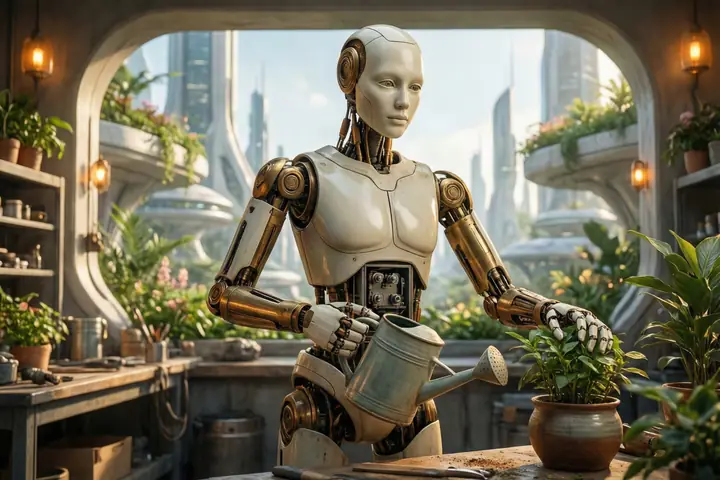 Illustration made with AI image generation; not evidence.