How the world changes
Most forecasts about AI ask when. This atlas asks what changes: in money, work, meaning, power, war, science, health and an ordinary day. For each part of life it gathers what named writers expect, from the first essays on thinking machines to this year's scenarios, sorted by era and by which of the site's worlds each assumes. The map counts works, not odds: a darker cell means more sourced works expect change there, not that change is more likely. Beside each part of life sit the public series this site reads for it.
I · the map
Where the sourced works expect change, and when
Rows are parts of life, columns are eras. Pick a world to see only the works that assume it; open a cell to read them.
II · the plates
Eight parts of life
I · Fortune, with her scales and wheel
The economy
These writers expect machine labour to make the world far richer, far faster than before, but split over whether the gains reach ordinary people or pool with the owners.
II · The forge and the scriptorium
Work
Most of these writers expect machines to climb from routine tasks to skilled ones, with pay holding up for a while before human labour loses most of its value.
III · The Muses
Culture and meaning
These writers expect culture to be remade by minds and companions that outclass us, leaving people to search for purpose when work and mastery matter less.
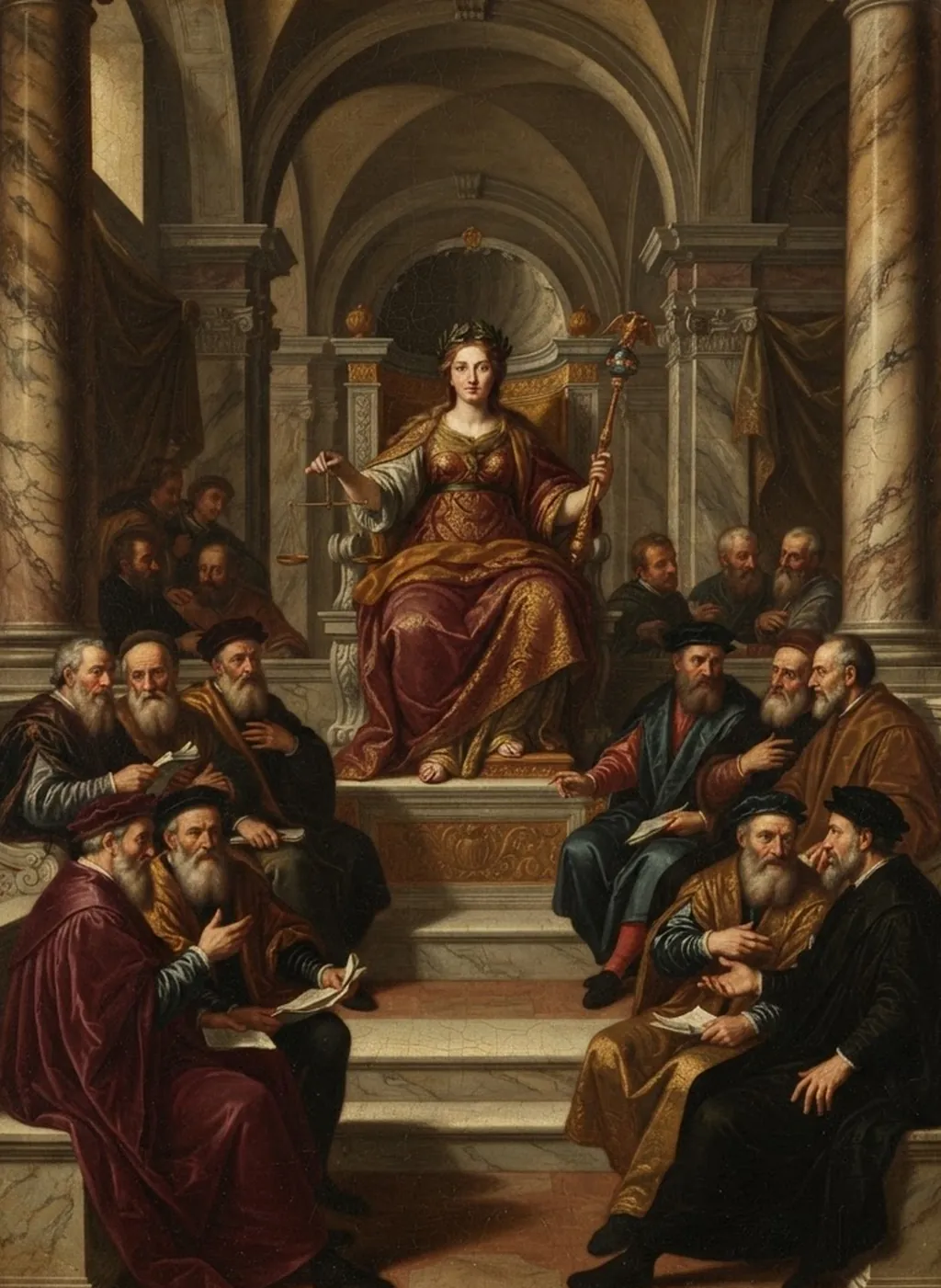
IV · Sovereignty in council
Power and politics
Many of these writers expect AI to concentrate power in whoever controls it, whether labs, governments or a single project, though others think rivals and law keep it spread.
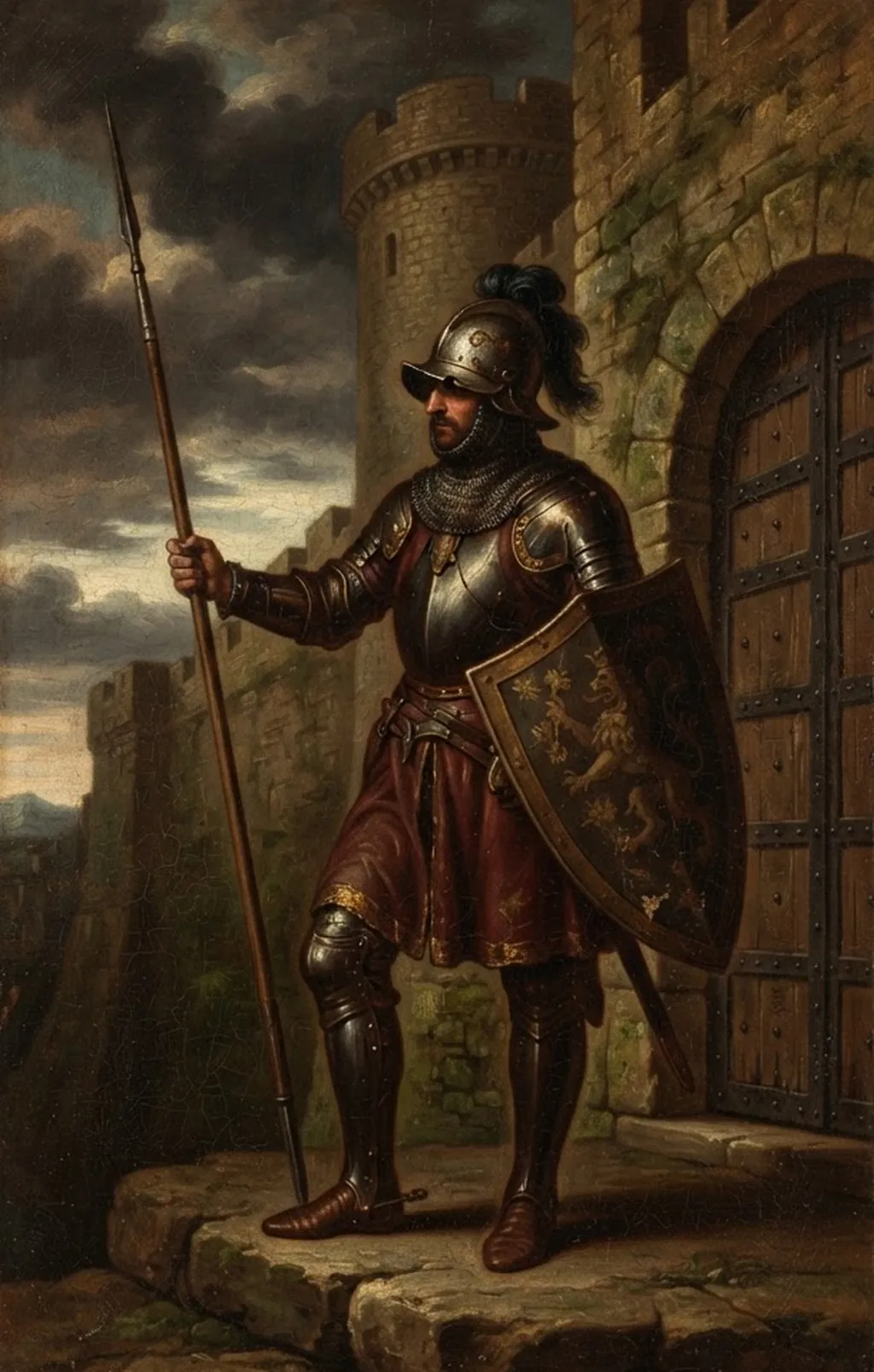
V · The sentinel
War and safety
Most of these writers expect advanced AI to be hard to contain and to transform warfare, though they disagree sharply over how likely it is to overpower humanity.
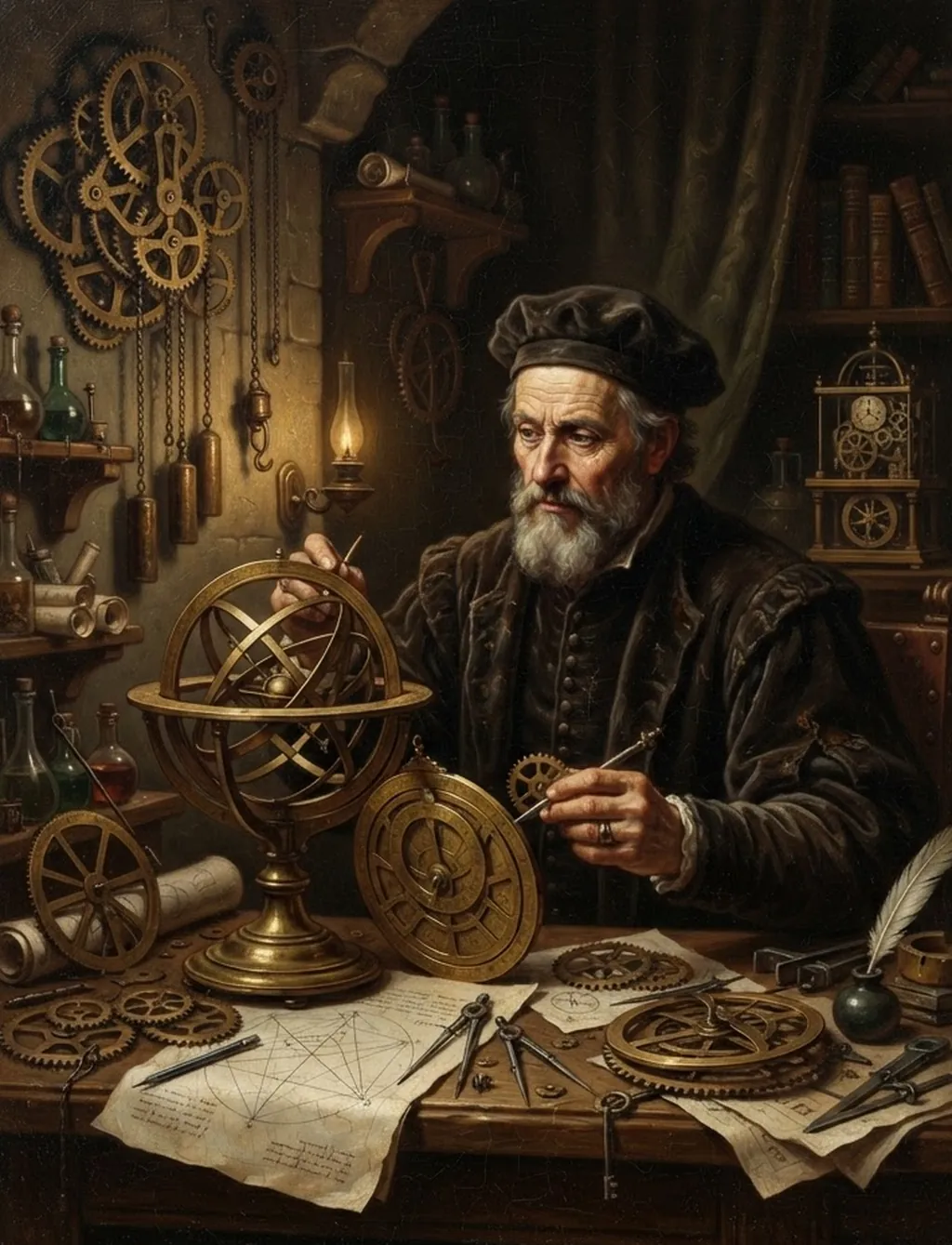
VI · The astronomer's workshop
Science and technology
These writers expect machines to match human minds and then speed up invention itself, differing mainly over how soon that happens and how abrupt the leap past people is.
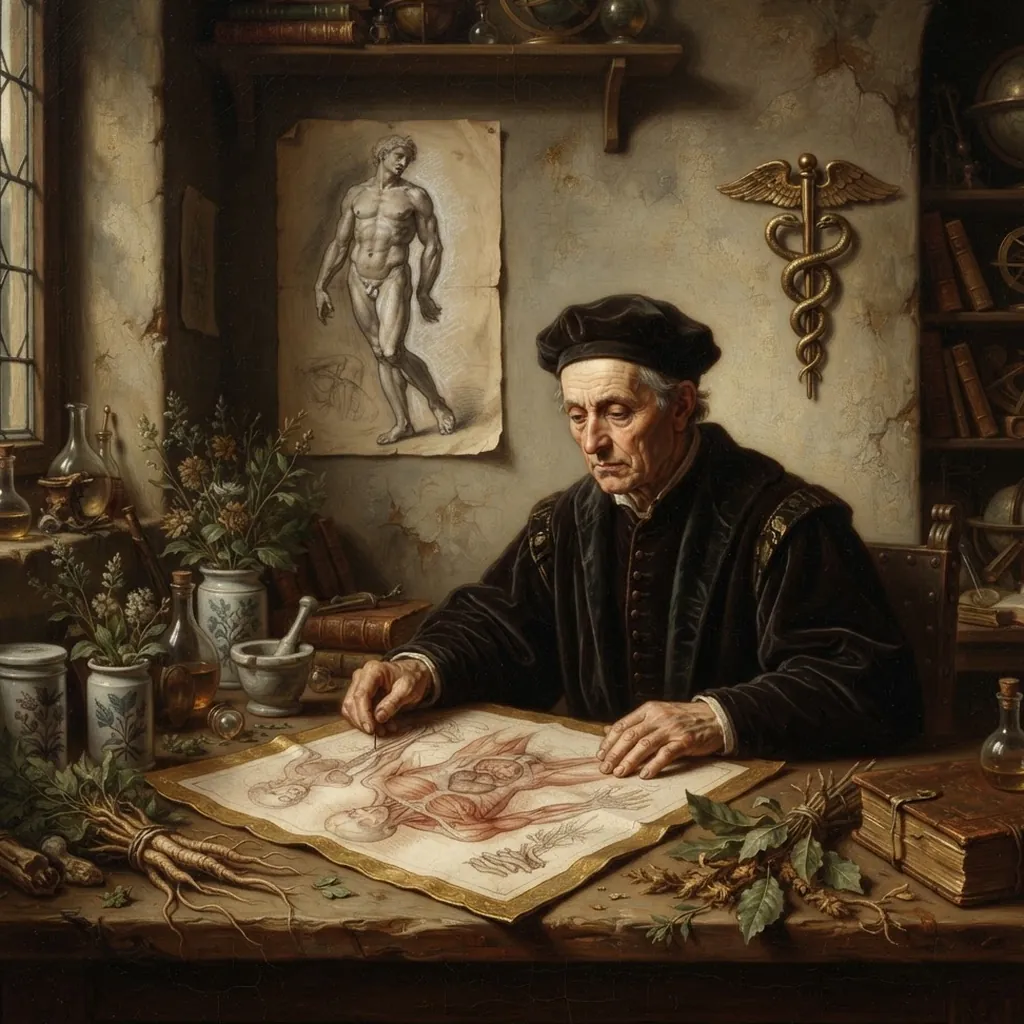
VII · The physician
Health and the body
Most of these writers expect AI-driven medicine to defeat most disease and stretch lifespans dramatically, with the boldest imagining minds that outlive their bodies altogether.
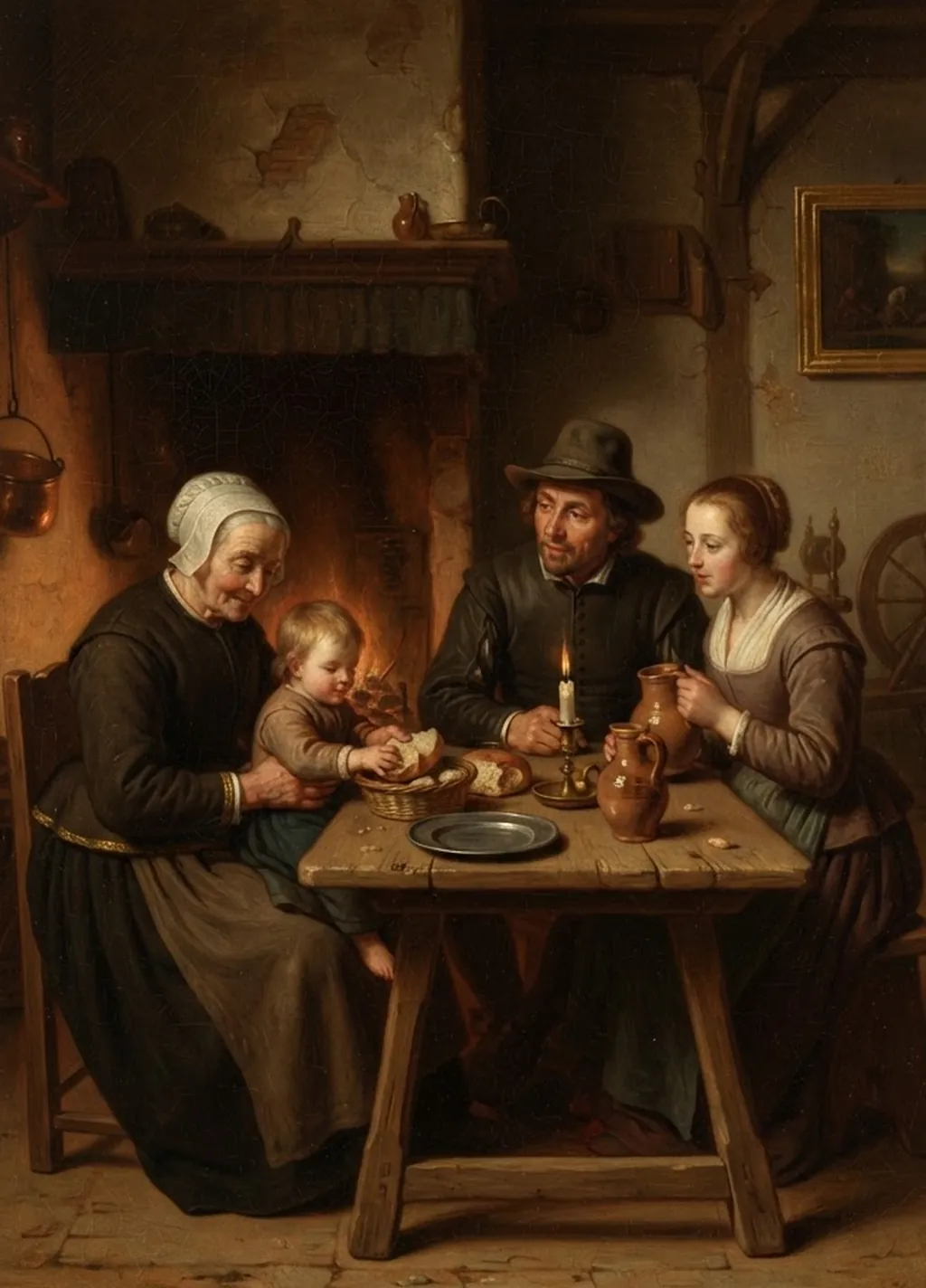
VIII · The family table
Daily life
These writers expect everyday life to fill with AI companions and expert helpers, while in the nearer term its core of family and play feels familiar.
The plates are illustrations in the manner of old master paintings, made in v0, Vercel's AI design tool, for the site's owner in September of 2026. They illustrate the domains; they are not evidence of anything.